Arts, Culture, and Heritage as Drivers of Change
BatoLabo
BatoLabo - The call of the rivers
Batolabo is a travelling laboratory navigating Europe’s rivers, from the Loire to the Danube, aboard a traditional wooden boat. Launched in September 2025 from Orleans, this river-based laboratory explores ways of inhabiting waterways and assessing their health through an artistic and scientific protocol developed along the water, inspired by river cultures. It aims to amplify the voices of rivers and highlight a unifying continuity between European watersheds, while fostering civic engagement.
France
Regional
Watershed of the Loire, Seine, Rhone, Rhine and Danube rivers
It addresses urban-rural linkages
It involves other types of transformations (soft investment)
Yes
2026-03-17
Yes
Culture Moves Europe - Goethe-Institut - Denmark / Romania
No
Yes
Organisation
Batolabo is a mobile river laboratory traveling from the Loire to the Danube, aboard a traditional Loire River boat restored for the occasion. This laboratory creates spaces for experimentation, exchange, and encounters to advance scientific knowledge about river environments, co-create an artistic performance in preparation for Bourgues 2028 (European Capital of Culture), and contribute to the European initiative on the Rights of Nature. 1500 km were covered in France (Tours, Orléans, Paris, Besançon, Strasbourg) and approximately ten scientific and artistic stopovers were made. It aims to have concrete impacts on communities and networks (around 1000 people). A narrative, a poetics emerging from the rivers. The journey is an integral part of the method, enabling encounters with river territories and their communities. It connects different river cultures, with as many traditions as the region explored (Loire, Seine, Doubs, Rhine, etc.), with the aim of eventually reaching the Danube estuary in Romania, passing through Germany, Austria, Slovakia, Hungary and Croatia. By bringing the inhabitants to the river, the ambition is to make rivers a common good on a European scale. The attachments based on river traditions are vectors of political engagement, care and attention to river environments.
The Batolabo project was launched in 2024 as a continuation of several collective experiences rooted in river cultures and civic engagement. It builds on the momentum of the event La Grande Remontée de Loire (2023), a collective navigation of 700 km from the estuary to Orléans, as well as on the reflections of the Loire Parliament (since 2019), which explores new forms of ecological governance. The project also draws on the recognition of Loire-based nautical know-how, which will be inscribed in 2025 on France’s Intangible Cultural Heritage list. These dynamics have led to the creation of a traveling river laboratory, embodied through the restoration and navigation of a traditional wooden boat. The project unfolds through a slow journey along European waterways, from the Loire to the Rhine and then on to the Danube. The partnership between Grottes Production, Nyskaben and the Vrije Universiteit Brussel (VUB) was built through a long-standing collaboration between their respective mentors. Chloé Girardeau (Grottes Production), Elvira Crois (Vrije Universiteit Brussel) and Marieke Breyne (Nyskaben) worked together on the European Erasmus+ project “Leaving the City?” in 2017, a traveling sensory theatre workshop across several European countries.
This shared experience strengthened their professional and personal ties, leading them to support each other, train together, and reflect on their practices. In 2017, they were included in the program of Aarhus, European Capital of Culture, for the creation of a joint performance hosted by the sensory theatre company Carte Blanche in Viborg (Denmark).
This shared experience strengthened their professional and personal ties, leading them to support each other, train together, and reflect on their practices. In 2017, they were included in the program of Aarhus, European Capital of Culture, for the creation of a joint performance hosted by the sensory theatre company Carte Blanche in Viborg (Denmark).
Ecology Transition
Europeans rivers resilience
Watersheds citizenship
Traditional wooden-made Boat
Transdisplinarity
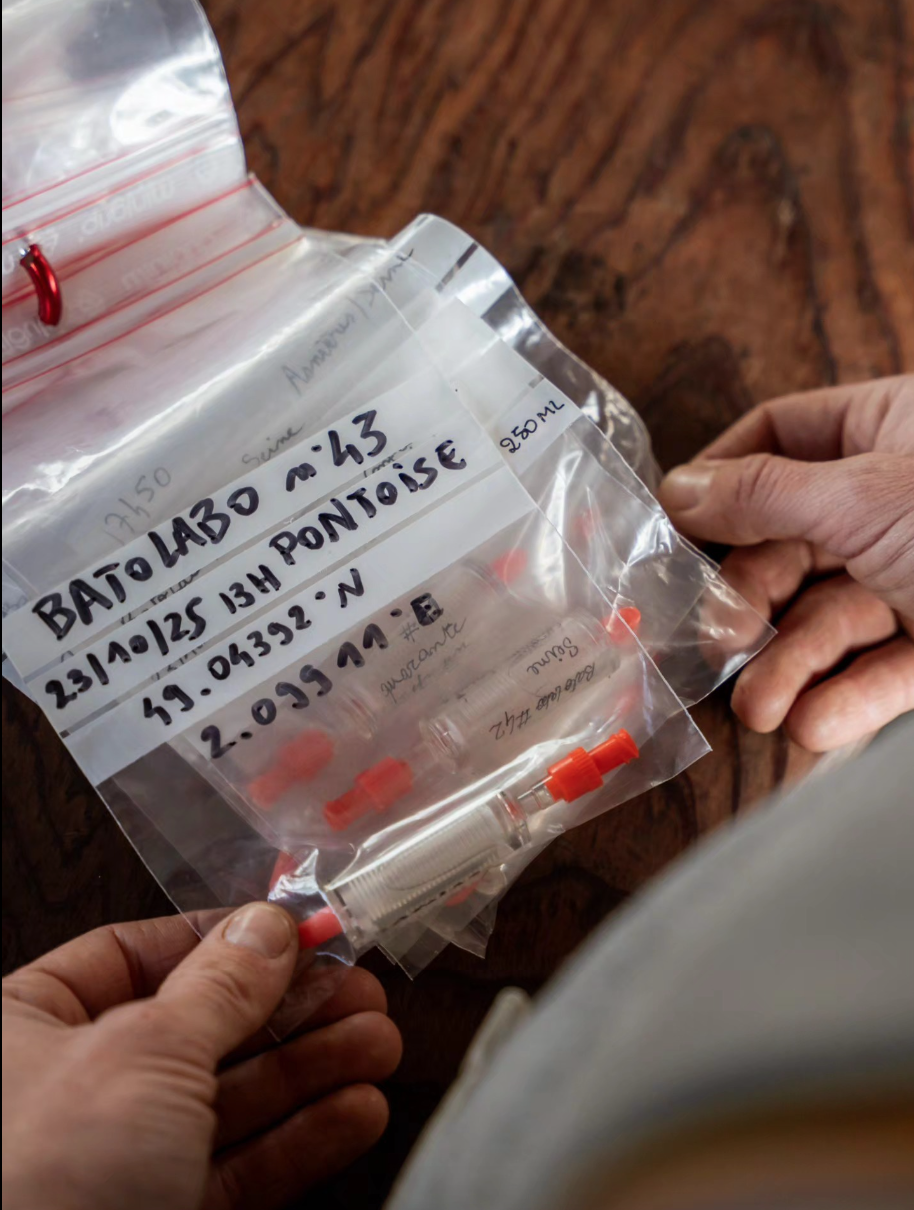
Batolabo highlights rivers and their environmental and cultural significance by restoring meaning to river territories and their ecological continuity through navigation. Taking the form of a river laboratory aboard a traditional Loire boat, we collect river water samples every 30 km to create an environmental DNA (eDNA) profile in partnership with the French National Research Institute for Agriculture, Food and Environment INRAE. In parallel, we develop survey methods in river anthropology in collaboration with the Maisons des Sciences et des Humanités (MSH) network, studying how people live with waterways. This project contributes to a rapidly developing field of research on the rights of nature and their legal, political, and cultural implementation. We position ourselves in concrete action and field initiatives, bringing together science, art, and representations of uses and practices. Water, present in bodies, landscapes, and daily life, provides a universal, concrete, and intimate point of entry for fostering dialogue, sharing knowledge, and connecting diverse experiences.
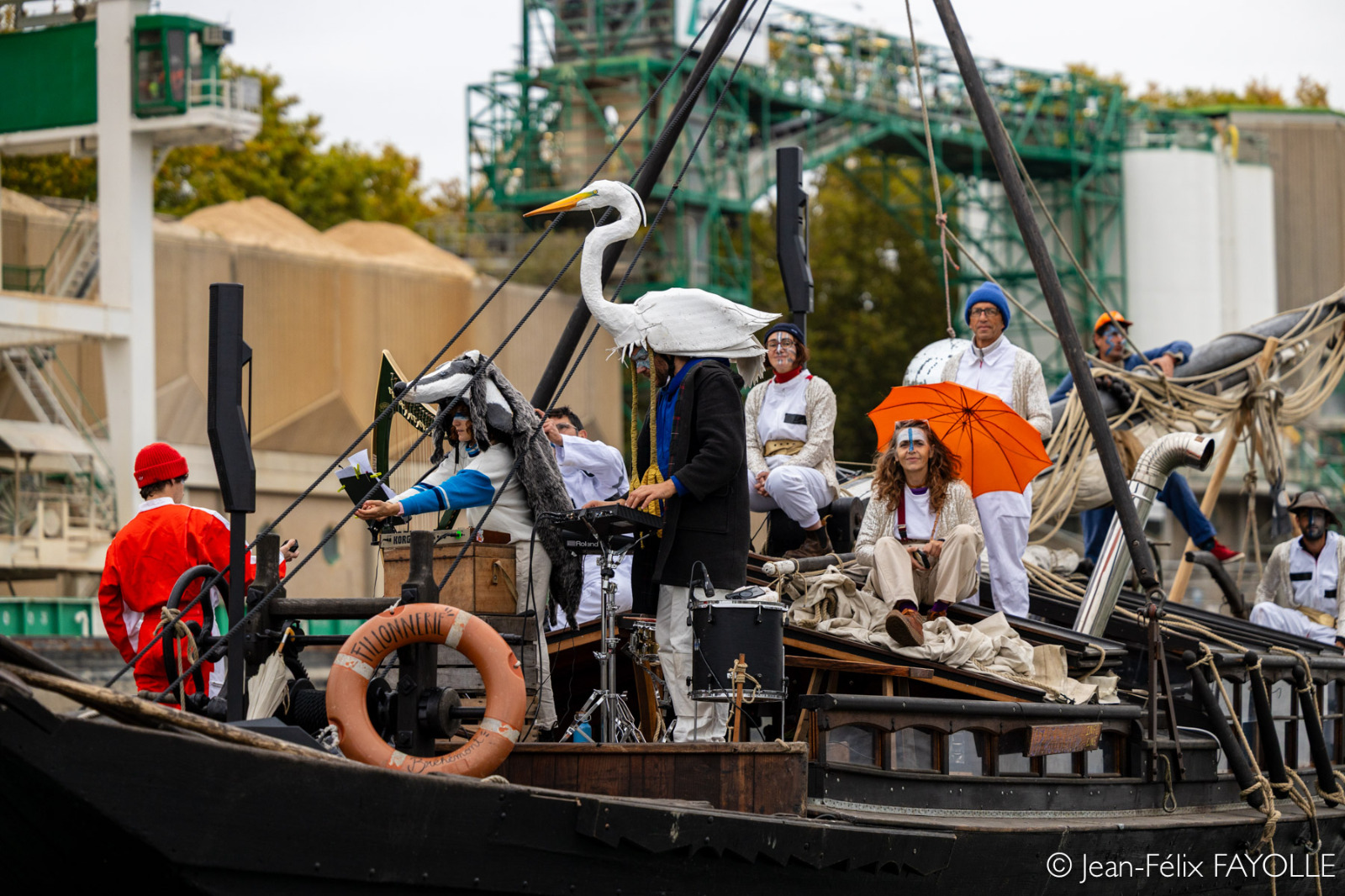
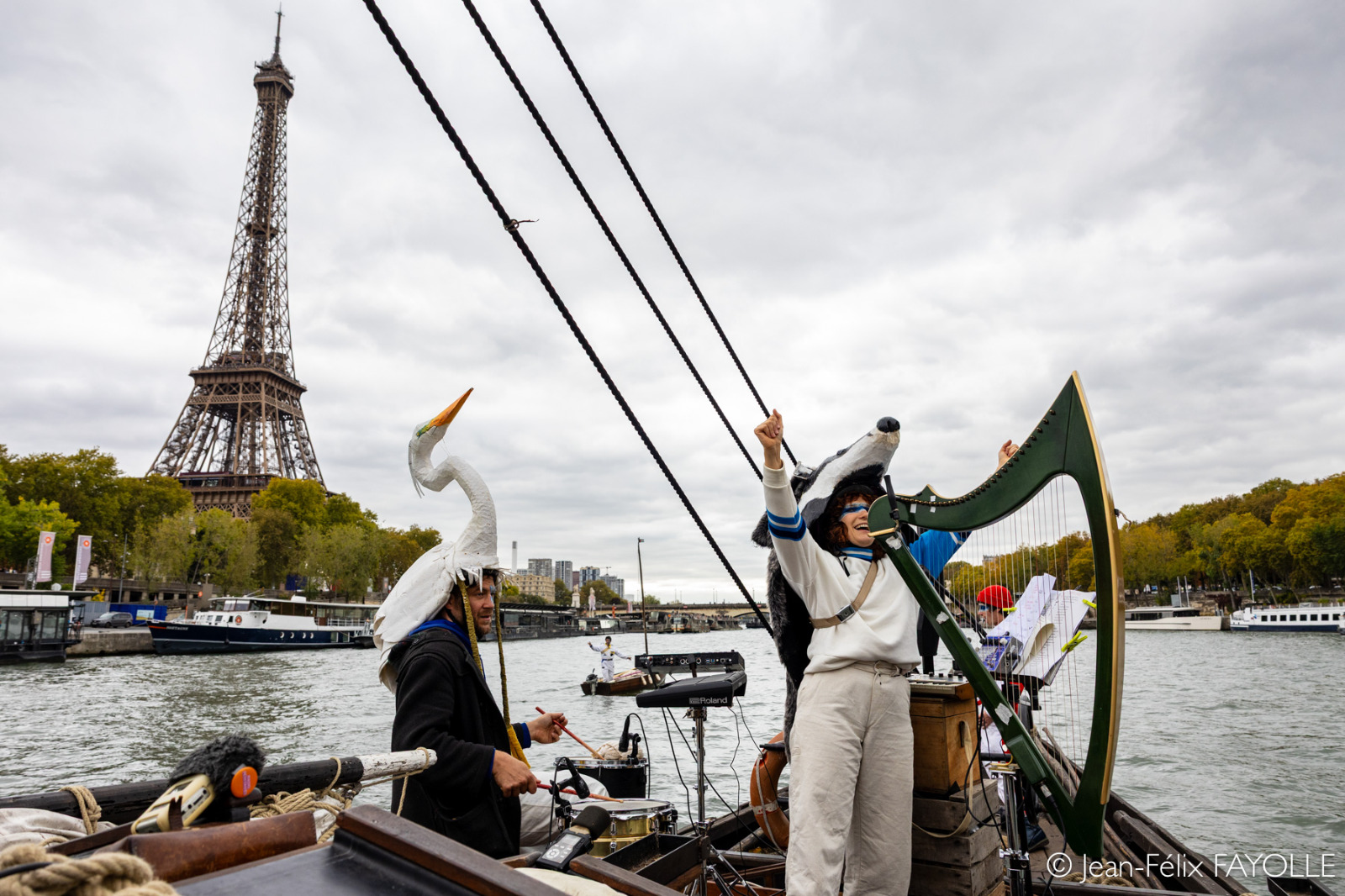
BatoLabo develops an art-science aesthetic through two complementary movements: drawing audiences to the river through engaging artistic forms, then sensitively conveying knowledge produced during navigation. Parades, stopovers and performances become invitations to reconnect physically and emotionally with waterways.
The project is grounded in a strong aesthetic choice: an oak sailing boat inspired by 19th-century plans, combining simplicity, low-impact mobility and modernity. This singular presence creates an aesthetic shock and sparks curiosity. It reflects a “pop-rustic” artistic direction blending raw materials, environmental care and contemporary touches with bright colors, creating an accessible and inspiring imaginative world.
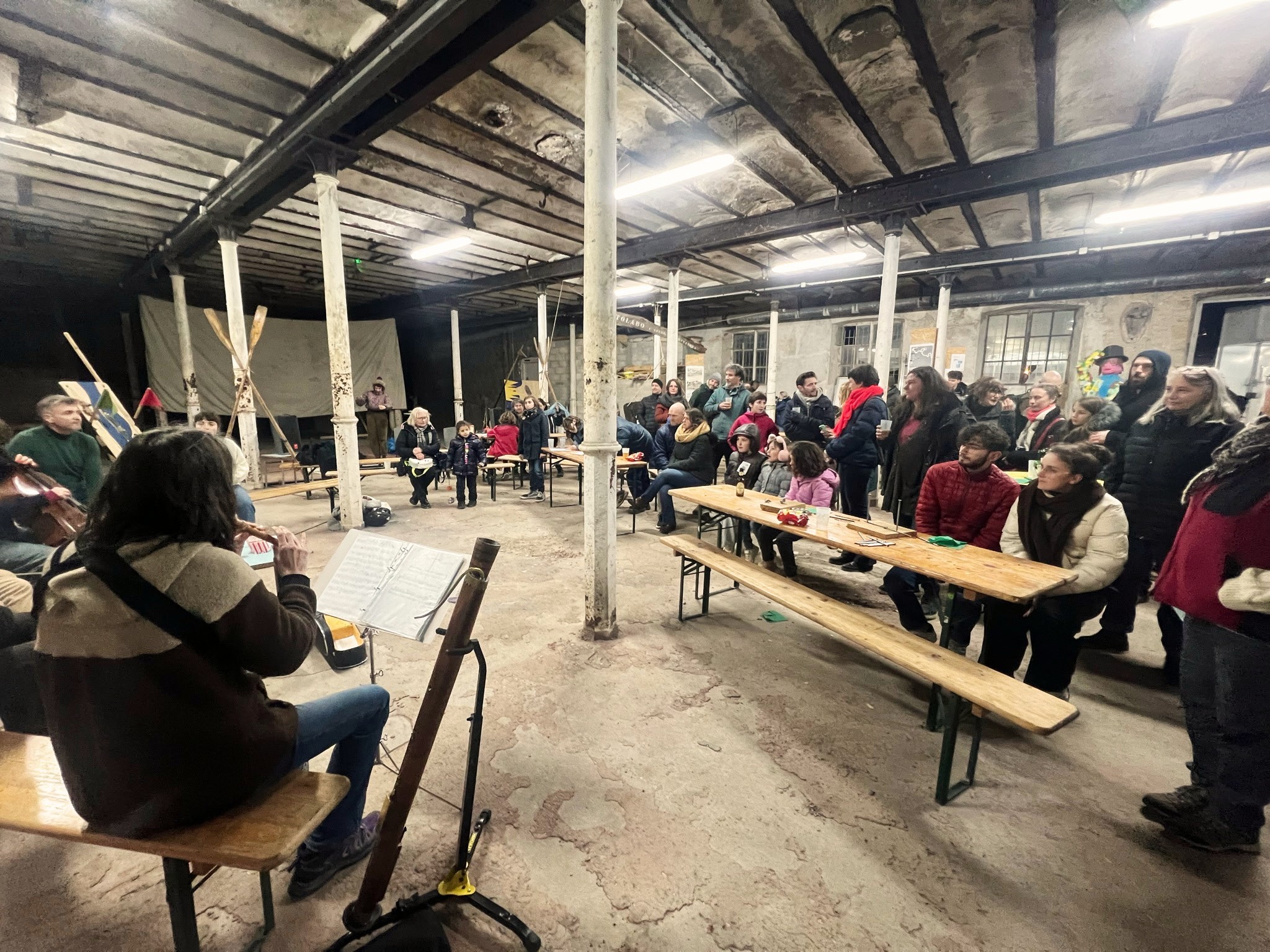
Each stopover becomes a collective event: spontaneous visits, shared banquets, costumed parades, musical and acrobatic performances, participatory workshops, low-tech fairs and DJ sets. These experiences foster encounters between residents, associations and territories, often for the first time. Co-creation with local actors strengthens long-term engagement and extends relationships beyond the boat’s passage; we remain connected with inhabitants from past stopovers.
By mobilizing the sensory as a method (research, creation, transmission), BatoLabo transforms our relationship to rivers. It generates attachment, wonder and engagement, helping to make river environments lived, shared and valued spaces. This relational aesthetic nurtures a lasting sense of belonging while highlighting heritage and ecological continuities.
By linking arts, science, navigation and territories, BatoLabo offers an exemplary model where beauty drives social transformation: it brings people together, builds connections and redirects attention toward rivers, placing them back at the heart of everyday life. The journey will continue with “BatoShow”, a shadow theatre and music piece supported by Bourges 2028.
BatoLabo adopts a critical approach to access to the arts and knowledge, shifting meeting places to public spaces. Where cultural institutions (theaters, universities, libraries) can be perceived as intimidating or detached from everyday life, the project establishes its activities on riverbanks, in ports, and in transit hubs, bringing them closer to where they are used.
The arrival of the boat creates an open, spontaneous, and welcoming space that fosters encounters with diverse audiences: passersby, residents, and workers, each with varying relationships to cultural venues. Co-created with local associations and academic partners, the stopovers are designed as inclusive and intergenerational spaces.
The formats offered (boat tours, radio broadcasts, performance banquets, a low-tech funfair, roundtables, concerts) are free and rely on simple, adaptable systems, ensuring accessibility regardless of social or economic background. The project unfolds in both urban centers and rural areas, linked by the common ground of the river, which serves as the project's guiding thread. BatoLabo combines mobility, local roots and itinerancy. The project thus constitutes a reproducible model of cultural and ecological engagement which contributes to strengthening social cohesion, access to knowledge and the power to act of citizens.
BatoLabo is based on a strongly participatory approach, driven by a unifying mobilisation dynamic that consists in documenting, celebrating and politicising our attachments to river environments. The project takes root in the collective restoration of La Fillonnerie, the flagship vessel of BatoLabo and a traditional Loire boat, as part of a process of knowledge transmission (Intangible Cultural Heritage). This participatory chantier involved a wide range of local actors and associations from the outset, generating a shared enthusiasm essential to the project’s development.
Building on this foundation, the navigation and stopovers were co-constructed with local authorities, associations, and scientific and cultural institutions encountered along the route (Loire, Seine, Doubs). These stages made it possible to build a network of committed stakeholders around rivers and to connect local initiatives that are sometimes isolated or dispersed, by increasing the visibility of their activities.
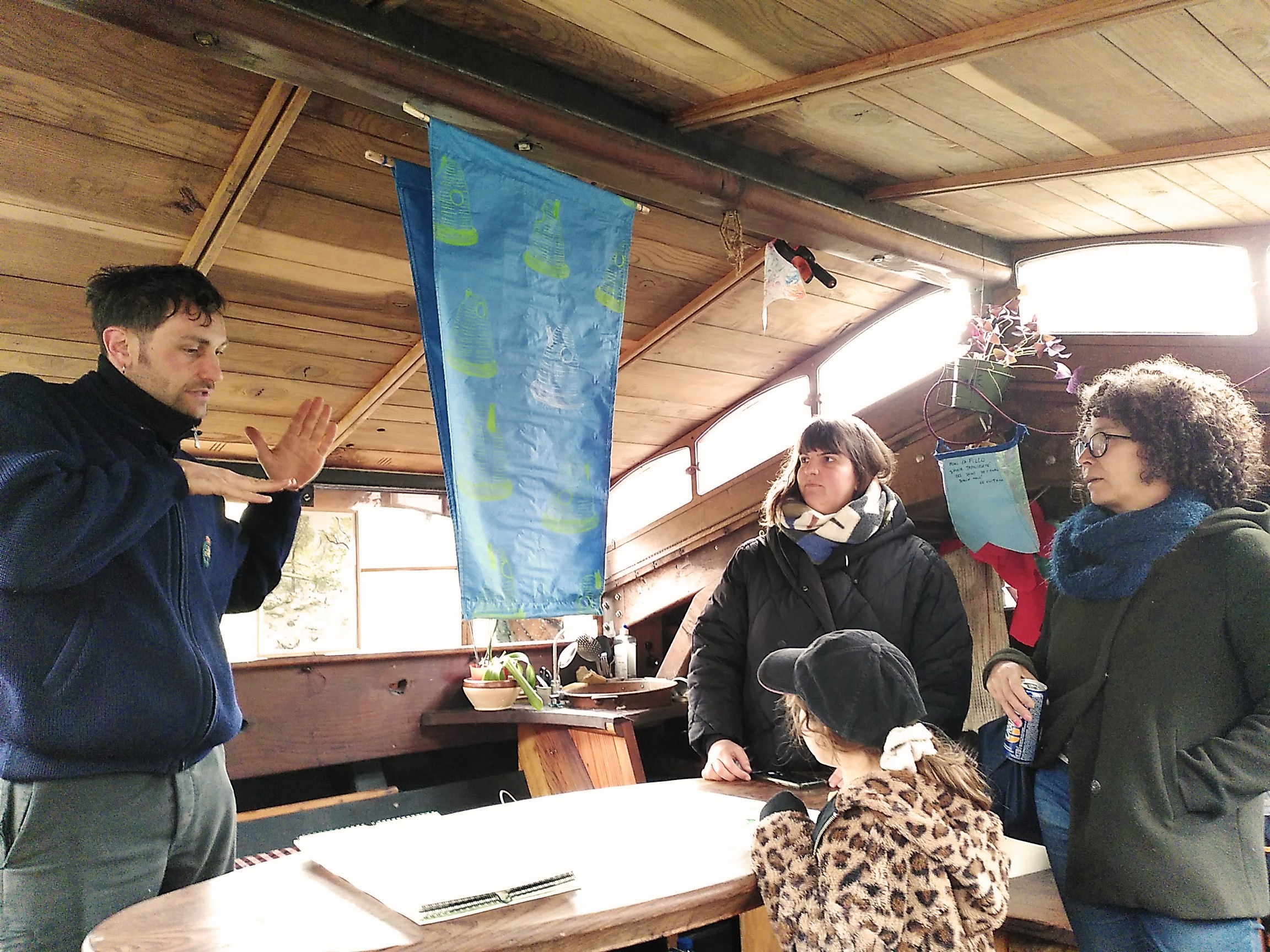
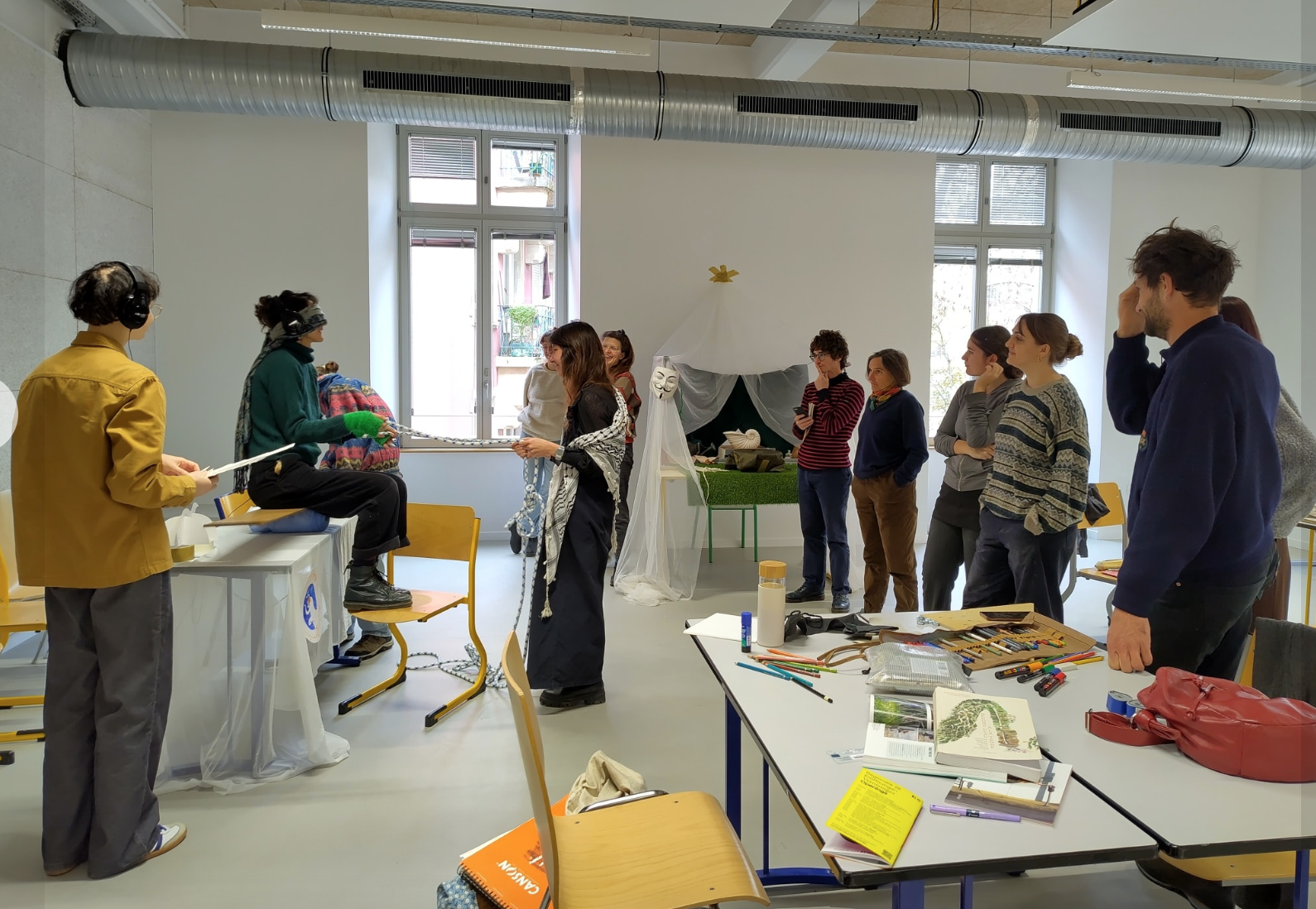
On board and at various ports of call, artistic and scientific residencies, as well as open formats (assemblies, banquets, radio broadcasts, meetings), have generated direct participation from local residents, who become contributors and co-creators of narratives. The project engages with river communities to document their practices, share situated knowledge, and foster experiential learning (navigation, surveys, nautical games) through sensitive and poetic approaches.
BatoLabo acts as a tool for networking and civic engagement. It sparks enthusiasm, brings people closer to rivers, and strengthens their capacity for action. It helps to promote local initiatives, develop knowledge about river issues, and sustainably structure collective dynamics. These forms of participation are the beginnings of a larger-scale mobilisation, notably through the European Citizens' Initiative on the Rights of Nature, which invites citizens to get involved in new forms of river governan
Thanks to its roots in the Loire, Batolabo received support of the Centre Val-de-Loire region, the department of Indre-et-Loire and the Mission val de Loire responsible for the Loire Valley, listed as a UNESCO World Heritage Site. We also joined the Loire Parliament in 2026 to represent the European and international dimension of rivers. We are participating in the International Rhine Festival organized by The Haute école des arts du Rhin (HEAR) in Strasbourg.
We are also expected to take part in the Night of Ideas as part of the European Green Days in Vienna, in collaboration with the French Institute of Austria, where we will present the results of our survey. Finally, Bourgues 2028, European Capital of Culture, has commissioned an artistic intervention based on the findings of the BatoLabo project.
We are also expected to take part in the Night of Ideas as part of the European Green Days in Vienna, in collaboration with the French Institute of Austria, where we will present the results of our survey. Finally, Bourgues 2028, European Capital of Culture, has commissioned an artistic intervention based on the findings of the BatoLabo project.
BatoLabo is based on a deeply transdisciplinary approach, where traditional knowledge, scientific research, artistic practices and citizen participation are interwoven in both its design and implementation.
At the heart of the project is traditional Loire river navigation: a fully wooden chaland, recognized as a Heritage Interest Vessel and included in France’s Intangible Cultural Heritage (UNESCO) in 2025. Its restoration was carried out through a participatory, community-based chantier in summer 2025. Navigation relies on vernacular techniques — sailing, rowing, pole navigation (bourde) — complemented by a low-energy support engine, embodying a dialogue between heritage and contemporary ecological practices. Scientific disciplines are embedded throughout the journey. Environmental sciences are mobilized through environmental DNA (eDNA) sampling every 30 kilometers, in partnership with INRAE Thonon-les-Bains, for phytoplankton analysis. Social sciences are engaged through a field study conducted with the MSHe Besançon, exploring relationships to rivers. These approaches are enriched by onboard residencies of scientists, enabling in situ knowledge production.
Artistic practices play a central role in connecting and translating these fields. Performing arts are developed onboard with professional and local companies (Grottes Production), supported by Bourges 2028. Visual artists in residence (drawing, photography, video, documentary) document and interpret the journey, creating bridges between scientific data, lived experiences and collective imagination.
This intersection is reinforced by non-academic knowledge and the direct involvement of residents, who are occasionally onboard and contribute to the navigation. By crossing disciplines, expertise and lived experience, BatoLabo creates an ecosystem where heritage, science, art and society continuously inform and transform one another.
BatoLabo is based on a hybrid and diversified business model combining public funding, revenues generated from artistic and educational activities, partnerships, and civic support. The project benefits from public funding at multiple levels (Région Centre-Val de Loire, Département d’Indre-et-Loire, French Ministry of Culture, Bourges 2028 – European Capital of Culture), as well as from the European programme Culture Moves Europe, which supports its structuring, mobility and development of partnerships. It has also received support from the Franco-German Citizens’ Fund, strengthening its cross-border dimension. BatoLabo is a laureate of the CRI! programme of Bourges 2028, co-producer of the performance currently in development BatoShow, and develops a research-creation programme at the intersection of arts and sciences. On the scientific side, the project is a laureate of the Fluvioscope programme led by the network of Maisons des Sciences de l’Homme, structuring an interdisciplinary approach to river health. It has also been selected for presentation within the European research network DARIAH-EU (2026 conference in Rome), demonstrating recognition of its methodologies at a European scale. In parallel, BatoLabo generates its own revenue through its activities: performances and parades, workshops, residencies, conferences and educational programmes developed with partners (universities, festivals, cultural institutions). The model is further supported by private partnerships and sponsorship (craft and energy sectors), as well as in-kind contributions (hosting, technical support, logistics) provided by local stakeholders. Finally, crowdfunding campaigns support specific phases of the project (boat restoration, navigation, public events), reinforcing its civic anchoring.
Given our partnerships, we will make our art and science research methods on river ecosystems available to scientific and professional communities. We can also organise a travelling art and science exhibition across the territories we visit and through the communities we engage with.
We contribute to complementary eDNA analysis to better understand aquatic biodiversity in rivers. Our methods can be replicated for projects that use navigation as a methodological principle (Nat Explorers, Les Grandes Remontée de Loire) and applied to other rivers. Furthermore, this river laboratory aboard a traditional boat continues the work rooted in nautical knowledge recognized as intangible cultural heritage by the French Ministry of Culture. We also contribute to the European-led Citizens' Initiative exploring the legal recognition of rivers, and to international reflections on the rights of nature.
We contribute to complementary eDNA analysis to better understand aquatic biodiversity in rivers. Our methods can be replicated for projects that use navigation as a methodological principle (Nat Explorers, Les Grandes Remontée de Loire) and applied to other rivers. Furthermore, this river laboratory aboard a traditional boat continues the work rooted in nautical knowledge recognized as intangible cultural heritage by the French Ministry of Culture. We also contribute to the European-led Citizens' Initiative exploring the legal recognition of rivers, and to international reflections on the rights of nature.