Arts, Culture, and Heritage as Drivers of Change
CHEZ NOUS.
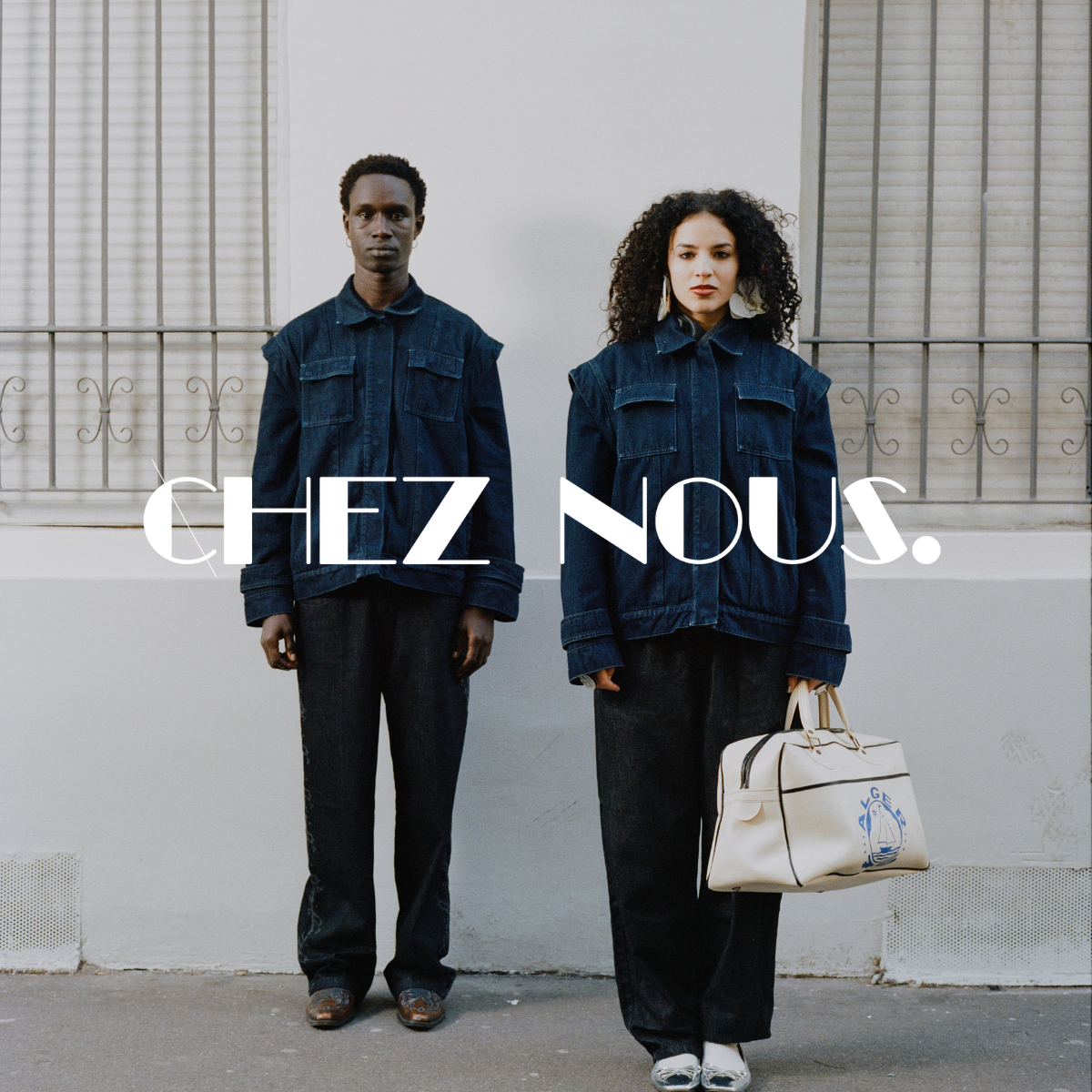
CHEZ NOUS. - multicultural, sustainable & inclusive fashion brand
CHEZ NOUS explores how clothing can create a sense of home. Through intentional design and responsible production, it develops garments that move between cultures and contexts, shaping new forms of belonging.
France
National
It addresses urban-rural linkages
It refers to other types of transformations (soft investment)
Completed
No
No
Yes
Individual
Named Designer for the Planet at Milan Fashion Week, CHEZ NOUS is a fashion project exploring how clothing can create connection, identity, and a sense of home. The brand turns garments into spaces of dialogue, blending expressive design with responsible production. Collections use certified, low-impact certified materials (i.e GOTS, GRS, lyocell, ECOVERO™) and waste-reducing pattern-making, combining sustainability with aesthetic boldness.
Achievements include international fashion events (Paris Fashion Week, Copenhagen Fashion Week, New York Fashion Week, pop-ups in London, Tunis), global media recognition, and a growing network of certified suppliers and distributors across multiple countries. CHEZ NOUS has cultivated a community of clients and partners who value inclusivity, cultural exchange, and mindful consumption.
Looking forward, the project aims to expand cross-cultural collaborations, immersive experiences, and responsible production networks. Each garment embodies creativity, sustainability, and human connection, transforming fashion into a tool for social and cultural transformation while fostering a sense of home and belonging.
CHEZ NOUS was born from a simple question: how can fashion feel like home? The idea grew from my own experience growing up between French and Tunisian cultures, imagining garments that carry connection, identity, and belonging wherever they are worn. In 2021, a crowdfunding campaign brought the first collection to life, revealing a community that resonated deeply with this vision (+300 pre-orders in less than a month).
From the start, inclusivity has been central: the wardrobe is non-gendered and size-inclusive, designed to make everyone feel seen. Production is a collaborative process with certified suppliers in Tunisia, creating ethical and sustainable collections, while in France, integration workshops engage disabled people, migrants, and isolated women, giving them access to design, craft, and professional skills.
Each collection is built around cultural narratives and stories, translated into garments through an iterative design process that balances low-impact, certified materials with expressive silhouettes. Beyond clothing, CHEZ NOUS is a platform for cross-cultural dialogue, community building, and shared belonging, where fashion becomes a medium to connect people across borders and circumstances.
Through this approach, CHEZ NOUS transforms fashion into something more than aesthetic: it becomes a lived experience of home, inclusivity, and cultural exchange, showing that responsible design can be both beautiful and deeply human.
Cross-cultural dialogue
Circular Economy
Social & Economic Inclusion
Diversity & Inclusivity
Beauty
CHEZ NOUS integrates sustainability into every step of the fashion supply chain, from initial design thinking to the afterlife of each garment, creating a holistic model of responsible production.
Design & Concept: Design thinking prioritizes functionality, durability, and inclusivity: ensuring the wardrobe is non-gendered and size-inclusive. Materials are selected not only for aesthetics but for environmental impact, durability, and recyclability. Pattern-making is intelligently optimized to minimize fabric waste before production. Leftover waste is recycled
Materials & Sourcing: CHEZ NOUS exclusively uses certified, low-impact fabrics, sourced from suppliers committed to ethical practices. Material choices prioritize renewable, biodegradable, or recyclable fibers, ensuring that environmental considerations start at the very foundation of the product.
Production & Collaboration: Collections are manufactured in partnership with certified suppliers in Tunisia, who follow ethical labor practices and environmentally responsible processes. The brand emphasizes inclusive collaboration, integrating local expertise and sustaining long-term partnerships, while supporting the regional economy. In France, CHEZ NOUS collaborates with integration workshops engaging disabled people, migrants, and isolated women, providing hands-on access to design, craft, and professional skills, thus creating meaningful social and economic impact.
Distribution & Engagement: Finished garments are distributed with care to reduce carbon emissions, leveraging small-batch shipping and conscious packaging. CHEZ NOUS maintains transparency about its supply chain, engaging customers in the story behind each piece to encourage mindful consumption and connection to the product.
Afterlife & Circularity: Each garment is designed with end-of-life strategies in mind. CHEZ NOUS encourages customers to extend the life of their clothing through care guidance and circular initiatives.
CHEZ NOUS contributes to making life beautiful by transforming fashion into a lived experience of expression, connection, and belonging. Every garment is designed not just as clothing, but as a medium to celebrate identity, culture, and community, combining bold, contemporary aesthetics with thoughtful, sustainable production. The brand’s non-gendered and size-inclusive wardrobe ensures that beauty is accessible to everyone, allowing diverse bodies and identities to feel seen, confident, and at home.
In everyday life, CHEZ NOUS garments create meaningful moments of care: people wear pieces that resonate with their personal story while knowing they are ethically and environmentally responsible. Cross-cultural narratives between France and Tunisia are embedded in every collection, enriching cultural life and fostering a sense of shared identity in communities.
Working with certified suppliers in Tunisia and integration workshops in France with disabled people, migrants, and isolated women ensures that care and craft are present in every touchpoint, from production to presentation. Over time, CHEZ NOUS demonstrates how aesthetics can be holistic and responsible, merging visual appeal with social, cultural, and environmental care.
Through its garments, events, and collaborative practices, CHEZ NOUS sets a standard for fashion that is beautiful, inclusive, and connected, creating lasting experiences of home, belonging, and pride in the communities and spaces it engages.
Beyond clothing, CHEZ NOUS curates events and gatherings that bring people together around fashion, culture, and conversation. These moments transform spaces into hubs of creativity, dialogue, and belonging, allowing communities to experience beauty collectively and forge social connections.
CHEZ NOUS places inclusion at the heart of its approach, addressing challenges of accessibility, representation, and participation in fashion. The wardrobe is non-gendered and size-inclusive, ensuring that people of all genders and body types can access clothing that reflects their identity and culture. By removing traditional barriers around sizing and gender norms, CHEZ NOUS empowers individuals to feel seen, confident, and at home in their clothing.
Affordability is considered through responsible production and smart design, including low-waste pattern-making and optimized material use, allowing high-quality, sustainable garments to remain accessible without compromising ethics or environmental responsibility.
The brand also champions inclusive governance and participation. Integration workshops in France engage disabled people, migrants, and isolated women, giving participants hands-on experience in design, craft, and professional skills. In Tunisia, CHEZ NOUS collaborates exclusively with women-led suppliers certified ISO 9001, ensuring ethical, high-standard production while promoting economic empowerment and gender equity.
Beyond production, CHEZ NOUS embodies design-for-all principles by embedding cross-cultural storytelling, co-creation, and community engagement into every collection. Each garment, event, and workshop invites participation, amplifies underrepresented voices, and strengthens social cohesion.
By combining accessibility, affordability, collaborative design, and partnerships with women-led certified suppliers, CHEZ NOUS provides a concrete, exemplary model of inclusion in fashion, demonstrating that aesthetics, sustainability, and social impact can coexist to create opportunities, empowerment, and belonging for all.
CHEZ NOUS was developed with participation and collaboration at its core, involving users, citizens, and stakeholders from the earliest stages of the project. In 2021, the brand launched a crowdfunding campaign, which allowed a direct dialogue with its first audience, shaping the initial collection and validating the concept. Feedback from backers influenced design decisions, material choices, and communication, ensuring the garments resonated with real communities.
Participation continues through integration workshops in France, where disabled people, migrants, and isolated women are actively involved in design and craft processes. These workshops not only provide skills and professional experience but also directly inform the creative direction of collections, making the garments more inclusive, functional, and meaningful.
In Tunisia, CHEZ NOUS collaborates with women-led, ISO 9001–certified suppliers, involving them as key stakeholders in product development. Their expertise, suggestions, and cultural knowledge shape production processes, ensuring the final garments are ethically produced, culturally sensitive, and technically excellent.
CHEZ NOUS also engages its community through curated events and gatherings, which bring clients, collaborators, and local audiences together to explore collections, participate in discussions, and provide feedback. This continuous loop of engagement has enhanced cultural relevance, strengthened social ties, and built trust between the brand and its communities, turning fashion into a participatory, co-created experience.
CHEZ NOUS engages stakeholders across local, regional, and international levels to co-create inclusive, sustainable, and culturally resonant fashion. Locally, the brand collaborates with historic French knitting factories, preserving century-old know-how while integrating integration workshops for disabled people, migrants, and isolated women. These partnerships ensure garments are both technically excellent and socially meaningful.
At the regional level, CHEZ NOUS works with cultural institutions, and municipalities, hosting exhibitions and community gatherings that foster cross-cultural dialogue, participatory design, and social cohesion. These initiatives embed creative practice in everyday regional life while amplifying local talent and networks.
Internationally, CHEZ NOUS leverages personal nominations and programs, including Designer for the Planet, Académie des Talents Méditerranéen, French-African Young Leaders, and acting as Next Generation ambassador for the French Ministry of Foreign Affairs, in collaboration with the French Institute and Tunisian Embassy. These connections link the project to change-making organizations, providing mentorship, strategic guidance, and access to European platforms for scaling sustainable, inclusive, and culturally relevant fashion.
CHEZ NOUS is where fashion meets philosophy, architecture, craft, and social innovation. Every garment begins with a question: what does it mean to feel at home, to belong, and to be seen? Philosophy guides every choice, from design to production, shaping a wardrobe that is non-gendered, size-inclusive, and ethically made.
Architecture informs our spaces and garment making (north african tiles, structural shapes)
Craft and environmental science converge as century-old techniques meet low-waste, circular production with certified sustainable fabrics (GOTS, GRS, lyocell, ECOVERO™). Engineering and digital tools optimize pattern-making, logistics, and participatory engagement, while curated events and crowdfunding campaigns connect communities across France and Tunisia.
Arts, cultural studies, and cross-cultural storytelling bridge two shores of the Mediterranean, embedding heritage, narrative depth, and identity into every piece. Social sciences and education inform participatory approaches, creating opportunities for empowerment, skill-sharing, and social inclusion.
CHEZ NOUS demonstrates that fashion can be holistic, inclusive, and transformative. By combining philosophy, architecture, craft, social sciences, environmental sciences, arts, education, and digital innovation, it turns clothing into a living, transdisciplinary experience: beautiful, responsible, socially impactful, and deeply connected to the communities it touches.
CHEZ NOUS’s business model is based on three revenue streams:
1. Direct-to-Consumer (DTC): sales through the brand website, showroom, and pop-up events in Paris and New York. This ensures direct margins, customer data, and repeat sales.
2. Wholesale: selective partnerships with concept stores and European independent boutiques and department stores (i.e Galeries Lafayette) providing predictable volume sales and reaching new audiences efficiently.
3. Collaborations: limited-edition collections and experiential projects with cultural institutions generating co-funding, event revenue, and high-value product sales.
Financial sustainability comes from: pricing aligned with production costs and quality, low-waste, circular material use, and strategic collaborations that co-finance projects. Public recognition and awards, like Designer for the Planet, provide credibility that opens grant and institutional funding opportunities.
This mix allows CHEZ NOUS to cover operational costs, fund new collections, and scale gradually, while maintaining its mission of inclusive, sustainable, and culturally meaningful fashion.
CHEZ NOUS has been designed from the start with transferability and replicability in mind, combining processes, methodologies, and products that can be adapted across geographies and sectors.
1. Inclusive design methodology: the brand’s approach to non-gendered, size-inclusive garments is fully replicable for other markets or demographic groups. Workshops and participatory design sessions with disabled people, migrants, and isolated women create a tested framework for co-creation, which can be adapted in other communities to empower beneficiaries while shaping socially meaningful products.
2. Sustainable production processes: low-waste, circular pattern-making and certified material sourcing (GOTS, GRS, lyocell, ECOVERO™) are modular and scalable. The approach to reducing pre-consumer waste, optimizing cut efficiency, and partnering with ethical suppliers can be transferred to other apparel or lifestyle sectors, from textiles to home goods.
3. Cross-cultural collaboration model: CHEZ NOUS’s workflow linking French workshops, Tunisian suppliers, and international institutions offers a replicable blueprint for bridging regions, cultures, and skillsets, enabling creative industries worldwide to combine local expertise with global markets.
4. Experiential events and community engagement: curated pop-ups, exhibitions, and workshops not only generate revenue but also foster social cohesion and participation. The model can be replicated in other sectors (design, craft, cultural projects) to connect communities around shared creative experiences.
5. Knowledge sharing and training: integration workshops and mentorship programs provide a framework for skills transfer and capacity-building, which can be adapted to different geographies or sectors, supporting social innovation and inclusion in diverse contexts.
In the year following the application, CHEZ NOUS will launch two seasonal collections, leveraging low-waste, non-gendered, size-inclusive garments to drive direct-to-consumer revenue through the website, showroom, and pop-up events. We will strengthen existing production partnerships in France and Tunisia and develop new wholesale and collaborative partnerships across Europe, expanding market reach and volume sales. Curated experiential events and workshops will generate additional revenue while building brand loyalty. Strategic collaborations with cultural institutions and sustainability platforms will produce limited-edition collections, co-financed to reduce costs and enhance visibility. A monitoring framework will track sales performance, partnership ROI, and social impact, ensuring the concept is implemented efficiently, scalable, and financially sustainable.