Enhancing Circularity, Sustainability, and Innovation
Tisa Cross Border Bridge
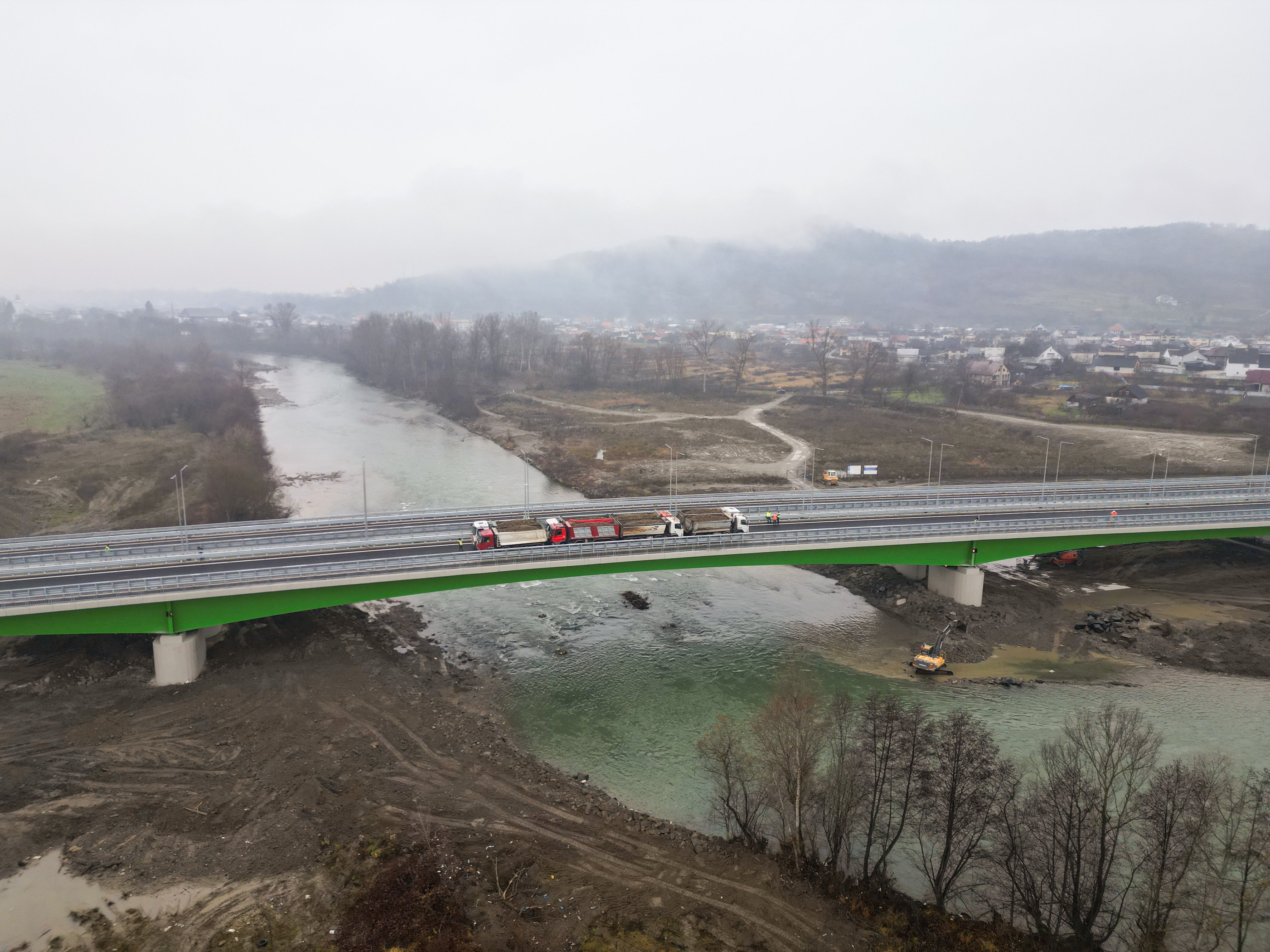
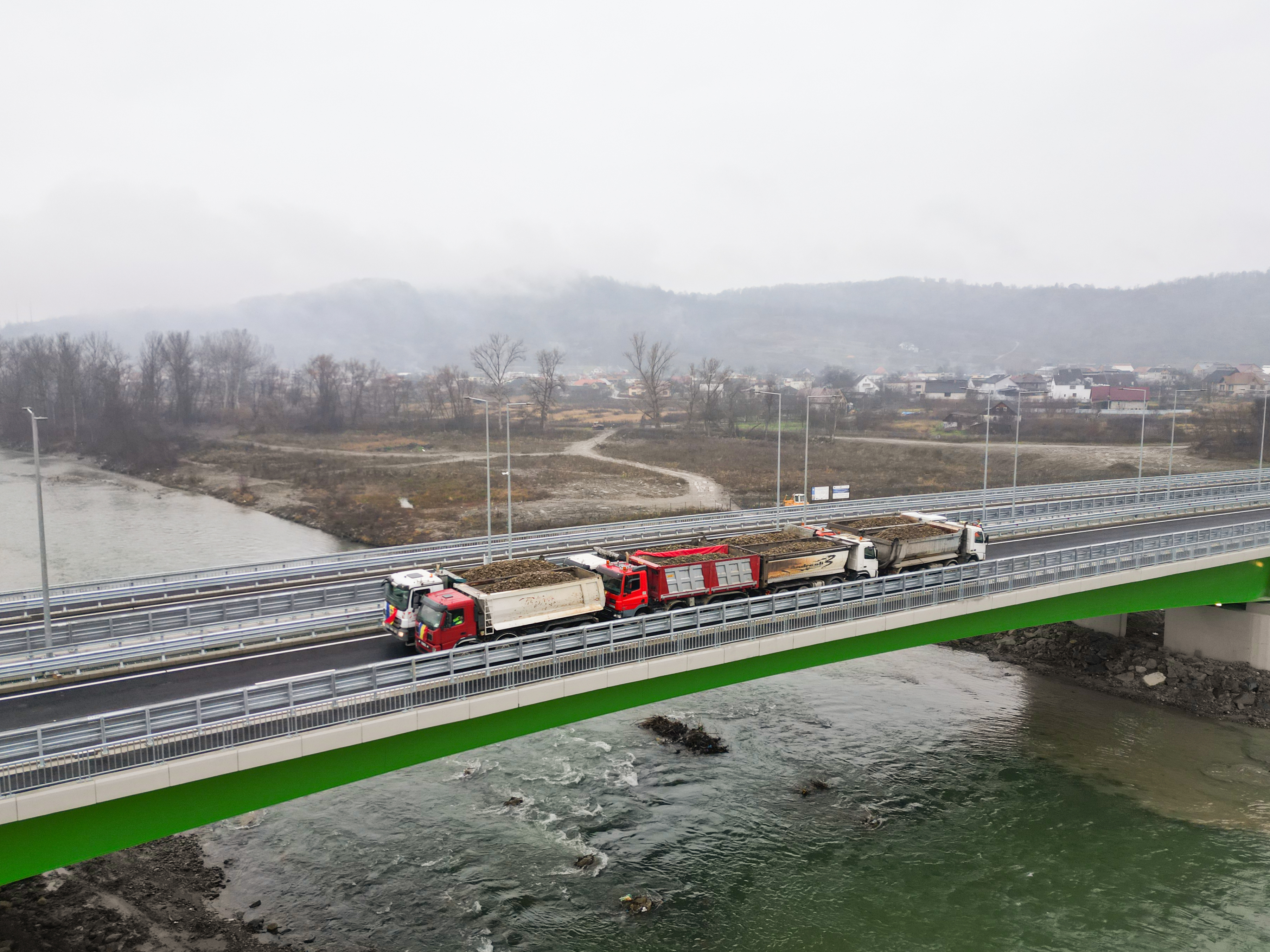
Bridge over the Tisa River in the Teplița area of Sighetu Marmației
A new bridge over the Tisa reconnects Romania and Ukraine, bringing together communities once united by shared culture, history, and place. It transforms a former border into a space of connection, opportunity, and hope—bringing people closer and building a shared future.
Romania
Regional
On the Romanian side it directly impacts the area of Maramures County, while on the Ukrainian side it impacts Zakarpathia Region. The two regions have signed a formal twinning agreement win regions in 2018.
It addresses urban-rural linkages
It involves a physical transformation of the built environment (hard investment)
Yes
2026-03-16
Yes
Large Infrastructure Operational Programme 2014–2020, under the Priority Axis “Development of a multimodal, high-quality, sustainable and efficient transport system”, Specific Objective SO 2.2 – Call for projects for the DEVELOPMENT OF ROAD INFRASTRUCTURE – new investment projects, Operation: “Increasing the accessibility of areas with low connectivity to the TEN-T road infrastructure”, as well as through the Transport Programme 2021–2027 – Title 56.73 “Transfers to support administrative-territorial units for the implementation of infrastructure and transport projects in partnership.” Consequently, the project has been receiving funding fromfrom the European Regional Development Fund, the Cohesion Fund, the European Social Fund Plus, and the Just Transition Fund .
No
Yes
Organisation
The project “Bridge over the Tisa River in the Teplița area, Sighetu Marmației” is a flagship cross-border initiative that transforms a former barrier into a space of connection, cooperation, and opportunity at the EU’s eastern border. Implemented by Maramureș County Council, it establishes a new road link and modern border crossing between Romania and Ukraine, directly connecting Sighetu Marmației with Bila Tserkva.
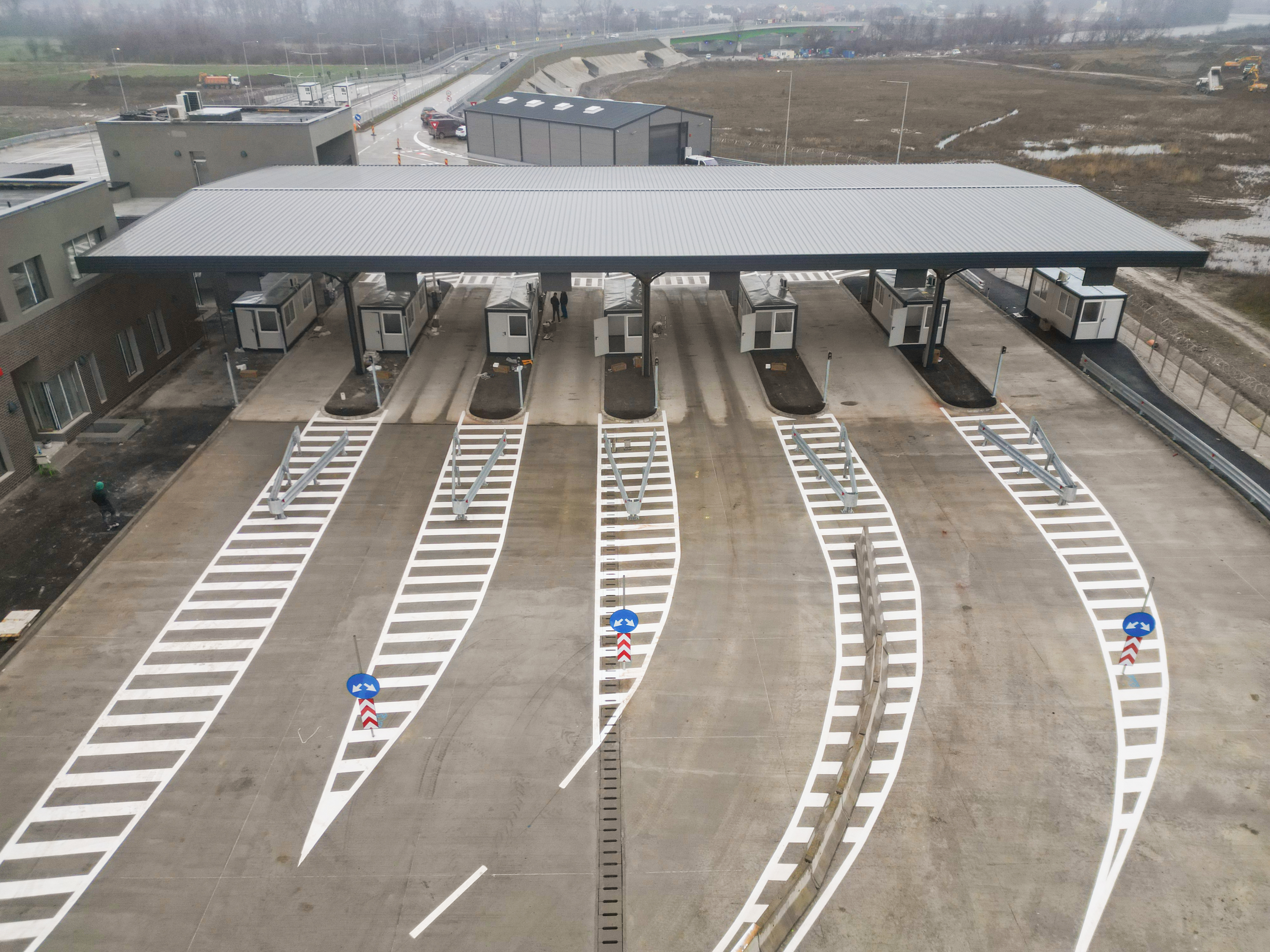
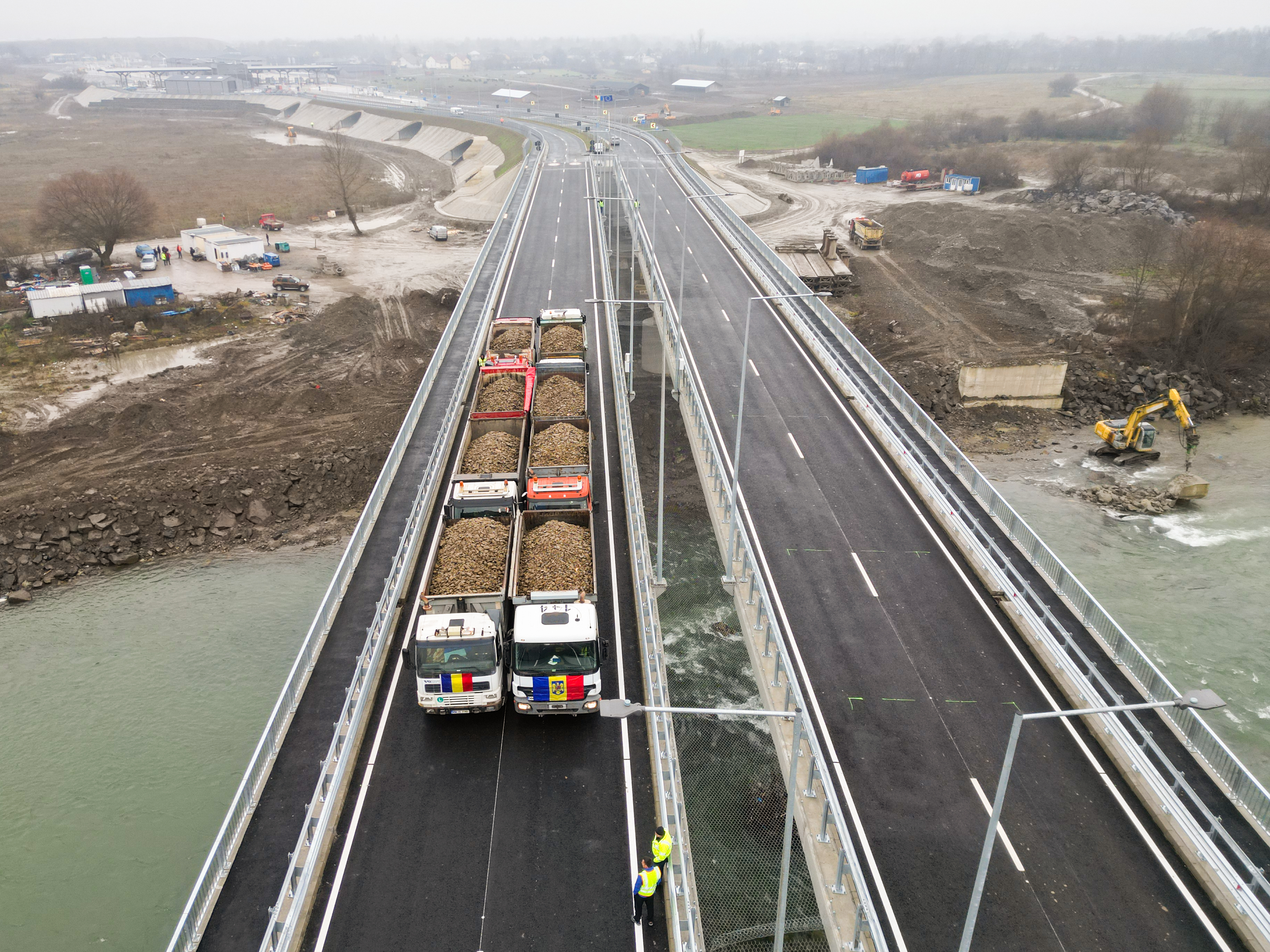
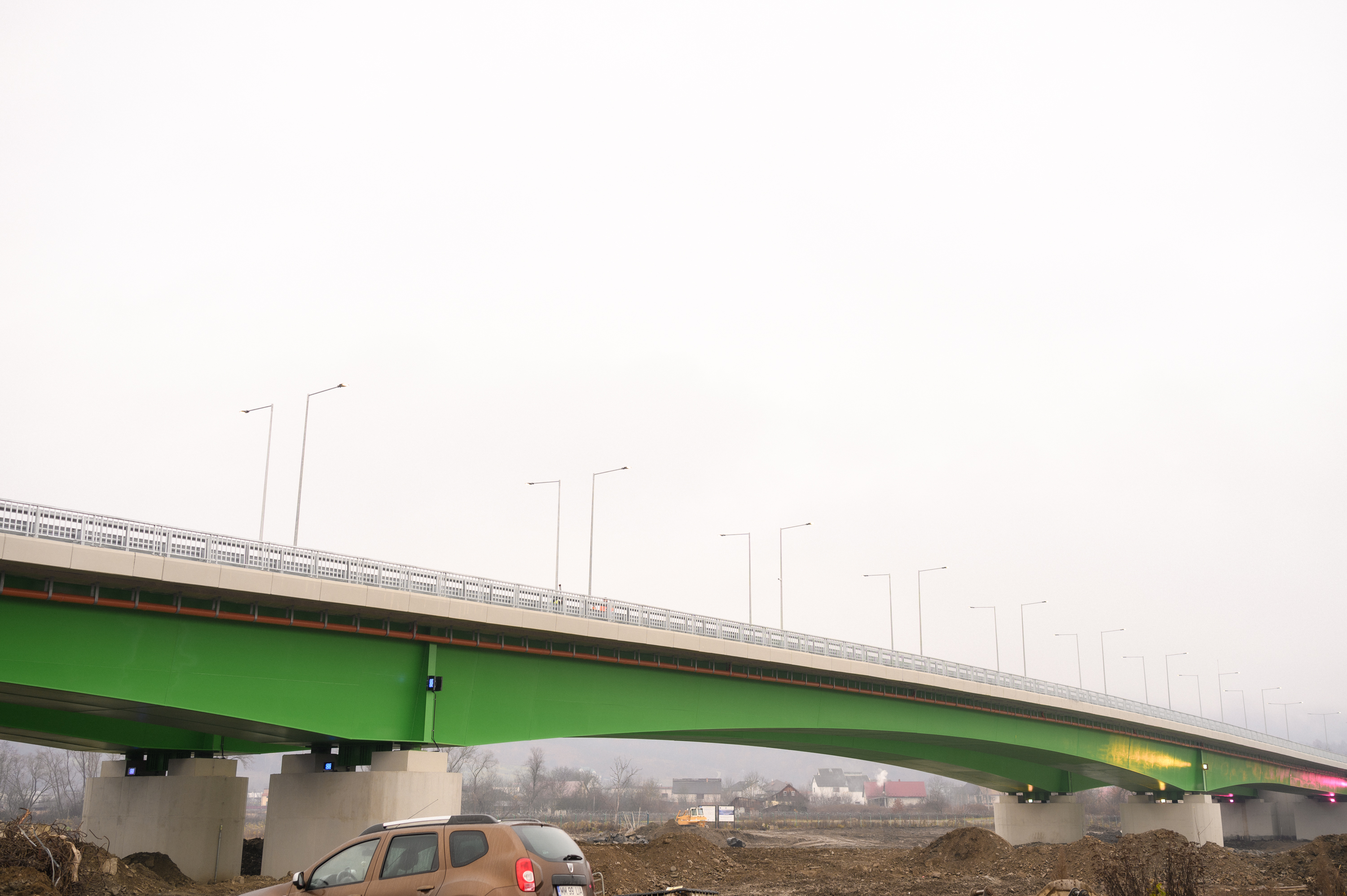
With completed construction works, the project delivers tangible results: a 268.6 m twin-structure bridge, 1.2 km of new road infrastructure, and a fully equipped border crossing with six traffic lanes, intelligent transport systems, and modern administrative and control facilities. These investments are already improving regional accessibility, reducing travel time, increasing safety, and lowering transport costs for people and goods.
The project fully embodies the New European Bauhaus principles. It advances sustainability by optimising traffic flows, reducing congestion and emissions, and integrating energy-efficient systems and climate-conscious planning. It promotes inclusion by serving diverse users—pedestrians, commuters, freight operators and tourists—while reconnecting historically linked communities and enabling cross-border mobility, economic exchange, and social cohesion. It expresses beauty through a clear, contemporary architectural design that creates a functional, safe, and welcoming gateway between two countries.
In the long term, the project will drive economic growth, attract investment, and strengthen regional competitiveness. It supports Ukraine’s integration into European transport and economic networks and stands as a replicable model for resilient, inclusive cross-border infrastructure. More than a transport project, it is a symbol of reconnection, solidarity, and shared European future.
The project was born from a long-standing need to reconnect communities historically linked but separated by borders. For decades, the lack of direct infrastructure limited mobility, economic exchange, and social interaction between northern Romania and southwestern Ukraine. The project emerged as a joint vision to transform this barrier into an opportunity for connection, cooperation, and shared development.
Strategically linking Sighetu Marmației with Bila Tserkva, the initiative was designed not only as a transport solution, but as a catalyst for regional revitalisation and European integration. From the outset, the focus was on creating infrastructure that serves people: accessible, safe, efficient, and adaptable to diverse users—from pedestrians and commuters to freight operators and institutional staff.
On the ground, implementation combined engineering performance with functional design. The project delivered a 268.6 m twin-structure bridge, a 1.2 km access road, discharge bridges, a roundabout, and a fully equipped border crossing with six traffic lanes. Administrative buildings, control halls, and modular facilities were developed alongside intelligent transport systems, ensuring secure and efficient border operations. Already, the project is improving traffic flow, reducing travel times, and increasing safety. More importantly, it is reopening connections between communities, enabling economic exchange, supporting labour mobility, and strengthening cross-border cooperation.
By addressing critical infrastructure gaps, the project lays the foundation for sustainable regional growth while reinforcing social cohesion. It demonstrates how thoughtful design and strategic investment can transform infrastructure into a meaningful public space.
Ultimately, this is more than a bridge over the Tisa River—it is a bridge between communities, economies, and cultures, reconnecting the past with the future.
Sustainable and inclusive mobility
Resilient regional development
Community cohesion and cultural bridging
Human-centered smart infrastructure
Cross-border reconnection
The project reimagines border infrastructure as sustainable, living connection between people, landscapes, and economies. It addresses environmental, social, and economic challenges by transforming a former barrier into a resilient and resource-efficient space that supports mobility and ecological balance. Sustainability is embedded at every stage. The project integrates comprehensive measures to protect water, air, soil, and biodiversity, ensuring that construction and operation respect natural systems. Stormwater is collected, treated, and safely discharged to prevent pollution, while waste is managed according to circular principles—prioritising reduction, reuse, and recycling. Noise, emissions, and land impact are carefully controlled, and affected areas are restored, maintaining the integrity of the surrounding landscape.
Guided by the principles of precaution and prevention, the project addresses environmental risks at their source. Intelligent design solutions—such as drainage systems, hydrocarbon separators, and controlled operational processes—minimise potential harm while ensuring long-term functionality.
Climate resilience is central to the project’s vision. Designed in line with European climate adaptation strategies, the infrastructure responds to risks such as flooding, extreme temperatures, and freeze–thaw cycles. Its technical solutions ensure durability and safety under changing climate conditions, while protecting the ecological status of the Tisa River and nearby water bodies.
At the same time, the project contributes to climate mitigation by enabling smoother traffic flows, reducing congestion, and lowering emissions. By creating a direct cross-border link, it shortens travel distances and supports more efficient, sustainable mobility.
Beyond its technical performance, the project demonstrates how infrastructure can coexist with nature and enhance quality of life.
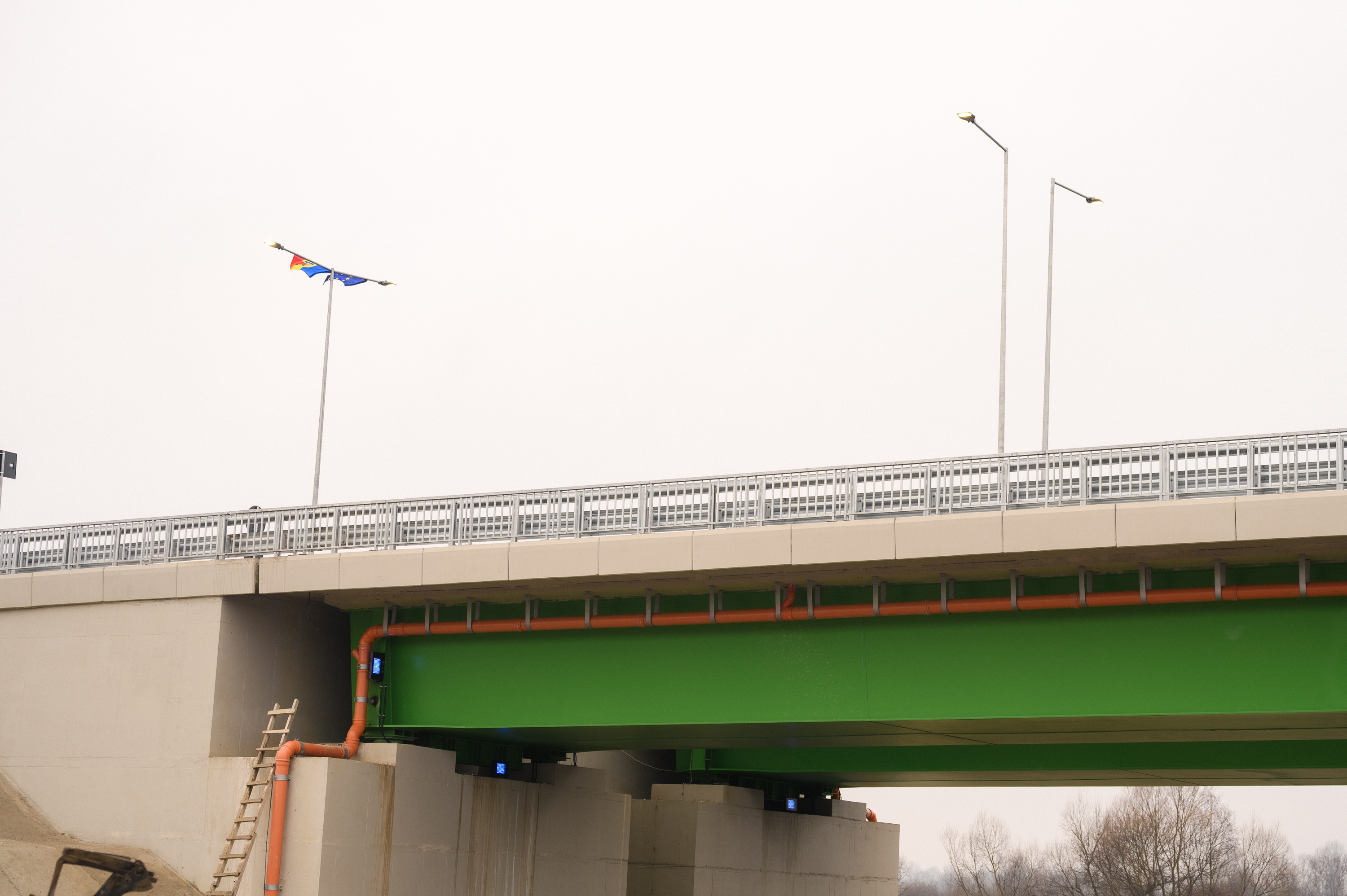
The project contributes to aesthetics with a coherent integration of engineering, architecture, and landscape design, ensuring that functional infrastructure also delivers spatial quality, clarity, and visual balance. The bridge is designed as a twin-structure system with a continuous steel–concrete composite deck, optimised for structural efficiency while maintaining a slender and balanced profile. Its proportions, span configuration, and material expression reduce visual mass and allow for a controlled integration into the river landscape. The alignment and geometry were carefully selected to ensure continuity with the existing terrain and minimise landscape fragmentation. At the level of the border crossing, aesthetics are achieved through functional spatial organisation and legibility. Traffic flows are clearly separated and guided, with six-lane configurations, dedicated pedestrian pathways, and integrated control zones. This structured layout reduces visual clutter and enhances user orientation, safety, and comfort.
Architectural elements—administrative buildings, control halls, canopies, and modular units—follow a unified design language, prioritizing proportionality, repetition, and functional clarity. The use of durable, low-maintenance materials and integrated lighting systems contributes to both visual coherence and long-term performance.
Landscape integration is ensured through controlled land use, restoration of adjacent areas, and minimal intervention principles, preserving the natural character of the Tisa River corridor. Drainage systems, embankments, and technical elements are designed to be both functional and visually unobtrusive. In operational terms, the project enhances everyday experience by reducing congestion, improving safety, and ensuring predictable movement through space.
The project addresses accessibility and inclusion by ensuring that cross-border mobility is safe, efficient, and available to a wide range of users, regardless of their purpose of travel or socio-economic context. From a design perspective, the infrastructure applies “design for all” principles. It accommodates diverse user groups—including pedestrians, private vehicles, freight operators, public transport, and operational staff—through clearly separated traffic flows, dedicated pedestrian pathways, and accessible crossing areas. The layout of the border crossing, with six traffic lanes and organised control zones, ensures predictability, reduces waiting times, and improves usability for all categories of users. Affordability is addressed indirectly through reduced transport costs and improved efficiency. By creating a direct connection between Romania and Ukraine, the project shortens travel distances, decreases fuel consumption, and reduces time-related costs for individuals and businesses. This is particularly relevant for border communities, where access to jobs, services, and markets depends on efficient mobility. The project also promotes inclusion at a territorial level by integrating peripheral border regions into wider European transport and economic networks. It reduces spatial inequalities, supports labour mobility, and facilitates access to economic opportunities for communities that were previously isolated or underserved. Inclusive governance is reflected in the multi-level and cross-border cooperation model, involving regional authorities, national institutions, and international partners. This collaborative framework ensures that infrastructure responds to real user needs while aligning with broader European policies. In the long term, the project supports a more inclusive societal model by enabling connectivity, cooperation, and equal access to mobility.
At its core, the project was shaped by the people it serves. It responds to a long-expressed need from communities on both sides of the Tisa River to reconnect, move more easily, and rebuild everyday links that were once natural.
Throughout its development, citizens, local stakeholders, and institutions were involved through public consultations, environmental procedures, and cross-border dialogue. These processes created space for voices from the region—residents, local authorities, and civil society—to express concerns, expectations, and aspirations. Their input helped guide key decisions, from environmental protection measures to how the crossing functions in practice.
Beyond formal consultation, the project reflects a deeper form of participation: it answers real lived experiences. For many, the border was not just a line, but a separation from family, culture, and opportunity. By listening to these realities, the project was shaped as more than infrastructure—it became a response to a shared social need.
This involvement has built trust and a sense of ownership. Communities recognise themselves in the project and in its purpose. It strengthens not only mobility, but also relationships, cooperation, and mutual understanding across borders.
The impact of participation is visible in the project’s acceptance and relevance. It stands as a bridge shaped not only by engineering, but by people—demonstrating that inclusive processes can transform infrastructure into a shared space of connection, identity and future.
The location of one of the most strategical cross-border bridge between Ukraine and Romania, was also the birthplace of the Regional Alliance for the Reconstruction of Ukraine on June the 12th 2025. Relevant actors decided that a remarkable infrastructure investment in its final stage of construction comes with a similar responsibility for the communities that reside on the both sides banks of Tisa River. Set out as a strategic partnership established by 12 counties from Romania’s North-West and North-East regions, together with Regional Development Agencies (RDAs), the regional alliance aims to coordinate efforts for the reconstruction of Ukraine, developing infrastructure, attracting European funds, and strengthening economic relations towards a sustainable recovery. The event benefited from the participation of Mr. Victor Negrescu, the Vice-President of the European Parliament and the representatives of the neighboring Ukrainian administrations Zakarpathia and Ivano-Frankvisk that are twin regions with Maramures.
Moreover, European Committee of the Regions (CoR) has honored the Regional Alliance for Ukraine’s Reconstruction with its political patronage as it showcases how to engage partnerships at the local and regional level for contributing to Ukraine's reconstruction process, for benefitting from a mutual learning process, in particular in the fields of resilience and innovation, and for harnessing the experience and knowledge of local and regional authorities in Ukraine on their path of integration into the European Union. Today, the Regional Alliance for the Reconstruction of Ukraine is linked with European Alliance of Cities and Regions for the Reconstruction of Ukraine under the CoR patronage, being a perfect example how a cross-border bridge can create added value and cohesion for local communities directly impacted.
Moreover, European Committee of the Regions (CoR) has honored the Regional Alliance for Ukraine’s Reconstruction with its political patronage as it showcases how to engage partnerships at the local and regional level for contributing to Ukraine's reconstruction process, for benefitting from a mutual learning process, in particular in the fields of resilience and innovation, and for harnessing the experience and knowledge of local and regional authorities in Ukraine on their path of integration into the European Union. Today, the Regional Alliance for the Reconstruction of Ukraine is linked with European Alliance of Cities and Regions for the Reconstruction of Ukraine under the CoR patronage, being a perfect example how a cross-border bridge can create added value and cohesion for local communities directly impacted.
The project is the result of a strongly transdisciplinary approach, where multiple fields of expertise were integrated to create a coherent, high-quality infrastructure that responds to technical, environmental, and social needs.
Engineering disciplines formed the backbone of the project, including civil, structural, transport, and geotechnical engineering, ensuring safety, durability, and performance of the bridge and road infrastructure. Environmental sciences played a central role in assessing and mitigating impacts on water, soil, air, and biodiversity, as well as in integrating climate adaptation and resilience measures.
Architecture and urban design contributed to shaping the border crossing as a functional and legible public space, balancing operational efficiency with spatial clarity and user experience. Landscape considerations ensured the integration of the infrastructure into its natural surroundings, minimising visual impact and preserving the identity of the area.
Digital technologies were embedded through Intelligent Transport Systems (ITS), including traffic management, scanning systems, and automated control, enhancing safety, efficiency, and real-time monitoring of flows.
At the same time, social and economic perspectives informed the project’s purpose and design, focusing on reconnecting communities, supporting mobility, and enabling cross-border cooperation. Institutional collaboration between public authorities, customs services, and international partners ensured that regulatory, operational, and governance aspects were fully integrated.
By combining engineering precision, environmental responsibility, spatial design, and social understanding, the project demonstrates how transdisciplinary collaboration can generate infrastructure that is not only efficient, but also inclusive, resilient, and meaningful for its users and its context.
The project is based on a public investment model with strong European support, ensuring both financial viability and long-term sustainability. Its implementation is funded through a combination of European Regional Development Fund (ERDF) financing (40%), national public co-financing (60%), and complementary allocations from the state budget and the beneficiary, Maramureș County Council.
This blended funding structure ensures stability during implementation, while aligning the project with European strategic priorities for connectivity, cohesion, and sustainable development.
In the long term, financial sustainability is ensured not through direct profit generation, but through indirect economic value creation and public return on investment. The project generates measurable benefits by:
increasing cross-border trade and economic activity
reducing transport costs and travel times
attracting new investments in logistics, tourism, and local businesses
supporting labour mobility and regional competitiveness
Operationally, the infrastructure is integrated into national transport and border management systems, with maintenance and operation financed through public budgets and institutional frameworks (transport authorities, customs and border police). The inclusion of modern digital systems (ITS) reduces operational costs over time by improving efficiency, automation, and control.
Additionally, the project creates the conditions for future revenue-generating activities in the surrounding area, such as logistics services, commercial development, and increased tourism flows, strengthening the local economic base.
As a cross-border infrastructure, its value lies in long-term socio-economic impact rather than short-term financial return. It represents a sustainable public investment model where European funding leverages national resources to deliver lasting territorial cohesion, economic resilience, and improved quality of life.
The project demonstrates strong scalability by providing a tested model that is already being extended through the newly approved initiative “BCP – Joint actions for the opening of the international BCP Yablunivka–Remeta (Kamynytsia)”, a partnership between Maramureș County (Romania) and the Zakarpattia region (Ukraine).
A key transferable element is the integrated cross-border approach, combining transport infrastructure, border management, and institutional coordination. This model directly informs the new BCP project, where feasibility studies, joint planning tools, and coordinated investment strategies are being developed on both sides of the border.
The project establishes a replicable governance framework, bringing together regional authorities, national institutions, customs services, and border police. This cooperation model is now applied within the Maramureș–Zakarpattia partnership, ensuring harmonised technical solutions, aligned procedures, and shared ownership.
Standardised methodologies—such as feasibility studies, environmental assessments, and climate resilience analysis—are also transferable and are being used to accelerate the preparation of the new BCP in line with EU standards.
In addition, the project provides a reference for modern border infrastructure through its use of efficient traffic organisation, security systems, and digital monitoring tools.
Its relevance is reinforced by increased cross-border flows and the need to strengthen EU–Ukraine connectivity. The Yablunivka–Remeta initiative builds on this experience to address infrastructure gaps and reduce bottlenecks along an under-served border segment.
Overall, the project is exemplary in its scalability, as it creates a transferable framework for cross-border cooperation, planning, and implementation—already being replicated through the Maramureș–Zakarpattia partnership to support new infrastructure and long-term regional resilience.