Strengthening Local Democracy and Inclusion
Madrid Río
Lineal Park Madrid Río
Madrid Río reimagines infrastructure as a shared civic landscape in Madrid. Along the Manzanares River, it brings together nature, culture and community; turning a former barrier into a space that is sustainable, inclusive and beautiful.
Spain
Local
The project is located in the city of Madrid, and it had has an impact on the districts of Centro, Arganzuela, Carabanchel, Latina and Usera. While also impacting the city of Madrid as a whole.
Mainly urban
It involves a physical transformation of the built environment (hard investment)
Yes
2011-06-10
Yes
ERDF : European Regional Development Fund
No
Yes
Organisation
Madrid Río is one of the most ambitious urban regeneration projects carried out in Europe in the early twenty-first century. Developed along the Manzanares River in Madrid, the project restores riverbanks that for decades had been occupied by the heavily trafficked M-30 motorway, transforming them into a continuous ecological and social corridor at the metropolitan scale.
For much of the twentieth century, the motorway formed a major physical and environmental barrier, separating neighbourhoods from the river and fragmenting the urban fabric. The project emerged as an opportunity to reverse this condition. By burying more than 30 kilometres of motorway tunnels and reclaiming the surface for public use, Madrid Río reconnects the city with its river while restoring environmental continuity across the metropolitan landscape.
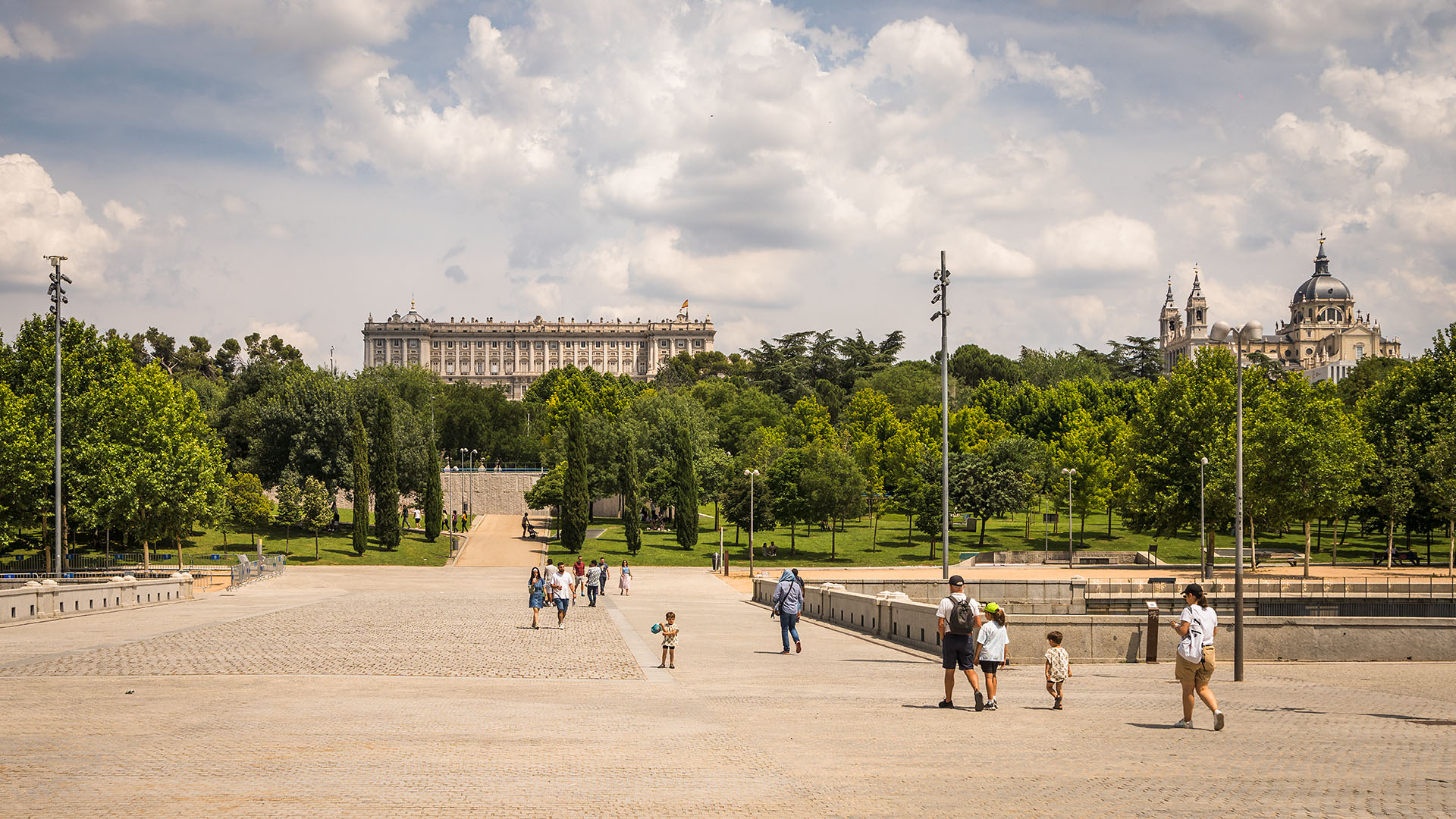
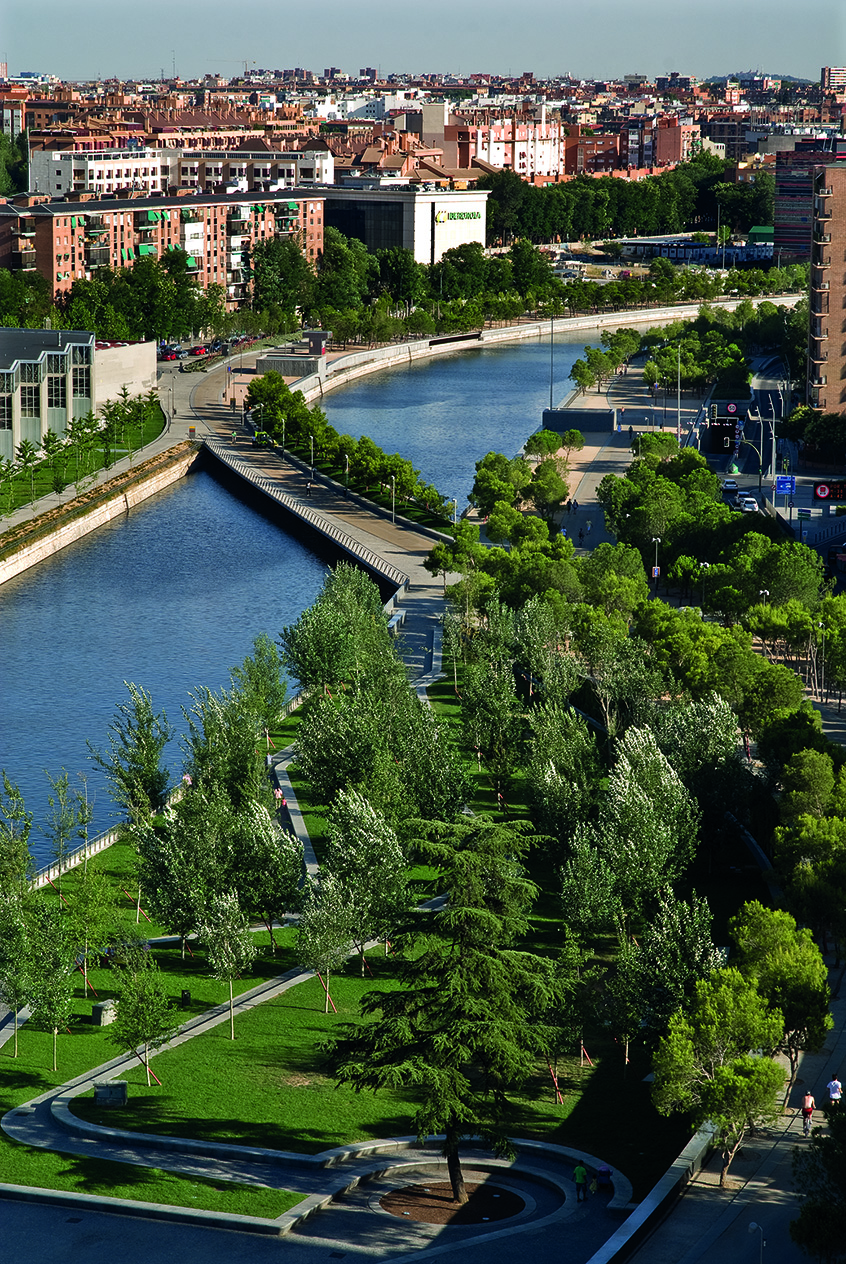
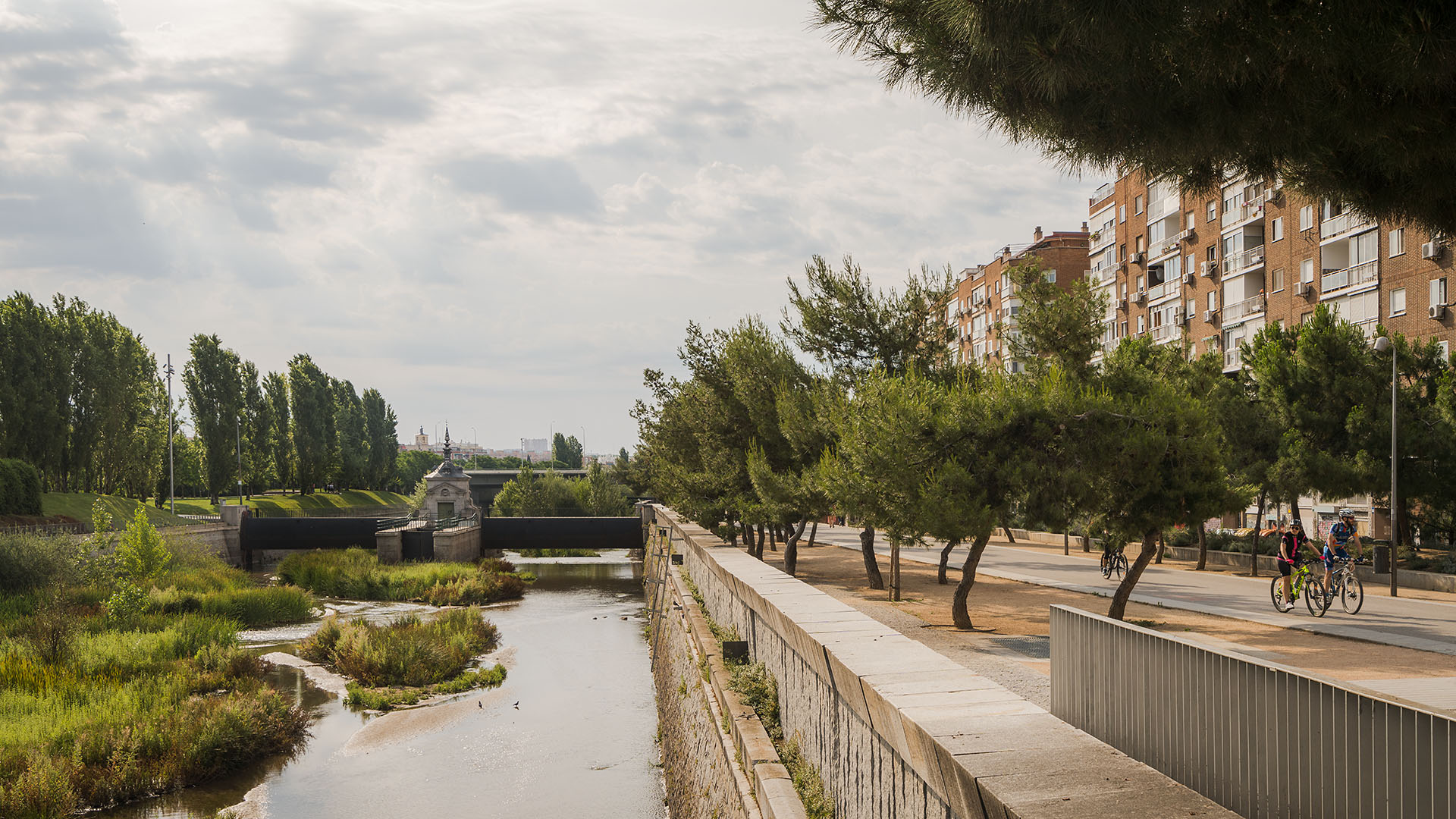
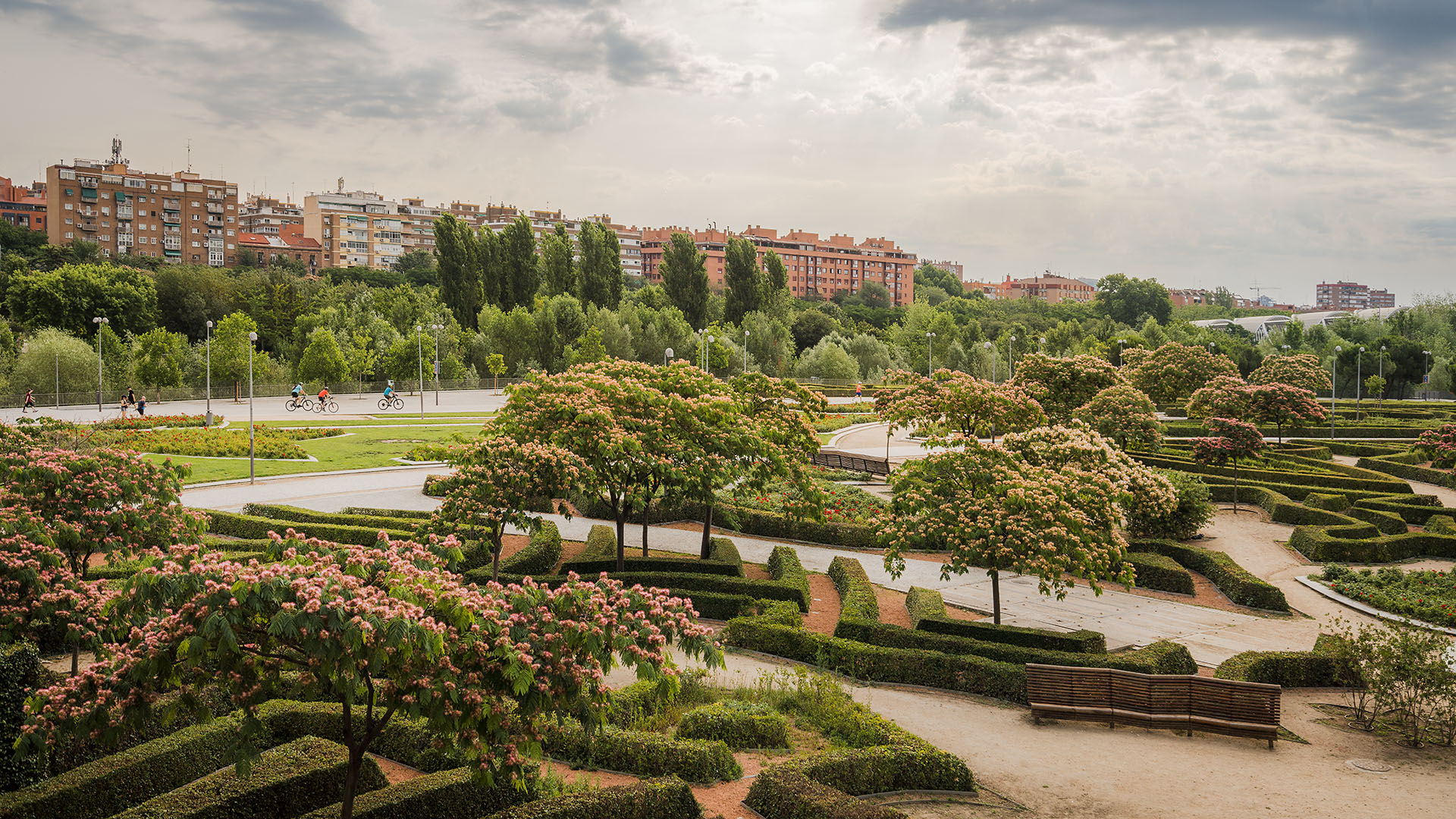
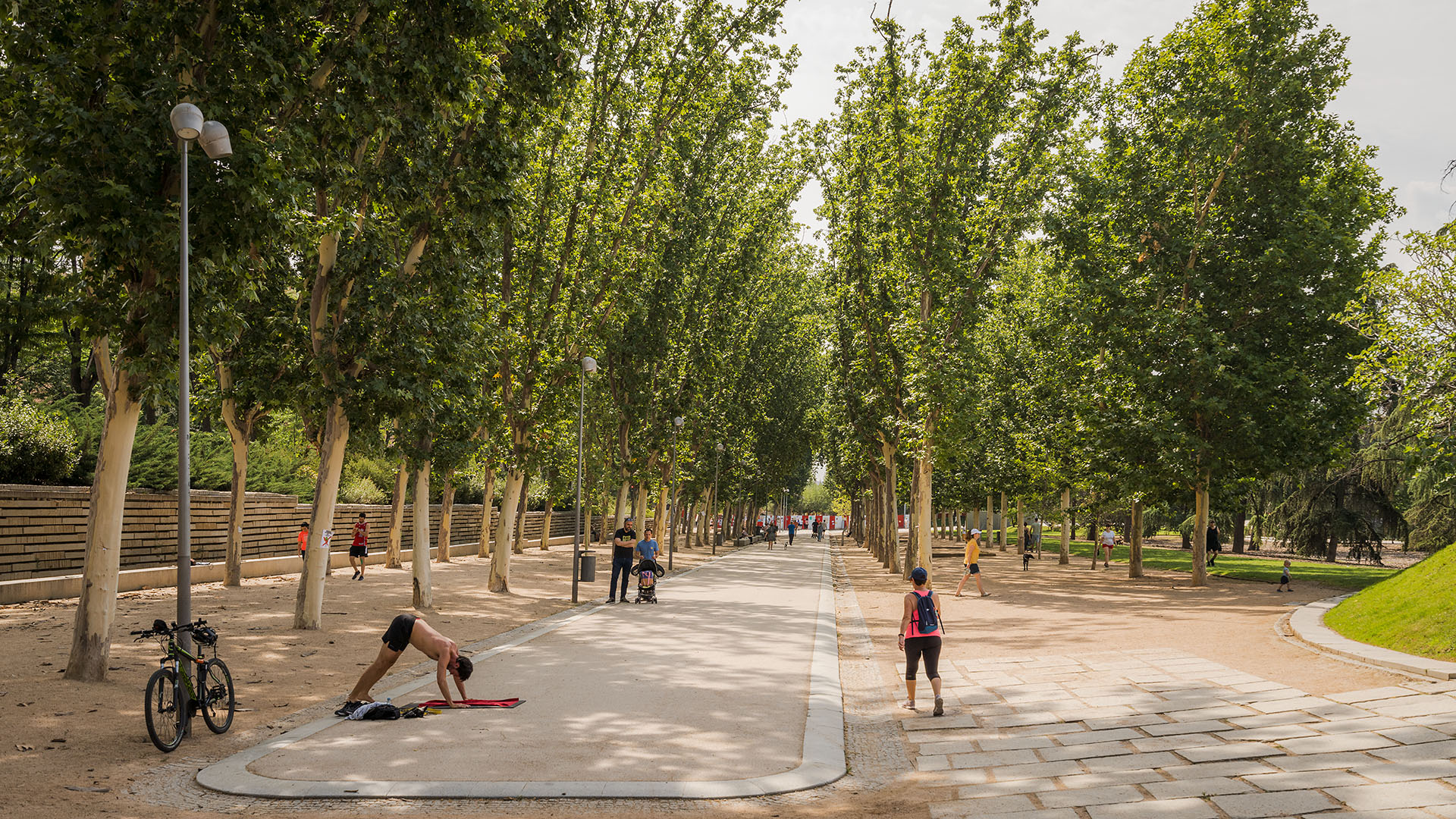
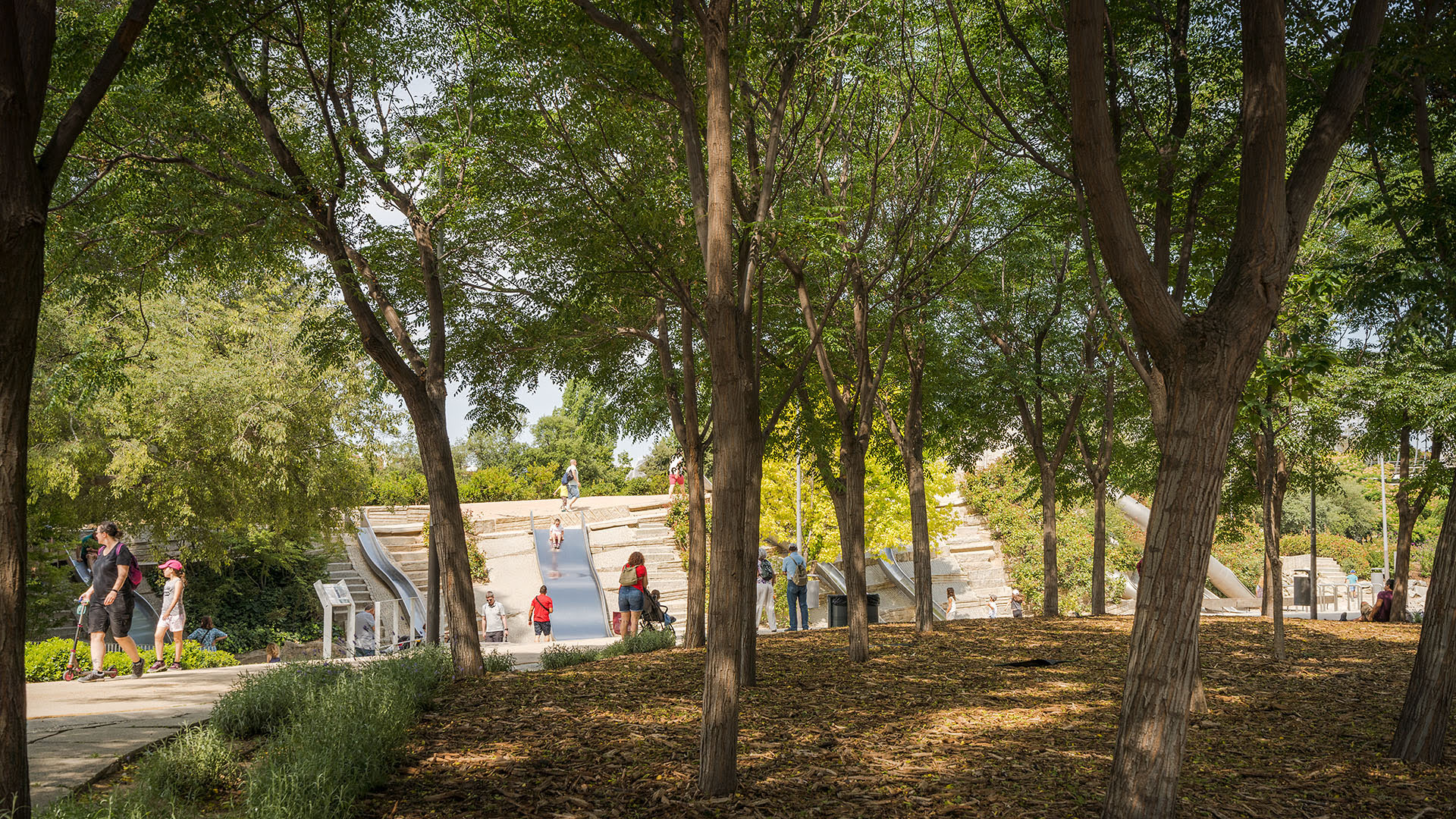
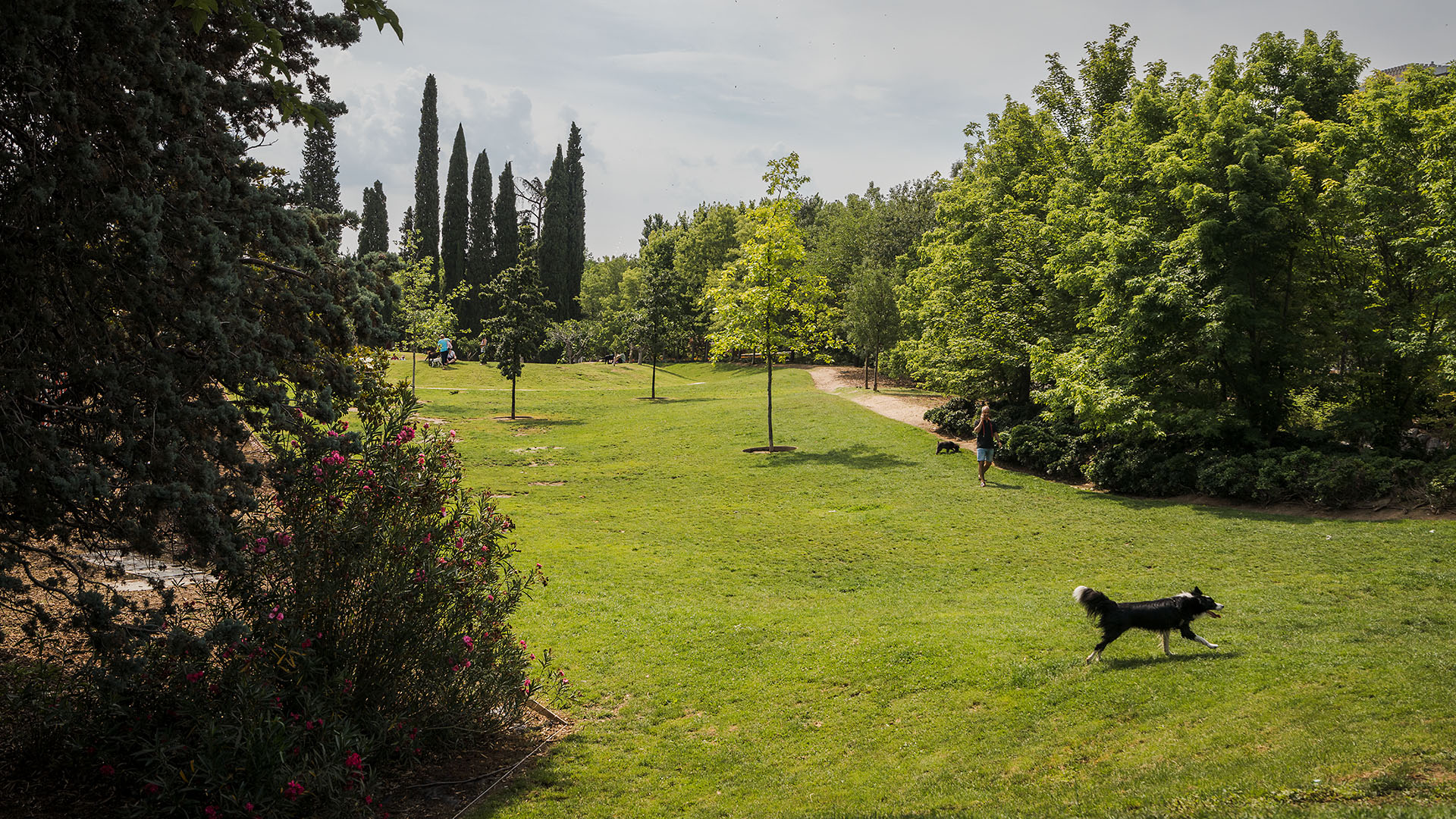
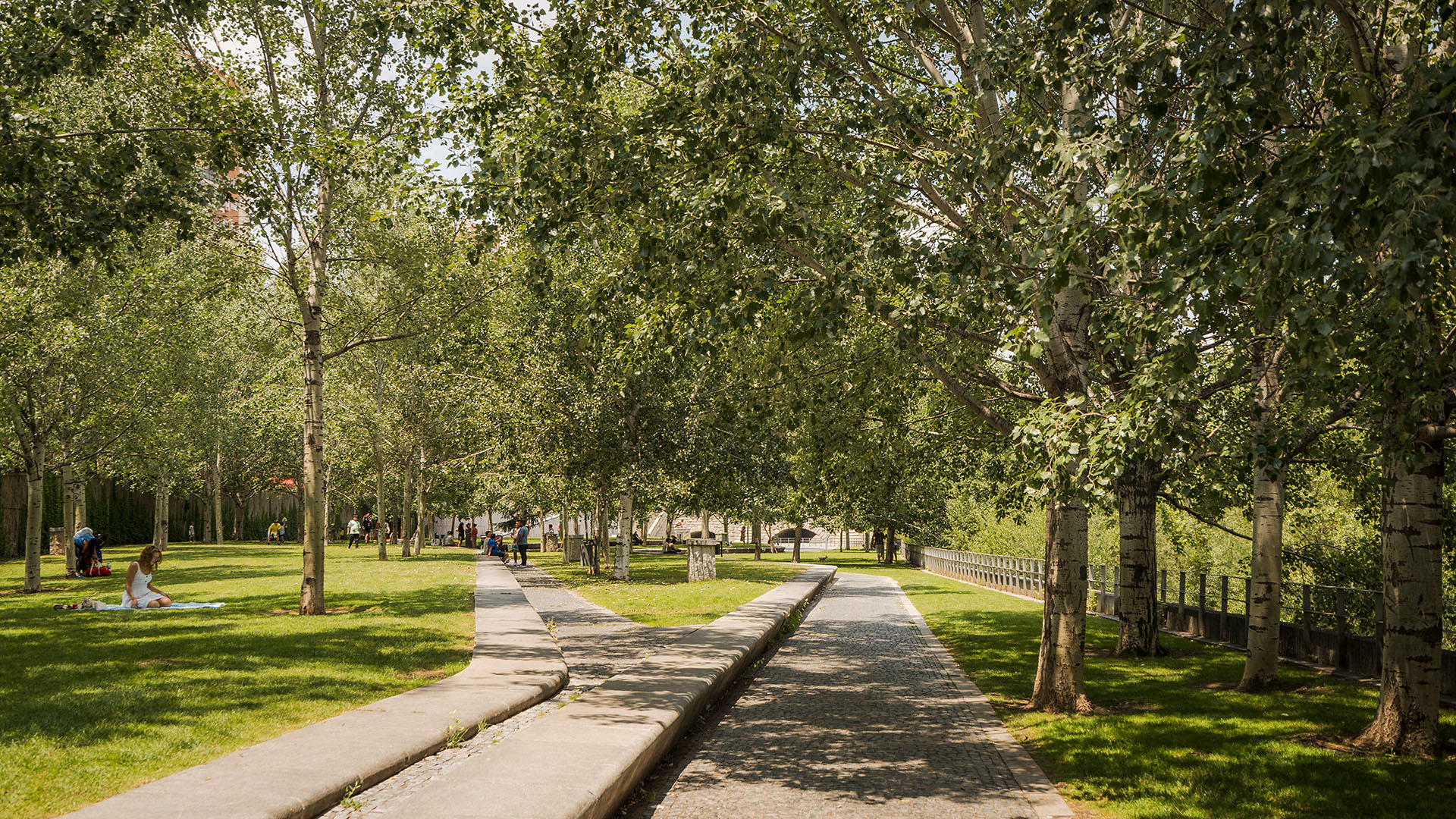
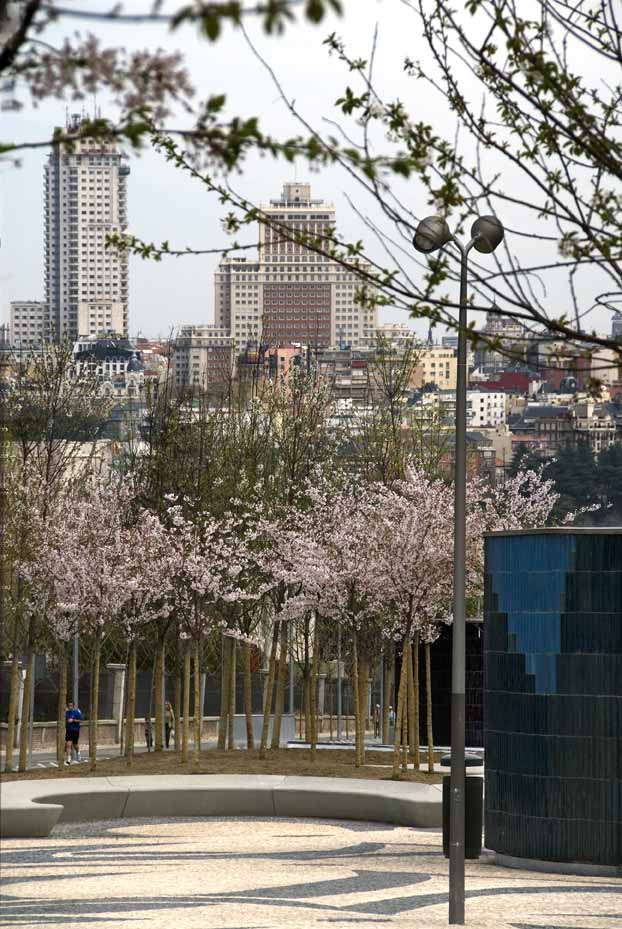
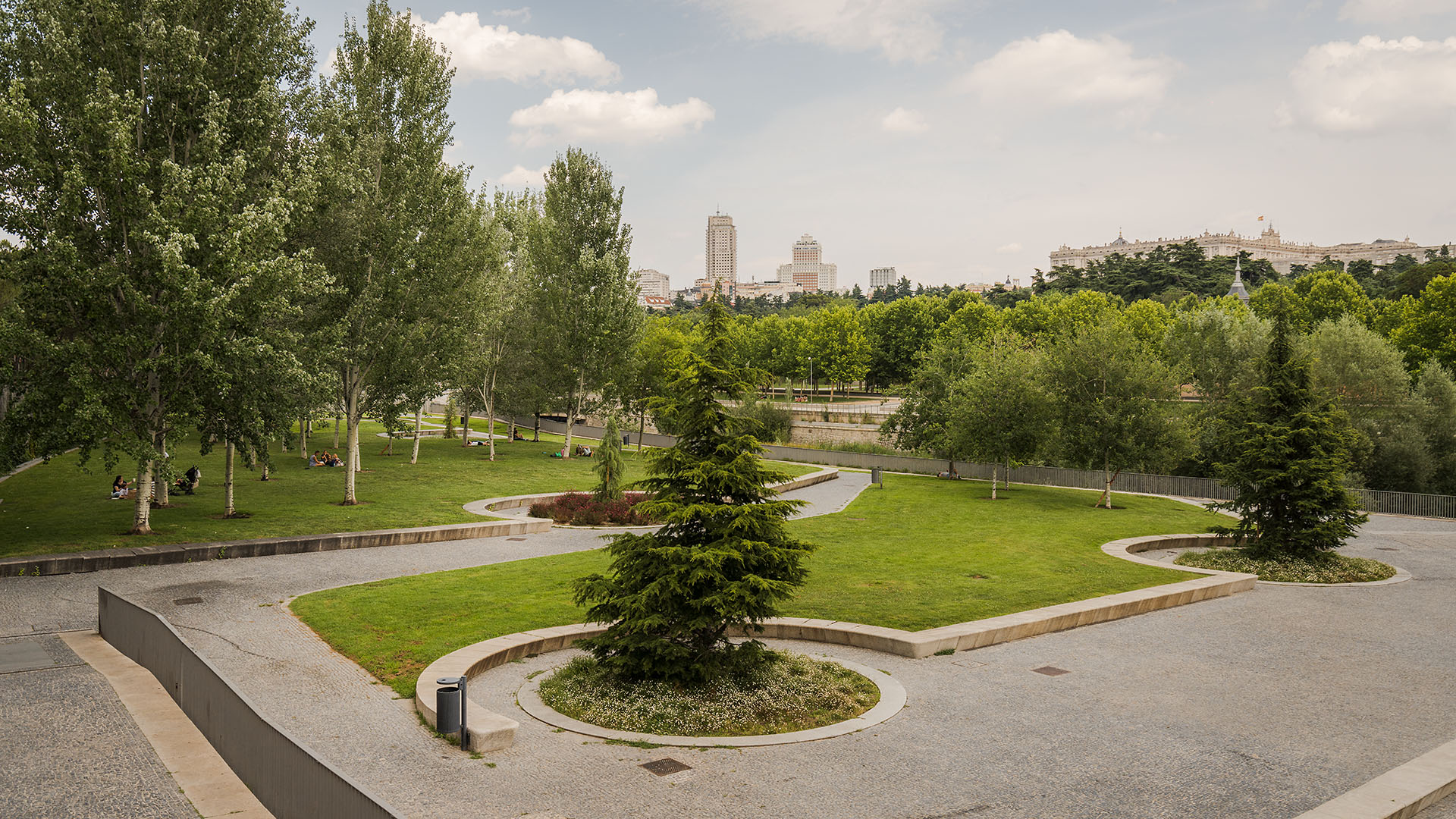
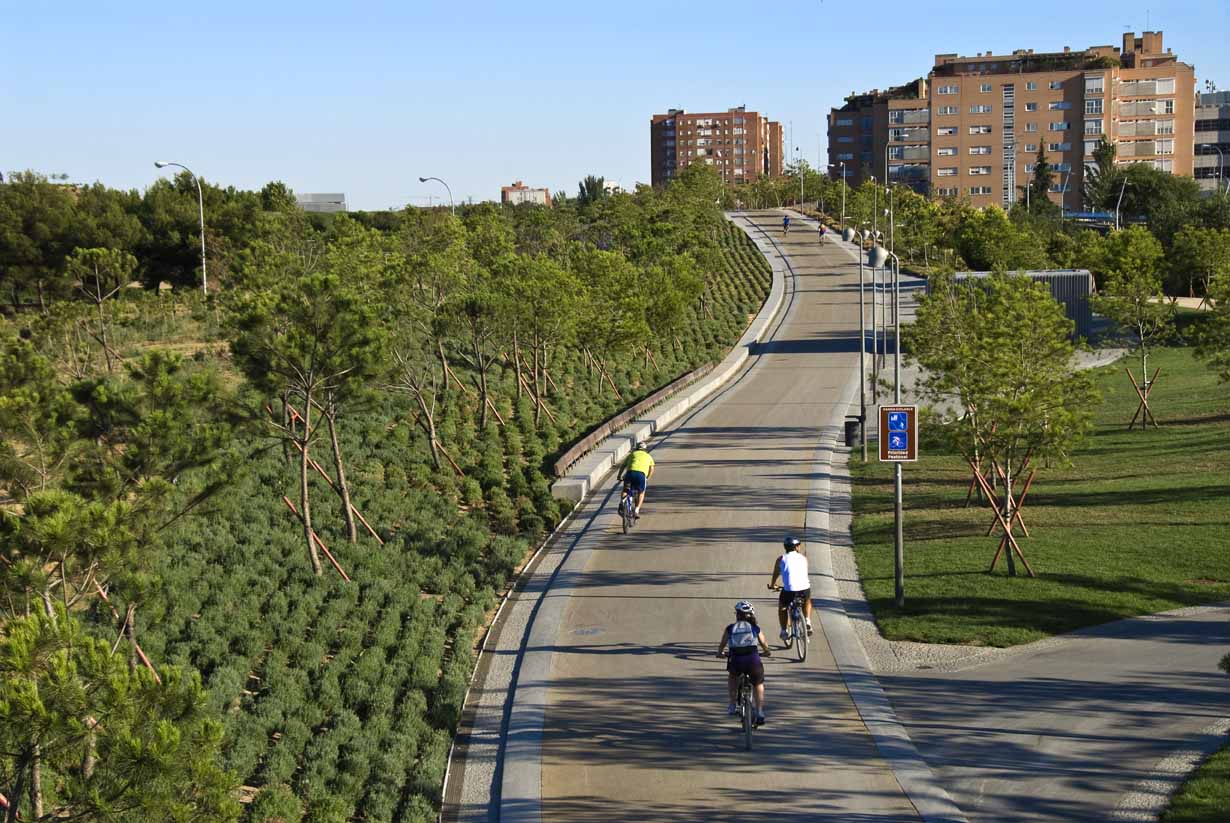
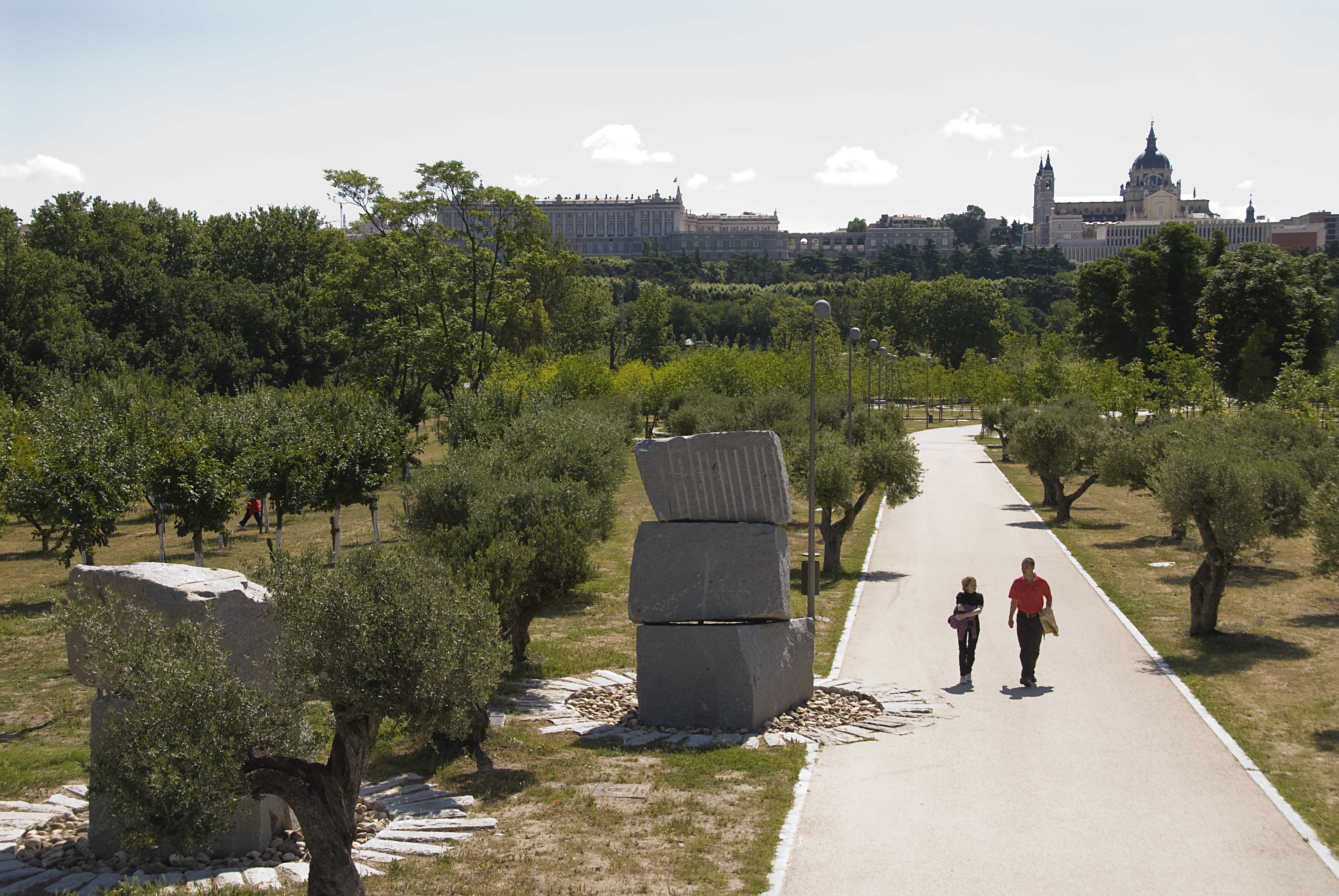
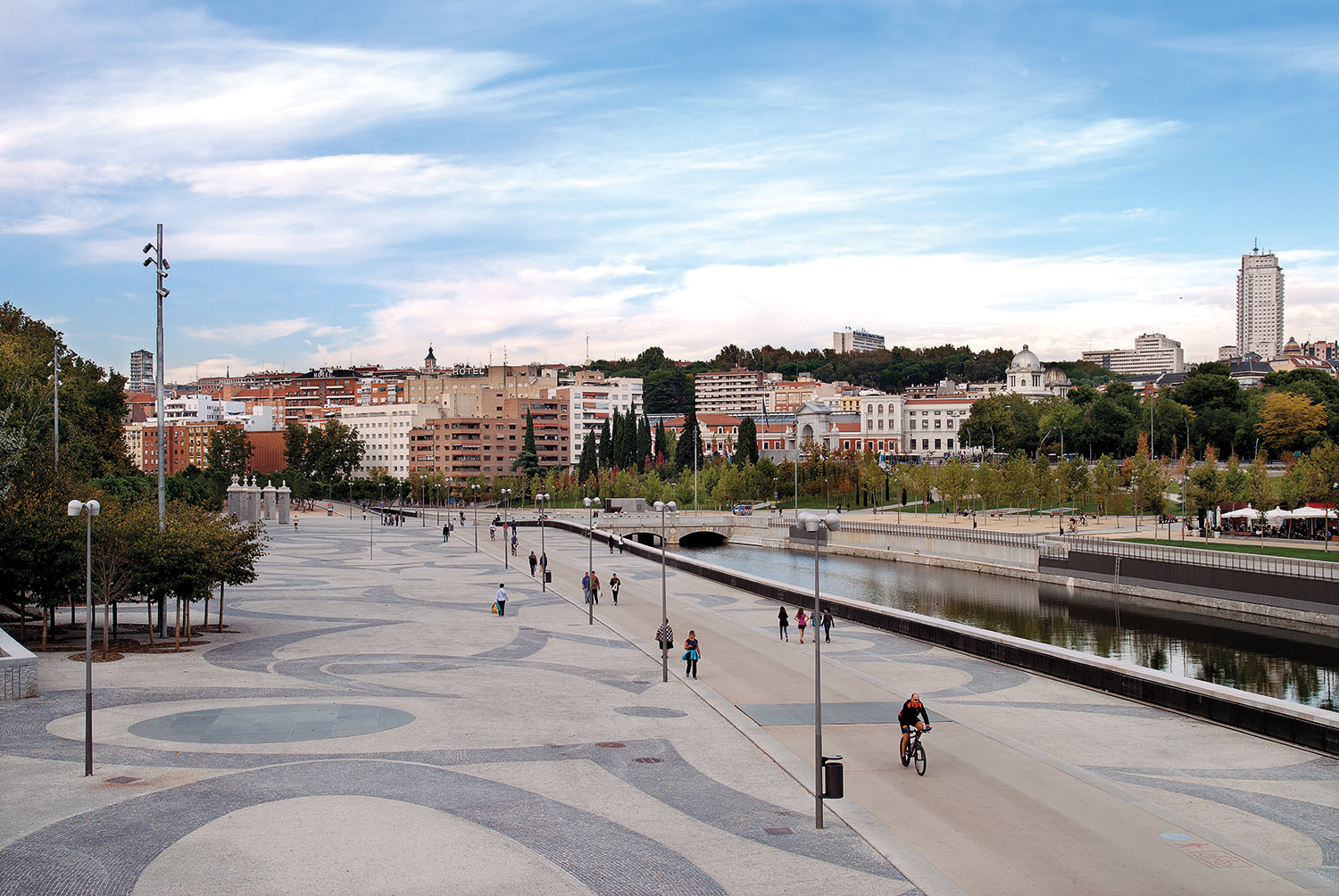
The intervention created a linear park extending for more than six kilometres and covering over 150 hectares of public space. It integrates extensive green areas, pedestrian and cycling routes, playgrounds, sports facilities and cultural spaces, forming a diverse landscape designed for everyday urban life. In this way, the project constructs a network of public and ecological spaces that operates at a regional scale.
Madrid Río primarily benefits residents of surrounding districts—many historically underserved—as well as the wider population of Madrid and its visitors. The park supports daily recreation, cultural activities and sustainable mobility, providing accessible public space for all social groups.
Beyond restoring the Manzanares riverbanks, this new green and public space infrastructure has had a transformative impact on the city, reshaping urban life and demonstrating how large infrastructures can be converted into regenerative landscapes that reconnect nature, infrastructure and society.
For much of the twentieth century, the motorway formed a major physical and environmental barrier, separating neighbourhoods from the river and fragmenting the urban fabric. The project emerged as an opportunity to reverse this condition. By burying more than 30 kilometres of motorway tunnels and reclaiming the surface for public use, Madrid Río reconnects the city with its river while restoring environmental continuity across the metropolitan landscape.
The intervention created a linear park extending for more than six kilometres and covering over 150 hectares of public space. It integrates extensive green areas, pedestrian and cycling routes, playgrounds, sports facilities and cultural spaces, forming a diverse landscape designed for everyday urban life. In this way, the project constructs a network of public and ecological spaces that operates at a regional scale.
Madrid Río primarily benefits residents of surrounding districts—many historically underserved—as well as the wider population of Madrid and its visitors. The park supports daily recreation, cultural activities and sustainable mobility, providing accessible public space for all social groups.
Beyond restoring the Manzanares riverbanks, this new green and public space infrastructure has had a transformative impact on the city, reshaping urban life and demonstrating how large infrastructures can be converted into regenerative landscapes that reconnect nature, infrastructure and society.
Madrid Río emerged from a fundamental question about the future of contemporary cities: how to transform infrastructures that once enabled urban growth but later became barriers within the urban fabric. For decades, the M-30 motorway ran along the banks of the Manzanares River in Madrid, creating what planners described as an “urban crack” that separated neighbourhoods from the river and fragmented public space.
At the beginning of the 2000s, the City of Madrid launched a strategy to reverse this condition by burying the motorway and reclaiming the surface for citizens. This large infrastructural operation opened the possibility of reinterpreting the river corridor not simply as a park, but as a metropolitan landscape capable of reconnecting the city with its geographical foundations.
Following an international competition, the project was developed by a multidisciplinary team. Under the direction of Ginés Garrido, a team formed by Burgos & Garrido, Porras La Casta, Rubio & Álvarez-Sala and West 8, together with the municipal technical team, produced a master plan covering more than 750 hectares. Architectural and landscape projects were later developed over 150 hectares, and the same team coordinated the construction phases.
Implemented between 2004 and 2011, the motorway was buried in more than 30 kilometres of tunnels, allowing the surface to be redesigned as a continuous civic landscape. Detailed design processes and citizen participation helped shape the project, guided by a strategic vision that recognised the restoration of the riverbanks as an opportunity to reconnect the city with its geography and establish a robust and genuinely local landscape strategy.
By revealing the natural trace of the river and treating landscape as a structuring element of the city, Madrid Río shows how infrastructure transformation can generate a new urban ecology and restore the relationship between citizens, nature and public space.
At the beginning of the 2000s, the City of Madrid launched a strategy to reverse this condition by burying the motorway and reclaiming the surface for citizens. This large infrastructural operation opened the possibility of reinterpreting the river corridor not simply as a park, but as a metropolitan landscape capable of reconnecting the city with its geographical foundations.
Following an international competition, the project was developed by a multidisciplinary team. Under the direction of Ginés Garrido, a team formed by Burgos & Garrido, Porras La Casta, Rubio & Álvarez-Sala and West 8, together with the municipal technical team, produced a master plan covering more than 750 hectares. Architectural and landscape projects were later developed over 150 hectares, and the same team coordinated the construction phases.
Implemented between 2004 and 2011, the motorway was buried in more than 30 kilometres of tunnels, allowing the surface to be redesigned as a continuous civic landscape. Detailed design processes and citizen participation helped shape the project, guided by a strategic vision that recognised the restoration of the riverbanks as an opportunity to reconnect the city with its geography and establish a robust and genuinely local landscape strategy.
By revealing the natural trace of the river and treating landscape as a structuring element of the city, Madrid Río shows how infrastructure transformation can generate a new urban ecology and restore the relationship between citizens, nature and public space.
Social inclusion
Sustainable mobility
Public space transformation
Urban regeneration
Nature-based solutions
Madrid Río addresses environmental sustainability through large-scale ecological regeneration of a former motorway corridor, transforming a highly polluted infrastructure landscape into a resilient urban ecosystem.
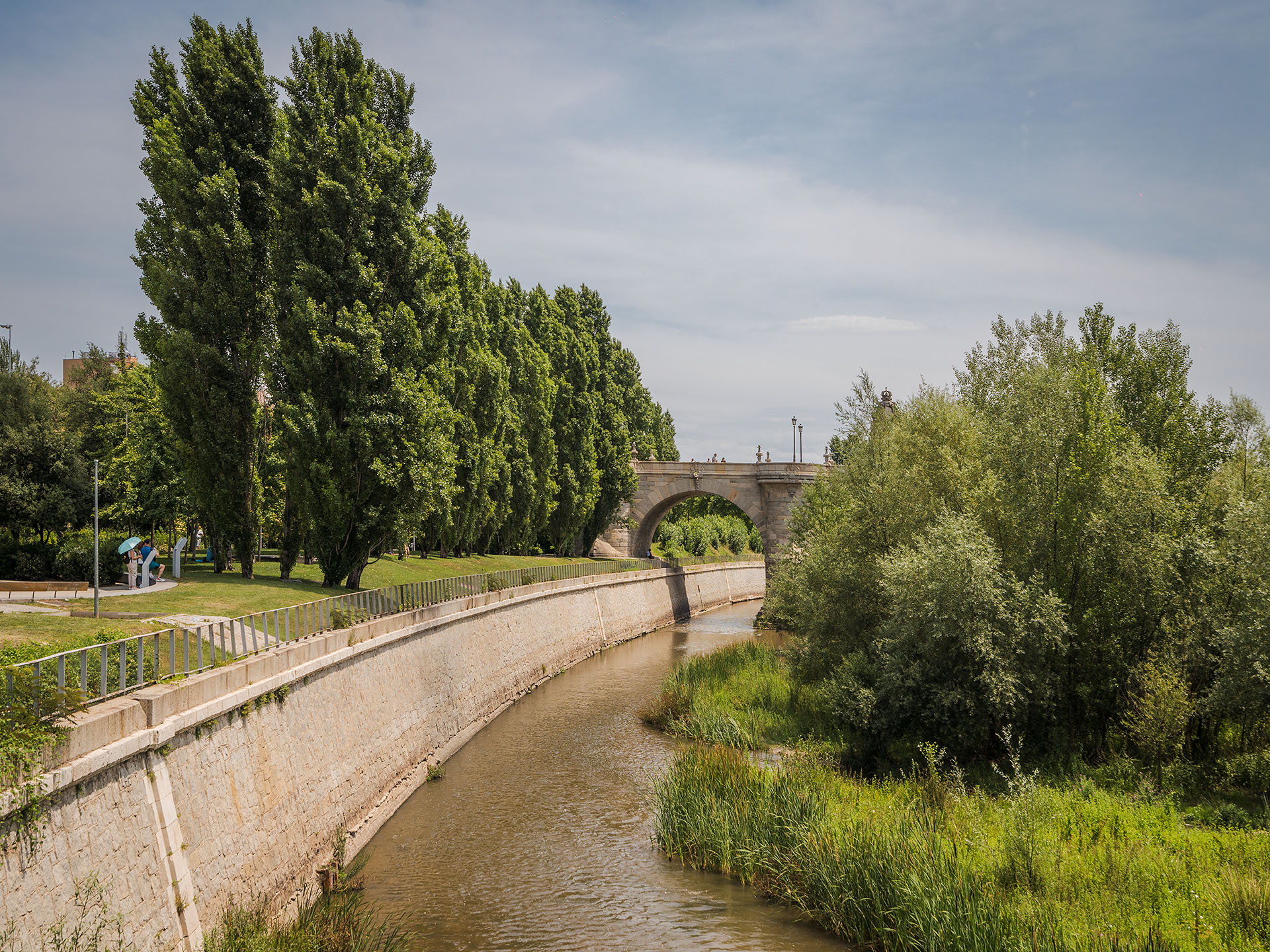
The project sought to restore the ecological role of the Manzanares River while improving conditions in surrounding neighbourhoods. For decades, riverbanks were dominated by traffic that generated pollution, noise and urban fragmentation. The intervention replaced transport infrastructure with a system of green and blue spaces integrated into the city.
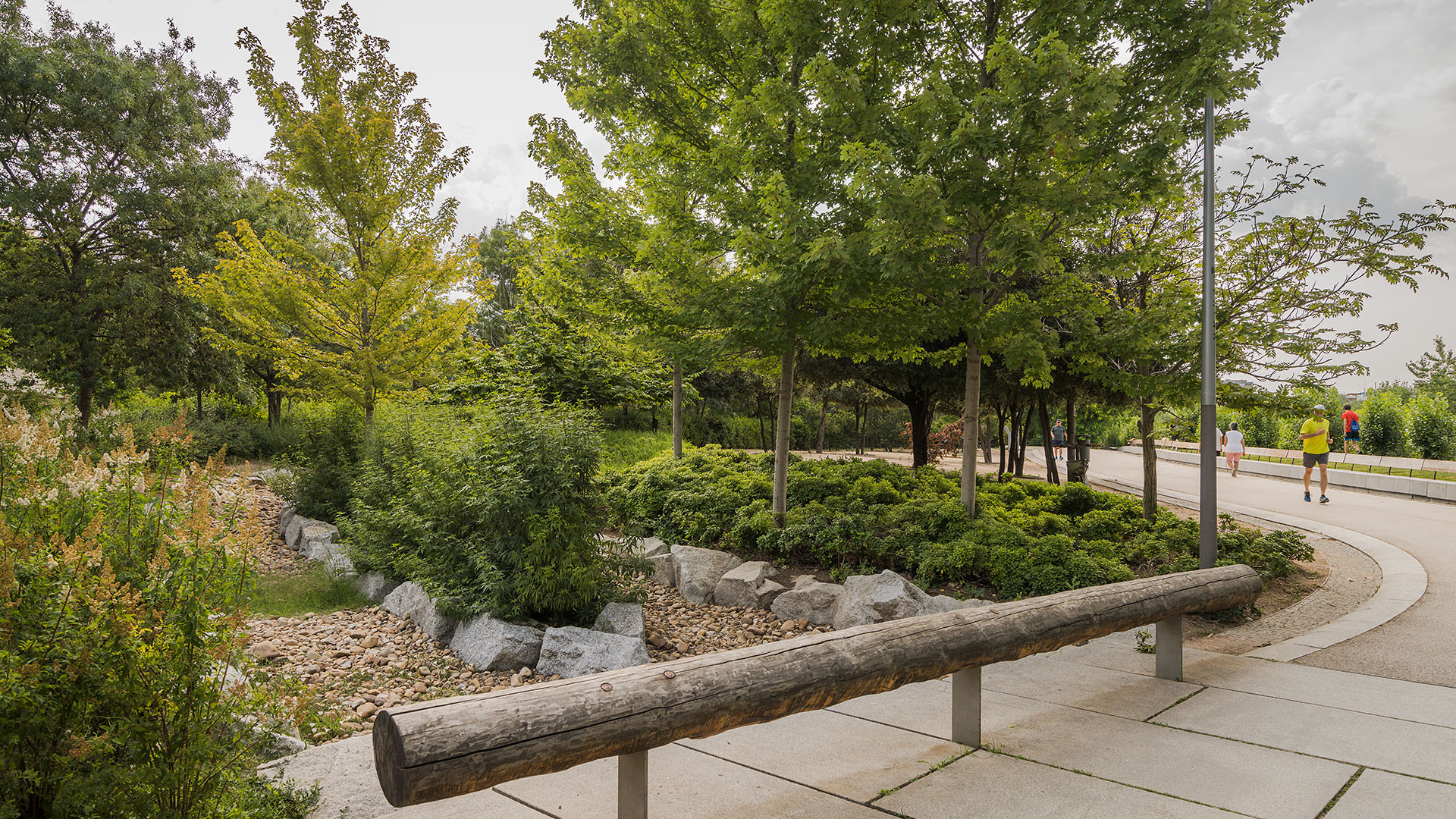
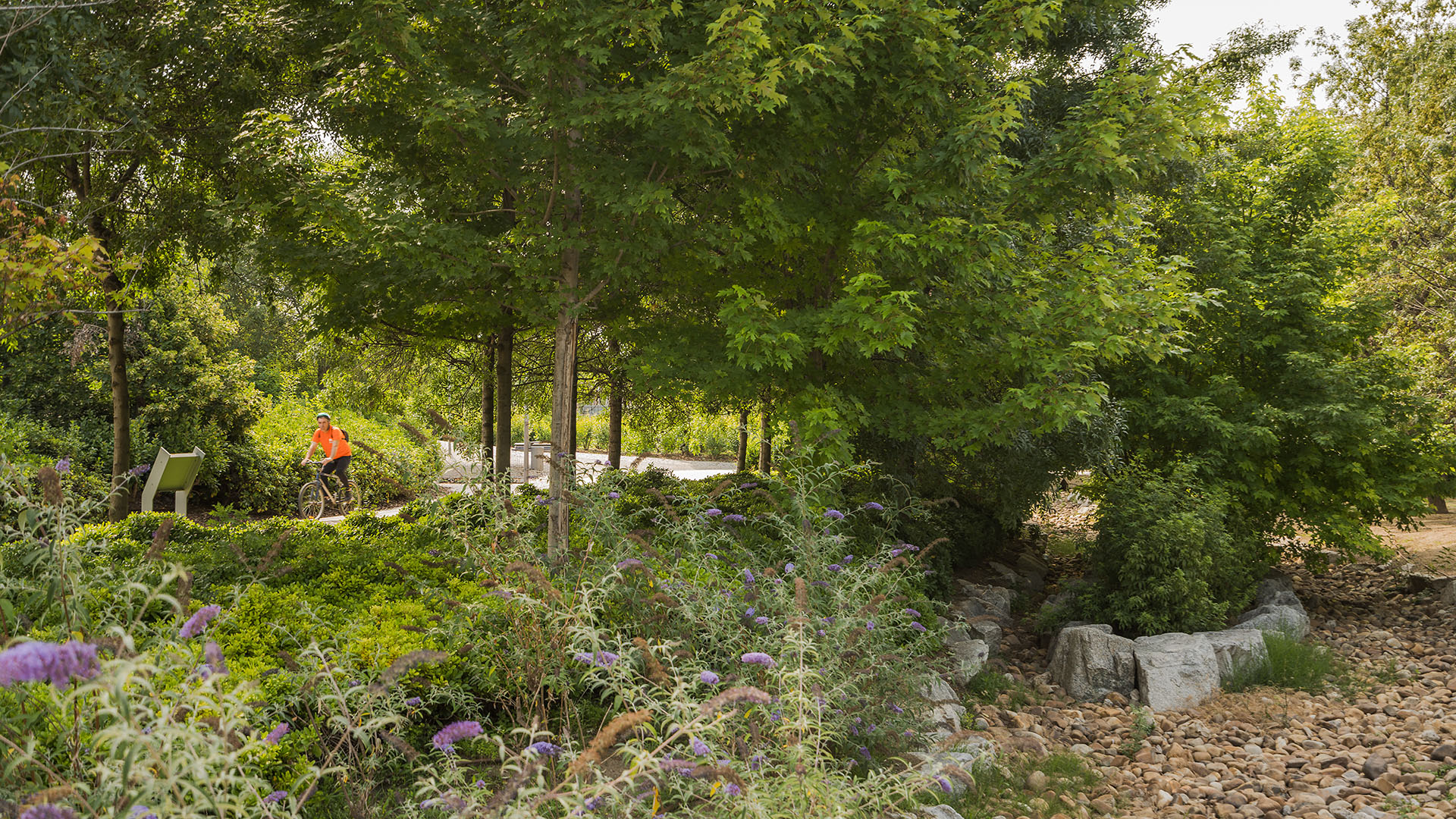
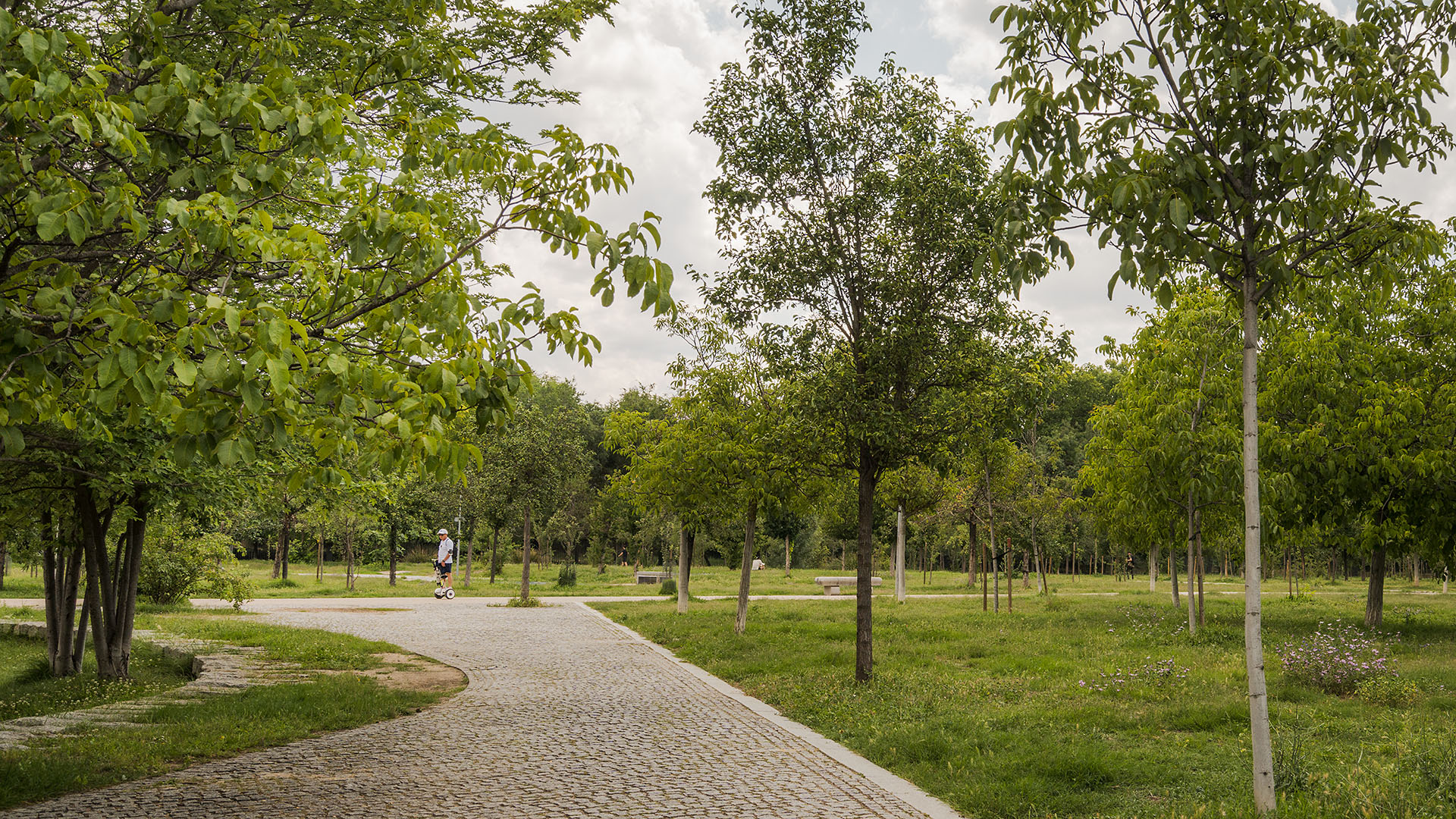
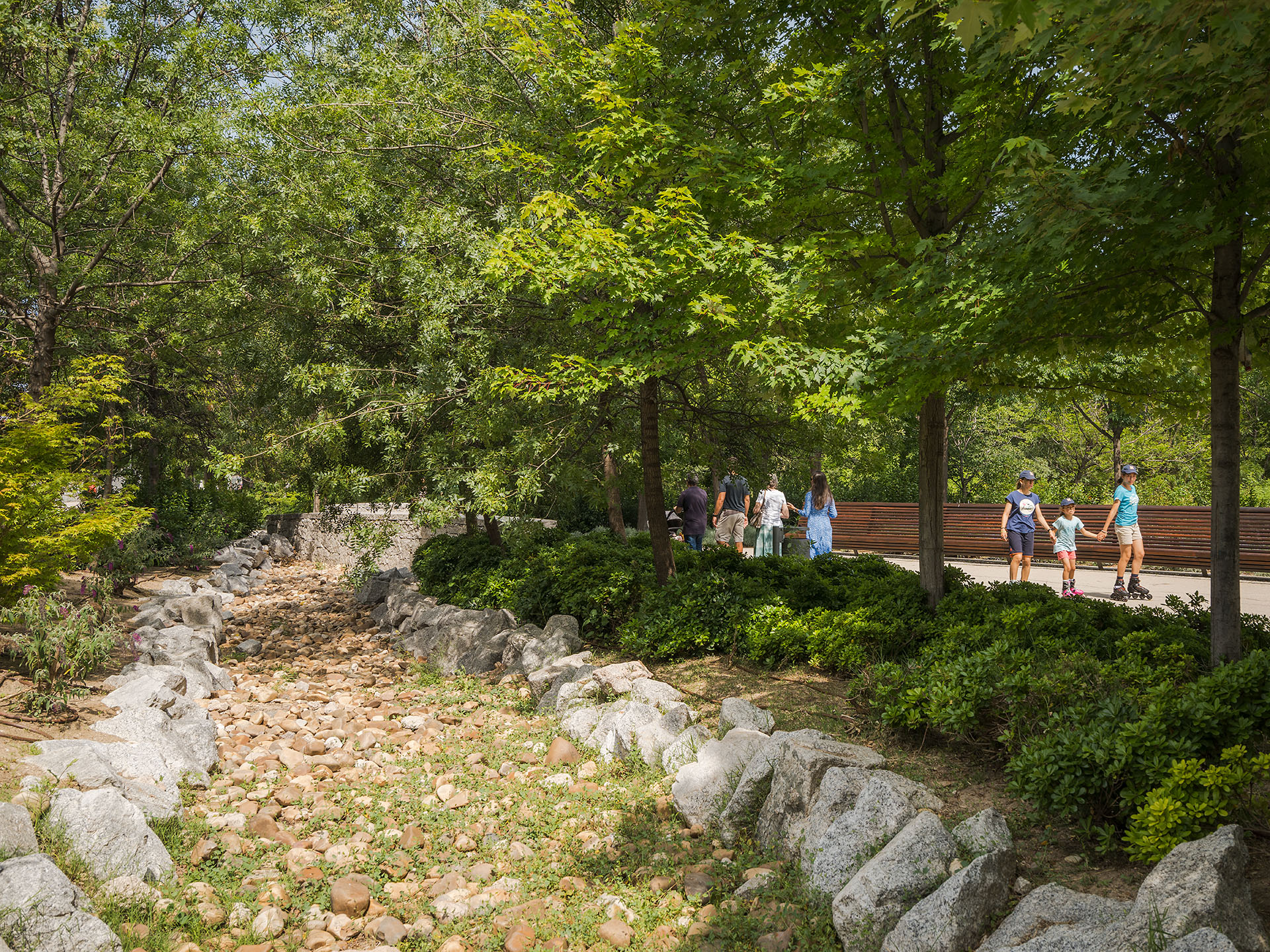
Implementation combined major infrastructural transformation with nature-based landscape strategies. Over 30 km of motorway were buried, freeing more than 150 ha of surface for ecological restoration and public space. Around 96 ha of the park sit above underground infrastructure, making it the largest planting operation over urban structures worldwide. More than 33,000 trees and 470,000 native shrubs were planted, creating habitats that support urban biodiversity.
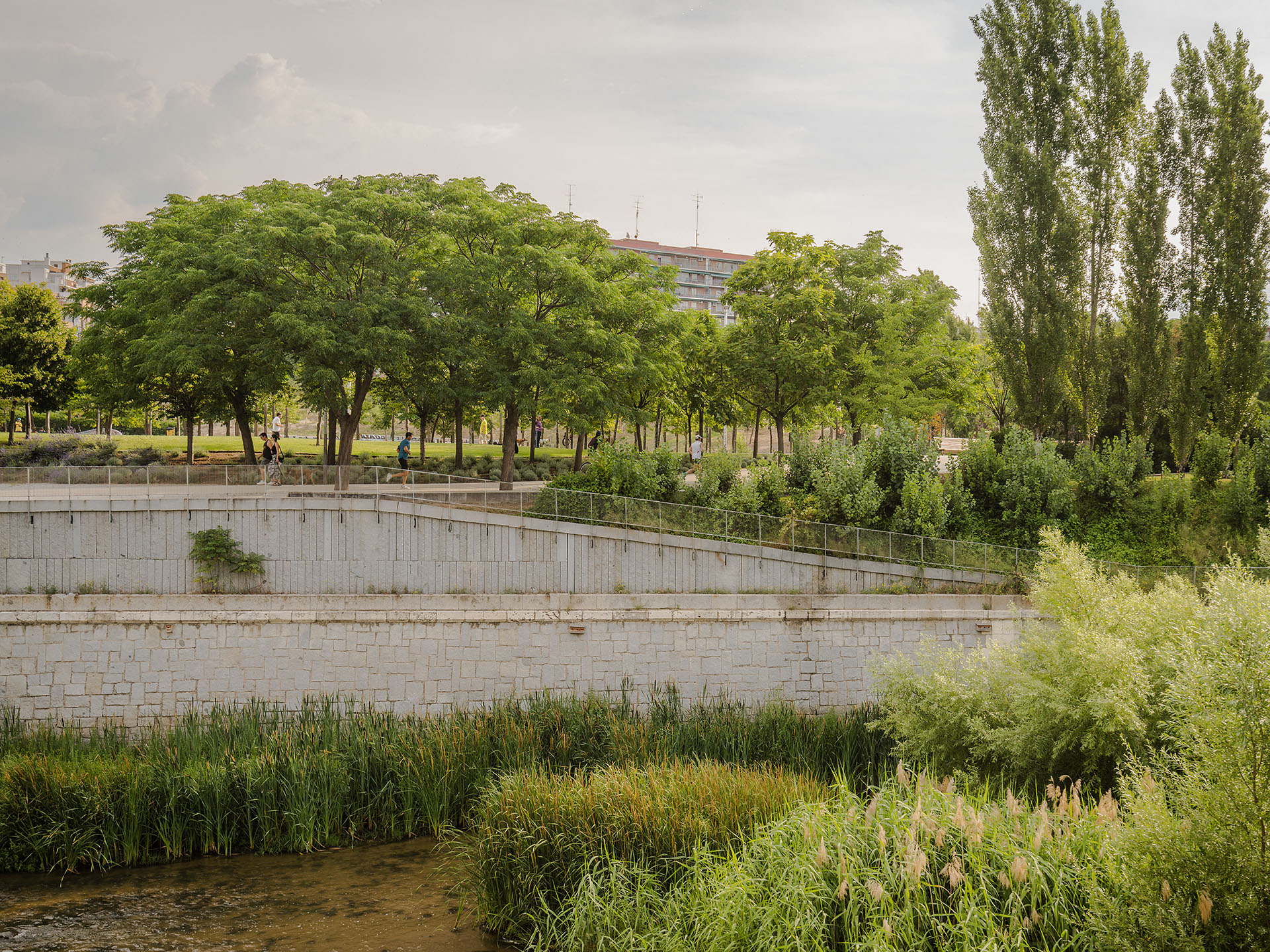
Twenty stormwater retention basins prevent polluted runoff from entering the river. Permeable soils, restored riverbanks and vegetation improve rainwater infiltration, mitigate heat-island effects and strengthen river ecology.
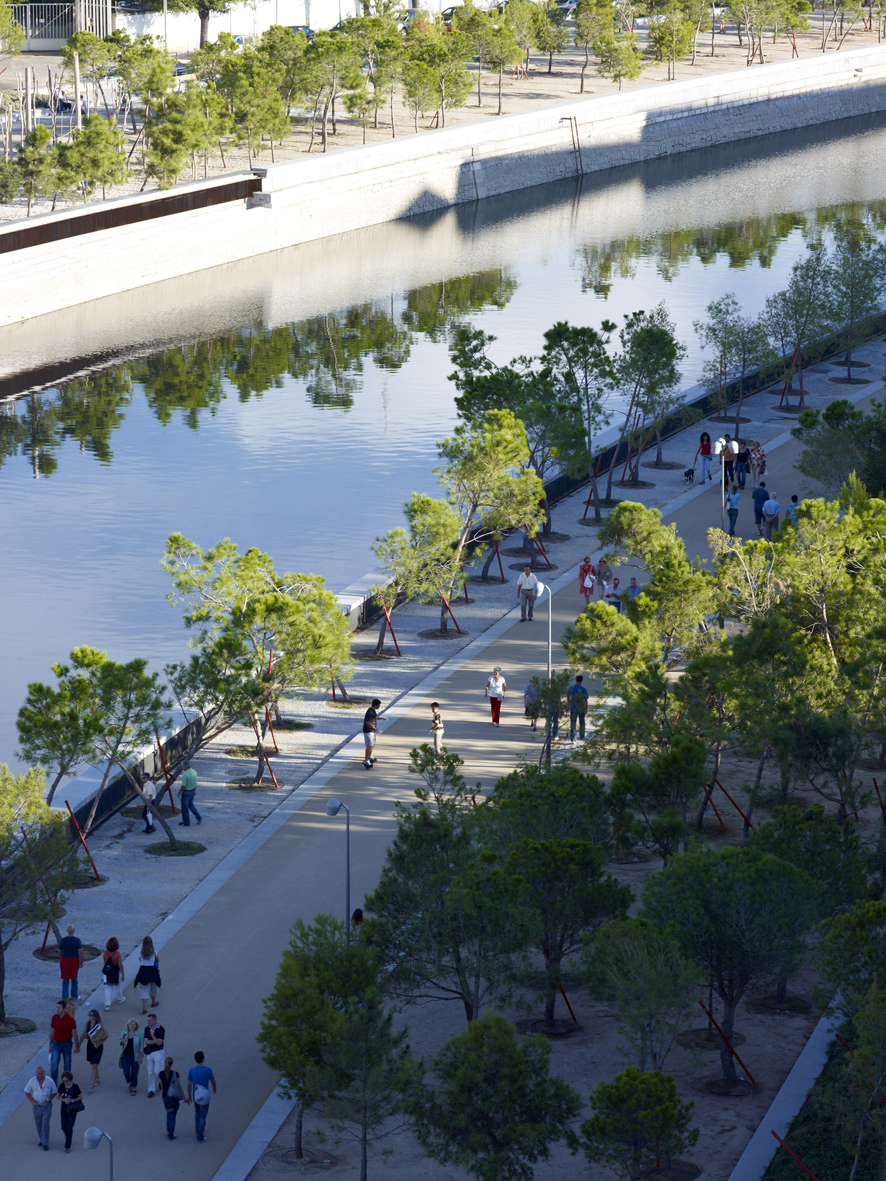
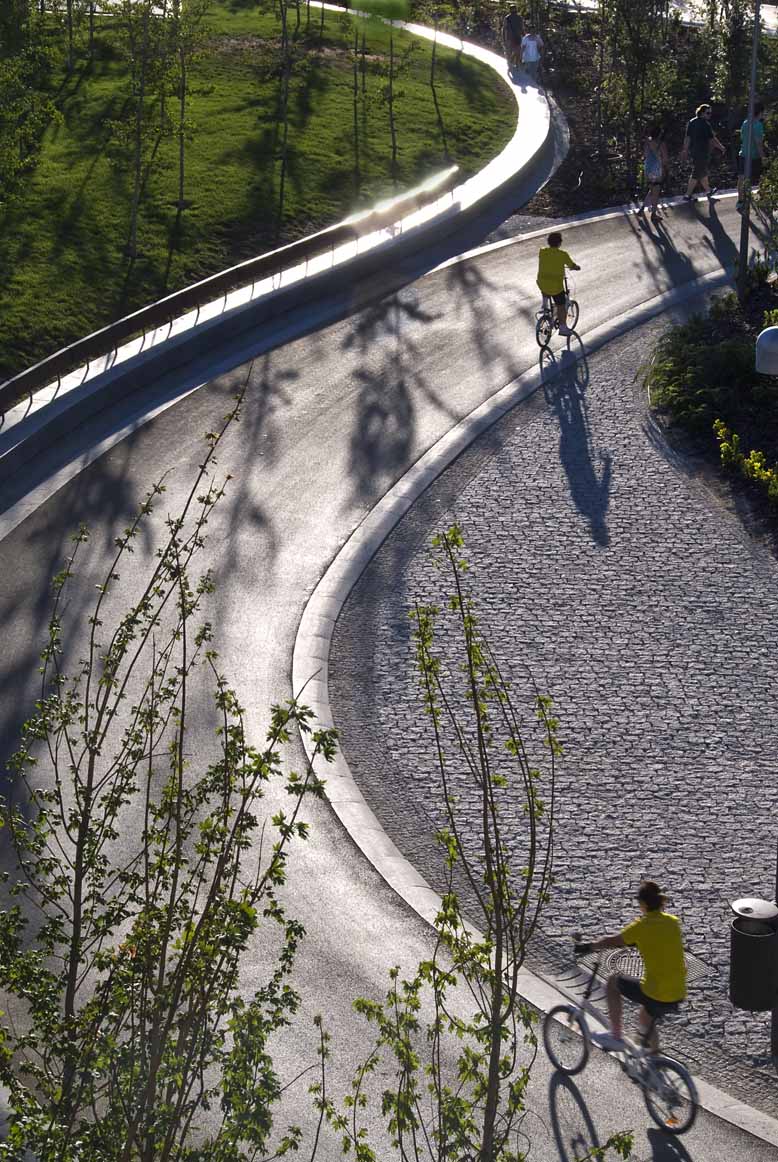
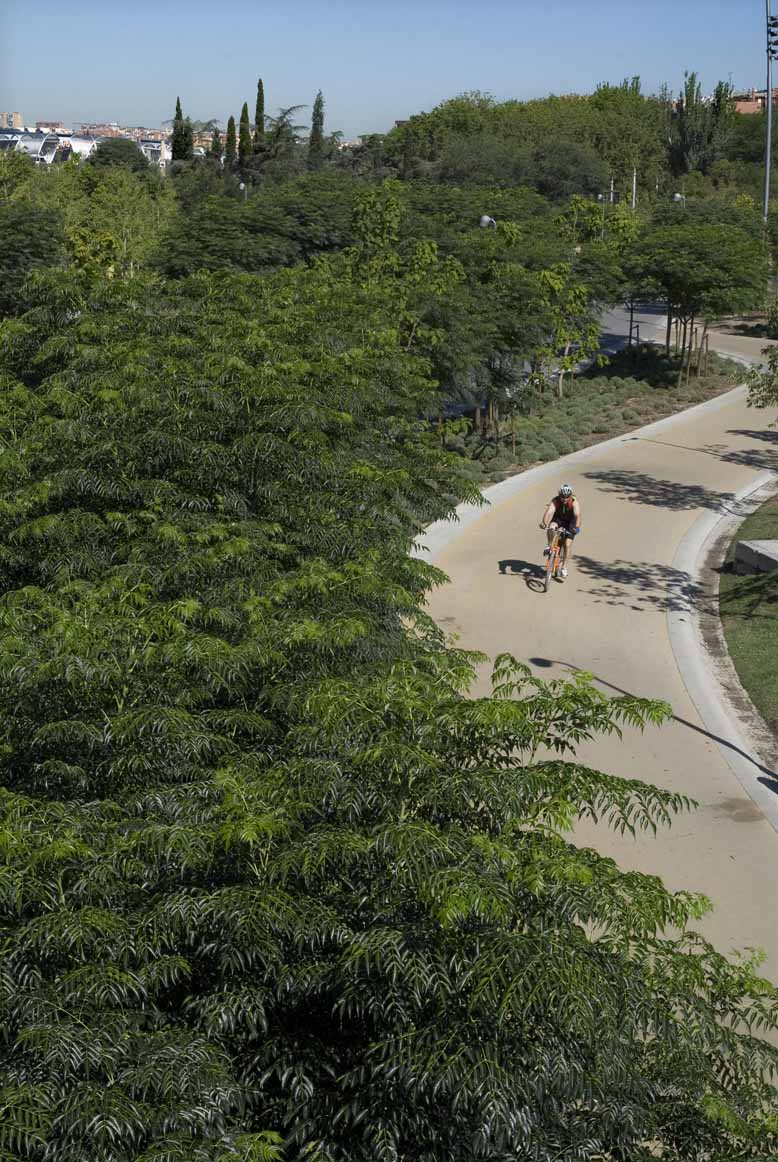
The project promotes sustainable mobility through over 40 km of pedestrian and cycling routes, reducing dependence on private vehicles while providing accessible green space to historically underserved districts.
Madrid Río required a large multidisciplinary team and innovative technical solutions. The belief that complex underground infrastructures and a large ecological landscape could coexist vertically is one of the project’s key contributions to sustainable urban transformation.
The project sought to restore the ecological role of the Manzanares River while improving conditions in surrounding neighbourhoods. For decades, riverbanks were dominated by traffic that generated pollution, noise and urban fragmentation. The intervention replaced transport infrastructure with a system of green and blue spaces integrated into the city.
Implementation combined major infrastructural transformation with nature-based landscape strategies. Over 30 km of motorway were buried, freeing more than 150 ha of surface for ecological restoration and public space. Around 96 ha of the park sit above underground infrastructure, making it the largest planting operation over urban structures worldwide. More than 33,000 trees and 470,000 native shrubs were planted, creating habitats that support urban biodiversity.
Twenty stormwater retention basins prevent polluted runoff from entering the river. Permeable soils, restored riverbanks and vegetation improve rainwater infiltration, mitigate heat-island effects and strengthen river ecology.
The project promotes sustainable mobility through over 40 km of pedestrian and cycling routes, reducing dependence on private vehicles while providing accessible green space to historically underserved districts.
Madrid Río required a large multidisciplinary team and innovative technical solutions. The belief that complex underground infrastructures and a large ecological landscape could coexist vertically is one of the project’s key contributions to sustainable urban transformation.
Madrid Río transforms a former motorway corridor into a civic landscape where nature, culture and everyday life converge, redefining the aesthetic experience of the city. The project sought to create a meaningful and beautiful public environment capable of reconnecting citizens with the Manzanares River and with the historical landscape of Madrid.
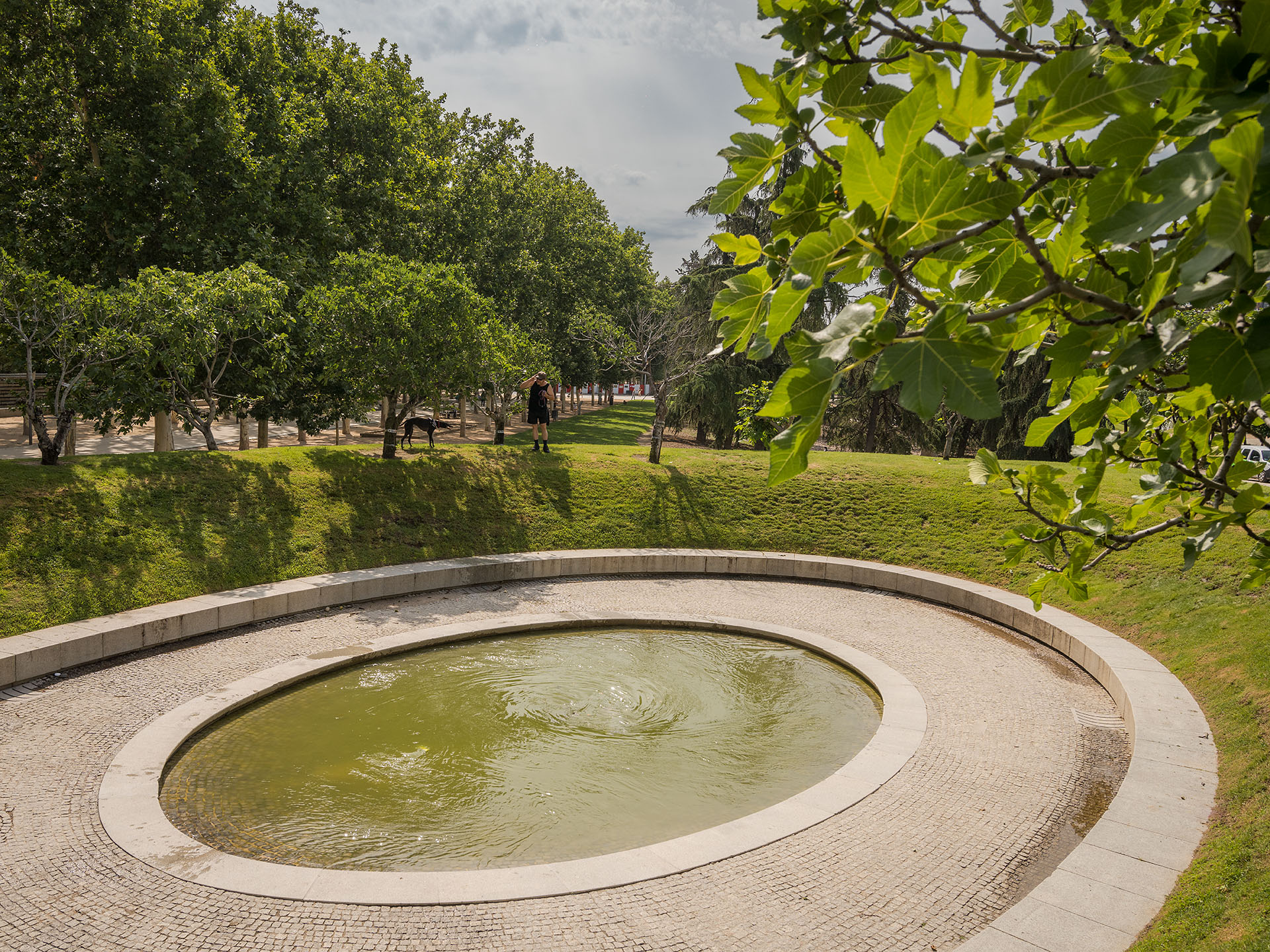
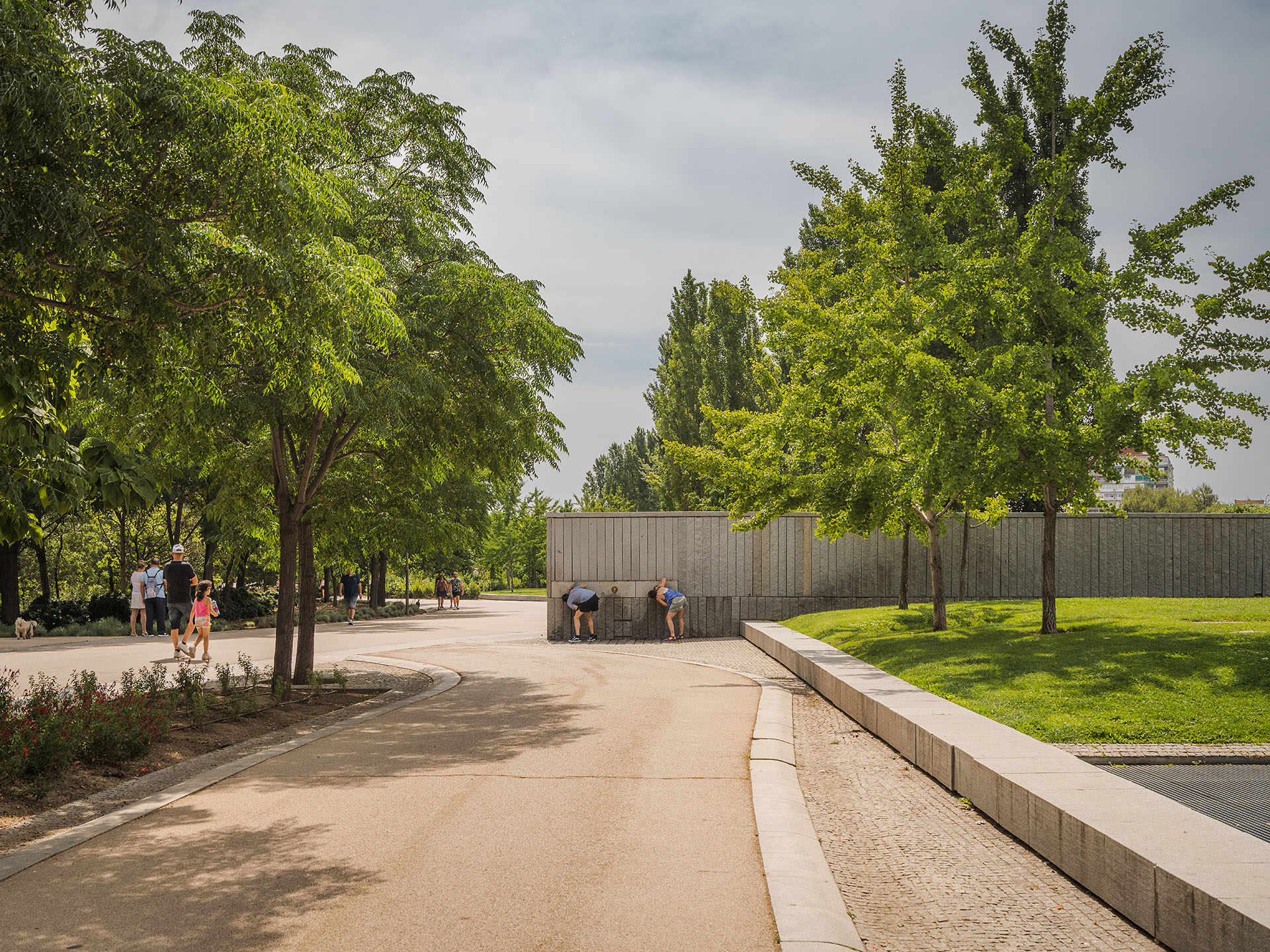
The design treats landscape as an urban structure that reveals the geography of the river while creating a sequence of spatial experiences along more than six kilometres of riverfront. Carefully modelled topography, dense tree canopies, water features and shaded promenades generate comfortable microclimates and stimulate the senses through light, vegetation, texture and sound.
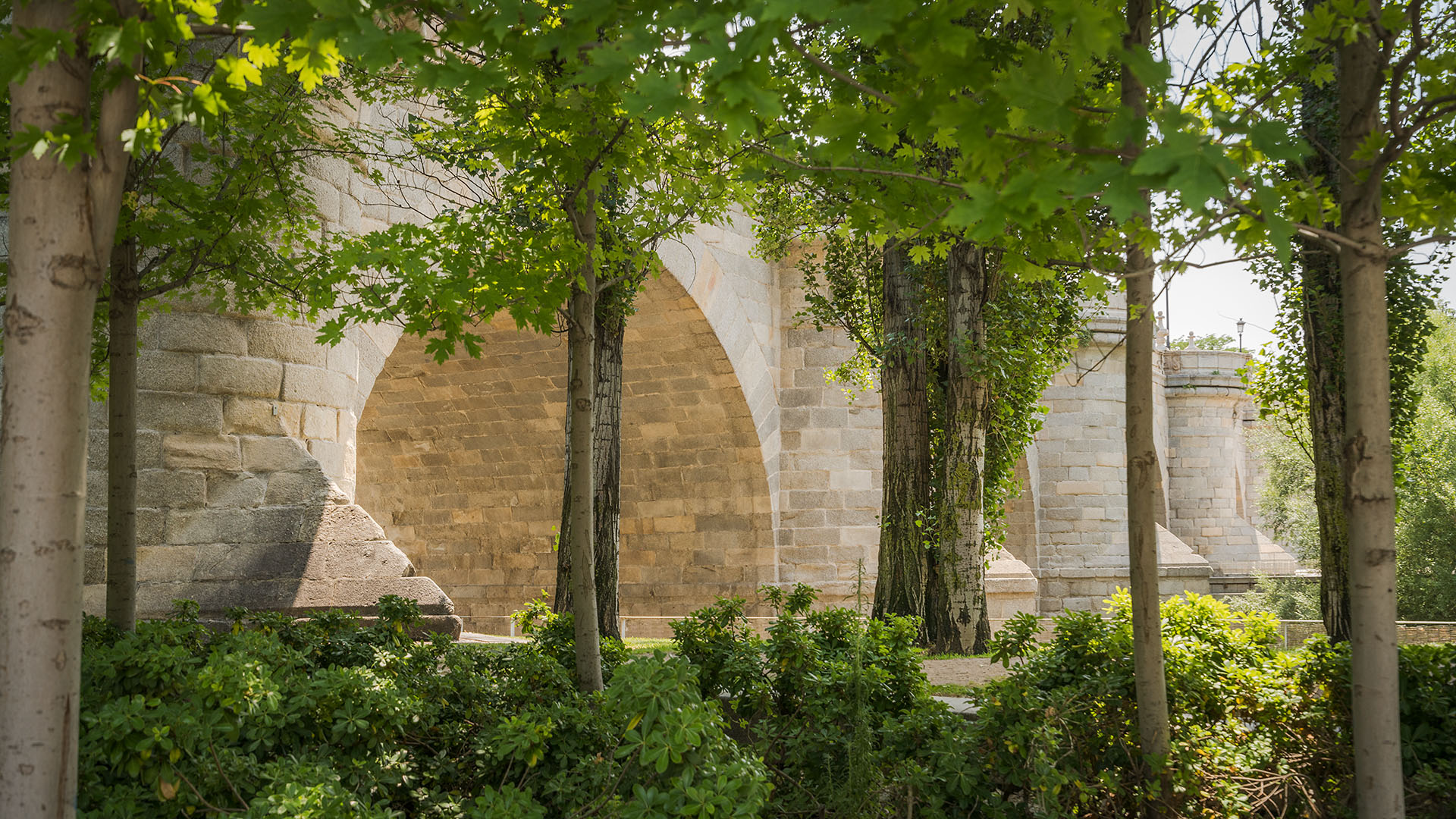
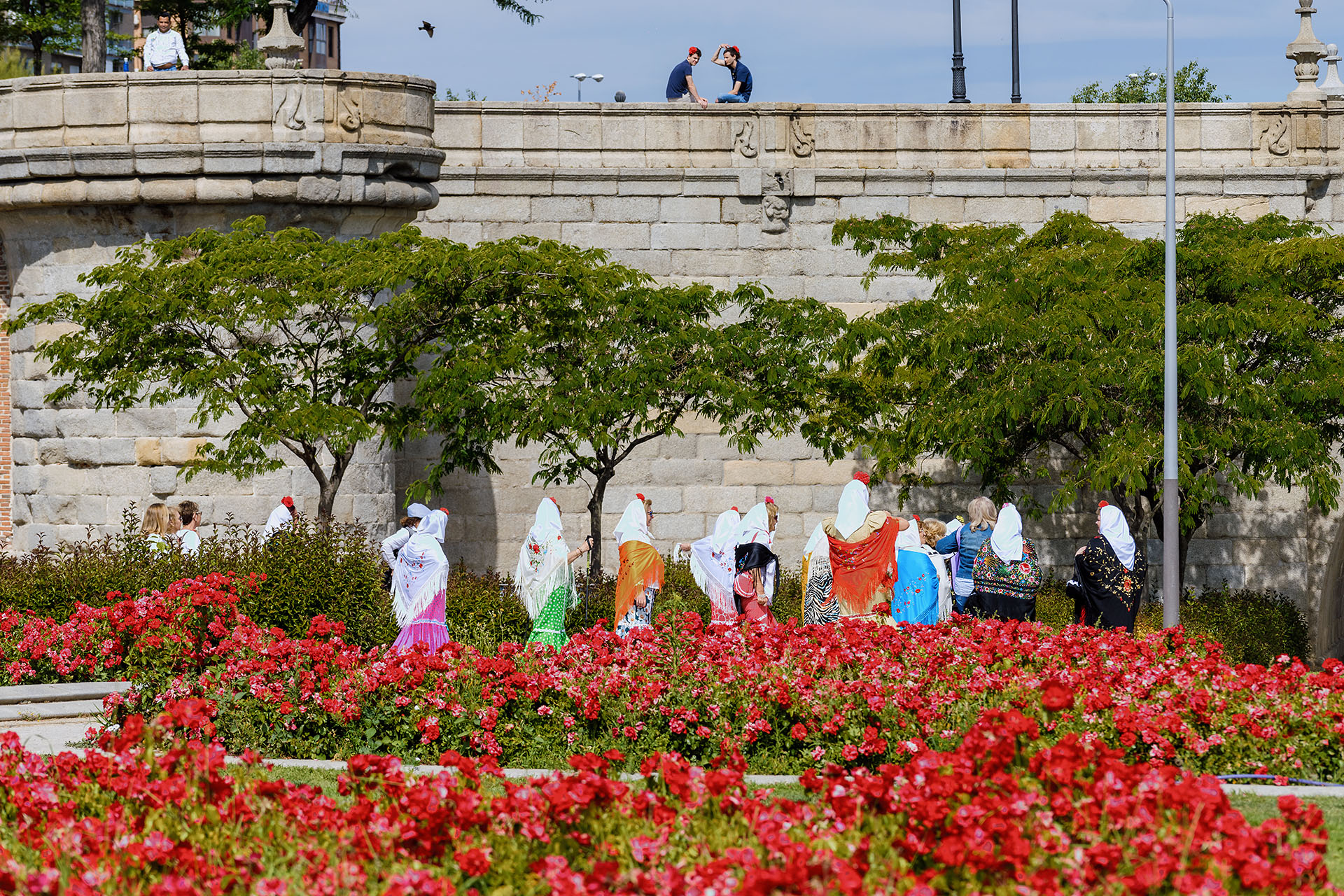
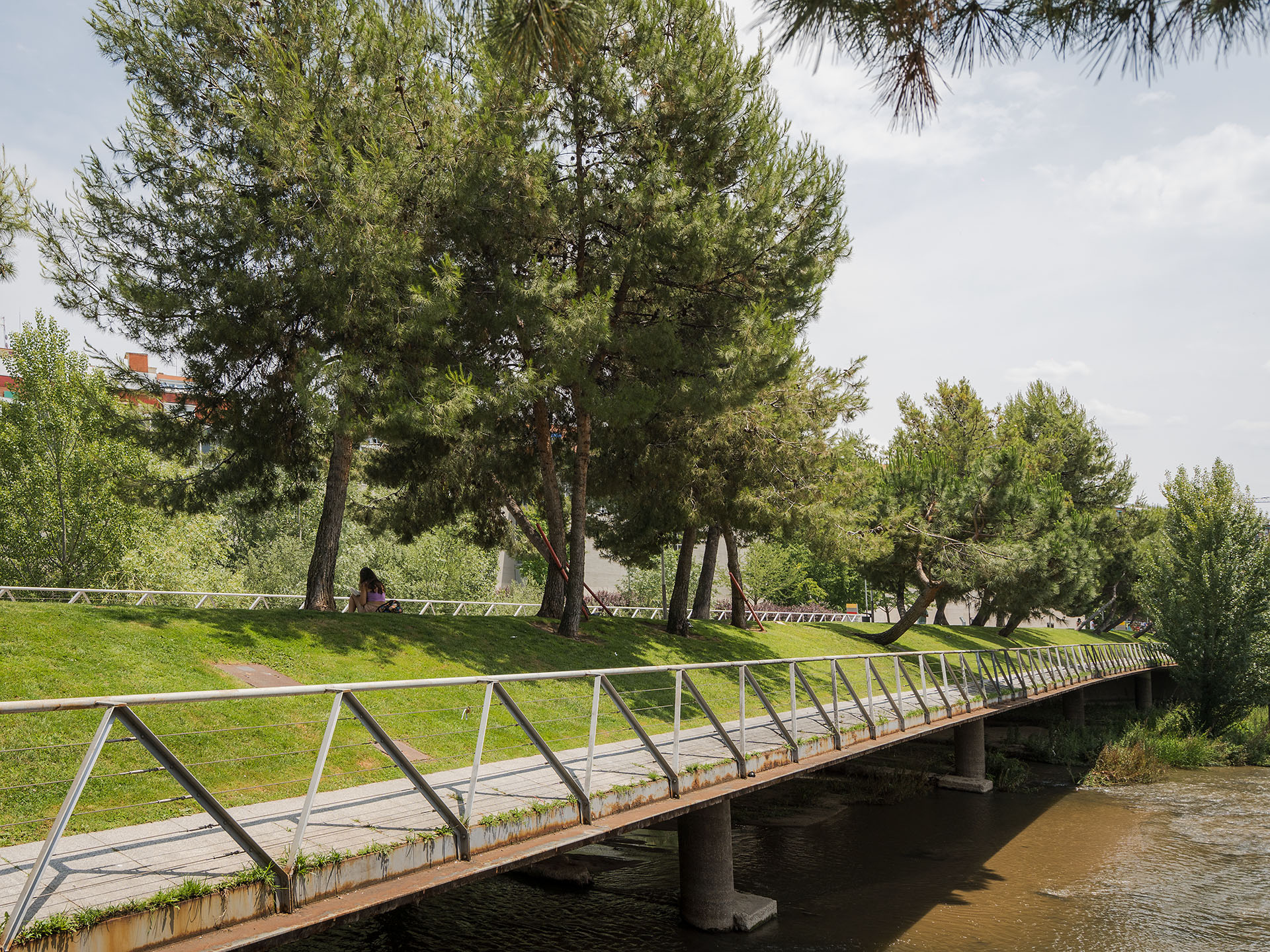
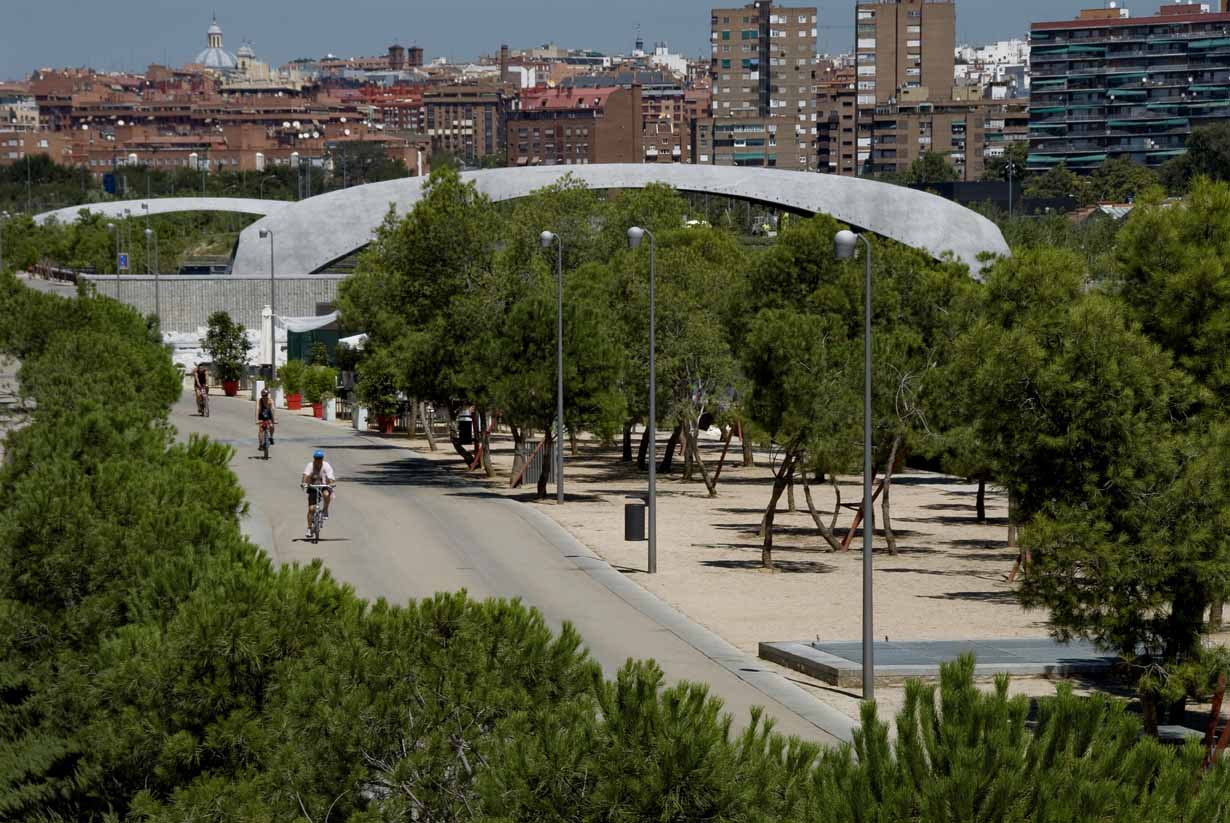
Material choices and architectural elements contribute to a coherent visual identity rooted in local context. Granite and basalt reinterpret traditional materials of Madrid’s historic landscape, while contemporary bridges, pavilions and urban furniture establish a dialogue between heritage and contemporary design. Historic crossings are restored and integrated into the new landscape, reinforcing cultural continuity and strengthening local identity, heritage and a shared sense of belonging.
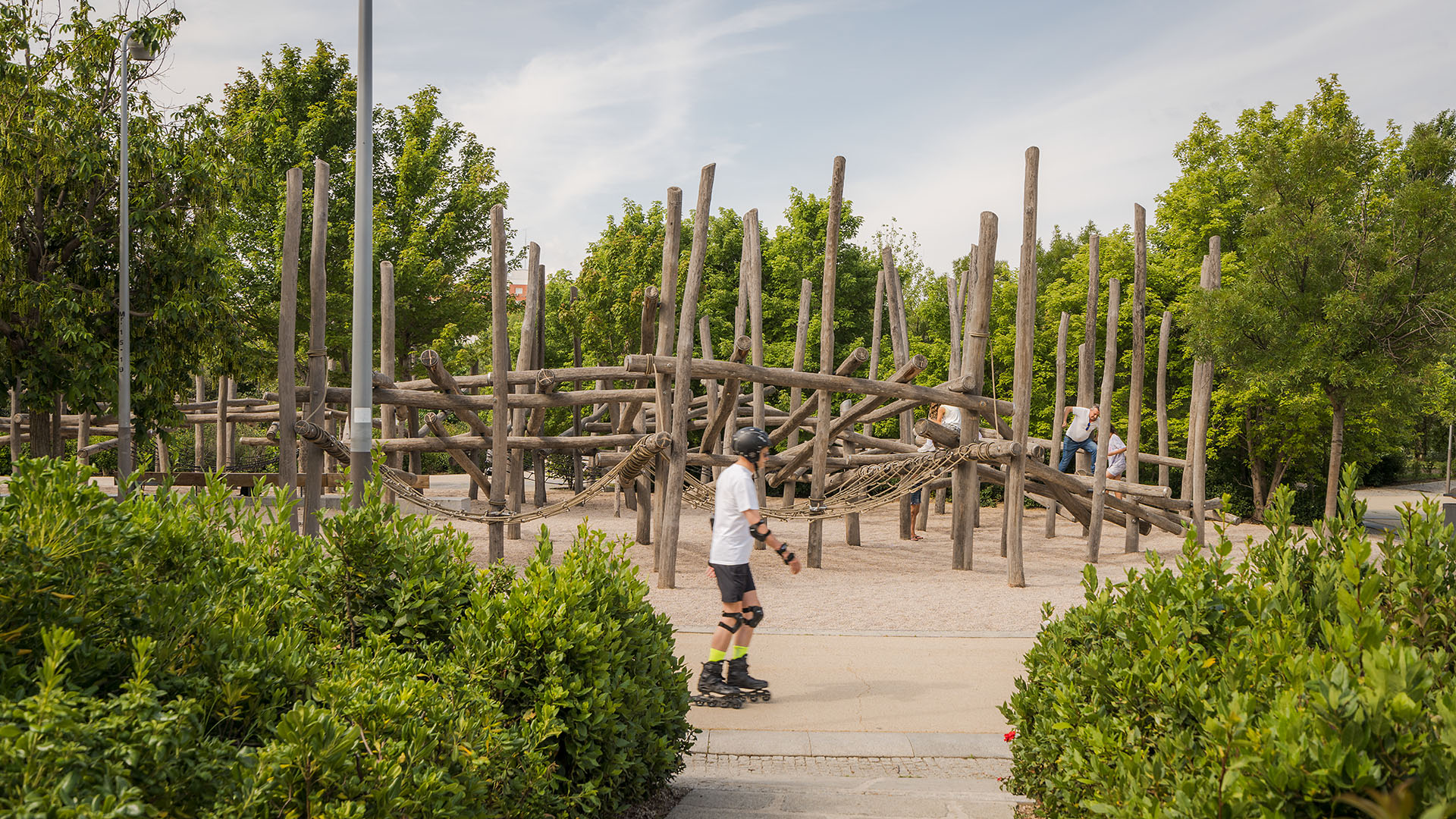
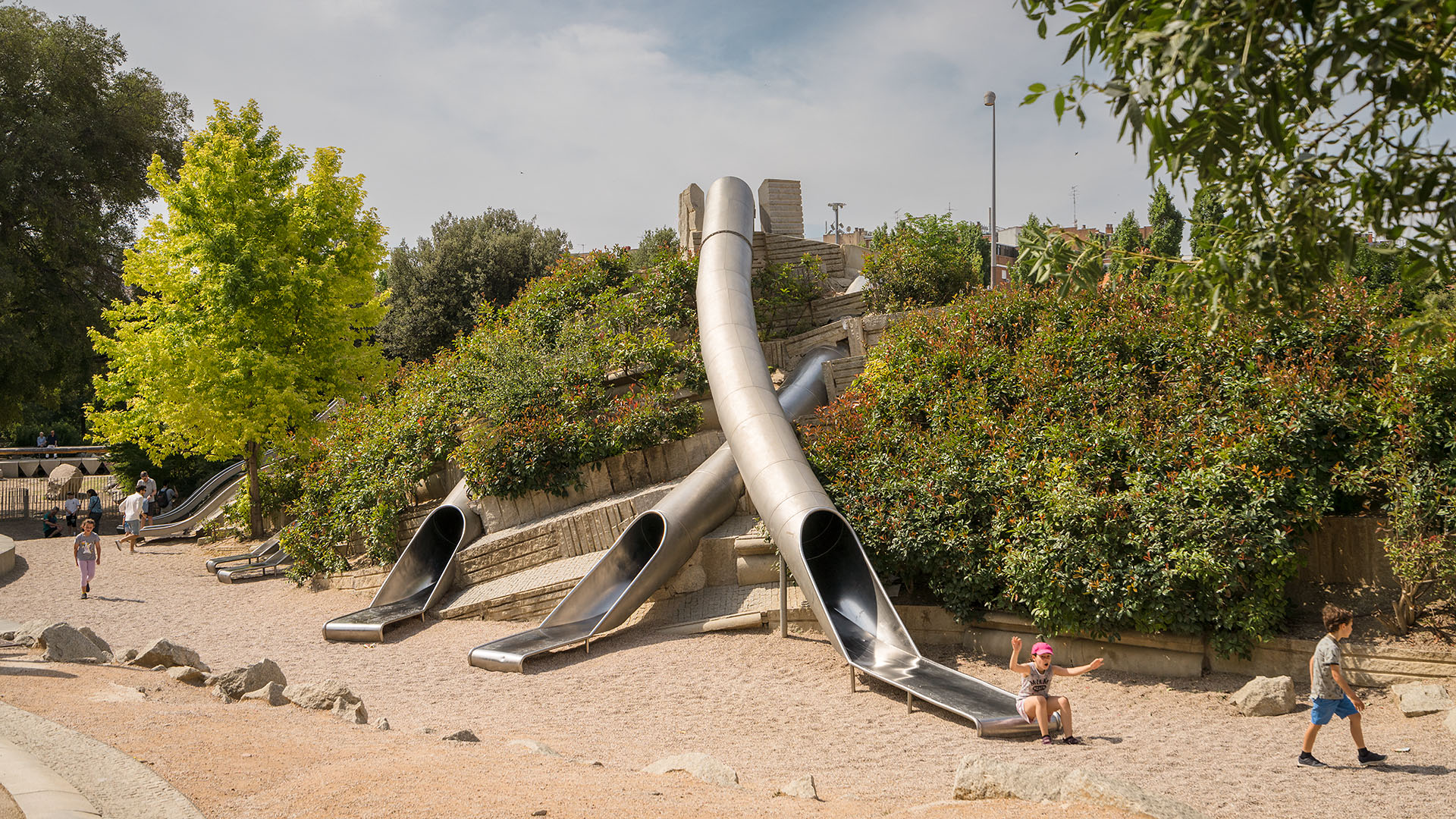
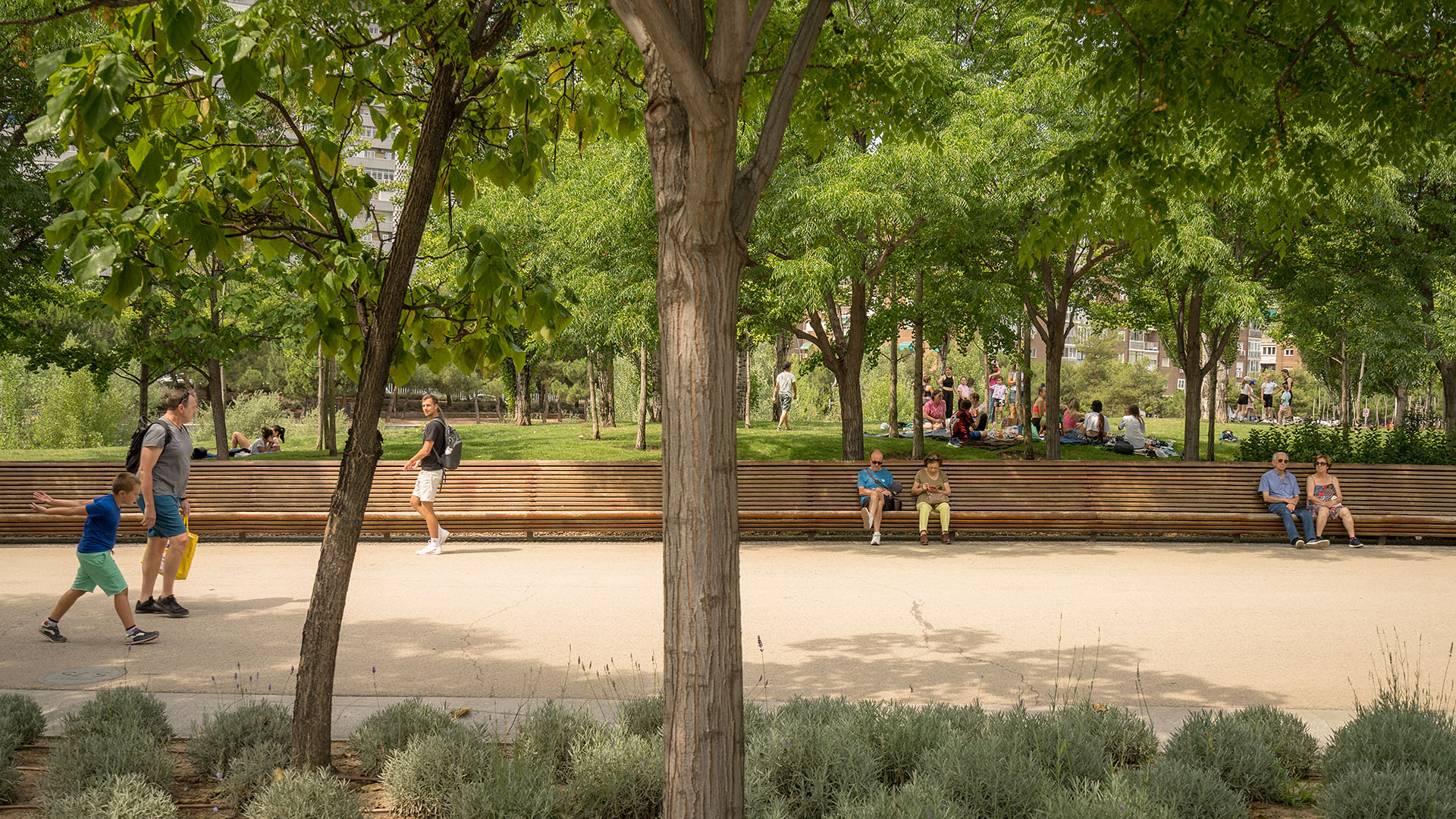
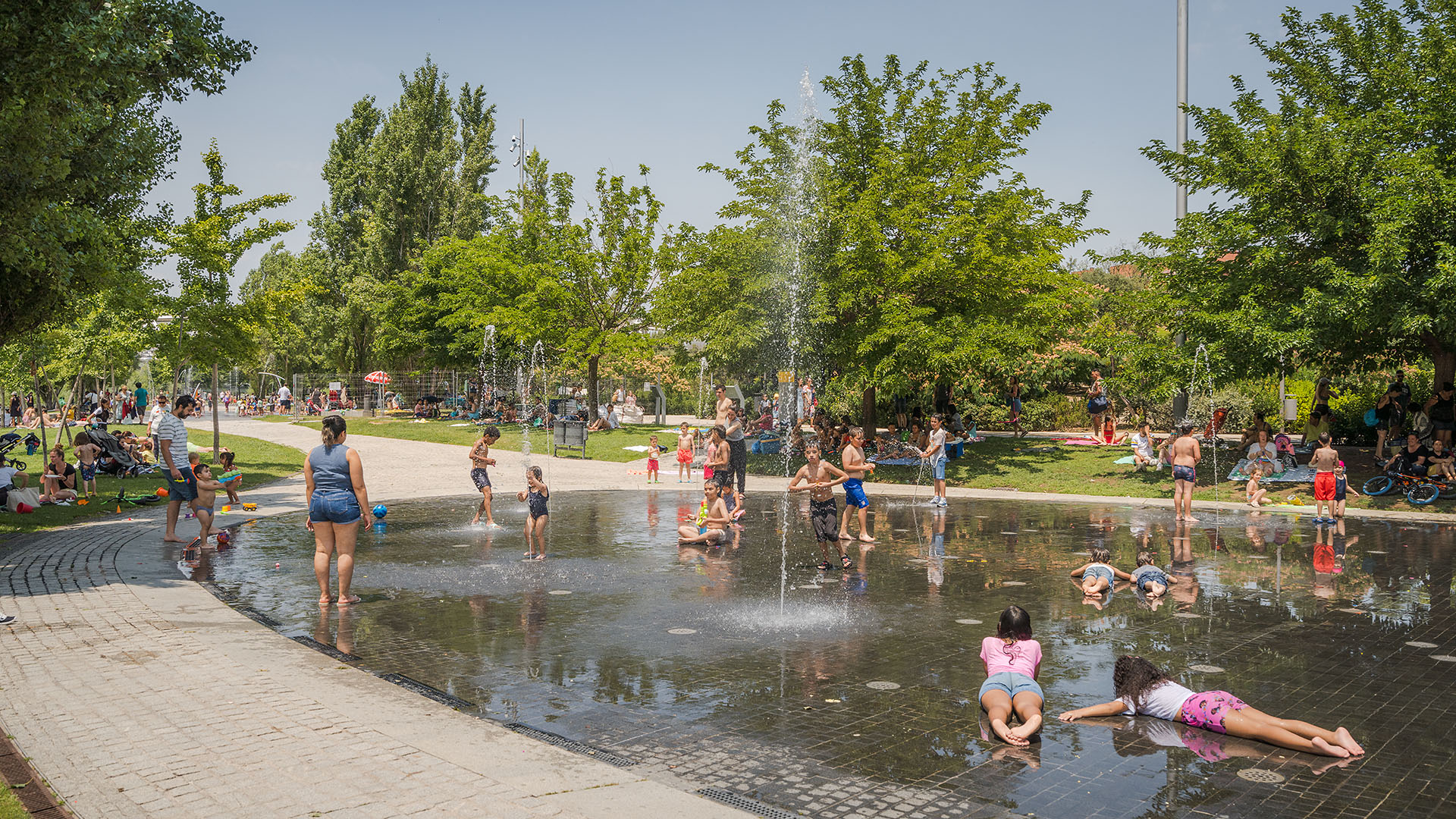
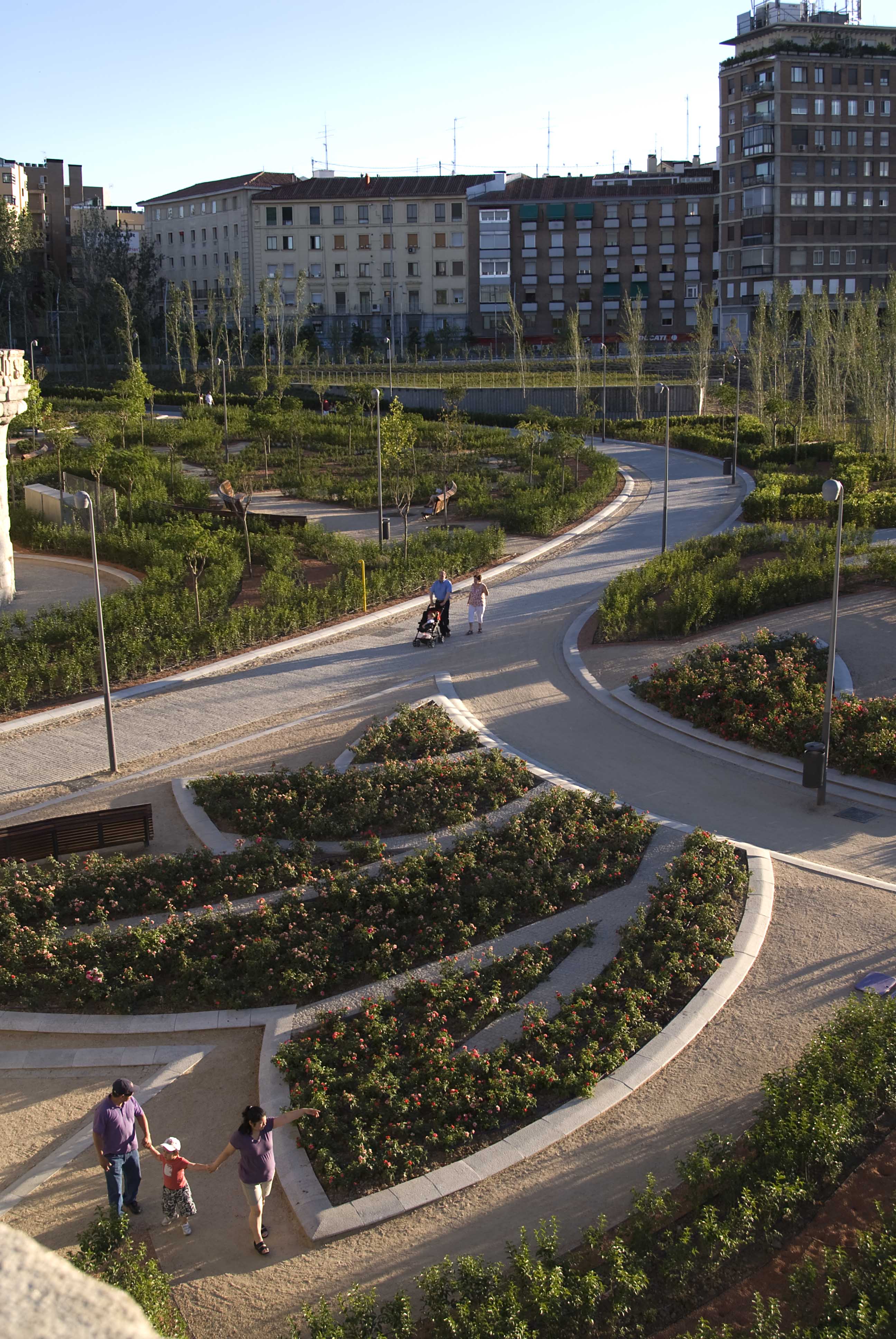
Public spaces throughout the park support walking, cycling, sports, cultural events and informal gatherings, ensuring that beauty is experienced in everyday life. Playgrounds, gardens and river viewpoints encourage exploration and discovery while improving quality of life through biodiversity, greenery, connectivity and access to diverse public activities.
By transforming an infrastructural void into a vibrant public landscape, Madrid Río demonstrates how aesthetic quality can emerge from the integration of ecology, design and urban memory. Beauty here is not decorative but structural: it shapes how people inhabit, perceive and care for their city.
The design treats landscape as an urban structure that reveals the geography of the river while creating a sequence of spatial experiences along more than six kilometres of riverfront. Carefully modelled topography, dense tree canopies, water features and shaded promenades generate comfortable microclimates and stimulate the senses through light, vegetation, texture and sound.
Material choices and architectural elements contribute to a coherent visual identity rooted in local context. Granite and basalt reinterpret traditional materials of Madrid’s historic landscape, while contemporary bridges, pavilions and urban furniture establish a dialogue between heritage and contemporary design. Historic crossings are restored and integrated into the new landscape, reinforcing cultural continuity and strengthening local identity, heritage and a shared sense of belonging.
Public spaces throughout the park support walking, cycling, sports, cultural events and informal gatherings, ensuring that beauty is experienced in everyday life. Playgrounds, gardens and river viewpoints encourage exploration and discovery while improving quality of life through biodiversity, greenery, connectivity and access to diverse public activities.
By transforming an infrastructural void into a vibrant public landscape, Madrid Río demonstrates how aesthetic quality can emerge from the integration of ecology, design and urban memory. Beauty here is not decorative but structural: it shapes how people inhabit, perceive and care for their city.
Madrid Río promotes inclusion by transforming a former infrastructural barrier into an open and accessible civic landscape that reconnects neighbourhoods—particularly poorer, historically isolated communities—along the Manzanares River in Madrid. For decades, the M-30 motorway separated districts, reinforcing social and spatial segregation between the historic centre and neighbouring working-class areas.
A central objective was to restore continuity and guarantee equal access to high-quality public space. By replacing the motorway with a continuous landscape, the project reconnects communities and provides safe, direct access to the city’s environmental, cultural and economic opportunities.
The park was conceived as universally accessible. Continuous pedestrian promenades, cycling routes and more than twenty pedestrian bridges reconnect both riverbanks. Gentle slopes, accessible paths and inclusive facilities ensure use by people of all ages and abilities.
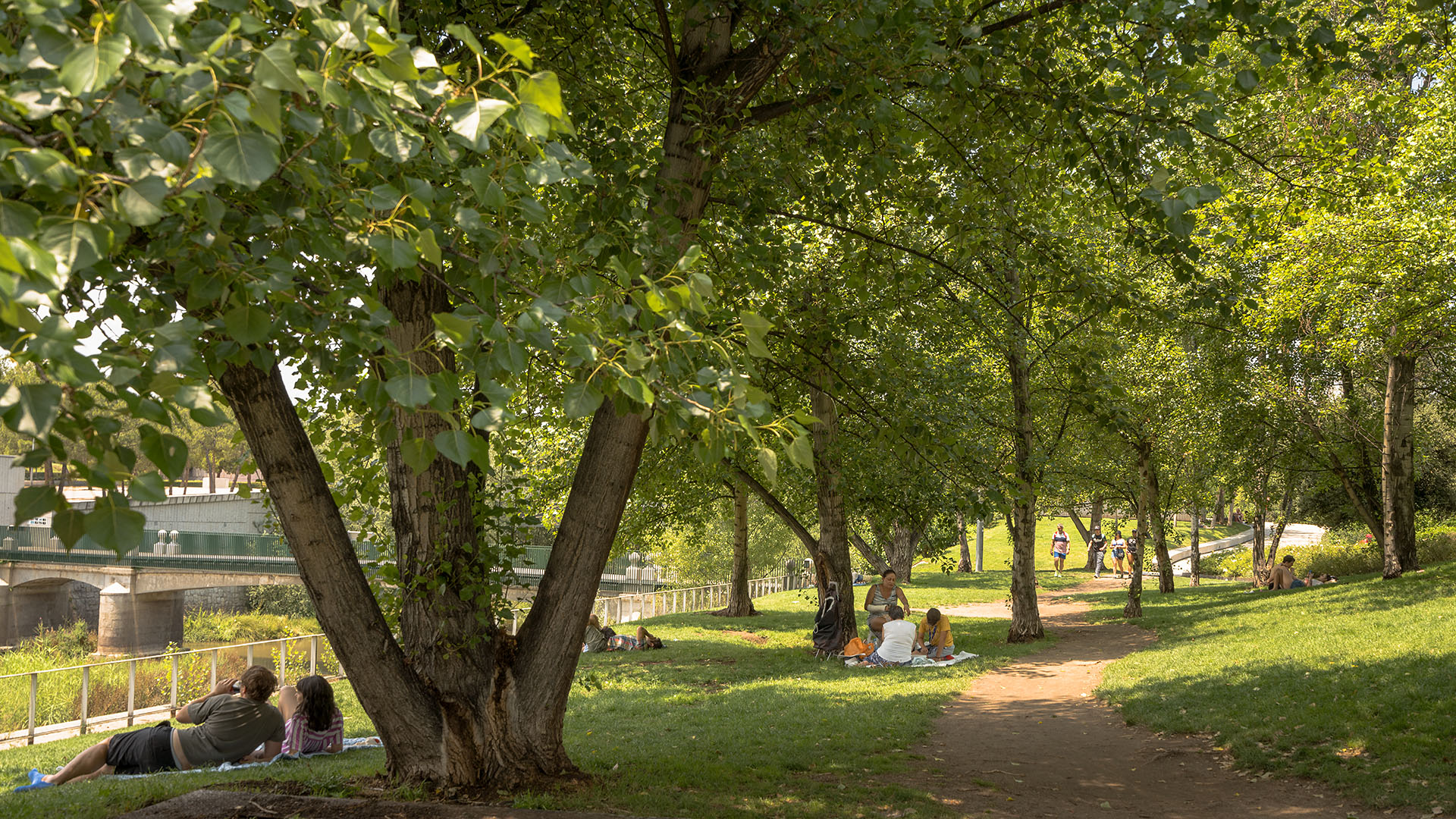
Madrid Río supports inclusion through a wide range of free public activities. Sports areas, playgrounds, gardens and cultural spaces accommodate community, recreational and cultural events for children, young people, families and elderly citizens. It particularly benefits residents of dense districts historically lacking green space.
Today the park is used daily by a highly diverse population, becoming a shared urban common where people from different social, cultural and economic backgrounds meet and interact.
Its most innovative aspect is the transformation of infrastructure built for private vehicles—funded entirely with public resources—into a large public landscape that primarily benefits the most disadvantaged while strengthening social cohesion across the city.
A central objective was to restore continuity and guarantee equal access to high-quality public space. By replacing the motorway with a continuous landscape, the project reconnects communities and provides safe, direct access to the city’s environmental, cultural and economic opportunities.
The park was conceived as universally accessible. Continuous pedestrian promenades, cycling routes and more than twenty pedestrian bridges reconnect both riverbanks. Gentle slopes, accessible paths and inclusive facilities ensure use by people of all ages and abilities.
Madrid Río supports inclusion through a wide range of free public activities. Sports areas, playgrounds, gardens and cultural spaces accommodate community, recreational and cultural events for children, young people, families and elderly citizens. It particularly benefits residents of dense districts historically lacking green space.
Today the park is used daily by a highly diverse population, becoming a shared urban common where people from different social, cultural and economic backgrounds meet and interact.
Its most innovative aspect is the transformation of infrastructure built for private vehicles—funded entirely with public resources—into a large public landscape that primarily benefits the most disadvantaged while strengthening social cohesion across the city.
Madrid Río was led by the City of Madrid, responsible for transforming the M-30 motorway and recovering the Manzanares River corridor for public use. The project emerged from a civic movement advocating the river’s recovery as a public and ecological landscape. Neighbourhood and environmental groups played a key role in shaping its ambition.
A rigorous participatory process involved hundreds of meetings with diverse civic agents. The Federación Regional de Asociaciones Vecinales de Madrid and neighbourhood associations from Arganzuela, Latina, Carabanchel and Usera long demanded riverbank recovery and improved environmental conditions. Citizens’ feedback was incorporated in two stages: during the master plan and in the development of detailed landscape and urbanisation projects.
Through consultations, meetings and district discussions, local organisations helped identify priorities such as pedestrian access, new connections between neighbourhoods, green areas and recreational spaces. Specialist groups—including ornithologists, skaters and sports associations—also contributed, ensuring the park addressed social, ecological and recreational needs.
Environmental organisations strengthened the ecological vision. In 2016, Ecologistas en Acción, with scientists and local activists, promoted opening weirs along the urban river, restoring sediment dynamics, vegetation and biodiversity.
Civic engagement continued post-completion. The transformation of Matadero Madrid into a cultural centre provided a platform for workshops, public programmes and community activities, consolidating citizens’ connection with the new landscape.
This multi-phase, participatory process enabled detailed understanding of local needs and aspirations, ensuring Madrid Río became a widely valued urban landscape.
A rigorous participatory process involved hundreds of meetings with diverse civic agents. The Federación Regional de Asociaciones Vecinales de Madrid and neighbourhood associations from Arganzuela, Latina, Carabanchel and Usera long demanded riverbank recovery and improved environmental conditions. Citizens’ feedback was incorporated in two stages: during the master plan and in the development of detailed landscape and urbanisation projects.
Through consultations, meetings and district discussions, local organisations helped identify priorities such as pedestrian access, new connections between neighbourhoods, green areas and recreational spaces. Specialist groups—including ornithologists, skaters and sports associations—also contributed, ensuring the park addressed social, ecological and recreational needs.
Environmental organisations strengthened the ecological vision. In 2016, Ecologistas en Acción, with scientists and local activists, promoted opening weirs along the urban river, restoring sediment dynamics, vegetation and biodiversity.
Civic engagement continued post-completion. The transformation of Matadero Madrid into a cultural centre provided a platform for workshops, public programmes and community activities, consolidating citizens’ connection with the new landscape.
This multi-phase, participatory process enabled detailed understanding of local needs and aspirations, ensuring Madrid Río became a widely valued urban landscape.
Madrid Río was implemented through coordinated action across multiple levels of governance, combining strong municipal leadership with regional, national and European frameworks. The project represents a major public investment transforming transport infrastructure into an ecological and civic landscape.
The City of Madrid led the initiative, defining the strategic objective of reconnecting the city with the Manzanares River and coordinating the urban transformation. The municipal technical team worked closely with the architectural team led by Ginés Garrido, while regional, national and EU institutions, agencies and specialist consultants provided support and technical expertise.
Regional authorities contributed through environmental regulation, territorial planning and coordination with metropolitan mobility systems, while national institutions oversaw river management, heritage protection and major infrastructure. Several interventions were co-financed by the European Union through the ERDF. Financial resources were distributed to approximately 70% municipality, 20% central government, and 10% EU.
Decisions were primarily taken by the municipal and architectural leadership, with other stakeholders providing advice, approvals and technical input. Coordination and information flow varied according to project phase and specific tasks, allowing agile collaboration across institutions. This multilevel cooperation enabled innovative solutions across public safety, ecology, heritage and mobility, producing a holistic urban project of exceptional complexity.
Active involvement of political leadership, technical teams, architects and institutional partners was essential to resolve conflicts, align priorities and ensure effective financing. This governance model demonstrates how integrated coordination at local, regional, national and European levels can make ambitious urban transformations feasible and create internationally recognised public landscapes.
The City of Madrid led the initiative, defining the strategic objective of reconnecting the city with the Manzanares River and coordinating the urban transformation. The municipal technical team worked closely with the architectural team led by Ginés Garrido, while regional, national and EU institutions, agencies and specialist consultants provided support and technical expertise.
Regional authorities contributed through environmental regulation, territorial planning and coordination with metropolitan mobility systems, while national institutions oversaw river management, heritage protection and major infrastructure. Several interventions were co-financed by the European Union through the ERDF. Financial resources were distributed to approximately 70% municipality, 20% central government, and 10% EU.
Decisions were primarily taken by the municipal and architectural leadership, with other stakeholders providing advice, approvals and technical input. Coordination and information flow varied according to project phase and specific tasks, allowing agile collaboration across institutions. This multilevel cooperation enabled innovative solutions across public safety, ecology, heritage and mobility, producing a holistic urban project of exceptional complexity.
Active involvement of political leadership, technical teams, architects and institutional partners was essential to resolve conflicts, align priorities and ensure effective financing. This governance model demonstrates how integrated coordination at local, regional, national and European levels can make ambitious urban transformations feasible and create internationally recognised public landscapes.
Madrid Río was conceived through a strongly transdisciplinary process integrating architecture, landscape architecture, civil engineering, environmental sciences, hydrology, urban planning, mobility planning, biologist, botanists, graphic designers, experts in public communication, illumination designers, accessibility experts, cultural programming and contemporary art. Transforming a motorway corridor into a continuous public landscape required collaboration across disciplines.
The project was developed by a multidisciplinary design team composed of Burgos & Garrido, Porras LaCasta, Rubio Álvarez-Sala and West 8, under the direction of Ginés Garrido. The team worked closely with engineers, environmental scientists and municipal planners throughout the design and construction process.
Infrastructure engineering played a central role. The construction of underground tunnels and numerous bridges required collaboration with engineering firms such as TYPSA, FHECOR, GIMPROSA and Gestión de Proyectos, integrating structural, hydraulic and environmental expertise into the landscape design.
Environmental specialists also contributed to vegetation systems and river ecology strategies, including the Fundación Conde del Valle Salazar and the Grupo de Enxeñaría da Auga e do Medio Ambiente.
Cultural and artistic disciplines were also integrated. The redevelopment of Matadero Madrid introduced cultural programming into the river corridor. In the Puentes Cáscara, artist Daniel Canogar designed a mosaic of coloured glass tesserae representing weightless bodies of residents from the Arganzuela neighbourhood. Inspired by Goya’s nearby frescoes in San Antonio de la Florida, the artwork connects contemporary art, local identity and public infrastructure.
Through this collaboration, engineering, ecology, spatial design and artistic expression converged in a single project, producing a landscape where mobility, ecology, culture and public life interact.
The project was developed by a multidisciplinary design team composed of Burgos & Garrido, Porras LaCasta, Rubio Álvarez-Sala and West 8, under the direction of Ginés Garrido. The team worked closely with engineers, environmental scientists and municipal planners throughout the design and construction process.
Infrastructure engineering played a central role. The construction of underground tunnels and numerous bridges required collaboration with engineering firms such as TYPSA, FHECOR, GIMPROSA and Gestión de Proyectos, integrating structural, hydraulic and environmental expertise into the landscape design.
Environmental specialists also contributed to vegetation systems and river ecology strategies, including the Fundación Conde del Valle Salazar and the Grupo de Enxeñaría da Auga e do Medio Ambiente.
Cultural and artistic disciplines were also integrated. The redevelopment of Matadero Madrid introduced cultural programming into the river corridor. In the Puentes Cáscara, artist Daniel Canogar designed a mosaic of coloured glass tesserae representing weightless bodies of residents from the Arganzuela neighbourhood. Inspired by Goya’s nearby frescoes in San Antonio de la Florida, the artwork connects contemporary art, local identity and public infrastructure.
Through this collaboration, engineering, ecology, spatial design and artistic expression converged in a single project, producing a landscape where mobility, ecology, culture and public life interact.
Madrid Río is based on a public investment model designed to deliver long-term social, environmental and economic value for the city. The project was financed approximately 70% by the City of Madrid, 20% by the central government (15% national + 5% regional), and 10% by the European Union. Underground infrastructures were financed 75% by the city and 25% by public companies. This public investment enabled the recovery of over 120 hectares for public space and ecological restoration.
While the park is free and universally accessible, it generates indirect economic value through multiple channels. The transformation of the river corridor has increased the attractiveness of surrounding neighbourhoods, stimulating local economic activity, tourism and cultural initiatives. Key nodes such as Matadero Madrid host exhibitions, events, creative industries and educational programmes, while nearby restaurants, cafés, sports and recreational services benefit from the steady presence of visitors and residents.
The project also triggered urban renewal in adjacent industrial and vacant areas, producing additional social, economic and urban returns for the surrounding communities. Residents in nearby districts benefited from rising property values and improved local services, reflecting the social and ecological reversion of the area.
Long-term maintenance and management of the park and infrastructure are funded by the City of Madrid, ensuring sustainable care and operational stability. This model integrates infrastructure, public space and ecological concerns into a single, large-scale project, representing an innovative and globally replicable approach to urban regeneration.
By transforming obsolete transport infrastructure into a multifunctional public landscape, Madrid Río demonstrates how strategic public investment can generate durable urban value while combining social, environmental and economic benefits.
While the park is free and universally accessible, it generates indirect economic value through multiple channels. The transformation of the river corridor has increased the attractiveness of surrounding neighbourhoods, stimulating local economic activity, tourism and cultural initiatives. Key nodes such as Matadero Madrid host exhibitions, events, creative industries and educational programmes, while nearby restaurants, cafés, sports and recreational services benefit from the steady presence of visitors and residents.
The project also triggered urban renewal in adjacent industrial and vacant areas, producing additional social, economic and urban returns for the surrounding communities. Residents in nearby districts benefited from rising property values and improved local services, reflecting the social and ecological reversion of the area.
Long-term maintenance and management of the park and infrastructure are funded by the City of Madrid, ensuring sustainable care and operational stability. This model integrates infrastructure, public space and ecological concerns into a single, large-scale project, representing an innovative and globally replicable approach to urban regeneration.
By transforming obsolete transport infrastructure into a multifunctional public landscape, Madrid Río demonstrates how strategic public investment can generate durable urban value while combining social, environmental and economic benefits.
Madrid Río demonstrates how large-scale transport infrastructures can be transformed into regenerative public landscapes, offering a model for cities facing similar spatial, environmental and social challenges.
Many metropolitan areas still contain infrastructure corridors—motorways, railways or industrial edges—that fragment urban fabrics and disconnect communities from natural systems. Madrid Río shows how these infrastructures can be reinterpreted not only as technical systems but as opportunities to create new ecological and civic landscapes.
Several aspects of the project are highly transferable. The integration of green infrastructure, ecological river restoration and active mobility networks can be applied in many urban contexts. The design methodology—combining territorial analysis, landscape structure and public space design—offers a framework for transforming river corridors or obsolete infrastructures in other cities.
Equally replicable is the governance and implementation model, which brought together municipal leadership, international design teams, engineers and environmental experts in a coordinated process. Collaboration between architects, landscape architects and infrastructure engineers was essential to reconcile technical constraints with the creation of high-quality public space.
Cities seeking similar transformations require strong public leadership, multidisciplinary expertise and long-term planning capacity, while adapting solutions to local geographical and cultural contexts.
Madrid Río forms part of a broader international movement of infrastructure regeneration projects, alongside initiatives such as the Cheonggyecheon restoration in Seoul and the Rose Kennedy Greenway in Boston. Within this context, the project demonstrates how obsolete infrastructures can be transformed into resilient public landscapes that reconnect nature, mobility and community.
Many metropolitan areas still contain infrastructure corridors—motorways, railways or industrial edges—that fragment urban fabrics and disconnect communities from natural systems. Madrid Río shows how these infrastructures can be reinterpreted not only as technical systems but as opportunities to create new ecological and civic landscapes.
Several aspects of the project are highly transferable. The integration of green infrastructure, ecological river restoration and active mobility networks can be applied in many urban contexts. The design methodology—combining territorial analysis, landscape structure and public space design—offers a framework for transforming river corridors or obsolete infrastructures in other cities.
Equally replicable is the governance and implementation model, which brought together municipal leadership, international design teams, engineers and environmental experts in a coordinated process. Collaboration between architects, landscape architects and infrastructure engineers was essential to reconcile technical constraints with the creation of high-quality public space.
Cities seeking similar transformations require strong public leadership, multidisciplinary expertise and long-term planning capacity, while adapting solutions to local geographical and cultural contexts.
Madrid Río forms part of a broader international movement of infrastructure regeneration projects, alongside initiatives such as the Cheonggyecheon restoration in Seoul and the Rose Kennedy Greenway in Boston. Within this context, the project demonstrates how obsolete infrastructures can be transformed into resilient public landscapes that reconnect nature, mobility and community.