Arts, Culture, and Heritage as Drivers of Change
ReHEALMS
ReHEALMS – Regenerative Healing Models for Urban Health Spaces
ReHEALMS reimagines hospitals as shared spaces of care, community and nature. At Barcelona’s Sant Pau campus, the project combined intergenerational cycling, emotional–spatial mapping, artistic co-creation and participatory governance to transform how people experience health environments. By connecting mobility, green spaces and community stewardship, ReHEALMS shows how hospitals can become civic climate-health infrastructures that support wellbeing, inclusion and sustainability.
Spain
Local
Barcelona local pilot with European replication potential.
Mainly urban
It involves other types of transformations (soft investment)
Yes
2025-12-01
Yes
EIT Community NEB
No
No
Individual
In 2025, on the modernist campus of Hospital de Sant Pau in Barcelona, we asked a simple question: how can a hospital feel less like a corridor of stress and more like a shared place of care?
ReHEALMS – Regenerative Healing Models for Urban Health Spaces is a New European Bauhaus project that reimagined the hospital and its surrounding neighbourhood as an inclusive, community-based and emotionally supportive environment. The project combined sustainable mobility, healing green spaces and artistic co-creation to strengthen wellbeing, social connection and shared stewardship of health-related public spaces.
The initiative focused on those who experience hospital environments most intensely: older adults, informal caregivers (often women), patients and visitors, health professionals, nearby residents and volunteers. Researchers, artists and students were also involved to translate lived experience into concrete spatial, social and governance innovations.
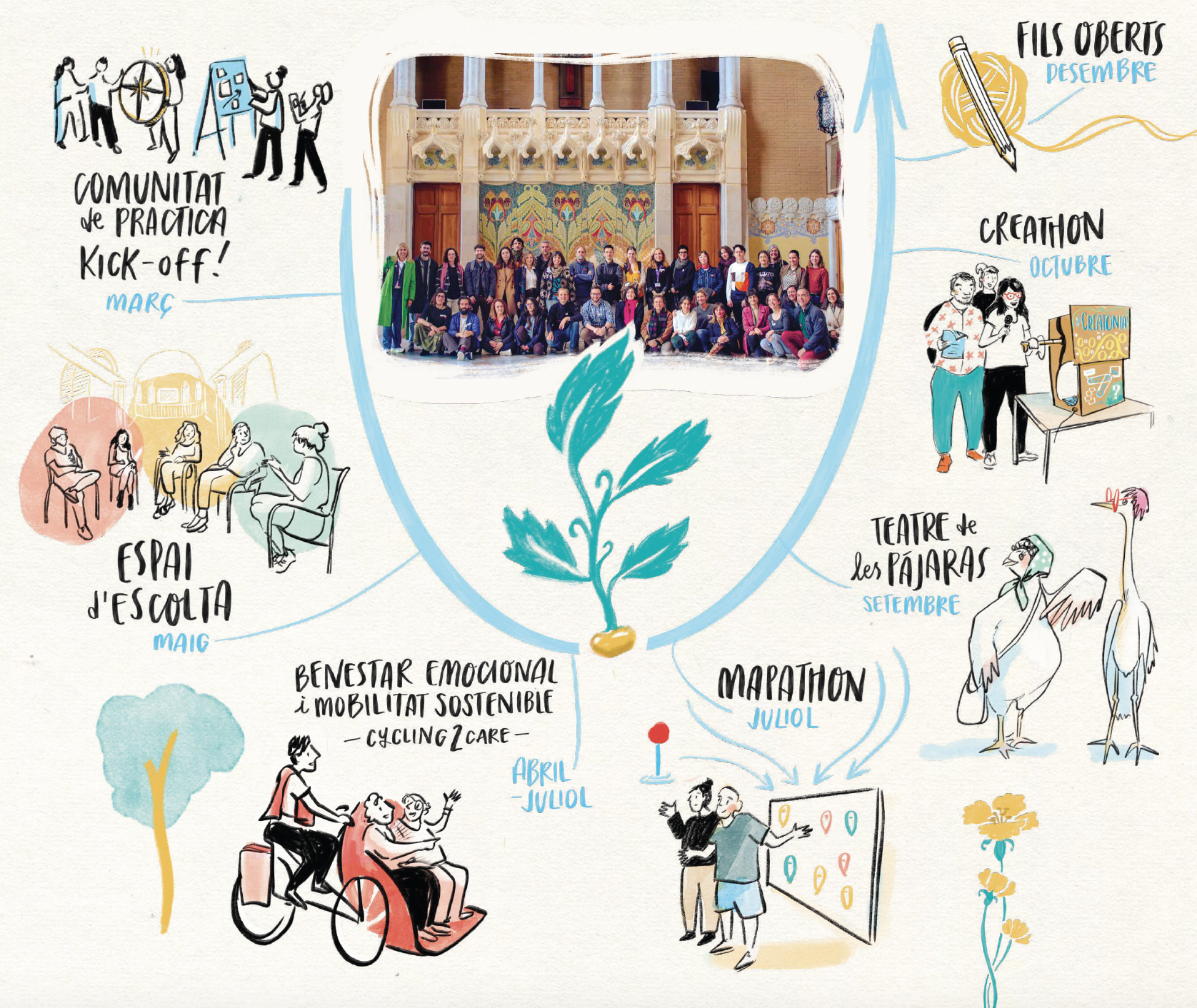
ReHEALMS pursued four main objectives: establishing a Community of Practice for shared governance; opening listening spaces where emotions and needs could be voiced safely; implementing intergenerational slow-mobility pilots; and mapping how hospital spaces are emotionally experienced through participatory spatial diagnostics.
Results are already visible. Across 11 engagement events, ReHEALMS involved more than 200 participants. The Cycling2Care pilot accumulated 246+ hours of intergenerational rides, engaging 160 passengers and 36 volunteers, strengthening social connection and reducing isolation. A participatory mapathon generated 150+ geolocated insights identifying areas of wellbeing, discomfort and opportunities for improvement.
These findings now guide low-tech spatial interventions such as shade, seating, signage and nature-based micro-improvements.We produced an Implementation Toolkit and Policy Recommendations Report, and catalysed an institutional commitment to to create a therapeutic garden.
ReHEALMS – Regenerative Healing Models for Urban Health Spaces is a New European Bauhaus project that reimagined the hospital and its surrounding neighbourhood as an inclusive, community-based and emotionally supportive environment. The project combined sustainable mobility, healing green spaces and artistic co-creation to strengthen wellbeing, social connection and shared stewardship of health-related public spaces.
The initiative focused on those who experience hospital environments most intensely: older adults, informal caregivers (often women), patients and visitors, health professionals, nearby residents and volunteers. Researchers, artists and students were also involved to translate lived experience into concrete spatial, social and governance innovations.
ReHEALMS pursued four main objectives: establishing a Community of Practice for shared governance; opening listening spaces where emotions and needs could be voiced safely; implementing intergenerational slow-mobility pilots; and mapping how hospital spaces are emotionally experienced through participatory spatial diagnostics.
Results are already visible. Across 11 engagement events, ReHEALMS involved more than 200 participants. The Cycling2Care pilot accumulated 246+ hours of intergenerational rides, engaging 160 passengers and 36 volunteers, strengthening social connection and reducing isolation. A participatory mapathon generated 150+ geolocated insights identifying areas of wellbeing, discomfort and opportunities for improvement.
These findings now guide low-tech spatial interventions such as shade, seating, signage and nature-based micro-improvements.We produced an Implementation Toolkit and Policy Recommendations Report, and catalysed an institutional commitment to to create a therapeutic garden.
ReHEALMS began with a shared intuition among hospital leaders, researchers and community partners: while hospitals are designed for efficiency and medical care, they are often experienced as places of waiting, vulnerability and emotional overload.
Rather than starting from predefined solutions, the consortium decided to begin with people’s stories, emotions and lived experiences.
A core team anchored at Hospital de Sant Pau collaborated with ISGlobal, Universitat Politècnica de Catalunya (UPC) and the NGO En Bici Sense Edat, while cultural and community partners supported facilitation and outreach. Decisions were taken through a Community of Practice, a horizontal governance space where hospital staff, neighbours, volunteers, caregivers, artists and researchers could learn together and shape priorities collectively.
Implementation unfolded through four interconnected phases. First, we created the Community of Practice and established safe formats for participation.
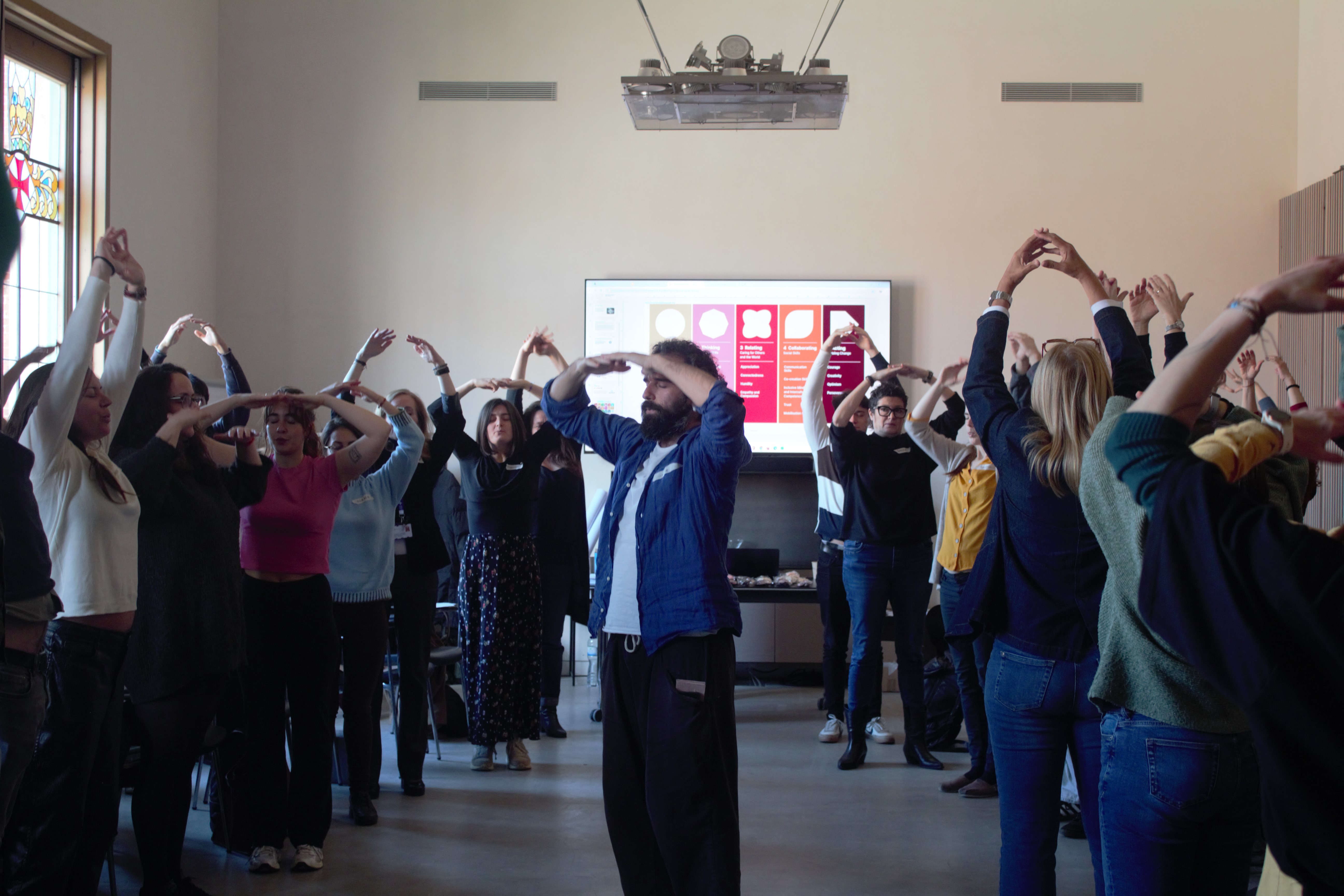
Second, listening circles inside the hospital allowed participants to share emotional experiences often absent from planning processes. Intergenerational Cycling2Care rides revealed everyday barriers to accessibility and wellbeing, while a participatory emotional-spatial mapathon translated these experiences into a collective diagnosis of the campus.
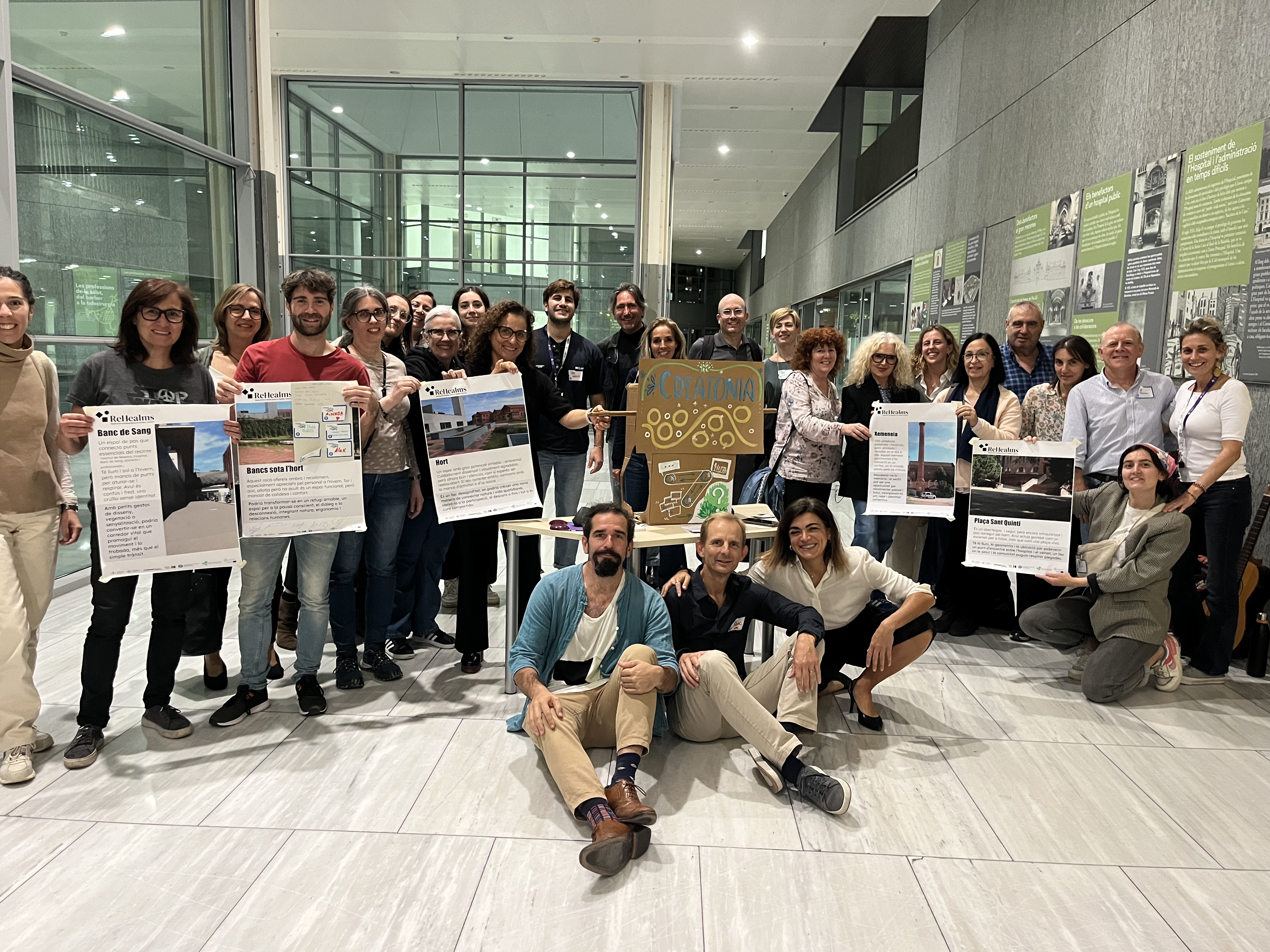
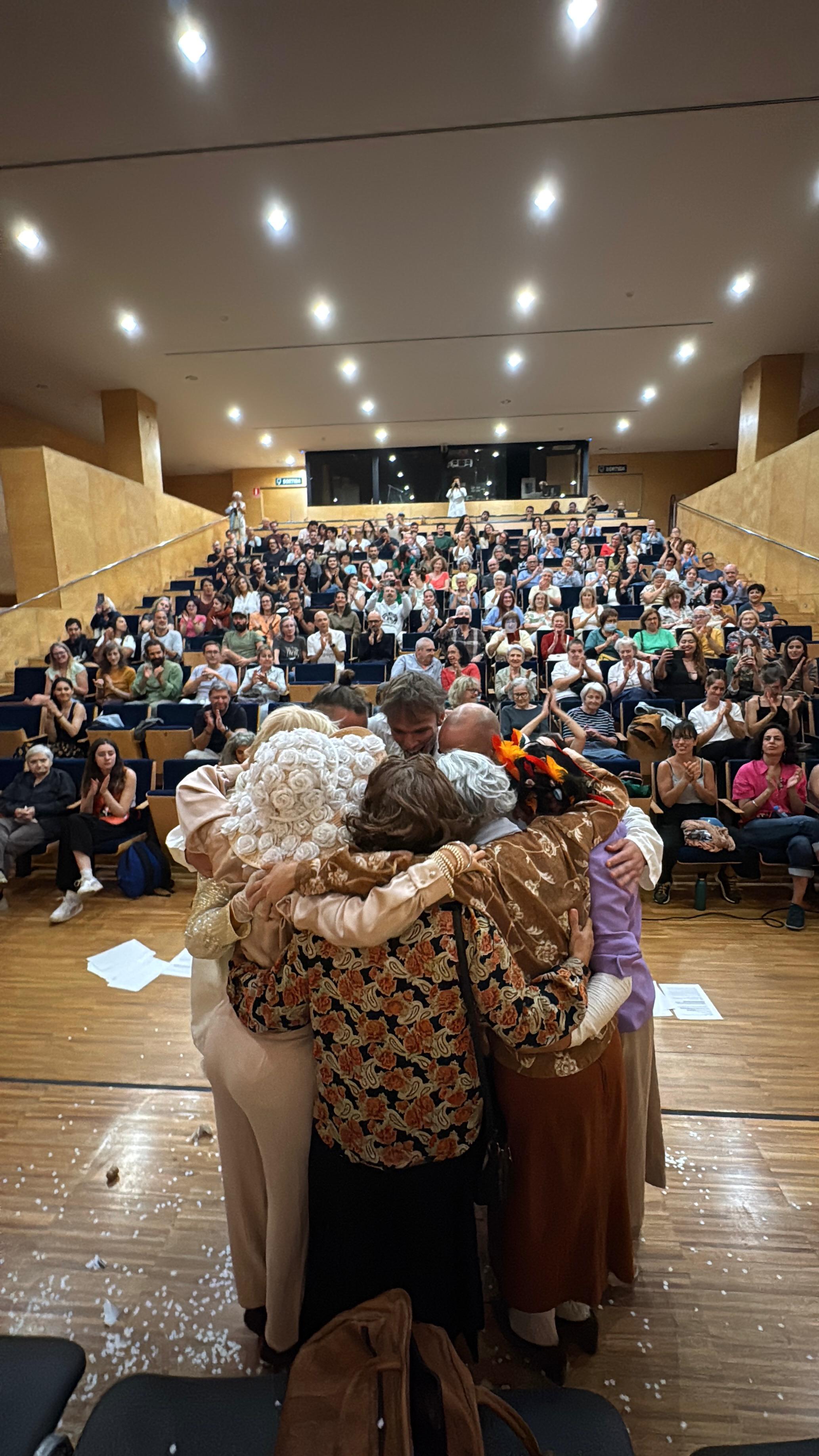
Third, co-creation and prototyping: artistic laboratories, social theatre and a creathon transformed insights into narratives, low-tech prototypes and future scenarios for the hospital environment.
Fourth, the team synthesised lessons into a practical Implementation Toolkit and Policy Recommendations Report, and shared results through public events and institutional dialogue. Throughout the process, activities were adapted to the rhythms of hospital life and the availability of participants. This flexible and care-centred approach strengthened trust, deepened engagement and ensured that the project’s outcomes were co-created and shared by the community.
Rather than starting from predefined solutions, the consortium decided to begin with people’s stories, emotions and lived experiences.
A core team anchored at Hospital de Sant Pau collaborated with ISGlobal, Universitat Politècnica de Catalunya (UPC) and the NGO En Bici Sense Edat, while cultural and community partners supported facilitation and outreach. Decisions were taken through a Community of Practice, a horizontal governance space where hospital staff, neighbours, volunteers, caregivers, artists and researchers could learn together and shape priorities collectively.
Implementation unfolded through four interconnected phases. First, we created the Community of Practice and established safe formats for participation.
Second, listening circles inside the hospital allowed participants to share emotional experiences often absent from planning processes. Intergenerational Cycling2Care rides revealed everyday barriers to accessibility and wellbeing, while a participatory emotional-spatial mapathon translated these experiences into a collective diagnosis of the campus.
Third, co-creation and prototyping: artistic laboratories, social theatre and a creathon transformed insights into narratives, low-tech prototypes and future scenarios for the hospital environment.
Fourth, the team synthesised lessons into a practical Implementation Toolkit and Policy Recommendations Report, and shared results through public events and institutional dialogue. Throughout the process, activities were adapted to the rhythms of hospital life and the availability of participants. This flexible and care-centred approach strengthened trust, deepened engagement and ensured that the project’s outcomes were co-created and shared by the community.
Community co-creation
Healing urban spaces
intergenerational mobility
nature-based wellbeing
participatory governance
ReHEALMS addresses sustainability by linking environmental wellbeing, social connection and regenerative governance within hospital environments.
The project pursued three interconnected sustainability goals:
promoting low-carbon and accessible mobility that reduces loneliness
strengthening nature-based healing environments around the hospital campus
embedding a governance model capable of enduring beyond the project cycle
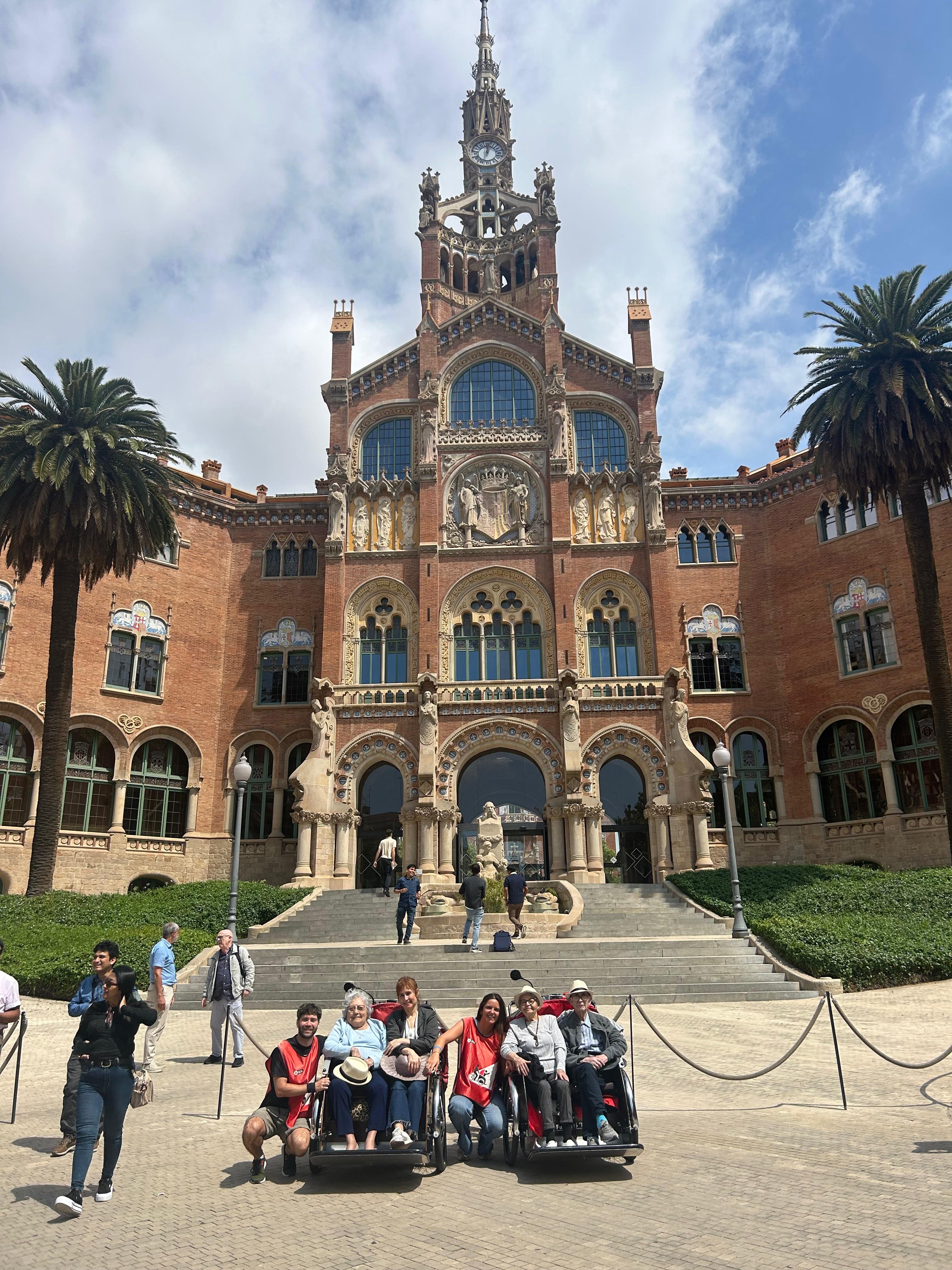
Through the Cycling2Care pilot, ReHEALMS implemented intergenerational slow mobility, creating repeated “pasejadas” where movement, conversation and reflection take place simultaneously. These rides strengthened empathy and social connection while offering a low-carbon mobility option accessible to elderly participants and people with reduced mobility.
In parallel, emotional-spatial diagnostics combining listening circles and participatory mapping revealed how environmental conditions such as heat, noise, lack of shade or missing resting areas affect wellbeing in hospital spaces.
The project generated concrete results: 200 participants engaged, 246+ hours of cycling accumulated and more than 150 spatial insights collected. These findings now inform practical interventions such as shaded resting areas, improved seating, clearer pathways and nature-based micro-improvements.
ReHEALMS also catalysed the development of a therapeutic garden on the hospital campus, supported by institutional commitment and linked to follow-up funding initiatives.
Beyond these tangible outcomes, the project strengthened community stewardship and collaboration between institutions and citizens. By integrating mobility, nature and social connection, ReHEALMS demonstrates how hospital campuses can evolve into regenerative climate-health environments that support long-term sustainability and wellbeing.
The project pursued three interconnected sustainability goals:
promoting low-carbon and accessible mobility that reduces loneliness
strengthening nature-based healing environments around the hospital campus
embedding a governance model capable of enduring beyond the project cycle
Through the Cycling2Care pilot, ReHEALMS implemented intergenerational slow mobility, creating repeated “pasejadas” where movement, conversation and reflection take place simultaneously. These rides strengthened empathy and social connection while offering a low-carbon mobility option accessible to elderly participants and people with reduced mobility.
In parallel, emotional-spatial diagnostics combining listening circles and participatory mapping revealed how environmental conditions such as heat, noise, lack of shade or missing resting areas affect wellbeing in hospital spaces.
The project generated concrete results: 200 participants engaged, 246+ hours of cycling accumulated and more than 150 spatial insights collected. These findings now inform practical interventions such as shaded resting areas, improved seating, clearer pathways and nature-based micro-improvements.
ReHEALMS also catalysed the development of a therapeutic garden on the hospital campus, supported by institutional commitment and linked to follow-up funding initiatives.
Beyond these tangible outcomes, the project strengthened community stewardship and collaboration between institutions and citizens. By integrating mobility, nature and social connection, ReHEALMS demonstrates how hospital campuses can evolve into regenerative climate-health environments that support long-term sustainability and wellbeing.
ReHEALMS understands aesthetics as the quality of everyday experience: how a place allows people to breathe, rest, orient themselves and feel they belong.
On the Sant Pau campus, participants described beauty and discomfort through sensory experience — shade or glare, calm or noise, welcome or stress. These perceptions were treated as legitimate design knowledge and incorporated into the project’s methodology.
The project pursued three aesthetic objectives:
making hospital spaces more comforting and human-scaled
strengthening a sense of belonging to the place
reconnecting health environments with culture, creativity and nature
Listening circles and storytelling activities allowed participants to share emotional relationships with the hospital environment. Participatory mapping then translated these experiences into a collective aesthetic diagnosis of the campus.
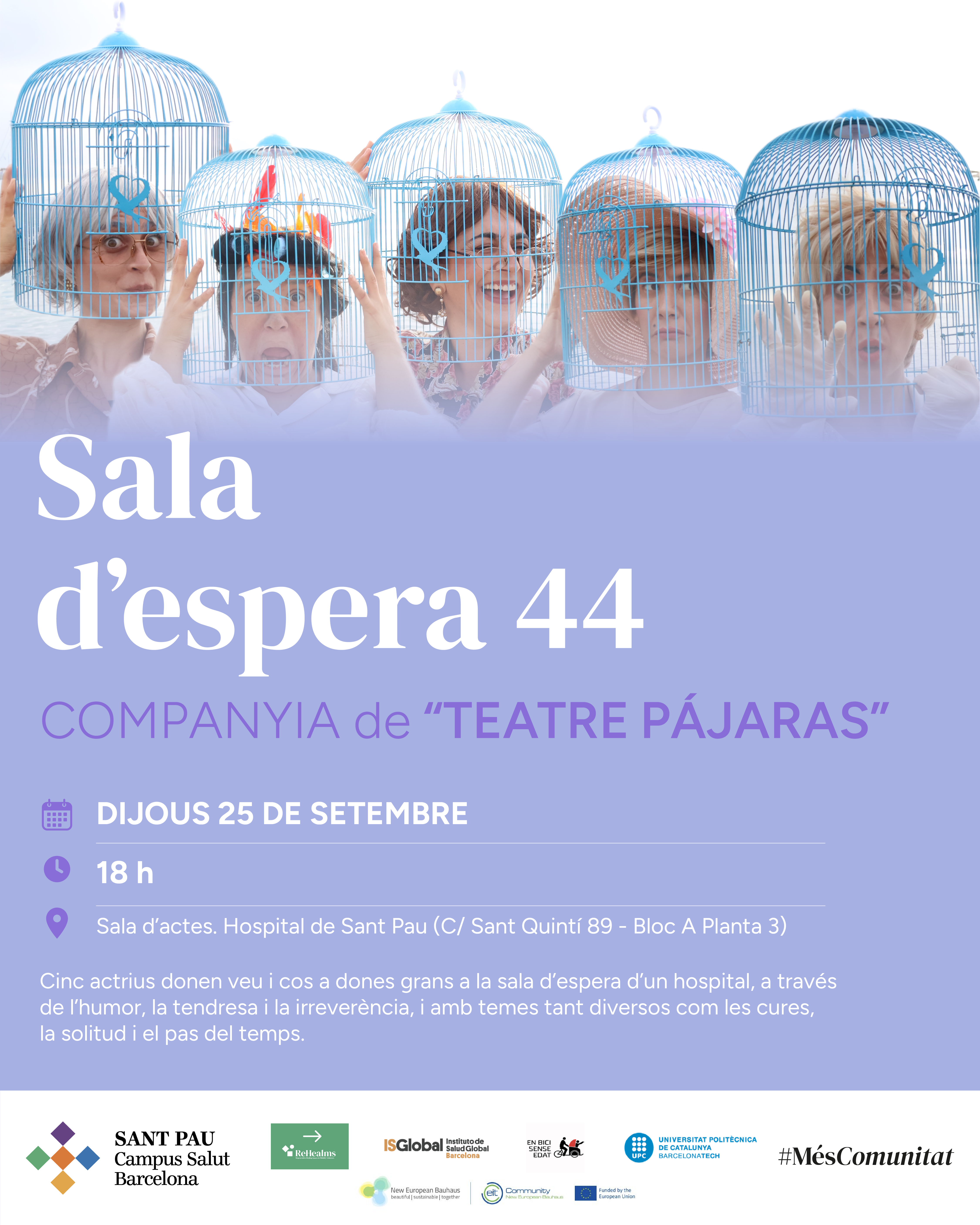
Artistic methodologies played a key role. Social theatre and creative laboratories allowed participants to express experiences that conventional planning tools often overlook, transforming the hospital into a space for cultural dialogue and community imagination.
These processes generated concrete proposals such as shaded resting areas, clearer and more welcoming pathways, sensory nature interventions and new meeting spaces for patients, visitors and staff.
Visual communication materials and a hand-drawn project booklet extended the aesthetic dimension by making the project’s story accessible and engaging.
ReHEALMS demonstrates that beauty in public space does not only emerge from architectural design, but from the shared process of caring for and shaping a place together.
On the Sant Pau campus, participants described beauty and discomfort through sensory experience — shade or glare, calm or noise, welcome or stress. These perceptions were treated as legitimate design knowledge and incorporated into the project’s methodology.
The project pursued three aesthetic objectives:
making hospital spaces more comforting and human-scaled
strengthening a sense of belonging to the place
reconnecting health environments with culture, creativity and nature
Listening circles and storytelling activities allowed participants to share emotional relationships with the hospital environment. Participatory mapping then translated these experiences into a collective aesthetic diagnosis of the campus.
Artistic methodologies played a key role. Social theatre and creative laboratories allowed participants to express experiences that conventional planning tools often overlook, transforming the hospital into a space for cultural dialogue and community imagination.
These processes generated concrete proposals such as shaded resting areas, clearer and more welcoming pathways, sensory nature interventions and new meeting spaces for patients, visitors and staff.
Visual communication materials and a hand-drawn project booklet extended the aesthetic dimension by making the project’s story accessible and engaging.
ReHEALMS demonstrates that beauty in public space does not only emerge from architectural design, but from the shared process of caring for and shaping a place together.
ReHEALMS was designed around people who are often least heard in institutional planning processes: older adults, informal caregivers, people with reduced mobility and individuals navigating the emotional challenges of hospital life.
Inclusion meant ensuring that participation was accessible, meaningful and influential.
The project widened participation through trusted community partners and repeated engagement opportunities rather than one-off consultations. Activities were designed to be flexible so participants could join according to their health conditions or caregiving responsibilities.
Participation formats avoided privileging technical expertise. Listening circles, participatory mapping, artistic workshops and theatre allowed diverse forms of knowledge — including emotional and embodied experience — to shape the project.
Intergenerational Cycling2Care rides also functioned as an inclusion tool by enabling shared mobility experiences between elderly participants, volunteers and younger generations.
Participation reached 200 individuals, and the cycling programme engaged 160 passengers alongside volunteers, strengthening intergenerational ties and reducing social isolation.
Most importantly, participants moved from passive “service users” to co-creators of diagnosis and solutions. Their insights directly informed spatial prototypes, the implementation toolkit and policy recommendations.
ReHEALMS therefore combines accessibility, participation and shared governance, demonstrating how health infrastructures can become inclusive public spaces where communities actively shape their environment.
Inclusion meant ensuring that participation was accessible, meaningful and influential.
The project widened participation through trusted community partners and repeated engagement opportunities rather than one-off consultations. Activities were designed to be flexible so participants could join according to their health conditions or caregiving responsibilities.
Participation formats avoided privileging technical expertise. Listening circles, participatory mapping, artistic workshops and theatre allowed diverse forms of knowledge — including emotional and embodied experience — to shape the project.
Intergenerational Cycling2Care rides also functioned as an inclusion tool by enabling shared mobility experiences between elderly participants, volunteers and younger generations.
Participation reached 200 individuals, and the cycling programme engaged 160 passengers alongside volunteers, strengthening intergenerational ties and reducing social isolation.
Most importantly, participants moved from passive “service users” to co-creators of diagnosis and solutions. Their insights directly informed spatial prototypes, the implementation toolkit and policy recommendations.
ReHEALMS therefore combines accessibility, participation and shared governance, demonstrating how health infrastructures can become inclusive public spaces where communities actively shape their environment.
Participation was not a single consultation step in ReHEALMS; it was the core methodology and outcome of the project. The initiative created a living-lab environment where people who use, work in and move through the hospital campus could actively shape its future.
A wide diversity of actors were involved: older adults, informal caregivers, patients and visitors, health professionals, neighbours, volunteers, researchers, students, artists and community organisations. Participation occurred throughout the entire project cycle, from diagnosis to prototyping and dissemination through repeated engagement moments and the creation of a Community of Practice as a continuous space for shared governance and learning.
Several complementary participatory methods were implemented. Listening circles provided safe spaces where participants could express experiences and emotions often absent from institutional planning processes. Intergenerational Cycling2Care rides created mobile encounters where elderly participants and volunteers explored the hospital neighbourhood together while reflecting on accessibility, wellbeing and connection to nature.
An emotional-spatial mapathon translated these lived experiences into a collective diagnosis of the campus, generating more than 150 geolocated insights on wellbeing, discomfort and improvement opportunities. Creative laboratories, theatre sessions and a participatory creathon then transformed these insights into narratives, spatial prototypes and future scenarios.
Participants really influenced decisions. Their contributions helped prioritise improvements such as shaded resting areas, clearer pathways and nature-based micro-interventions. They also co-produced the Implementation Toolkit and validated policy recommendations.
This participatory approach increased trust, strengthened community ownership and ensured that the project’s outcomes are rooted in lived experience and capable of continuing beyond
A wide diversity of actors were involved: older adults, informal caregivers, patients and visitors, health professionals, neighbours, volunteers, researchers, students, artists and community organisations. Participation occurred throughout the entire project cycle, from diagnosis to prototyping and dissemination through repeated engagement moments and the creation of a Community of Practice as a continuous space for shared governance and learning.
Several complementary participatory methods were implemented. Listening circles provided safe spaces where participants could express experiences and emotions often absent from institutional planning processes. Intergenerational Cycling2Care rides created mobile encounters where elderly participants and volunteers explored the hospital neighbourhood together while reflecting on accessibility, wellbeing and connection to nature.
An emotional-spatial mapathon translated these lived experiences into a collective diagnosis of the campus, generating more than 150 geolocated insights on wellbeing, discomfort and improvement opportunities. Creative laboratories, theatre sessions and a participatory creathon then transformed these insights into narratives, spatial prototypes and future scenarios.
Participants really influenced decisions. Their contributions helped prioritise improvements such as shaded resting areas, clearer pathways and nature-based micro-interventions. They also co-produced the Implementation Toolkit and validated policy recommendations.
This participatory approach increased trust, strengthened community ownership and ensured that the project’s outcomes are rooted in lived experience and capable of continuing beyond
ReHEALMS organised multilevel governance by connecting local experimentation with institutional and policy ecosystems at several levels.
At the local level, the Hospital de Sant Pau campus acted as the main living laboratory. The hospital opened access to spaces, staff and operational knowledge, allowing the project to test participatory approaches in a real healthcare environment.
Research and academic partners provided methodological support and knowledge translation. ISGlobal contributed expertise in health, wellbeing and impact evaluation, while Universitat Politècnica de Catalunya (UPC) supported participatory spatial diagnostics and mapping processes.
Civil society organisations played a crucial role in implementation. The NGO En Bici Sense Edat coordinated volunteers and intergenerational mobility pilots, while cultural and community partners facilitated artistic and participatory activities.
Coordination between these actors was organised through regular consortium meetings and, most importantly, through the Community of Practice, which functioned as a shared decision-making and learning platform. This structure enabled institutional stakeholders and community actors to interact on equal footing, strengthening legitimacy and trust.
The multilevel collaboration created three key benefits. First, it ensured that community insights could be translated into policy-relevant recommendations rather than remaining anecdotal. Second, it strengthened institutional ownership, enabling the hospital to commit to implementing a therapeutic garden and further spatial improvements. Third, it increased the project’s scalability by producing an Implementation Toolkit and Policy Recommendations that can inform future initiatives in other cities and health campuses.
Through this governance structure, ReHEALMS demonstrates how local experimentation can inform institutional transformation and policy dialogue.
At the local level, the Hospital de Sant Pau campus acted as the main living laboratory. The hospital opened access to spaces, staff and operational knowledge, allowing the project to test participatory approaches in a real healthcare environment.
Research and academic partners provided methodological support and knowledge translation. ISGlobal contributed expertise in health, wellbeing and impact evaluation, while Universitat Politècnica de Catalunya (UPC) supported participatory spatial diagnostics and mapping processes.
Civil society organisations played a crucial role in implementation. The NGO En Bici Sense Edat coordinated volunteers and intergenerational mobility pilots, while cultural and community partners facilitated artistic and participatory activities.
Coordination between these actors was organised through regular consortium meetings and, most importantly, through the Community of Practice, which functioned as a shared decision-making and learning platform. This structure enabled institutional stakeholders and community actors to interact on equal footing, strengthening legitimacy and trust.
The multilevel collaboration created three key benefits. First, it ensured that community insights could be translated into policy-relevant recommendations rather than remaining anecdotal. Second, it strengthened institutional ownership, enabling the hospital to commit to implementing a therapeutic garden and further spatial improvements. Third, it increased the project’s scalability by producing an Implementation Toolkit and Policy Recommendations that can inform future initiatives in other cities and health campuses.
Through this governance structure, ReHEALMS demonstrates how local experimentation can inform institutional transformation and policy dialogue.
ReHEALMS brought together knowledge fields that rarely collaborate in hospital environments. The project combined expertise from public health, sustainability and mobility, participatory urbanism, architecture and green space design, social sciences, arts and theatre, and community facilitation.
Instead of working in parallel disciplines, these perspectives were integrated through collaborative formats and shared experimentation. The Community of Practice functioned as a transdisciplinary space where health professionals, urban planners, researchers, artists and community members could jointly interpret challenges and design solutions.
Health professionals and hospital managers contributed operational knowledge about patient care and institutional constraints. Researchers provided methodologies for documentation and analysis. Community organisations and volunteers shared experiential knowledge of everyday mobility and social isolation. Artists and facilitators enabled expression through theatre, storytelling and creative practices, allowing participants to articulate experiences that conventional planning tools often overlook.
Several boundary tools helped integrate these perspectives. Listening circles surfaced emotional and experiential knowledge. Participatory mapping translated subjective perceptions into spatial insights. Creative laboratories and creathons enabled mixed teams to prototype spatial and social interventions.
This transdisciplinary collaboration generated solutions that go beyond technical fixes. The project addressed how hospital spaces feel, function and connect with surrounding communities, producing more innovative and socially grounded outcomes.
By combining scientific, experiential and artistic knowledge, ReHEALMS demonstrates how transdisciplinary collaboration can generate holistic approaches to urban health, sustainability and community wellbeing.
Instead of working in parallel disciplines, these perspectives were integrated through collaborative formats and shared experimentation. The Community of Practice functioned as a transdisciplinary space where health professionals, urban planners, researchers, artists and community members could jointly interpret challenges and design solutions.
Health professionals and hospital managers contributed operational knowledge about patient care and institutional constraints. Researchers provided methodologies for documentation and analysis. Community organisations and volunteers shared experiential knowledge of everyday mobility and social isolation. Artists and facilitators enabled expression through theatre, storytelling and creative practices, allowing participants to articulate experiences that conventional planning tools often overlook.
Several boundary tools helped integrate these perspectives. Listening circles surfaced emotional and experiential knowledge. Participatory mapping translated subjective perceptions into spatial insights. Creative laboratories and creathons enabled mixed teams to prototype spatial and social interventions.
This transdisciplinary collaboration generated solutions that go beyond technical fixes. The project addressed how hospital spaces feel, function and connect with surrounding communities, producing more innovative and socially grounded outcomes.
By combining scientific, experiential and artistic knowledge, ReHEALMS demonstrates how transdisciplinary collaboration can generate holistic approaches to urban health, sustainability and community wellbeing.
ReHEALMS was implemented with grant support as a time-limited project, but it was designed from the outset to be financially light, institutionally embeddable and easy to continue beyond the initial funding cycle.
The project’s core economic logic is based on prevention and community stewardship: investing in social connection, accessible mobility and nature-supported wellbeing can reduce long-term costs associated with social isolation, stress and underused public spaces.
During implementation, the main costs were personnel time for coordination, facilitation and research, along with modest materials for participatory activities and communication. No major infrastructure investments or subcontracting were required. This lightweight structure makes continuation feasible for public institutions and community organisations with limited budgets.
Financial sustainability relies on three complementary mechanisms.
First, institutional integration: several methods developed through ReHEALMS — such as listening spaces, volunteer-based cycling activities and the Community of Practice — can be embedded into existing programmes within the hospital and its partner institutions.
Second, catalytic funding opportunities: the project has already generated follow-up proposals linked to green infrastructure and community wellbeing, including the development of a therapeutic garden on the hospital campus.
Third, knowledge transfer and advisory potential: the Implementation Toolkit and Policy Recommendations provide a structured methodology that can support replication in other contexts through training, facilitation and collaborative projects.
Through this model, ReHEALMS reframes hospitals as civic climate-health infrastructures, where governance innovation, community engagement and nature-based solutions contribute to long-term social and environmental value.
The project’s core economic logic is based on prevention and community stewardship: investing in social connection, accessible mobility and nature-supported wellbeing can reduce long-term costs associated with social isolation, stress and underused public spaces.
During implementation, the main costs were personnel time for coordination, facilitation and research, along with modest materials for participatory activities and communication. No major infrastructure investments or subcontracting were required. This lightweight structure makes continuation feasible for public institutions and community organisations with limited budgets.
Financial sustainability relies on three complementary mechanisms.
First, institutional integration: several methods developed through ReHEALMS — such as listening spaces, volunteer-based cycling activities and the Community of Practice — can be embedded into existing programmes within the hospital and its partner institutions.
Second, catalytic funding opportunities: the project has already generated follow-up proposals linked to green infrastructure and community wellbeing, including the development of a therapeutic garden on the hospital campus.
Third, knowledge transfer and advisory potential: the Implementation Toolkit and Policy Recommendations provide a structured methodology that can support replication in other contexts through training, facilitation and collaborative projects.
Through this model, ReHEALMS reframes hospitals as civic climate-health infrastructures, where governance innovation, community engagement and nature-based solutions contribute to long-term social and environmental value.
ReHEALMS was designed from the beginning as a replicable methodology rather than a single local intervention. The project demonstrates how participatory approaches, mobility innovations and nature-based solutions can transform health environments with limited resources.
What can be transferred to other contexts is a modular sequence of actions:
establishing a Community of Practice to support shared governance
conducting listening-based diagnostics to understand lived experience
applying emotional-spatial mapping to translate perceptions into actionable knowledge
prototyping solutions through creative co-design processes
consolidating results into toolkits and policy recommendations
Several elements are particularly scalable. Listening circles and participatory mapping are low-cost methods that can be applied in many public institutions. Intergenerational slow-mobility programmes such as Cycling2Care can be implemented in cities with existing cycling networks and volunteer organisations. Nature-based micro-interventions — such as shaded seating areas, sensory gardens or accessible pathways — require relatively small investments while generating high social value.
Because these methods rely primarily on facilitation, partnerships and community engagement rather than complex infrastructure, they can be adopted by hospitals, universities, municipalities and neighbourhood organisations across Europe.
The ReHEALMS Implementation Toolkit provides practical guidance for replication, including step-by-step methods, governance structures and lessons learned.
By demonstrating how health spaces can evolve into community-centred environments that integrate mobility, nature and culture, ReHEALMS offers a model that can inspire similar transformations in urban campuses, healthcare facilities and public spaces in other regions.
What can be transferred to other contexts is a modular sequence of actions:
establishing a Community of Practice to support shared governance
conducting listening-based diagnostics to understand lived experience
applying emotional-spatial mapping to translate perceptions into actionable knowledge
prototyping solutions through creative co-design processes
consolidating results into toolkits and policy recommendations
Several elements are particularly scalable. Listening circles and participatory mapping are low-cost methods that can be applied in many public institutions. Intergenerational slow-mobility programmes such as Cycling2Care can be implemented in cities with existing cycling networks and volunteer organisations. Nature-based micro-interventions — such as shaded seating areas, sensory gardens or accessible pathways — require relatively small investments while generating high social value.
Because these methods rely primarily on facilitation, partnerships and community engagement rather than complex infrastructure, they can be adopted by hospitals, universities, municipalities and neighbourhood organisations across Europe.
The ReHEALMS Implementation Toolkit provides practical guidance for replication, including step-by-step methods, governance structures and lessons learned.
By demonstrating how health spaces can evolve into community-centred environments that integrate mobility, nature and culture, ReHEALMS offers a model that can inspire similar transformations in urban campuses, healthcare facilities and public spaces in other regions.