Arts, Culture, and Heritage as Drivers of Change
Tributes in Flames: Ritual and Memory
Tributes in Flames: Designing Paper Offerings as Rituals of Memory and Care for the Afterlife
What would you send to someone who is no longer here? Tributes in Flames invites you to answer through a simple ritual of making. Inspired by the shāozhi tradition, the project transforms a book into a participatory experience where readers cut, assemble and burn paper offerings in memory of those who have passed away. Using recycled paper and eco-friendly Riso printing, it becomes a tactile bridge between life and loss, where design honors cultural memory through a conscious, manual gesture.
Spain
National
Mainly urban
It refers to other types of transformations (soft investment)
Completed
No
No
No
Individual
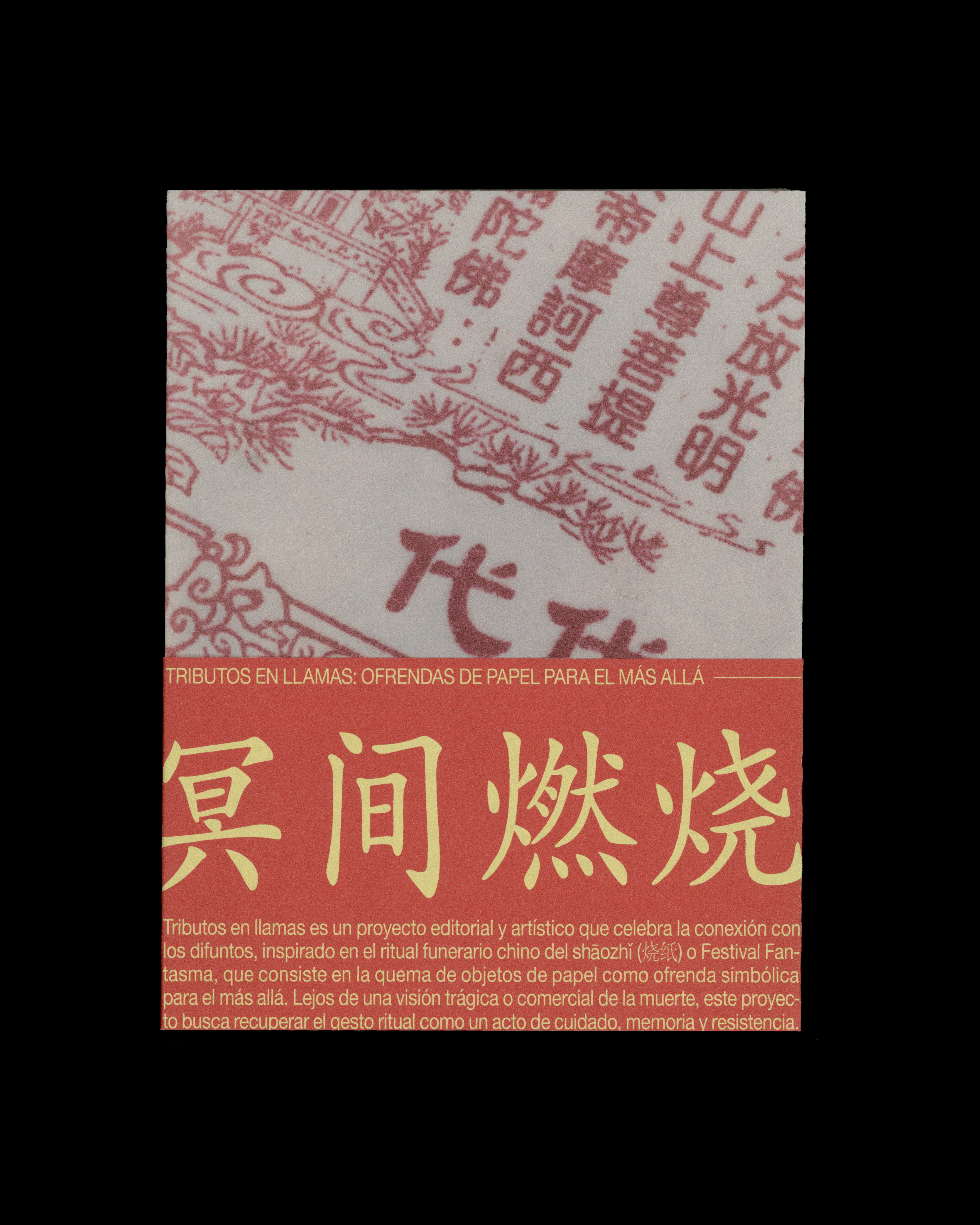
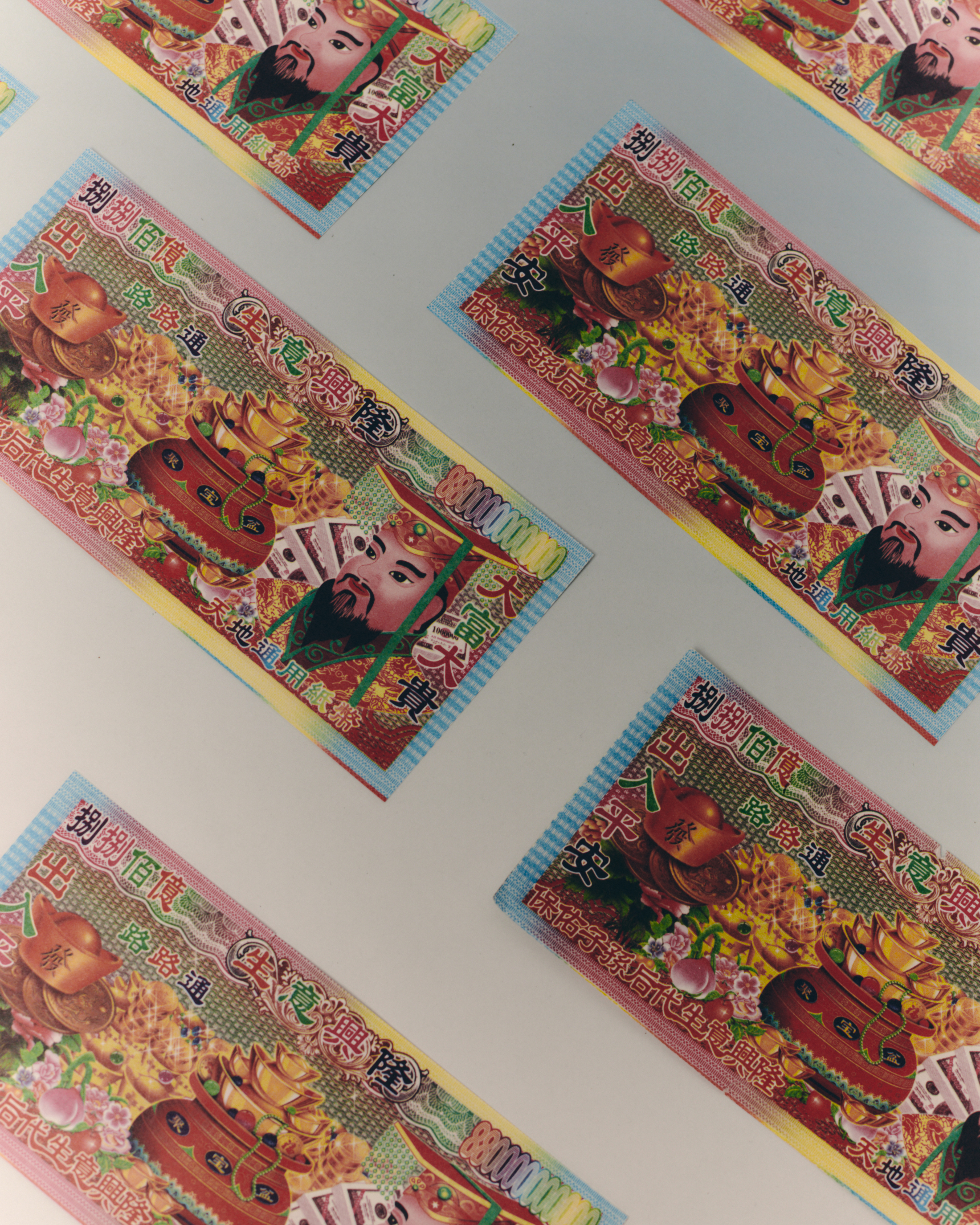
Tributes in Flames is an editorial and artistic project that reinterprets the traditional Chinese shāozhi ritual burning paper objects as offerings for the deceased through contemporary design. The project transforms this cultural heritage practice into a participatory editorial experience that reconnects memory, ritual and gesture.
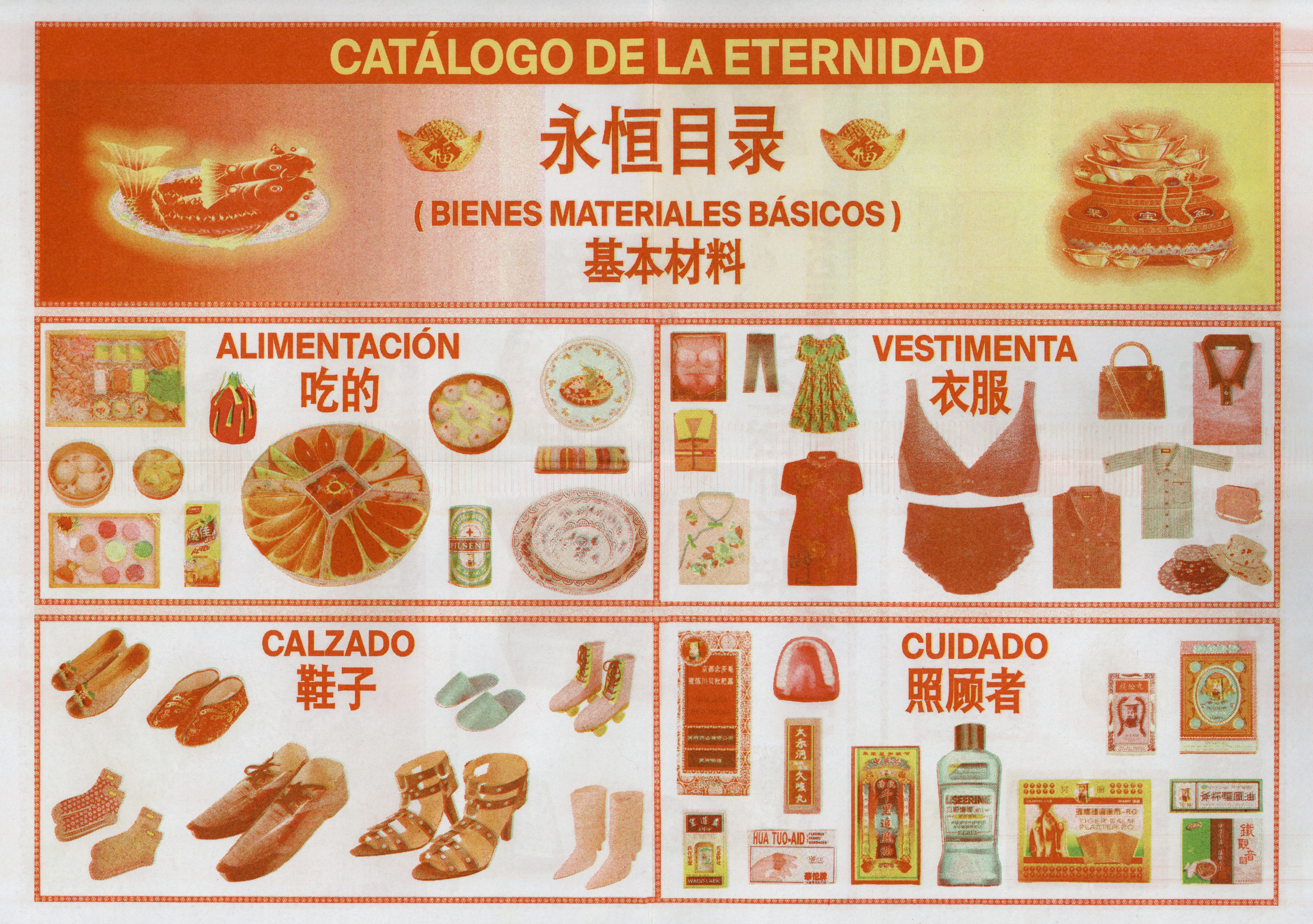
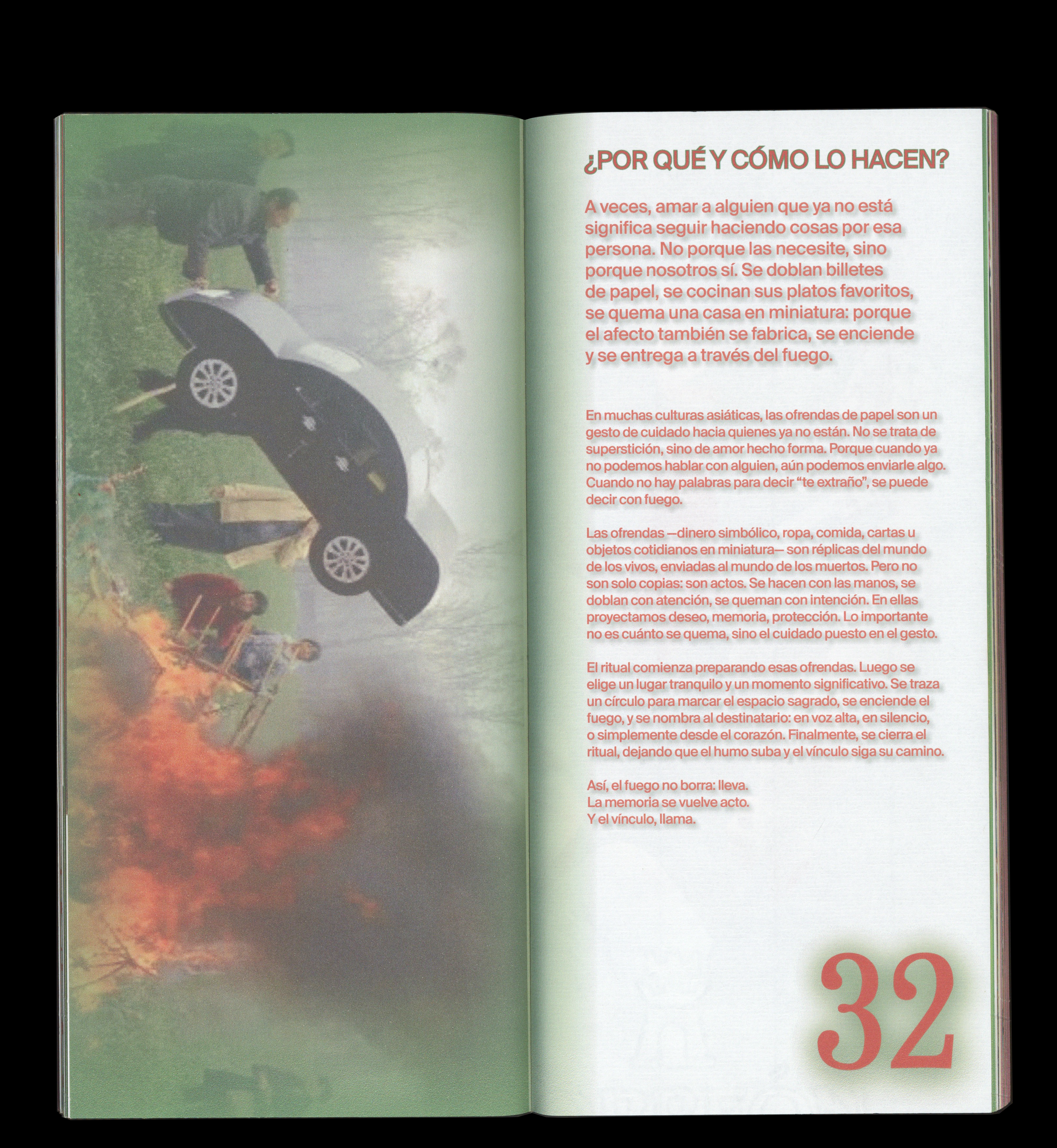
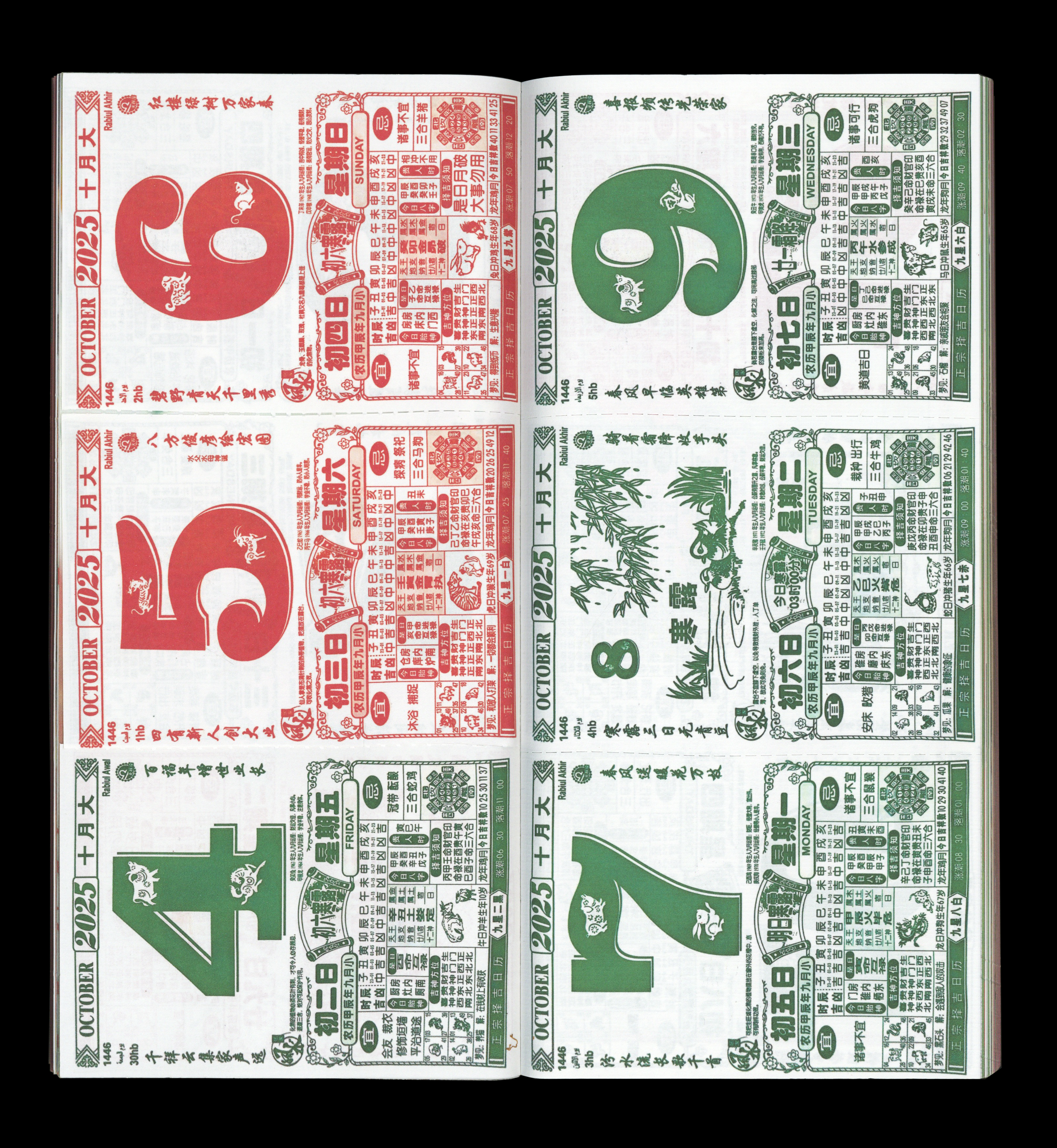
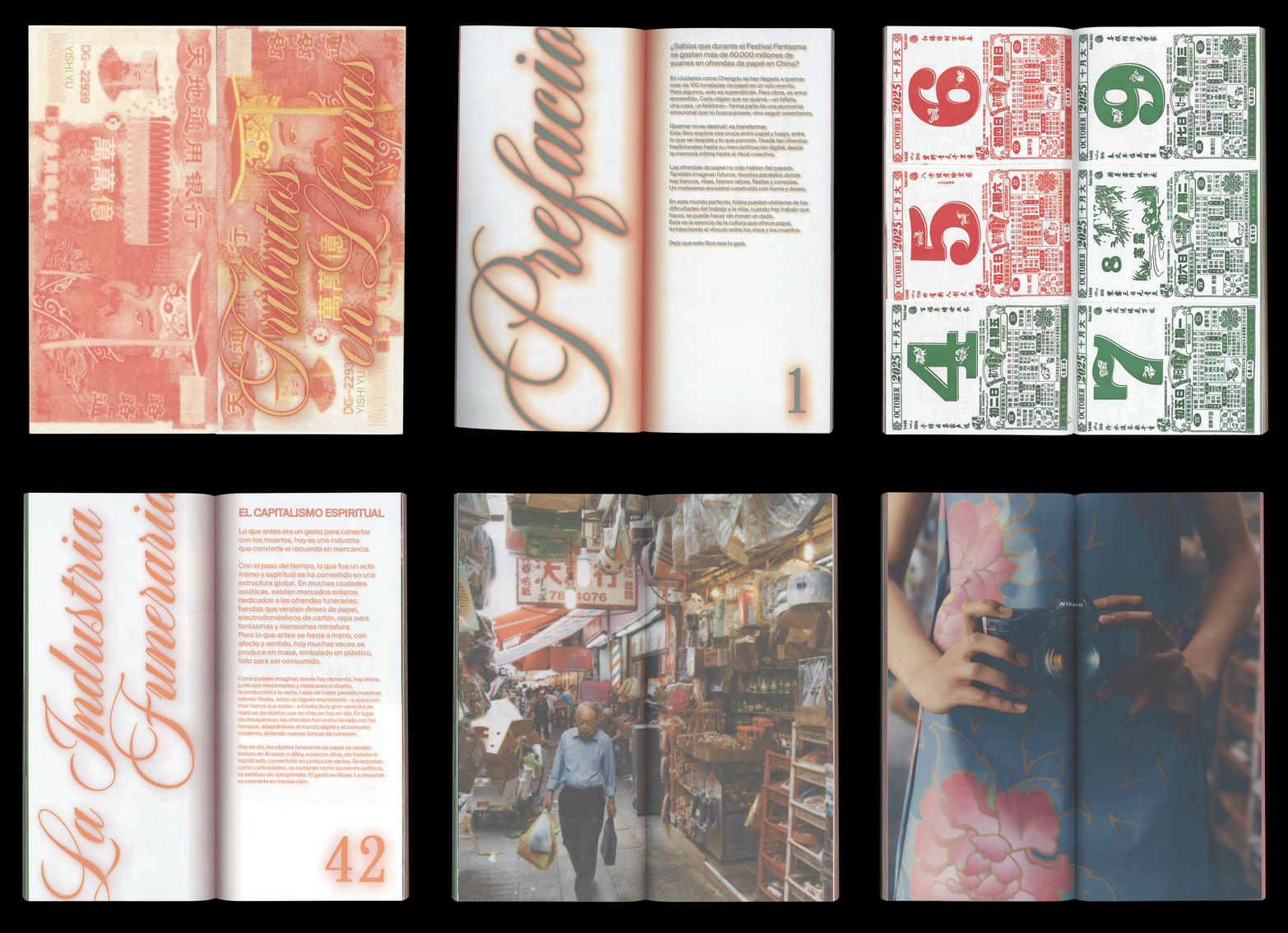
The concept takes the form of an expanded publication composed of three elements: a theoretical narrative explaining the cultural meaning of the ritual, a system of paper templates that allows readers to construct their own symbolic offerings, and a visual catalogue documenting the objects traditionally burned during the festival. Through this structure, the book becomes an active device rather than a passive object. Readers cut, assemble and burn paper objects, turning remembrance into a conscious and shared act.
By shifting the ritual from buying ready-made offerings to making them manually, the project restores the symbolic value of the gesture and challenges the commodification of ritual practices. The process reconnects design with care, memory and cultural continuity.
The project has resulted in a fully developed editorial prototype combining research, graphic design, photography and material experimentation. The publication is printed using risography on recycled paper, highlighting manuality, texture and sustainable production.
Through this approach, Tributes in Flames expands editorial design into a participatory cultural practice, showing how design can bridge heritage and contemporary life.
Tributes in Flames originates from a personal experience with the shāozhi ritual, first encountered in childhood as something difficult to understand and later reinterpreted as an act of care. This shift in perception revealed a central idea: within the ritual, objects are not merely representations, but actions—what exists as material form becomes symbolic through transformation.
The project was developed in response to the growing displacement of death from everyday life and the commodification of ritual practices. Traditional handmade offerings are increasingly replaced by mass-produced objects, weakening the symbolic and relational value of the gesture. This tension between memory and consumption became the conceptual starting point of the project.
The development process combined cultural research, material experimentation, and editorial design. Traditional ritual objects were analyzed and translated through a formal process of transformation: from three-dimensional objects to two-dimensional templates, and back into three-dimensional paper constructions assembled by the reader. This system allows users to actively reconstruct and perform the ritual through making.
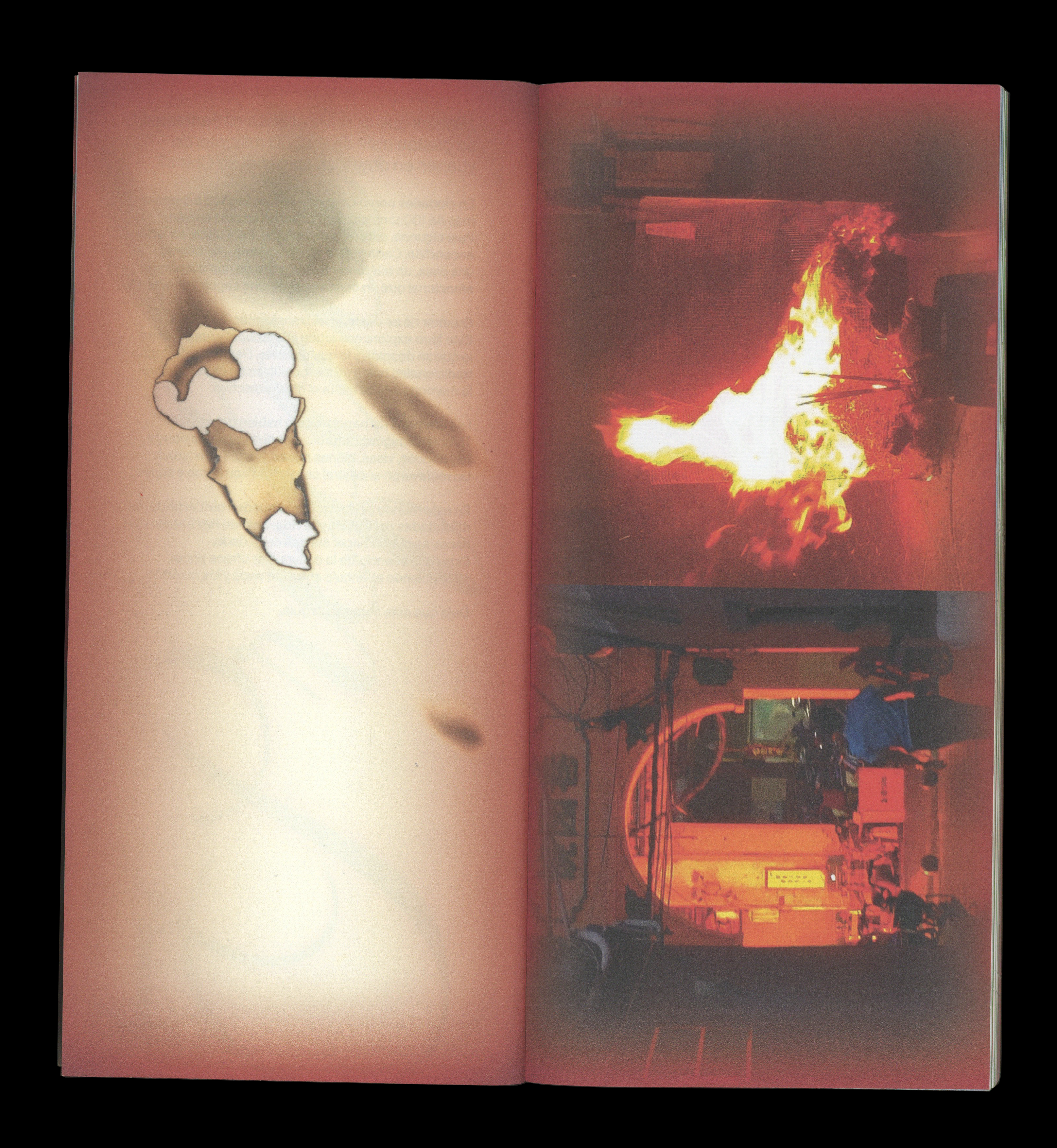
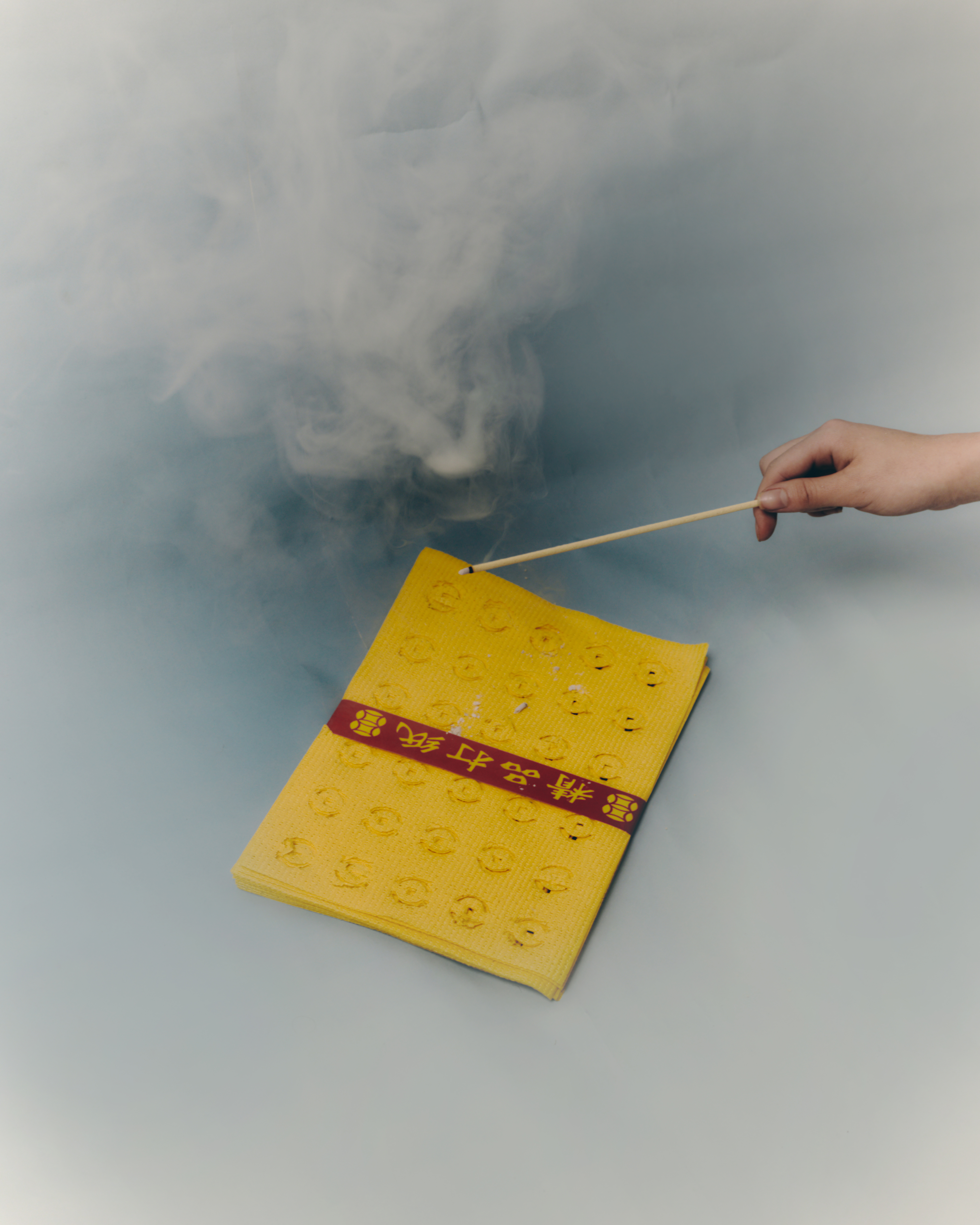
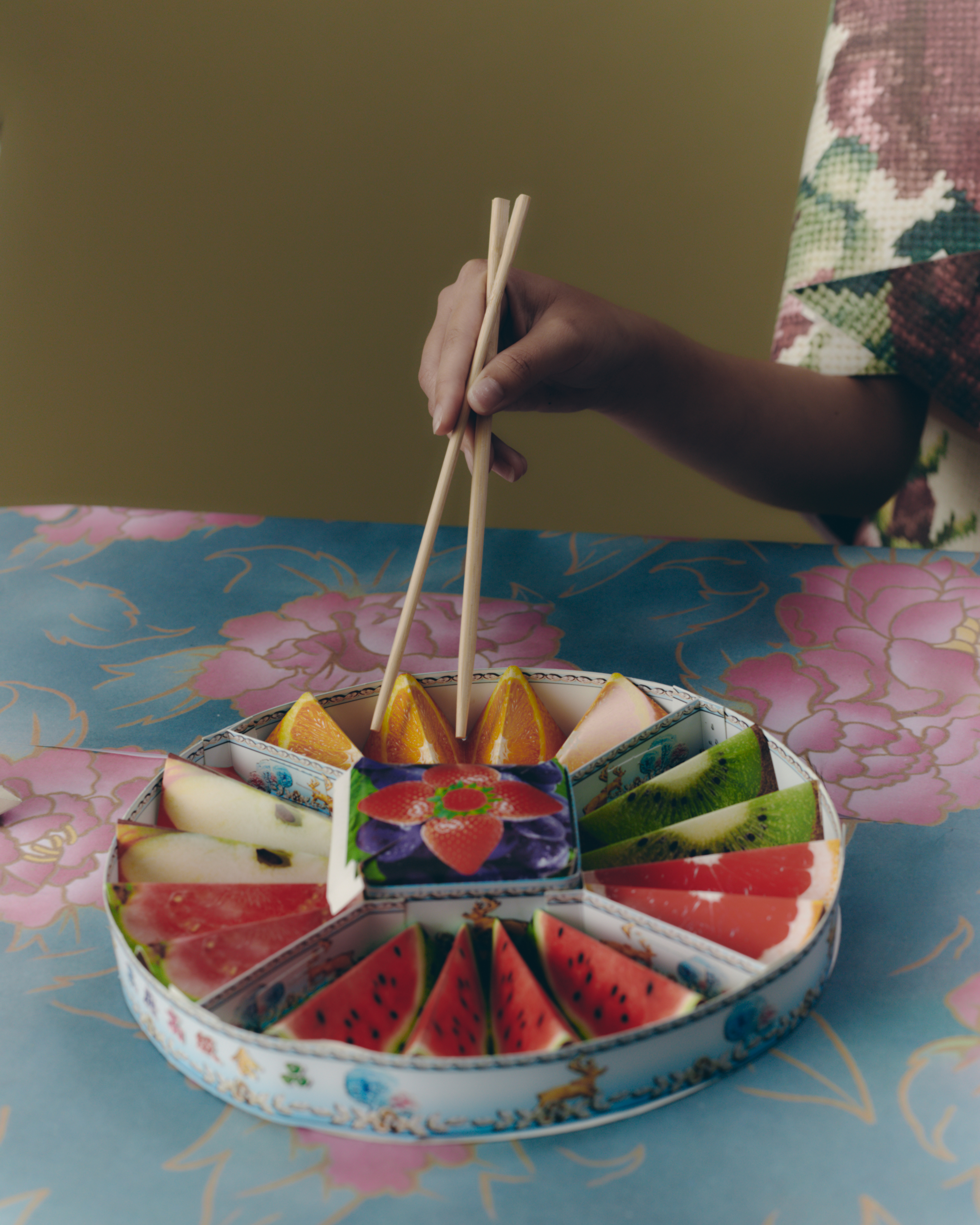
The editorial structure was conceived as a device rather than a linear publication, integrating narrative, instruction, and visual documentation. Graphic decisions—such as the use of red and yellow tones, gradients suggesting combustion, and staged photographic scenes—were used to reinforce the concepts of transformation, disappearance, and continuity.
The project was implemented through the production of a full editorial prototype using risography printing and recycled paper, aligning material choices with the conceptual focus on manuality and sustainability.
Through this process, Tributes in Flames evolved from a personal reflection into a design system that reactivates ritual through participation, positioning editorial design as a space for action, memory, and cultural reinterpretation.
Cultural Rituals
Fire
Paper Craft
Remembrance
Editorial Design
Tributes in Flames addresses sustainability through both its material choices and its cultural approach. The project promotes a more conscious relationship with objects by shifting the ritual practice from consumption to making. Instead of purchasing ready-made offerings, participants create them manually using simple paper structures, restoring the value of gesture, care and participation.
The project is produced using recycled paper and risography printing, a low-impact technique that uses minimal energy and soy-based inks while generating vibrant textures and small-scale production. This choice aligns the material production with the project’s conceptual focus on manuality and responsible use of resources.
Beyond its environmental dimension, the project also contributes to cultural sustainability. By reinterpreting the traditional shāozhi ritual through contemporary design, it helps preserve and reactivate an intangible cultural heritage practice while making it accessible to new audiences.
Through this approach, Tributes in Flames proposes a sustainable model where design does not rely on mass production but on participation, reuse of materials and meaningful cultural engagement. It demonstrates how design can support both environmental awareness and the continuity of cultural practices.
Tributes in Flames contributes to beautifying everyday life by transforming an intimate act of remembrance into a poetic and participatory aesthetic experience. The project turns editorial design into a sensory space where paper, fire, light and manual gesture create a meaningful moment of reflection on memory, loss and care.
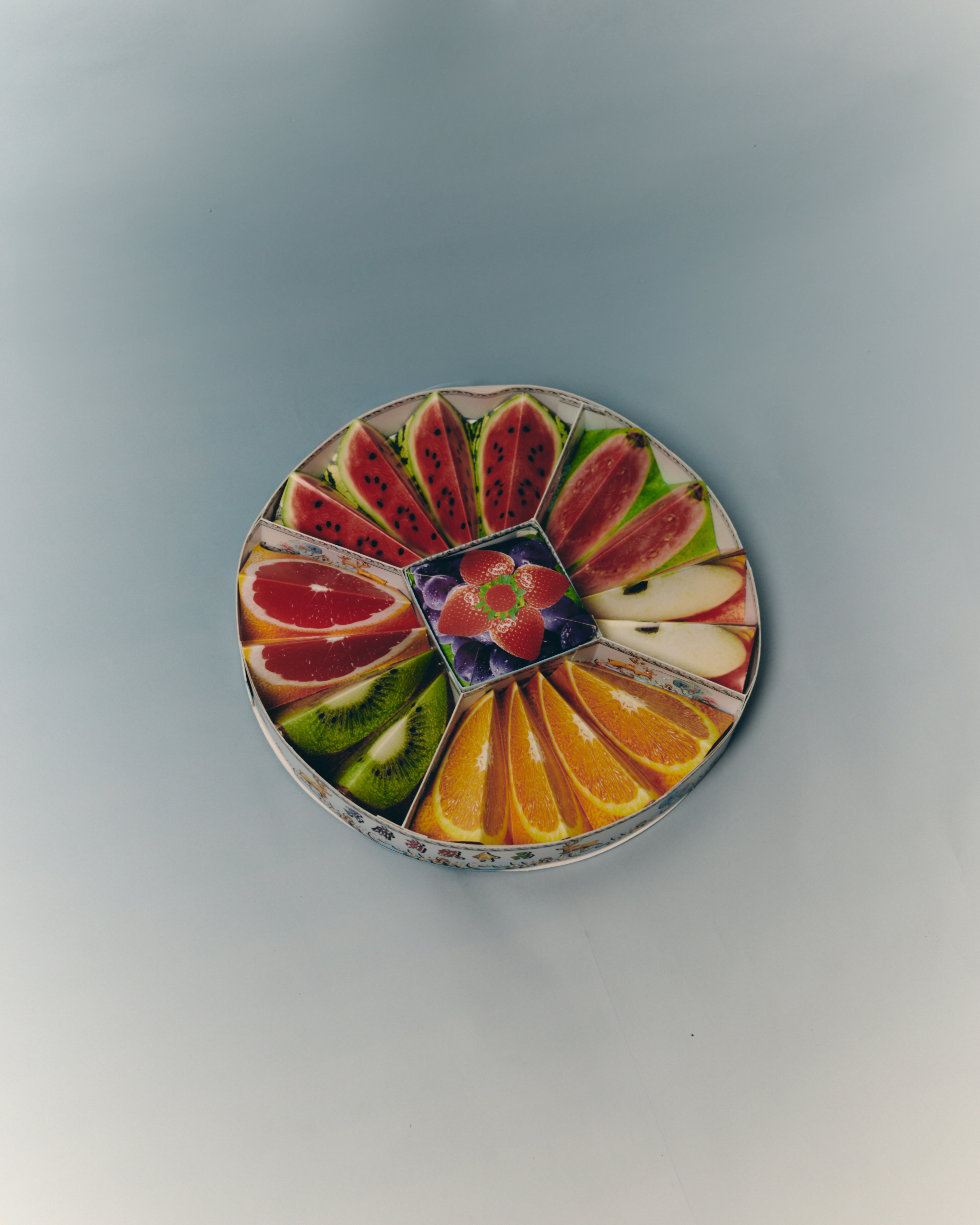
The visual language draws inspiration from the ritual imagery of shāozhi. Red and yellow tones evoke fire and transformation, while soft gradients suggest smoke and transition. Photography and art direction imagine a symbolic world made entirely of paper, creating a dreamlike and ephemeral atmosphere that expands the narrative of the project beyond the book itself.
Through this aesthetic experience, the project encourages people to reconnect with gestures of remembrance and care. By activating memory through making and ritual, it fosters a sense of belonging not only to a cultural tradition but also to the shared human experience of remembering those who are no longer present.
In this way, Tributes in Flames demonstrates how design can move beyond communication to create meaningful experiences. By integrating beauty, symbolism and participation, the project proposes an aesthetic that is not only seen, but lived and enacted through gesture.
Tributes in Flames promotes inclusion by transforming a cultural ritual into an accessible and participatory design experience. The project invites people from different cultural backgrounds to engage with the act of remembrance through simple, hands-on gestures such as cutting, assembling and burning paper offerings. By using an editorial format and easily reproducible paper templates, the experience can be shared and replicated without requiring specialized tools or resources.
The project also opens a space for dialogue between cultures. By reinterpreting the traditional Chinese shāozhi ritual within a contemporary design context, it introduces this cultural practice to new audiences while encouraging reflection on how different societies remember and care for the deceased. In this way, the project fosters intercultural understanding and shared reflection on universal human experiences such as grief, memory and remembrance.
Accessibility is further reinforced through the use of simple materials such as paper and low-cost production techniques like risography and recycled paper. This allows the project to remain affordable and adaptable to different contexts, encouraging broader participation.
Through these strategies, Tributes in Flames proposes a model of inclusive cultural participation where design acts as a bridge between traditions, communities and individual experiences. It demonstrates how creative practices can create shared spaces for memory, dialogue and collective reflection.
Participation is at the core of Tributes in Flames. The project was developed with the intention of transforming the reader from a passive observer into an active participant in the ritual. Instead of presenting the tradition as something to simply learn about, the concept invites people to engage physically with it through making. By cutting, assembling and burning the paper offerings, participants take part in the creation of the ritual gesture itself.
During the development process, the concept evolved through experimentation and testing of different paper structures and templates. Prototypes were created and assembled to understand how readers could easily interact with the objects and experience the transformation from a two-dimensional template to a three-dimensional paper offering.
This participatory approach influenced both the design and the narrative of the project. The editorial piece was conceived not only as a publication but as an activatable device that encourages users to reflect on their own memories and relationships with those who have passed away.
As a result, participation becomes both the method and the outcome of the project. By inviting people to construct their own offerings, Tributes in Flames creates a shared space where cultural heritage, personal memory and creative action come together through a simple but meaningful gesture.
ributes in Flames has been developed through a design and research process that connects different cultural and creative stakeholders across several levels.
At the local level, the project has been developed within the context of design education and artistic practice, involving experimentation, prototyping and dialogue with tutors, designers and creative peers. These interactions helped refine the concept and its participatory approach.
At a cultural and community level, the project engages with audiences who interact with the editorial piece by assembling and activating the ritual objects. Their participation is essential, as the concept itself relies on users completing the ritual gesture through making, transforming the project into a shared cultural experience.
At a broader international and cultural level, the project connects traditional Chinese ritual knowledge with contemporary European design practices. This intercultural dialogue creates opportunities for collaboration with cultural institutions, design schools, museums and exhibition spaces interested in heritage, ritual and participatory design.
The value of this multi-level engagement lies in its ability to bridge cultural heritage, creative practice and public participation. By connecting different stakeholders—from designers and cultural institutions to participants and audiences—the project demonstrates how design can activate cultural dialogue and reinterpret traditional practices within contemporary contexts.
Tributes in Flames brings together multiple disciplines that intersect in the development of the project. At its core, it is a graphic and editorial design project, but its concept is informed by research in cultural studies, anthropology and visual arts, particularly in relation to ritual practices, memory and material culture.
The project also incorporates artistic practice and photography, which were used to construct a visual narrative imagining a symbolic world made entirely of paper. This artistic dimension expands the editorial piece beyond communication, turning it into a sensory and conceptual experience.
Digital tools also played an important role in the development process. Techniques such as 3D scanning, digital modelling and unfolding software were used to translate traditional ritual objects from three-dimensional forms into two-dimensional templates that can be assembled again in paper.
In addition, the project integrates material experimentation and sustainable printing practices, such as risography and the use of recycled paper, linking design decisions with environmental awareness.
By combining design, cultural research, artistic experimentation and digital technologies, Tributes in Flames demonstrates how transdisciplinary approaches can generate new ways of engaging with cultural heritage and participatory design experiences.
The business model of Tributes in Flames is based on a hybrid approach that combines cultural dissemination, creative production and educational activities.
In the short term, the project exists as a fully developed editorial prototype that can be produced as a limited edition publication. Revenue could be generated through the sale of the book and accompanying materials in design bookstores, museums, cultural institutions and online platforms focused on art and design publications.
In addition, the project has strong potential to be activated through workshops, exhibitions and educational programmes. These activities would invite participants to assemble and create their own paper offerings while learning about the cultural context of the ritual. Collaborations with cultural institutions, design schools, museums and festivals could support these initiatives through project fees, cultural funding or institutional partnerships.
Public funding and cultural grants could also play an important role in supporting the dissemination of the project, particularly within programmes that promote cultural heritage, participatory design and interdisciplinary artistic practices.
Over time, the concept could expand into new formats such as exhibition installations, participatory workshops or educational toolkits, increasing its reach while maintaining a sustainable production model based on small-scale printing, recycled materials and cultural collaboration.
Through this combination of publication sales, cultural programming and institutional partnerships, Tributes in Flames aims to remain financially sustainable while continuing to promote meaningful engagement with cultural heritage and participatory design.
Several elements of Tributes in Flames have strong potential for transferability and replication across different cultural contexts and communities.
First, the participatory methodology at the core of the project can be easily adapted to other traditions, rituals or cultural practices related to memory, care and remembrance. The idea of transforming editorial design into an activatable experience—where users construct and perform a symbolic gesture—can be applied to different cultural narratives and educational contexts.
Second, the template-based system used to create the paper offerings is highly adaptable and reproducible. The templates can be modified to represent other symbolic objects or cultural references, making the concept flexible for workshops, exhibitions or community-based projects in different locations.
The project also relies on accessible materials and simple tools, primarily paper and basic assembly techniques. This makes it easy to reproduce in educational, cultural or community settings without requiring complex infrastructure or expensive technologies.
In addition, the concept can be expanded through workshops, participatory exhibitions or educational programmes, allowing different groups—such as students, cultural institutions or local communities—to reinterpret the ritual according to their own cultural context.
Through these adaptable methods, tools and participatory processes, Tributes in Flames demonstrates how design can create transferable cultural experiences that foster reflection, creativity and shared engagement with memory and heritage across different geographies.
In the year following the application, the focus will be on further developing and disseminating Tributes in Flames as a participatory cultural and design project.
The first step will be the refinement and production of the editorial prototype as a limited edition publication. This will allow the project to circulate through design bookstores, cultural institutions and independent publishing platforms that support experimental editorial practices.
A second step involves activating the project through workshops and exhibitions. These activities will invite participants to assemble and create the paper offerings themselves, transforming the publication into a shared ritual experience while introducing audiences to the cultural background of the shāozhi tradition.
In parallel, the project will be promoted through design and cultural platforms, including exhibitions, talks and publications related to graphic design, cultural heritage and participatory practices. These opportunities will help expand the visibility of the project and create potential collaborations with museums, design schools and cultural organisations.
Finally, the concept will continue to evolve through further experimentation with new paper objects, narrative formats and participatory activities. The goal is to expand the project into educational contexts, cultural programmes and community workshops, enabling different audiences to engage with the ritual and reinterpret it through contemporary design.
Through these steps, Tributes in Flames aims to grow from an experimental design project into a platform that connects cultural heritage, participation and contemporary design practice.