Arts, Culture, and Heritage as Drivers of Change
Mobinsulation
A reversible insulation kit made from local natural wool for less than 100 euros
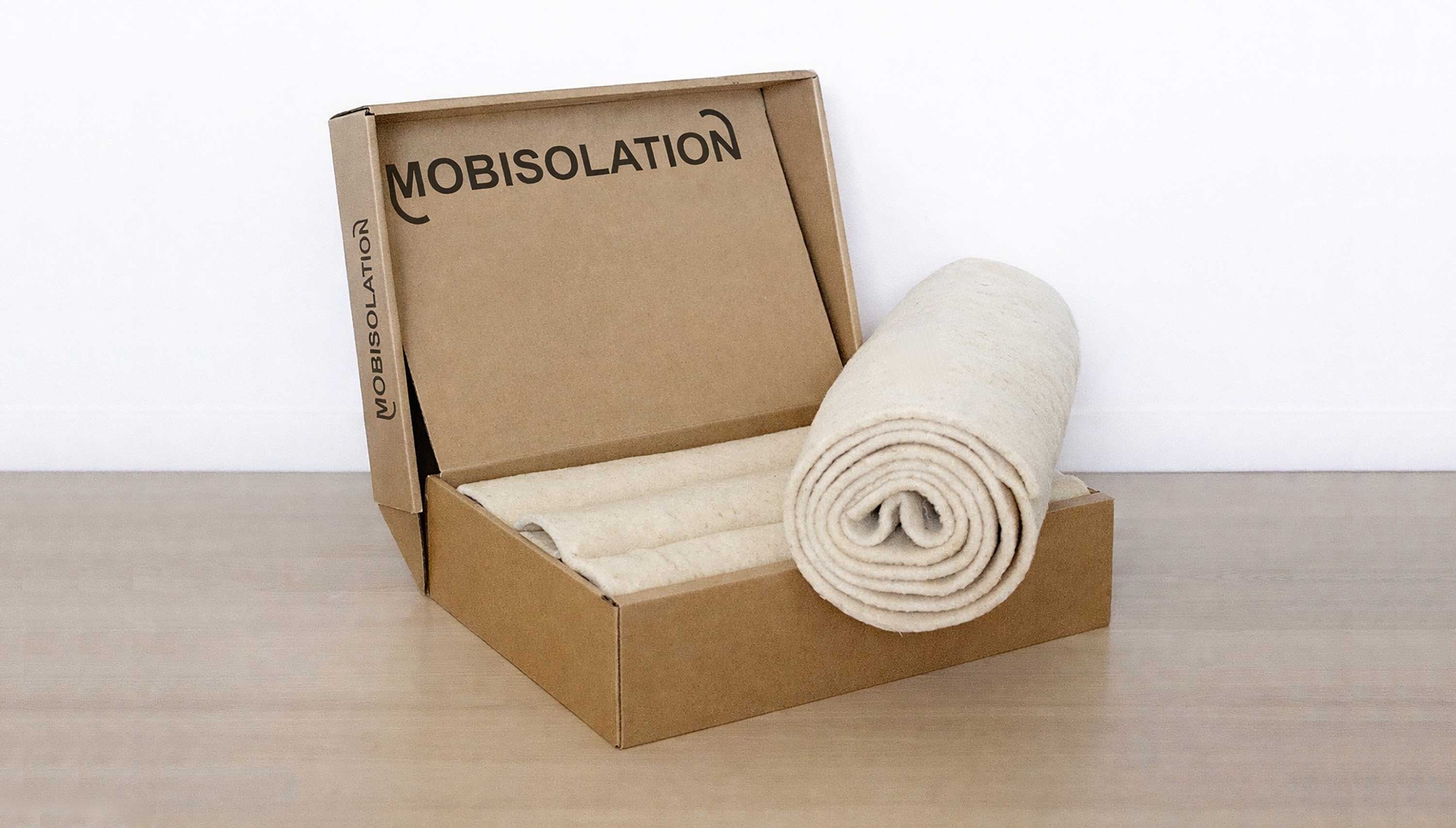
Mobinsulation offers an affordable and eco-friendly alternative to conventional home insulation. It is an all-in-one kit that allows you to improve the thermal comfort of your home on your own and at a lower cost. It is a 100% organic, locally sourced, and sustainable system with wool from the Lacaune breed.
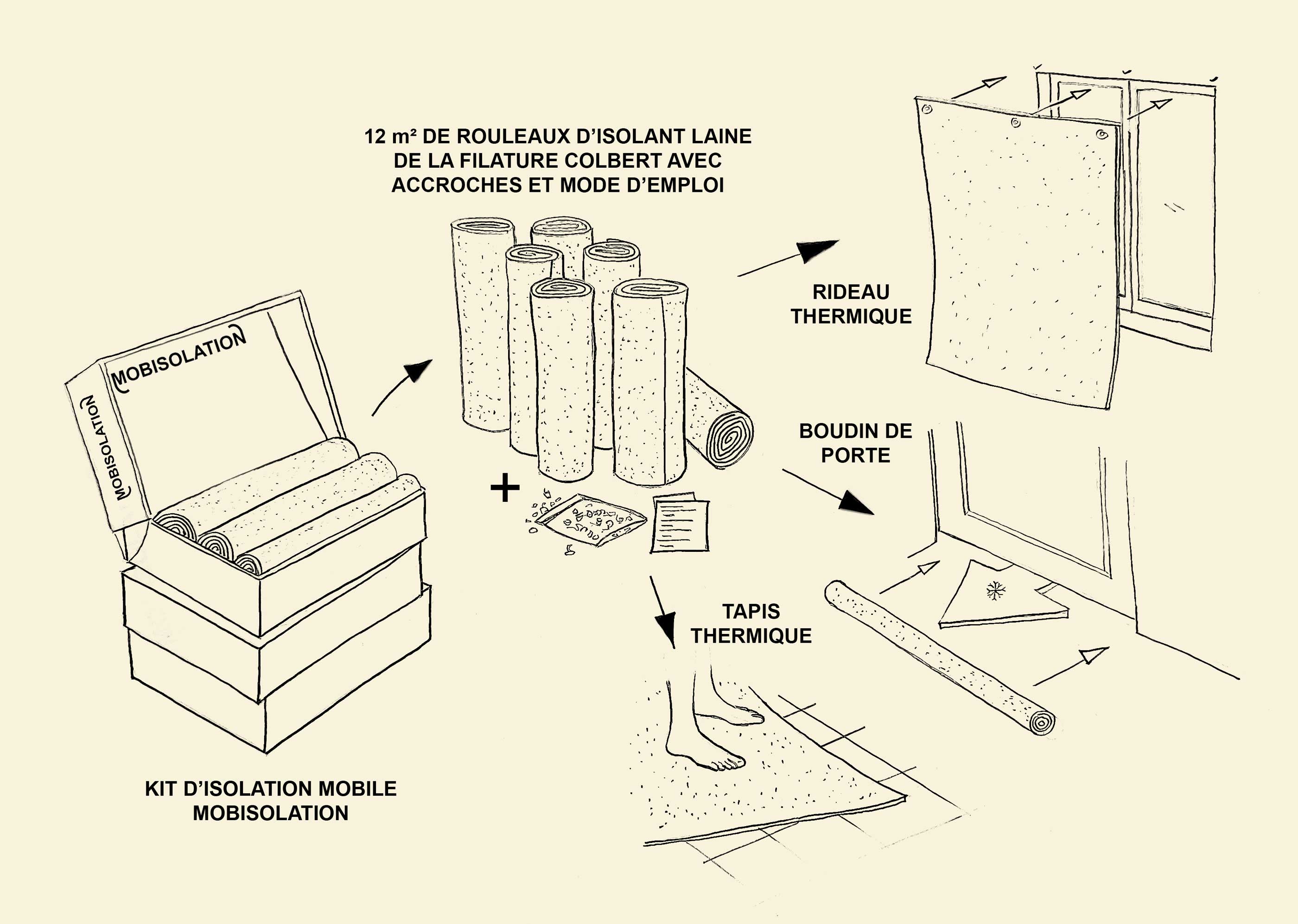
The kit includes a manual and rolls of wool insulation manufactured in the Aveyron region in France, which can be used as tapestry, curtains, or rugs thanks to a universal hanging system.
The kit includes a manual and rolls of wool insulation manufactured in the Aveyron region in France, which can be used as tapestry, curtains, or rugs thanks to a universal hanging system.
France
National
Mainly urban
It involves other types of transformations (soft investment)
Yes
2026-03-01
No
No
No
Individual
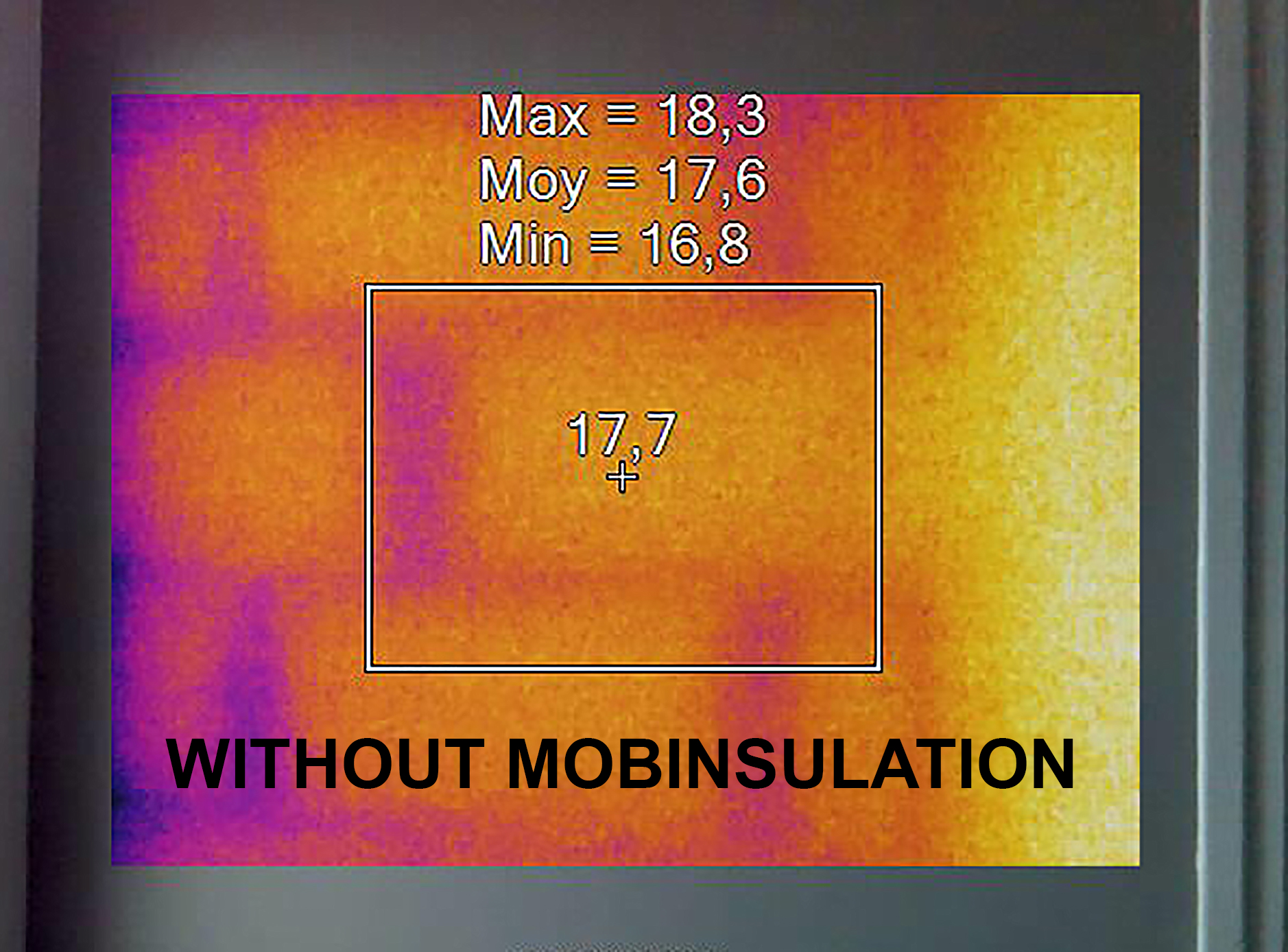
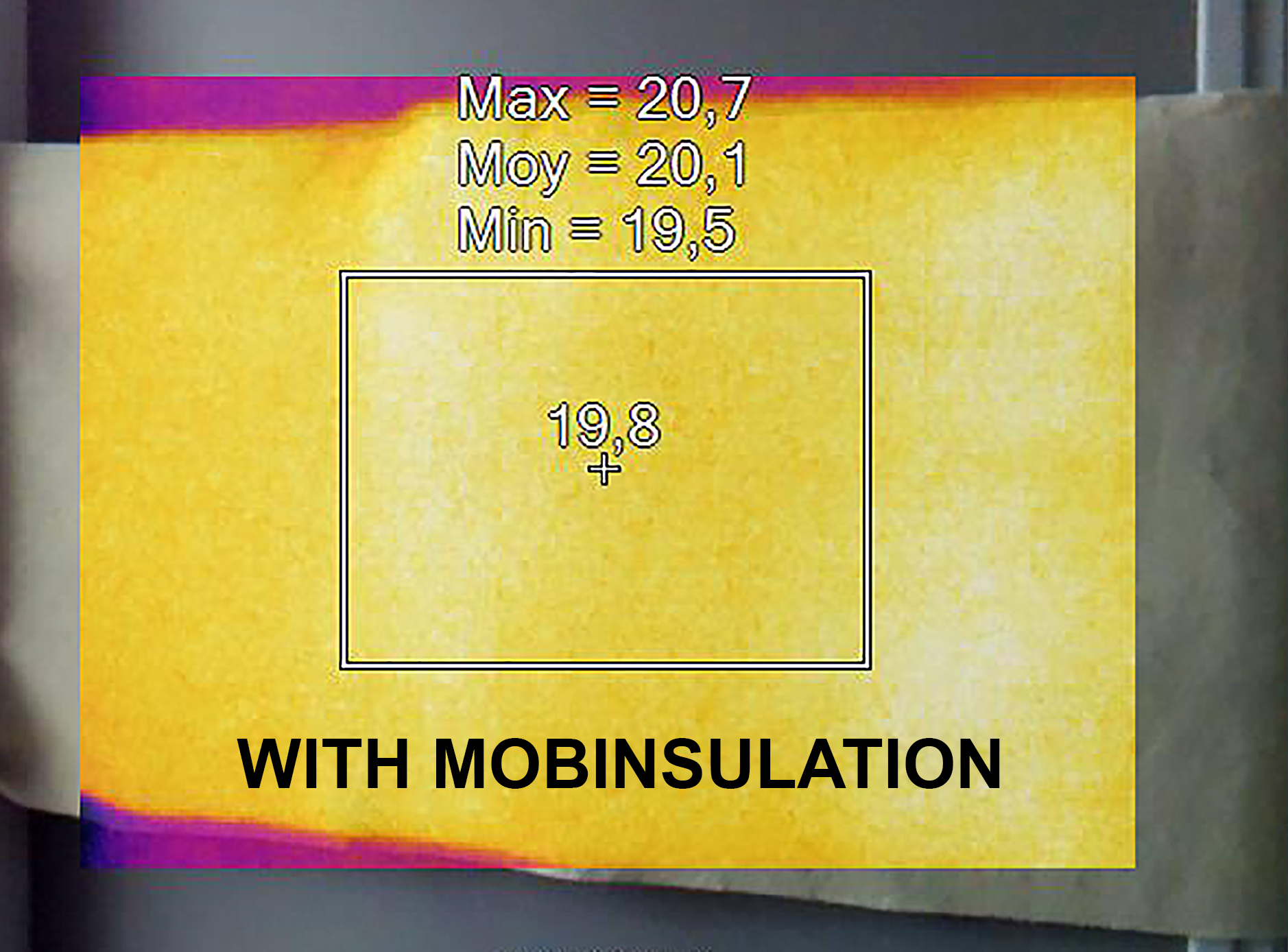
Mobinsulation began with a historical puzzle. Researching vernacular architecture, I discovered that mobile insulation — tapestries, wool hangings, curtains — was the dominant thermal strategy in European buildings until the 20th century. Reading Shakespeare's Hamlet, the scene where Polonius is stabbed through a curtain only makes sense when you understand that Elizabethan interiors were lined with wool hangings against cold stone walls. He was hidden within the thermal fabric of the room. This practice disappeared not for technical reasons, but cultural and industrial ones.The project reactivates this proven principle, grounded in doctoral research on bioclimatic design. Its thermal mechanism — acting on surface resistance to correct the cold wall effect — has been confirmed by real-world thermal imaging: a surface temperature gain of +2°C was measured with the kit in place, achieved without any increase in energy consumption.The kit costs under 100 euros, requires no professional installation, no administrative process, and no landlord authorisation — making it accessible to the millions of tenants and low-income households excluded from structural renovation schemes.The wool felt is produced by the Filature Colbert in Aveyron, using wool from Lacaune sheep — the breed whose milk produces Roquefort cheese — today a neglected co-product of a sector under economic pressure. Mobinsulation creates a direct new outlet, connecting urban thermal comfort with a struggling rural economy.Early partners include La Maison Écologique and Rabot Dutilleul, a major property developer — confirming that the approach resonates across sectors.
Bonne remarque — voici la version avec le joncheur réintégré, en restant sous 2000 caractères :
2) Tell us the story of your project
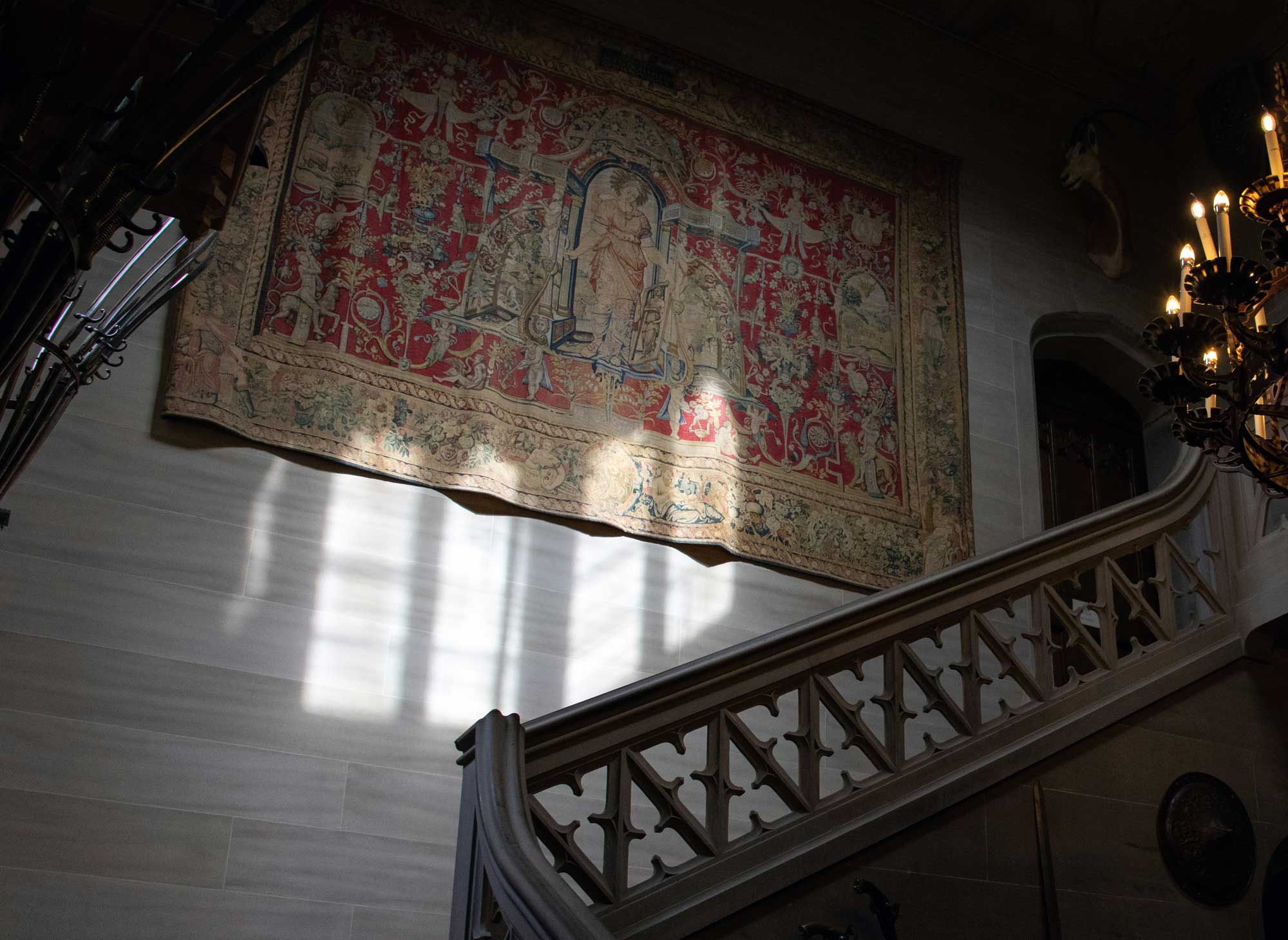
The project began not with a technical problem but with a historical puzzle. While researching vernacular architecture, I kept encountering the same pattern: in medieval great halls, in rural farmhouses, in Renaissance châteaux, thermal comfort was managed through mobile elements — tapestries, wool hangings, heavy curtains. These were not decorative afterthoughts. They were the insulation system.
Two details made this vivid. Reading Shakespeare's Hamlet, the scene where Polonius is stabbed through a curtain only makes sense when you understand that Elizabethan interiors were lined with wool hangings against cold stone walls. He was not hiding behind a decorative accessory — he was hidden within the thermal fabric of the room. I also discovered the medieval profession of the joncheur, a worker who strewed floors with dry vegetation as a seasonal insulating layer, removed when no longer needed. Mobile, biosourced, reversible: the logic of Mobinsulation existed in the Middle Ages.
What struck me most was not the ingenuity of these solutions, but the speed of their disappearance. In a few decades, insulation went from a visible, mobile, inhabitant-managed practice to an invisible, fixed, professionally-installed layer. We gained thermal performance in theory. We lost agency, adaptability, and accessibility in practice.
Mobinsulation was developed within Freio, a Montpellier-based practice in climatic design. First tested at home, then shared publicly, it generated immediate interest from both general audiences and building professionals — confirming that people recognised something they had not known they had forgotten.
Mobile insulation
Biosourced materials
Energy poverty
Circular rural economy
Low-tech thermal comfort
The starting point of Mobinsulation was not a technical problem but a historical paradox. While researching vernacular architecture, I discovered that mobile insulation — tapestries, curtains, wool hangings — was the norm until the 20th century. It is only recently that insulation became something hidden, fixed, and structural. This raised an uncomfortable question: why are we investing enormous resources in a single approach to thermal comfort, when history shows that other paths have always existed?
This question became more urgent in light of two converging problems. First, the cost of energy renovation has risen dramatically, placing it out of reach even for households theoretically eligible for public support. Second, when renovation does happen, it frequently runs into the Jevons paradox: as buildings become more energy-efficient, inhabitants tend to consume more, so that real-world energy savings are consistently lower than predicted. Mobinsulation works differently: thermal imaging conducted during real-world testing recorded a +2°C surface temperature gain with the kit in place — a measurable correction of the cold wall effect achieved without any increase in energy consumption.
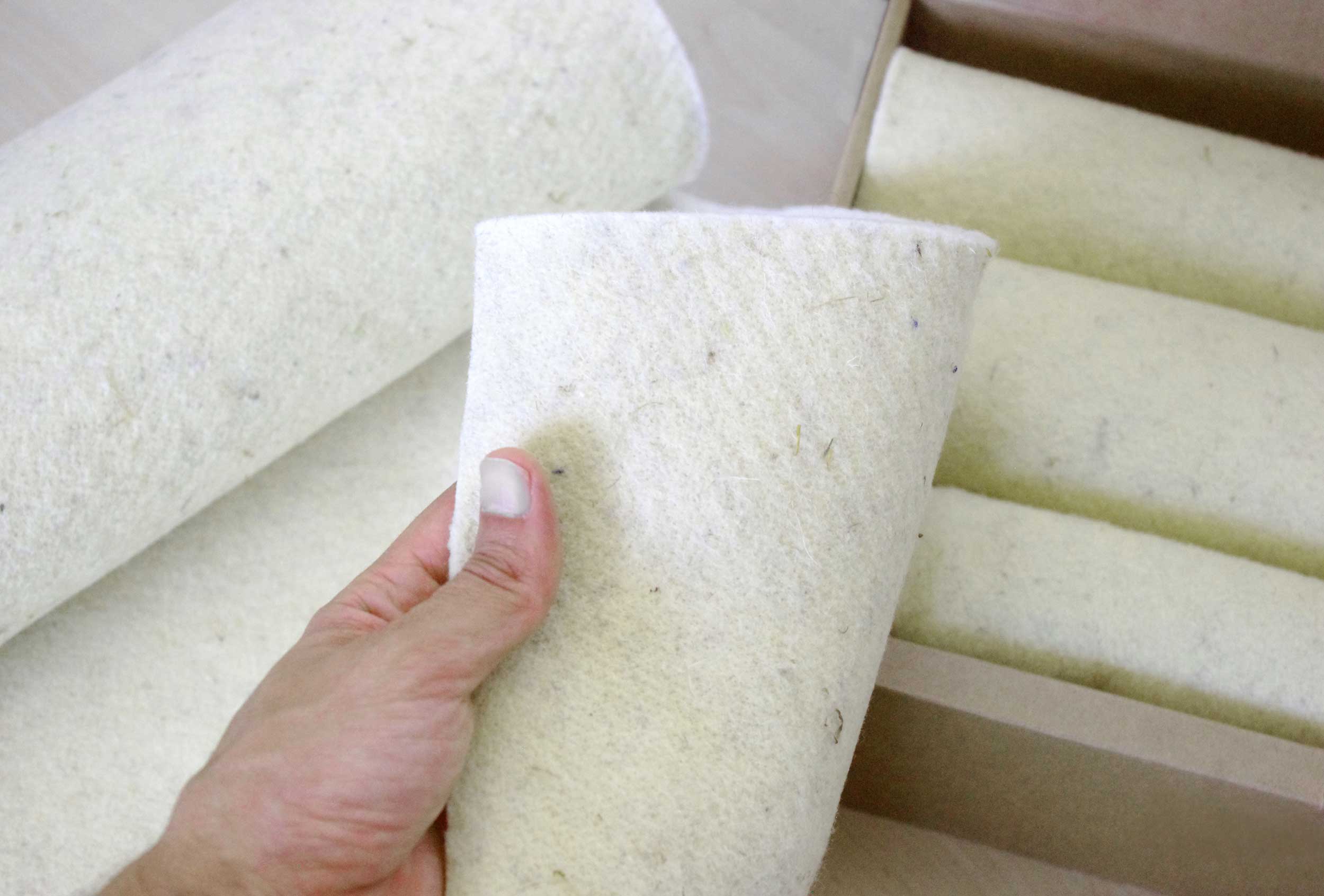
The product is 100% biosourced, using wool felt from the Filature Colbert in Camarès, Aveyron. The wool comes from Lacaune sheep — the breed whose milk produces Roquefort cheese — currently a neglected co-product of a sector under economic pressure. Mobinsulation creates a new outlet for this material, generating circular value within a single territory. Fully reversible and seasonally adaptable, it works with the thermal inertia of existing walls rather than against it.
One of the most striking reactions when people first encounter Mobinsulation — whether on social media or in professional circles — is a kind of surprised recognition. Architects and building professionals, who spend their careers thinking about insulation as something to be concealed, find themselves intrigued by the idea of making it visible, tactile, and beautiful again. That reaction confirms something the project set out to demonstrate: that thermal performance and domestic aesthetics are not in opposition — they were separated only recently, and artificially.
Mobinsulation revives a pre-industrial tradition in which the objects that kept people warm were also the objects that made a home meaningful — tapestries, wool hangings, heavy curtains. By proposing wool felt as a material that inhabitants choose, hang, move, and make their own, the project reconnects comfort with care for one's living space. This is particularly significant for tenants and low-income households who rarely have the means or the right to transform their environment. Anchored in Occitan wool craftsmanship and historical precedent, Mobinsulation fosters a sense of place and belonging that no generic insulation product can offer.
Mobinsulation revives a pre-industrial tradition in which the objects that kept people warm were also the objects that made a home meaningful — tapestries, wool hangings, heavy curtains. By proposing wool felt as a material that inhabitants choose, hang, move, and make their own, the project reconnects comfort with care for one's living space. This is particularly significant for tenants and low-income households who rarely have the means or the right to transform their environment. Anchored in Occitan wool craftsmanship and historical precedent, Mobinsulation fosters a sense of place and belonging that no generic insulation product can offer.
France counts nearly 4.8 million energy-poor dwellings. The conventional response — deep structural renovation — has become increasingly inaccessible: costs have risen sharply, administrative processes are complex, and waiting times are long. Many households eligible for public support still cannot bridge the gap. Tenants, in particular, are structurally excluded: they cannot undertake works without landlord consent, and landlords have little incentive to invest.
Mobinsulation was designed precisely for this gap. At under €100 for a complete kit, it requires no professional installation, no administrative process, and no landlord authorisation. Any inhabitant can implement it autonomously. The first test — carried out in a real home — confirmed not only the thermal principle (acting on surface resistance and the cold wall effect) but also the practical accessibility of the system. Mobinsulation proposes a new model: thermal autonomy as a right, accessible without depending on institutions, contractors, or property owners.
Mobinsulation was designed precisely for this gap. At under €100 for a complete kit, it requires no professional installation, no administrative process, and no landlord authorisation. Any inhabitant can implement it autonomously. The first test — carried out in a real home — confirmed not only the thermal principle (acting on surface resistance and the cold wall effect) but also the practical accessibility of the system. Mobinsulation proposes a new model: thermal autonomy as a right, accessible without depending on institutions, contractors, or property owners.
Mobinsulation emerged from a research process that is itself a form of participation — recovering and reactivating thermal strategies that communities developed and refined over generations, documented through doctoral research on bioclimatic design. This historical knowledge, produced collectively across centuries, forms the intellectual foundation of the project.
Beyond this, the project has actively engaged with communities and organisations working on housing and ecological transition. Associations involved in ecological and social housing, including "La Maison Écologique", have been engaged as early partners, bringing direct knowledge of the needs and constraints of households in energy poverty. At the other end of the spectrum, Rabot Dutilleul, one of France's significant property developers, has expressed interest in the solution — demonstrating that the participatory logic of the project resonates across very different institutional contexts.
The next phase will formalise this engagement, structuring co-deployment with partner organisations to generate documented evidence of impact with real beneficiaries, and to ensure that the kit continues to be shaped by the people it is designed to serve.
Mobinsulation sits at the intersection of several policy levels without yet being formally embedded in institutional frameworks — which is itself a symptom of the gap between policy ambition and on-the-ground reality.
At the local and regional level, the project is rooted in the Occitanie territory: the wool supply chain (Filature Colbert, Aveyron), the design expertise (Freio, Montpellier), and the target population (Mediterranean urban households facing both winter cold and summer heat) are all deeply regional. At the national level, it responds directly to France's obligations around energy poverty — obligations made harder to meet by rising renovation costs that have eroded the reach of public support schemes. At the European level, it resonates with the Renovation Wave objectives and the NEB's ambition to make sustainable living accessible to all. The project's next phase will seek to formalise these connections, engaging social housing organisations and local authorities as deployment partners.
At the local and regional level, the project is rooted in the Occitanie territory: the wool supply chain (Filature Colbert, Aveyron), the design expertise (Freio, Montpellier), and the target population (Mediterranean urban households facing both winter cold and summer heat) are all deeply regional. At the national level, it responds directly to France's obligations around energy poverty — obligations made harder to meet by rising renovation costs that have eroded the reach of public support schemes. At the European level, it resonates with the Renovation Wave objectives and the NEB's ambition to make sustainable living accessible to all. The project's next phase will seek to formalise these connections, engaging social housing organisations and local authorities as deployment partners.
Mobinsulation could not have emerged from a single discipline. It required crossing several fields simultaneously — and the core insight of the project came precisely from that crossing.
The historical and documentary research into vernacular architecture revealed something that building physics alone would never have surfaced: that mobile insulation was the dominant thermal strategy in European buildings until the 20th century, and that its disappearance was cultural and industrial, not technical. This discovery reframed the engineering question entirely. Rather than asking "how do we insulate better?", the project asked "what thermal strategies have we forgotten, and why?"
From there, the project drew on building physics (thermal comfort analysis, surface resistance, the cold wall effect), design and craft (product design, material selection, universal fixing system), agronomy and local economy (valorisation of Lacaune wool), and social sciences (analysis of energy poverty, tenure constraints, the Jevons paradox, and the rising cost of conventional renovation). This convergence was not a methodological choice — it was a necessity. The solution sat in the space between disciplines, invisible from inside any one of them.
The business model of Mobinsulation is built on a structural advantage that most social innovation projects lack: zero additional investment in production capacity. The wool felt at the heart of the kit is already a commercial product of the Filature Colbert in Camarès, Aveyron — a semi-finished material produced as part of the manufacturer's existing operations. Mobinsulation does not require new machinery, new supply chains, or new manufacturing processes. It reframes and packages an existing material into a new use context, with a manual and a universal fixing system.
The raw material itself carries an additional dimension of circular economy logic. The wool used is a co-product of Lacaune sheep farming — the breed whose milk produces Roquefort cheese, one of France's most iconic agricultural products. This wool has historically been undervalued or discarded, as the economic focus of the sector lies entirely in dairy production. Mobinsulation creates a new use and a new revenue stream for a material that already exists in abundance in the territory, transforming a neglected agricultural by-product into a high-value thermal comfort solution.
This means the project is financially sustainable from the outset. The unit cost of approximately 89 euros per kit — covering up to 6 square meters — generates a margin compatible with the manufacturer's existing business model, without dependence on public subsidies or external investment. Scaling up requires no capital expenditure: increased demand translates directly into increased production volume within an already operational facility.
This model is also inherently replicable. Any regional textile manufacturer producing natural fibre materials could adopt the same approach — transforming an existing semi-product into a deployable thermal comfort kit, with minimal additional cost and immediate social impact.
Mobinsulation was designed for replication from the outset. The product requires no local adaptation: wool felt can be sourced from manufacturers in other regions, the fixing system is universal, and the manual can be translated across climatic and cultural contexts. The thermal methodology — acting on surface resistance rather than structural insulation — applies across all European building stocks, particularly where energy poverty is acute and renovation capacity limited.
The agricultural-to-building supply chain model is perhaps the most transferable element. Wherever sheep farming coexists with energy poverty — Scotland, the Basque Country, Sardinia, Romania, Greece — the same logic applies: an undervalued agricultural co-product becomes the raw material for an affordable thermal comfort solution. Local textile manufacturers could adopt this model with minimal investment, creating simultaneous value for farmers, manufacturers, and energy-poor households within a single short supply chain.
The intellectual framework is equally transferable: questioning the assumption that thermal comfort requires structural intervention, recovering forgotten low-tech strategies, and designing for tenure-neutral accessibility is a methodology applicable well beyond this specific product.