Enhancing Circularity, Sustainability, and Innovation
SoilReBirth
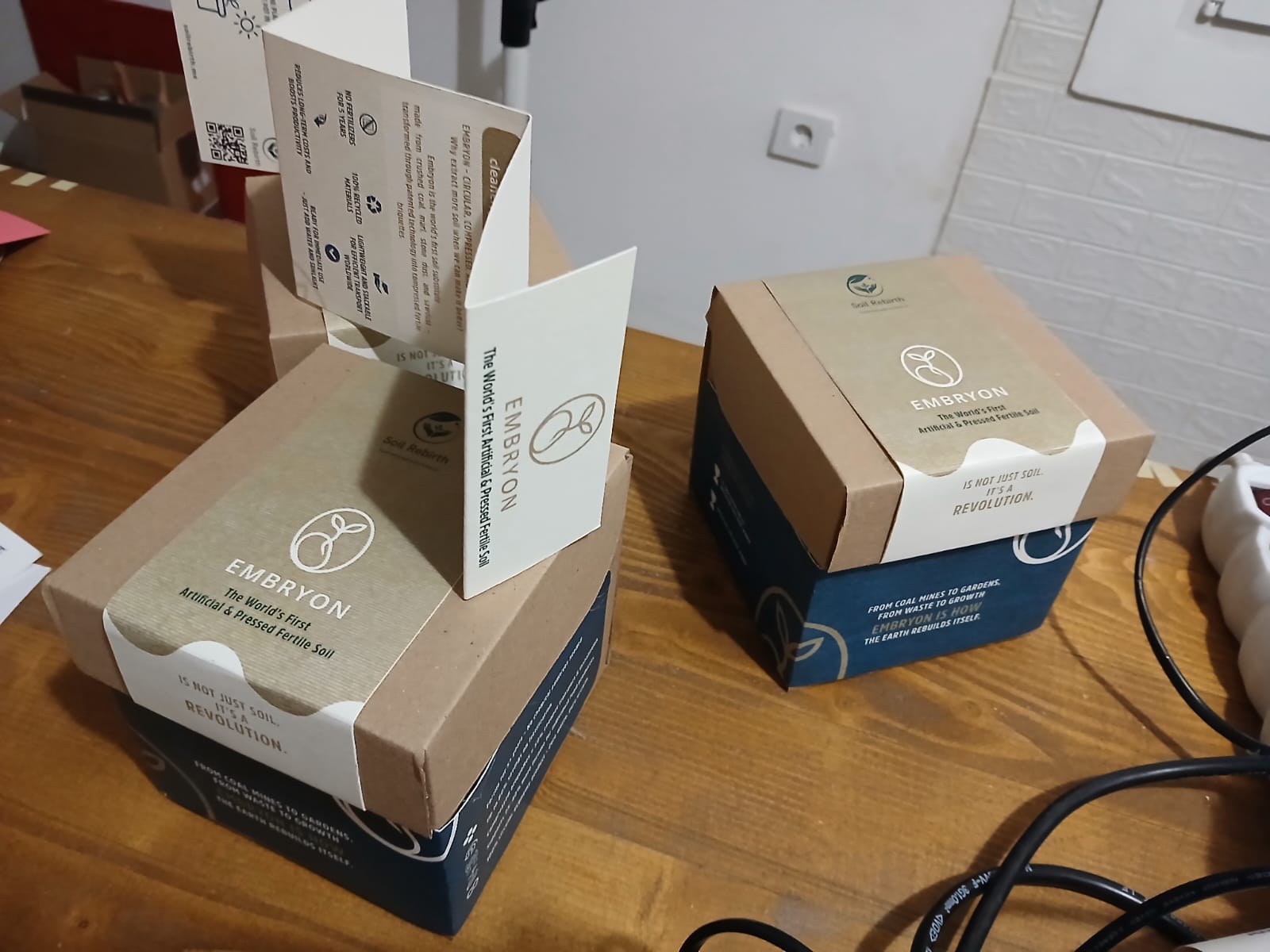
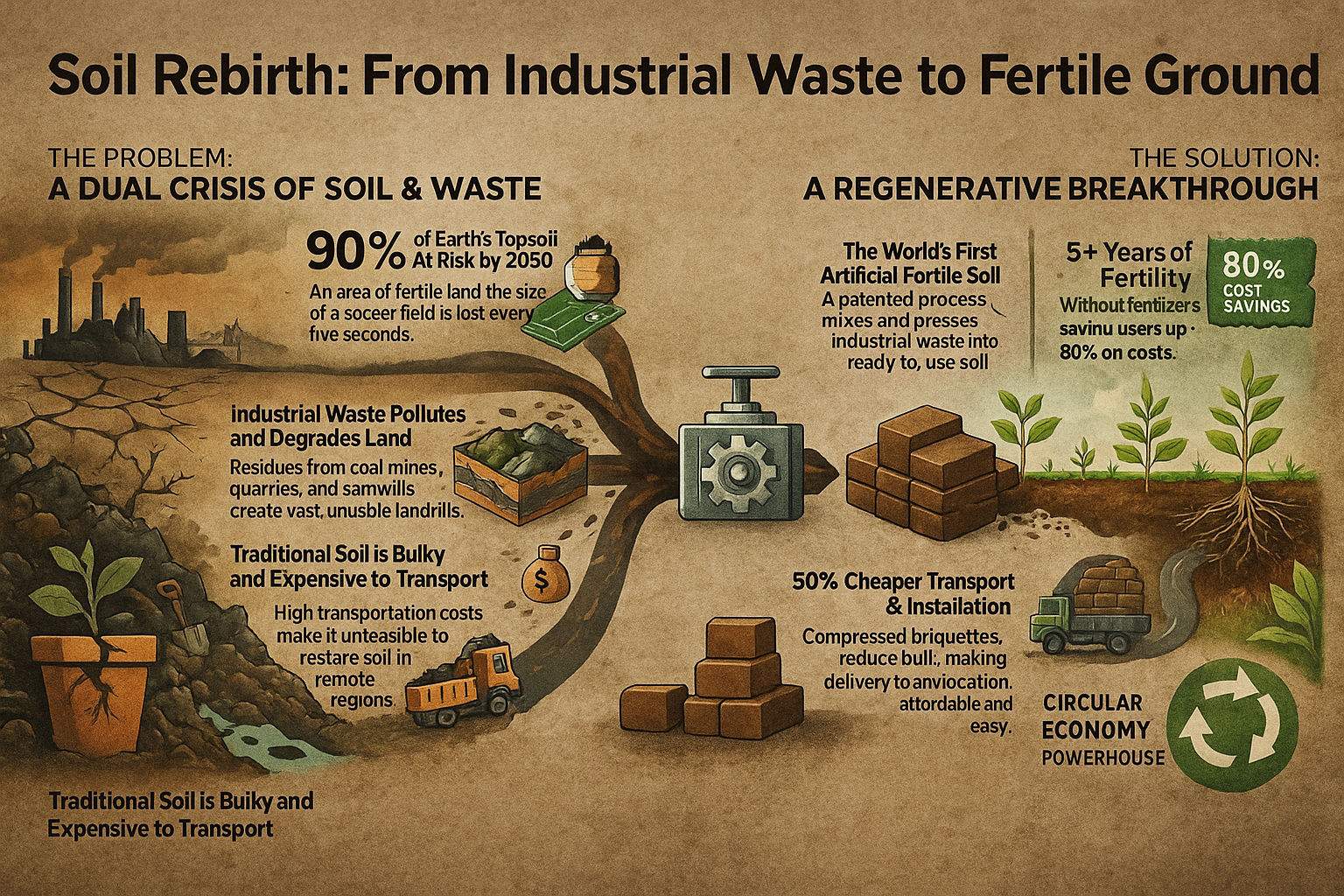
Worlds first artificial soil made from industrial residue.
Soil Rebirth doo is an innovation-oriented company specializing in circular economy
technologies and sustainable agricultural solutions. The company develops the world’s first
artificial fertile soil created from recycled industrial residues. Its patented technology,
“Pressed Substitute for Natural Fertile Soil,” enables the
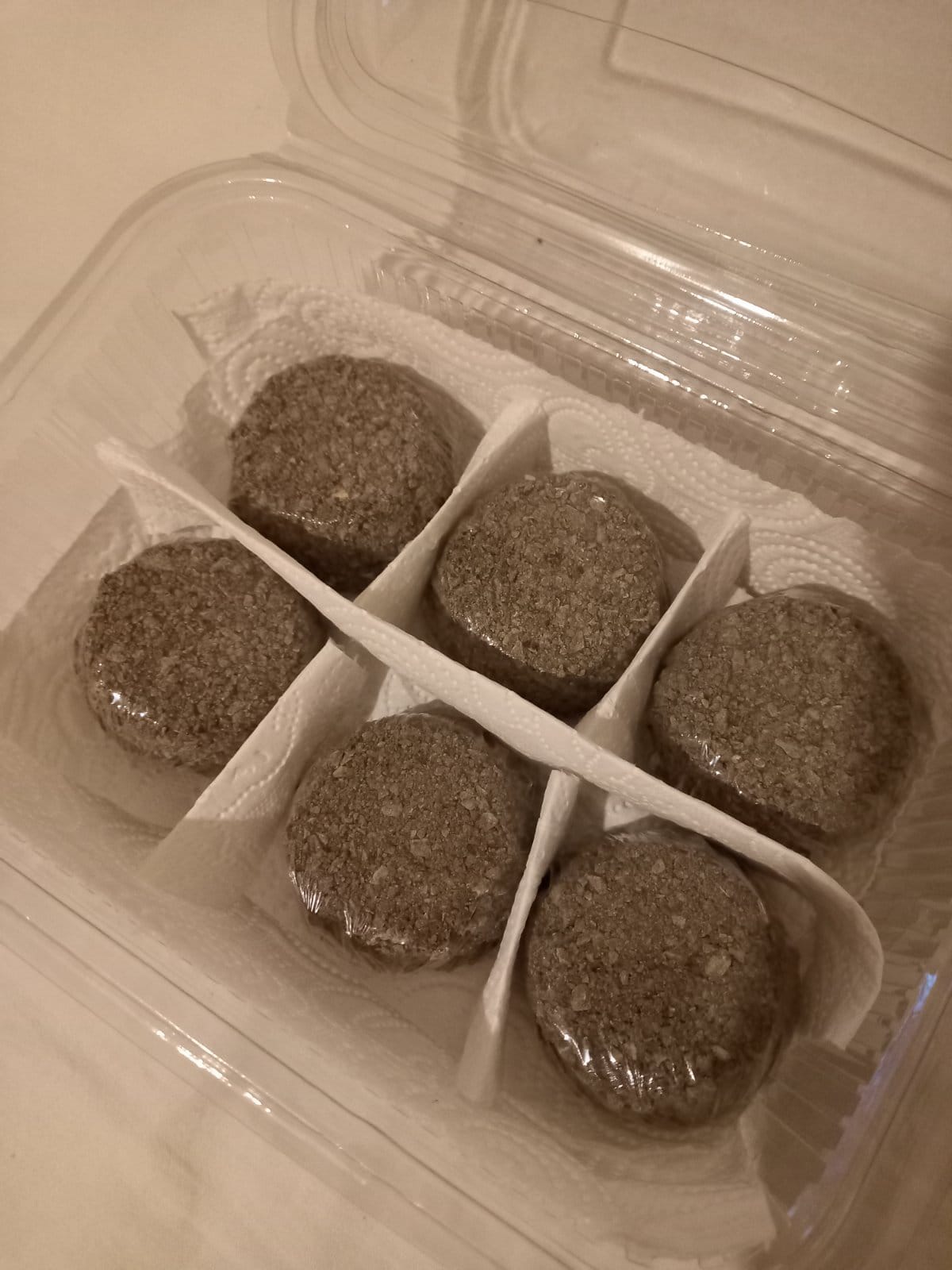
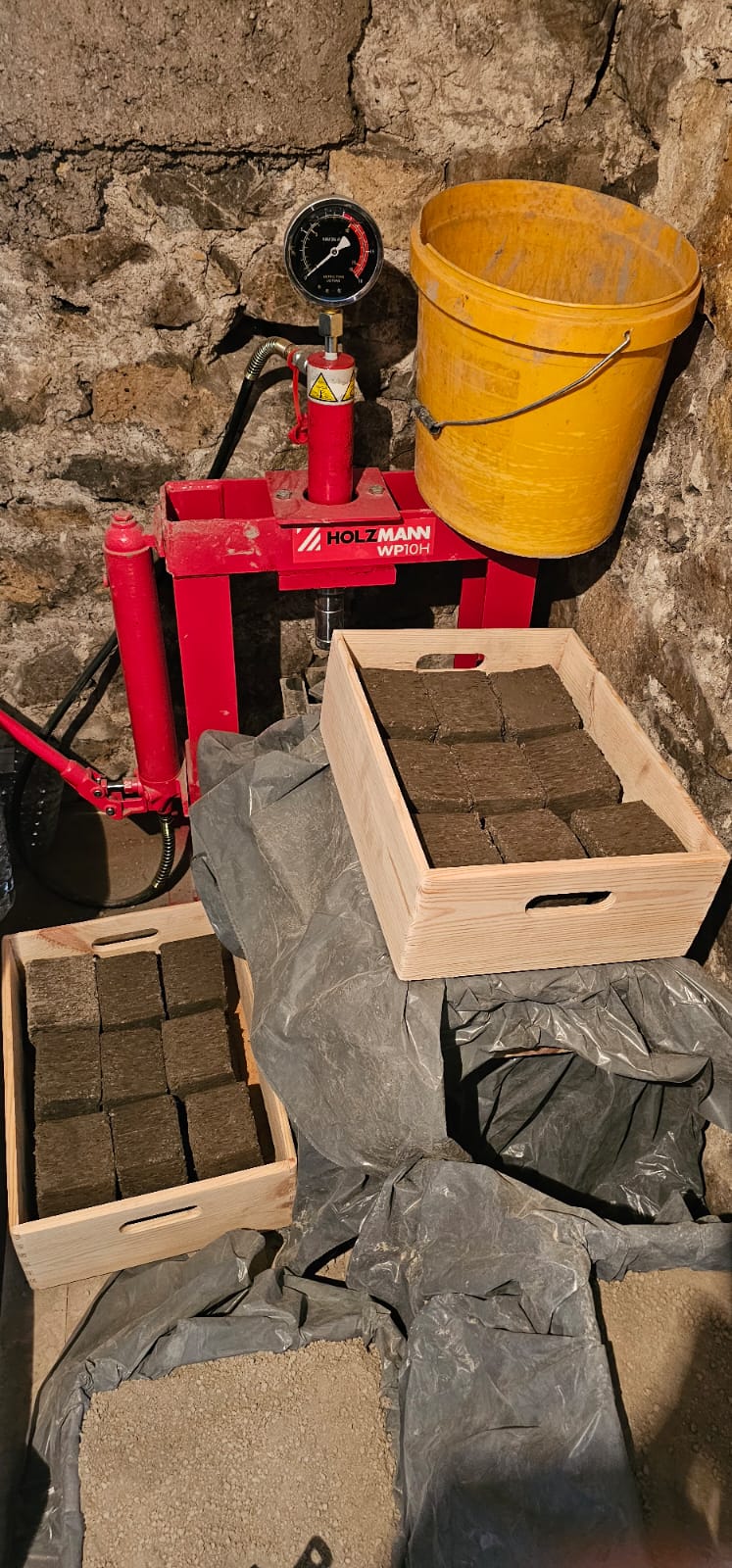
formation of compressed Soil Bricks that transform into highly fertile loose soil upon
hydration and retain fertility for at least five years
Montenegro
National
It addresses urban-rural linkages
It involves a physical transformation of the built environment (hard investment)
Yes
2018-10-16
Yes
2025 - RCC Innovation award
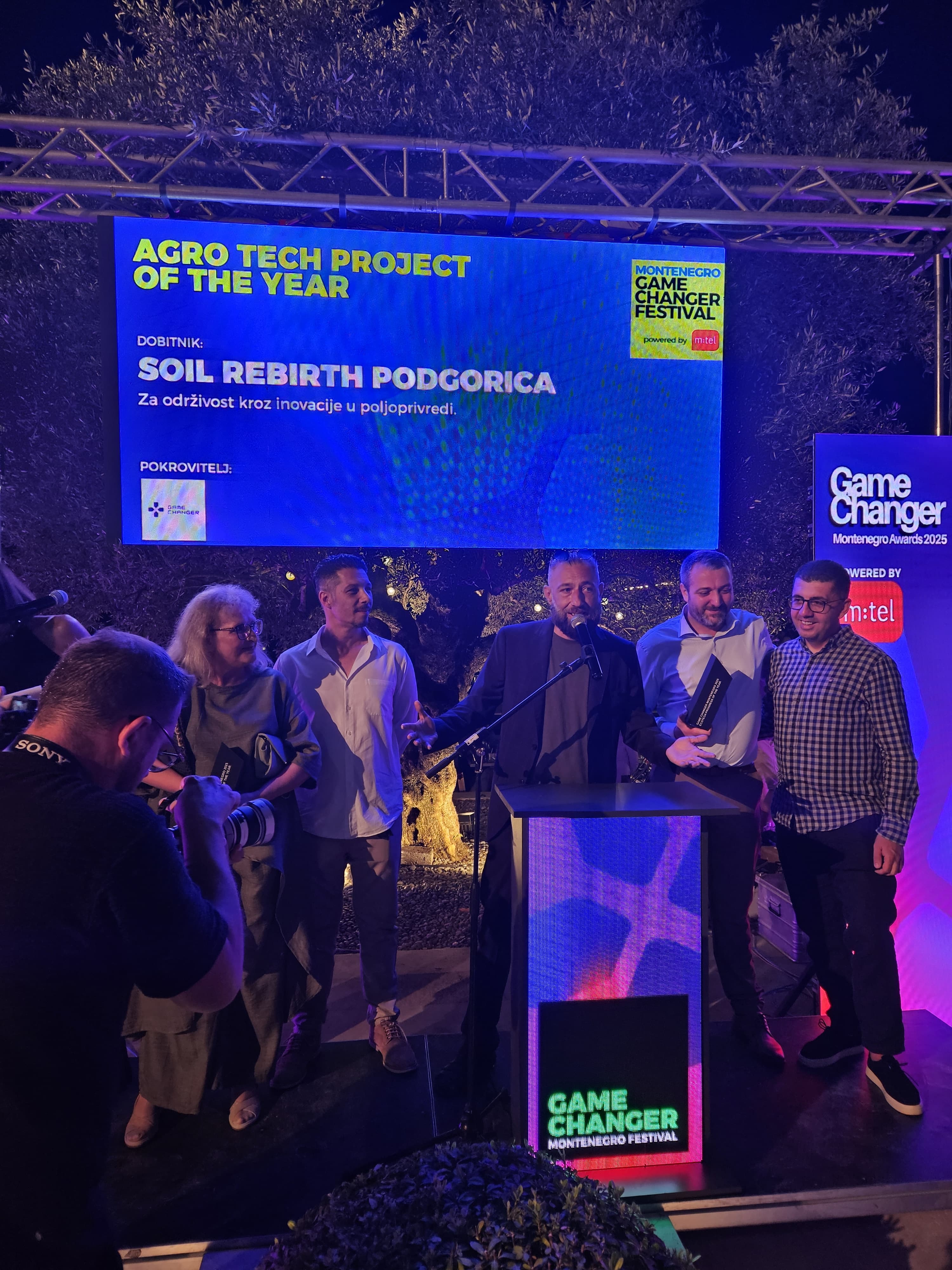
2025 - Game Changer Conference
2024 - Innovation Fond Montenegro
Yes
RCC - Butterfly Innovation Award
Yes
Organisation
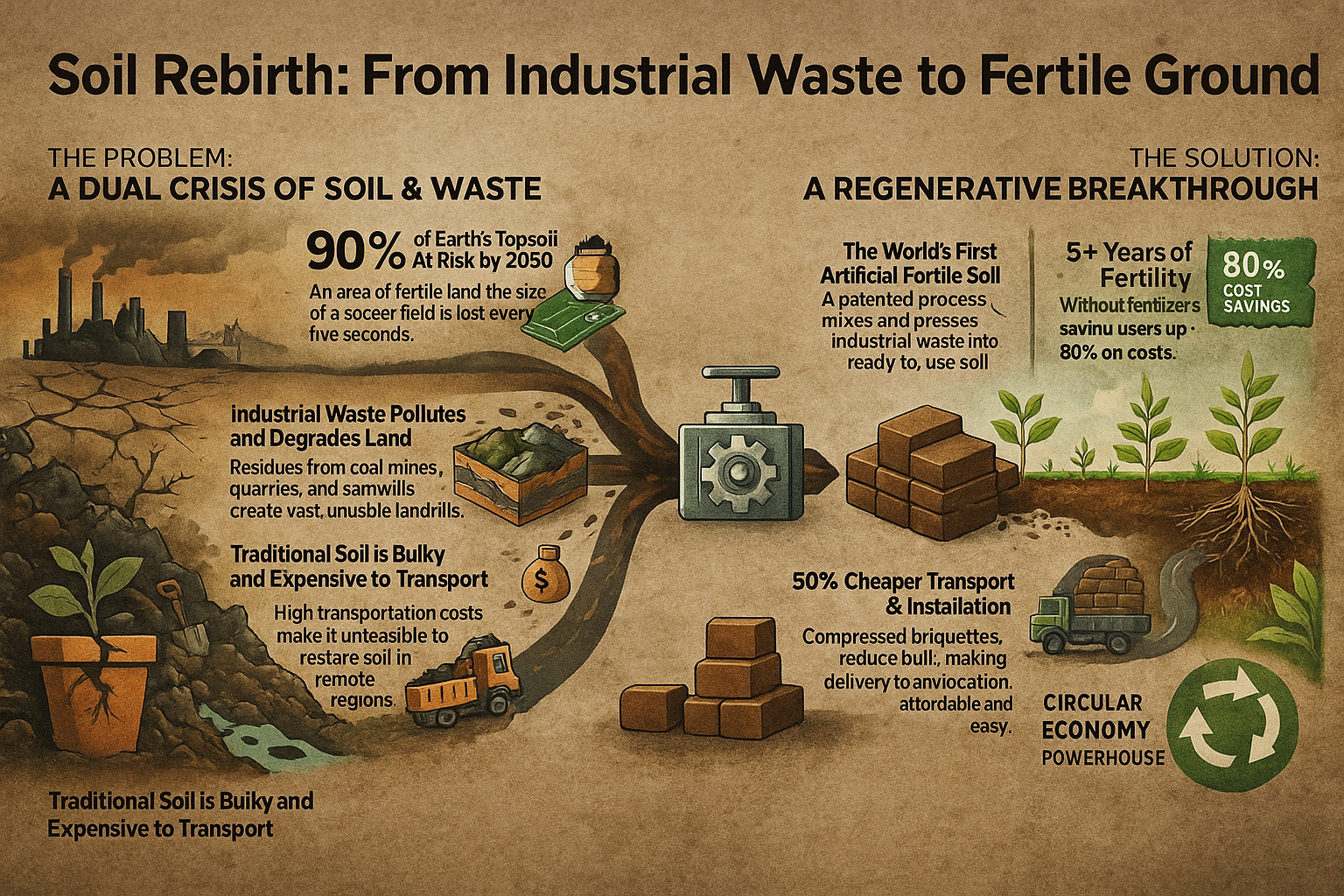
Soil Rebirth is an innovative circular‑economy project that transforms industrial residues such as coal dust, marl, stone powder and sawmill by‑products into artificial fertile soil briquettes capable of sustaining plant growth for more than five years without synthetic fertilizers.
The technology has already achieved important milestones. A patented formula for artificial fertile soil was developed and awarded the WIPO Medal for Inventors, recognizing its originality and environmental significance. Initial laboratory and pilot tests demonstrated the ability of the soil briquettes to support plant growth, retain water and maintain fertility for extended periods without the need for additional fertilizers.
The next phase focuses on pilot production and field testing of approximately 8 tons of soil briquettes produced from 10 tons of industrial waste, with deployment in urban greenery areas and degraded landscapes.
In the long term, Soil Rebirth aims to contribute to large‑scale land restoration, reduction of industrial waste landfills, and climate mitigation by transforming waste streams into regenerative soil infrastructure.
The Soil Rebirth project emerged from a real environmental challenge observed in the coal-mining region of Pljevlja, Montenegro, where extensive industrial activity has left large areas of degraded land while significant quantities of mineral residues accumulate in industrial landfills. At the same time, Europe is facing a growing crisis of soil degradation and loss of fertile topsoil.
The project originated from the idea that these two challenges could be addressed simultaneously by transforming industrial residues into a regenerative resource. The founding inventor developed a patented technology that converts coal dust, marl, stone powder and sawmill residues into compressed fertile soil structures capable of supporting plant growth for extended periods without the need for chemical fertilizers.
The initial phase of the project focused on research and experimental development of the soil composition and production method. Laboratory testing confirmed that the material mixture can provide stable soil structure, water retention and sufficient nutrients for plant growth. The innovation was later recognized internationally and received the WIPO Medal for Inventors.
Implementation on the ground has been carried out through pilot-scale experimentation and collaboration with local stakeholders. Industrial partners provide access to mineral residues, while municipal authorities support testing of the soil briquettes in urban greenery environments. Demonstration tests have been conducted to observe plant germination, soil stability and vegetation growth using the artificial soil briquettes.
These pilot activities allow the project team to collect practical data on plant development, soil behaviour and environmental performance in real conditions. The next implementation phase involves scaling the pilot production and expanding field tests in degraded land areas and urban landscapes, demonstrating how industrial waste streams can be transformed
circular economy
soil restoration
industrial waste reuse
urban greening
climate resiliance
Soil Rebirth reduces industrial waste accumulation by converting mining and quarry residues into a valuable resource while providing an alternative to natural topsoil extraction. The soil briquettes maintain fertility for more than five years and significantly reduce the need for fertilizers. The project creates a circular system where waste becomes a regenerative ecological resource.
The project transforms degraded industrial land into green spaces that support vegetation, parks and ecological corridors. By enabling plant growth in barren environments, Soil Rebirth improves the visual and ecological quality of landscapes and strengthens communities’ connection with nature.
Soil Rebirth promotes accessibility and affordability by offering a soil solution cheaper to transport and deploy than conventional soil restoration. Municipalities and communities can participate in sustainable land regeneration even with limited budgets.
Local communities and municipal stakeholders participate in pilot demonstrations, site selection and monitoring of vegetation growth. Public engagement activities increase awareness of circular environmental solutions.
The project involves cooperation between industrial partners (Joint Stock Company Coal Mine Pljevlja), local authorities (City of Pljevlja – Department of Urban Greenery), and broader sustainability initiatives aligned with European Green Deal objectives.
The project integrates environmental engineering, soil science, industrial processing technologies, circular economy innovation and urban landscape management.
Revenue is generated through the production and sale of soil briquettes for municipalities, land restoration projects and industrial partnerships for waste reutilization, as well as licensing the patented technology.
The technology can be replicated near industrial sites across Europe because it uses widely available industrial residues. The briquette production system and circular supply chain can be implemented in multiple regions facing soil degradation and industrial waste challenges.