Lollab
Lollab – Community Gathering Place at the Earth Arts Laboratory
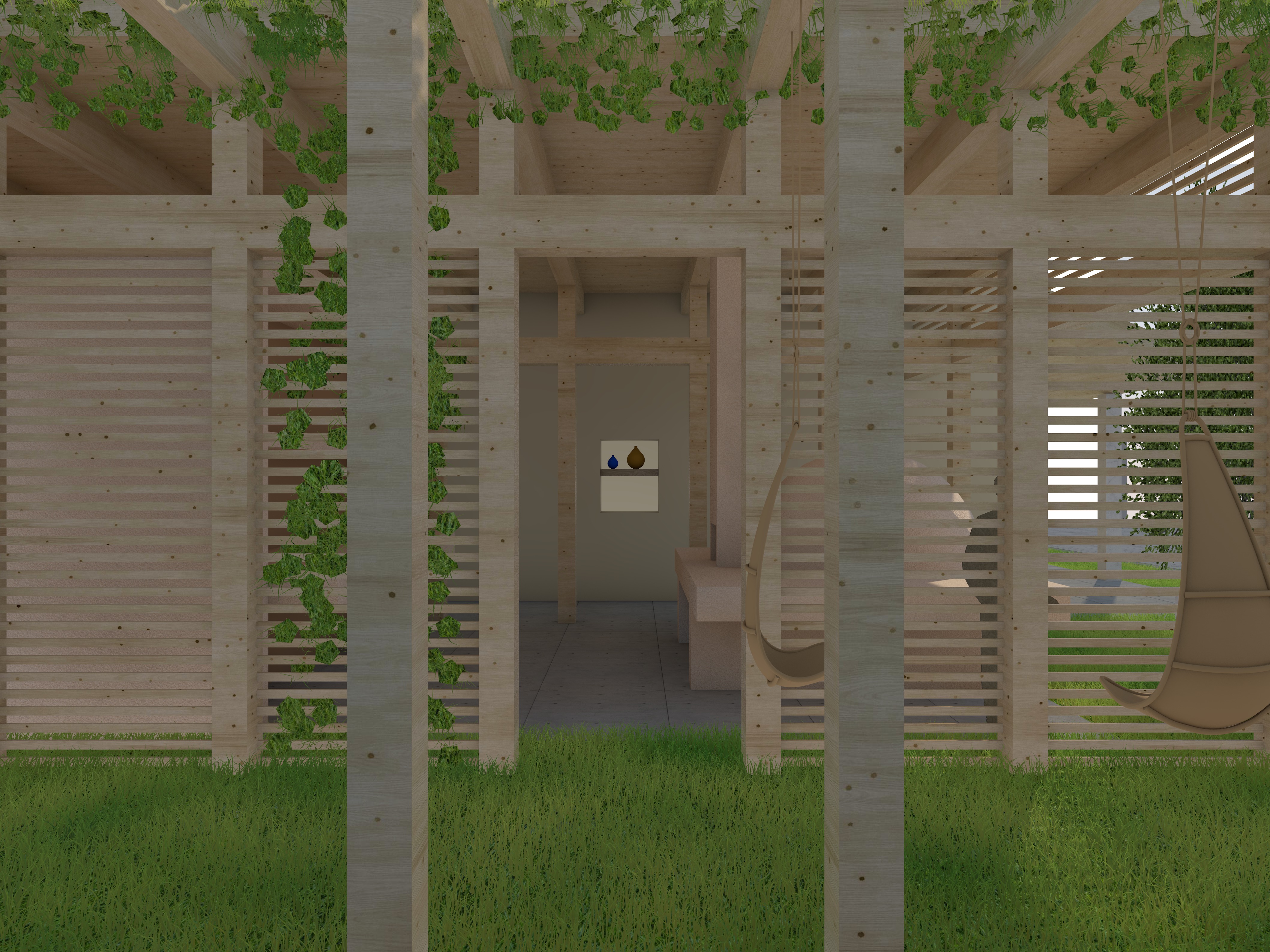
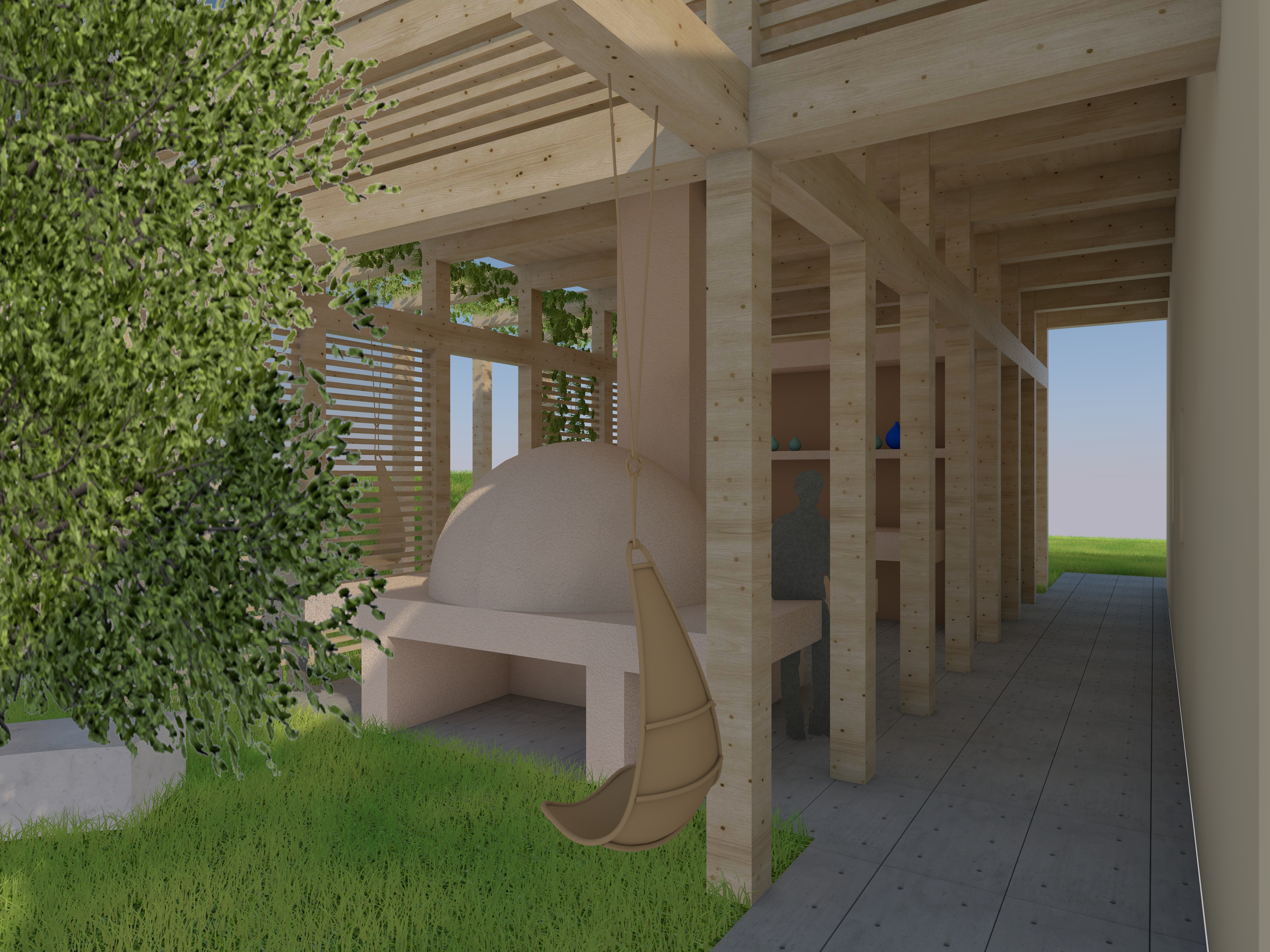
Lollab reimagines the traditional Sardinian “lolla” (porch) as a community place where nature-based design and local knowledge shape a carbon-neutral future. Led by the Municipality of Serrenti with different partners, it uses local raw earth and plant fibers (KM0) to avoid industrial processing and transport emissions. Combining research, training and regenerative design, it restores biodiversity and empower the circular ecnoomy of rural communities.
Italy
LAT, Via Santa Barbara, 112, 09027 Serrenti (VS)
Prototype level
Yes
Yes
Yes
No
No
111078: Serrenti (IT)
Lollab is a pioneering "Research-to-Action" initiative located in Serrenti, Sardinia, designed to transform the traditional porch (lolla) into a social-climatic device. This nature-integrated infrastructure serves as a permanent NEB Living Lab, where ancestral heritage meets contemporary scientific innovation. The project is led by the Municipality of Serrenti in strategic partnership with the Associazione delle Città della Terra Cruda—an association of 40 municipalities, Atelier Terrapia and other local associations.
At its core, Lollab is grounded in the research on domestic practices and places that enhance earth architecture and its operationalization through the Healthy Places principles, co-designed by Atelier Terrapia and Studio Peisaj (2022 NEB Awards Finalists). By prioritizing the community well-being and intergenerational dialogue about nature-based solutions and by using local "KM 0" materials, the project eliminates industrial emissions while restoring the dignity of local knowledge and vernacular craftsmanship.
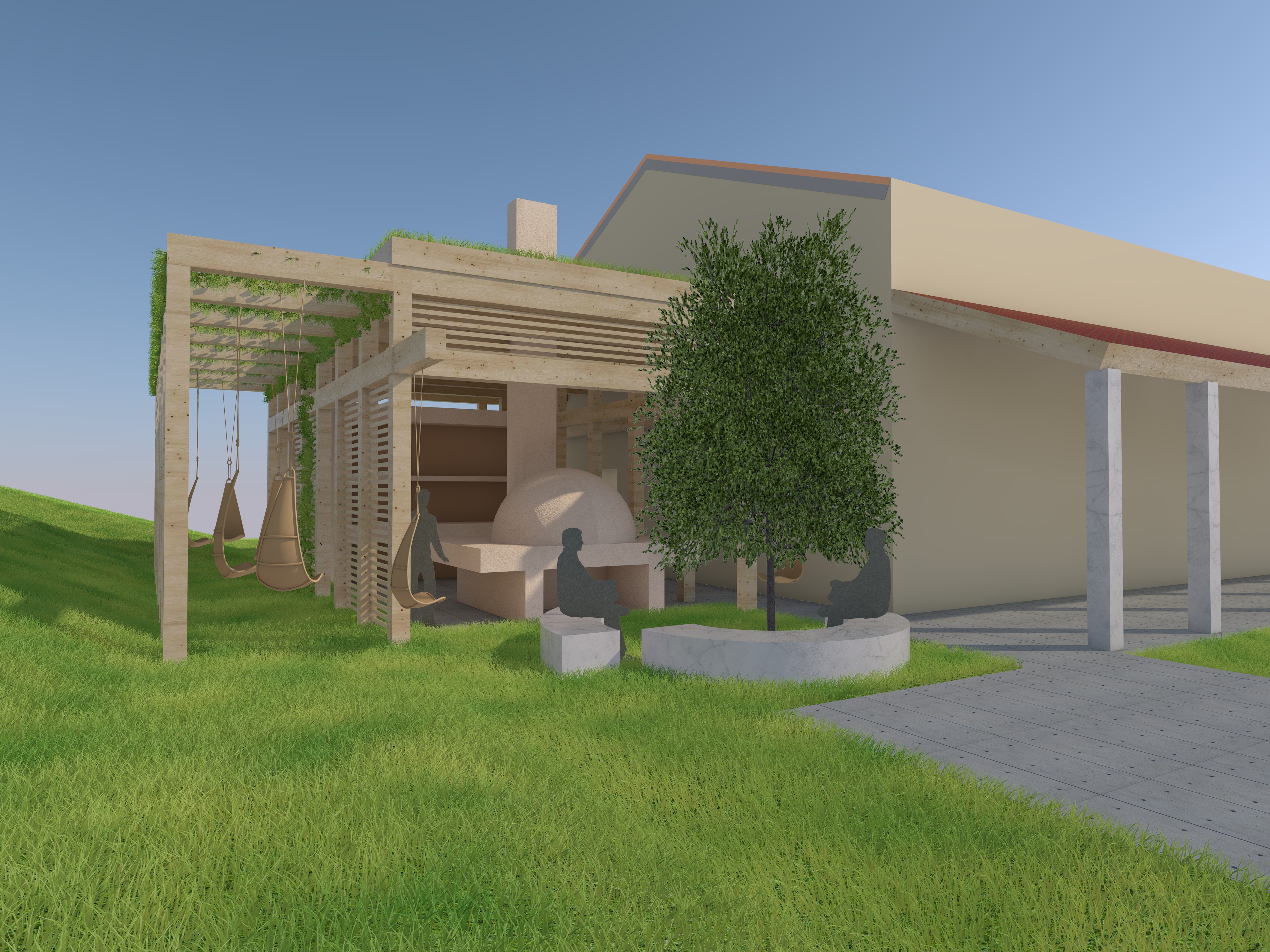
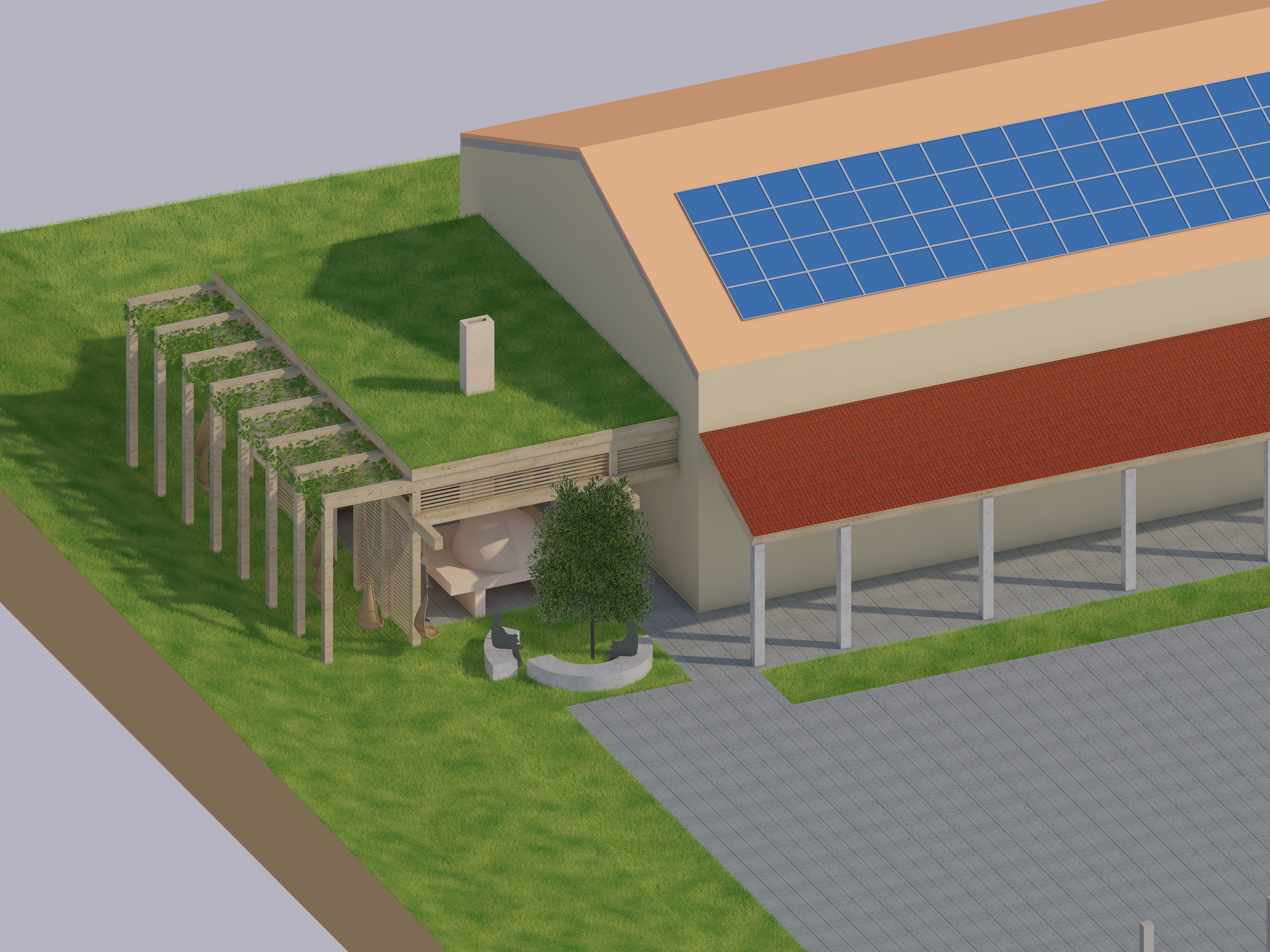
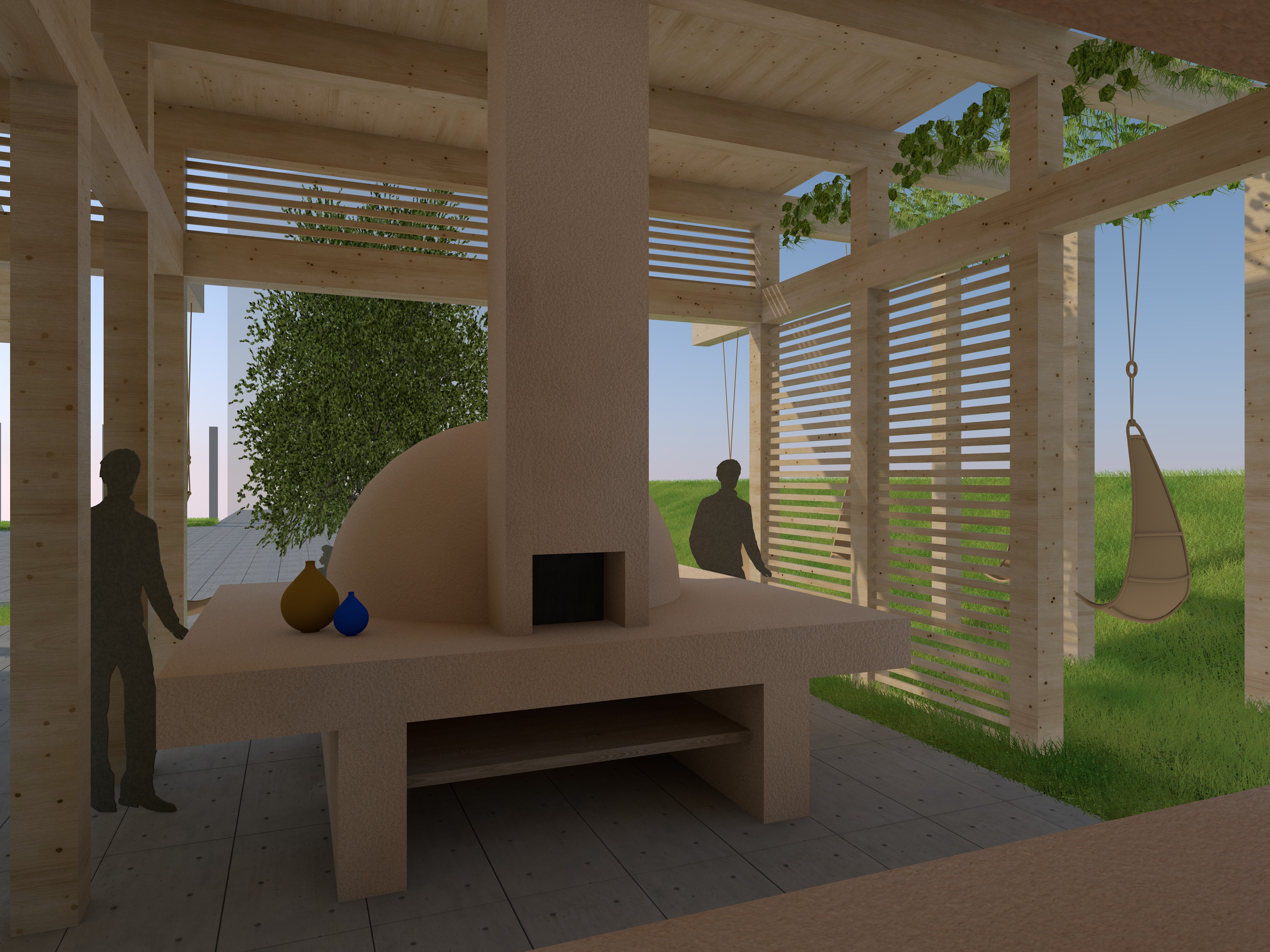
The project follows a phased implementation. Following the 2025 completion of the community oven, the 2026 roadmap focuses on the self-production of earth-fiber composites for extending the community space around the oven and the creation of a Garden of Fibers. This nature-integrated solution provides the vegetal raw matter for gastronomic activities, applied research and a sensory-rich landmark that promotes social pride.
Lollab stands as a highly replicable model for rural Europe. By demonstrating that high-quality, sustainable architecture can be achieved with a reduced budget and a multi-level donor strategy, it offers a scalable blueprint for small municipalities. It proves that when scientific rigor is combined with community-led co-creation, any small town can become a global center of excellence for the New European Bauhaus.
At its core, Lollab is grounded in the research on domestic practices and places that enhance earth architecture and its operationalization through the Healthy Places principles, co-designed by Atelier Terrapia and Studio Peisaj (2022 NEB Awards Finalists). By prioritizing the community well-being and intergenerational dialogue about nature-based solutions and by using local "KM 0" materials, the project eliminates industrial emissions while restoring the dignity of local knowledge and vernacular craftsmanship.
The project follows a phased implementation. Following the 2025 completion of the community oven, the 2026 roadmap focuses on the self-production of earth-fiber composites for extending the community space around the oven and the creation of a Garden of Fibers. This nature-integrated solution provides the vegetal raw matter for gastronomic activities, applied research and a sensory-rich landmark that promotes social pride.
Lollab stands as a highly replicable model for rural Europe. By demonstrating that high-quality, sustainable architecture can be achieved with a reduced budget and a multi-level donor strategy, it offers a scalable blueprint for small municipalities. It proves that when scientific rigor is combined with community-led co-creation, any small town can become a global center of excellence for the New European Bauhaus.
community wellbeing
LOLlab Social-Climatic Device
local knowledge
Research-to-Action
Territorial Resiliency
Lollab transforms the traditional Sardinian "lolla" (porch) into a Lollab—a community place where nature-based design and local knowledge co-create a carbon-neutral future. The primary objective is to achieve environmental sustainability by using "KM 0" materials, specifically local raw earth and vegetable fibers, which eliminates the carbon footprint associated with industrial processing and long-distance transport. This initiative is led by the the Municipality of Serrenti (MS) in partnership with the Association of Cities of Raw Earth (ACTC, www.terracruda.org), UNICA university (Unesco chair of Earthen Architectures lead by Maddalena Achenza https://shorturl.at/7h9n2) and Atelier Terrapia (AT - atelierterrapia.com), who together manage the Laboratorio Arti della Terra (LAT - https://shorturl.at/hPVBj) as a permanent site for bio-based material research and training and a New European Bauhaus Living Lab.
By integrating AT’s vision of "Healthy Places" (HP - linktr.ee/healthyplaces) —an approach co-designed with Studio Peisaj (https://shorturl.at/RuZAJ) and recognized as a finalist for the 2022 NEB Awards—the project moves beyond standard "green building" toward a regenerative design. This involves not just low-impact building, but the active restoration of local biodiversity through a garden of fibers that supports the cooking activities. The initiative serves as a "Research-to-Action" model for rural areas, proving that high-level scientific experimentation can be operationalized by local citizens. It demonstrates that the most sustainable materials are not high-tech imports, but are found within the local landscape and the community’s own ancestral expertise. By grounding the project in scientific research (Alina Negru’s PhD work on heritage knowledge published as a thesis in 2023 and as a book in 2025-find summary attached), Lollab provides a scalable benchmark for how small European municipalities can lead the transition to a circular, bio-based economy.
By integrating AT’s vision of "Healthy Places" (HP - linktr.ee/healthyplaces) —an approach co-designed with Studio Peisaj (https://shorturl.at/RuZAJ) and recognized as a finalist for the 2022 NEB Awards—the project moves beyond standard "green building" toward a regenerative design. This involves not just low-impact building, but the active restoration of local biodiversity through a garden of fibers that supports the cooking activities. The initiative serves as a "Research-to-Action" model for rural areas, proving that high-level scientific experimentation can be operationalized by local citizens. It demonstrates that the most sustainable materials are not high-tech imports, but are found within the local landscape and the community’s own ancestral expertise. By grounding the project in scientific research (Alina Negru’s PhD work on heritage knowledge published as a thesis in 2023 and as a book in 2025-find summary attached), Lollab provides a scalable benchmark for how small European municipalities can lead the transition to a circular, bio-based economy.
The aesthetic objective of Lollab is to create a "social-climatic device" that harmonizes contemporary architectural innovation with the traditional morphology of the Sardinian rural landscape. By redefining the "lolla"—the traditional Sardinian porch—the project establishes a vital bridge between ancestral heritage and modern community needs. AT applies the HP principles to the transformation of the porch into a Lollab, offering a multisensory quality of experience, rooted in the tactile warmth of earthen surfaces, the calming scent of aromatic plants and the visual harmony of a nature-integrated design that prioritizes human well-being.
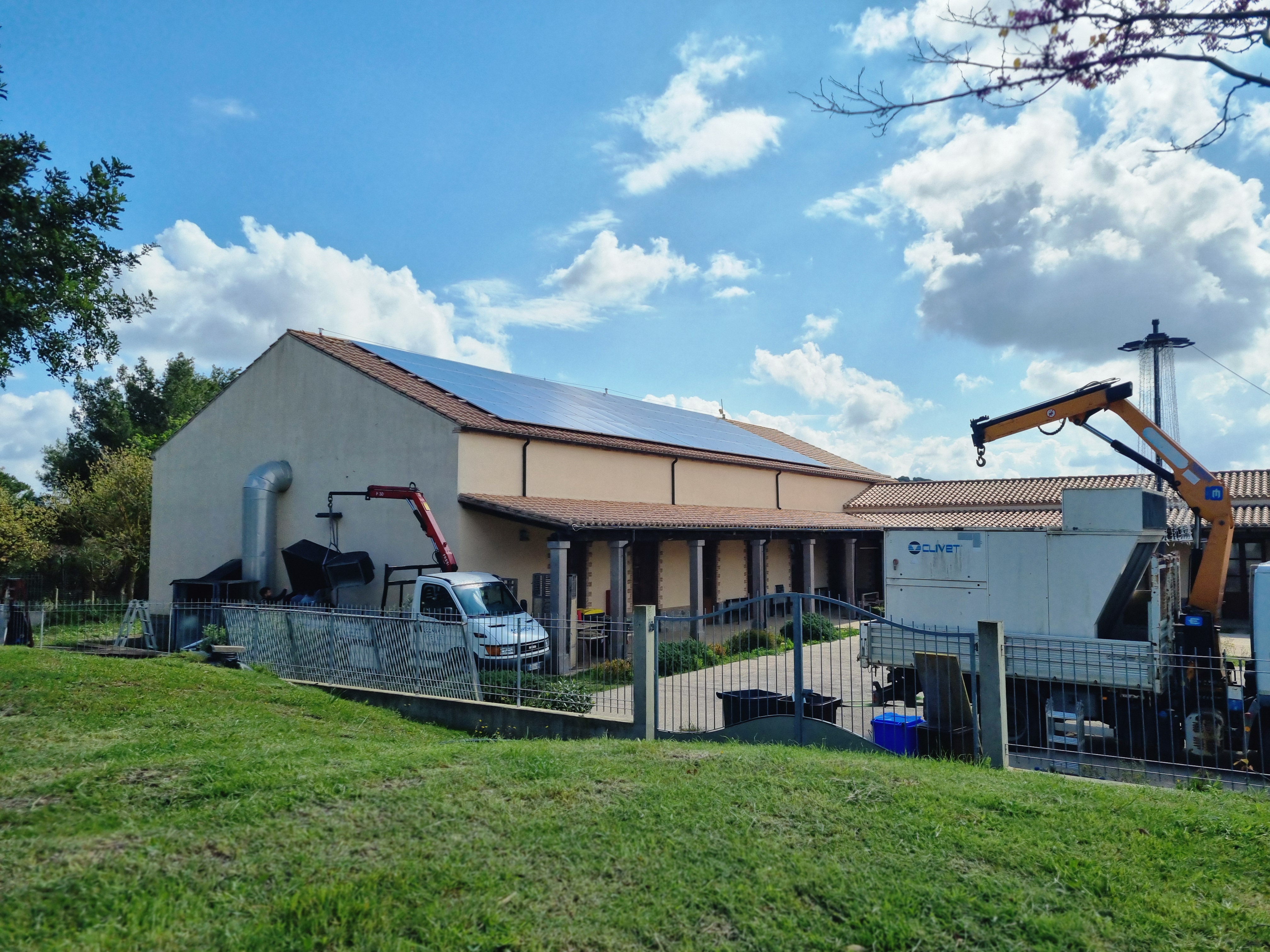
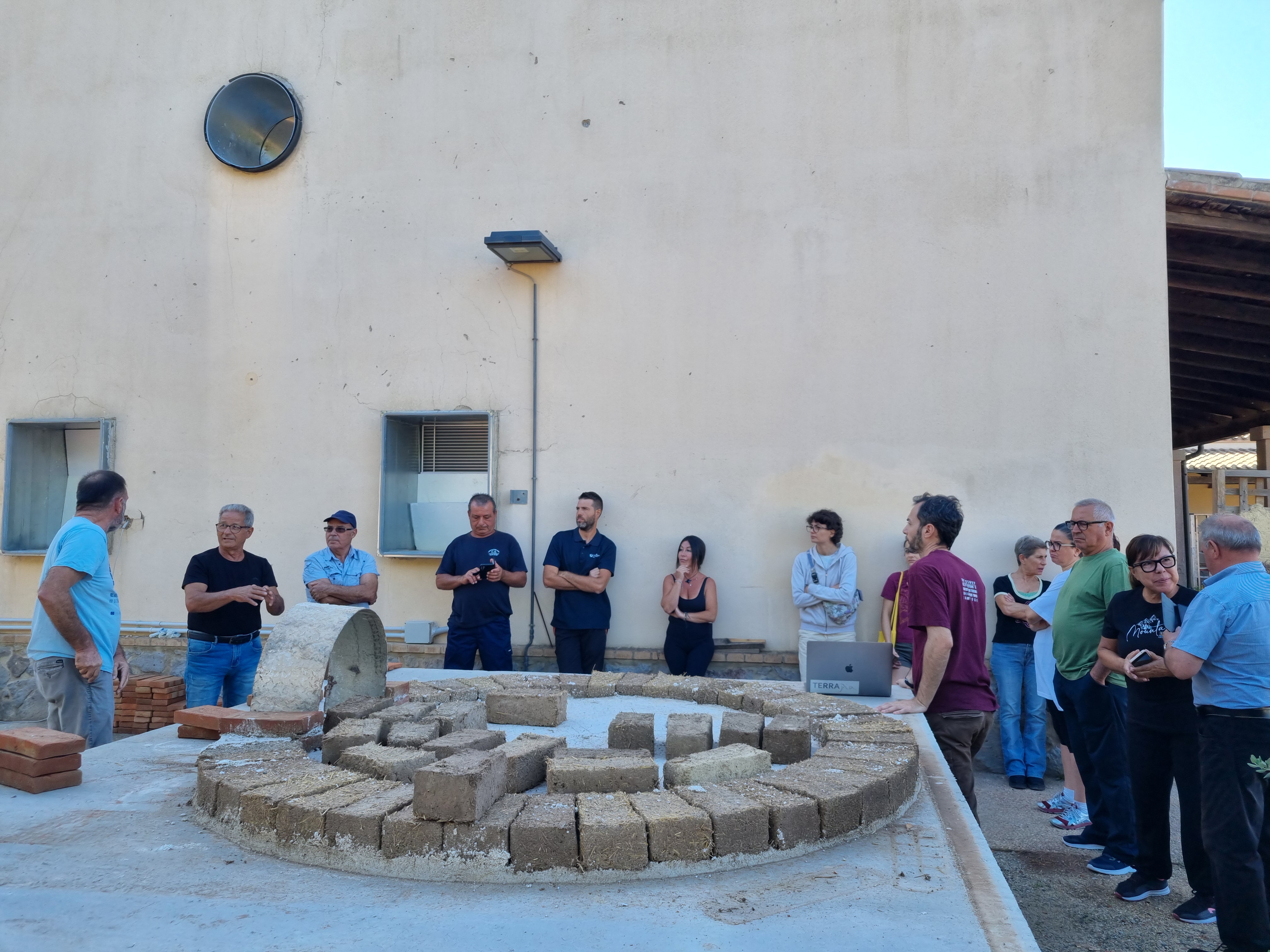
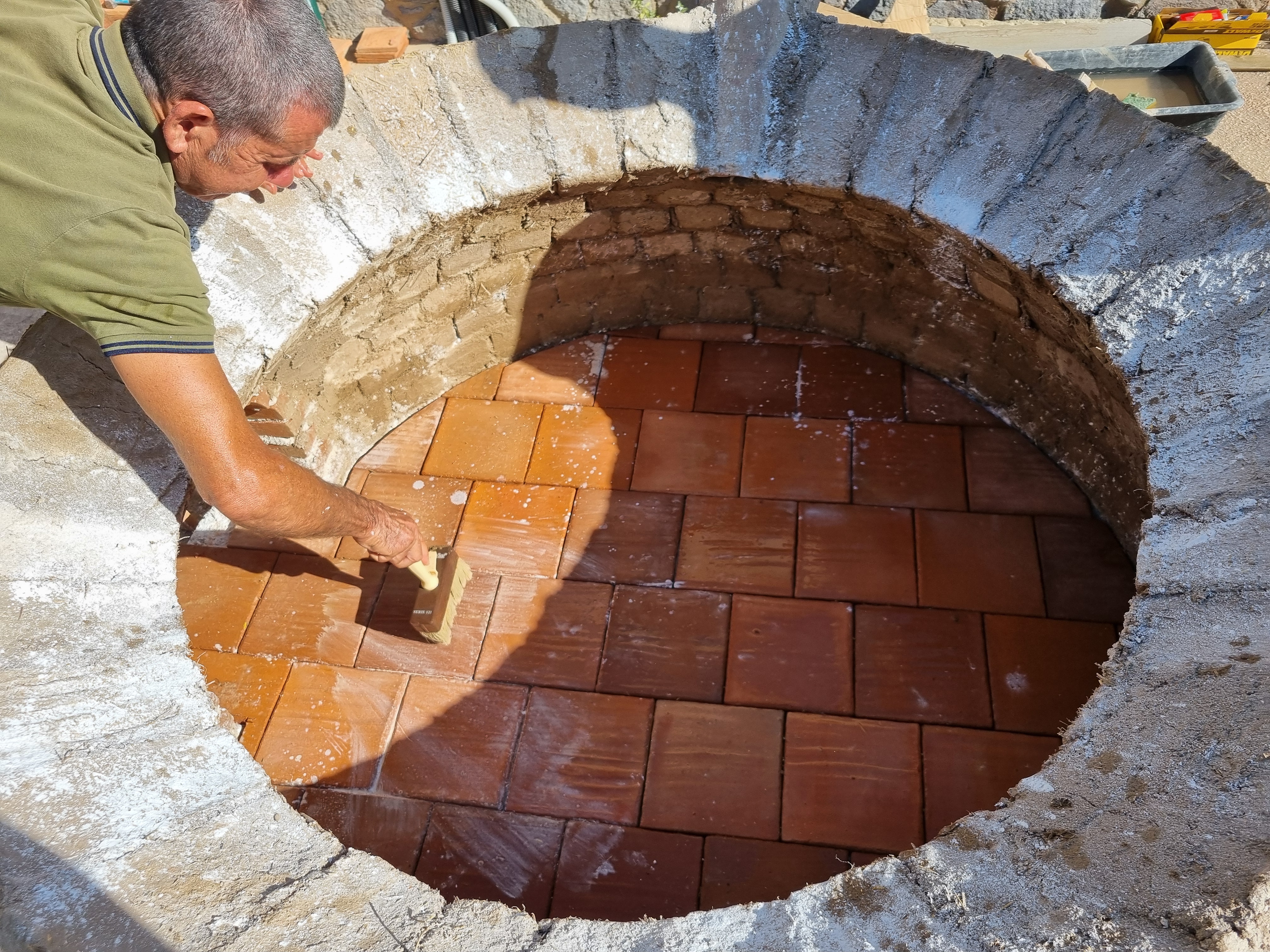
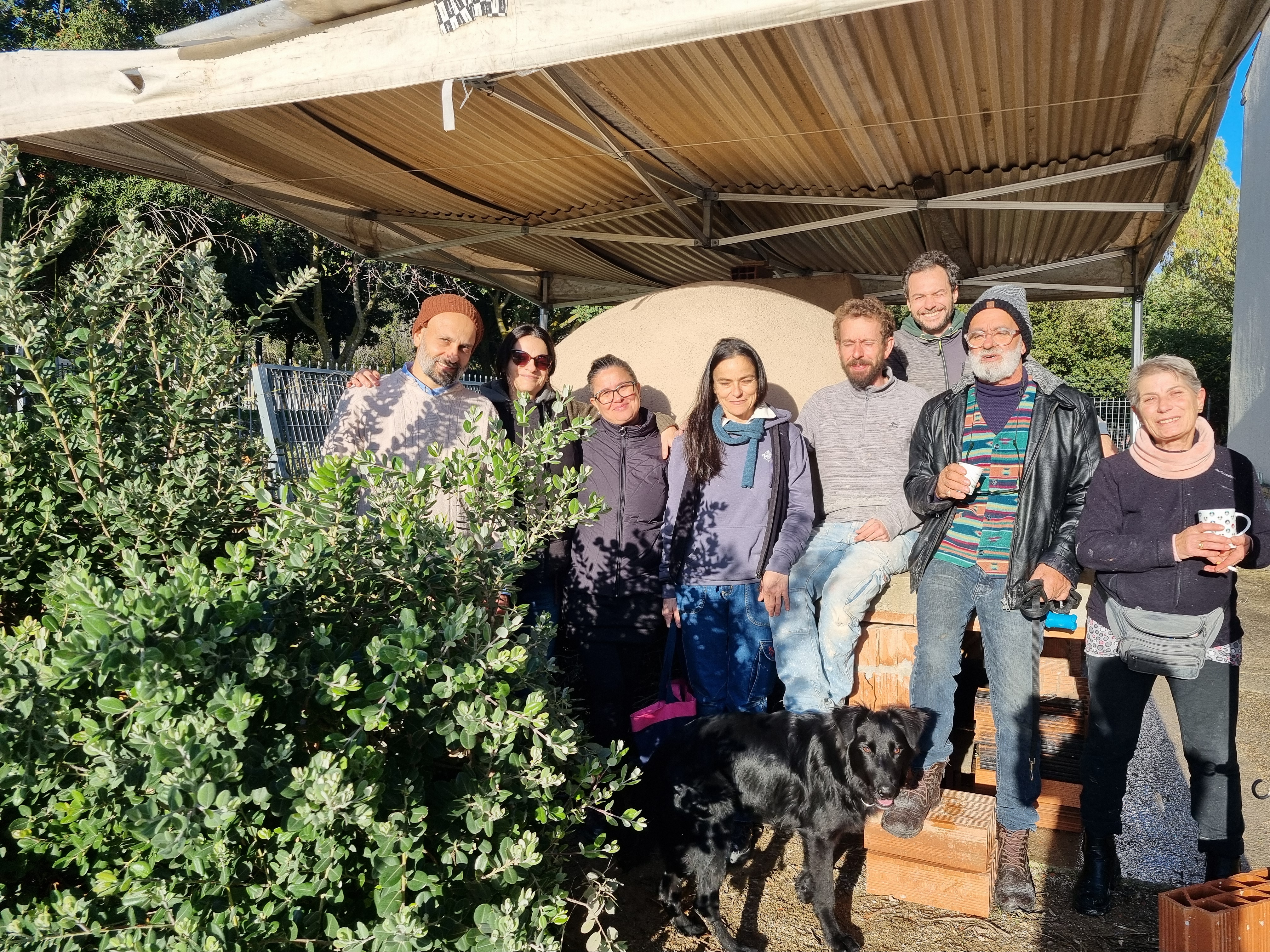
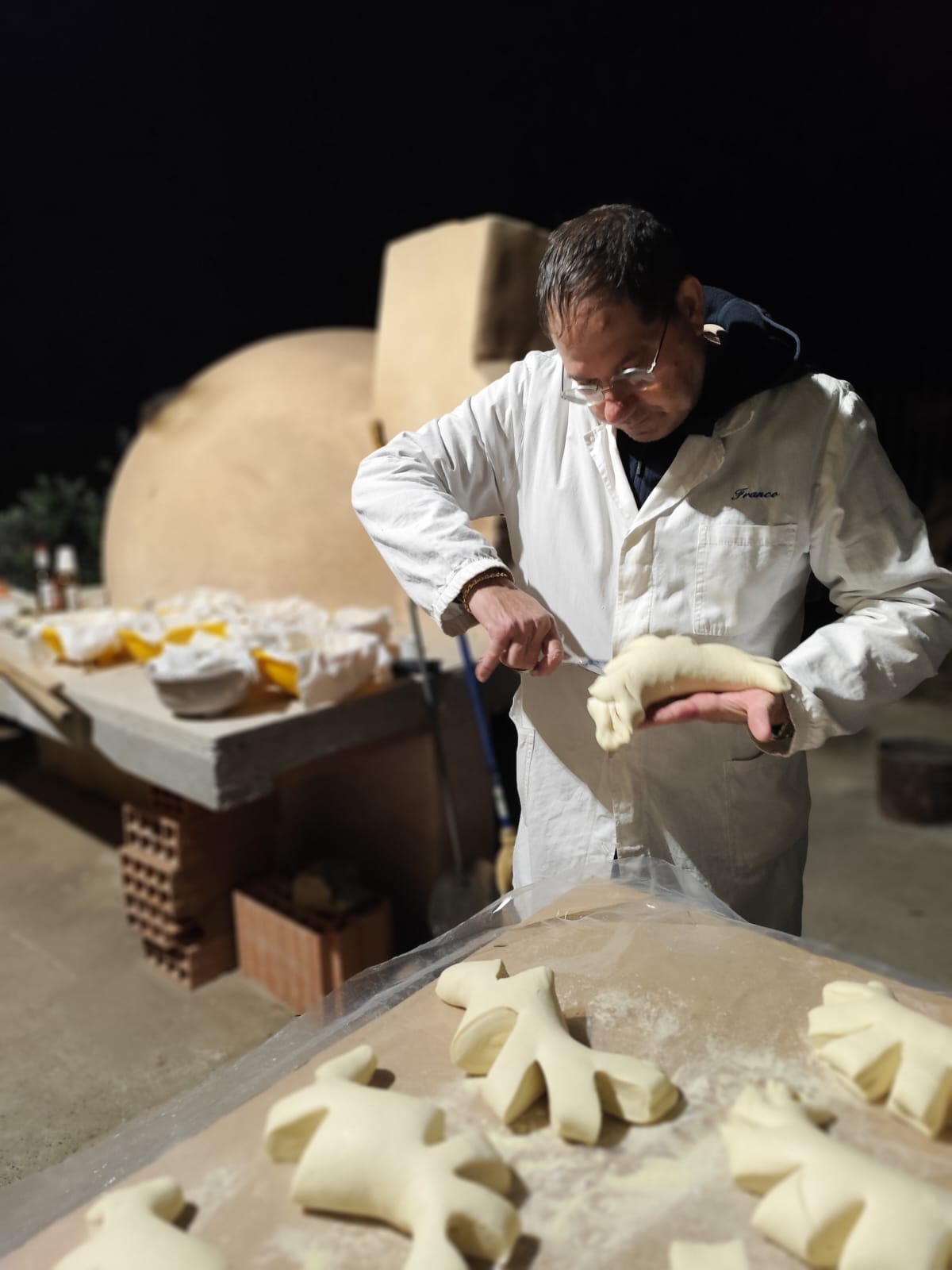
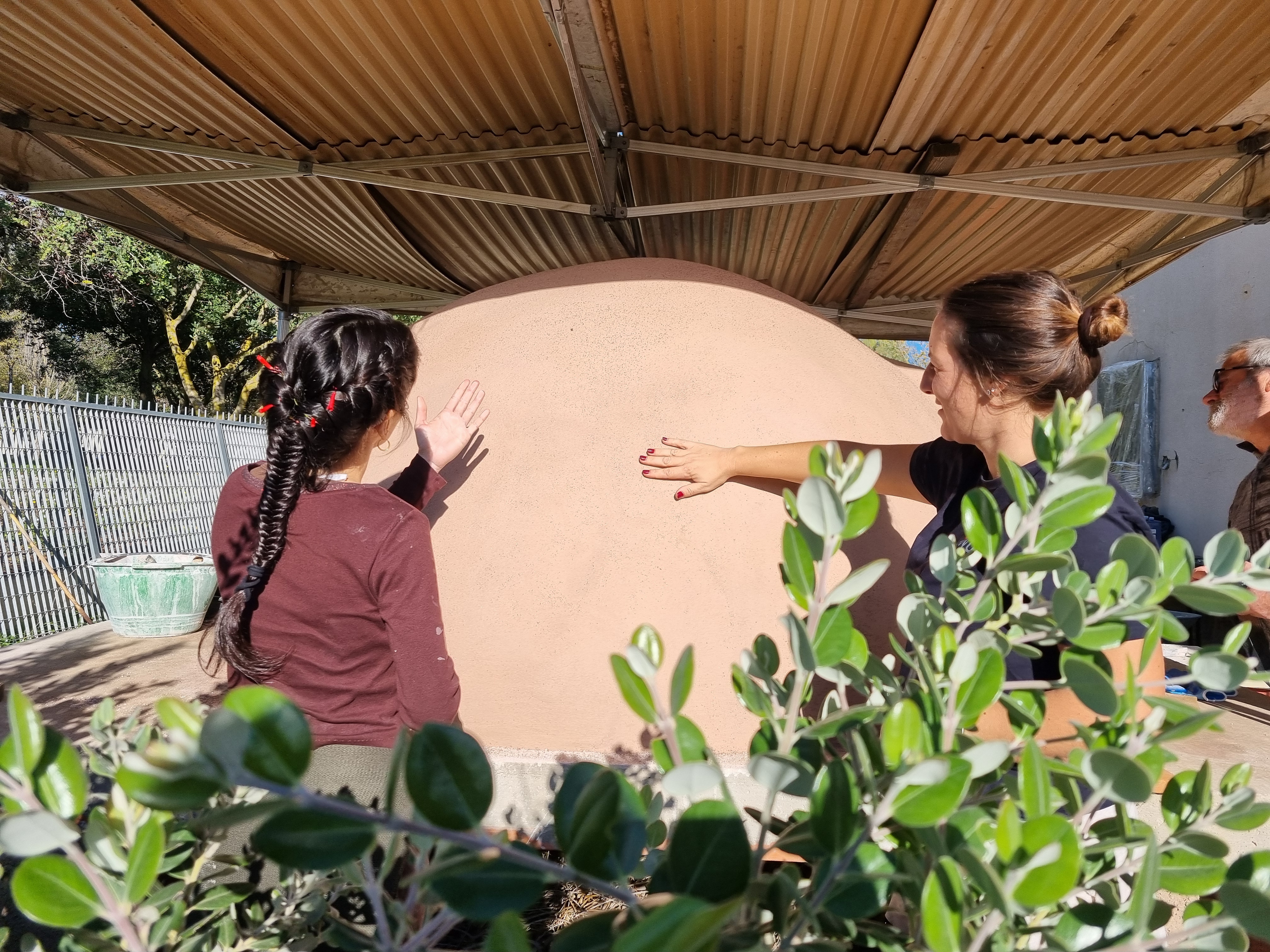
The sensory journey starts with the shared oven, built by residents and local craftsmen together. This hearth serves as both a symbolic and physical center for the senses: the evocative smell of baking bread and the radiant warmth of the fire create a profound sense of "home". It is connected to the existing infrastructure, which can host public events for approximately 100 people. For the population of Serrenti (4,496), the LAT represents the primary option for gathering during significant social occasions.
Lollab’s aesthetic quality is validated at multiple levels. ACTC, comprising 40 member municipalities, utilizes this site for its most prestigious events—including the 20-year anniversary conference in 2022 and the 2025 Forum—bringing guests from across the "raw earth" network to Serrenti (160 participants). High-level courses in collaboration with UNICA and AT are promoted internationally, grounding academic research in local materials and knowledge and restoring dignity to local heritage and rural territories. By employing raw earth and natural fibers in innovative research, the project creates a high-quality landmark that revitalizes social pride. The HP framework ensures the shared space integrates nature and social cohesion, proving that "Beauty" in the NEB context is inseparable from "Community wellbeing" and "Nature."
The sensory journey starts with the shared oven, built by residents and local craftsmen together. This hearth serves as both a symbolic and physical center for the senses: the evocative smell of baking bread and the radiant warmth of the fire create a profound sense of "home". It is connected to the existing infrastructure, which can host public events for approximately 100 people. For the population of Serrenti (4,496), the LAT represents the primary option for gathering during significant social occasions.
Lollab’s aesthetic quality is validated at multiple levels. ACTC, comprising 40 member municipalities, utilizes this site for its most prestigious events—including the 20-year anniversary conference in 2022 and the 2025 Forum—bringing guests from across the "raw earth" network to Serrenti (160 participants). High-level courses in collaboration with UNICA and AT are promoted internationally, grounding academic research in local materials and knowledge and restoring dignity to local heritage and rural territories. By employing raw earth and natural fibers in innovative research, the project creates a high-quality landmark that revitalizes social pride. The HP framework ensures the shared space integrates nature and social cohesion, proving that "Beauty" in the NEB context is inseparable from "Community wellbeing" and "Nature."
Lollab fosters inclusion by utilizing nature-based design as a tool for social affordability and democratic access. The decision to build with local earth and fibers, supported by community labor and the institutional framework of the MS and ACTC, allows for the creation of high-quality public architecture even in municipalities with limited financial resources. This project introduces a transformative societal model of "governance as a common." The Lollab is not a top-down facility provided by the state, but a space where knowledge and cultural identity are shared and co-constructed. Through shared rules of use co-defined by the community, the space ensures that marginalized groups, elders, and youth have equal agency in its daily life.
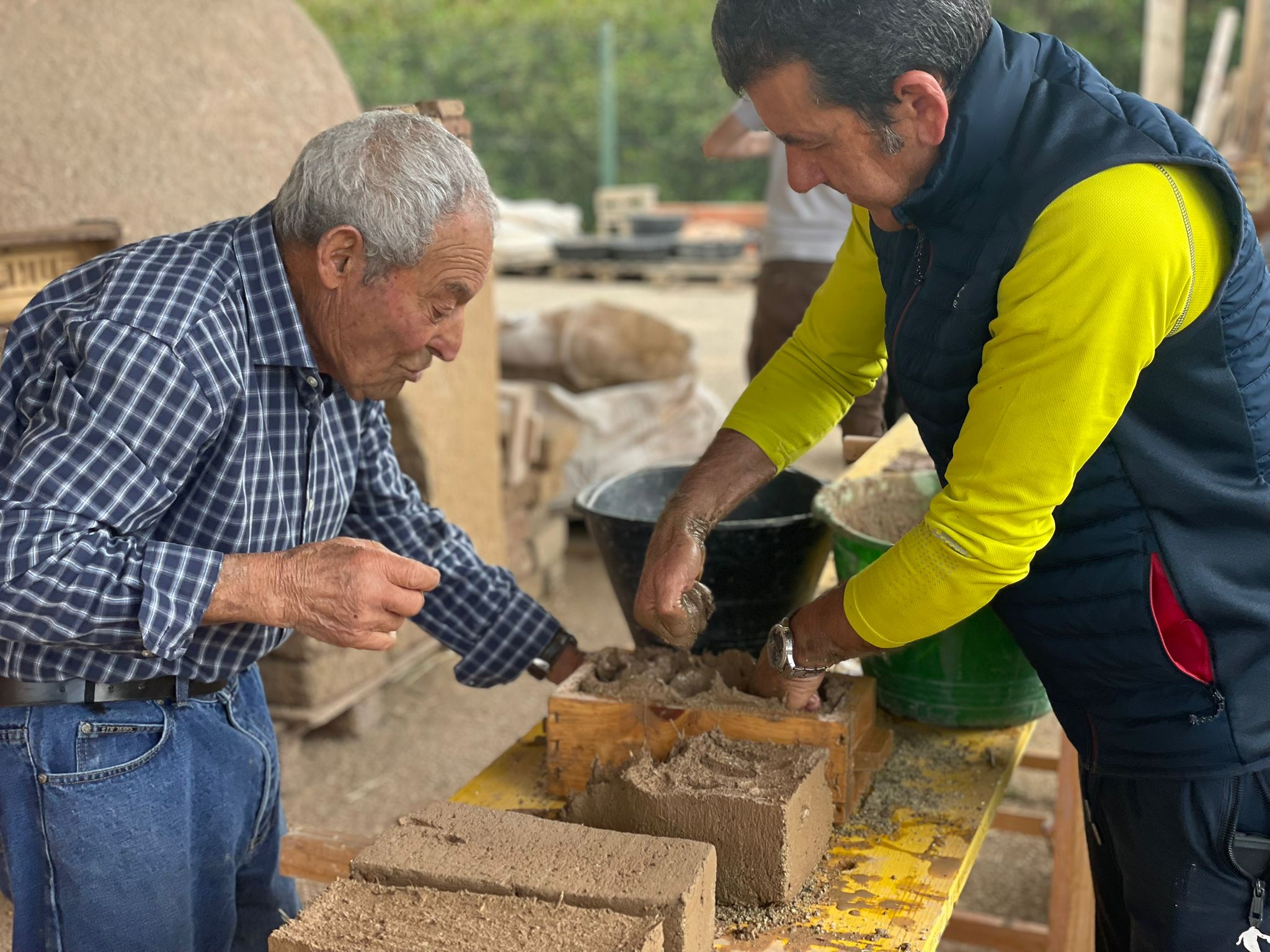
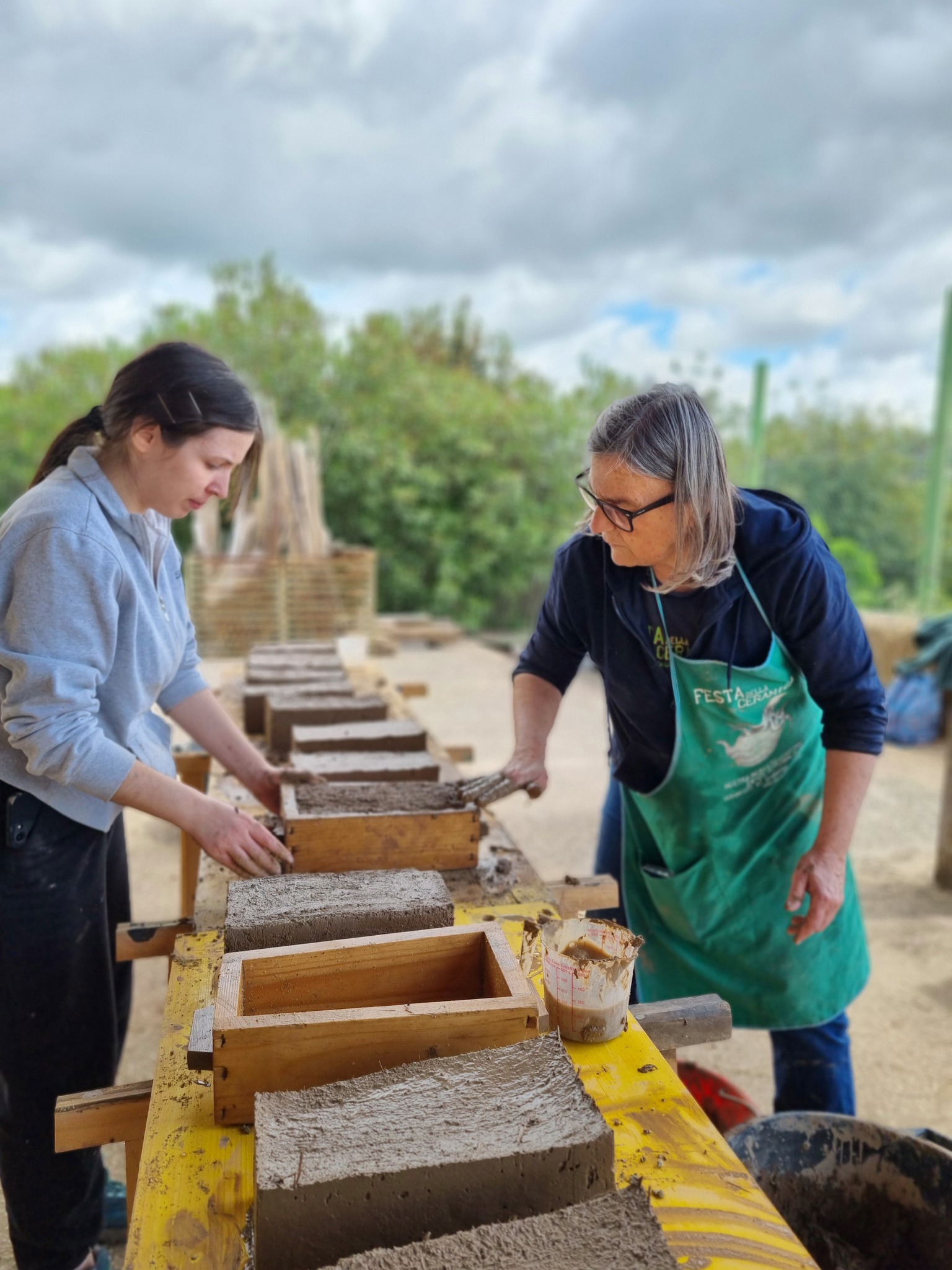
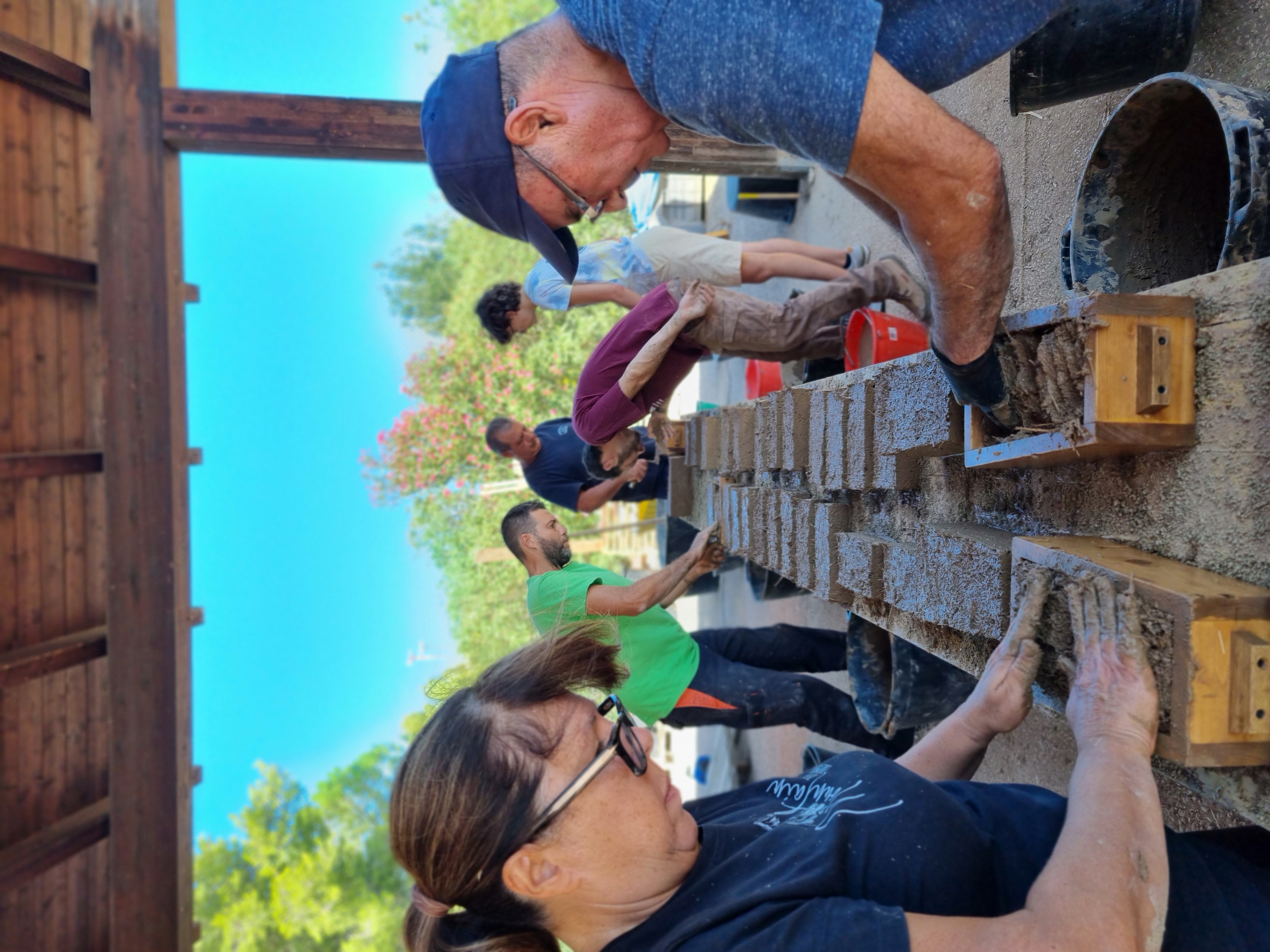
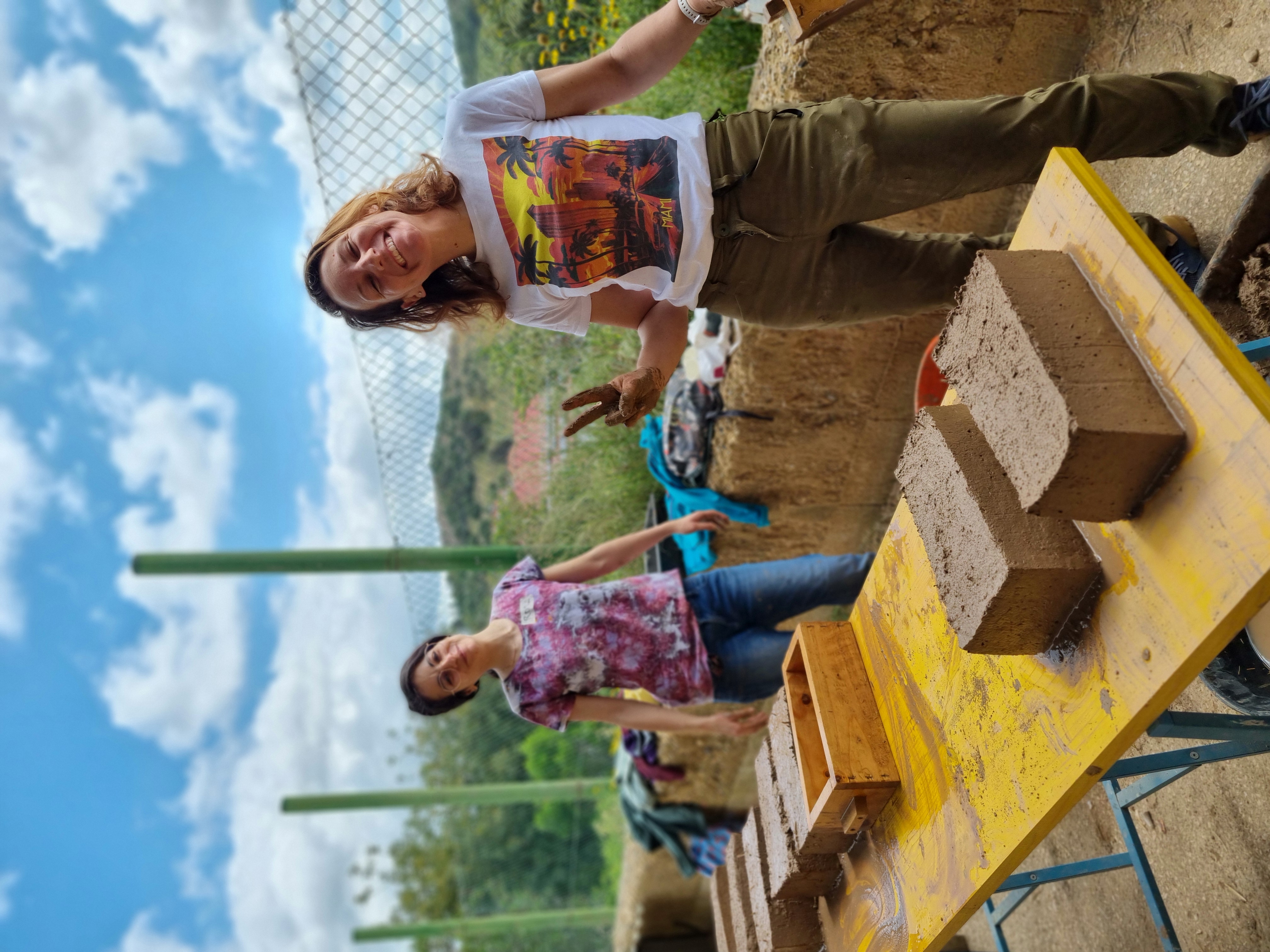
The building itself, (built between 2005 and 2014), was built in this perspective by the MS: more than 80000 adobes were produced with local skills in order to build the new sustainable public space that is today the LAT.
The inclusive nature of the project is visible in the diversity of its participants, from students at CPIA2 Serramanna to associations like the Pro Loco Serrenti (who are connected to the Pro Loco of other municipalities and can strengthen the replicability of the project). By valuing "local knowledge" as much as "professional expertise," the project creates a paritarian platform where an artisan’s mastery of clay is given the same weight as a researcher’s scientific data. This societal model addresses the "Together" principle of the NEB by creating a physical infrastructure that acts as a social glue. It proves that a "Healthy Place" is one where everyone feels a sense of belonging and responsibility. The Lollab thus becomes a replicable example of how rural communities can overcome depopulation and social fragmentation by rebuilding their environment together, using the resources—both human and natural—that are already present in their territory.
The building itself, (built between 2005 and 2014), was built in this perspective by the MS: more than 80000 adobes were produced with local skills in order to build the new sustainable public space that is today the LAT.
The inclusive nature of the project is visible in the diversity of its participants, from students at CPIA2 Serramanna to associations like the Pro Loco Serrenti (who are connected to the Pro Loco of other municipalities and can strengthen the replicability of the project). By valuing "local knowledge" as much as "professional expertise," the project creates a paritarian platform where an artisan’s mastery of clay is given the same weight as a researcher’s scientific data. This societal model addresses the "Together" principle of the NEB by creating a physical infrastructure that acts as a social glue. It proves that a "Healthy Place" is one where everyone feels a sense of belonging and responsibility. The Lollab thus becomes a replicable example of how rural communities can overcome depopulation and social fragmentation by rebuilding their environment together, using the resources—both human and natural—that are already present in their territory.
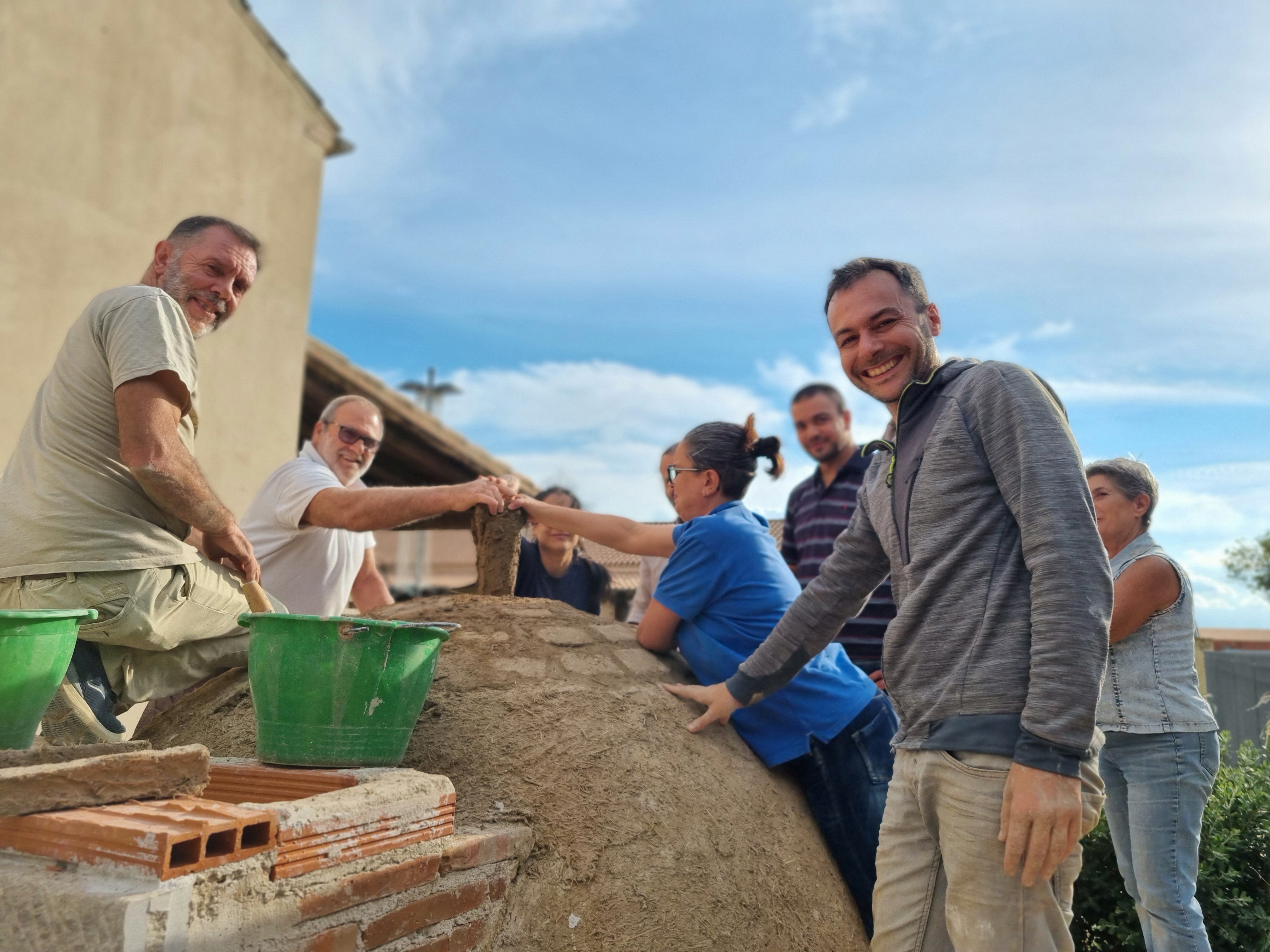
In Lollab, citizens are not mere "end-users" but the primary co-constructors and custodians of the infrastructure. Their involvement is structured through hands-on activities, a participatory framework where residents engage in the physical self-construction of the space. This role began with the construction of the community oven (2025) and continues with the expansion of the Lollab porch. This "hands-on" methodology, guided by the vision of Atelier Terrapia, transforms the act of building into a process of social resilience. By literally putting their hands in the earth, citizens develop a deep emotional and physical connection to the site, which is the strongest guarantee of the project's long-term sustainability and maintenance.
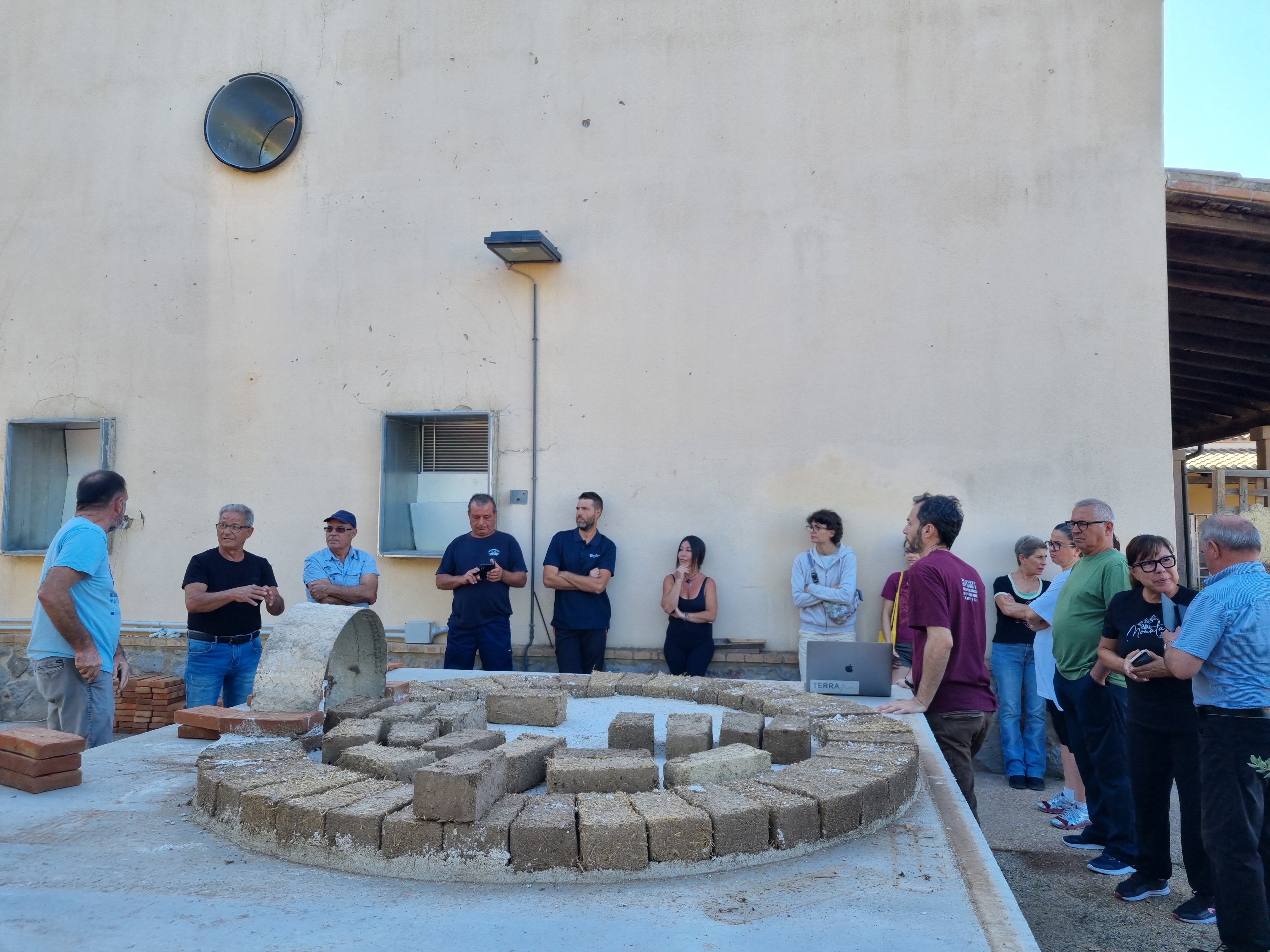
The impact of this involvement is a shift in mindset: residents move from being passive spectators to becoming "custodians of knowledge." Through workshops on raw earth, lime, and fiber composites, the community recovers vernacular techniques that were on the verge of being forgotten. This intergenerational transfer of skills—where elders share traditional secrets and youth bring new energy—is the heartbeat of the LAT (from 7 to 80 years). The project serves as a "Living Lab" because the citizens are constantly testing and evolving the space. Their role extends to the governance of the site, where they co-decide the calendar of activities, from collective panification with local associations to scientific dissemination events. This level of involvement ensures that the Lollab is a truly democratic space, reflecting the actual needs, memories, and aspirations of the Serrenti community but also of the municipalities around, members of ACTC.
The impact of this involvement is a shift in mindset: residents move from being passive spectators to becoming "custodians of knowledge." Through workshops on raw earth, lime, and fiber composites, the community recovers vernacular techniques that were on the verge of being forgotten. This intergenerational transfer of skills—where elders share traditional secrets and youth bring new energy—is the heartbeat of the LAT (from 7 to 80 years). The project serves as a "Living Lab" because the citizens are constantly testing and evolving the space. Their role extends to the governance of the site, where they co-decide the calendar of activities, from collective panification with local associations to scientific dissemination events. This level of involvement ensures that the Lollab is a truly democratic space, reflecting the actual needs, memories, and aspirations of the Serrenti community but also of the municipalities around, members of ACTC.
The project operates through a robust, multi-level partnership that bridges the gap between local administration, national networks, and professional expertise. The MS provides the political leadership and administrative foundation, while the ACTC acts as a strategic partner, providing a national platform for the LAT Serrenti as an official NEB Living Lab. This partnership is further strengthened by the scientific and cultural direction of Atelier Terrapia and UNICA. The added value of this engagement is the creation of a stable, long-term institutional framework that can attract diverse funding—from the Union of Municipalities to the Fondazione di Sardegna.
The collaboration between Atelier Terrapia and Studio Peisaj brings international recognition and the specialized HP methodology, ensuring the project meets the highest standards of architectural innovation. Other key stakeholders include educational entities like CPIA2 Serramanna (adult education) and local associations like the Pro Loco Serrenti and ASL Mix Latino Fitness, which manage the social activities. This ecosystem of stakeholders ensures that the project is not dependent on a single individual or funding stream. Instead, it is a "distributed" model where each partner adds a specific layer of value: political legitimacy, scientific rigor, social animation, and architectural quality. This coordinated engagement turns the Lollab into a high-impact infrastructure that can influence regional policies on rural regeneration and bio-based construction.
The collaboration between Atelier Terrapia and Studio Peisaj brings international recognition and the specialized HP methodology, ensuring the project meets the highest standards of architectural innovation. Other key stakeholders include educational entities like CPIA2 Serramanna (adult education) and local associations like the Pro Loco Serrenti and ASL Mix Latino Fitness, which manage the social activities. This ecosystem of stakeholders ensures that the project is not dependent on a single individual or funding stream. Instead, it is a "distributed" model where each partner adds a specific layer of value: political legitimacy, scientific rigor, social animation, and architectural quality. This coordinated engagement turns the Lollab into a high-impact infrastructure that can influence regional policies on rural regeneration and bio-based construction.
Lollab represents a transdisciplinary milestone that merges heritage and science, nature-based design and traditional craftsmanship. These fields interact within the LAT Serrenti to create a unified methodology. Alina Negru’s PhD research (2016-2023, book published 2025) on earth-building local knowledge provides the theoretical framework, while Atelier Terrapia overlays these with the "Healthy Places" principles, ensuring that the technical choice of materials (like raw earth and fibers) is linked to the well-being of the community.
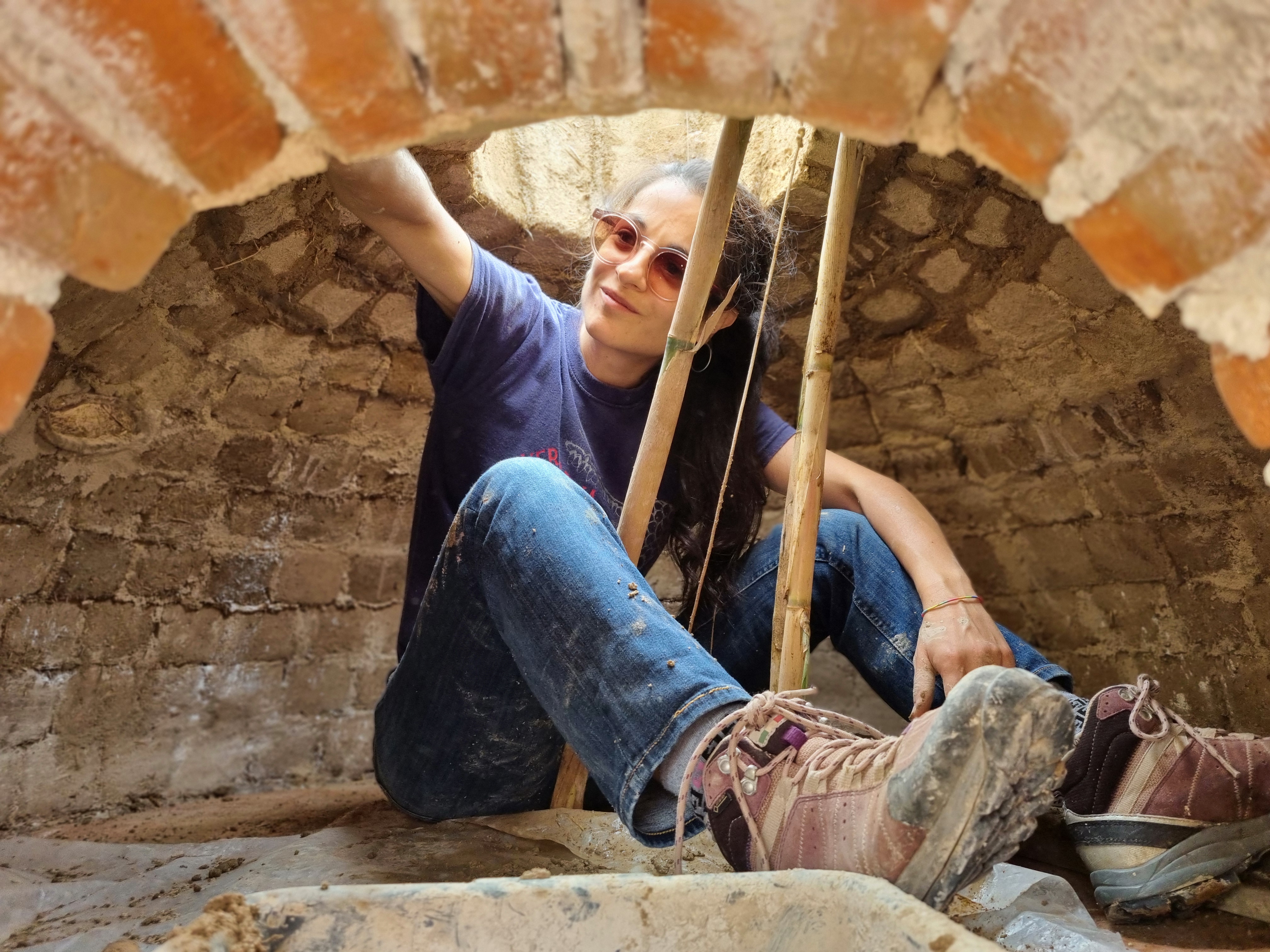
This transdisciplinary approach is validated on the ground through the "Living Lab" format, where academic research is tested against the practical mastery of local artisans specialized in earth and other local materials. The interaction between a researcher studying fiber-composite durability and a local "custodian of knowledge" building a traditional oven vault creates a unique loop of innovation. This ensures that the scientific research is grounded in real-world feasibility, while traditional crafts are elevated through modern scientific validation. By favouring the experiential learning and cultural dialogue, the project transforms the construction site into a place of cultural and democratic growth, a LolLAb after all. This fusion of diverse knowledge fields is what makes Lollab a true New European Bauhaus project, bridging the gap between "Science & Technology" and "Culture & Arts."
This transdisciplinary approach is validated on the ground through the "Living Lab" format, where academic research is tested against the practical mastery of local artisans specialized in earth and other local materials. The interaction between a researcher studying fiber-composite durability and a local "custodian of knowledge" building a traditional oven vault creates a unique loop of innovation. This ensures that the scientific research is grounded in real-world feasibility, while traditional crafts are elevated through modern scientific validation. By favouring the experiential learning and cultural dialogue, the project transforms the construction site into a place of cultural and democratic growth, a LolLAb after all. This fusion of diverse knowledge fields is what makes Lollab a true New European Bauhaus project, bridging the gap between "Science & Technology" and "Culture & Arts."
The core innovation of Lollab lies in its conceptual shift from a traditional "lolla" to a "Lollab"—a hybrid of a social porch and a nature-based laboratory. While most rural development projects rely on standardized industrial materials, Lollab innovates by developing high-performance, low-impact solutions using raw earth and local vegetable fibers. This "low-tech, high-intelligence" approach proves that ancestral materials can meet contemporary standards for thermal comfort, health, and durability when guided by the "Healthy Places" framework. The project challenges the conventional "passive consumption" of public infrastructure by proposing a model where the construction itself is a social and educational service.
Furthermore, the innovation is found in the project's "Social-Climatic" function. The Lollab is designed to naturally regulate the local micro-climate using the thermal mass of earth and the breathability of fibers, providing a carbon-neutral alternative. This is combined with an innovative governance model coordinated by ACTC and the Municipality, which treats public space as a "Common." The model of ACTC itself, of 40 municipalities protecting and promoting together their earthen heritage as a cultural identity landmark, helps spread the results all over the island and in all Italy where the earth exists as a resource. This network also enhances innovation by having multiple actors (public administrations and their partners) that research and valorise earth as a performant building material. By proving that a small rural town can host a high-level scientific research site that is simultaneously a popular community center, Lollab disrupts the idea that innovation is exclusive to urban or industrial hubs. It demonstrates that the future of the New European Bauhaus lies in "grounded innovation"—solutions that are radical in their sustainability but deeply familiar in their cultural form.
Furthermore, the innovation is found in the project's "Social-Climatic" function. The Lollab is designed to naturally regulate the local micro-climate using the thermal mass of earth and the breathability of fibers, providing a carbon-neutral alternative. This is combined with an innovative governance model coordinated by ACTC and the Municipality, which treats public space as a "Common." The model of ACTC itself, of 40 municipalities protecting and promoting together their earthen heritage as a cultural identity landmark, helps spread the results all over the island and in all Italy where the earth exists as a resource. This network also enhances innovation by having multiple actors (public administrations and their partners) that research and valorise earth as a performant building material. By proving that a small rural town can host a high-level scientific research site that is simultaneously a popular community center, Lollab disrupts the idea that innovation is exclusive to urban or industrial hubs. It demonstrates that the future of the New European Bauhaus lies in "grounded innovation"—solutions that are radical in their sustainability but deeply familiar in their cultural form.
The methodology of Lollab follows a circular "Research-to-Action" cycle consisting of three main phases: Scientific Research, Co-Design, and Participatory Self-Construction. The process begins with the identification and testing of local resources (earth and fibers) conducted at the LAT, guided by Atelier Terrapia and scientific partners. This is followed by co-design workshops where the community, facilitated by the "Healthy Places" principles adapted to the local context, defines the social and functional requirements of the space. This ensures that the architecture is not an imposition but a reflection of the community's collective intelligence.
The final and most critical phase is the design and building of the oven. Here, the construction site becomes a "school-cantiere" where citizens, artisans, and professionals work side-by-side. This methodology, institutionalized by the MS and ACTC, treats the act of building as a form of social empowerment. It ensures a high level of technical training for local youth and creates a sense of shared responsibility. The methodology also includes a "Governance" step, where the partners and citizens establish the rules for the site's long-term management. This holistic approach ensures that the project delivers more than just a physical structure; it delivers a strengthened, skilled, and highly connected community capable of managing its own sustainable development.
The final and most critical phase is the design and building of the oven. Here, the construction site becomes a "school-cantiere" where citizens, artisans, and professionals work side-by-side. This methodology, institutionalized by the MS and ACTC, treats the act of building as a form of social empowerment. It ensures a high level of technical training for local youth and creates a sense of shared responsibility. The methodology also includes a "Governance" step, where the partners and citizens establish the rules for the site's long-term management. This holistic approach ensures that the project delivers more than just a physical structure; it delivers a strengthened, skilled, and highly connected community capable of managing its own sustainable development.
Lollab is designed as a replicable "toolkit" for the thousands of European municipalities under 20,000 inhabitants facing challenges of rural depopulation and environmental transition. Its transferability is rooted in its nature-integrated design methodology: because it relies on local soil and fibers, the "raw materials" are available almost everywhere for free, making the model economically adaptable to diverse geographical contexts. Crucially, the model is replicable using a reduced budget, as it replaces expensive industrial imports with processed local resources and community-led labor. This economic efficiency removes barriers for small administrations with limited funding, proving that NEB excellence is attainable without massive initial capital.
The institutional model of the LAT—a partnership between the MS, a national network like ACTC (an association of 40 municipalities), UNICA, and professional experts like AT—provides a clear administrative blueprint that other small towns can follow to establish their own NEB Living Labs. The project’s replicability is further enhanced by the modularity of the "Extended Lolla" structure and the transparency of its governance model. The initiative is inherently flexible and shaped to facilitate the involvement of multi-level donors. This allows for a resilient funding ecosystem that integrates institutional support with research grants and territorial sponsorships.
By following the HP principles and documenting every step—from material testing to co-design—Lollab provides a "step-by-step guide" for rural regeneration. As a member of the ACTC network, Serrenti is positioned to share these results with dozens of other "Cities of Raw Earth," ensuring that the lessons learned here can trigger a chain reaction of sustainable, community-led transformations across Europe. The project proves that with the right partnership and local resources, any small town can become a center of excellence for the New European Bauhaus.
The institutional model of the LAT—a partnership between the MS, a national network like ACTC (an association of 40 municipalities), UNICA, and professional experts like AT—provides a clear administrative blueprint that other small towns can follow to establish their own NEB Living Labs. The project’s replicability is further enhanced by the modularity of the "Extended Lolla" structure and the transparency of its governance model. The initiative is inherently flexible and shaped to facilitate the involvement of multi-level donors. This allows for a resilient funding ecosystem that integrates institutional support with research grants and territorial sponsorships.
By following the HP principles and documenting every step—from material testing to co-design—Lollab provides a "step-by-step guide" for rural regeneration. As a member of the ACTC network, Serrenti is positioned to share these results with dozens of other "Cities of Raw Earth," ensuring that the lessons learned here can trigger a chain reaction of sustainable, community-led transformations across Europe. The project proves that with the right partnership and local resources, any small town can become a center of excellence for the New European Bauhaus.
The commitment of the MS, ACTC and AT is demonstrated by a clear, phased implementation strategy: the community oven, the heart of the extended lolla, integrated the NEB values (the sustainable use of heritage materials - raw earth and fibers, the beauty of nature-based design, the inclusive building process as a collective act). This pilot phase proved the feasibility of a methodology rooted in the local knowledge and active participation of the community (70 participants at the workshops). Following the 2025 completion of the community oven, our 2026 roadmap focuses on tangible preparatory milestones that consolidate the LAT Serrenti as a permanent Living Lab.
2026 Milestones:
● Self-Production of Materials: Community workshops to produce the bio-based components (earth-fiber mixes) for the future Lollab expansion.
● The Garden of Fibers: Realizing the nature-integrated landscape that provides both raw research materials and a sensory space for residents.
● Transfer of Local Knowledge: A continuous program of technical workshops with AT to validate our 'reduced budget' production model.
Expected Key Steps: Our implementation follows the NEB working principles of transdisciplinarity and a multi-level approach:
● Step 1: Co-Design (Inclusion): We will hold community workshops to refine the social functions of the Lollab, ensuring the architectural outcome is a direct response to collective needs and local knowledge.
● Step 2: Participatory Construction (Sustainability): The hands-on activities realization will use low-impact, local resources, ensuring the structure is an showcase of innovated heritage.
● Step 3: Collective Governance (Togetherness): We will establish shared rules for the site's use, ensuring the community remains the true custodian of this shared public space and its future evolution.
This phased approach ensures that when the final structural implementation occurs, the community is skilled and the materials are locally sourced.
2026 Milestones:
● Self-Production of Materials: Community workshops to produce the bio-based components (earth-fiber mixes) for the future Lollab expansion.
● The Garden of Fibers: Realizing the nature-integrated landscape that provides both raw research materials and a sensory space for residents.
● Transfer of Local Knowledge: A continuous program of technical workshops with AT to validate our 'reduced budget' production model.
Expected Key Steps: Our implementation follows the NEB working principles of transdisciplinarity and a multi-level approach:
● Step 1: Co-Design (Inclusion): We will hold community workshops to refine the social functions of the Lollab, ensuring the architectural outcome is a direct response to collective needs and local knowledge.
● Step 2: Participatory Construction (Sustainability): The hands-on activities realization will use low-impact, local resources, ensuring the structure is an showcase of innovated heritage.
● Step 3: Collective Governance (Togetherness): We will establish shared rules for the site's use, ensuring the community remains the true custodian of this shared public space and its future evolution.
This phased approach ensures that when the final structural implementation occurs, the community is skilled and the materials are locally sourced.