Strengthening Local Democracy and Inclusion
Mood for Wood
Mood for Wood: Building Community Through Design
Mood for Wood is an international design-build workshop where students, local communities and experts co-create small-scale wooden structures for public spaces. Through hands-on collaboration, ideas become real places for meeting, learning and everyday use. The project strengthens social bonds, empowers residents and shows how participatory design can shape more inclusive, vibrant neighbourhoods.
Poland
National
Mainly urban
It involves a physical transformation of the built environment (hard investment)
Yes
2025-09-08
No
No
No
Organisation
Mood for Wood is an international design-build initiative that redefines how public space is created—by placing communities at the heart of the process. Since 2015, across 14 editions of international design-student workshop, it has brought together hundreds of students, residents, institutions and professionals to collaboratively design and build meaningful interventions in real urban contexts.
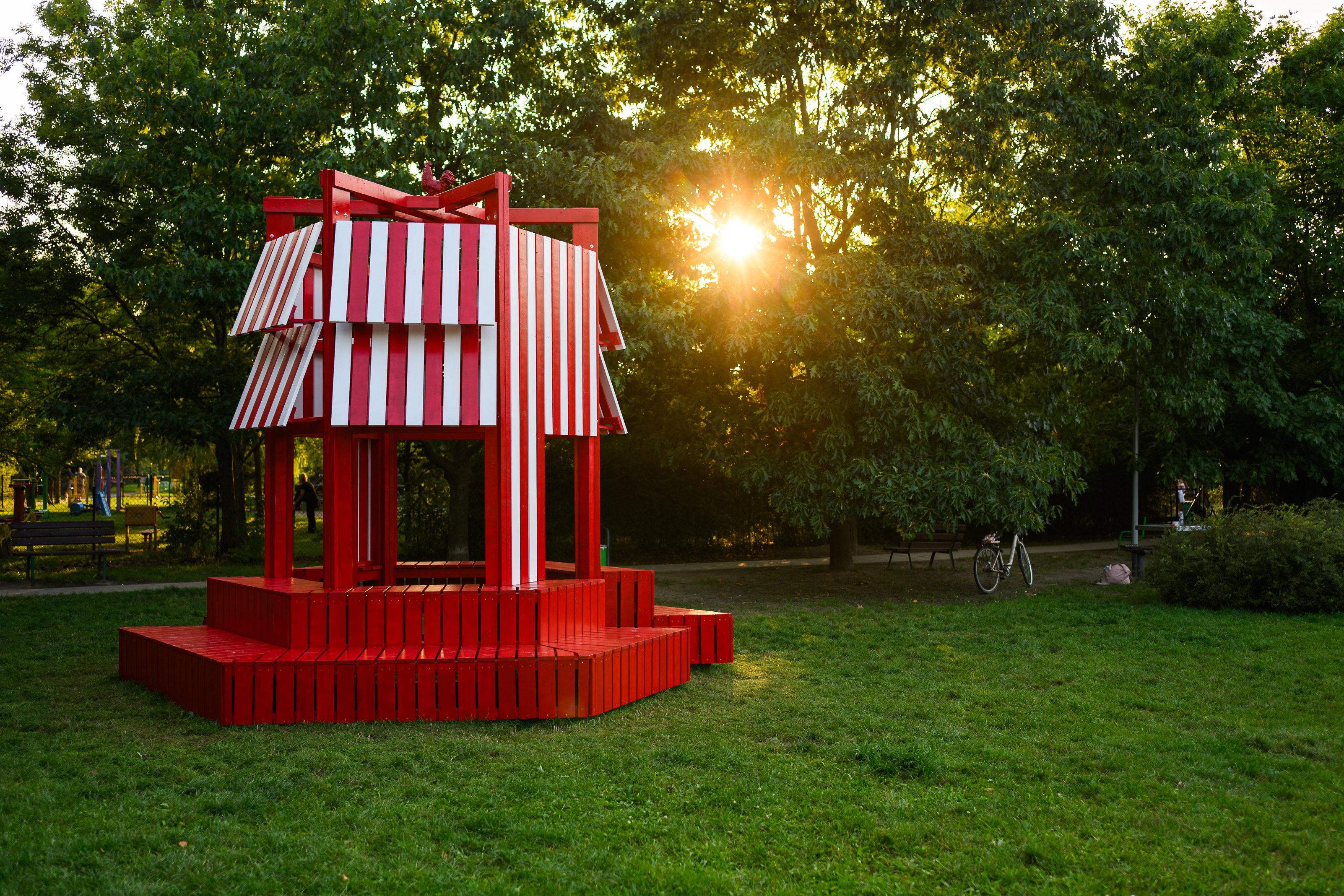
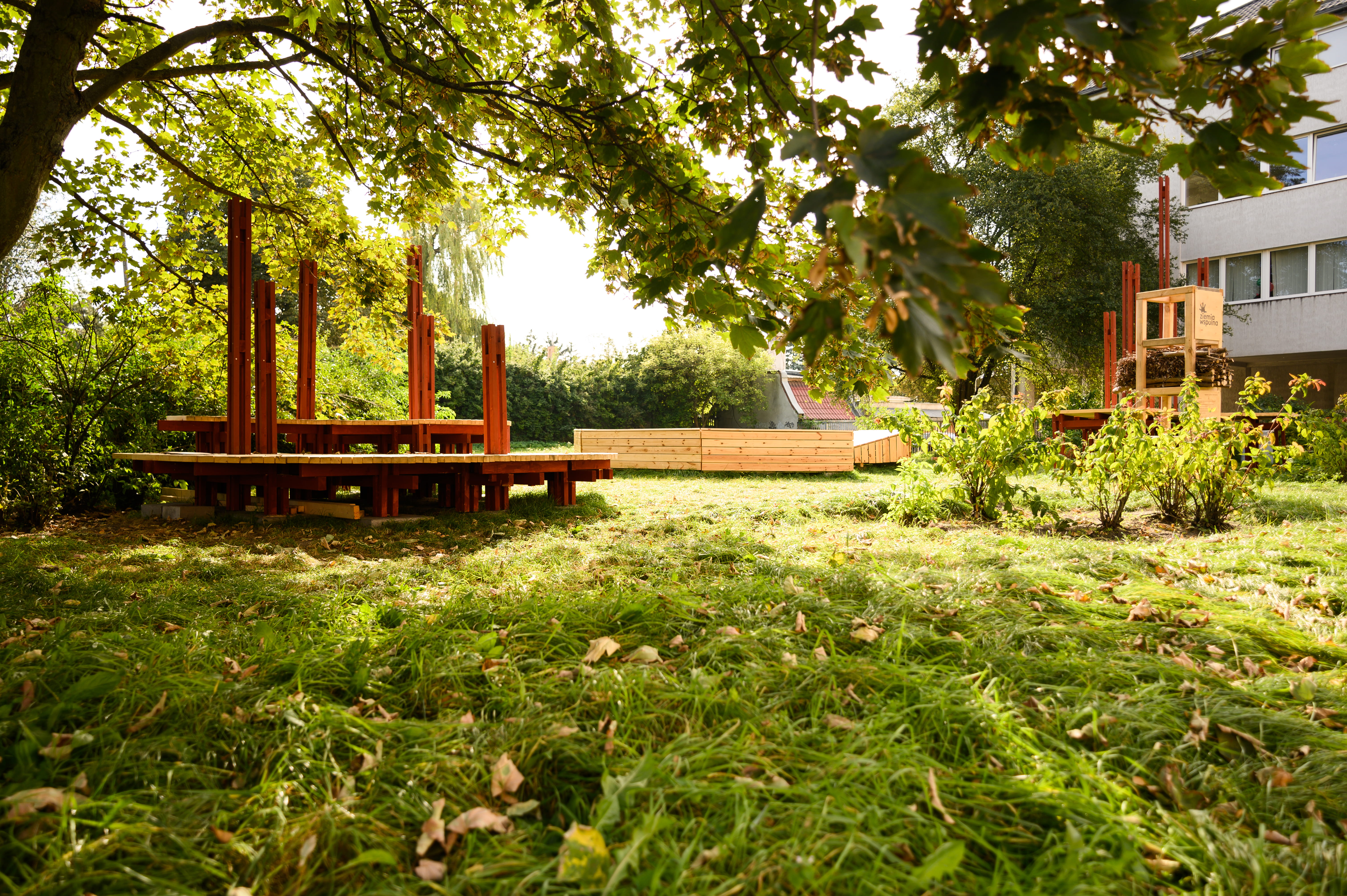
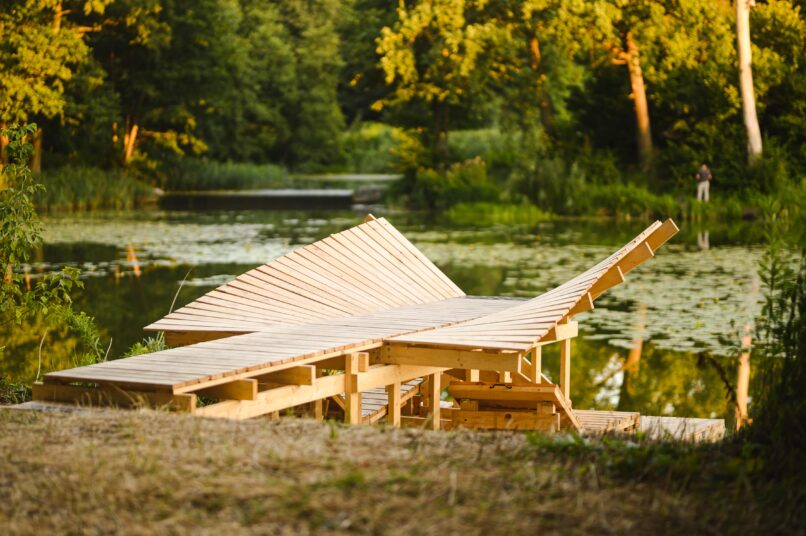
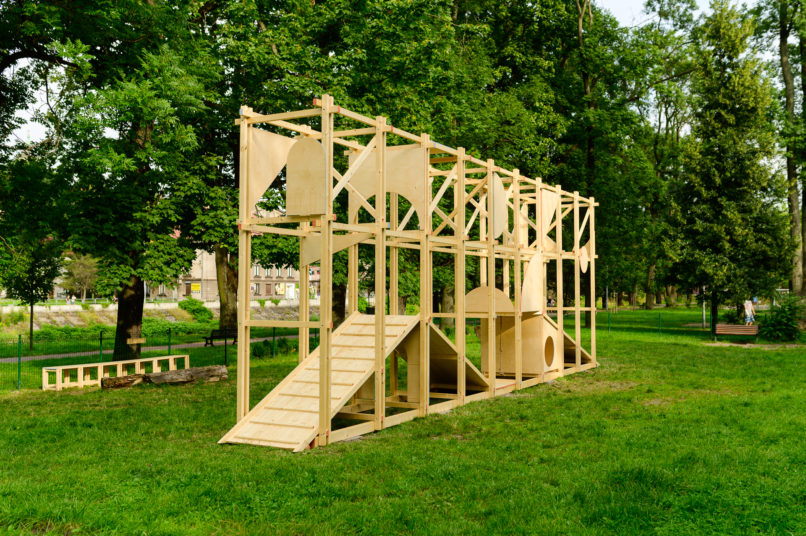
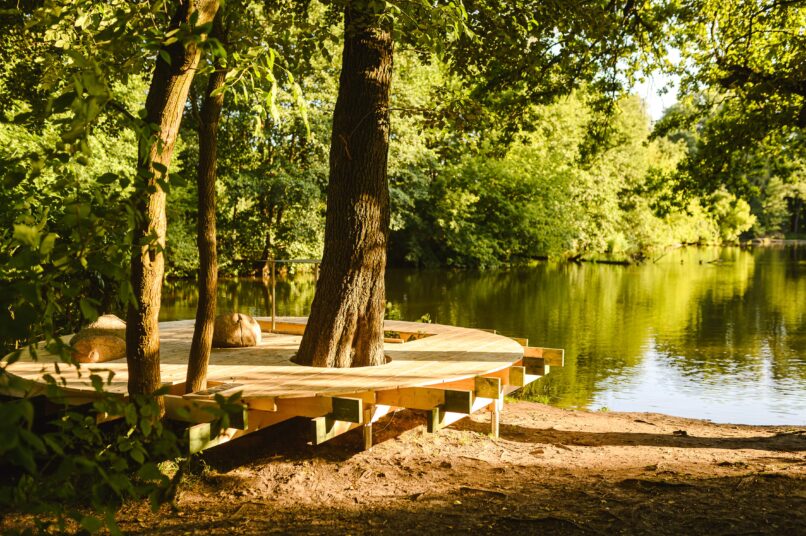
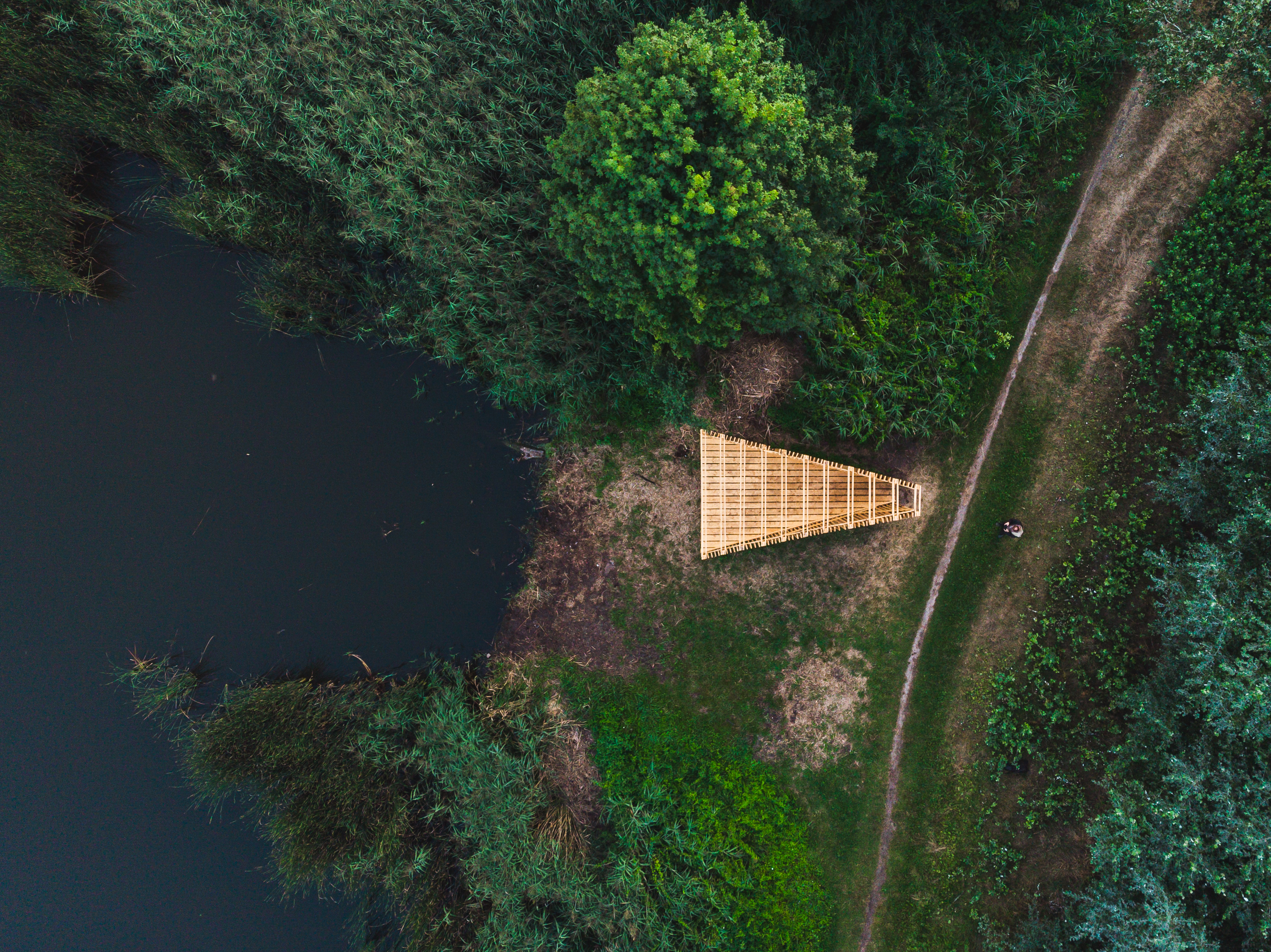
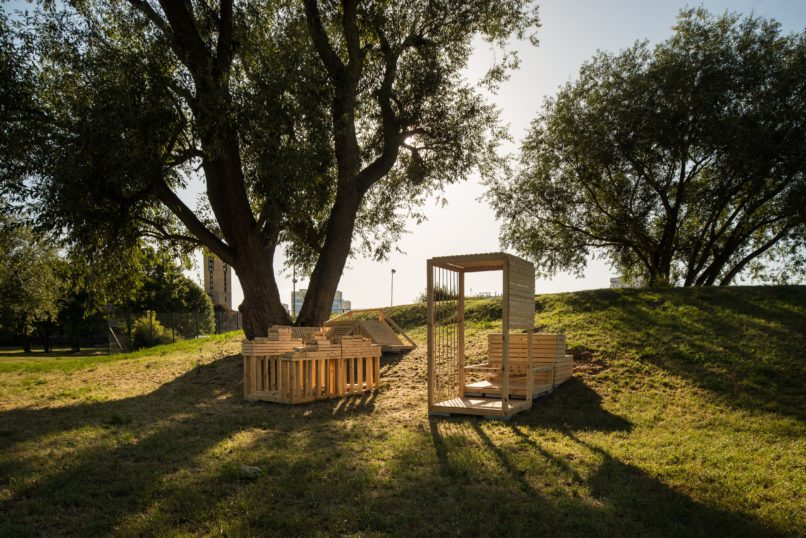
The project has already delivered over 60 wooden structures in Poznań and Cieszyn—on both the Polish and Czech sides of the border. These include meeting spaces, outdoor classrooms, market pavilions and places for rest and observation. More than physical objects, they function as social infrastructures—activating public life, encouraging interaction and strengthening a sense of belonging.
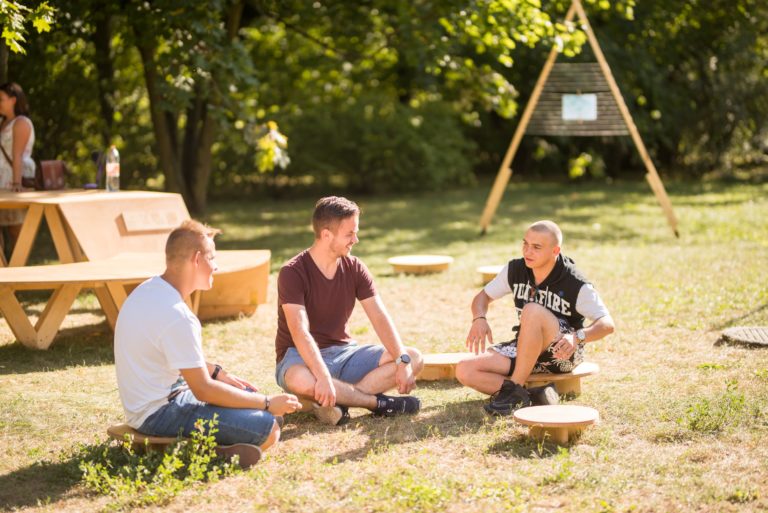
At its core, Mood for Wood is a participatory model of co-creation. Through direct dialogue, workshops and on-site collaboration, residents become co-authors of their environment. This process builds trust, empowers local voices and fosters intergenerational exchange, turning design into a tool for strengthening local democracy.
The initiative also transforms architectural education. Participants work hands-on, from concept to 1:1 realization, learning how to respond to real needs with responsible, sustainable solutions. This creates a new generation of designers equipped with social awareness and practical skills.
The long-term impact is both tangible and systemic. The built structures continue to support everyday life and community activities, while the methodology itself offers a scalable and replicable framework for inclusive, community-led design. Mood for Wood demonstrates that when people co-create their environment, public space becomes not only more beautiful and sustainable—but also more democratic, resilient and shared.
Mood for Wood grew out of a real experience—and a real problem.In 2012, we organized a student workshop in Poznań called Sukkot – let’s build a tent, based on a learning-by-doing approach. Together with members of the local Jewish community, participants designed and built contemporary interpretations of traditional Sukkah structures or Sukkot holidays.
After the workshop, however, a key question emerged: what happens next with built sukkah?
One structure was taken by the Jewish community for future celebrations. For the remaining three, we had no clear plan. Through social media, several NGOs reached out, expressing a strong interest in using them for their own activities. This revealed a crucial gap: while organizations can secure funding for programs, they often lack resources for basic infrastructure—spaces that enable long-term community work and integration. At the same time, another observation became clear: design is often disconnected from real needs, and education rarely leads to real impact.
Mood for Wood was created to bridge this gap—by combining participatory design, hands-on building and community collaboration into one process.
Each edition begins with listening. Organizers work with local partners—community groups, NGOs and institutions—to identify challenges and opportunities. Through consultations and direct engagement, residents define needs that become clear design guidelines. From this moment, they are not users—they are co-creators.
This model transforms education into a win-win system. Students gain practical experience, develop soft skills and better understand their future profession. At the same time, the process produces real, functional structures—which are handed over free of charge to communities and NGOs, supporting their social, cultural and educational activities.
Participatory Design
Community Empowerment
Social Inclusion
Public Space
Student workshop
Mood for Wood approaches sustainability as a holistic, action-based practice—where environmental responsibility, social impact and education meet in real space.
Environmentally, the project relies on wood as a renewable, low-carbon material and simple, resource-efficient construction. Structures are designed to be durable, repairable and adaptable. Participants learn by doing—understanding material cycles, reducing waste and building with long-term responsibility in mind.
Social sustainability is at the core. Each intervention is co-created with local communities, ensuring it responds to real needs and is actively used. Importantly, the project is free of charge for local partners. After the workshops, communities receive fully built structures—tailored to their specific context—which support their ongoing social, cultural and educational activities.
This process builds ownership, trust and local agency, turning users into co-creators and public space into a shared responsibility.
Culturally, Mood for Wood promotes context-driven design, rooted in local identity and everyday practices. Architecture becomes a collective act rather than a top-down service.
Economically, the model is efficient and inclusive, combining public funding and partnerships with low participation fees used mainly to cover accommodation and meals for students during the 12-day workshops.
Mood for Wood delivers tangible results with long-term impact. It creates spaces that are used, valued and maintained, while offering a replicable model of participatory, sustainable design.
Mood for Wood brings aesthetics into everyday life by making design accessible, human-centered and rooted in place. Beauty is not treated as an abstract value, but as something experienced through use, interaction and shared presence.
Each structure is carefully designed in response to its specific context—landscape, scale, materials and community needs. The use of natural wood, tactile surfaces and simple, expressive forms creates spaces that are warm, inviting and intuitive. These are places people want to sit, gather, observe and spend time in.
The structures developed during the workshops are above all functional, safe and context-responsive. Each project is grounded in clearly defined community needs, identified during pre-workshop consultations with local residents and stakeholders. These insights become direct design guidelines, ensuring that every intervention is relevant, usable and embedded in its specific social and spatial context.
A key aspect of the project is that aesthetics emerge from a collective process. Residents, students and designers work together, shaping not only the function but also the character of each intervention. This shared authorship strengthens emotional attachment and creates a deeper sense of belonging.
The resulting objects act as spatial anchors—recognizable, memorable points in the neighborhood that structure everyday life. They transform overlooked or undefined areas into meaningful places for meeting, learning and rest, becoming part of local identity over time.
Mood for Wood is exemplary because it proves that high-quality design can be inclusive, functional and deeply embedded in everyday life. By combining craftsmanship, context and co-creation, it creates spaces that are not only visually appealing, but also meaningful, used and cared for.
Mood for Wood places inclusion at the centre of both its process and outcomes, ensuring accessibility, affordability and active participation at every stage.
The project is built on a participatory model of co-creation, where local residents, community organizations, students and professionals work together. Communities are not passive recipients but active co-designers, involved from the earliest stages through consultations, interviews and workshops. Their needs directly shape the design guidelines, ensuring that the final structures are relevant, accessible and widely used.
Accessibility is addressed through a “design for all” approach. The built interventions are open, free to use and located in public spaces, making them accessible regardless of age, income or background. Many projects are specifically designed to support diverse user groups—including children, elderly people or socially vulnerable communities—by offering safe, intuitive and inclusive environments.
Affordability is a key principle. The project is free of charge for local communities, who receive fully realized structures tailored to their needs, supporting their social, cultural or educational activities. For participants, fees are kept low and cover mainly accommodation and meals, ensuring that financial barriers are minimized.
Mood for Wood also promotes inclusive governance by creating a shared decision-making process. Designers, users and institutions collaborate on equal terms, building trust and mutual understanding. This approach challenges traditional top-down models and demonstrates how public space can be shaped collectively.
Beyond individual realizations, the project proposes a replicable social model—one that empowers communities, strengthens local agency and fosters long-term engagement. By turning users into co-creators and public space into a shared responsibility, Mood for Wood contributes to more democratic, inclusive and resilient urban environments.
Mood for Wood is built on a deeply participatory model, where citizens and communities are not consulted—they are active co-creators of both the process and the outcome.
Each edition begins with identifying local partners—community groups, NGOs or public institutions—and engaging residents through interviews, workshops and on-site meetings. These interactions directly shape the design brief and spatial guidelines, ensuring that projects respond to real, articulated needs.
A fundamental principle of the workshops is the mandatory approval of each project by the local community. No design moves forward to the construction phase without their acceptance. This ensures that residents have real decision-making power, not just a consultative role.
Unlike many similar workshops in Europe—where students typically build pre-designed projects—Mood for Wood operates on a fundamentally different principle. Students work on equal terms with tutors, who act as facilitators and advisors rather than authors of the design. Together, they develop solutions collectively, responding to community input throughout the process.
Participation continues at every stage. Concepts are tested, discussed and refined with users in real time. Citizens are involved from defining the problem to validating the final outcome.
The impact is long-term. This process builds trust, ownership and local agency. Communities not only accept the structures but actively use, adapt and care for them.
Mood for Wood demonstrates that participation can move beyond consultation into shared authorship and responsibility. It creates not only better spaces, but more confident and empowered communities capable of shaping their own environment.
Mood for Wood operates through a multi-level governance model, connecting local communities with institutional and international partners in a coherent process.
At the local level, the project is rooted in collaboration with residents, NGOs and community organizations. They play a decisive role—identifying needs, co-defining project goals and approving final designs. Their involvement ensures that each intervention is relevant, accepted and actively used. Local partners also take responsibility for long-term use and activation of the structures.
At the city and regional level, public authorities provide funding, access to sites and administrative support. Their engagement enables implementation in public space and links the project to broader strategies related to urban development, social inclusion and community building.
At the national level, professional organizations and educational institutions contribute expertise, networks and institutional support. They help maintain quality standards and strengthen the project’s visibility within architecture and design communities.
At the European level, Mood for Wood operates as an international platform, involving students, tutors and partners from multiple countries. Through collaborations such as Erasmus+, the project contributes to the exchange of knowledge and the development of participatory design-build methodologies.
Each level plays a distinct but interconnected role—from bottom-up identification of needs to top-down support and international exchange.
The added value lies in the ability to bridge scales and sectors, combining local knowledge with institutional capacity. This results in interventions that are both context-sensitive and structurally supported, making Mood for Wood a replicable model of collaborative governance.
Mood for Wood is a transdisciplinary platform that integrates architecture, design, social engagement, craftsmanship and environmental thinking into a single, collaborative process.
The project operates at the intersection of spatial design, social innovation and hands-on making, combining architecture with participatory methods drawn from social sciences, where local knowledge becomes a key design driver.
From the initial consultation phase through to final implementation, the process is supported by professional facilitation and social research. Mood for Wood collaborates with an experienced landscape architect, Magdalena Garncarczyk, as well as anthropologists and sociologists, including Maciej Frąckowiak. This ensures that community insights continuously inform decisions at every stage.
Participants also engage with external experts depending on the project theme—such as conservation specialists, ornithologists, environmentalists, accessibility experts, behaviorists, artists and performers—embedding specialized, user-centered knowledge into each intervention.
The workshops function as an experimental educational environment, where students develop projects from concept to full-scale realization, integrating design thinking with real-world constraints.
The process is supported by technical expertise and craftsmanship. Throughout the 12-day workshop, participants work with two experienced carpenters, ensuring high standards of safety, durability and build quality.
Environmental awareness is embedded through the use of renewable materials and lifecycle thinking.
Mood for Wood is exemplary in its ability to synthesize disciplines into a coherent, co-creative framework—a living laboratory for socially grounded, environmentally responsible and culturally relevant design.
Mood for Wood operates through a hybrid, diversified funding model that ensures long-term sustainability while maintaining accessibility and social impact.
The project is primarily supported by public funding, including local government contributions ( City of Poznań, City of Cieszyn, Marshal of Great Poland, Marshal of Silesia), international cooperation programmes and European initiatives (Visegrad Fund,
Foundation for Polish-German Cooperation, Polish-German Youth Cooperation, French Institute in Poland, Hungarian Embassy, Polish-Lithuanian Youth Dimension, Part of the substantive costs of one edition in 2023 were also covered by Erasmus plus funds - Builder method project). These funds cover core costs such as materials, tools,logistics- transport and expert involvement.This is complemented by in-kind support from private partners, who provide (rent us) part of electric tools, materials and technical resources. These partnerships reduce operational costs while strengthening the quality of implementation.
An important component is the participant contribution fee, which covers approximately 25% of the total cost per student, while the remaining costs are secured through public funding and partnerships. As part of this fee, the project provides comprehensive support, including accommodation for the full 12-day workshop, three meals per day, local public transport in Poznań or Cieszyn, and travel to and from Poland. This ensures that participation remains accessible and inclusive, regardless of financial background.
Crucially, the project is free of charge for local communities and NGOs, who receive fully designed and built structures tailored to their needs.
Mood for Wood is designed as a highly transferable and scalable model, with clearly defined components that can be adapted to different geographies, communities and sectors.
At its core is a replicable participatory design-build methodology, combining community engagement, education and real-life implementation. The process—from needs assessment, through co-design, to full-scale construction—can be applied in diverse contexts, from urban neighborhoods to rural areas.
A key transferable element is the co-creation framework, where local stakeholders define needs and validate outcomes. This model is adaptable across cultural and institutional settings, as it is based on universal principles: inclusion, dialogue and shared responsibility.
The project also offers a scalable educational model, grounded in learning-by-doing and interdisciplinary collaboration. It can be implemented within universities, NGOs or informal learning environments, supporting both professional training and community development.
Another important aspect is the low-cost, high-impact approach. The use of accessible materials, simple construction techniques and local resources makes the model financially feasible and adaptable to different economic conditions.
Mood for Wood has already demonstrated cross-border scalability, with implementations in Poland and the Czech Republic, confirming its adaptability to different social and administrative contexts.
Importantly, the project generates transferable know-how, including methodologies developed within international collaborations such as Erasmus+ partnerships. These can support other organizations in replicating the model step by step.
Mood for Wood is exemplary because it delivers not only local interventions, but a replicable framework—enabling others to create inclusive, sustainable public spaces while building local capacity and community agency.