Enhancing Circularity, Sustainability, and Innovation
ADAPT YOUR SCHOOLYARD
Adapt Your Schoolyard: A NEB Transformation for Greener,Healthier and More Inclusive Learning Spaces
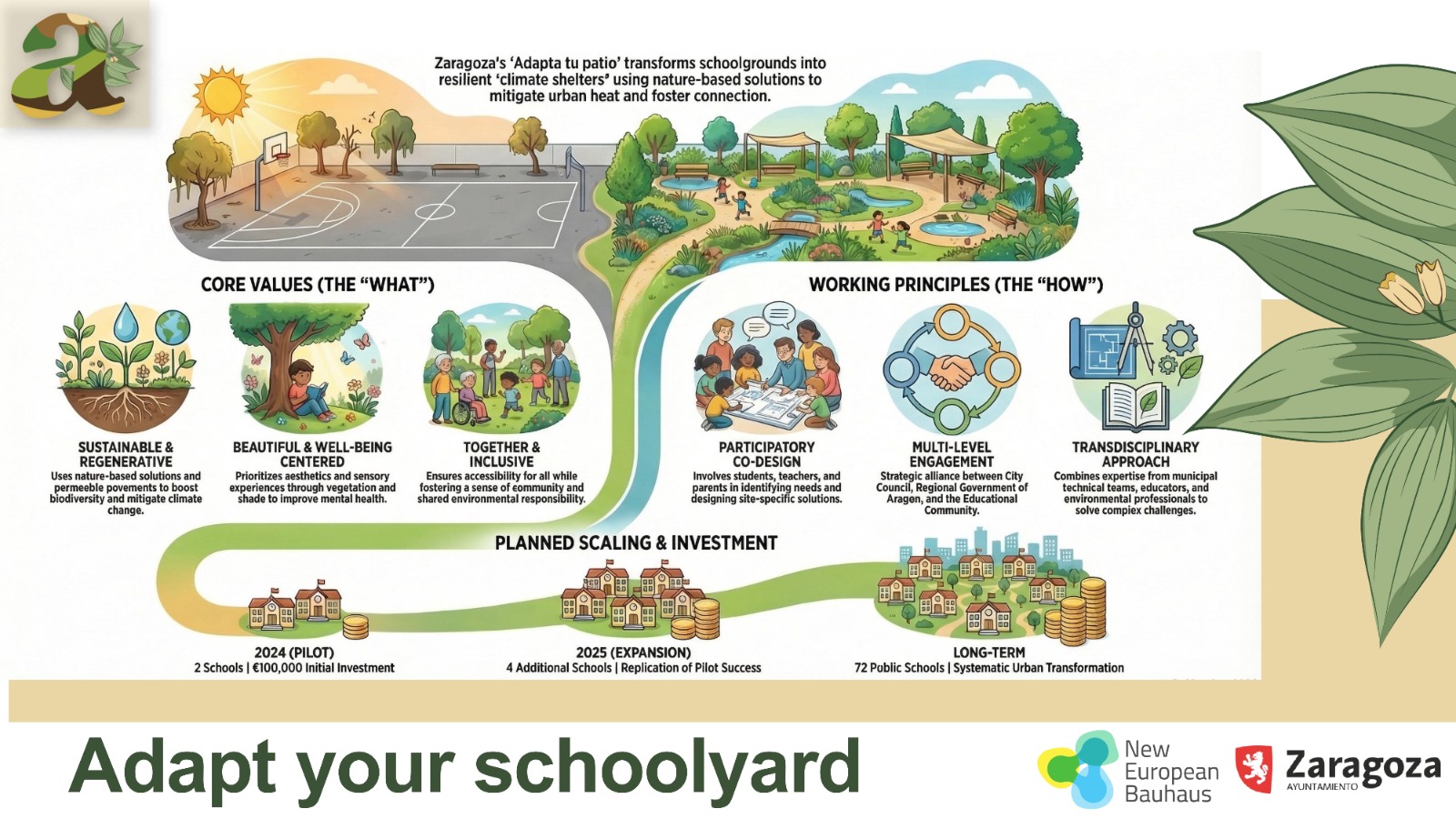
Zaragoza is transforming schoolyards into vibrant, green urban oases! "Adapt your schoolyard" turns grey concrete into climate-resilient havens. By merging nature-based solutions with co-design from students and families, we create cool, healthy shelters against extreme heat. This pioneering model blends sustainability, social inclusion, and beauty, turning every playground into a living classroom. From 2 pilots to 72 schools, we are building a healthier future for our children.
Spain
Local
Zaragoza
It addresses urban-rural linkages
It involves other types of transformations (soft investment)
Yes
2025-12-31
Yes
Programme: Horizon
Project: NBS EduWorld.
Adapta tu Patio was selected in the third phase of the NbsEduWorld project as an initiative, it does not receive direct funding, only support in educational materials actions.
No
No
Organisation
Adapt your schoolyard transforms Zaragoza’s schoolyards into greener, cooler, and healthier environments. It addresses the urgent challenges of extreme heat, lack of vegetation, and low environmental quality in school settings. The initiative aims to create more liveable and healthy spaces while promoting a sustainable urban environment.
The main beneficiaries are students, teachers, and families, with a strategic focus on centers facing high heat incidence and social vulnerability. The project also benefits public institutions by providing a scalable model for climate adaptation. Its objectives are clear: implement nature-based solutions (NBS); co-design interventions with the community; develop a Climate Solutions Catalogue and specialized guides; co-design a custom mural for their schoolyard; and establish long-term monitoring mechanisms.
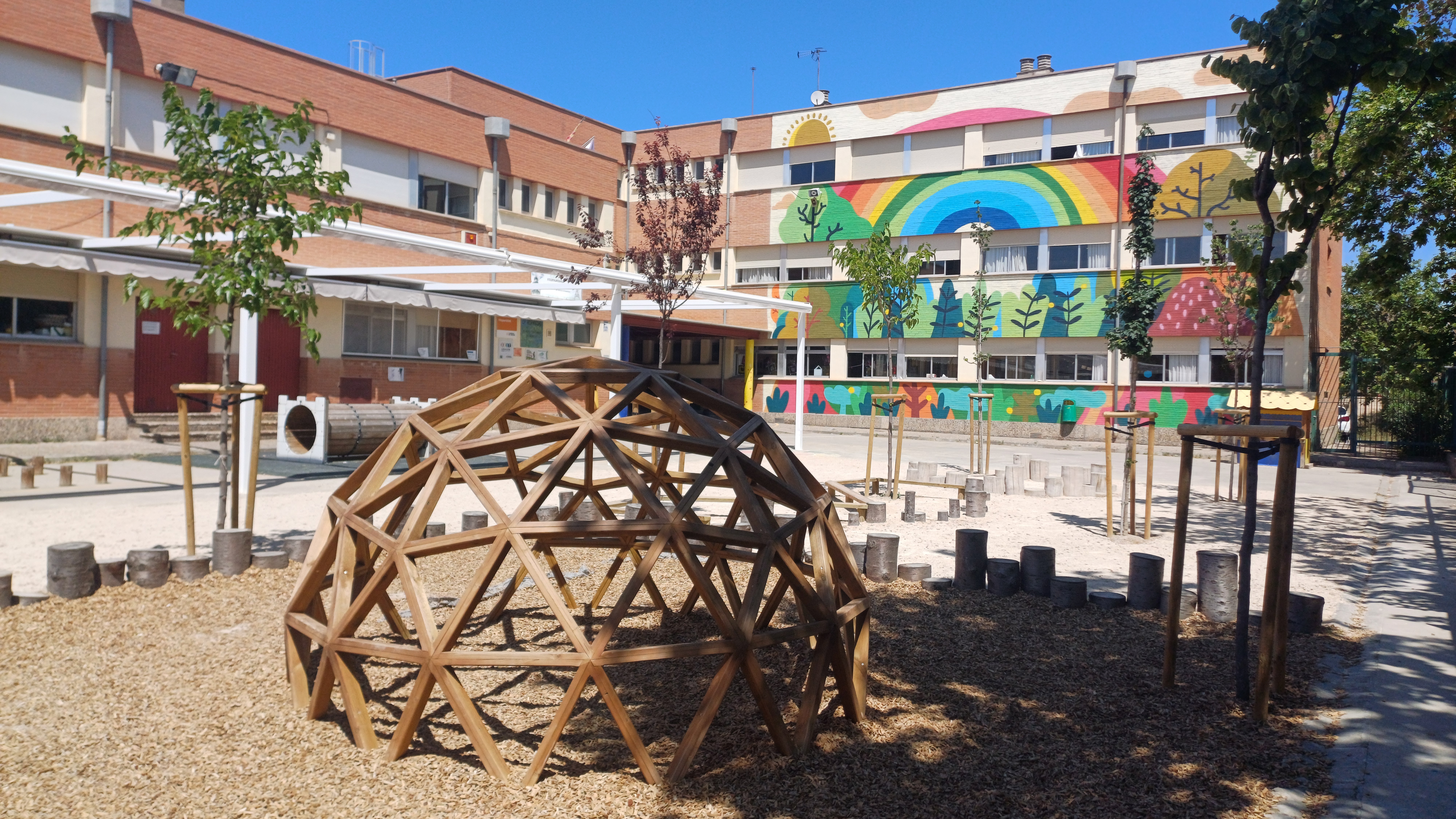
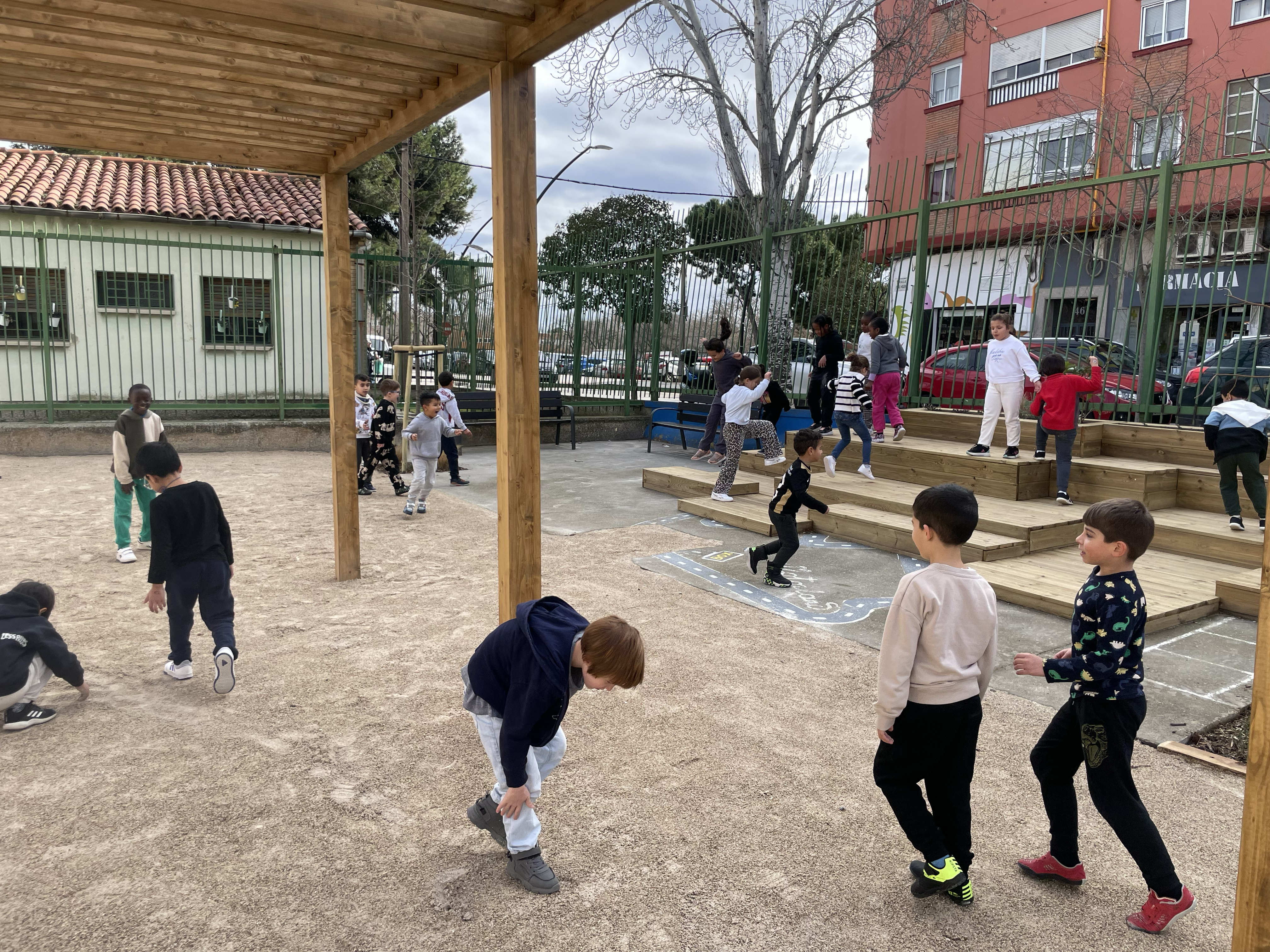
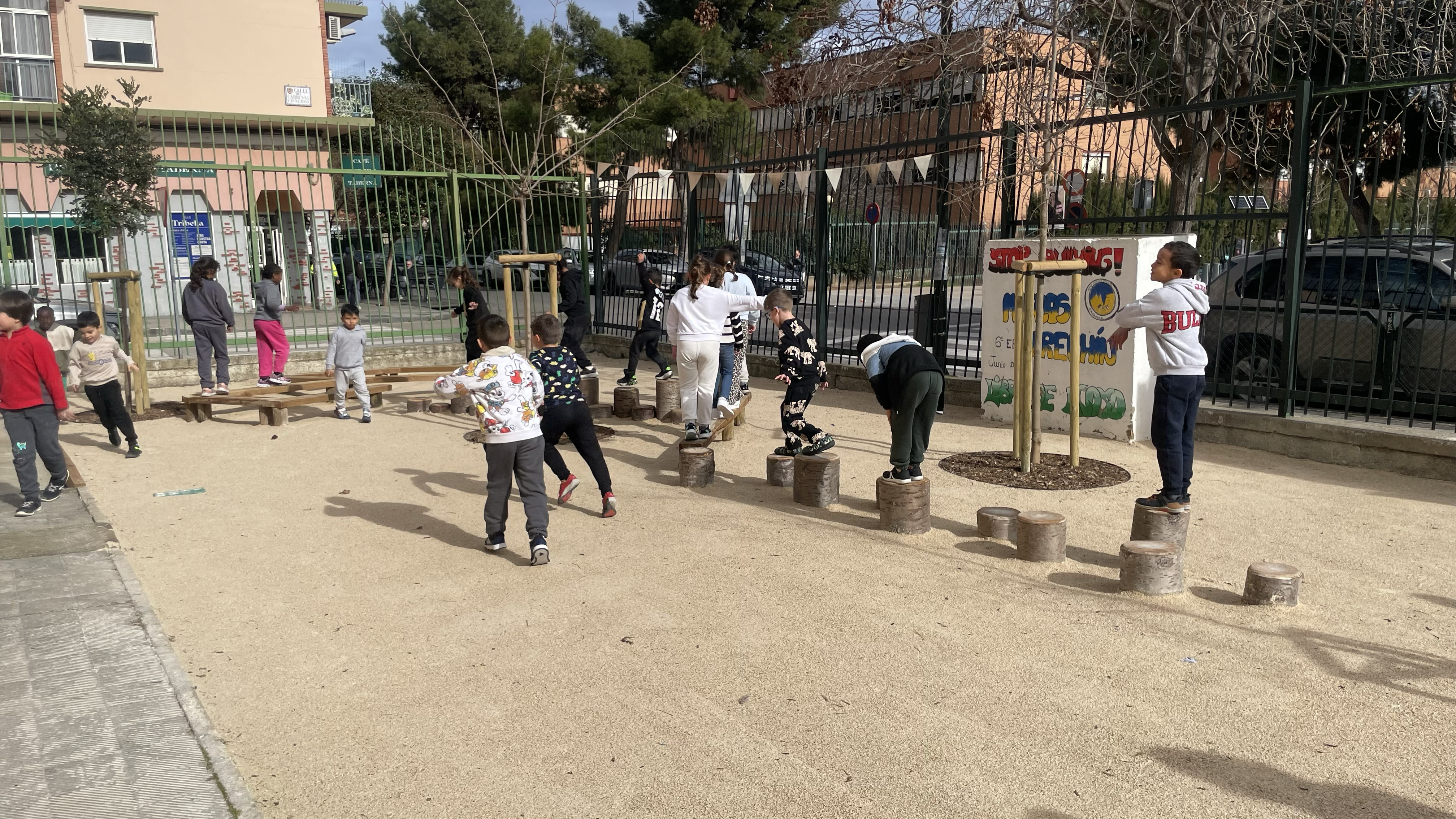
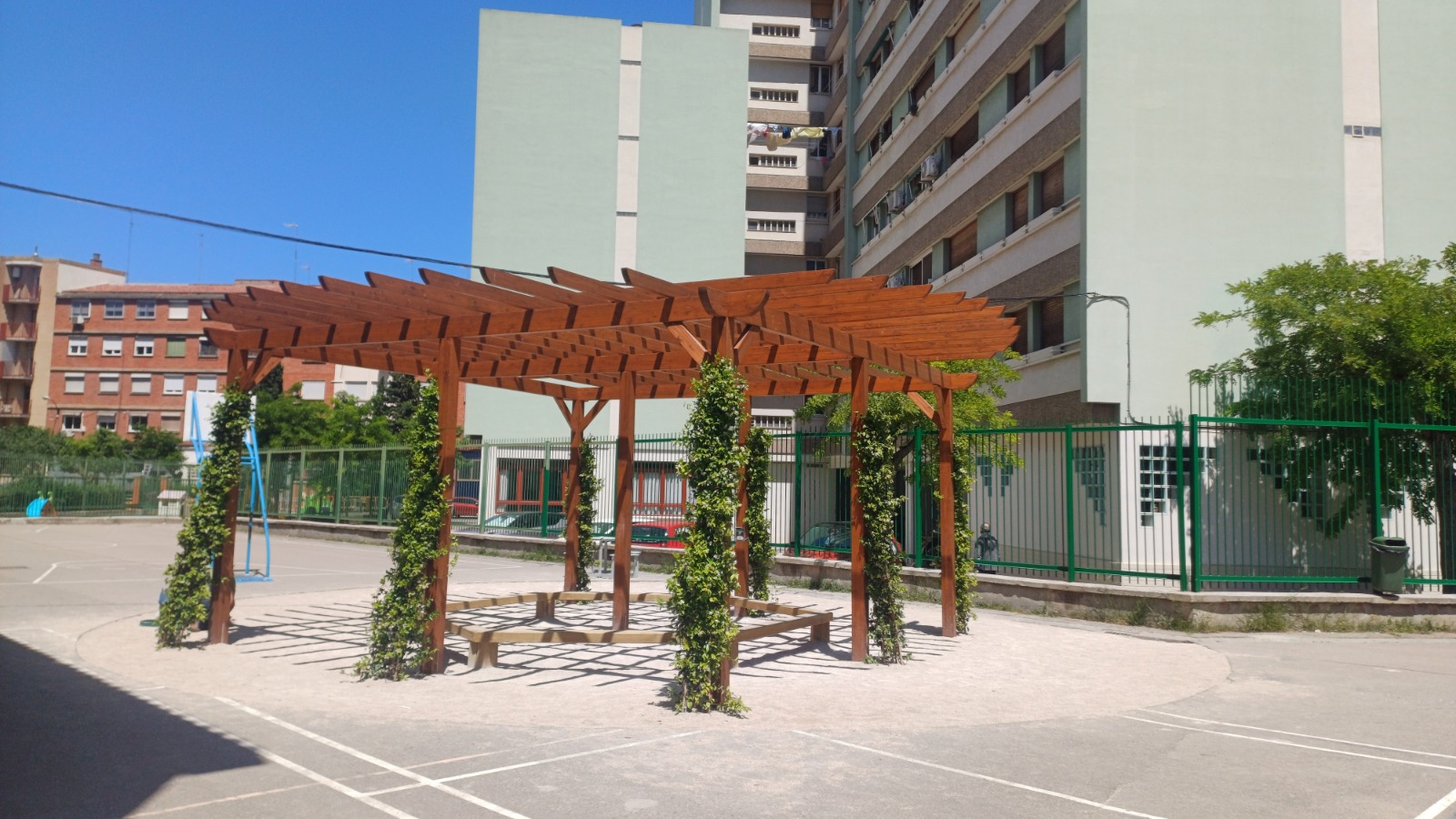
Key results are already evident. Two pilot schools—CEIP Hispanidad and CEIP José María Mir—were selected in 2024, followed by five more in 2025. Interventions including tree planting, permeable pavements, shaded areas, and the were completed promptly. The participatory process engaged teachers, students and families to ensure solutions responded to the specific needs of each center. The project’s quality has earned European recognition through its inclusion in the NBS EduWORLD network.
The long-term impact is significant. Zaragoza has established a multi-annual budget to expand the program by at least five schoolyards per year, with the potential to reach 72 schools citywide. This strengthens climate resilience, improves well-being, and embeds environmental education into daily life. Its transformative potential lies in combining climate adaptation with community co-creation. By turning schoolyards into climate shelters and learning landscapes, the project offers a forward-looking, replicable model for cities across Europe.
The main beneficiaries are students, teachers, and families, with a strategic focus on centers facing high heat incidence and social vulnerability. The project also benefits public institutions by providing a scalable model for climate adaptation. Its objectives are clear: implement nature-based solutions (NBS); co-design interventions with the community; develop a Climate Solutions Catalogue and specialized guides; co-design a custom mural for their schoolyard; and establish long-term monitoring mechanisms.
Key results are already evident. Two pilot schools—CEIP Hispanidad and CEIP José María Mir—were selected in 2024, followed by five more in 2025. Interventions including tree planting, permeable pavements, shaded areas, and the were completed promptly. The participatory process engaged teachers, students and families to ensure solutions responded to the specific needs of each center. The project’s quality has earned European recognition through its inclusion in the NBS EduWORLD network.
The long-term impact is significant. Zaragoza has established a multi-annual budget to expand the program by at least five schoolyards per year, with the potential to reach 72 schools citywide. This strengthens climate resilience, improves well-being, and embeds environmental education into daily life. Its transformative potential lies in combining climate adaptation with community co-creation. By turning schoolyards into climate shelters and learning landscapes, the project offers a forward-looking, replicable model for cities across Europe.
“Adapt your schoolyard” was born from Zaragoza’s strategic commitment to climate adaptation, as outlined in its Climate Change Adaptation Plan to reduce heat and increase biodiversity. The idea gained momentum as the city advanced toward its mission to become climate‑neutral by 2030 under the EU Mission Cities
The initiative took shape through a multi‑level alliance: Zaragoza City Council led and funded the project, the Regional Government of Aragón enabled interventions, and the educational community co‑designed solutions. This strategic partnership is also formalised through a Local Green Deal signed within the European Intelligent Cities Challenge. This ensures that interventions respond to needs and are socially accepted
Implementation followed a clear sequence. First, research identified vulnerable schools using criteria such as high heat incidence and social vulnerability. Two pilot schools were selected in 2024. A participatory design phase followed, with workshops to define priorities and nature‑based solutions. Technical teams then drafted tailored intervention plans, supported by a new Climate Solutions Catalogue to facilitate designing solutions adapted to each space.
Pilot works were executed in 2024, including tree planting, permeable pavements, and shaded areas. The city coordinated needs assessment, co‑design, technical drafting, and on‑site implementation, ensuring compatibility with school operations. Drawing on key insights and our partnership with NBS EduWorld, we developed three comprehensive Guides to support educational communities in their renaturalization efforts.
This collaborative approach proved essential to achieving the project’s objectives and enabled rapid scaling. In 2025, Zaragoza expanded the programme to five schoolyards per year, supported by a multi‑annual budget. The project has evolved from a local pilot into a replicable model for climate adaptation, grounded in community participation and nature‑based solutions.
The initiative took shape through a multi‑level alliance: Zaragoza City Council led and funded the project, the Regional Government of Aragón enabled interventions, and the educational community co‑designed solutions. This strategic partnership is also formalised through a Local Green Deal signed within the European Intelligent Cities Challenge. This ensures that interventions respond to needs and are socially accepted
Implementation followed a clear sequence. First, research identified vulnerable schools using criteria such as high heat incidence and social vulnerability. Two pilot schools were selected in 2024. A participatory design phase followed, with workshops to define priorities and nature‑based solutions. Technical teams then drafted tailored intervention plans, supported by a new Climate Solutions Catalogue to facilitate designing solutions adapted to each space.
Pilot works were executed in 2024, including tree planting, permeable pavements, and shaded areas. The city coordinated needs assessment, co‑design, technical drafting, and on‑site implementation, ensuring compatibility with school operations. Drawing on key insights and our partnership with NBS EduWorld, we developed three comprehensive Guides to support educational communities in their renaturalization efforts.
This collaborative approach proved essential to achieving the project’s objectives and enabled rapid scaling. In 2025, Zaragoza expanded the programme to five schoolyards per year, supported by a multi‑annual budget. The project has evolved from a local pilot into a replicable model for climate adaptation, grounded in community participation and nature‑based solutions.
community co-design
climate adaptation
nature-based solutions
Social and spatial equity
Multi-governance
“Adapt your schoolyard” addresses key environmental and social challenges linked to climate change, extreme heat, biodiversity loss, and the lack of natural spaces in school environments. Its sustainability objective is to reduce high temperatures and promote biodiversity by transforming schoolyards through nature‑based solutions
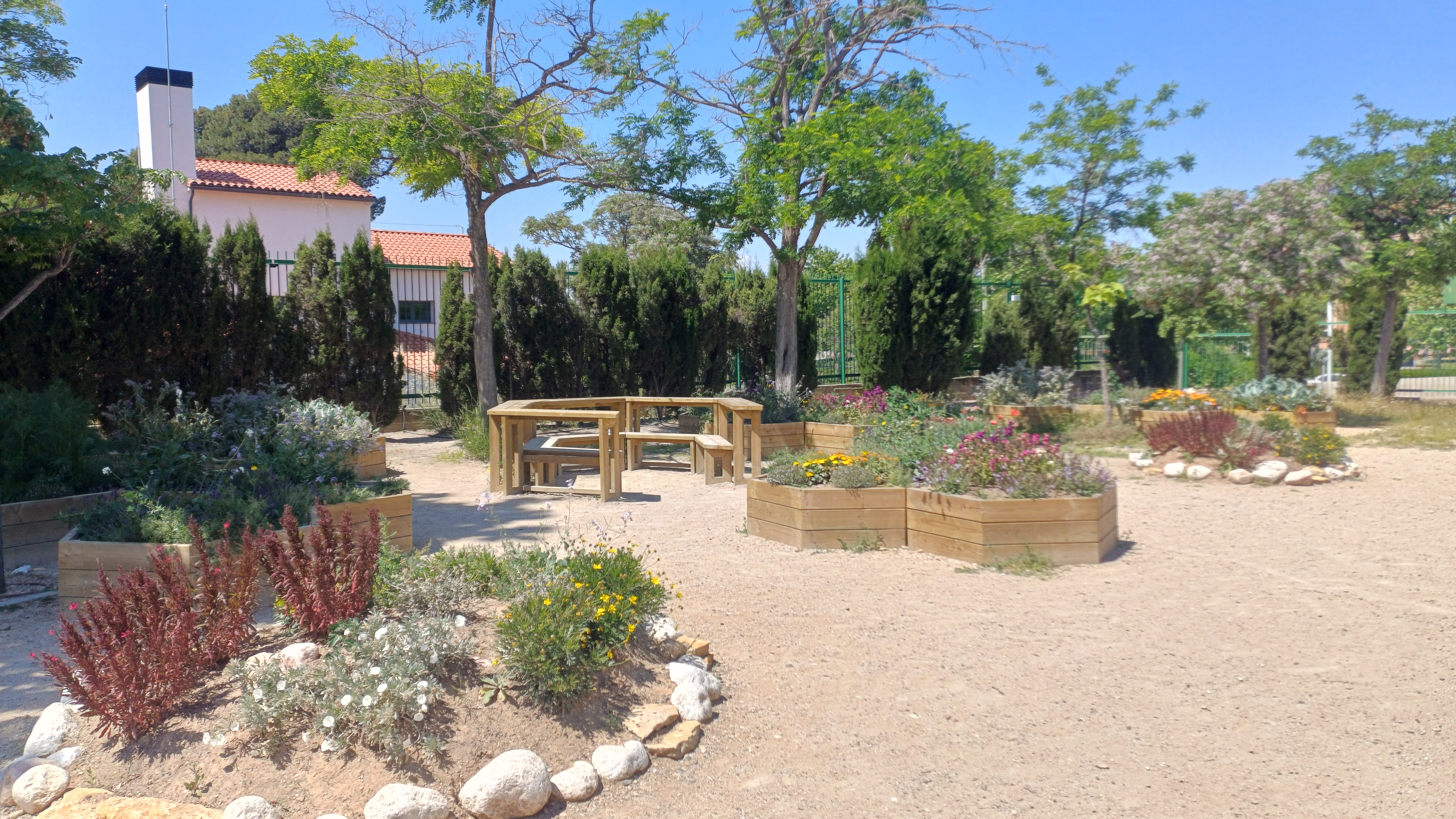
The project implements concrete measures such as planting trees and shrubs, installing permeable pavements, and creating shaded areas, all of which contribute to mitigate the effect of high temperatures in schoolyards and enhance urban biodiversity. The approach prioritises low‑impact materials and regenerative design, aligning with NEB ambitions to repurpose and regenerate
Social sustainability is embedded through the active involvement of students, teachers, and families, who co‑design the interventions and integrate environmental learning into the curriculum. This strengthens environmental awareness and fosters long‑term behavioural change. The project also prioritises vulnerable schools, selected based on high heat incidence, less vegetation and social vulnerability, ensuring equitable access to healthier environments
Early results include the selection of 2 pilot schools, the launch of participatory design processes, and the development of a Solutions Catalogue that will guide future replications. In 2025 a further 5 schools were transformed. The project has already gained European recognition through its inclusion in the NBS EduWORLD network, demonstrating its exemplary character
What makes this initiative particularly strong is its systemic and scalable approach: it combines climate adaptation, circularity, education, art, and community empowerment, with a long‑term plan to expand to up to 72 schools in the city. By integrating ecological restoration with social learning, it exemplifies NEB sustainability at a high level of ambition, offering a replicable model for regenerative school environments across Europe
The project implements concrete measures such as planting trees and shrubs, installing permeable pavements, and creating shaded areas, all of which contribute to mitigate the effect of high temperatures in schoolyards and enhance urban biodiversity. The approach prioritises low‑impact materials and regenerative design, aligning with NEB ambitions to repurpose and regenerate
Social sustainability is embedded through the active involvement of students, teachers, and families, who co‑design the interventions and integrate environmental learning into the curriculum. This strengthens environmental awareness and fosters long‑term behavioural change. The project also prioritises vulnerable schools, selected based on high heat incidence, less vegetation and social vulnerability, ensuring equitable access to healthier environments
Early results include the selection of 2 pilot schools, the launch of participatory design processes, and the development of a Solutions Catalogue that will guide future replications. In 2025 a further 5 schools were transformed. The project has already gained European recognition through its inclusion in the NBS EduWORLD network, demonstrating its exemplary character
What makes this initiative particularly strong is its systemic and scalable approach: it combines climate adaptation, circularity, education, art, and community empowerment, with a long‑term plan to expand to up to 72 schools in the city. By integrating ecological restoration with social learning, it exemplifies NEB sustainability at a high level of ambition, offering a replicable model for regenerative school environments across Europe
The “Adapt your schoolyard” initiative enhances the beauty and quality daily life by transforming sterile, overheated schoolyards into green, sensory-rich environments. Its core aesthetic objective is to create more liveable and healthy spaces in schools, activating the cultural and natural qualities of each location while respecting its unique identity.
Implementation is guided by design sensitivity and nature-based craftsmanship. The project integrates diverse vegetation, shaded areas, permeable pavements, and outdoor learning zones, creating visually harmonious and welcoming environments. The Climate Solutions Catalogue enables schools to select interventions that best fit their spaces and climatic conditions,”ensuring coherence with local culture, materials, and microclimates.
The project elevates the experience by offering shade, greenery, textures, scents, and sounds of nature. These elements mitigate heat, soften the visual landscape, and stimulate all five senses. Children and teachers gain new areas for rest, play, and learning, fostering emotional well-being and a profound connection with their surroundings.
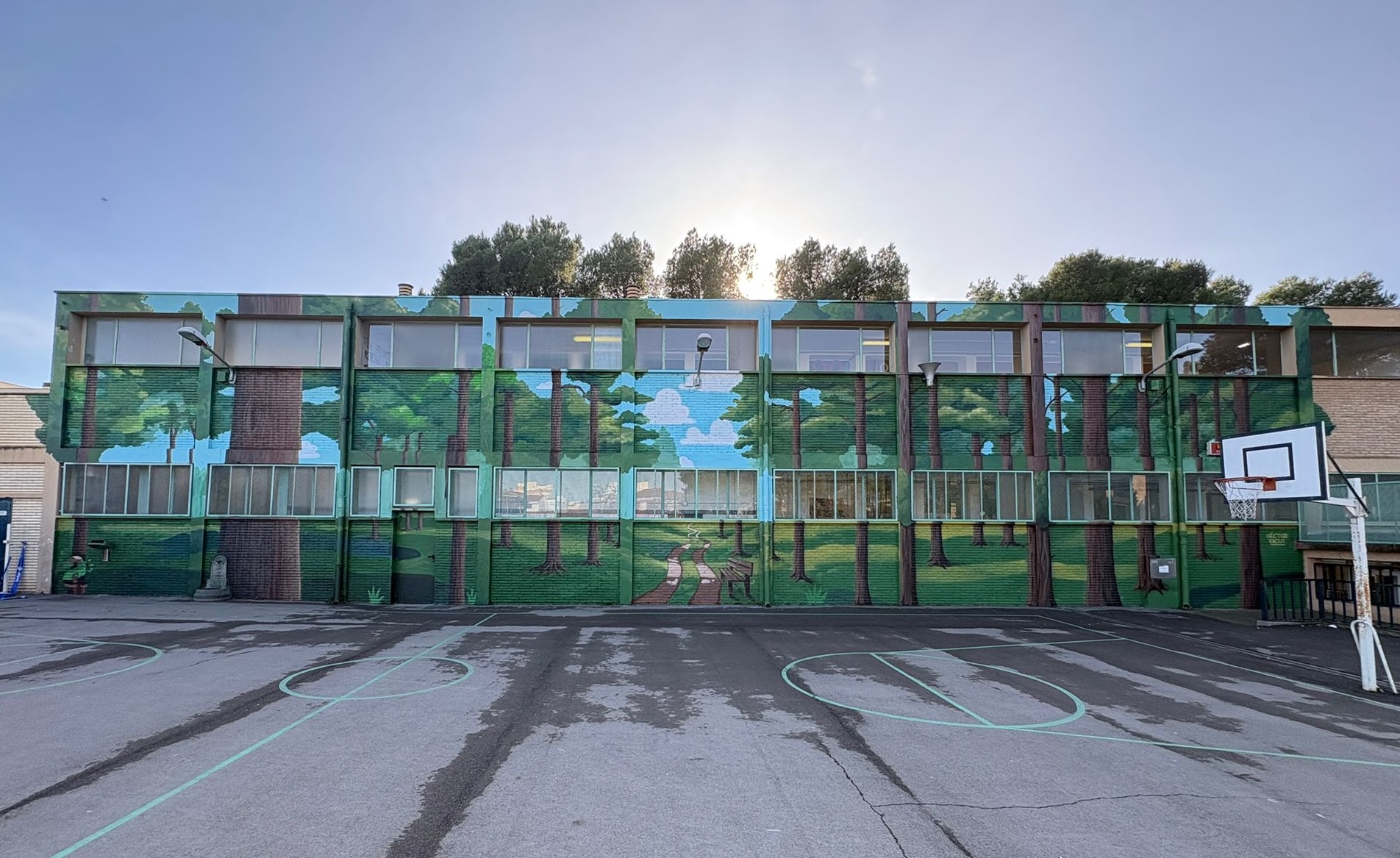
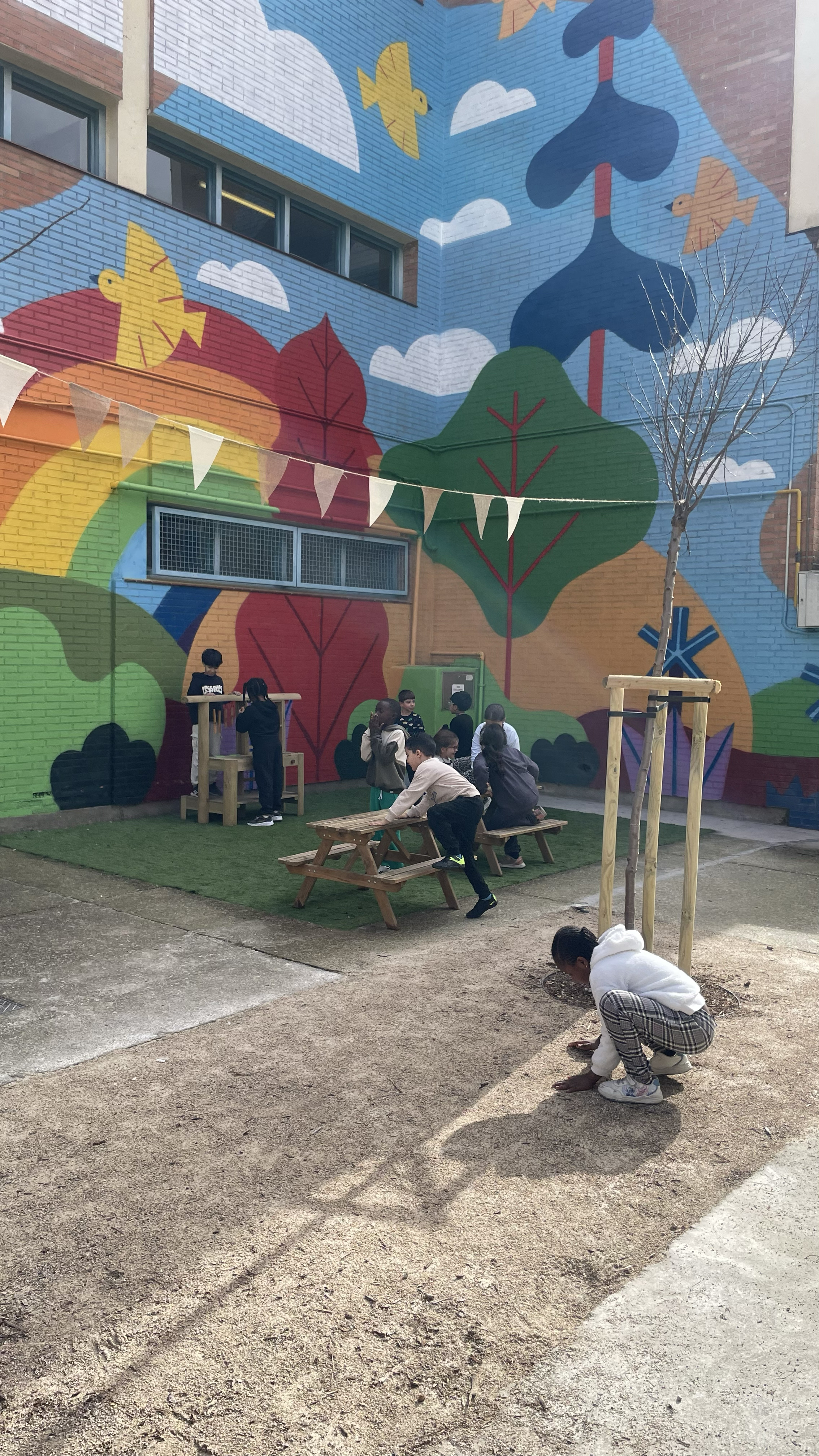
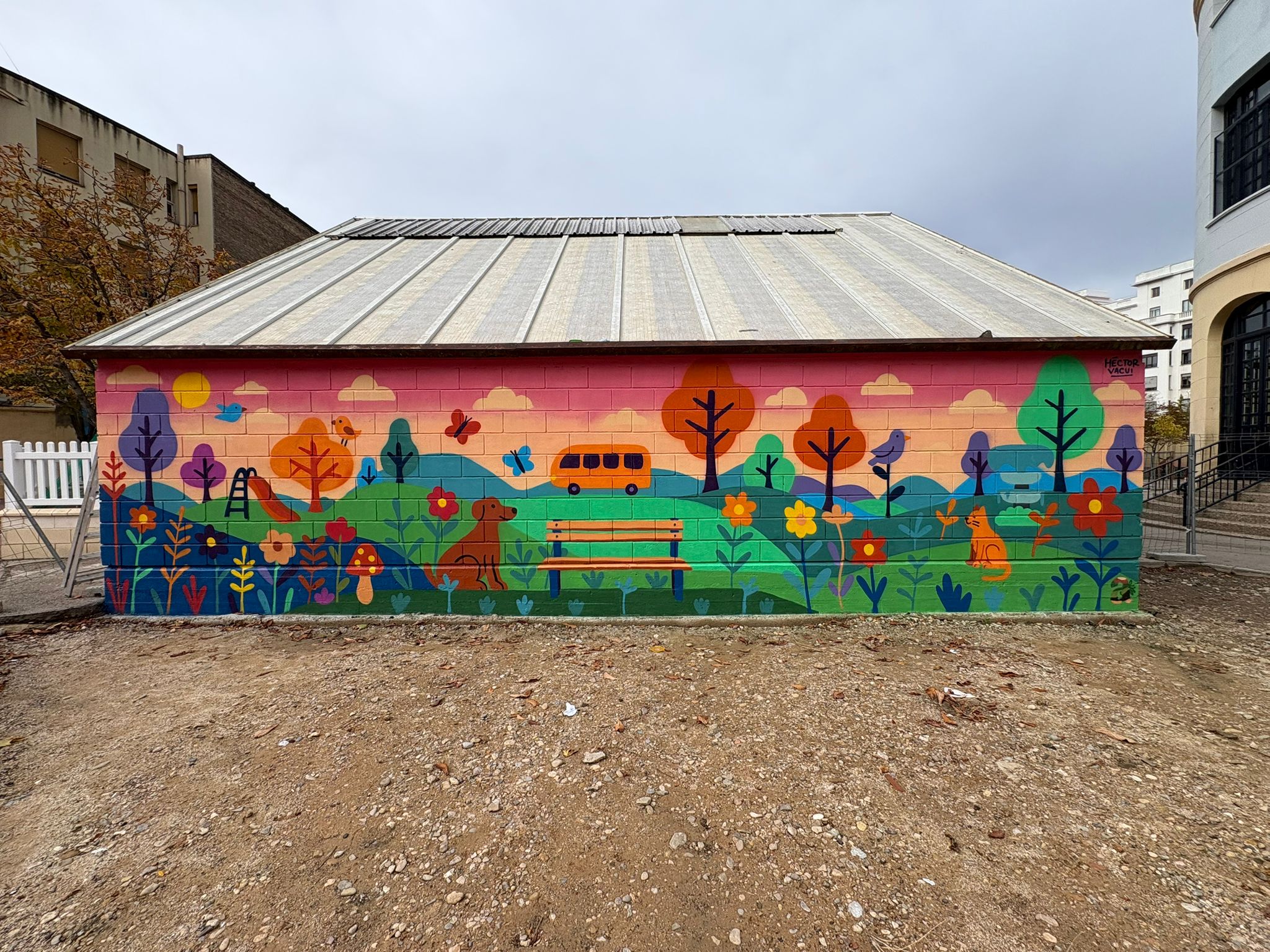
Culturally, the project strengthens belonging by involving the educational community in participatory co-design. This process transforms the schoolyard into a shared cultural asset. In its pursuit of beauty, it also includes a distinctive artistic element: pupils work with a professional artist to design a custom mural for their schoolyard. Each intervention reflects the school’s traditions, creating a renewed sense of pride and collective ownership.
Its exemplary character lies in combining aesthetics with climate adaptation and inclusion. By turning functional yards into meaningful, nature-based public spaces, the project embodies the NEB ambition to make the green transition beautiful, sustainable, and inclusive, offering a replicable model for cities across Europe.
Implementation is guided by design sensitivity and nature-based craftsmanship. The project integrates diverse vegetation, shaded areas, permeable pavements, and outdoor learning zones, creating visually harmonious and welcoming environments. The Climate Solutions Catalogue enables schools to select interventions that best fit their spaces and climatic conditions,”ensuring coherence with local culture, materials, and microclimates.
The project elevates the experience by offering shade, greenery, textures, scents, and sounds of nature. These elements mitigate heat, soften the visual landscape, and stimulate all five senses. Children and teachers gain new areas for rest, play, and learning, fostering emotional well-being and a profound connection with their surroundings.
Culturally, the project strengthens belonging by involving the educational community in participatory co-design. This process transforms the schoolyard into a shared cultural asset. In its pursuit of beauty, it also includes a distinctive artistic element: pupils work with a professional artist to design a custom mural for their schoolyard. Each intervention reflects the school’s traditions, creating a renewed sense of pride and collective ownership.
Its exemplary character lies in combining aesthetics with climate adaptation and inclusion. By turning functional yards into meaningful, nature-based public spaces, the project embodies the NEB ambition to make the green transition beautiful, sustainable, and inclusive, offering a replicable model for cities across Europe.
The “Adapt your schoolyard” project places inclusion at its core by ensuring all children—regardless of social, climatic, or educational vulnerability—gain access to healthier, welcoming environments. The initiative explicitly prioritizes centers with high heat incidence, minimal vegetation, and social vulnerability, ensuring equitable access to climate-resilient spaces for those who need them most.
Its inclusion objectives span three critical dimensions. Social inclusion is reinforced by selecting schools based on household income, child poverty rates, and students requiring specialized support. Spatial inclusion is addressed by transforming hard, inaccessible yards into green, shaded, and comfortable areas usable by all. Finally, governance inclusion is achieved through a deep participatory process involving teachers, students, families, and public institutions in shared decision-making.
Implementation relies on concrete instruments: co-design workshops, collaborative diagnosis, the Adapt your schoolyard Guides, and the Climate Solutions Catalogue. These tools help each school community imagine solutions that “best fit their spaces and climatic conditions.” Furthermore, the project established a multi-level governance framework through a formal protocol between the City Council and the Regional Government, enabling coordinated and transparent action across administrative levels.
Results demonstrate strengthened inclusion: vulnerable schools benefit first; students and families actively shape interventions; and outdoor spaces become more accessible and socially cohesive. The project expands environmental education, granting all children—not only those with more resources—access to nature-based learning. Its exemplary character lies in combining climate adaptation with social justice, offering a replicable model of inclusive urban transformation aligned with the NEB value of togetherness.
Its inclusion objectives span three critical dimensions. Social inclusion is reinforced by selecting schools based on household income, child poverty rates, and students requiring specialized support. Spatial inclusion is addressed by transforming hard, inaccessible yards into green, shaded, and comfortable areas usable by all. Finally, governance inclusion is achieved through a deep participatory process involving teachers, students, families, and public institutions in shared decision-making.
Implementation relies on concrete instruments: co-design workshops, collaborative diagnosis, the Adapt your schoolyard Guides, and the Climate Solutions Catalogue. These tools help each school community imagine solutions that “best fit their spaces and climatic conditions.” Furthermore, the project established a multi-level governance framework through a formal protocol between the City Council and the Regional Government, enabling coordinated and transparent action across administrative levels.
Results demonstrate strengthened inclusion: vulnerable schools benefit first; students and families actively shape interventions; and outdoor spaces become more accessible and socially cohesive. The project expands environmental education, granting all children—not only those with more resources—access to nature-based learning. Its exemplary character lies in combining climate adaptation with social justice, offering a replicable model of inclusive urban transformation aligned with the NEB value of togetherness.
The “Adapt your schoolyard” project is built on a deeply participatory approach that places the educational community at the center of decision-making. From the outset, the City Council involved teachers, students, families, and civil society organizations, recognizing that the community must actively participate in the design and implementation of interventions. This ensures that those who use the schoolyards daily actively shape the project’s technical and pedagogical priorities.
Participation occurs at every stage. During the initial phase, schools contribute their specific visions, especially in Modality A, where centers submit detailed proposals for the pedagogical use of spaces. In Modality B, participation focuses on identifying climatic vulnerabilities, ensuring the voices of disadvantaged communities are represented. Co-design workshops with teaching teams and parent associations help define nature-based solutions tailored to each school’s unique characteristics.
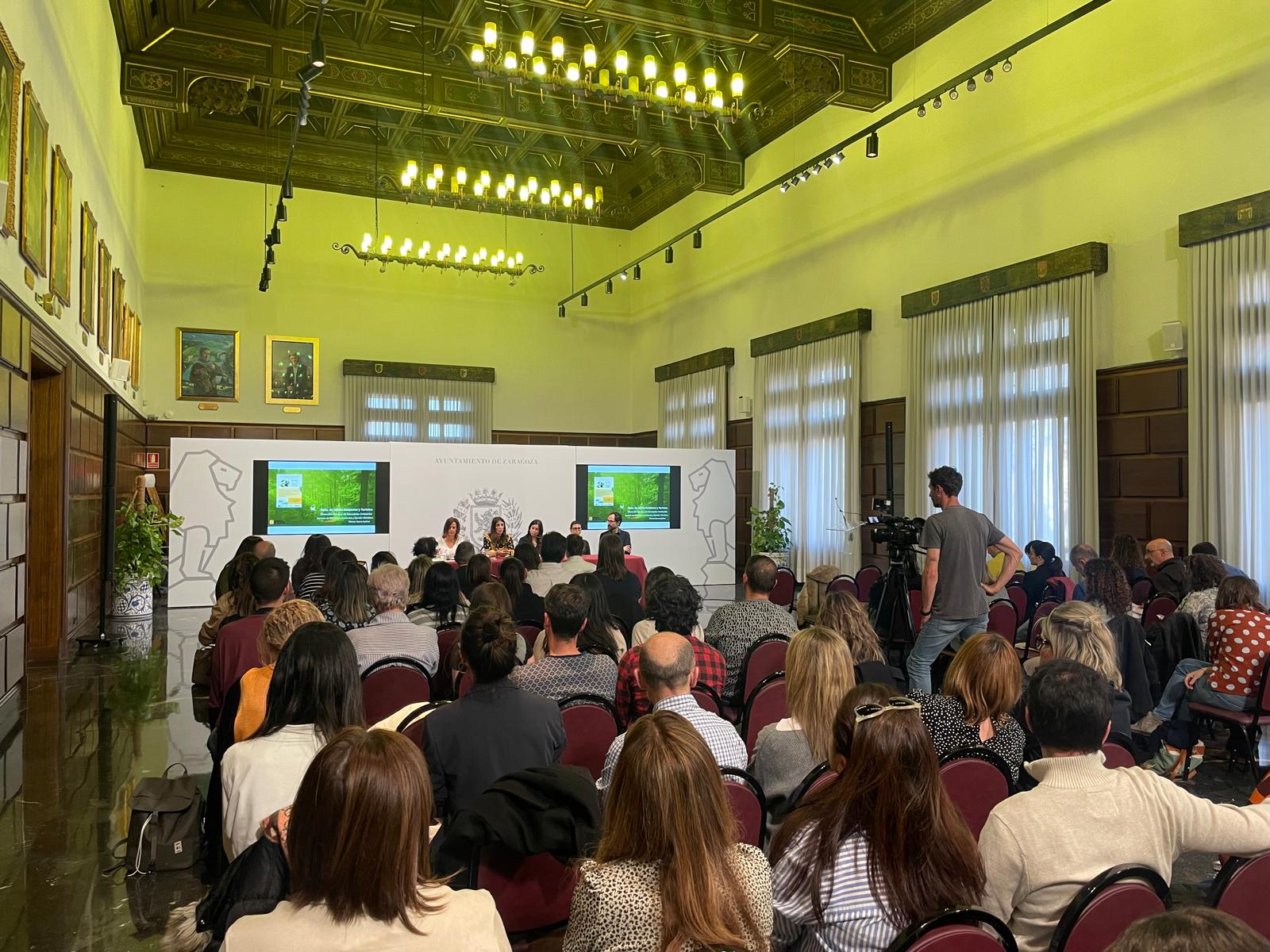
The process includes structured governance mechanisms. A multi-level working group—bringing together municipal technical teams, regional authorities, and community representatives—coordinates decisions and ensures transparency. The creation of the Climate Solutions Catalogue was itself participatory, developed with vital input from professionals and organizations through the Sectoral Council for the Environment.
This involvement directly impacts project quality. Schools influence the design of shaded areas, permeable pavements, and outdoor classrooms, ensuring interventions are functional and culturally meaningful. Their feedback also shaped critical improvements for 2025, such as adding Modality C for special education centers and refining vulnerability criteria. By giving communities real influence over outcomes, the project strengthens ownership and long-term sustainability, serving as an exemplary model of participatory governance aligned with NEB principles.
Participation occurs at every stage. During the initial phase, schools contribute their specific visions, especially in Modality A, where centers submit detailed proposals for the pedagogical use of spaces. In Modality B, participation focuses on identifying climatic vulnerabilities, ensuring the voices of disadvantaged communities are represented. Co-design workshops with teaching teams and parent associations help define nature-based solutions tailored to each school’s unique characteristics.
The process includes structured governance mechanisms. A multi-level working group—bringing together municipal technical teams, regional authorities, and community representatives—coordinates decisions and ensures transparency. The creation of the Climate Solutions Catalogue was itself participatory, developed with vital input from professionals and organizations through the Sectoral Council for the Environment.
This involvement directly impacts project quality. Schools influence the design of shaded areas, permeable pavements, and outdoor classrooms, ensuring interventions are functional and culturally meaningful. Their feedback also shaped critical improvements for 2025, such as adding Modality C for special education centers and refining vulnerability criteria. By giving communities real influence over outcomes, the project strengthens ownership and long-term sustainability, serving as an exemplary model of participatory governance aligned with NEB principles.
“Adapt your schoolyard” is a premier example of multilevel governance, effectively uniting local, regional, national, and European actors. At the local level, the Zaragoza City Council leads the initiative through its Department of Environment and Mobility, providing leadership, coordination, and funding. It also convenes the Sectoral Council for the Environment and technical working groups, which contributed to the co-creation of the Climate Solutions Catalogue. With the support of the NBS EduWORLD network, three comprehensive “Adapta tu Patio” guides were developed to assist educational communities in their renaturalization processes.
At the regional level, the Government of Aragón plays a key role as the owner of public school infrastructures. Through a formal cooperation protocol published in the Official Journal of Aragón, the regional Department of Education enables access to facilities, ensures alignment with educational policies, and provides the necessary legal certainty and institutional legitimacy for implementation.
National alignment is ensured through Zaragoza’s integration into Spain’s Urban Agenda and climate strategies. European engagement is reinforced by the city’s participation in the EU Mission Cities, the project’s selection by the European NBS EduWORLD network, and a Local Green Deal signed elaborated within the Intelligent Cities Challenge. These frameworks strengthen the project’s strategic direction and international visibility
Cooperation across levels was organized through shared planning and joint decision-making. Municipal and regional teams collaborated on school selection, vulnerability assessments, and monitoring, while families and civil society contributed local knowledge to ensure interventions matched real needs. This multilevel structure brought clear added value: political legitimacy, technical expertise, and the ability to scale the project from two pilots to a long-term program reaching up to 72 schools in the city
At the regional level, the Government of Aragón plays a key role as the owner of public school infrastructures. Through a formal cooperation protocol published in the Official Journal of Aragón, the regional Department of Education enables access to facilities, ensures alignment with educational policies, and provides the necessary legal certainty and institutional legitimacy for implementation.
National alignment is ensured through Zaragoza’s integration into Spain’s Urban Agenda and climate strategies. European engagement is reinforced by the city’s participation in the EU Mission Cities, the project’s selection by the European NBS EduWORLD network, and a Local Green Deal signed elaborated within the Intelligent Cities Challenge. These frameworks strengthen the project’s strategic direction and international visibility
Cooperation across levels was organized through shared planning and joint decision-making. Municipal and regional teams collaborated on school selection, vulnerability assessments, and monitoring, while families and civil society contributed local knowledge to ensure interventions matched real needs. This multilevel structure brought clear added value: political legitimacy, technical expertise, and the ability to scale the project from two pilots to a long-term program reaching up to 72 schools in the city
The “Adapt your schoolyard” project is inherently transdisciplinary, integrating environmental sciences, landscape architecture, engineering, pedagogy, art, and public administration. This diversity ensures interventions are technically sound, educationally meaningful, and socially accepted. As the project states, adapting schoolyards requires a multilevel approach where key actors co-design and prioritize interventions through a shared strategic vision.
Collaboration is organized through joint workshops and interdisciplinary working groups. The municipal technical team works alongside regional education authorities, environmental experts, architects, and the teaching community. The Climate Solutions Catalogue exemplifies this: developed within the Sectoral Council for the Environment, it merges knowledge from professionals, NGOs, and schools into a versatile tool for designing solutions adapted to each unique educational space.
In this framework, teachers and families contribute pedagogical perspectives, ensuring interventions support outdoor learning and well-being. Simultaneously, environmental scientists assess microclimates and soil conditions, while landscape specialists translate these insights into nature-based solutions like permeable pavements and biodiversity-enhancing plantings. Public administrators ensure regulatory alignment and coordinate complex implementation phases.
This interaction generates innovative, context-sensitive solutions that balance climate adaptation with community identity. The results are evident: cooler, functional schoolyards, stronger environmental awareness, and a replicable methodology that integrates technical expertise with lived experience. Its added value lies in breaking administrative silos to produce interventions that are environmentally effective and educationally transformative, fully aligned with the NEB ambition.
Collaboration is organized through joint workshops and interdisciplinary working groups. The municipal technical team works alongside regional education authorities, environmental experts, architects, and the teaching community. The Climate Solutions Catalogue exemplifies this: developed within the Sectoral Council for the Environment, it merges knowledge from professionals, NGOs, and schools into a versatile tool for designing solutions adapted to each unique educational space.
In this framework, teachers and families contribute pedagogical perspectives, ensuring interventions support outdoor learning and well-being. Simultaneously, environmental scientists assess microclimates and soil conditions, while landscape specialists translate these insights into nature-based solutions like permeable pavements and biodiversity-enhancing plantings. Public administrators ensure regulatory alignment and coordinate complex implementation phases.
This interaction generates innovative, context-sensitive solutions that balance climate adaptation with community identity. The results are evident: cooler, functional schoolyards, stronger environmental awareness, and a replicable methodology that integrates technical expertise with lived experience. Its added value lies in breaking administrative silos to produce interventions that are environmentally effective and educationally transformative, fully aligned with the NEB ambition.
"Adapt your schoolyard” is sustained by a public-sector business model designed for long-term continuity and scalability. Implementation is fully financed by Zaragoza City Council, which allocated €100,000 in 2024 for two initial interventions, 50,000 eachone, and established a multi-annual budget line to ensure ongoing expansion. The Regional Government of Aragón provides essential institutional support as the owner of school infrastructures, enabling implementation without additional costs for the centers
The project focuses on creating public value—climate adaptation, well-being, and educational benefits—rather than direct revenue. However, it generates significant indirect economic returns: reduced heat-related impacts, lower maintenance costs through nature-based solutions, and increased urban resilience. It creates opportunities for local green-economy actors, such as landscape firms, environmental educators, and maintenance services, strengthening the circular and proximity economy
The main costs involve the design, construction, and long-term maintenance of green areas. These are covered by the City Council through a stable pluriannual budget (2025–2028), scaling from 2 to at least 5 schoolyards per year. Schools contribute non-financial resources through co-design, maintenance support, and the integration of environmental education into their curriculum.
This model supports scalability by systematizing procedures, centralizing procurement, and utilizing the Climate Solutions Catalogue to streamline design and reduce costs. The formal cooperation protocol with the regional government ensures institutional stability and replicability
The project’s disruptive potential lies in reframing schoolyards as critical climate infrastructure, demonstrating how multilevel governance and community participation can drive systemic urban transformation. Its model can be replicated across cities seeking affordable, high‑impact climate adaptation strategies
The project focuses on creating public value—climate adaptation, well-being, and educational benefits—rather than direct revenue. However, it generates significant indirect economic returns: reduced heat-related impacts, lower maintenance costs through nature-based solutions, and increased urban resilience. It creates opportunities for local green-economy actors, such as landscape firms, environmental educators, and maintenance services, strengthening the circular and proximity economy
The main costs involve the design, construction, and long-term maintenance of green areas. These are covered by the City Council through a stable pluriannual budget (2025–2028), scaling from 2 to at least 5 schoolyards per year. Schools contribute non-financial resources through co-design, maintenance support, and the integration of environmental education into their curriculum.
This model supports scalability by systematizing procedures, centralizing procurement, and utilizing the Climate Solutions Catalogue to streamline design and reduce costs. The formal cooperation protocol with the regional government ensures institutional stability and replicability
The project’s disruptive potential lies in reframing schoolyards as critical climate infrastructure, demonstrating how multilevel governance and community participation can drive systemic urban transformation. Its model can be replicated across cities seeking affordable, high‑impact climate adaptation strategies
The “Adapt your schoolyard” project offers a highly replicable model for climate adaptation in educational environments. Its strength lies in a methodology easily transferred to other schools, cities, and contexts. The initiative demonstrates how nature-based solutions, participatory design, and multilevel governance can transform everyday spaces, boasting great potential for replication thanks to its inherent flexibility.
Several elements are directly transferable. The Climate Solutions Catalogue provides a practical tool that helps schools design specific solutions fitting their unique spatial and climatic conditions. Three “Adapta tu Patio” guides have been produced to assist educational communities in Zaragoza and elsewhere that are about to begin or are currently in the process of renaturalizing their schoolyards.
The vulnerability-based selection criteria—heat exposure, lack of vegetation, and social fragility—can be applied in any urban context to prioritize those most in need. The co-design process with teachers, students, and families is also simple to reproduce, ensuring strong community ownership. Successful replication requires strategic partnerships, particularly between local governments, regional education authorities, and environmental experts. The Zaragoza model proves that a formal cooperation protocol and interdisciplinary teams are essential to scaling the approach.
While specific elements like plant species must be adapted to local microclimates, the core methodology—diagnosis, co-design, and nature-based interventions—remains universally applicable. The project serves as a benchmark because it systematizes procedures and embeds climate adaptation into everyday school life. Its scalability is already proven: Zaragoza is expanding from two pilots to a program reaching up to 72 schools, inspiring cities across Europe seeking affordable, community-driven climate solutions.
Several elements are directly transferable. The Climate Solutions Catalogue provides a practical tool that helps schools design specific solutions fitting their unique spatial and climatic conditions. Three “Adapta tu Patio” guides have been produced to assist educational communities in Zaragoza and elsewhere that are about to begin or are currently in the process of renaturalizing their schoolyards.
The vulnerability-based selection criteria—heat exposure, lack of vegetation, and social fragility—can be applied in any urban context to prioritize those most in need. The co-design process with teachers, students, and families is also simple to reproduce, ensuring strong community ownership. Successful replication requires strategic partnerships, particularly between local governments, regional education authorities, and environmental experts. The Zaragoza model proves that a formal cooperation protocol and interdisciplinary teams are essential to scaling the approach.
While specific elements like plant species must be adapted to local microclimates, the core methodology—diagnosis, co-design, and nature-based interventions—remains universally applicable. The project serves as a benchmark because it systematizes procedures and embeds climate adaptation into everyday school life. Its scalability is already proven: Zaragoza is expanding from two pilots to a program reaching up to 72 schools, inspiring cities across Europe seeking affordable, community-driven climate solutions.