Enhancing Circularity, Sustainability, and Innovation
Eneri
Eneri: the educating teddy bear made from a regenerated medical grown
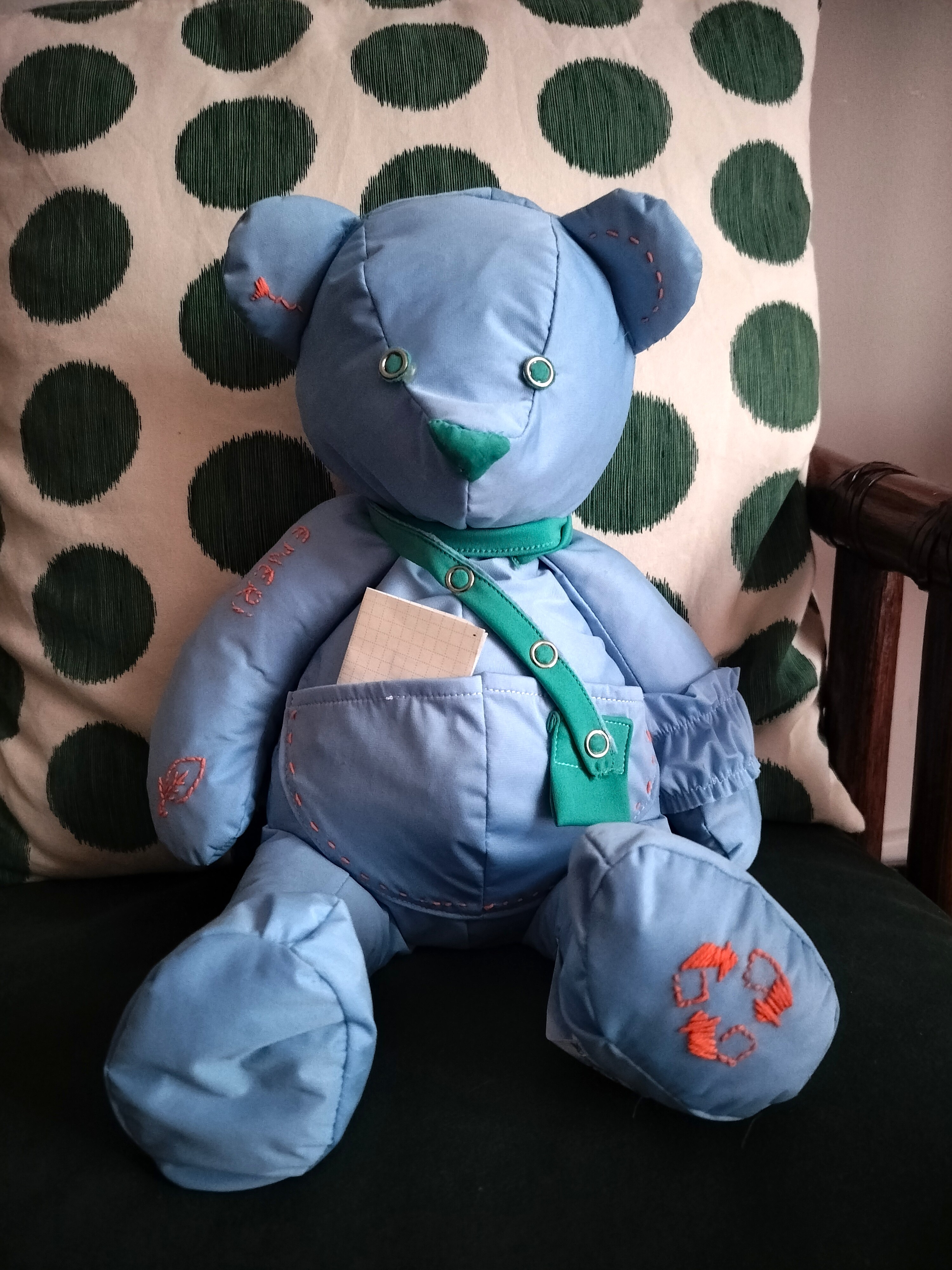
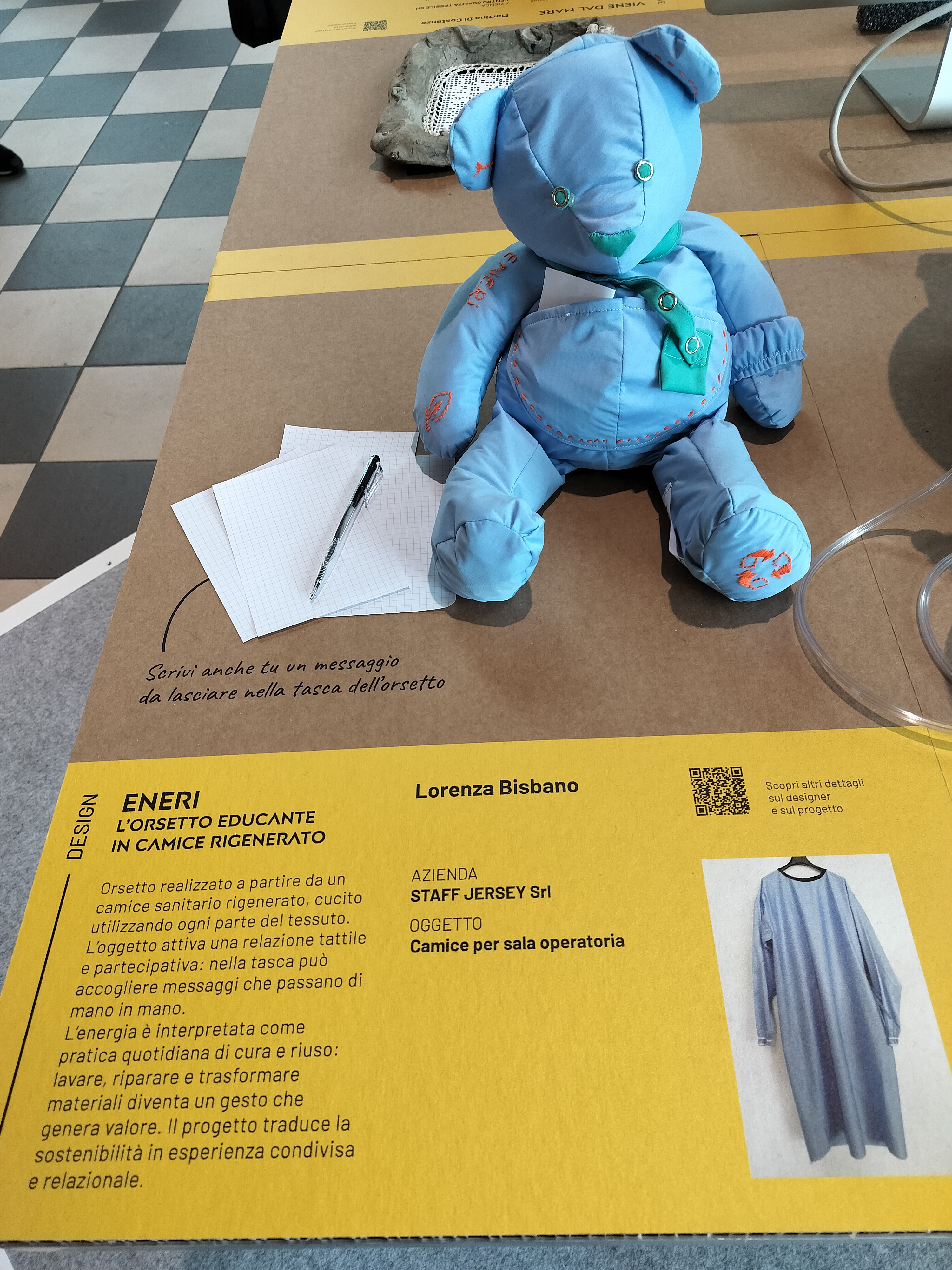
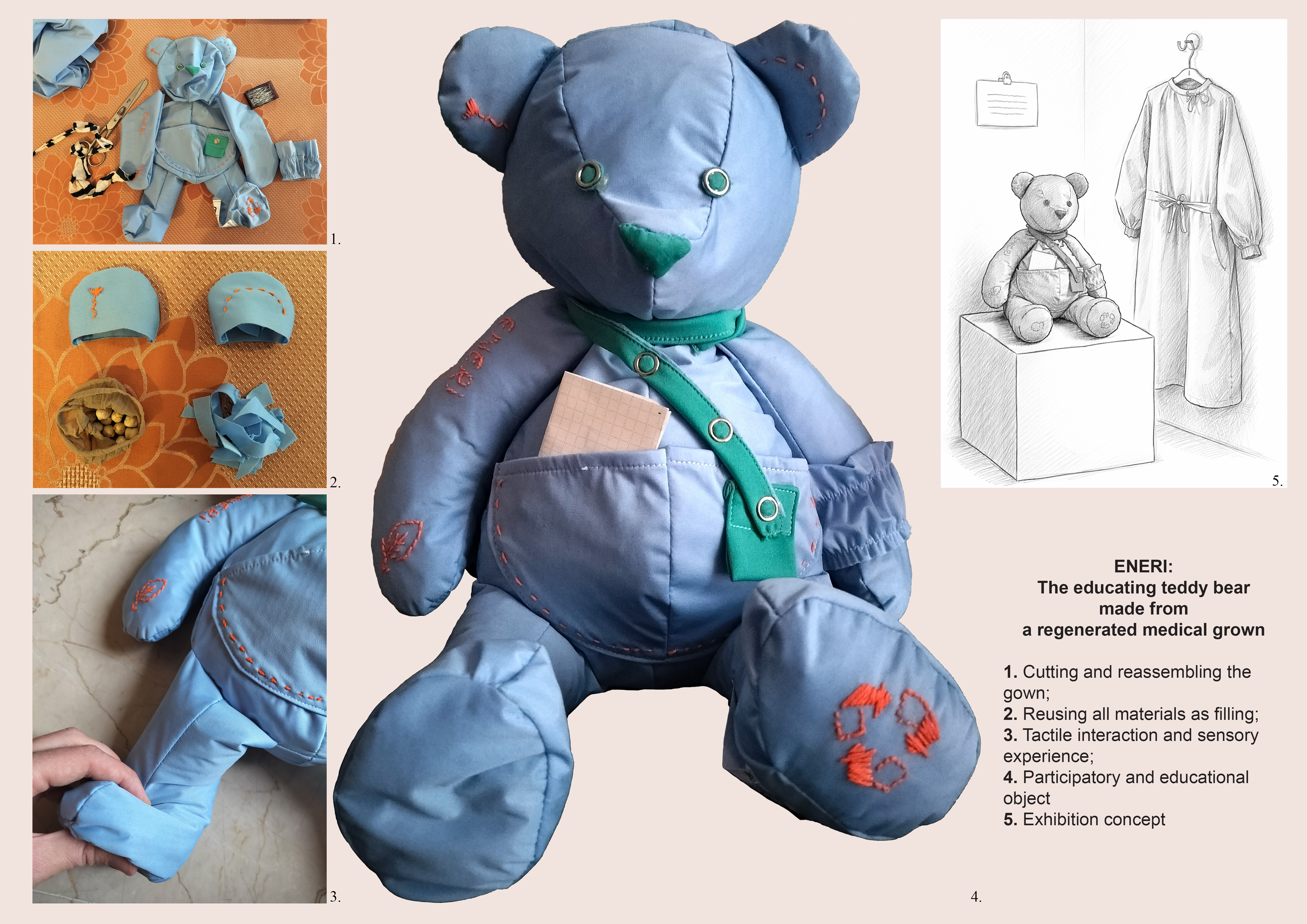
Eneri takes the form of a teddy bear, handmade using the entire fabric of a regenerated gown. A symbol of care for the human body is transformed into a relational device. The project shows how textiles gain a second life through creative reuse and participatory design. Eneri activates participation through a simple mechanism, is replicable and can be adapted to different contexts. A small pocket invites visitors to leave messages on sustainability, care and energy.
Italy
Regional
Emilia-Romagna, Italy
Mainly urban
It involves other types of transformations (soft investment)
Yes
2026-01-20
No
No
No
Individual
Eneri is a small educational design object created from a regenerated surgical gown. The project transforms a symbol of care for the human body into a relational device that gently invites people to reflect on care for the environment. Eneri takes the form of a soft teddy bear handmade using the entire fabric of the gown. The material that originally served a medical function is repurposed into an object designed to stimulate reflection on energy, sustainability and everyday behaviours.
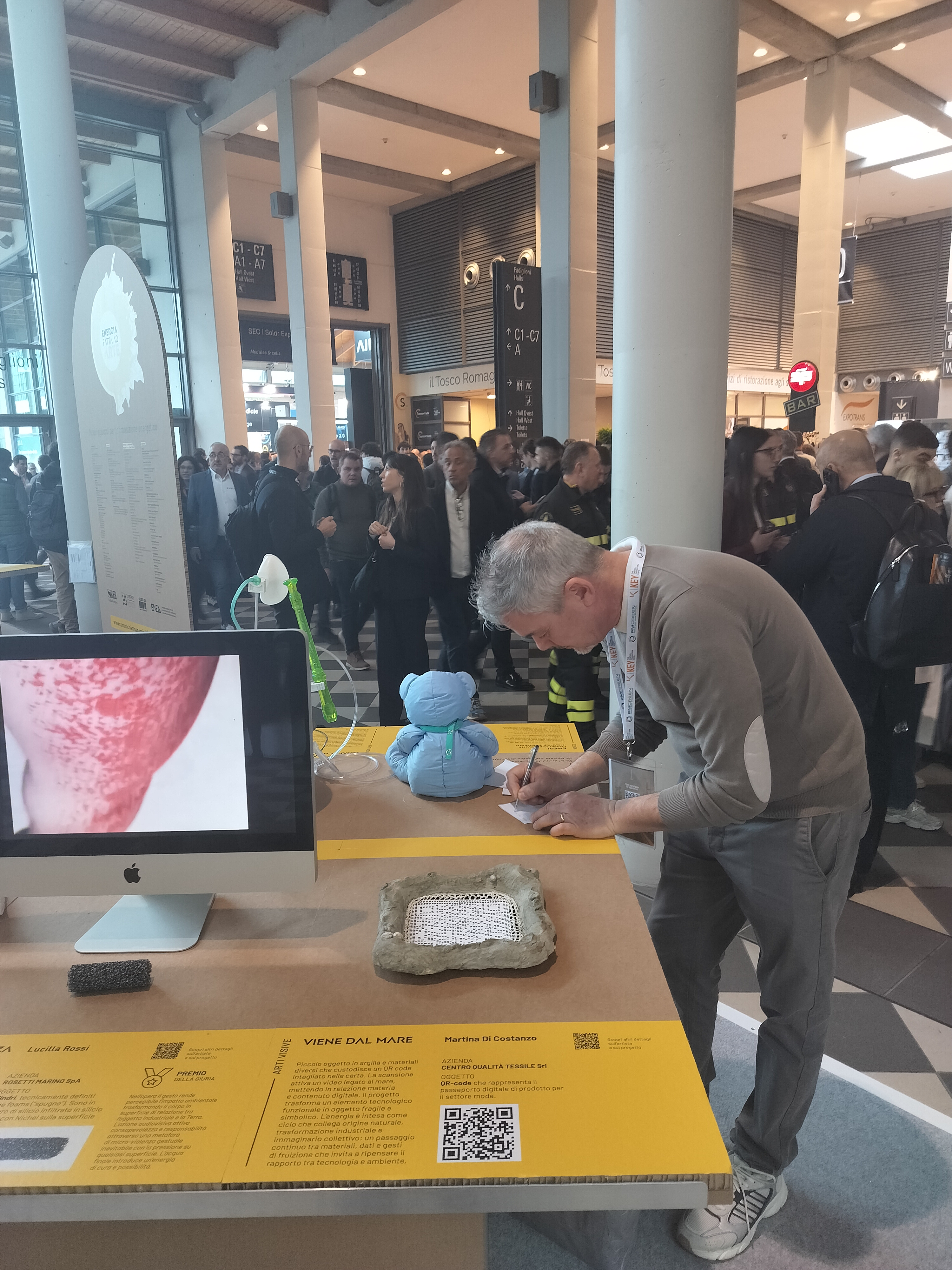
The project was developed within the cultural initiative “Energia Fatta ad Arte” (“Energy Made for Art”), promoted by the Emilia-Romagna (Italian Region) and ENEA (National Agency for New Technologies, Energy and Sustainable Economic Development) to explore innovative ways of communicating the energy transition through art and design. The project was selected among the finalist projects and exhibited in public events “Arte Fiera” (February 6-8, 2026) in Bologna Expo Centre, and “KEY, The Energy Transition Expo” (March 4-6 2026) in Rimini Expo Centre.
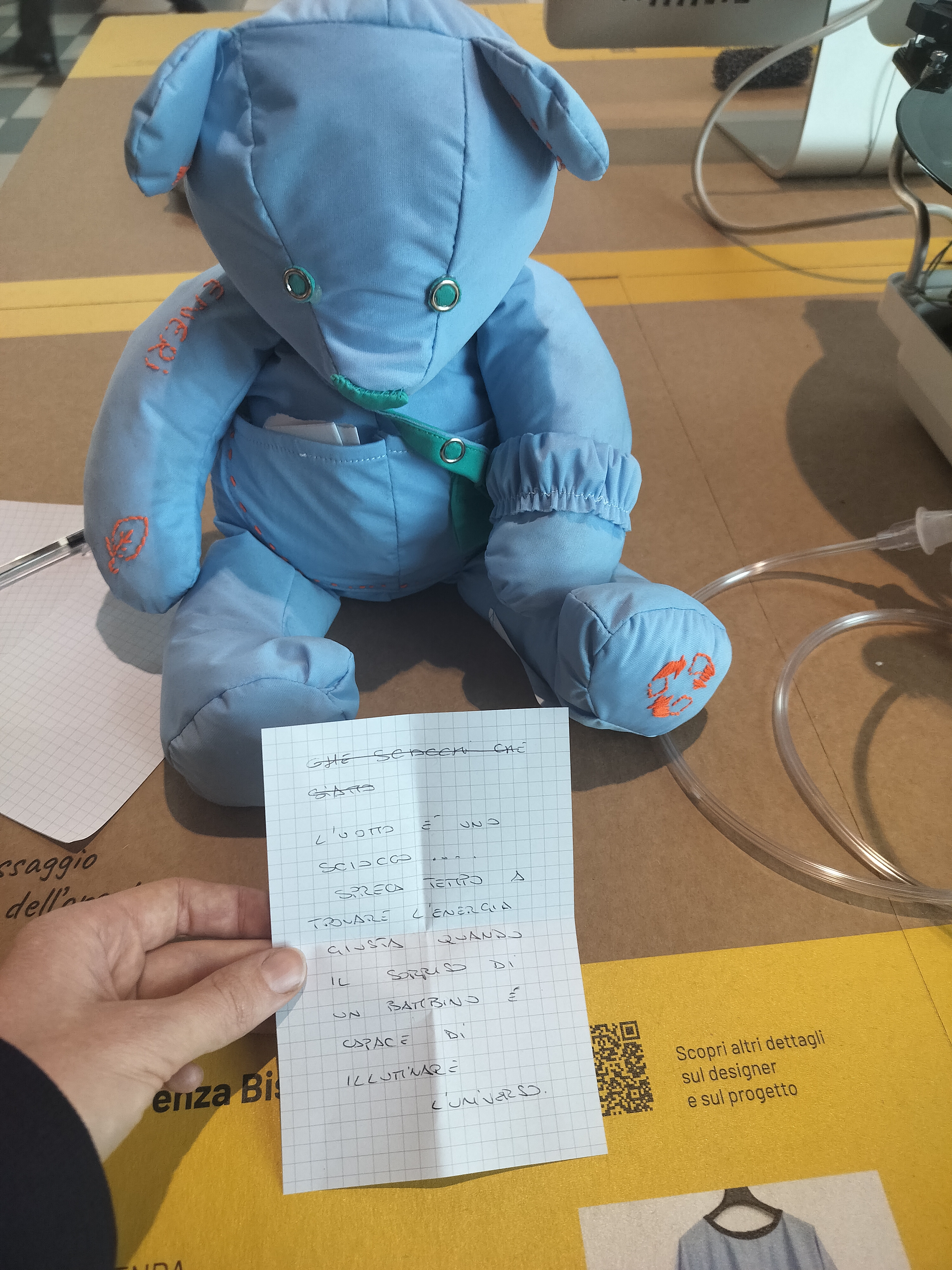
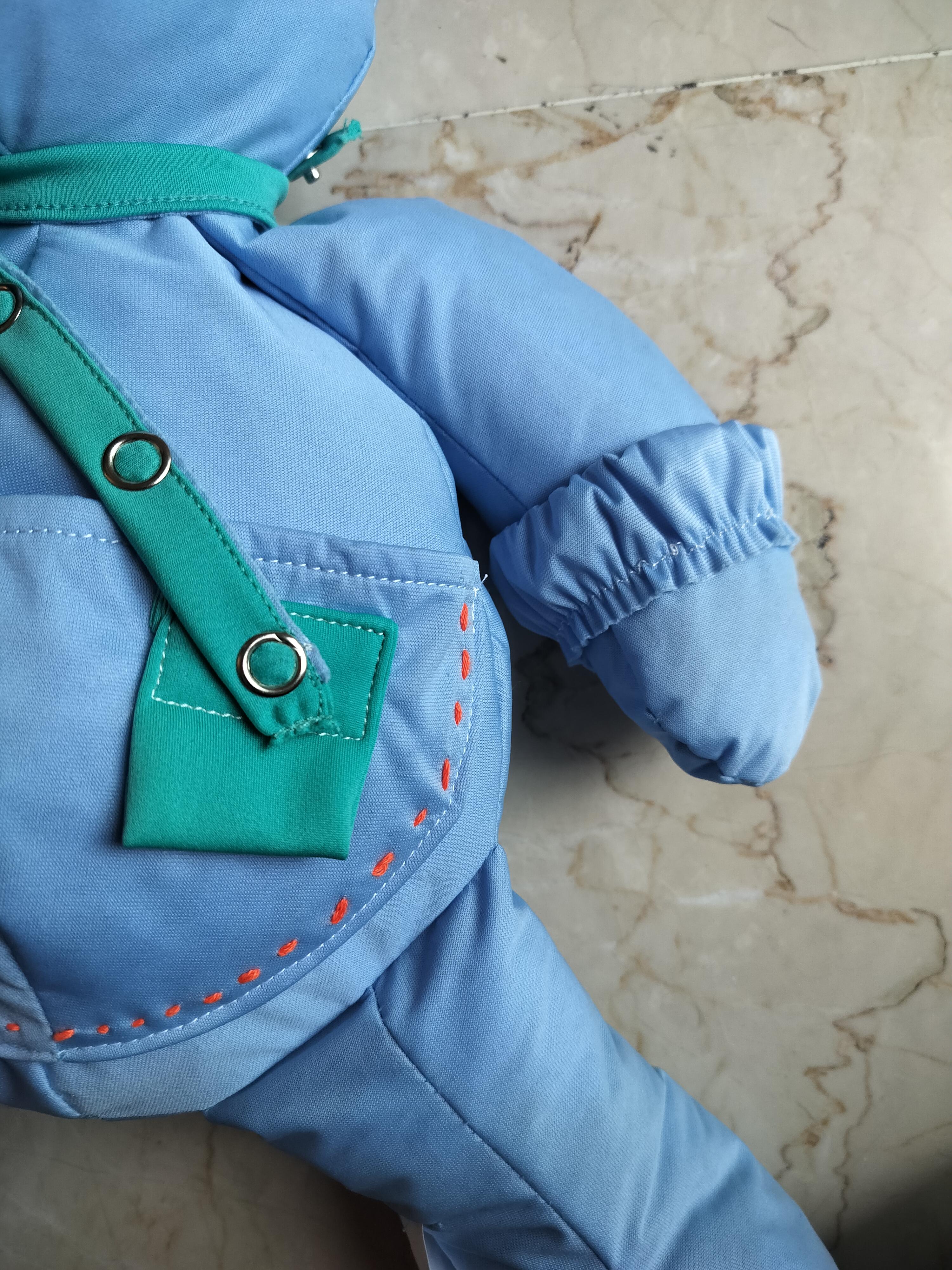
The project activates participation through a simple relational mechanism. Eneri has a small pocket on its belly where visitors are invited to leave written messages related to sustainability, care and energy. During the exhibitions the pocket is gradually filled with messages, reflections and encouragements written by visitors. Through this simple gesture, the object becomes a communication and relational medium.
Eneri demonstrates how design can translate complex topics such as the ecological transition into accessible and emotional experiences. By combining reuse, craftsmanship and participation, the project creates a small but meaningful space for dialogue between people, materials and environmental awareness.
The project is conceived as a replicable participatory format that can be adapted to different contexts such as schools, museums and community spaces, fostering dialogue on sustainability across diverse audiences.
Eneri was born within the cultural initiative “Energia Fatta ad Arte” to explore innovative ways of communicating the energy transition through art and design. The intention was to explore how everyday objects can communicate the concept of energy in a more accessible way. The project started from a regenerated surgical gown provided by the Italian textile company Staff Jersey. Instead of using the material only as a technical example of circular production, the idea was to transform it into an object capable of creating emotional engagement and reflection.
The gown was cut out according to a pattern and reassembled through carefully hand-sewn seams or with a sewing machine. Most of the teddy bear is stuffed with scrubs that were not used for the pattern or other details. In this way 100% of the gown was used for the creation of Eneri: one gown corresponds to an educational teddy bear, without waste. This process highlights the value of care, time and material awareness in contrast with industrial production.
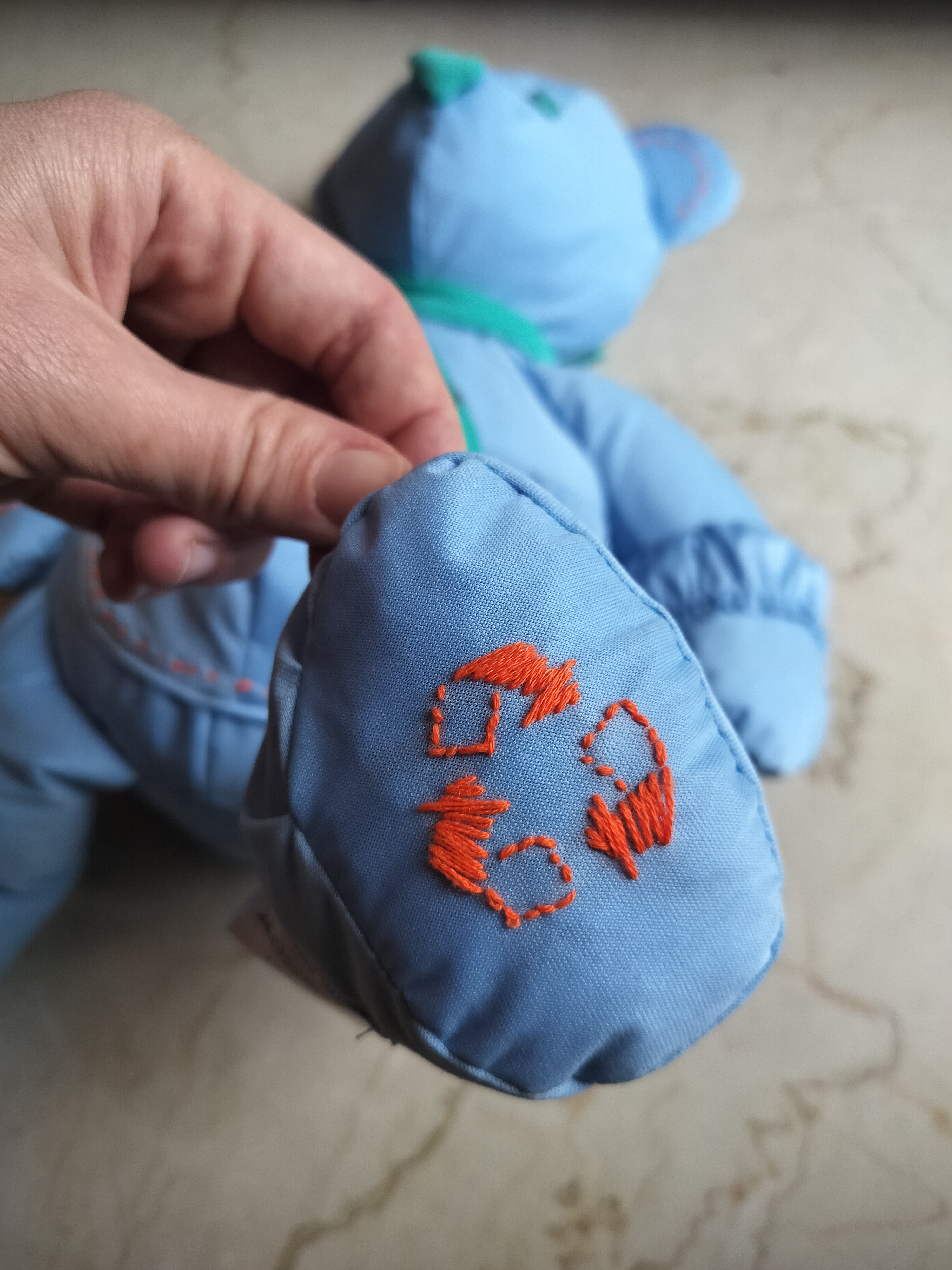
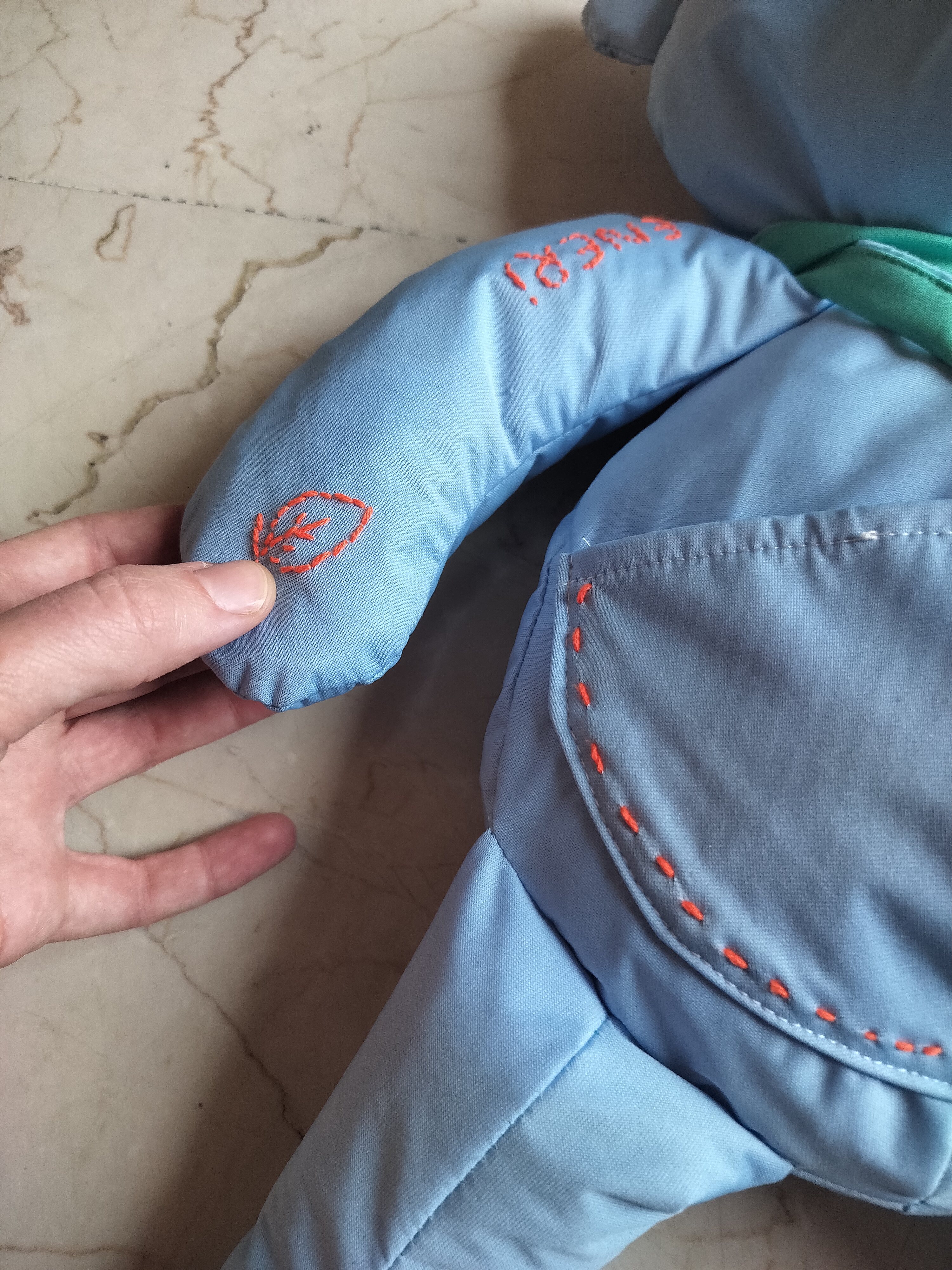
All the details on the bear's body come from the gown details, cut out and reassembled to create Eneri's neutral yet empathetic expression and accessories. The eyes are two buttons and the nose is a cutout of the gown closure. The teddy bear also has a necklace and a bracelet, recovered from the collar and cuff of the gown respectively. The pocket is retrieved from a closing detail of the gown. Some parts of the body have been decorated with hand embroidery made with a contrasting orange embroidery thread and represent symbols that recall care and energy.
During events where it was exhibited to the public, the installation invited visitors to interact directly with the object by writing short messages and placing them inside the teddy bear’s pocket. The participation of visitors became a central part of the project. The messages collected during the exhibitions turned the object into a shared narrative about sustainability, responsibility and care.
circular design
participatory design
sustainability education
material reuse
relational design
Eneri addresses sustainability by transforming a technical industrial material into a narrative and educational design object. The teddy bear is made from a regenerated surgical gown produced through circular textile processes. The entire material was reused: the fabric forms the external structure of the object while the remaining pieces were used as internal filling, avoiding waste.
The project highlights the concept of embedded energy contained in materials and products.
Instead of presenting this idea through technical data, Eneri communicates it through transformation and storytelling. By repurposing a medical textile into a symbolic object of care, the project makes the environmental value of reuse tangible and emotionally understandable.
Eneri also promotes behavioural sustainability. Through the invitation to write and exchange messages about sustainability, visitors are encouraged to reflect on their own daily actions and responsibilities.
In this way the project connects material circularity with cultural change, showing how design can support the ecological transition not only through technology but also through awareness and collective reflection.
Eneri contributes to the aesthetic dimension of sustainability by transforming an industrial material into an object that is soft, tactile and emotionally engaging. The teddy bear form is intentionally simple and familiar. This recognizable shape lowers barriers and invites people to approach the object with curiosity and affection. The handmade quality of the object creates a sense of warmth and authenticity that contrasts with the technical origin of the material.
Details such as hand embroidery, textures and small accessories create a tactile experience that encourages visitors to touch and explore the object. This sensory dimension plays an important role in making the message accessible.
The aesthetic language of Eneri is based on gentleness rather than instruction. Instead of explaining sustainability through data or technology, the project creates a small poetic space where people can pause, interact and reflect. Through this approach the project contributes to making sustainability visible and emotionally meaningful in everyday life.
Eneri promotes inclusion by creating an accessible and participatory experience that does not require specific knowledge or skills. The interaction mechanism is intentionally simple: visitors are invited to write a short message in any language or using symbols and place it inside the teddy bear’s pocket. This gesture can be performed by people of different ages, backgrounds and levels of familiarity with sustainability topics.
The use of a soft and familiar object encourages spontaneous interaction and reduces the distance that people sometimes feel toward environmental issues. Because the project is based on participation rather than instruction, each visitor can interpret the experience in their own way. The messages collected become a collective narrative where different perspectives coexist.
Those who encounter the bear are invited to extract a message, read it, return it, or replace it with a personal thought related to a sustainable daily gesture. In this way the object transforms over time into a collective archive of reflections and actions. Eneri therefore creates a small inclusive platform for dialogue, where sustainability is approached not as a technical subject but as a shared cultural responsibility.
Participation is a central element of the project. During exhibitions the public is invited to interact with the installation by writing messages related to sustainability, care and energy. These messages are then placed inside the teddy bear’s pocket.
This simple gesture transforms visitors from passive observers into active contributors. The object becomes a living archive of thoughts, questions and commitments written by different people. The participatory dimension also allows the project to evolve over time. Each new exhibition adds new voices and perspectives, creating a growing collective narrative. The interaction encourages reflection not through instruction but through personal engagement.
This simple gesture transforms visitors from passive observers into active contributors. The object becomes a living archive of thoughts, questions and commitments written by different people. The participatory dimension also allows the project to evolve over time. Each new exhibition adds new voices and perspectives, creating a growing collective narrative. The interaction encourages reflection not through instruction but through personal engagement.
Eneri was developed through the collaboration of actors operating at different levels.
The project originated within the cultural initiative “Energia Fatta ad Arte” (“Energy Made for Art”), promoted by the Emilia-Romagna (Italian Region) and ENEA (National Agency for New Technologies, Energy and Sustainable Economic Development).
Industrial partners also contributed to the project by providing materials used in the design process. In this case the regenerated surgical gown was supplied by the Italian textile company Staff Jersey.
The exhibitions where the project was presented (until now: “Arte Fiera” in Bologna Expo Centre and “KEY – The Energy Transition Expo” in Rimini Expo Centre) involved cultural institutions, design professionals and the general public.
This multilevel collaboration created a dialogue between public institutions, industry, designers and citizens, demonstrating how cultural initiatives can support the broader goals of the energy transition.
Eneri combines different fields of knowledge.The project integrates: design; craft practices such as sewing and embroidery; sustainability and circular economy; education and behavioural design; participatory art practices.
This combination allows the project to translate complex environmental topics into a tangible and accessible experience. By merging design thinking with artistic and educational approaches, Eneri demonstrates how transdisciplinary collaboration can support cultural change in relation to sustainability.
This combination allows the project to translate complex environmental topics into a tangible and accessible experience. By merging design thinking with artistic and educational approaches, Eneri demonstrates how transdisciplinary collaboration can support cultural change in relation to sustainability.
Eneri functions as a cultural and educational project that can be implemented in different contexts.
The project can be presented as a participatory installation in exhibitions, festivals and cultural institutions. It can also be developed through educational workshops addressing sustainability, circular design and material reuse.
These activities can be supported through cultural programs, institutional partnerships, exhibition fees and educational workshop formats. The simplicity of the object and its methodology makes the project adaptable to different scales and budgets.
The project can be reproduced in different contexts using locally available materials or reused textiles. The core methodology – transforming a material into a symbolic object and activating participation through written messages – can be adapted to various cultural or educational settings.
Possible applications include: schools and universities; museums and cultural institutions; design festivals; community centers; environmental education programs.
The participatory mechanism and the simplicity of the object make it easy to replicate while allowing each context to generate its own collective narrative.