Kulturvilla with culture/energy sharing
Kritzinger Kulturvilla in Droyßig as a basis for extended culture and energy sharing
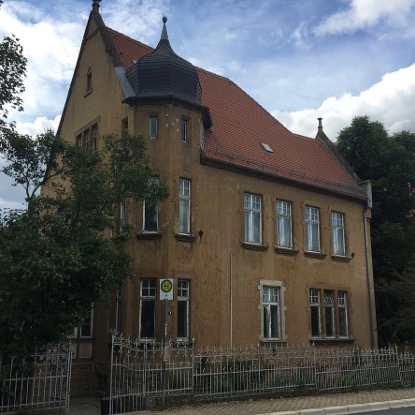
The listed Art Nouveau villa is to be preserved as one of the most beautiful Droyßiger buildings through meaningful use as a cultural villa. It will be in the areas of cultural renewal, educational promotion and sustainability in ruraI areas. t is not only intended to enrich social cohesion and cultural life, but also to increase rural attractiveness and serve as a flagship project for sustainable construction and living that addresses the pressing social and ecological challenges of our time.
Germany
Fürst-Otto-Victor-Stiftung-Droyßig
Zeitzer Straße 3
D-06722 Droyßig
Zeitzer Straße 3
D-06722 Droyßig
Completed
Yes
Yes
Yes
No
No
15084115: Droyßig (DE)
The listed Art Nouveau villa is to be preserved as one of the most beautiful Droyßiger buildings through meaningful use as a cultural villa. The mission of sustainability is a guiding principle both in the renovation and in the use of content. As a place of sustainability education and joint cultural creation, the Kritzinger Villa is intended to provide answers to the challenges of the 21st century: On the threat of all life on our planet and response to the loneliness and instrumentalization of the individual through unreflective consumption of digital offers. The maintenance and enhancement of the cultural and community experience is not only the subject of the concept of use, but has already been implemented in the participation of interested parties and target groups in the development of the concept of use in an one-day initial citizens' workshop and further working group consultations, in which students of the two schools, representatives of the Droyßiger associations, representatives of the municipality and interested citizens contributed their needs and ideas. In a working group formed from the workshop, the final concept of use was formulated:
The Kritzinger Villa as a cultural villa takes up the existing foundation and association initiatives in the village and strengthens the attractiveness of this rural area in the sense of the structural change of the region to be completed.
With its various types of use, the Kulturvilla becomes a transdisciplinary place of correspondence of the region and, in the sense of the Bauhaus, where design and aesthetics are also thought of socially. Young people will support older people in IT use. A readig and learning culture will be cultivated across generations.
Wilhelm Kritzinger was the poet of the well-known Droyßiger Christmas song: Süßer die Glocken nie klingen". According to the will of the village community, the cultural villa should give this cultural Droyßiger heritage a permanent place.
Joint local development of a use concept
Intergenerational reading,learning and music culture
Intergenerational IT education
Exemplary sustainable renovation
Users as ambassadors for sustainable heating systems
The claim of sustainability is the guiding principle both in the structural renovation and in the concept of use. The new energy supply of the building to be installed must be implemented with the highest possible energy efficiency. A prospective climate-neutral energy supply with renewable energy is to be achieved by involving the entire property and, moreover, by embedding the property in a municipal heat planning.
With LED lighting and capillary ceiling heating, energy consumption will already be reduced by about 65% compared to the previous equipment. In the library area, the possibility of using infrared heated reading tables is planned. Old but solid components of the original stock such as box windows, oak parquet floors, doors, stairs and stair railings are being refurbished. For this reason, considerations of underfloor heating were discarded. Natural materials (fibre/claw) are to be used for interior renovation/insulation.
On the other hand, the young people are involved in the sustainable renovation process through a "school construction hut" and both these and the later users are trained to become ambassadors of sustainable renovation and construction. New heating equipment parts are kept visible undisguised and explicitly explained to the guests and users of the villa in their technical functioning and sustainability effect on display panels.
With a repair cafe, the extension of the library by a "loan library of things" and as a location for sustainability training in workshops and lectures, the cultural villa will also be a location for sustainability care.
The renovation and energy-related experiences in this listed building can be fully transferred to the entire school complex with its classic high rooms, exemplary for many "Gründerzeit" school buildings in Germany and Central Europe. The concept development and renovation participation is also exemplary for the general participation of students in construction questions of their school.
The Kritzinger Villa, an architectural gem in Droyßig, is not only under monument protection, but also significantly shapes the townscape, especially on Wilhelm-Kritzinger-Straße. Its lively facade, characterized by bay windows, turrets and an inviting winter garden, symbolizes the combination of tradition and future use. The internal enhancement through the targeted use of characteristic spaces such as the transformation of the conservatory into a reading room underlines the aesthetic and functional transformation. The central location of the building between the school and the nearby retirement home promotes cross-generational use. Preserved elements such as parquet floors and box windows contribute to the authentic atmosphere. The historical motto above the entrance of the villa "In neccessariis firmitas, in dubiis libertas, in omnibus caritas" (in fundamental questions of firmness, in doubt freedom, in love towards all) is also in the 21st century. Century as principles of successful community for cultural coexistence in the village community and should be revived in new splendor.
The planned cultural activities, such as literature (writing workshop and recitation workshops for children in the library), visual arts (e.g. painting room after Arno Stern and small pottery courses of the VHS) and musical ensemble rehearsals and singing circles, should reflect and promote the aesthetic values of the building.
The integration of a modern, monument-compliant outdoor elevator combines accessibility with aesthetic standards, which underlines the combination of aesthetics and functionality.
The demographic decline will create empty spaces in beautiful old schools in the future. These can be supplied to the seniors of society with at the same time productive meeting spaces between generations with short distances in an aesthetically demanding environment.
The Kritzinger Villa as a cultural villa has to overcome
the barriers in the external access and the internal use by stairs. This access barrier can be removed by an outdoor elevator that can be approved under monument law. The villa itself is accessible from Kritzinger Straße and also from the school park without steps. With the placement of an outdoor elevator on the northwest corner of the villa, which is not visible from the street, the external appearance of the villa is only slightly affected.
On the other hand, there is a certain invisible barrier between families far from education and classical cultural institutions. This barrier is used with the so-called Mentoring project of the foundation with the local primary school in the Kritzinger Villa to the extent that the library of the Kritzinger Villa should serve as a work and play place for the learning and reading tandem of the mentoring project. Likewise, the child labor in the library will open the villa and its possibilities of use to a wider audience through the cultural association as a care offer in the late afternoon, and the cultural association, which is strongly focused on children's events, will also use the villa with its association offers and children's theater.
Even if the nearby senior residence has its own social rooms, the Kritzinger Villa is located directly on the way of the seniors when they go shopping at the local supermarket, and invites you to cross-generational dialogue. Especially the interest of seniors in IT education and IT practice represents a meeting opportunity between the generations.
The foundation's mentor project shows how children from parents' homes far from education can connect to the primary school learning group with extremely few resources.
A growing number of both seniors and educationally distant parental homes is a Europe-wide phenomenon that the concept of the cultural villa wants to counteract in an effective and exemplary way.
The impulse to the cultural villa came from the school community in order to network the rather regional school community more closely with the village cultural life in Droyßig.
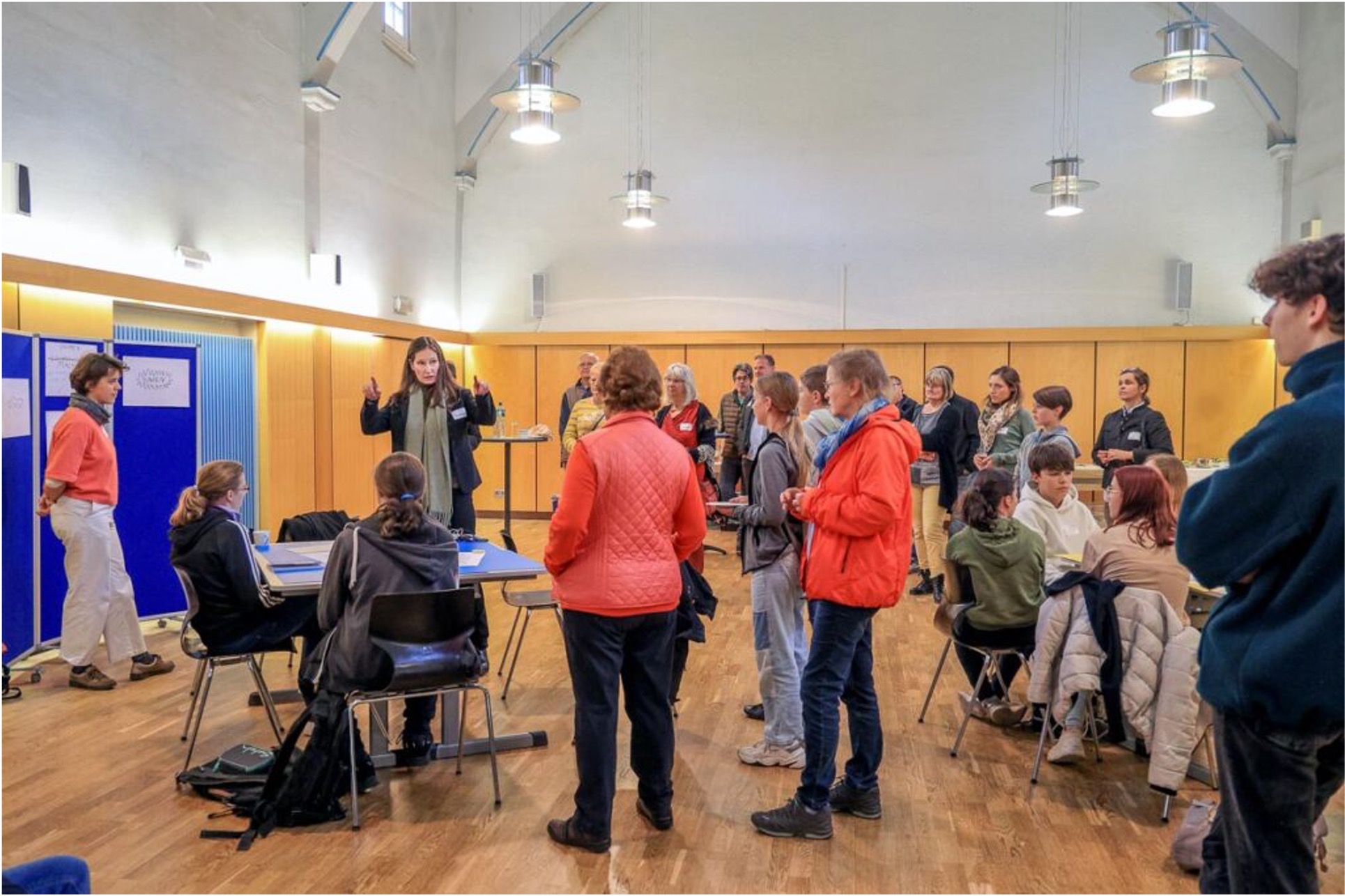
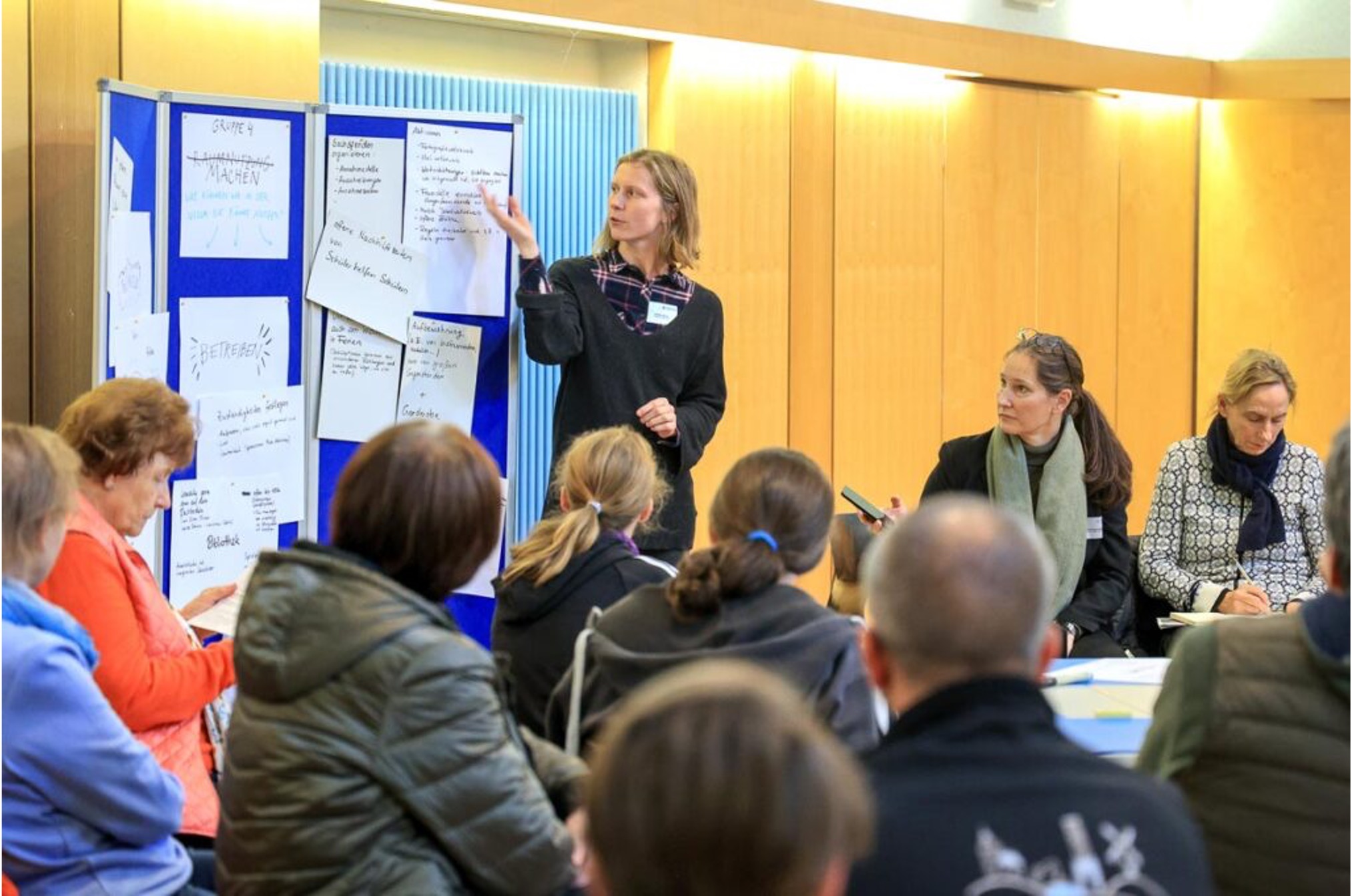
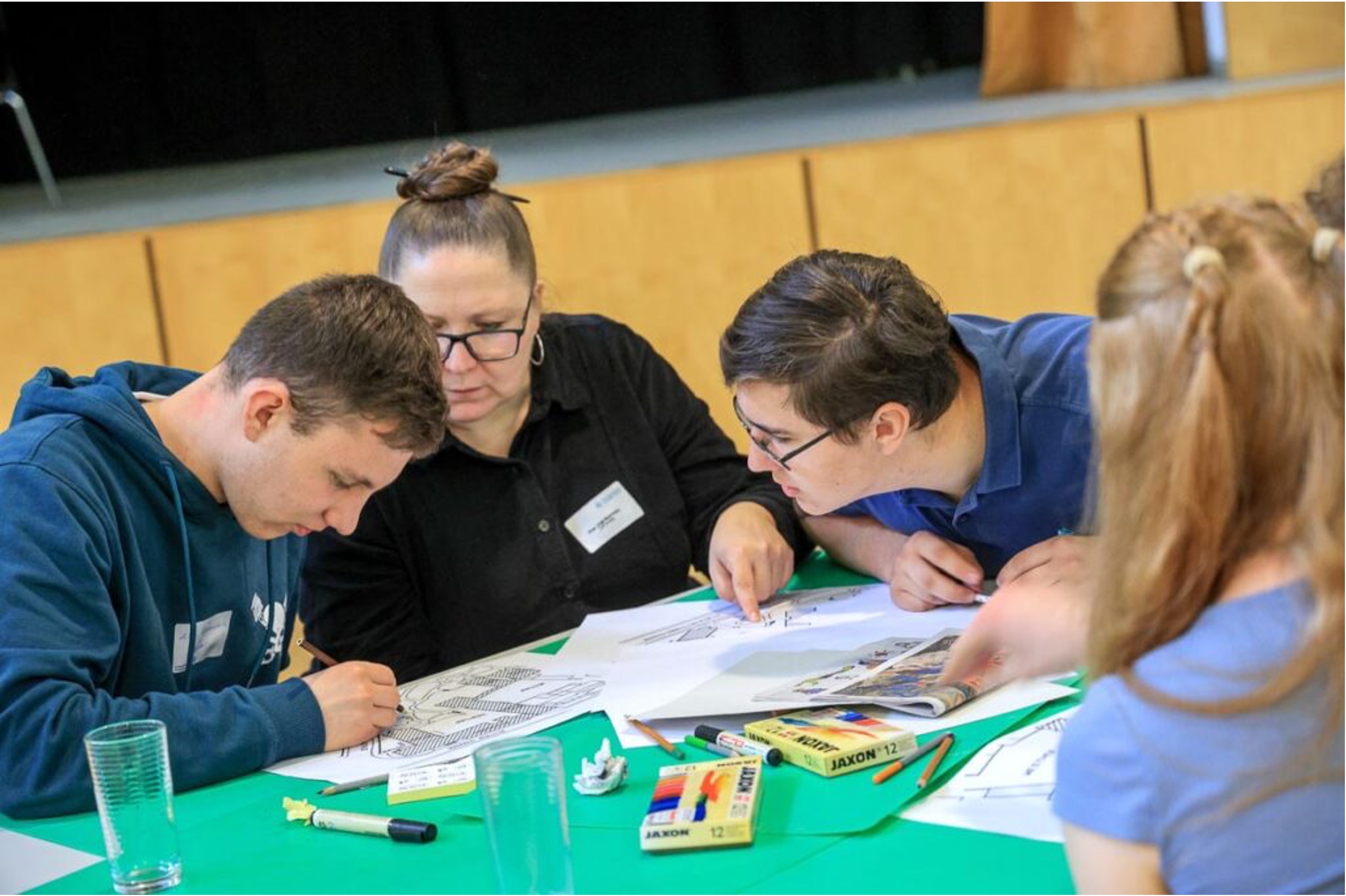
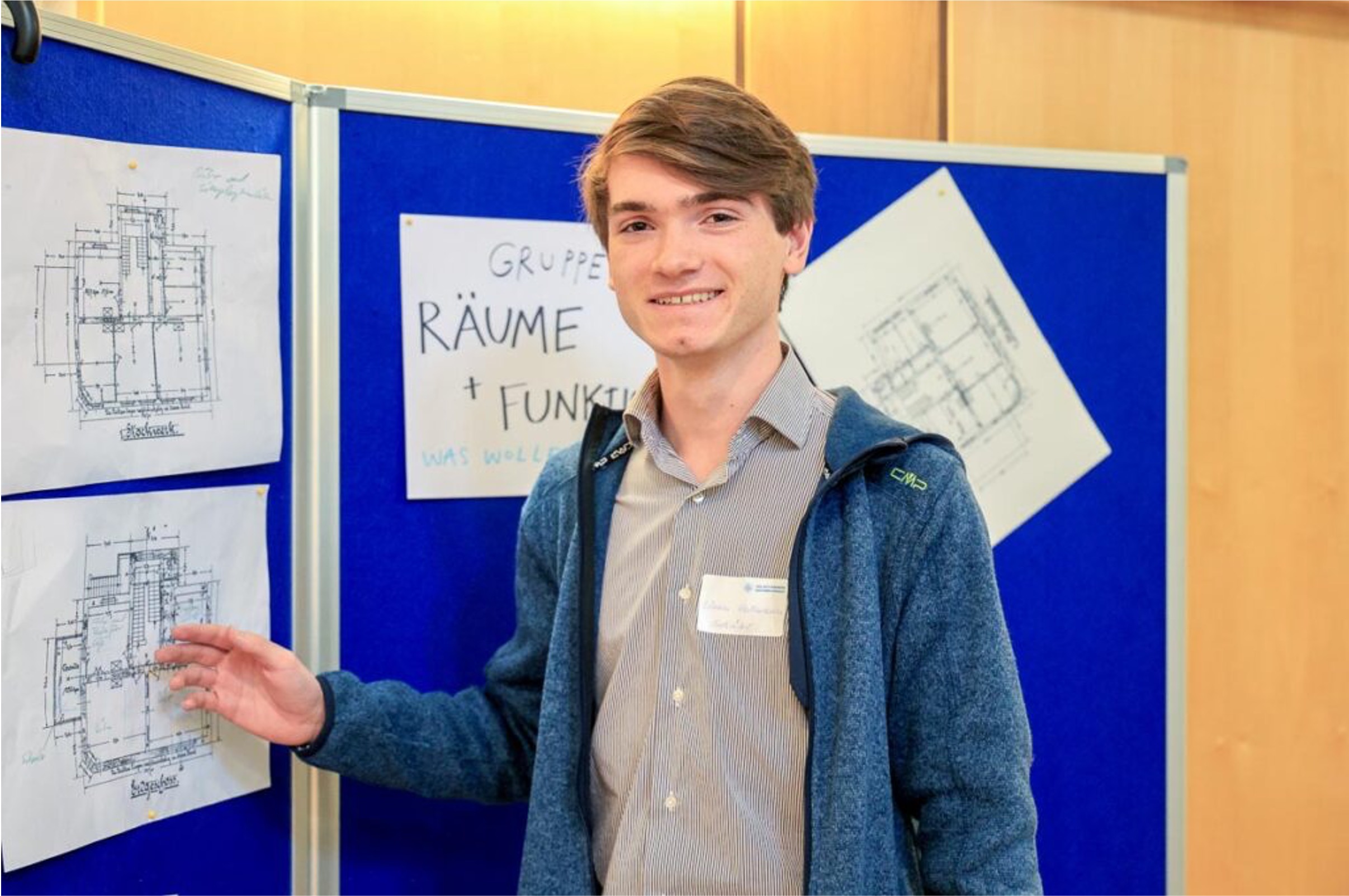
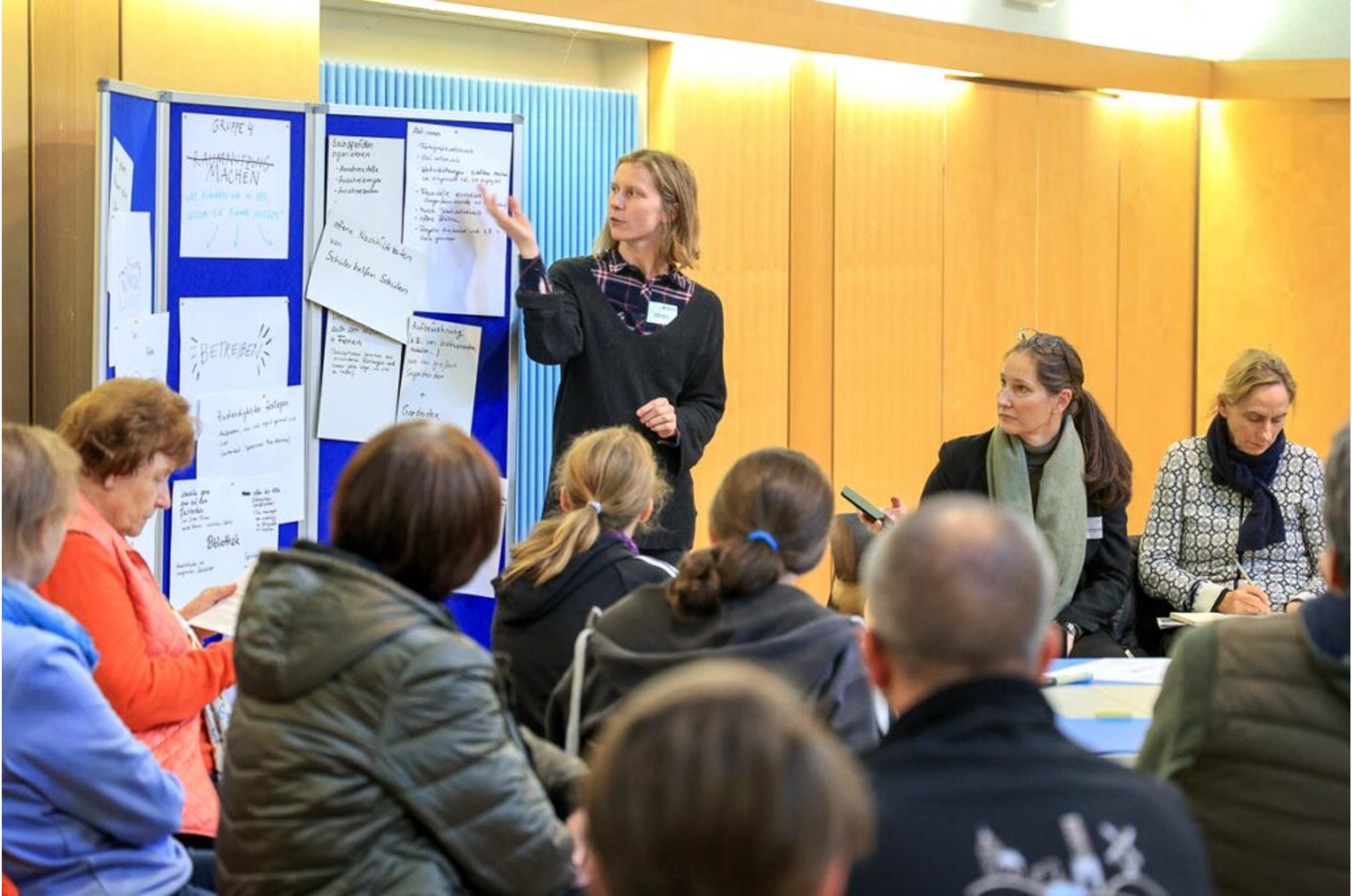
In an open citizens' workshop on 26.10.2023 24 students and 16 adults from the community and the associations collected suggestions and ideas in four working groups; the results were discussed with subject teachers of the CJD Christophorusschule. The concept of use was formulated in a specially founded steering group of two association representatives, the municipal librarian, a resident of the retirement home and a former student. The concept was discussed with the municipal council of the municipality of Droyßig on 7.3. 2024. The municipal council has supported the concept of use and approved the merger of the school library and the municipal library in the Kulturvilla. The still open question of the final designation ("Kultur-Villa" or "Kritzinger Villa") is to be clarified by students of a social studies course after receipt of the funding decision.
Some renovation work can be integrated as a "school building hut" into the lessons of the elective subject "planning, building, designing" of the community school. The management of the repair café and the "loan library of things" is planned as a student company.
The concept has already been tried out as part of the provisional start of the measure in sub-areas in makeshift rooms. Thus, following expressions of interest from the inhabitants, a house music group and a table harp group have already been founded, which are waiting to be able to permanently establish their rehearsal activities in the premises of the Kulturvilla.
In cooperation with the Digitalization Center Zeitz, two IT workshops for children and young people were held. At the presentation of the results, the adults have in turn their need for another IT workshop is registered. This all has fully confirmed the approaches to the concept of use.
The Kritzinger Villa is part of the property of the former Droyßiger institutions in the municipality of Droyßig as a member municipality of the association municipality of Droyßiger-Zeitzer-Forst in the Burgenland district of the state of Saxony-Anhalt.
With the municipality of Droyßig, a more effective and new library culture is now being developed into the Kritzinger Villa by merging the municipal library from the "Kavaliershaus" at the castle and the school library.
This new development is accompanied by the Library Office in the State Administration Office of the State of Saxony-Anhalt in Halle.
The Droyßiger CJD schools are part of the nationwide Club-of-Rome network, in which for approx. 15 years the topics of sustainability are dealt with. In partnership with the University of South Carolina, the issue of sustainability development in applied practice on this side and across the Atlantic is addressed in an annual student/student exchange on a project-week basis (cf. Memorandum of Understanding). Next exchange will be in May 2026.
The use concept for the future cultural villa will therefore function as a teaching and consulting object of this national and international exchange.
At the same time as the renovation of the Kritzinger Villa, the extensive renovation plans for the Droyßiger Schloss as the future administrative seat of the Verbandsgemeinde and the rededication of the previous administrative headquarters as an MVZ will be accompanied; therefore, the Fraunhofer Institute Halle is envisaged for the integration of the energy supply of the Kritziniger Villa in a municipal overall concept. The municipality has now commissioned the planning of a municipal energy concept, taking into account the energy needs of the school and cultural villa.
As part of the concept of use, children's and youth offers will be located in the library as part of the concept of use. After completion, project funding can be applied for at the Burgenlandkreis.
In a joint partnership, the Fraunhofer Institute for Microstructure of Materials and Systems IMWS Halle (Saale) provides the energetic assessment and support of the renovation project in order to stimulate a concept for the low-energy operation of the building complex of the Droyßiger Foundation that can be implemented in phase in the project sequence (concept of "energy sharing"). The renovation of the Kritzinger Villa as a cultural villa offers ideal starting points and connection points for the formation of energy sharing scenarios in the entire building complex of the Fürst-Otto-Victor-Stiftung-Droyßig and beyond in the surrounding location. The specialist planners for technical building equipment (TGA) implemented the concept of the IMWS for a capillary ceiling/wall heating in the planning and cost estimation. The suggestions of the IMWS have been incorporated into a municipal heat planning of the municipality of Droyßig in the context of the renovation plans of the Droyßiger Schloss as the seat of the Verbandsgemeinde.
The approach of co-creative research is used by the example of light, heated furniture to be developed for school and library operations and the prototypical use of novel rooms and low-energy systems for air conditioning that generate a high flexibility in use of the cultural spaces are made understandable, tangible and communicable in the truest sense of the word.
The new library concept will be accompanied by the State Office for Public Libraries. It is an institution of the state of Saxony-Anhalt and is integrated into the state administration office. The activity of the Landesfachstelle includes the conceptual planning and professional support of library development and library promotion of public libraries in Saxony-Anhalt. The concept of heated library furniture of the IMWS is very welcomed by the Landesfachstelle für Bibliothekwesen, as it can be used to reduce the management costs during extensive opening hours.
The innovative character lies on the one hand in the implementable concept of a low-energy operation in an old building regarding both the space heating system and the possibility of selective heating for very few users through appropriate furniture. Implementing low-energy systems through underfloor heating in old buildings is difficult due to the existing and often worth protecting floor structure. A capillary ceiling heating, on the other hand, uses the often high rooms in the old building and is easier to install.
Another innovative element is the expansion of the library concept from a traditional place of reading and research to a place of encounter and cultural creation.On the one hand, library spaces can be used several times and at the same time inhibitions for the use of libraries are reduced by "clear" positive experiences.
A third innovative element lies in the extension of the loan concept. Not only books, but also rarely needed devices/things of household needs can be borrowed and thus reduce the use of scarce resources for rarely needed things.
A fourth innovative element lies in the linking of IT competence provision with the sustainability message: Digitization offers widely innovative ways to present the cultural and sustainability offer of the villa and to sharpen this profile. A targeted use of social media plays a decisive role in this: regular posts that offer insights into the renovation, the smart library and the creative workshops create a virtual showcase that attracts interested parties not only locally, but also nationally. Lively content, such as stories about sustainability workshops or podcast recordings from the media laboratory, generate attention and invite you to participate in the cultural business.
A fifth innovative element lies in the revival of rural areas. With the offers of workshops and seminars, the mobility effort for the residents, who would otherwise have to go to the nearby city, is reduced.
The approach that was practiced in the initiative can be understood as a recognition of the principles of human action, as the philosopher Hannah Arendt explained in her main work The Human Condition, Chicago 1958 (dt. Vita Aktiva, vom tätigen Leben, Stuttgart 1960) describes: Every person is something new in the world in terms of birth. The uniqueness of being human is characterized by the competence to be able to take initiative, to be able to start new things. This makes up the diversity, the plurality of people who can join together in common action, thereby develop real power and can bring something new into the world together in an almost happy way.
In the joint workshop with 24 students and 16 adults from the clubs, the basic lines of a concrete use concept were developed from the vague idea of a cultural villa, which was then transferred from a steering group of the workshop participants to the final concept of use. The discussions in the municipal council of the municipality and the professional designation of challenges for libraries by the State Office for Public Libraries were included.
The cooperation with the Fraunhofer Institute for Microstructure of Materials and Systems IMWS is extremely helpful for the energetic consideration and support of the renovation project, since the sustainability orientation of the school as a "Club of Rome School" received professional substance for a structural implementation.
As part of the so-called "provisional start of measures", individual concept elements have already been tried out (see begoing). An IT workshop for young people and adults together with the digitization center Zeitz, a first Droyßiger book fair in cooperation with the associations that prove that a table harp group and a house music group prove that the concept for a cultural villa is realistic. The common idea in the first steps has become reality. This experience encouraged the Foundation Board to pre-finance the costs for planning phases 1-3.
Methodologically, it turned out that the fundamental starting point of a productive creativity potential of different people with different perspectives is justified, provided that it is possible to win people for a full-day workshop in a "rule-free" dialogue. It also turned out that the inclusion of creative potential in a smaller community can be successful because here people know each other better and can assess the needs of the village community well. In this respect, especially smaller communities are well suited for grass root movements.
The technology of a capillary ceiling heating system should almost call for a transfer to larger units such as entire school complexes with old building fabric, because there the energy saving potential is enormous and technical feasibility is given.
The transferability of the first cultural event of the "Droyßiger Buchmesse" in 2025 is already evident from the fact that the education office of the district of BLK will not only support for a repetition in Droyßg, but also wants to initiate in another place in the district.
An important finding arose from a NEB network meeting in May 2025 in Saxony-Anhalt: It is not only possible to design such a project, but also to prepare it according to the planning in accordance with the application without a certain amount of personnel effort and also not without the possibility of providing financial advance payments. Here the Fürst-Otto-Victor-Stiftung-Droyßig was able to contribute its personal and financial potential and thus exploit the creative potential of the village community.
With regard to the idea of sustainable construction, we assume in our concept that the experience and later also the daily view of a low-energy operated old beautiful building will inspire the younger generation, in their future private and professional area of responsibility, to give preference to sustainability in the preservation of old buildings over a resource-consuming new building.
The already initiated joint cultural activities from the "early start of the measure" will be continued with a first repetition of the Droyßiger Book Fair in April 2026. Likewise, the mentoring work with the primary school children is in the process of consolidation. The initiated "house music group" plans first appearances, a children's theater project goes into a next theater rehearsal round.
Discussions are being held with the Digitalization Center about a repeat of the IT workshops. This shows that the initiatives from the village community are alive and well-sto-eft.
Communication about the progress of the initiative is also conducted on several levels: The student visitor group of the University of South Carolina will complete a half-day workshop on the Kulturvilla project in May 2026. The Club of Rome school group will give a presentation about the Kulturvilla project for the nationwide Club of Rome annual meeting in 2027.
The next steps concerning the structural renovation: In April 2026, the Foundation's Board Decision aims to commission the specialist planners for tender documents. The structural implementation of the renovation is planned for September 2026 at the latest.
In an already proven form, different professions will work together in the course of the initiative: After receipt of the funding decision, the production of a prototype for heated library reading tables will be commissioned within the network partnership with the IMWS Halle.
The TGA implementation planning is carried out in close coordination with the IMWS.
The Fürst-Otto-Victor-Stiftung-Droyßig has submitted the building application for the structural renovation to the building regulations office of the district. This building application is processed by the district as a pilot project for digital Application submitted to the building regulations office of the district. This process reflects the goal of making the Kulturvilla a place for further training in digital skills.