Arts, Culture, and Heritage as Drivers of Change
Udatinos
Udatinos. Sensitive to Water
Palermo, pandemic year 2021: an artificial plant named Udatinos grows on the Oreto River. In 2025 a second specimen will appear in Verona along the Adige River.
The plant is a next-generation cyborg: a Datapoietic Agent with the aim of making humans sensitive to water’s well being, fostering a New Deal between technology and the environment built on Care, Response-ability, Participation. An icon of bio-techno diversity is born, where data like water flows uniting people and nature.
The plant is a next-generation cyborg: a Datapoietic Agent with the aim of making humans sensitive to water’s well being, fostering a New Deal between technology and the environment built on Care, Response-ability, Participation. An icon of bio-techno diversity is born, where data like water flows uniting people and nature.
Italy
Local
Palermo (Sicily Italy); Verona (Veneto,Italy)
It addresses urban-rural linkages
It involves other types of transformations (soft investment)
Yes
2025-10-10
No
No
Yes
Individual
Udàtinos: in ancient Greek this word means "made of water". But this name carries a double meaning: embedded within the word "u-dati-nos" are "dati" (Italian for "data") and "nos" (Latin for "we"). Water, data, and community: the entire project lives within its name.
Conceived by artists and researchers Salvatore Iaconesi and Oriana Persico, it is a Datapoietic Agent of the New Inhabiting. Its primary role in the ecosystem is to give voice to water, making humans sensitive to the wellbeing of rivers, lakes, seas, lagoons, wetlands, glaciers and the biodiversity of their territories. It generates slow data at km 0: relational data that grow and co-evolve with the environment in which the technology takes root, data whose supply chain we can know and trust, just like slow food. Built with open technologies, every plant is an expression of local biodiversity, chosen as an icon for its specific characteristics. Udàtinos is not replicated: it is seeded.
Water is not only an environmental resource: UNESCO recognises it as a fundamental natural and cultural heritage of humanity. Udàtinos embodies this vision: art, territory, and computation converging to generate genuine civic change.
First seeded in Palermo in 2020–21 within the Ecomuseo Mare Memoria Viva, the project is still alive today. It became the museum's most attended activity and a permanent educational infrastructure. Citizens evolved from Water Keepers to River Keepers, appropriating a new social role and a new public identity, and inventing new formats of civic and environmental education.
In 2025 a second plant was born in Verona, where the involvement of the University opened new possibilities for experimentation.
The long-term impact goes beyond environmental monitoring: it is the emergence of communities that permanently inhabit a new social role, and of cities that rediscover their rivers as living cultural heritage, places of meaning, care, and shared identity.
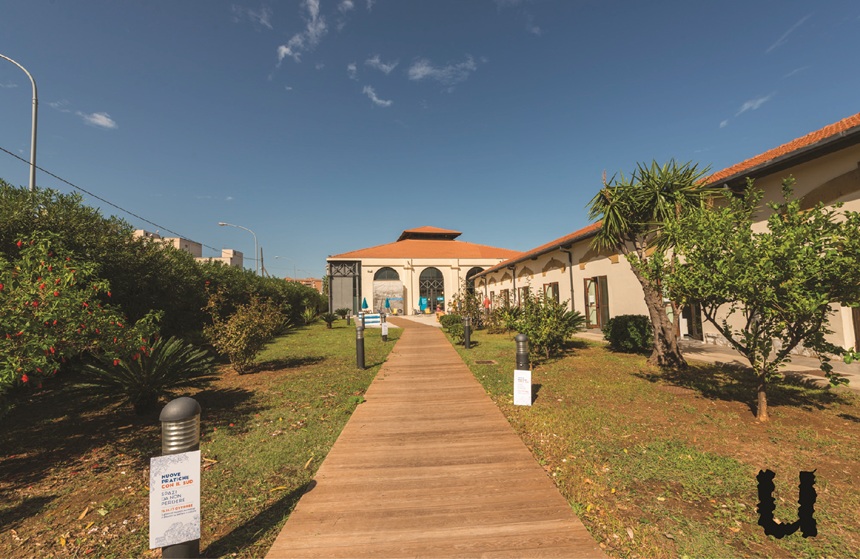
Udàtinos was born during the COVID-19 pandemic, within Creative Living Lab, Italy's Ministry of Culture programme for urban regeneration. In Palermo, looking over the estuary of the Oreto river, sits the Ecomuseo Mare Memoria Viva. Step inside and walk to the corner that faces the river: you find a digital plant emitting pulsating lights and sounds, info-aesthetically representing the health of the Oreto as captured by citizens, students and researchers who became its Water Keepers. This is Udàtinos: a datapoietic artwork making a complex environmental phenomenon perceptible through data, computation, and social activation. At its heart lies a fragile technology: a form of digital life that survives only if fed by river data captured by citizens and transformed into light and sound. If the data stops flowing, the plant slowly fades, making the bond between human care and environmental wellbeing visible and tangible.
The Ecomuseum staff was trained, making the project a permanent infrastructure of the museum and its most followed educational format for schools. Equipped with sensors, knowledge, a new identity and a ritual to celebrate, monitoring water data turned for people into a civic and cultural practice, giving birth to new social roles and rituals. In Verona (2024–25), within the Panta Rei programme supported by Fondazione Cariverona, the plant-icon became a collective choice. Through a Plant Game designed by artists Oriana Persico and Stella Saladino with botanist Sebastiano Andreatta, young Keepers collectively selected an invasive pioneer species, resilient and capable of surviving in a rapidly changing world, a choice that revealed how deeply young people feel the urgency of our environmental moment, and deepened their sense of belonging to the work. Those young Keepers became cultural mediators: during World Biodiversity Day 2025 and ArtVerona, they guided families, children and visitors through the Datageneration process. Udatinos is alive and spreading
The Ecomuseum staff was trained, making the project a permanent infrastructure of the museum and its most followed educational format for schools. Equipped with sensors, knowledge, a new identity and a ritual to celebrate, monitoring water data turned for people into a civic and cultural practice, giving birth to new social roles and rituals. In Verona (2024–25), within the Panta Rei programme supported by Fondazione Cariverona, the plant-icon became a collective choice. Through a Plant Game designed by artists Oriana Persico and Stella Saladino with botanist Sebastiano Andreatta, young Keepers collectively selected an invasive pioneer species, resilient and capable of surviving in a rapidly changing world, a choice that revealed how deeply young people feel the urgency of our environmental moment, and deepened their sense of belonging to the work. Those young Keepers became cultural mediators: during World Biodiversity Day 2025 and ArtVerona, they guided families, children and visitors through the Datageneration process. Udatinos is alive and spreading
Citizen science
New social rituals
Urban regeneration
Collective act of water care
Info-aesthetics
Udatinos addresses sustainability on multiple levels.
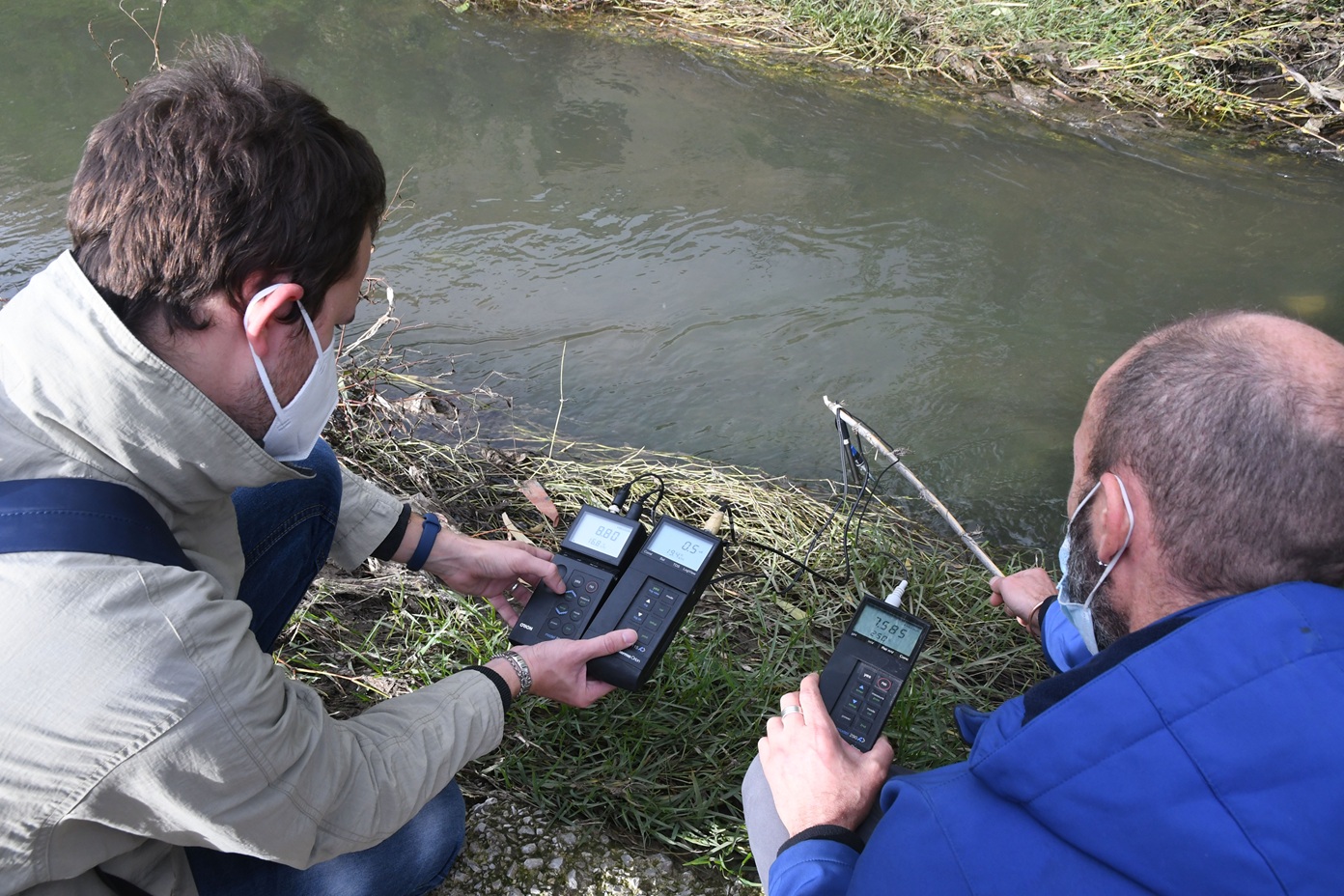
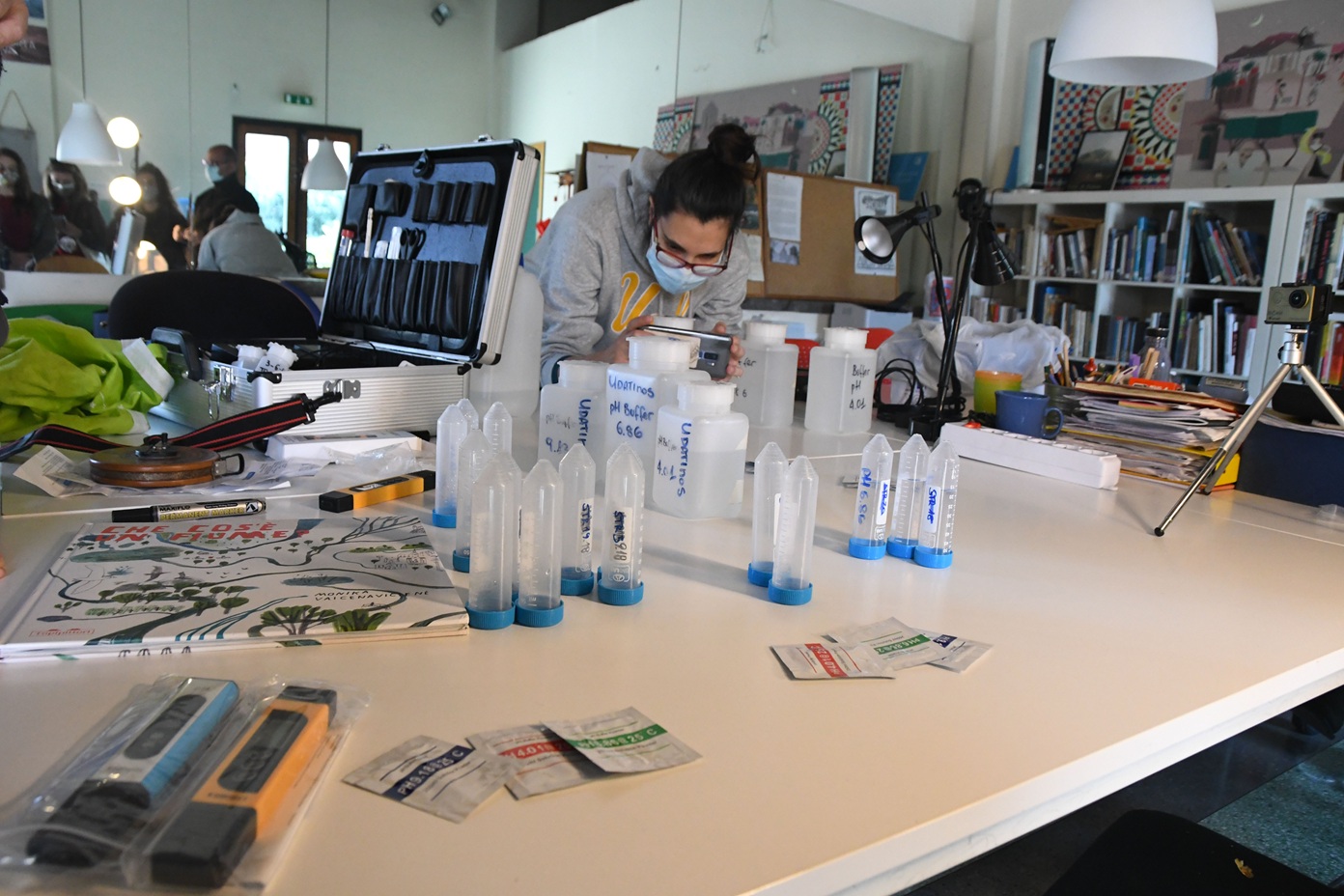
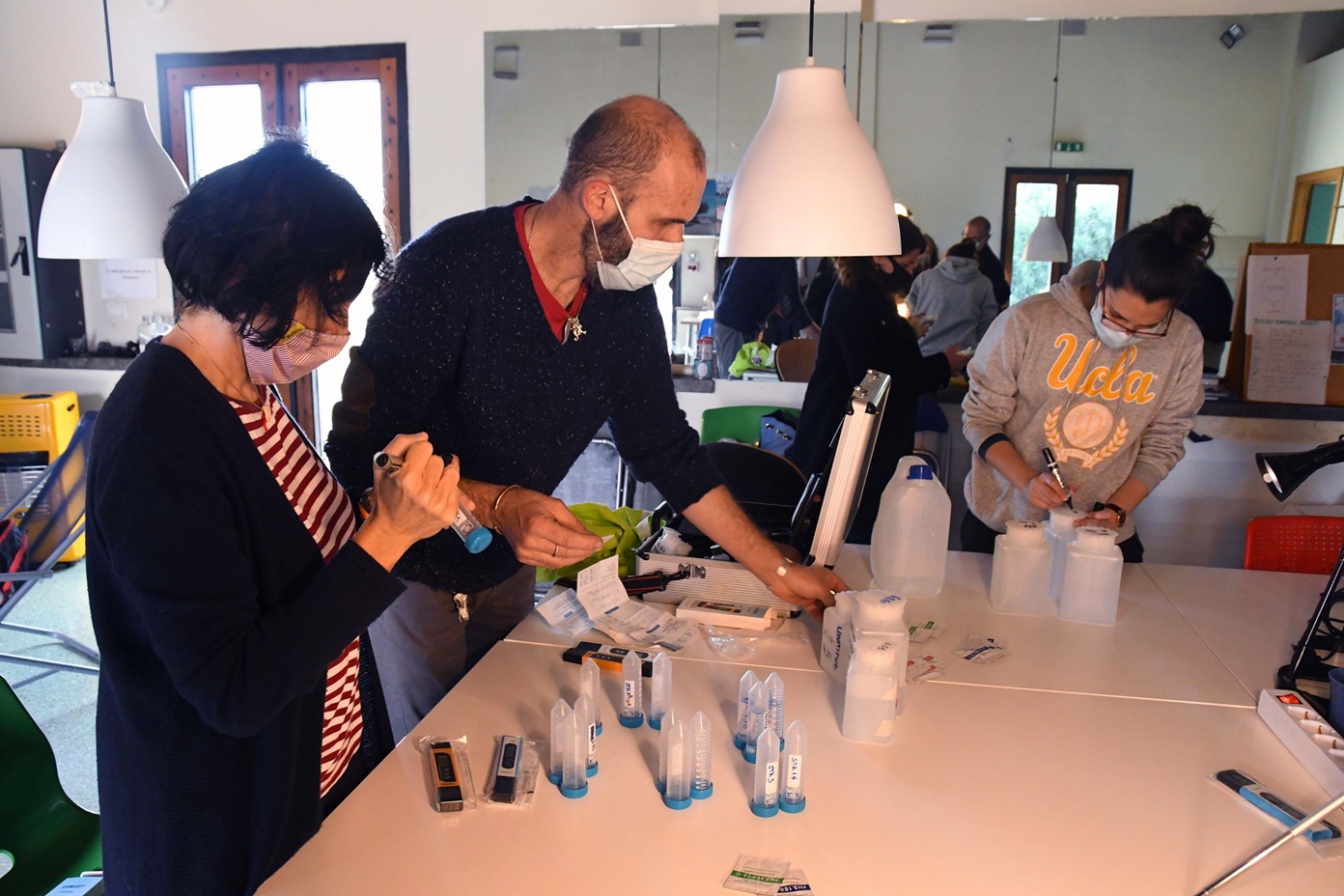
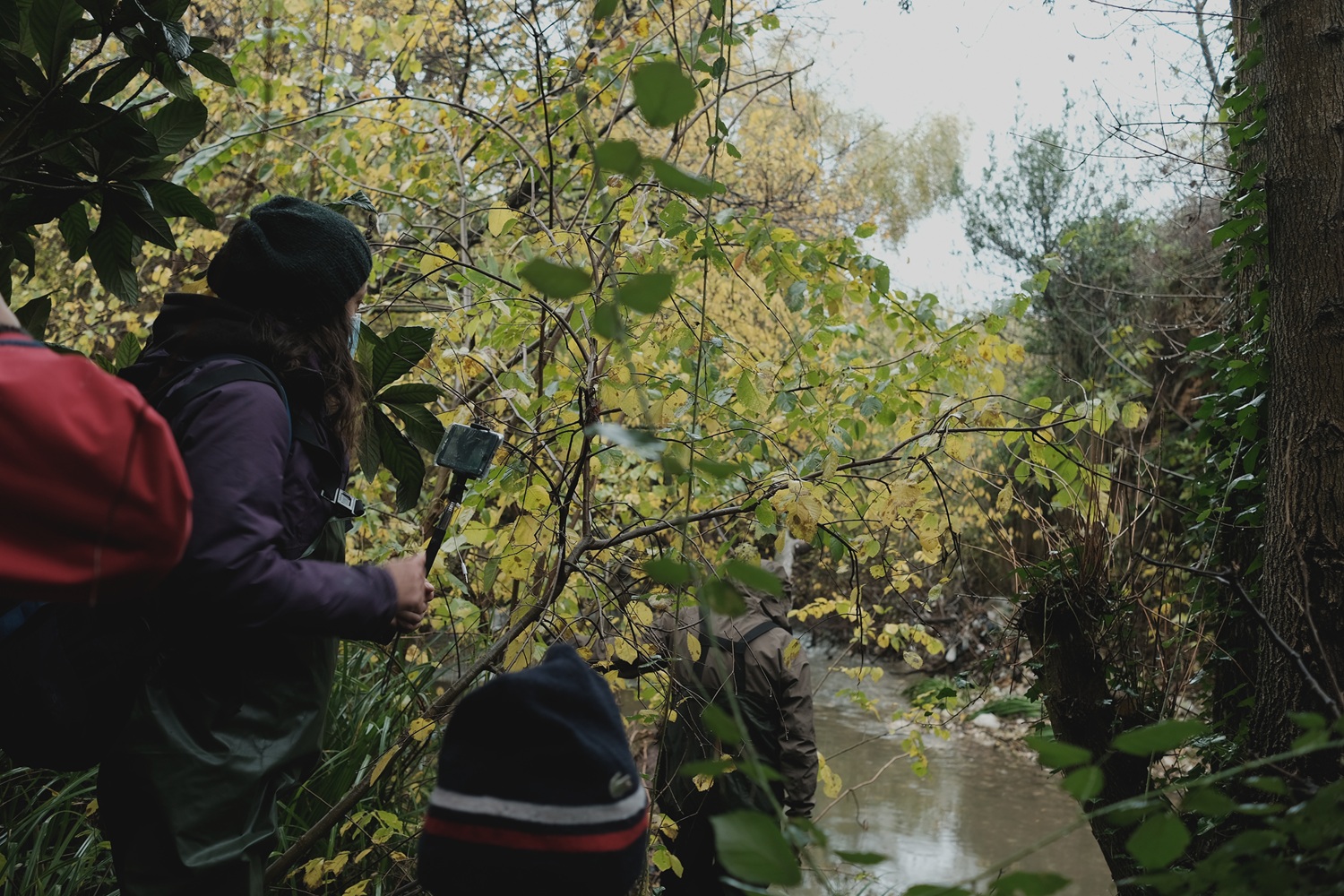
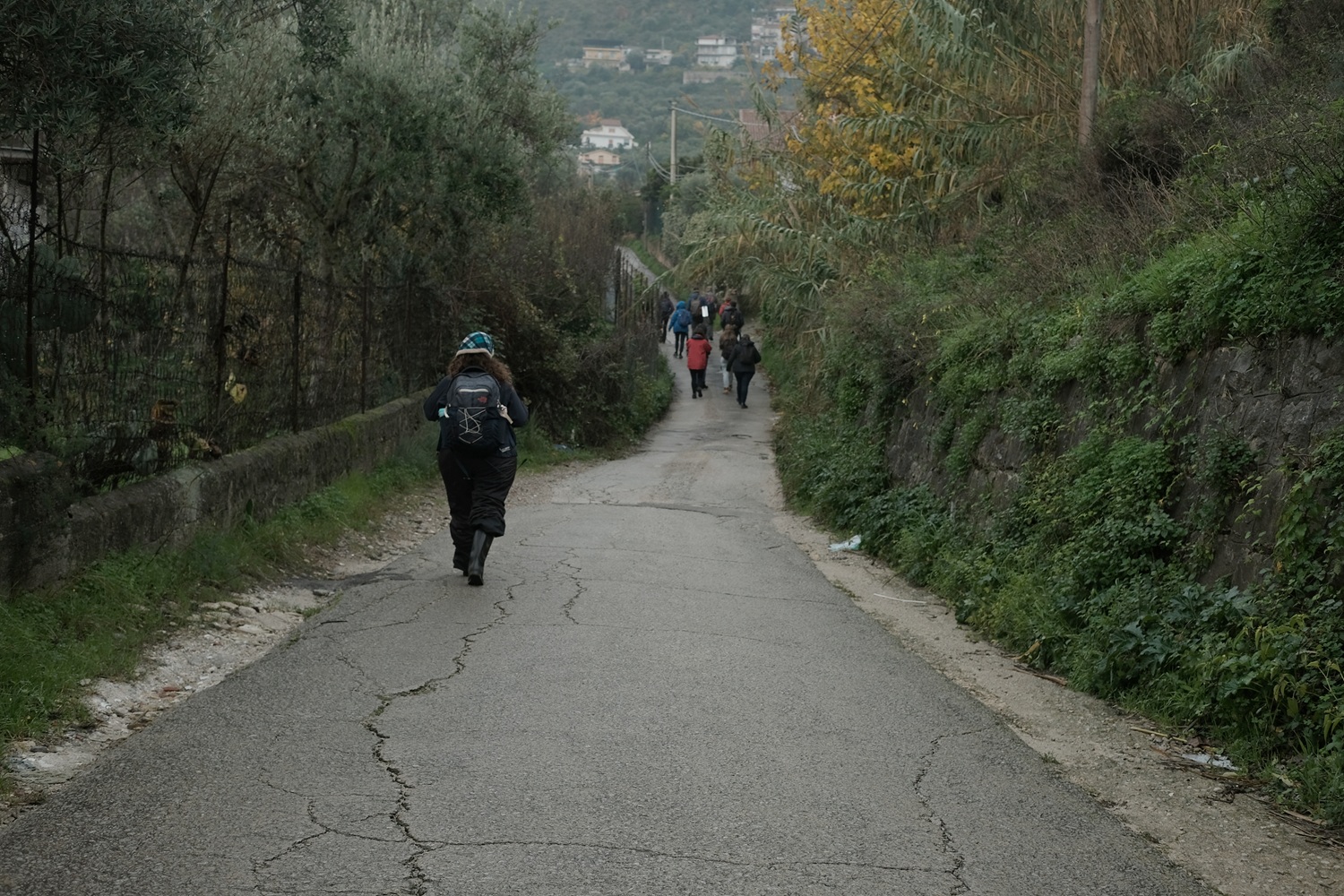
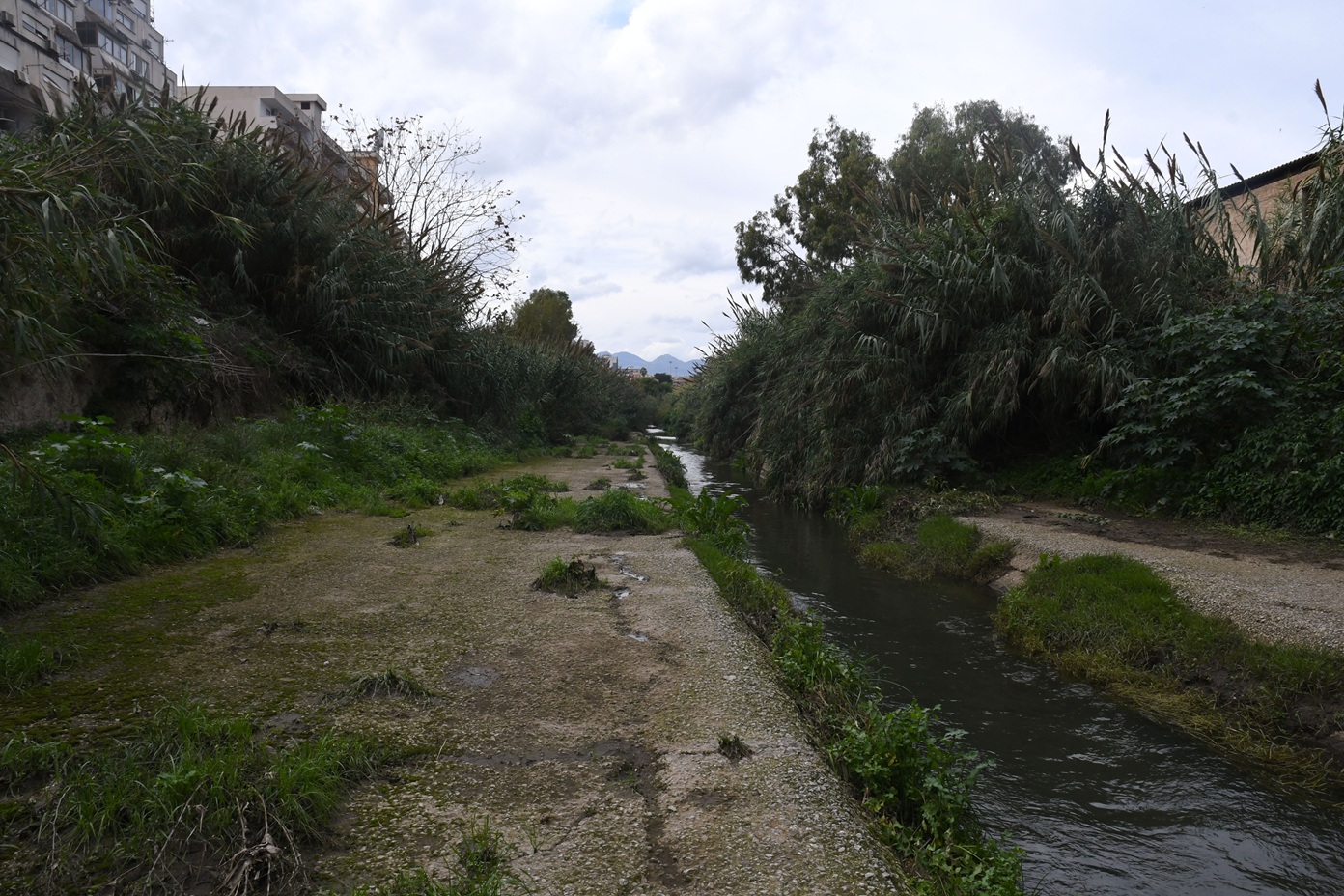
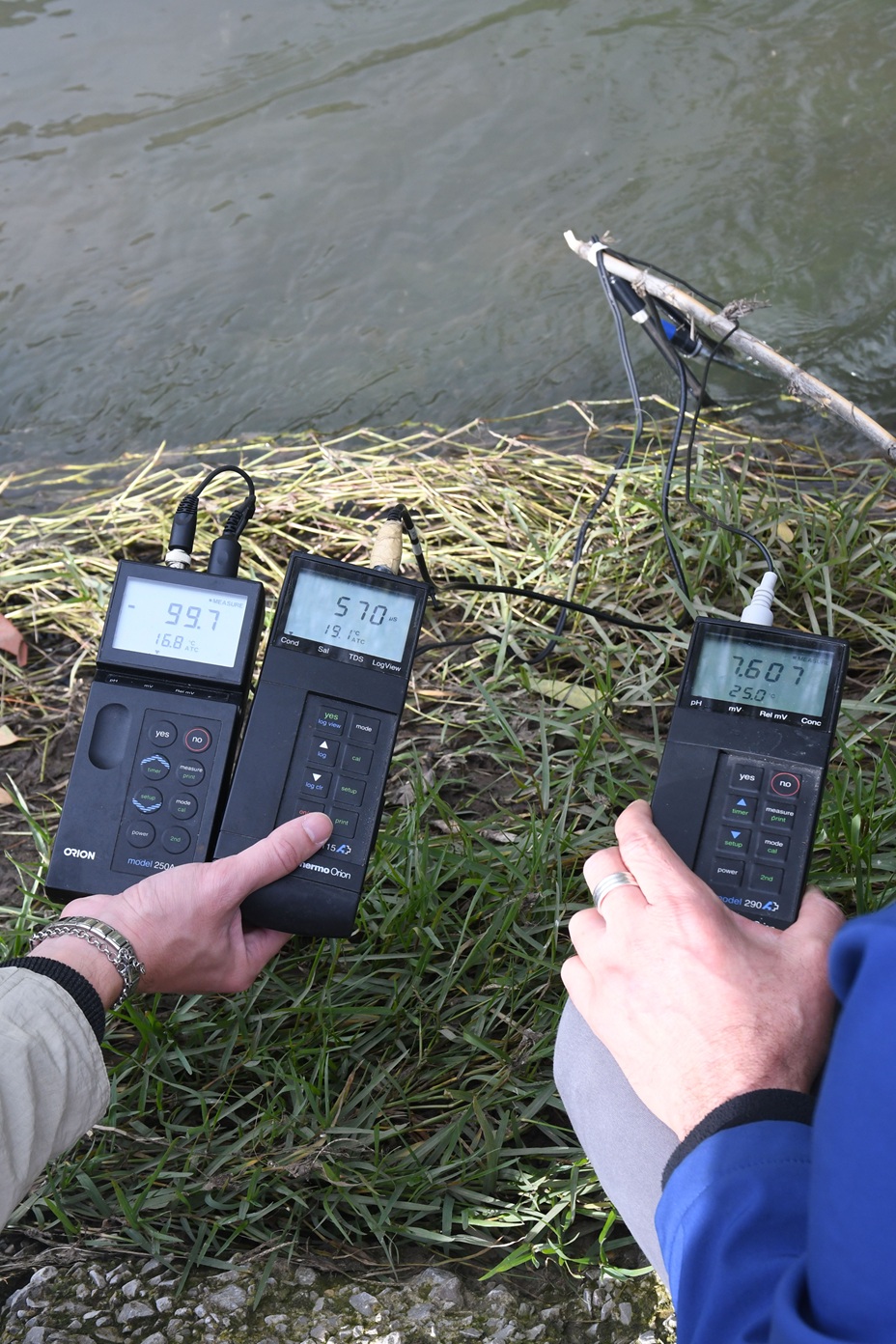
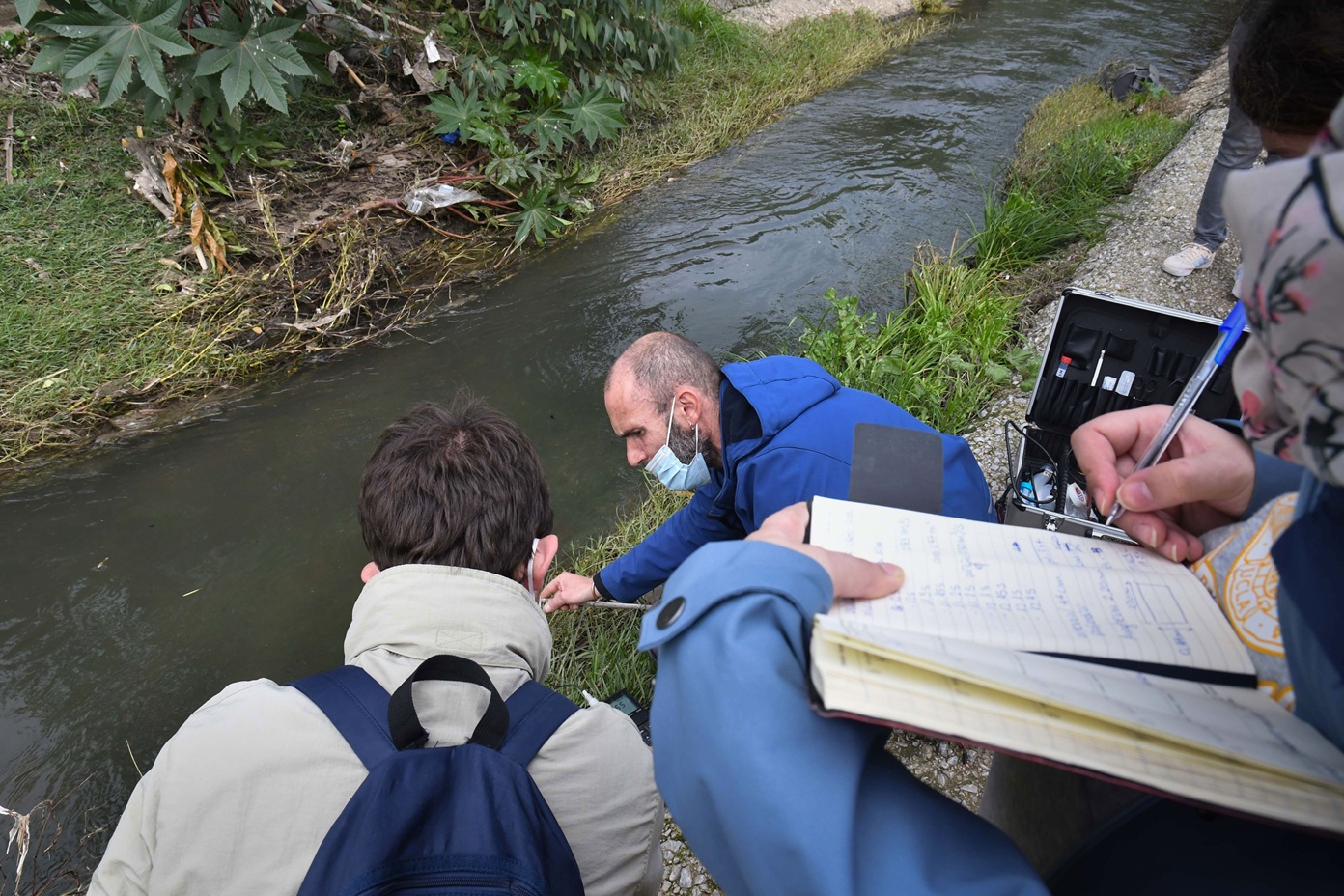
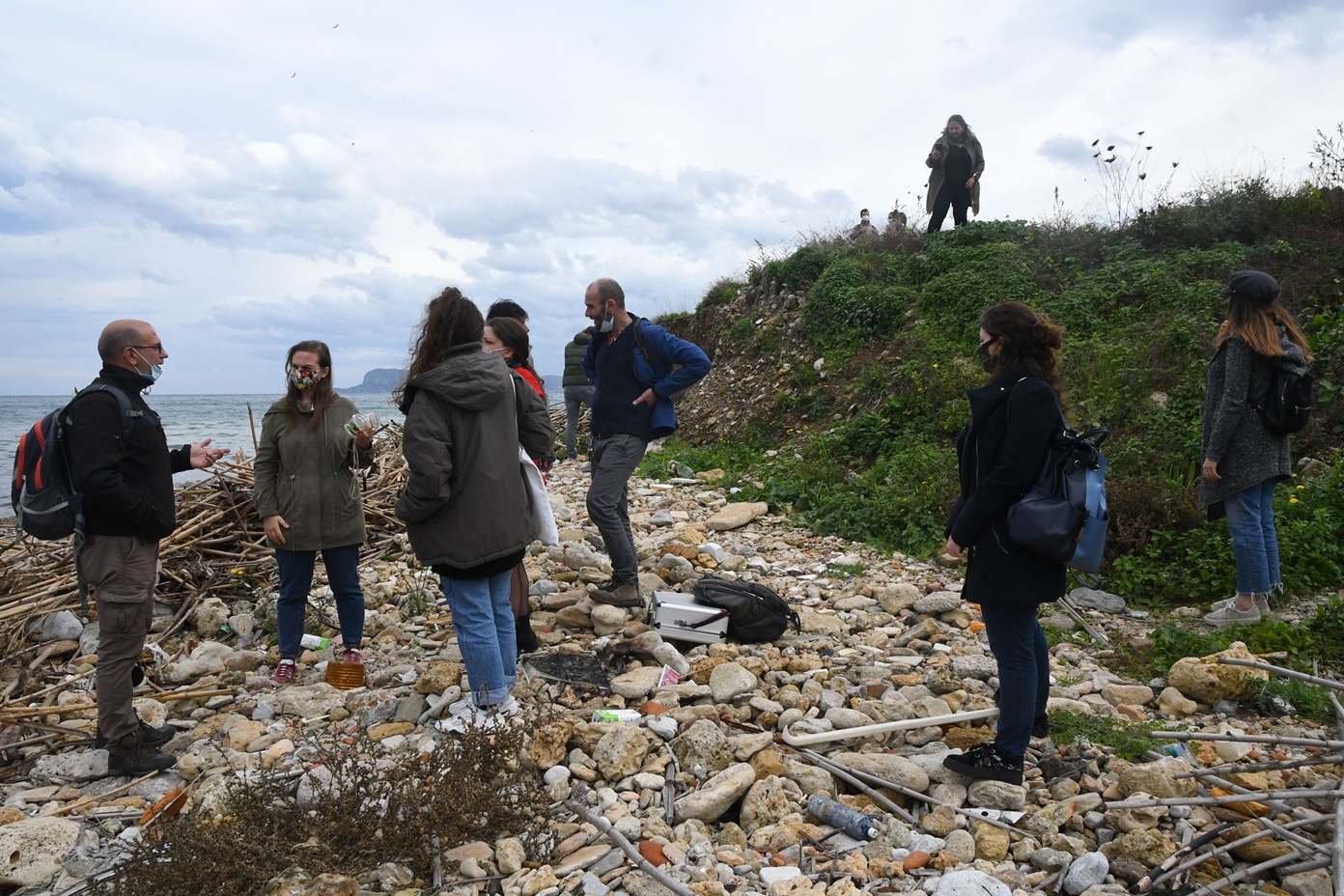
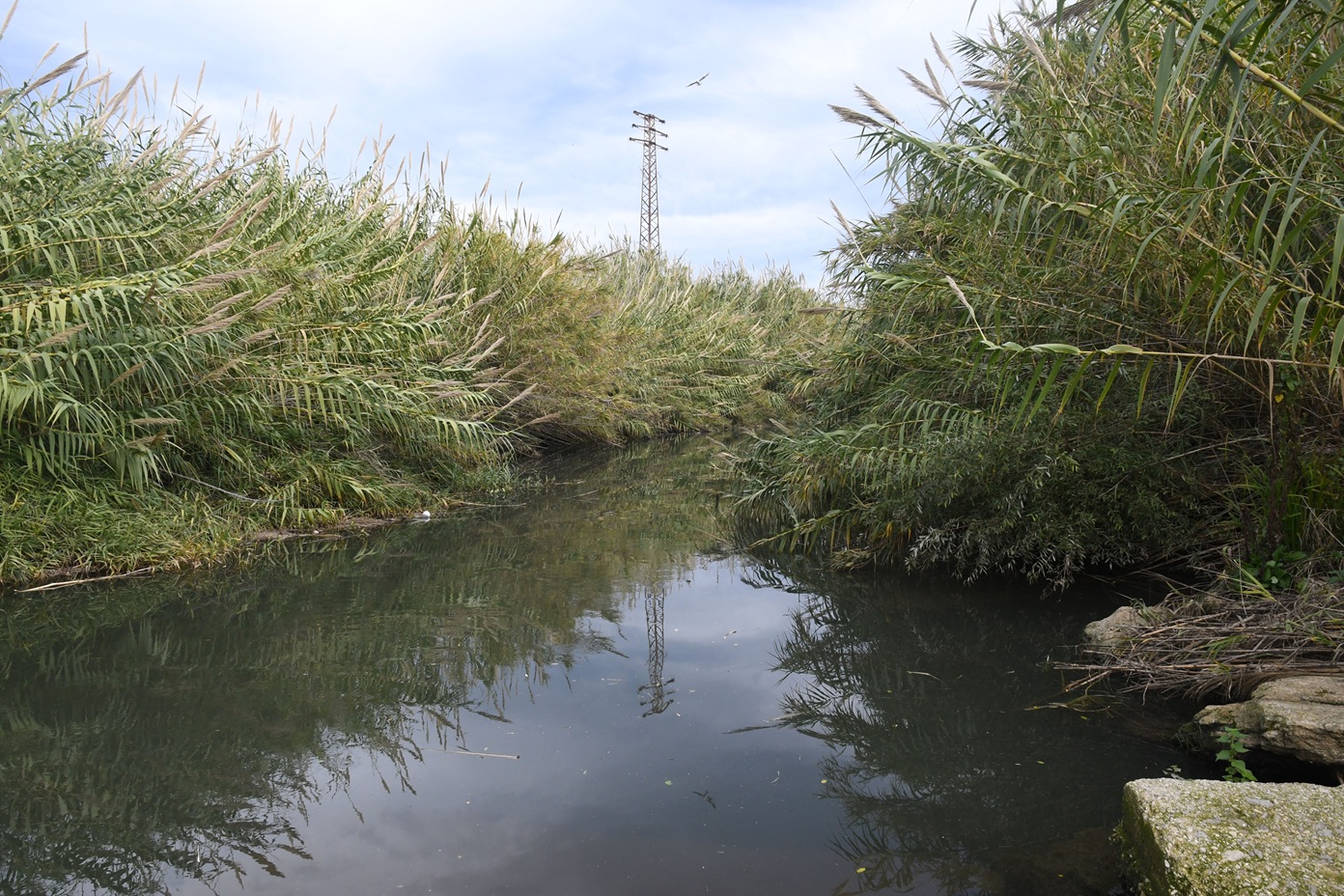
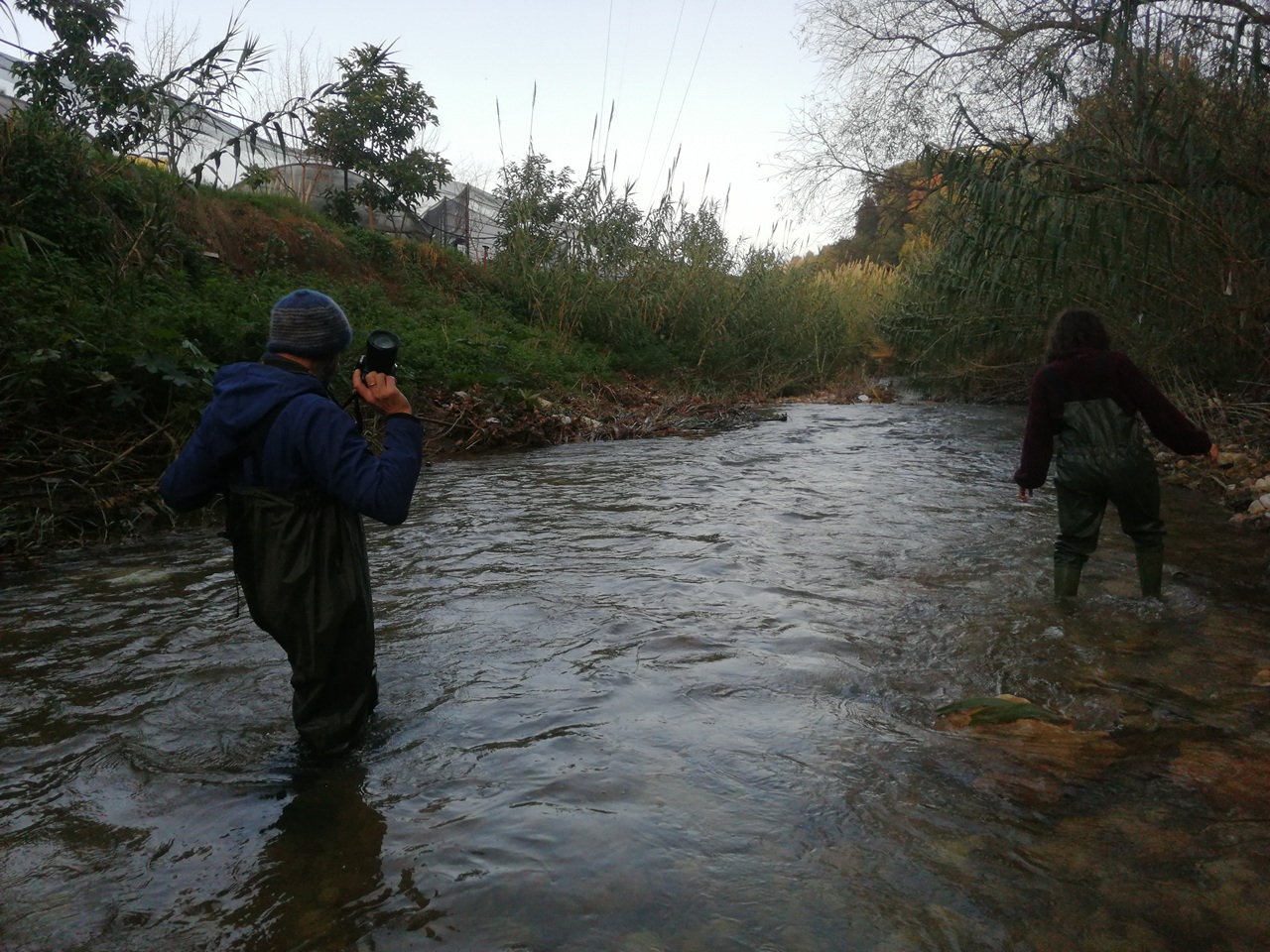
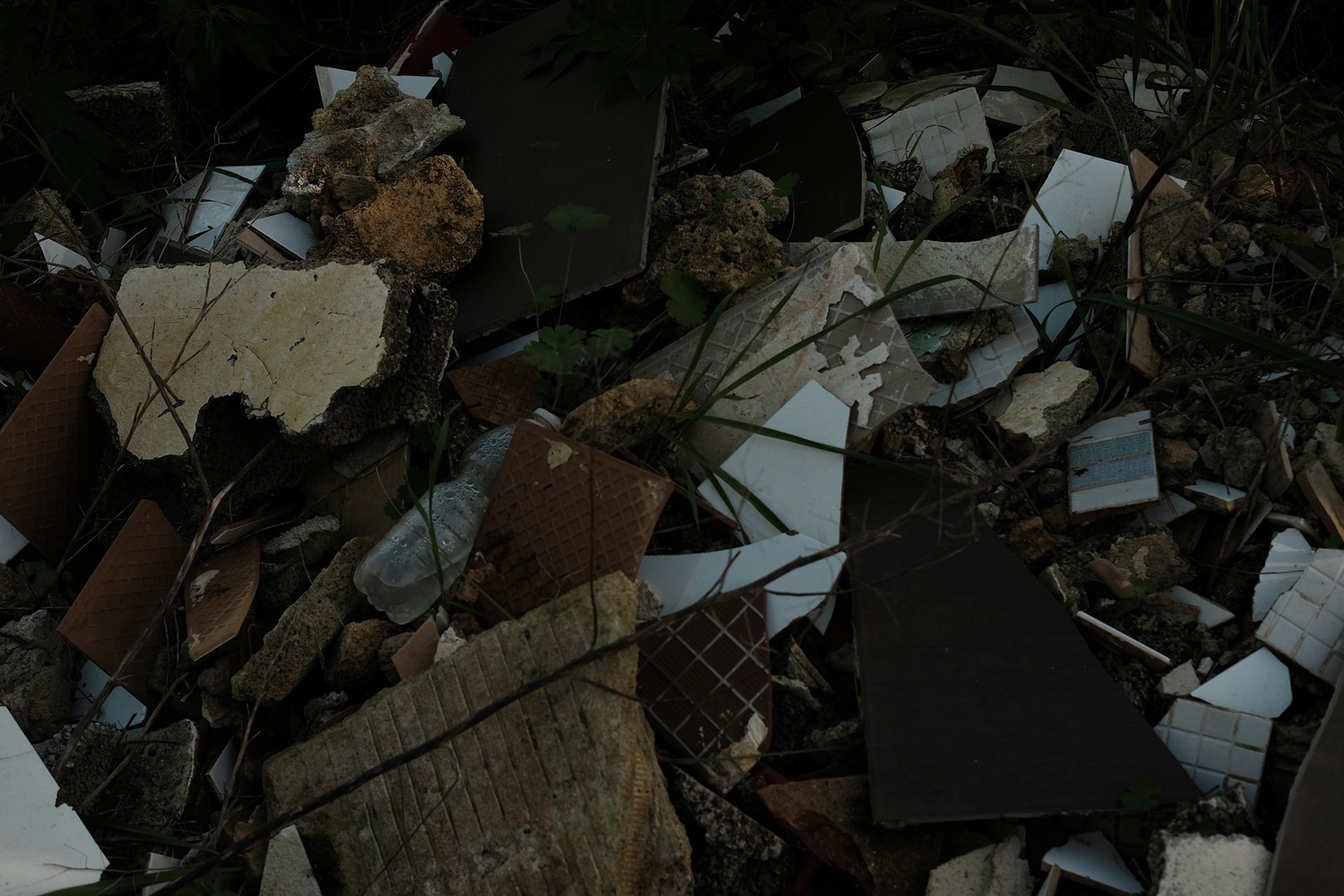
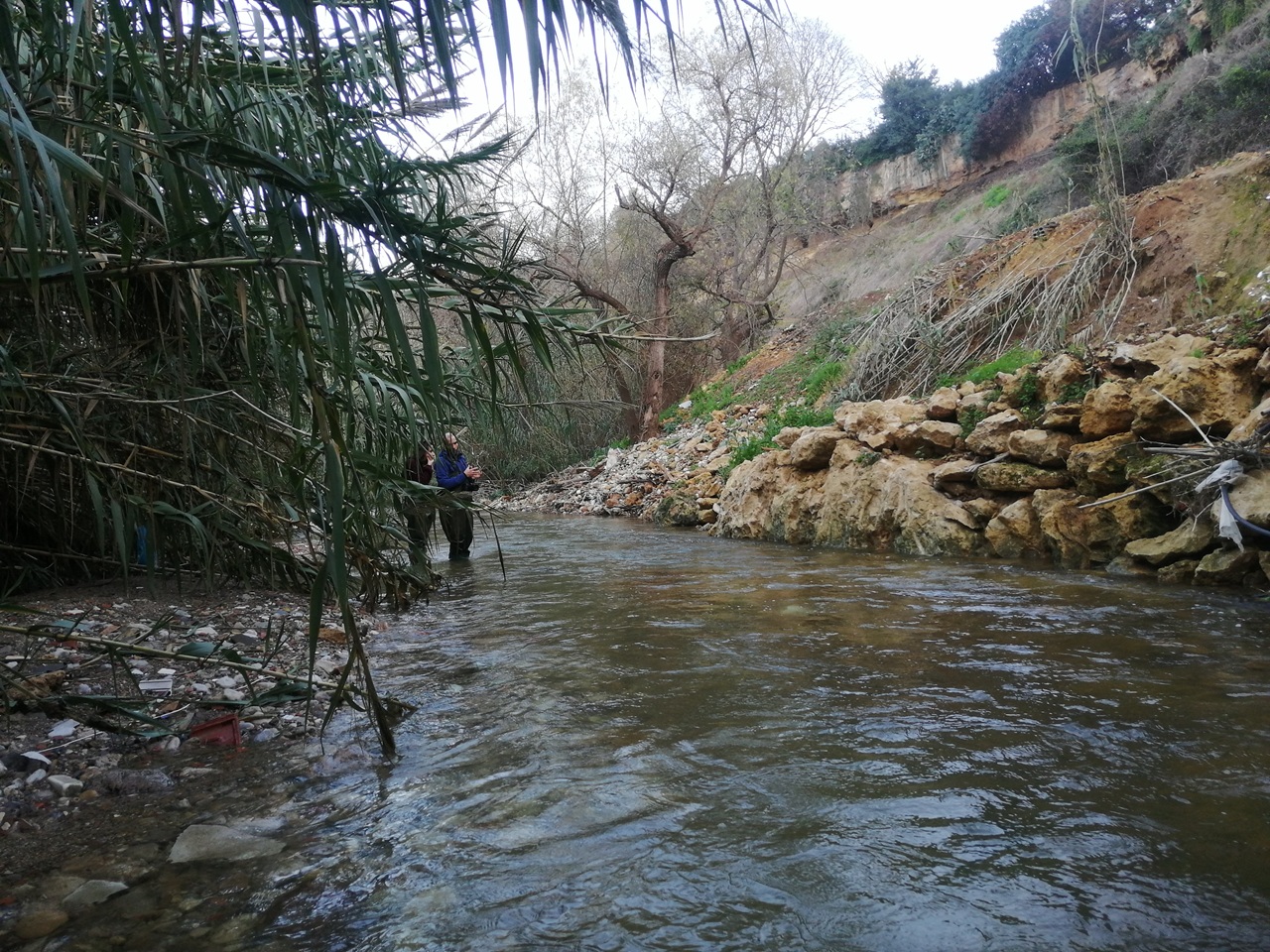
At its core, the project responds to a concrete urban challenge: the distance that has grown between urban communities and their rivers. In most cities, rivers have become invisible: drainage infrastructure or, at worst, dumping grounds. People no longer go to the river. Udatinos reverses this by physically bringing communities back to the riverbank through the Datageneration: a collective ritual in which citizens, equipped with sensor kits, measure and generate the environmental data that feeds the installation, supported by a growing ecosystem of partners including Legambiente, universities, museums, and schools, each contributing a different layer of knowledge and civic engagement.
Beyond environmental impact, the project generates a durable cultural transformation: the appropriation of a new civic identity. Participants do not merely attend an event, they become Water Guardians, River Guardians, Biodiversity Guardians, or simply Guardian for a day: a multiplicity of roles, each oriented toward environmental care, each offering a new way of relating to one's territory.
This model has proven institutionally resilient: in Palermo, Udatinos became a permanent infrastructure of the Ecomuseo Urbano Mare Memoria Viva and the museum's most followed educational format for schools. The second Udatinos, born in Verona along the Adige river, involved schools, the University of Verona, and civic museums, confirming the project's capacity to take root, evolve, and generate lasting value across different territories and communities.
Udatinos is grounded in a central aesthetic principle: Datapoietic Photosynthesis. Just as plants transform light into energy, Udatinos transforms raw environmental data into light, sound, and form. The river speaks through the installation: its stems change colour and emit sounds that render the invisible visible, turning complex scientific measurements into an immediate sensory language accessible to anyone.
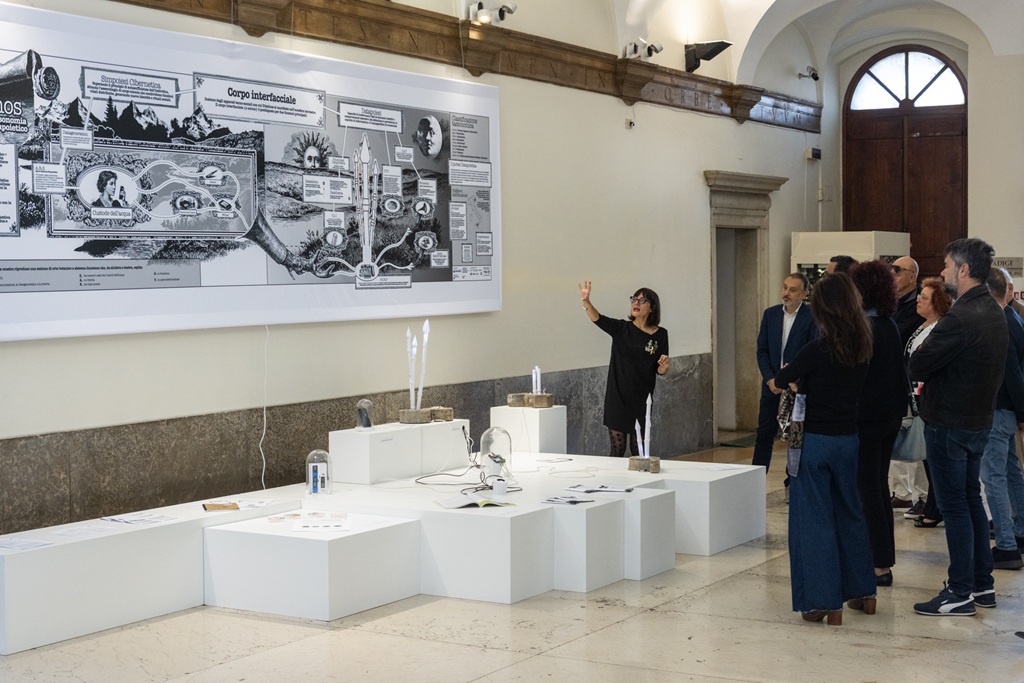
This aesthetic is inseparable from the power of plants themselves. Udàtinos uses plants as agents, living entities with their own intelligence, strategies, and force. In Verona, this finds its most complete expression in the Datapoietic Botanical Garden: inspired by the Linnaean model, it is an artificial garden where plants are science objects to be explained, described and observed. Alongside the installation, the garden displays Datageneration artefacts; a monitor shows the real-time API data flow and source code. The centrepiece is a five-metre infographic depicting the anatomy and taxonomy of the Datapoietic Agent, etched in the style of 18th-century botanical illustration, evoking an era of maximum collaboration between artists and scientists. The artificial plant is exhibited beside its natural counterpart in the herbarium.
In Palermo, an interactive totem allows visitors to navigate the Oreto river, exploring its plant and animal species.
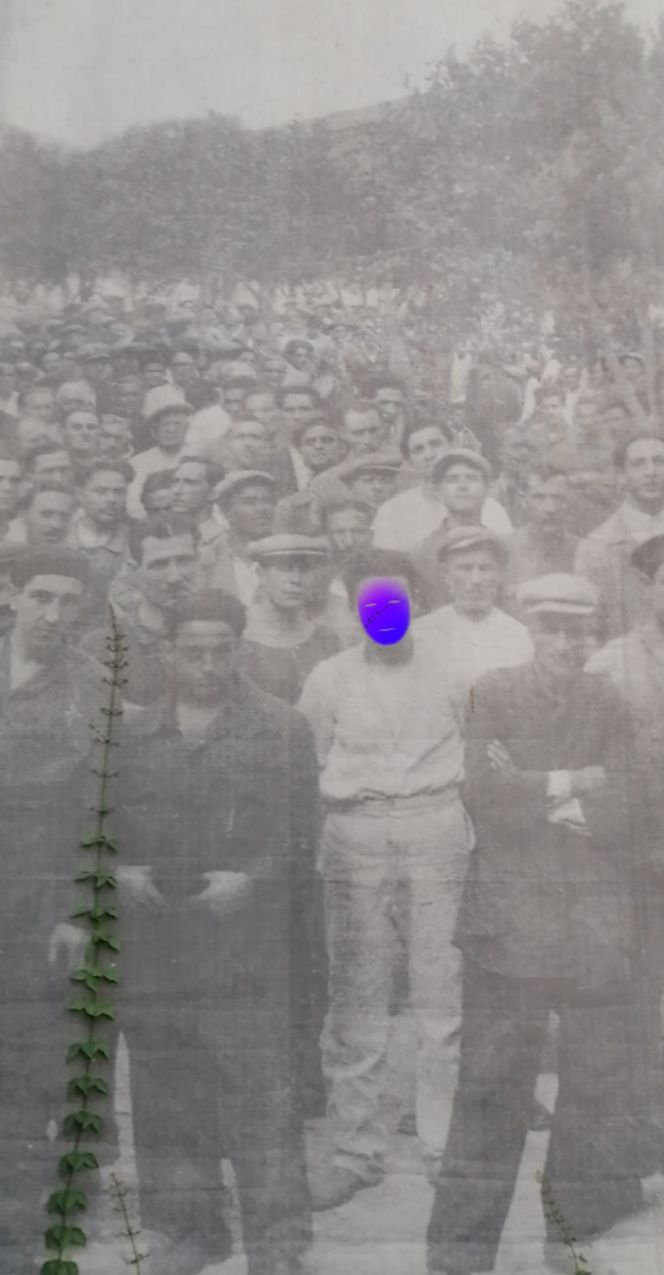
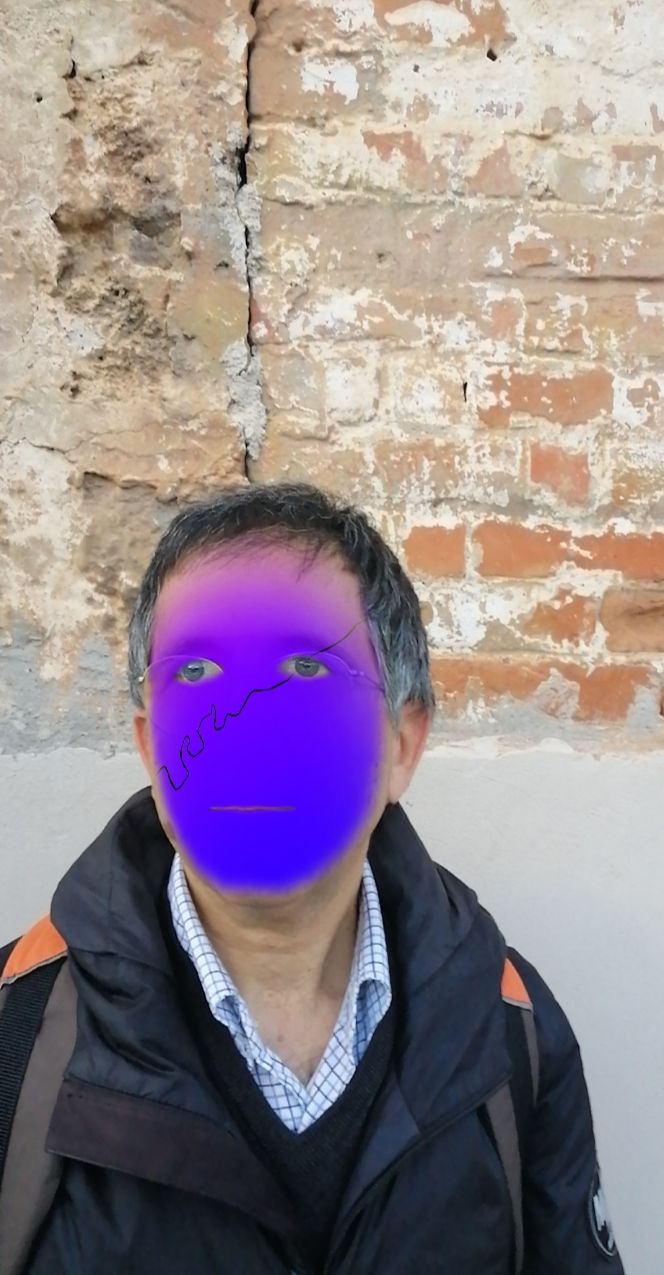
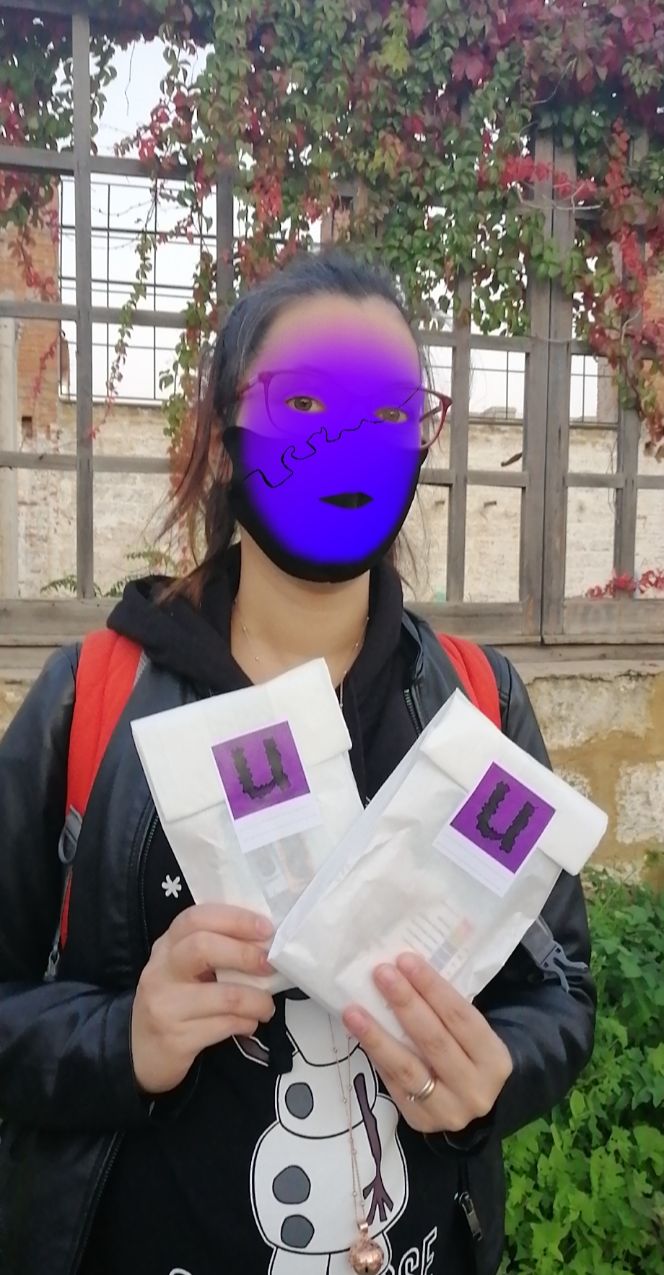
Both works are 3D-printed. Udatinos-Palermo, in glossy black, recalls volcanic lava rock, its base dissolving into pixels. Udatinos-Verona, in satin white, uses inverse lithophane: the stems are smooth on the outside, their printed surface hidden within. Only when lit from inside during Datapoietic Photosynthesis do they reveal an imprint composed of three overlapping textures: plant skin, map of the territory, traces of the river. The river returns in the Udatinos Snapcam filter: like a wearable mask it is the first tool through which Keepers can “embody” their new identity.
Udàtinos is built on a radical principle of inclusion: that anyone, regardless of age, background or technical expertise, can become a Water Custodian, and that environmental knowledge belongs to everyone.
Taxonomy, traditionally the exclusive domain of scientific expertise, becomes in this project a collective act, open to everyone. The classification of a new cybernetic species, the choice of its plant-icon, the naming of its anatomical parts: none of these are decided by experts alone. They emerge from a process in which scientific knowledge and community knowledge carry equal weight. This is not a symbolic gesture but a structural subversion of the hierarchy between expert and non-expert, between institution and citizen.
This principle extends to participation itself. Becoming a Water Guardian, a River Guardian, a Biodiversity Guardian requires no prior scientific knowledge or technical background. The project forms you as you live it, through direct contact with the river, with the data, with the community around you. The format "Guardian for a day" makes this accessible even to those who can commit only a single afternoon: families with children from age 6, school groups, individual citizens. All activities are free of charge.
In Verona, students from secondary schools and university departments worked alongside museum botanists and ecologists, each contributing a different form of knowledge to the same shared process.
The result is a new societal model: one in which environmental monitoring, artistic experience, and civic identity are not separate activities reserved for different audiences, but a single integrated practice open to anyone willing to go to the river and pay attention.
In Udatinos, participation is constitutive. The community does not validate decisions made elsewhere: it makes them. Citizens, students from secondary schools and universities, museum staff, ecologists, and civil society organisations such as Legambiente have been involved at every level, from the design of the work to its ongoing life on the river.
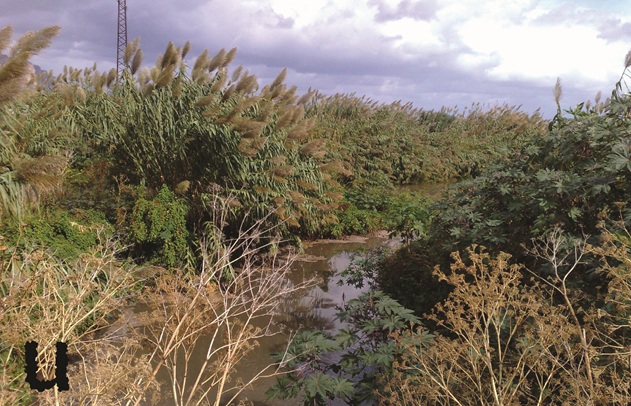
The most powerful demonstration of this principle is the Plant Game: a participatory workshop in which future Water Guardians were asked to choose the plant-icon that would incarnate the work. What emerged went far beyond a botanical preference. In choosing Reynoutria Japonica, one of the most invasive plants in the world, the community was not evaluating a plant: it was projecting its own image of the world onto it. What Jung calls the collective unconscious had spoken through an apparently scientific exercise.
From that moment, participants became active protagonists. Through the Datageneration ritual, performed directly on the riverbank with sensor kits, Water Guardians generate the environmental data that feeds the installation. Students trained in earlier phases became mediators toward families and the wider city, extending the project's reach beyond its initial community.
The impact of this involvement is concrete: the work's identity, its plant-icon, its data, and its civic network are all products of participation, not inputs to it.
Udatinos operates through a multilevel governance model that brings together institutions, communities, and knowledge systems at local, regional, and national scale, and introduces a radical innovation: the water itself as an active voice in the process.
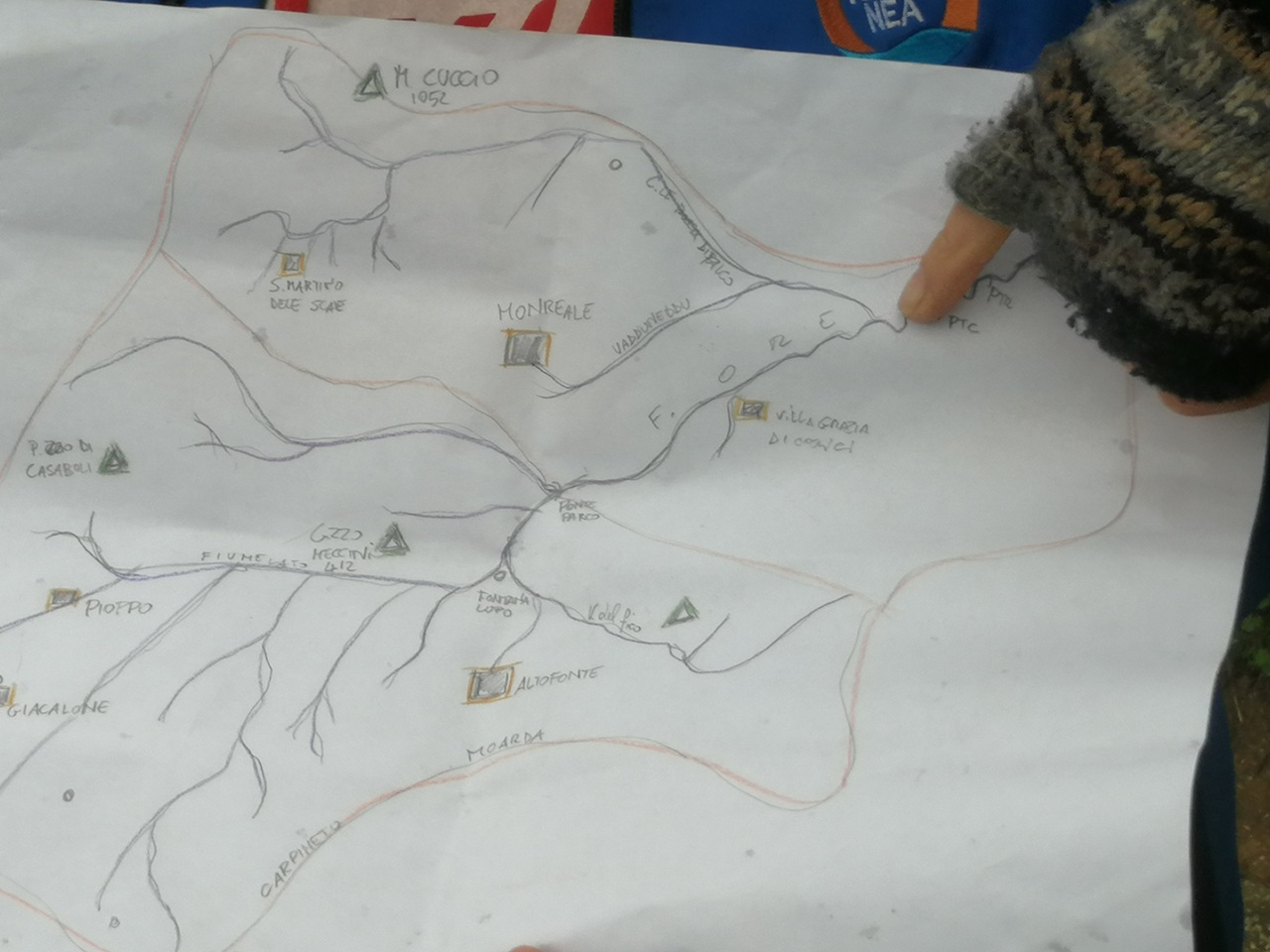
At the local level, the project has engaged a rich ecosystem of stakeholders. In Palermo, the Ecomuseo Urbano Mare Memoria Viva anchored the project institutionally, involving the Academy of Fine Arts, botanist Marco Giordano, LIPU Palermo (contributing fauna expertise, texts, images and audio), and three civic organisations united around the Oreto river: Comitato Salviamo l'Oreto (Save the Oreto Committee), Comitato Promotore per il Contratto di Fiume e Costa Oreto (Promoter Committee for the Oreto River and Coast Pact), and Forum Contratto di Fiume (River Pact Forum). In Verona, Museo di Storia Naturale, Musei Civici, University of Verona, Legambiente, and a network of secondary schools co-designed and co-implemented every phase, from the participatory selection of the plant-icon to the civic monitoring of the Adige. At regional level, Fondazione Cariverona and Urbs Picta provided strategic and curatorial framework, while open data from ARPAV, the Veneto Regional Environmental Protection Agency, grounded the project in verified environmental science. At national level, HER: She Loves Data brings the research and methodological foundation that connects Udatinos to a broader ongoing investigation into Datapoiesis and new forms of civic cohabitation.
But the governance of Udatinos does not stop at human actors. Through Datapoiesis the river itself becomes an agent in the system. What was invisible becomes concrete, perceptible, shared. The water speaks, and the community listens.
This model embodies a new approach to water resilience: one grounded in ecosystem awareness, community preparedness, and the transformative power of arts and culture as drivers of change.
Udatinos is transdisciplinary rather than merely multidisciplinary: disciplines do not sit side by side, each contributing its own separate layer. They contaminate each other, producing concepts and practices that none of them could have generated alone.
The fields involved span art and cyberecology, computer science, botany, environmental science, ecology, social sciences, and education. In Verona, the Department of Computer Science of the University of Verona contributed advanced sensor research and water monitoring technology, generating two university theses: one in Computer Science on the expansion of water sensing technologies, by Gianmarco Melchiori, and one in Art History on participatory and process art, by Martina Lonighi. The museum's botanist co-designed the participatory herbarium and the Plant Game, bringing rigorous scientific knowledge into a process that was simultaneously artistic, educational, and civic. Legambiente's ecologist accompanied communities to the river, connecting environmental activism with artistic practice.
But the most significant outcome of this transdisciplinary encounter is theoretical as well as practical. Udatinos represents the first field experiment in which Datapoiesis and Fragile Technology were tested simultaneously in a real context, with a real community, on a real river. Datapoiesis as the transformation of invisible environmental data into aesthetic and relational form. Fragile Technology as a model in which the artwork's survival depends on the community's care.
These are not artistic metaphors. They are concepts forged at the intersection of art, science, and technology verified through practice.
Udatinos is built on a sustainable economic model that combines institutional embedding, educational programming, and research partnerships, generating value that extends well beyond the initial artistic residency.
The foundational element is the project's capacity to become a permanent infrastructure of cultural institutions. In Palermo, Udatinos transformed from a temporary artwork into the Ecomuseo Urbano Mare Memoria Viva most followed educational format, generating continuous engagement with schools, families, and citizens without requiring constant reinvestment. This institutional embedding model is designed to be reproduced: cultural institutions, museums, and municipalities become long-term hosts and co-owners of the project, integrating it into their regular programming and funding cycles.
The educational formats (Water Keepers, school programs, university workshops) represent a concrete source of revenue and partnership for host institutions. Universities contribute through research collaborations and co-funding, as demonstrated by the University of Verona's Department of Computer Science, which brought both expertise and institutional resources to the project.
At a broader level, the project's vision is grounded in a simple but powerful premise: wherever there is water, there is a potential home for Udatinos. Rivers, lakes, coastlines, any aquatic ecosystem shared by an urban community represents an opportunity to deploy the model, connecting cities through their relationship with water and generating a network of institutions, communities, and data that grows stronger with each new node.
Initial funding has been provided by Fondazione Cariverona within the Panta Rei program, establishing a replicable model of private cultural foundation support.
Udatinos is designed to scale not through simple replication, but through what the project itself calls a rhizomatic model: it can regenerate from fragments, adapt to new environments, and take root in different territories without losing its identity.
The proof of concept already exists. The journey from Palermo to Verona demonstrates that the model transfers across different cities, river ecologies, communities, and institutional contexts, each time producing a new, distinct expression of the same core methodology. Udatinos-Palermo and Udatinos-Verona share the same DNA but are not identical: they reflect the specific territory, the specific river, and the specific community that generated them.
The transferable elements are concrete and well-defined. The Plant Game methodology can be adapted to any local biodiversity context. The Datageneration ritual can be performed on any body of water with accessible environmental data. The Guardian formats (for a day, for a season, for a school year) can be integrated into any cultural institution's educational programming. The Datapoietic Botanical Garden model can be deployed in any museum or public space with a relationship to water.
The long-term vision is a network of cities connected through water: each hosting its own Udatinos, each contributing data and community knowledge to a growing collective intelligence about the state of urban aquatic ecosystems across territories. Wherever there is a river, there is a community waiting to become its Keeper.