Arts, Culture, and Heritage as Drivers of Change
Bridge over Foša
Footbridge over Foša, Trogir, Croatia
Bridge over Foša is a contemporary steel structure in a UNESCO-protected city. Its slender, hyperbolic paraboloid form blends into the historic context while introducing a distinct identity. Prefabricated in a local shipyard and installed in one day, it highlights engineering innovation and local craft. More than a pedestrian crossing, it acts as a vital social hub and cultural landmark, enhancing the urban fabric while respecting the historical integrity of its ancient surroundings.
Croatia
Local
Trogir
Mainly urban
It involves a physical transformation of the built environment (hard investment)
Yes
2025-12-06
No
No
No
Organisation
The new Trogir pedestrian bridge is a transformative urban intervention moving beyond simple infrastructure toward a paradigm shift in connecting people, heritage, and nature. A defining feature is its deeply participatory foundation. Following a public competition, the project evolved through a period of intense public scrutiny and iterative design. Rather than a simple top-down implementation, the bridge became a subject of active debate concerning its necessity and aesthetic integration. This iterative 'back-and-forth'—driven by a joint effort of multiple actors—ensured that the final realization addressed public concerns while maintaining architectural integrity.
By replacing a dysfunctional wooden structure with a high-performance steel shell, the project achieves profound sustainability through a regenerative approach. Leveraging local shipbuilding know-how, the bridge was designed as a single segment and installed in one day via barge, minimizing site impact. A core achievement is the ethical management of history: the old structure was deconstructed and repurposed into sculptures. By auctioning these pieces for charity, the project transformed material waste into social and emotional capital, weaving the bridge’s legacy into the private and public fabric of Trogir.
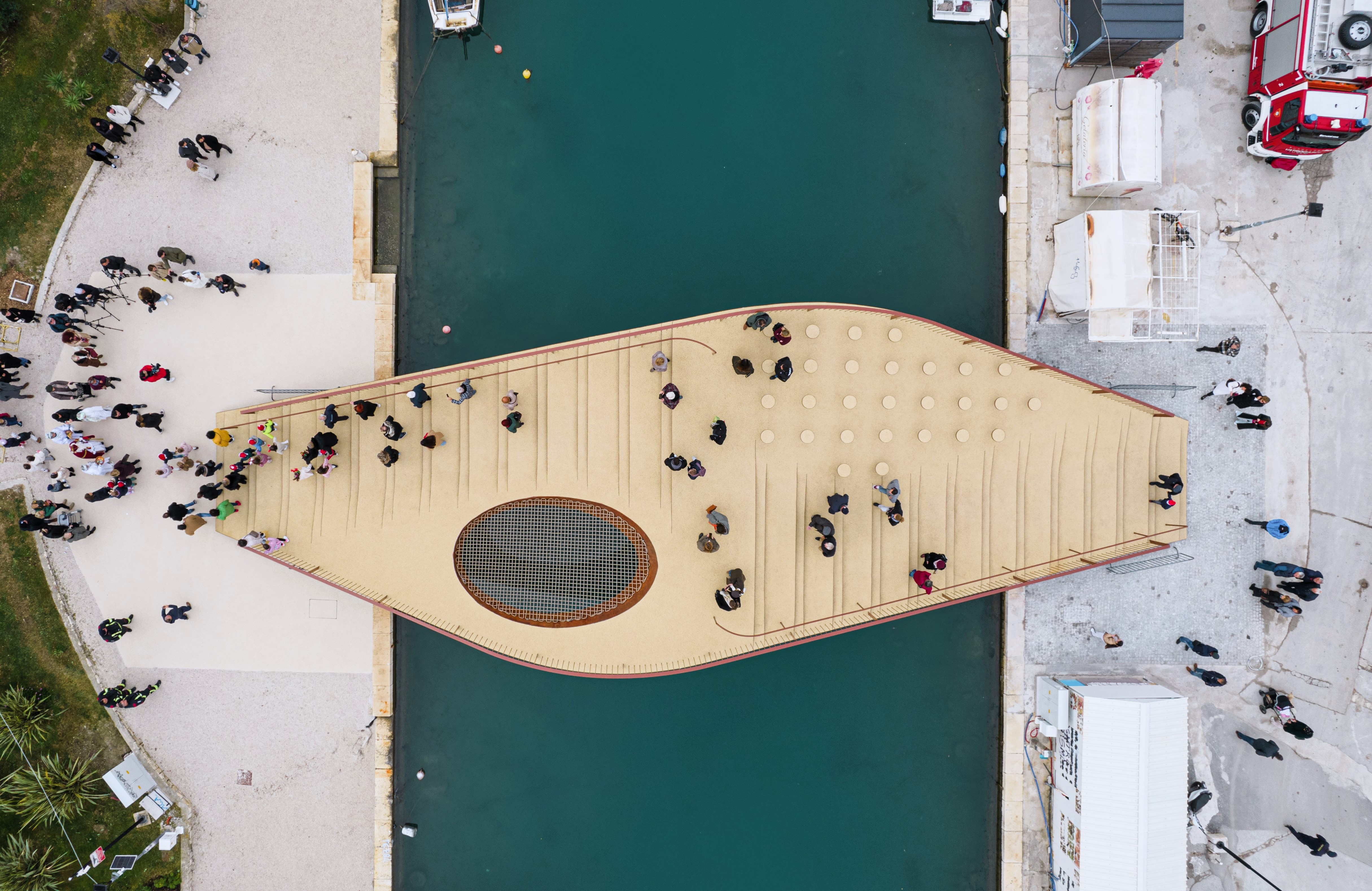
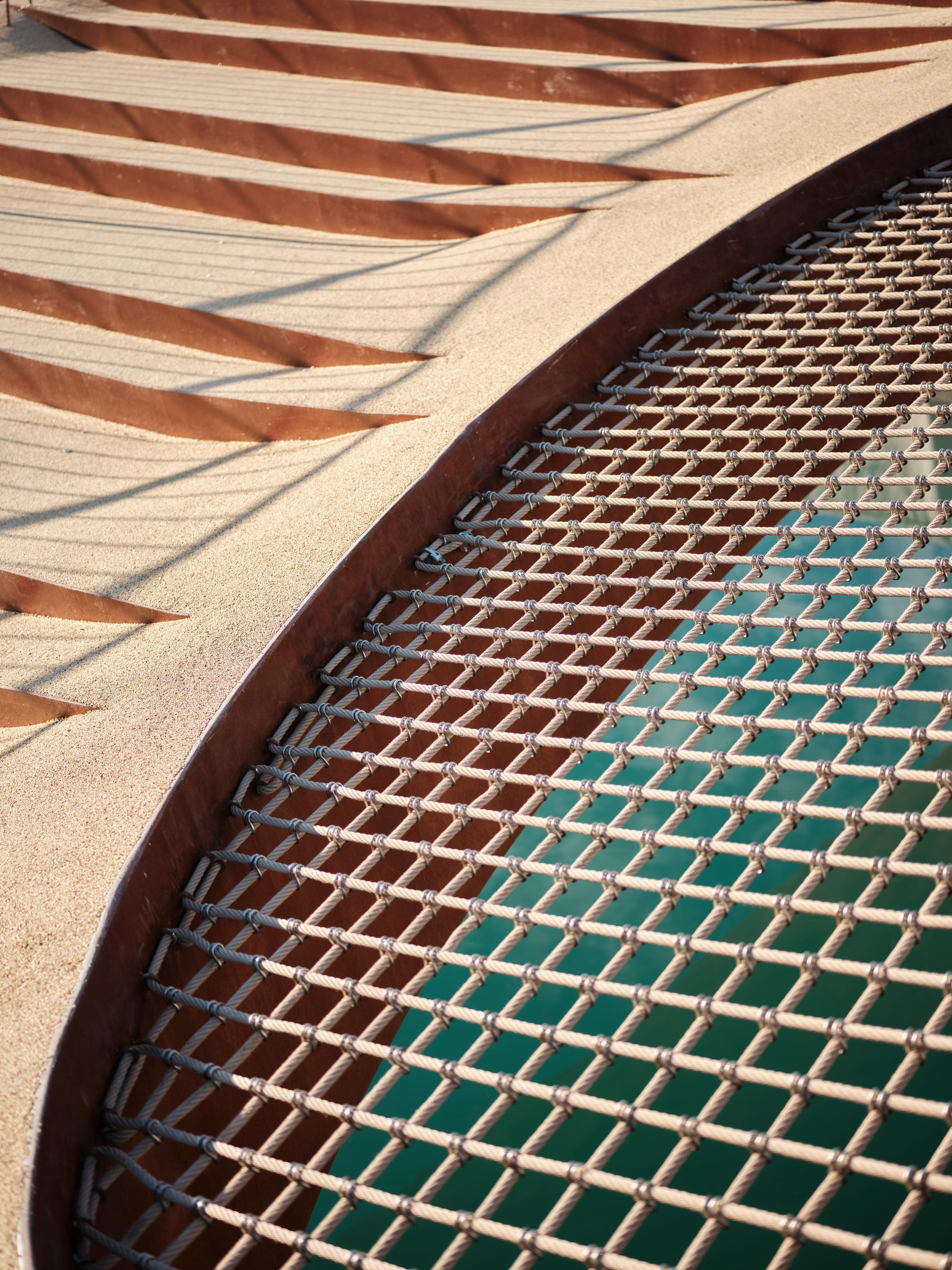
In line with NEB values, the bridge offers a meaningful experience as a "floating living room" with integrated seating and play nets. Its elegant profile respects historical vistas, while the uniform 15 cm step height ensures safe, inclusive access. The long-term impact is rooted in "Togetherness"—by bridging traditional craftsmanship with modern democratic strategies, the project proves that even small-scale architecture can spark a global dialogue on living together within our planetary and cultural boundaries.
This model of 'responsive infrastructure' now serves as a blueprint for local urban renewals, proving that conflicting heritage and modern needs can coexist through patient mediation.
The story of the Trogir bridge began with a shared sense of loss and a collective need for change. For years, the existing wooden bridge—a vital artery connecting the historic core with the mainland—had been deteriorating, becoming both an eyesore and a safety hazard. The project was born not from a top-down bureaucratic decision, but from a public outcry for a solution that would respect Trogir’s UNESCO heritage while embracing modern functionality.
Implementation started with a public architectural competition, followed by a period of intense public scrutiny. Rather than a linear process, the project evolved through rigorous public discourse and debate regarding its necessity and design. This transparent dialogue was crucial; navigating public feedback turned initial skepticism into a shared acceptance of the "floating living room." Concurrently, we prioritized the ethical management of history: the old structure was deconstructed and its materials repurposed into unique sculptures.
The ground-level implementation was a tribute to local heritage. Instead of traditional, invasive construction that would paralyze the city for months, we looked toward the sea. Leveraging Trogir’s centuries-old shipbuilding expertise, the bridge was constructed as a single, high-tech steel segment in a local shipyard. The climax of the story was the "one-day installation"—the bridge arrived on a barge and was lifted into place in a matter of hours. This method minimized environmental stress and turned the construction into a public spectacle, celebrating local "know-how." Today, the bridge stands not just as a path, but as a testament to what happens when a community, its industry, and its architects speak the same language.
Participatory Design
Heritage Preservation
Local Craftsmanship
Social Inclusion
Regenerative Infrastructure
The footbridge over Foša in Trogir replaces an unsafe wooden structure, transforming failing infrastructure into a long-lasting, low-impact public asset. Constructed as a lightweight steel shell with a Corten-like rust patina, it is optimized for structural efficiency, using minimal material while ensuring extreme durability against the harsh marine environment with virtually no maintenance. Furthermore, the walking surface incorporates recycled rubber, maximizing the use of secondary raw materials, ensuring long-term adaptability, and significantly lowering the project's overall carbon footprint.
The project advances circularity by embedding reuse into material and social processes. The old bridge's dismantling generated zero waste: its elements were repurposed by art students into sculptures and auctioned for charity, generating profound community value. Drawing on Trogir's shipbuilding heritage, the new bridge acts as a prototype for a circular construction model. Fabricated locally as a single unit, it was transported by sea on a barge and installed in just one day. This closed-loop process eliminated the ecological disruption of a traditional construction site while boosting the local economy and engaging local industries in a shared sustainable cycle.
Beyond minimizing harm, the project contributes to regeneration by reinforcing the bond between people, place, and the coastal ecosystem. Its permeable design preserves visual and ecological continuity. By transforming this innovative engineering prototype into a scalable blueprint, it actively invites other municipalities to efficiently reproduce this low-waste model for spanning rivers or canals. Envisioned as a vibrant social hub rather than a mere crossing, the bridge encourages slower pedestrian movement and fosters social interaction, supporting a paradigm shift towards sustainable urban behaviors. As both infrastructure and public space, it gives back more than it takes.
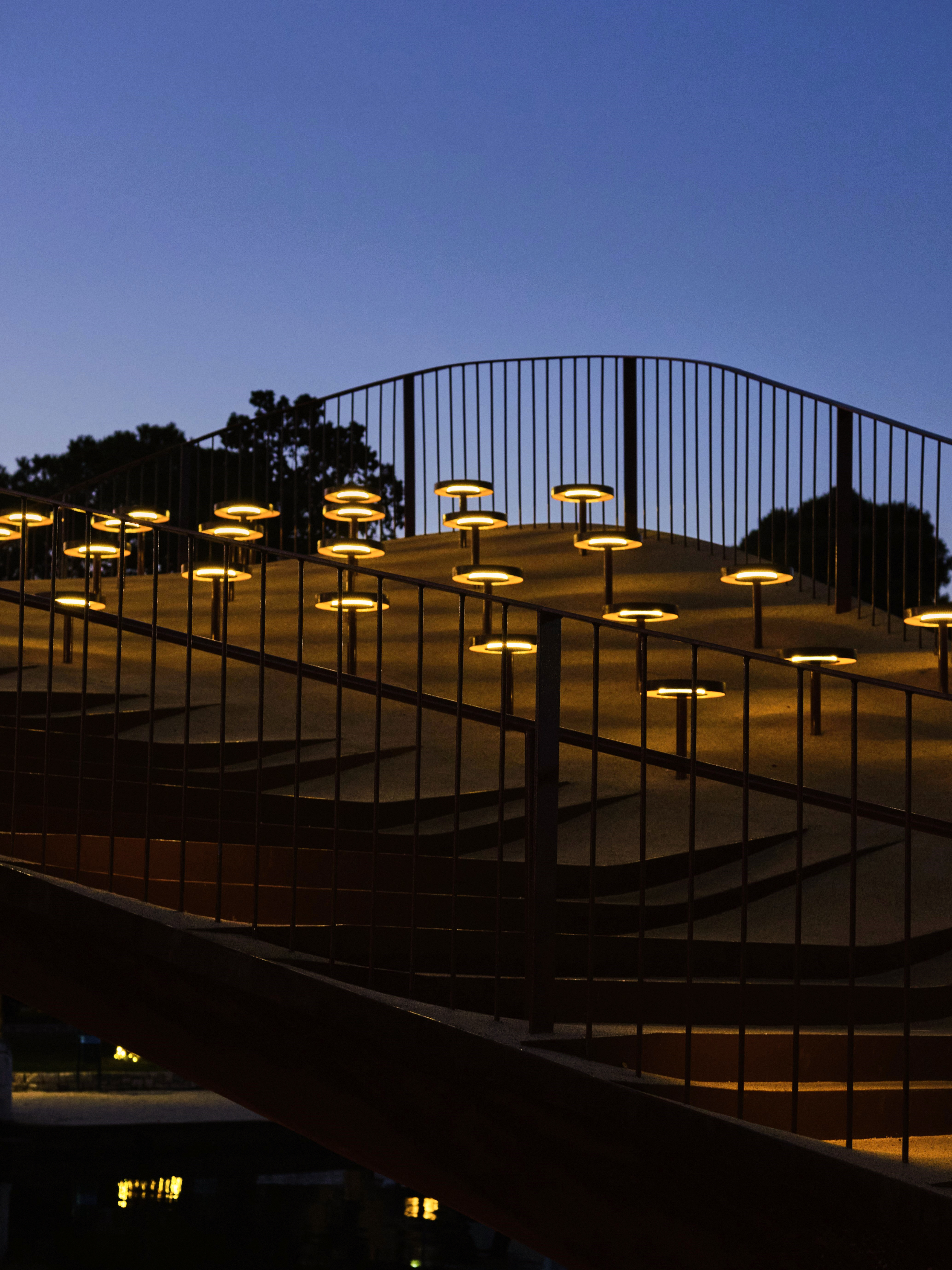
The new pedestrian bridge over Foša in Trogir goes beyond its utilitarian function, enhancing both the physical and emotional well-being of its users. The bridge engages all senses: its smooth, recycled rubber walkways provide tactile comfort, the subtle ambient and accent lighting guides movement and creates a safe, inviting atmosphere, while the perforated steel shell allows visual and auditory interactions across levels. Its thin, elegant asymmetrical hyperbolic paraboloid form not only integrates harmoniously with the UNESCO-listed old town, preserving views and respecting the historical context, but also subtly varies along its length. These shifts in slope, curvature, and height create a dynamic experience for pedestrians, guiding movement intuitively and offering ever-changing perspectives of the surroundings.
Local shipbuilding knowledge informed the design and construction, using modular steel elements assembled in a nearby shipyard and transported to the site in one day, reflecting Trogir’s industrial heritage. Materials, including corten steel and environmentally conscious finishes, create a tactile and aesthetic experience while ensuring durability and minimal maintenance.
The bridge fosters social interaction and collective experiences through informal seating, integrated nets for play, and spaces that encourage lingering, observation, and community engagement. Its design invites exploration, recreation, and spontaneous encounters, strengthening a sense of belonging for residents and visitors alike. By combining architecture, engineering, design, environmental sciences, and social insights, the project creates a multisensory, contextually aware space that celebrates local culture, heritage, and nature. It encourages reflection on daily life and long-term use, promoting sustainable behaviors and emotional attachment, transforming the bridge into a vibrant civic and cultural landmark.
Bridge over Foša transforms an exclusionary crossing into an open, shared space. Designed as a collective urban platform, it functions as a public living room, ensuring that high-quality design is available to all citizens regardless of socio-economic status. Its gentle, continuous slope and expanded walking surface support diverse users of all ages and abilities, while integrated seating, nets, and informal gathering zones invite people to stay and interact. By removing physical, social, and economic barriers, the bridge creates a common ground where everyday encounters between different groups become possible, fostering a truly inclusive urban environment. The project’s collaborative ethos is deeply embedded in the fabrication process. Its construction in a local shipyard reactivates a declining industry rooted in the area's identity. By engaging local workers and specialized knowledge, the project preserves skills at risk of disappearing and strengthens collective pride. This strategic choice ensures that Trogir’s maritime identity remains a living resource rather than a museum relic, fostering intergenerational exchange and a shared sense of responsibility toward cultural and productive heritage. It validates the local workforce as key contributors to the city’s modern transformation. Since its completion, the bridge has evolved into a vibrant social condenser, hosting concerts, exhibitions, and civic protests. It serves as an urban node where diverse voices and perspectives meet. By providing a stage for free expression and collective growth, the bridge reinforces solidarity and raises awareness of the right to the city, serving as a replicable model for inclusive, community-driven urban transformation. Its non-programmed character empowers residents to shape the space themselves, promoting new forms of living together based on dialogue and co-creation. Ultimately, it shows how small-scale infrastructure can generate lasting social cohesion and systemic change.
The footbridge over Foša in Trogir establishes an inclusive stakeholder engagement process from its earliest stages. Following the architectural competition, public discussions, panels, and media coverage enabled immediate community feedback through physical and digital platforms, ensuring a shift from one-directional communication to an open, iterative dialogue.
The project demonstrates strong awareness of potential exclusion through a universal design approach that considers diverse user needs. By implementing “Design for All” principles, hazardous steps were replaced with a continuous 15 cm rise along the bridge slope, ensuring accessibility and ease of movement. The use of recycled rubber and cork further enhances safety and comfort.
Stakeholders actively contributed through discussion, directly informing key spatial decisions. Concerns about the loss of social space reshaped the project, transforming it from a transit point into a multifunctional platform for gathering and everyday use. This was reinforced through transdisciplinary collaboration, bringing together architects, engineers, electricians, constructors, and local shipbuilders. The integration of academic knowledge with local craftsmanship resulted in a cohesive, context-sensitive, and high-quality solution.
The project fosters long-term grassroots activity by enabling flexible use and self-organization. It promotes shared, symbolic ownership through participatory practices, most notably by repurposing and auctioning elements of the old bridge, allowing them to re-enter the city’s collective memory in new forms. Designed as an open system, the project reduces dependency on its authors, empowering the community to take agency and sustain ongoing use.
The Foša Pedestrian Bridge in Trogir, within a UNESCO heritage site, engages local networks by involving the community in design discussions, workshops, and public events, including a participatory process for repurposing segments of the old bridge. Constructed with local shipbuilders and fabricated in a nearby shipyard as a single element, the bridge was transported by tugboat and installed on prepared supports in just one day, minimizing disruption to the site and local environment while highlighting local craftsmanship. Its design, inspired by Trogir’s shipbuilding tradition, integrates seamlessly into the historic context while creating multifunctional public spaces. The bridge is no longer just a transit point; it has become a vibrant hub for the local community, a tourist photo spot, and a venue for concerts, cultural events, and informal gatherings. Safe, accessible pathways with recycled rubber surfaces, informal seating, and perforated areas encourage daily use and social interaction. Located precisely at the transition between the historic core and modern urban areas, the project exemplifies on a global level how to respect UNESCO heritage while connecting it to contemporary urban life. The project operates across scales: enhancing the immediate neighborhood, linking to the historic urban fabric, and offering a replicable model for culturally sensitive, sustainable urban infrastructure worldwide. Sustainability is embedded through material choices, efficient construction, and community-centered design, ensuring long-term adaptability. By combining local engagement, heritage respect, and functional innovation, the bridge exemplifies an inclusive, place-based approach that reinforces local identity and contributes to global discourse on public space and infrastructure design.
The new pedestrian bridge in Trogir is conceived as a transdisciplinary project that brings together architecture, structural engineering, urbanism, design, environmental thinking, and local shipbuilding knowledge. From the earliest stages, the project connects these fields through a shared design and implementation process, where architects, engineers, and shipyard experts collaborate to develop a solution that exceeds pure functionality and becomes a social and cultural asset.
A common problem definition was established through site analysis and dialogue between stakeholders: the need to replace an inadequate structure while preserving the visual integrity and historical value of the UNESCO-listed urban context. This shared understanding aligns technical, spatial, and social ambitions into one coherent goal. The project involves multiple educational backgrounds, from architects and civil engineers to skilled shipbuilders.
While the bridge could have been fabricated in any generic metal workshop, the decision to produce it in a local shipyard was intentional. By relying on local craftsmanship and existing shipbuilding expertise, the project supports the regional economy while embedding tacit knowledge and tradition into the final outcome. This approach elevates production from a purely technical task to a culturally meaningful act.
The project bridges both close and distant disciplines. While architecture and engineering operate in proximity, the integration of shipbuilding introduces a greater disciplinary distance, bridged through continuous collaboration and iterative communication. Non-formal knowledge, particularly that of local craftsmen, is valued equally alongside formal expertise. The result is a unified solution that generates new knowledge, especially in translating shipbuilding principles into architecture, while fully integrating structural, spatial, and social aspects.
The Bridge over Foša was commissioned and financed by the local authority as part of a broader investment in public space and urban infrastructure. Its long-term sustainability is not based on revenue generation, but on careful design decisions that minimize lifecycle costs and environmental impact.
From the outset, the project prioritized durability, repairability, and resource efficiency. Materials were selected for their resilience in a demanding marine environment, while key elements were designed to be easily maintained and repaired rather than replaced—supporting a circular approach to construction.
Equally important was the integration of local knowledge. The bridge was developed in close collaboration with local craftsmen and companies, particularly those connected to the shipbuilding industry. This ensures that maintenance and future interventions can be carried out using locally available skills and resources, strengthening the local economy and reducing dependency on external systems.
In this sense, the project’s sustainability lies in its long lifespan, low maintenance requirements, and its rootedness in local expertise—aligning with the principles of the New European Bauhaus: sustainability, aesthetics, and inclusion.
The new pedestrian bridge over Foša in Trogir demonstrates significant potential for replication and transfer to other locations, beneficiary groups, and contexts through several key aspects. First, the concept of a steel shell structure with variable cross-section in an asymmetric hyperbolic paraboloid can be applied to bridges in historic or sensitive urban environments where minimal visual dominance is desired, while offering elegance, lightness, and contextual integration. Second, the methodology of fabrication and installation – local production in a shipyard, transport as a single element, and installation in one day – can be transferred to projects where environmental impact must be minimized, construction time reduced, and local know-how utilized. Third, the integration of functional and social elements such as perforations, nets, informal seating, and rubberized walking surfaces provides a model for turning infrastructure into spaces for gathering, interaction, and recreation, applicable in urban parks, pedestrian connections, or regeneration projects. Fourth, sustainable material choices – corten steel and recycled components – and ambient lighting can be replicated as principles for environmentally conscious and visually engaging urban design. Finally, the bridge illustrates how projects can respect local heritage (Trogir’s shipbuilding tradition) and cultural context, which can be adapted for other communities, linking infrastructure to place identity while generating social and cultural value. This project serves as an exemplary model for scalable, multifunctional, and sustainable infrastructure interventions in historic and urban contexts both across Croatia and internationally.