Enhancing Circularity, Sustainability, and Innovation
The Ecological Caravela
The Ecological Caravela: Brazilian NbS technology regenerating waters and reconnecting cities
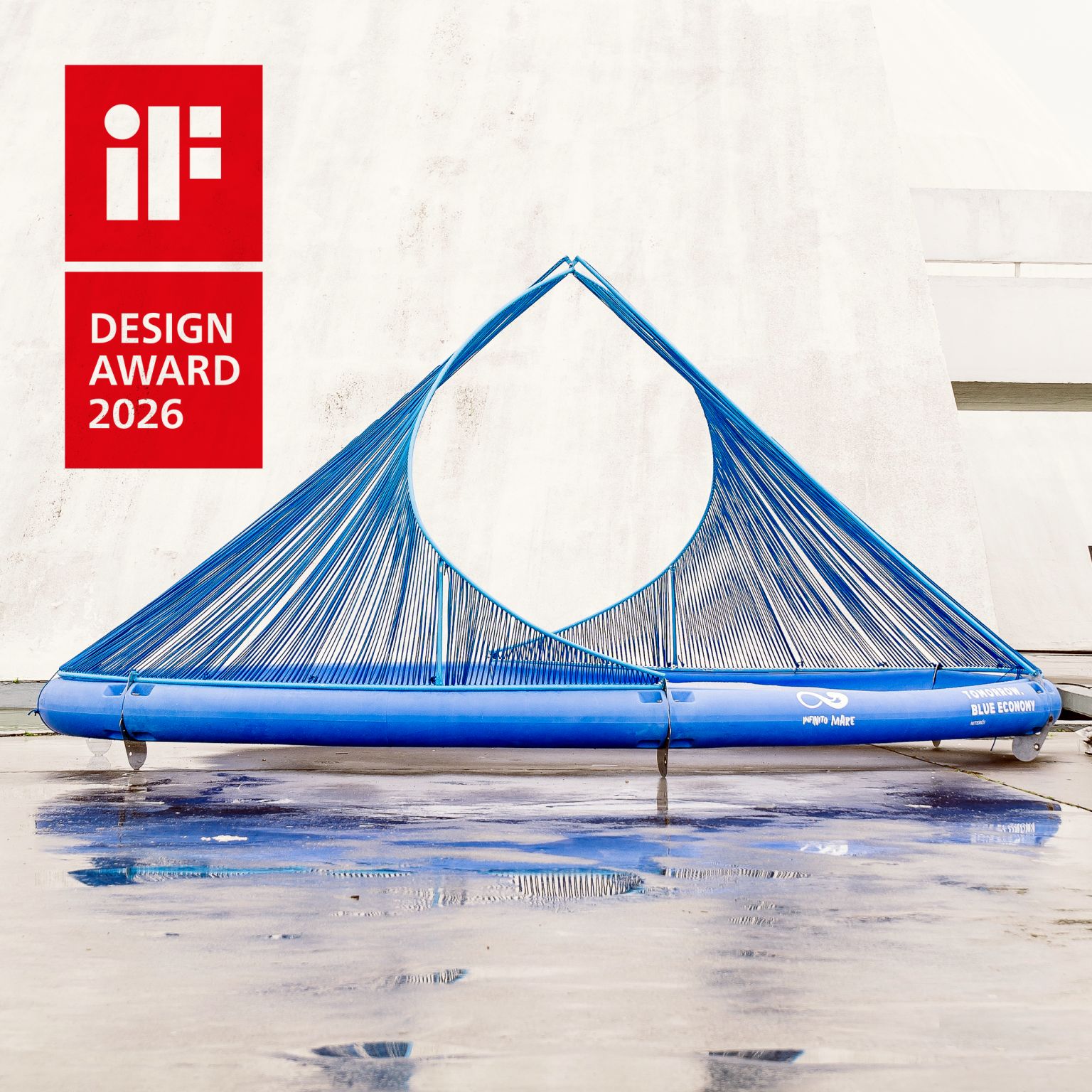
The Ecological Caravela is a Brazilian nature-based technology that merges design, science and ecology to regenerate aquatic ecosystems. Inspired by historic caravels, the floating structure works as a living ecological station where native algae capture blue carbon and promote ecosystem services while generating environmental data. Both functional and sculptural, it acts as ecological infrastructure, an urban sculptural intervention and a cultural symbol of care for waters and territories.
Brazil
Regional
Although the project has not yet completed one year of commercial operation, the Ecological Caravela has already been implemented in six cities across three Brazilian states, including Rio de Janeiro and Niterói (Rio de Janeiro), Belo Horizonte (Minas Gerais), Porto Alegre (Rio Grande do Sul), and São José dos Pinhais (Paraná).
Mainly urban
It involves a physical transformation of the built environment (hard investment)
Yes
2025-07-03
No
No
No
Organisation
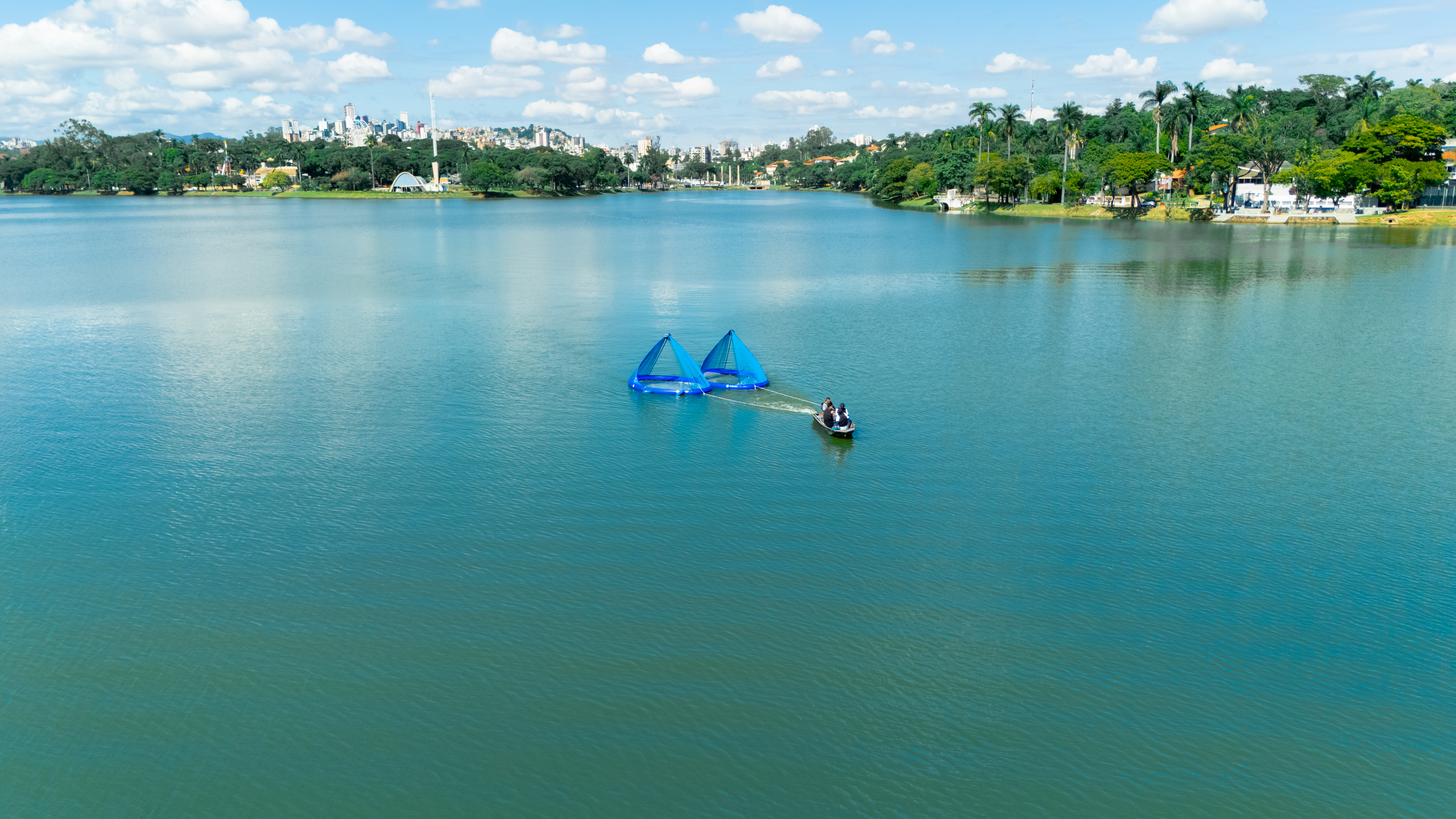
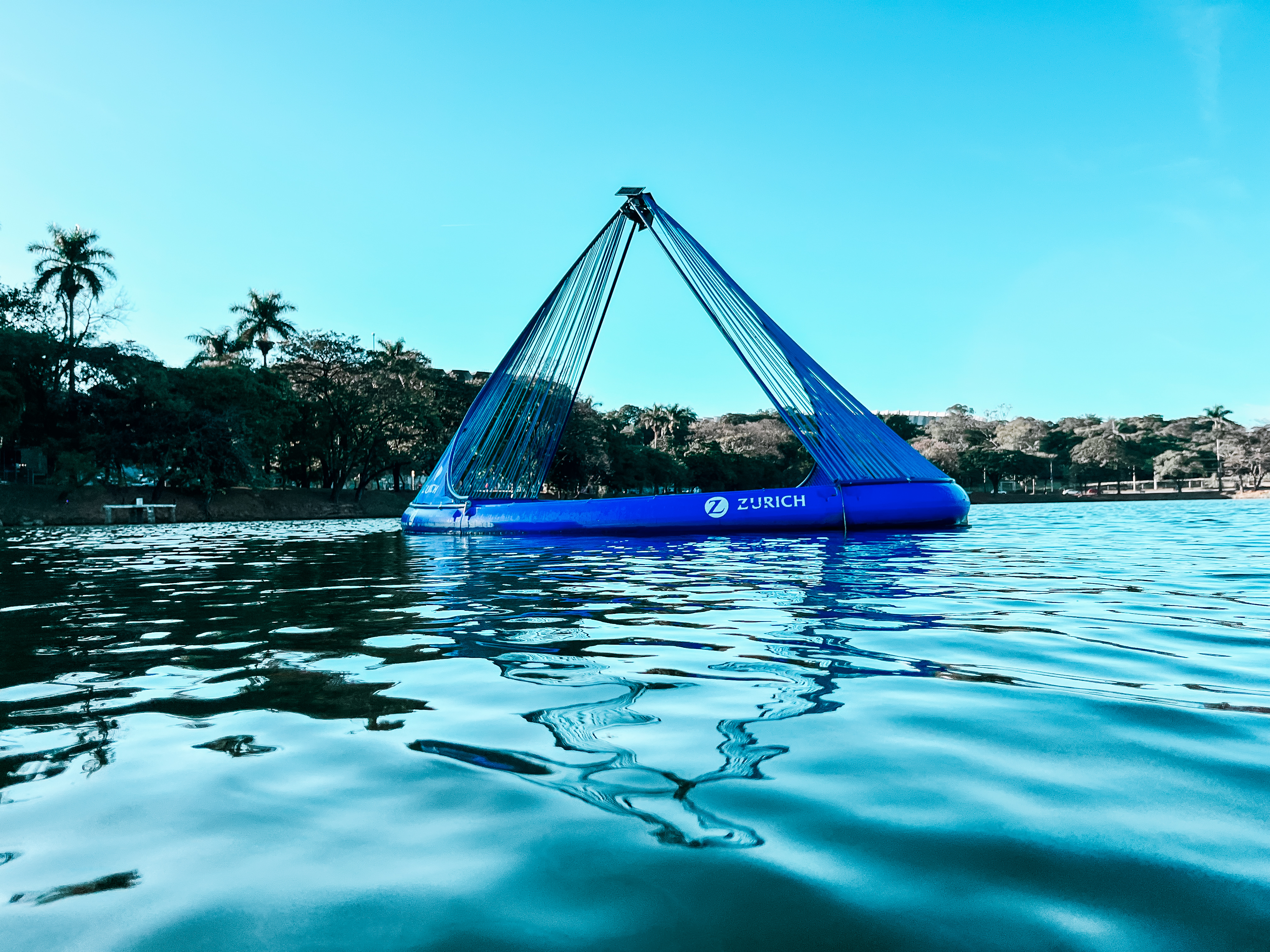
The Ecological Caravela has been implemented in Pampulha Lake, in Belo Horizonte, Brazil, a UNESCO World Heritage cultural landscape known for the modernist architectural ensemble designed by Oscar Niemeyer. Beyond its iconic buildings, the lagoon itself — including its water surface — is also protected as part of the heritage site. This required the project to adopt a highly sensitive approach capable of operating within a protected cultural landscape without altering its architectural integrity.
The Caravelas were introduced as floating ecological stations that function simultaneously as regenerative infrastructure and sculptural urban interventions. Their design allows the system to operate directly in the water while respecting heritage preservation rules, as the structures are reversible and do not require permanent modifications to the protected site. In this way, the intervention contributes to safeguarding the lake itself as part of the cultural heritage landscape.
Through the growth of native algae, the system captures blue carbon and promotes ecosystem services while generating continuous environmental data that supports ecological monitoring and restoration strategies. The Caravelas also transform water care into something visible in the urban landscape, inviting citizens to reconnect with the lagoon and recognize the ecological value of urban waters.
Although the project has less than one year of commercial operation, the Ecological Caravela has already been implemented in multiple Brazilian cities across different states, demonstrating its potential as scalable ecological infrastructure for urban water regeneration and climate-resilient cities. The project is being implemented in partnership with Zurich Insurance Brazil and local institutions, demonstrating how design-driven nature-based solutions can support cities in protecting cultural landscapes while advancing ecological regeneration and climate resilience.
The Ecological Caravela project in Pampulha Lake emerged from an innovation partnership with Zurich Insurance Brazil. The relationship between Infinito Mare and Zurich had already been developing through conversations on climate innovation when the team was invited to participate in the Zurich Innovation Championship. After winning the Brazilian stage of the competition, the project gained momentum and Zurich decided to support the first large-scale real-world test of the technology.
Together, partners chose Belo Horizonte as the site for this pilot implementation. Pampulha Lake sits at the heart of the city and is part of a UNESCO World Heritage cultural landscape, internationally known for the modernist ensemble designed by Oscar Niemeyer. At the same time, the lagoon represents a common challenge for many urban waters: reconciling heritage preservation, urban life and ecological regeneration.
Because the lagoon itself is part of the protected heritage landscape, the implementation required a careful institutional process. It took five months to obtain the necessary authorizations, including approvals from environmental and heritage authorities, ensuring that the intervention respected the integrity of the site.
On April 4, 2025, a fleet of four Ecological Caravelas was installed in the lagoon. Designed as floating ecological stations, the structures support the growth of native algae that capture blue carbon, promote ecosystem services and generate environmental data. The project was intentionally located in Pampulha to study a symbolic urban lake and generate knowledge that can inform restoration strategies for similar waters in cities around the world.
Through this collaboration between a Brazilian climate-tech startup, a global insurer and local institutions, the project demonstrates how design-driven nature-based solutions can be implemented in culturally significant urban landscapes while supporting ecological regeneration and climate resilience.
Nature-based solutions
Ecological infrastructure
Urban water regeneration
Design-driven innovation
Urban sculptural intervention
The Caravela addresses challenges faced by urban waters while respecting the cultural value of the places where it operates. In Pampulha Lake, a UNESCO World Heritage cultural landscape, the project demonstrates how ecological regeneration can occur without altering the integrity of protected urban environments.
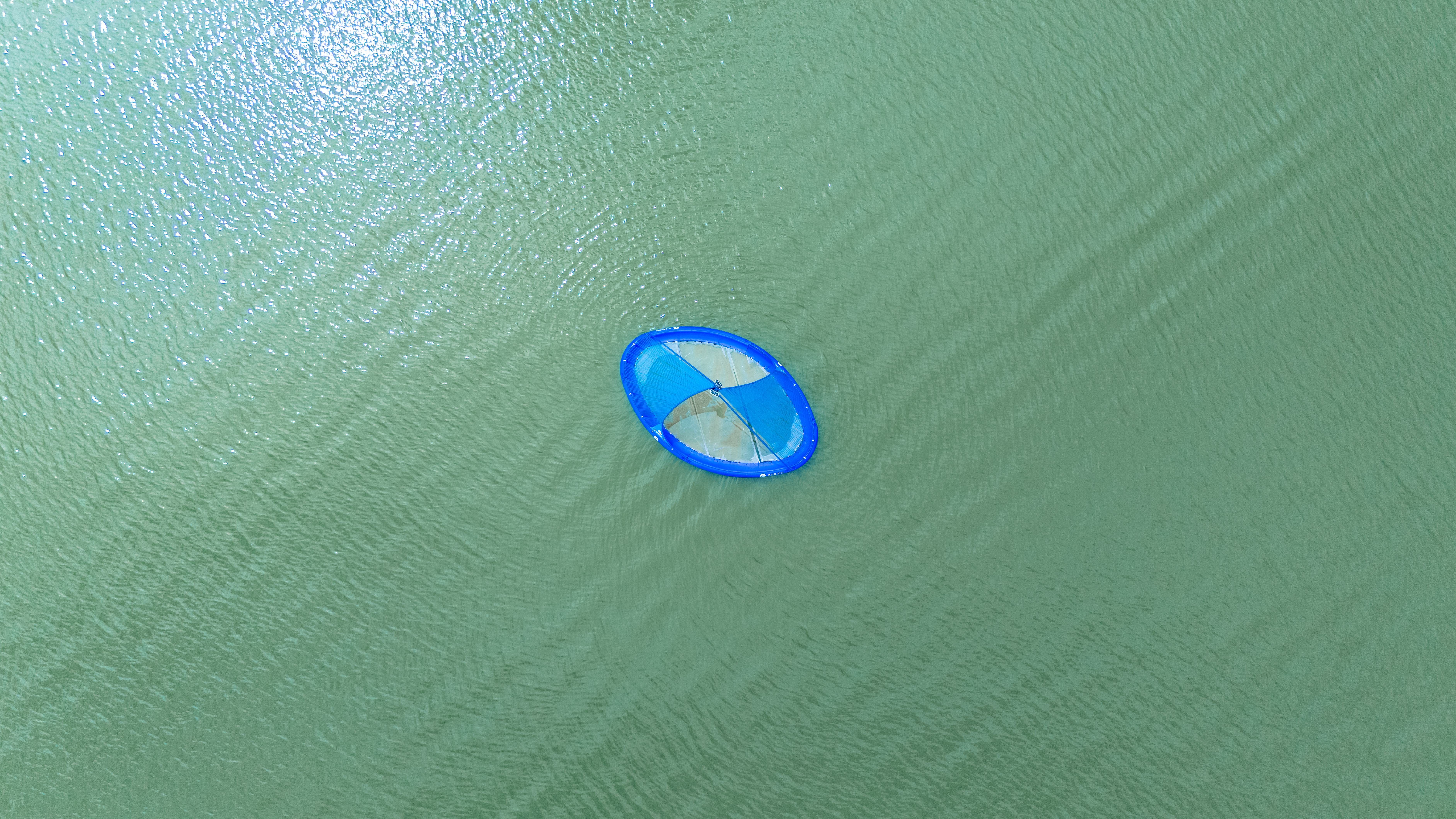
The floating structures function as living ecological stations that support the growth of native algae. Through this natural process, the system captures blue carbon, promotes ecosystem services and helps rebalance aquatic conditions while generating environmental data. In the first three months of operation, the Caravelas filtered more than 213 million liters of water, equivalent to 104 Olympic swimming pools, while generating ecological intelligence for urban water management.
The project addresses sustainability from multiple dimensions. Environmentally, it contributes to the regeneration of aquatic ecosystems using a nature-based approach that works with biological processes rather than energy-intensive technologies. Socially and culturally, the Caravelas transform water care into a visible element of the urban landscape, reconnecting citizens with lakes, rivers and coastal environments often overlooked in cities.
In Pampulha, the intervention was carefully designed to respect the heritage status of the lake, whose water surface is also protected as part of the cultural landscape. The sculptural design allows the system to operate without permanent alterations to the site, functioning simultaneously as ecological infrastructure and an urban sculptural intervention.
The project demonstrates how design, science and nature-based solutions can converge to deliver beautiful, sustainable and inclusive transformations in urban environments while preserving the cultural heritage landscape where it operates. In just three months, the project also contributed directly to eight United Nations Sustainable Development Goals: SDGs 3, 6, 9, 11, 12, 13, 15 and 17.
The Ecological Caravela addresses environmental, social and cultural challenges related to urban waters by combining ecological regeneration, design and public engagement. Installed in Pampulha Lake — a UNESCO World Heritage cultural landscape — the project demonstrates how nature-based solutions can help restore aquatic ecosystems while respecting protected urban environments.
Environmentally, the floating structures function as living ecological stations that support the growth of native algae. These algae capture blue carbon, promote ecosystem services and help rebalance aquatic conditions while generating continuous environmental data. This allows cities to better understand the ecological dynamics of their waters, strengthening climate resilience and supporting more informed, data-driven environmental management and decision-making.
Socially and culturally, the project transforms water regeneration into visible urban infrastructure. Rather than hiding environmental processes, the Caravelas act as sculptural elements within the landscape, reconnecting citizens with lakes and waterways often overlooked in contemporary cities. This visibility encourages public awareness, environmental education and a renewed relationship between people and water.
Economically and strategically, the system offers cities a scalable and energy-efficient approach to water regeneration that works with natural biological processes rather than intensive mechanical treatment systems. This reduces operational complexity while generating long-term ecological and climate benefits.
The project can be considered exemplary because it demonstrates how design, science and nature-based solutions can work together to create beautiful, sustainable and inclusive transformations in urban environments while preserving cultural heritage landscapes and contributing to regenerative urban infrastructure within living cultural landscapes.
The Ecological Caravela promotes inclusion by transforming water regeneration into a visible and participatory process within the urban landscape. Rather than operating as hidden infrastructure, the floating structures function as public ecological stations that allow citizens to observe, understand and reconnect with aquatic ecosystems.
The project quickly became part of everyday life in Pampulha. In the first 20 days alone, media coverage and social networks reached more than 2.5 million people. Residents began creating affectionate nicknames for the structures, calling them “the tent,” “the floating pavilion,” or even “Cruzeiro’s stadium,” referencing the blue colors of the iconic football team located in the Pampulha district. These reactions illustrate how the design sparked curiosity and emotional connection with the place.
The sculptural design plays a key role in accessibility. By making ecological processes visible and intriguing, the Caravelas invite dialogue with diverse audiences and help translate complex environmental science into something tangible within the city.
Educational and citizen science initiatives are central to the project. In Pampulha, three ecopedagogical activities involved 126 children from local social projects, and more than 200 illustrated children’s books about the Caravela and Pampulha Lake were distributed to support environmental education.
To extend access beyond the lake, algae collected from the Caravelas were taken to educational activities outside the water, often inside schools. Students could observe the organisms and understand ecological processes connected to their local environment.
As part of a circular design initiative, algae from Pampulha Lake were also incorporated into ceramic pieces. During firing, captured pollutants and carbon become immobilized within the material, transforming the recovered biomass into decorative objects that reconnect environmental restoration with culture and everyday life.
The Ecological Caravela addresses sustainability by combining ecological regeneration with collaborative urban governance. In Pampulha Lake, a UNESCO World Heritage cultural landscape, the project demonstrates how environmental innovation can be implemented while respecting heritage protection and engaging local institutions and communities.
The implementation process involved coordination with multiple stakeholders before installation, during operation and after the removal of the structures. The project was developed in dialogue with the municipal government of Belo Horizonte and with cultural heritage authorities responsible for protecting the Pampulha landscape. Local businesses surrounding the lake were engaged through direct communication to explain the project and its environmental objectives.
The team also maintained a close relationship with the city’s tourism and visitor centers coordinated by Belotur. Informational materials explaining the Ecological Caravelas and how they function were made available to visitors, helping residents and tourists understand the environmental purpose of the intervention.
Community interaction was another important dimension of the initiative. The project connected with the municipal public school Escola Américo René Giannetti and with the social program Projeto Próxima Geração, which works with vulnerable children through sports and education. These activities created opportunities to discuss urban waters, environmental care and ecological regeneration with younger generations.
Scientific collaboration was also central to the project. Partnerships with universities supported laboratory analyses and strengthened the scientific understanding of the ecological processes involved.
After the first phase concluded, the project results were presented at the Belo Horizonte City Council at the invitation of local representatives, contributing to transparency and public dialogue about urban water regeneration.
The implementation of the Ecological Caravela in Pampulha Lake required coordination with stakeholders across multiple governance levels due to the site’s cultural and environmental significance. Pampulha Lake is a UNESCO World Heritage cultural landscape and is protected by heritage regulations at the municipal, state and federal levels in Brazil. As a result, the project required dialogue and formal authorization from heritage institutions at all three levels, as well as from environmental authorities and the Belo Horizonte municipal government.
Throughout the preparation process, the team held meetings and technical discussions with these institutions to ensure that the intervention respected the ecological dynamics of the lake and the integrity of the protected cultural landscape. The installation of the Caravelas was authorized only after careful review of the project’s environmental and spatial characteristics.
At the time of implementation, no other water treatment technology or remediation system was operating directly within the lake. This created an opportunity for the project to function as a pilot experience, generating environmental data and demonstrating the potential of nature-based solutions within a protected urban heritage site.
While the design of the Ecological Caravela is not site-specific, adjustments were required for the Pampulha installation. These adaptations were developed with Furf Design Studio, an award-winning practice based in Milan and Curitiba, which has accompanied the Caravela project since its early stages and supervised production of the fleet prior to deployment.
The Pampulha project marked the first commercial operation of a fleet of Caravelas, transforming an award-winning concept — recognized with the Top Innovation Award in China in 2018 — into operational ecological infrastructure. The engagement of institutions across governance levels enabled responsible implementation generating valuable knowledge.
The Ecological Caravela was developed through a transdisciplinary approach integrating environmental sciences, design, education and the arts. At its scientific foundation are principles from aquatic ecology and biogeochemistry, including the understanding of nutrient cycles, carbon dynamics and the role of photosynthetic organisms in regulating aquatic systems. Knowledge of water chemistry, molecular interactions such as hydrogen bonding and carbon dioxide fluxes informed the ecological processes that support algae growth and the system’s capacity to capture blue carbon while contributing to the rebalancing of aquatic environments.
Biomimicry also played an important role in the conception of the solution. The system draws inspiration from natural marine processes, particularly the symbiotic relationships found in coral ecosystems, where photosynthetic organisms help sustain and regenerate their environment. This understanding guided the development of a nature-based system capable of generating benefits for both ecosystems and society.
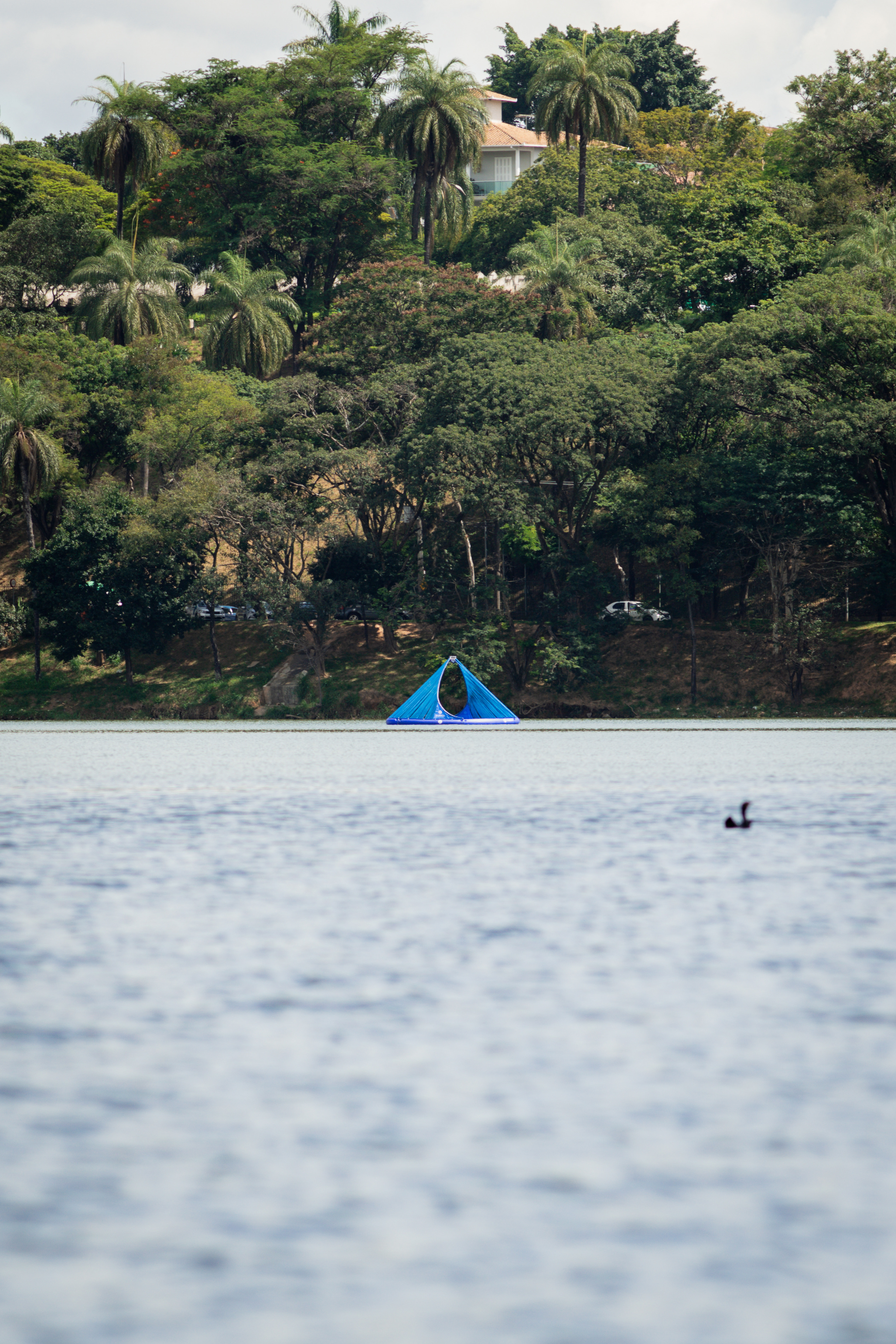
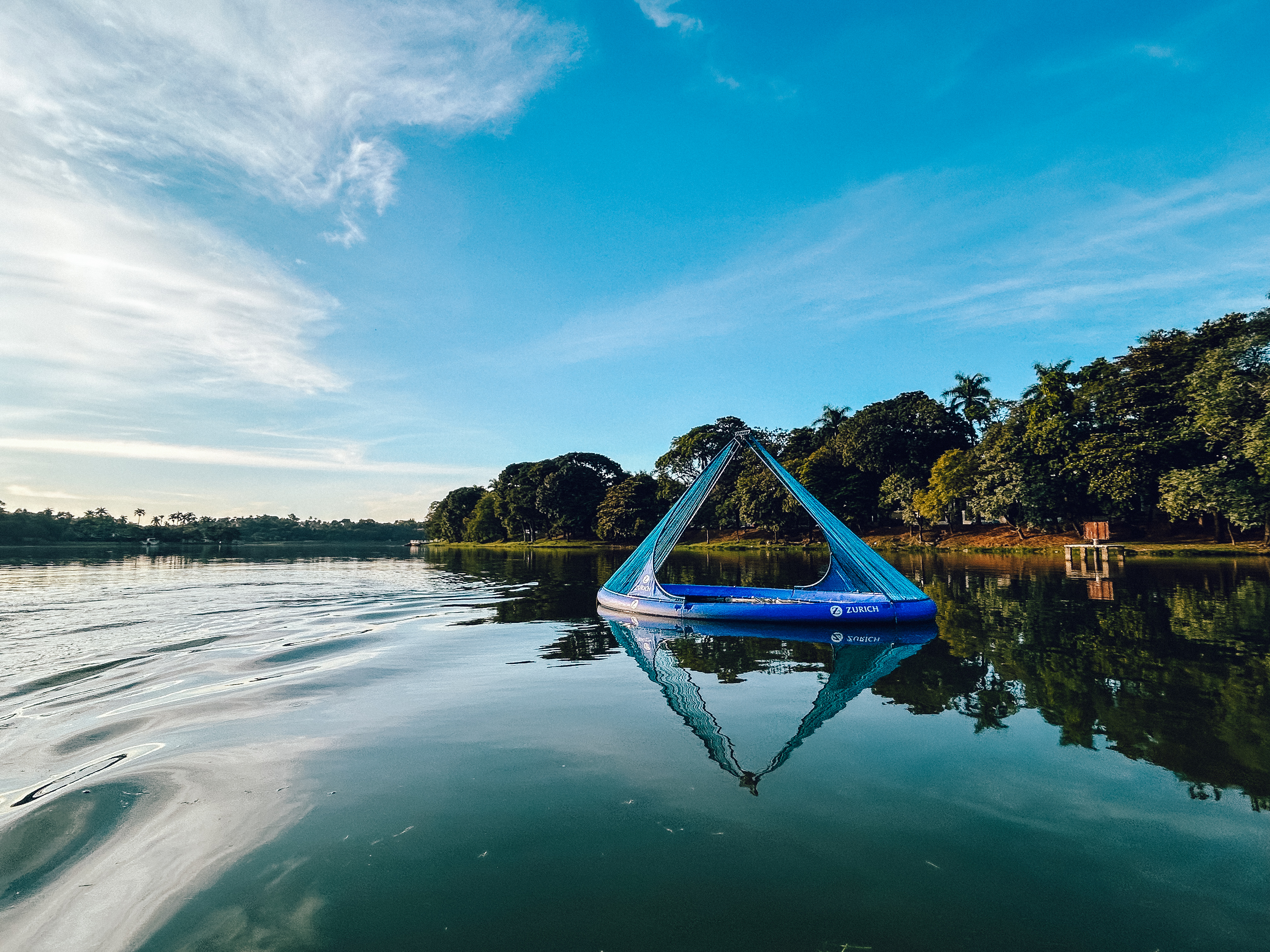
Design is another central discipline in the project. The Caravela was conceived not only as living ecological infrastructure but also as a sculptural urban intervention that reconnects people with water. Its form was developed to interact with the landscape and create a symbolic dialogue between nature, science and society. The design is not purely aesthetic; its geometry also supports the ecological performance of the system by creating favorable conditions for native algae to grow efficiently within the structure.
The structure rotates with wind and water currents, revealing different interpretations depending on the viewing angle. From one perspective, the central opening resembles a drop of water; from another, the geometry evokes the folding of a paper boat. This poetic dimension invites citizens to rediscover waters often invisible or degraded in cities and encourages collective care.
The Ecological Caravela operates through a hybrid business model that combines environmental services, ecological infrastructure and long-term partnerships with public and private institutions. The solution is implemented through contracts with cities, waterfront managers, port authorities and companies interested in improving water quality, strengthening climate resilience and demonstrating environmental leadership.
The technology is offered through a “Caravela as a Service” model, functioning as living ecological infrastructure deployed directly in water bodies. Through this ecological SaaS approach, clients support the installation and operation of fleets of Caravelas in lakes, rivers, coastal areas and urban waterways. These partnerships include the deployment of floating ecological stations, environmental monitoring and periodic reporting on indicators such as biomass production, ecosystem dynamics and water conditions.
Beyond water regeneration, the Caravelas generate environmental intelligence. The system produces ecological data that can support urban water management, environmental research and climate adaptation strategies, creating opportunities for collaboration with municipalities, universities and environmental agencies.
The model is strengthened through partnerships with universities and research institutions responsible for laboratory analyses and scientific validation of the ecological processes observed in the system.
In parallel, the project is supported by grants, awards and long-term research and innovation projects. These initiatives help accelerate technological development and expand scientific understanding of nature-based water regeneration.
Looking ahead, additional revenue streams may emerge from blue carbon certification linked to algae biomass and from circular materials derived from collected biomass, strengthening the long-term financial sustainability and scalability of regenerative water infrastructure.
The Pampulha Lake project functioned as a three-month pilot demonstrating the feasibility of deploying the Ecological Caravela within a protected cultural landscape. Although temporary, the intervention generated environmental data, institutional learning and public visibility that accelerated the adoption of the technology in other contexts.
After the conclusion of the Pampulha project, the Ecological Caravela expanded to other geographies and aquatic environments. Later in 2025, the technology was installed within the Carioca Landscapes Marine Sanctuary, near Sugarloaf Mountain in Rio de Janeiro, operating in a fully marine environment. The solution was also deployed in southern Brazil, with two Caravelas installed in the city of Porto Alegre.
Porto Alegre is widely known for its strong relationship with water and for facing increasingly frequent extreme climate events, including the major floods of 2024. The installation of the Caravelas in two urban water bodies — and their incorporation into the city’s climate resilience strategy — reinforces the potential of this innovation as a tool for urban water intelligence and climate adaptation.
These deployments demonstrate the adaptability of the solution across different ecological conditions, including lakes, coastal waters and urban waterways. The methodology combining ecological regeneration, environmental monitoring and public engagement can be replicated in many cities seeking nature-based solutions for water management.
The scalability of the project has also been reinforced by international recognition of the Caravela’s design. Between late 2025 and early 2026, the project received the London Innovation Award, the Design for a Better World Award and the iF Design Award 2026 in the Industry category, recognizing its functional performance and environmental impact. These recognitions reinforce the potential of the solution to scale internationally.