Alkiza ZUTIK
{Empty}
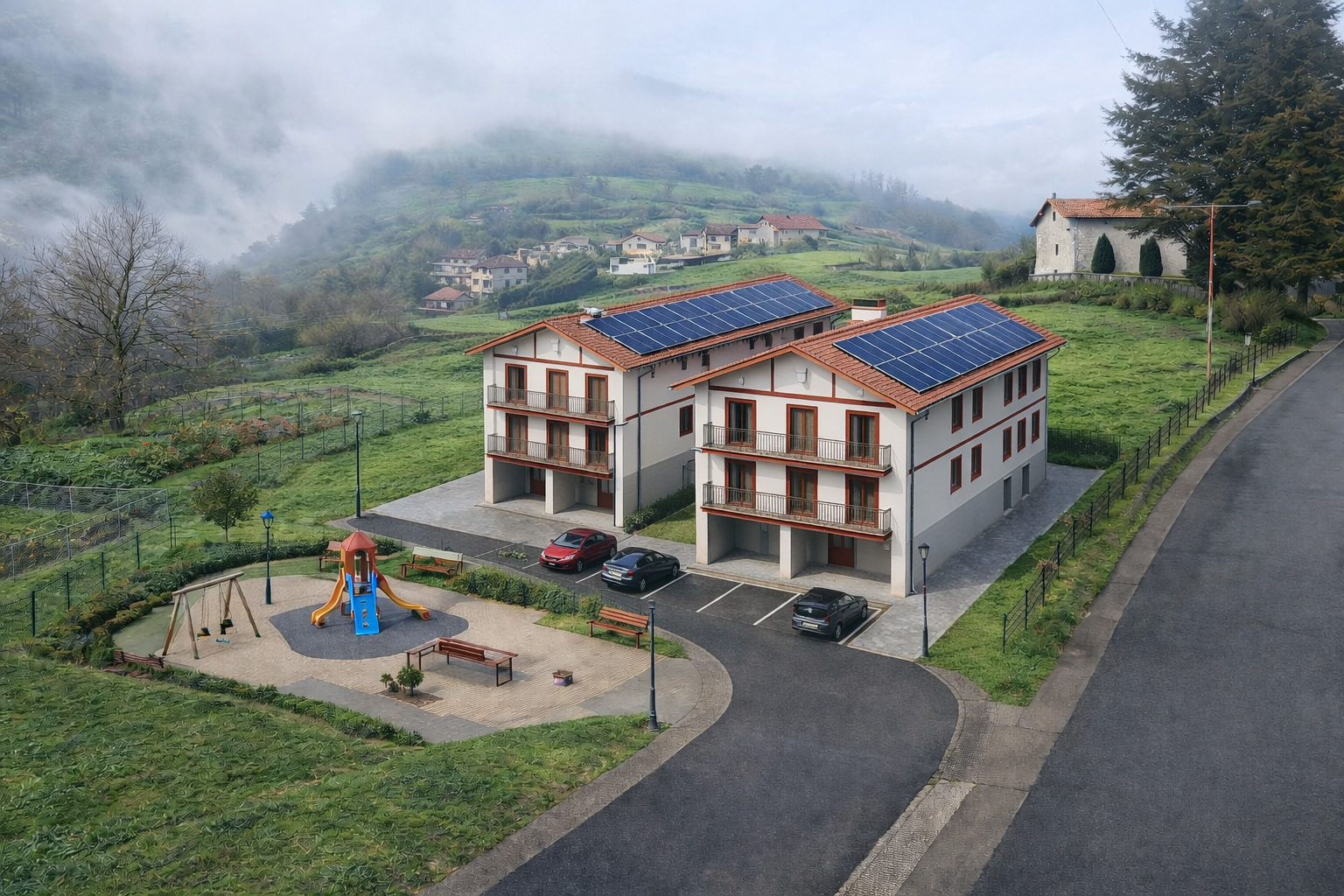
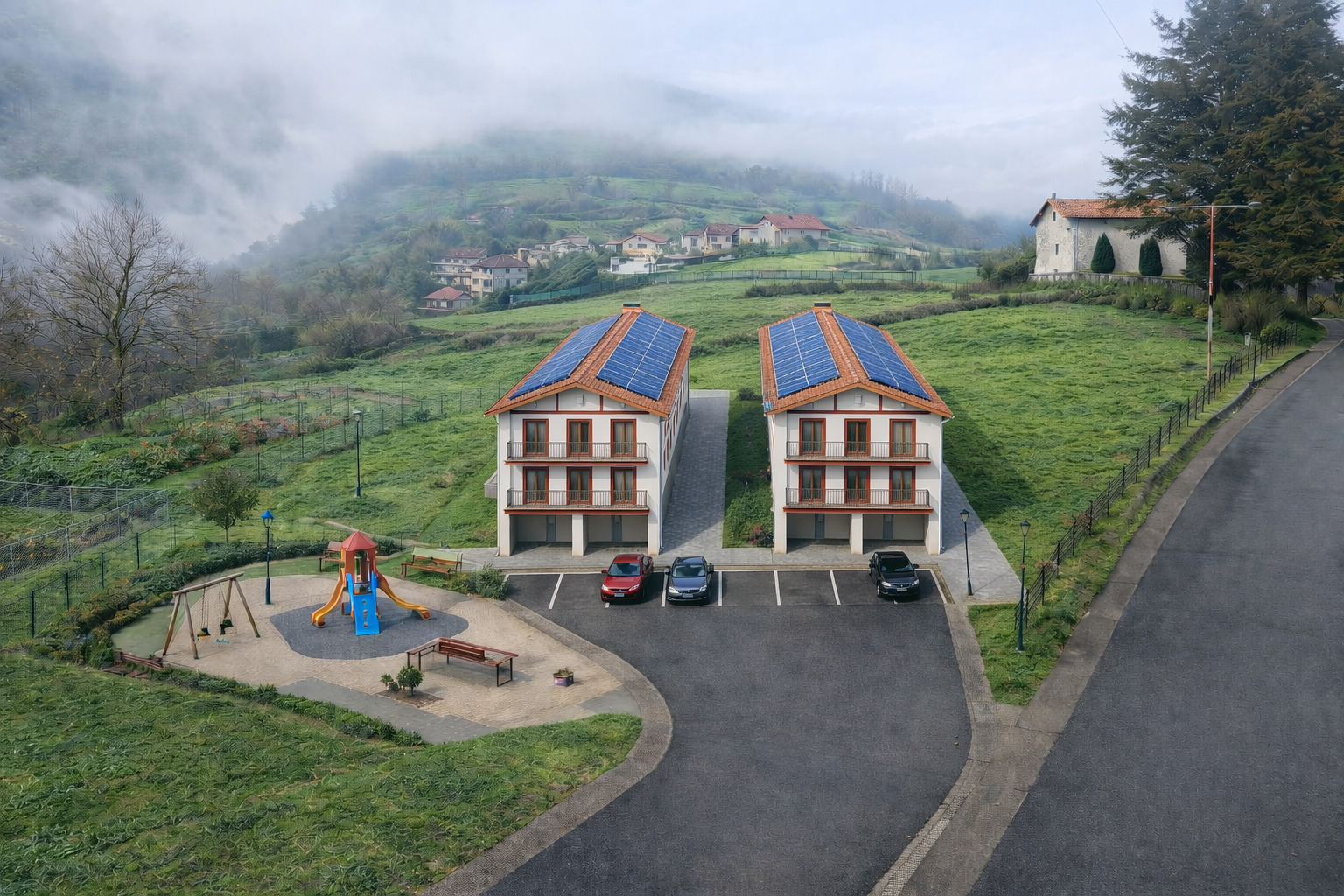
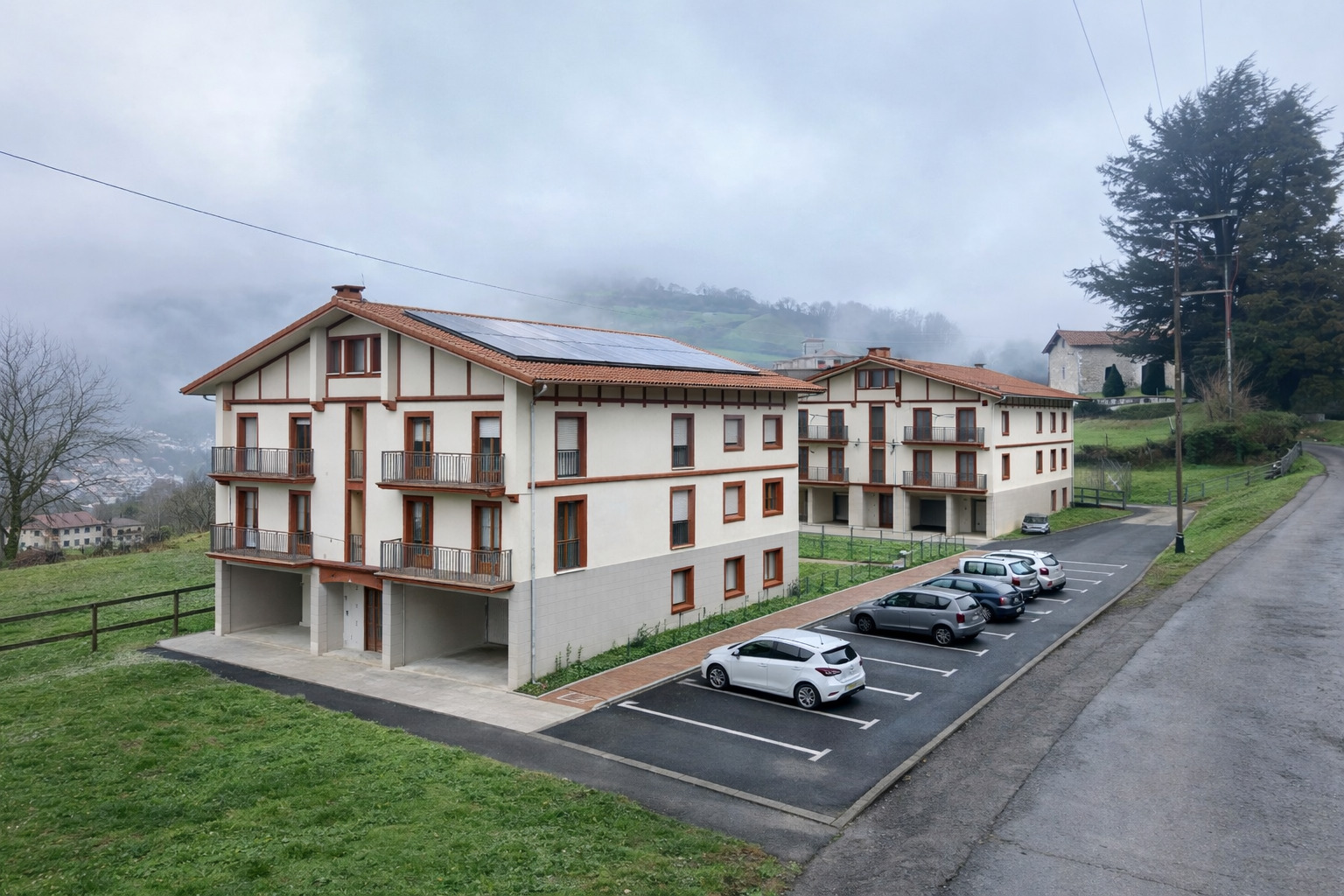
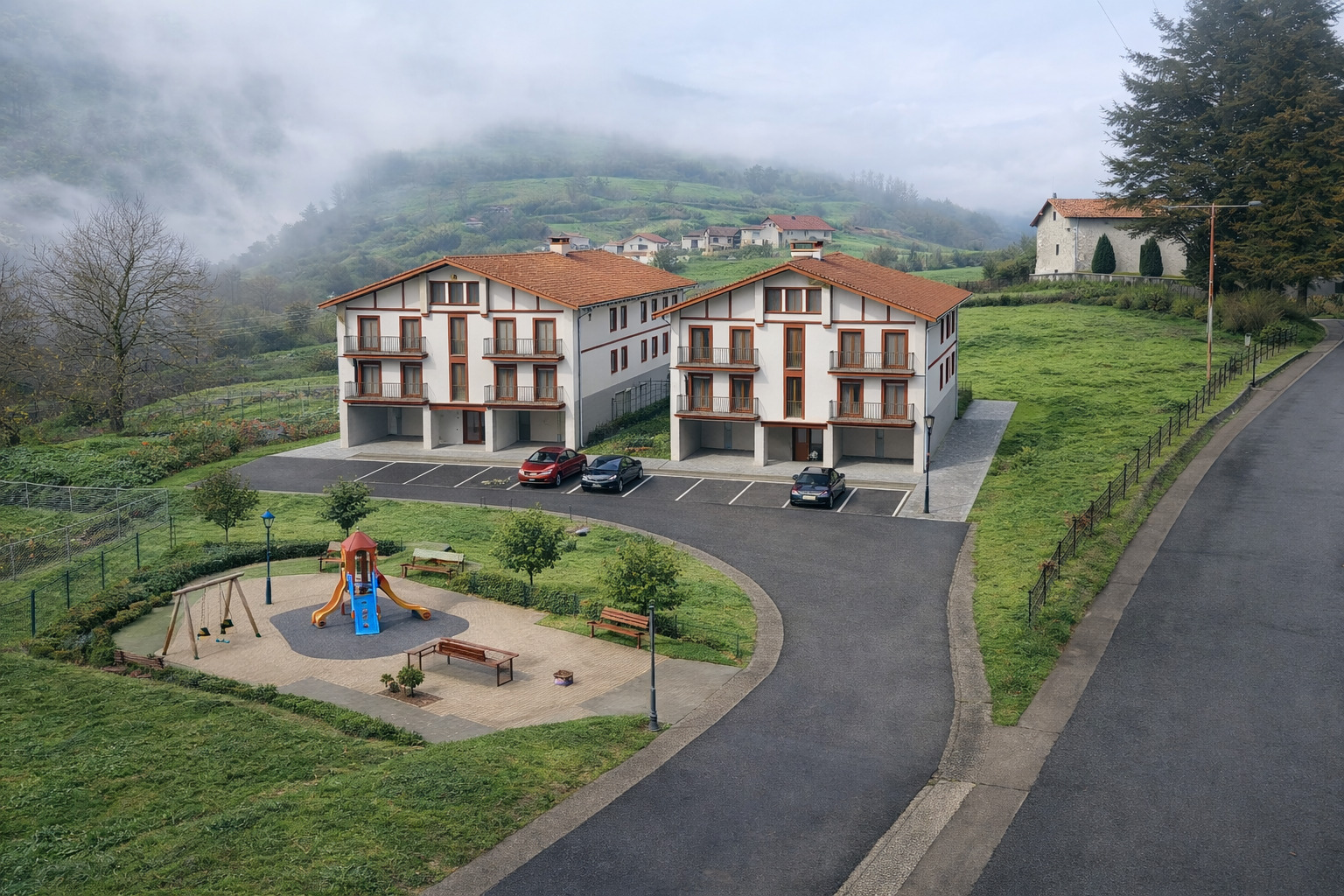
Alkiza Zutik is a bold rural resilience strategy showing how a village of 365 inhabitants can stand up to depopulation. By combining affordable housing for young people with the adaptive reuse of its 19th-century parish house as a multifunctional tourism and community hub, Alkiza protects biodiversity, strengthens the local economy and keeps village life alive. A small place with a scalable European vision.
Spain
{Empty}
Early initiative
Yes
Yes
Yes
No
No
20006: Alkiza (ES)
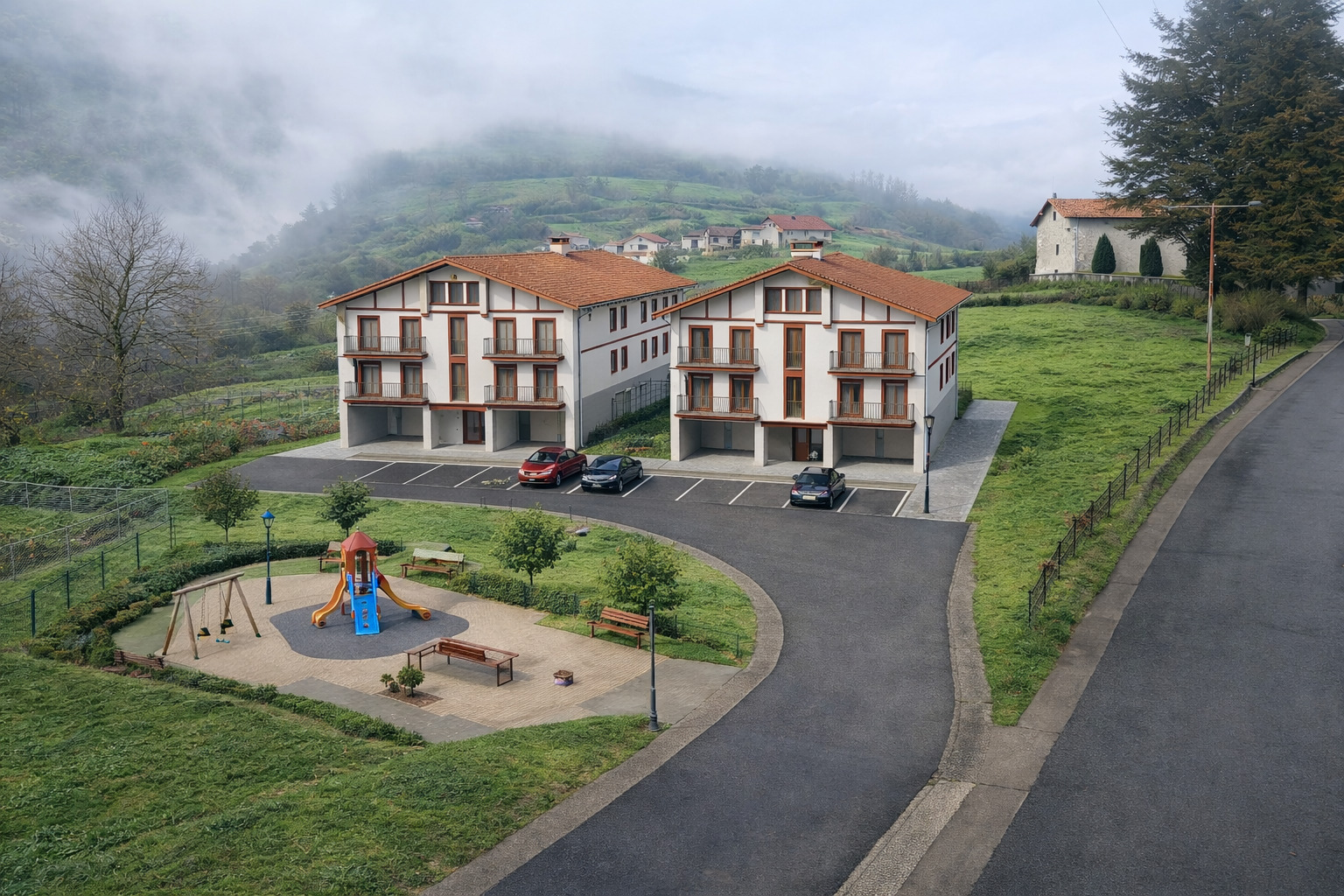
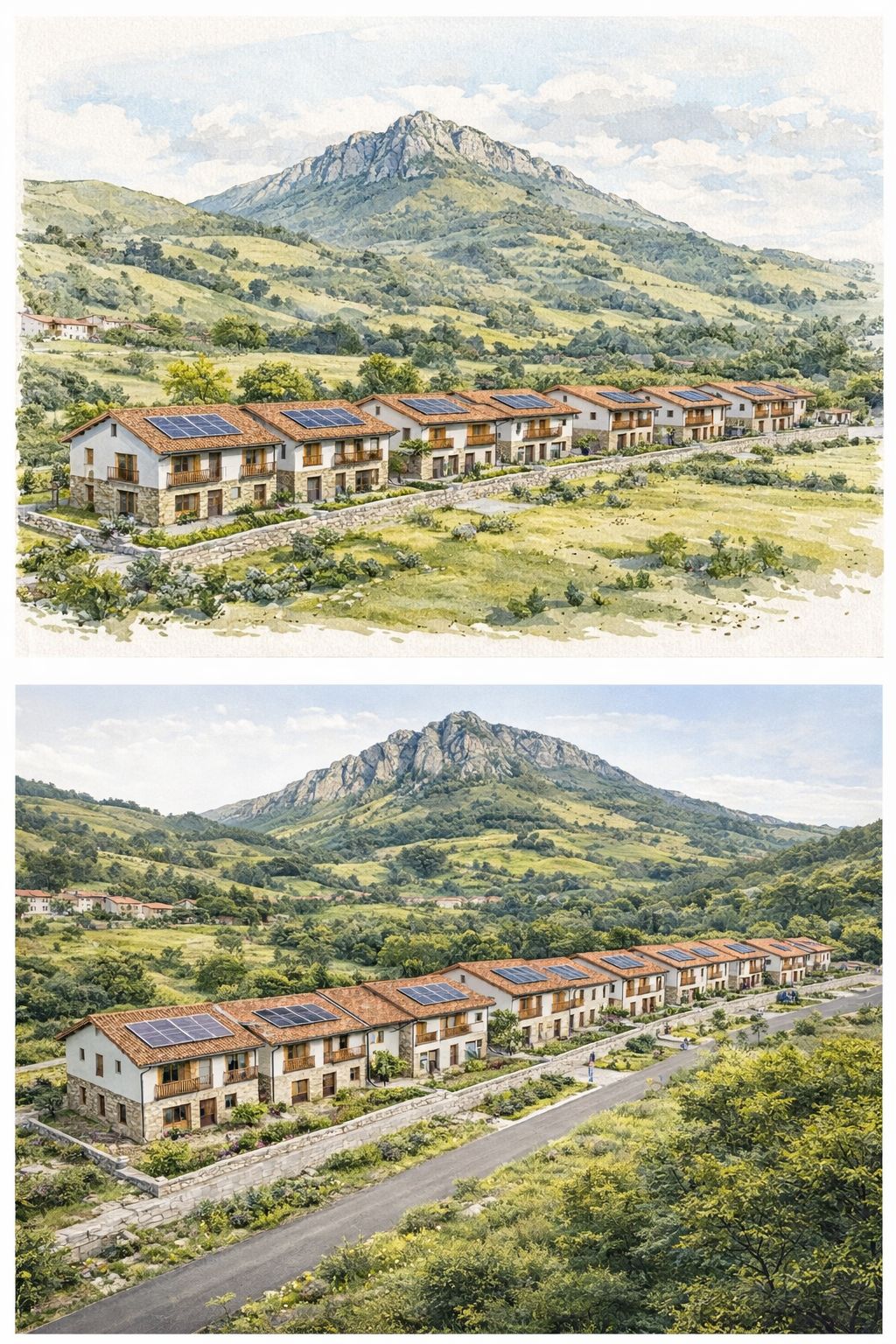
Alkiza Zutik is a rural resilience strategy designed to secure the demographic, social and economic future of Alkiza, a Basque village of 365 inhabitants. Its aim is to reverse depopulation by addressing two structural causes at once: lack of affordable housing for young people and weak local economic diversification. The initiative combines two linked pillars. Alkiza Bizirik delivers 26 municipally protected dwellings in Sector 6 so young residents aged 18–35 and local families can remain in or return to the village. Erretore Etxea adaptively reuses the 19th-century former parish house in the square as a multifunctional tourism and community hub with a hostel, bar-restaurant, visitor reception for the Hernio-Gazume protected area, local product sales and cultural uses. Target groups include young residents without housing, families, local producers, the school community and nature-based visitors. Expected outcomes are demographic stabilisation, protection of the local school, green job creation, stronger local commerce, a revitalised village square and a replicable model for rural Europe. Alkiza Zutik embodies New European Bauhaus values by making sustainability, inclusion and beauty inseparable. It promotes sustainability through compact development, adaptive reuse, solar integration and protection of the surrounding landscape. It promotes inclusion by treating affordable housing as democratic infrastructure and by creating an accessible, intergenerational civic hub. It promotes beauty by restoring a landmark heritage building and strengthening the spatial quality of the square. These values were shaped through assemblies, consultations, Local Agenda 2030 processes, youth demand identification and participatory revision of the local urban plan, so citizens and stakeholders helped define both the housing strategy and the functional programme of Erretore Etxea.
Affordable housing
Adaptive reuse
Rural resilience
Community regeneration
Landscape stewardship
The sustainability objective of Alkiza Zutik is to prove that a very small rural municipality can fight depopulation without sacrificing landscape, biodiversity or heritage. The initiative links environmental, territorial, economic and demographic sustainability in one coherent strategy. First, it promotes compact urban development: the 26 protected homes of Alkiza Bizirik are concentrated in Sector 6, avoiding dispersed sprawl and helping protect the surrounding agricultural land and the nearby Hernio-Gazume Special Area of Conservation. Second, it applies circularity through the adaptive reuse of the 19th-century parish house. Instead of demolishing and building anew, Alkiza consolidates and upgrades an existing structure, preserving embodied carbon and turning heritage into productive infrastructure.
A third sustainability objective is energy transition. The rehabilitation of Erretore Etxea includes energy-efficiency upgrades, solar photovoltaic installation and battery storage, reducing operational costs and moving the municipality toward greater energy autonomy. A fourth objective is economic sustainability with low ecological footprint: the tourism hub combines hostel, restaurant, visitor reception, local product sales and cultural uses in one building, creating year-round green jobs and diversified local income without relying on mass tourism. The project channels visitors toward biodiversity-sensitive ecotourism linked to the protected landscape, so economic activity supports conservation rather than undermining it.
Alkiza Zutik is exemplary because it shows that sustainability in rural Europe is not only about energy or materials. It is also about keeping people in place, preventing land abandonment, safeguarding public services and making village life viable across generations. By combining compact housing, adaptive reuse and landscape stewardship, offers a credible model in which climate action, heritage care and resilience strengthen each other.
The aesthetic objective of Alkiza Zutik is to show that rural transformation can be both architecturally ambitious and deeply rooted in place. The initiative seeks to restore beauty not through spectacle, but through dignity, memory and quality of everyday experience. Its first objective is the sensitive adaptive reuse of Erretore Etxea, the 19th-century former parish house in the village square. For years, this landmark stood underused, symbolising rural decline. By rehabilitating it as a light-filled, multifunctional tourism and community hub, Alkiza rescues a key piece of architectural heritage and gives it a contemporary public purpose. The design respects the historic envelope and traditional masonry while introducing warmth, accessibility and functionality suited to 21st-century rural life.
A second objective is to improve the quality of experience in the village square and in daily community life. By activating the ground floor with a bar-restaurant, local product sales, visitor reception and cultural uses, the project turns a dormant building into a living civic heart. This creates a more vibrant, beautiful and socially meaningful public environment where residents and visitors can meet naturally. A third objective is landscape-sensitive design. The housing in Sector 6 is conceived to harmonise with Alkiza’s rural scale and with the Hernio-Gazume mountain backdrop, proving that new housing can support demographic renewal without damaging visual identity.
Alkiza Zutik is exemplary because it demonstrates that beauty in the New European Bauhaus sense is not an urban luxury. It can also be a rural right: the right to heritage that is alive rather than abandoned, to public spaces that invite encounter, and to architecture that strengthens belonging instead of erasing local character.
The inclusion objective of Alkiza Zutik is to show that rural inclusion begins with the right to remain. In a village of 365 inhabitants, the greatest risk of exclusion is not only poverty or inaccessibility, but being forced to leave because there is no affordable housing, no stable local economy and too few shared services. The initiative addresses this directly. Its first objective is housing inclusion through 26 municipally protected dwellings in Sector 6, aimed especially at young residents aged 18–35 and local families who would otherwise be unable to stay in or return to Alkiza. In this sense, affordable housing is treated as democratic infrastructure and as a condition for intergenerational continuity.
Its second objective is social inclusion through shared civic space. The rehabilitation of Erretore Etxea creates an accessible and multifunctional hub combining hostel, bar-restaurant, local product sales, visitor reception and cultural uses. This allows residents, visitors, producers, school families and older people to meet in one place, strengthening everyday contact between different groups rather than separating them into isolated services. The project therefore promotes inclusion not only through access, but through encounter.
A third objective is inclusive governance. Alkiza Zutik has been shaped through participatory processes linked to the Local Agenda 2030, community consultation and the identification of youth demand, meaning that local people have helped define both the housing need and the public function of Erretore Etxea. This makes inclusion part of decision-making, not just service delivery.
Alkiza Zutik is exemplary because it proposes a new societal model for rural Europe: one in which inclusion means affordable housing, living heritage, accessible common spaces, local opportunity and the ability of younger generations to stay rooted without giving up their future.
Citizens and civil society have not simply endorsed Alkiza Zutik; they have shaped its direction. The initiative grew out of a bottom-up recognition that demographic decline was becoming a threat to everyday life in a village of 365 inhabitants. Through the Alkiza 2030 participatory process, open assemblies, Local Agenda 2030 dynamics, planning consultations and youth-specific listening, residents helped identify the real drivers of exclusion: lack of affordable housing, weak local opportunity and the underuse of strategic shared assets such as Erretore Etxea. This means the project did not begin with a finished technical solution, but with a collective diagnosis of what the village needed in order to remain alive.
Their role has been concrete at two key levels. First, citizens influenced the housing pillar by validating the urgency of youth housing and participating in the revision of the local urban plan that made Sector 6 the most suitable location for the 26 protected dwellings. Second, civil society helped co-define the functional programme of Erretore Etxea. Farmers, cultural actors and other local stakeholders contributed to the decision to combine accommodation, hospitality, local product sales, visitor reception and cultural uses in a single building, so it could serve both daily village life and the local economy.
The impact of this involvement has been decisive. It has given the initiative strong social legitimacy, improved the fit between the project and real needs, and reinforced a shared sense of ownership over both pillars. In a small rural municipality, this matters as much as funding: participation builds trust, reduces implementation risk and turns public intervention into collective commitment. Alkiza Zutik is exemplary because civil society has not been treated as a passive beneficiary, but as a co-author of a new rural future.
Alkiza Zutik is being shaped through an unusually strong multi-level alliance for a village of only 365 inhabitants. At local level, Alkiza City Council is the political leader, land acquirer, planning driver and guarantor of continuity. It has not only promoted the initiative but also resolved the key structural barrier by acquiring private plots for the 26 protected homes in Sector 6 and by advancing the urban planning revision needed to make the housing viable. Local civil society, youth groups and the school community have ensured that both pillars remain rooted in real needs: housing retention, school continuity and a living civic centre.
At regional and provincial level, the initiative connects with rural development agencies in Tolosaldea and with public actors such as the Provincial Council of Gipuzkoa and Etorlur. Their role is to provide technical support, implementation capacity and alignment with broader housing, territorial and rural development frameworks. This engagement is especially important for the PGOU revision, for the delivery of protected housing and for integrating Erretore Etxea into wider ecotourism and local development strategies rather than leaving it as an isolated municipal facility.
At national and European level, the project is framed by broader policy agendas rather than by a single funding stream. Alkiza Zutik aligns with housing affordability, territorial cohesion, heritage reuse, climate transition and biodiversity protection, showing how a very small municipality can translate these agendas into concrete action. The added value of this multi-level engagement is decisive: local actors provide legitimacy and precision, provincial and regional actors provide technical and institutional leverage, and the European frame turns a local anti-depopulation strategy into a transferable model for rural Europe. Alkiza Zutik is exemplary because it transforms an isolated village challenge into a shared public mission across scales.
Alkiza Zutik is inherently transdisciplinary because it addresses depopulation not as a single housing problem, but as the intersection of territorial planning, heritage rehabilitation, rural economy, ecology and community life. Several knowledge fields are reflected in its design and implementation. Urban planning and land management are central to the development of the 26 protected homes in Sector 6. Architecture and heritage conservation shape the adaptive reuse of Erretore Etxea, ensuring that a historic parish house is transformed without losing its identity. Environmental and landscape knowledge guide the project’s relationship with the Hernio-Gazume protected area, compact growth and biodiversity-sensitive tourism. Rural development and local economic strategy inform the mix of hostel, restaurant, visitor reception and local product sales. Social participation and community governance are also essential, since the initiative is rooted in local consultation, youth demand and collective prioritisation.
These fields have interacted through a process in which technical planning and civic knowledge continually informed each other. The municipal team, planners and public actors worked on land acquisition, planning revision and feasibility, while residents, youth and local stakeholders helped identify the real needs behind the project: the urgency of affordable housing, the risk to school continuity and the need to reactivate a strategic but underused heritage building. This interaction ensured that the housing component was not designed in isolation from daily life, and that Erretore Etxea was not treated as a mere restoration project, but as a multifunctional public asset with economic, social and cultural value.
The added value of this transdisciplinary process is decisive. It prevents narrow solutions and creates a stronger rural model in which housing, services, heritage, jobs and landscape protection reinforce one another.
Alkiza Zutik is innovative because it does not treat depopulation as a single-sector problem. The mainstream response in rural areas is often fragmented: housing is handled separately from heritage, tourism separately from biodiversity, and economic revitalisation separately from social cohesion. Alkiza Zutik takes a different path. It combines two interventions that are usually planned in isolation—protected housing for young residents and the adaptive reuse of a historic parish house—into one integrated anti-depopulation strategy. This creates a stronger systemic effect: housing supports demographic continuity, while Erretore Etxea creates local services, green jobs and a renewed civic centre that make staying in Alkiza more viable and attractive.
A second innovation lies in the way the project redefines heritage. Instead of treating Erretore Etxea as a monument to preserve passively or as a tourist object detached from daily life, Alkiza turns it into productive rural infrastructure: a hostel, bar-restaurant, visitor reception point, local product outlet and cultural hub in one building. This is a more resilient and contemporary use of heritage, because it links conservation directly to economic viability and community life.
A third innovation is territorial. Rather than allowing scattered growth or relying on second-home dynamics, Alkiza concentrates affordable housing in a planned sector and connects it to a broader village strategy. This protects landscape, supports the local school and reinforces a compact settlement model near the Hernio-Gazume protected environment.
Its innovative value for Europe lies in being realistic and replicable. It is not innovation through spectacle, but through integration: turning small-scale public action into a new model of rural resilience.
The methodology of Alkiza Zutik is a staged rural transformation process that moves from diagnosis to delivery through legally grounded, socially validated action. It does not start with a building, but with a strategic reading of village survival. The first step was demographic and socioeconomic diagnosis: the municipality identified two root causes of decline—lack of affordable housing and insufficient local economic diversification—and treated them as interdependent rather than separate problems.
The second step was participatory definition of priorities. Through Alkiza 2030 processes, Local Agenda 2030 discussions, planning consultations and youth-specific listening, residents helped validate the need for protected housing and for reactivating Erretore Etxea as a multifunctional public asset. This ensured that the project brief emerged from lived needs, not from an abstract technical agenda.
The next step was urban and legal restructuring. To make the housing pillar viable, Alkiza revised the PGOU and executed a strategic municipal land-acquisition process in Sector 6, overcoming the structural obstacle of having no public land reserves. This turned demographic ambition into spatial feasibility.
The fourth step was phased adaptive reuse. Erretore Etxea has been rehabilitated progressively—structural consolidation, accessibility improvements, energy-efficiency upgrades and solar installation—so implementation could match municipal capacity while already delivering visible results.
The fifth step is operational activation. The project now moves toward interior fit-out, service programming and a public-private management model so that the heritage building functions as a viable year-round hub under community oversight.
This approach is exemplary because it combines civic participation, planning reform, land policy, heritage reuse and long-term governance in one coherent method. It turns rural anxiety into an executable roadmap.
Alkiza Zutik has high transferability because its value lies not in a unique architectural form, but in a replicable rural method. Many small European villages face the same structural trap: young people leave because there is no affordable housing, heritage buildings lose function, schools weaken, local economies narrow and landscape protection is seen as a constraint instead of an opportunity. Alkiza Zutik shows that these challenges can be addressed together rather than one by one. That integrated logic is its most transferable element.
A first transferable element is the methodology: start from demographic and social diagnosis, identify the real drivers of decline, and define a response that combines housing, services and local economy instead of treating them as separate sectors. A second is the land and planning strategy: when there is no public land available, municipalities can use planning revision and selective acquisition to make affordable housing feasible. A third is the adaptive-reuse model: rather than leaving a heritage building empty or converting it into a passive monument, Alkiza turns Erretore Etxea into productive rural infrastructure with accommodation, hospitality, visitor reception, local product sales and cultural uses in one place.
A fourth transferable element is the governance logic: combining municipal leadership, citizen validation and partnerships with rural-development and public actors across scales. A fifth is the lesson that rural beauty, inclusion and sustainability can reinforce one another when housing is compact, heritage is alive and tourism is linked to biodiversity-sensitive local value creation.
Alkiza Zutik is therefore highly replicable for villages facing depopulation, ageing, vacant heritage and weak local economies. What should be transferred is not Alkiza’s exact form, but its strategy: treat staying as a right, heritage as infrastructure and rural resilience as a design and governance task.
Alkiza Zutik already demonstrates implementation commitment through actions that are legally, financially and physically underway. It is not a speculative concept but a mature municipal strategy embedded in Alkiza’s long-term planning. The project combines two operational pillars: Alkiza Bizirik, delivering 26 protected homes for young residents and families, and Erretore Etxea, transforming the 19th-century parish house into a multifunctional tourism and community hub. The strongest proof of commitment is that the municipality has already overcome the hardest structural barrier: because Alkiza had no public land reserves, the City Council financed and executed the acquisition of private plots in Sector 6, making the housing programme legally and spatially viable. In parallel, the most complex phases of the rehabilitation of Erretore Etxea—structural consolidation, accessibility improvements, roofing and solar-energy systems—have already been completed.
The next activities are clearly defined. First, the final urban-planning approval of the PGOU will secure full legal certainty for the housing development. Second, the executive architectural project and construction of the first phase of protected housing will begin. Third, the interior outfitting of the hostel and restaurant areas in Erretore Etxea will be completed. Fourth, Alkiza will launch the public-private management model needed to activate the building as a year-round hub for accommodation, hospitality, visitor reception, local products and culture. Fifth, the first homes and the activated Erretore Etxea are expected to be operational in 2028, reinforcing school continuity, local employment and demographic renewal.
NEB values and principles have already guided implementation. Sustainability is embedded through compact development, adaptive reuse, solar integration and biodiversity-sensitive local development. Inclusion is embedded through protected housing, accessibility upgrades and participatory.