Strengthening Local Democracy and Inclusion
Blue Chair
Blue Adaptive Watersports Chair
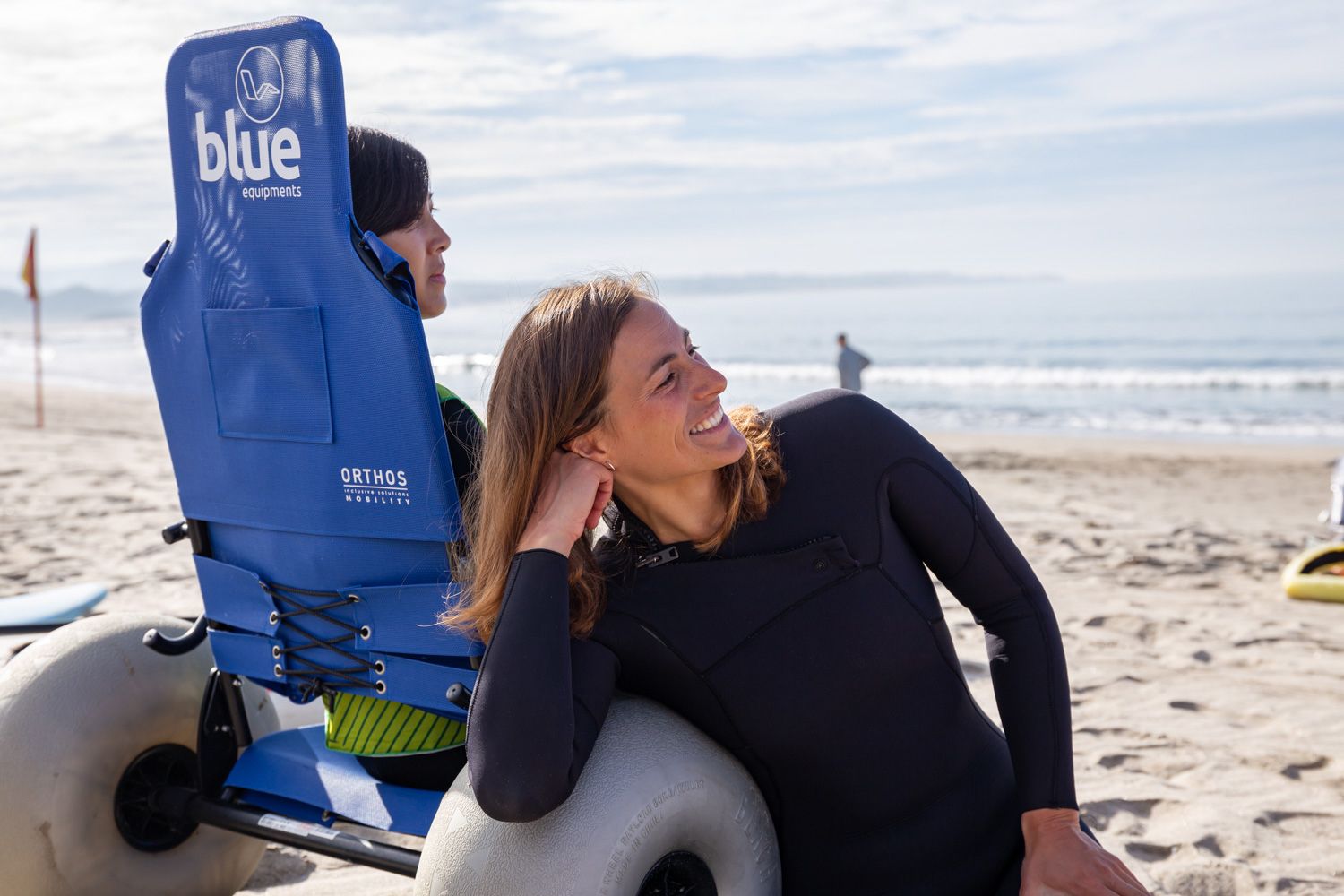
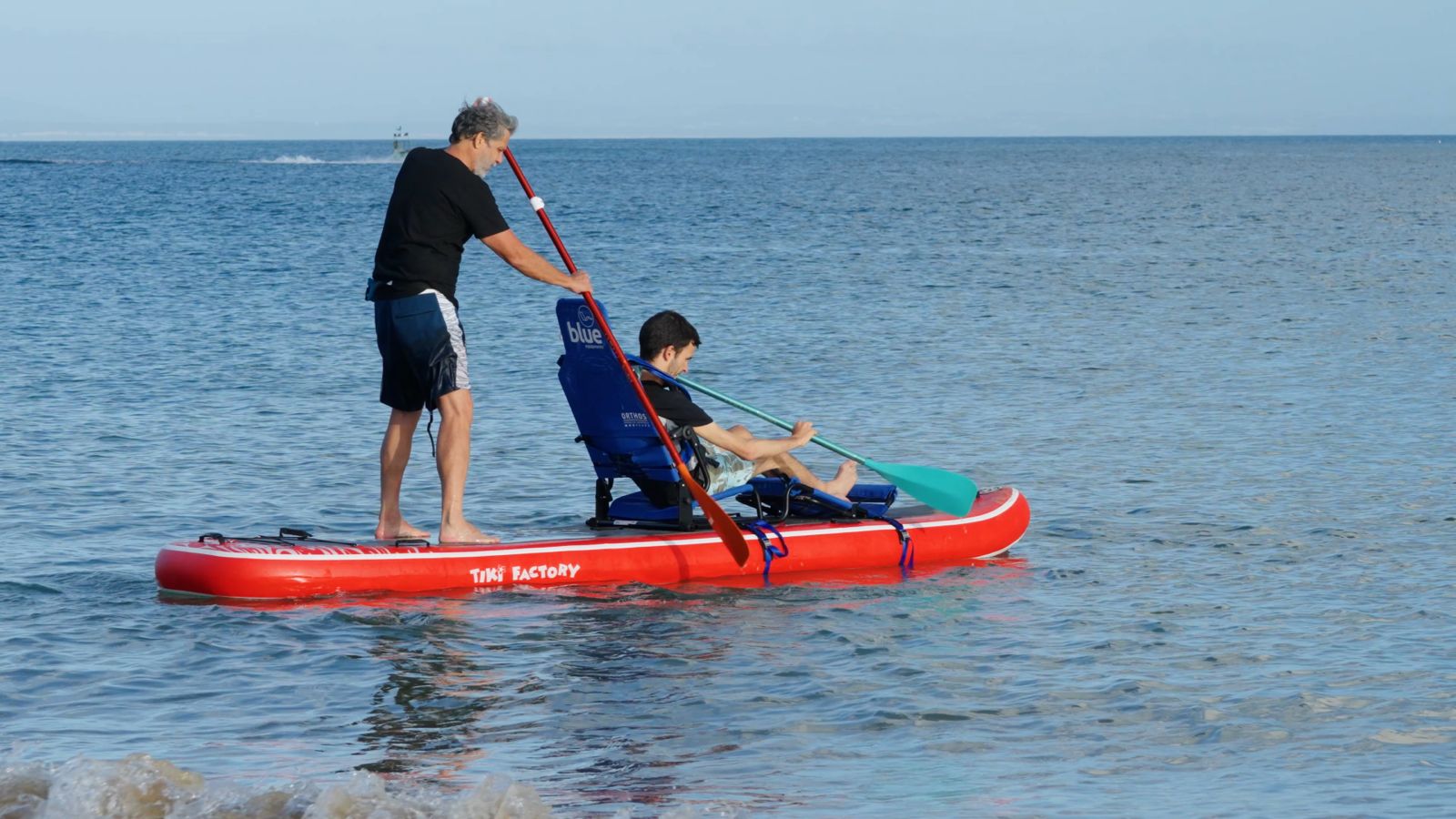
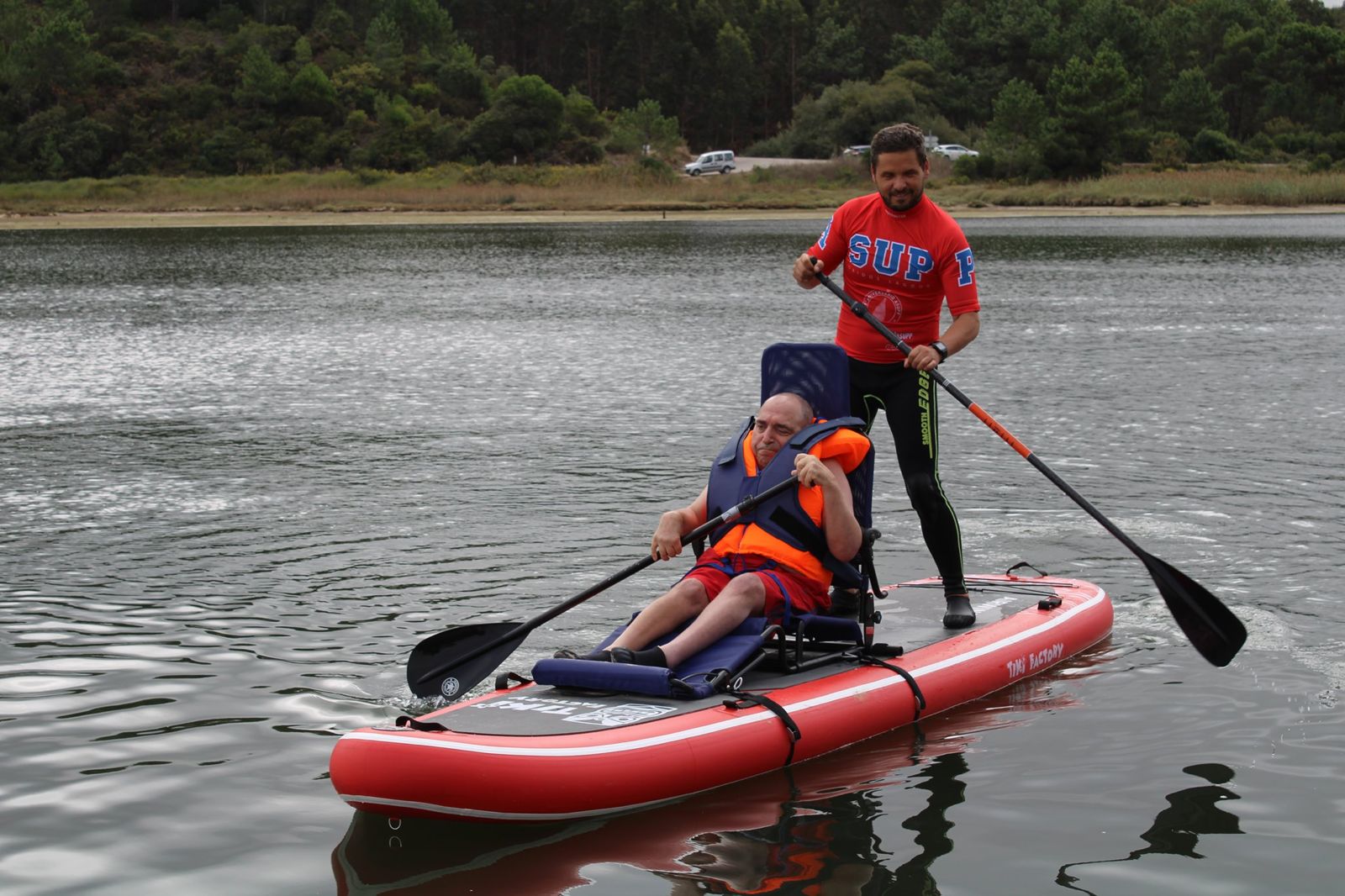
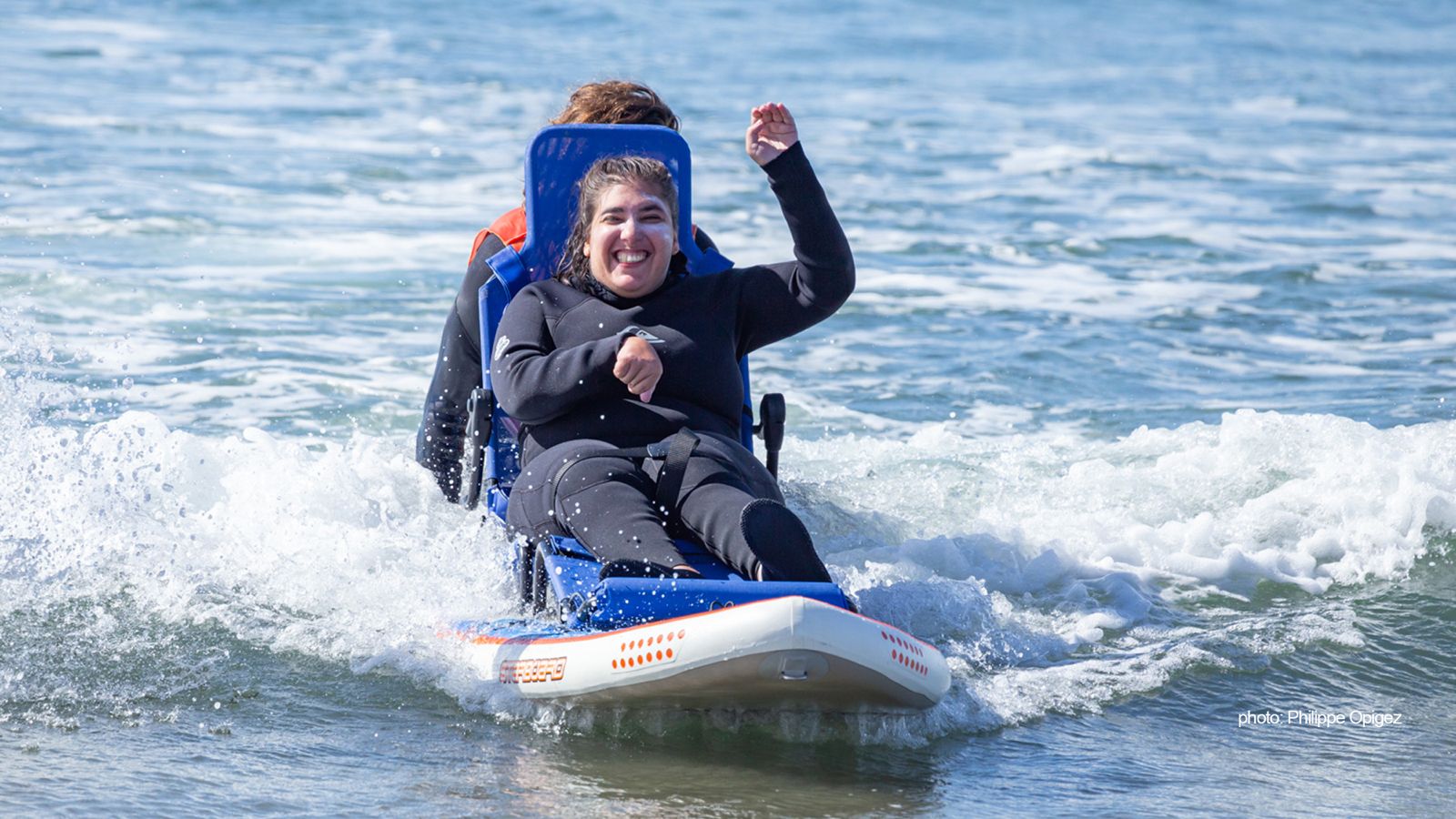
Blue is an accessible chair designed for practicing adapted Stand Up Paddle (SUP) and Surf, intended for people with reduced mobility and for anyone who wishes to enjoy these sports.
Despite the global growth of SUP and Surf, access for people with reduced mobility is still limited and often unsafe. Adapted practice provides sensory, motor, and social benefits, and can serve therapeutic, recreational, or competitive purposes.
Despite the global growth of SUP and Surf, access for people with reduced mobility is still limited and often unsafe. Adapted practice provides sensory, motor, and social benefits, and can serve therapeutic, recreational, or competitive purposes.
Portugal
National
It addresses urban-rural linkages
It involves other types of transformations (soft investment)
Yes
2021-12-03
No
No
Yes
Individual
BLUE is an adapted chair with a revolutionary solution, designed to break barriers and expand access to aquatic tourism and recreation. Created with inclusion in its DNA, BLUE is not just an adapted Stand-Up Paddle (SUP) or Surf chair. It represents a paradigm shift in the sports experience.
By providing a platform for belonging and independence, BLUE enables individuals with disabilities or limited mobility to actively participate in SUP and Surf, affirming their rightful place alongside their peers.
Furthermore, adapted SUP and Surf significantly contribute to combating prejudice, encouraging respect for differences, and valuing diversity by recognizing and promoting equal opportunities.
It is a movement that brings together hundreds of participants of all ages, with or without disabilities, supported by thousands of volunteers across several countries, united by the same purpose of inclusion and participation.
Today, we are already present in various locations across Portugal (from north to south and from the coast to the interior) and also in other countries such as Spain, France, Lithuania, Germany, Gibraltar, New Zealand, and Brazil.
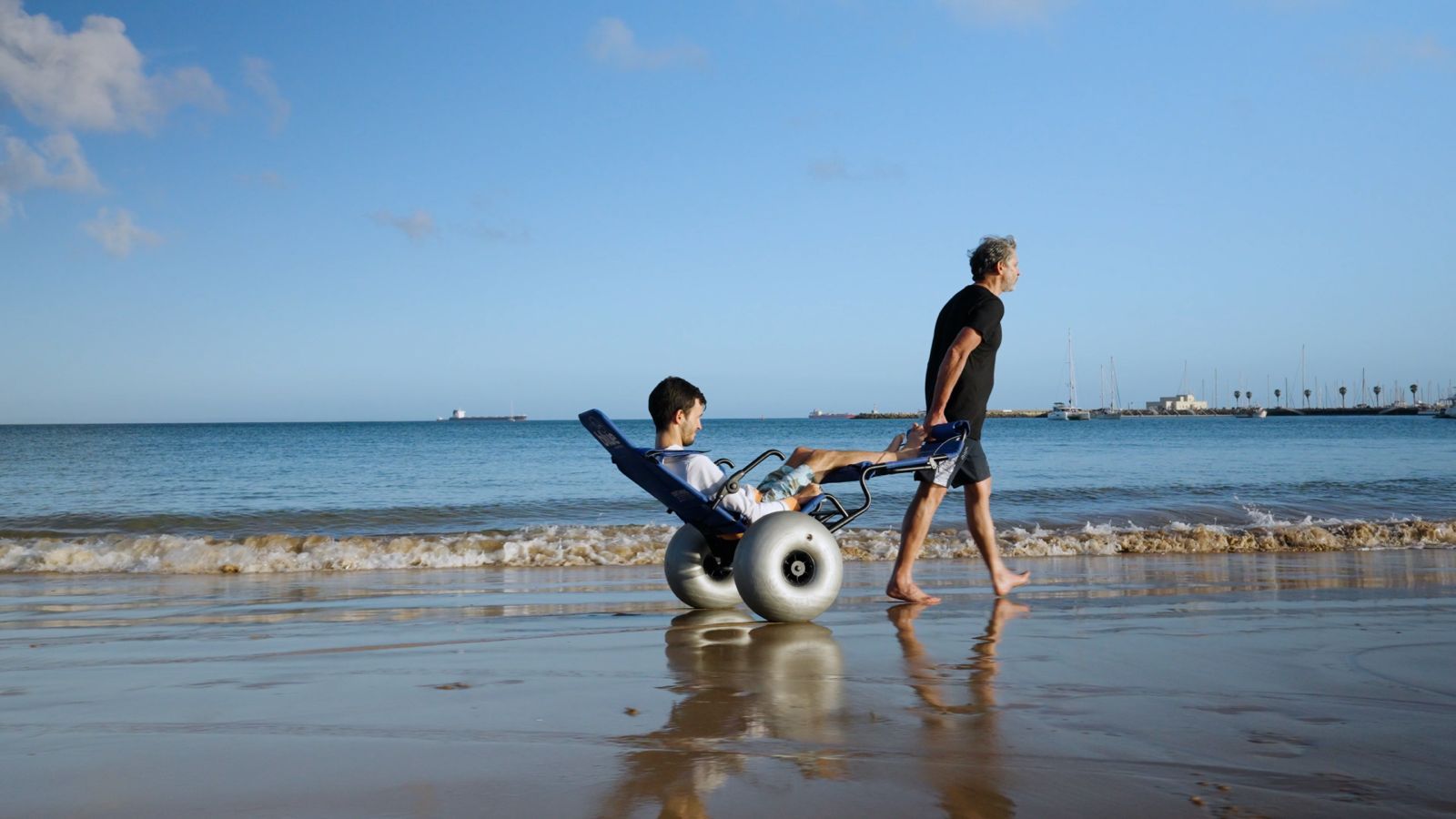
The project was born from a personal motivation. After my son suffered a stroke, I developed a product that could make it possible to take him back to the sea. It had always been an environment he loved — not only for practicing sports, but also for enjoying himself.
What began as a solution within our family revealed a much greater potential: to transform the way people with different physical abilities access aquatic activities. Guided by a commitment to inclusion and by the vision of a future where sport and leisure know no boundaries, this project stands as a true reflection of our principles. More than a solution, it becomes a catalyst for change in a world where differences are valued and barriers are gradually overcome.
With BLUE, we empower individuals of all physical abilities to embrace the thrill and freedom of SUP and surfing, while championing diversity and promoting social inclusion through the power of sport.
Social Inclusion
Recognizing differences
Universal design
Living together without discrimination
Equal access to rights
This inclusive sports project has sustainability as one of its main principles. The sports chair is made from stainless steel, a strong, durable, and recyclable material, which increases its lifespan and reduces the need for frequent replacements.
In addition, production is carried out without large inventories, prioritizing manufacturing on demand. This strategy reduces material waste and helps save natural resources, especially water used in production processes. In this way, the project combines social inclusion in sports with more environmentally responsible practices.
In addition, production is carried out without large inventories, prioritizing manufacturing on demand. This strategy reduces material waste and helps save natural resources, especially water used in production processes. In this way, the project combines social inclusion in sports with more environmentally responsible practices.
The aesthetics of the adapted Blue chair were designed to go beyond pure function. Instead of being perceived as a medical device, it aims to create a sense of belonging and integrate naturally into the user’s life.
Its development prioritized lightness, compactness and ease of assembly. The slimmer structure reduces both visual and physical weight, making the chair more agile and comfortable for everyday use, while the compact design improves transport and mobility, making it more user friendly.
The black color reinforces this aesthetic approach. The dark finish, combined with delicate lines, creates a sporty and contemporary appearance, moving away from the stigma of a medical device and bringing the chair closer to the idea of performance and movement.
In this way, the chair becomes more than just a functional support; it emphasizes identity, autonomy, and participation highlighting the person rather than the equipment.
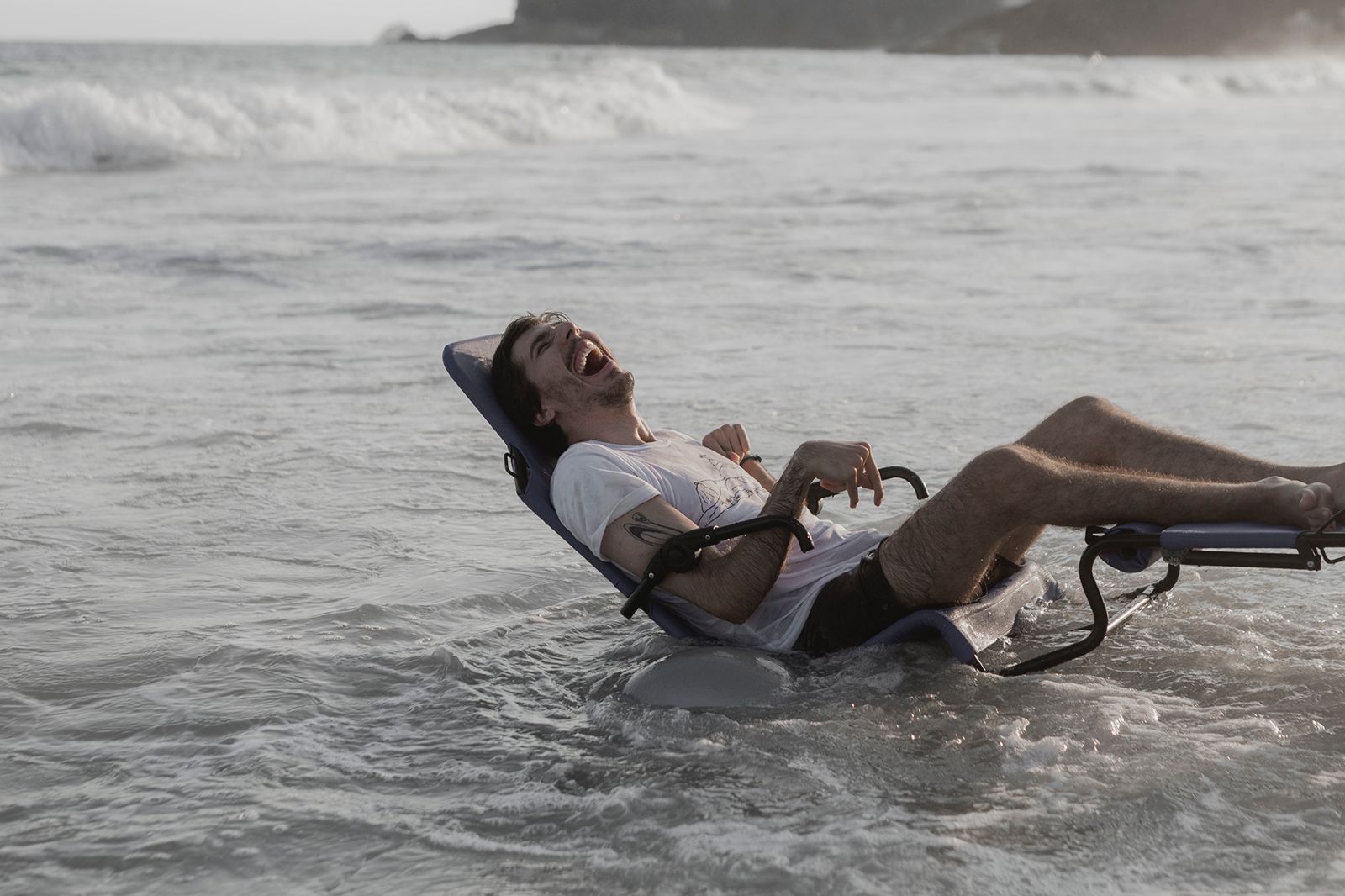
Our accessible chair was developed so that everyone, without exception, can safely and inclusively take part in aquatic activities. More than just equipment, it represents the transition from a passive position to an active one, allowing people with disabilities or reduced mobility to experience sports and leisure in the water.
In addition to promoting inclusion in sports activities, this initiative also benefits the entire region. By welcoming this audience, who often arrive with family and friends, inclusive tourism grows and local businesses are strengthened, generating more activity, opportunities, and development for the community.
In addition to promoting inclusion in sports activities, this initiative also benefits the entire region. By welcoming this audience, who often arrive with family and friends, inclusive tourism grows and local businesses are strengthened, generating more activity, opportunities, and development for the community.
The Blue Chair was born from a development process deeply connected with people and the real experience of use. The project began as a focused initiative, initially designed to provide a special experience for my son by creating a solution that enabled moments of togetherness, comfort, and inclusion.
As the chair began to be used, the positive response was immediate. The experience it provided sparked interest from others and revealed a much greater potential than originally anticipated. What started as a small initiative came to be seen as an opportunity for broader impact.
Before becoming an established product, the project went through an important practical validation process. The chair was tested in various events and real world contexts, involving both users and volunteers. These moments were crucial for collecting feedback, observing the product’s behavior in different situations, and understanding the real needs of people.
Active community participation was essential during this phase. Each test contributed to improvements in design, functionality, and user experience, allowing the project to evolve consistently and in alignment with those who actually use the solution.
After this cycle of experimentation, validation, and refinement with the community, the Blue Chair moved beyond being just a one-off initiative and became a structured product. The result of this process is a solution validated in the real world, scalable, and capable of bringing the same positive experience to an ever growing number of people.
Our adapted Stand-Up Paddle (SUP) and Surf chair underwent a thorough validation and approval process, involving various institutes, municipal councils, federations, and associations. At each of these entities, the project was met with enthusiastic support, reflecting recognition of its value and potential.
This unanimous approval not only confirmed the quality and safety of the chair but also significantly contributed to strengthening inclusive water sports. Today, thanks to this validation process, we are closer to providing accessible and enriching experiences for all, promoting inclusion and adapted sports in a safe and motivating way.
This unanimous approval not only confirmed the quality and safety of the chair but also significantly contributed to strengthening inclusive water sports. Today, thanks to this validation process, we are closer to providing accessible and enriching experiences for all, promoting inclusion and adapted sports in a safe and motivating way.
Our accessible chair project was developed through the collaboration of professionals from various fields, ensuring a final product that is functional, safe, and aesthetically appealing. The team included production engineers, product designers, graphic designers, and technical specialists, each contributing their expertise throughout every stage of development.
During the process, five prototypes were created, all of which underwent rigorous testing and validation to ensure comfort, ergonomics, durability, and usability. Only after these steps, when all evaluations confirmed that the product met the required standards, was the chair released for full-scale production, guaranteeing quality and safety for users.
During the process, five prototypes were created, all of which underwent rigorous testing and validation to ensure comfort, ergonomics, durability, and usability. Only after these steps, when all evaluations confirmed that the product met the required standards, was the chair released for full-scale production, guaranteeing quality and safety for users.
After achieving growth and stability in the Portuguese market, we identified the need to internationalize Blue and explore new business opportunities. To achieve this goal, we relied on the support and consultancy of an international marketing company, which assisted us in defining and implementing our market entry strategy abroad.
The company helped us with the commercial approach to distributors and retailers of sports equipment, tour operators offering sports activities, as well as facilitating contacts with relevant public and private associations in the sector.
We began the internationalization process in Spain, where we achieved significant commercial results, and subsequently expanded into France and Germany, consolidating our presence in these markets.
We believe that market diversification, combined with well-structured strategies, is essential for sustainable growth and international expansion. With the support of the contracted company, we were able to identify new opportunities in European markets and set operational priorities.
Regular meetings were held between the teams with the aim of establishing specific goals, collecting and analyzing strategic information, evaluating market and competition trends, and identifying potential clients and partners who could benefit from the solution offered. Based on this work, a prospecting plan was developed, aligned with the profile of the identified target audience.
The implementation of the Blue Chair for aquatic activities should follow a structured plan, ensuring effectiveness, safety, and potential for replication.
1.Local Assessment
The first step is to carefully evaluate the available aquatic environment, considering factors such as safety, accessibility, depth, and physical conditions of the site. At the same time, it is important to analyze the potential audience, identifying groups that could benefit from using the chair, their specific needs, and mobility levels.
2.Partnerships
Establishing strategic collaborations with local entities is crucial. This includes contacting municipalities, community associations, and health centers, seeking institutional support, outreach, and integration of the Blue Chair into rehabilitation or adapted leisure programs.
3.Acquisition and Production
After identifying demand and technical specifications, the large-scale production of the Blue Chair begins. It is essential to ensure that materials and manufacturing processes meet safety and durability standards, allowing efficient distribution to multiple locations.
4.Team Training
Assembling a trained technical team is key. Training should cover chair handling, safety protocols, participant support, and equipment maintenance, ensuring all team members are qualified to operate and assist during activities.
5.Outreach
Developing communication and outreach strategies is necessary to attract participants. This can include campaigns in health centers, social media, community events, and institutional partnerships, highlighting the benefits of the Blue Chair and the inclusion of people with reduced mobility.
6.Pilot Sessions
Conducting pilot sessions allows activities to begin on a small scale, testing equipment effectiveness, participant interaction, and operational routines. This stage provides valuable insights before scaling up.
7.Evaluation and Adjustments
Continuous monitoring and evaluation