The “Ex-asilo”: a space of community.
From former kindergarten to community hub. Regenerating a public building for local associations.
The project transforms a former kindergarten (so called "ex-Asilo", located in a small mountain village) into a sustainable and inclusive hub for the community.
Building on the existing project of «Casa delle Associazioni», the initiative aims to boost youth engagement and collaboration between local associations. By promoting the values of the NEB, the project aims to create a shared community space that enhances the aesthetic quality, social inclusion and sustainability of common spaces.
Building on the existing project of «Casa delle Associazioni», the initiative aims to boost youth engagement and collaboration between local associations. By promoting the values of the NEB, the project aims to create a shared community space that enhances the aesthetic quality, social inclusion and sustainability of common spaces.
Italy
Piazza Vittorio Veneto, 30
12034, Paesana (Cuneo)
Italy
12034, Paesana (Cuneo)
Italy
Prototype level
Yes
Yes
Yes
No
No
4157: Paesana (IT)
The proposed project aims to strengthen and enhance the House of association in Paesana, housed in the building of the city's former kindergarten (so called "Ex-asilo"), accompanying its evolution towards a community space increasingly consistent with the values of the NEB – principles that inspired the project idea from the beginning – open and capable of welcoming the social and cultural energies of our area.
The initiative therefore aims to consolidate the role of this place as a meeting point, collaboration and civic participation, capable of hosting and promoting cultural, social, and educational activities developed by local associations and citizens. The project is aimed at residents, local associations, young people and volunteers who bring the city's social life to life, with the aim of strengthening dialogue between generations and fostering new forms of participation and collaboration between the various local associations in the area.
The House of Associations will be further developed as an open space for holding public meetings, workshops, training sessions, cultural events and voluntary initiatives, promoting new opportunities for social interaction and helping to strengthen the community's sense of belonging, including from an European perspective. In particular, the planned interventions concern improving the quality and usability of the building's shared spaces, through the sustainable renovation of the furnishings, including using locally sourced materials. Particular attention will be paid to the aesthetic valorization of spaces through creative interventions inspired by Alpine identity, in an innovative correlation with the principles that inform the NEB.
In parallel, the project aims to promote interventions aimed at improving the accessibility and sustainability of environments, including through energy efficiency actions in the building (for instance, sensors and automated lighting/temperature, IoT sensors for building management etc).
Regeneration of existing spaces
Alpine identity
Nature-inspired sustainability
Intergenerational dialogue
Living heritage
The initiative addresses sustainability primarily through the reuse of an existing public building. Instead of creating new infrastructure, the project regenerates Paesana's former kindergarten and gives it a new function as a House of Associations, thus reducing the land consumption and extending the life cycle of an existing public asset. This approach is particularly relevant in small municipalities, where (unfortunately) limited resources often coexist with abandoned public buildings.
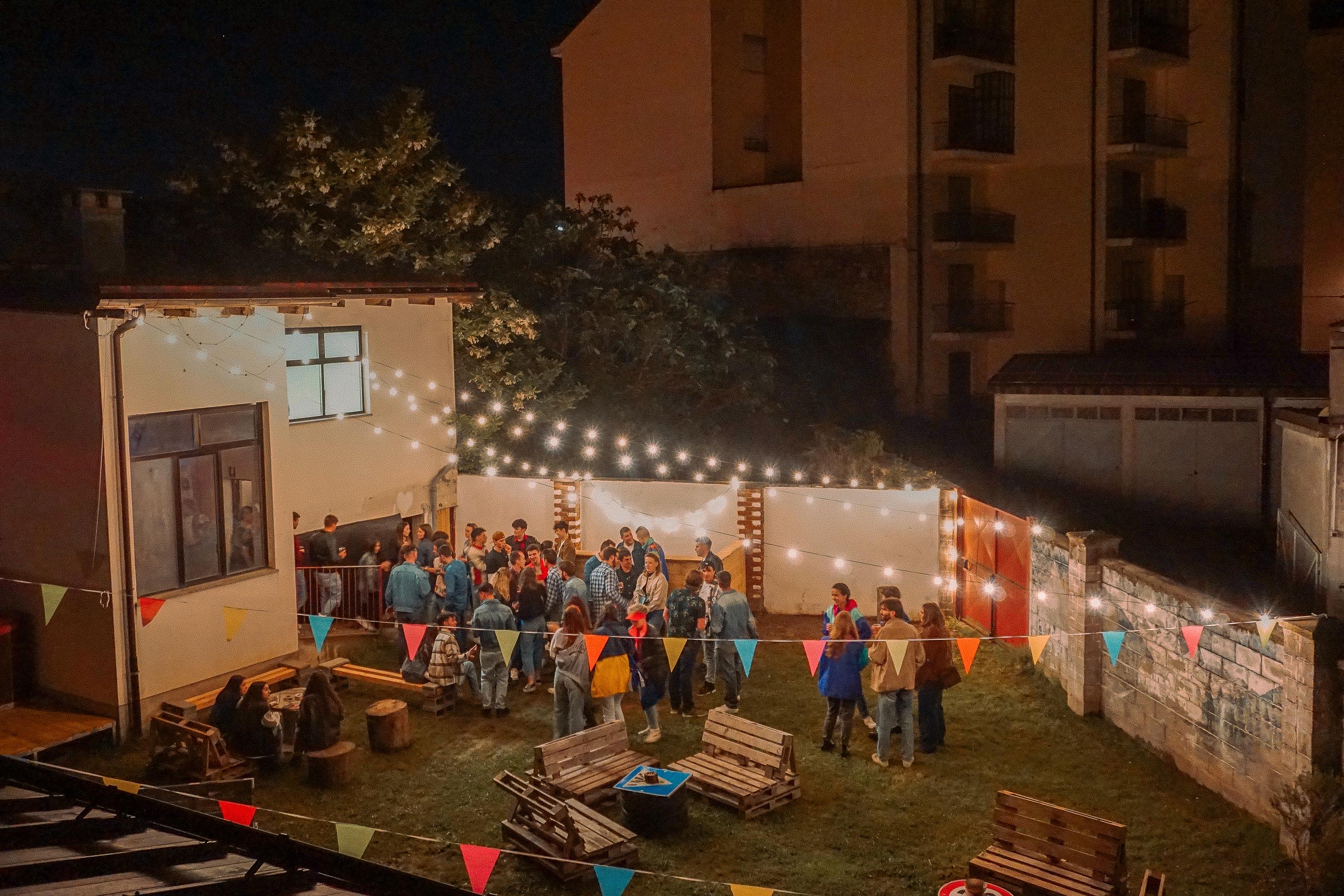
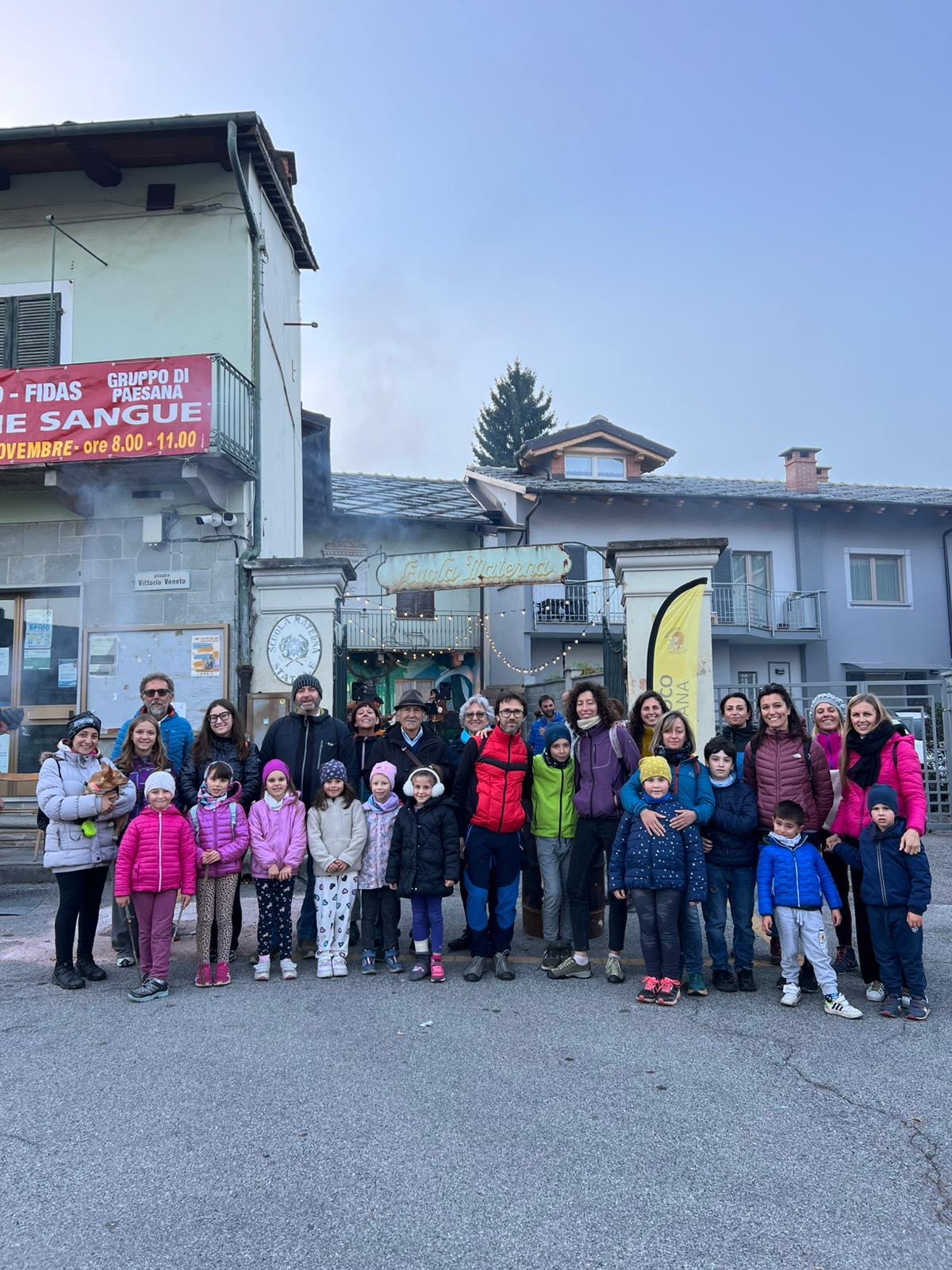
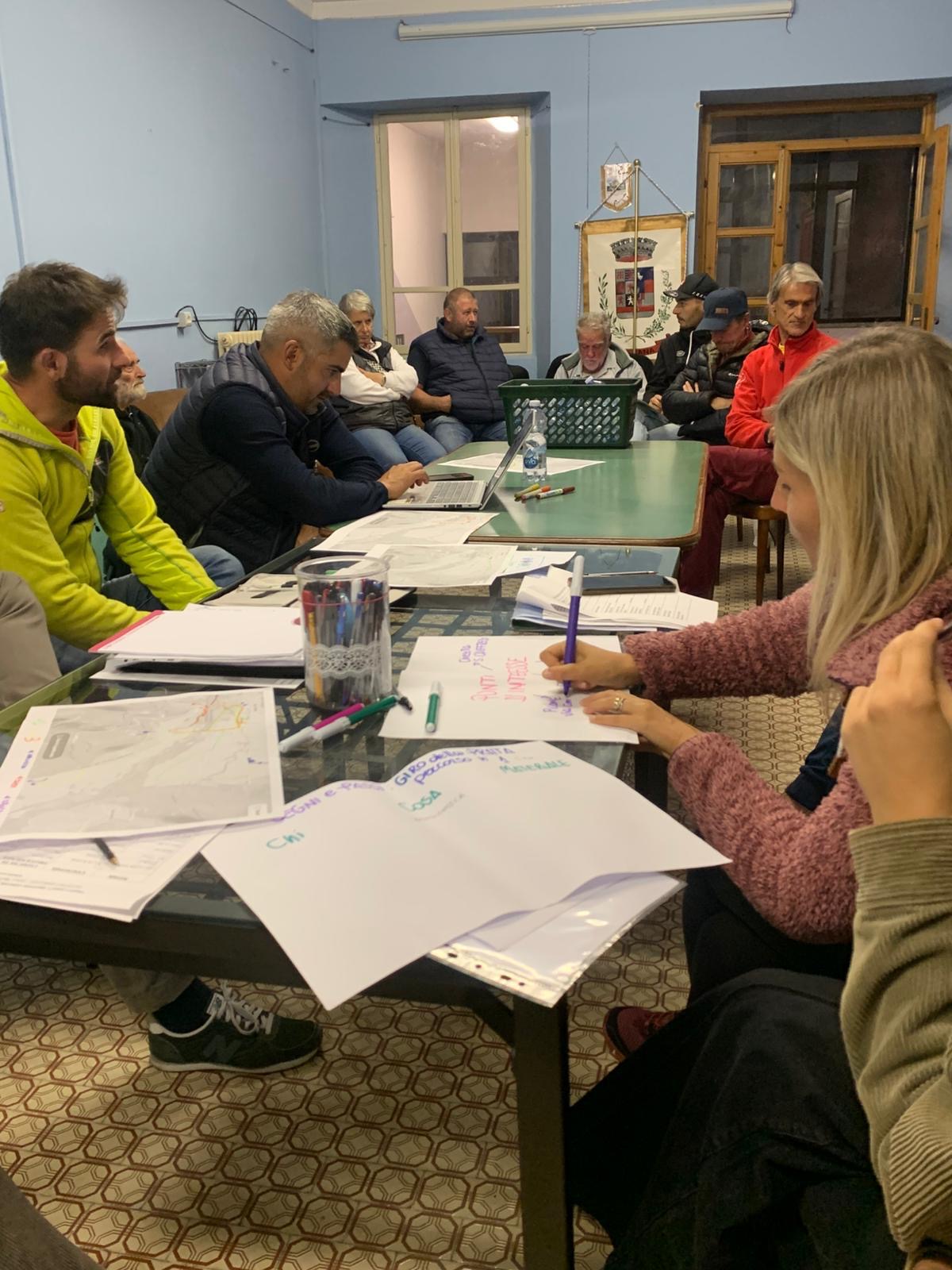
Sustainability has already been incorporated into the initiative in a practical way. The building has been progressively reactivated for shared use avoiding abandonment and promoting more efficient use of existing spaces. At the beginning, a young group involved in the Ex-Asilo project has begun to enhance the exterior area with new furniture made from discarded or recycled materials, in a sustainability perspective. Nowdays, within the Ex-Asilo, meetings related to the “Segni e Passi” project are regularly held. This initiative is based on the principles of environmental sustainability and focuses on enhancing local pathways, directly involving local residents in shared activities, promoting a collective commitment to sustainable development (see the websites).
Looking ahead, the initiative aims to strengthen sustainability through a second phase of building improvements. Planned actions include small-scale energy efficiency measures for the building, further improvement of indoor and outdoor shared spaces, the use of sustainable and reusable materials for furniture and installations and the development of cultural and community projects focused on environmental awareness, responsible use of resources and the relationship between community life and the Alpine landscape. The project can be exemplary because it demonstrates how small municipalities, especially mountainous ones, can regenerate abandoned public buildings through low-cost strategies based on sustainable policies.
The initiative values the aesthetic quality and experience of people through a combination of community creativity, cultural activities and attention to the relationship with the place. Today, the House of Associations represents a living space where aesthetic and cultural value arises from the active participation of local associations, particularly the Paesana Pro Loco association.
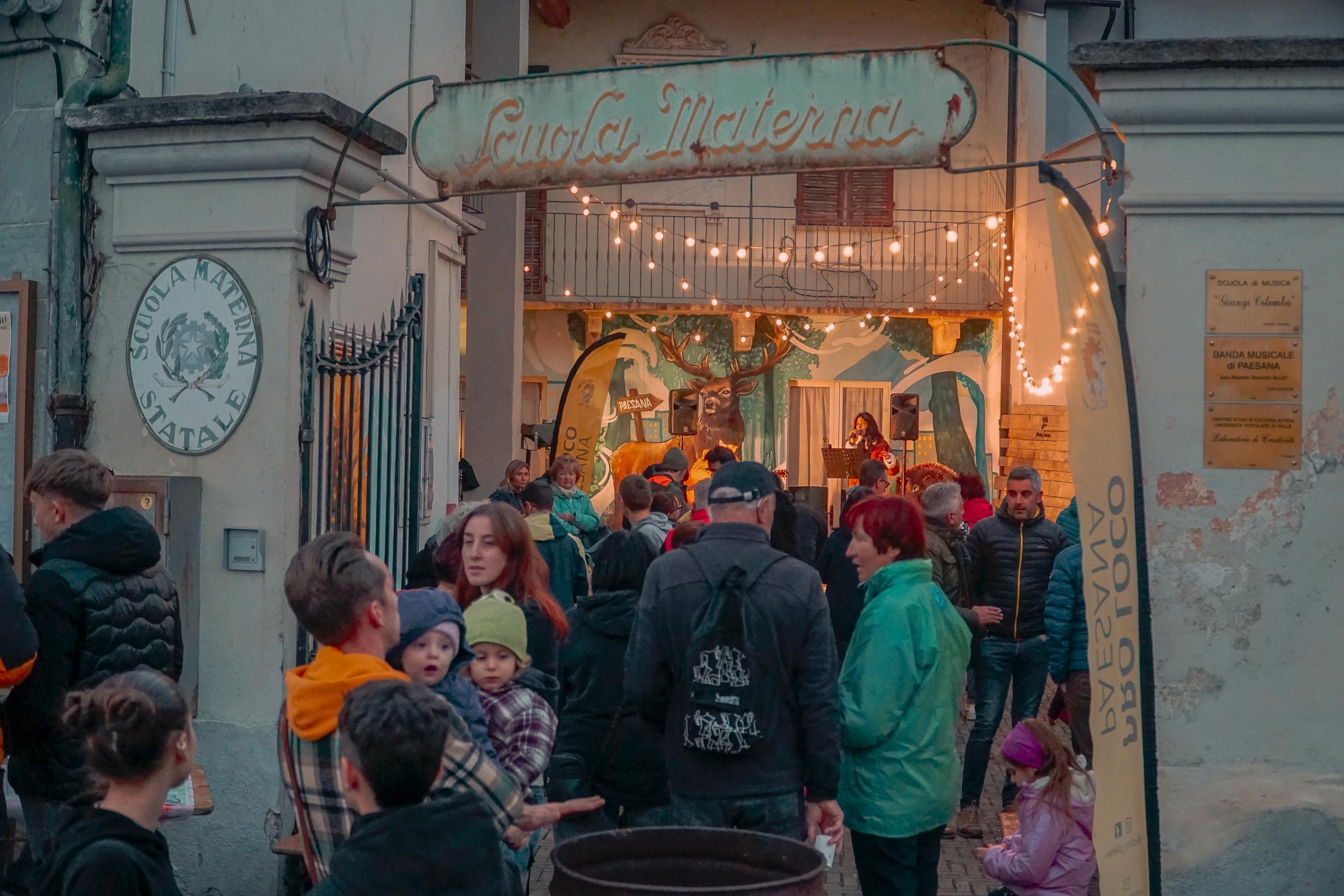
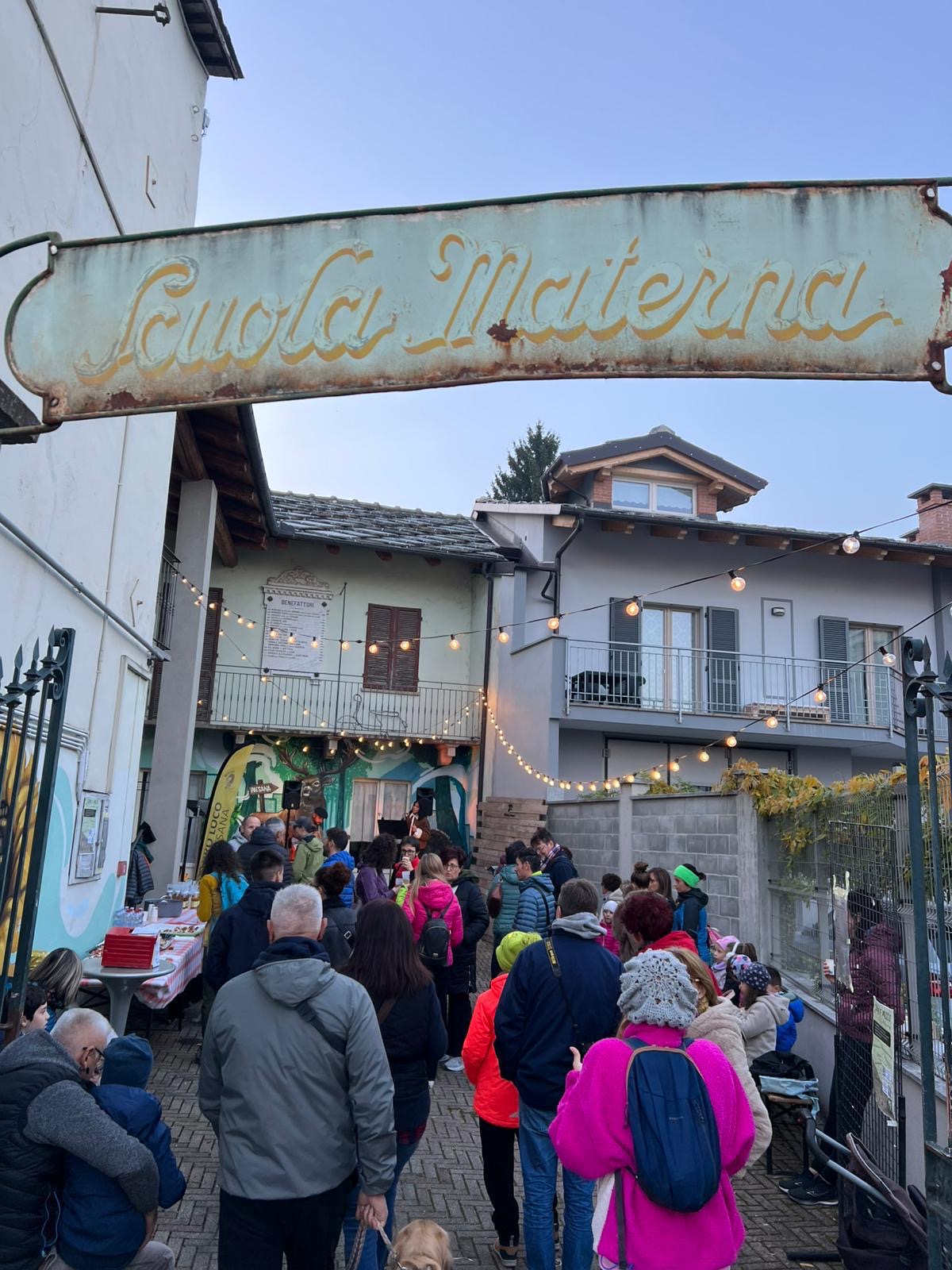
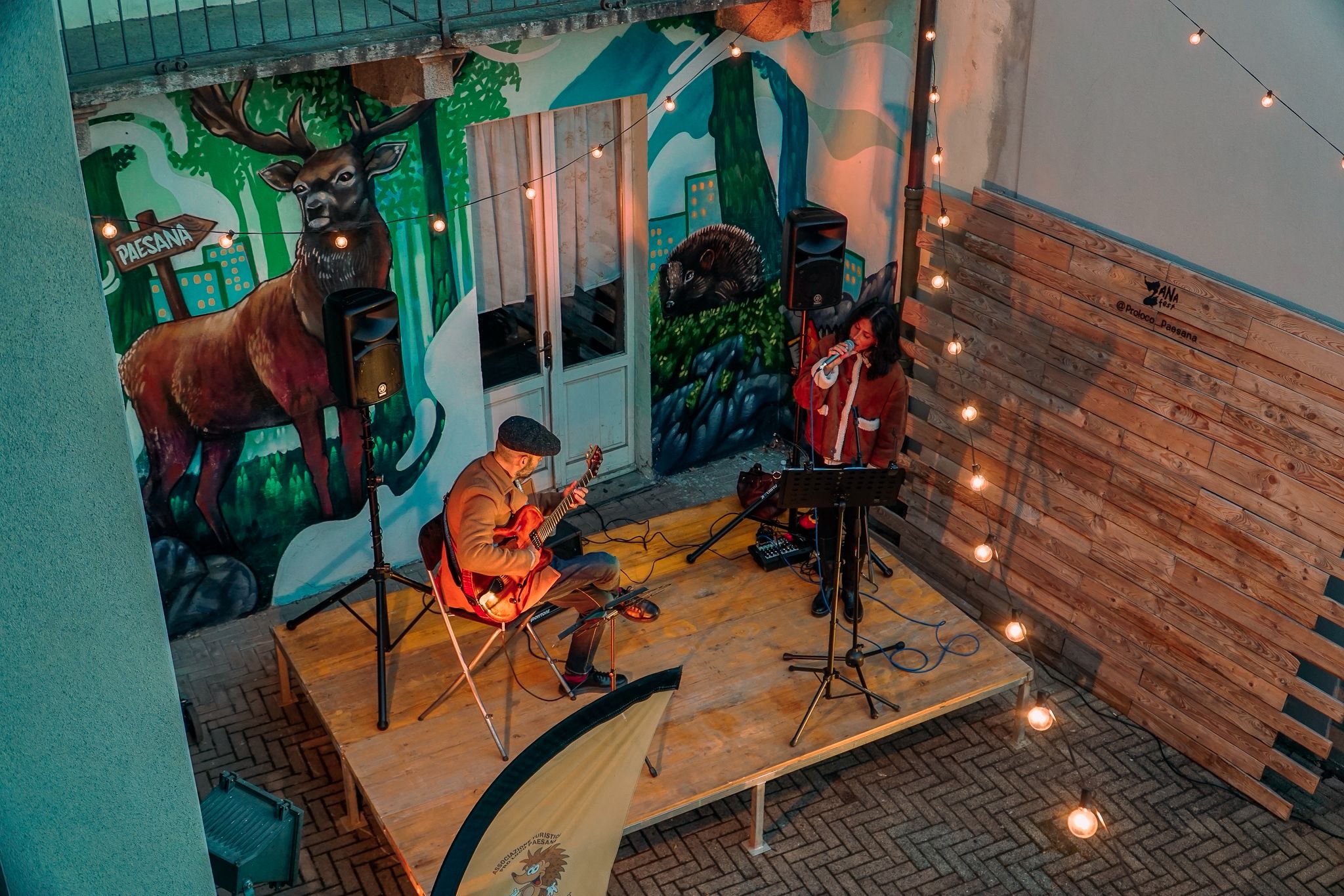
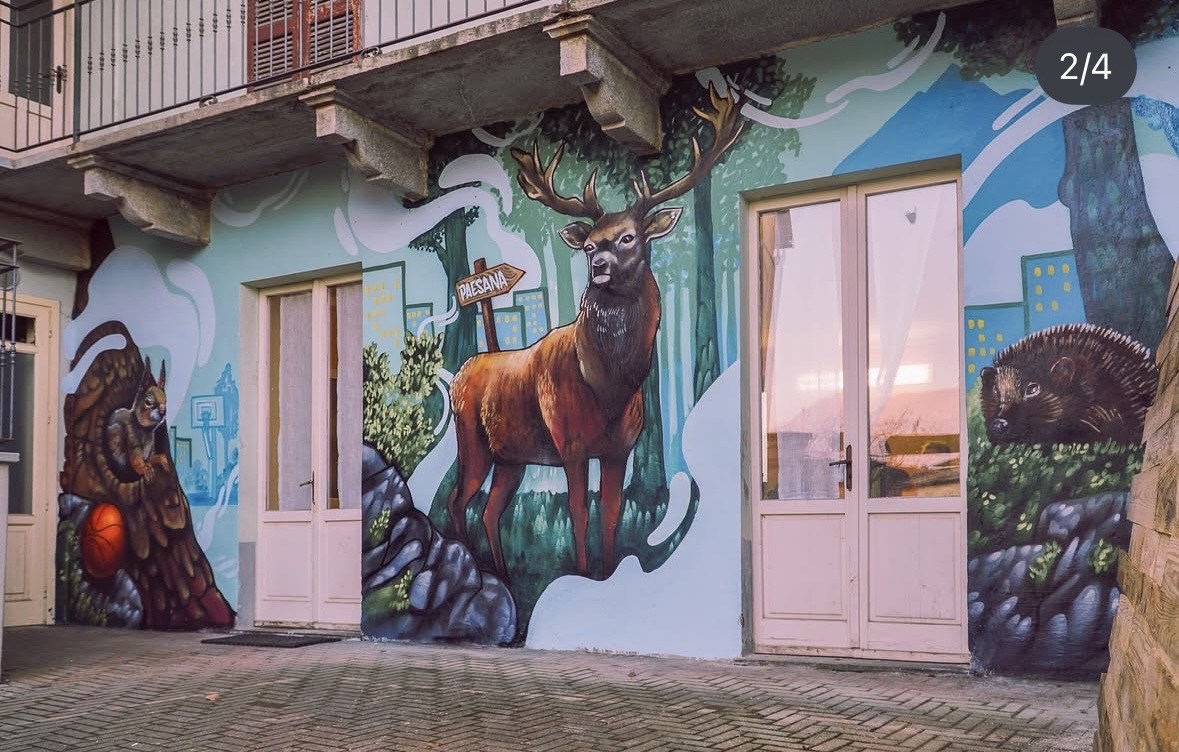
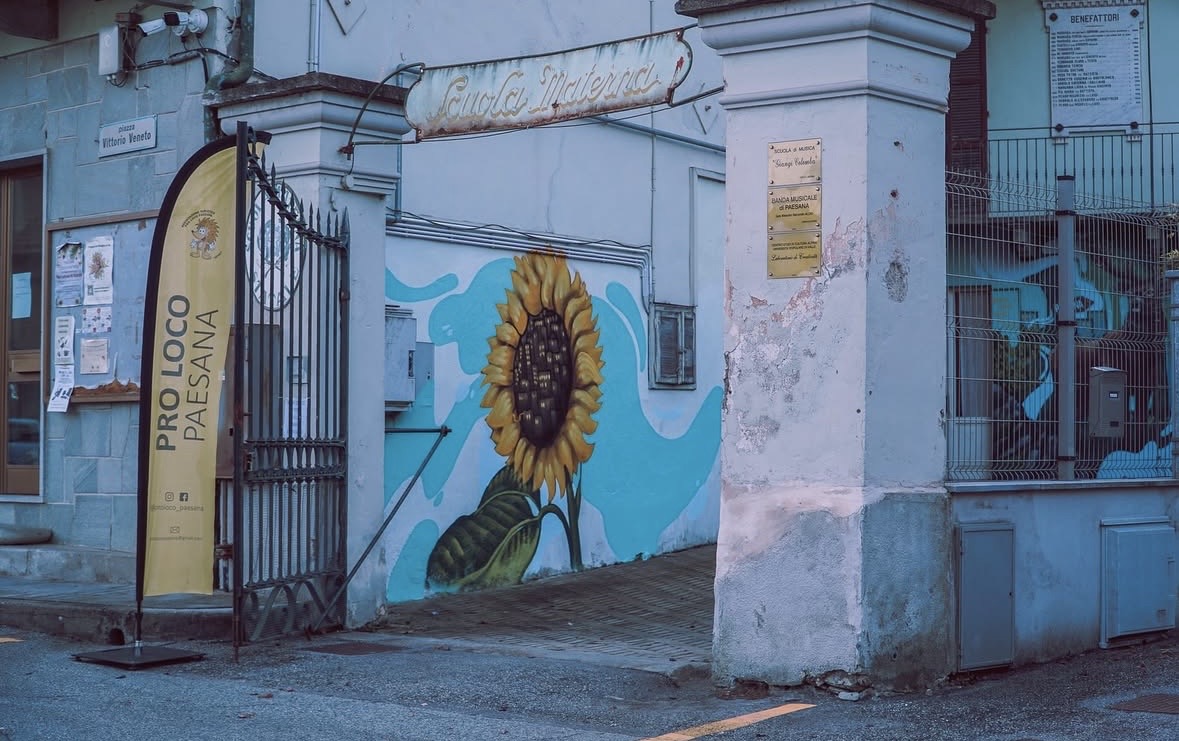
In recent years, several initiatives have contributed to improving the beauty and cultural atmosphere of the building and its spaces. Murals created with the involvement of the town's young people have transformed the walls of the former kindergarten into works of art, making the place more alive and with its own identity. At the same time, initiatives promoted by the Pro Loco (such as local cultural events, collective activities and projects to enhance trails and outdoor spaces) have strengthened the connection between people, place, and landscape. Events and moments of gathering in fact contribute to creating shared experiences that connect the cultural life of the country with the surrounding Alpine environment.
Starting from these experiences, the project intends to further enhance the aesthetic quality of the House of Associations and its shared courtyard. Future actions may include new artistic interventions, additional murals and creative installations inspired by the area's mountain identity, particularly the presence of the mountain "Monviso" and the nearby sources of the Po River, symbols of the relationship between community, landscape, and natural beauty.
The initiative will also foster new forms of community through workshops and cultural activities involving citizens, associations and young people.
The project can be considered exemplary because it demonstrates how even small municipalities can enhance the beauty and cultural vitality of existing public spaces through community participation and a strong connection to the beauty of the surrounding local landscape.
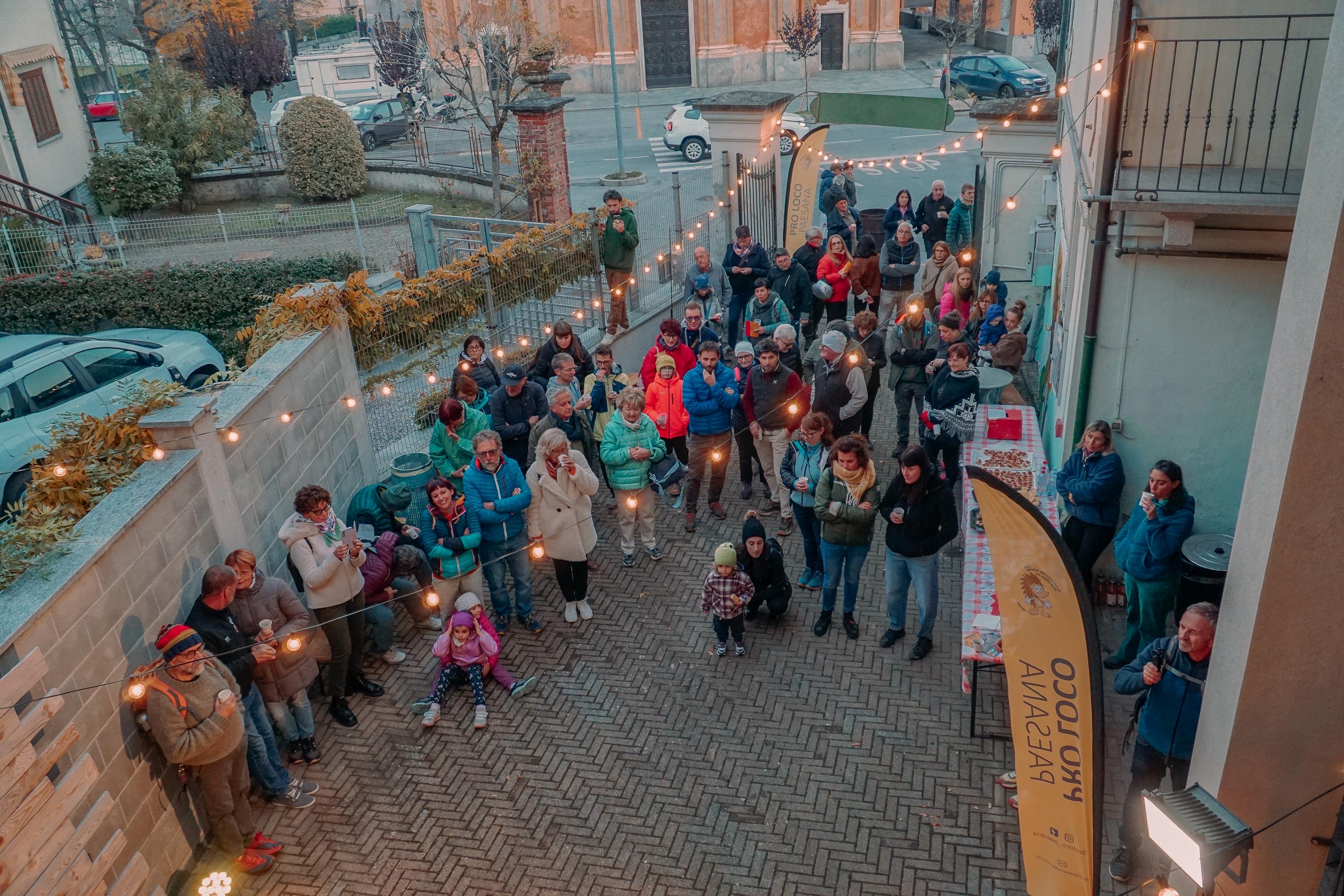
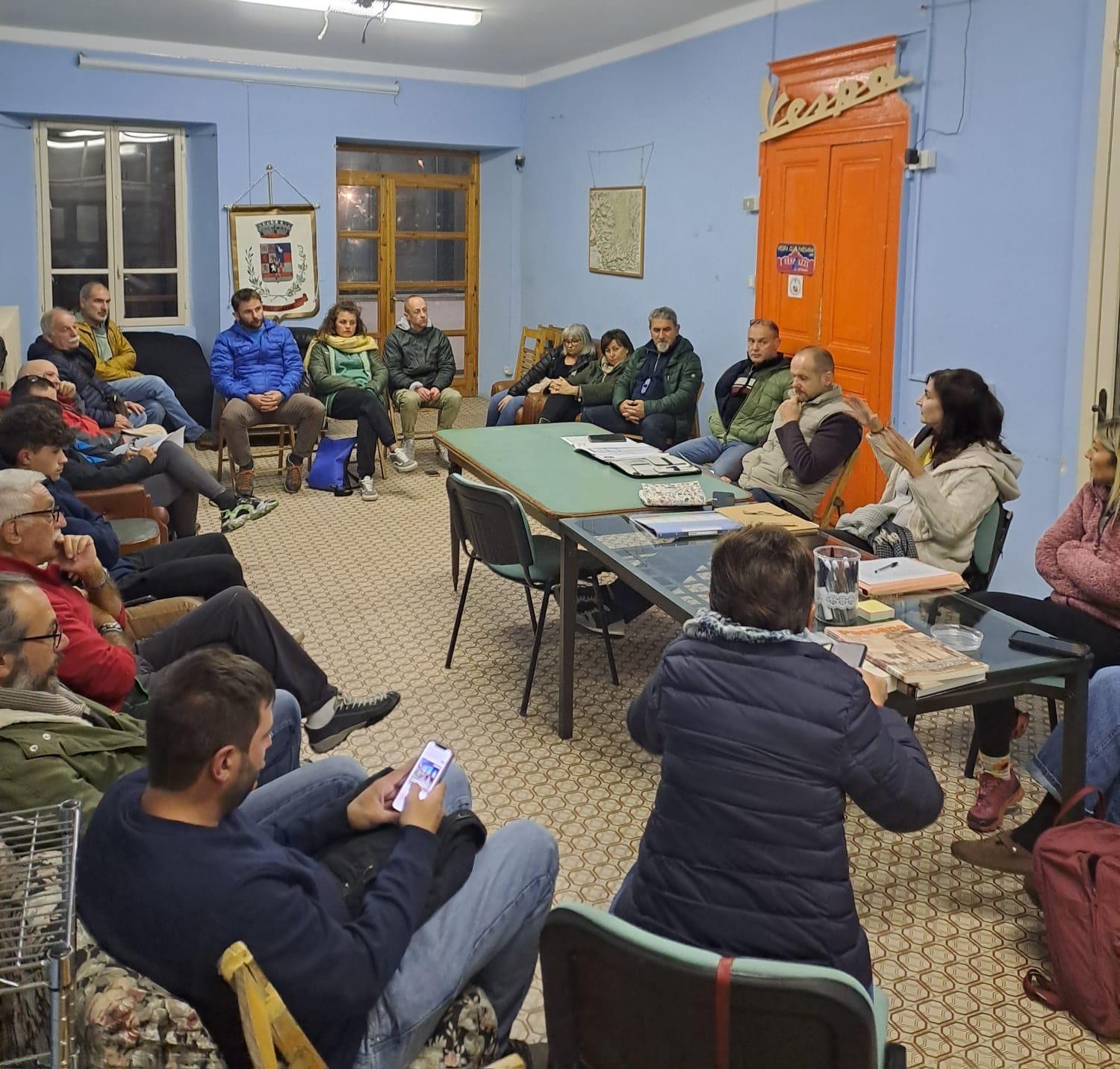
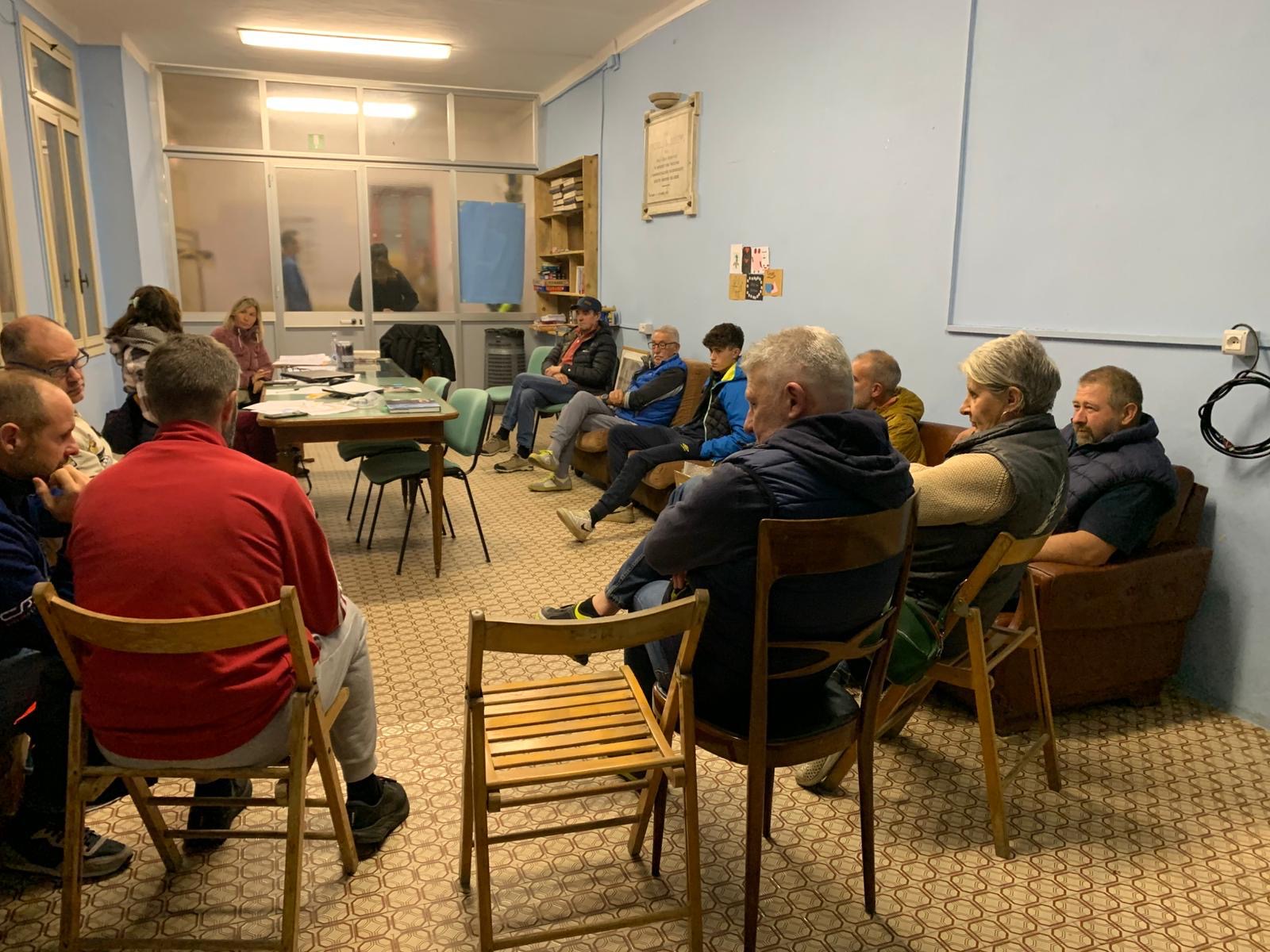
The Ex-Asilo is nowdays animated by a network of local associations that actively contribute to the inclusion and the social life of Paesana. Among them, the Pro Loco association plays a central role in organising cultural initiatives and community activities, working together with volunteers and other local groups. Through this collaborative network, the building has become a shared civic space where different generations and social groups can meet, exchange ideas and develop initiatives for the community.
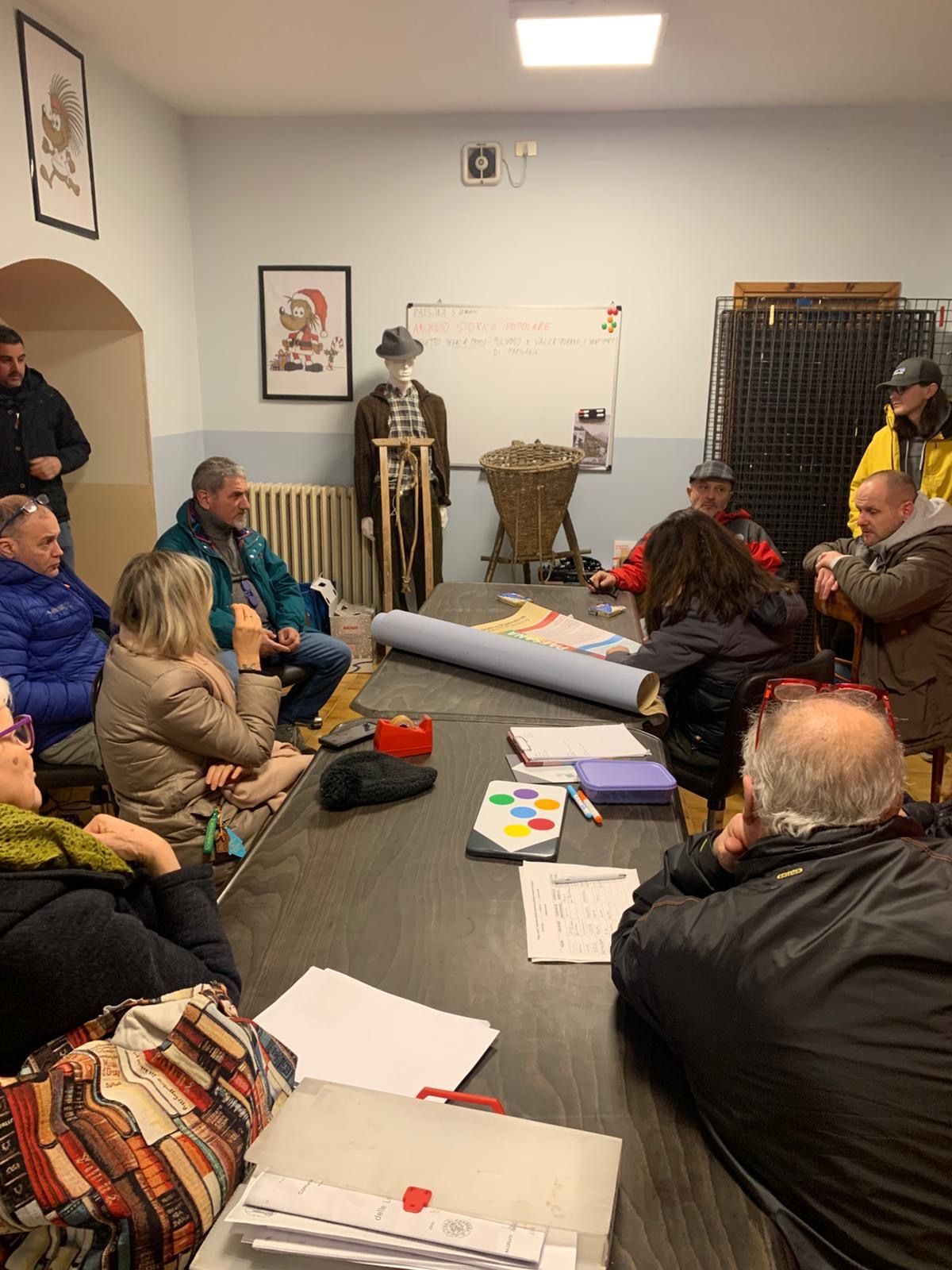
The very creation of the Casa delle Associazioni/House of association represents an example of social inclusion. The town’s former kindergarten was gradually restored and made usable thanks to the voluntary work of young residents who participated in cleaning, restoring and furnishing the building. This process created a strong sense of collective responsibility and belonging to the place.
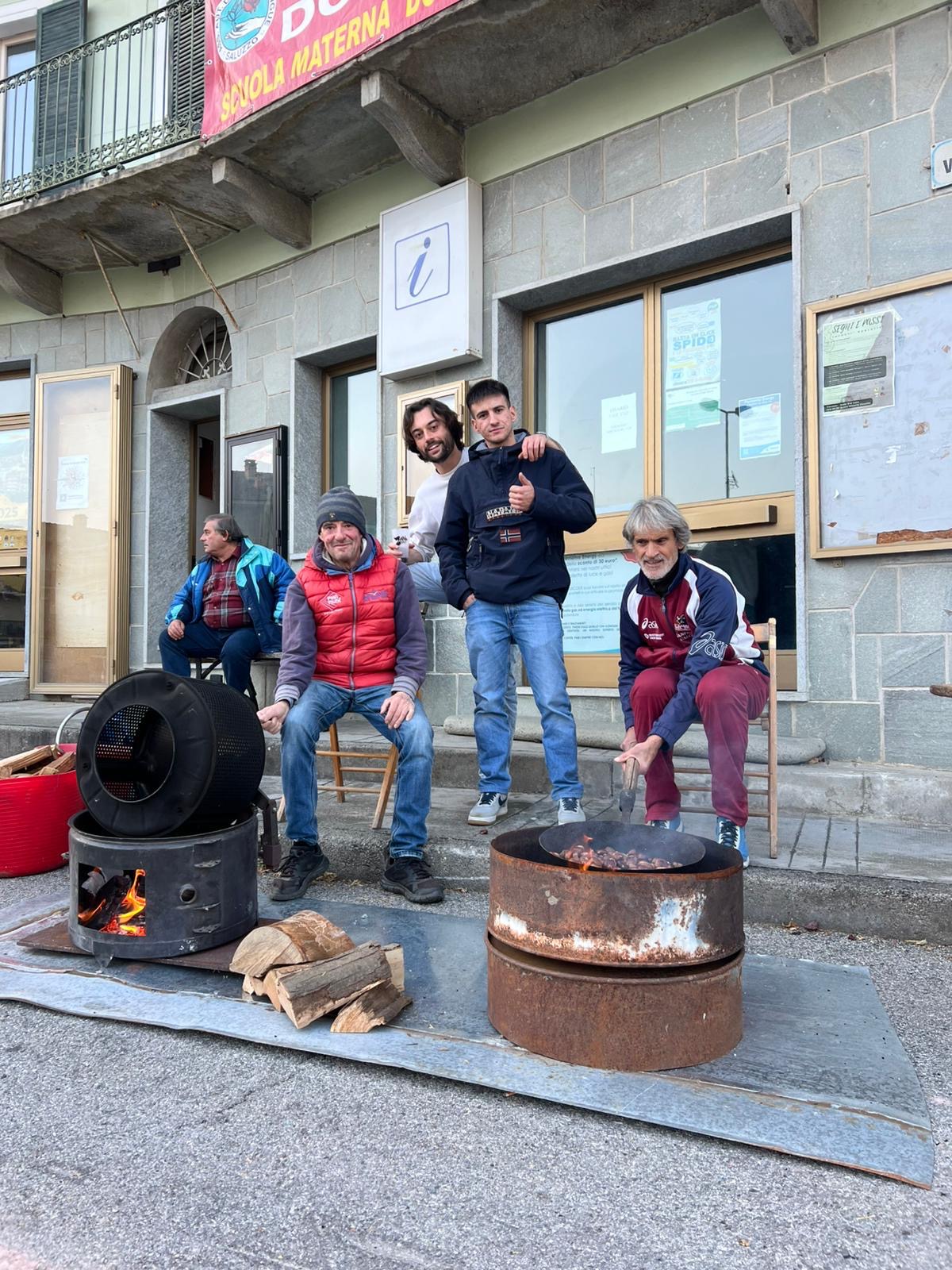
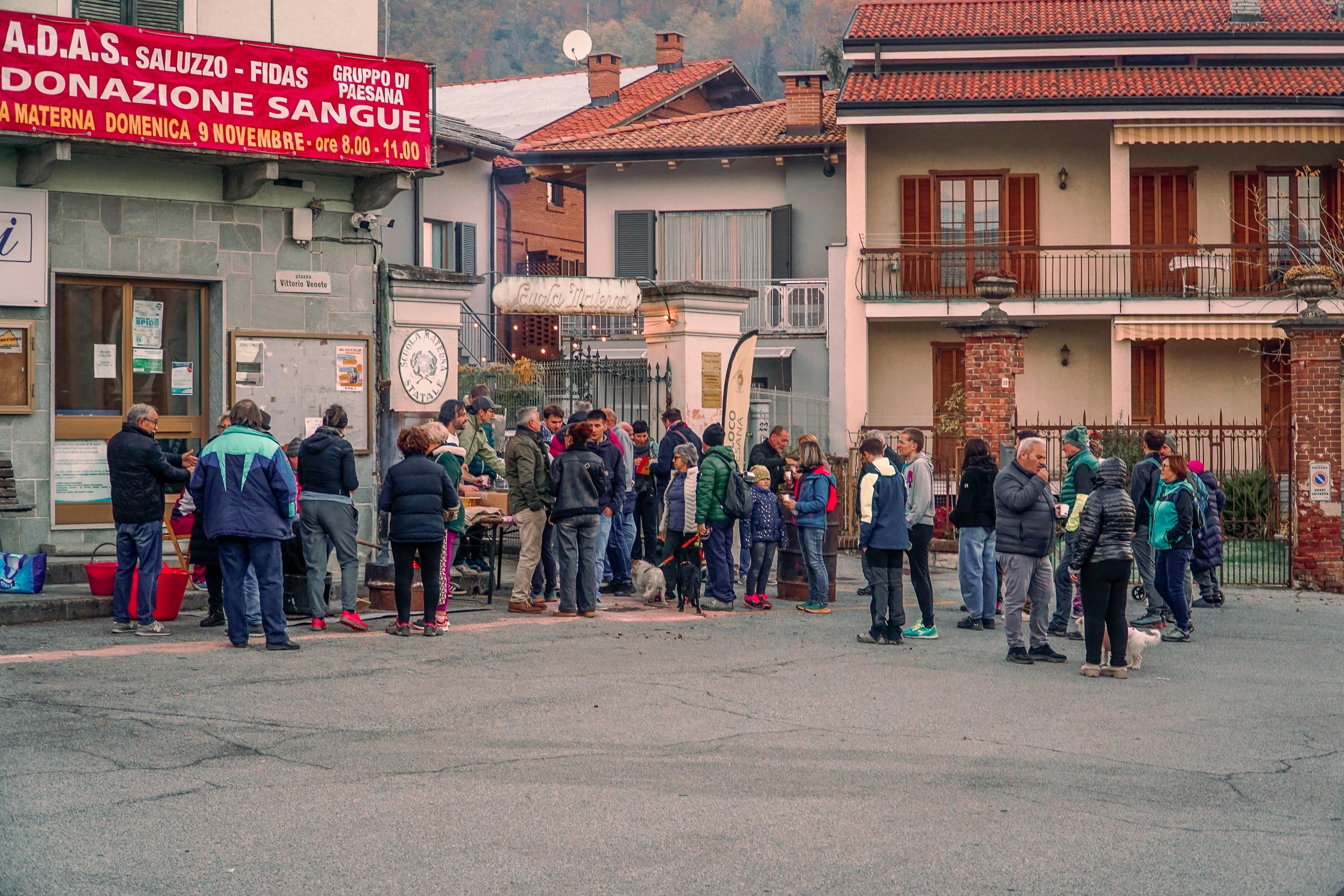
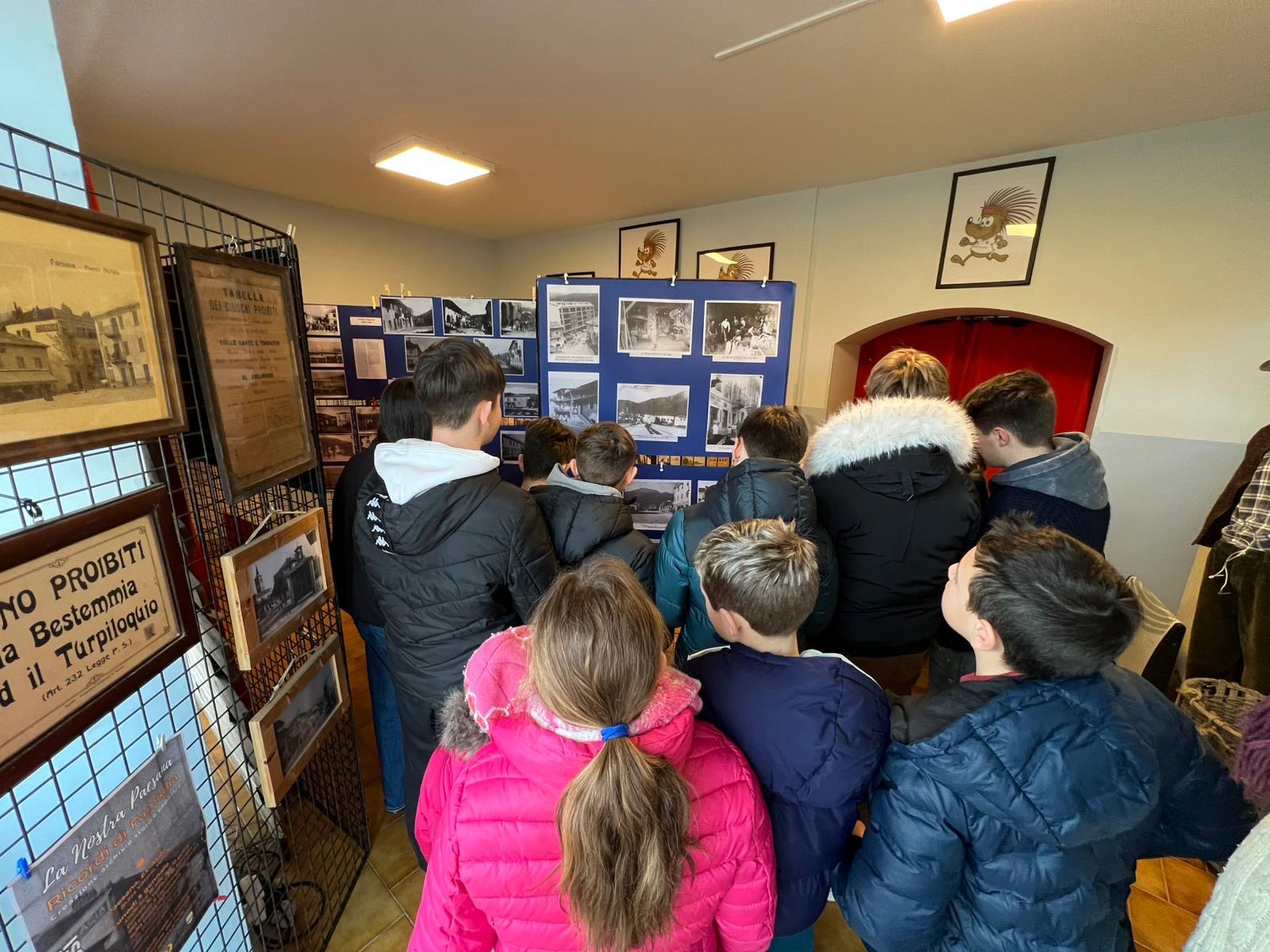
Today, as illustrated in the attached documents, the building hosts several initiatives that promote inclusion and active citizenship, including community events, cultural activities, workshops and projects aimed at enhancing local trails and natural spaces (such as the “Fitwalking del Monviso” and the town’s Carnival). These initiatives strengthen the relationship between people, place and landscape, while encouraging participation and inclusion in the community life.
Looking ahead, the initiative aims to further develop projects that directly involve citizens in the social life of the community. New activities, cultural initiatives and community-led projects will help strengthen social cohesion and counter the risk of depopulation in small Alpine municipalities such as Paesana.
The initiative can be therefore considered exemplary because it demonstrates how inclusion and civic engagement can transform an existing public building into an inclusive community hub, helping to maintain a social life in the small mountain towns throught their own local associations.
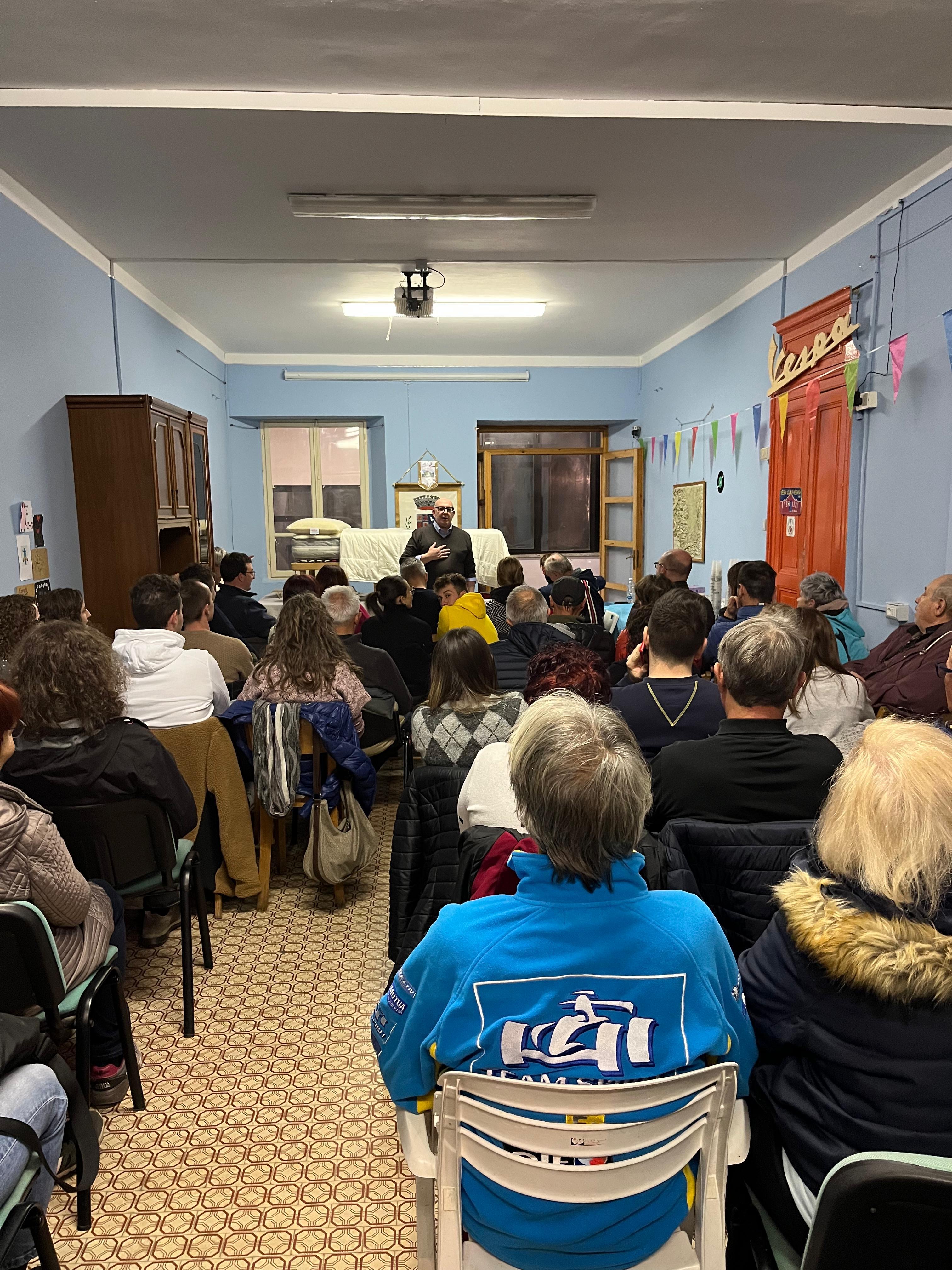
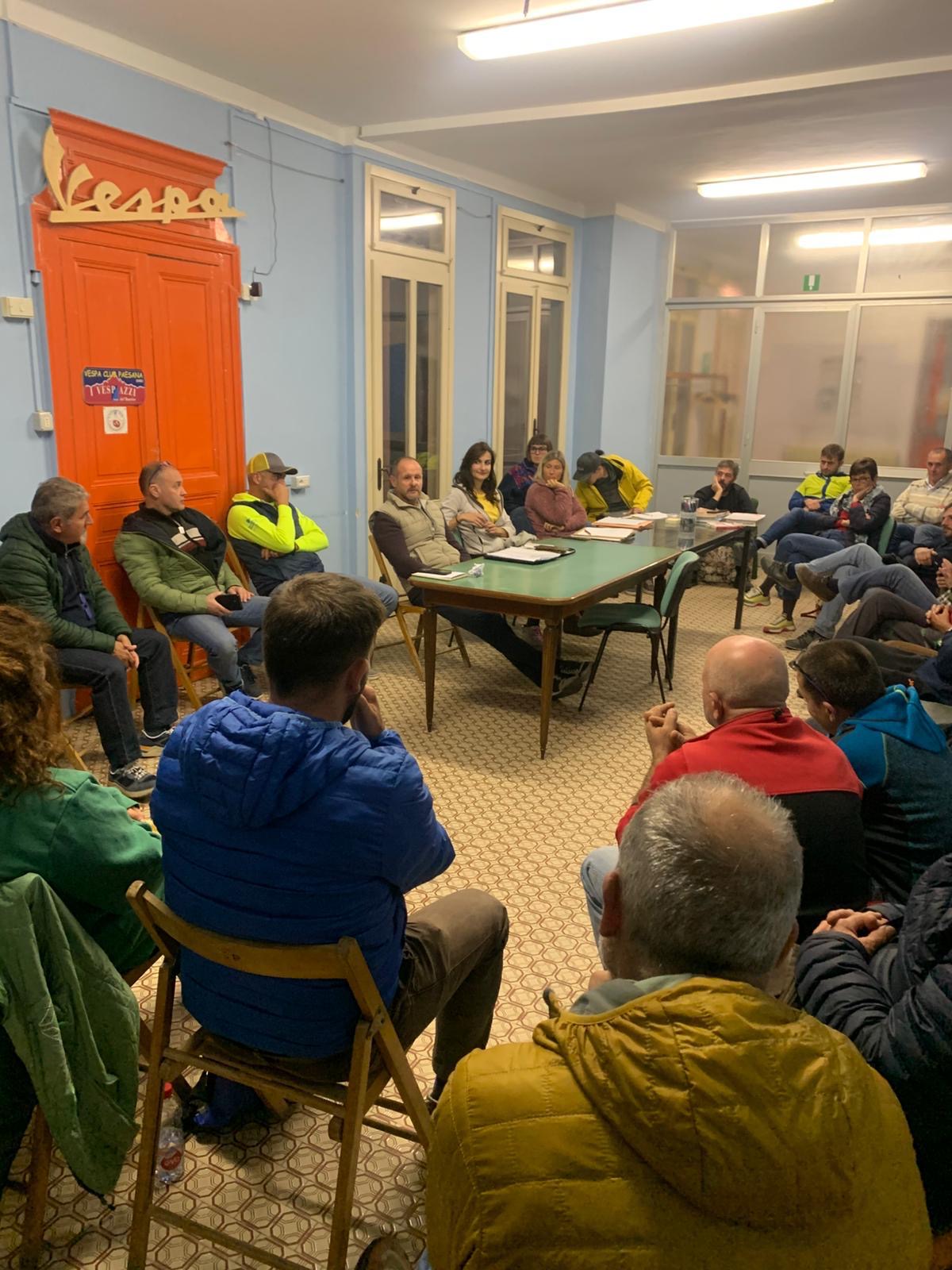
The initiative is strongly rooted in participatory governance and community co-creation. As we said before, the House of associations is formally shared by the several local associations, including Pro Loco Paesana, Banda Musicale (a music band, made up of numerous children and elderly people, from 12 to 80 years old), Università Popolare Valle Po (which organizes courses, trips and conferences on many topics), Alta Valle Po Mountain Bike Association (association of bicycle lovers) and Vespa Club I Vespazzi del Monviso (association that brings together enthusiasts of the historic italian "vespa" motorcycle). Their presence ensures that the building is not managed as a public structure lowered from above, but as a living civic space shaped by civil society.
Citizens and end-users have been involved from the outset. The former kindergarten was progressively cleaned, arranged and furnished thanks to the voluntary work of young residents, who also helped to define its functions. This has generated a strong sense of ownership, responsibility and sustained commitment.
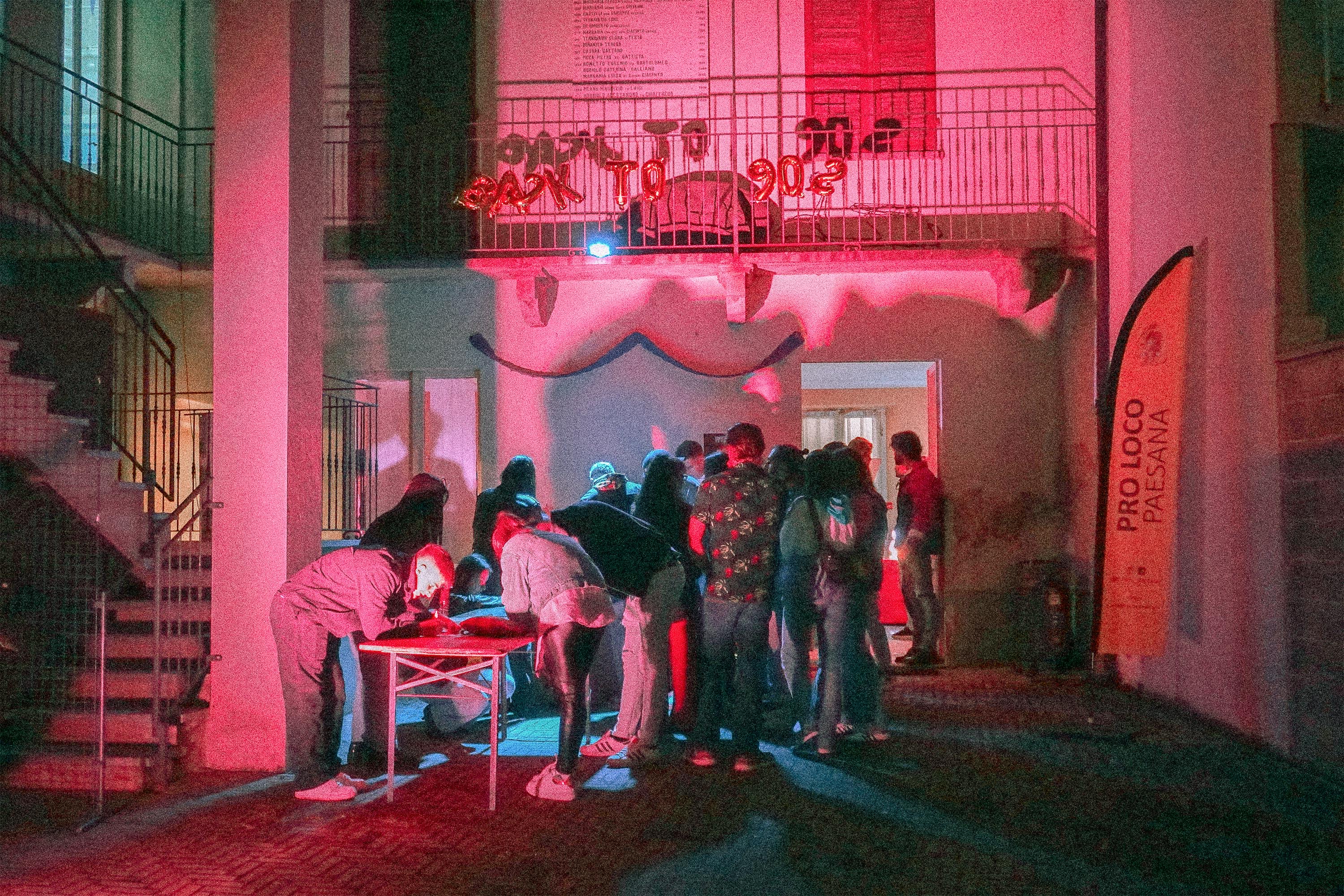
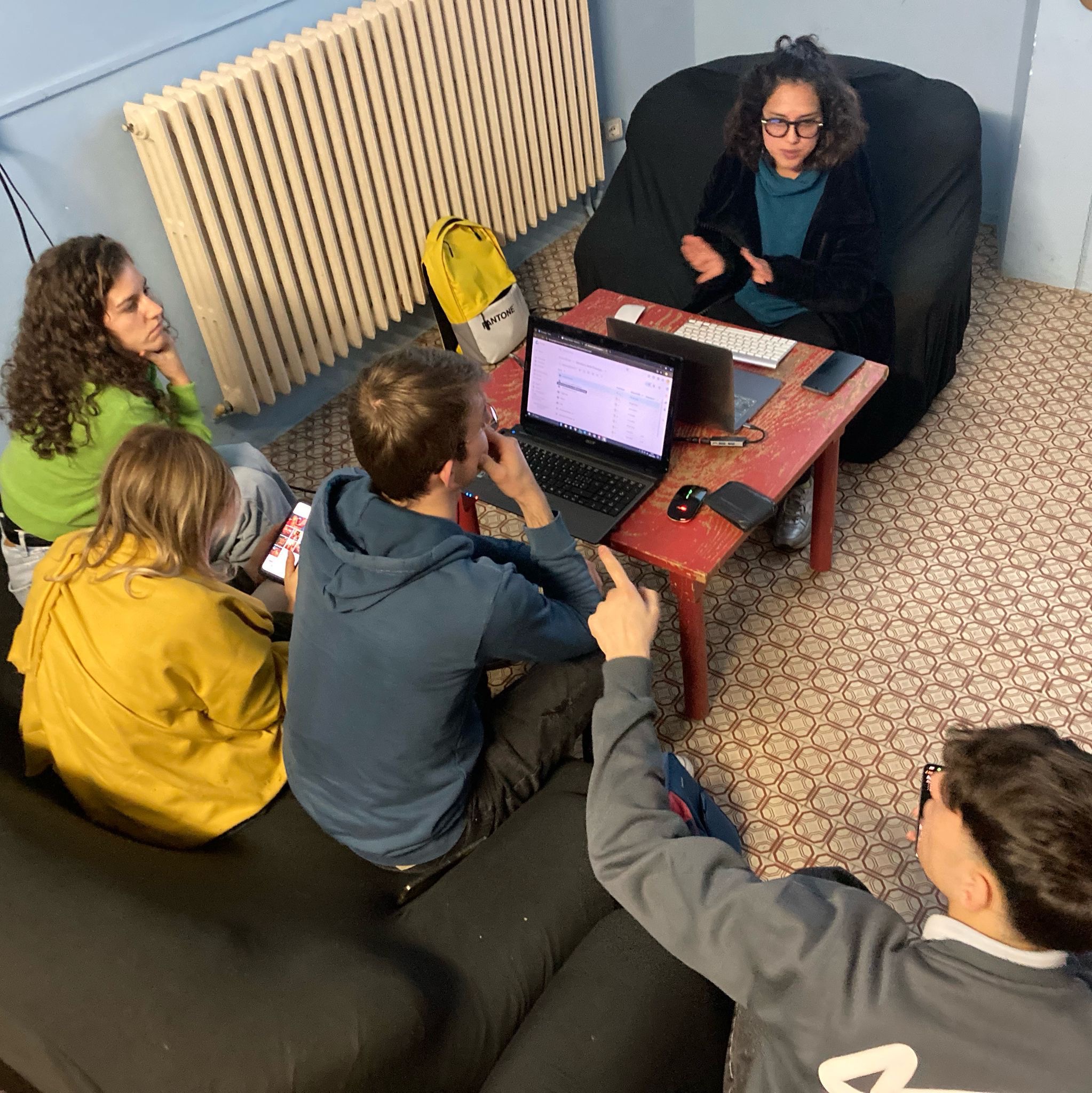
The same participatory approach continues today through concrete experiences. The Ex-Asilo hosted the “90s Evening” for under 35s of the Valley, the participatory mural project in the internal courtyard, six graffiti workshops led by Karim Graffiti and open to young people from Paesana and nearby municipalities, three co-design meetings of the pre-festival events of "Zana Fest", as well as activities involving the Municipal Council of Children, the senior center, yoga groups, creative workshops, and volunteer training sessions. These initiatives show varying levels of involvement. Citizens are not the only users of the space, but also organizers, volunteers, co-designers and promoters of activities.
The impact of such involvement is relevant. It strengthened social ties, attracted new participants, improved the quality and identity of the space, and made the initiative more responsive to the local needs.
The initiative is supported by a multi-level network of stakeholders involved in both project design and implementation. At the local level, the Municipality of Paesana plays a key role as the owner of the building, the entity that provides the space and an institutional supporter of the initiative. It has in fact formally assigned the former kindergarten to local associations, supports extraordinary maintenance and utility costs, and recognized the public value of the project as a community space.
In primis, the main stakeholders are the same local associations established in the House of Associations: Pro Loco, Banda Musicale di Paesana, Università Popolare Valle Po, Associazione Bici da Montagna Alta Valle Po and Vespa Club I Vespazzi del Monviso. Their role consists not only in using the building but also in animating it through cultural, social, and educational activities, creating a model rooted in civil society (for example, the Pro Loco's initiatives can be viewed in the "programming" section of the pro loco's website).
Other relevant stakeholders contributed at the territorial level. Social cooperatives (such as Caracol, Armonia, and Viso a Viso) have used the Ex-Asilo as a base for social projects in Paesana, expanding the initiative's social reach. The Cassa Risparmio Foundation supported the improvement of the building's façade, while artist Karim Graffiti, in collaboration with local educators, led a participatory graffiti workshop open to young people from Paesana and surrounding municipalities.
The added value of such involvement is relevant: a) the Municipality of Paesana guarantees the use of the building; b) local associations ensure daily civic life and community participation; c) external partners provide expertise, inclusion, and financial support. Together, these actors make the initiative a significant example of how small municipalities can build ex novo some collaborative governance models for the regeneration of existing public spaces.
The initiative reflects an interdisciplinary approach combining different fields of knowledge connected with community life, culture and the natural environment. The design and implementation of the project involves contributions from cultural, artistic, educational, environmental and social fields that interact within the shared space of the House of Associations.
Cultural and educational disciplines are represented through activities organized by local associations such as the Università Popolare Valle Po and the Banda Musicale di Paesana (the last and only one music band that is nowdays working in the entire Po Valley), which promote cultural events, educational initiatives and artistic expression within the community. The artistic dimension also emerges through participatory artistic projects, such as murals and graffiti workshops led by local artists.
The initiative also integrates expertise related to local tourism and territorial development through the activity of the Pro Loco association, which organizes cultural events and initiatives aimed at enhancing the identity of the territory and strengthening the link between community life and the surrounding Alpine landscape.
Environmental knowledge related to the use of natural spaces are represented by activities related to trails and sports and cycle tourism initiatives promoted by the Alta Valle Po Mountain Bike Association, as well as events that enhance the natural heritage of Monviso and the source of the Po River.
These different disciplines interact within the same civic space and through collaborative activities organized by associations and citizens. The coexistence of these fields fosters dialogue between different forms of knowledge and encourages interdisciplinary initiatives within the House of associations, combining the values that inspire the New European Bauhaus.
The innovative nature of the project lies first and foremost in the creation of a public space in which all the main local associations of the town are based within the same public building. Indeed, in many small municipalities, associations are often dispersed in different places and operate separately. In Paesana, instead, the House of Associations brings together all local associations within a single structure located in the town's central square. Its location symbolically recognizes the centrality of associations in the social life of the country and facilitates dialogue between them. The presence in the same building can potentially foster cooperation and the development of interdisciplinary initiatives involving multiple associations.
A further innovative element lies in the attempt to bring the principles of the NEB into the specific natural and cultural context of Paesana. The project aims to connect the values of nature's beauty, sustainability, inclusion and cultural heritage to the surrounding Alpine landscape, particularly due to the presence of the mountain Monviso and the nearby sources of the Po River. Our territory is in fact part of the UNESCO programme “Man and the Biosphere” through the Monviso Transboundary Biosphere Reserve, which highlights the strong link between the beauty of nature, culture and local communities (principles corresponding to the NEB).
Finally, the initiative is innovative because it addresses one of the main challenges facing the European mountain municipalities: population decline and depopulation. Rather than relying solely on large and expensive public investments, the project promotes grassroots initiatives based on civic participation, volunteering and the reuse of existing public spaces.
This approach demonstrates how active citizenship and the principle of horizontal subsidiarity can generate social value and revitalize community life with relatively limited economic resources.
The initiative follows an approach based on a participatory sense and focused on the reuse of an existing public building and the active involvement of local associations and citizens. The methodology is based on a gradual and collaborative process that combines civic participation, shared management and progressive development of activities, with a view to the urban regeneration of a disused building that has always been a place dear to the population of the town (the building of Ex-asilo dates back to the early 19th century. The structure was later burned down during the Nazi-Fascist occupation).
In particular, the first step consisted in the reuse of the former kindergarten building, which was progressively reorganized and equipped thanks to the voluntary work of local residents, especially young people (between 18 and 25 years old). This phase allowed us to physically reclaim the space while strengthening the local community's sense of belonging and responsibility.
The second step concerned the creation of a shared governance model. Several local associations were brought together in the same building, contributing to the animation of the space through cultural, social and educational activities. This collaborative management model allows the space to remain active throughout the year and fosters continuous interaction between associations and citizens.
The third element of the methodology consists of activating the space through a variety of initiatives: cultural events, art workshops, community meetings, educational activities and projects related to the surrounding natural environment.
Finally, the approach places particular emphasis on ongoing community involvement to prevent depopulation of the entire valley. Many initiatives are co-designed with citizens, volunteers, and local organizations, allowing the project to evolve over time based on needs and ideas emerging from the community.
The initiative is replicable because it is based on simple, low-cost elements for small municipalities (which, as is well known, suffer from municipal budgets) and easily adaptable, which can be implemented in many other small municipalities, including those in mountainous areas.
First, the project demonstrates how existing and underutilized public buildings can be regenerated and transformed into community hubs. Many european municipalities, especially small municipalities and mountain areas, own unused or partially abandoned buildings such as former schools, kindergartens or municipal facilities. The approach adopted by Paesana shows how these spaces can be reused to host local associations and community activities, revitalizing existing infrastructure without requiring major construction investments, preserving land consumption.
Second, the governance model adopted by the House of Associations is highly replicable. Bringing together multiple local associations within a shared space fosters collaboration, strengthens civic participation and reduces the risk of depopulation that often characterizes life in small municipalities.
Third, the initiative is based on a bottom-up, participatory methodology that can be reproduced in different social and territorial contexts. The involvement of volunteers, citizens and local organizations in the complete regeneration of a building demonstrates how community participation can play a central role in the regeneration processes of public spaces. Furthermore the project is able to demonstrate that the values of the NEB are closely interrelated with the values that derive from the surrounding environment.
Finally, the initiative demonstrates that regeneration processes do not necessarily require large financial resources. Combining civic participation, reuse of existing buildings and social initiatives, supported by forward-looking administration, the project can be a best practice for all small municipalities.
The initiative already demonstrates a concrete commitment to its implementation, since the House of Associations is an active and institutionalized community space and not a merely theoretical project.
The Municipality of Paesana has formally assigned the former kindergarten building to local associations, supporting extraordinary maintenance and utility costs and in 2024 renewed the space allocation structure, confirming its long-term commitment to the initiative.
The NEB's values and operating principles have already been incorporated into the former kindergarten project. Inclusion and participation are indeed reflected in the shared use of the building by local associations, youth, volunteers, elders and community groups. The aesthetic dimension and cultural value have already been addressed through the improvement of the façade and through artistic initiatives, such as the graffiti workshop and mural interventions involving young people. Sustainability emerges from the reuse of an existing public building, the intention to improve its environmental performance and the use of recycled materials for new exterior furnishings.
The next phase of development will focus on further improving the quality, accessibility and sustainability of shared spaces. The planned activities include enhancing the common space and the courtyard as a more structured area, incorporating additional furnishings and creative elements, organizing new cultural and participatory activities, strengthening the communication and organizational skills of the youth group that manages the Ex-Asilo. The initiative also aims to support new projects capable of involving citizens more directly and strengthening social cohesion in a small mountain municipality exposed to the risk of demographic decline.
Finally, as happened for the "Segni e passi" project of the local association Pro loco, the municipality is ready to support, as a lead entity, new projects that integrate the NEB principles.