Enhancing Circularity, Sustainability, and Innovation
(Re)considering waste
Complex (re)design of the environment: Landscape of waste to Reclamation Park
An image emerges of industrial waste landscapes shaped by human action. As nature reclaims artificial terrains, how might community life - and our response to global waste - transform? In Kėdainiai, a phosphogypsum landfill marks waste as our era’s condition. It is a social order and a hidden extraction - reimagined here as a site for repair. What is nature was not a recourse but the architect, instead of people?
Lithuania
National
It addresses urban-rural linkages
It involves a physical transformation of the built environment (hard investment)
Early concept
No
No
Yes
Individual
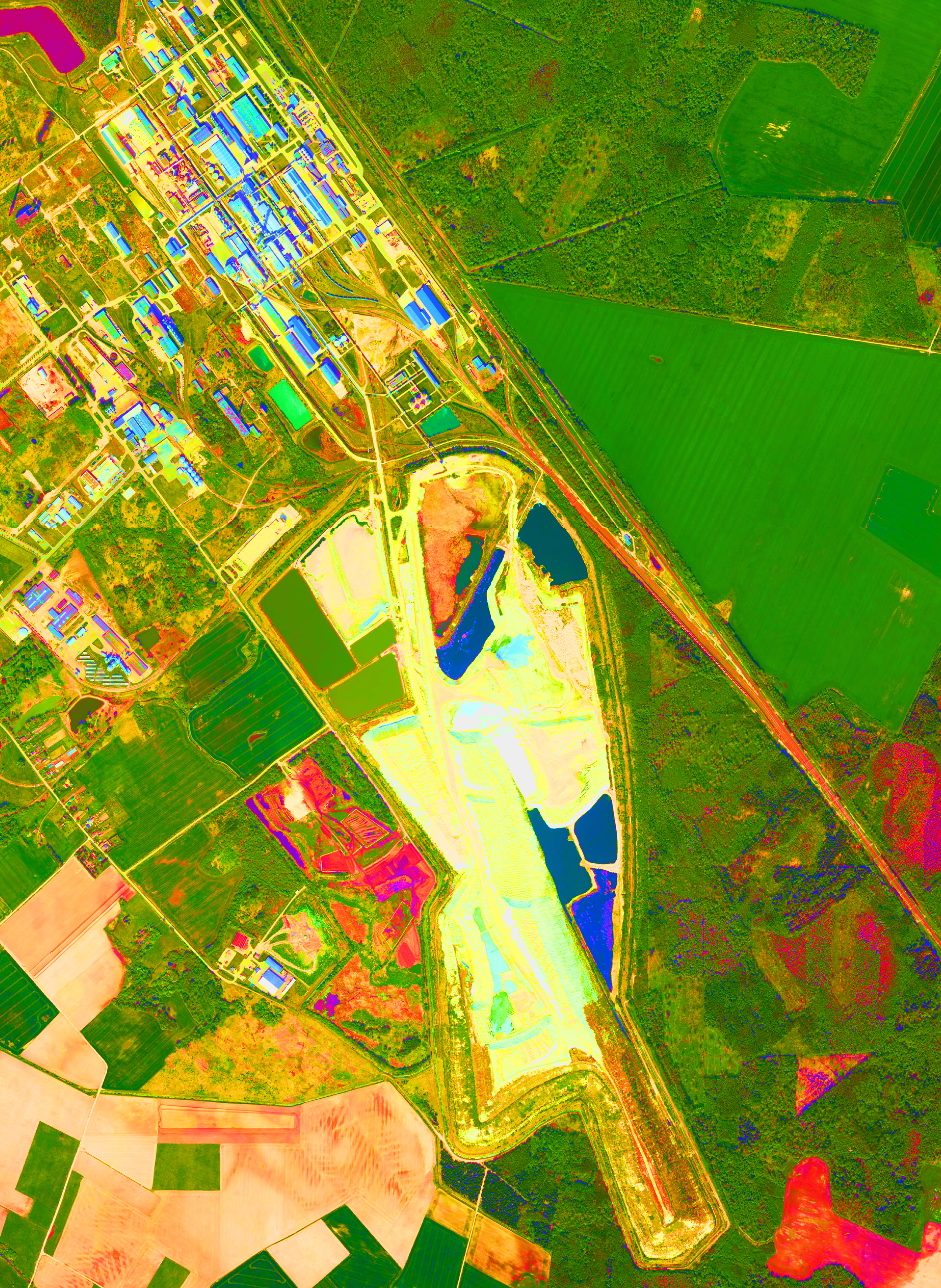
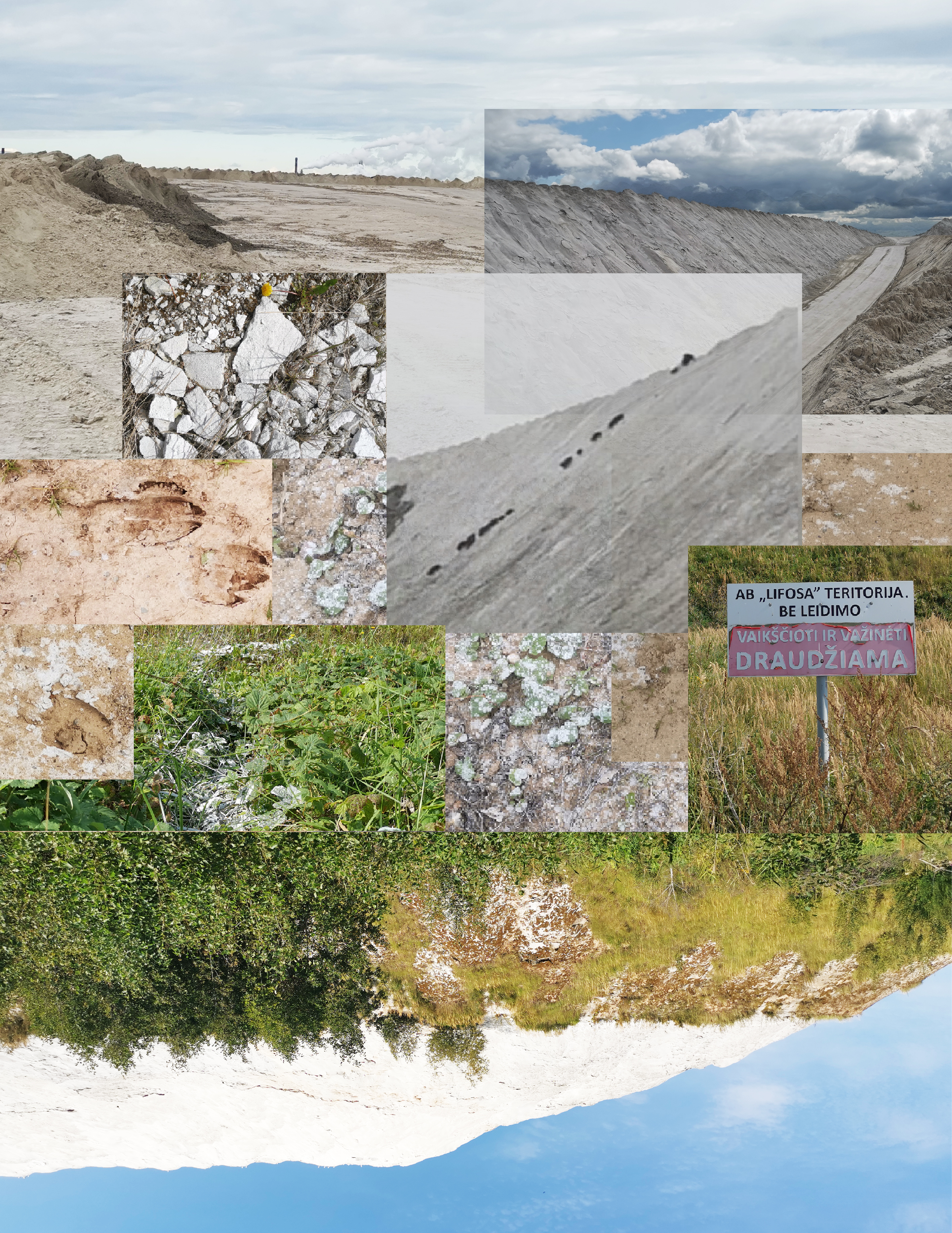
In the geographical center of Lithuania, Kėdainiai, a man-made white gypsum stack has been growing since 1965. It is a remnant of the Soviet era, lingering here like a residue of geological time, a consequence of modern economic relations and mining. For some, it inspires awe and fascination; for others, concern about the ecological condition of the surrounding area. Residents of the Kėdainiai district have already grown accustomed to the landscape of the Free Economic Zone but at the same time - cannot stand the toxic smell. Next to the forests, a landfill of chemical production waste - phosphogypsum - resembles a monument of the contemporary human: unnatural, contrasting with its surroundings.
Phosphogypsum waste is not only a Lithuanian issue - it is a global problem. While scientists are searching for ways to reuse this type of material, I approach the landscape as a complex structure that negatively affects nearby towns and villages and settlements from an ecological perspective, and I propose to develop guidelines for the reclamation of such landscapes and their implementation. My project is transdisciplinary: I collaborate with materials scientists, engineers, agronomists, and lawyers, and conduct the following research - methods for stabilizing landfill slopes, identification of suitable vegetation, the feasibility of implementing the project on private land, and raising this global issue at national and international levels. I aim to promote a sustainable process of landscape regeneration and to improve the quality of life in industrial regions.
The project builds on an important regulatory shift in Lithuania: from January 1, 2026, phosphogypsum waste disposal is no longer exempt from fees. I am actively planning to engage with the Ministry of Environment of the Republic of Lithuania and other relevant public institutions to present the project as a viable model for reinvesting waste disposal fees into landscape regeneration.
The story behind my concept is very personal. When I was a child my family and I lived in Kėdainiai. It is well known not only for its UNESCO old town but also as one of the largest and strongest industrial districts. I understood that I lived in an industrial town-not only because of the smell of sulfur, but also because of the daily landscape of chimneys and a mountain of waste. When my father used to ride a car during the weekends to the suburb I was looking through the window and the mysterious white like snow mountain appeared out of nowhere. I was wondering: Why doesn't it melt on hot summer days? It looks so big and at the same time unreachable landscape. It took me many years to understand that this mountain is made entirely of chemical waste. That is why dealing with the problem of waste is somehow in my blood.
Only up to 10% of the waste is reused (small quantities for road construction or even mushroom cultivation). That is why the most rational method became to dispose of it in open landfills. That is why it is a global ecological problem. While having discussions with scientists I started to understand that the tools of transformation to building material are not making a change. I started to look at the problem through the architectural perspective. The problem is not a single kilogram of waste, but the whole structure which contains rare earths, acid elements and affects the air and soil quality.
I have started to visit this area regularly to understand not only the scale of the landscape but also to see how local communities are living next to the mountain of waste. People are suffering from the spicy chemical smell coming from the landfill. Through my research I found a huge potential of site recultivation since the processes have started already. I just need to activate the regeneration more, apply needed layers of soil to neutralize the gyp stack and eventually nature will do the rest.
Landfill
Industrial landscape
Phosphogypsum
Reuse and (up)cycle
Circularity of unwanted space
Phosphogypsum land is ecologically destructive, unwanted space. What would happen if a human after his/her action would back off? What if only sustainable nature elements would be started to be used in this place? No human action anymore - only nature. That is why my solution is sustainable since it reduces environmental impact while improving quality of life, especially for local communities.
The question of the existing real world problem: What can be done without the radical move of just closing the factory? Having in mind that the majority of citizens are working there and the industry is the main economic vehicle of the town. Raw materials and the products derived from them travel through logistical networks to distant or foreign regions, while waste is often disposed of where it is generated. I used to think that mountains of waste were a geographically distant problem. The products leave, but the garbage remains.
We want to recycle waste and are searching for ways to do so. However, recycling processes are complex - they involve more than just the need to reuse the waste itself. Why reuse waste if the recycling process creates even more pollution or consumes large amounts of energy and other fossil resources? Who will buy recycled materials if they are tens or hundreds of times more expensive than those previously used? And why recycle at all if simple disposal costs nothing? Phosphogypsum, for example, is a by-product that is rarely reused, making it a low-value waste that is more economically viable to dispose of in a landfill.
The chemical product is gradually beginning to transform into the natural environment that surrounds it. The oldest slopes of the landfill are now starting to age so some areas of birch trees have grown on the mountain. The area is becoming overgrown with blackberry bushes, mosses, lichens, fungi, and other vegetation. That is why there is a need to activate the growth to isolate the layer of waste in a sustainable way.
The surroundings of Kėdainiai district are completely flat and then eventually instead of an artificial white mountain the green new life appears. Imagine mountains of waste turning into the green mound, full of trees.
The project transforms an industrial phosphogypsum stack - a scar in the landscape - into a living, evolving green nature resort that redefines beauty as a process of creating greener landscape. Aesthetics here emerge from the dialogue between artificial and natural systems, where waste becomes a foundation for regeneration.
Instead of the poor landscape, the area metamorphoses into seasonal vegetation that changes color and texture. Over the long term, the site evolves into a mature ecosystem - potentially forested - creating a dynamic aesthetic that reflects time, growth, and ecological succession.
Instead of erasing the site’s industrial past, the project frames it as part of the narrative: the gypsum formations, altered topography, and traces of extraction become landmarks within the landscape. This approach encourages communities to reconnect with a place they had learned to ignore or distrust, transforming it into a source of care and non destructive transformation. The project is exemplary because it challenges conventional ideas of aesthetics. It does not conceal damage but works with it - embracing contrast, scale, and material transformation. The “white stack” becomes a unique visual and spatial identity, where raw industrial geometry meets organic growth. This creates a landscape that is both striking and meaningful: a hybrid between monument and ecosystem, memory and future.
By turning a global environmental problem into a locally experienced, sensorially engaging environment, the project demonstrates how degraded territories can be transformed. It proposes a new aesthetic paradigm - one rooted in regeneration, coexistence, and long-term ecological thinking.
The project is grounded in the principle that access to a clean environment - fresh air, safe water, and green public space - is a fundamental right, not a privilege. By transforming a large-scale industrial landfill into a regenerating landscape, the project directly improves environmental conditions for surrounding communities, ensuring that the benefits are shared widely and not limited to a specific social group.
Visibility of the landscape within a 5 km radius means that even those who do not physically enter the site experience from closer distance its transformation-from a symbol of pollution into a shared green landmark-thus extending its aesthetic and psychological benefits to the broader region.
The project also promotes inclusive governance by involving local communities, farmers, scientists, and industry stakeholders in decision-making processes. This creates a shared responsibility model, where the landscape is collectively shaped, used, and maintained.
What makes the project exemplary is its shift from exclusion to inclusion: a previously inaccessible, polluted industrial territory becomes a living environment that supports ecological health and social interaction. It demonstrates how environmental regeneration can also function as social infrastructure - reducing inequality while improving quality of life for present and future generations.
The project builds on the local knowledge and identity of the Kėdainiai region, which is strongly rooted in agriculture. Farmers, gardeners, and other local practitioners are key stakeholders in the recultivation process, contributing practical knowledge about soil behavior, plant selection, and long-term land stewardship.
Their involvement informs the development of ecological strategies, particularly in selecting resilient vegetation and shaping maintenance scenarios for the site. This ensures that the proposed landscape is not only environmentally effective but also locally adapted and manageable over time.
In addition, engagement with industry workers, scientists, and students creates a broader participatory network, where different perspectives influence design decisions. This collaborative process helps transform the site from an isolated industrial area into a shared landscape with social value.
As a result, participation strengthens the project’s feasibility, fosters a sense of ownership among local communities, and supports the long-term care and acceptance of the regenerated environment.
2025, was the last year when the disposal of waste for Eurochem “Lifosa” was free of charge. The Lithuanian parliament has changed the law so the factory will be looking for the solution of reusing the waste. Beginning with 1st January, 2026 every kilogram of waste has a cost - not only to nature, but also to the business disposing of it. Despite taxes, technocratic solutions created by modern society, sophisticated global logistics systems, and new international and local legislation, nature does not wait for industrial activity to stop. The organism of the planet is indifferent to human activity and will continue to exist even when we are gone. Even in depleted landscapes, regeneration begins. Deposited waste remains and gradually becomes part of a new ecosystem. Just as industry once occupied natural territories, nature will transform the wasteland created by humans. A planetary metamorphosis has already begun.
That is why I seek to accelerate and activate this process, so that the living environment becomes cleaner and healthier for present and future generations.
I expect to involve the following stakeholders:
Kėdainiai municipality;
National land service;
The ministry of Environment of the Republic of Lithuania;
European commission and to work on the guidelines to develop policies to protect, preserve, and improve the environment for present and future generations, including initiatives like the European Green Deal.
The concept brings together expertise from architecture, material science, agronomy, law, and education, as well as the practical knowledge of industry workers.
The starting point was direct engagement with factory engineers, who provided insight into the operational lifecycle of the gypsum stack. During a site visit in 2024, they explained that the oldest section of the landfill has reached its maximum capacity and will soon be closed. This real-world constraint became a key design driver, allowing the project to focus on the recultivation of inactive zones.
Material scientists from Kaunas University of Technology play a central role in understanding the properties and limitations of phosphogypsum. Based on scientists' knowledge, the project started to keep focused on site stabilization strategies. Together, we explore methods to stabilize the landfill’s slopes and structure, enabling safe ecological regeneration.
Collaboration with an agronomist introduces ecological knowledge into the design process. This includes selecting resilient vegetation, planning soil-forming processes, and designing long-term ecological succession into a functioning landscape.
The project addresses challenges related to private land ownership, environmental regulation, and liability, ensuring that recultivation strategies are not only visionary but also feasible within existing legal frameworks.
Finally, education plays an important role in expanding the project’s impact. I work with architecture students through site visits and research-based design studios focused on landscape transformation. This creates a design proposal and a learning platform.
These disciplines are integrated through the project: industrial knowledge defines constraints, science informs material and ecological strategies, design translates them into spatial solutions, and legal and educational frameworks ensure long-term implementation.
A key financial driver is the industrial waste disposal tax introduced in Lithuania from 2026. With approximately 2 million tons of waste generated annually by Eurochem AB “Lifosa,” this creates around €1 million per year in public revenue. The project proposes that a portion of these funds be reinvested directly into the environmental regeneration of the affected territory, following the “polluter pays” principle. This establishes a stable, long-term public funding stream for landscape recultivation.
At the European level, the project aligns with environmental and innovation priorities, making it eligible for funding instruments such as the New European Bauhaus initiative, Green Deal programs, and regional development funds. These sources can support initial capital investments, research, and pilot implementation phases.
Also, the transformation of the site into a nature-based resort introduces revenue-generating activities that ensure long-term financial sustainability. These include eco-tourism services and educational educational programs based on sustainable practise of reusing industrial landscapes.
Private-sector involvement is also essential. Collaboration with the industrial operator can take the form of co-financing environmental responsibility measures, while investors can participate in developing low-impact infrastructure for tourism and recreation. Additionally, the project can attract alternative financing mechanisms such as crowdfunding, environmental sponsorships, and climate-related financial instruments (carbon offset or biodiversity credits), particularly as the site transitions into a regenerating ecosystem.
By combining public reinvestment, European funding, private partnerships, and site-based economic activities, the project establishes a resilient and diversified financial model. This ensures that the regeneration process is not only environmentally and socially valuable, but also economically sustainable over time.
The concept can be transferred to other regions facing phosphogypsum waste challenges, such as Poland, Spain, Finland, and beyond. Its key scalable elements include a transdisciplinary methodology that combines design, environmental science, and industry collaboration, in-situ stabilization strategies for landfill structures and phased ecological recultivation using adaptive vegetation.
In addition, the project offers a replicable framework for transforming post-industrial wastelands into viable landscapes through education, community engagement and eco-tourism.. These tools and processes can be adapted to different environmental, legal, and cultural contexts, making the concept applicable at both national and international levels.
In addition, the project offers a replicable framework for transforming post-industrial wastelands into viable landscapes through education, community engagement and eco-tourism.. These tools and processes can be adapted to different environmental, legal, and cultural contexts, making the concept applicable at both national and international levels.
In the year following the application, the first step is to consolidate the project into a pilot-ready proposal. This includes refining the recultivation strategy together with material scientists and agronomists, and preparing technical documentation for slope stabilization and ecological regeneration.
In parallel, I will actively engage with the Ministry of Environment of the Republic of Lithuania and other relevant public institutions to present the project as a viable model for reinvesting waste disposal fees into landscape regeneration. The goal is to position the site as a national pilot case.
A third step is to formalize partnerships with key stakeholders: the industrial operator, local municipality, researchers, and landowners. This will ensure legal, technical, and organizational feasibility for implementation.
Additionally, the project will be further developed through public communication and dissemination-exhibitions (I will have a solo exhibition in Kaunas Picture Gallery in June-August 2026), workshops, and academic collaborations-to build awareness and public support. Communication plays an important role in the transparency of knowledge of the living environment.
If institutional support is secured, the project can move into its first implementation phase in 2027, starting with a pilot recultivation area. This phased approach allows testing and scaling the strategy over time, ultimately transforming the landfill into a regenerative landscape.