Enhancing Circularity, Sustainability, and Innovation
SolarClean
SolarClean - An Automated Solar Panel Cleaning Robot
Every day, dust and grime silently steal up to 30% of a solar panel's energy output. SolarClean fixes this automatically. Our solar-powered robotic system cleans residential panels daily using only morning dew and sunlight. No human intervention, no rooftop climbing, no chemicals. At just €600, it pays for itself in under 3 years. Clean panels. More energy. Zero effort. SolarClean makes the green transition work harder for everyone.
Cyprus
National
Mainly urban
It involves a physical transformation of the built environment (hard investment)
Yes
2026-02-27
No
No
No
Organisation
Soiled solar panels are one of the most overlooked barriers to residential renewable energy performance. Across Europe, millions of residential installations are quietly underperforming every single day due to the accumulation of dust, pollution, debris, and biological matter on panel surfaces. The aggregate effect on the continent's distributed clean energy capacity is enormous — yet until now, no automated solution existed that was accessible to ordinary households.
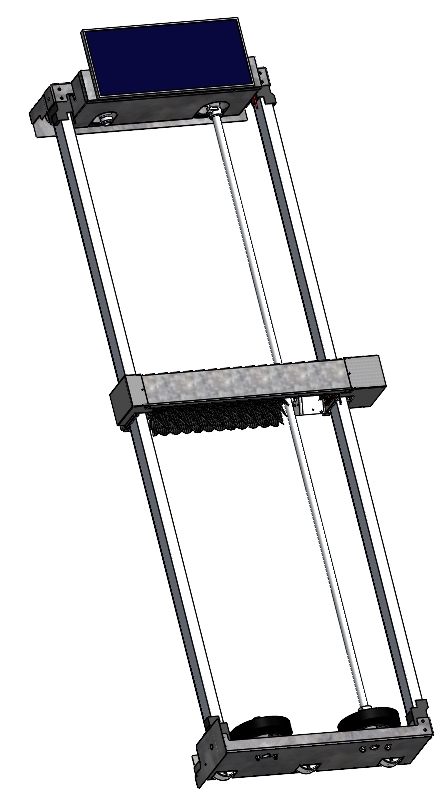
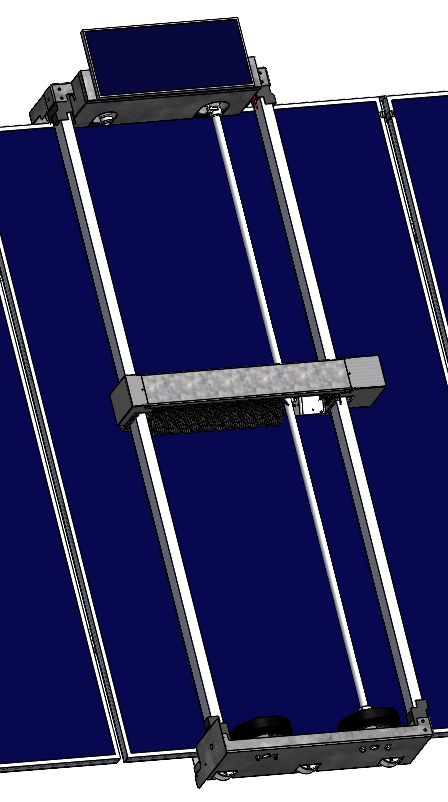
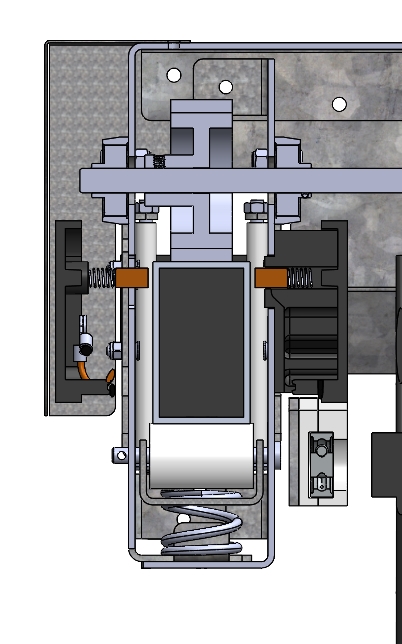
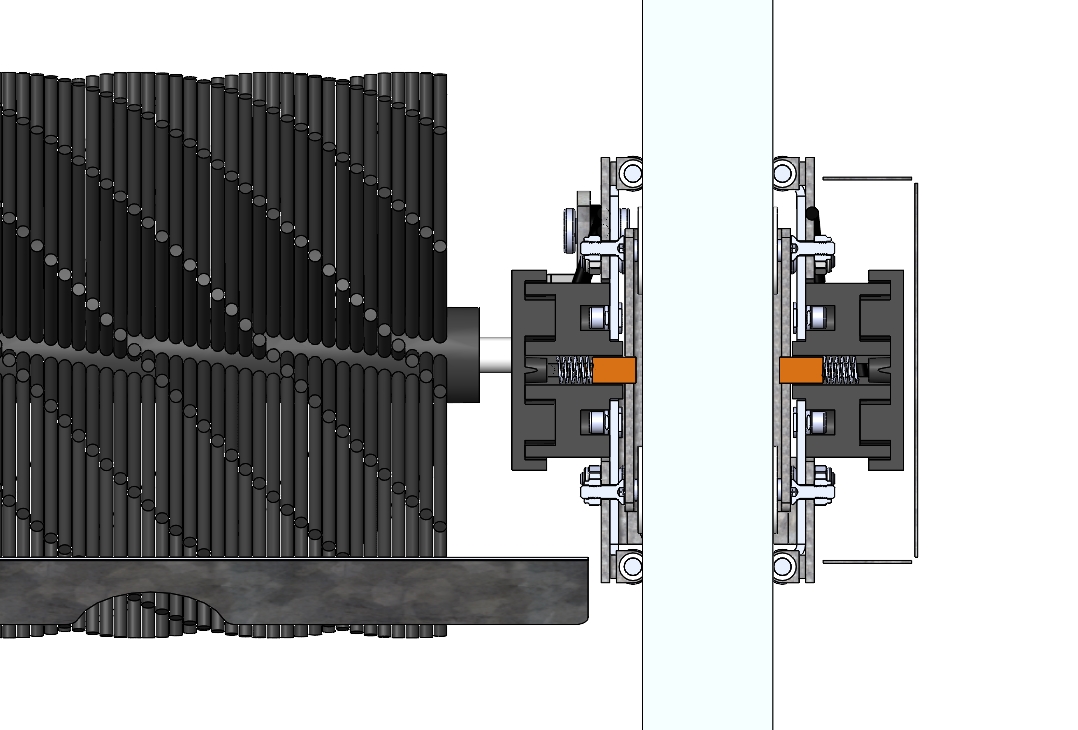
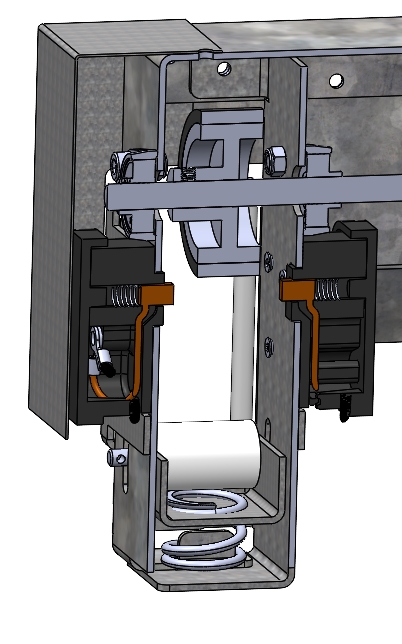
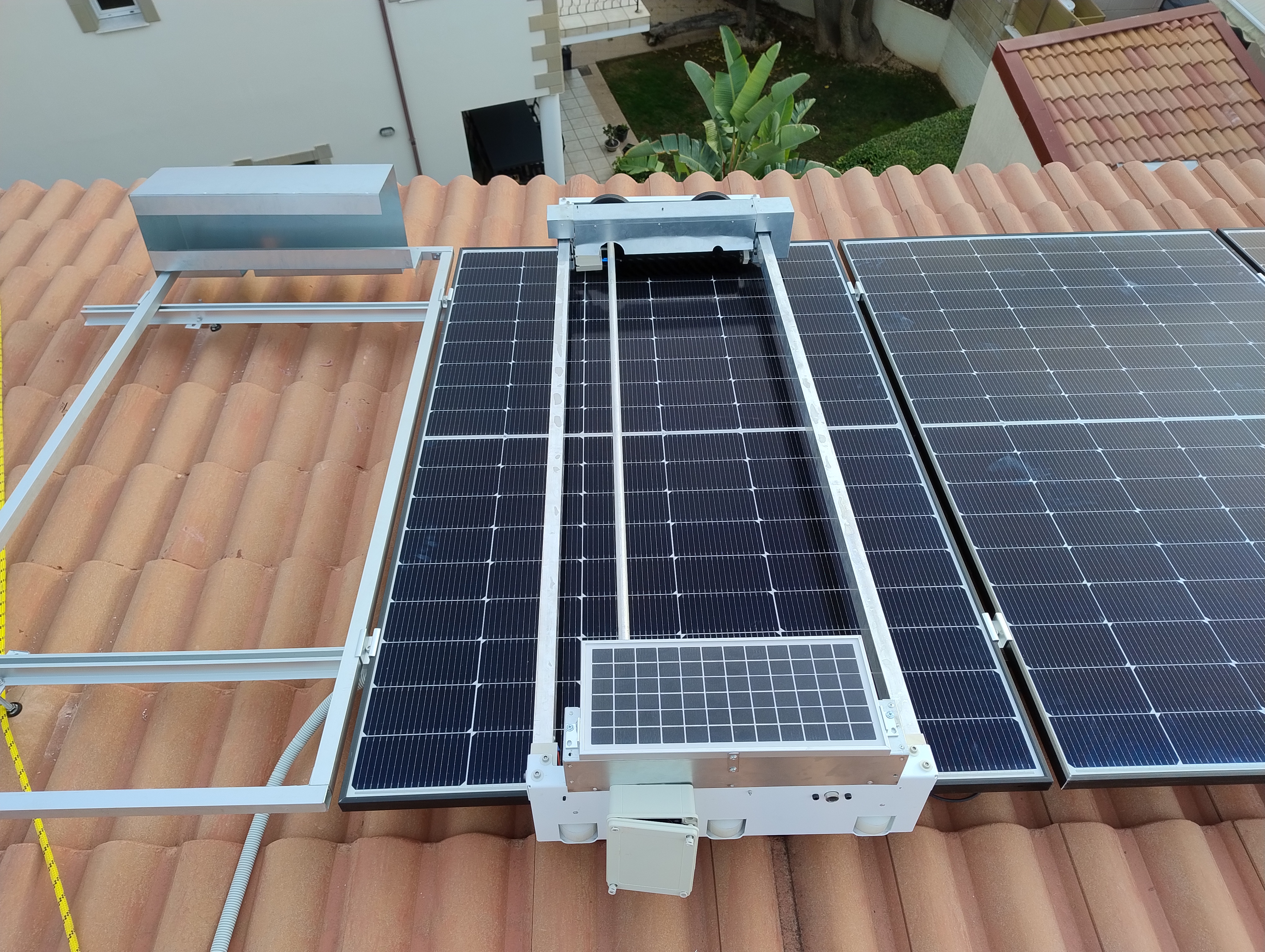
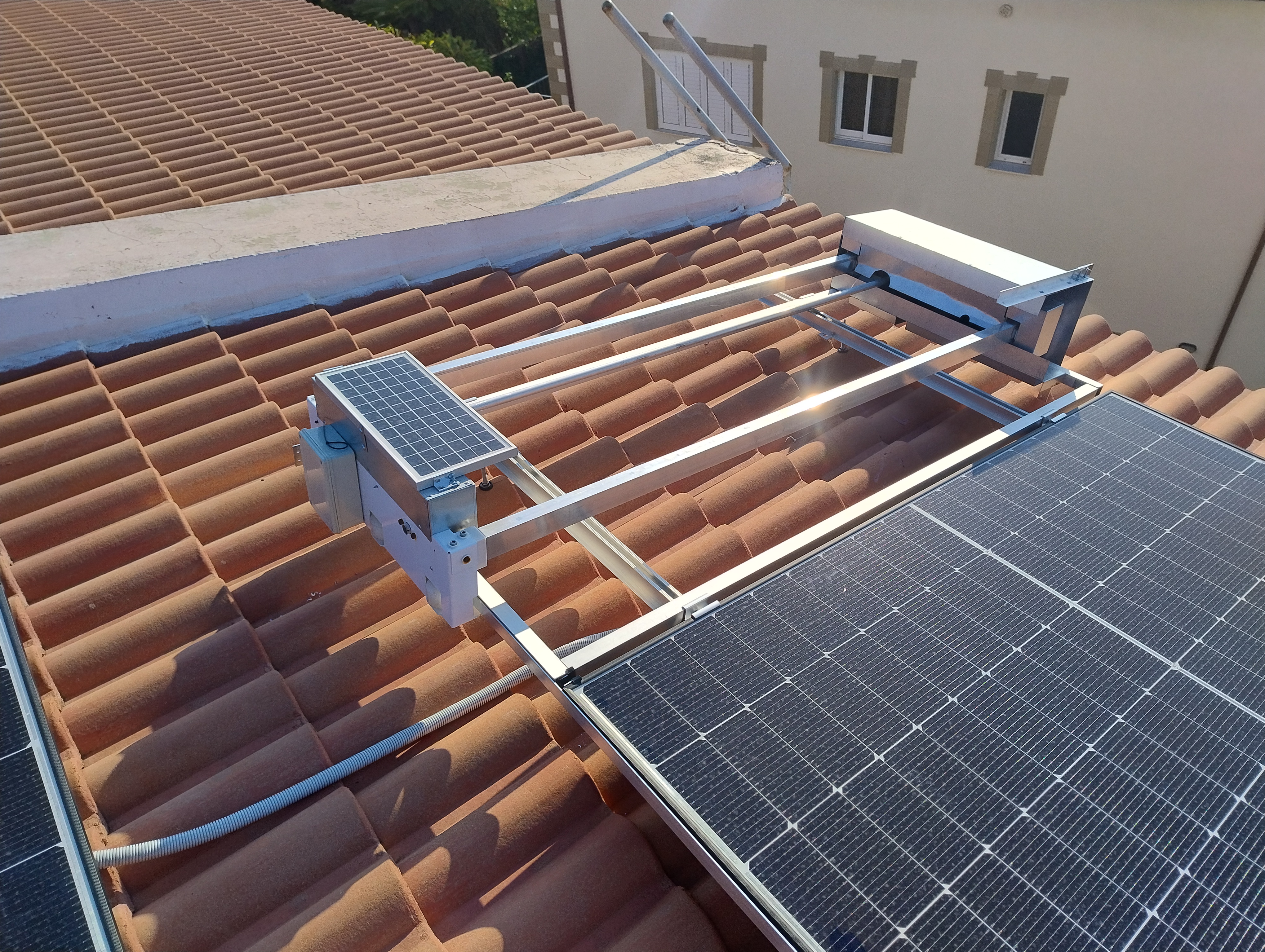
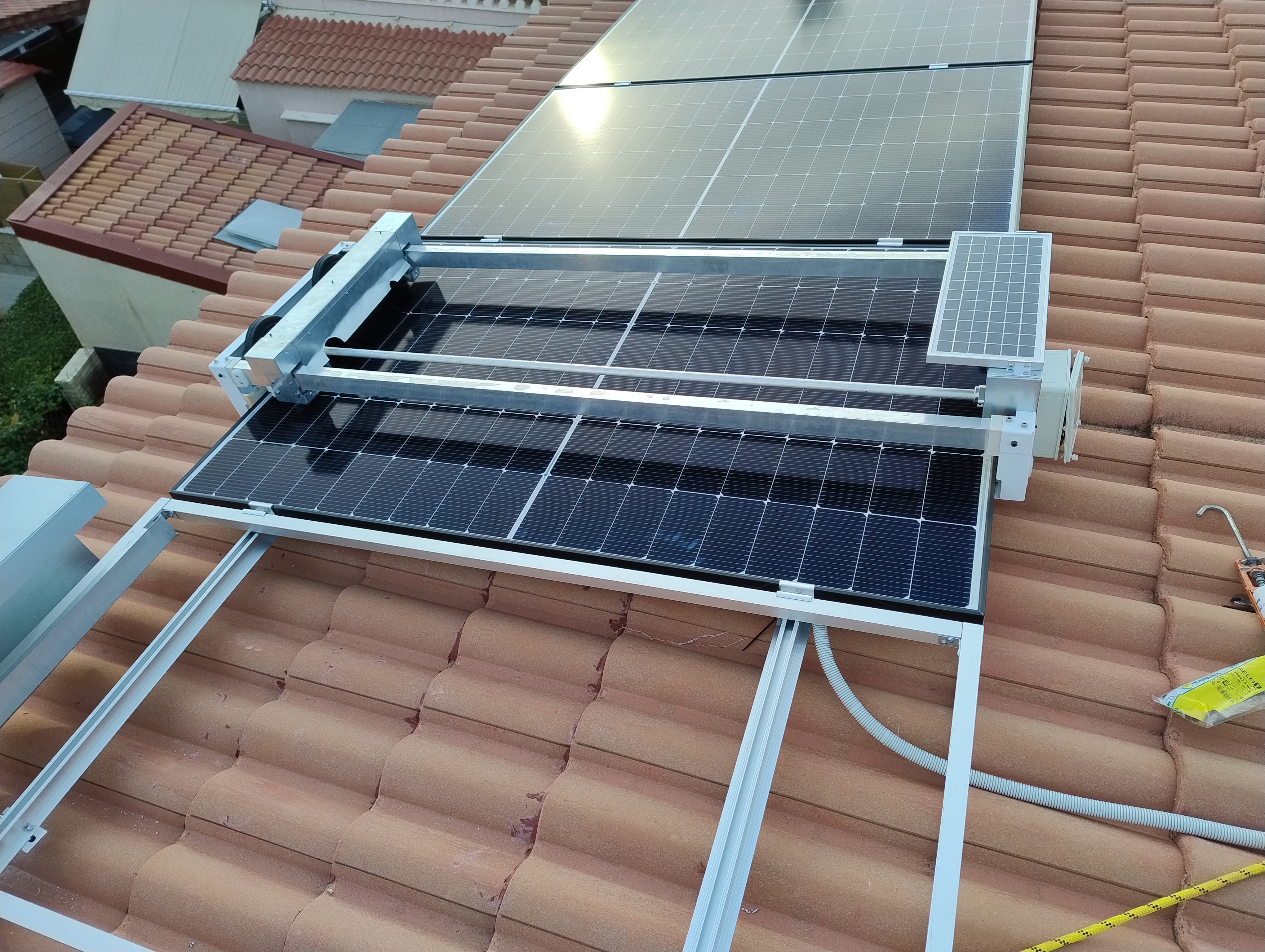
SolarClean is a fully developed, tested, and patent-pending automated cleaning device built specifically for residential solar panel installations. It operates as a permanent, self-sufficient fixture, running daily cleaning cycles without any human input.
The primary beneficiaries are residential homeowners across Europe and beyond who have invested in solar energy and deserve to see its full return. The product is equally applicable to any building-scale solar installation, including small commercial and community-owned systems.
To date, multiple production units have been completed. Independent third-party testing has been conducted by the University of Cyprus since September 2025 under real-world conditions, consistently confirming substantial improvements in energy output. One unit is installed and operating on a live residential rooftop. Testing has recorded zero faults throughout the entire evaluation period. A global patent application is pending across five distinct innovative elements, and the product is available for pre-sale.
In the long term, SolarClean has the potential to recover billions of kilowatt-hours of lost renewable energy annually across the EU — not by building more capacity, but by ensuring existing capacity performs as it was designed to. This is its most significant and scalable contribution to the European clean energy transition.
SolarClean was not conceived in a laboratory. It was born on the rooftops of Cyprus.
With over a decade of experience installing residential solar systems, our teams repeatedly encountered the same frustration: customers would invest in a solar installation only to watch its performance quietly erode within weeks. The culprit was always soiling. Homeowners either hired professionals at recurring cost and personal safety risk, or they let the problem persist. Neither option was acceptable — and both represented a failure of the energy transition to deliver on its promise.
The founding question was simple: could a device clean panels automatically, every day, using only what is already on the rooftop? What followed was a structured four-phase development process.
Phase one was research and discovery. Customer interviews mapped the problem in human terms — not just the technical gap, but the real concerns around safety, noise, aesthetics, and maintenance. These conversations defined the design brief.
Phase two was engineering. Mechanical and electrical engineers developed the core mechanism, iterating through multiple versions to achieve reliable daily operation.
Phase three was co-design. Architects joined to address the visual dimension, and formal feedback sessions were held with potential users at key milestones — presenting preliminary designs and stress-testing assumptions against real household priorities.
Phase four was validation. The prototype was submitted to the University of Cyprus for independent evaluation. Six months of rigorous testing under real-world conditions confirmed both mechanical reliability and the energy output improvements the engineering team had targeted.
At every stage, the process was driven by one discipline asking questions the others couldn't answer alone — and the product is stronger for it.
Residential solar optimisation
Automated clean energy
Affordable green innovation
Zero-intervention sustainability
Scalable energy recovery
SolarClean's environmental contribution is rooted in a principle that is simple but profound: the greenest energy is the energy you are already generating but failing to capture.
Solar panels are one of the most important tools available to households seeking to reduce their carbon footprint. Yet the cleaning process most commonly used to maintain them, manual labour with water, detergents, and chemical agents, introduces its own environmental costs. SolarClean eliminates these entirely. The system operates exclusively on morning dew, a naturally occurring resource requiring no external supply, and solar energy harvested directly from the installation it serves. No chemicals. No water draw. No grid consumption. The cleaning process itself has a net environmental footprint of zero.
This matters especially in the Mediterranean and arid regions where SolarClean's expansion is planned. In Cyprus, Greece, southern Italy, Spain, and the Gulf states, water scarcity is not a future concern. It is a present reality. A cleaning solution that requires no water at all is not merely convenient in these contexts; it is the only responsible option.
What makes this approach exemplary is its systemic character. SolarClean does not offset one environmental cost by creating another. It recovers energy that is already being generated but wasted, using only resources that are already present, to serve a clean energy infrastructure that already exists. Every unit installed represents a permanent, compounding improvement in the environmental performance of a household: silent, continuous, and requiring nothing from the wider resource system to sustain it.
A solar panel system should be a source of pride, a visible commitment to a cleaner future embedded in the fabric of a home and neighbourhood. In practice, unattended panels tell a different story. Grime, biological staining, and debris accumulate visibly on rooftop surfaces, creating an appearance of neglect that affects not just the individual property but the character of the street it belongs to. A neighbourhood of well-maintained homes with dirty, discoloured solar installations is a neighbourhood where the promise of the green transition is visibly unfulfilled.
SolarClean restores this visual integrity. Its daily cleaning cycle ensures every panel in a system presents a clean, ordered, reflective surface at all times, transforming the rooftop from a symbol of degradation into a genuinely attractive feature of the built environment.
Beyond cleanliness, the unit's own appearance was treated as a serious design challenge. Through structured collaboration with architects, SolarClean was given a modular facade system that adapts to the visual requirements of any building. The default configuration mirrors the appearance of the solar panels themselves, allowing the unit to integrate seamlessly and invisibly into the installation it serves. For buildings with specific architectural identities or local bylaw constraints, the facade is customised accordingly.
This adaptability is what distinguishes SolarClean aesthetically from every other maintenance solution on the market. It does not impose a uniform industrial form onto diverse residential environments. It listens to the building, the street, and the community and responds with a design that belongs there. The result is a product that enhances both the environmental performance and the visual quality of every rooftop it inhabits.
The green energy transition carries a risk of deepening the very inequalities it is meant to address. Those who can afford premium solutions extract the full value of their solar investments. Those with fewer resources watch their systems underperform, without the means to do anything about it. SolarClean was designed to close this gap permanently.
Until now, automated solar panel cleaning was the exclusive domain of large commercial and utility-scale operators. Available solutions are priced between €50,000 and €500,000. These are instruments of corporate infrastructure, invisible to residential households. For homeowners, the choice was between costly professional cleaning services, the physical risk of doing it themselves, or simply accepting the losses. None of these options is equitable.
SolarClean dismantles this exclusivity through design for affordability. The one-time purchase model provides full ownership and long-term autonomy, with the unit paying back its cost within two to three years through recovered energy value. For households preferring to avoid any upfront commitment, a subscription model is available at approximately €150 per year, generating an estimated €400 in additional annual energy output, placing the financial benefit clearly and immediately on the customer's side.
Aftersales servicing, maintenance and component replacement, is priced to remain accessible and affordable throughout the product's entire lifetime, ensuring that ownership never becomes a hidden ongoing burden.
The principle behind every one of these decisions is the same: the benefits of innovation should not be reserved for those who can already afford premium solutions. A retired homeowner in Cyprus, a young family in Greece, a modest household in Spain, all have made the same commitment to renewable energy. SolarClean ensures they all receive the same return on that commitment.
SolarClean was shaped by the people it was built to serve, from the very first insight through to the final design decisions. Participation was not a process layer added for compliance; it was the mechanism through which the project was built.
The process began with homeowners. As solar panel owners themselves, they were the first to articulate the problem in human terms: the frustration of watching a hard-won investment underperform, the anxiety of climbing onto a roof, the reluctance to pay recurring fees for a service that should be built into the system. These conversations defined the design brief. Without them, SolarClean would not exist in its current form.
As the project progressed, formal feedback sessions were held at key development milestones. Preliminary designs were presented to groups of potential users who challenged assumptions and raised requirements the team had not anticipated. Their responses drove concrete changes to the mechanism's sound profile, to the water model, to installation complexity, and to the product's overall form factor. Each round of feedback produced a measurably better product.
Architects participated as co-designers rather than consultants. Through structured working sessions, they introduced requirements rooted in real building contexts: bylaw constraints, visual harmony with existing structures, the aesthetic expectations of different neighbourhood typologies. Their involvement did not simply refine the product's appearance; it produced the modular facade architecture that makes SolarClean visually adaptable to any home.
The product works the way it does, quietly, invisibly, affordably, and appropriately, because the people who will live with it helped design it that way.
SolarClean's development engaged stakeholders across three distinct levels of governance, each contributing a form of value that the others could not replicate, and together forming a foundation of credibility that is essential for a product making specific, quantified claims about clean energy performance.
At the community level, residential homeowners across Cyprus formed the participatory core of the development process. Their direct involvement ensured the product was shaped by lived experience, grounding every technical and commercial decision in genuine social need.
At the academic and institutional level, the University of Cyprus was engaged not as a passive endorser but as a rigorous independent evaluator. Over six months of real-world testing, the University applied scientific scrutiny to SolarClean's performance claims, producing verified, replicable data that carries a weight of authority no internal testing programme could match. This institutional relationship transforms the project from a commercial product seeking recognition into a research-validated innovation with an independently confirmed evidence base.
At the European level, the project team has engaged directly with EU bodies to present SolarClean and receive feedback on its alignment with European clean energy and sustainability policy priorities, including the European Green Deal and the EU Solar Energy Strategy. These conversations have not resulted in formal funding relationships, but they have confirmed the project's policy relevance and opened pathways for future institutional support as the product scales.
The combined value of these three levels is greater than the sum of its parts: community engagement ensures the product is needed, academic validation ensures it works, and European-level awareness ensures it is positioned for the policy environment in which it will grow.
SolarClean is the product of a genuinely transdisciplinary process in which each discipline was required to answer questions the others had raised. In doing so, it produced an outcome none could have reached alone.
Mechanical and electrical engineering formed the technical core. Engineers worked within a constraint that was simultaneously environmental and commercial: the system had to operate using only solar energy and morning dew, with zero chemical inputs and zero external water demand. Meeting this constraint required significant innovation, and the solutions it forced produced a product that is more durable, more sustainable, and more cost-effective than a less constrained design would have been.
Environmental science shaped what was non-negotiable from the outset. The chemical-free, waterless operating principle was not a marketing decision. It was an ethical and scientific boundary that defined the engineering brief before a single component was specified.
Architecture entered the process as an equal voice. Working alongside engineers, architects developed the modular facade system, navigating real tensions between manufacturing constraints and aesthetic requirements to produce a design solution that neither field would have reached independently. Their knowledge of building regulations and neighbourhood typologies expanded the product's addressable market significantly.
Intellectual property law translated the transdisciplinary innovations embedded in the product into a global patent application covering five distinct elements, protecting the outcome of this collaboration and securing the long-term competitive position of the project as it scales internationally.
Commercial research contributed market intelligence and customer economics that shaped the pricing architecture, ensuring that the product's social and environmental ambitions were matched by a financially viable and market-relevant business model that could sustain them over time.
SolarClean has been developed entirely through private investment by Eletoyia Group Ltd, with no external grants or public funding received at any stage. This reflects both the company's long-term commitment to innovation in the residential renewable energy sector and its confidence in the product's ability to sustain itself commercially without dependence on public support.
The revenue model is built around two complementary channels that together serve the full spectrum of potential customers.
The primary channel is a direct one-time purchase, backed by a two-year warranty and supported by an affordable aftersales servicing programme that ensures product longevity and customer loyalty beyond the warranty period. This model provides customers with full ownership, long-term autonomy, and a clearly calculated return on their investment.
The secondary channel is a subscription model, priced to deliver an immediately positive financial return for the customer from year one, removing the upfront cost barrier entirely and making the product accessible to households for whom any capital outlay requires careful consideration.
Both models are designed to be distributed through a network of solar installers and regional partners, creating a B2B2C channel that leverages existing trusted relationships between installers and homeowners. This approach enables rapid geographic expansion without requiring a large direct sales infrastructure in each new market.
SolarClean's disruptive potential at the city and regional level lies in the aggregate. As adoption scales across urban and suburban residential environments, the cumulative improvement in distributed solar output transforms existing rooftop infrastructure into higher-yielding community energy assets, contributing to municipal and national energy performance targets without a single additional panel being installed.
SolarClean was designed without geographic or architectural constraints and this universality is the foundation of its scalability.
The core technology requires no modification to function across different European climates and building typologies. The modular visual facade adapts to local architectural styles and regulatory requirements without altering the underlying mechanism. The result is a product that is technically universal and contextually flexible, a combination that makes genuine replication possible rather than merely theoretical.
The expansion strategy is structured in deliberate phases, each building on the evidence base established by the previous one. Cyprus is the validation market: six months of independent university testing, a live rooftop installation, and a pre-sale product ready for market entry have produced a credible, documented foundation that any subsequent market can point to. Greece follows first, given the shared climate, architectural context, and regulatory environment. It is the lowest-friction international expansion possible.
From Greece, the rollout extends across the Mediterranean: Italy, Malta, and Spain are markets where soiling conditions, water consciousness, and residential solar adoption closely mirror Cyprus. Each market entered adds to a growing body of real-world performance data that makes the case for the next.
Beyond Europe, the Gulf region represents a qualitatively distinct opportunity. In the UAE and neighbouring countries, extreme dust levels and acute water scarcity make automated, waterless solar cleaning operationally essential. SolarClean's dew-based mechanism, requiring no external water supply whatsoever, gives it a structural competitive advantage in these markets that water-dependent alternatives cannot match.
Replication requires no specialised infrastructure: any trained solar installer can deploy the product, and the distribution model scales through local partnerships