Strengthening Local Democracy and Inclusion
Playground4All
Playground4All
Playground4All transforms neglected neighbourhood sports courts into vibrant community hubs through art, sport, and citizen participation. Residents co-design the spaces, contribute to their renovation, and lead activities that promote inclusion, health, and local culture. By turning abandoned public spaces into beautiful, accessible and community-owned places, Playground4All strengthens social cohesion, local democracy, and opportunities for vulnerable communities.
Portugal
Regional
Lisbon metropolitan area, we started in the municipality of Loures and now also doing the same in Amadora, growing to an national level.
Mainly urban
It involves a physical transformation of the built environment (hard investment)
Yes
2025-03-15
Yes
ERASMUS
No
No
Organisation
Playground4All is a community-driven initiative that regenerates neglected public sports spaces in vulnerable urban neighbourhoods and transforms them into inclusive hubs for sport, culture and community life. The project combines participatory urban regeneration, social inclusion and creative placemaking, strengthening local democracy and social cohesion.
The process starts by listening to the community. Residents, youth, local associations and public authorities are engaged through interviews, workshops and participatory design sessions to define how the spaces should function and look. Children and young people actively contribute to imagining the future playgrounds, ensuring that the final design reflects their needs, culture and aspirations.
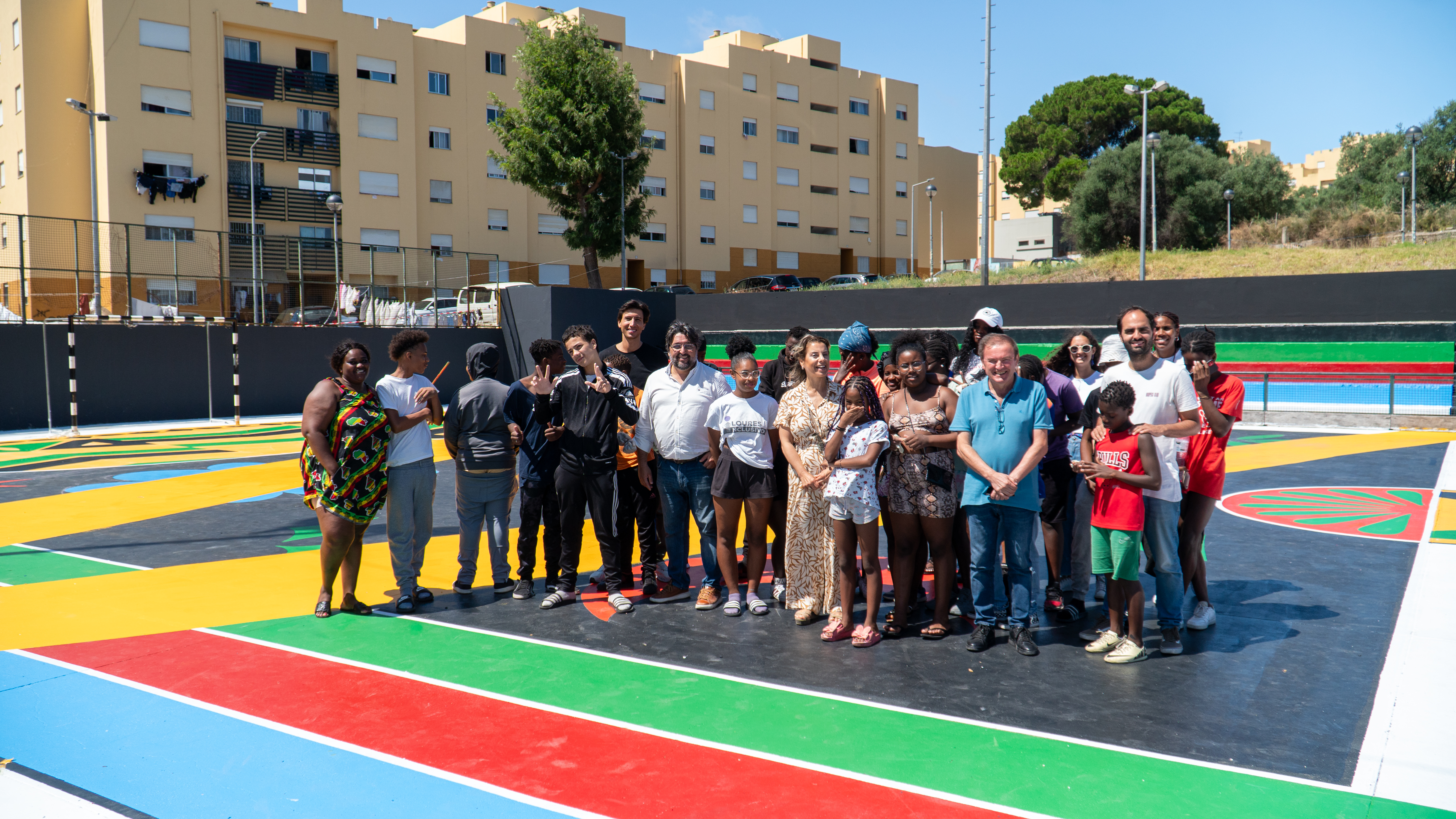
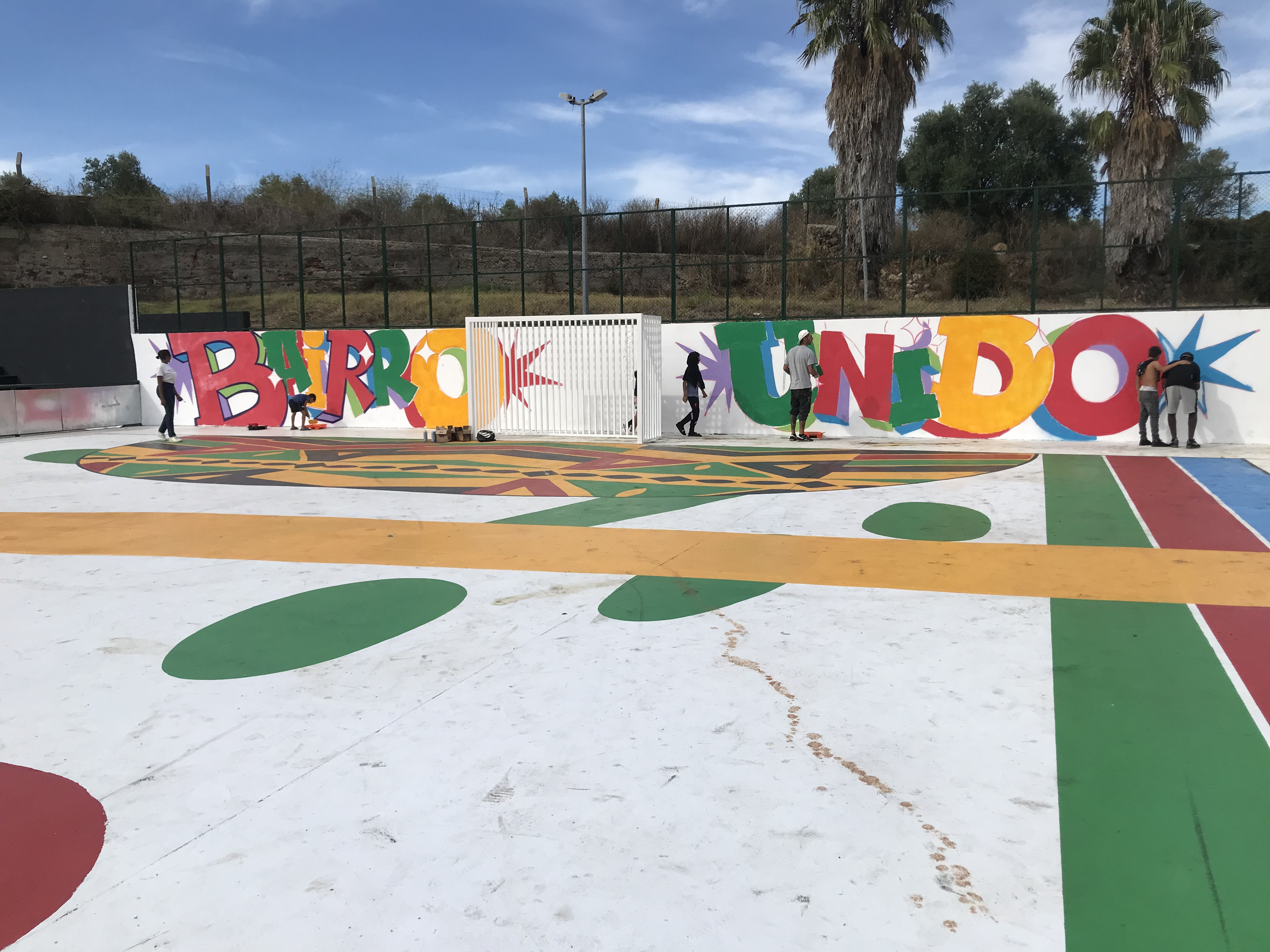
Based on this collective vision, abandoned sports infrastructures are revitalised through low-cost, high-impact interventions, combining sports facilities, urban art and design elements inspired by the identity of the neighbourhood. Community members participate directly in cleaning, painting and rebuilding the spaces, creating a strong sense of ownership.
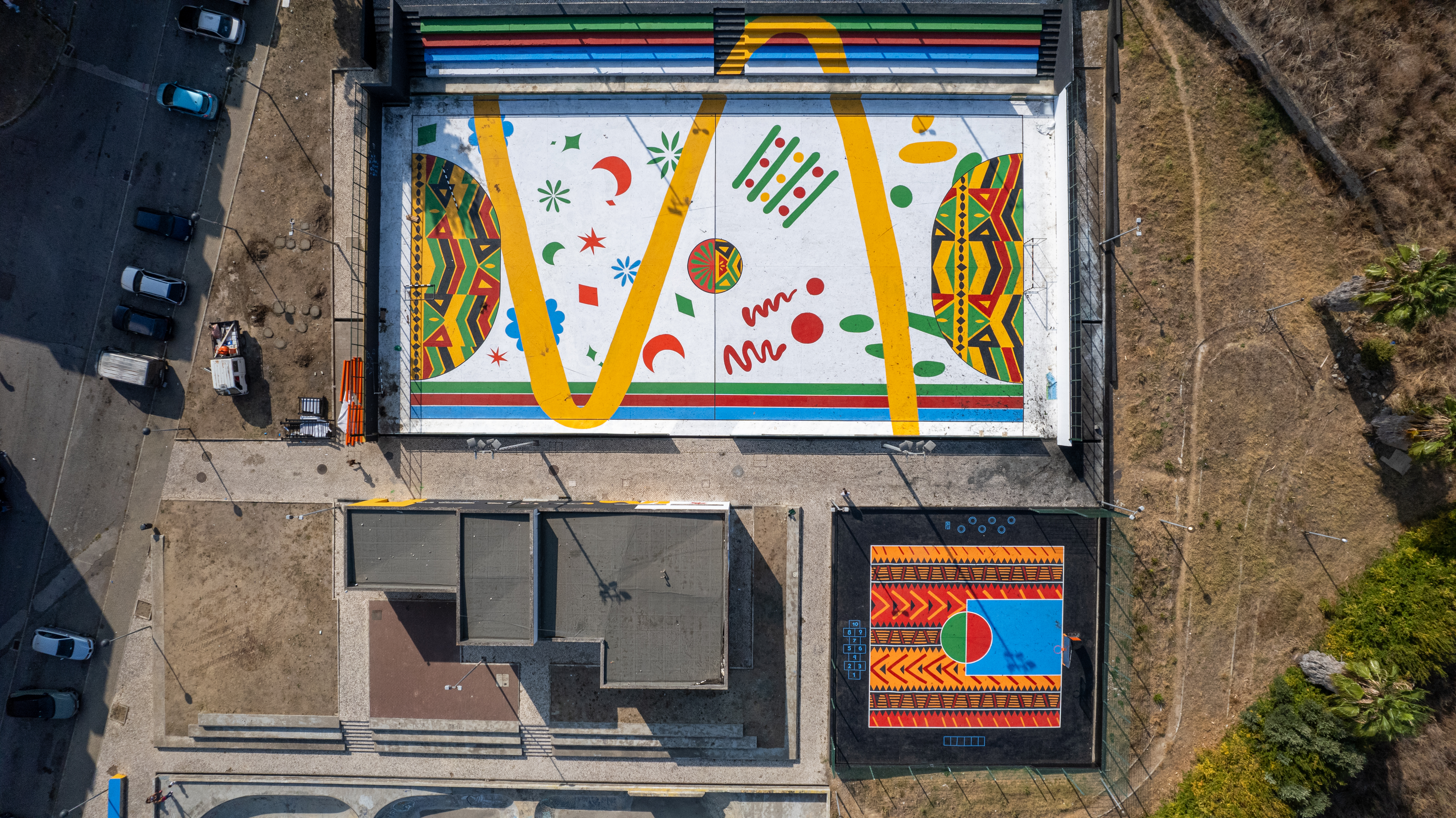
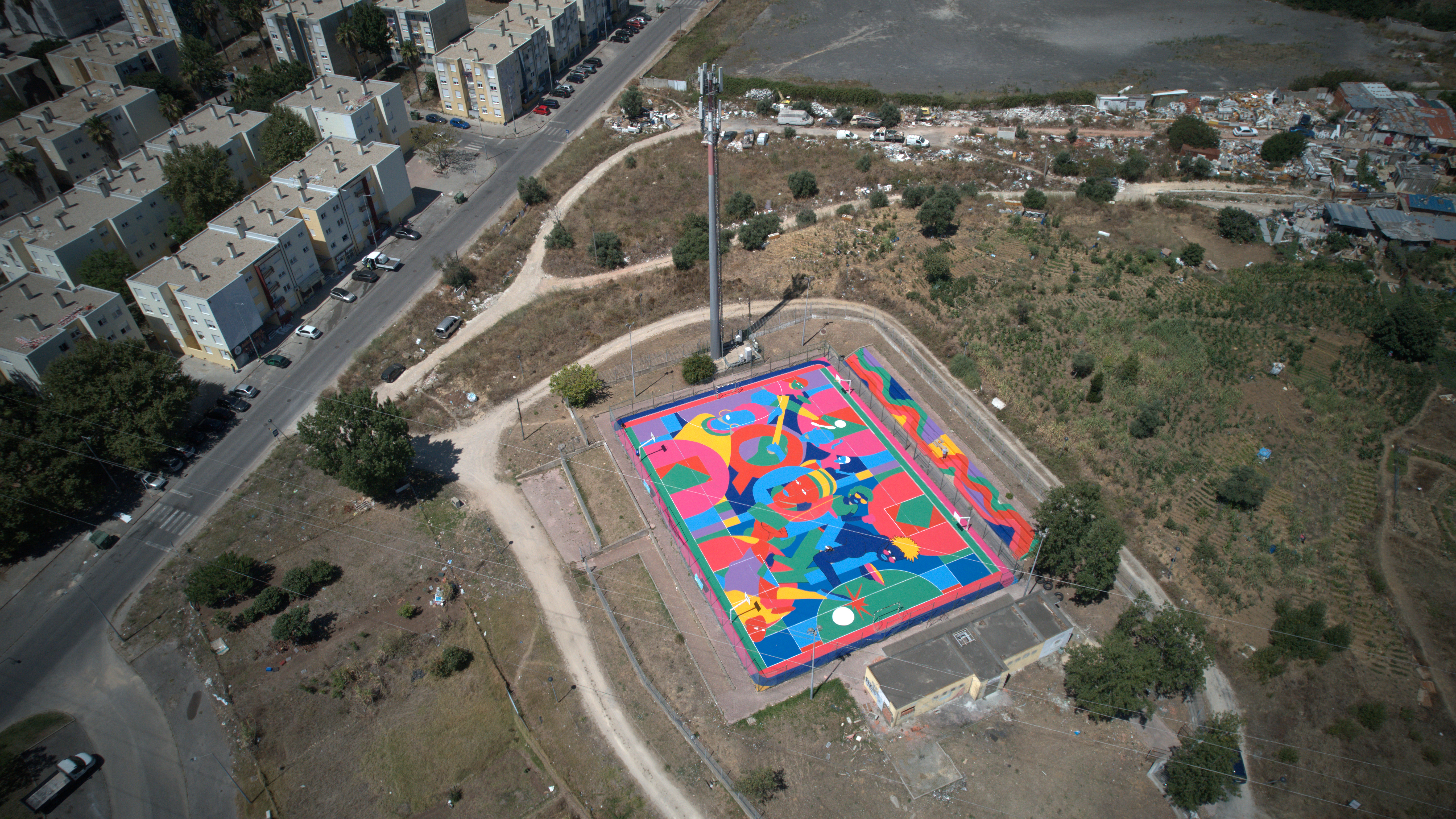
So far, 2 abandoned playgrounds have been regenerated, recovering more than 3,000 m² of public space and engaging over 400 regular users. More than 120 residents participated in the co-design process, 200 corporate volunteers supported the regeneration works and 15 community leaders were trained to facilitate activities. The spaces now host 30+ sports and cultural activities every year.
Beyond community initiatives, the playgrounds host a Running Club with 60 boys and girls supported by EDP and a Girls Football programme empowering 40 girls, supported by the UEFA Foundation for Children.
To strengthen long-term sustainability, the project plans to develop a community energy initiative, enabling local renewable energy generation and reinvesting revenues into maintaining and activating these shared public spaces.
Playground4All began during the COVID-19 pandemic when our founder and president, Ricardo Carvalho, visited two vulnerable neighbourhoods in Loures, Portugal: Quinta da Fonte (QdF) and Quinta do Mocho. Both playgrounds were severely damaged and abandoned after years of neglect. The only active element was a small community gym in QdF. This moment revealed the potential of these forgotten spaces to become catalysts for community life, health and social cohesion.
The initiative started with a simple but powerful step: mobilising residents to reclaim their public spaces. Local volunteers and community members cleaned the playgrounds and removed debris, creating the first moment of collective ownership. Soon after, companies such as Decathlon and Ageas joined through corporate volunteering programmes, helping to activate the spaces with sports activities and equipment.
The community gym in QdF became the first visible success. Through company team-building initiatives and volunteer engagement, the space was gradually improved and equipped. This mobilisation attracted the support of the Junta de Freguesia de Camarate, which helped finalise the gym together with a grant from Decathlon to purchase sports materials.
The strong community engagement convinced the municipality to scale the initiative. applying to the European programme PPPA-SPORT-2022-GRASSROOTS-INNOVATION, which was successfully awarded.
This support enabled the project to evolve into a participatory urban regeneration project. Two abandoned playgrounds were redesigned through community workshops and participatory design, integrating urban art, local culture and multisport infrastructures. Residents were also trained as community leaders and physical activity facilitators, ensuring long-term local stewardship
Today Playground4All shows how citizens, companies and public authorities can co-create inclusive and accessible public spaces, strengthening social cohesion, community ownership and local democracy
Community Co-Design
Inclusive Public Spaces
Urban Regeneration
Social Inclusion through Sport
Community Empowerment
Playground4All contributes to environmental, social and economic sustainability by regenerating neglected urban sports spaces and transforming them into active community hubs.
Environmentally, the project focuses on reuse rather than new construction, recovering abandoned playgrounds instead of building new facilities. In Loures, two degraded public spaces of more than 4,000 m² were rehabilitated using low-cost interventions, reducing material consumption and construction waste while improving the urban environment.
Social sustainability is a core impact. The spaces are now used weekly by over 400 children, youth and residents, who participate in sports activities, community events and informal physical activity. Regular programming has increased physical activity levels and created safe meeting points in neighbourhoods previously associated with neglect and insecurity.
The project also builds local capacity and resilience. More than 15 local residents have been trained as community leaders and physical activity facilitators, ensuring the long-term activation of the spaces and strengthening local ownership.
Economically, Playground4All promotes inclusive access to public infrastructure and creates opportunities through volunteering, mentoring and links to employment pathways. More than 200 corporate volunteers have already contributed to improving the spaces.
Looking forward, the project aims to integrate community energy initiatives, allowing neighbourhoods to generate renewable energy collectively and reinvest revenues into maintaining community programmes.
Playground4All demonstrates that sustainable urban regeneration can be achieved through community-driven, resource-efficient solutions that combine environmental responsibility with social impact and long-term local stewardship.
Playground4All transforms neglected sports courts into beautiful, vibrant and culturally meaningful public spaces that improve everyday life in the neighbourhood.
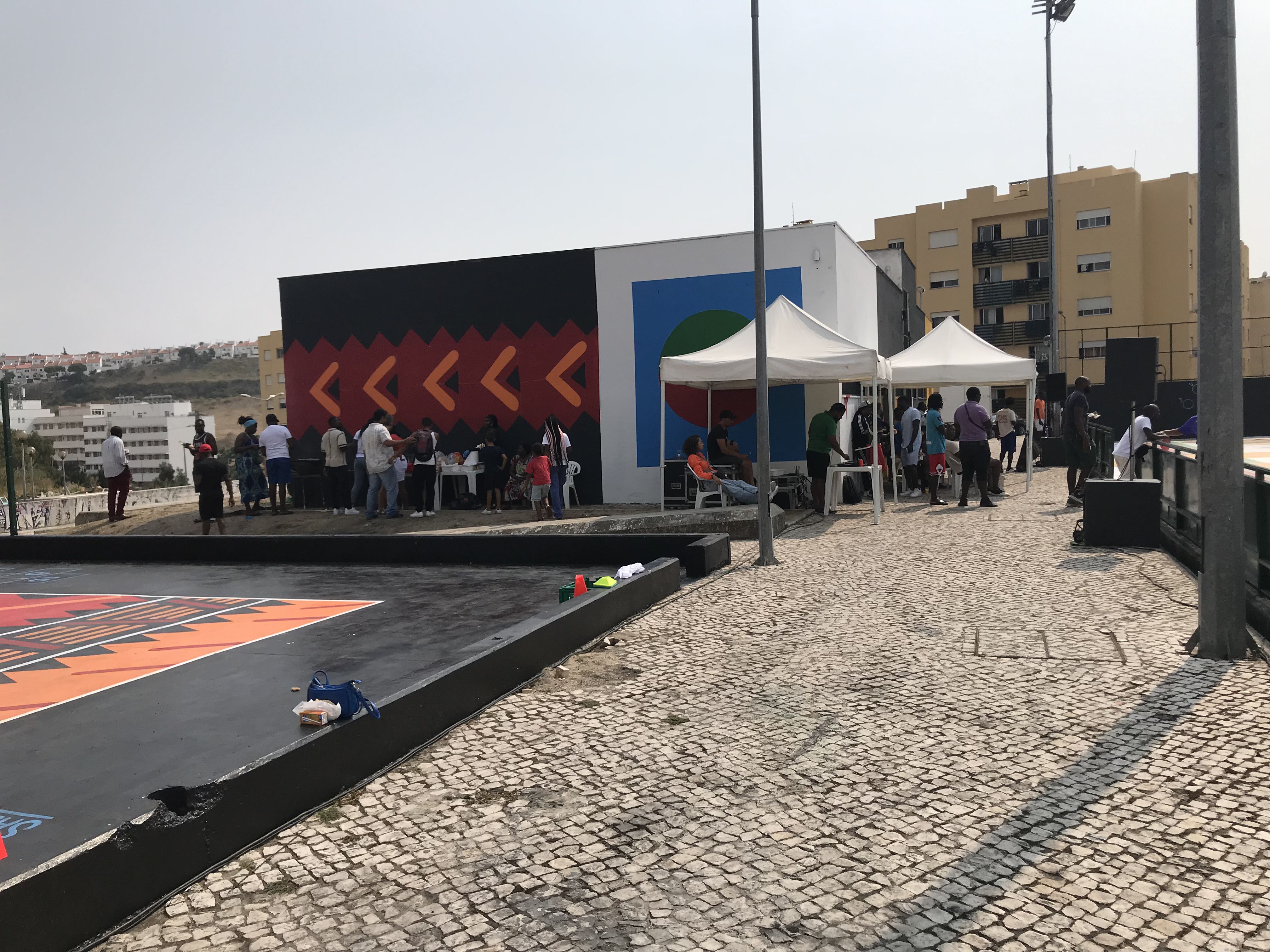
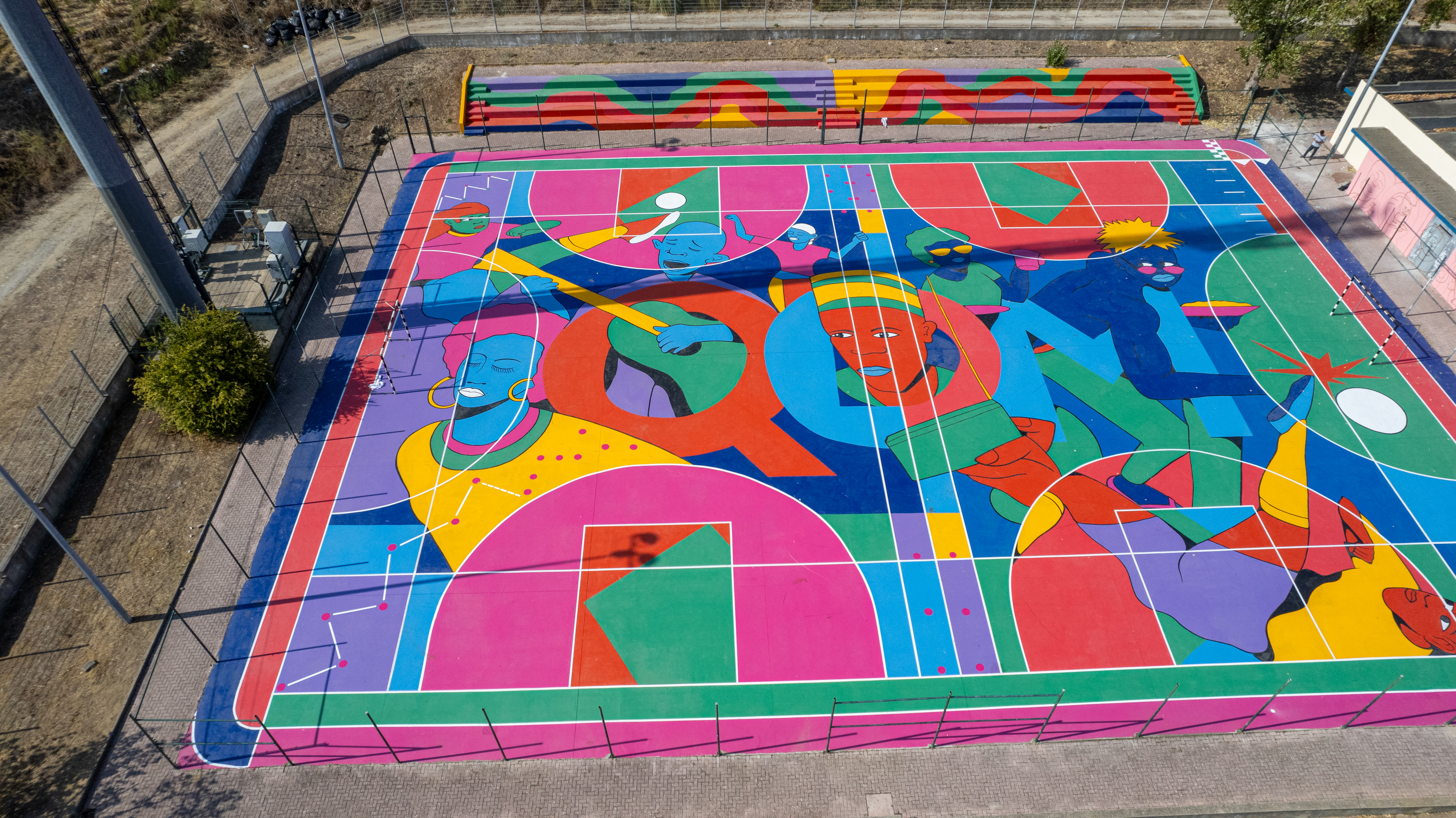
Previously deteriorated concrete playgrounds were redesigned through urban art, colour, design and community expression, turning grey spaces into visually inspiring environments. In Loures, two playgrounds were transformed through artistic sports courts and murals reflecting the identity, cultures and music traditions of the neighbourhoods.
A key aesthetic principle is co-created beauty. Through participatory workshops and digital design tools, more than 100 children and residents contributed ideas for the visual identity and layout of the spaces. This process ensured that the design reflects the community’s culture and aspirations.
The transformation significantly improved the daily experience of the public space. Families, youth and older residents now gather regularly in environments that are welcoming, safe and attractive. What were once abandoned spaces are now active social hubs hosting sports sessions, cultural events and community gatherings.
The aesthetic transformation also strengthens belonging and care for the place. Residents who participated in cleaning, painting and building the spaces developed a strong emotional connection with them and continue to protect and maintain them.
Playground4All demonstrates how art, sport and participatory design can turn neglected urban spaces into beautiful environments that reinforce identity, pride and collective ownership.
Playground4All promotes inclusion by ensuring that public spaces are accessible, welcoming and meaningful for all, especially residents of vulnerable neighbourhoods.
The project removes economic barriers by revitalising free and open-access sports spaces that allow anyone to participate in sports and community activities regardless of income. Since the regeneration of the playgrounds, more than 400 regular users now benefit from accessible sports infrastructure and community programmes.
Inclusive design principles were integrated in the redevelopment of the spaces. Multi-sport courts, flexible equipment and open areas allow different age groups, cultures and activities to coexist in the same space. The project also promotes the participation of girls and young women through specific sports sessions and inclusive design elements.
Inclusion also extends to governance. Residents are not only beneficiaries but active co-creators and managers of the spaces. Community members participated in workshops, contributed to the physical transformation and continue to organise activities.
The project also supports local empowerment. More than 15 community leaders and sports facilitators from the neighbourhoods were trained, creating opportunities for local leadership and engagement.
By empowering residents to shape their environment, Playground4All promotes inclusive governance, social cohesion and community ownership of public space, strengthening democratic participation at neighbourhood level.
Participation is at the core of Playground4All. The project was designed and implemented together with the communities who live in and use the neighbourhood spaces.
The process began with listening activities including site visits, interviews with community organisations and meetings with local authorities. Participatory workshops then engaged residents, children and youth in imagining how the spaces should be transformed.
More than 120 residents participated in design workshops and consultation activities, contributing ideas about sports activities, artistic elements and spatial organisation.
Participation continued during the physical regeneration of the spaces. Local residents, volunteers and corporate partners organised community action days to clean, paint and prepare the playgrounds. More than 200 volunteers contributed to these activities.
Beyond the infrastructure phase, participation continues through community leadership programmes. Local residents trained as facilitators now organise sports activities and help manage the spaces.
This participatory model ensures that the playgrounds are not only improved physically but also socially owned and actively used by the community, creating long-term impact and strengthening local democratic engagement.
Playground4All was developed through a multi-level governance approach involving stakeholders at local, municipal, national and European levels, creating a strong collaborative ecosystem.
At the local level, residents, community organisations, youth leaders and volunteers played a key role in identifying needs, co-designing the interventions and participating in the regeneration of the sports spaces. Participatory workshops, community meetings and digital tools allowed children, youth and local actors to directly influence the design and future use of the playgrounds. Local companies also supported the initiative through corporate volunteering and social responsibility programmes.
The Parish Council (Junta de Freguesia de Camarate, Unhos e Apelação) facilitated the connection with residents and local associations, ensuring community engagement throughout the process. At the municipal level, the Municipality of Loures acted as a strategic partner, coordinating the regeneration works, supporting the project governance structure and contributing to European funding applications and implementation.
Following the renewal of the spaces, a co-governance protocol was established involving the Municipality, the Parish Council, local associations and representatives of the community. This structure ensures shared responsibility for the management, programming and long-term sustainability of the spaces.
At the European level, the project received support through the programme PPPA-SPORT-2022-GRASSROOTS-INNOVATION, which enabled the structured redevelopment of the playgrounds and the training of community leaders.
This multilevel collaboration combined community knowledge, institutional capacity and European resources, allowing a grassroots initiative to evolve into a scalable model for community-led urban regeneration and social inclusion.
Playground4All integrates knowledge from multiple disciplines, combining expertise from urban design, sports development, social innovation, arts and community development.
Urban planners and designers contributed to the transformation of the physical spaces, ensuring that the playgrounds are functional, flexible and accessible for multiple activities.
Artists and creative professionals played a key role in developing the urban art and visual identity of the spaces, connecting the design of the playgrounds with the cultural identity of the neighbourhoods.
Sports organisations and coaches contributed to the design of community sports programmes, ensuring that the spaces support a wide range of physical activities and promote healthy lifestyles.
Social workers, community organisers and youth workers supported the engagement of local residents and facilitated participatory processes that empower the community.
Digital tools were also used during the design phase to allow residents, particularly children and youth, to visualise and propose ideas for the future playgrounds.
By combining these different perspectives and forms of knowledge, Playground4All creates solutions that are socially relevant, culturally meaningful and technically effective, demonstrating the value of transdisciplinary collaboration in urban regeneration.
Playground4All is based on a hybrid financial model that combines public funding, private sector engagement and community partnerships.
Initial phases of the project were supported through corporate volunteering and social responsibility initiatives from companies such as Decathlon and Ageas, which contributed equipment, volunteers and support for community activities.
Public institutions also play an important role. Municipal partnerships and European funding programmes, such as PPPA-SPORT-2022-GRASSROOTS-INNOVATION, have supported the regeneration of the playgrounds and the development of community programmes.
Additional resources are generated through team-building activities organised with companies, where corporate groups participate in community-based projects while supporting the improvement of local facilities.
Philanthropic grants and partnerships with foundations have also contributed to financing sports equipment and community activities.
In the long term, Playground4All aims to strengthen financial sustainability by developing community-led programmes, partnerships with municipalities and innovative models such as community energy initiatives, where renewable energy generation can create new resources to support community activities.
This diversified funding structure allows the project to remain accessible to communities while ensuring long-term sustainability.
Playground4All was designed as a replicable model for community-led regeneration of public spaces.
Several elements can be transferred to other contexts. The first is the community engagement methodology, including listening processes, participatory workshops and co-design tools that allow residents to shape the future of their neighbourhoods.
The second is the low-cost regeneration approach, focused on recovering existing infrastructure rather than building new facilities, making it affordable and adaptable to many urban environments.
The model is already being replicated through corporate volunteering and team-building programmes, where companies participate in regenerating and activating public spaces in other communities.
The strong results achieved in Loures have also led Loures Municipality to request the expansion of the Playground4All model to additional neighbourhoods, recognising its social impact and community engagement capacity.
Because it combines community participation, low-cost regeneration and cross-sector partnerships, Playground4All offers a scalable and transferable solution for cities seeking to transform neglected public spaces into inclusive and vibrant community hubs.