Enhancing Circularity, Sustainability, and Innovation
MUTUS: Circular Denim Panels
MUTUS – Circular acoustic panels made from recycled denim textile waste for sustainable interiors
MUTUS transforms discarded denim into circular acoustic panels for architecture and interior spaces. By connecting textile recycling with the construction sector, the project gives new life to difficult-to-recycle materials while improving acoustic comfort in workplaces, schools and public buildings. MUTUS shows how circular design can turn waste into valuable architectural resources.
Spain
National
It addresses urban-rural linkages
It involves a physical transformation of the built environment (hard investment)
Prototype level
No
No
Yes
Individual
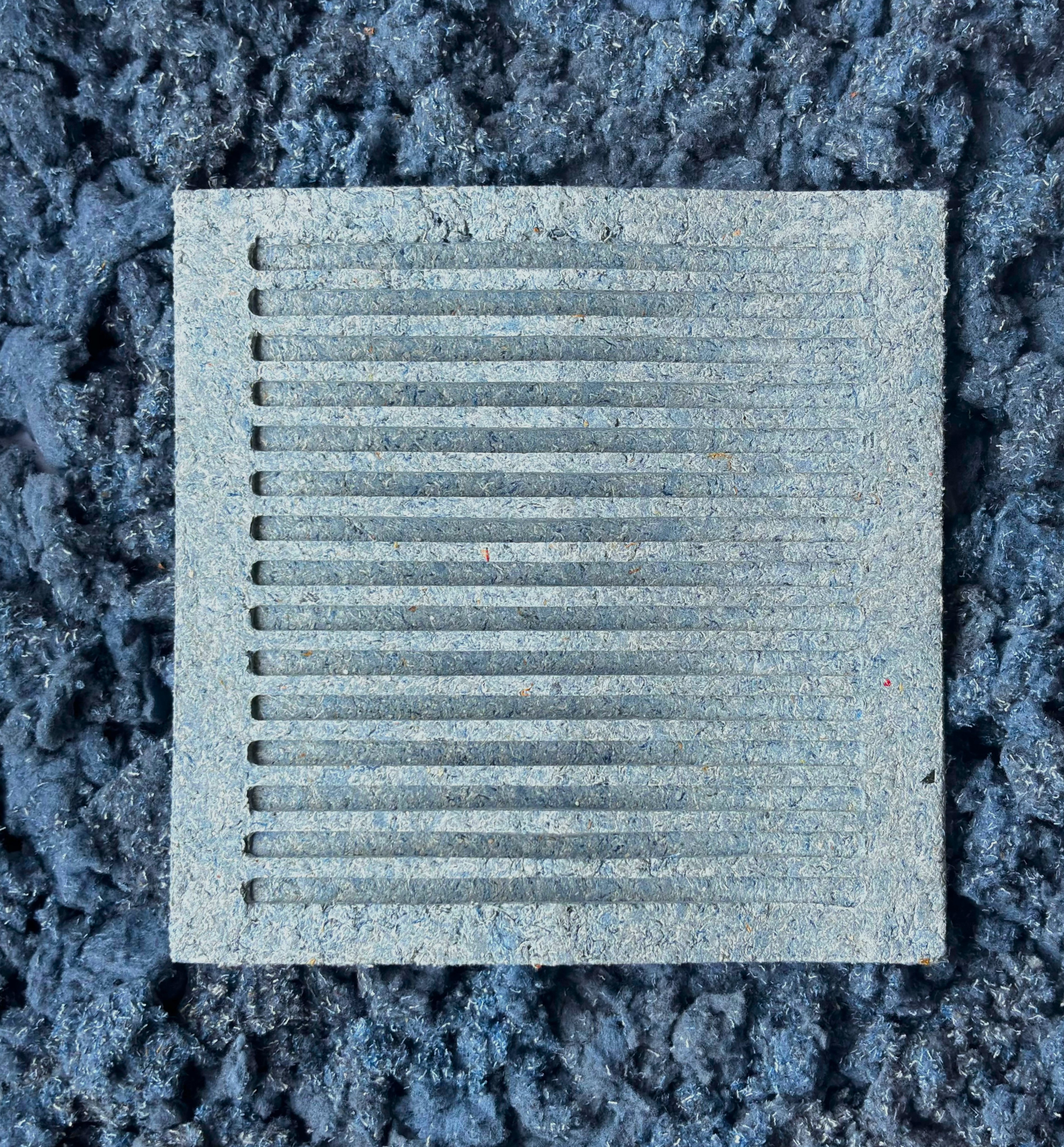
MUTUS is a circular material innovation that transforms textile waste—specifically denim blended with elastane—into acoustic and thermal panels for architecture and interior design.
Mixed textile fibres such as cotton and elastane are extremely difficult to recycle, meaning large volumes of garments are currently sent to landfill or incineration. This represents both an environmental challenge and a lost material resource. MUTUS addresses this issue by converting a problematic textile waste stream into a functional material for the built environment.
The main aim of the project is to develop circular interior solutions that reduce textile waste while improving acoustic comfort and environmental performance in interior spaces. The concept targets architects, designers, construction professionals and institutions seeking sustainable materials for offices, educational spaces and public buildings.
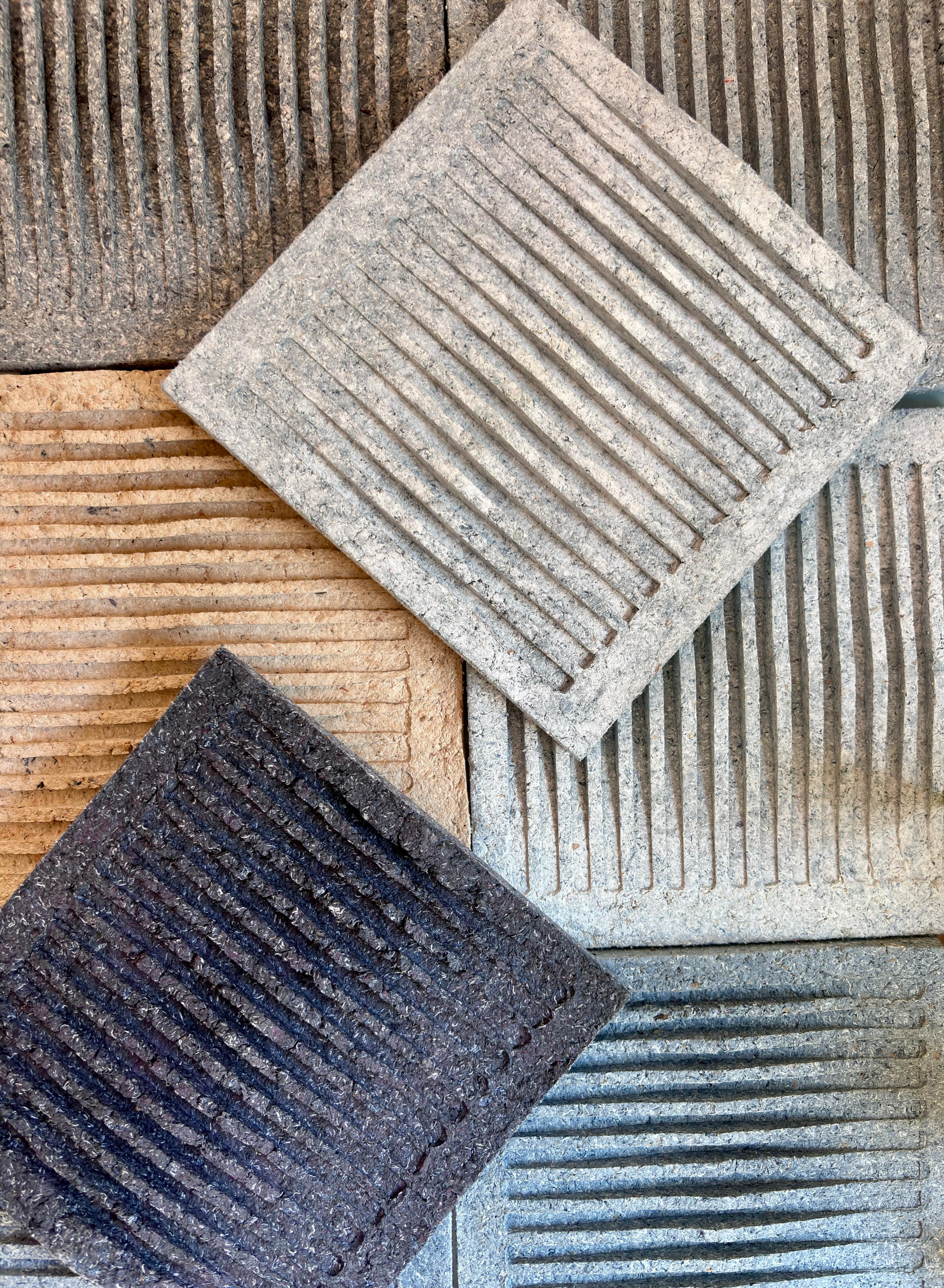
Through material research and experimentation, the project developed composite formulations combining recycled denim fibres with natural binders. Several prototypes were produced and tested to evaluate acoustic absorption, thermal insulation and mechanical performance. These tests demonstrate the potential of recycled textile fibres to function as a viable resource for construction and interior applications.
The project contributes to circular economy goals by connecting textile recycling with architectural material innovation. By bridging the textile and construction industries, MUTUS proposes a systemic circular approach where waste materials gain new value and become part of healthier and more sustainable interior environments.
MUTUS emerged from the need to address one of the most persistent challenges in the textile industry: the recycling of mixed fibres such as denim combined with elastane.
Although denim is one of the most widely used textiles in the world, the presence of elastane makes fibre separation extremely difficult. As a consequence, large quantities of garments are discarded every year, creating a growing environmental problem. This challenge inspired the exploration of alternative ways to valorise textile waste without separating the fibres.
The project was developed as a final degree project in Industrial Design Engineering at Elisava, in collaboration with Infinit Denim and the Back to Eco initiative, organisations dedicated to recovering and reusing discarded denim garments. Their knowledge of textile recovery and circular production processes helped inform material sourcing and development decisions.
The concept evolved through several stages. First, a research phase analysed textile waste streams, circular economy principles and potential opportunities for sustainable materials in architecture and interior design. Second, an experimentation phase explored composite materials combining recycled denim fibres with natural binders.
Through iterative prototyping, several material samples and panel prototypes were produced and evaluated through acoustic, thermal and mechanical testing. These experiments helped refine the material composition and define potential architectural applications.
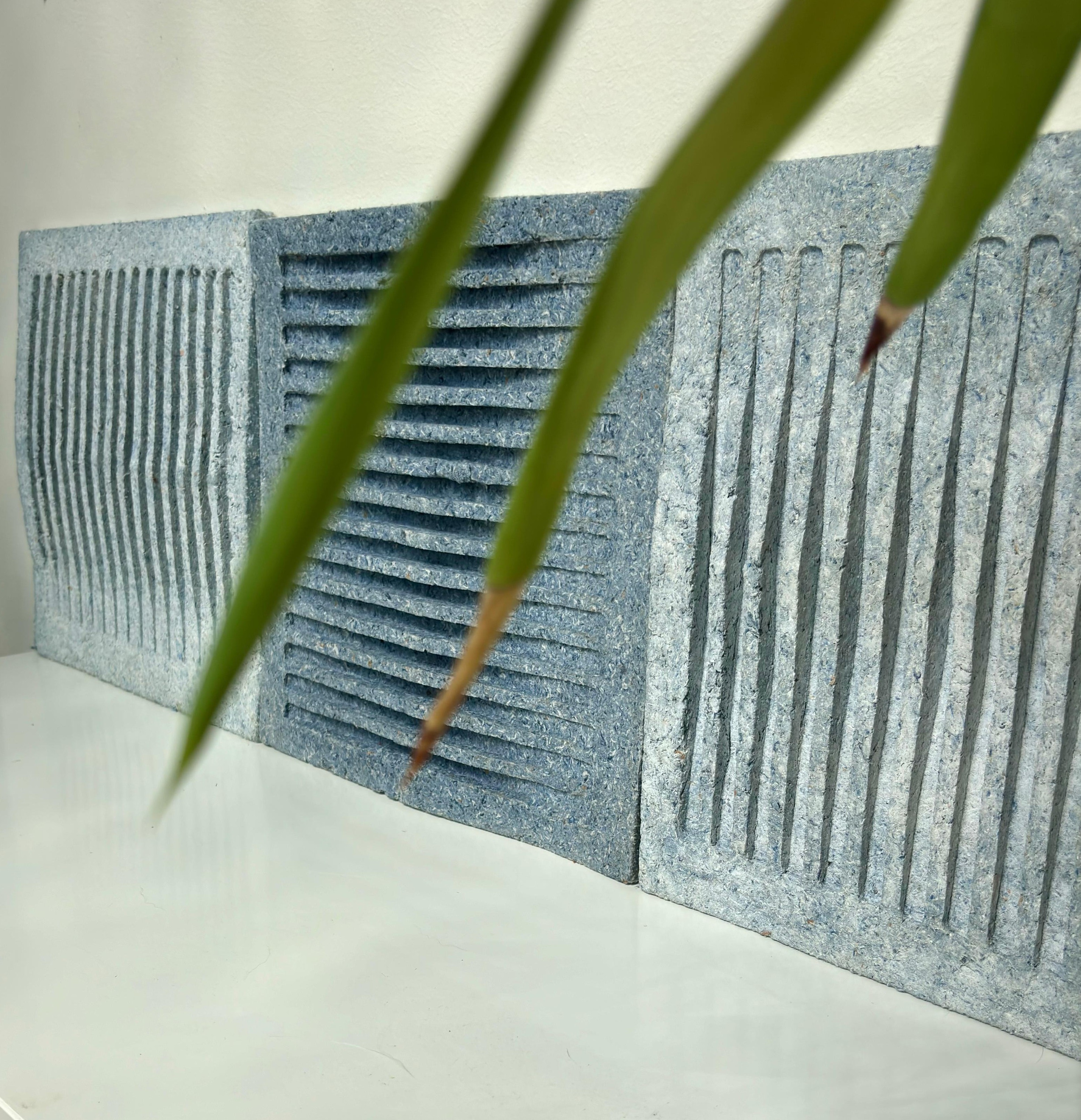
The most promising formulations were translated into panel designs suitable for interior environments.
If further developed, the project could move towards certification processes, pilot manufacturing and collaboration with architectural studios and material manufacturers in order to implement MUTUS panels in real interior spaces.
Circular Materials
Textile Waste Valorisation
Acoustic Architecture
Sustainable Interiors
Material Innovation
MUTUS contributes to the transition towards circular and climate-resilient material systems by transforming textile waste into a new resource for the built environment.
Stretch denim garments contain elastane, which makes them extremely difficult to recycle using conventional methods. As a result, large quantities of textile waste are discarded every year, representing both an environmental challenge and a loss of valuable material resources.
The main sustainability objective of MUTUS is to reduce textile waste while developing circular materials that can replace conventional acoustic and insulation products used in interior spaces. The project also aims to promote resource efficiency and create new circular material flows between the textile and construction industries.
To achieve these objectives, the project explored alternative ways of valorising mixed textile waste without separating fibres. Recycled denim fibres were combined with natural binders to develop composite materials suitable for acoustic and thermal panels. Through material experimentation and prototyping, several samples and panel prototypes were produced and evaluated in terms of acoustic absorption, thermal behaviour and mechanical resistance.
The results demonstrate the potential of recycled textile fibres to function as a viable resource for interior architecture applications. By extending the lifecycle of discarded garments and reducing dependence on virgin materials, MUTUS contributes to waste reduction and more sustainable material use.
The exemplary character of the project lies in its systemic approach: rather than focusing only on recycling textiles, MUTUS connects textile recovery with architectural material innovation, creating a circular value chain where waste becomes a resource for healthier and more sustainable interior environments.
MUTUS explores how sustainable materials can enhance both the sensory and aesthetic quality of interior spaces while communicating the value of circular design.
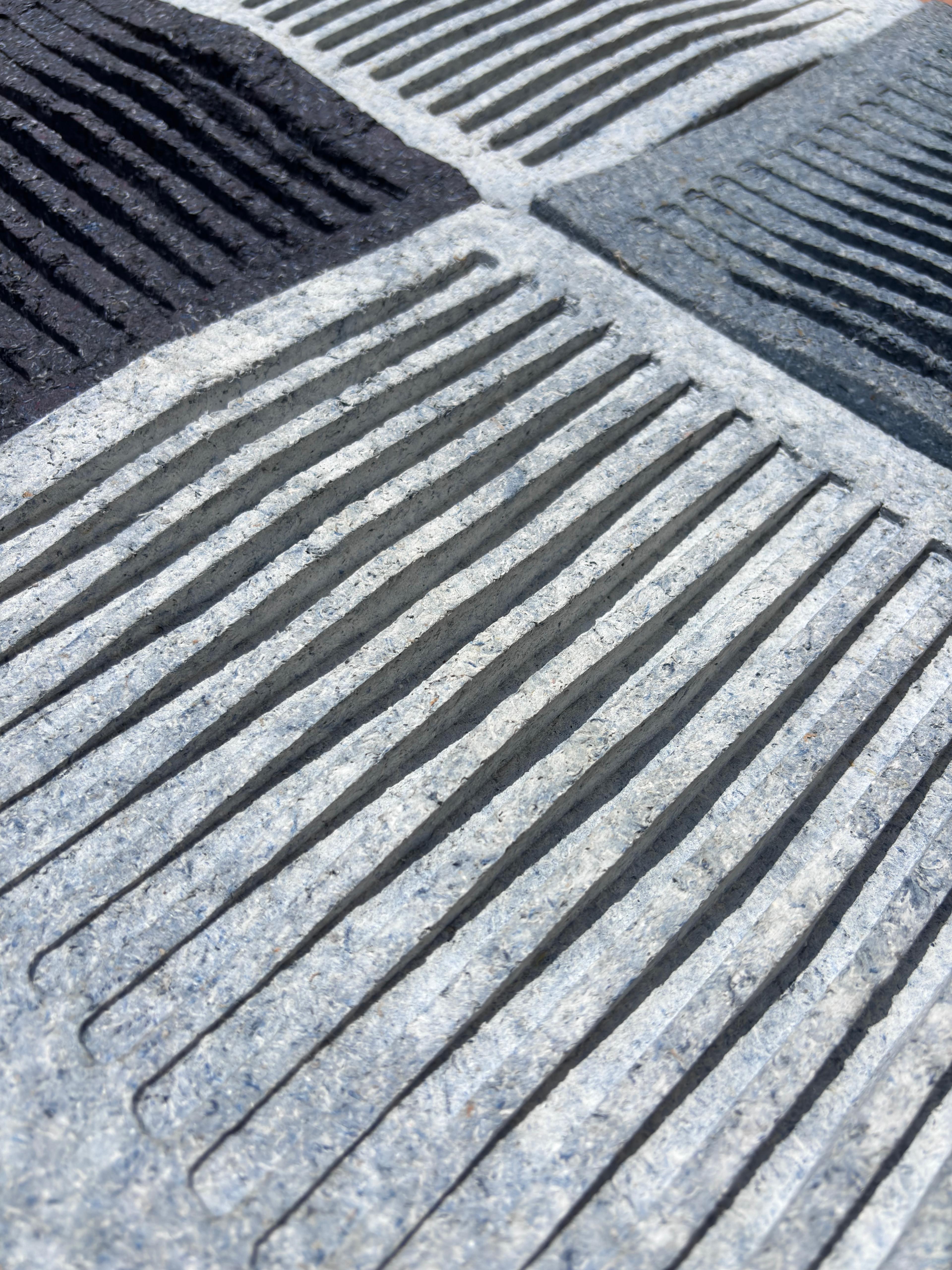
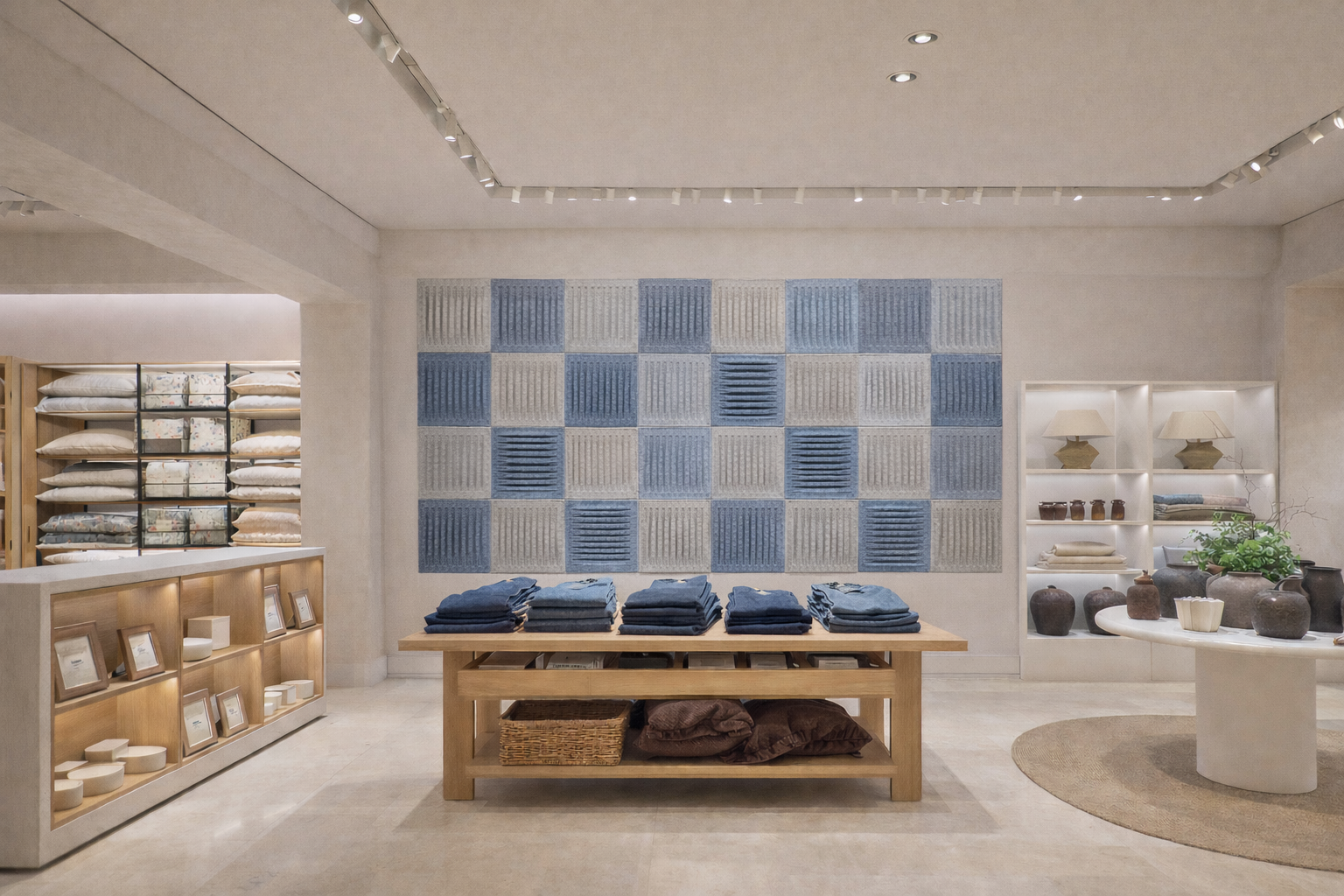
The recycled denim fibres give the material a distinctive texture and visual identity that reflects its textile origin. Instead of hiding recycled materials within technical layers, MUTUS makes circularity visible through expressive surfaces where fibres, colour variations and textures reveal the story of the material. In this way, waste becomes a meaningful architectural element.
The panels are designed to improve acoustic comfort and reduce reverberation, contributing to calmer and more pleasant environments in workplaces, educational spaces and public buildings. By creating quieter and more comfortable interiors, the material supports well-being and improves people’s everyday experience of shared environments.
The tactile quality of the fibrous surface introduces warmth and softness, stimulating the sense of touch and creating a sensory contrast with conventional industrial insulation materials. This materiality encourages people to engage more consciously with the spaces they inhabit.
Denim also carries strong cultural associations as one of the most widely used textiles in everyday life. By transforming discarded garments into architectural surfaces, MUTUS connects fashion culture with the built environment and invites reflection on the lifecycle of materials.
The exemplary character of the project lies in its ability to combine circular materials, acoustic comfort and expressive design, demonstrating that sustainability can also generate beauty, meaning and improved spatial experience.
MUTUS promotes inclusion by supporting more accessible and collaborative circular material systems that connect different sectors, communities and industries.
Textile waste is a global challenge that affects ecosystems, local economies and communities. By transforming discarded denim into useful architectural materials, the project creates opportunities for collaboration between designers, recycling initiatives, manufacturers and emerging circular businesses. This approach promotes economic and governance-related inclusion by encouraging cooperation between sectors that rarely interact, particularly the textile industry and the construction sector.
Through this cross-sector collaboration, MUTUS contributes to the development of new circular value chains where waste becomes a shared resource rather than a discarded material. Such collaboration can support local circular economies and encourage more inclusive models of production and material use.
The project also promotes spatial inclusion by improving acoustic comfort and environmental quality in everyday environments such as schools, workplaces and public buildings. By reducing noise and improving interior comfort, the panels contribute to healthier and more accessible spaces for diverse users.
Because the material is based on abundant textile waste streams, it also has the potential to become an accessible and scalable sustainable alternative to conventional interior materials.
The exemplary character of MUTUS lies in its ability to combine circular material innovation with collaborative production models, demonstrating how sustainability can generate social, economic and environmental benefits for communities.
Participation played a key role in the development of MUTUS through collaboration with circular textile initiatives, design research networks and stakeholders from the built environment.
The project was developed in connection with Infinit Denim and the Back to Eco initiative, organisations specialised in collecting and transforming discarded denim garments. Their practical experience in textile recovery provided essential knowledge about waste streams, fibre processing and circular production systems, helping to identify viable sources of recycled materials.
The concept also evolved within the framework of the TRANSITIONS initiative, which promotes new educational and professional approaches to sustainable design and textile innovation. This collaborative environment encouraged dialogue between designers, researchers and sustainability practitioners.
Through these exchanges, stakeholders contributed feedback on material sourcing, potential architectural applications and circular manufacturing processes. Their input influenced key design decisions, including the selection of denim waste as the primary resource and the development of acoustic panels as a suitable product for interior environments.
The concept ultimately benefits several groups, including designers, architects, construction professionals and users of interior spaces such as offices, schools and public buildings, who gain access to more sustainable materials and improved acoustic comfort.
By integrating feedback from the textile recycling sector and design networks, the participatory process helped ensure that MUTUS addresses real industry challenges while exploring innovative circular material solutions.
This collaborative approach demonstrates how co-creation and knowledge exchange can strengthen sustainable material innovation and support the transition towards circular design practices.
MUTUS connects stakeholders and policy priorities across different governance levels, creating a collaborative framework between the textile recycling sector, design innovation and the construction industry.
At the local level, the project engages with circular textile initiatives such as Infinit Denim and Back to Eco, organisations specialised in collecting and transforming discarded denim garments. These actors provide expertise in textile recovery and circular production processes, enabling the valorisation of difficult-to-recycle denim waste streams and supporting the development of new circular materials.
At the regional and national level, MUTUS responds to the growing demand for sustainable materials in the construction and interior design sectors. Potential stakeholders include architectural studios, construction companies, material manufacturers and public administrations responsible for sustainable building policies and urban development strategies. For these actors, MUTUS offers an innovative circular material solution that contributes to waste reduction and improved acoustic comfort in interior environments.
At the European level, the concept aligns with policy frameworks promoting circular economy, waste reduction and sustainable building practices, including initiatives linked to the European Green Deal and the New European Bauhaus.
By transforming textile waste into construction materials, MUTUS contributes to broader sustainability goals such as resource efficiency, waste valorisation and climate transition. The involvement of stakeholders across these governance levels strengthens the potential for scaling, legitimacy and implementation of the concept in real-world contexts.
MUTUS is a transdisciplinary project that combines knowledge from design, materials research, environmental studies and textile recycling in order to develop innovative circular materials for the built environment.
The development of the concept required collaboration between several fields, including industrial design, textile processing, circular economy research and architectural applications. Designers explored the spatial and aesthetic potential of the panels, while material experimentation focused on transforming recycled denim fibres into functional composite materials.
Through iterative experimentation, recycled denim fibres were combined with natural binders to create materials with acoustic and thermal properties suitable for interior architecture. At the same time, design methodologies helped define spatial requirements, user needs and possible applications in workplaces, educational spaces and public interiors.
This collaboration was organised through an interdisciplinary research process combining material experimentation, design prototyping and continuous feedback from stakeholders involved in textile recycling and sustainable design initiatives. The interaction between disciplines enabled shared decision-making and the integration of technical, environmental and spatial perspectives.
By combining material science, circular economy principles and architectural design, MUTUS moves beyond conventional recycling approaches and proposes a holistic circular material system.
The added value of this transdisciplinary process lies in its ability to connect knowledge from different sectors, generating innovative solutions that transform textile waste into high-performance architectural materials and contributing to more sustainable and resilient built environments.
The business model of MUTUS is based on the production and commercialization of circular acoustic panels made from recycled denim textile waste.
The project creates value by transforming difficult-to-recycle textile residues into functional architectural materials that improve acoustic comfort while reducing environmental impact. By linking textile recycling with the construction sector, MUTUS establishes a circular value chain where waste becomes a resource for the built environment.
The implementation of the project relies on partnerships with textile recycling initiatives such as Infinit Denim, technology centres responsible for material certification and validation, and architectural and design studios interested in sustainable material solutions.
Production is based on locally available textile waste combined with shredding and pressing technologies to create durable composite panels. This approach reduces reliance on virgin materials while supporting resource efficiency and circular production systems.
Revenue streams would include the sale of acoustic panels for interior architecture projects, installation services, technical consulting and customised solutions developed with architects and designers.
In the early stages, development could also be supported by public funding programmes, innovation grants and circular economy initiatives that promote sustainable materials and industrial symbiosis.
Through this model, MUTUS contributes to the development of local circular value chains and new markets for sustainable material innovation, while ensuring the long-term economic viability of the concept.
SCALABILITY (optimised)
MUTUS has strong potential for transferability and replication because it is based on two widely available elements: textile waste streams and adaptable manufacturing processes.
Denim garments containing elastane are produced globally and remain difficult to recycle using conventional technologies. As a result, large quantities of this material are discarded each year. By transforming this waste into composite acoustic panels, MUTUS demonstrates how problematic textile residues can become valuable resources for the built environment.
Several aspects of the concept can be transferred to other regions and contexts. These include the methodology for developing materials from textile waste, the panel system designed for acoustic and interior applications, and the collaborative model connecting textile recycling initiatives with the construction and design sectors. This approach can serve as a model for other circular material innovations that seek to connect different industries and create new value chains.
Replication would benefit from partnerships with textile recycling organisations, material manufacturers, research centres and architectural networks capable of testing and implementing the material in real projects.
While certain aspects may need adaptation depending on local contexts—such as waste collection systems, available textile streams or regulatory requirements—the core concept remains highly adaptable.
By demonstrating how textile waste can be transformed into functional architectural materials, MUTUS provides an inspiring example of how circular material innovation can be scaled and implemented in different geographic and industrial contexts.
The next phase of MUTUS focuses on advancing the project from material research and prototyping towards real-world implementation.
In the year following the application, the first objective would be to further refine the material composition and production process in collaboration with textile recycling initiatives and material research centres. This phase would include additional testing and validation to improve acoustic performance, durability and fire resistance in order to meet construction and interior design standards.
A second step would involve developing pilot applications in collaboration with architectural studios and interior designers. These pilot projects would allow the material to be tested in real interior environments such as offices, educational spaces or public buildings, helping to evaluate both technical performance and user experience.
At the same time, efforts would focus on building partnerships with textile recycling organisations, manufacturers and circular economy networks to explore small-scale production and distribution possibilities.
The project would also be promoted through exhibitions, design platforms and sustainability events in order to raise awareness about circular material innovation and the potential of textile waste as a resource for architecture.
Through these steps, MUTUS aims to move from experimental prototypes towards practical implementation, contributing to the development of new circular material solutions for the built environment.