Arts, Culture, and Heritage as Drivers of Change
#WhyLessWaste
#WhyLessWaste: turning litter into civic art for environmental change
#WhyLessWaste transforms waste collected from natural environments into artworks, performances, and public education tools that make environmental damage visible and emotionally tangible. By combining direct action, artistic practice, and civic awareness, the initiative helps people rethink their relationship with waste and reduce littering in everyday life.
Spain
Regional
Madrid
It addresses urban-rural linkages
It involves other types of transformations (soft investment)
Yes
2025-06-13
No
No
No
Individual
#WhyLessWaste treats trash as material, evidence, and public message. The project recovers litter from natural and urban environments, documents it, and transforms selected materials into artworks and performances, while the rest is properly separated for recycling. These actions reveal waste as a visible expression of how we live, consume, and shape shared space. Rooted in Spain and expanded through international participatory actions, the project has combined 152 clean-up actions with artistic production in coastal, urban, and peri-urban settings, including Denia, Torrelodones, Las Rozas, Majadahonda, central Madrid, and IFEMA.
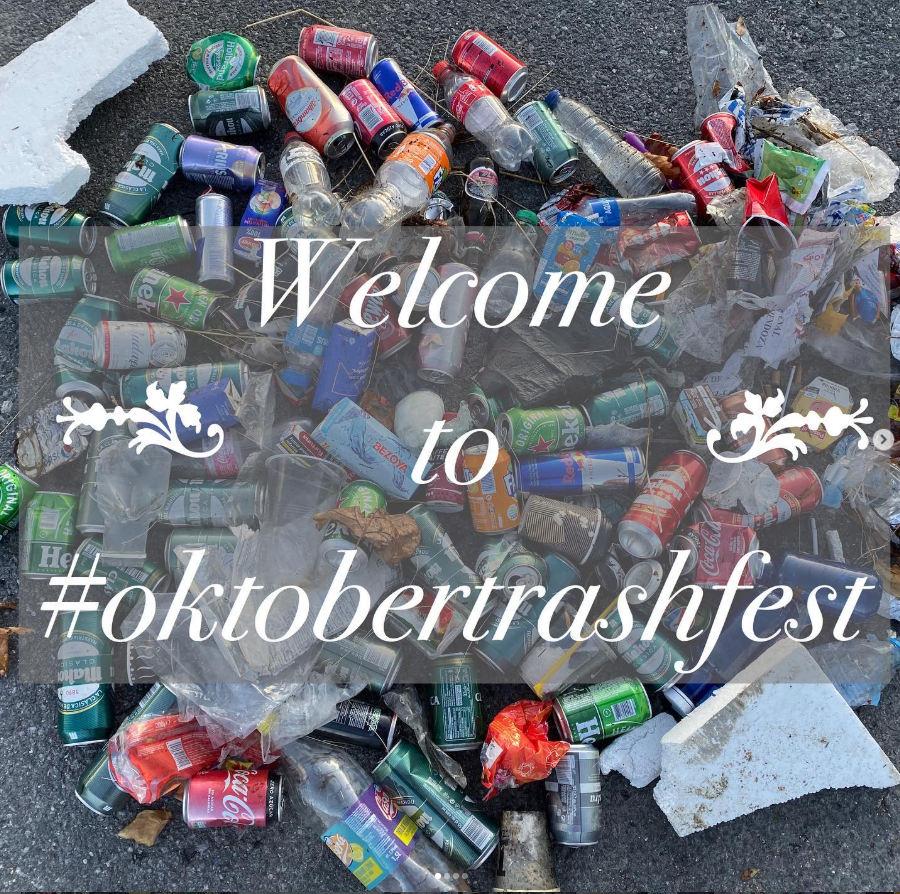
#WhyLessWaste has generated environmental, cultural, and participatory results. It has removed more than 200 bags of waste from nature and public space, produced 41 artworks, and created participatory actions across multiple countries. One example is #oktobertrashfest, an international month-long collective action that mobilised 28 participants in 12 countries and led to the collection of 2,460 beer-related litter items from streets and natural environments. The project has also gained public visibility through national media coverage, including ABC Spain.
#WhyLessWaste’s long-term impact lies in changing perception as well as behaviour. The project’s method of clean-up, sorting and documentation, artistic reuse, public communication, and participatory challenges can be repeated in other local contexts. By turning discarded materials into artistic experiences and public dialogue, the project strengthens care for place, supports circular thinking, and offers a replicable model that can be adapted by communities, schools, municipalities, and cultural organisations across different contexts. In this way, #WhyLessWaste transforms environmental action into cultural participation, waste into educational and artistic material, and local actions into repeatable public methods.
#WhyLessWaste began with a widely shared photograph that stayed in my mind: a plastic stick lodged in a sea turtle’s nostril. Soon afterwards, while walking on the beach in Denia, I found the same kind of stick among the litter brought in by the waves. I picked it up, together with many other plastic items scattered along the shore. When I came back the next day, there was more plastic. What began as a one-off reaction became the start of a long-term project.
Back in Madrid, I started picking up waste from natural public spaces. The more I collected, the more I began to see those places differently. Each object said something about the way we live, consume, and leave traces behind. Once, I found an intact plastic bag from the 1980s. That kind of discovery changed the scale of the problem for me. Waste was no longer just something to remove. It became a way of reading a place through what had accumulated there over time.
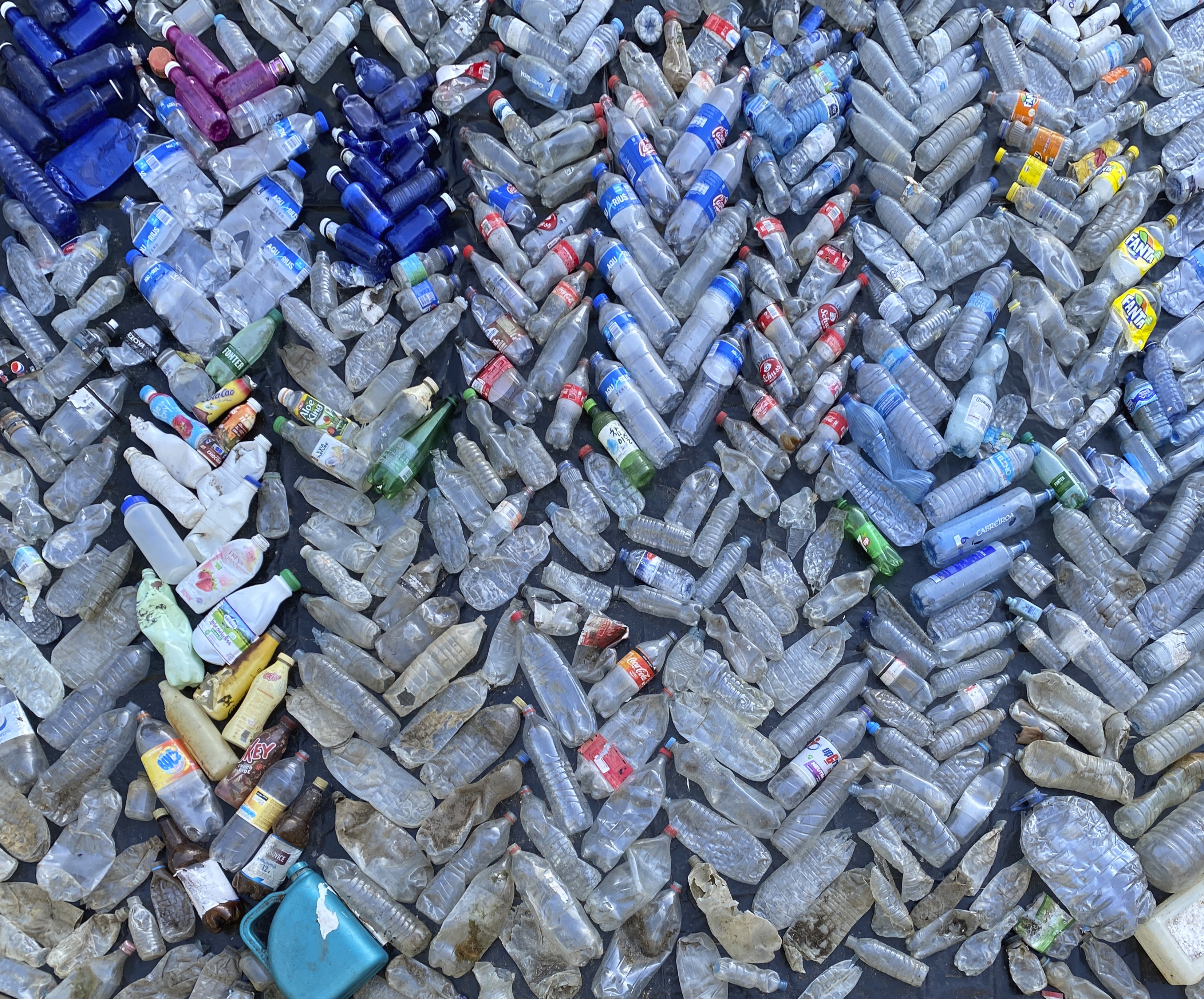
Around three times a week, I returned to collect as much waste as possible. I kept some of the collected waste to create artistic works. One example is Harvest 2019, made from plastic bottles gathered in those places. Waste changed status: from trash to evidence, from something discarded to something worth looking at.
Over time, I began to actively involve other people after seeing both the positive impact of the activity and the energy it could create. Participation first grew in my immediate surroundings: family, friends, and people I met while collecting litter started to join the clean-up actions. Weekly communication on social media then opened the project to a wider public, inviting others to act on it in their own surroundings. Collective month-long challenges extended that activism further, connecting people in different countries who picked up litter, shared their reflections, and discovered that environmental care could become a meaningful shared practice. My personal response on a beach grew into an international network
circular culture
environmental awareness
participatory art
waste reduction
care for place
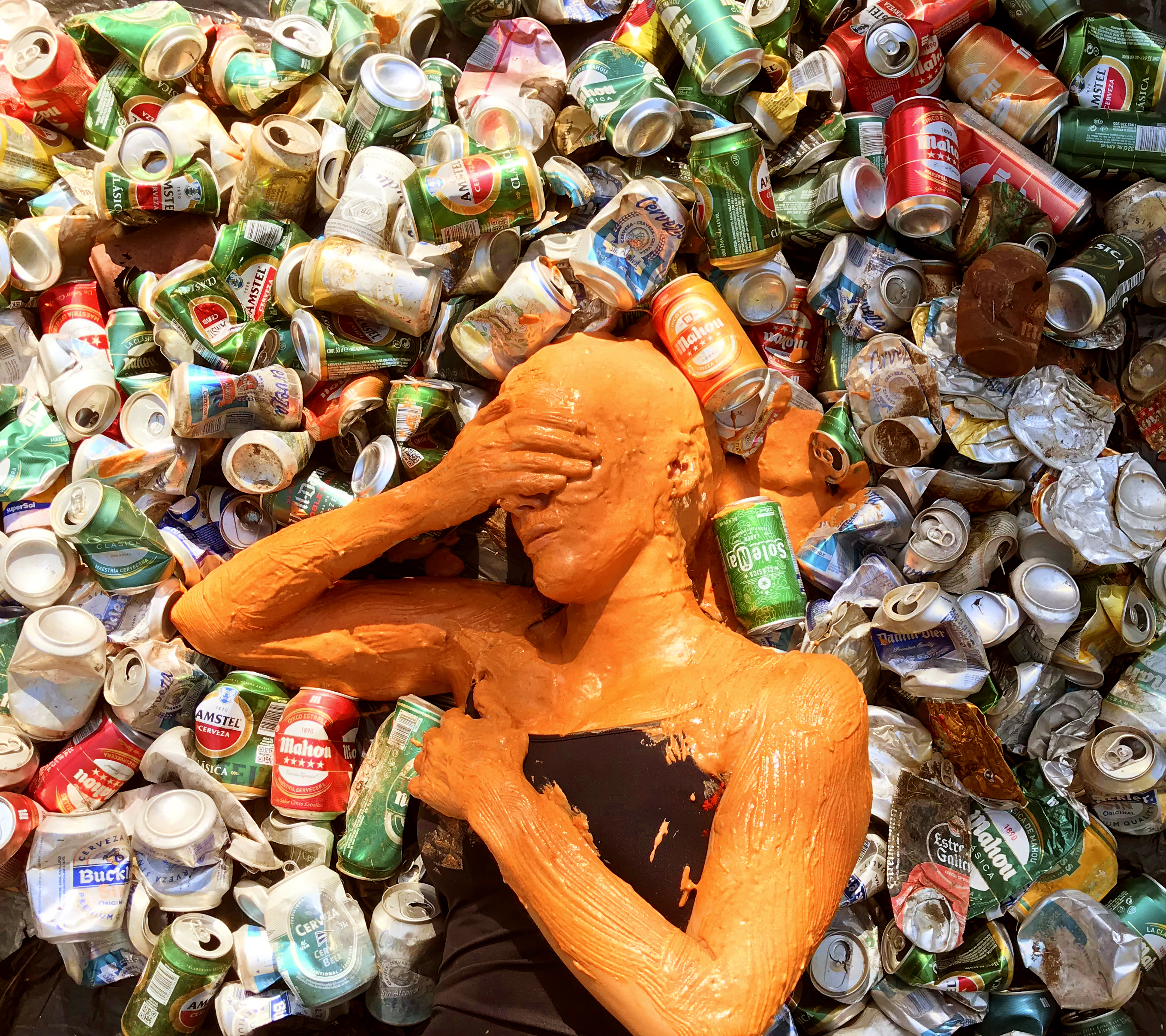
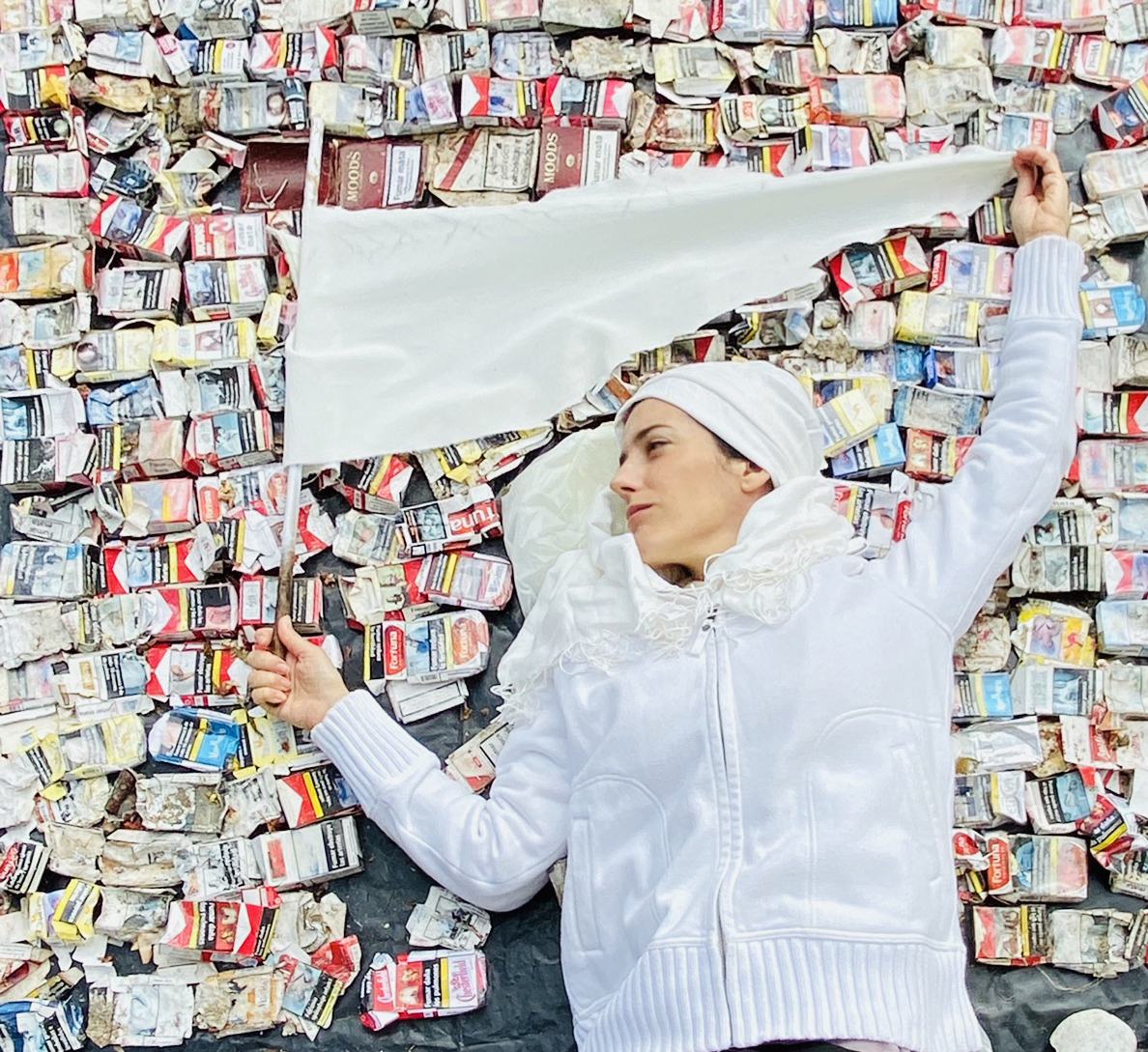
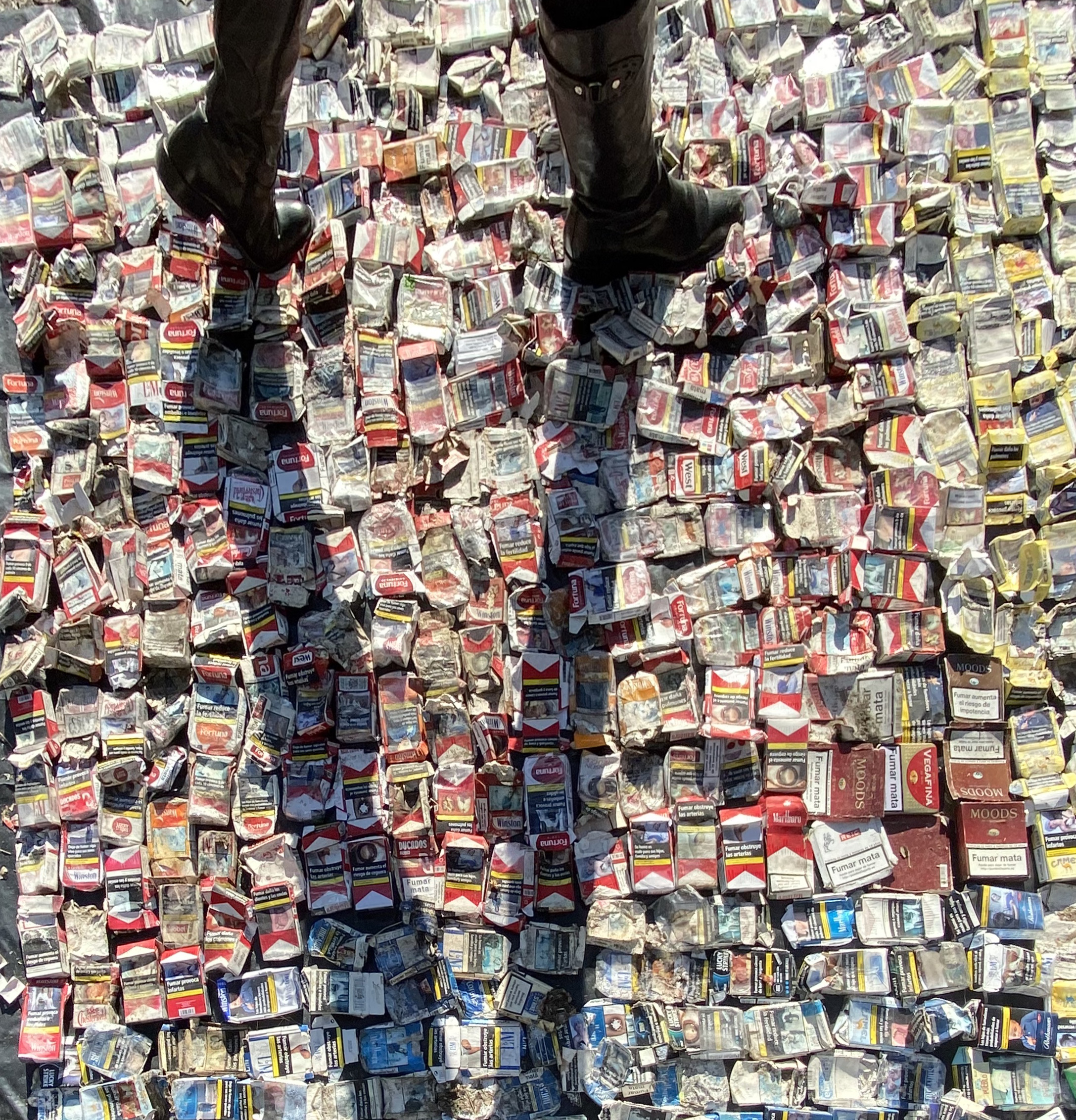
In my work "White Flag – Cease Fire", I stood holding a white flag in front of a background made from cigarette packs collected during clean-up actions. The work brought into one image a wider sustainability problem: in the European Union alone, 70 million tonnes of municipal solid waste were incinerated in 2017, releasing 40 million tonnes of fossil CO2 and generating hazardous fly ash containing heavy metals. Its message is that sustainability begins before disposal, by reducing waste at source and preventing polution.
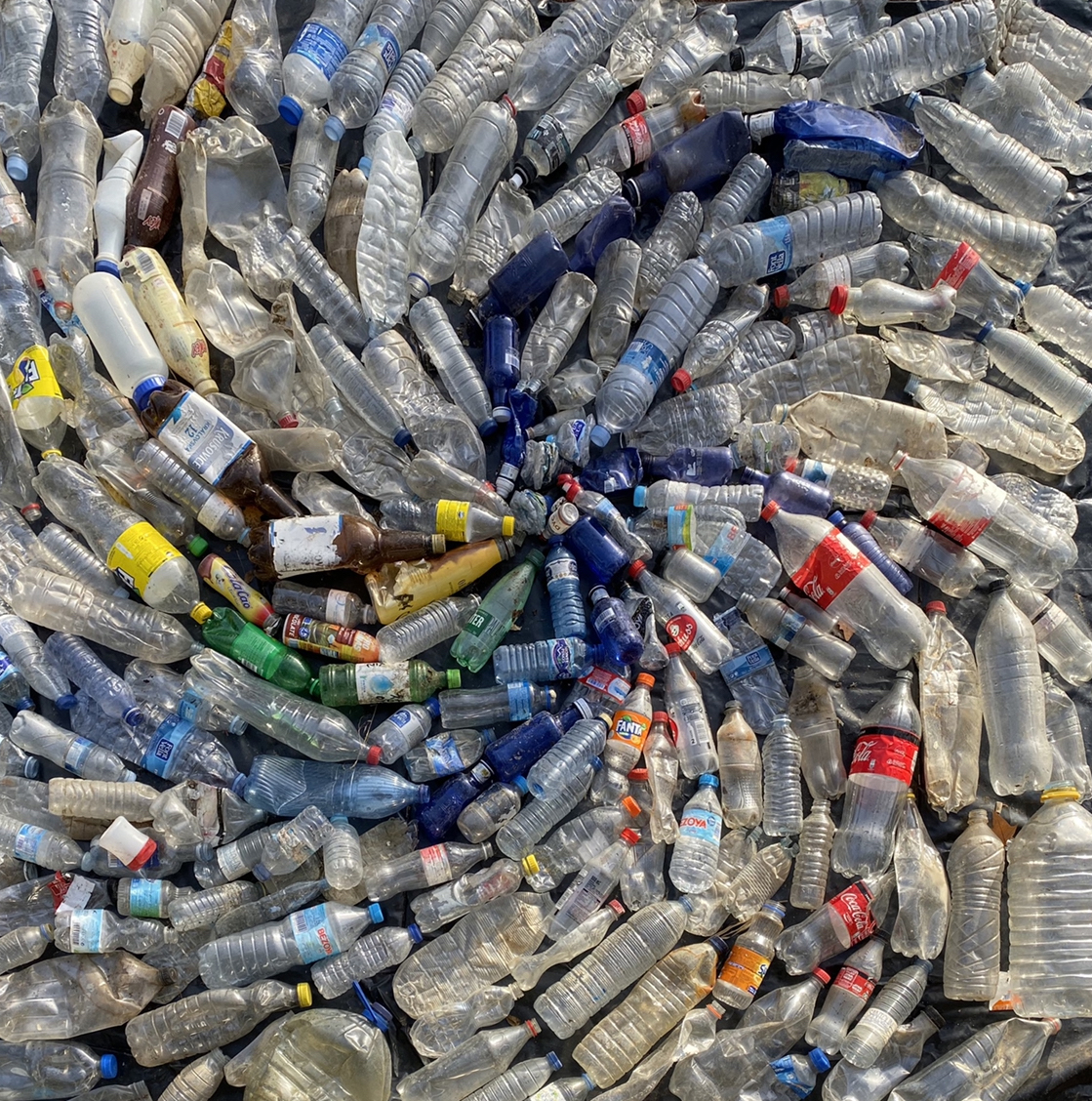
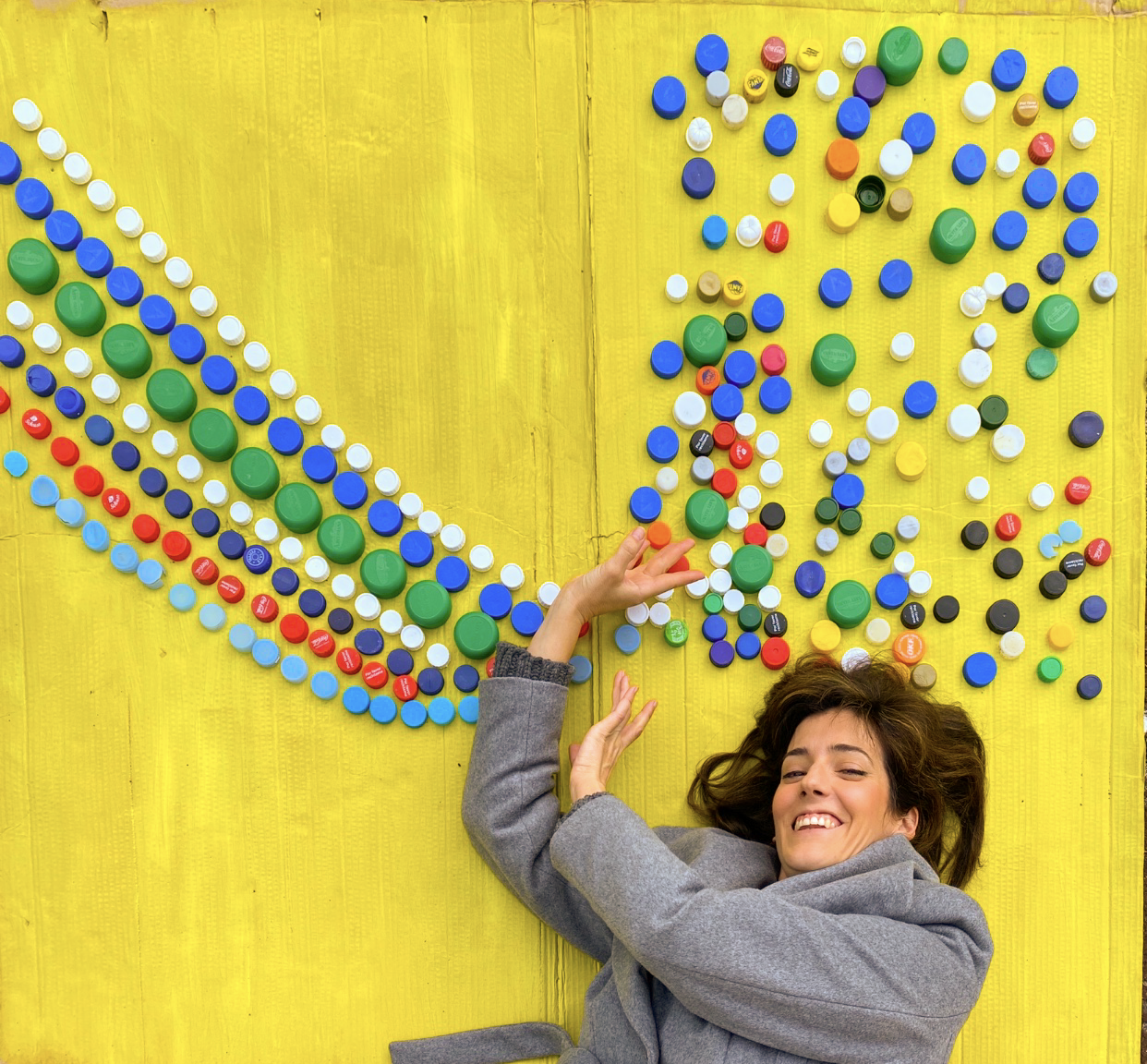
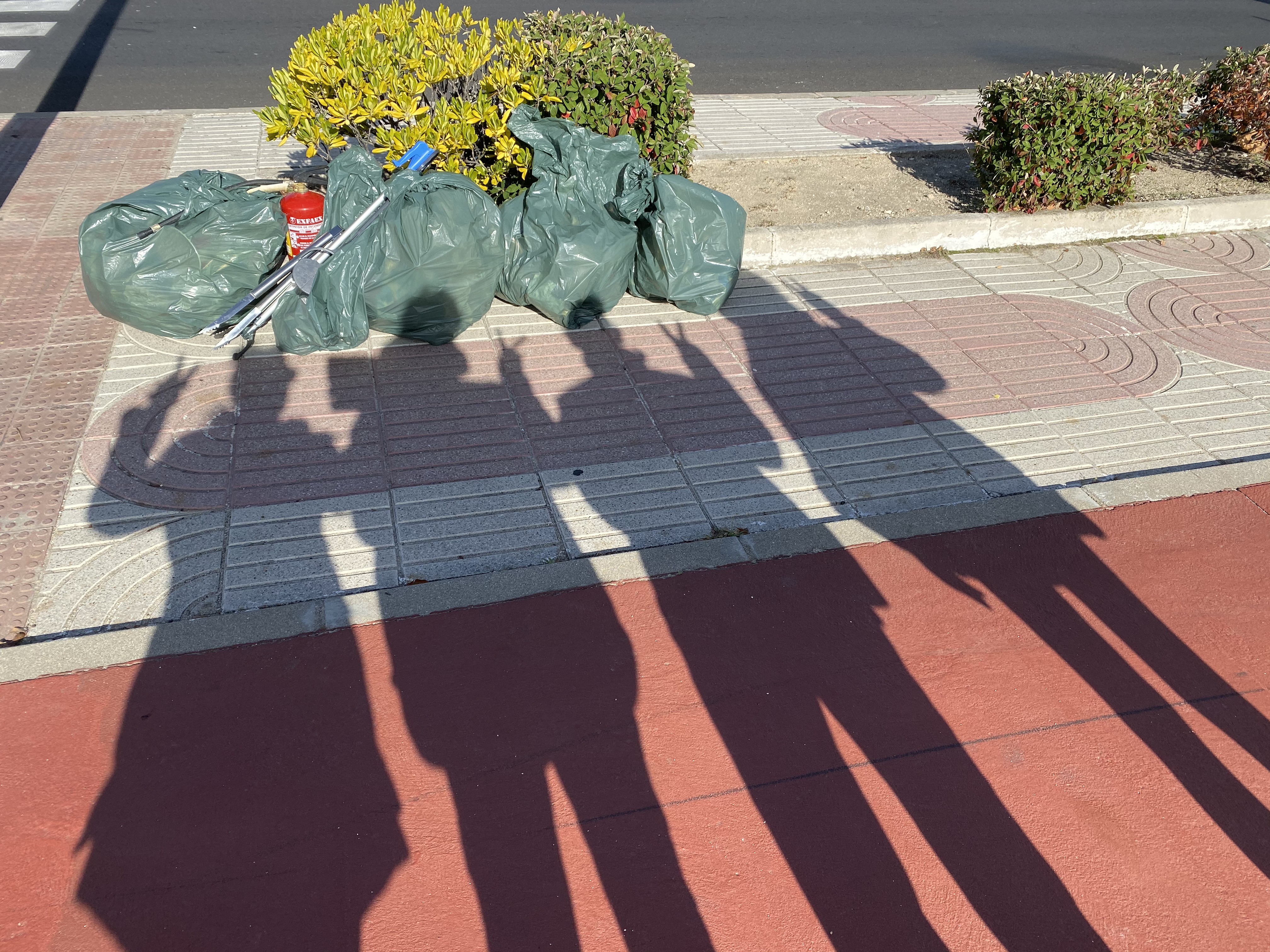
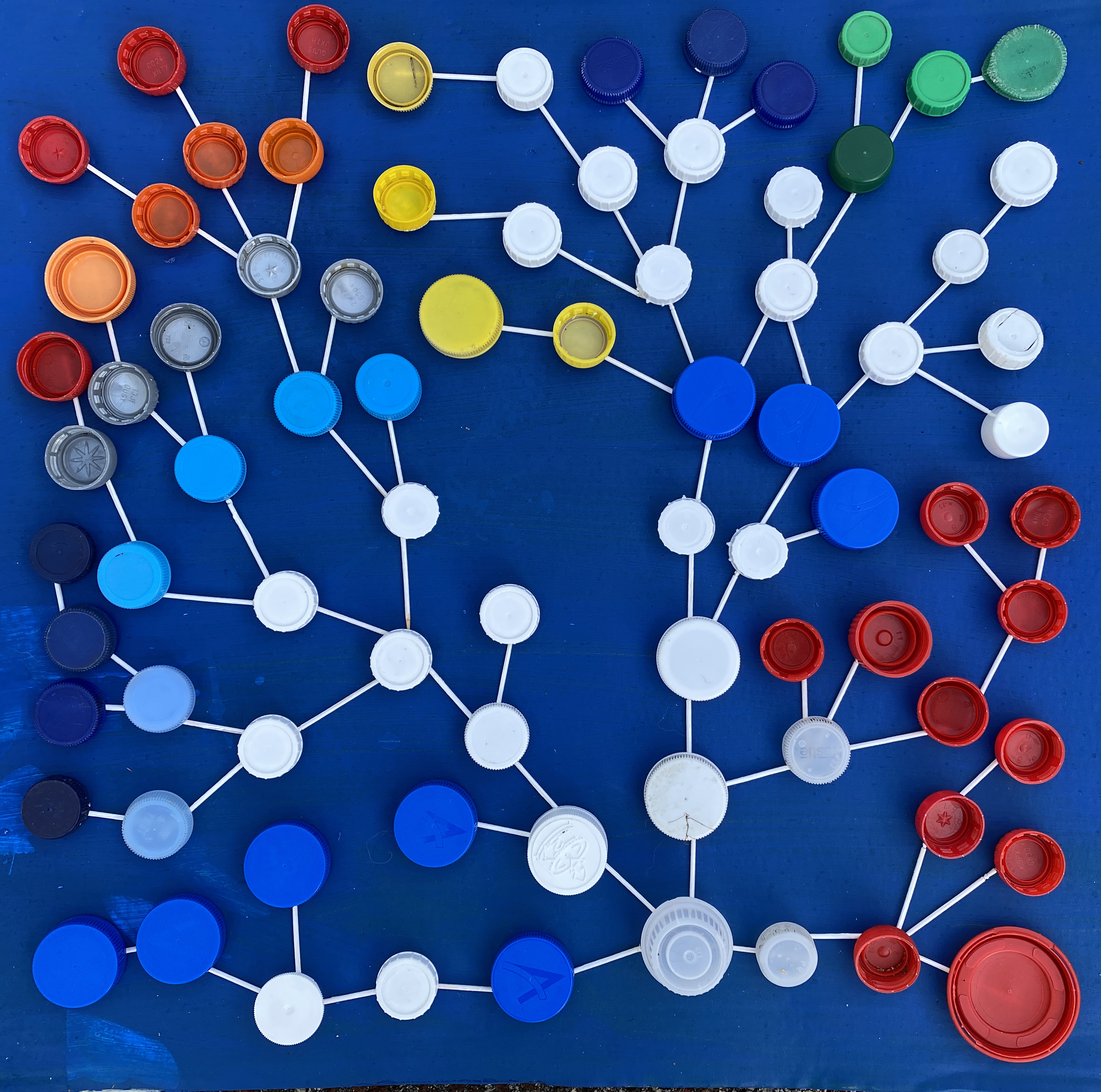
#WhyLessWaste addresses sustainability through direct environmental action, circular use of materials, and long-term behaviour change. Across six years and 152 clean-up actions, the project has removed more than 200 bags of waste from beaches, streets, suburbs, and natural areas where people and wildlife live, walk, and gather. I separate the collected materials for recycling or transform part of them into artworks such as "Swirl", made from plastic bottles recovered on site. during a team clean-up. The whole process keeps valuable materials in use for longer, makes waste visible, and promotes circular thinking in a direct and accessible way.
By connecting clean-up actions with visual storytelling and public engagement, #WhyLessWaste encourages people to reduce disposable consumption, use resources with greater care, and see shared spaces as places worth protecting. In this way, the project combines immediate ecological repair with a broader cultural shift in how waste is perceived and handled.
The project’s exemplary value lies in linking ecological repair with cultural transformation. #WhyLessWaste shows that sustainability can be visible, participatory, and emotionally engaging. It offers an adaptable model that can be applied in many contexts: recover waste, reveal its impact, transform part of it creatively, and inspire communities to care for places and resources in a more conscious way.
With "Harvest", I began to test a reversal: plastic bottles collected in the suburbs of Madrid were arranged into the image of wheat, turning discarded material into a symbol of growth, landscape, and care. I created my artworks to show that what had been left behind could still be reassembled into something aesthetically inspiring, rooted in place, and capable of changing how people look at their surroundings. Their publication in ABC, one of Spain’s main newspapers, helped bring that visual and cultural proposition to a wider public.
This is how #WhyLessWaste contributes to aesthetics: by turning what is usually ignored into something meaningful, memorable, and emotionally resonant. Materials collected from beaches, streets, and natural areas are reworked into artworks and visual actions that invite people to see their surroundings with renewed respect. The project encourages a shift from indifference to attentiveness, and from passive observation to active care.
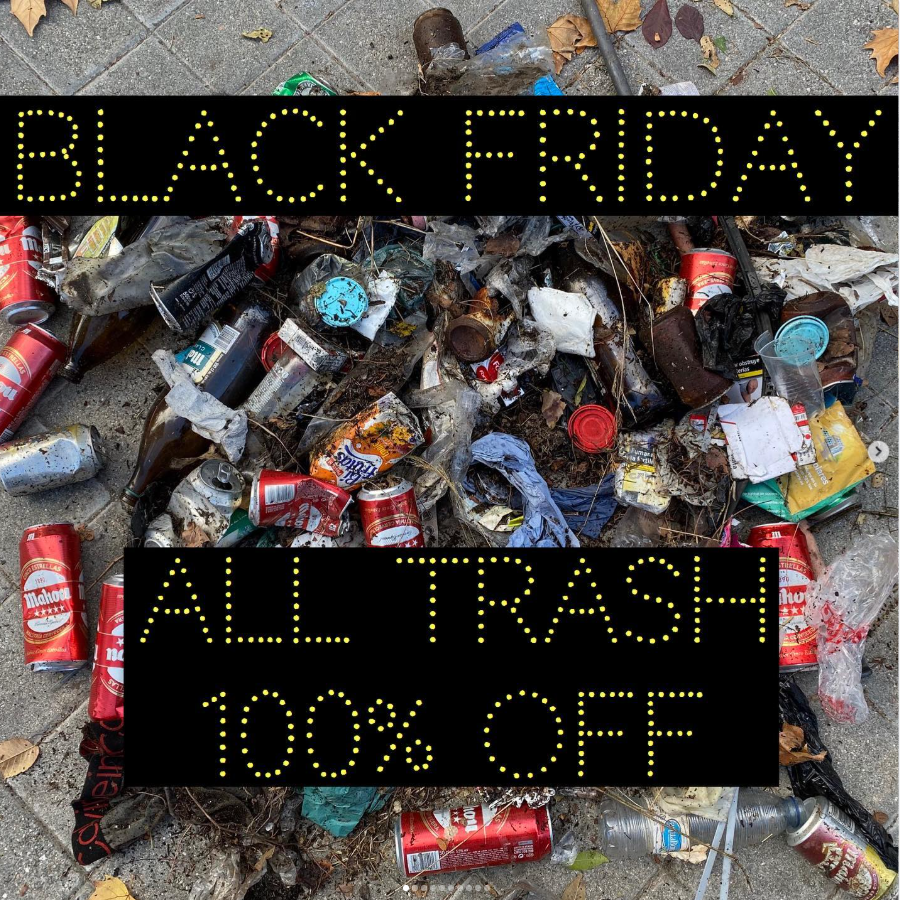
Because the materials come from real places and real acts of care, the resulting works carry the memory of the landscapes and communities from which they emerged. They show that beauty in everyday life is not only something to admire, but something to protect. Some works also use irony, such as Black Friday, all trash 100% off, to make people reconsider compulsive buying and the waste it produces. In this way, the project creates both emotional and critical engagement.
The project’s exemplary value lies in showing that aesthetics can be a driver of environmental transformation. #WhyLessWaste makes beauty participatory, place-based, and enduring: it reconnects people with their environment, and turns artistic experience into lasting cultural change.
#WhyLessWaste promotes inclusion by making environmental action and cultural participation accessible, affordable, and easy to join. The project is built on simple acts that many people can take part in: noticing waste, reducing our own production of waste, sorting materials for recycling, and collecting litter from nature where possible. Because the format is low-cost and does not require prior artistic or environmental expertise, it creates an accessible entry point for individuals, families, schools, and local communities, including people who may feel excluded from traditional cultural or environmental spaces.
Accessibility is also strengthened through communication. My communication has been bilingual, helping the project reach people from different backgrounds and contexts. This open format made it possible to create the participatory action #oktobertrashfest, which involved 28 participants from 12 countries and showed that a simple invitation to act can connect diverse people around a shared purpose.
The project also creates opportunities for interaction across generations and communities. In Torrelodones, I joined a municipal litter-picking event in which families, children, and members of the town council took part together. This kind of shared action turns environmental care into a collective civic experience rather than an individual task.
As a woman-led initiative, #WhyLessWaste also brings a gender dimension to environmental action by making care visible in public space and turning an often undervalued form of labour into a shared civic and cultural practice. In this way, the project gives public value to care, participation, and environmental responsibility across genders and generations.
This project’s exemplary character lies in showing that inclusion can be practical and creative. #WhyLessWaste opens environmental engagement to a wide public, creates a welcoming space where care for place and other beings becomes a shared responsibility.
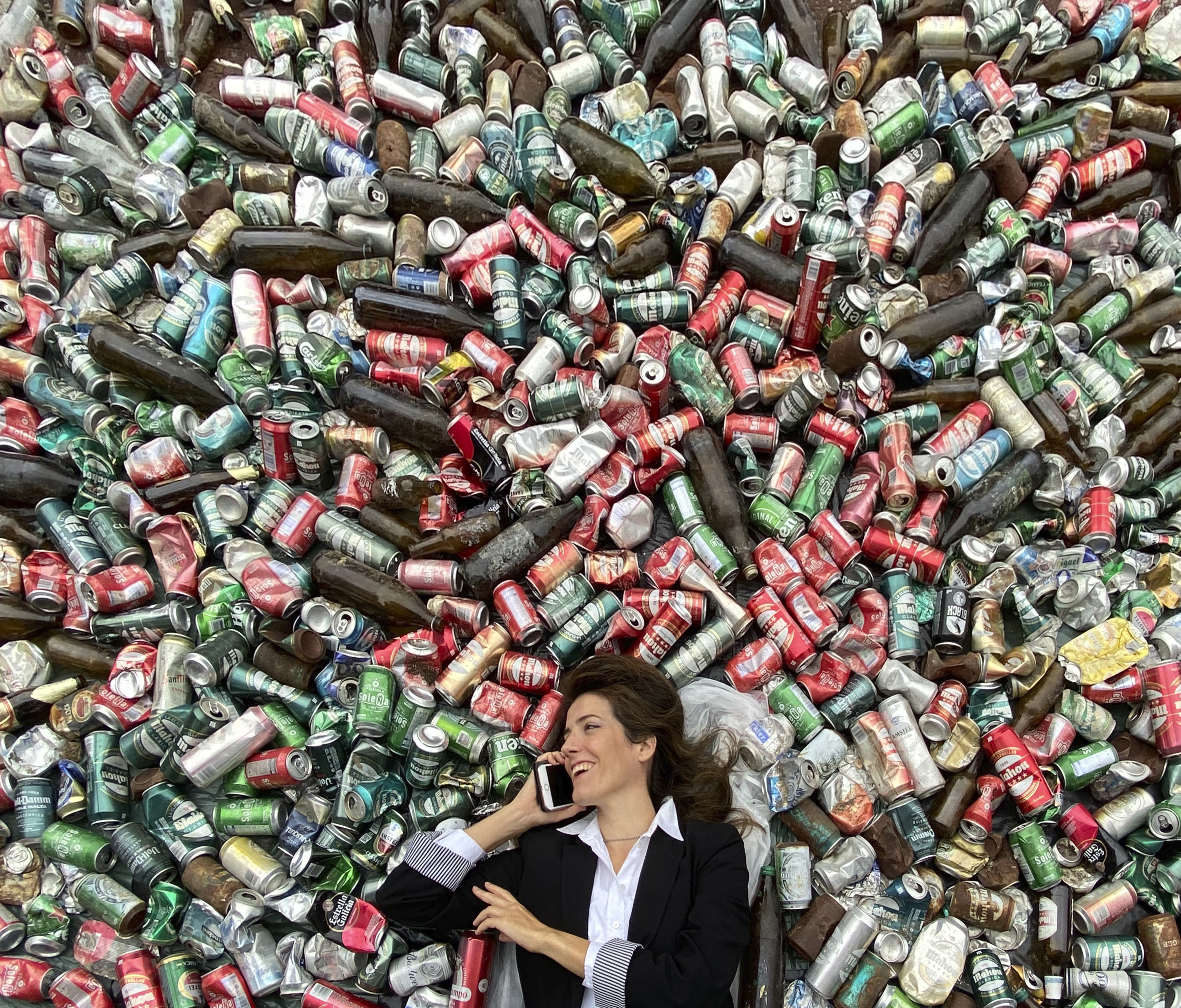
Participation in #WhyLessWaste became especially visible through #oktobertrashfest, a month-long action that I initiated and coordinated to invite people to collect beer-related litter in their own surroundings. The initiative mobilised 28 participants in 12 countries and resulted in the collection of 2,460 beer-related litter items. It showed that a simple and accessible invitation can turn individual concern into collective action across very different places and contexts.
This participatory approach is central to the project. #WhyLessWaste turns environmental care into a shared public practice through litter-picking, collective challenges, local events, and public reflection on waste. People do not participate only as viewers: they take part by collecting litter, documenting what they find, responding through social media, and repeating the method in their own environments. In this way, participation becomes both practical and visible.
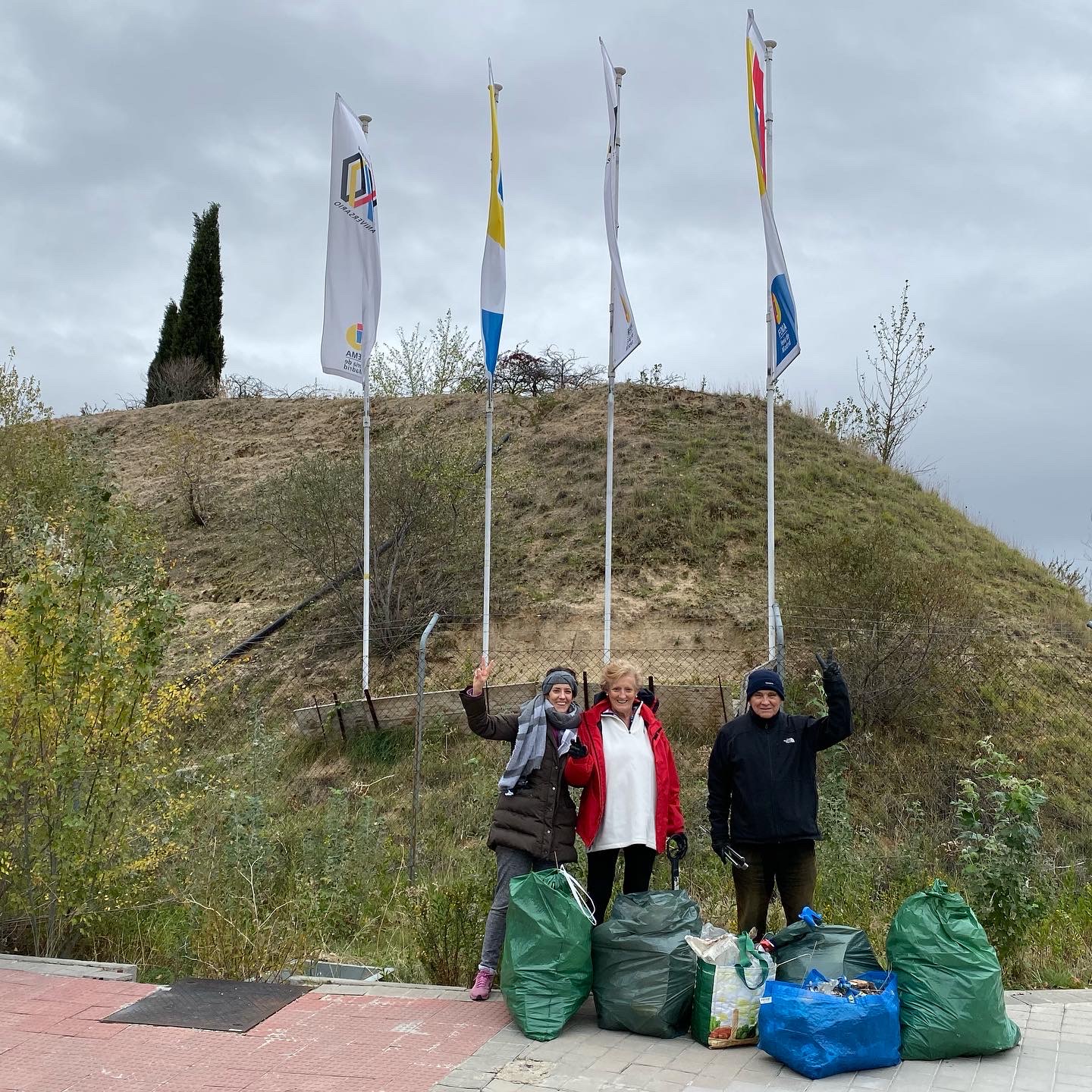
Participation has also taken place on the ground through local clean-up activities. In Torrelodones, for example, I joined a municipal litter-picking event in which families, children, local residents, and members of the town council took part together. This kind of shared action turns environmental responsibility into a collective civic experience and helps build a wider culture of care for common spaces.
The project’s exemplary value lies in making participation immediate, creative, and empowering. #WhyLessWaste shows that communities can move from awareness to action through simple practices that build ownership, responsibility, and lasting care for place.
Rooted in natural spaces affected by littering in the northwestern suburbs of Madrid, the project creates exchange beyond a single site and turns local environmental care into a wider civic and cultural network focused on shared responsibility.
At local level, the project has been implemented through direct work in public natural spaces and through contact with municipal actors. In Torrelodones, I called on the town hall to strengthen public awareness around waste and took part in a litter-picking event organised by the municipality together with schools, families, residents, and members of the town council. These actions created a concrete link between citizen initiative, educational participation, and local public action.
At the international level, the project connects people across territories through shared practice and mutual inspiration. Social media and collective challenges helped build an international network of people who picked up litter, shared reflections, and adapted the method in their own surroundings. A clear example is #oktobertrashfest, which brought together 28 participants from 12 countries in one coordinated action, transforming a local methodology into a broader network of civic engagement.
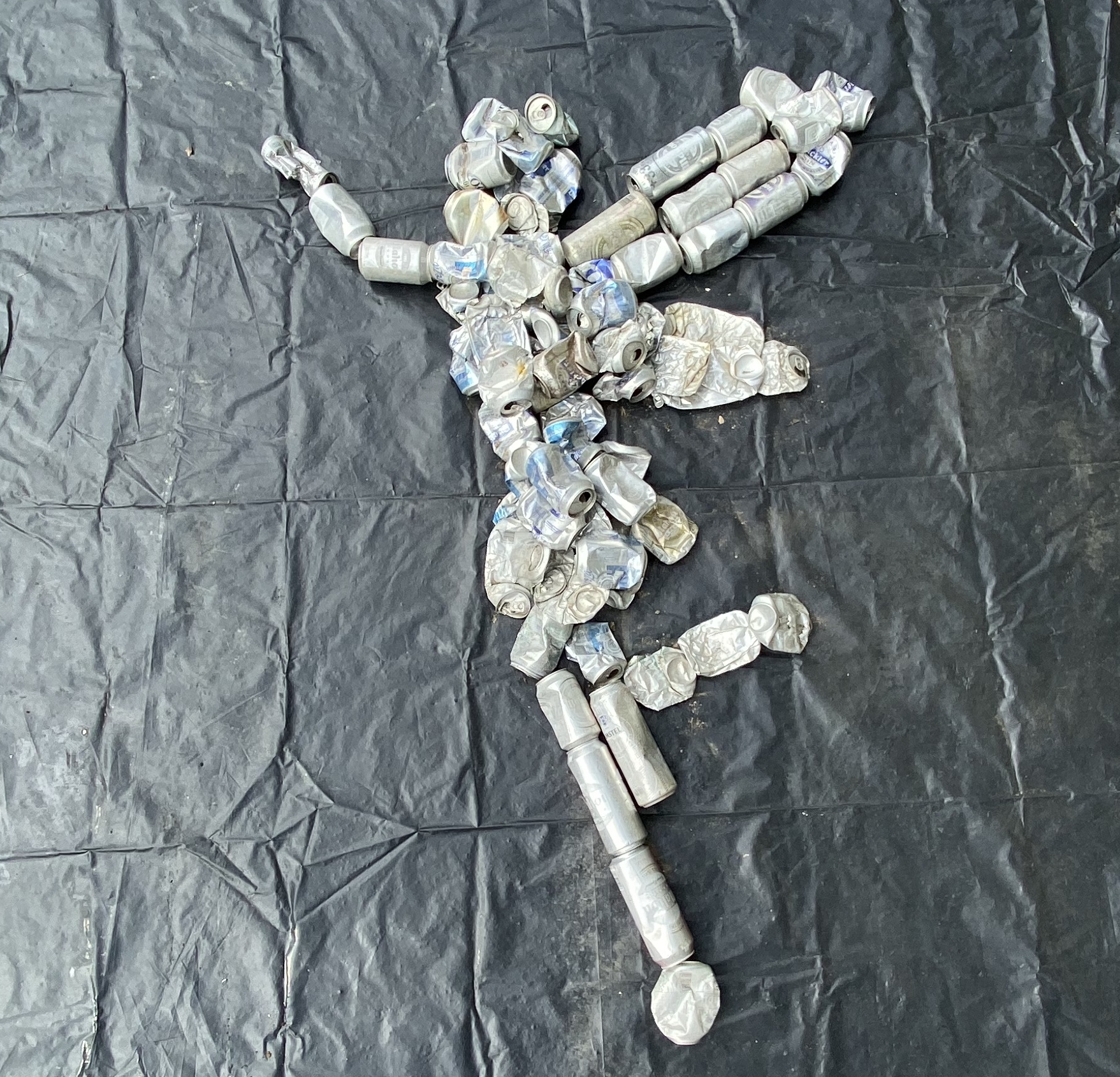
A wider governance dimension also emerges through the project’s artistic and communicative work. In my artwork Red Mud, I linked discarded aluminium cans to the global governance failures behind aluminium production, including bauxite residue in Guinea and the Ajka red mud spill in Hungary. This artwork made visible that a can discarded in Madrid is not only a local waste issue, but part of a chain involving extraction, pollution, regulation, and shared responsibility across territories.
The project's added value lies in showing how citizen action, municipalities, schools, and international communities can be connected through one environmental practice. #WhyLessWaste supports local care for places linked to awareness of global consequences.
The project combines artistic practice with scientific and environmental knowledge, translating a complex global issue into a visual form that people can immediately grasp. The project also turns participation into evidence. For example, I explained that each beverage container implies at least 0.11 kg CO2e in production. When we jointly collected at least 1,284 beer containers, that meant at least 141.2 kg CO2e had already been emitted before those cans and bottles became waste. In this way, the project combines collective action, environmental data, and public communication in one process.
#WhyLessWaste is transdisciplinary because it brings together environmental action, artistic practice, dissemination of scientific results, visual communication, public education, and civic engagement to address waste as a material, cultural, and behavioural problem. Environmental knowledge is present in the observation of polluted sites, the recovery and sorting of discarded materials, and the care taken to separate what can be recycled from what can be artistically reused. Artistic practice is central to the transformation of selected waste into artworks, installations, and performances that make environmental harm visible in a memorable way. Communication and educational thinking shape how these works are framed and shared, helping people understand the connection between litter, consumption habits, and care for place.
The project is also informed by direct experience on the ground: walking through beaches, streets, suburbs, and natural areas, observing patterns of waste, and responding to specific places through action and form. This lived, place-based knowledge is essential to the project’s method and impact. Its exemplary value lies in showing that environmental challenges are best addressed when different forms of knowledge work together. #WhyLessWaste connects ecology, art, communication, and civic practice in one process.
#WhyLessWaste has grown through a lean, low-cost model based on voluntary work, self-initiation, and the creative reuse of discarded materials. This structure has allowed the project to generate environmental, cultural, and educational value with limited resources. Core materials are recovered during clean-up actions, which keeps production costs relatively low and aligns the financial logic of the project with its environmental aims.
Main costs are linked to time, transport, documentation, production, communication, and, when relevant, the preparation of workshops, exhibitions, or public activities. Long-term financial sustainability is based on a hybrid approach combining public grants, cultural and environmental funding, collaborations with municipalities and organisations, educational workshops, artist talks, exhibitions, donations, and crowdfunding. Such a mix fits the project well because #WhyLessWaste operates at the intersection of environmental action, public engagement, and socially engaged art.
A key advantage of the model lies in its flexibility. Low operating costs make the project easier to sustain and adapt, while multiple possible support streams reduce dependence on a single source of income. Institutional interest has already begun to emerge: I presented the project at the Higher Research Seminars at KTH Royal Institute of Technology, which shows its relevance in academic and professional contexts and opens possibilities for future collaborations, talks, and educational partnerships. Further collaborations with schools, local authorities, NGOs, festivals, and cultural institutions can strengthen long-term viability by connecting the project to partners already working in circularity, environmental education, and community engagement.
#WhyLessWaste is financially sustainable through a lean structure, strong public value, and the ability to create relevance across environmental and socio-cultural contexts.
#WhyLessWaste has strong transferability because its methodology is simple, low-cost, and adaptable to many places and communities. The project can be replicated wherever litter affects natural or urban environments through a clear sequence: identify a site, collect and sort the waste, recycle what can be recycled, transform selected materials into artistic or educational outputs, and use those results to engage the public in reducing waste and caring for shared spaces.
Evidence of this transferability can be seen in the international network that grew around the project, through which people in countries including the Netherlands, Canada, the United Kingdom, Australia, Germany, Japan, Portugal, and Italy joined clean-up actions, shared reflections, and adapted the method to their own surroundings. This showed that the approach could travel beyond its original context while remaining clear, accessible, and locally meaningful.
Several elements make the project especially scalable. A low-cost core process allows artists, schools, municipalities, NGOs, community groups, and cultural institutions to use the method without complex infrastructure or expensive technology. A communication model linking direct action with visual storytelling and public reflection helps adapt the project to awareness campaigns, workshops, and educational programmes. An artistic dimension makes the same method suitable for exhibitions, festivals, public events, and community-based cultural initiatives.
A strong advantage of #WhyLessWaste lies in the fact that replication does not require copying one exact format. Local actors can adapt the same principles—clean up, document, transform, communicate, and invite others to join—to their own landscapes, waste streams, and communities. This combination of environmental action, culture, and participation makes the project easy to reproduce across geographies and sectors while preserving a clear identity and purpose.