Enhancing Circularity, Sustainability, and Innovation
Waste2Wear
From Waste to Wear: Bio-based Films from Agricultural and Domestic Residues
A bio-based, biodegradable film made from prickly pear cactus and spent coffee waste, sewable, colour-adaptable, and compatible with conventional manufacturing equipment. Developed in Cyprus from locally abundant agricultural and domestic residues, this circular material offers a drop-in alternative to synthetic films across fashion, accessories and packaging, replicable anywhere the waste streams exist.
Cyprus
National
It addresses urban-rural linkages
It involves other types of transformations (soft investment)
Yes
2025-12-08
No
No
No
Organisation
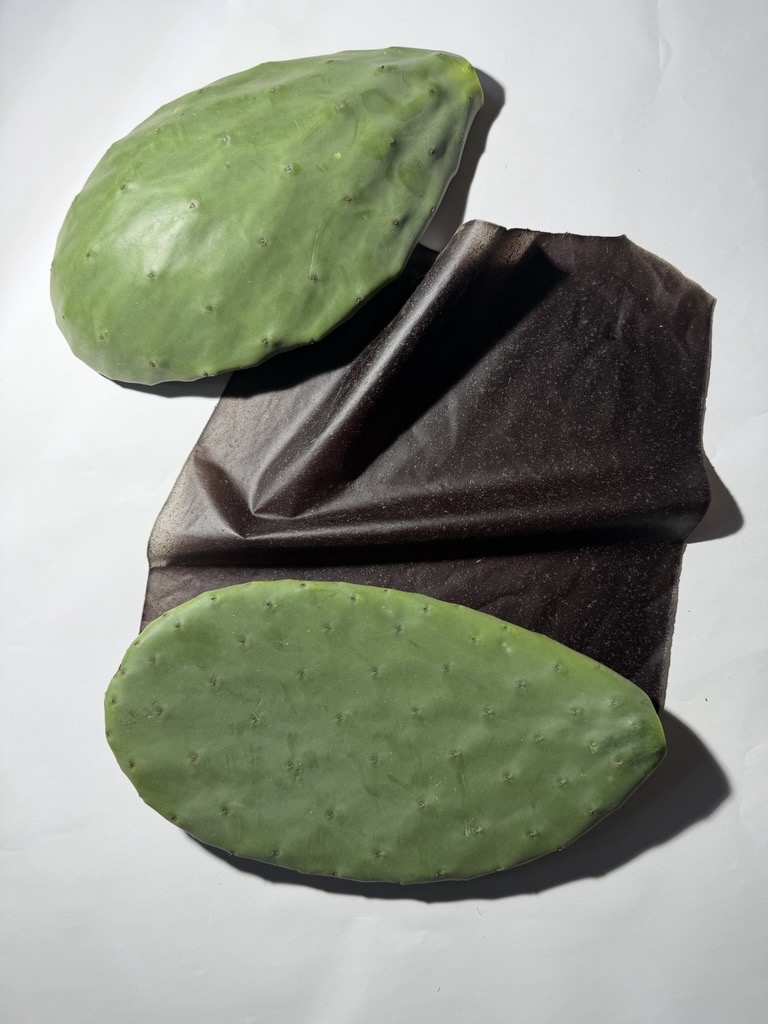
This project has successfully developed a novel bio-based, biodegradable and sewable film from two abundant waste streams: opuntia ficus indica (prickly pear cactus) leaves and spent coffee grounds. Formulated by an innovative company in Cyprus, the material is a proven circular alternative to synthetic films for fashion, accessories and packaging.
The production process is resource-efficient and scalable: 1kg of waste opuntia leaves yields 0.5m² of finished material. To date, over 50 kg of agricultural and domestic waste has been diverted from landfill, producing 25 m² of bio-based material across development and testing phases. The film is compatible with conventional manufacturing equipment and offers adaptable aesthetics including customisable colour and finish, requiring no significant investment in new machinery from adopting producers.
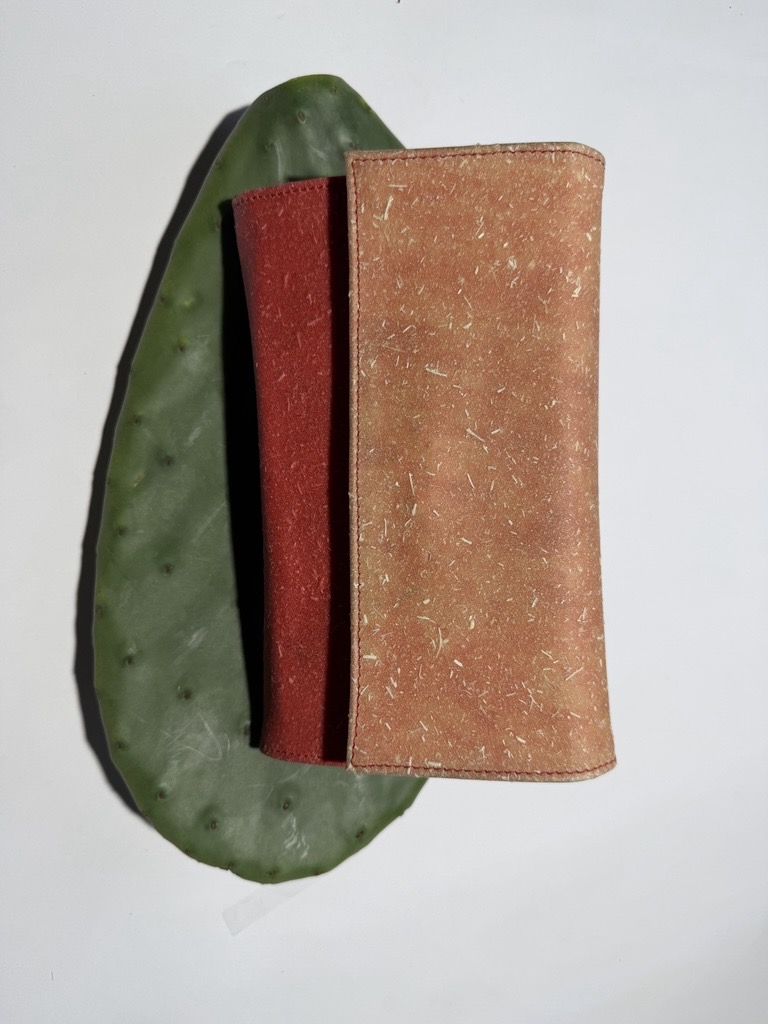
Achieved results include a fully formulated and tested material, a functional prototype bag, and successful testing with manufacturers, designers and design students across Cyprus. Local farmers have been engaged as feedstock suppliers, establishing a short, traceable value chain from field to studio.
The long-term vision is to scale up production, positioning this film as a commercially viable alternative to synthetic materials globally. As the method relies on waste streams found across agricultural and domestic contexts worldwide, it is fully transferable beyond Cyprus, replicable wherever opuntia or equivalent plant species and coffee waste are available.
Waste2Wear was born from frustration. As engineers with backgrounds in advanced materials and commercialisation, we had grown increasingly disillusioned with the synthetic materials dominating fashion and design — and with the greenwashing that too often passed for innovation. We knew the industry needed something genuinely different: a material that was truly bio-based, biodegradable, and performance-ready.
The turning point came through a chance encounter with opuntia ficus indica, the prickly pear cactus that grows abundantly across Cyprus. Thriving in the island's long, dry summers without irrigation, opuntia is a resilient, low-impact crop that generates significant agricultural waste. We saw not a weed, but a raw material waiting to be unlocked.
Since May 2024, we have been developing and refining the formulation, a process marked by rigorous testing, several failed attempts, and hard-won breakthroughs. Getting the right balance of bio-based inputs, processing conditions and performance properties took months of iteration. The addition of spent coffee grounds , a universally available domestic waste stream, completed the formula, adding both material properties and a second circular loop.
The result is a processable, biodegradable bio-film that performs on conventional equipment and adapts to designers' aesthetic needs. Tested with manufacturers, designers and design students, and supplied by local Cypriot farmers, the project has grown from a laboratory conviction into a proven material, and the beginning of a genuinely circular value chain.
circularity
bio-based materials
sustainable fashion
waste valorisation
biodegradability
Waste2Wear directly addresses one of the most pressing environmental challenges in materials design: the dominance of synthetic, petroleum-derived films in fashion, accessories and packaging, materials that are energy-intensive to produce, toxic in processing, and persistent in the environment at end of life.
The project transforms two abundant waste streams , opuntia ficus indica leaves and spent coffee grounds, into a fully bio-based, biodegradable alternative. In Cyprus alone, approximately 30 tonnes of opuntia waste is generated annually, much of it discarded despite the plant's remarkable resilience and low environmental footprint. Opuntia requires no irrigation to thrive in Cyprus's long, dry summers, making it one of the most water-efficient crops on the island. Our process extends this efficiency: compared to conventional synthetic film production, Waste2Wear achieves an estimated 80% reduction in water consumption, a significant gain in a water-scarce Mediterranean context.
Production is carried out at low temperatures without toxic chemicals. All input materials are either bio-based or non-toxic, resulting in a clean, low-energy process that generates minimal harmful by-products. The finished material is biodegradable, closing the loop at end of life and avoiding the persistent environmental burden associated with synthetic alternatives.
By valorising locally available agricultural and domestic residues, Waste2Wear simultaneously reduces landfill pressure, supports local farmers as feedstock suppliers, and offers the design industry a genuinely circular material, not greenwashing, but a measurable, replicable environmental alternative.
Waste2Wear contributes to aesthetic experience at multiple levels, material, cultural and emotional, creating a tangible connection between the objects people wear and use and the landscape they come from.
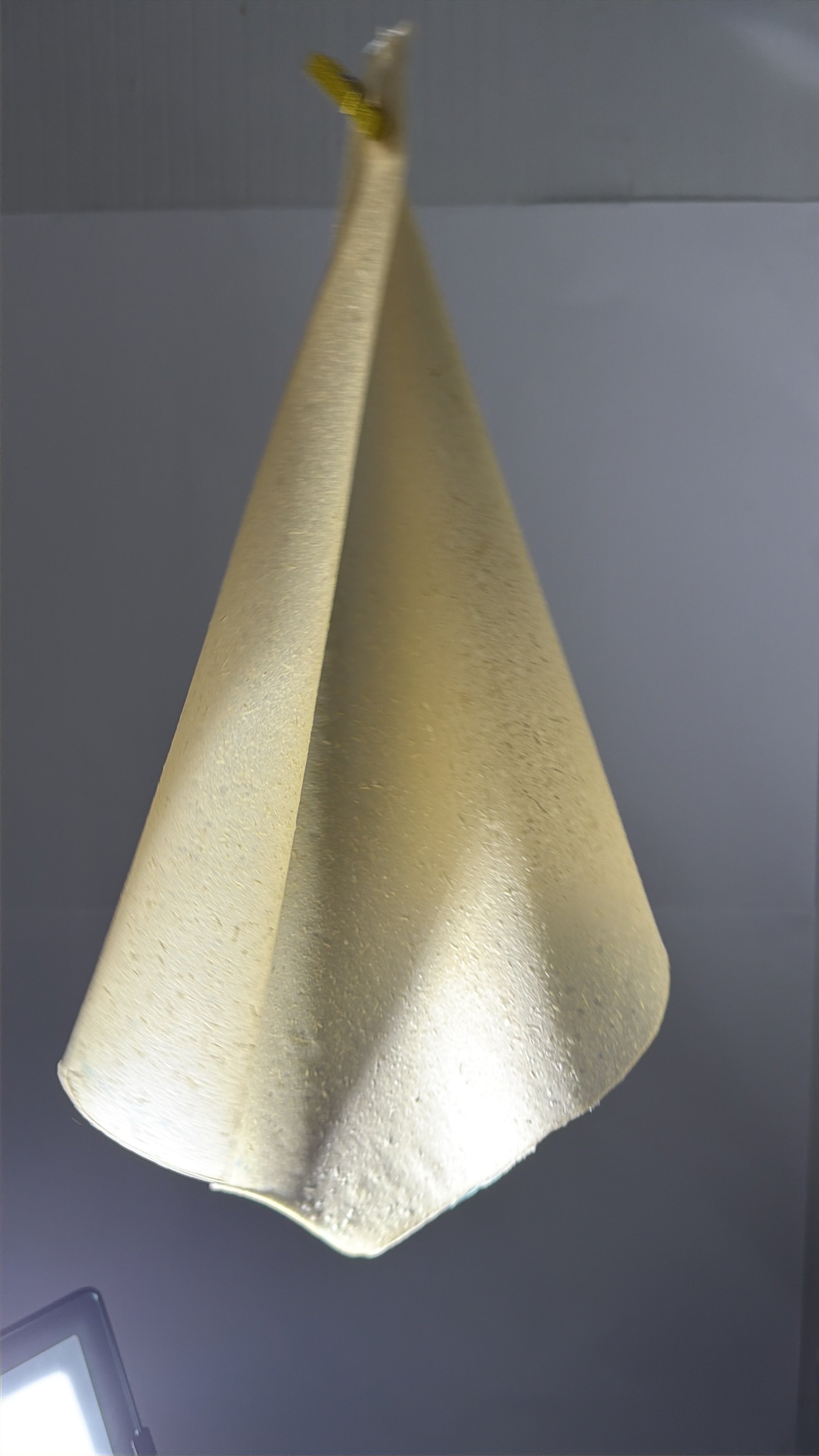
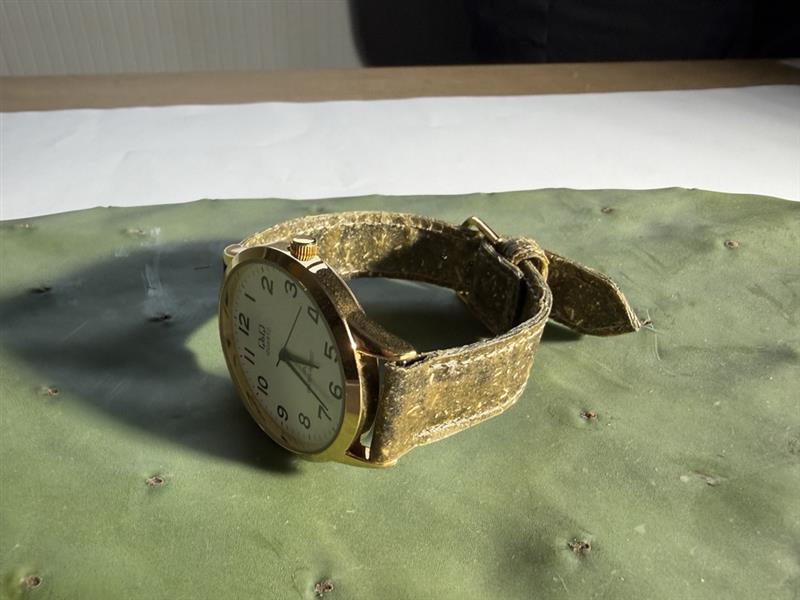
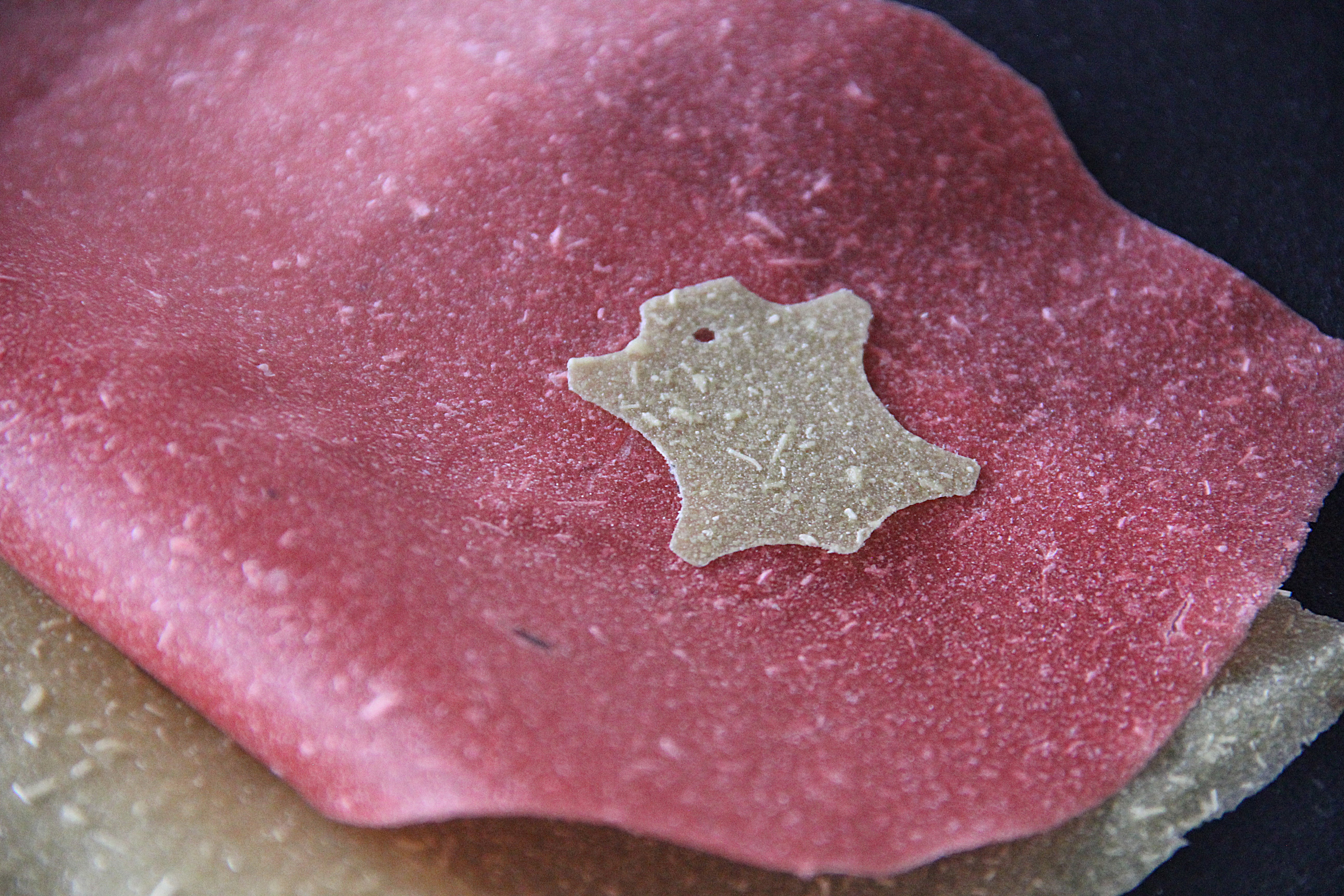
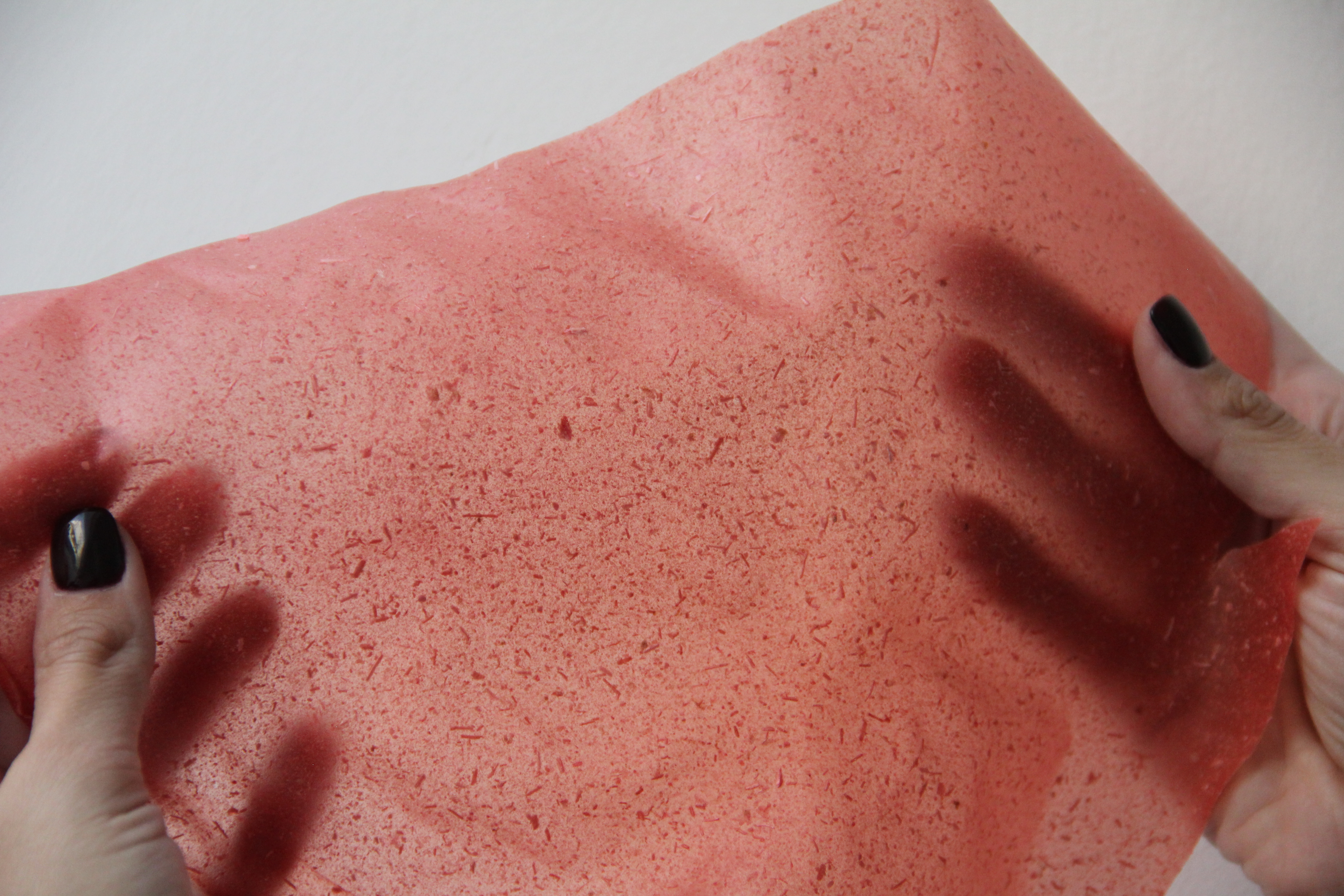
In its natural state, the material carries the honest beauty of its origins: an organic, earthy appearance with greenish natural tones and visible cactus fibres woven into its structure. These traces of the opuntia plant are not imperfections, they are the material's signature, a reminder of where it came from and what it replaced. When dyed, the film accepts colour readily, offering designers full creative freedom while retaining its bio-based identity beneath the surface.
The aesthetic dimension of Waste2Wear runs deeper than appearance. In Cyprus, the prickly pear cactus is more than an agricultural plant, it is a cultural symbol, woven into the island's landscape, memory and culinary tradition. Cypriots have long harvested its fruit, and the sight of opuntia growing across hillsides and roadsides is inseparable from the Cypriot sense of place. When local designers and community members encountered Waste2Wear, they responded not just to the material's qualities but to its story, recognising in it something familiar, something theirs.
By transforming this deeply rooted plant into a design material, Waste2Wear creates objects that carry cultural meaning alongside aesthetic beauty, fostering a sense of belonging and pride in local resources. This is a model for how materials can reconnect people to their landscape, their heritage and their everyday environment.
Waste2Wear addresses inclusion through three distinct dimensions: cultural accessibility, cross-community engagement, and the democratisation of sustainable materials for the design industry.
At its most profound level, Waste2Wear carries a bicommunal character unique to Cyprus. The prickly pear cactus — opuntia ficus indica — is a shared symbol across the island's Greek Cypriot and Turkish Cypriot communities. Both communities have harvested its fruit for generations, and its presence across the Cypriot landscape transcends cultural and political division. By placing this shared plant at the heart of a design material, Waste2Wear creates common ground, a material that belongs to all Cypriots equally. This is not merely symbolic: both Greek Cypriot and Turkish Cypriot designers have actively tested the material, making Waste2Wear one of the few design innovation projects on the island with demonstrated bicommunal participation.
The project has actively engaged diverse stakeholders from the outset: local farmers supplying feedstock, manufacturers testing the material's industrial compatibility, and design students at a Cypriot college exploring its creative potential. This intergenerational and cross-sector engagement ensures that Waste2Wear is not developed in isolation but shaped by the communities and industries it seeks to serve.
At a broader level, Waste2Wear addresses a significant barrier in sustainable design: the inaccessibility of genuinely bio-based materials to independent designers and small producers. While most bio-based alternatives remain niche and expensive, Waste2Wear is formulated for compatibility with conventional equipment, lowering the technical threshold for adoption and opening sustainable material innovation to a wider community of makers and designers across Cyprus and beyond.
From its earliest stages, Waste2Wear has been shaped by active engagement with the communities, professionals and civil society organisations it seeks to serve, moving beyond consultation towards genuine co-creation.
The project's participatory process began with direct outreach to local Cypriot farmers, establishing a collaborative feedstock supply relationship grounded in mutual benefit. Farmers were not passive suppliers but active participants in understanding the material's agricultural origins and waste valorisation potential.
A central pillar of community engagement has been the partnership with the Fashion Heritage Network Cyprus (FHNC) , a bicommunal organisation bridging Greek Cypriot and Turkish Cypriot design and craft traditions. Through a series of workshops and demonstrations, 15 designers and students from both communities had the opportunity to handle, test and respond to Waste2Wear firsthand. Their feedback was not merely collected but acted upon: comments on the material's haptic properties and colour possibilities directly informed subsequent development iterations, shaping the material's tactile finish and expanding its palette of achievable colours and tones.
This bicommunal engagement is significant beyond the material itself. By involving both Greek Cypriot and Turkish Cypriot designers in the co-development process, Waste2Wear has created a shared creative investment in the material's future, participants are not observers but co-authors of what the material has become.
Additional testing with manufacturers and design college students further broadened the participatory base, ensuring that Waste2Wear has been stress-tested across professional, academic and community contexts before reaching the market.
Waste2Wear has engaged stakeholders across local, national and European levels, building a multi-layered ecosystem of support, expertise and validation that strengthens both the material's development and its pathway to market.
At the local level, the project has established an active collaboration with the University of Cyprus (UCY), which is contributing to material testing and formulation optimisation — embedding academic rigour into the development process and ensuring the material meets measurable performance standards. Engagement with the Department of Agriculture has provided critical insight into farming practices across Cyprus, systematic cultivation facilities, and the range of opuntia species and varieties available as feedstock — directly informing the project's supply chain strategy.
At the national level, Waste2Wear has drawn on the services of the European Digital Innovation Hub in Cyprus, accessing technical expertise and innovation support that has accelerated the project's development trajectory.
At the European level, the project has taken significant steps to validate its market potential and build international connections. Participation in Lineapelle, the world's leading trade fair for leather, materials and components for fashion, brought Waste2Wear to the attention of the European design and manufacturing industry, generating direct engagement with international professionals. Structured questionnaires distributed to fashion designers in France and Italy have provided cross-border market insight, confirming demand for genuinely bio-based, biodegradable alternatives to synthetic films across European fashion markets.
Together these connections demonstrate that Waste2Wear is not a locally contained experiment but a material innovation with validated European relevance and ambition.
Waste2Wear is inherently transdisciplinary, its development has required the active integration of knowledge and expertise from engineering, materials science, chemistry, environmental science, design, agriculture and cultural heritage, with each discipline making a concrete and irreplaceable contribution to the project's outcomes.
At its technical core, the project is led by two engineers whose complementary expertise has driven the material's development: a materials and mechanical engineer (CEO) responsible for material formulation, processing and performance, and a chemical engineer (CTO) overseeing compositional development and production scalability. This engineering foundation ensures the material is not only scientifically sound but industrially viable.
Academic partnerships have extended the project's disciplinary reach significantly. The University of Cyprus biomaterials group has contributed specialist expertise in bio-based material science, supporting formulation optimisation and rigorous material testing. The Cyprus University of Technology has conducted dedicated biodegradability assessment, providing scientific validation of the material's end-of-life performance. Local environmental experts have carried out a Life Cycle Assessment, quantifying the project's environmental impact across its full production chain.
Design and cultural knowledge has been equally central. Collaboration with the Fashion Heritage Network Cyprus has embedded craft traditions, haptic sensibility and bicommunal aesthetic knowledge into the material's development, ensuring Waste2Wear speaks to designers as fluently as it speaks to scientists. Engagement with the Department of Agriculture has contributed agronomic expertise on opuntia cultivation and species variation, while fashion designers from Cyprus, France and Italy have brought market and creative perspectives that have shaped the material's aesthetic direction.
Waste2Wear is commercialised through NEEMA, a B2B materials company that supplies the material , a plant-based, biodegradable leather-like film — directly to the design and manufacturing industry, sold by surface unit (m²). The business model is designed to scale progressively, matching customer segments to production maturity and minimising market entry risk.
The first revenue channel targets independent craftsmen and SMEs in the leather goods sector, beginning in Cyprus and Greece. Direct B2B sales in small batches with repeat orders allow for rapid market entry, early revenue generation and iterative product refinement based on real market feedback, creating a springboard for wider European penetration.
The second channel targets fashion and accessories designers across Europe, particularly those focused on sustainable materials. Direct sales and framework supply agreements with this segment address the growing industry demand for genuinely bio-based alternatives, providing predictable revenue streams as production scales.
The third channel targets large brands and industrial players seeking sustainable materials for fashion and interiors. Long-term supply contracts with this segment offer significant volume potential, driven by the accelerating industry shift towards sustainability and tightening EU regulations on synthetic materials.
Underpinning all three channels are strategic partnerships with influential designers, brands and organisations promoting sustainable materials, through collaborative projects, joint ventures and exclusive supply agreements that simultaneously generate revenue and amplify market visibility.
This staged, risk-managed commercial approach ensures Waste2Wear's long-term financial sustainability while maintaining the flexibility to grow with market demand and production capacity.
Waste2Wear has been designed with replicability and transferability as core principles, not as an afterthought. Every element of the project, from feedstock sourcing to production process to market entry strategy, has been developed to function beyond its Cypriot context.
The material formulation itself is the most directly transferable element. Opuntia ficus indica grows across the entire Mediterranean basin, in North and South America, Africa and Asia, making it one of the most widely available bio-based feedstocks on the planet. Spent coffee grounds are universally available in any urban context globally. Any region with access to either or both of these waste streams can adopt the Waste2Wear production model without modification to the core process.
The production methodology is equally transferable. The process operates at low temperatures, requires no toxic chemicals, and is compatible with conventional manufacturing equipment already present in most textile and materials production facilities. This means adoption requires no significant capital investment in new machinery, dramatically lowering the barrier to replication for manufacturers, SMEs and social enterprises in diverse economic contexts.
The staged B2B commercialisation model, beginning with local craftsmen and SMEs before scaling to larger brands, is a replicable market entry strategy applicable to any geography where sustainable material demand exists, particularly across EU member states facing regulatory pressure to reduce synthetic material consumption.
Finally, the Life Cycle Assessment methodology, biodegradability testing framework and collaborative university partnership model developed by Waste2Wear provide a transferable blueprint for other bio-based material innovators seeking to validate and commercialise similar solutions responsibly and credibly.