Arts, Culture, and Heritage as Drivers of Change
The Globe Performing Space
The Globe Performing Space: A culture-led model for rural regeneration
The Globe Performing Space is a geodesic cultural hub in the Bologna Apennines where performing arts, nature and community come together. Created by Instabili Vaganti Theatre Company, it transforms a rural inner area into a living space for artistic creation, residencies, training and public encounters, showing how culture can generate beauty, inclusion and long lasting territorial regeneration.
Italy
Regional
Emilia Romagna
Mainly rural
It involves a physical transformation of the built environment (hard investment)
Yes
2025-08-01
No
No
No
Organisation
The Globe Performing Space is a multidisciplinary hub for research, high-level training, and production in the performing arts, created by Instabili Vaganti, a company connecting ethics and aesthetics while fostering inclusion, community participation, and international collaboration. It was developed to address the lack of stable cultural infrastructure in a rural area with high environmental and cultural value, but limited access to contemporary artistic creation and public participation.
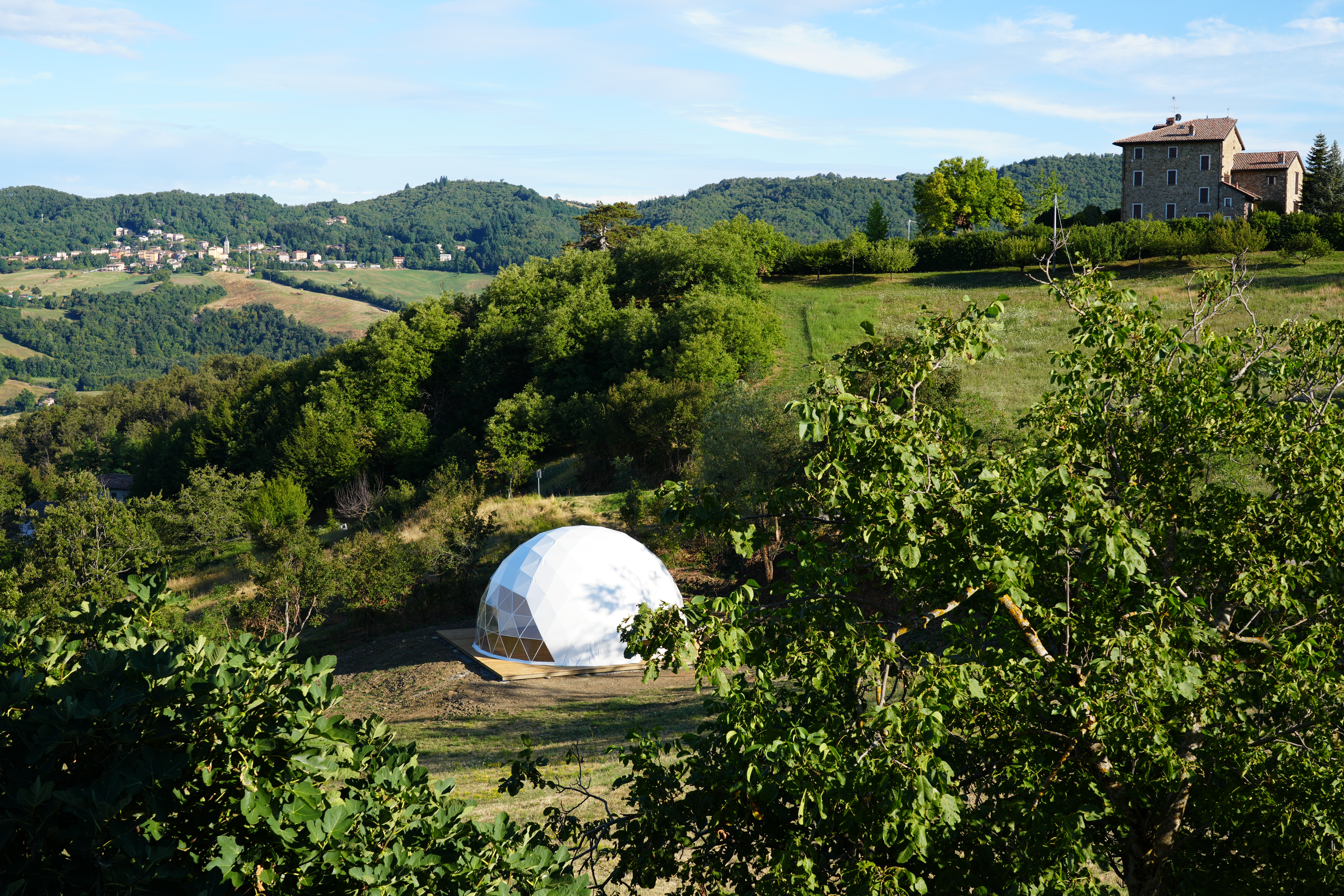
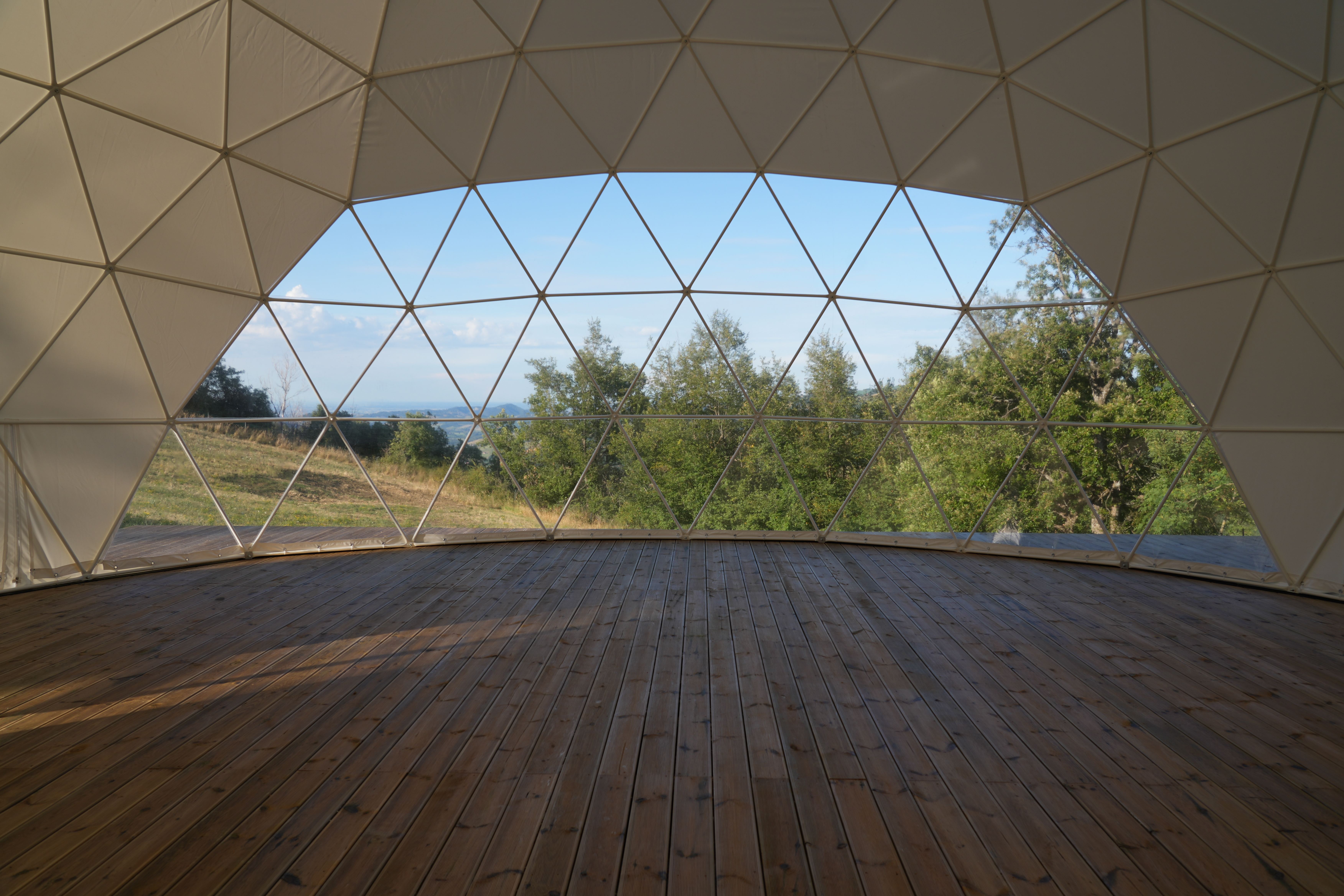
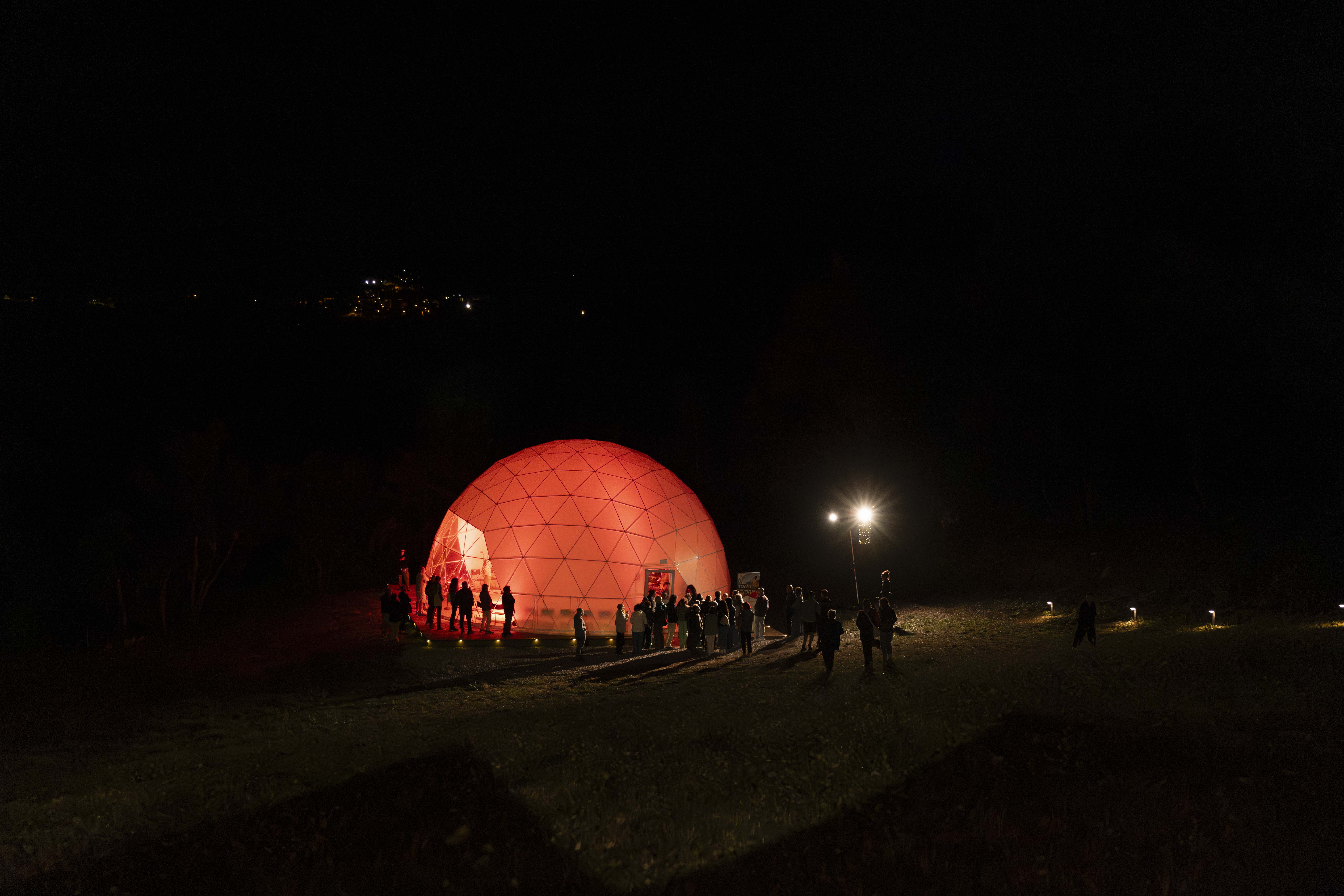
Located in the Bologna Apennines, the Globe is a geodesic dome with a wooden platform, built with sustainable materials and fully integrated into the surrounding hills, offering views across the landscape where performances and residencies engage directly with nature.
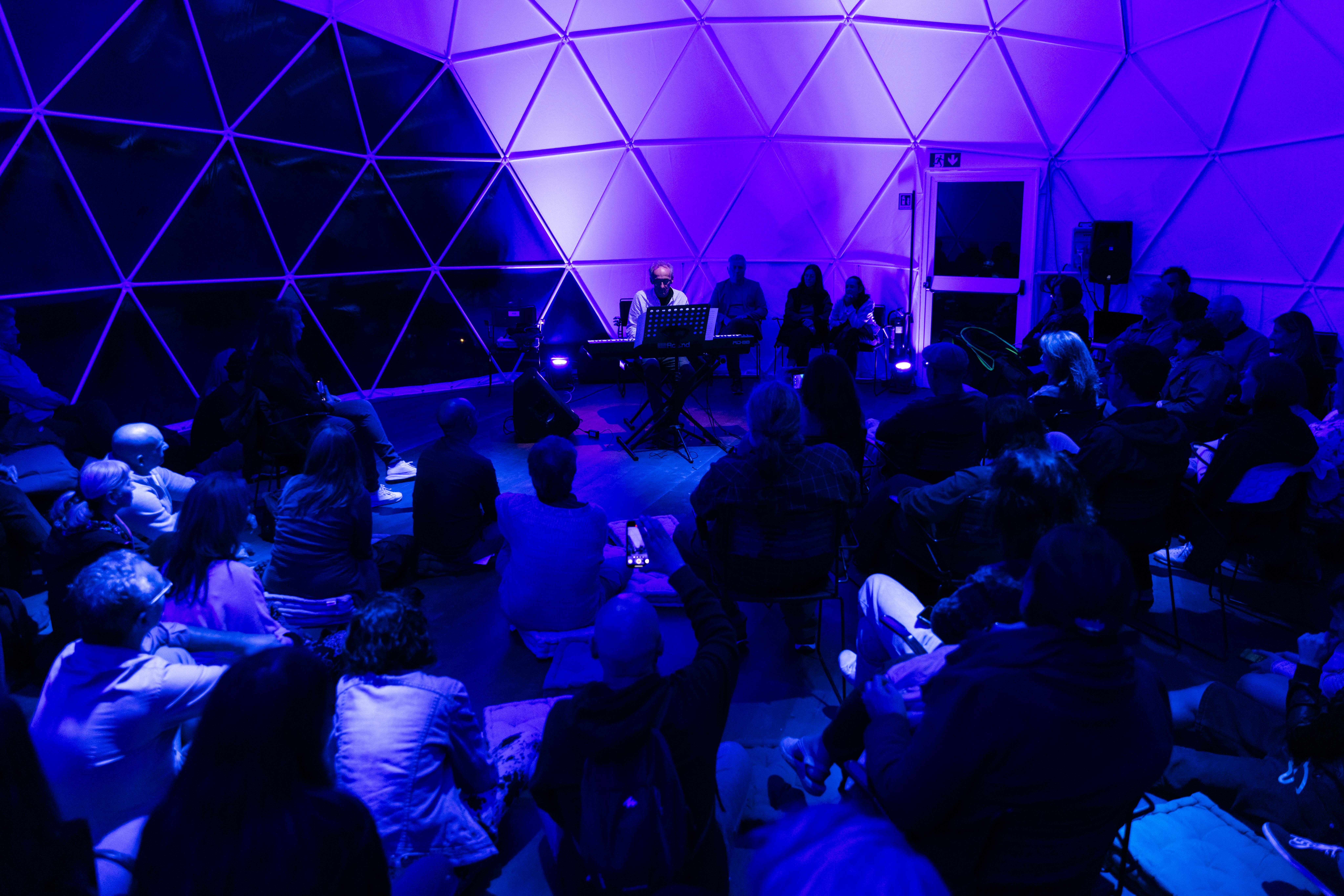
The Globe establishes a permanent, low-impact multidisciplinary hub where performing arts, digital innovation, and environmental sensitivity converge. It hosts residencies, performances, training, and participatory projects, strengthening the relationship between art, landscape, and community.
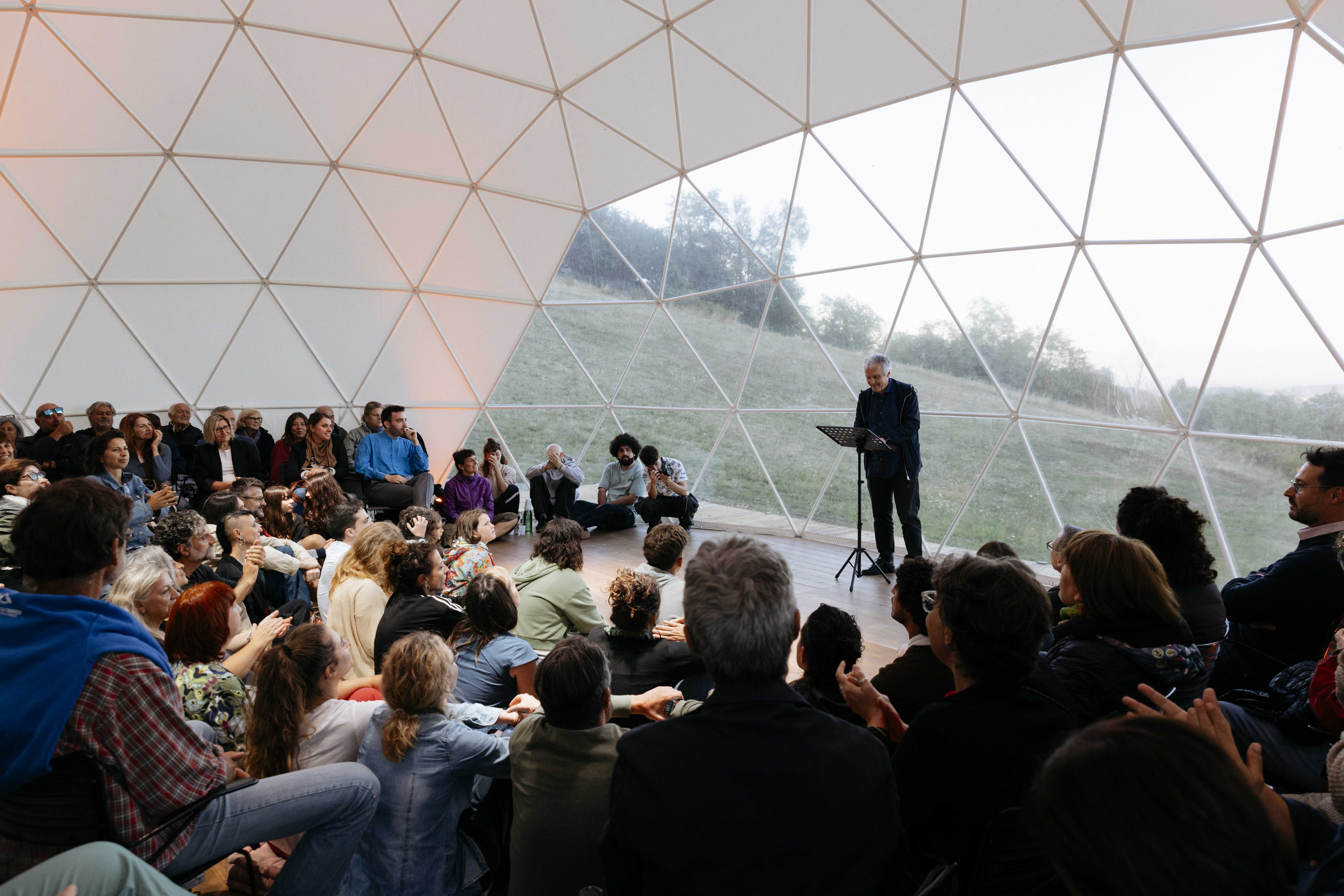
Since opening, the Globe has hosted over 30 performances, 1 co-production, 4 national and 4 international premieres, multiple residencies, workshops, open calls, and participatory projects involving young artists, local teenagers, and women over 70. These activities culminate in the PerformAzioni International Performing Arts Festival, extending across surrounding hills, historic sites, and municipalities, engaging local associations and communities. Performances explore ecological and social themes and integrate with the landscape, offering immersive experiences for participants.
Its long-term impact lies in providing a durable model for rural cultural regeneration: a place where beauty, sustainability, and inclusion are embedded in practice, local identity meets international perspectives, and contemporary creation generates lasting cultural, social, and territorial value.
Located in the Bologna Apennines, the Globe is a geodesic dome with a wooden platform, built with sustainable materials and fully integrated into the surrounding hills, offering views across the landscape where performances and residencies engage directly with nature.
The Globe establishes a permanent, low-impact multidisciplinary hub where performing arts, digital innovation, and environmental sensitivity converge. It hosts residencies, performances, training, and participatory projects, strengthening the relationship between art, landscape, and community.
Since opening, the Globe has hosted over 30 performances, 1 co-production, 4 national and 4 international premieres, multiple residencies, workshops, open calls, and participatory projects involving young artists, local teenagers, and women over 70. These activities culminate in the PerformAzioni International Performing Arts Festival, extending across surrounding hills, historic sites, and municipalities, engaging local associations and communities. Performances explore ecological and social themes and integrate with the landscape, offering immersive experiences for participants.
Its long-term impact lies in providing a durable model for rural cultural regeneration: a place where beauty, sustainability, and inclusion are embedded in practice, local identity meets international perspectives, and contemporary creation generates lasting cultural, social, and territorial value.
The Globe Performing Space emerged from Instabili Vaganti’s long-term artistic and territorial work in the Bologna Apennines and from the recognition of a concrete local need: the lack of a permanent cultural space for artistic creation, residencies, training and public engagement in a rural inner area. The project was conceived to respond to this gap by creating a multidisciplinary hub where performing arts, digital innovation and environmental sensitivity could come together in a stable and meaningful way.
A decisive step in turning this vision into reality was the support received through EU funding from the Emilia-Romagna Region program FESR, which made the construction and equipment of the space possible. This support enabled the creation of a geodesic performing arts structure designed to host artistic processes, low-impact technologies and shared cultural experiences in direct relationship with the surrounding landscape.
The project was implemented through a gradual process combining artistic vision, technical development and territorial collaboration. Instabili Vaganti led the process with the aim of creating not simply a venue, but a place with a clear identity and long-term function: a permanent base for artistic research and production, open to local communities and international exchange. Implementation on the ground included the physical construction of the space, the installation of low-impact technological equipment, and the progressive activation of the site through residencies, training activities and public events.
In this way, The Globe took shape through a practice-based process in which design, artistic use and relationship with the territory evolved together. Its implementation shows how public support, artistic vision and local rootedness can generate a lasting cultural infrastructure in a fragile area, offering a concrete model of culture-led regeneration.
A decisive step in turning this vision into reality was the support received through EU funding from the Emilia-Romagna Region program FESR, which made the construction and equipment of the space possible. This support enabled the creation of a geodesic performing arts structure designed to host artistic processes, low-impact technologies and shared cultural experiences in direct relationship with the surrounding landscape.
The project was implemented through a gradual process combining artistic vision, technical development and territorial collaboration. Instabili Vaganti led the process with the aim of creating not simply a venue, but a place with a clear identity and long-term function: a permanent base for artistic research and production, open to local communities and international exchange. Implementation on the ground included the physical construction of the space, the installation of low-impact technological equipment, and the progressive activation of the site through residencies, training activities and public events.
In this way, The Globe took shape through a practice-based process in which design, artistic use and relationship with the territory evolved together. Its implementation shows how public support, artistic vision and local rootedness can generate a lasting cultural infrastructure in a fragile area, offering a concrete model of culture-led regeneration.
performing arts
sustainability
community engagement
cultural regeneration
landscape
The Globe Performing Space addresses a key environmental and territorial challenge: creating meaningful cultural infrastructure in a rural area without heavy, resource-intensive models. Its goal is a permanent space for artistic creation, training, and public participation, combining low-impact technologies, careful design, and respect for the Bologna Apennines landscape.
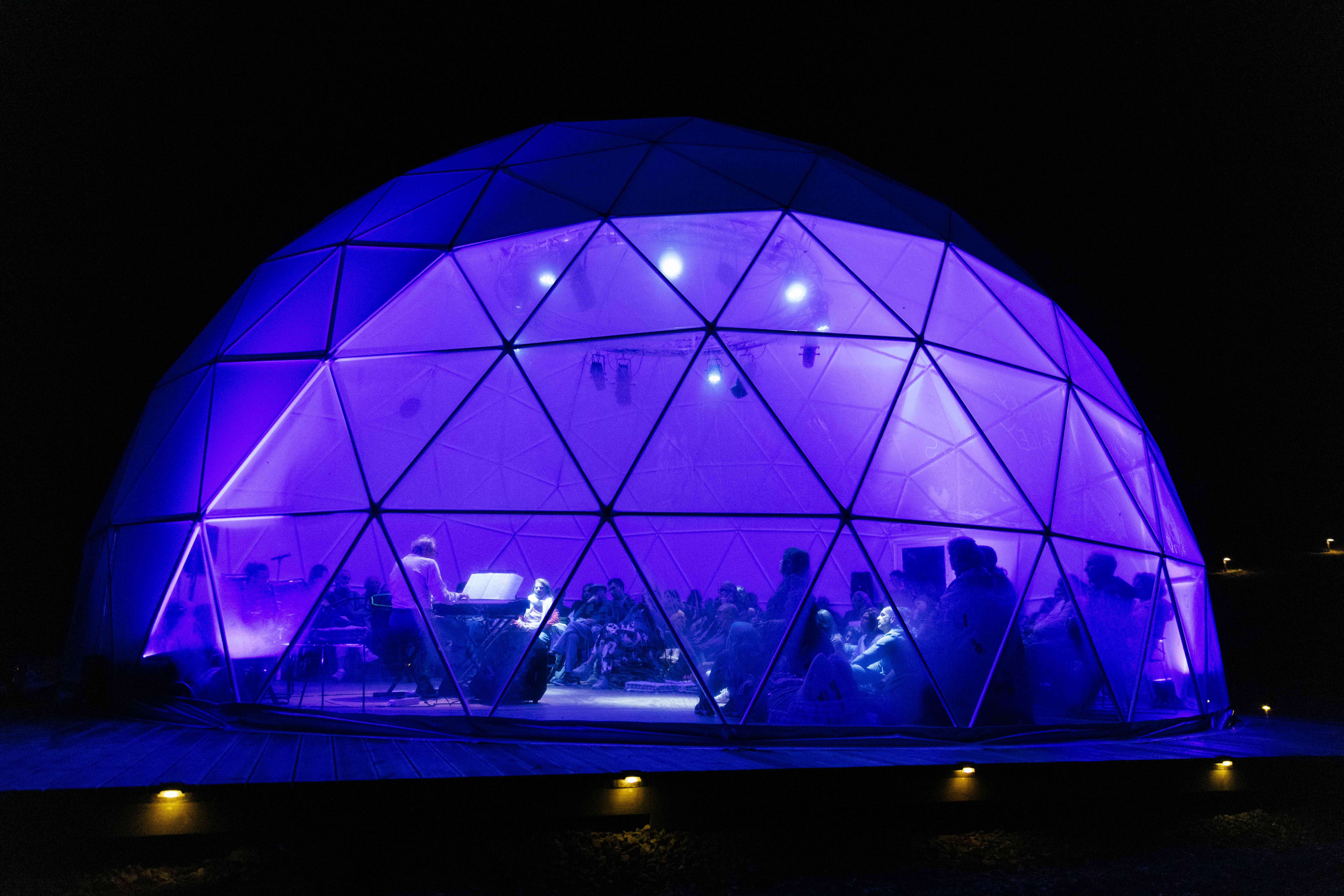
This was achieved through a geodesic dome with LED lighting and a large green area illuminated with solar-powered lights, reducing environmental footprint while ensuring technical quality. The project promotes a slower, place-based, less extractive model of cultural use.
A multimedia forest enhances the landscape’s beauty and compensates for emissions from the company’s international tours. Each tree has a QR code presenting the company’s global projects, research, and cultural exchange, connecting environmental awareness, aesthetic value, digital engagement, and intercultural integration.
Sustainability also has cultural, social, and economic dimensions: by creating a permanent base in an area with limited infrastructure, the Globe strengthens local ecosystems, supports professional opportunities, fosters inclusion through residencies, workshops, and participatory projects, and attracts ongoing support from local municipalities, the Emilia-Romagna Region, the Union of Municipalities of the Apennines, private foundations, and donations through Art Bonus,an Italian tax incentive encouraging private contributions to cultural projects, ensuring long-term economic resilience and stabilizing cultural activity.
The Globe is exemplary because sustainability is embedded in its design, technologies, and cultural model. All performances have zero ecological impact, demonstrating that rural cultural infrastructure can be environmentally conscious, socially meaningful, economically resilient, and aesthetically distinctive.
This was achieved through a geodesic dome with LED lighting and a large green area illuminated with solar-powered lights, reducing environmental footprint while ensuring technical quality. The project promotes a slower, place-based, less extractive model of cultural use.
A multimedia forest enhances the landscape’s beauty and compensates for emissions from the company’s international tours. Each tree has a QR code presenting the company’s global projects, research, and cultural exchange, connecting environmental awareness, aesthetic value, digital engagement, and intercultural integration.
Sustainability also has cultural, social, and economic dimensions: by creating a permanent base in an area with limited infrastructure, the Globe strengthens local ecosystems, supports professional opportunities, fosters inclusion through residencies, workshops, and participatory projects, and attracts ongoing support from local municipalities, the Emilia-Romagna Region, the Union of Municipalities of the Apennines, private foundations, and donations through Art Bonus,an Italian tax incentive encouraging private contributions to cultural projects, ensuring long-term economic resilience and stabilizing cultural activity.
The Globe is exemplary because sustainability is embedded in its design, technologies, and cultural model. All performances have zero ecological impact, demonstrating that rural cultural infrastructure can be environmentally conscious, socially meaningful, economically resilient, and aesthetically distinctive.
The Globe Performing Space contributes to making life more beautiful by creating a cultural place where artistic experience, landscape and everyday life are brought into direct relationship. Located in a rural inner area of the Bologna Apennines, it transforms access to culture from something occasional and distant into something concrete, shared and rooted in place. Its aesthetic objective was not only to create a visually distinctive structure, but to generate a meaningful experience of beauty through the encounter between contemporary performance, nature and community.
This objective was achieved through the choice of a geodesic space with a strong and recognisable identity, conceived in dialogue with the surrounding landscape and equipped to host artistic creation, residencies, training and public events. The project integrates spatial design, contemporary culture and low-impact technology in a way that enhances the quality of experience for artists, participants and audiences. The Globe is not perceived as a neutral venue, but as an immersive environment where light, sound, proximity and the natural setting contribute to a feeling of attention, openness and presence.
Its aesthetic value is also cultural and relational. By creating a permanent place for contemporary creation in a rural area, The Globe strengthens local identity while opening it to international artistic perspectives. It fosters a sense of belonging because it gives the territory a recognisable cultural landmark and offers communities a place to gather, experience art and build new memories connected to their own landscape. In doing so, it also encourages care for the place: not as a passive backdrop, but as a shared cultural and environmental context to be inhabited responsibly.
The Globe can be considered exemplary because aesthetics is embedded in the whole project, not treated as decoration. Its beauty comes from coherence between form, function, artistic vision and territorial rootedness.
This objective was achieved through the choice of a geodesic space with a strong and recognisable identity, conceived in dialogue with the surrounding landscape and equipped to host artistic creation, residencies, training and public events. The project integrates spatial design, contemporary culture and low-impact technology in a way that enhances the quality of experience for artists, participants and audiences. The Globe is not perceived as a neutral venue, but as an immersive environment where light, sound, proximity and the natural setting contribute to a feeling of attention, openness and presence.
Its aesthetic value is also cultural and relational. By creating a permanent place for contemporary creation in a rural area, The Globe strengthens local identity while opening it to international artistic perspectives. It fosters a sense of belonging because it gives the territory a recognisable cultural landmark and offers communities a place to gather, experience art and build new memories connected to their own landscape. In doing so, it also encourages care for the place: not as a passive backdrop, but as a shared cultural and environmental context to be inhabited responsibly.
The Globe can be considered exemplary because aesthetics is embedded in the whole project, not treated as decoration. Its beauty comes from coherence between form, function, artistic vision and territorial rootedness.
The Globe Performing Space addresses a key inclusion challenge: in many rural areas, access to high-quality contemporary culture is limited by distance, lack of infrastructure, and concentration of artistic opportunities in urban centres. The project brings creation, residencies, training, and public events into a territory where such opportunities are scarce, making culture more continuous, accessible, and part of everyday life.
Its inclusive value begins with geography. By establishing a permanent cultural space in the Bologna Apennines, the Globe reduces the urban-rural gap. Affordability and accessibility are promoted through open events, workshops, and shared experiences for diverse audiences and generations. A shuttle service ensures sustainable transport to the site, while ramps and adapted paths allow visitors with disabilities to reach and enjoy the space.
Inclusion is a founding principle. The Globe is an open environment where generations, communities, and artistic perspectives meet through creation, participation, and exchange. Its model connects local and international dimensions, professional practice and community experience, contemporary languages and place-based identity.
Activities hosted at the Globe foster intercultural dialogue, intergenerational exchange, and participatory projects that value presence, experience, and diversity. Workshops with teenagers, training for young performers, and programs for older adults all contribute to making the cultural experience shared and meaningful.
The project is exemplary because inclusion is embedded in its structure and purpose: it expands access to culture in a marginal territory, lowers geographic and symbolic barriers, and creates a permanent space where participation is integral to artistic quality.
Its inclusive value begins with geography. By establishing a permanent cultural space in the Bologna Apennines, the Globe reduces the urban-rural gap. Affordability and accessibility are promoted through open events, workshops, and shared experiences for diverse audiences and generations. A shuttle service ensures sustainable transport to the site, while ramps and adapted paths allow visitors with disabilities to reach and enjoy the space.
Inclusion is a founding principle. The Globe is an open environment where generations, communities, and artistic perspectives meet through creation, participation, and exchange. Its model connects local and international dimensions, professional practice and community experience, contemporary languages and place-based identity.
Activities hosted at the Globe foster intercultural dialogue, intergenerational exchange, and participatory projects that value presence, experience, and diversity. Workshops with teenagers, training for young performers, and programs for older adults all contribute to making the cultural experience shared and meaningful.
The project is exemplary because inclusion is embedded in its structure and purpose: it expands access to culture in a marginal territory, lowers geographic and symbolic barriers, and creates a permanent space where participation is integral to artistic quality.
Participation has been central to The Globe Performing Space. The project engages citizens, audiences, volunteers, young and established artists, cultural professionals, thinkers, local institutions, economic and tourism actors, and territorial associations, all actively contributing to its life and design.
Participation occurs on multiple levels. Citizens and volunteers assist artists, facilitate audience access, and support activities. Artists and young performers co-create performances and workshops, developing skills, mentoring relationships, and intercultural exchange. Cultural professionals, thinkers, and local institutions contribute to training, programming, and artistic vision, co-designing funding strategies, timing, priority targets, and the locations of activities around the Globe. Economic and tourism actors host artists and provide services to the public, while local associations help promote cultural and territorial engagement, ensuring activities are well integrated with the surrounding area.
Participation also extends to audiences and communities, who interact with artists through performances, talks, workshops, and site-specific activities. Cultural actions emanate from the Globe into the hills and historic sites of the Bologna Apennines, connecting the central hub with the wider territory.
The impact is concrete: citizens, communities, and cultural actors shape programming, production, and governance. Skills, networks, and social cohesion are strengthened, and the Globe becomes a lived cultural environment, co-created with local and international communities. Participation fosters ownership, inclusive engagement, and sustainable territorial and cultural development.
The Globe demonstrates how artists, communities, institutions, and local economic actors can actively co-create, govern, and diffuse culture, shaping artistic practices, territorial strategies, and inclusive experiences.
Participation occurs on multiple levels. Citizens and volunteers assist artists, facilitate audience access, and support activities. Artists and young performers co-create performances and workshops, developing skills, mentoring relationships, and intercultural exchange. Cultural professionals, thinkers, and local institutions contribute to training, programming, and artistic vision, co-designing funding strategies, timing, priority targets, and the locations of activities around the Globe. Economic and tourism actors host artists and provide services to the public, while local associations help promote cultural and territorial engagement, ensuring activities are well integrated with the surrounding area.
Participation also extends to audiences and communities, who interact with artists through performances, talks, workshops, and site-specific activities. Cultural actions emanate from the Globe into the hills and historic sites of the Bologna Apennines, connecting the central hub with the wider territory.
The impact is concrete: citizens, communities, and cultural actors shape programming, production, and governance. Skills, networks, and social cohesion are strengthened, and the Globe becomes a lived cultural environment, co-created with local and international communities. Participation fosters ownership, inclusive engagement, and sustainable territorial and cultural development.
The Globe demonstrates how artists, communities, institutions, and local economic actors can actively co-create, govern, and diffuse culture, shaping artistic practices, territorial strategies, and inclusive experiences.
The Globe Performing Space was developed through cooperation across different governance levels, combining local rootedness with regional support, national recognition, and international alignment. This multilevel engagement was essential to transform an artistic vision into a lasting cultural infrastructure in a rural area.
At local level, the project was shaped through collaboration with the Municipality of Valsamoggia and a network of nearby municipalities, including Castel d'Aiano and Vergato, as well as territorial stakeholders such as Pro Loco associations—local volunteer organisations promoting cultural activities—cultural foundations, and service partners. Their role included logistics, hospitality, audience access, and connecting the project to the social and territorial fabric.
At regional level, the Emilia-Romagna Region provided FESR funding, enabling the construction and equipment of the Globe, creating a permanent, low-impact cultural infrastructure in the Bologna Apennines.
At national and international level, the project benefits from the Italian Ministry of Culture, the credibility of Instabili Vaganti, and participation of high-level companies in the programming. Internationally, Instabili Vaganti directs projects such as Beyond Borders, which included working sessions at the Globe, connecting artists and institutions worldwide. The company is part of global networks promoting performing arts, ensuring the Globe is locally rooted and globally connected.
The added value of this multilevel governance lies in combining resources, legitimacy, expertise, and territorial anchoring. It enabled the Globe to emerge as a space both locally grounded and internationally connected, increasing its durability, relevance, and potential as a replicable model for culture-led regeneration.
At local level, the project was shaped through collaboration with the Municipality of Valsamoggia and a network of nearby municipalities, including Castel d'Aiano and Vergato, as well as territorial stakeholders such as Pro Loco associations—local volunteer organisations promoting cultural activities—cultural foundations, and service partners. Their role included logistics, hospitality, audience access, and connecting the project to the social and territorial fabric.
At regional level, the Emilia-Romagna Region provided FESR funding, enabling the construction and equipment of the Globe, creating a permanent, low-impact cultural infrastructure in the Bologna Apennines.
At national and international level, the project benefits from the Italian Ministry of Culture, the credibility of Instabili Vaganti, and participation of high-level companies in the programming. Internationally, Instabili Vaganti directs projects such as Beyond Borders, which included working sessions at the Globe, connecting artists and institutions worldwide. The company is part of global networks promoting performing arts, ensuring the Globe is locally rooted and globally connected.
The added value of this multilevel governance lies in combining resources, legitimacy, expertise, and territorial anchoring. It enabled the Globe to emerge as a space both locally grounded and internationally connected, increasing its durability, relevance, and potential as a replicable model for culture-led regeneration.
The Globe Performing Space was conceived and implemented through a transdisciplinary approach that brings together performing arts, spatial design, digital technologies, education and environmental awareness. From the outset, the project was not intended as a simple venue, but as a cultural infrastructure where different fields of knowledge could interact to create a new model of artistic production and participation in a rural inner area.
The design of the space combines artistic vision with technical and spatial thinking: the geodesic structure responds both to aesthetic and functional needs, while low-impact technologies work in a more environmentally conscious way. Performing arts are therefore integrated with design choices, technical solutions and a broader reflection on how culture can inhabit a landscape with care and continuity.
Education is another essential dimension of this approach. The Globe was designed not only for presentation, but for residencies, workshops, advanced training and shared learning processes, making artistic creation interact with pedagogy and knowledge exchange. In this sense, artists, technicians, trainers and participants are all part of the space’s implementation and use.
Collaboration between these fields was organised through a practice-based process led by Instabili Vaganti, in which artistic needs, technical development and territorial context evolved together. This transdisciplinary approach made the project stronger and more innovative: it allowed The Globe to function at once as a performance space, a learning environment, a low-impact cultural infrastructure and a place-based platform for exchange. Its added value lies precisely in this integration, which makes the project more adaptable, meaningful and durable than a conventional cultural venue.
The design of the space combines artistic vision with technical and spatial thinking: the geodesic structure responds both to aesthetic and functional needs, while low-impact technologies work in a more environmentally conscious way. Performing arts are therefore integrated with design choices, technical solutions and a broader reflection on how culture can inhabit a landscape with care and continuity.
Education is another essential dimension of this approach. The Globe was designed not only for presentation, but for residencies, workshops, advanced training and shared learning processes, making artistic creation interact with pedagogy and knowledge exchange. In this sense, artists, technicians, trainers and participants are all part of the space’s implementation and use.
Collaboration between these fields was organised through a practice-based process led by Instabili Vaganti, in which artistic needs, technical development and territorial context evolved together. This transdisciplinary approach made the project stronger and more innovative: it allowed The Globe to function at once as a performance space, a learning environment, a low-impact cultural infrastructure and a place-based platform for exchange. Its added value lies precisely in this integration, which makes the project more adaptable, meaningful and durable than a conventional cultural venue.
The Globe Performing Space is based on a mixed business model combining public investment, cultural programming, training activities and partnership-based support. A decisive factor in its implementation was FESR EU funding from the Emilia-Romagna Region, which made the construction and equipment of the space possible and transformed a long-term artistic vision into a permanent cultural infrastructure in a rural inner area.
Its financial sustainability over time relies on the integration of different revenue and support streams. The Globe can generate income through ticketed performances, artistic residencies, workshops, advanced training activities and the broader cultural programming developed by Instabili Vaganti. It also benefits from public cultural funding linked to artistic production and live performance - such as Art Bonus, an Italian tax incentive that encourages private support for culture by granting a tax credit to individuals and companies who make donations to eligible cultural projects and organisations, as well as from collaborations with municipalities, foundations and territorial partners that provide financial support, spaces, services, hospitality or communication support.
The main ongoing costs concern maintenance of the structure, technical equipment, staffing, artistic production, hospitality and organisational management. These are covered through a combination of earned income, project-based public support and in-kind or financial partner contributions.
What makes this model sustainable is its diversification. The Globe does not depend on a single source of income, but on the interaction between infrastructure, programming, training and partnerships. This makes it more resilient over time and allows its activities to grow progressively. Its long-term sustainability lies in the fact that the space can host different types of cultural and educational uses throughout the year, generating both economic value and wider territorial impact.
Its financial sustainability over time relies on the integration of different revenue and support streams. The Globe can generate income through ticketed performances, artistic residencies, workshops, advanced training activities and the broader cultural programming developed by Instabili Vaganti. It also benefits from public cultural funding linked to artistic production and live performance - such as Art Bonus, an Italian tax incentive that encourages private support for culture by granting a tax credit to individuals and companies who make donations to eligible cultural projects and organisations, as well as from collaborations with municipalities, foundations and territorial partners that provide financial support, spaces, services, hospitality or communication support.
The main ongoing costs concern maintenance of the structure, technical equipment, staffing, artistic production, hospitality and organisational management. These are covered through a combination of earned income, project-based public support and in-kind or financial partner contributions.
What makes this model sustainable is its diversification. The Globe does not depend on a single source of income, but on the interaction between infrastructure, programming, training and partnerships. This makes it more resilient over time and allows its activities to grow progressively. Its long-term sustainability lies in the fact that the space can host different types of cultural and educational uses throughout the year, generating both economic value and wider territorial impact.
Several elements of The Globe Performing Space can be transferred to other places and contexts. First, its core model is replicable: creating a permanent cultural infrastructure in a rural or underserved area by combining artistic vision, environmental sensitivity and a strong relationship with local communities. The project shows that it is possible to establish a high-quality space for contemporary creation outside major urban centres, turning cultural marginality into an opportunity for innovation and regeneration.
A second transferable element is its methodology. The Globe was developed through a practice-based process in which spatial design, artistic use, technical development and territorial anchoring evolved together. Rather than building a space first and defining its function later, the project grew from the interaction between artistic needs, local context and long-term cultural objectives. This approach can be adapted to other fragile territories where culture needs to be rooted in place and shaped through real use.
The technological and organisational model is also scalable. The use of a lightweight geodesic structure, low-impact equipment and a mixed business model based on programming, training, residencies, partnerships and public support offers a flexible framework that can be reinterpreted according to different budgets, landscapes and communities.
Finally, one of the main lessons of The Globe is that cultural infrastructure can be both permanent and open: rooted in a specific territory, yet able to host international exchange, education and contemporary artistic research. This makes the project relevant not only for rural areas, but also for small towns, peripheral contexts and other places seeking more inclusive and sustainable models of cultural development. Its replicability lies not in copying a form, but in transferring a method: build lightly, work with place, connect art and community, and create long-term value through culture.
A second transferable element is its methodology. The Globe was developed through a practice-based process in which spatial design, artistic use, technical development and territorial anchoring evolved together. Rather than building a space first and defining its function later, the project grew from the interaction between artistic needs, local context and long-term cultural objectives. This approach can be adapted to other fragile territories where culture needs to be rooted in place and shaped through real use.
The technological and organisational model is also scalable. The use of a lightweight geodesic structure, low-impact equipment and a mixed business model based on programming, training, residencies, partnerships and public support offers a flexible framework that can be reinterpreted according to different budgets, landscapes and communities.
Finally, one of the main lessons of The Globe is that cultural infrastructure can be both permanent and open: rooted in a specific territory, yet able to host international exchange, education and contemporary artistic research. This makes the project relevant not only for rural areas, but also for small towns, peripheral contexts and other places seeking more inclusive and sustainable models of cultural development. Its replicability lies not in copying a form, but in transferring a method: build lightly, work with place, connect art and community, and create long-term value through culture.