Arts, Culture, and Heritage as Drivers of Change
IEAC_Pays Vagues
Intermédiations Écologique, Artistique et Culturelle _ Pays Vagues
Our research and creation residency programme, IEAC (Ecological, Artistic and Cultural Mediation) - Pays vagues, aims to open up a space for meaningful and sensitive dialogue, drawing on a visible natural phenomenon – Beach wrack – between researchers, artists, citizens and grassroots actors, to raise awareness of the systemic issues affecting coasts and oceans, whilst promoting, through collective action, the gradual development of a coastal parliament.
France
Regional
Région Hauts-de-France
Mainly rural
It involves other types of transformations (soft investment)
Yes
2025-12-31
No
No
Yes
Organisation
Our proposal centres primarily on creating spaces for shared interaction (which we have termed ‘cross-residencies’) between artists, researchers, partners (practitioners in the field) and local residents, through the sharing of both practical skills and interpersonal skills. The aim is to work together to develop protocols for conveying knowledge and sensory experiences through hybrid forms that blend the visual arts and science. We experiment with, embody, explore and convey the relationships we have with coastal environments and their habitability. The aim is to use various unknowns (the coastline is a boundary between land and sea, and few people have a keen awareness of the interdependence of the oceans and continents, let alone the Earth system) to pose an open-ended inquiry into situated knowledge, experiences and sensibilities: What intellectual and sensory processes must we undergo in order to develop an understanding of both the living and the non-living?
Our initiative, jointly supported by the stakeholders mentioned above, has enabled both the general public and participants (more than 700 people working alongside us, and over 900 people attending public events each season) to share local knowledge and local commitments, thereby fostering a better understanding of the ecosystems of the coastline explored, specifically the lands of the Two Capes and those of the Boulonnais region (Opale Coast). It has also enabled local stakeholders to strengthen their collaborative ties whilst freeing them from the client-contractor relationships in which they had become entangled, more out of habit than anything else. The IEAC programme thus fostered a spirit of cooperation in which working together and speaking together gave rise to symbiotic relationships that went beyond the interdependence of services and goods that had previously been at play.
Our initiative, jointly supported by the stakeholders mentioned above, has enabled both the general public and participants (more than 700 people working alongside us, and over 900 people attending public events each season) to share local knowledge and local commitments, thereby fostering a better understanding of the ecosystems of the coastline explored, specifically the lands of the Two Capes and those of the Boulonnais region (Opale Coast). It has also enabled local stakeholders to strengthen their collaborative ties whilst freeing them from the client-contractor relationships in which they had become entangled, more out of habit than anything else. The IEAC programme thus fostered a spirit of cooperation in which working together and speaking together gave rise to symbiotic relationships that went beyond the interdependence of services and goods that had previously been at play.
Our project came about following meetings held during the COVID crisis between researchers, artists and local stakeholders on the Opal Coast. A shared desire to work together brought us together at a time when our respective practices were under threat. This period of suspended time allowed us to reflect collectively on our practices and realise that, in various ways, they were all interconnected.
The dynamics inherent in research, creative work or practical action follow the same path. At its core lies both an urgent need to engage with the world and a clear desire to transform it. At the very least, by creating tools for representation or transposition capable of reflecting both sensibility and knowledge, and of addressing others through a form of interpretation. Ultimately, it is about trying to understand the world better, through intelligence and sensitivity.
Building on this shared observation, we set out to explore the areas of the Opal Coast, focusing in particular on the Terre des 2 Caps (where most of us have close ties). Our proposal therefore began with a site survey, which enabled us to meet with local stakeholders, residents and users whilst engaging with local issues: coastal erosion, human migration, pressure from property development and tourism, marine and land-based pollution, social tensions, outdated urban planning, rising sea levels, maritime traffic disrupting local wildlife, and the collapse of cliffs and dune systems…
After a year of site visits – one week each month – we formed a consortium comprising local partners and residents’ groups who worked together to develop the project we ran for three years on the Opal Coast.
Art and research
Ecological, artistic and cultural mediation
Coastlines
Living – non-living
Coastal Parliament
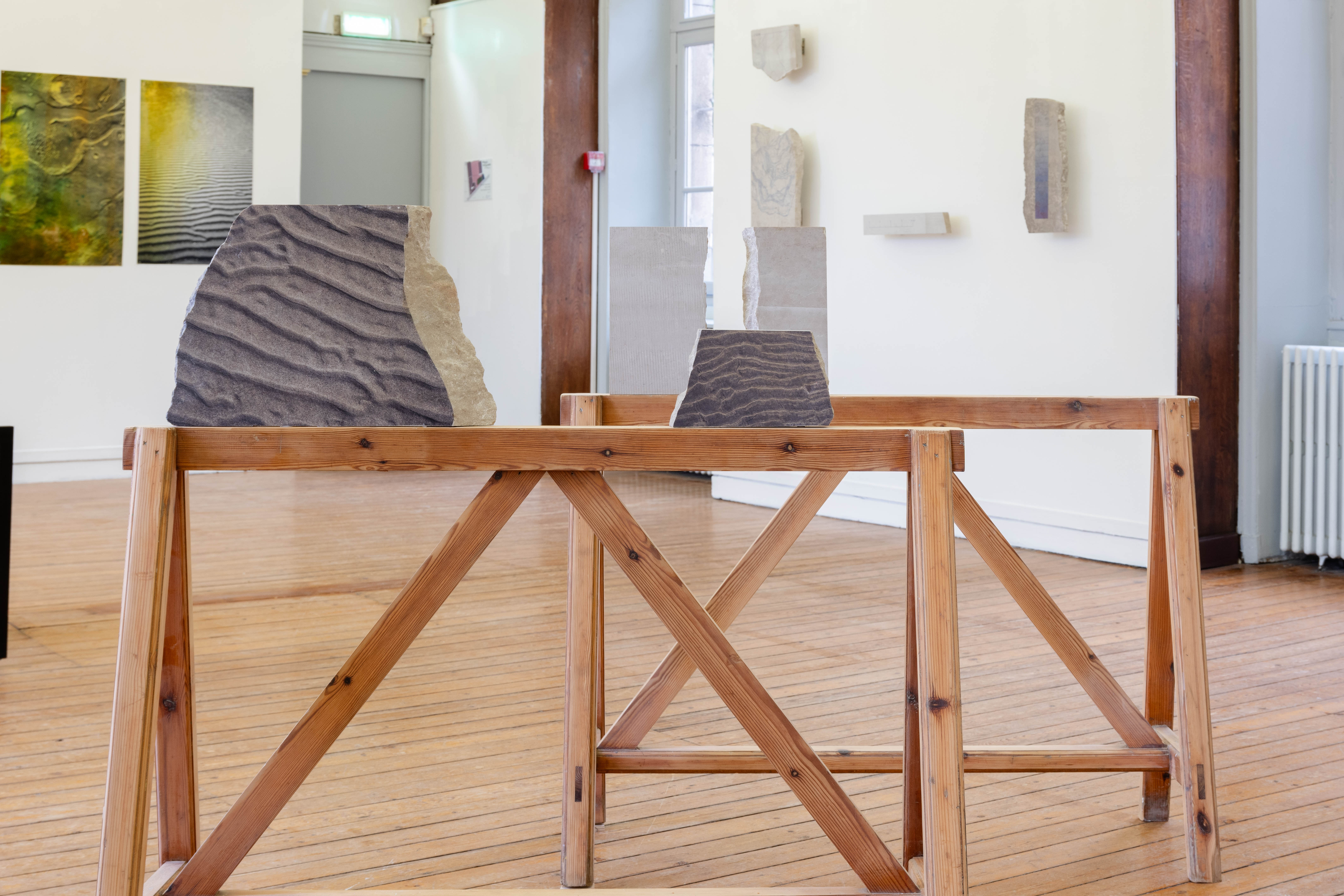
Following our first year of areas, and through the consultation meetings we held with more than fifty local stakeholders, we focused on a natural phenomenon: beach wrack. Both waste and reservoirs of biodiversity, beach wrack are evidence of a range of coastal activities. They alone encapsulate the full range of environmental challenges. Through what they represent, they embody a multitude of perspectives: human (residues from port activities, microplastic waste that forms the ‘tears of mermaids’, hydrocarbons, etc.) and non-human (nesting sites for certain species, e.g. plovers), living and non-living (sedimentary deposits, driftwood, rock debris, etc.). They thus appear as the appropriate level from which to observe and analyse, in the tradition of micro-analyses, the unique perspectives that abound across the territory and which contribute to institutional and public expertise on the coastline.
We have been experimenting with local partners with new approaches to joint project management, coordinated administratively by our association but implemented collaboratively based on the principles of collective intelligence. Thus, our proposal has not merely centred on cultural initiatives in the broadest sense, but also on the interconnection of local initiatives and the way these are framed within a shared desire to take action and restore the foundations of community life: acting whilst reflecting and reflecting whilst acting, so as to experience what we have in common.
We have observed that understanding and grasping the ecological challenges facing coastal areas provides a better understanding of the crucial role played by the seas and oceans in maintaining the balance of the Earth system. This understanding or vision, the collective dimension of which is of paramount importance, makes it possible to reopen the debate on the management of shared resources. This open discussion is a testament to the sustainability of our proposal.
Through our collective sensory and intellectual explorations, we have sought to address the vulnerabilities of the region from an epistemological perspective, taking care not to view structural and ecological vulnerabilities as weaknesses, but rather to identify their systemic interconnections and assess the balance of power within them. Thus, despite the accumulated challenges facing this transitional space that is the coastline, we have had the opportunity to link, reconnect and untangle the issues specific to these areas. The aim was to reconnect with the diversity of viewpoints by setting them apart from one’s own interests, and to create spaces for calm dialogue where the beauty of the world is given its due.
Furthermore, the involvement of local stakeholders working alongside us and the network of connections fostered by our initiatives has led to numerous chance encounters between people from a wide variety of social backgrounds. Having had the opportunity on numerous occasions to take part in group activities (nature projects, beach clean-ups, observing flora and fauna with naturalists, dry-stone wall restoration projects, digging ponds, visiting production sites, etc.) has greatly encouraged the sharing of experiences. And so, little by little, the participants and our teams worked together, thereby becoming deeply involved with the tangible and imagined realities of the coastline.
This operational interconnection has fostered the emergence of situated narratives comprising a set of parallel, joint and mutually reinforcing practices that are reshaped through their interaction with one another. Thus, the fusion of research and creation, driven by working and thinking together, has given rise to a series of aesthetic gestures that form part of a narrative that is both cooperative (involving the efforts of a group of people towards a shared outcome) and participatory (actively taking part in something).
We have focused in particular on the gradual development of a space for dialogue and action that would serve as a precursor to the coastal parliament we are calling for. Its purpose would be to rethink and challenge our relationship with the coastline, as well as to refine our strategies for collective action. This space for dialogue and conversation was fostered throughout the development of our programme through the initiatives we undertook, without ever revealing their nature. It was, so to speak, a matter of letting things take their course, of allowing things to develop naturally in order to preserve the cross-disciplinary nature of the exchanges, and of not imposing any structure whatsoever unless it emerged organically.
We have focused on the step-by-step approach, the sideways step, so that a fabric of imaginations might emerge and take shape of its own accord, through the interweaving and combination of narratives created on the spot. In this way, everyone could play their part – whether as a spectator or an active participant in the programme – in creating a space for dialogue that was firmly focused on the common good. In this way, stakeholders are drawn into the process to varying degrees, fostering the development of both collective actions and shared narratives.
This narrative or vision, in which the collective dimension is paramount, provides an opportunity to reopen the debate on the management of shared resources. In this sense, our IEAC programme is based on inclusion, whilst creating forms of expression that everyone can embrace. Our programme is therefore based as much on the involvement of a self-organised community comprising a wide range of stakeholders as it is on the analysis of the results achieved and the approach tested.
Our participatory approach is underpinned by a mediation framework led by the project partners, local stakeholders and our team. The aim of this initiative is, on the one hand, to bring together environmental, artistic and scientific outreach initiatives and, on the other hand, to support project participants so that they too can take ownership of these initiatives, understand the issues at stake and, ultimately, propose outreach activities tailored to those issues.
We have encouraged a participatory approach to mediation, in which everyone can become an ambassador for the project, act as a facilitator for various initiatives, suggest new activities, and thereby help to shape a shared narrative.
Local stakeholders, local residents, participants, artists, researchers and outreach teams were therefore involved in shaping our programme as it was rolled out. It is the result of both practical implementation and ongoing reassessment, allowing for considerable flexibility and adaptability in its organisation, as well as in its deployment and its ability to mobilise.
This involvement has taken the form of regularly organising social gatherings, group nature walks, consultation meetings and visits to production sites, as well as our teams’ active participation in local events, farmers’ markets and so on.
Our programme was developed in collaboration with local stakeholders and institutions alike, including the Caps et Marais d’Opale Regional Nature Park, the Conservatoire du Littoral, the Municipal School of Art in Boulogne-sur-Mer, the Wimereux Marine Station, the FRAC Grand Large Dunkerque, the Universities of Lille, Artois, the Littoral (ULCO) and Picardie Jules Verne, as well as nature conservation associations such as Les Blongios, the SAP, social integration enterprises such as Rivages Propres, companies such as CVH (quarry operator in the Vallée Heureuse), as well as the municipalities of Wimereux, Wissant, Tardinghen, Marquise and Boulogne-sur-Mer, and local community centres and schools…
The list is long, but the involvement of our partners (nearly fifty organisations) was crucial, as it played a central role in the development and organisational structure of our research and creative residency programme.
Local authorities (the Hauts-de-France Region, the community of communes and the urban community, and the Pas-de-Calais department) have supported and recognised our programme as an innovative initiative of cultural excellence.
Furthermore, the programme received significant support from foundations that helped to develop it and support its local impact (notably the Fondation de France and the Daniel and Nina Carasso Foundation).
Our programme brought together the following disciplines:
exhibition curation, visual arts, digital arts, relational arts, musical composition, sound art, culinary arts, theatrical performance, garden art, literature, musicology, art history, philosophy, anthropology, communication and information sciences, sociology, sustainable tourism, biology, geography, geology, art geography, oceanography, environmental sciences, coastal geomorphology, waste management, eco-design, waste treatment, special needs education, community education, social integration, local economy, science communication, scientific and cultural mediation, architecture, wood and metalworking, stonemasonry, quarrying, fishing trades, maritime navigation trades, agriculture, food crafts…
exhibition curation, visual arts, digital arts, relational arts, musical composition, sound art, culinary arts, theatrical performance, garden art, literature, musicology, art history, philosophy, anthropology, communication and information sciences, sociology, sustainable tourism, biology, geography, geology, art geography, oceanography, environmental sciences, coastal geomorphology, waste management, eco-design, waste treatment, special needs education, community education, social integration, local economy, science communication, scientific and cultural mediation, architecture, wood and metalworking, stonemasonry, quarrying, fishing trades, maritime navigation trades, agriculture, food crafts…
Our programme was funded entirely by public (local authorities) and private (foundations and local businesses) sources, totalling €350,000 over three years. This was supported by a significant contribution from volunteers and the provision of staff and equipment by our partners.
Drawing on our adaptive methodology, which examines the foundations of research-creation in its ability to explore the sensory dimensions of space—that is, data collection that incorporates physical, sensory, perceptual and/or emotional dimensions—and thus focuses on exploring ‘sensory spatialities’ as much as the emergence of new narratives, we wish to replicate this approach at a European level. We are working to establish a network of local stakeholders along the North Sea coast, from the English Channel to the Loire Estuary (Denmark, Germany, the Netherlands, Belgium, France and England).
In addition, we are considering expanding our operations to the Mediterranean region (Spain, France, Italy, Greece, Turkey, Lebanon, Egypt, Tunisia, Algeria and Morocco) in the longer term.
We would like to establish closer ties with the Bauhaus of the Seas Sails initiative (with whom we have had initial discussions regarding project engineering).
We plan to build on our momentum by establishing a network of businesses (in the social and solidarity economy, renewable energy, waste management, recycling, fisheries, sustainable shipping, etc.) in the form of a coastal sponsorship network, which can support, assist and participate in our initiative. We envisage setting up an art and research fund dedicated to the environment, which could be promoted and showcased through major exhibitions. This could serve as a platform for fundraising, science communication, and environmental, artistic and cultural outreach.