Arts, Culture, and Heritage as Drivers of Change
HeritACT
From HeritACT to LANDart Solutions: Activating Cultural Heritage through Nature-Based approach
HeritACT redefines urban regeneration by placing cultural heritage at the core of sustainable city-making. Engaging citizens and institutions through participatory design, and integrating land art principles and nature-based solutions, it activates historic sites as community-led spaces fostering inclusion, climate resilience, and economic sustainability. In Milan pilot sites, the Cascine become green infrastructure hubs enhancing environmental resilience and community life.
Italy
Local
Milan
It addresses urban-rural linkages
It involves a physical transformation of the built environment (hard investment)
Yes
2026-02-28
Yes
Horizon2020 / Horizon Europe
No
No
Organisation
In Milan, one of HeritACT’s three pilot sites, interventions took place in two historic Cascine—cultural heritage sites where the urban fabric meets agriculture. Cascina Sant’Ambrogio, managed by Cascinet association, hosts different cultural events and activities, including community garden, food forest, a nature-oriented kindergarten, and an agriristoro. Cascina Linterno, managed by Apicoltura Veca, produces local honey, holds markets for citizens, and hosts nature-oriented educational projects for kids.
LAND’s project interventions apply New European Bauhaus principles—Beauty, Sustainability, and Community—through participatory processes of co-recognition, co-envisioning, co-design and co-implementation with the Municipality, Cascine communities, visitors, and project partners.
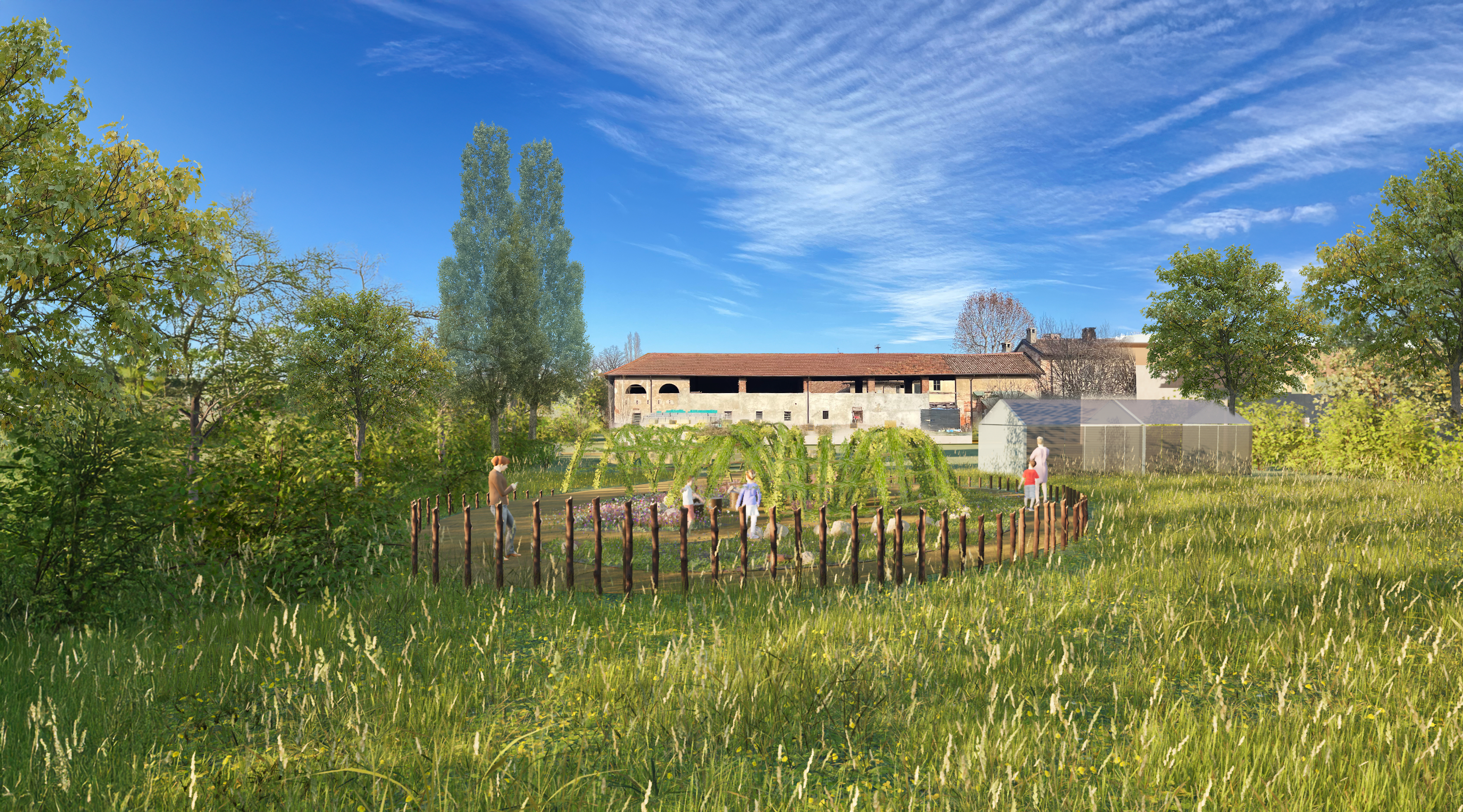
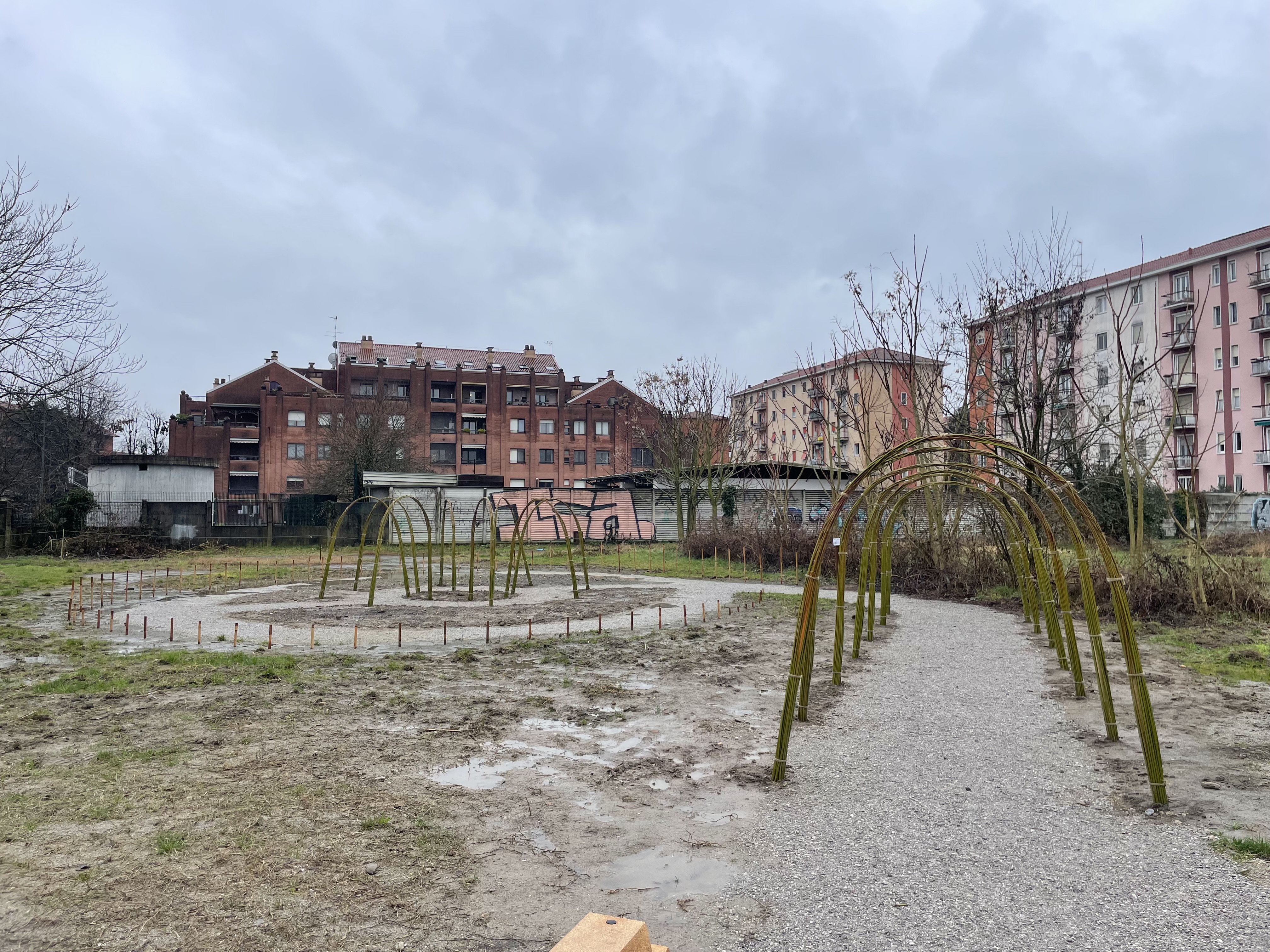
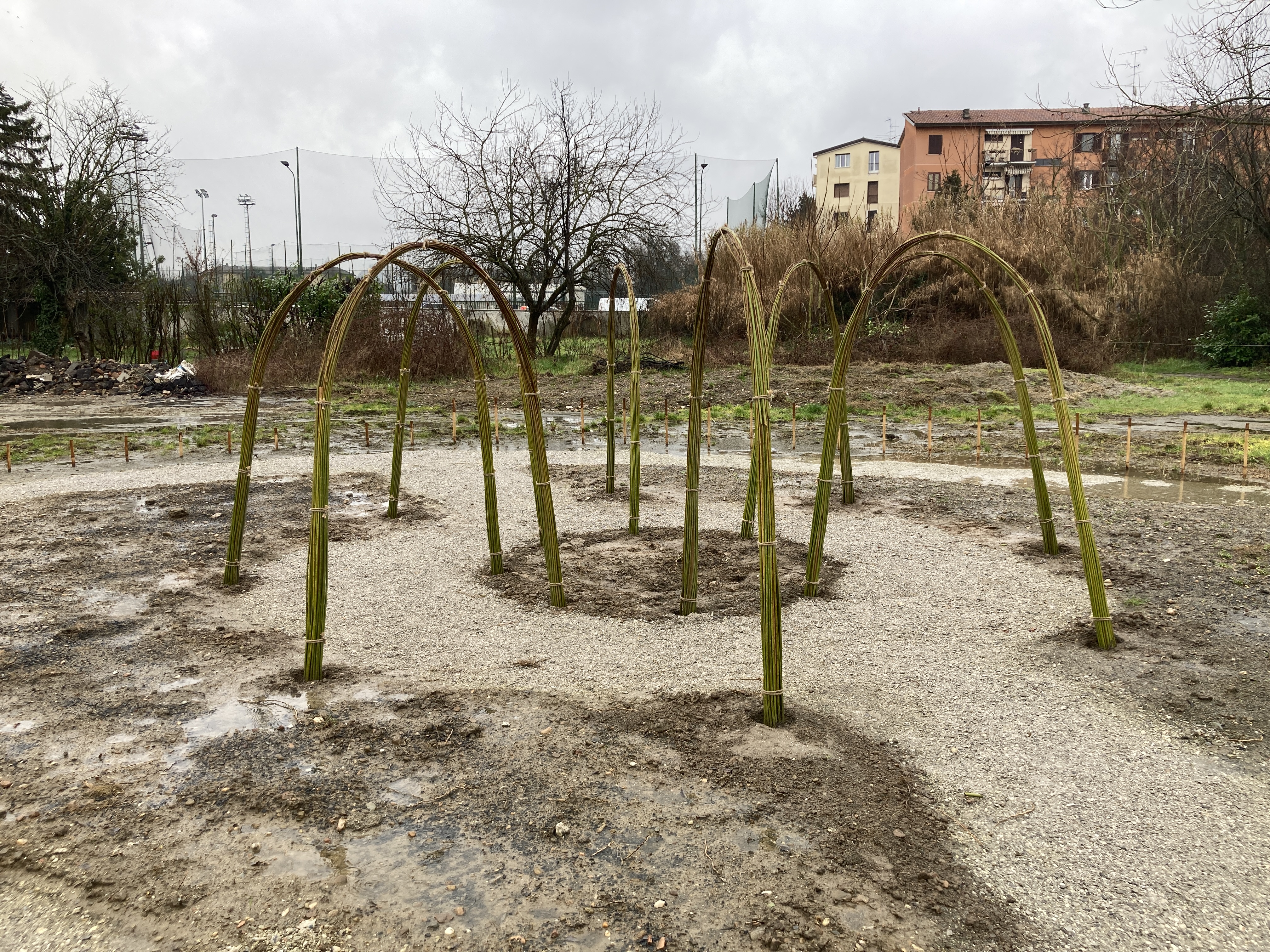
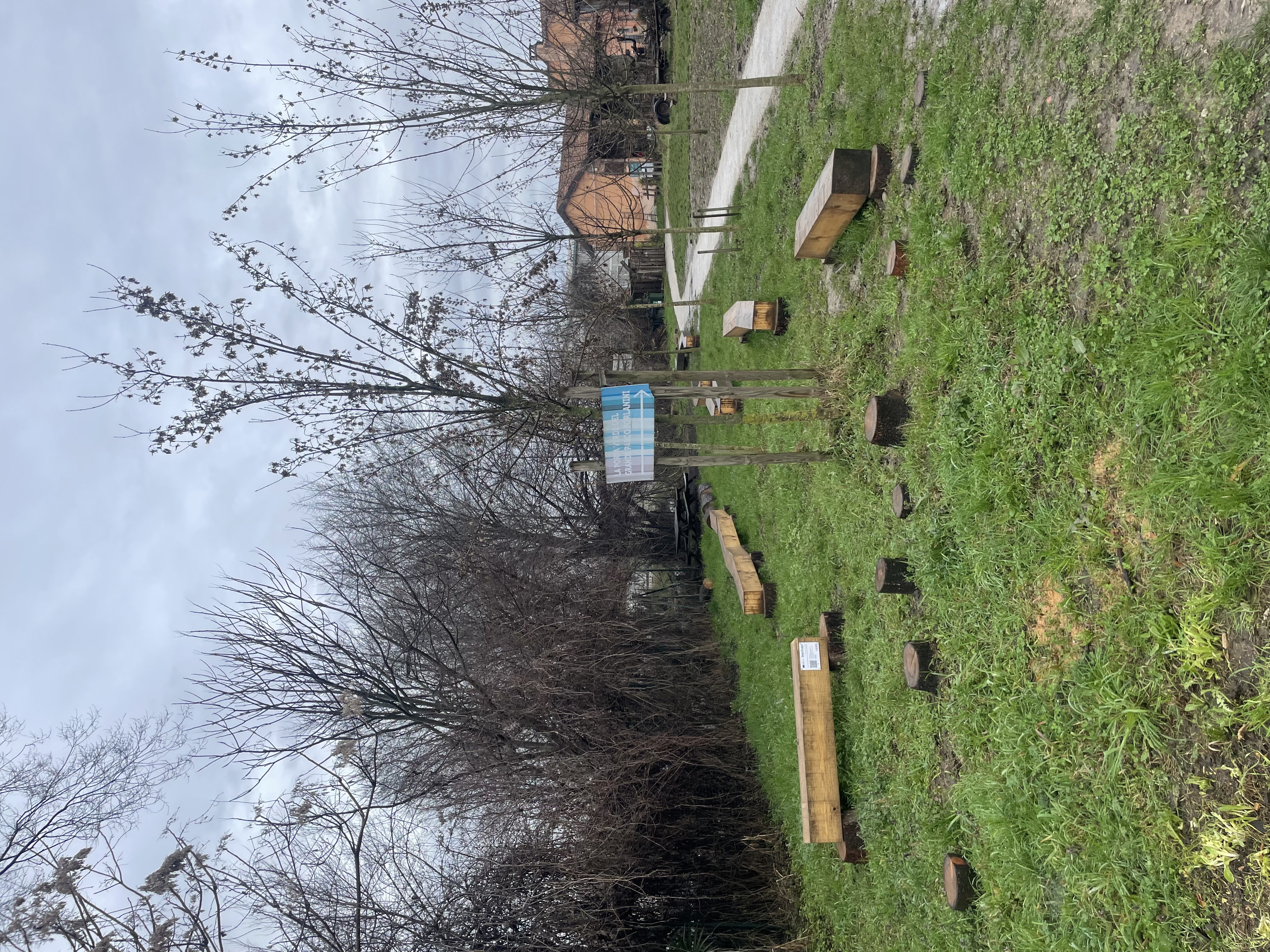
The Biodiversity Clock at Cascina Sant’Ambrogio is a public space combining landscape ecology, art, and education. An elliptical path leads to a circular area marked by wooden elements symbolizing time. A sensory garden with flowering and nectar-rich species supports pollinators and soil regeneration, making ecological processes visible. Living willow structures create shade and seasonal green tunnels, while flowering meadows evolve throughout the year. Permeable materials enable the space to function as a Nature-based Solution, improving drainage and enhancing biodiversity.
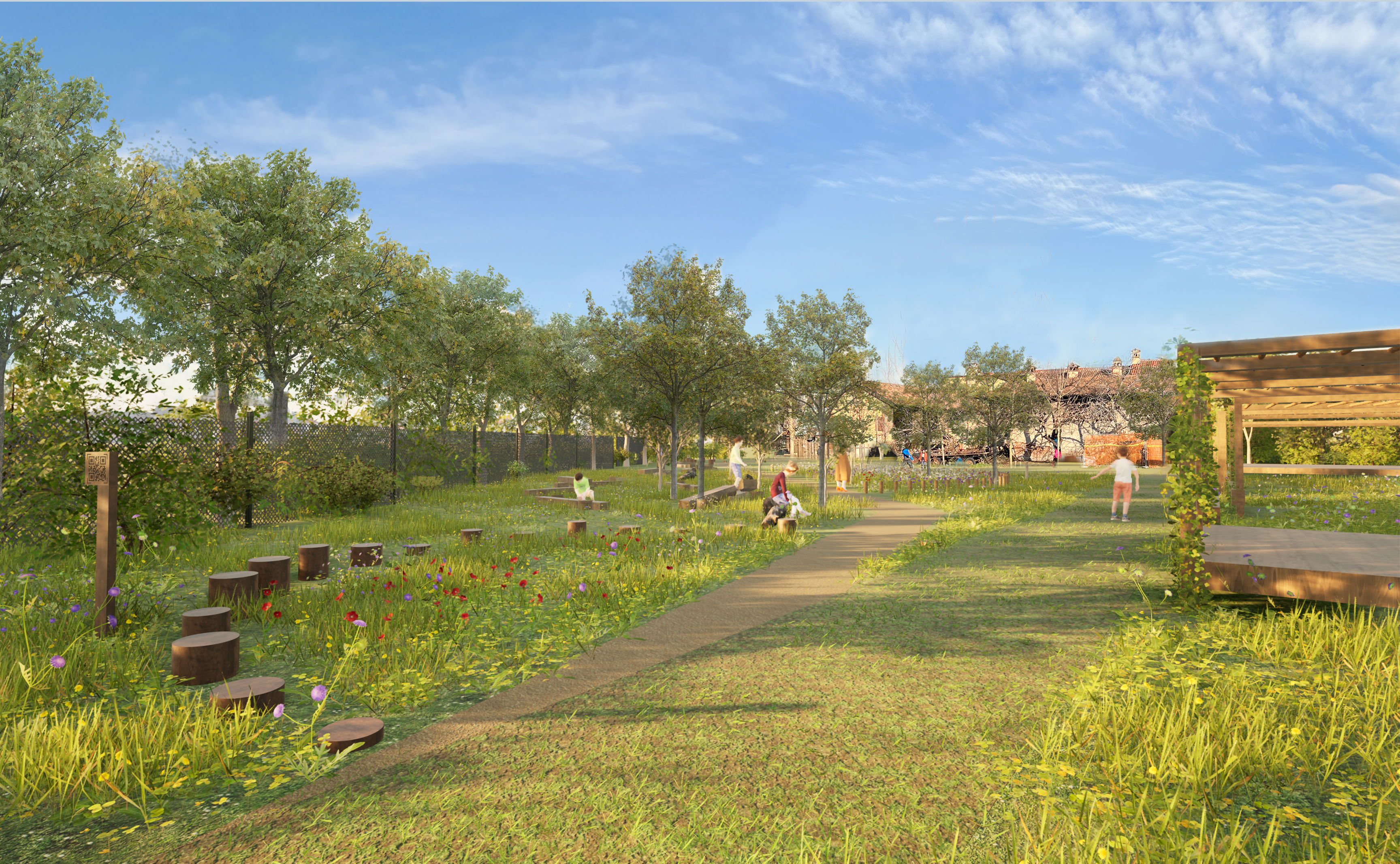
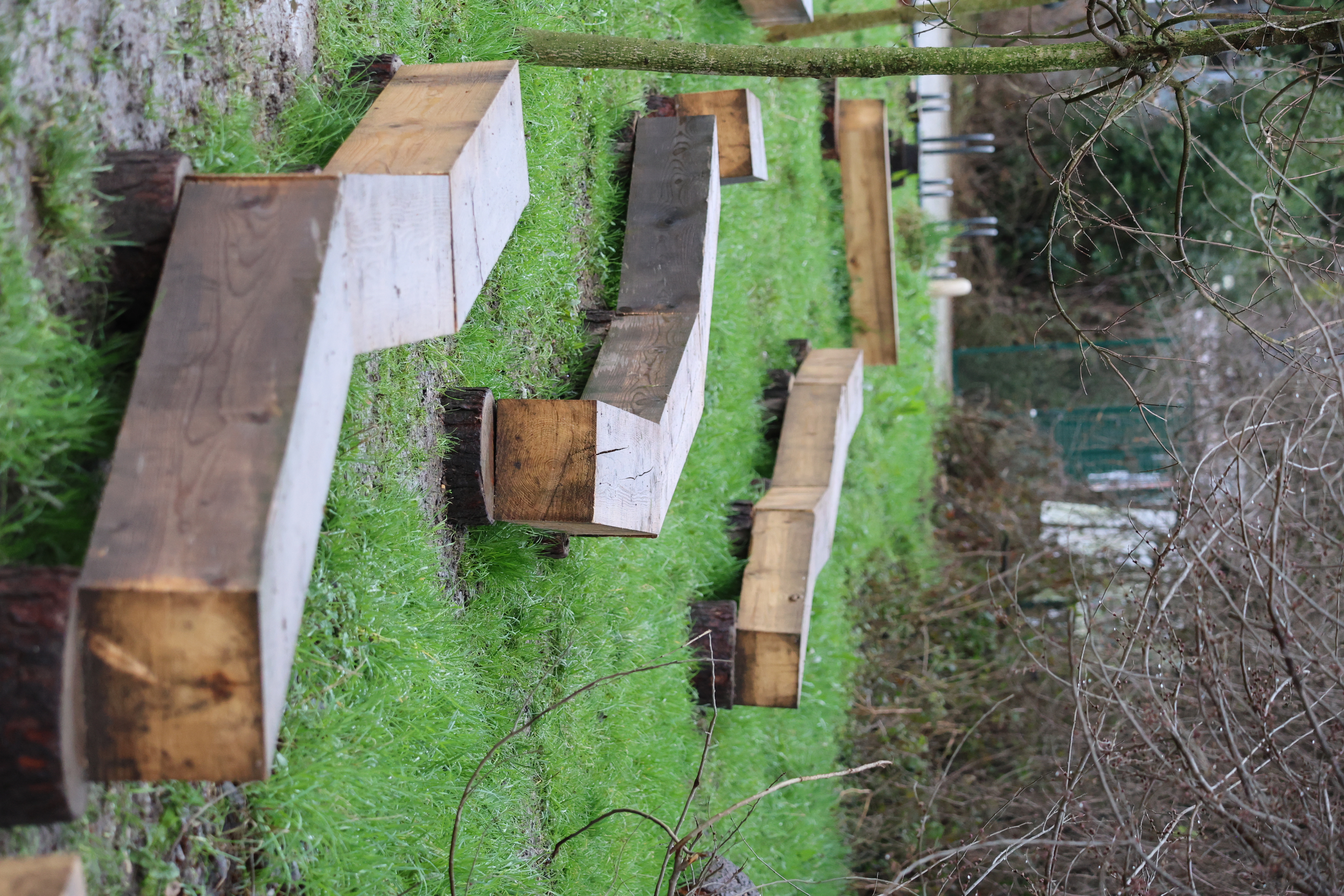
E.C.O.P.L.A.Y. Ground (Environmentally Connected Oasis for Play, Learning, Awareness, and Youth) is an inclusive nature-based playground integrating art, play, and landscape. A stabilized earth path connects Via Cavriana with the historic courtyard, enhancing accessibility and rainwater infiltration. Play and rest areas use natural and recycled materials. Native meadows and informal wooden seating encourage biodiversity, social interaction, and inclusive engagement with the landscape.
The LAND HeritACT project was developed through a structured participatory process articulated in four phases: co-recognition, co-envisioning, co-design, and co-action (2022–2026). Each phase involved the Municipality, Cascine communities, visitors, and project partners.
Co-recognition focused on understanding the sites through walks, interviews, and “listening maps,” capturing needs, perceptions, and potentials to build a shared knowledge base. Co-envisioning translated these insights into a common vision using participatory meetings and “solution cards” of nature-based solutions. At Cascina Sant’Ambrogio, priorities focused on play and sensory landscapes, while at Cascina Linterno they addressed shaded learning environments and biodiversity.
Co-design transformed these ideas into site-specific proposals, integrating ecological, functional, and aesthetic aspects while respecting the cultural heritage context. Solutions were iteratively refined and validated with local authorities and experts to ensure feasibility and compliance.
Co-action brought the project to life through implementation and activation. Workshops, technical development, and validation led to construction, while public events, co-planting, and hands-on activities actively engaged communities. Participants contributed not only to design but also to building and caring for the spaces.
Nature-based solutions
Community co-design
Land art
Biodiversity
Soil regeneration
The Cascine LAND project addresses environmental, social, cultural, and economic challenges through integrated, low-impact interventions grounded in nature-based solutions. These approaches, inspired by natural processes, enhance biodiversity, strengthen resilience, and generate co-benefits across multiple domains. Selected vegetation is based on local flora and fauna, ensuring ecological coherence and low maintenance. At Cascina Linterno, an experimental plot supports soil regeneration through plant species adapted to the local ecosystem. Environmental impact is further minimized through the reuse of natural materials, such as timber logs, the limited use of artificial components, and the avoidance of deep foundations to preserve soil integrity.
Social sustainability is fostered through a participatory process involving the municipality, Cascine users, and visitors in co-analysis and co-design activities. This inclusive approach promotes dialogue among stakeholders, encouraging social cohesion, shared responsibility, and long-term stewardship.
Culturally, the project enhances the value of the Cascine as historic agricultural heritage embedded in Milan’s landscape. Interventions are designed to be reversible and visually coherent with the existing context, reinforcing the relationship between built heritage and natural systems. By making ecological processes visible, the project also raises environmental awareness among local communities.
Economically, the project adopts a cost-effective strategy based on recycled forestry materials and low-maintenance solutions. Its integrated, scalable, and replicable approach makes it exemplary in terms of sustainability, demonstrating how cultural heritage can drive resilient and inclusive urban transformation.
The Cascine LAND project enhances everyday life by creating meaningful connections between people, nature, and cultural heritage. Its interventions offer accessible outdoor spaces where communities can experience, learn from, and interact with natural processes, fostering wellbeing and environmental awareness over time. Children, in particular, benefit from playful and educational environments that encourage direct engagement to nature.
The project’s aesthetic quality emerges from the integration of land art and nature-based solutions, where beauty and functionality coexist. Natural elements are not only visually appealing but actively support local ecosystems, making ecological performance an intrinsic part of the design. At Cascina Linterno, the Biodiversity Clock exemplifies this approach: an elliptical land art installation that represents seasonal cycles through a flower meadow supporting pollinators and an experimental plot for soil regeneration. Nearby, a living tunnel of salix provides shade while evolving throughout the seasons, making natural change visible and experiential.
At Cascina Sant’Ambrogio, the ECOPLAY balance path demonstrates how simple, low-cost interventions can create inclusive, adaptable, and engaging spaces, already embraced by local children.
A participatory co-design process involving residents, visitors, and institutions has been central to the project. By contributing to the design, users become co-authors of spaces, strengthening their sense of belonging, care, and long-term stewardship. This integration of ecological function, cultural meaning, and shared authorship makes the project exemplary in terms of aesthetics and social impact.
Both interventions address accessibility and affordability by creating inclusive, open, and low-cost public spaces based on nature-based solutions. All interventions are developed on public land and are freely accessible. Paths made of stabilized earth ensure barrier-free movement, with no level differences and widths aligned with design-for-all principles. The inclusion of melliferous plant species extends accessibility beyond humans, supporting biodiversity and non-human habitats.
Nature-based solutions foster inclusion by transforming heritage sites into welcoming, flexible, and environmentally comfortable spaces for everyday use. Vegetation and natural elements enhance sensory experience, improve spatial legibility, and reduce physical and psychological barriers. At the same time, these interventions promote collective care and long-term stewardship, reinforcing the cultural value of heritage through shared maintenance practices.
The project promotes inclusive governance through participatory co-design and co-activation processes. Local stakeholders—including Cascine managers, associations, and environmental experts—were involved in the design phases, while residents, families, and children contributed through workshops, collective walks, and hands-on activities, enabling participation regardless of age or expertise.
Inclusion is further strengthened during implementation: key elements, such as the Biodiversity Clock and ECOPLAY installations, were realized by a local non-profit cooperative supporting social reintegration through skilled work opportunities.
By combining low-cost solutions, participatory governance, and ecological design, the project is exemplary in showing how heritage sites can become inclusive, community-driven environments that foster shared responsibility, social equity, and new models of collective care.
The LAND HeritACT interventions actively involved citizens, communities, and civil society organisations through a structured co-design and co-activation process. In Milan, Cascine managers, local associations, and environmental experts—including technicians from Parco Agricolo Sud Milano—were engaged to ensure ecological and landscape alignment, as the Cascine are protected cultural heritage sites. Residents, families, children, and regular users participated mainly during co-activation events, using tools such as mapping, storytelling, collective walks, and hands-on activities, enabling inclusive engagement regardless of age or expertise.
At Cascina Linterno, two workshops identified priority areas and functions, focusing on education, biodiversity, and community use. Participants helped define needs and evaluate design proposals, resulting in the selection of the “Area Depressa” for intervention. At Cascina Sant’Ambrogio, a similar process highlighted key areas including “Porta Verde” and the Food Forest, emphasizing inclusivity, ecological value, and multifunctionality.
The second phase in both sites reviewed and refined proposals through collective discussion and feedback. Despite diverse perspectives, this process converged toward shared solutions, ensuring interventions responded to real needs and local practices. Participation extended beyond design: co-activation events involved stakeholders directly in planting, construction, and maintenance activities, strengthening ownership, skill-building, and long-term stewardship.
Overall, the project demonstrates high levels of citizen involvement, from consultation to co-creation and implementation. This participatory approach increased the relevance, acceptance, and sustainability of the interventions, fostering a strong sense of belonging and transforming users into active caretakers of the Cascine.
The LAND HeritACT interventions involved stakeholders at multiple levels to ensure ecological, cultural, and social coherence. At the regional level, Parco Agricolo Sud was engaged in co-envisioning, co-design, and particularly in validating interventions on protected cultural heritage sites. Their input ensured compliance with heritage regulations and strengthened the ecological and landscape quality of the interventions.
At the local level, technical offices of the Comune di Milano participated in co-design activities, transferring knowledge on nature-based solutions and land art, and supporting project managers in implementing solutions for the Milan pilot sites. They acted as mediators between European project coordinators and local stakeholders, facilitating communication and knowledge exchange.
LAND functioned as an intermediary between Cascine managers, the Comune, and Parco Agricolo Sud, providing technical expertise on nature-based solutions and supporting participatory processes. This collaboration enhanced local capacity to manage innovative, non-standard projects while integrating ecological, cultural, and social objectives.
Construction and implementation were carried out by a local non-profit cooperative, employing skilled workers in a social reintegration program. This approach increased social inclusion during the construction phase and demonstrated the potential of low-cost, carefully crafted, non-industrialized interventions for public spaces.
Overall, stakeholder involvement added value by strengthening technical capacity, fostering inclusive governance, and promoting flexible approaches to public space management. It created a precedent for co-designed, community-focused interventions that combine heritage preservation, ecological performance, and social benefits, ensuring long-term sustainability and replicability across European contexts.
The LAND HeritACT interventions reflects a strong transdisciplinary approach, integrating expertise from architecture, landscape design, agronomy, social sciences, arts, and environmental sciences. The core team includes architects, landscape designers, agronomists, and project facilitators, enabling a holistic approach to planning, design, and implementation.
The participatory co-design process further broadened the knowledge base by involving stakeholders with diverse backgrounds, including Cascine managers, local associations, and users. Learning directly from the managers about agricultural practices and site-specific needs allowed designers to reconsider and adapt proposals from multiple perspectives, enhancing both ecological and social relevance.
Artistic and technical expertise merged in elements such as the Salix tunnel, created by an artist with an agronomy background, which combined ecological function with creative, experiential design. This fusion of arts and environmental knowledge opened new possibilities for functional, sustainable, and aesthetically engaging interventions.
Construction and implementation were carried out by a local non-profit cooperative employing skilled workers in a social reintegration program. This brought practical knowledge of building techniques into the process while promoting social inclusion. It also demonstrated the potential for low-cost, carefully crafted, non-industrialized interventions that combine ecological performance, cultural value, and community benefit.
Overall, the project exemplifies how transdisciplinary collaboration, combining technical, artistic, environmental, and social knowledge, can create innovative, inclusive, and sustainable interventions in heritage and public spaces.
The LAND interventions for the HeritACT project explore a sustainable business model based on low-cost, nature-based solutions that integrate ecological function, aesthetic quality, and community value. Potential revenue streams include crowdfunding for future implementations or maintenance, leveraging the sense of shared responsibility created through collaborative processes.
The project methodology and nature-based approach are replicable in other urban contexts, having been successfully tested in the Horizon StreetREVIVAL project, and will be applied again for co-design and implementation of public-space interventions. This approach can also be adapted for private or business contexts, offering customized ecological solutions that reduce resource use and maintenance costs while creating multifunctional, beautiful, and functional landscapes over time.
Public funding and partnerships with municipalities and non-profit organizations provide additional financial support, while local cooperatives involved in construction and maintenance enhance social inclusion and lower costs.
Overall, the model demonstrates that heritage and nature-based interventions can be financially sustainable by combining public investment, community engagement, low-maintenance design, and potential private-sector applications, ensuring long-term viability while delivering ecological, social, and cultural benefits.
The LAND interventions for HeritACT project demonstrate a high potential for transferability and scalability across different geographies and sectors. Nature-based solutions are inherently adaptable, as they rely on local ecosystems and can be tailored to specific environmental, cultural, and social contexts. The design methodology, grounded in the New European Bauhaus principles of sustainability, inclusion, and beauty, can be applied to a wide range of sites and user groups.
Key elements of scalability include both process and design solutions. The participatory approach—based on co-design, co-creation, and co-activation—can be transferred to various contexts, including public spaces such as schools, museum courtyards, parks, and protected heritage sites. This methodology ensures that interventions respond to local needs while fostering community ownership and long-term stewardship.
In terms of design, specific solutions are highly replicable. Salix-based structures, for example, are particularly adaptable, as willow species are widespread and suitable for diverse climates. These living structures can be scaled to different sizes and functions, providing shaded, evolving environments. Similarly, interventions like the ECOPLAY ground, built with reused timber, can be replicated in both rural and dense urban contexts, offering low-cost, flexible, and inclusive play and learning spaces.
Overall, the combination of adaptable nature-based solutions, participatory processes, and low-cost construction techniques makes the project highly transferable, demonstrating how sustainable, inclusive, and aesthetically meaningful interventions can be implemented across diverse contexts.