Strengthening Local Democracy and Inclusion
Rizoma Coop
Community-run and operated grocery shop and agroecological farm
Rizoma is a community-run grocery and urban garden in Lisbon, where citizens collectively decide what they eat, how it is produced and how it is shared. Combining local food systems, participatory governance and social spaces, it transforms everyday consumption into an act of democracy, sustainability and community building, fostering inclusion, resilience and a deeper connection between people, food and place.
Portugal
Local
Lisbon (Arroios and Graça districts)
Mainly urban
It involves other types of transformations (soft investment)
Yes
2025-06-30
No
No
No
Organisation
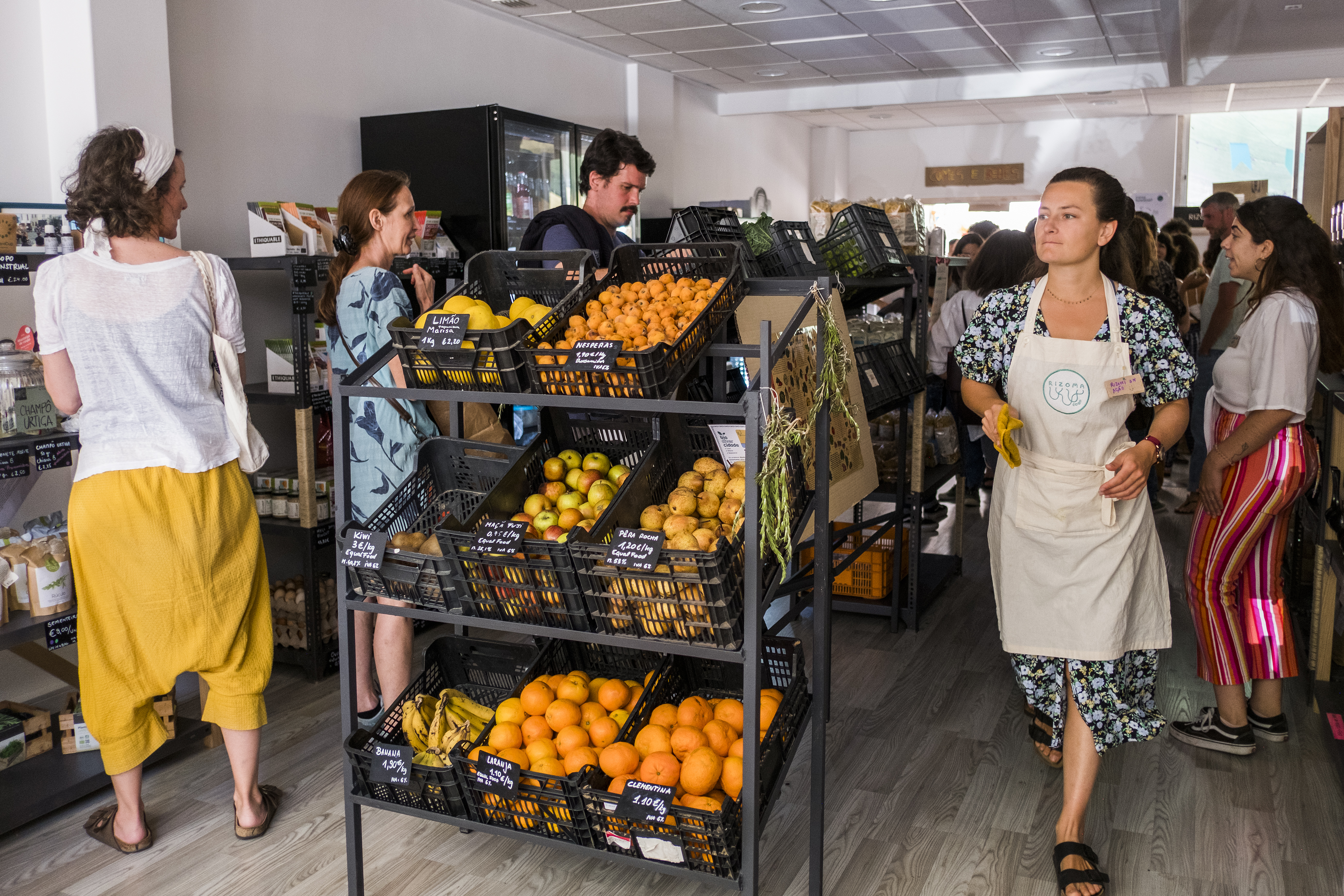
Like a rhizomatic root system, Rizoma Coop was created to grow horizontally, without hierarchies, enabling people in the Arroios neighbourhood and all around Lisbon to initiate projects that generate community value. From this vision emerged the Rizoma community grocery: a member-run, member-governed shop in central Lisbon. Today, it offers over 700 products and brings together around 400 consumer members monthly.
The grocery provides an alternative to large-scale retail by returning to citizens the power to decide what they consume and how it is sourced. Members collectively organise the space, maintain direct relationships with local producers, and prioritise seasonal, organic, and fairly traded food.
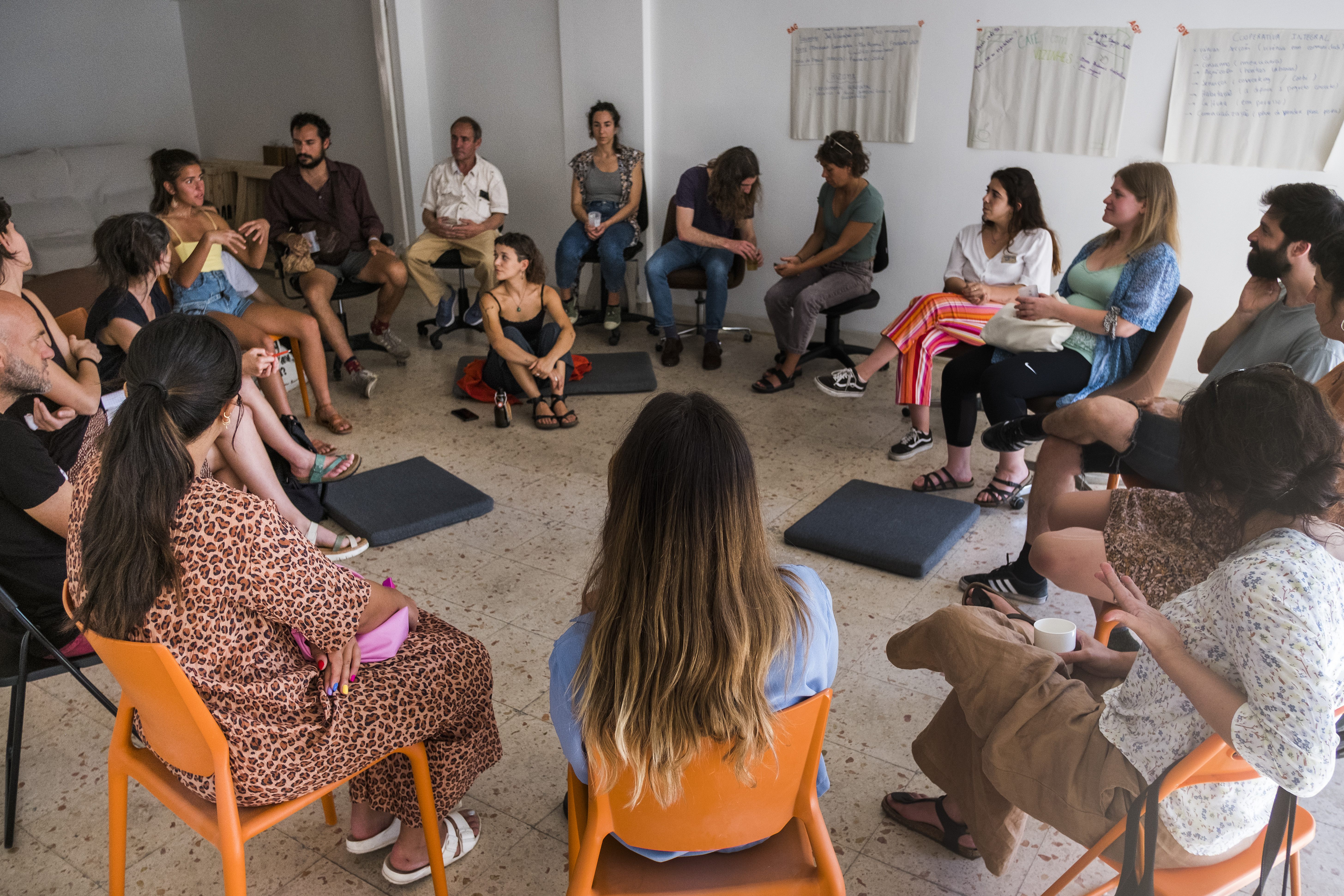
Participation is central to the model and has allowed the project to grow organically, becoming a culturally significant presence in the neighbourhood. Members contribute through volunteer shifts and a participatory governance system inspired by sociocracy. Any member can propose initiatives, which are discussed collectively and adopted through consent (rather than majority voting), transforming consumers into active co-creators.
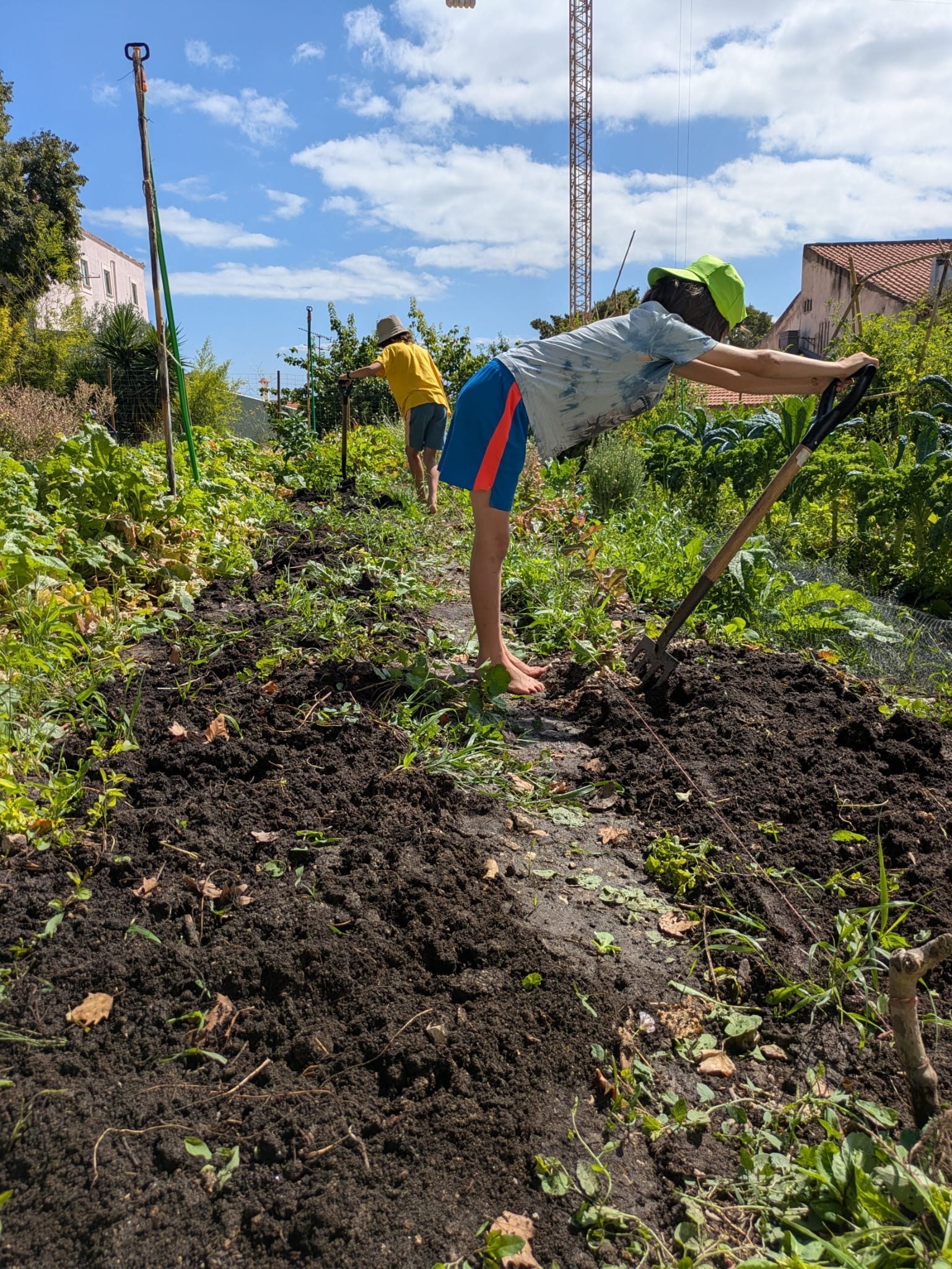
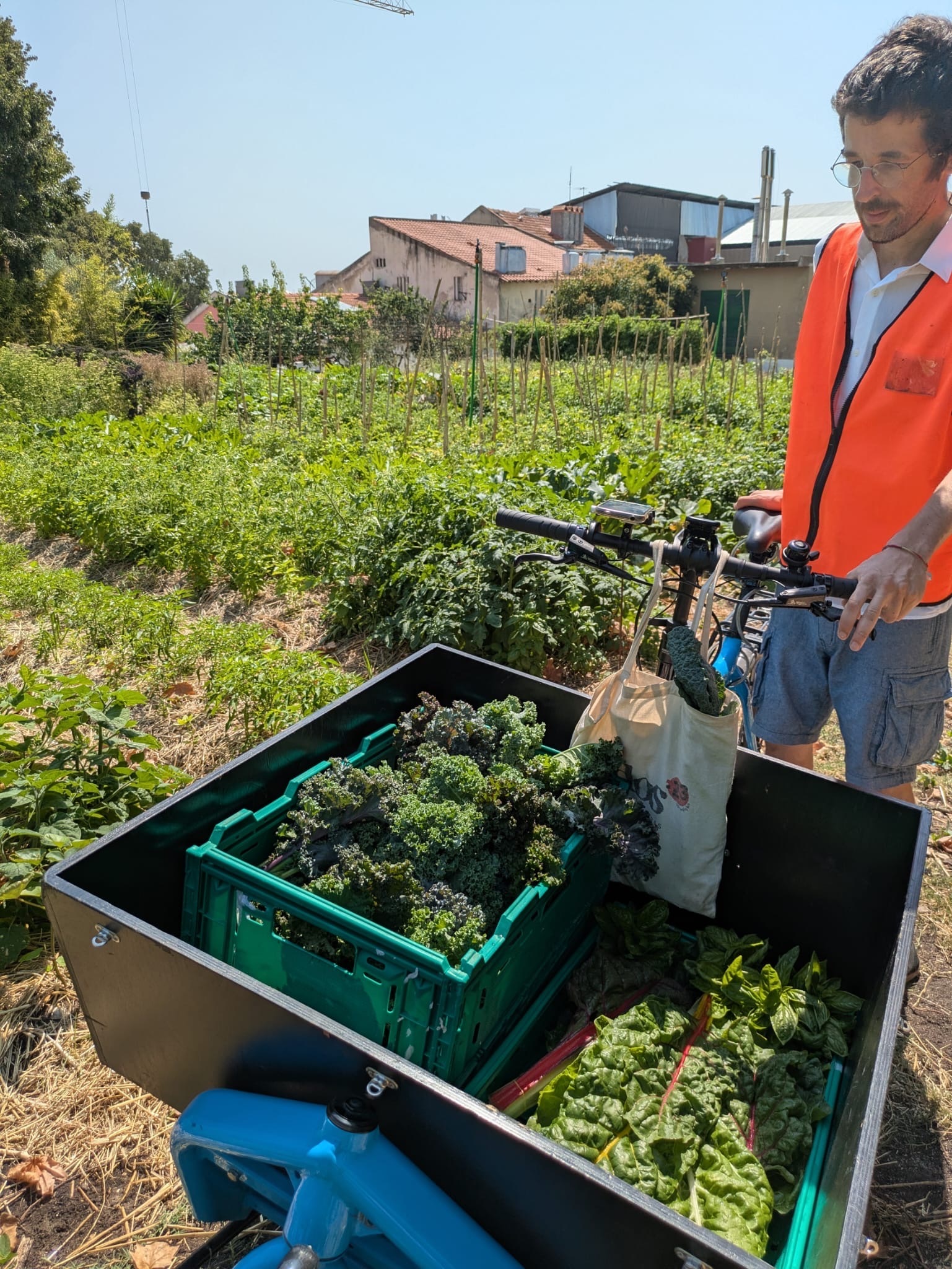
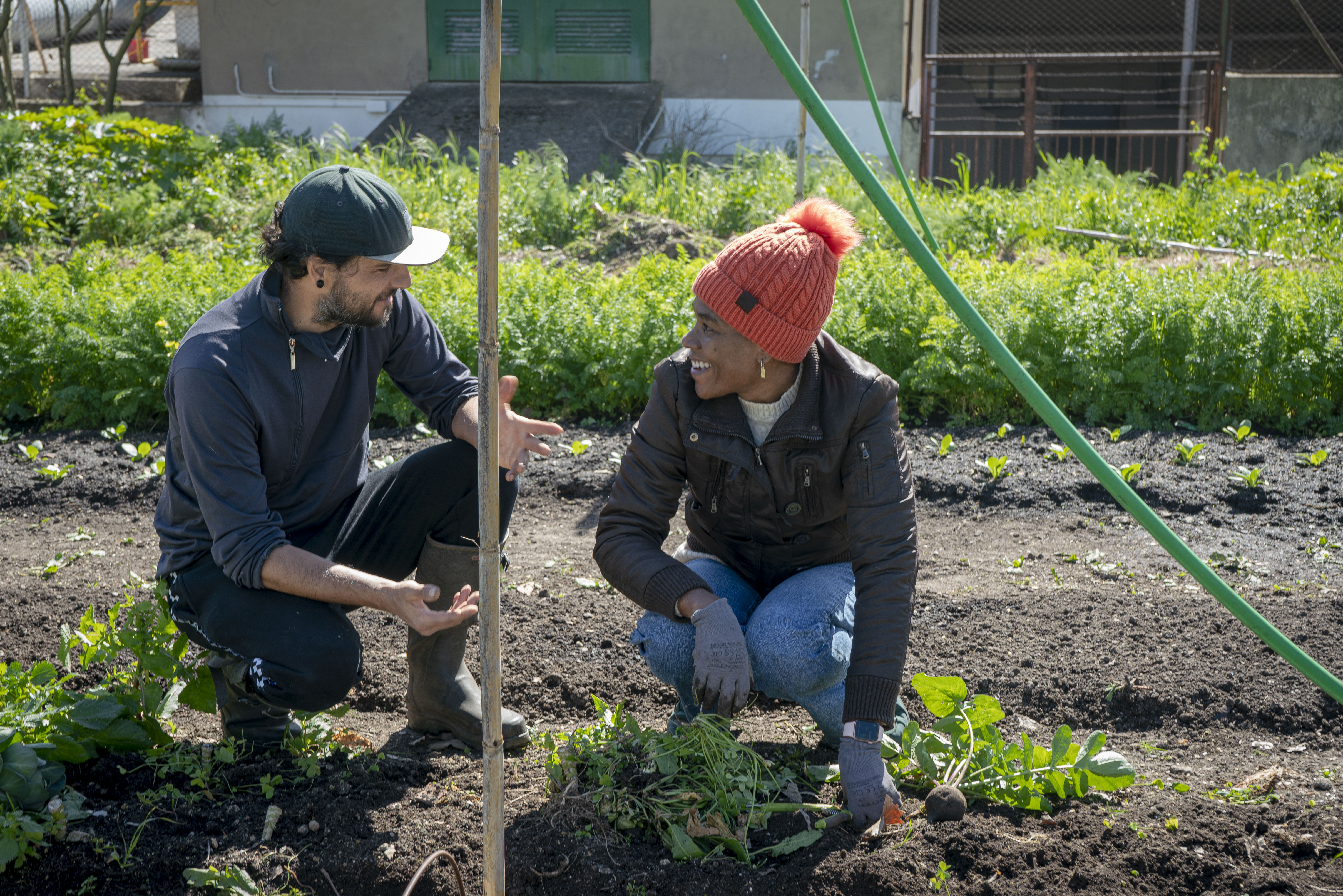
Over time, the project expanded “up the supply chain.” In 2024, the cooperative created an agroecological urban garden of about 1,000 m² on unused land at a local secondary school. The garden enables food production, workshops, cultural events, and intergenerational learning. Organic waste from the grocery and nearby households is composted there, closing the nutrient cycle. Produce is sold in the shop or transformed into foods like fermented veggies or spice souces.
Today, the cooperative has around 740 active members and has engaged more than 1,000 people. By combining democratic governance, local production, and community participation, Rizoma strengthens local democracy, builds resilient food systems, and creates sustainable economic value.
The project began during a winter dinner in the Anjos neighbourhood of Lisbon, just before the COVID-19 pandemic. A group of friends living in the area started exploring how food cooperative models from other cities could be adapted locally to regain collective control over food systems.
The idea was to create a space where consumers could organise themselves to decide where their food comes from, prioritising environmental responsibility, social fairness, and proximity to producers. These ambitions became more urgent during the pandemic, when many urban communities became aware of their dependence on large-scale retailers.
We began inviting neighbours to co-create the initiative and founded an integral cooperative inspired by experiences from Catalonia. This structure allows members to develop initiatives across different areas of community life while sharing a democratic governance model based on sociocracy and consent.
When the group reached around 40 members, we opened a small 40 m² pilot grocery in partnership with the migrant support association Renovar a Mouraria. There we tested collective purchasing, volunteer shifts and sociocratic decision-making based on consent.
Within one year, the Rizoma grew to 250 members, and the grocery expanded from two to five opening days per week. With support from a Municipality funding, we moved to a 400 m² space, enabling further diversification. Members co-created new initiatives, including a café, artisanal production, and cultural activities (ranging from dance and choir to historical fencing).
In 2024, we launched an agroecological urban garden - a goal since Rizoma was a dream between friends. It enables food production, composting, and educational activities with schools, seniors, and residents.
Through co-design, pilot testing, and participatory governance, Rizoma has evolved into a community hub that strengthens local democracy and food resilience while generating social, cultural, and economic value.
Community co-design
Cooperative governance
Agroecology
Circular Economy
Local resilience
Rizoma was created to offer a more sustainable and accessible lifestyle at the neighbourhood level. Its core objective is to provide affordable, locally sourced products while promoting environmental responsibility, social equity, and economic resilience through a citizen-led alternative to conventional food systems.
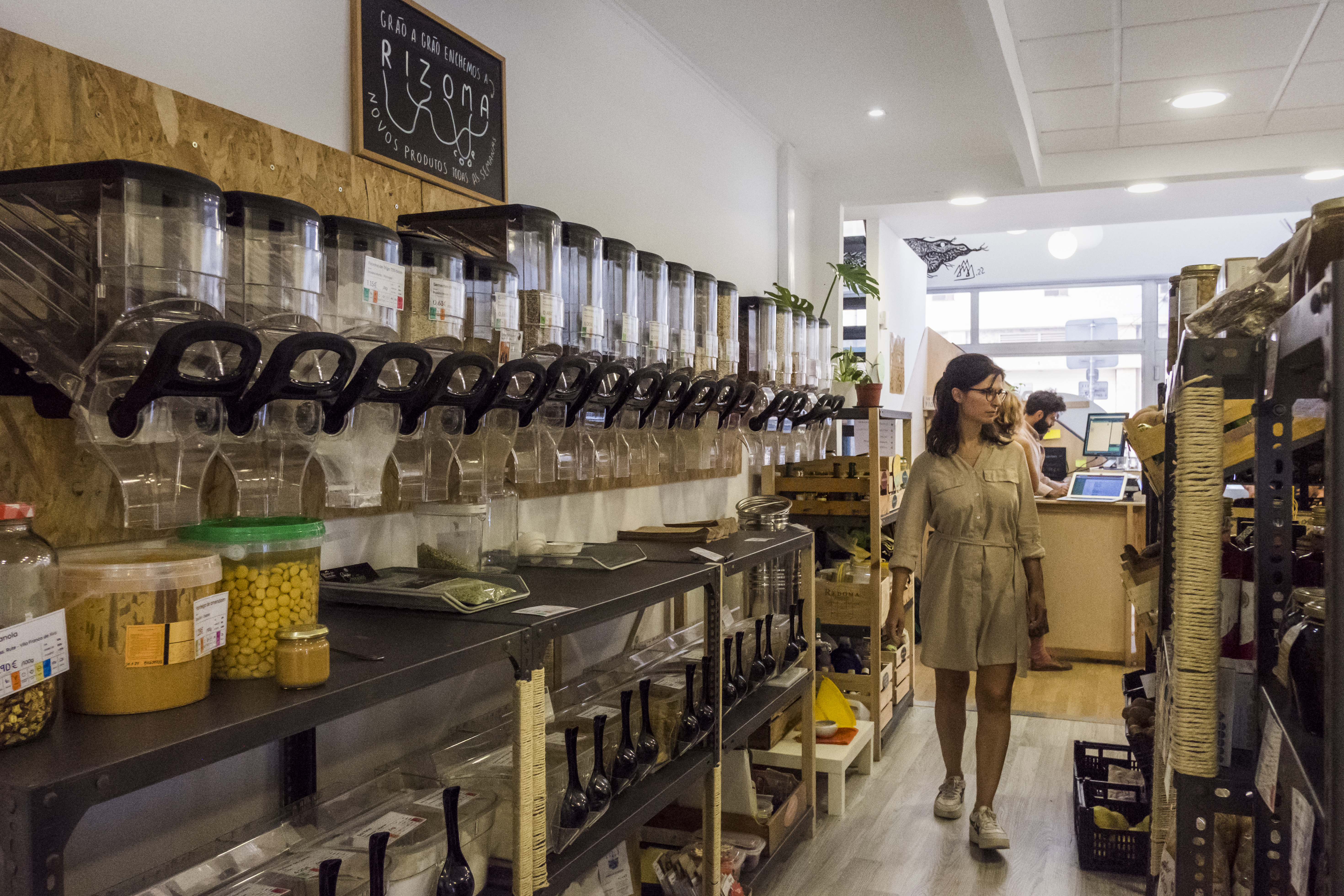
From the outset, we established sourcing principles prioritising local, seasonal, unpackaged, and chemical-free products. Today, 25% of products are sold in bulk, reducing packaging waste; 36% are nationally sourced; and 7% are member-produced, strengthening local economies and shortening supply chains. For fruits and vegetables, all are nationally produced, with 30% coming from our own agroecological garden and all meeting natural or organic standards.
In 2024, we introduced “Rizoscore”, an internal tool that evaluates products based on environmental and social criteria. This is combined with a differentiated pricing system: essential goods have lower mark-ups to ensure access to nutritious food, while non-essential products carry higher margins, encouraging more sustainable consumption patterns.
The agroecological urban garden, located in a school, enables regenerative practices, composting of organic waste from the grocery and surrounding community, and the closing of local nutrient cycles. It also creates much-needed green space and engages students and residents, fostering long-term awareness of sustainable food systems. This is particularly relevant in Arroios, one of Lisbon’s most densely populated areas but the 5th civil parish with the least green spaces (less than 1m2 per resident).
By integrating production, distribution, governance, and education within a democratic, community-led structure, Rizoma offers a replicable model for sustainable urban food systems - advancing environmental sustainability, social inclusion, and economic fairness.
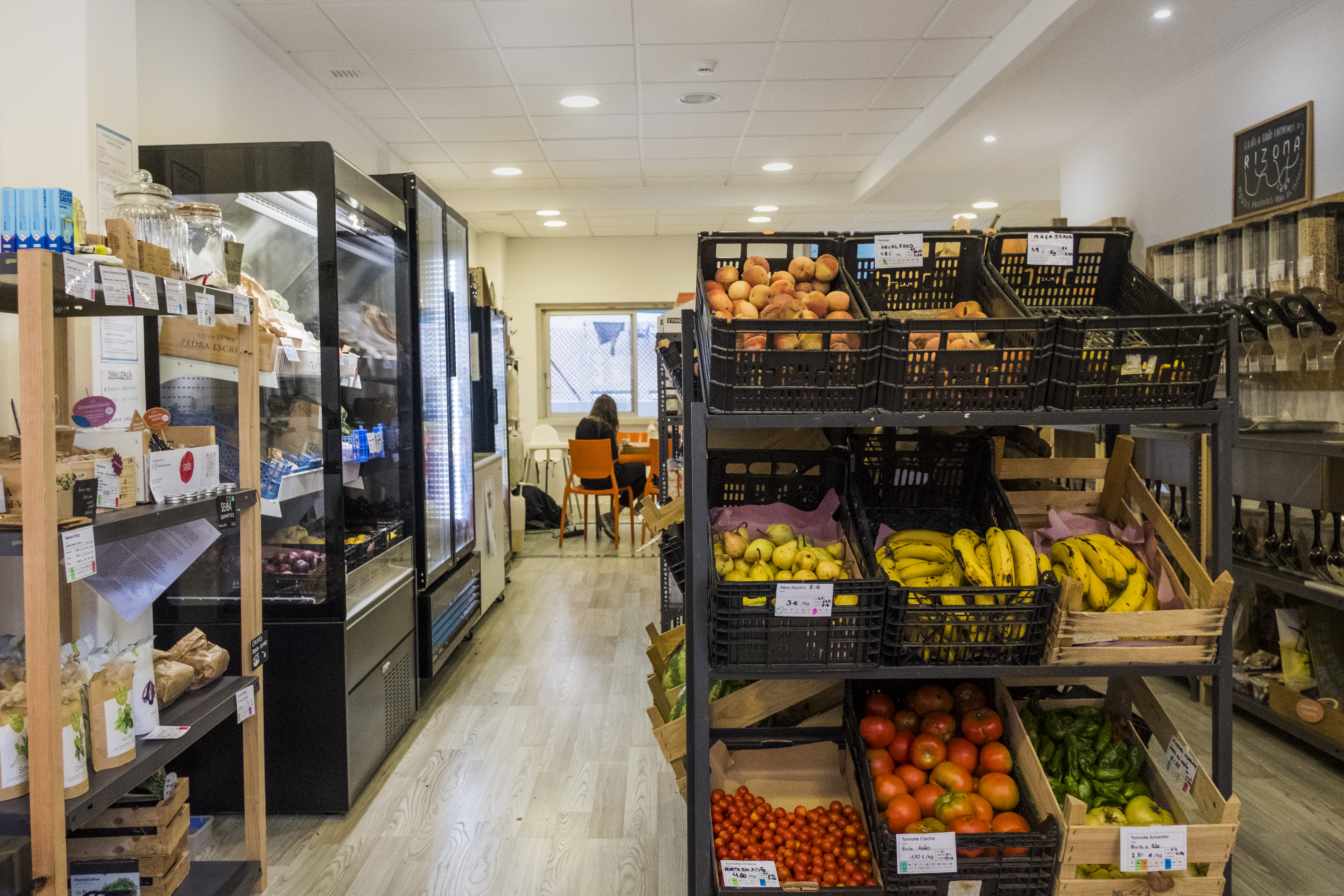
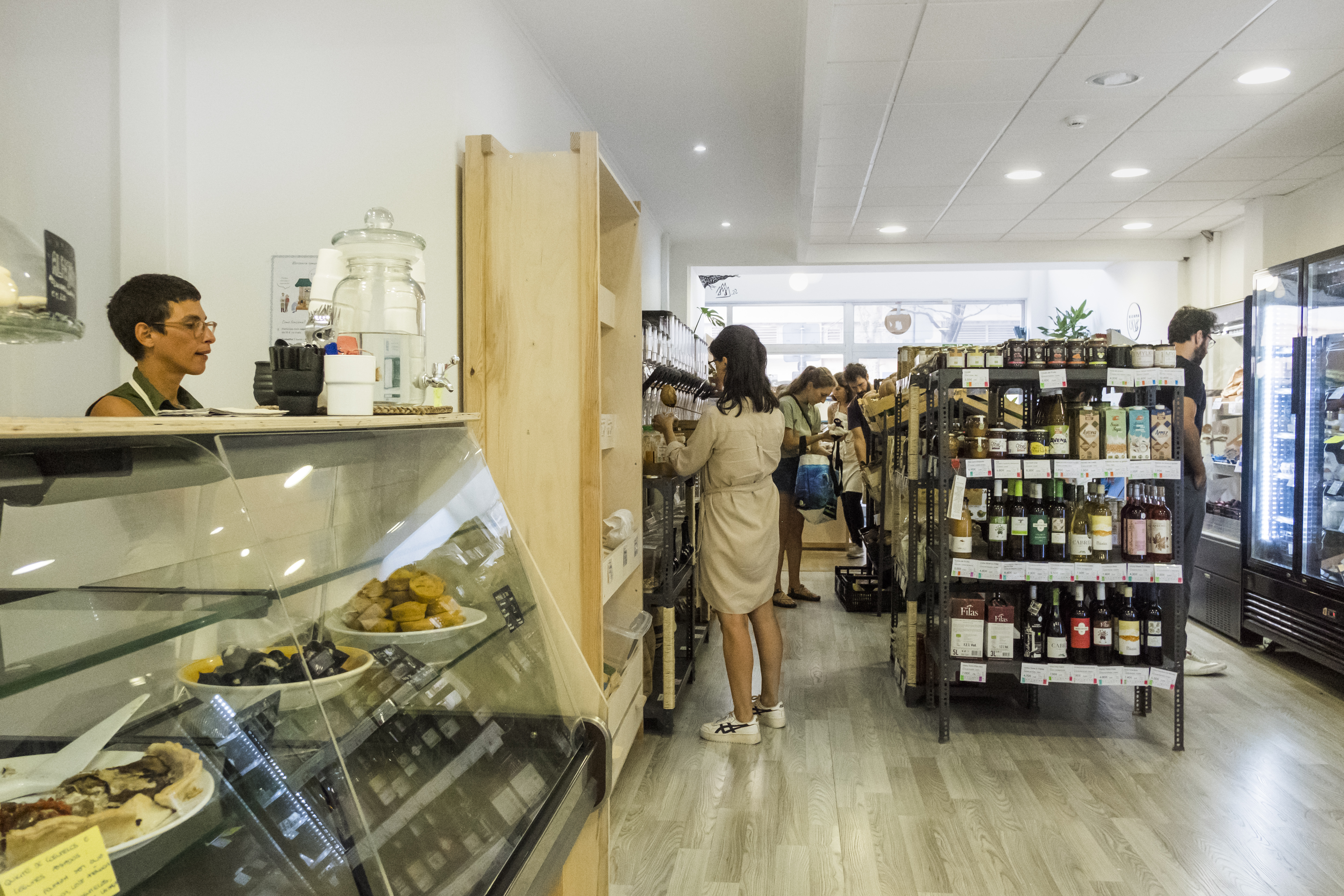
Rizoma’s space in central Lisbon was co-designed through participatory sessions with members, including architects, transforming a former bible shop into a three-floor community hub. Most items were donated, bought second-hand, or upcycled by members. Every element reflects collective decision-making and shared ownership (from the self-managed library corner to the clothing swap spot) creating a space shaped by many voices rather than a predefined design, visually embodying what Rizoma represents.
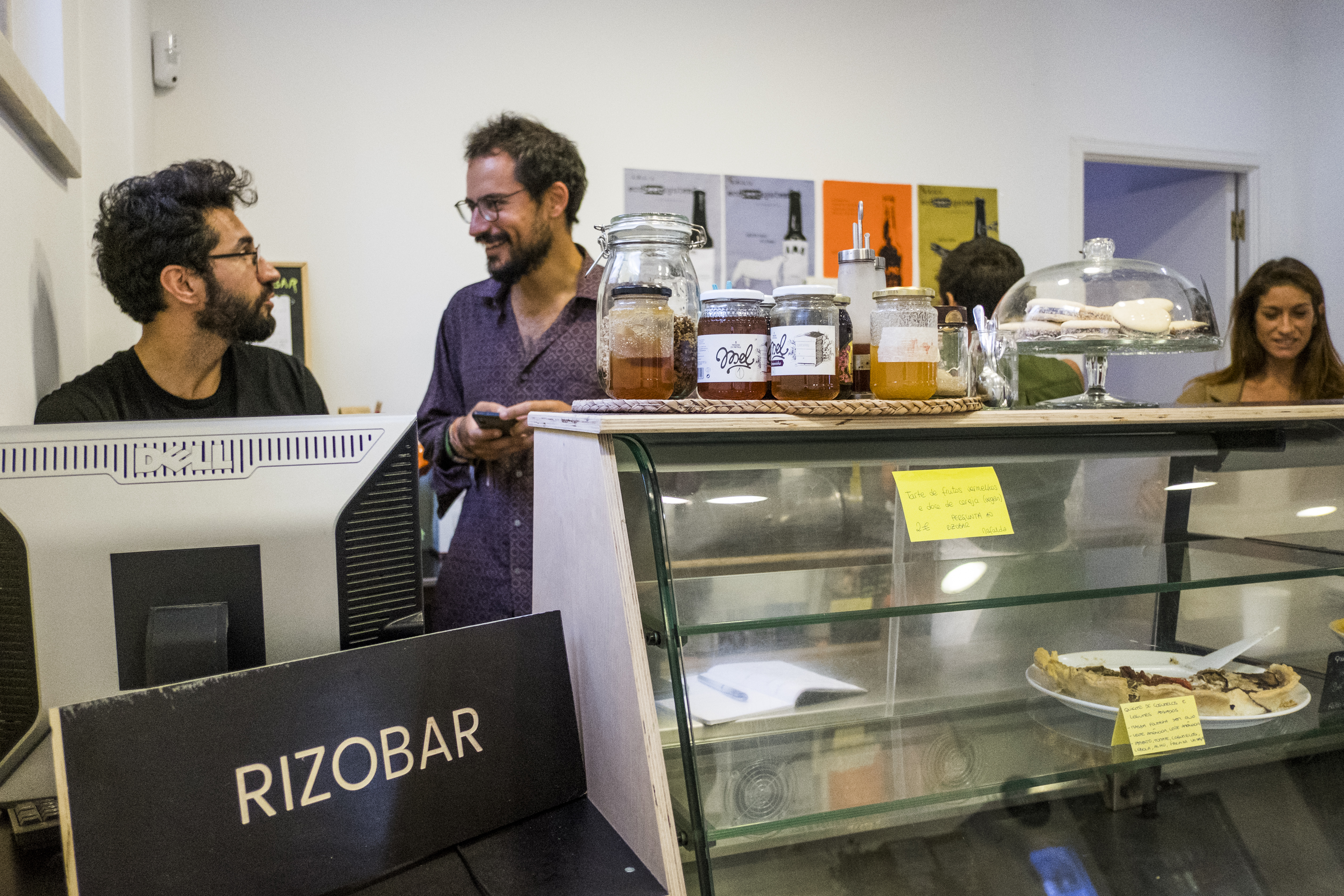
A key feature is the two-floor glass façade facing the street, creating visual continuity between inside and outside. This transparency invites passers-by to see what is happening, lowering barriers and making the space a constant, open invitation to engage with the community. Beyond its grocery function, the space includes a café (an essential element of Portuguese culture) for social interaction and a freely accessible terrace, encouraging neighbours to gather, rest, and connect.
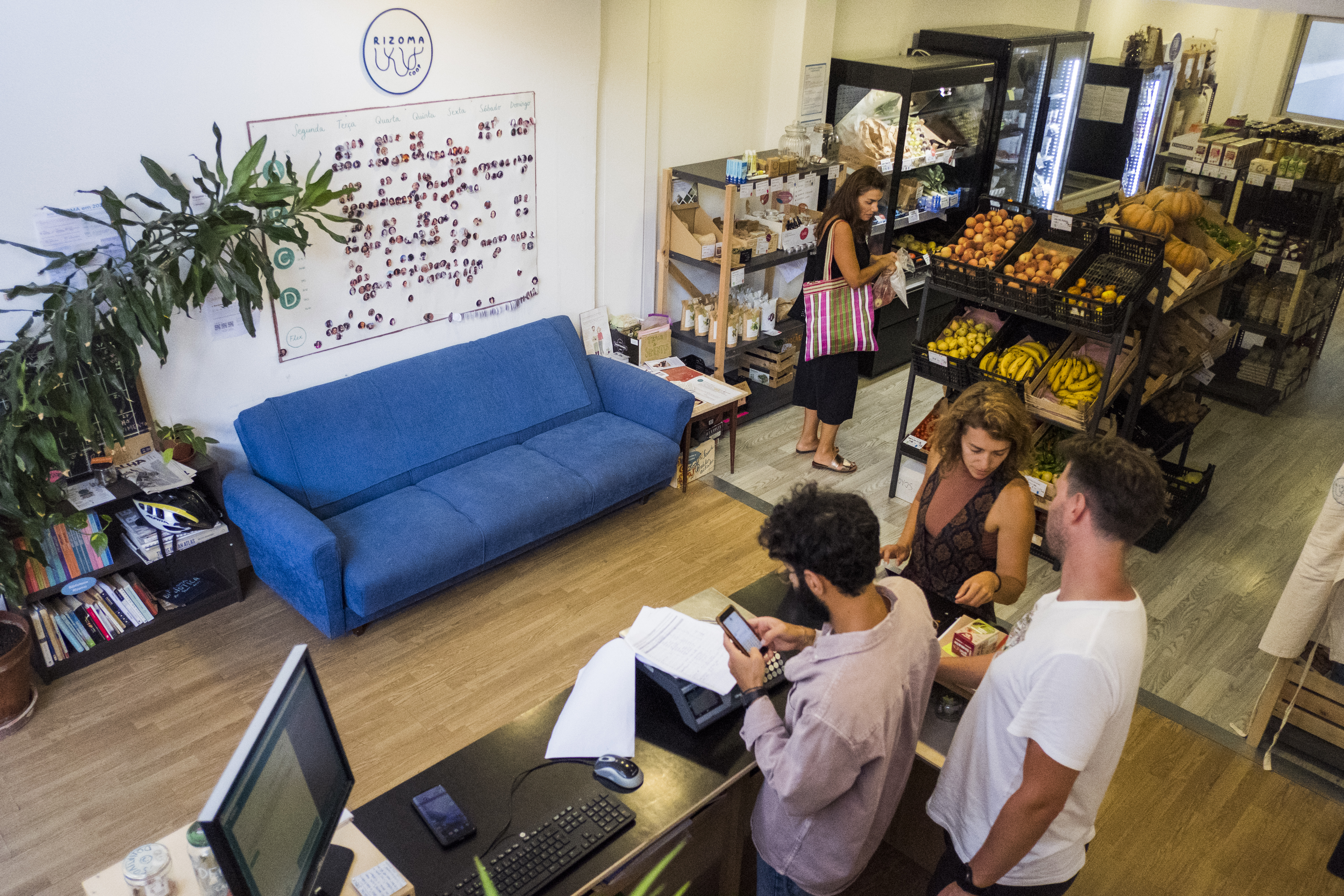
A sofa at the entrance invites people to pause, challenging fast-paced consumption patterns, while fresh fruits and vegetables bring colour, seasonality, and natural scents, reconnecting visitors with food cycles. The entrance also serves as a cultural interface, with a full-height wall for neighbours to share events, workshops, and local initiatives, transforming entry into an experience of community connection.
The agroecological garden extends this aesthetic into the urban landscape, creating a living, evolving space for learning and care within a public school. Combining production lines with a seedling nursery, and open on Saturday mornings, it has become an urban oasis for play, conviviality, and intercultural encounters, visited weekly by dozens of families.
Through participatory design, craft, culture, and sensory experiences, Rizoma enhances daily life, fosters a sense of belonging, and exemplifies how community-led spaces and circular economy can transform urban aesthetics.
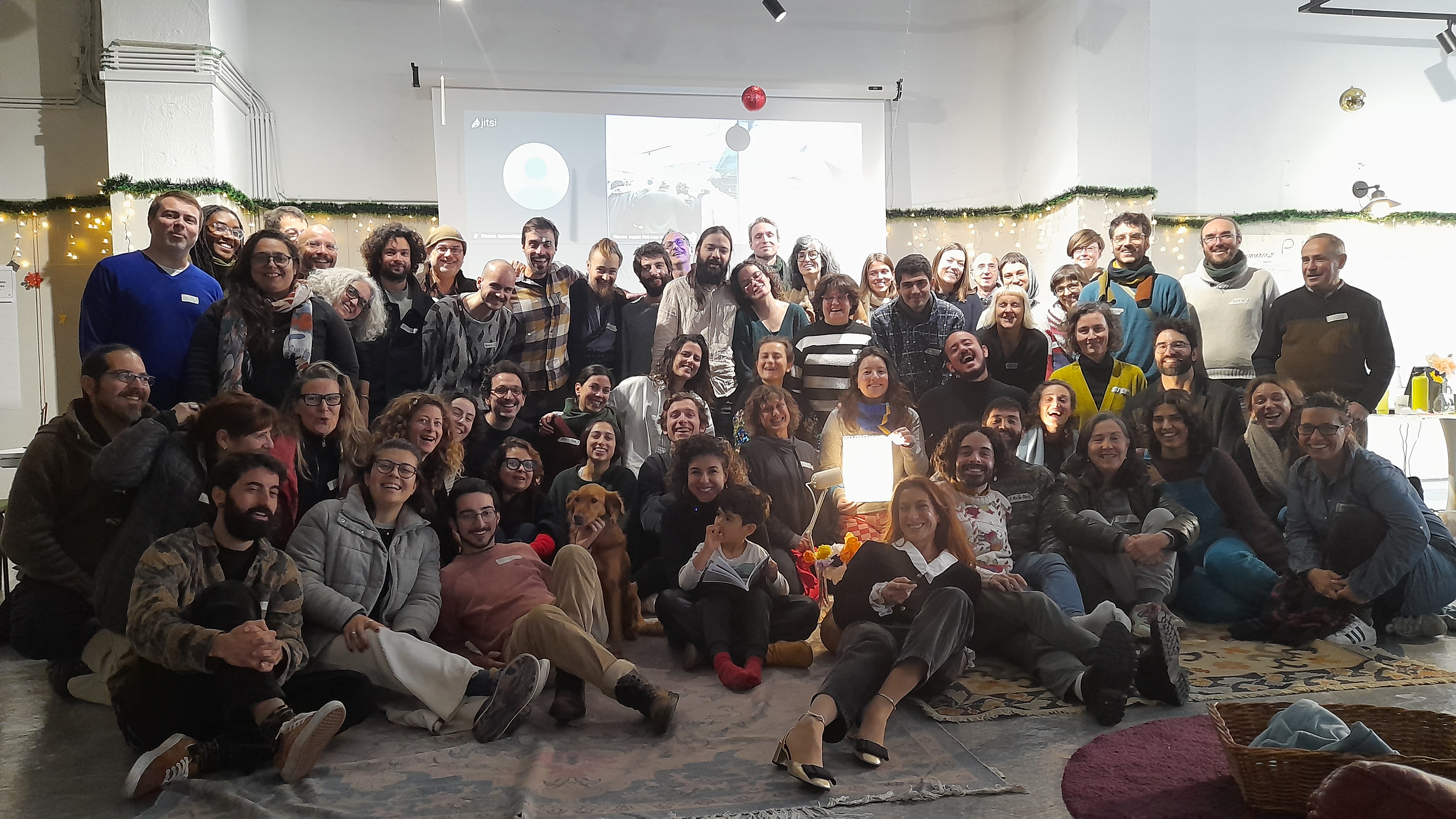
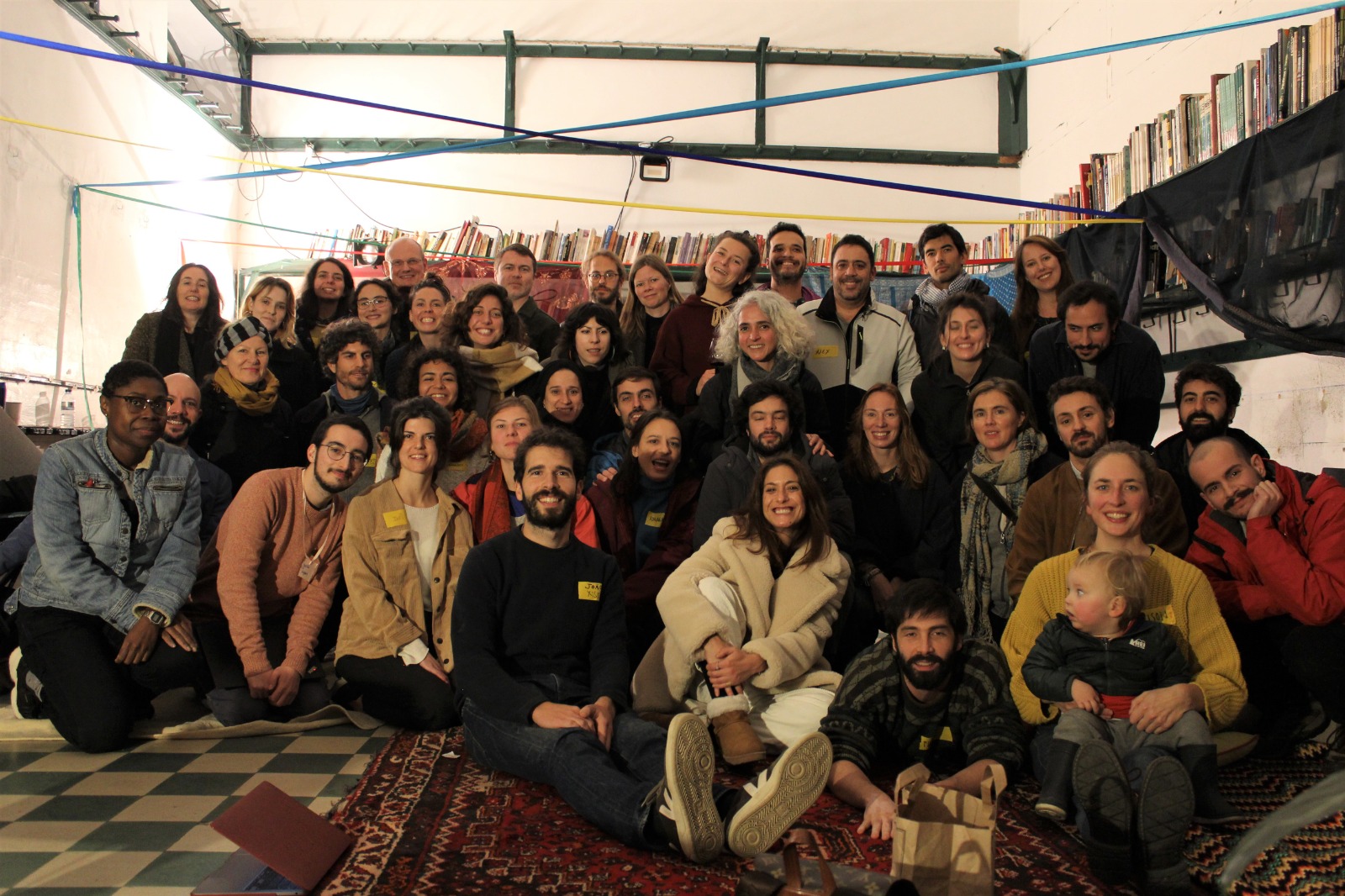
Inclusion is embedded in both access and governance. Rizoma brings together a wide range of participants, with members aged between 16 and 86, a majority identifying as women, and a highly diverse set of nationalities, reflecting the social fabric of Lisbon and, particularly, the neighborhood.
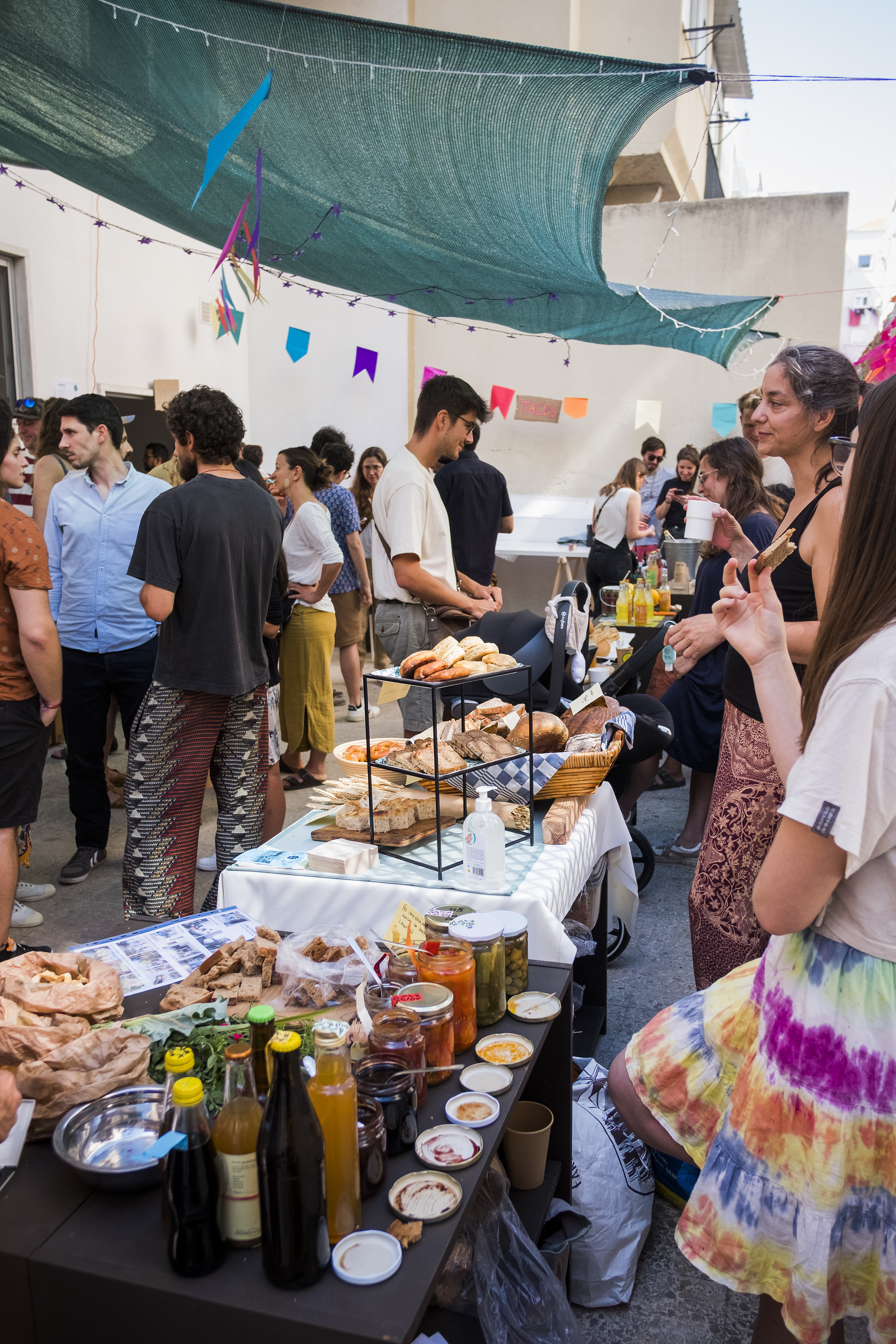
Economic accessibility is addressed by reducing intermediaries and implementing a pricing system that prioritises essential goods, making sustainable food more affordable. At the same time, many of the activities such as workshops, cinema and music events and the garden remain free and open to the wider community.
Participation is designed to be flexible, allowing members to contribute according to their time and capacities, lowering barriers to engagement. This is particularly important to guarantee the participation of more vulnerable individuals such as single parents or people with multiple jobs.
The project also creates inclusive spaces where different generations, cultures and backgrounds interact through shared practices such as food, learning and collective care. It is also important to note the diversity of ideologies, philosophies and ways of life. By catering to the needs of the local community while being equal in implementation power for their members, Rizoma is a social laboratory for having important discussions on how to respect everyone’s core beliefs while being proudly a safe space for people that want to listen and be listened to.
In an increasingly individualistic and reactionary society, Rizoma uses food as a vehicle to promote dialogue between groups, celebrate cultural differences and nurture togetherness between neighbours.
The project is fundamentally built on citizen participation. As a self-managed and member-operated cooperative, all core functions — from sourcing and logistics to governance and daily operations — are carried out by its members. Without their active involvement, the project would not exist.
Participation happens at multiple levels. Members contribute through regular operational shifts in the grocery, ensuring its day-to-day functioning, while also taking part in working groups and decision-making processes. Beyond this, participation extends to the design and evolution of the project itself: new ideas and initiatives emerge directly from members, reflecting the needs and aspirations of the community.
The cooperative grew organically through neighbourhood networks, friends, and word-of-mouth, gradually building a diverse and engaged community. This bottom-up growth has been key to creating a strong sense of ownership and long-term commitment.
Civil society organisations also played an important role. The association Renovar a Mouraria was instrumental in enabling the initial pilot grocery, providing space and support at an early stage. The cooperative Minga, the first integral cooperative in Portugal, contributed to shaping the organisational model and governance structure.
The impact of this participatory approach is significant: it transforms beneficiaries into co-creators, strengthens local networks and builds practical skills in collaboration, governance and sustainability. It also ensures that the project remains adaptive, evolving continuously in response to its community.
The project operates primarily at the local level, while actively connecting grassroots action with institutional frameworks across governance scales.
At the municipal level, the Lisbon Municipality has been instrumental through financial support, enabling both the scaling of the grocery and the creation of the agroecological garden. The garden is implemented on public land made available by a local school, illustrating how underused public assets can be mobilised through community-led initiatives to deliver social and environmental value.
In recent months, the cooperative has strengthened its collaboration with the local parish council, engaging in joint applications to rethink the role of municipal markets and contribute to the transition towards more sustainable, localised and democratic food systems in Lisbon.
At the national level, the project engages with CASES – Cooperativa António Sérgio para a Economia Social, contributing to the development and recognition of cooperative models within the broader social economy ecosystem.
Partnerships with civil society organisations, including Renovar a Mouraria, Circular Wear, Quercus and ISHARTES, have enabled cross-sector collaboration, knowledge exchange and community outreach.
At the same time, the project draws on international cooperative movements, adapting tested models to the local context.
The added value of this multilevel approach lies in its capacity to bridge bottom-up initiatives with public policy objectives, demonstrating how citizen-led projects can inform and support systemic transitions towards more resilient, inclusive and sustainable urban food systems.
The Rizoma group is inherently transdisciplinary, combining expertise from multiple fields to design and implement an integrated community-based system. Knowledge of food systems and supply chain management guides sourcing, producer relationships, and distribution. This is complemented by agroecology and regenerative agriculture applied in the urban garden to restore soil health, enhance biodiversity, and promote sustainable food production.
Social sciences and facilitation practices are central to governance, supporting participatory processes, collective decision-making, and conflict resolution within a diverse community. Design and communication shape both the cooperative’s physical space and its identity, ensuring accessibility, clarity, and engagement. Architectural expertise contributed to co-creating the space, while digital tools and IT support operations, coordination, and data management. Management and organizational innovation integrate retail, production, education, and cultural activities within a horizontal, democratic structure.
Collaboration across disciplines is embedded in Rizoma’s decentralized governance. Diversified working groups interact in circular structures with rotating representatives, and consent-based decision-making allows differing perspectives to converge, fostering creative solutions. Every decision benefits from the combination of technical, social, and cultural knowledge, ensuring that practical, ecological, and community objectives are aligned.
This transdisciplinary approach is key to Rizoma’s ability to experiment, adapt, and offer a replicable model for community-led systems change. By embracing collective intelligence from the outset, no single discipline or individual drives the project alone; instead, the integration of diverse knowledge creates a more resilient, innovative, and socially and environmentally impactful system.
Since its inception, Rizoma has adopted a Local Economic Development (LED) strategy, aiming to strengthen members’ economic capacity while improving community well-being. Its business model is designed for long-term financial sustainability.
The community grocery is primarily sustained through product sales, while the agroecological garden contributes via grocery sales, occasional direct sales, and local markets. These revenue streams cover the main costs of the structure, including space rental and a small team of three paid staff who ensure operational continuity and coordination. External funding, mainly public, supported initial investments such as space renovation and garden setup.
As an integral cooperative, each project maintains financial autonomy while sharing common structures. This enables flexible allocation of costs and internal solidarity mechanisms, such as resource redistribution or internal loans to support new initiatives. All economic value remains within the cooperative and is collectively governed, with members deciding how surplus is reinvested, ensuring that economic activity directly serves community goals.
In a context of rising urban costs, maintaining a financially viable, community-led project in central Lisbon demonstrates economic resilience and civic action. Rizoma promotes disruptive innovation in urban development by showing how bottom-up initiatives can generate local value, keep opportunities within the community, and maximize social and economic impact. It is a practical example of how LED-based initiatives can help shape a city’s development.
The model is scalable while remaining locally driven: new initiatives can replicate its structures and principles without compromising community control. Rizoma’s approach has been nationally recognised, including an honourable mention for cooperative excellence by CASES, highlighting the robustness and replicability of its model.
Rizoma serves as a model for revitalising neighbourhood grocery shops, transforming them into community spaces that combine access to sustainable products with social exchange, learning and collective governance. Inspired by European cooperative initiatives, it demonstrates how these models can be adapted and combined in new contexts.
Its core components are highly transferable: a member-run grocery, participatory governance based on consent, integration of production and consumption, and community spaces for learning and cultural exchange. Each element can be replicated independently or within a broader cooperative framework. The governance model offers a practical approach to “democracy in practice”, combining economic activity with collective decision-making.
Replication requires a motivated local group, a physical space and basic organisational support. Initial funding — through public support, crowdfunding or community investment — is often an important enabler. The model can be adapted to different contexts, including more vulnerable areas, by prioritising social functions such as affordable food, inclusive spaces or community services.
While Rizoma benefits from a dense urban context, its principles can be applied to other neighbourhoods, cities or rural areas, adapting to local conditions. It also has potential to support new initiatives as a supplier or incubator, helping reduce costs while maintaining local autonomy.
Ultimately, Rizoma offers a tested and adaptable framework for community-led systems change, strengthening social cohesion, resilience and sustainable food systems, while inspiring others to create their own locally rooted versions.