Rehabita Ventosa
Rehabilitation and Innovative Housing Solutions for Social and Economic Revitalization in Ventosa
The project supports the social and economic revitalization of Ventosa through the rehabilitation of existing homes and the development of innovative, sustainable housing solutions. A local community steering group will analyse opportunities, map and catalogue the village housing stock, and define a sustainable rehabilitation strategy, while creating a digital platform to manage housing resources, strengthen citizen participation, and address depopulation.
Spain
Ventosa, La Rioja, Spain.
Early initiative
Yes
Yes
Yes
No
No
26163: Ventosa (ES)
ReHabita Ventosa is a municipal initiative designed to revitalise Ventosa socially and economically by tackling long-term housing vacancy and enabling sustainable living in a rural context. Its overall objective is to make Ventosa more liveable and attractive for current residents and potential newcomers by activating empty homes through a replicable, community-supported model.
Target groups include local residents (young people, families and older residents), potential new residents and professionals considering relocation, owners of vacant or underused dwellings, and local SMEs and self-employed workers linked to rehabilitation, construction and services.
The initiative combines a concrete pilot with scalable tools. Two historic municipal homes in the village centre are being rehabilitated using traditional, durable methods and energy-efficiency measures. These homes are not the end goal: they function as a demonstrator to show what sustainable rehabilitation looks like in Ventosa and to provide a practical reference that private owners can follow when upgrading their own properties.
Specific objectives are to: co-design new habitability solutions with citizens; map and inventory the housing stock; categorise dwellings and define a sustainable rehabilitation action plan; create a digital platform to manage housing resources; and implement governance arrangements to scale and replicate the approach over time.
Expected results include a visible pilot, a housing inventory and action plan, a digital housing platform, stronger community involvement, and a clear pathway for owners to rehabilitate more homes, progressively reducing vacancy and supporting long-term rural revitalisation.
Rural Development
Community Participation
Living Spaces
Territorial Revitalization
Digital Innovation
ReHabita Ventosa addresses environmental sustainability by prioritising rehabilitation of the existing built stock, avoiding new construction and reducing resource use. The initiative promotes lifecycle thinking through durable, repairable interventions grounded in traditional methods and materials, complemented by energy-saving and energy-efficiency measures to reduce energy demand, emissions and improve thermal comfort.
The rehabilitation of two historic municipal dwellings is intentionally designed as a pilot and demonstrator, not as the core outcome. Its purpose is to test and showcase sustainable solutions in real conditions, document practical lessons, and provide a credible local example that private owners can replicate when rehabilitating their own vacant or underused homes. This demonstration effect is central to achieving impact at scale across Ventosa’s wider housing stock.
To enable scaling, ReHabita Ventosa embeds circularity and eco-design at municipal level through a housing inventory and mapping process, categorisation of dwelling conditions, and an action plan to prioritise sustainable rehabilitation pathways. A digital housing platform will support more efficient resource management and help connect needs, available homes and rehabilitation routes, encouraging homes to return to use and remain in use.
Its exemplary character lies in showing how a very small municipality can trigger an environmentally responsible transition of its built environment by combining a visible pilot with participatory governance, planning tools and shared guidance that supports replication by private owners and transfer to other rural contexts.
ReHabita Ventosa strengthens the quality of experience and sense of belonging by improving the everyday built environment through heritage-sensitive rehabilitation. By restoring vacant historic homes in the village centre, the initiative upgrades the quality, coherence and liveability of public-facing streetscapes and creates dignified, comfortable living spaces aligned with Ventosa’s character.
The two municipal dwellings are rehabilitated using traditional techniques and materials that respect local architecture, while integrating contemporary standards of habitability and energy performance. They are not presented as a standalone renovation, but as a demonstrator of how Ventosa’s architectural identity can be preserved and enhanced through high-quality rehabilitation. This creates cultural and emotional value: reinforcing pride of place, improving daily experience, and making rural living more attractive.
Crucially, the pilot is designed to inspire replication. By providing a clear, tangible local reference, it supports private owners in understanding what good looks like and adopting similar quality-focused, heritage-compatible rehabilitation approaches in their own homes. The housing inventory, action plan and digital platform reinforce this by clarifying priorities and pathways for further interventions.
Its exemplary character lies in treating aesthetics as a driver of transformation: preserving the qualities of place while improving comfort and liveability, and using a demonstrator plus enabling tools to spread better rehabilitation practices across the municipality and beyond.
ReHabita Ventosa addresses inclusion by reducing barriers to liveable housing in a very small rural municipality and by building inclusive governance around housing decisions. A key local challenge is the lack of available, adequate housing, which limits the arrival of new residents and the ability of young people and families to stay. The initiative responds by enabling sustainable rehabilitation pathways and by creating two municipal pilot dwellings that demonstrate achievable, quality rehabilitation in Ventosa’s context.
Inclusion is also embedded through participation and access to information. The project creates a local motor group and implements participatory processes to define housing solutions aligned with the needs of both long-term residents and newcomers. A housing inventory and mapping process improves transparency about the state of the housing stock and helps prioritise actions fairly.
A digital housing resources platform will further increase accessibility by providing clear information and coordination tools for residents, owners and potential newcomers, supporting new living models beyond traditional buy or rent (for example, flexible formulas). The initiative is exemplary because it combines a concrete pilot with a municipality-wide enabling system: community-led decision-making, transparent data, and practical tools that reduce exclusion and help ensure that housing opportunities are accessible and understandable to all.
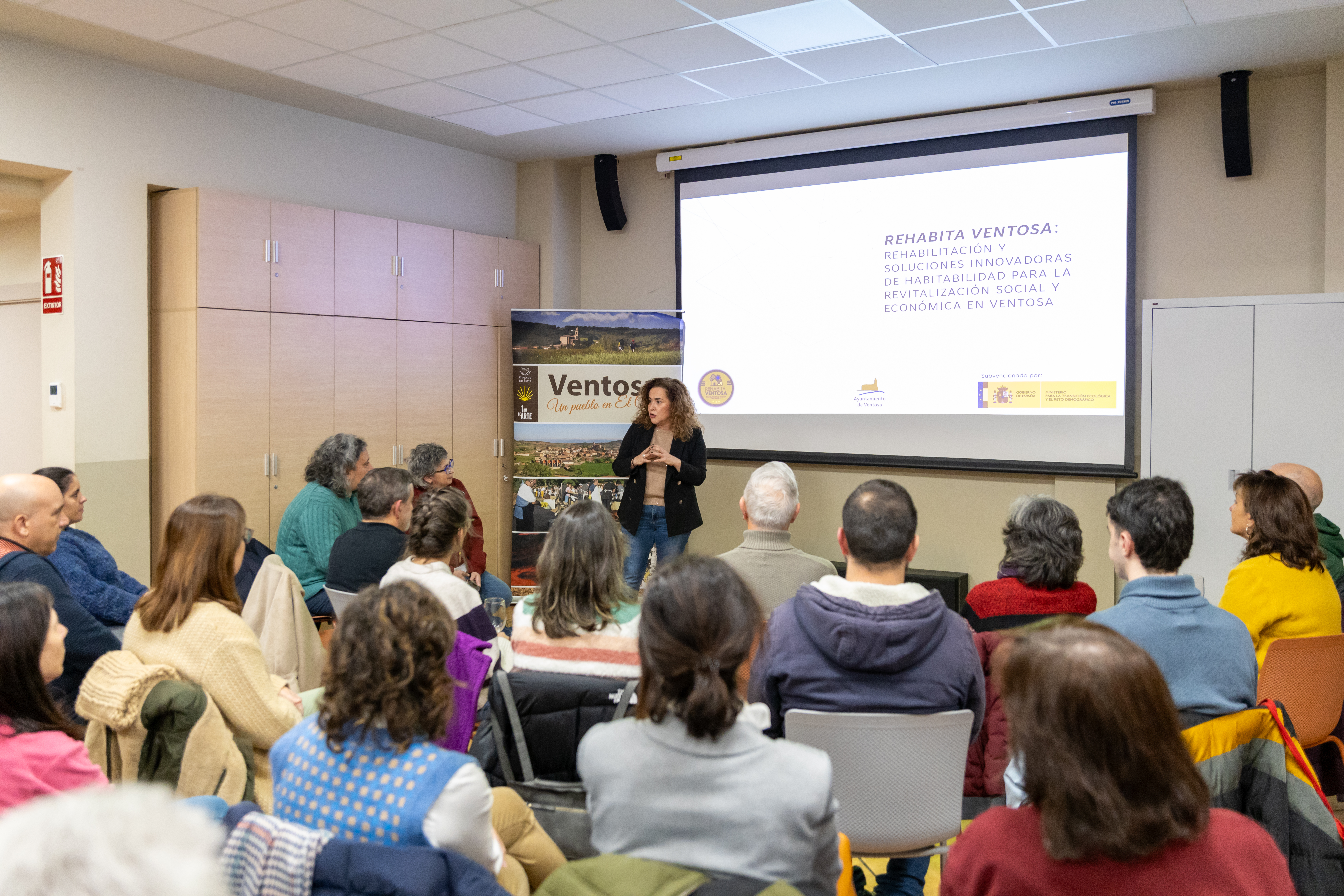
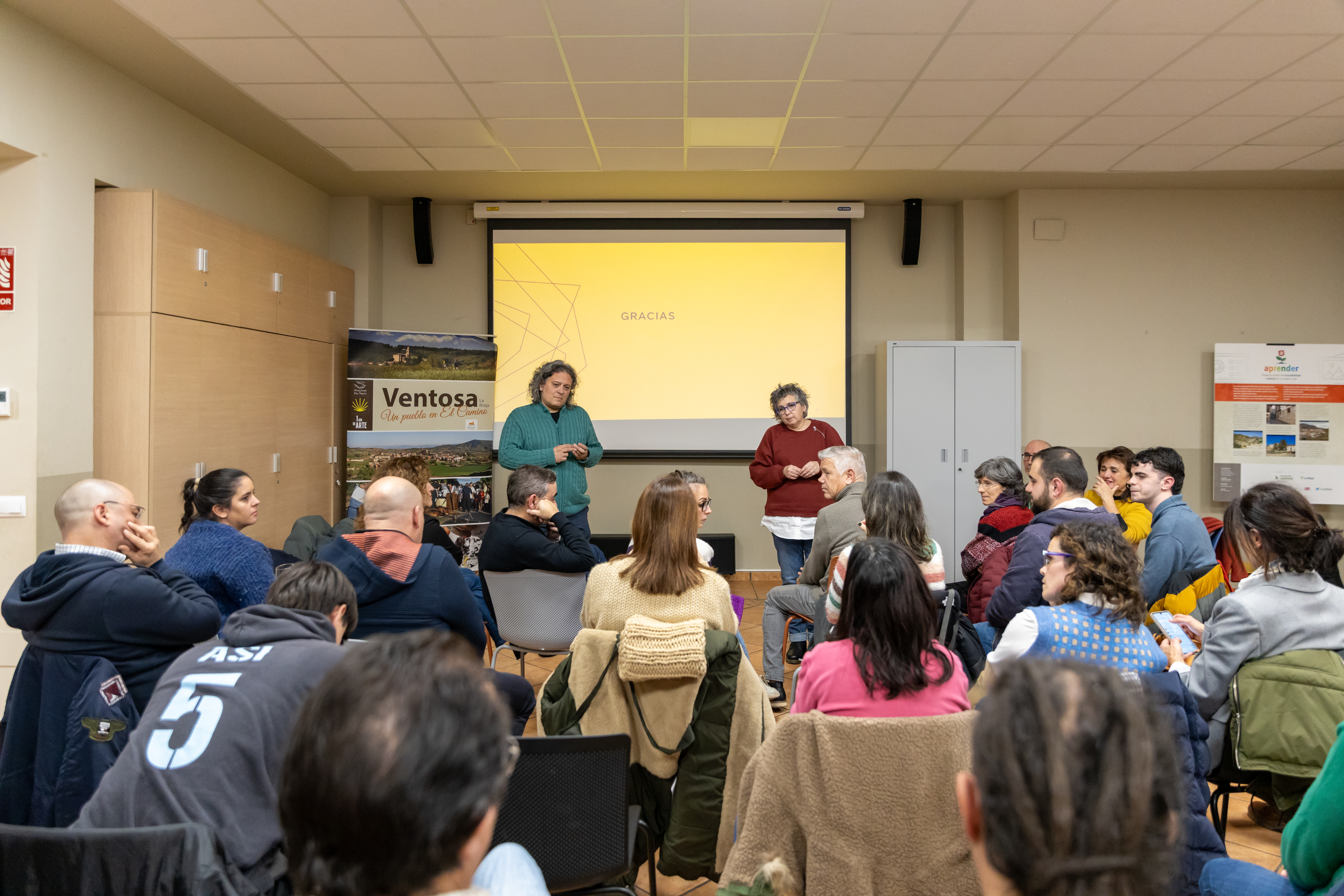
Citizen involvement is a structural component of ReHabita Ventosa, embedded from diagnosis to implementation. The Municipality carried out prior analysis of housing conditions and local needs and undertook communication and participation actions to make visible the housing shortage and its concrete consequences, including the loss of potential new residents. Participation is not treated as a single consultation moment, but as an ongoing mechanism to shape solutions and build community ownership.
The initiative creates a local motor group as a co-design and decision-support structure. Citizens and civil society actors contribute to identifying innovative habitability solutions and to defining criteria that reflect local realities: which housing typologies are most needed, which barriers keep homes vacant, and what rehabilitation pathways are realistic for owners. Participation also informs the housing inventory and mapping process, helping to categorise dwellings and to build a rehabilitation action plan rooted in shared priorities.
The role of citizens includes: contributing local knowledge, validating solutions, supporting outreach to owners and potential residents, and strengthening trust in the project’s governance. The expected impact is practical and measurable: increased participation, new cooperation networks, and stronger community agency to activate housing resources over time. By producing tools such as a digital platform and a replication guide, participation is converted into durable outputs rather than remaining an intangible process.
The project is exemplary because it empowers a small rural community to shape its own housing transition, ensuring the initiative is socially anchored and therefore more feasible, scalable and resilient in the long term.
ReHabita Ventosa is designed with multi-level engagement that strengthens feasibility and increases the value of the project beyond the local scale. At local level, the Municipality of Ventosa acts as the main applicant and implementation lead, mobilising municipal resources (staff support, facilities, devices, communication channels and local coordination capacity). Local civil society and associations reinforce legitimacy through documented support and collaboration, helping connect the initiative to community needs and ensuring that solutions do not remain purely administrative.
At national level, the project aligns with policies addressing depopulation and territorial cohesion and fits within the framework of public support for innovative local projects. This provides institutional validation, a financing pathway and a strategic policy context that increases implementation capacity and credibility. The project also incorporates dissemination, communication and knowledge transfer elements that benefit from institutional visibility and networks.
At regional level, the initiative connects with rural development objectives, including improving habitability infrastructure and supporting sustainable rehabilitation. It is designed to be shared with peer municipalities through the dedicated replication workstream and outputs such as the replication guide and transferable digital tools.
At European level, the NEB Boost framework provides added value by linking ReHabita Ventosa to NEB ambition levels and a community of practice, improving comparability, transferability and dissemination. The multi-level approach is exemplary because it combines local ownership with institutional support and broader networks, increasing delivery capacity and potential to inspire replication.
ReHabita Ventosa reflects a transdisciplinary approach that integrates technical, social, environmental and digital knowledge fields to address housing vacancy as a systemic challenge. Key disciplines include architecture and sustainable rehabilitation, heritage-sensitive building practice, energy efficiency, circularity and eco-design, territorial planning, social innovation and community governance, and digital technologies for data and resource management.
These fields interact through a structured workflow. Participatory processes and a local motor group identify needs and explore innovative living solutions (including flexible formulas beyond traditional buy or rent). Technical experts translate these needs into a rehabilitation strategy and a technical project for two municipal dwellings using traditional techniques and sustainability criteria, enabling phased implementation according to available funding. In parallel, a housing inventory and mapping methodology produces categorised knowledge of the housing stock and feeds into an action plan that prioritises interventions by sustainability, durability and feasibility.
Digital expertise is then used to design a housing resources platform that makes information accessible and actionable, connecting residents, owners and potential newcomers. Governance and replication work ensures that the method, tools and lessons can be documented and transferred to other rural contexts, including through a replication guide and structured dissemination.
The added value of this transdisciplinary process is that it turns complex challenges (housing vacancy, rural attractiveness, affordability and delivery constraints) into an integrated solution system, increasing feasibility, improving decision quality and enabling scaling beyond a single pilot.
ReHabita Ventosa is innovative because it does not treat rural housing vacancy as a one-off renovation or a purely administrative problem. Instead, it builds a replicable municipal model that combines a tangible demonstrator with enabling tools that can activate privately owned vacant homes over time. The initiative recognises that mainstream practice often focuses on isolated works or short-term incentives, without creating the governance, data and coordination systems needed to scale rehabilitation.
Innovation is expressed in four interconnected components. First, co-design of new habitability solutions through a local motor group, ensuring solutions reflect local needs and can include flexible living formulas beyond traditional buy or rent. Second, a structured housing inventory and mapping process that categorises dwelling conditions and supports evidence-based prioritisation through a rehabilitation action plan. Third, a configurable digital housing platform that increases transparency, improves coordination and reduces barriers for owners and potential residents. Fourth, a dedicated governance and replication workstream that produces a replication guide and a transfer-oriented strategy, making the model usable by other rural territories.
The two municipal dwellings are intentionally positioned as a demonstrator: they show that sustainable rehabilitation using traditional methods and energy-efficiency tools is feasible and worthwhile, encouraging owners to follow similar principles. The innovation therefore lies in the integrated system (pilot + participation + data + digital tool + replication outputs) that enables a municipality-wide shift away from long-term vacancy.
ReHabita Ventosa follows a three-workstream methodology with a clear sequence and measurable outputs. Workstream 1 focuses on social innovation in housing: establishing a local motor group, analysing needs, exploring innovative habitability solutions, mapping and inventorying the housing stock, categorising dwelling conditions, and producing a rehabilitation action plan with sustainability, durability and feasibility criteria. This workstream also includes designing and deploying a digital platform to manage housing resources, provide transparent information and connect owners, residents and potential newcomers to pathways for activation.
Workstream 2 provides the technical foundation: the technical project for sustainable rehabilitation of two publicly owned dwellings in the village centre. The approach uses traditional methods and materials and integrates sustainability and energy-efficiency requirements. The technical project enables phased implementation by clarifying scope, costs and sequencing according to funding availability.
Workstream 3 ensures governance, management and replication: internal municipal coordination, continuous support to political leadership, strategic replication planning, and external services where needed (replicability strategy, study, and final review). This workstream produces a replication guide and supports dissemination so that the participatory model, inventory method and digital tools can be adapted to other rural contexts.
The approach is designed to move from a credible pilot to a municipality-wide housing activation system, preventing vacancy and enabling long-term transformation.
ReHabita Ventosa is designed to be transferable beyond the two municipal dwellings. Replicable elements include the participatory governance model (local motor group and structured co-design), the methodology for mapping and inventorying the housing stock, the categorisation framework to assess dwelling conditions, and the rehabilitation action plan used to prioritise interventions based on sustainability, durability and feasibility.
The digital housing resources platform is a key transferable product. It is designed to be configurable and applicable in other municipalities to improve transparency, coordination and access to information about housing availability and rehabilitation pathways. The project explicitly produces a replication guide to package lessons learned, steps, criteria and tools so that other rural territories can adapt the approach to their own context, scale and capacity.
The two municipal dwellings function as a demonstrator with a “multiplier effect”. They provide a visible, credible local reference that helps convince private owners that sustainable rehabilitation is possible and beneficial, supporting behavioural change and increasing the likelihood that additional vacant homes will be brought back into use. This combination of demonstrator + planning tools + digital platform + replication guide forms a scalable methodology that can be transferred to different places, beneficiary groups and rural contexts facing depopulation and long-term vacancy.
ReHabita Ventosa demonstrates strong commitment and feasibility through secured planning, defined workstreams, measurable targets and dedicated resources. The initiative has identified the physical infrastructure to be transformed (two municipal dwellings in the village centre) and has established a clear development pathway combining participation, technical planning, digital tools and governance for replication. Municipal capacity is committed through staff support, facilities, communication resources and internal coordination, complemented by external technical services where necessary.
Planned activities include: launching and operating the local motor group; developing innovative habitability solutions; completing the housing inventory and mapping and producing the rehabilitation action plan; designing and implementing the digital housing platform; completing the technical project and advancing rehabilitation implementation in phases according to funding availability; and delivering governance and replication outputs, including the replication guide and final review/audit.
NEB values and principles have been incorporated so far through: environmental sustainability (rehabilitation, traditional durable methods, energy efficiency), inclusion (access to housing, transparency, participation, attention to diverse needs), aesthetics (heritage-sensitive improvement of the village centre), participatory governance (motor group and co-design), multi-level engagement (alignment with policy and institutional frameworks), and transdisciplinarity (integrated technical, social and digital workstreams).
Key next steps are to complete platform deployment, finalise priority pathways for owners, and implement phased rehabilitation and replication actions so that the pilot demonstrator enables wider private-owner uptake and long-term housing activation.