Arts, Culture, and Heritage as Drivers of Change
GLUMPERT
sustainable fashion as queer safe space
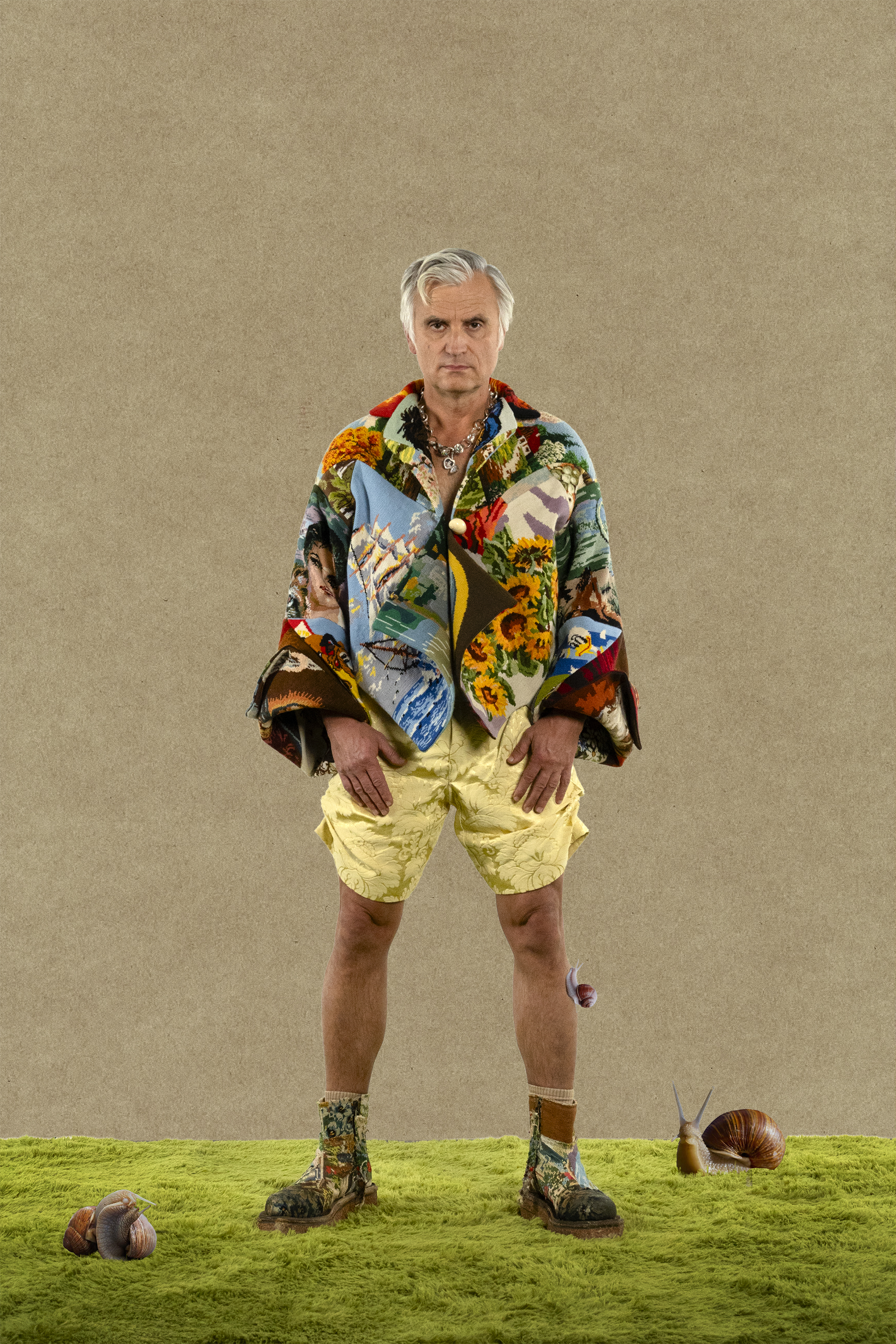
This project defines the intersection of fashion & art. The collection is called „GLUMPERT“ which describes the Austrian slang word for unwanted things or an unloved group of people. Outcast materials or „trinkets“, queer people and snails are given back their deserved social appreciation through empathetic approach and mindful care.
A self developed zero-waste-draping-system is based on the snails golden ratio and represents a safe space.
All outfits stand together in unity and community.
All outfits stand together in unity and community.
Austria
Local
Linz, Austria
It addresses urban-rural linkages
It refers to other types of transformations (soft investment)
Prototype level
No
No
No
Individual
This project fits into the intersection of fashion, art & science.
The collection is called „GLUMPERT“ which describes the Austrian slang
word for unwanted things or an unloved group of people.
Outcast materials or so called „trinkets“, queer people and snails are given back their deserved social appreciation through empathetic approach and mindful care.
References such as non conforming fluid identities, relevance to various ecosystems, symbol of slow-pace and safe space are at the projects core. These references are offered by the snail - a queer role model.
Inspired by the snails’ spiral, the golden ratio is translated into a self developed zero-waste-draping-system. This allows for recursive pattern expansion into various sizes or for sensitivity towards diverse physical circumstances.
Through the perspective of „queering“ the environment - the sustainability strategy "repurpose" is applied onto neglected (textile) household or fashion goods and are given new meaning. Hand-embroidered Gobelin pictures, colorful silk scarves, plain crocheted doilies or umbrellas are used. Additionally shimmering velvet curtains, shiny bed linens and sheets as well as pillow covers find their place. Found at local flea markets and national NGO-sorting stations.
Heteronormative dress codes are appropriated through the rebellious use of atypical materials. In this way, outdated stereotypes are ironically
recontextualized.
The concept unfolds across two interconnected formats: as an exhibition creating a shared cultural and discursive space, and as artistic wearable objects.
All (21) outfits together range within the color spectrum of the rainbow.
They stand together in unity and community.
The idea developed after I combined my passion for going to fleamarkets with the negative connoted Austrian slang word for "trinkets" or "old material". It started with researching the word "GLUMPERT".
The words origin led me to the symbolization of the queer community. This made me combine one another within the concept.
The perspective of "queering" manifested in my research.
Using a different view to question normative society as we live in it - by appreciating old or unwanted goods through the sustainability strategy "repurpose".
(The strategy is similar to the history of the word "Queer" itself. It regained power and valuable perspective, after it was reclaimed by the community in the late 1980's).
Within this empathetic approach - the snail found its way into the project through a museum visit.
It became the rolemodel for non normative identities, slowness in fashion and a safe space for creatures.
Additionally the golden ration of the houses' spiral helped to develop a zero-waste-draping-system for clothing.
Zero Waste, because I value old goods so much, they should find use in a precious way - so no cutting waste was created.
The garments were created by careful material selection and preparation. All of them are true to their original material qualities. The secondary raw material was selected after sorting criteria in the manner of "reverse engineering". Also based on the golden ratio - only circles and squares were selected.
Only items of the same sort are combined within one garment. Nylon umbrellas with each other, silk scarves with each other...
To finalize the communication level: the artistic concept is communicated and represented within an exhibition format.
To create a visually meaningful garment, the looks are each based off of heteronormative or stereotypical archetypes of clothing.
Therefore they are ironically transformed into clothing or art objects to reclaim power.
Queerness & Queer Studies
Sustainability (repurpose, zero waste, material purity)
Social Inclusion & Empathetic Approach
Nature Inspired Solutions
Community building via Art Education
Sustainability is embedded in the concept through circular material use, waste prevention, long product life, and a broader cultural shift towards more conscious forms of production and consumption. The project addresses environmental challenges not only through material choices, but through a complete design logic that transforms discarded goods into durable, high-value pieces.
AMBITION I - to repurpose
Existing materials only: The garments and artworks are created exclusively from old/unwanted goods, giving discarded materials a new function within fashion & art.
Zero-waste construction: The Zero-Waste-Draping-System avoids cutting waste entirely and reduces material loss at the production stage.
Material purity: Only likewise materials are combined within one garment, supporting easier future separation, repair, and reuse.
Extended lifespan: Through high-level craftsmanship, repurposed materials are transformed into haute couture pieces with durability, care value, and long-term relevance.
Reduced resource use: By working with existing materials, the concept lowers the need for new raw inputs and therefore reduces associated energy use, water consumption, and CO2 emissions.
AMBITION II - to close the loop
Waste transformation: Materials sourced from local flea markets & sorting organizations are diverted from disposal/destruction and reintroduced into a new cultural and material cycle.
Reversibility: The garments are conceived in a way that allows them to be unpicked and potentially returned to their original material state, reinforcing circularity and lifecycle thinking.
AMBITION III - to regenerate
Behavioural change: Beyond material sustainability, the concept encourages new attitudes towards value, reuse, and consumer culture.
Community-based exchange: Through shared experiences, audiences exchange garments, materials, and perspectives, strengthening collective awareness and more regenerative ways of relating to consumption.
The concept contributes to aesthetics by transforming discarded materials into emotionally resonant, body-sensitive garments and spatial experiences. It creates a sense of belonging through visual identity, shared experience, and inclusive forms of expression that connect individuals to each other and to places.
AMBITION I – to activate
Comfort & sensibility: Material purity ensures that fabrics are not mixed in conflicting ways, supporting bodily comfort and a clear tactile experience.
Freedom of expression: Body-distant silhouettes allow individuals to express identity without exposure or restriction.
Local specificity: Materials are sourced in Austria, embedding regional characteristics into the visual language, while subtle material variations across European fleamarkets highlight local diversity.
Aesthetic system: Materials are sorted by colour, texture, and geometry, allowing an intuitive yet precise composition. Draping reframes familiar garment codes, while elements such as embroidery, crochet, and found objects reference different textile traditions and categories.
AMBITION II – to connect
Shared space: The first exhibition gathered over 400 visitors, creating a collective experience centred around art, identity, and safety.
Accessibility: Free entry and open access ensure that diverse audiences can engage with the work.
Community engagement: Guided tours and collaborations with local communities and queer organisations foster exchange and dialogue.
Inclusive mediation: Dedicated formats for students and for deaf and blind audiences expand accessibility and deepen engagement.
AMBITION III – to integrate
Relatability: By placing objects, bodies, and symbols on an equal visual level, the work creates unexpected connections and emotional accessibility.
Active participation: Through workshops, participants create their own textile expressions, which are later carried into public space, extending the aesthetic experience into everyday life.
The concept promotes inclusion through accessibility, visibility, and active community engagement. It creates open cultural spaces where diverse identities are not only represented but centered, while reducing barriers to participation in both physical and social terms.
AMBITION I – to include
Equal accessibility: The exhibition version of the collection is presented in accessible spaces with free entry, ensuring that it is open to a wide and diverse audience. In addition, the project is communicated through accessible digital formats.
Affordability: By maintaining free access within institutional contexts, the project removes financial barriers and allows broader public engagement.
Community focus: In a smaller urban context such as Linz, the project provides visibility for underrepresented groups, including queer communities, people with special needs, and non-conforming individuals, by placing them in public cultural spaces.
AMBITION II – to consolidate
Social visibility: As a transferable exhibition format, the project can be presented in multiple institutions, increasing long-term visibility and recognition for diverse communities.
Dialogue and exchange: Guided formats invite different groups to engage with one another, ask questions, and share perspectives in a respectful and educational setting, helping to reduce social barriers.
AMBITION III – to transform
New social models: By introducing concepts such as “queering” into public cultural contexts, the project opens new ways of understanding identity, community, and coexistence.
Cultural empathy: Through the combination of sustainable material reuse, artistic expression, and nature-inspired references, the work fosters empathy and encourages more inclusive ways of relating to people, objects, and environments.
Participation is embedded in both the development and realisation of the concept, shaping its outcomes through direct interaction with bodies, communities, and collaborators. The project moves beyond consultation by enabling co-creation and shared authorship in both design and public space.
AMBITION I – to consult
Embodied feedback: The Zero-Waste-Draping-System adapts garments directly to individual bodies, requiring continuous interaction and immediate feedback during the making process. This creates awareness of material, form, and personal needs.
AMBITION II – to co-develop
Co-creation in design: As inherent to haute couture, garments are developed in close collaboration with participants, allowing individual needs, identities, and preferences to directly influence the final outcome.
Participatory workshops: In dedicated workshops, participants create their own textile elements (e.g. flags), which are integrated into a publicly open space, contributing to its visual identity and collective expression.
AMBITION III – to self-govern
Representation and agency: A diverse range of models and participants is actively included, ensuring visibility of different bodies and identities.
Dialogical process: Fittings and conversations are conducted in close exchange, allowing participants to shape how they are represented and experienced within the project.
Impact of participation:
Participation directly influences both the aesthetic outcome and the social dimension of the project. It results in garments and exhibition elements that are shaped by real bodies and lived experiences, while fostering a sense of self, visibility, and collectivity among participants.
The concept operates across local & national levels by connecting material sourcing. International via cultural institutions, educational actors, and broader audiences. This multi-level engagement strengthens both the implementation and the spreading of the project, while enabling exchange between different contexts and communities.
AMBITION I – to work locally
Local networks: Materials are sourced through local flea market communities and national Austrian organisations, creating a personal and trust-based supply chain rooted in direct exchange.
Community engagement: The exhibition actively involves local communities through guided tours and discussions, fostering dialogue and participation.
Place-based approach: By situating the project in its local context, it strengthens visibility for queer and diverse identities within the publicly open environment.
AMBITION II – to work across levels
Institutional collaboration: The project is presented in a museum in Linz, which is closely connected to local communities and cultural networks, enabling formats such as workshops, talks, and guided tours.
Educational partnerships: Collaboration with schools and national institutions, supported by "OeAD-GmbH", allows tailored mediation formats for students and young audiences.
Network expansion: Ongoing exchanges with institutions in other cities (e.g. Munich, Paris, New York) support the further dissemination of the project across countries.
AMBITION III – to work globally
International dissemination: The exhibition format is designed to travel and adapt to different cultural contexts, enabling exchange between diverse audiences and communities.
Added value of engagement:
The interaction between local sourcing, institutional collaboration, educational outreach, and international dissemination creates a networked ecosystem. This enables knowledge transfer, increases visibility across different levels, and allows the concept to evolve through continuous exchange.
The concept is inherently transdisciplinary, combining social research, artistic practice, fashion design, and sustainable material strategies. It integrates knowledge from different fields into one coherent system, where conceptual research, material experimentation, and public engagement are closely interconnected.
AMBITION I – to be transdisciplinary
Multiple disciplines: The project brings together fashion, art, performance, installation, social studies, and sustainable design. Research is informed by queer theory, material studies, and circular practices, forming the conceptual foundation.
Artistic translation: Haute couture garments function as unique art pieces and are presented through installation, performance, and a multimedia film, allowing different modes of perception and engagement.
Collaborative production: The realization involves a wide range of contributors, including videographers, visual artists, animators, sound designers, models, and activists, creating a layered and collaborative outcome.
AMBITION II – to be interdisciplinary
Knowledge sharing: The research is consolidated in a written thesis and made publicly accessible through a local library, extending the project into an academic and educational context.
AMBITION III – to go beyond disciplines
Integrated impact: In collaboration with the museum, the project connects artistic expression with education and public discourse, raising awareness around queerness, material reuse, and human–nature relationships.
A hybrid business model underpins the concept, combining cultural and market-oriented activities. Revenue is generated through limited product editions, institutional collaborations, and commissioned projects.
Financial sustainability is supported by:
Product sales: small-scale editions based on the developed prototypes
Cultural partnerships: production support, and collaborations with museums and institutions
Public funding: grants related to art, design, sustainability, and innovation
This dual structure allows the concept to operate across both cultural and commercial contexts, enabling long-term development, wider dissemination, and scalability.
The concept is designed as a flexible and transferable system that can be adapted across different cultural, spatial, and economic contexts. Its scalability lies in both its modular structure and its underlying methodology.
Key transferable elements include:
Design methodology: The zero-waste draping system and circular material approach can be applied to different materials, themes, and production contexts.
Product translation: The process of transforming experimental artistic concepts into small-scale, commercially viable products can be replicated across creative sectors.
Modular exhibition format: The exhibition can be adapted to different institutions, spatial conditions, and audiences, allowing presentation in various museums and cultural settings.
Educational formats: Workshops, guided tours, and mediation tools can be adapted to different communities, age groups, and cultural environments.
Through this combination, the concept offers a replicable model that connects artistic experimentation, sustainable production, and public engagement, enabling transfer across geographies and disciplines.
The concept builds on already existing prototypes and is committed to real-world implementation. Over the twelve months following the application, it will be further developed through a structured process of refinement, production, for spreadability.
Key steps include:
Product development: translating prototypes into a small-scale production model, including testing, optimisation, and initial market readiness
Exhibition development: finalising a modular and transportable exhibition format for presentation in different institutions
Partnership building: establishing collaborations with cultural institutions, production partners, and potential distributors
Public engagement: presenting the project through exhibitions, workshops, and communication formats to reach diverse audiences
Through these steps, the concept moves beyond the prototype stage towards concrete implementation, combining cultural presentation with product-based application and ensuring long-term integration into both creative and real-world contexts.