Regenerating the Vehkalahti Local Museum
Regenerating the Vehkalahti Local Museum: From Historic School to a Living Cultural Landscape
Reviving the Vehkalahti Local Museum as a beautiful, sustainable and inclusive cultural space. Through heritage restoration, community participation and ecological landscape care, the historic site is becoming a living museum where history, nature and community meet.
Finland
Kuninkaantie 3, 49510 Husula (Hamina), Finland
Prototype level
Yes
Yes
Yes
No
No
075: Fredrikshamn (FI)
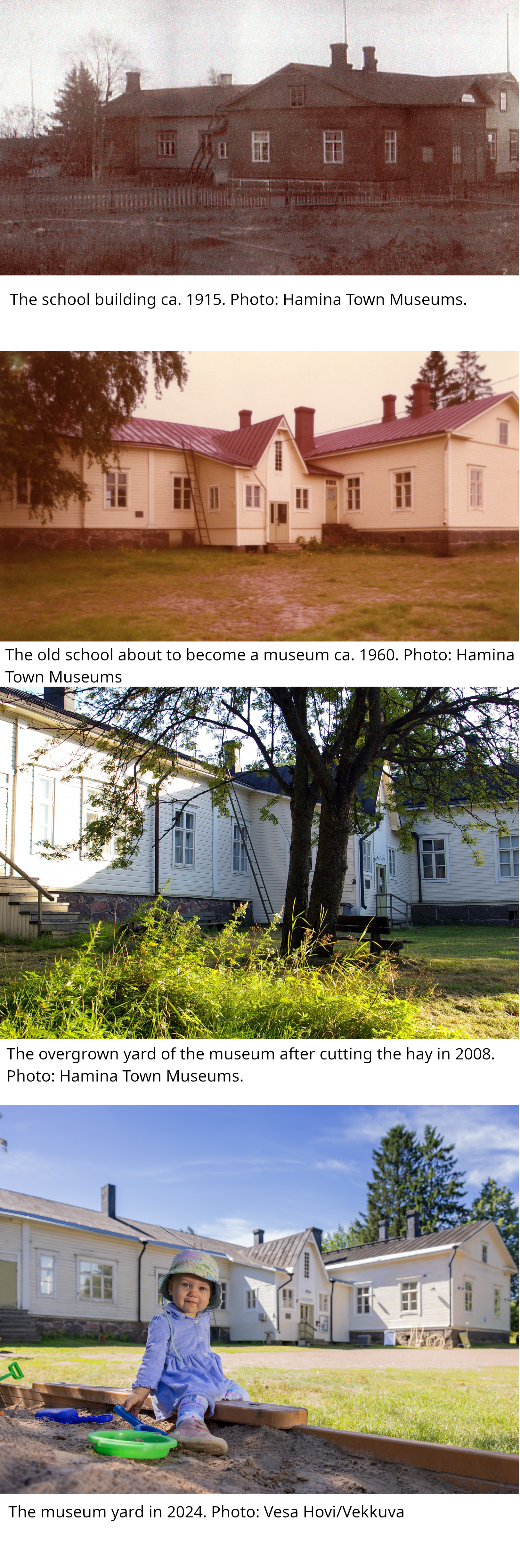
The revival of the Vehkalahti Local Museum began in response to two challenges: the deteriorating condition of the historically valuable building and the need to renew an outdated exhibition to meet the expectations of contemporary museum visitors. What began as a modest restoration project gradually evolved into a broader initiative combining the conservation of historic buildings, community participation and ecological thinking.
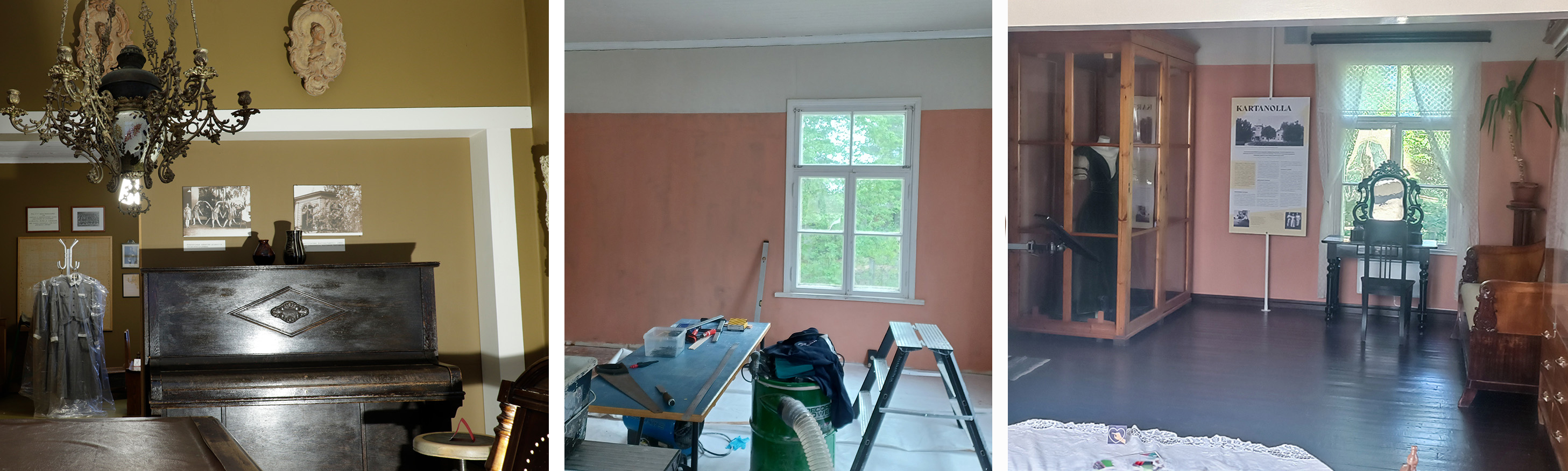
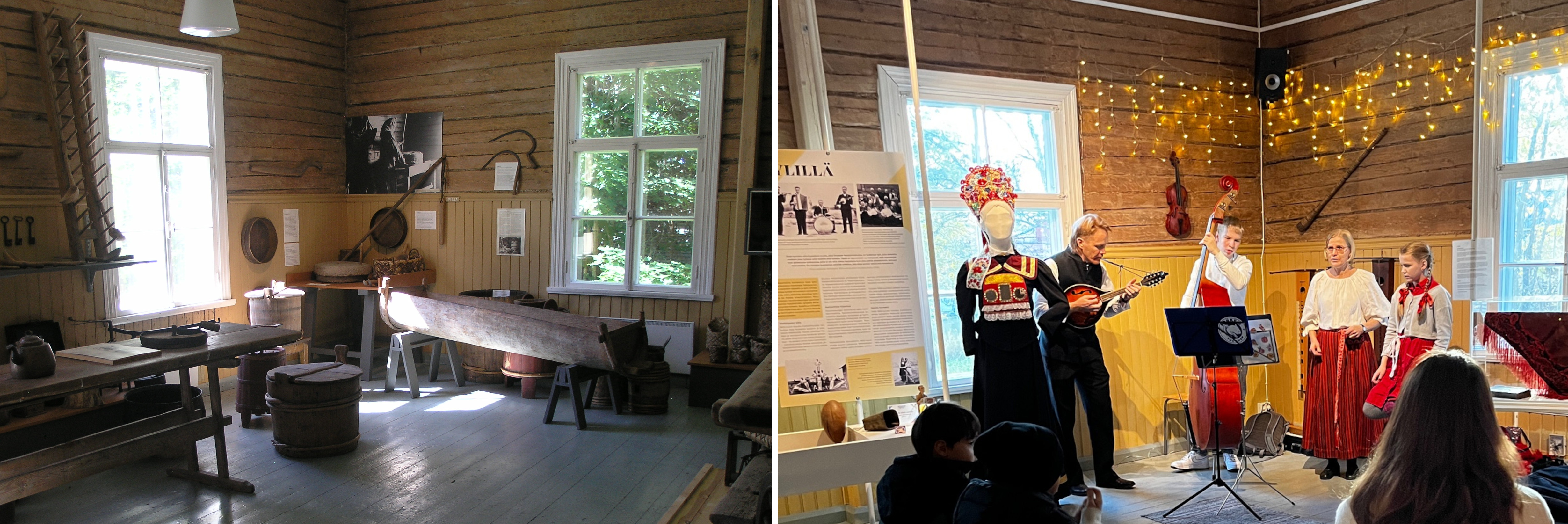
The first phase focused on renovating the western wing and part of the original school building that forms the core of the museum complex. Structural repairs and improvements to the exhibition spaces were carried out while preserving the building’s historical character. A future phase will address the eastern wing, where a new exhibition on the earlier history of Vehkalahti municipality is planned. This work is being prepared together with the local Knaappineuvosto, a network of family heritage associations preserving local historical knowledge.
The aim is to rejuvenate the museum as a welcoming and inclusive cultural space for contemporary audiences. The museum now hosts exhibitions, artistic activities, community gatherings and small events. Key user groups include families, schools and kindergartens, local organisations, artists and musicians. Accessibility is supported through free entry every Wednesday during the summer season and several free or low-cost public events.
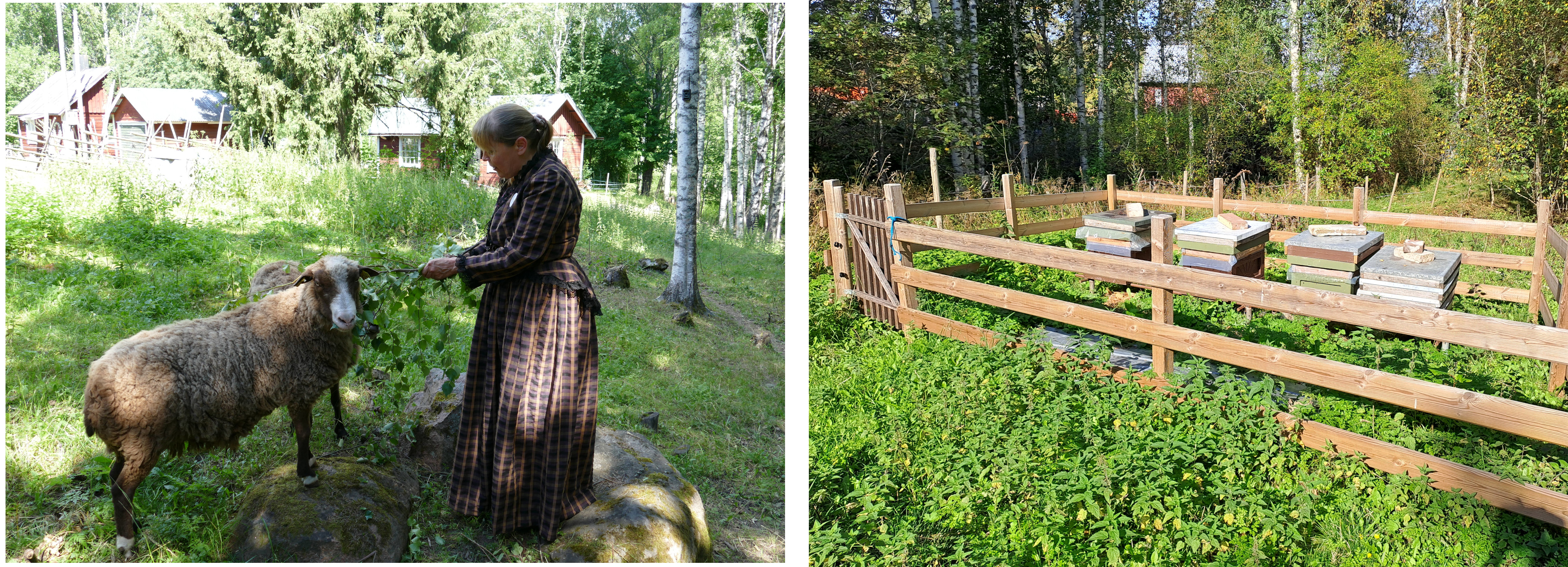
The initiative also promotes ecological, social and cultural sustainability. Sheep grazing maintains the traditional open landscape and beehives support pollinators, while further measures aim to increase biodiversity around the site.
Through heritage preservation, community participation and ecological stewardship, the Vehkalahti Local Museum is gradually becoming a beautiful, sustainable and inclusive cultural environment that reconnects historic buildings, traditional land use and community life.
heritage restoration
community platform
ecological stewardship
social inclusion
local museums
The key sustainability objective of the Vehkalahti Local Museum initiative is the long-term use of an existing historic building. Instead of constructing new facilities, the project focuses on maintaining and restoring the more than 150-year-old timber structure. Reusing the building reduces environmental impact compared with new construction and allows it to continue serving the community for decades.
Energy consumption is reduced by adapting museum practices to the conditions of the historic building. Rather than maintaining technically optimal climate conditions, the museum uses acceptable preservation conditions that protect objects while limiting energy use. The building has no air-conditioning system and heating is kept low during winter closure. Objects requiring strict climate control are preserved in other museum facilities.
Daily operations also minimise ecological impact. Restoration and exhibition materials are sourced locally where possible, sustainable materials are prioritised and existing furniture is repurposed. Waste reduction and recycling have been strengthened and lighting upgraded to energy-efficient LED systems. As the property lacked plumbing infrastructure, a composting dry toilet was installed instead of water-intensive systems.
The initiative also supports biodiversity. Sheep grazing maintains the traditional cultural landscape and beehives support pollinators, while further measures increase plant, animal and insect diversity.
Social sustainability is equally important. The museum revitalises local traditions and involves the community. Restoration work included collaboration with youth workshops supporting unemployed young people. Accessibility is supported through free entry for children, reduced prices for several groups and low-cost cultural events.
Together these actions show how regenerating a historic museum site can unite environmental responsibility, cultural vitality and social inclusion.
The project treats the building as a living place rather than a frozen historical object. By preserving historical layers and avoiding irreversible changes, the renovation allows the house to evolve over time while maintaining its historical integrity.
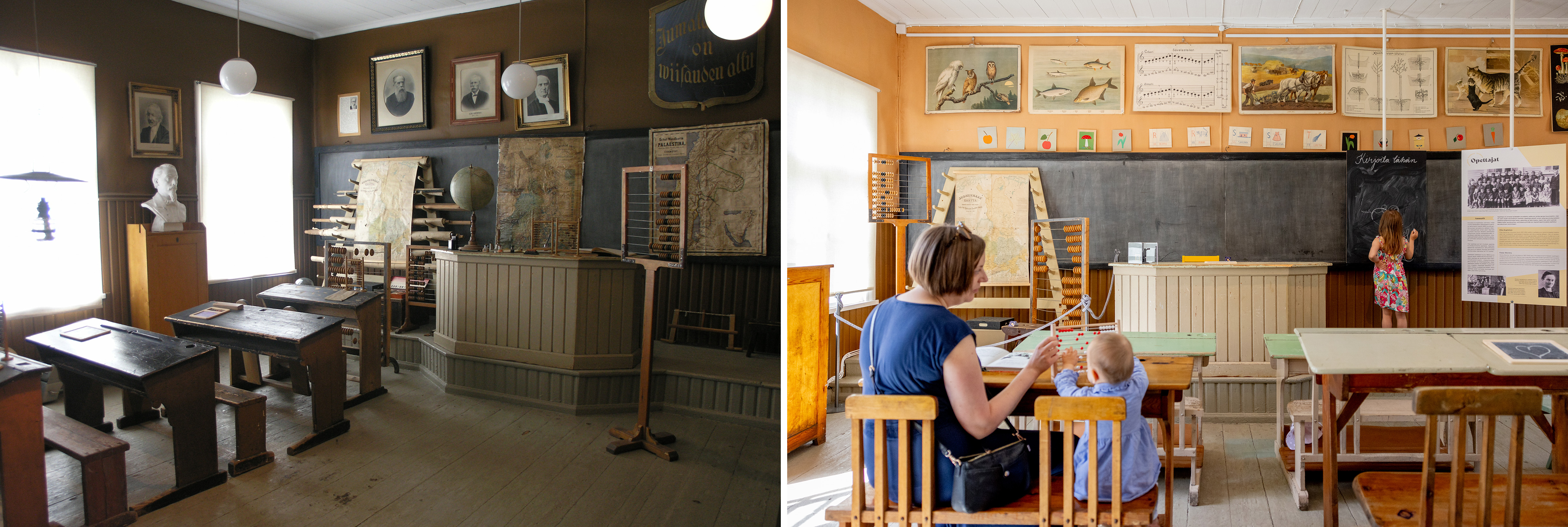
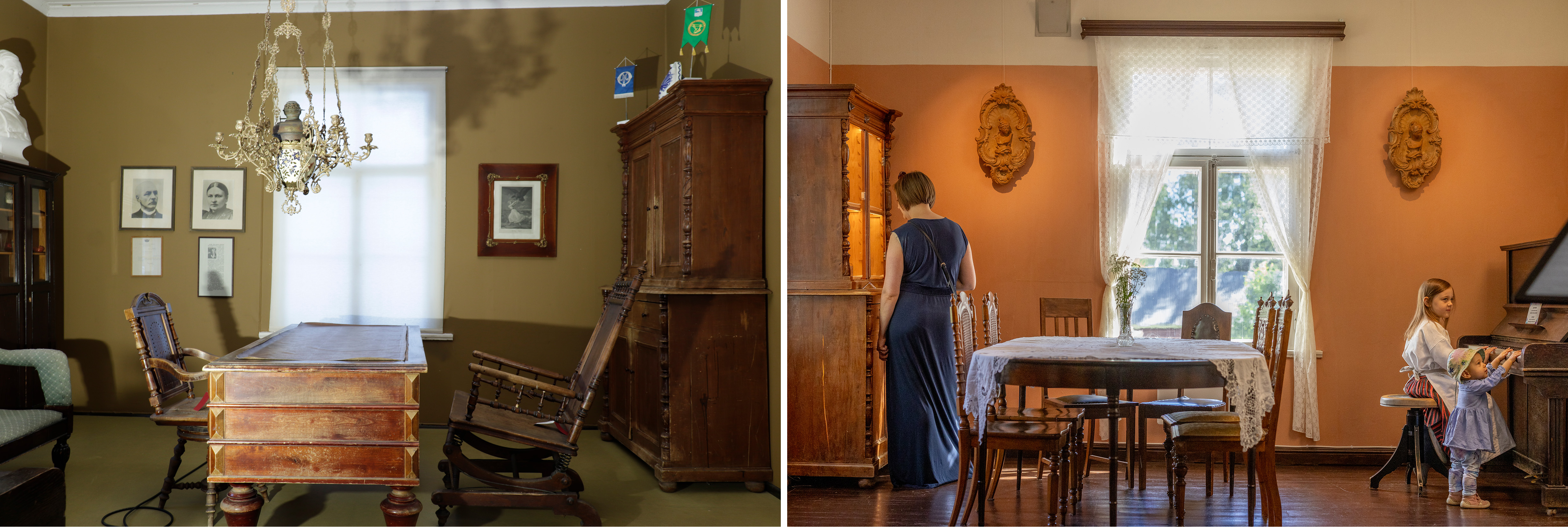
Special attention was given to the quality of the visitor experience. The restored spaces make use of the building’s natural light, traditional materials and calm atmosphere to create an environment where visitors can slow down and engage with local history. Rather than presenting objects only in conventional display cases, the museum encourages tactile and experiential engagement. Some authentic objects can be safely touched, allowing visitors to connect physically with the past.
A dedicated playroom for children invites younger visitors to explore village life through play. The room includes a miniature traditional Finnish baking oven, created by students of theatre techniques, which allows children to interact with elements of traditional domestic life in an imaginative and accessible way. The museum therefore becomes a place where different generations can experience heritage together.
Inclusion has been a central objective of the Vehkalahti Local Museum initiative from the beginning. The renovation and exhibition development process involved local residents and different user groups from early planning through restoration, maintenance and everyday use of the museum. The aim has been to create a museum that functions not only as an exhibition space but also as a shared platform for the activities of local societies, community groups and individuals.
Accessibility and affordability are key elements of this approach. The museum grounds are freely accessible and can be used as a public recreational space. Entrance fees are deliberately kept low, with reduced prices for economically disadvantaged groups. Children and young people under 18 have free entry, and guided visits for schools, kindergartens and other educational groups are offered free of charge. Museum events are organised as free or low-cost activities, and entrance is free for everyone one day each week during the opening season.
Inclusive participation also guided the restoration process. The project collaborated with Rannikkopajat unemployed youth workshop. The museum provides free exhibition space for artists and opportunities for community groups to organise cultural activities and works with teams supporting people entering the labour market.
Improving physical accessibility in a protected historic building presents challenges. A fully accessible entrance proved too invasive for the structure, and alternative solutions are being explored. However, the museum yard is wheelchair accessible and includes accessible toilet facilities.
Tactile exhibition elements allow visitors to handle authentic objects, creating a direct connection with the past. Subtle soundscapes in some rooms support orientation and atmosphere without disturbing the calm environment. Together these measures show how a small local museum can become an open, welcoming and community-driven cultural space.
Citizen participation has been a central element of the initiative from the planning stages, and the museum continues to be developed together with the local community.
Children and local people were actively involved in planning the new exhibition. Pupils and teachers of Husula School participated through workshops and discussions, and around 50 pupils also responded to an online questionnaire open to the wider public. This participatory work anticipated the Town of Hamina’s recognition as a UNESCO Child Friendly City in 2026 through including children’s voices in cultural planning.
Locals were invited to contribute through an open online questionnaire, which received 91 responses, and through two public meetings at the museum. These gatherings allowed residents to share memories, raise questions and express their hopes for the museum’s future.
Both children and adults were asked to identify their favourite objects in the collection so that the most meaningful items would be the renewed exhibition. Many of the objects were originally donated by local families, creating a strong connection between the museum and the community. Community feedback also underlined the museum’s significance for local identity, and the historic name “Vehkalahti” was therefore preserved. Participation continues in the next phase, which will develop a new exhibition on the earlier history of Vehkalahti in collaboration with local family heritage associations.
The museum plans to deepen its collaborative approach by inviting residents to share knowledge about the objects and their former owners through open meetings and community dialogue. Through this process, local knowledge and personal memories become part of the interpretation of the historic site and objects.
Today, the museum functions as a shared cultural platform where associations, artists and community groups organise activities and events, strengthening the museum as a living space shaped together with its community.
The initiative has involved stakeholders at local, regional and national levels throughout its design and implementation.
At the local level, the Town of Hamina has played a central role in enabling the project. The municipality financed the renovation of the historic building and the development of the new museum exhibition in 2022–2023, and continued the work in 2024. The town also covers the ongoing maintenance of the buildings, museum staff salaries and other operational costs through the municipal museum budget. In addition, a preliminary reservation of 30,000 euros has been included in the town’s 2027 investment budget for the exterior painting of the museum building, demonstrating a long-term commitment to maintaining the historic site.
The practical restoration of the interior spaces was carried out in cooperation with Rannikkopajat, a local workshop initiative that supports unemployed young people in developing work-life skills. Participants carried out much of the renovation work under the guidance of museum staff and conservator-restorers. Giving the group meaningful responsibility ensured that the work served both as training and as a real contribution to the regeneration of the museum.
At the regional level, the project received a grant of 2,000 euros from the Centre for Economic Development, Transport and the Environment (ELY Centre) in 2023. The building is also recognised as a regionally significant heritage site. The Kymenlaakso Museum, acting as the regional heritage authority, has provided expert guidance on the preservation of the historic building.
At the national level, specialists from the Finnish Heritage Agency have contributed expertise during the planning and implementation of the restoration.
Together, this collaboration between local actors, regional heritage authorities and national expertise demonstrates how cultural heritage regeneration can be strengthened through shared responsibility across governance levels.
The design and implementation of the initiative brought together expertise from multiple disciplines, including museum pedagogy, conservation, restoration, architecture, traditional building methods and community engagement. The project followed a twofold approach: careful conservation of the historic building and the inclusive development of a renewed museum exhibition.
Restoration was led by the museum’s chief conservator, who coordinated structural repairs and collaborated with the Rannikkopajat youth workshop, who carried out much of the practical restoration work under professional guidance, gaining valuable experience while contributing to the regeneration of the historic building. Specialists from the Kymenlaakso Museum and the Finnish Heritage Agency provided expert advice on preserving the structure.
The planning of the new exhibition was led by the museum’s curator through questionnaires, workshops with school pupils and meetings with local residents. These contributions highlighted the strong connection between the museum and local identity and influenced both exhibition content and presentation.
Architectural expertise also supported the exhibition design. Accessible display solutions were designed by architects, while a local carpenter repurposed durable existing furniture for the exhibition.
The previous exhibition was strongly object-focused and sometimes difficult for younger visitors to interpret. The renewed exhibition therefore integrates texts and photographs of village life alongside the objects, helping visitors understand their historical context and often sparking conversations when familiar people or places are recognised.
Through this interdisciplinary cooperation between heritage professionals, educators, craftspeople and local residents, the project demonstrates how cultural heritage regeneration can combine professional expertise with lived local knowledge.
The initiative introduces several innovative approaches compared with more traditional museum renovation and exhibition projects.
First, the exhibition was developed through open participation from the beginning. Children, local residents and other user groups were invited to contribute ideas without restricting their participation to predefined themes. As a result, some exhibition choices reflect the memories and preferences of the local community rather than only professional curatorial decisions. This approach recognises that local people hold valuable knowledge about their own heritage and allows their voices to shape the museum environment.
Second, the restoration process was treated as an opportunity for learning and social inclusion. Renovation work was carried out in cooperation with the Rannikkopajat youth workshop, which supports young people in developing work-life skills. Participants were given real responsibility for the restoration work, creating opportunities for meaningful learning and pride in contributing to the preservation of cultural heritage.
Third, the project explores more sustainable museum practices. Instead of relying on energy-intensive climate control, the museum adapts exhibition practices to the natural conditions of the historic building and maintains stable but moderate indoor conditions. Because many objects have long been stored in similar conditions, this approach allows energy consumption to be reduced without compromising preservation.
A further innovation is the development of the museum as a living community platform. The museum provides space for local associations, artists and community groups to organise activities, meetings and cultural events. The museum functions as a partner and facilitator for initiatives that originate from the community.
Through these approaches, the initiative shows how cultural heritage regeneration can combine participation, sustainability and meaningful cultural experiences.
From the outset, the project was guided by three principles: careful conservation of the historic building, active participation of the local community and ecological thinking in the development of the museum and its surrounding environment.
The restoration followed established conservation principles. Necessary structural repairs were carried out while avoiding irreversible changes and preserving the historical layers of the building. Rather than restoring the building to a single historical moment, the project emphasised maintenance, repair and the retention of traces of earlier use. This approach respects the building’s long history while allowing it to continue functioning as a museum and community space.
A participatory methodology guided the development of the new exhibition and the use of the museum spaces. Local residents, school pupils and other user groups were involved from the early planning stages through workshops, questionnaires and public meetings. Their ideas influenced exhibition choices and the interpretation of the collection, recognising that local communities hold valuable knowledge about their own heritage and strengthening their sense of ownership of the museum.
Ecological thinking informed both the restoration work and the broader management of the museum environment. Traditional materials and repair methods were preferred whenever possible, as they often represent more sustainable practices than modern construction techniques. The initiative also promotes ecological stewardship of the surrounding cultural landscape and aims to reduce the environmental footprint of museum operations.
Through this integrated approach combining conservation, participation and ecological responsibility, the initiative reflects the principles of the New European Bauhaus by creating a beautiful, sustainable and inclusive cultural environment rooted in local heritage.
Several elements of the initiative offer a model that can be replicated or adapted in other locations and cultural contexts.
First, the participatory planning process used in developing the museum can be transferred to other cultural or community projects. Local residents and school pupils were involved through workshops, questionnaires and public meetings, ensuring that the exhibition reflects the interests and experiences of the community. This model of early and open participation can be applied in many heritage projects by identifying and involving relevant user groups from the beginning.
Second, the initiative shows how a small museum can function not only as an exhibition space but also as a shared community platform. The museum provides space for meetings, workshops, artistic activities and cultural events organised by local associations and individuals, strengthening the connection between cultural institutions and their communities.
Third, the restoration phase demonstrates how heritage conservation can be combined with social inclusion. Renovation work was carried out together with the Rannikkopajat youth workshop, allowing young people to learn practical skills and contribute to the preservation of a historic building. Similar collaborations between heritage professionals and educational or social programmes could be implemented elsewhere.
The conservation approach used in the restoration is also transferable. Instead of rigid restoration, the project preserved historical layers and reused existing materials while carrying out necessary repairs, offering an affordable and environmentally responsible method for maintaining historic buildings.
Finally, the initiative promotes ecological awareness through practical examples. Public events such as workshops on restoring historic buildings or cooking with local ingredients demonstrate accessible ways to support sustainability in everyday life.
The initiative will continue to develop the historic building, the exhibition and the surrounding cultural landscape while maintaining the museum as an inclusive community platform.
Restoration of the main building will continue according to conservation principles. Currently, approximately two thirds of the building have been restored, while the eastern section still requires repairs due to poor air quality and potential structural damage. Air vents have already been opened in the foundations to improve circulation beneath the building. The next steps are to improve ventilation in the rooms above and to carry out a structural assessment to determine the necessary repairs. Exterior painting of the building is planned and has been included in the Town of Hamina’s preliminary investment budget for 2027.
After the restoration of the eastern section, the exhibition will expand into these rooms to present the earlier history of the Vehkalahti parish from medieval times to the nineteenth century. Initial meetings with local family heritage associations have been held as a part of participatory exhibition development.
The museum grounds will continue to be maintained as a historic cultural landscape. Sheep grazing, beekeeping and the cultivation of heirloom plants by local volunteers support traditional habitats and pollinators. A biodiversity survey and maintenance plan will be prepared to guide long-term ecological management.
The museum continues to function as a shared cultural platform. Affordable events, workshops and exhibitions organised together with local artists, associations and community groups remain central to its activities.
Through this gradual process combining heritage conservation, ecological stewardship and community participation, the initiative strengthens the Vehkalahti Local Museum as a cultural environment for future generations, following the NEB principles and values by combining sustainability, aesthetic quality and social inclusion.