Enhancing Circularity, Sustainability, and Innovation
Resilience through greywater circularity
Climate resilience through water recycling systems: Greywater reuse for buildings and irrigation
The project involves installing a water recycling system in residential buildings. Greywater from showers, sinks and washing machines is cleaned and reused for flushing toilets and watering gardens and public spaces. Consequently, the demand for tap water can be reduced by around 50%. Heat is also recovered for use in providing hot water. This modular, replicable system has been tested in an ongoing operational setting. The project demonstrates how wastewater can be treated as a resource.
Austria
Regional
Vienna
Mainly urban
It involves a physical transformation of the built environment (hard investment)
Yes
2024-05-01
No
No
Yes
Organisation
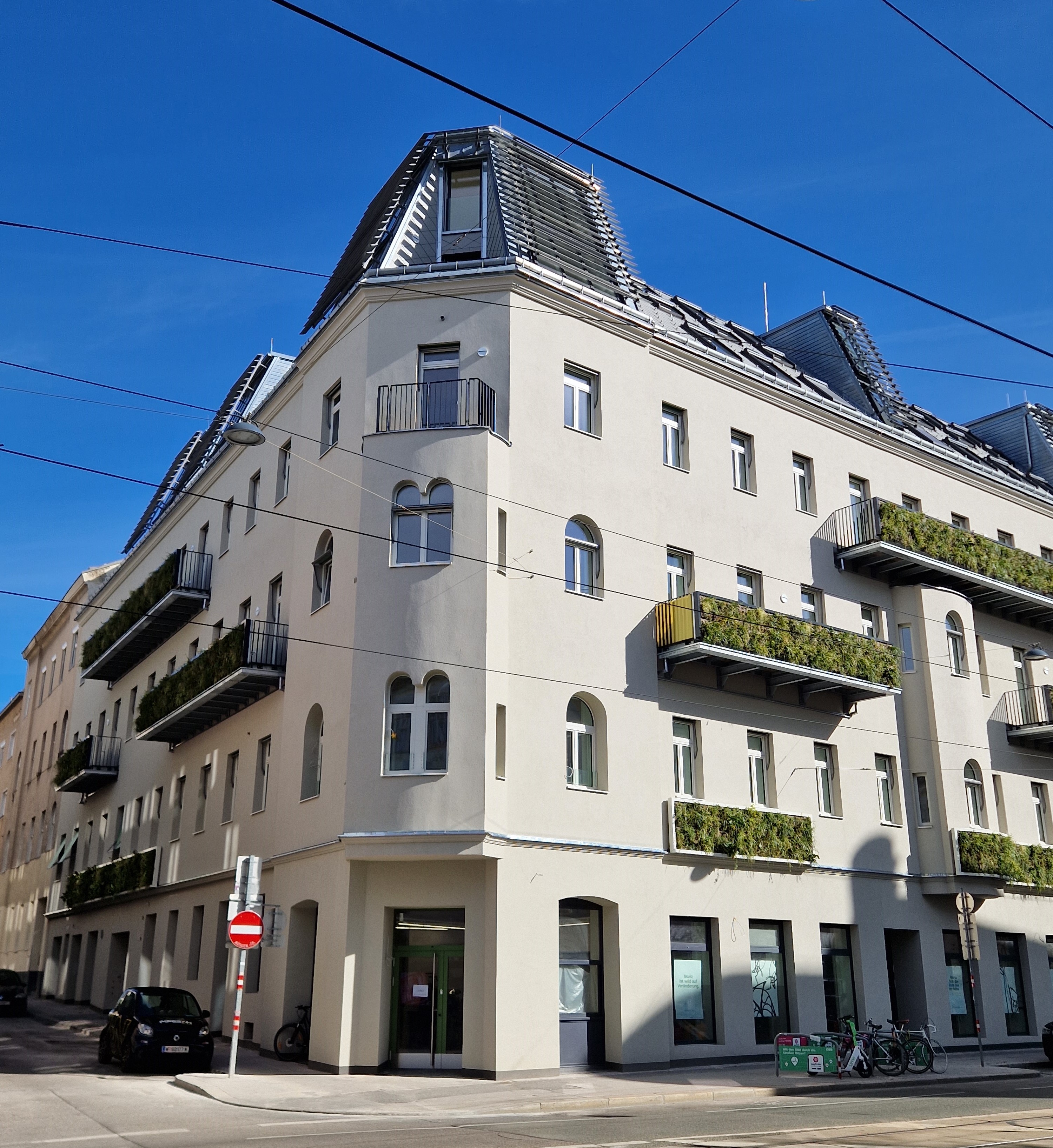
In Vienna, at Kauergasse 2, a local urban water cycle has been established that reuses greywater (lightly contaminated wastewater from showers and washing machines) multiple times. Wastewater is not considered waste, but rather a valuable local resource within the urban cycle. This strengthens water resilience and significantly reduces drinking water consumption. The goal was to transform an existing residential building from a mere resource consumer into an active component of a sustainable urban water cycle.
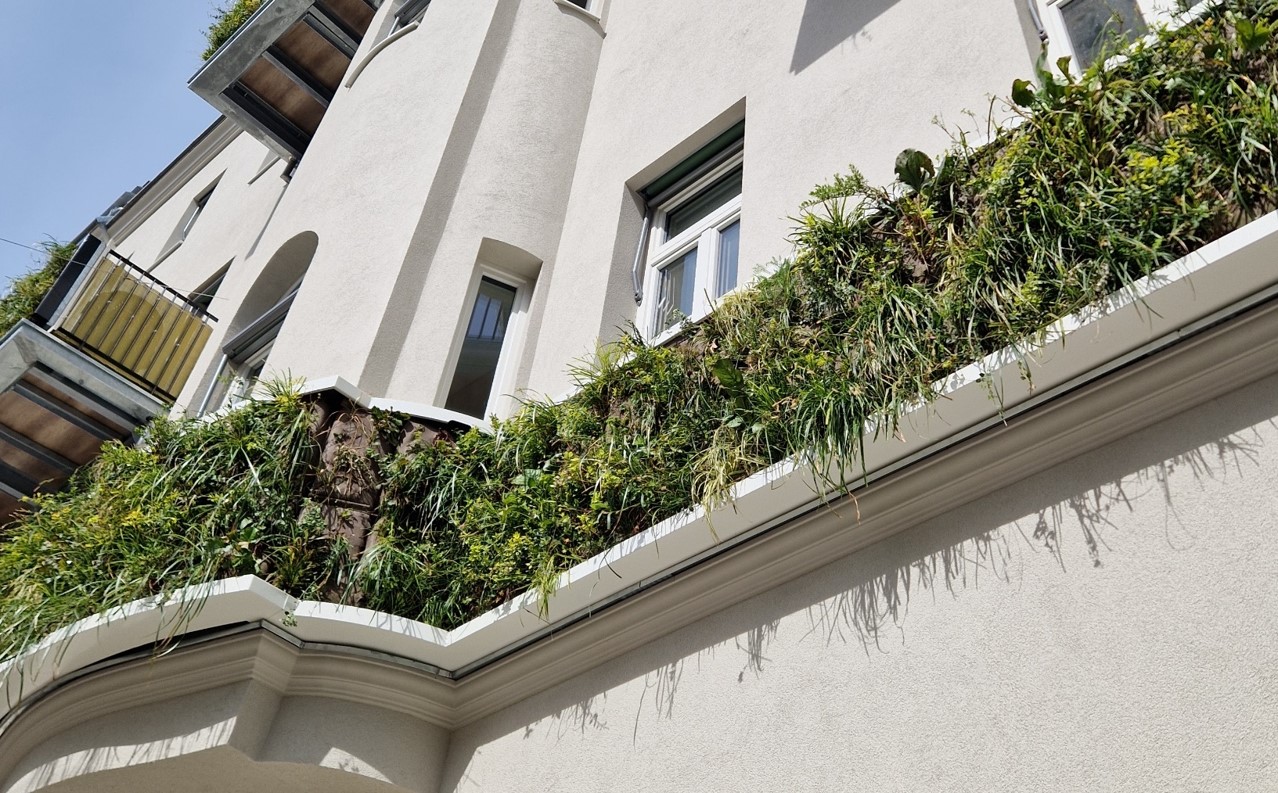
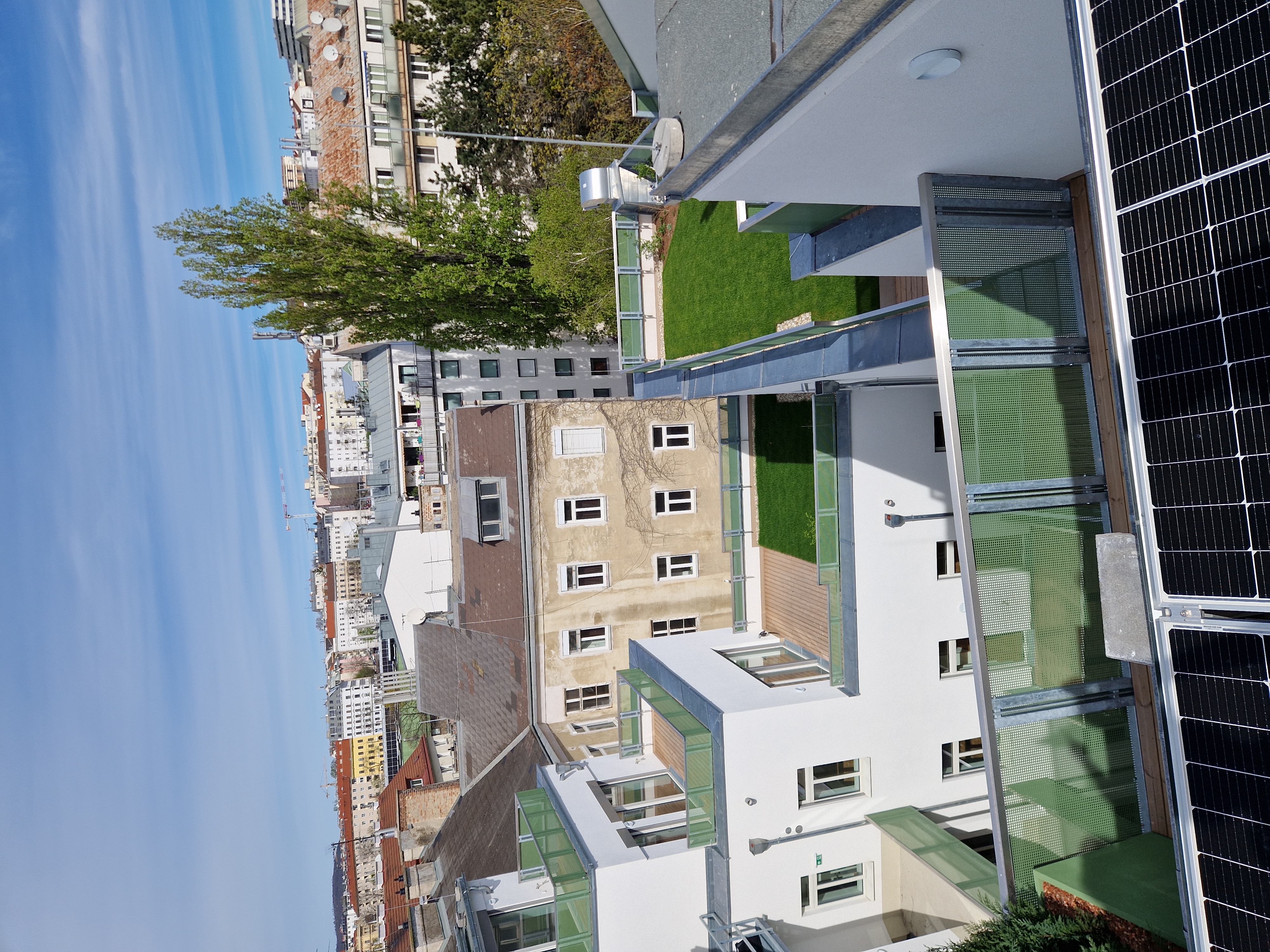
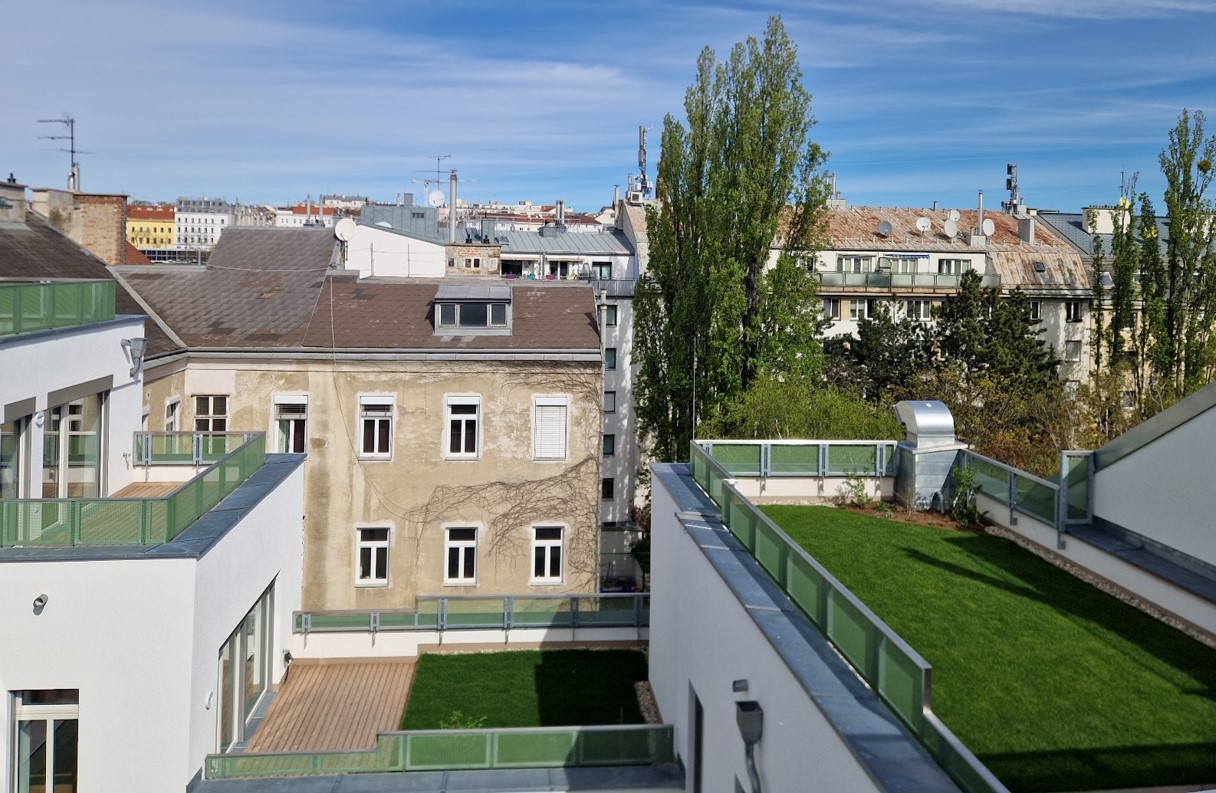
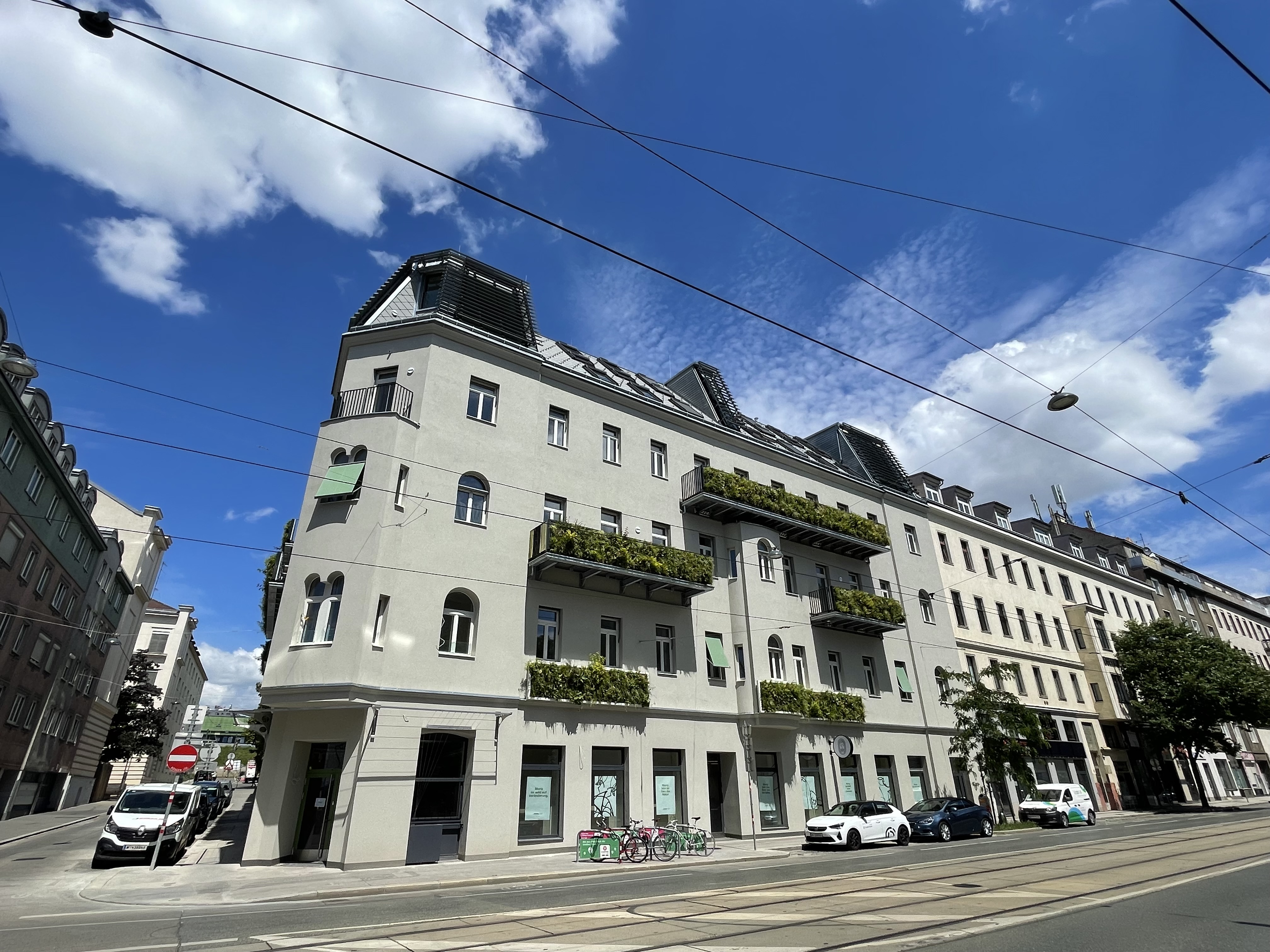
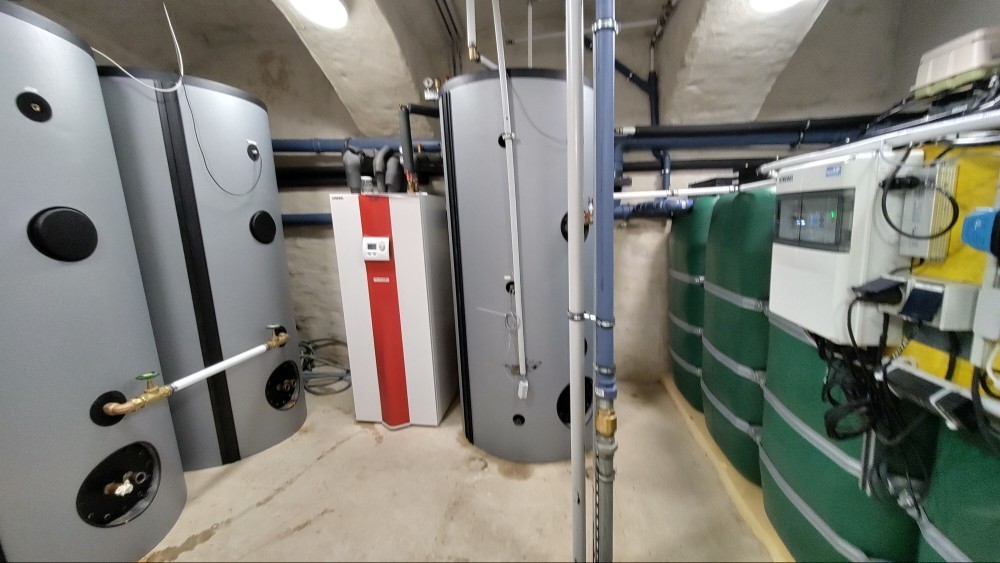
After mechanical and biological treatment, the greywater is reused for toilet flushing and for the sustainable irrigation of 78 m² of facade greening and 125 m² of roof greening. A heat pump recovers heat from the warm greywater, thus covering 100% of the hot water demand. The cold, treated water serves as a cooling source for the cooling circuit of the commercial ground-floor area. This creates an integrated cycle of water, energy, and building climate-control.
The primary users are the residents and the surrounding urban community. Particularly vulnerable groups, such as children and the elderly, benefit from green, cooling open spaces that improve the microclimate and quality of life.
The system is already operational and delivering measurable results: drinking water consumption can be reduced by around 50%, heating energy demand is lowered by almost 90%, and vegetation remains healthy even during heat waves. The project creates visible water resilience, combines greywater recycling with green infrastructure, and provides a scalable model for climate-resilient cities.
The project idea originated from the research project "greenWATERrecycling," which investigated which plant species used for facade greening could tolerate irrigation with treated greywater. Building on these findings, the goal was to renovate a late 19th-century residential building on Kauergasse in Vienna in such a way that greywater could be reused for energy and material recycling.
The aim was to address typical challenges of urban heat, water scarcity, and linear resource consumption, while simultaneously creating water resilience for residents and the neighbourhood. The project was implemented using an interdisciplinary approach: the owners and property management initiated the renovation, Strebelwerk GmbH developed the recycling system, Schöberl & Pöll GmbH handled the technical integration and quality assurance, while BOKU University Vienna and GRÜNSTATTGRAU contributed their scientific and planning expertise.
Thermal simulations, technical monitoring, and the integration of facade and roof greening with sustainable irrigation demonstrated, how greywater can be used efficiently and heat stress mitigated. The project demonstrates that a closed water cycle in existing urban areas works in practice and delivers measurable effects on water resilience, building cooling and greening – a blueprint for climate-resilient urban development.
water resilience
greywater circularity
energy efficiency, cost savings
energy recovery from greywater
community co-design
A key problem in modern cities is the growing water shortage: While Vienna's high-altitude spring water supply Hochquellwasserleitung als Eigenname wäre ok delivers around 375,000 m³ of drinking water daily, demand rises to as much as 630,000 m³ during heat waves. This project utilizes greywater from showers and washing machines as a previously untapped resource, thus significantly reducing drinking water consumption.
Implementation is achieved through an integrated water recycling system that combines wastewater heat recovery, greywater treatment, and green roofs and facades. Energy from the wastewater generates hot water, while the treated water is reused multiple times – for toilet flushing and automatic irrigation of facade and roof greening. Excess water can infiltrate the ground locally, replenishing the groundwater.
The green space acts as a natural air conditioner: Evaporative cooling improves the microclimate and reduces urban heat islands.
Results: Drinking water consumption has been significantly reduced. Monitoring confirms up to 50% less water demand. Thanks to irrigation, vegetation remains healthy and vigorous, the microclimate is improved, and operating costs are reduced.
The project combines water recycling, energy efficiency, and climate-adaptive greening in a closed-loop system. It demonstrates that sustainable water and energy cycles can be implemented in historic buildings in a technically sound, ecologically effective, and economically viable way.
The project’s impact is demonstrated through expert presentations, site visits and over 50 press releases. Highlights include a visit by Austrian Climate Minister Leonore Gewessler (2024), ORF (Austrian Broadcasting Corporation) features, inclusion as a flagship project of the City of Vienna “Get Out of Gas”, winner of the CO₂ Countdown Award 2024, nomination for the ÖGUT Award 2025 and the CliA 2026 Austrian State Prize for Climate Adaptation, category: Heat/Drought.
The aesthetic quality of the project arises from the combination of historical architecture, climate-adaptive design, and an innovative water cycle. The Gründerzeit building, dating from 1895, was carefully renovated using the EnerPHit standard (passive house renovation standard) – the third Gründerzeit building in Austria to undergo this process. The historical fabric was consciously preserved: the facade's articulation, proportions, and materials were respected, thus maintaining the building's characteristic expression.
The Gründerzeit building thus remains a historical gem, sensitively enhanced through climate-adaptive measures.
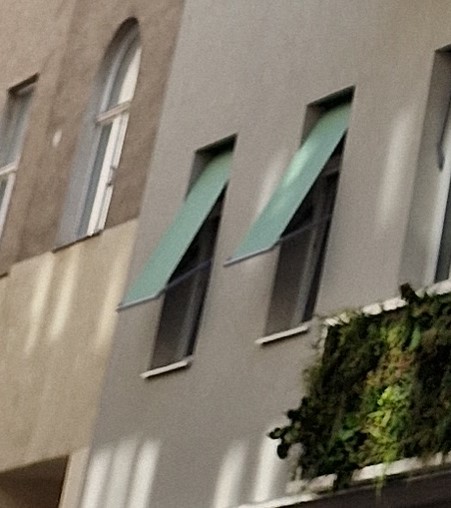
Newly integrated elements also reflect this architectural identity. The external sun protection was designed in the form of facade awnings, which are based on historical models in appearance and proportion. This allows the sunshades to blend seamlessly into the facade while simultaneously reducing direct sunlight – an important contribution to passive heat protection.
The true innovation lies in the building's local water cycle, which combines resource utilization and climate adaptation. Treated greywater is used to irrigate the facade and roof greening, thus enabling permanent vegetation. The plants act as natural climate regulators: through evaporative cooling, they improve the microclimate and reduce urban overheating.
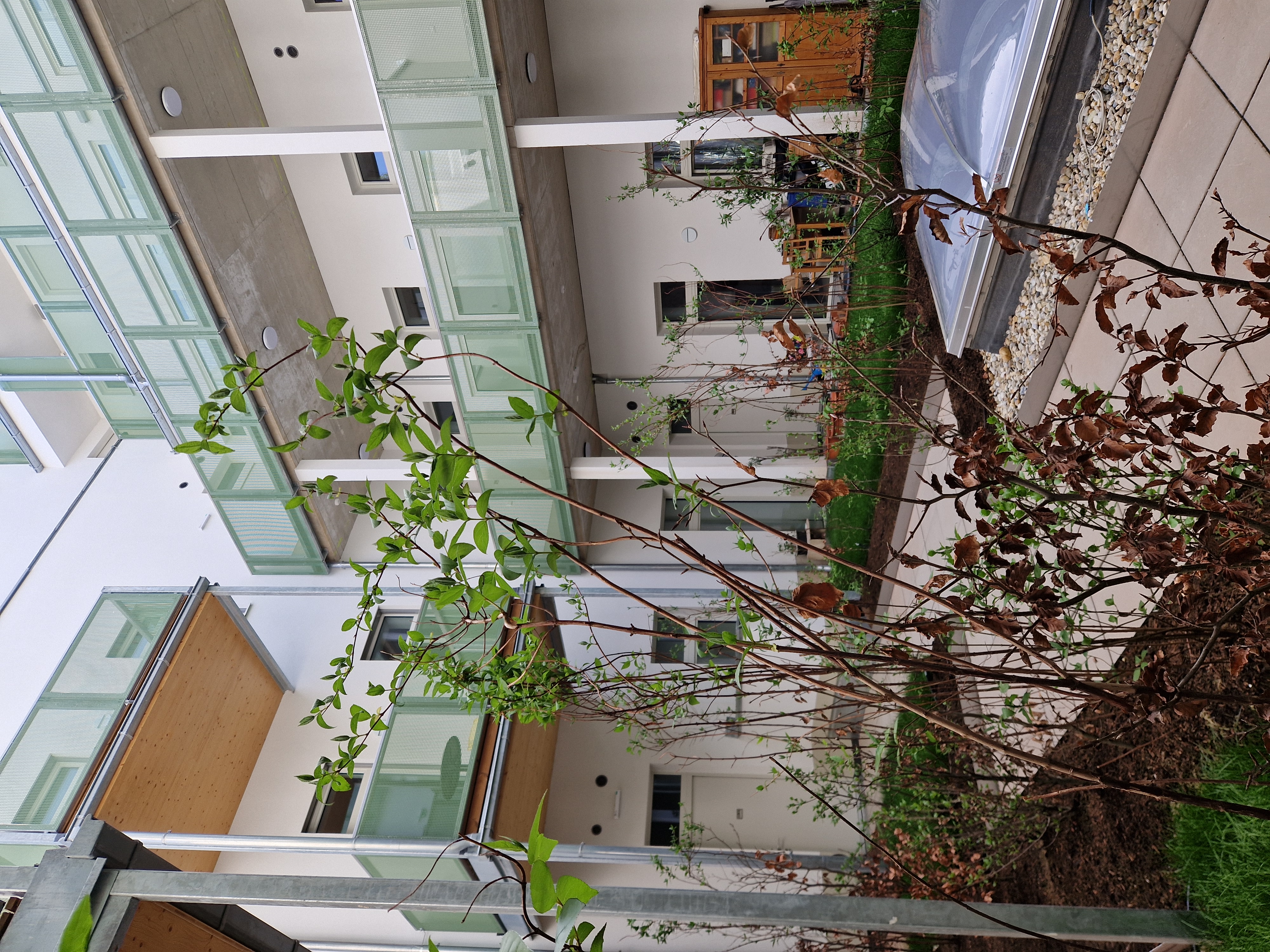
Architecture, greening, and the water cycle form an integrated system that combines ecological function, resource efficiency, and aesthetic quality.
The project addresses the challenge of so-called "green gentrification": climate protection measures must not lead to rising housing costs or social exclusion. The goal is therefore to make climate-resilient water use, heat protection, and resource efficiency accessible and affordable for all residents. Treated greywater is used for toilet flushing and the automatic irrigation of facade and roof greening, so that all residents benefit equally from the sustainable water cycle. High-quality living conditions—such as cooling, hot water, and green spaces—are thus made democratically accessible.
Implementation takes place as an integrated water cycle within the building, which operates fully automatically and places no additional technical demands on the residents. The reduction of water and wastewater fees by up to 50% directly eases the burden on household budgets. At the same time, the greywater-fed greening provides free, passive cooling and protects particularly vulnerable groups, such as the elderly and children, from summer overheating. Excess treated water can be used to irrigate street trees, so that the entire neighbourhood benefits from the sustainable water cycle.
The project is exemplary because it focuses on the social component of climate adaptation. The visible cycle makes sustainable water use tangible and inclusive: everyone benefits equally, awareness of resource conservation is fostered in everyday life, and the model can be transferred to all other contexts.
The project involved the residents of the historic building and the property management company as key stakeholders from the very beginning. Since they directly benefit from the building's sustainable water cycle, it was crucial not only to inform them but also to actively participate in shaping their living environment.
Starting in the concept phase, the planning team, together with Schöberl & Pöll GmbH, explained the functionality and impact of the water resilience system using easily understandable visualizations and models. This allowed the residents to understand how greywater is reused for toilet flushing, as well as for facade and roof greening, and what positive effects this has on living comfort, microclimate, and resource consumption.
Feedback processes played a central role in the decision-making phase. The residents were able to participate in the landscaping and design of the communal areas, ensuring their needs were directly integrated into the water cycle. Dialogue remained central throughout the implementation phase as well, minimizing disruption to the residents' privacy and daily lives.
This participatory approach led to high acceptance and identification: the water cycle is experienced as a collaboratively designed, sustainable element, not as an abstract technical system. The residents' involvement improved the quality of the project, made it more inclusive, and demonstrated how participatory processes can successfully support the implementation of climate-resilient solutions in existing urban buildings.
During the renovation, temporary housing was provided to residents in the neighbourhood.
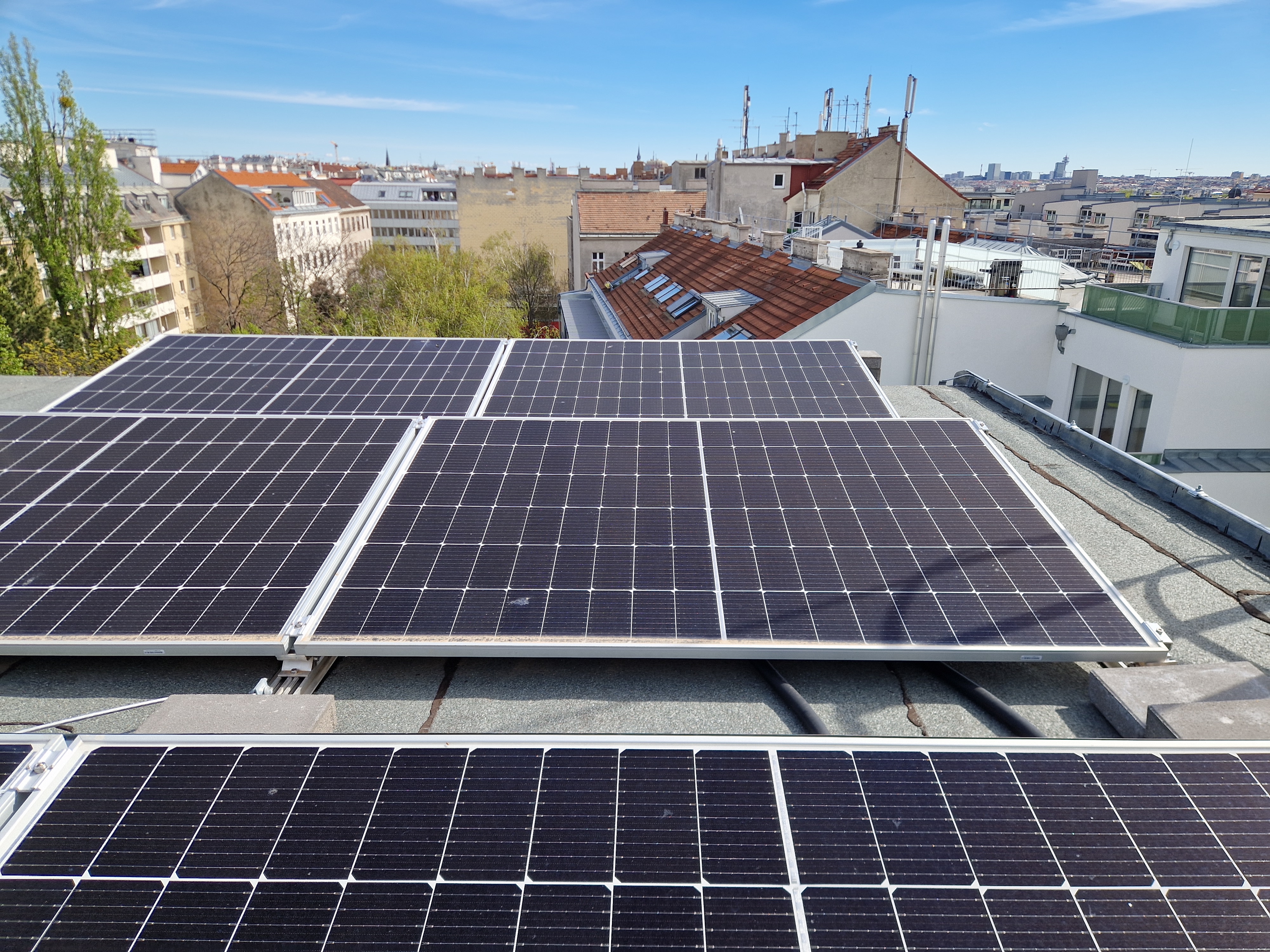
The project was made possible through close collaboration between stakeholders at the local, regional, and national levels. This multi-layered governance was crucial for efficiently and practically implementing a sustainable water cycle in the historic Gründerzeit-era buildings. At the national level, the Federal Ministry for Climate Action and the Austrian Research Promotion Agency (FFG) supported the project. The greywater system in Kauergasse was implemented as part of the FFG-funded project "Queen Gudrun II." The modular, wall-mounted system from Sempergreen (Netherlands) utilizes the greywater cycle for resource-efficient irrigation, while the 17 kW PV system covers the building's own energy needs, and external sunshades in the form of historically appropriate facade awnings enhance passive heat protection.
At the local level, the City of Vienna coordinated the integration into urban climate resilience initiatives such as "100 Projects to Get Out of Gas." This enabled the implementation of innovative water recycling systems, making them visible to the public. The operational implementation was carried out by an interdisciplinary consortium consisting of Blue Danube Immobilien GmbH, Schöberl & Pöll GmbH, Strebelwerk GmbH, Trimmel Wall Architekten ZT GmbH, and GRÜNSTATTGRAU. The citizen participation process directly involved tenants in the planning, landscaping, greywater system, and communal areas. Regular consultations and workshops ensured that technical, regulatory, and planning requirements were aligned, enabling the realization of the water cycle.
The added value of this governance structure lies in the combination of political legitimacy, professional expertise, and participatory implementation. It not only facilitated the successful introduction of an innovative water resilience system but also created a scalable model project for other buildings. Solutions to heat, water scarcity, and energy and resource consumption are added key vaues of the project.
The conception and implementation of the project were based on close collaboration across various disciplines: architecture, engineering, building physics, environmental science, social sciences, and urban planning. This transdisciplinary approach was crucial for integrating a sustainable water cycle into a historic Gründerzeit building in a technically sound, ecologically effective, and socially acceptable manner.
The collaboration took place within an interdisciplinary core team, with regular workshops, planning sessions, and coordination cycles throughout all project phases. Schöberl & Pöll GmbH played a central role by directly linking energy analyses and the integration of the building services engineering with architectural design objectives and the ecological requirements of the facade and roof greening.
The different perspectives were systematically integrated: efficient greywater use, reduction of drinking water consumption, climate control through evaporative cooling and microclimate improvement had to be reconciled with historic preservation, design quality and the maintainability of the system. This iterative dialogue prevented isolated, one-off solutions and enabled a holistic water cycle that saves energy, uses water efficiently, and strengthens urban resilience.
The added value of this transdisciplinary approach lies in the integration of technology, design, and user perspectives, resulting in a scalable and transferable model for climate-resilient water cycles in buildings. Conflicting objectives between historic preservation, modern building technology, and ecological impact were productively resolved. The project demonstrates how innovative water solutions can mitigate urban heat islands, conserve drinking water resources, and improve quality of life.
The implementation of the sustainable water cycle in Vienna's Kauergasse was funded by the Climate and Energy Fund (federal government, research project "Queen Gudrun II") and the City of Vienna ("100 Projects to Get Out of Gas"). The total investment for the renovation of the Gründerzeit building’s foundation , including the closed-loop water system and greening of the facade and roof, amounts to approximately €12 mio. Funding enabled the development and integration of the highly efficient water resilience solution.
The system generates added value through cost savings on water, wastewater, and energy: Tenants benefit from up to 50% reductions in water fees and lower energy costs for hot water. For owners, this means an increase in property value and long-term protection against volatile energy and water prices.
The model also opens possibilities for operator contracting: Specialist companies could install and maintain the water resilience solution, with refinancing achieved through the savings in water and energy. In cooperation with Strebelwerk GmbH, a marketable, standardized system was developed that can be scaled and implemented in other existing buildings across Europe.
Operating costs are minimal compared to the savings achieved. Operating the system with on-site photovoltaic power further reduces energy costs. Maintenance is coordinated by the building management, while tenants benefit from the net reduction in fees.
Due to its modular design and a payback period of 5–10 years, the project is highly scalable and suitable for the mass market.
Disruptive potential: The project transforms the building from a mere water consumer into a producer within the urban water cycle, reducing dependence on centralized infrastructure and enabling decentralized cooling, resource conservation, and urban water resilience through water savings. Surplus water can be used for public green space irrigation instead of flowing into the sewer system, thus saving public funds.
This project has high potential for transferability and replicability, as it offers an integrated solution for water recycling, energy efficiency, and climate adaptation. The core innovation is the implementation of a local water cycle that collects greywater from showers and washing machines, treats it mechanically and biologically, and reuses it multiple times: for toilet flushing, greening, building cooling, and heat generation for hot water production.
The system's modular structure allows for integration into new and existing buildings, from individual residential buildings to larger neighbourhoods or municipal facilities. The combination of water recycling, heat/cooling utilization, and greening makes the system a scalable model for climate-resilient buildings in various contexts.
An additional benefit lies in heat protection: reliable irrigation supports intensive green roofs and facades, while the cooling effect of the treated greywater further contributes to building cooling. This can relieve the burden on local infrastructure everywhere, including regions with high water and energy demands.
Transferring the system to other locations requires consideration of local regulations, building structures, and climatic conditions. However, with interdisciplinary planning, suitable partners, and the early involvement of owners and administrators, the system can be successfully implemented in European cities and regions.
The system is already operational and delivering measurable results: drinking water consumption reduced by approximately 50%, heating energy demand lowered by nearly 90%, and vegetation persists even during heat waves. The project creates a water cycle, combines greywater recycling with green infrastructure, and provides a perfect role model.
The project serves as a model and inspiration because it demonstrates how buildings can become active components of a climate-resilient water supply – with ecological, economic, and social impact.