Arts, Culture, and Heritage as Drivers of Change
T2A
Time2Adapt
Groupe A – Coopérative culturelle has set itself the task of installing artworks in public spaces, marking the entrance to greenways, as part of the T2Adapt project led by the MEL. These urban art installations symbolise ‘Gates of Freshness’. They are raising the alarm about the climate change currently taking place. They encourage residents to spend time in wooded areas and to gain a better understanding of their role in regulating temperature, as well as the biodiversity they harbour.
France
Local
Métropole Européenne de Lille
Mainly urban
It involves a physical transformation of the built environment (hard investment)
Yes
2026-01-31
Yes
EUI_IA
No
No
Organisation
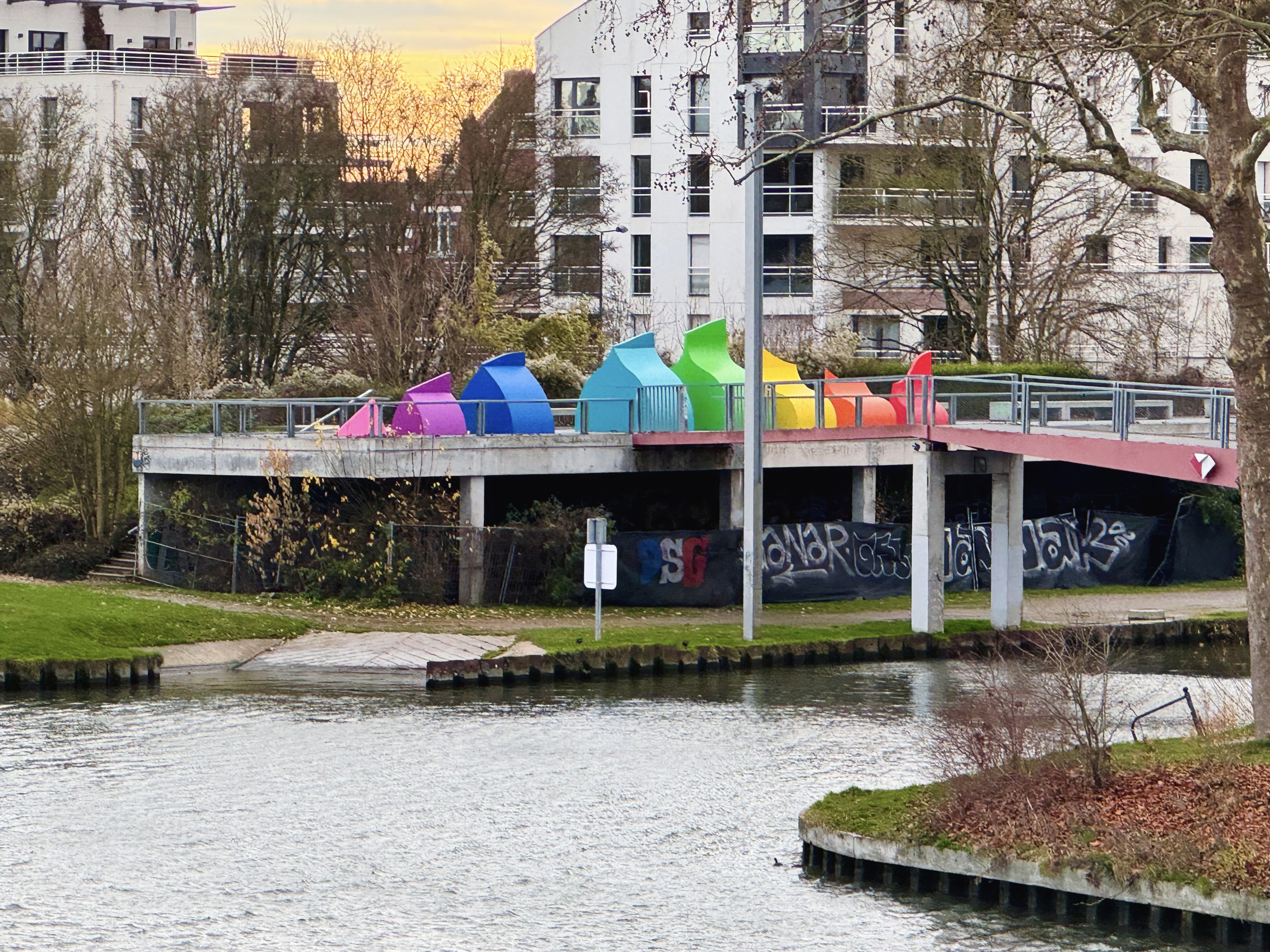
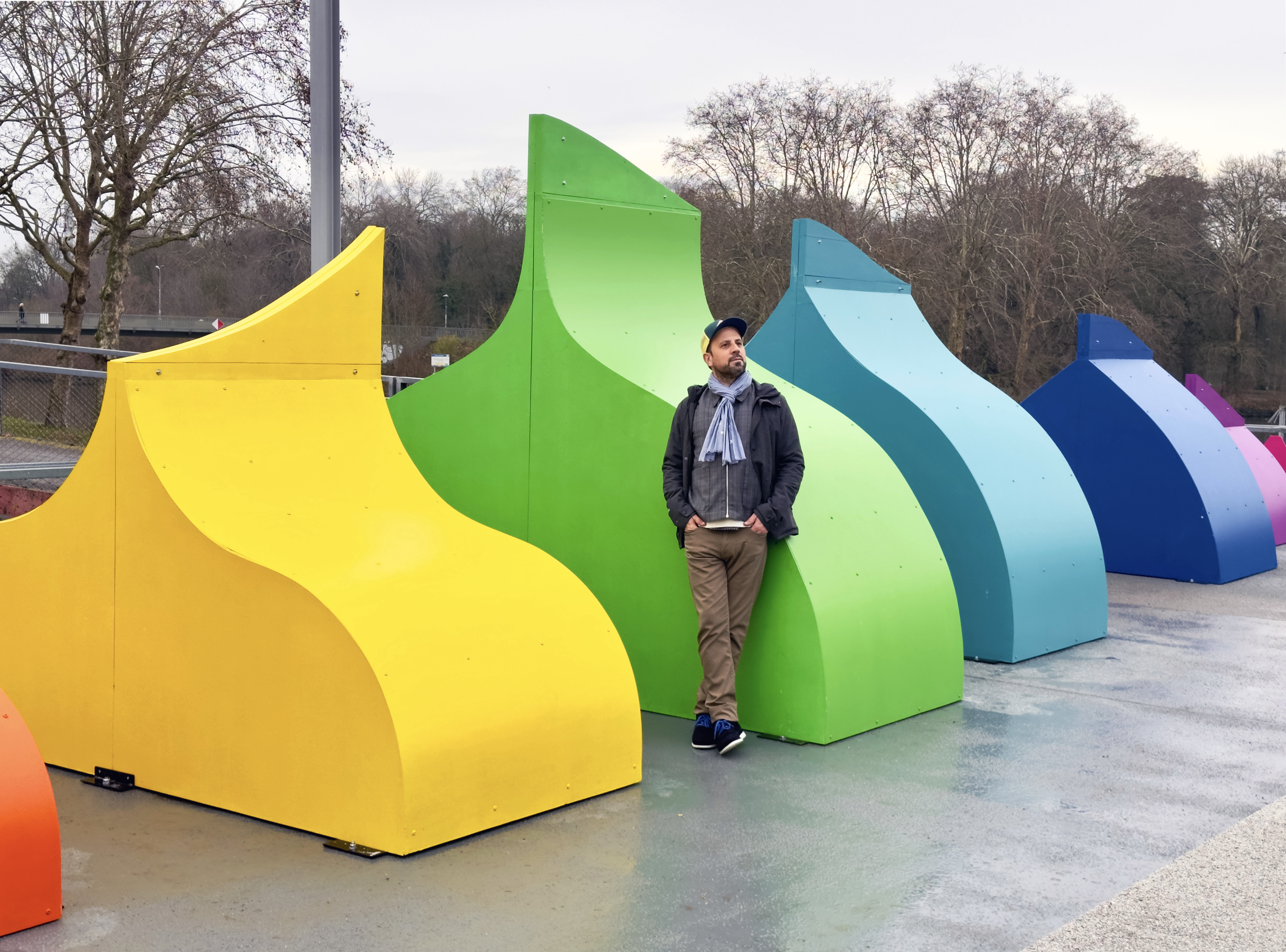
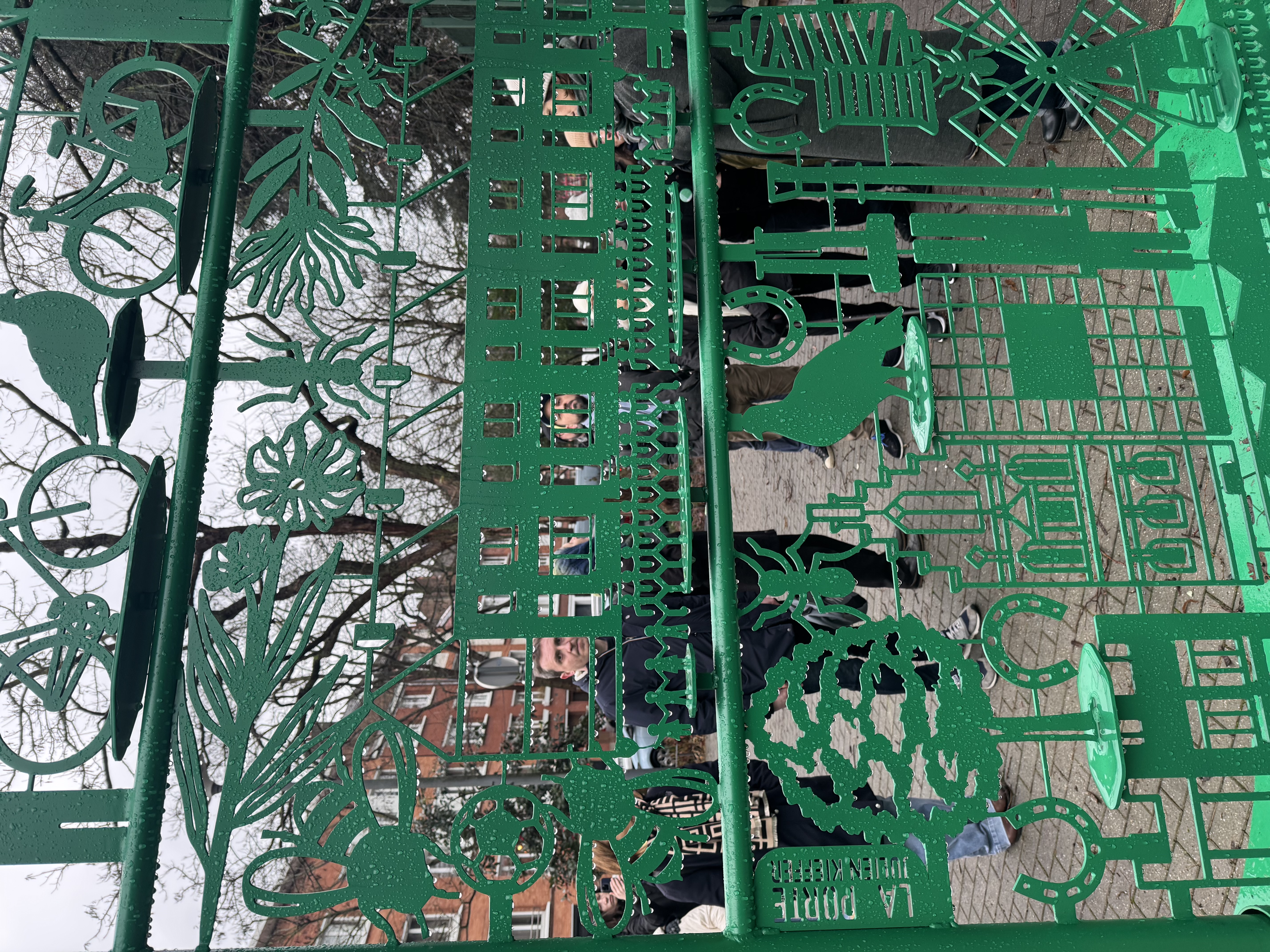
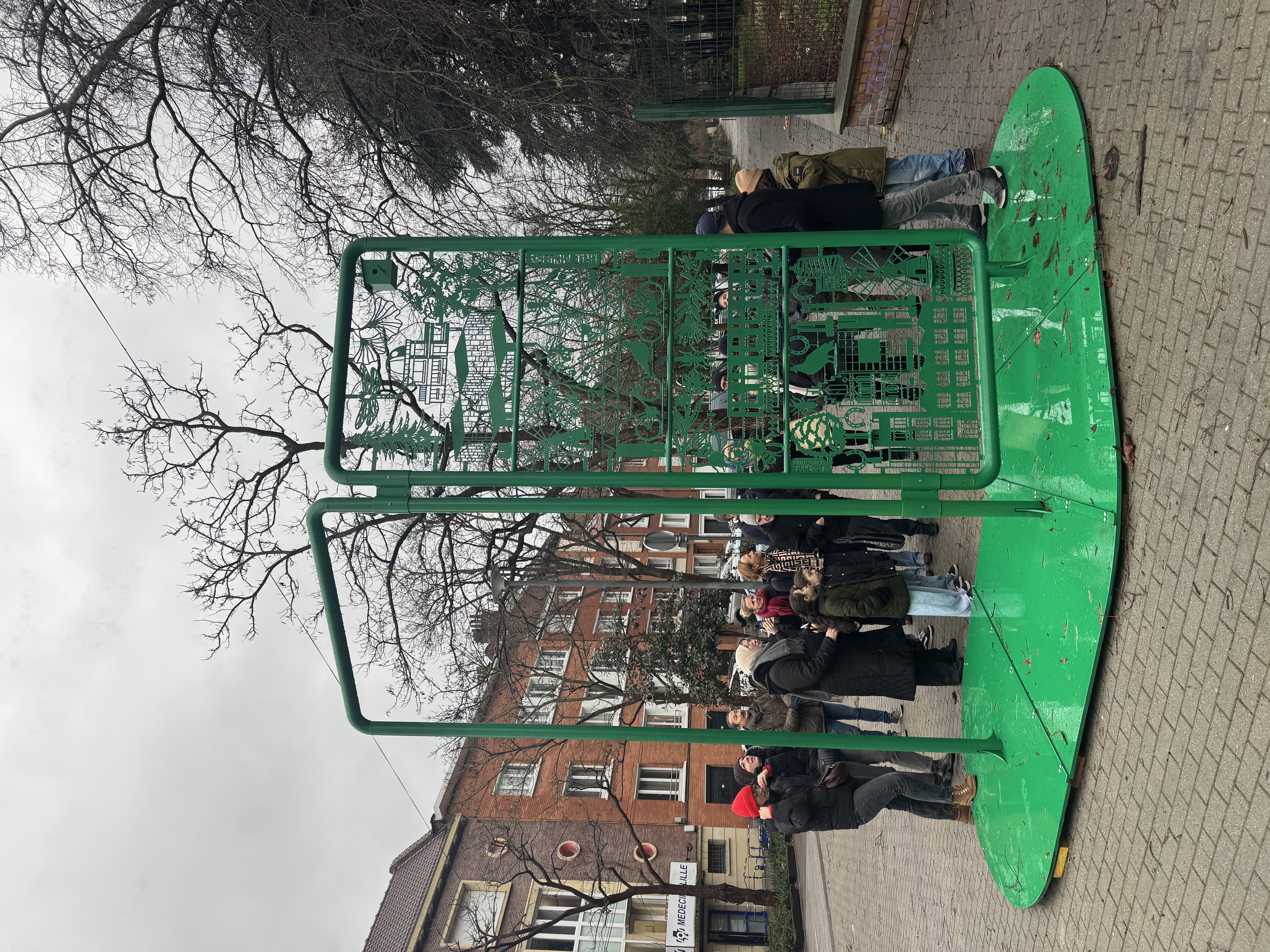
In 2025, we installed three artworks in urban spaces. Two in Lille, Porte de Douai (Moulin district, Julien Kieffer, La Porte) marking an access route over the ring road towards the Botanical Gardens; Pointe Carolus (Bois Blanc district, Baptiste César, Le Fluvopode), marking the entrance to the Vauban Citadel Park; and one in Loos (Nicolas Tourte, Détroit) indicating the entrance to Parc Danel.
Working in collaboration with the artists, the curatorial team designed the installation of the artworks so that they symbolically explore our relationship with the environment and how they might incorporate features related to sustainable urban transport, going beyond the mere beautification of a space. The artworks represent ‘Gates of Freshness’ and indicate the tree-lined areas in the neighbourhoods selected for this experiment. Our aim was to suggest new rituals for transitioning from an urban space to a natural one. We encourage the emergence of new ways of understanding our environments, inspired by totemic cultures, where nature shapes our relationship with the world.
The results of this cultural experiment are difficult to quantify, as they relate more to sensory stimulation than to easily quantifiable material goods or resources. Nevertheless, we can assure you that the works are fully accepted. They have not suffered any damage. We also note that they offer a fresh perspective on urban spaces, a new narrative.
Our project arose from the application submitted by the MEL in response to the EUI_IA call for proposals. Our contribution was, among other things, to ensure a balanced partnership between the parties, moving away from the usual hierarchies between local authorities and civil society organisations.
The locations for the installations were therefore determined following a collective assessment and analysis of the relationship between urban traffic flow, access to cool areas, and the zones most affected by rising temperatures. These were also the subject of consultation and a user survey.
The installation of the artworks was preceded by periods of immersive artist residencies in the heart of the neighbourhoods and amongst the local residents. They shared their knowledge of life in their neighbourhoods, their concerns about global warming, and their experiences during heatwaves. This commitment to the local community has led to a creative and collaborative design process.
The creation of these artworks is the result of a process of local democracy involving artistic teams, local residents and elected representatives alike.
The works incorporate distinctive features of the local area as well as the shared imaginations of the artists and local residents.
They inspire a collective sense of wonder whilst prompting us to reflect on our relationship with the world. They draw attention to climate change and its impact on people’s daily lives.
Adaptation
Resilience
Aesthetics
Temporality
Common
The installation of the artworks in public spaces is planned, in advance and in accordance with the specific terms of the EUI_IA call for proposals, to be temporary (three years). Nevertheless, we have offered to sell them to any towns that wish to purchase them. It goes without saying that this acquisition depends on users taking ownership of the work, which is already the case in the town of Loos. The two works currently on display in Lille seem to be following the same path.
The collaborative creation of artworks by artists and users – residents and citizens – lies at the heart of our approach. This is a collaborative spatial design project involving the project partners, local residents, the curator and the artists. In this way, everyone plays an active part in redefining public spaces, enhancing them and contributing to their shared value.
The symbolic space created by a work of art in the public realm contributes to a re-examination of the commons, in that it helps to revitalise community life. This momentum is set to continue in the long term, as its implementation is underpinned by a cross-functional approach to collaboration. In effect, it breaks free from the hierarchies and top-down governance structures typically employed in spatial planning
Our relationship with the environment is generally conceived and experienced in an anthropocentric way. The very term ‘environment’ – that which surrounds us – implies that humans occupy a central position.
Through their placement within the urban landscape—visible to all and adopting a non-utilitarian stance (one can do nothing with a work of art but look at it)—these works immediately challenge the way we view them, whilst offering a set of symbols that appeal simultaneously to the senses and to reason. They are situated, taking into account the context, setting and atmosphere in which they appear. They offer an unconventional interpretation of their surroundings whilst remaining an integral part of them. This characteristic of visual art challenges our relationship with our surroundings in that it does not, under any circumstances, adopt a centralised stance, but rather an inclusive one. The work is therefore not at the centre, but forms part of its surroundings.In this sense, it fosters a sense of belonging and kindness, fundamental principles that underpin the care we can bring to our work.
The fact that a work of art is the object of the viewer’s gaze endows it with a permeability that enables it to absorb that gaze and reflect it back as an echo, an image. Each person will then form, based on their own culture, curiosity, sensibility and attention, a personal interpretation that will, in one way or another, contribute to the development of their cultural and aesthetic heritage.
Installing a work of art in a public space presents a twofold challenge, beyond the technical and legal considerations that must be taken into account: it creates a temporal distortion in the usual flow of movement, as it catches the eye (in that it is not typical of such processes) ; It offers a respite, a pause from the frenetic and highly productive pace of city life. The work thus suggests a mediation between habits shaped by social, economic and cultural factors, and people’s inner selves – insofar as it resonates with them even slightly. She reminds us that the practical futility of something can prove far more enriching than any material production. In this sense, it offers an inclusive space that is both active and passive, embodying an inherent balance in which contemplation and reflection have their rightful place. By being entirely free of charge (art is the only human creation that exists solely for its own sake; there is no obligation to produce art other than the urge to express oneself, to bring something to life, or the desire to share it with others…) it helps to restore a balance between humanity and the environment, shifting both to foster a fresh perspective—an engagement with the world that serves no other purpose than to rethink it and create a narrative. This constant and varied retelling of stories undoubtedly helps to change the way we see things and one another. In our view, this is an essential prerequisite for addressing the concept of inclusion.
In preparing the artists’ immersion residencies, we drew on our in-depth knowledge of the local areas, engaging both institutional stakeholders (neighbourhood councils, municipal teams, various governing bodies, schools, etc.) and civil society organisations (voluntary sector groups, local businesses, and local initiatives led by residents). The artists were supported by local contacts who enabled them to meet local residents and share their artistic approach with them. In addition, the artists and the outreach team explored the neighbourhoods involved in the project, taking the time to meet residents at random: at the market, on café terraces, at local events, at community activities, and so on. This network, which benefits from both structured facilitation (organising meetings, collaborative design workshops and small, informal gatherings) and more informal get-togethers, has fostered an interplay between the worlds created by the artists and the everyday experiences of the local residents. The collaborative design workshops provided an opportunity to share technical and interpersonal skills, thereby fostering the development of artistic forms capable of bringing these skills to life. During the public workshops, the artists produced three preliminary designs for public art installations, inspired, supported and approved by local residents. Ultimately, the town councillors selected one of the three designs.
The T2A project is led by the Lille European Metropolis. It is the lead partner and the successful applicant in the EUI_IA call for proposals. The two partner cities for the first phase of the project are Lille and Loos. As partnership is at the heart of the project, governance is both collegial and cooperative. The overarching project (resilience of cities in the face of climate change) is led by the MEL’s Time Management Office: optimising footfall in cool spaces, adjusting staff working hours accordingly, greening school playgrounds, and installing artworks and street furniture in public spaces. To this end, the MEL has drawn on the expertise of CEREMA, ARACT, Écologie Urbaine et Citoyenne, SEED, Groupe A – Coopérative culturelle, and the cities of Lille and Loos.
The MEL has greatly facilitated the overall organisation of our initiative by fostering smooth communication with the relevant authorities and coordinating the various partners during public engagement events and when installing artworks in public spaces. The project is being rolled out across the metropolitan area and is designed to be replicated internationally: partner cities include Dresden, the Barcelona Metropolitan Area and Middelburg.
The MEL has greatly facilitated the overall organisation of our initiative by fostering smooth communication with the relevant authorities and coordinating the various partners during public engagement events and when installing artworks in public spaces. The project is being rolled out across the metropolitan area and is designed to be replicated internationally: partner cities include Dresden, the Barcelona Metropolitan Area and Middelburg.
From an engineering perspective, our project is driven by two key approaches: territorial design, which involves re-examining all the factors within a given area in order to gain a better understanding of it, taking a cross-cutting and non-partisan approach; cultural mediation, which involves creating the conditions for collaborative action by drawing on everyone’s skills. Our approach is part of the momentum driven by cultural urbanism, a national movement in which we are particularly involved. In addition, the project partners contributed their expertise in the following areas: public consultation; analysis of cool and warm areas (thermal mapping); ecosystem analysis; management of time (working hours, rest periods, leisure time, etc.); and land development and greening.
This project is 80% funded by the EU’s EUI-IA programme. The remaining 20% is mainly provided through financial or in-kind sponsorship.
The project aims to be achievable by creating an open-source toolkit that can be accessed by the transfer cities and others. Project engineering and capacity-building among the various partners will enable the transfer cities to be supported through consultancy and technical assistance.
The mediation methodology, which includes immersive residencies, represents a valuable area of expertise that we aim to share through the joint development of collaborative and cooperative projects with any organisations wishing to develop this type of initiative.
The mediation methodology, which includes immersive residencies, represents a valuable area of expertise that we aim to share through the joint development of collaborative and cooperative projects with any organisations wishing to develop this type of initiative.