URBAN ACUPUNCTURE
“ALBERGO DIFFUSO” AND ROUTE FOR THE ENHANCEMENT OF THE PORTALS IN POLAGGIA
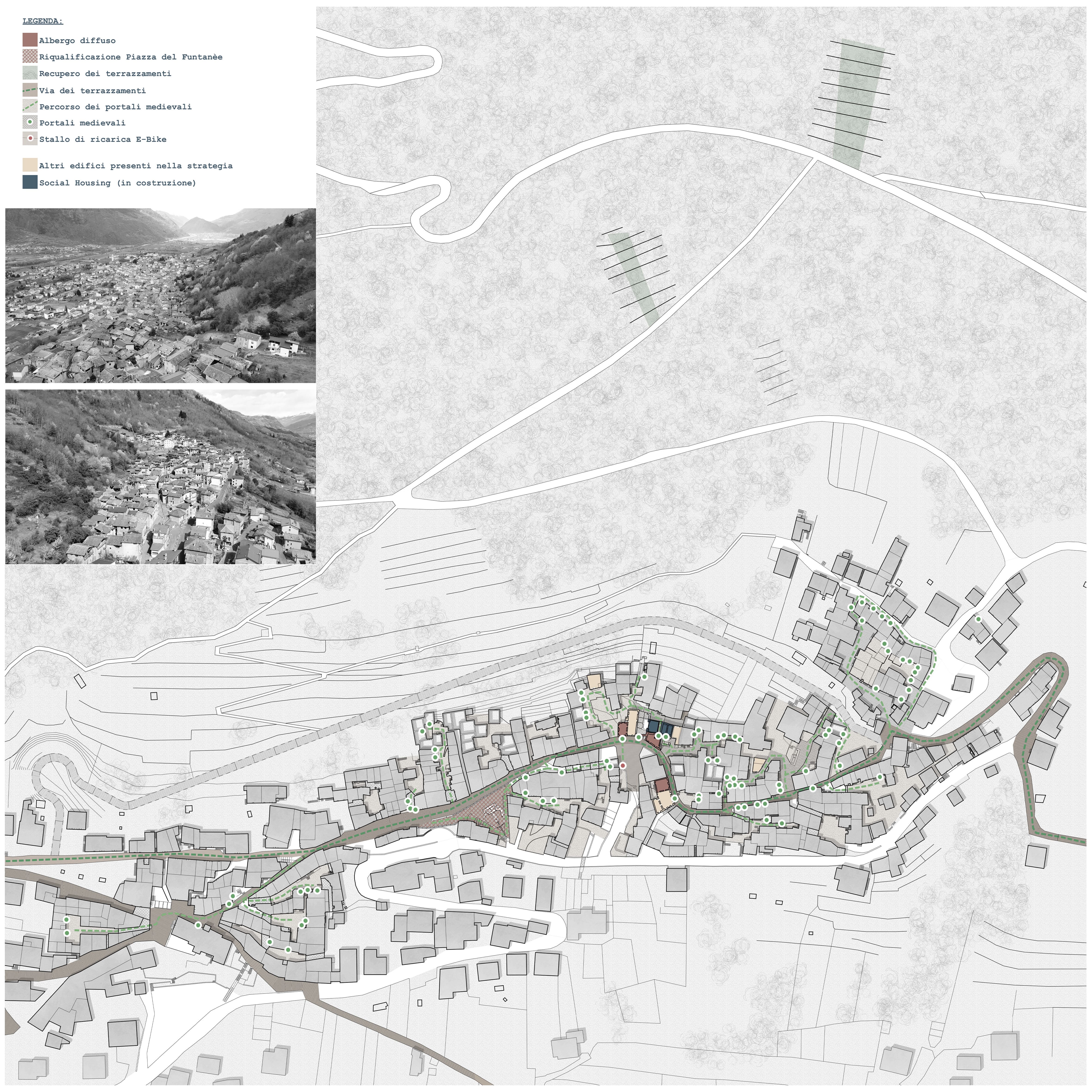
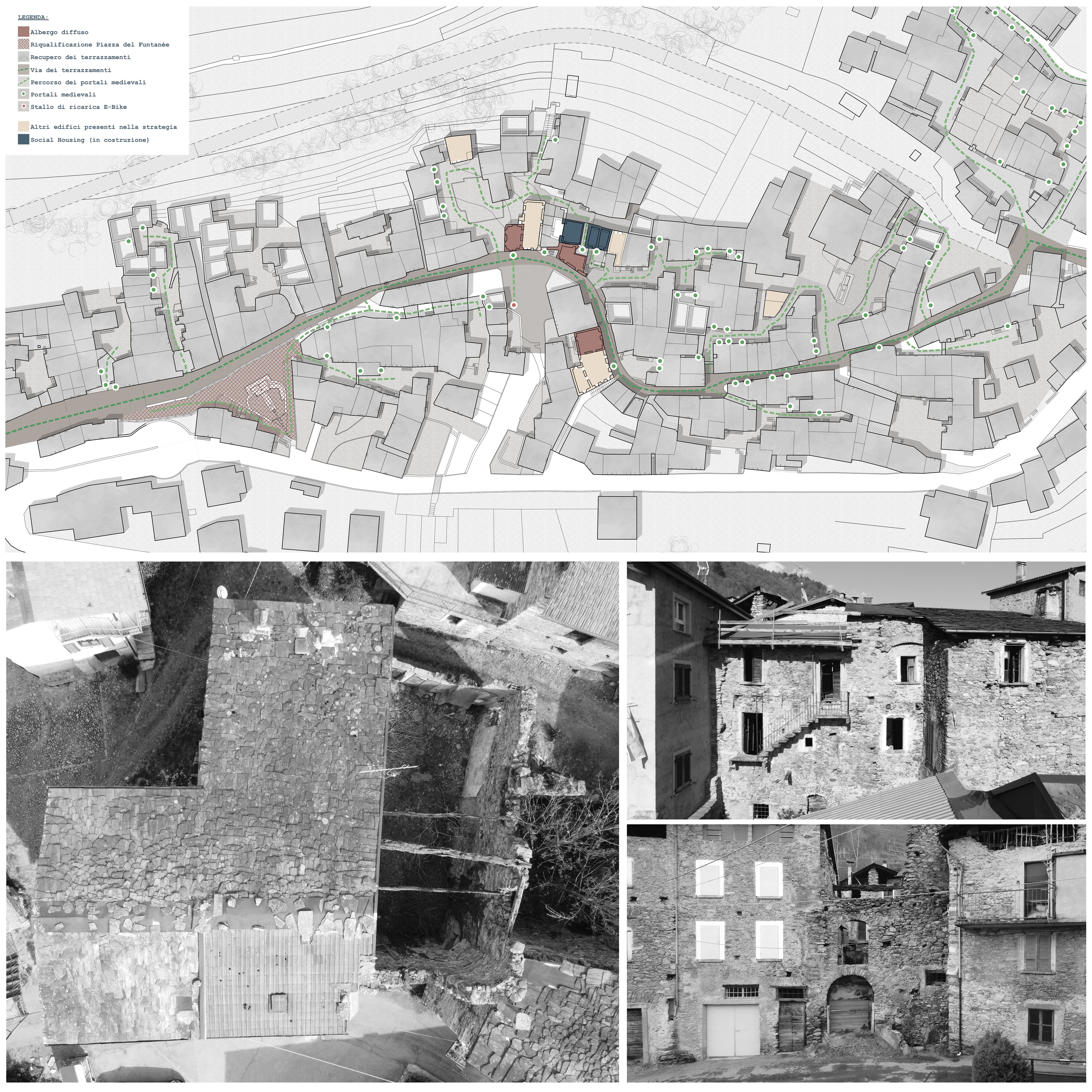
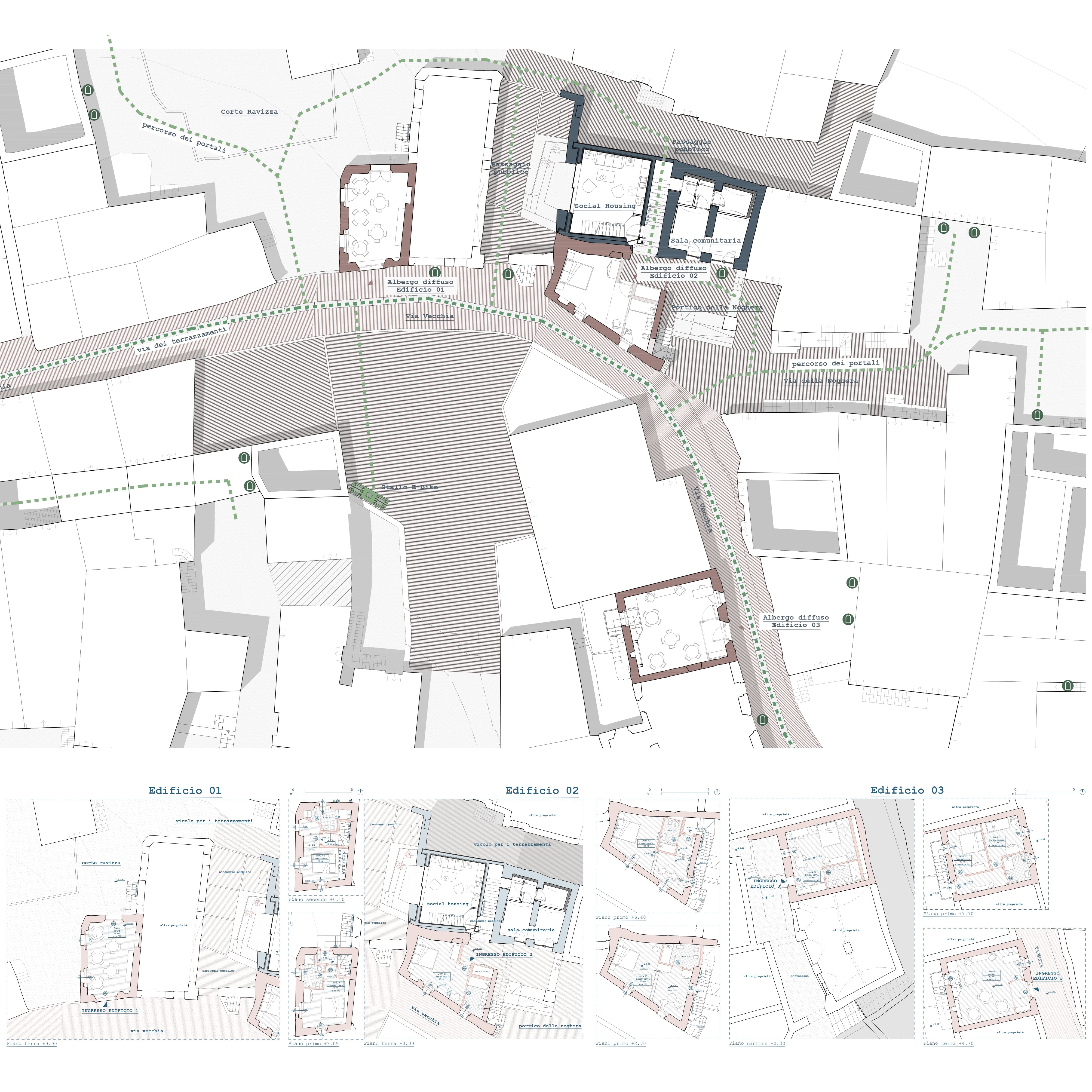
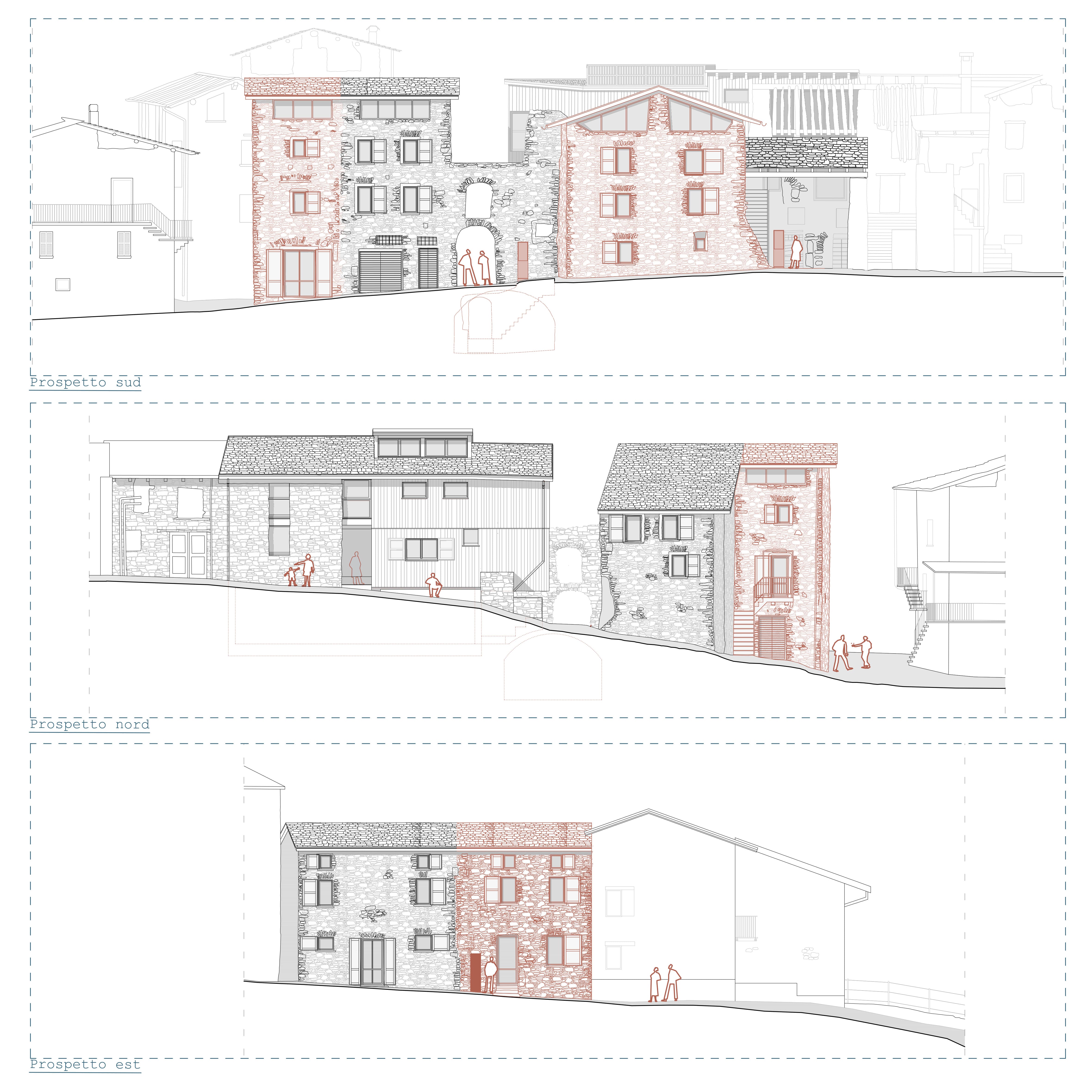
Following the revitalization strategy developed by the Politecnico di Milano, and the implementation of a first phase (social housing for young people and related public spaces), a further urban regeneration initiative for the medieval district of Polaggia is presented. The project includes the development of an “albergo diffuso”, the creation of a route aimed at enhancing the medieval portals, small-scale interventions spread throughout the public space, and the restoration of a terraced field.
Italy
District of Polaggia in Berbenno di Valtellina (SO)
Prototype level
Yes
Yes
Yes
No
No
14007: Berbenno di Valtellina (IT)
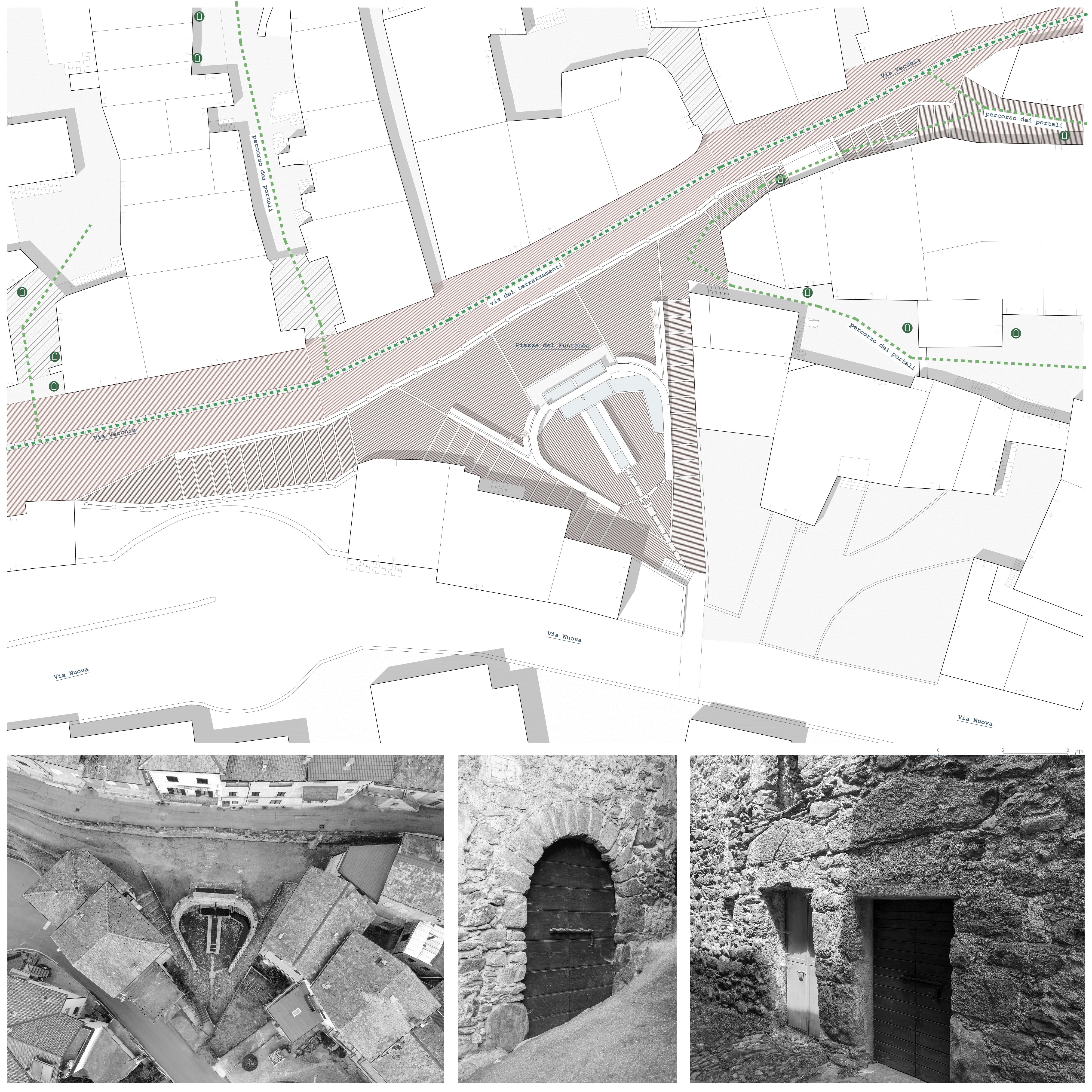
The Municipality of Berbenno di Valtellina, building on the revitalisation strategy developed through the research project “Radici di una identità” (Fondazione Cariplo) and the implementation of a first intervention phase (social housing for young couples and related public spaces), is promoting an integrated regeneration initiative for the district of Polaggia. The aim is to counter depopulation and the gradual loss of services, improve living quality, and enhance the area’s historical and landscape heritage. The initiative takes the form of a progressive programme based on incremental actions that gradually improve the village’s liveability and attractiveness while encouraging further investments and initiatives from the local community. The strategy includes small-scale, widespread interventions in public spaces and along pedestrian routes(maintenance and care, improved legibility, safety and comfort, resting points, signage, and minor enhancement devices) capable of producing visible results even with limited resources. Among these actions is the creation of a “Route for the Enhancement of Medieval Portals”: a thematic itinerary connecting portals, courtyards, and historic passages through informational materials and a programme of guided visits for residents and visitors, aimed at strengthening local identity and place-based storytelling. A key strategic axis is the development of an “albergo diffuso”, consistent with the district’s settlement structure, for which preliminary design proposals have already been prepared. At the same time, discussions are underway with small agricultural businesses interested in integrating hospitality with wine-related and productive activities(such as a “cantina diffusa”, processing spaces, and facilities for tastings and guest reception) strengthening the local economy and territorial stewardship. The Municipality act as coordinator, promoting partnerships, co-creation, and a shared pact of care for long-term regeneration.
Diffuse regeneration
Cultural route of the portals
Albergo diffuso
Community and co-creation
Heritage enhancement
First of all, sustainability must be understood as the interweaving of environmental, social and cultural dimensions. From an environmental perspective, the programme focuses on the recovery, reuse and enhancement of existing heritage, thus avoiding land consumption - itself energy-intensive - and preventing the loss of the patrimonial value embedded in historic villages. The sustainability of the regeneration programme is based on an incremental approach: light, coordinated and widespread interventions, conceived as a form of urban “acupuncture” within a shared overall strategy, bring diffuse quality while preserving the high landscape value of the context. This allows the Municipality to proceed in phases and adapt solutions to available resources within a broader vision. The care of public space, together with the maintenance and improvement of routes, contributes to the long-term resilience of the district by strengthening everyday safety and comfort. The creation of new opportunities for measured, endogenous local economic development also supports the rediscovery of the medieval village and its “active” preservation. The Route of the Medieval Portals enhances existing elements, guides flows in a respectful way, promotes slow and conscious tourism, and supports the transmission of local memories and knowledge. The albergo diffuso introduces a lever for economic and territorial sustainability: it encourages the recovery of housing units, generates local income and employment, and contributes to the continuous stewardship of the district through care, maintenance and services. Its integration with small-scale agricultural and wine-producing activities can further strengthen sustainability through short supply chains, local production, authentic experiences, and a hospitality model that supports the economy without altering the character of the place. The adoption of a small terraced plot also opens up the possibility of preserving the memory of local ancient seed
The project’s main aim is to make the medieval district of Polaggia more liveable and beautiful through the quality of everyday space and the strengthening of a sense of belonging that has gradually faded over time. Aesthetics is therefore not understood as a merely attractive image, but as the careful relationship between existing built heritage, new uses, and contemporary reinterpretation. Here, aesthetics is understood as the overall quality of experience: not only “beautiful to look at,” but “beautiful to live.” The initiative works on the district’s coherence through measured interventions that respect its historic character — materials, details, traces, light, and small improvements — enhancing legibility, care and hospitality. The aim is not to museumise or freeze the village as a relic, but rather to bring it back to life. In this sense, the Route of the Medieval Portals seeks to enrich lived experience by constructing a spatial and temporal narrative: people come to understand and experience the village by walking through it, recognising its details and historical depth within a setting restored to everyday life. Signage and interpretive content will be discreet and consistent, with stops and resting points that encourage slow enjoyment. The development of an albergo diffuso, to be considered together with the current housing policy based on social housing, further contributes to perceived quality: restored houses, active uses and distributed services reduce the effect of an “empty village,” making Polaggia more vibrant and fostering an authentic relationship between guests, community and landscape. The recovery of a small terraced plot, where ancient local seeds will be planted, will also enable small educational activities aimed at raising awareness among younger generations. Finally, the installation of an e-bike charging point will strengthen territorial connections, integrating the district into a broader system of conscious and sustainable tourism.
Regeneration processes are complex, multilayered and multidimensional, requiring a systemic reading of the context and the ability to coordinate different forms of knowledge, public authorities and the local community. The aim is to reduce the typical fragilities of small mountain settlements by offering opportunities for participation and widespread benefits to all age groups of residents, as well as to new visitors. These micro-interventions (whose strategic value should be considered together with the recently completed social housing) increase the usability and safety of routes and public areas, improving orientation, lighting and comfort, and encouraging their everyday use. The Route of the Medieval Portals is designed with clear language and accessible content, with stops and resting points that facilitate participation by families and older people. It can also generate new community roles: guiding visits, collecting memories and supporting forms of cultural volunteering. Along the route and within the district, areas for pause have been planned so that users can share moments of rest while enjoying the surrounding landscape. The albergo diffuso, integrated with agricultural and wine-related activities, broadens economic inclusion by creating opportunities for small local businesses, new skills and forms of collaboration among property owners, operators and the wider community. The Municipality acts as facilitator, promoting simple and concrete processes through which everyone can contribute according to their possibilities, thereby strengthening belonging and shared responsibility. The recovery of a small terraced plot will also restore the relationship between the district and its surrounding territory. Finally, the installation of an e-bike charging point will encourage the arrival of visitors interested in experiencing the authenticity of a settlement of ancient origins, within the remarkable landscape of the terraced slopes of the Rhaetian Alps.
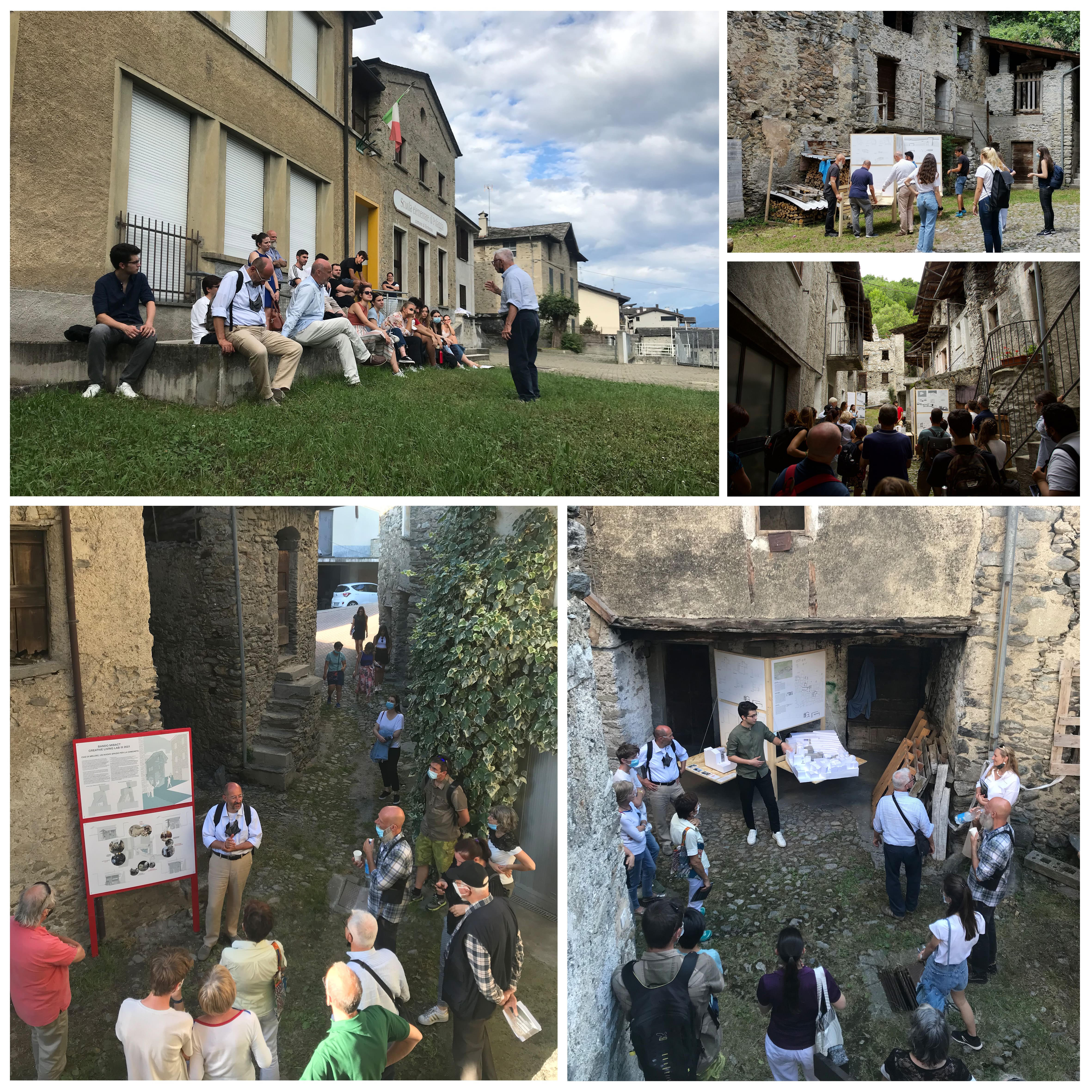
Over the past five years, the strategy underlying this regeneration process has included structured moments of information-sharing, exchange and public discussion, involving residents, the local community, and the organisations and institutions concerned. In an initial phase, linked to the inter-university research project funded by Fondazione Cariplo, interviews were conducted with local stakeholders in order to develop a revitalisation strategy grounded in directly expressed needs. This was followed by an itinerant exhibition set up within the village by students from Politecnico di Milano, which attracted strong participation from the Polaggia community and beyond, and presented drawings and models of their proposals (19 July 2021). A further key moment in the participatory involvement of the local community was the Study Day “Riabitare le corti di Polaggia” (13 November 2021), which formally presented the research results and opened a public debate on possible trajectories for the revitalisation of the medieval district, followed by a round table focused on thematic issues and dialogue among institutions. This marked the beginning of a long regeneration process conceived as an ongoing practice of co-creation: listening to needs, engaging with residents and associations, and implementing on-the-ground actions capable of transforming ideas into visible results. Some of the first participatory steps will include the creation of the Route of the Medieval Portals, through the shared mapping of portals and their stories, the collection of historical photographs and memories, and the testing of the itinerary through community walks and pilot visits. At the same time, the albergo diffuso will be developed as a network-based project, involving owners and interested actors — including agricultural and wine-producing initiatives — in defining minimum standards, services and management models, thus reinforcing a local pact centred on care and quality.
The initiative has mobilised actors at multiple levels. At the local level: the Municipality, residents, associations and cultural actors working for the enhancement of the district and the organisation of activities. At the territorial level: networks and operators able to support promotion, slow forms of use, and integration with the wider offer of the valley. At the institutional level: dialogue with Regione Lombardia, SABAP Lombardia, Comunità Montana di Sondrio, Politecnico di Milano, and the University of Bergamo. The plurality of institutions involved, together with the range of expertise brought into the process and the continuous dialogue with the local community, has generated significant added value in terms of: alignment between the local vision and frameworks for heritage protection and enhancement; integration of administrative, landscape and cultural competences and responsibilities; and stronger legitimacy of the process, along with a greater capacity to attract resources and external attention. Cooperation across these different levels over time has helped make the revitalisation process not episodic, but part of a broader trajectory of regeneration for the district, in which dwelling, the improvement of public spaces, and their activation through cultural events can become a shared direction for the future. The possible integration with local agricultural and wine-producing enterprises further expands this network, enabling synergies between hospitality, local production and territorial promotion, with benefits in terms of quality, continuity and investment capacity.
The project represents a relatively rare example of transdisciplinarity. In shaping its premises and overall strategy, several disciplinary fields interacted and were integrated through continuous exchange, combining the historical and cultural dimension (historians and building archaeologists), the sociological dimension (sociologists), the economic dimension (economists), and the architectural and transformative dimension (architects). This ongoing dialogue among different and specific disciplinary perspectives enriched the complexity of the final outcome and was further strengthened by continuous listening to the community and its aspirations. The shared guiding thread throughout the entire process was the will to understand in depth the social, economic and territorial trajectories inherited from the past, in order to build, in continuity with them, endogenous and fully sustainable directions for the future. By integrating different forms of knowledge and expertise, this transdisciplinary path has made it possible to activate heritage recovery and the necessary care of shared spaces, to elaborate a cultural interpretation and an in-depth narration of the place through the “Route of the Medieval Portals”, to envision sustainable tourism and management models through the “albergo diffuso”, and to prefigure forms of rural development and productive supply chains linked to wine-related activities. Transdisciplinarity is ultimately essential in avoiding episodic interventions: physical aspects such as routes and small spatial improvements are designed together with immaterial ones such as identity, content, governance and local economy. The goal is to create a living ecosystem in which each action makes the next possible, progressively strengthening the district.
In small villages, interventions are often isolated and disconnected. The innovative aspect of this proposal lies in the development of a complex overall strategy, capable of identifying precise spatial prefigurations — not merely functional ones — that can be implemented over time. This strategy is the result of an articulated interdisciplinary process and now serves as a fundamental tool for consciously guiding medium- to long-term territorial transformations. Within this methodological framework, it has been possible to initiate an innovative process of diffuse and incremental regeneration, capable of producing visible impacts without waiting for a single “final masterplan,” while at the same time activating both the community and property owners. A further innovative dimension of the project lies in the unusual intertwining of different actions, each contributing to the revitalisation of the district: highly recognisable identity-based micro-interventions such as the “Route of the Medieval Portals”, combining a thematic itinerary and guided visits; the development of an “albergo diffuso” based on qualified preliminary design proposals prepared by Politecnico di Milano; and the possibility of a hybrid management model involving agricultural and wine-producing activities that support the local economy and strengthen the continuous stewardship of the place. This broader housing-related strategy is also intended to connect with wider territorial dynamics, capable of responding to the needs of those who remain, return to the mountains, or choose to settle there anew. The regeneration model adopted here can therefore increase both social and economic resilience, reduce the risk of purely cosmetic regeneration, and create concrete conditions for the activation of new forms of attractiveness and further bottom-up initiatives.
The methodology has been, and continues to be, structured in phases and according to an adaptive approach:
1. Framework and priorities: a comprehensive reading of the district was carried out, identifying critical issues, opportunities and key places, and leading to the development of an overall strategy for the revitalisation of the historic settlement and its surrounding territory.
2. Definition of a plan: with the support of the universities and by gathering the community’s aspirations, a number of priority areas for intervention and specific key themes were identified.
3. Co-creation: targeted meetings and on-site activities were organised to define shared objectives and contents, and to identify the first micro-actions consistent with the overall framework.
4. Route of the Medieval Portals: the mapping and selection of the stops were developed by the University of Bergamo; signage and interpretive contents were designed; pilot visits will be organised in order to launch a programme of guided tours and collect feedback.
5. Diffuse micro-interventions: the progressive implementation of small works and devices — including path maintenance, resting points, orientation tools and safety improvements — is being carried out, while assessing their effectiveness and maintaining a coherent design language.
6. Albergo diffuso: the preliminary proposals are being refined; agricultural and wine-producing actors are being involved; minimum standards, services and governance models are being defined; and the first accommodation units and integrated services will be activated. A distinctive feature of the proposed model is that it can expand over time, also involving private owners.
7. Activation and monitoring: initiatives, communication actions and indicators — such as participation, guided visits, restored units, visitor presence and perceived liveability — will be programmed in order to support continuous improvement.
It seems to us that the most fertile and replicable aspect of the regeneration process presented here — though also one of the most complex to implement — lies in its multiscalar, transdisciplinary and multi-level methodology. To address the challenge of reinhabiting mountain territories, it is necessary to begin from the local dimension: from the complexity and individuality of settlements, understood through their history, landscape, architecture, and specific social and economic fabric. Within this framework, possible trajectories for new urban and territorial transformations can be identified in balance with inherited structures and values. If the medieval district of Polaggia has thus become a laboratory of ideas, grounded in the encounter between different forms of knowledge and disciplines, we believe that the same approach — adapted to the specific local and morpho-typological conditions of each context — can be applied to the many challenges posed today by these fragile territories. Other easily replicable aspects include the development of a low-threshold plan of micro-interventions based on quality criteria consistent with historic contexts, and the construction of a governance model able to activate both the community and property owners. The “Route of the Medieval Portals” is also a readily transferable format: mapping identity elements, creating an itinerary, introducing light signage, and organising guided visits, all adaptable to different villages through locally specific content. Likewise, the combination of an “albergo diffuso” and an agricultural/wine-related supply chain can be transferred elsewhere: it integrates hospitality, local production and heritage maintenance within a sustainable economic system, strengthening both stewardship and care. Replicable outputs include a participatory process framework, guidelines for content and signage, minimum standards and network rules for the “albergo diffuso”, and a set of monitoring indicators.
The Municipality has strongly believed in the challenge of revitalising this part of its territory — the district of Polaggia — to the extent that it launched the research activities of the project “Radici di una identità” as early as 2018. The strategy developed together with Politecnico di Milano and shared with the community provides a solid basis for moving into operational phases — defining the model, standards, services and governance — and has traced a clear direction for a gradual transformation of the village towards regeneration. This marked the beginning of a slow implementation phase, in which the actions envisaged within the overall framework must be matched with the search for the necessary resources, including participation in funding calls. An initial call by Regione Lombardia enabled the construction of social housing and the first upgrading of shared spaces. A second phase of regeneration is now being envisaged, in which policies aimed at repopulation are combined with important steps toward endogenous economic revitalisation through the “albergo diffuso” and the enhancement of local heritage and identity through the “Route of the Medieval Portals”. The productive dialogue established with agricultural and wine-producing actors indicates the potential for an integrated and sustainable management model, capable of generating activities and long-term stewardship. Support through the Boost call is intended to accelerate and strengthen this process: by reinforcing co-creation and governance, improving the coherence and quality of micro-interventions, increasing the visibility of the “albergo diffuso” model, and defining tools for monitoring and transferability, so that an incremental process may become a stable trajectory of regeneration.