Enhancing Circularity, Sustainability, and Innovation
Non Tox Pop Up
Non Tox Pop Up - A mobile material library for healthier spaces
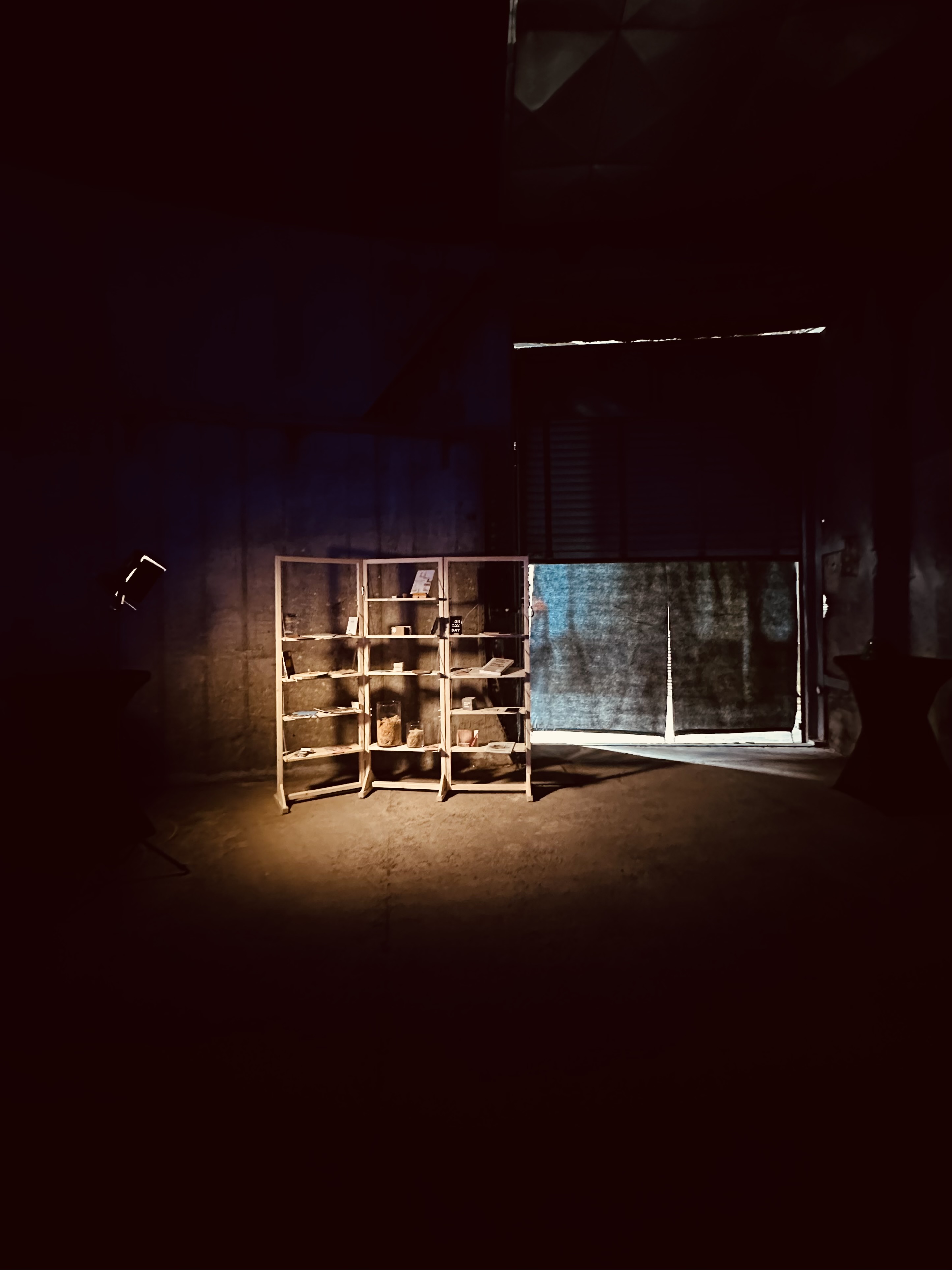
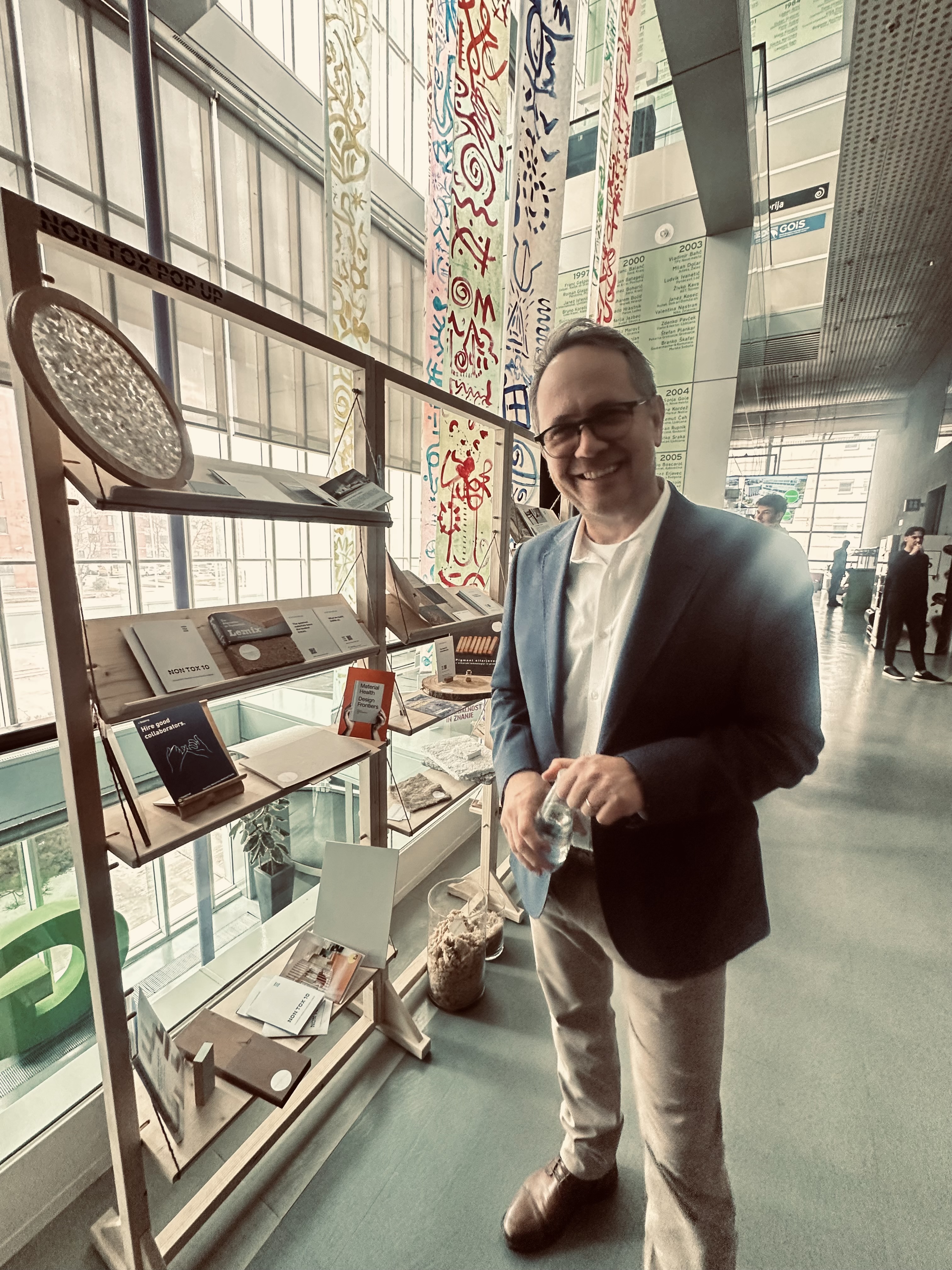
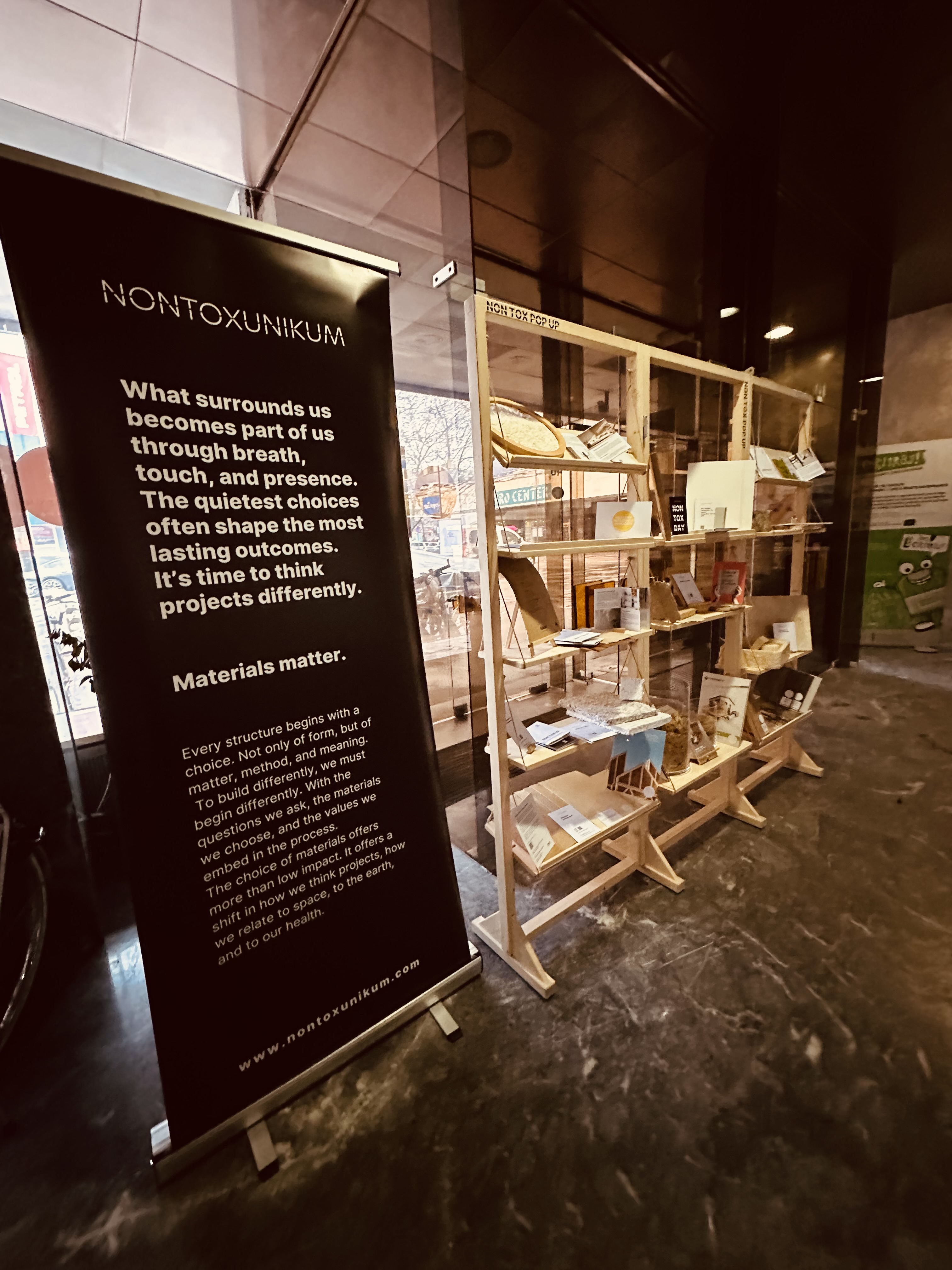
The scent. The warmth. The feel. Every material speaks of its origin, its texture and its quiet connection to the world it comes from. Non Tox Pop Up is a travelling material library that invites people to pause and experience carefully curated healthier materials with all their senses. By touching wood and lime finishes, feeling the warmth of hemp or smelling linseed oil from linoleum, visitors discover how material choices shape the spaces we live in and the air we breathe.
Slovenia
National
It addresses urban-rural linkages
It involves other types of transformations (soft investment)
Yes
2025-11-15
No
No
No
Organisation
The Non Tox Pop Up Material Library is a mobile educational installation that opens a space for reflection on the materials that surround us and shape our environments. Materials are not only technical elements of construction. We touch them, breathe them and live with them, yet their impact on human health and the quality of indoor environments often remains invisible.
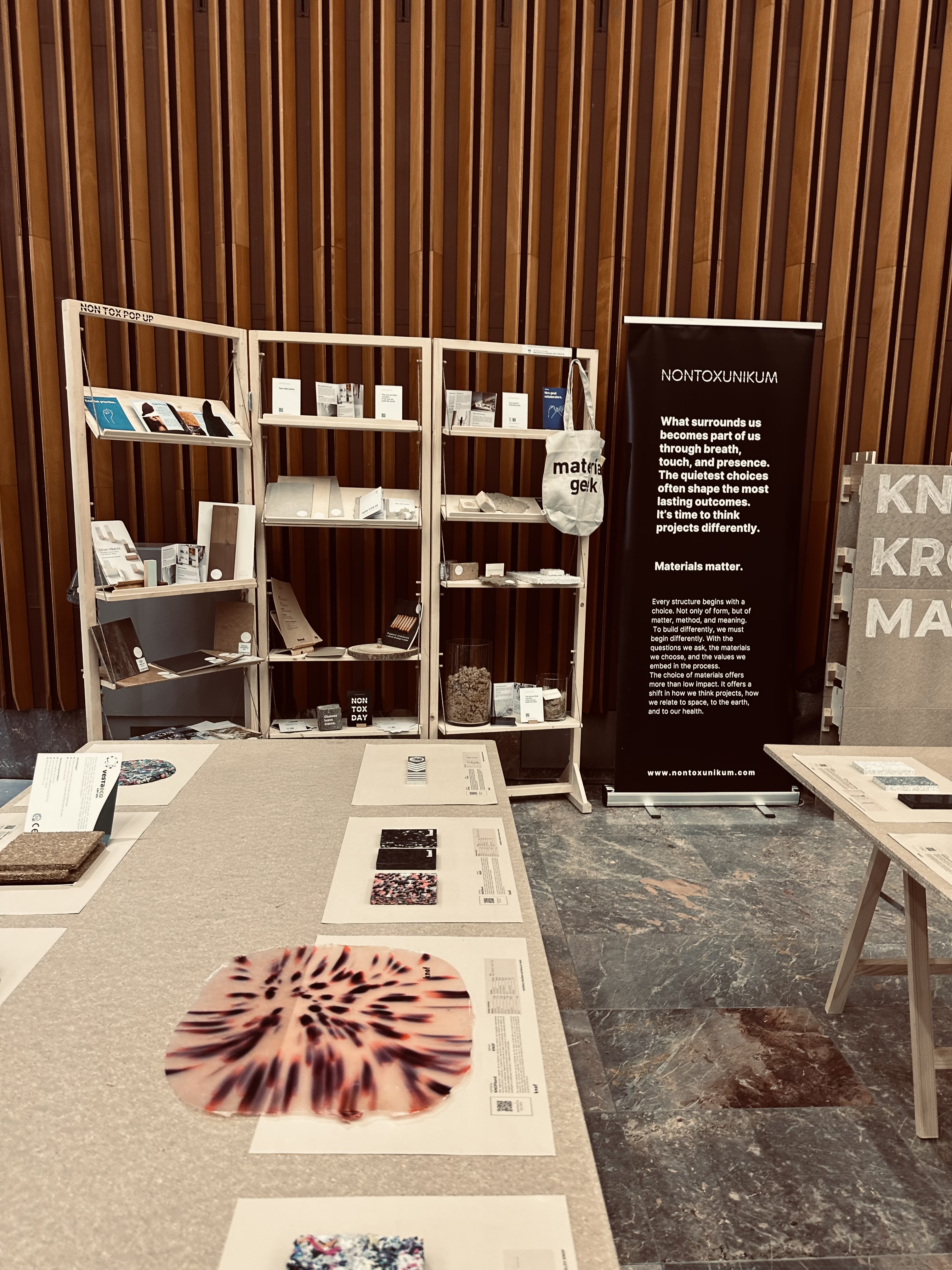
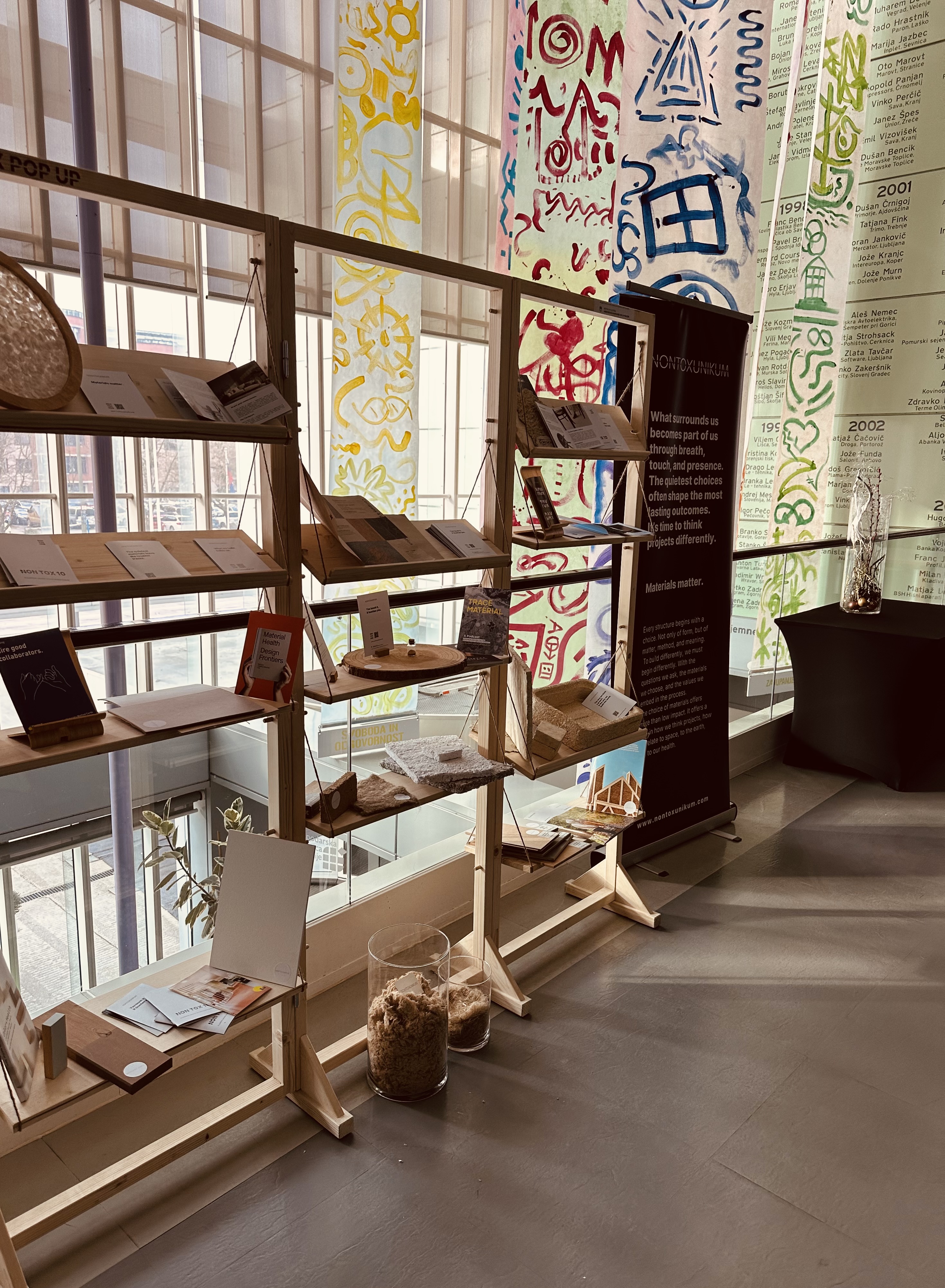
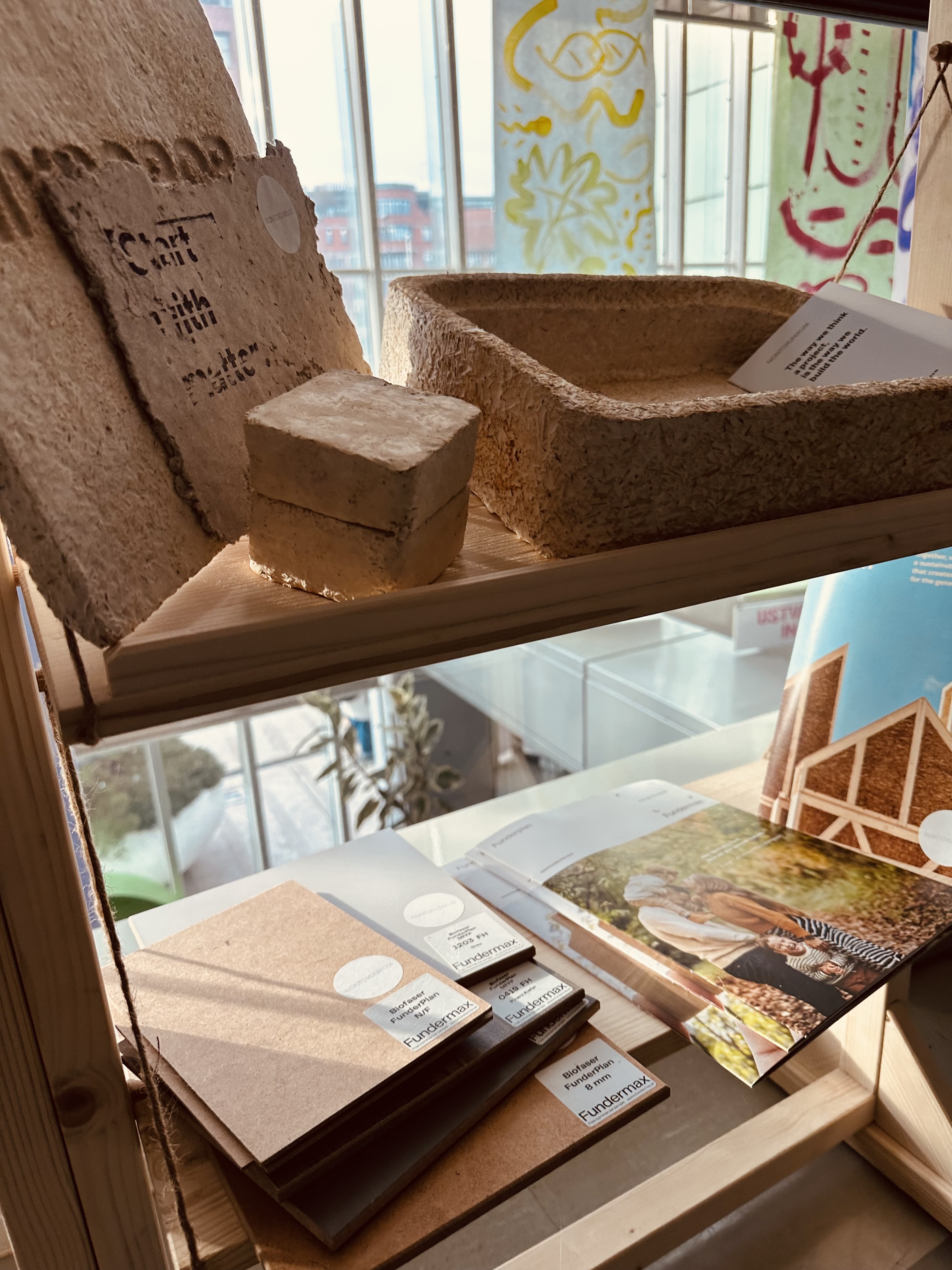
The project was created as a travelling material library that makes this hidden layer of the built environment and our surroundings visible and understandable. It presents a curated selection of materials used in architecture and interiors, with a focus on healthier, more sustainable and responsible alternatives. Visitors can see and touch the materials and compare them.
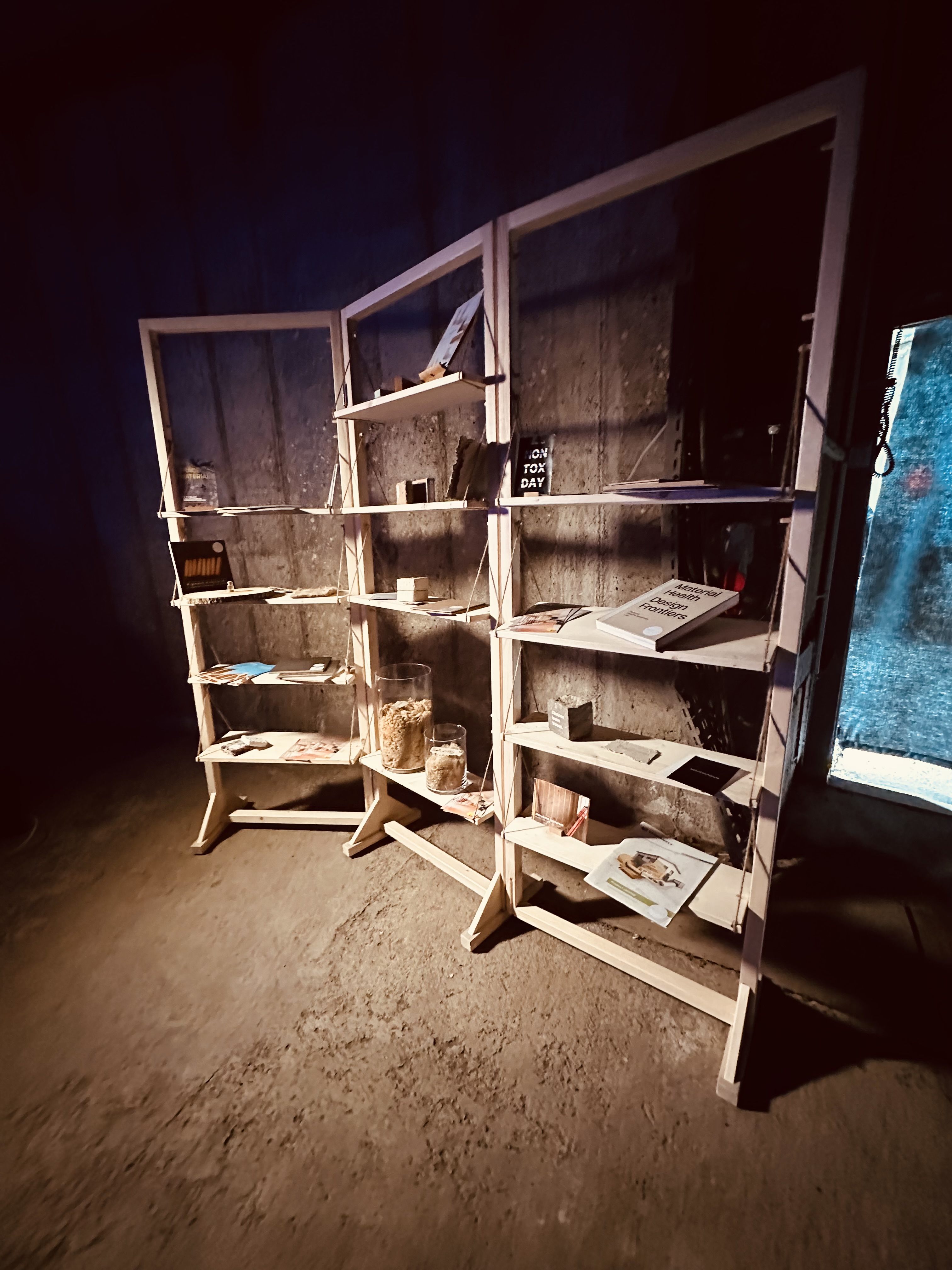
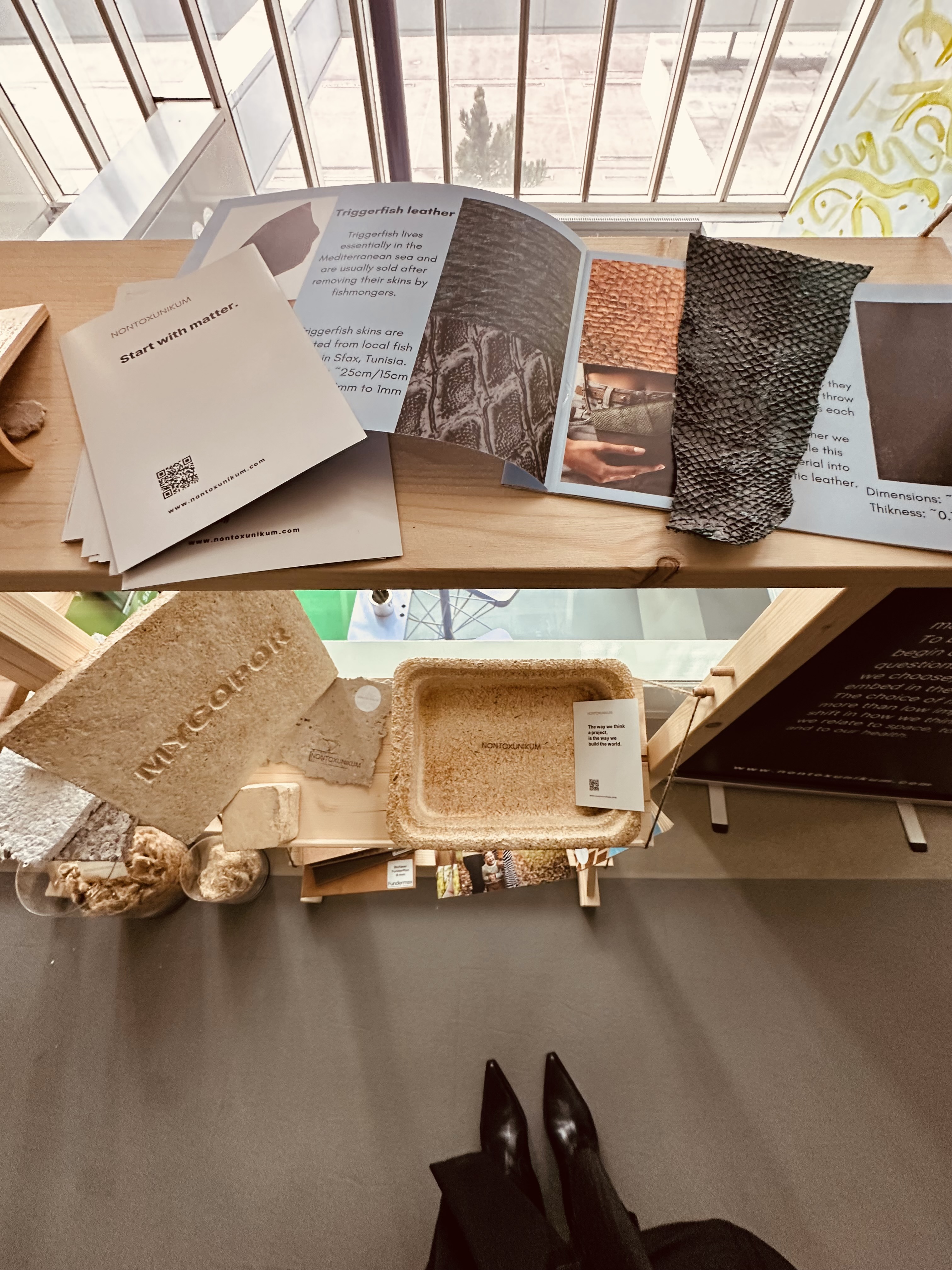
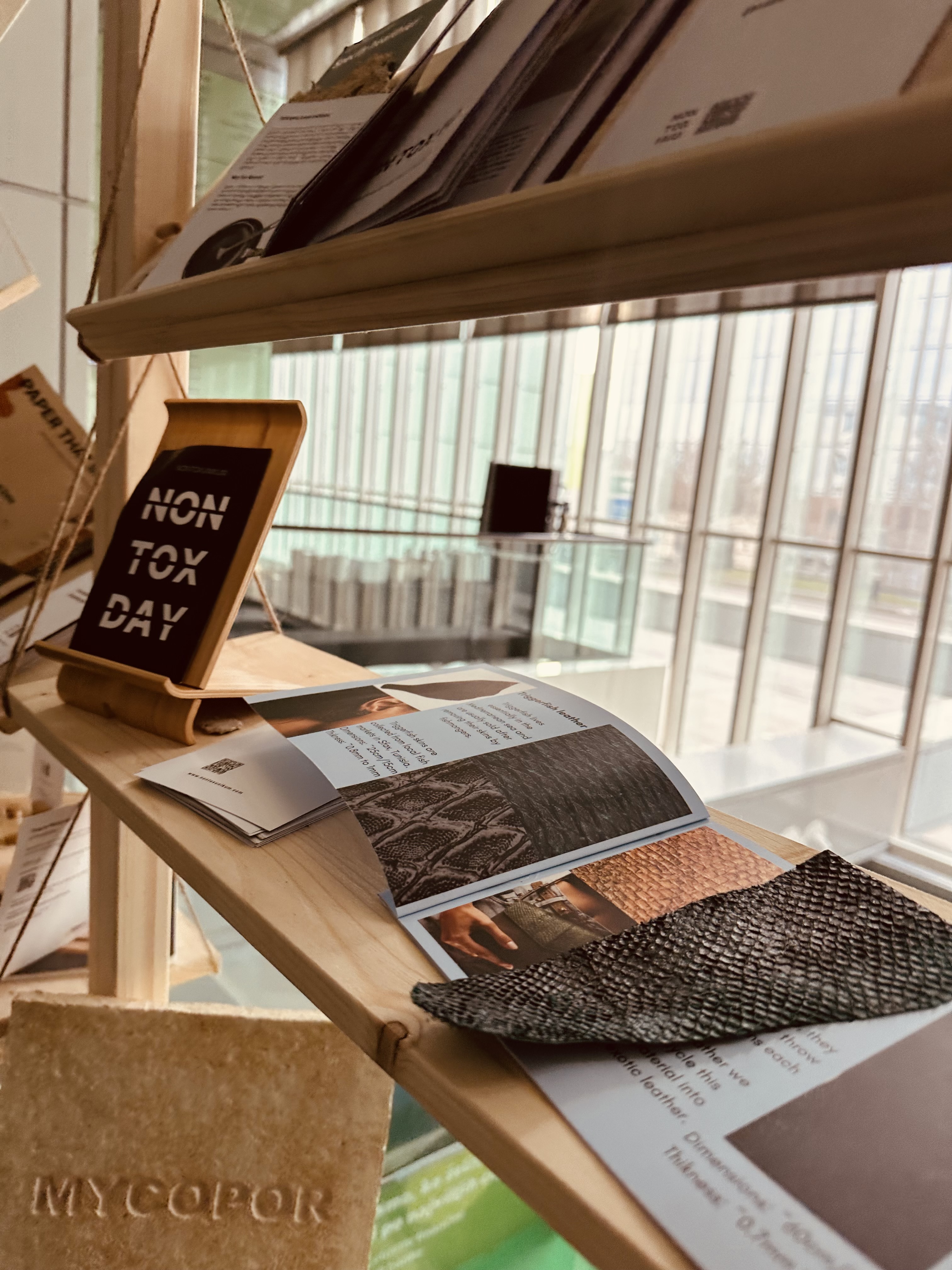
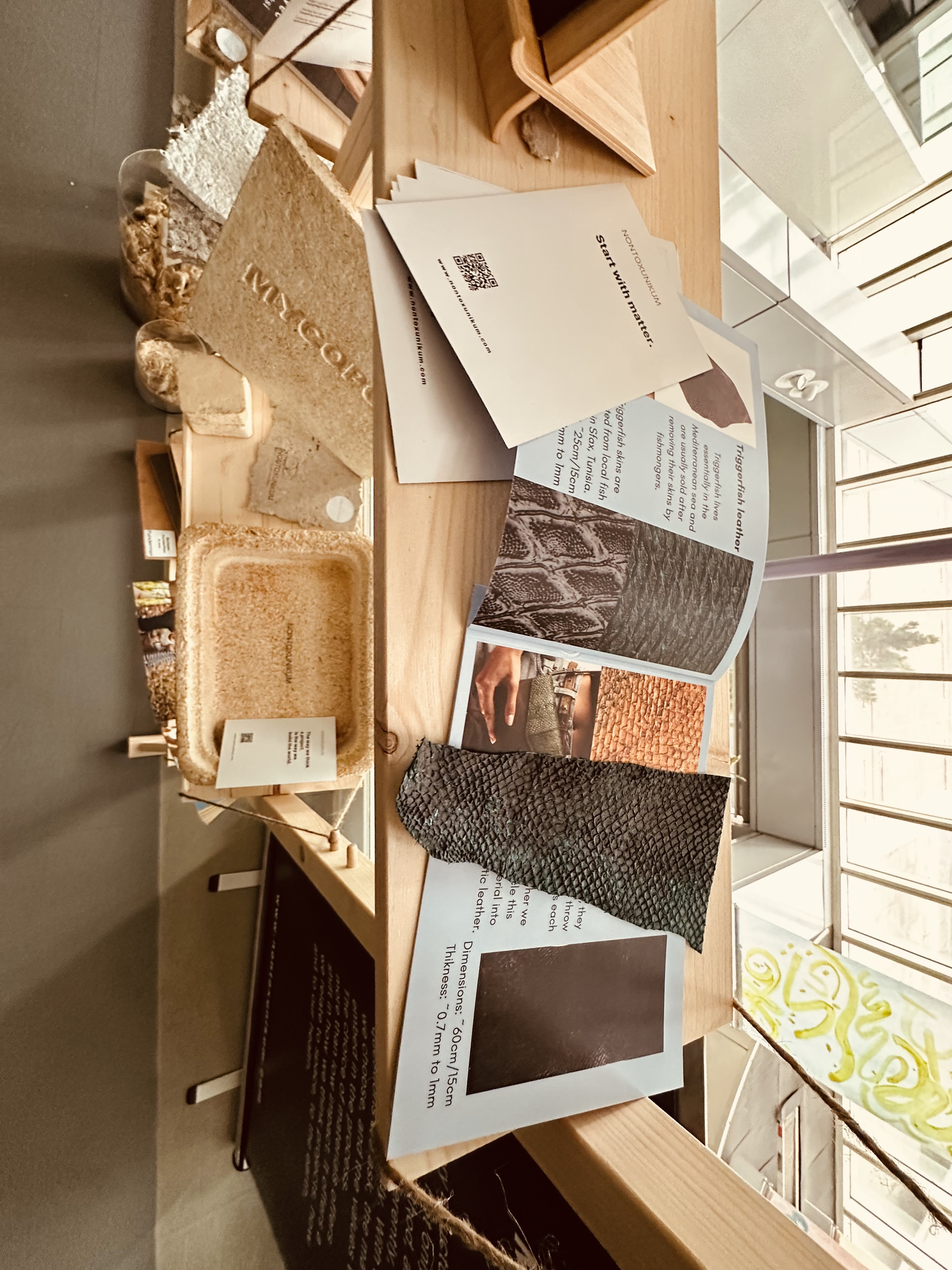
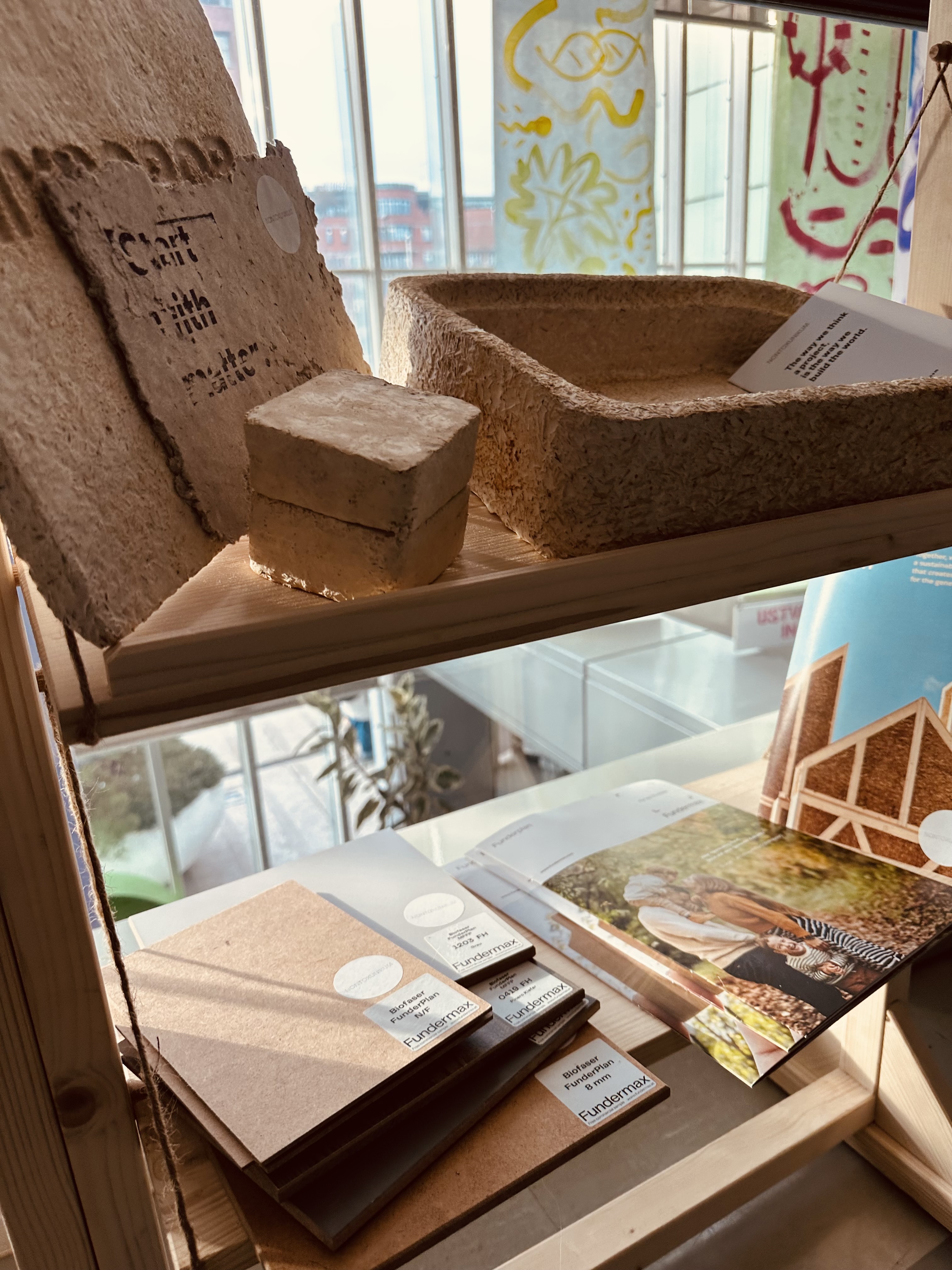
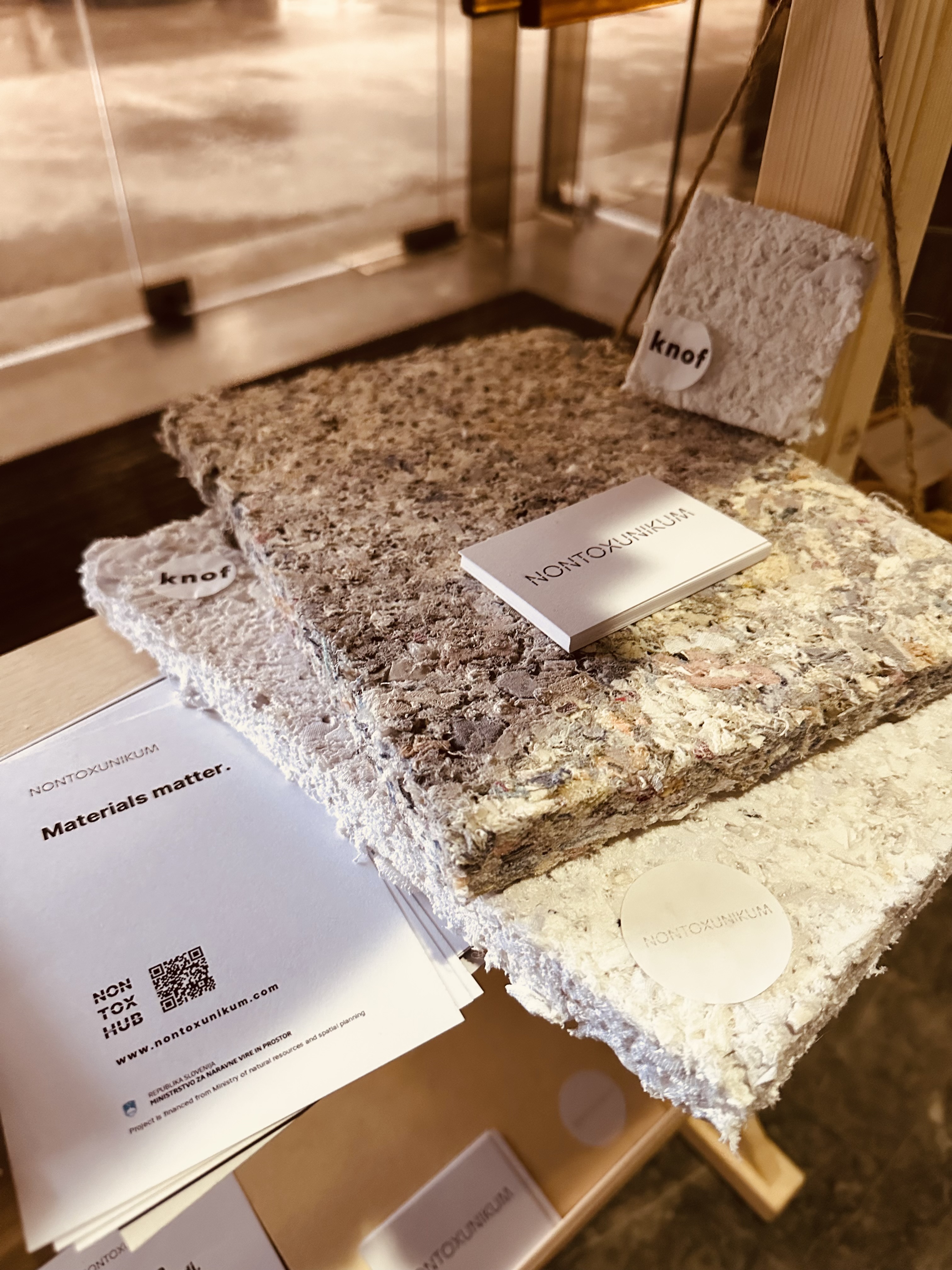
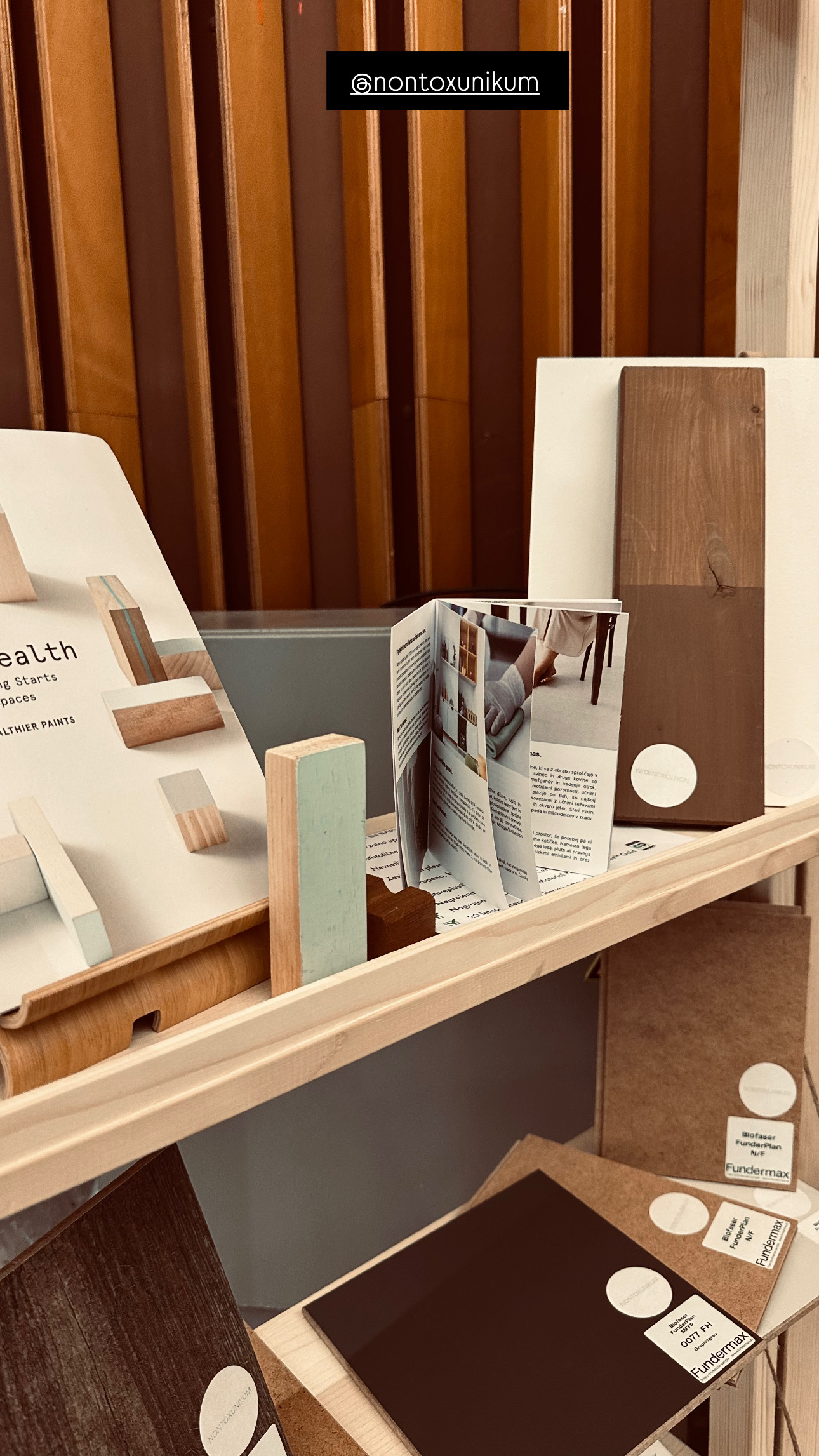
The installation combines physical samples of materials such as hemp, clay, lime paint, wood, linoleum, mycelium, accompanied by a small booklet explaining ten steps on how to reduce exposure to toxic substances found in everyday products and indoor spaces. The material selection was curated in collaboration with the international research partner Healthy Materials Lab EU, ensuring that the information presented is grounded in scientific knowledge.
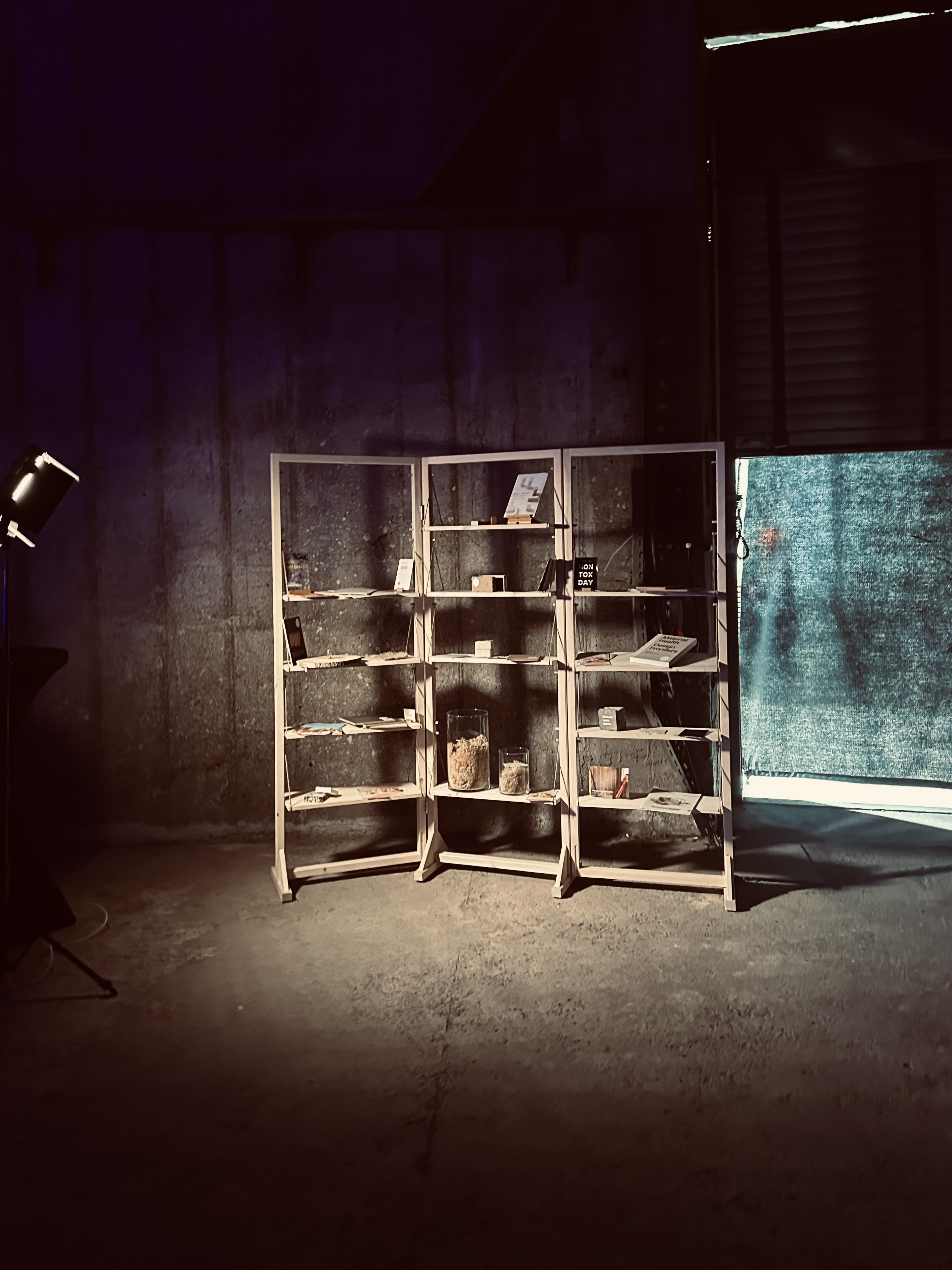
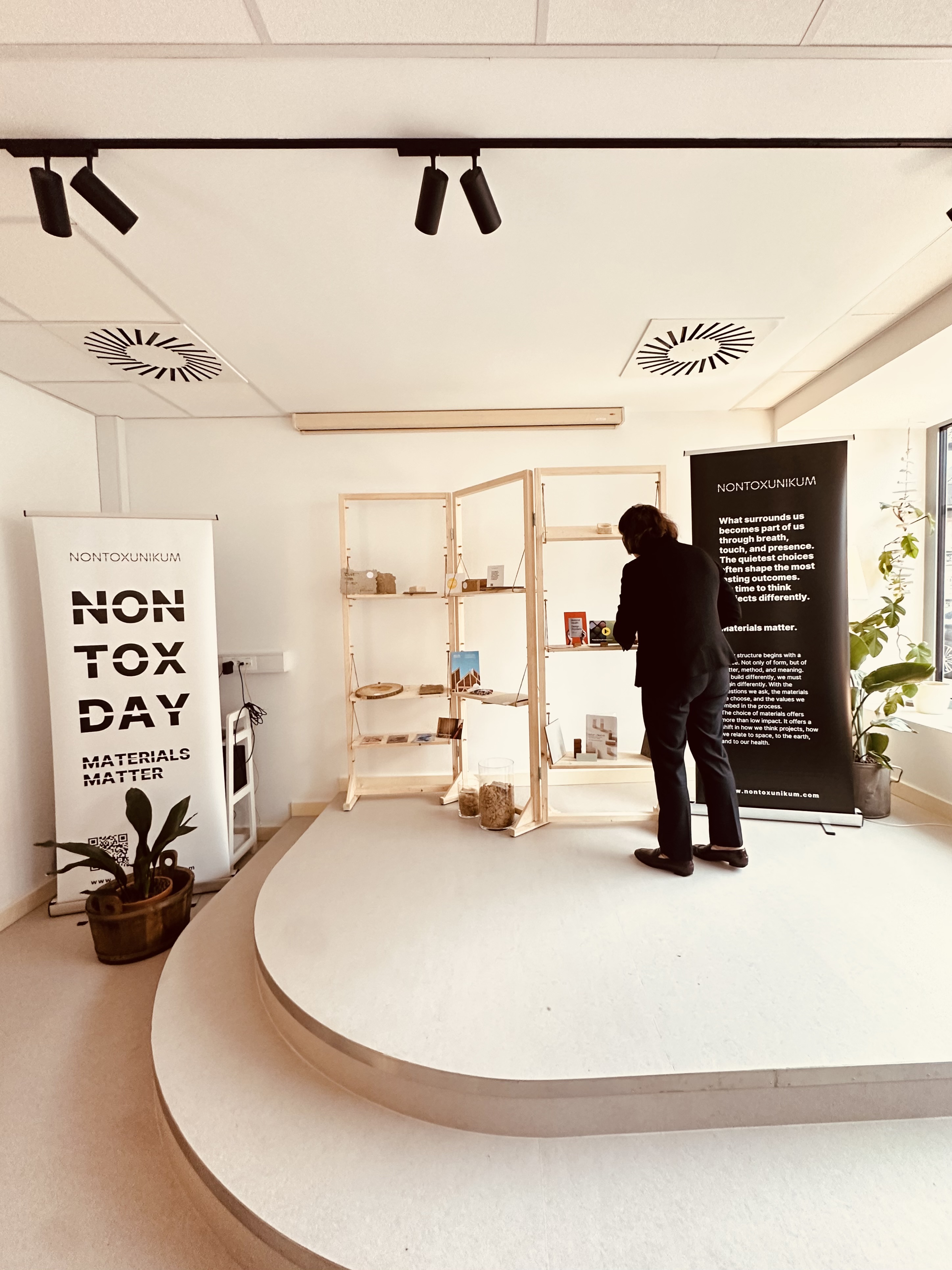
The project was designed as a lightweight mobile structure, made by a local craftsman, from local wood, and it can easily travel between different locations and reach diverse audiences. It has been presented at public events, architectural fairs, educational settings and professional gatherings, including presentations for construction students and professionals in architecture and spatial planning.
Through this approach the project contributes to a gradual cultural shift in how materials are understood in architecture and design. By bringing knowledge about important topic of often overlooked material health into shared public space, accessible to all, it supports more inclusive access to knowledge and encourages more responsible choices for healthier and more sustainable living.
The idea for the Non Tox Pop Up Material Library emerged from educational work, Non Tox Day events, Non Tox Talks, conferences and workshops where we regularly discuss the importance of sustainable building, and bring the additional value of health to the table when speaking about projects. In many of these conversations sustainability is already recognised as an important topic. At the same time we realised that the question of health is still rarely part of project discussions, when key decisions about materials are made. Through these discussions we realised that many professionals, students and decision makers would like to make better choices if they knew what was toxic and how to avoid it. There is still a clear gap between expert knowledge about materials and its everyday use in architecture and interior design. The Non Tox Pop Up Material Library was created as a simple tool to help bridge this gap. Instead of explaining materials only through presentations or reports, the project offers a tactile solution. Visitors can take materials in their hands, see them, touch them and even smell them. In this way it becomes easier to understand how material choices influence the quality of the spaces we inhabit. The mobility of the library emerged from the question of how to make this knowledge accessible to all. This is why a modular and mobile version of the library was developed, allowing the installation to travel between different locations and audiences so more people in different settings can learn about the importance of material health. The project was co-financed by the Ministry of Natural Resources and Spatial Planning Slovenia (MNVP) through a programme supporting public awareness on nature, water and the quality of the built environment.
Non Tox Material Library
Healthy bio based materials
Human wellbeing
Inclusive knowledge
Knowledge transfer
The Non Tox Pop Up Material Library addresses sustainability by focusing on the health and environmental impact of materials used in everyday buildings and interiors. Many commonly used materials contain substances that negatively affect indoor air quality and long term human wellbeing. The project raises awareness about these impacts and promotes healthier and more responsible material choices. The installation presents a carefully curated selection of natural and bio based materials such as hemp, clay, lime, wood, linoleum, mycelium. These materials demonstrate alternatives that support lower toxicity, better indoor environments and more sustainable building practices. The project highlights materials that are renewable, low impact and are compatible with circular, sustainable, regenerative construction approaches.
By translating complex knowledge into a tactile experience the project helps professionals, students and the wider public better understand the consequences of material choices and its availabilityx This supports more informed decisions already at the early stages of projects, where the biggest environmental and health impacts are determined. The project itself is formed as a non tox stand and contributes to sustainability not only through its form and healthier materials presented but also through education and knowledge transfer that encourages long term change in architectural and design practice.
By translating complex knowledge into a tactile experience the project helps professionals, students and the wider public better understand the consequences of material choices and its availabilityx This supports more informed decisions already at the early stages of projects, where the biggest environmental and health impacts are determined. The project itself is formed as a non tox stand and contributes to sustainability not only through its form and healthier materials presented but also through education and knowledge transfer that encourages long term change in architectural and design practice.
The project demonstrates how healthier materials can contribute to environments that are calm, beautiful and meaningful. Natural materials such as clay, lime, hemp or mycelium have distinctive textures, colours and scents that invite visitors to engage with them through multiple senses. Through touch, scent and visual qualities, visitors can experience the character of these materials directly and rediscover the beauty of simple, honest and healthier material choices. The installation allows people to feel the warmth of hemp, the mineral softness of lime, the earthy pigments of clay or the subtle scent of linseed oil, transforming materials from abstract construction elements into tangible experience. The installation itself reflects these principles through its design. The stand is conceived as a modular structure with removable shelves that can be rearranged depending on the space, context and scope in which the library is presented. This flexibility allows the installation to adapt its size and form to different environments such as exhibitions, conferences, educational settings or simple waiting rooms or lobbies of public institutions. The aesthetic value of the project therefore emerges both from its baseline, the natural qualities of the materials, but also from the adaptable spatial design of the installation. The spatial composition of the installation is intentionally simple and modular, allowing materials to become the main aesthetic element. Their colours, textures and natural imperfections create a calm and authentic visual experience. By creating a calm, tactile and sensory environment, the project invites visitors to slow down and reconnect with the healthier material dimension of the spaces we inhabit. Aesthetics in this case becomes more than visual appearance. It forma a bridge between beauty, health and wellbeing in the spaces we create.
The Non Tox Pop Up Material Library is designed to make knowledge about material health accessible to everyone. Information about toxic substances in building materials is often limited to specialist research or technical reports, which makes it difficult for the wider public to understand and apply in everyday decisions. The project translates this knowledge into a format that is simple, visual and tactile. Visitors can see, touch and explore materials and learn through direct sensory experience rather than technical explanations. This approach makes the topic understandable to diverse audiences including students, professionals, decision makers and the wider public. The installation also integrates academic research and forms it with local knowledge and craftsmanship. The structure is made from locally sourced wood and produced by a local craftsman, supporting regional skills while strengthening the connection between materials, people and place. The mobility of the installation further strengthens its inclusive character. The installation also encourages intergenerational learning, allowing people with different backgrounds and knowledge levels to engage with the topic of healthier materials. The modular structure allows the library to travel between different locations such as conferences, educational institutions, public buildings and community events, reaching audiences that would otherwise not have access to this knowledge. By making complex material knowledge tangible and accessible, the project contributes to a more informed public dialogue about healthier environments and empowers people to make more conscious decisions about the spaces they inhabit. For all.
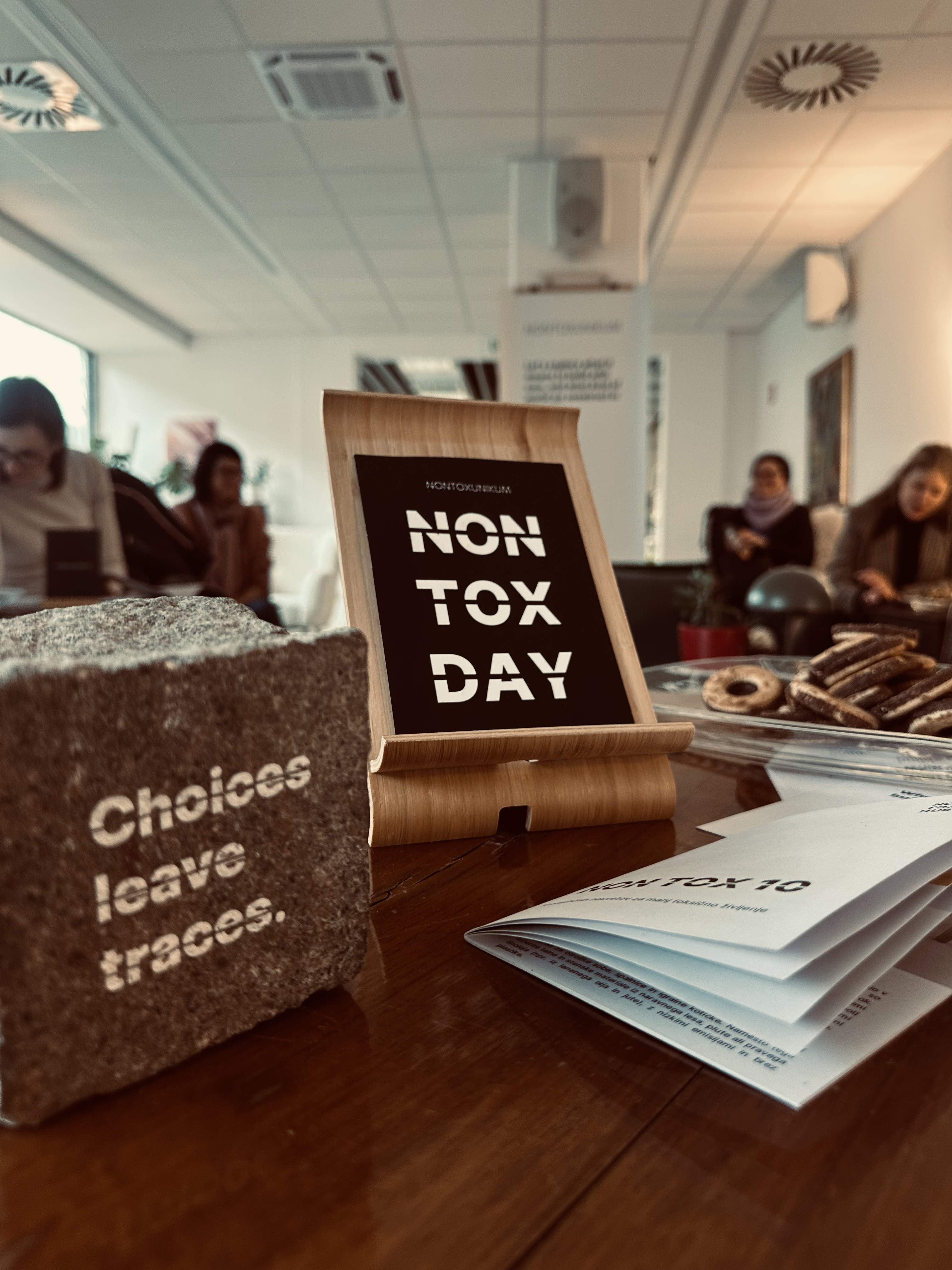
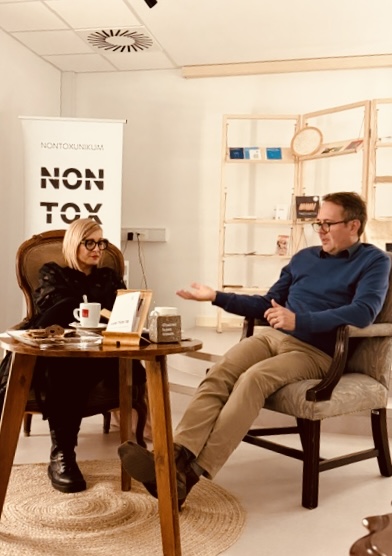
The Non Tox Pop Up Material Library was developed and presented through a series of participatory public events and educational activities. The installation was used during Non Tox Talks, Non Tox Days conferences and presentations where visitors, professionals and students and wirder audiences could directly interact with the materials, ask questions and discuss their experiences. Participation takes place through sensory engagement and dialogue. Visitors are encouraged to touch, smell and explore materials and to reflect on how these choices influence the spaces we inhabit. This approach transforms participants from passive observers into active learners and contributors to the discussion about healthier environments. Students of civil engineering were introduced to the installation as part of educational presentations, allowing future professionals to engage with the topic of material health early in their careers. Public discussions and professional events further created opportunities for architects, designers, policymakers and the wider public to exchange knowledge and perspectives. The impact of participation lies in making an often invisible aspect of architecture tangible and understandable. Through direct experience, participants develop a stronger awareness of how material choices influence health and wellbeing. Many visitors expressed curiosity and surprise while discovering the sensory qualities of healtier materials and the presence of harmful substances in common building products. By creating a space for dialogue and exploration, the project contributes to awareness about the toxic exposure, growing community interess in healthier materials, and more responsible building practices.
Non Tox Pop Up was developed through collaboration across several levels of governance and expertise, connecting local implementation with broader professional and European networks. Initiated and implemented by the Non Tox Hub, the structure of installation itself was physically produced by a local craftsman Janez Cestnik, using locally sourced wood, demonstrating how traditional skills can support contemporary approaches. At the municipal and national level, the project engages different sectors, architects, Chamber of Commerce members, designers, libraries, public institutions and decision makers through various presentations, educational activities and discussions as Non Tox Talks, Non Tox Day events, conferences and workshops. The installation has also been presented in public institutional environments, creating opportunities for professionals and policy actors to directly experience and reflect on material health in the built environment, as well as in settings open to a wider audience. At the EU level, the project builds on collaboration with organisations and networks working on healthier materials and sustainable construction. In the development process, knowledge from Healthy Materials Lab EU The library has been presented in various professional settings in shared through in person and online events as an example of good practice, helping connect research knowledge, international perspectives and European policy discussions.
The added value of this multilevel engagement lies in connecting local knowledge and practical implementation with academic research, policy development and public awareness, helping translate complex knowledge about material health into formats that are understandable, tangible and applicable in everyday practice.
The added value of this multilevel engagement lies in connecting local knowledge and practical implementation with academic research, policy development and public awareness, helping translate complex knowledge about material health into formats that are understandable, tangible and applicable in everyday practice.
Non Tox Pop Up was developed through a transdisciplinary approach that connects architecture, material research, craftsmanship, education, material innovation, traditional materials and techniques, and public engagement. The project brings together knowledge from different fields. Architectural and design expertise shaped the spatial concept and the way materials are presented and experienced. Research knowledge on healthier materials and material health was integrated through collaboration with research organisations, production companies and through ongoing engagement with international professional networks. Craft knowledge also played an important role. The installation itself was produced by a local craftsman Janez Cestnik, a master of vernacular carpentry, using locally sourced wood and demonstrating how traditional techniques can contribute to contemporary discussions about sustainable and healthy materials. The project through its installation engages with the innovation sector, showcasing emerging biobased materials such as fish leather, paper from tree leaves and sheets made from silkworm cocoons. By including both traditional materials and experimental innovations, the library highlights the wide spectrum of material possibilities for healthier and more sustainable built environments. Education and communication that are core of the projects bring another key dimension to the project. It is designed as a learning tool that translates complex scientific and technical knowledge about material health into formats that are visual, tactile and easy to understand. Through various events the project connects professionals, policymakers, students and the wider public. With this transdisciplinary approach it bridges the gap between research, design practice, craftsmanship and innovation, allowing complex knowledge about healthier materials to move beyond specialist circles and become accessible and applicable in everyday architectural and design decisions. To all
The Non Tox Pop Up Material Library operates as a hybrid educational and innovation platform that combines public engagement, professional education and partnerships with research and industry actors. The installation functions as a mobile learning and demonstration tool that can be presented at conferences, public institutions, educational settings, festivals and professional events. This allows the project to generate revenue through educational programmes, workshops, lectures and curated presentations for municipalities, universities, professional organisations and industry partners. Another important component of the business model is collaboration with material producers and innovative start-ups developing healthier and bio-based materials. The library provides a platform where these materials can be presented to professionals and the wider public, creating opportunities for partnerships, sponsorships and collaborative research activities. The project also contributes to the development of specialised advisory and educational services related to sustainability, circularity, healthier materials in architecture and design, including lectures, expert talks and curated material presentations for professional audiences. Public funding and innovation programmes can further support the development and expansion of the initiative, especially for research, educational programmes and pilot activities connected to healthier materials and sustainable construction. By combining education, professional services, partnerships with innovators and travelling exhibitions, the project creates a flexible model that allows it to remain financially sustainable while continuing to expand its impact.
The Non Tox Pop Up Material Library was designed as a replicable and scalable model that can be implemented in different geographical and institutional contexts. The installation is modular, mobile and adaptable, allowing it to be easily installed in libraries, universities, conferences, cultural institutions, festivals or common public spaces. The structure can be easily reproduced using locally sourced materials and built by local craftspeople, which makes the concept transferable and adaptable to different regional contexts. Beyond the physical installation, the project also provides a transferable methodology for communicating complex knowledge about material health through visual, tactile and experiential learning. This approach can be applied in many different educational programmes, professional training, public awareness initiatives and innovation platforms. The concept also supports innovation ecosystems by presenting both traditional materials and emerging biobased materials developed by startups, research organisations and material innovators. In this way, the library creates a bridge between research, industry, design practice and the wider public. Because the model connects research, craftsmanship, innovation and education, it can be replicated in many settings by municipalities, universities, cultural institutions and professional organisations interested in promoting healthier and more sustainable material choices. The concept also has the potential to evolve into a network of material libraries across Europe, enabling knowledge exchange and collaboration between innovators, researchers and practitioners. By connecting research, material innovation and design practice, the project contributes to accelerating the adoption of healthier and biobased materials in the European construction and design sectors.
- https://www.linkedin.com/posts/petra-marinko-nontoxunikum_nontoxunikum-nontoxpopup-healthymaterials-activity-7426695900921614336-tDH0?utm_medium=ios_app&rcm=ACoAAALin4MBSsixuE9lKgFC0iOmVpu5z2F4c6E&utm_source=social_share_send&utm_campaign=copy_link
- https://www.linkedin.com/posts/petra-marinko-nontoxunikum_nontoxhub-healthymaterials-materiallibrary-activity-7393017604367618048-PlSp?utm_medium=ios_app&rcm=ACoAAALin4MBSsixuE9lKgFC0iOmVpu5z2F4c6E&utm_source=social_share_send&utm_campaign=copy_link
- https://www.nontoxunikum.com/non-tox-material-library/