Arts, Culture, and Heritage as Drivers of Change
FEIRA coffee table
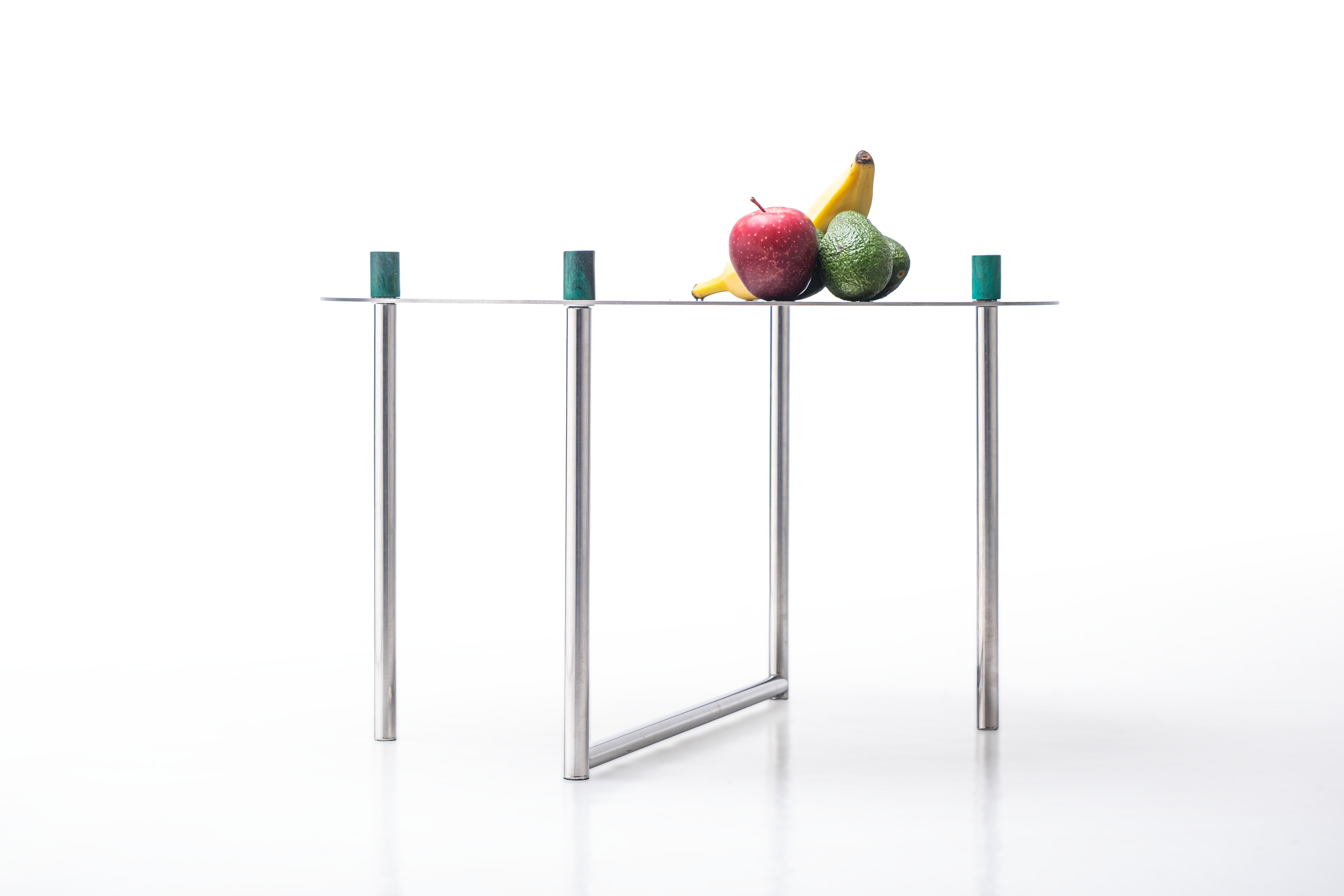
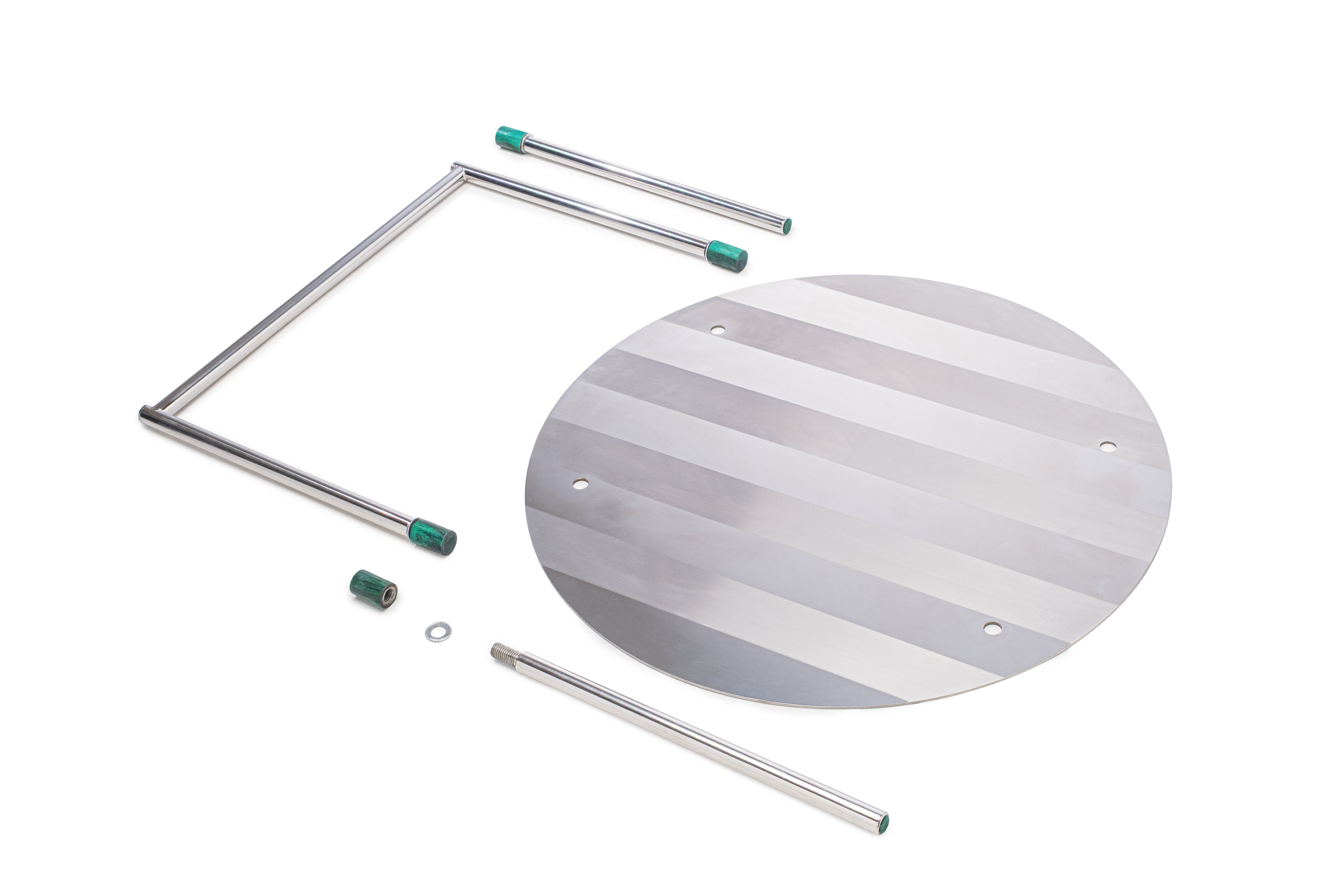
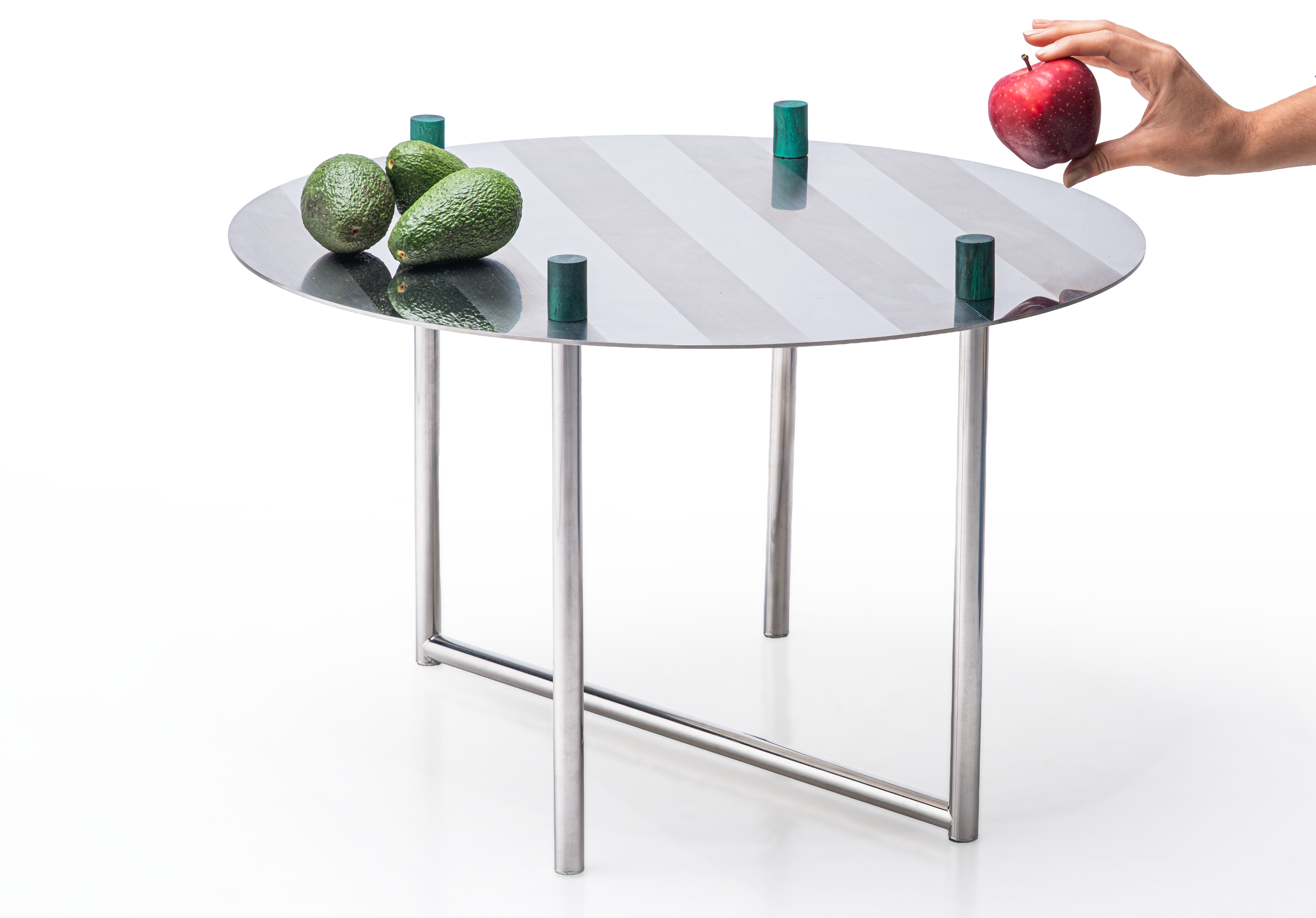
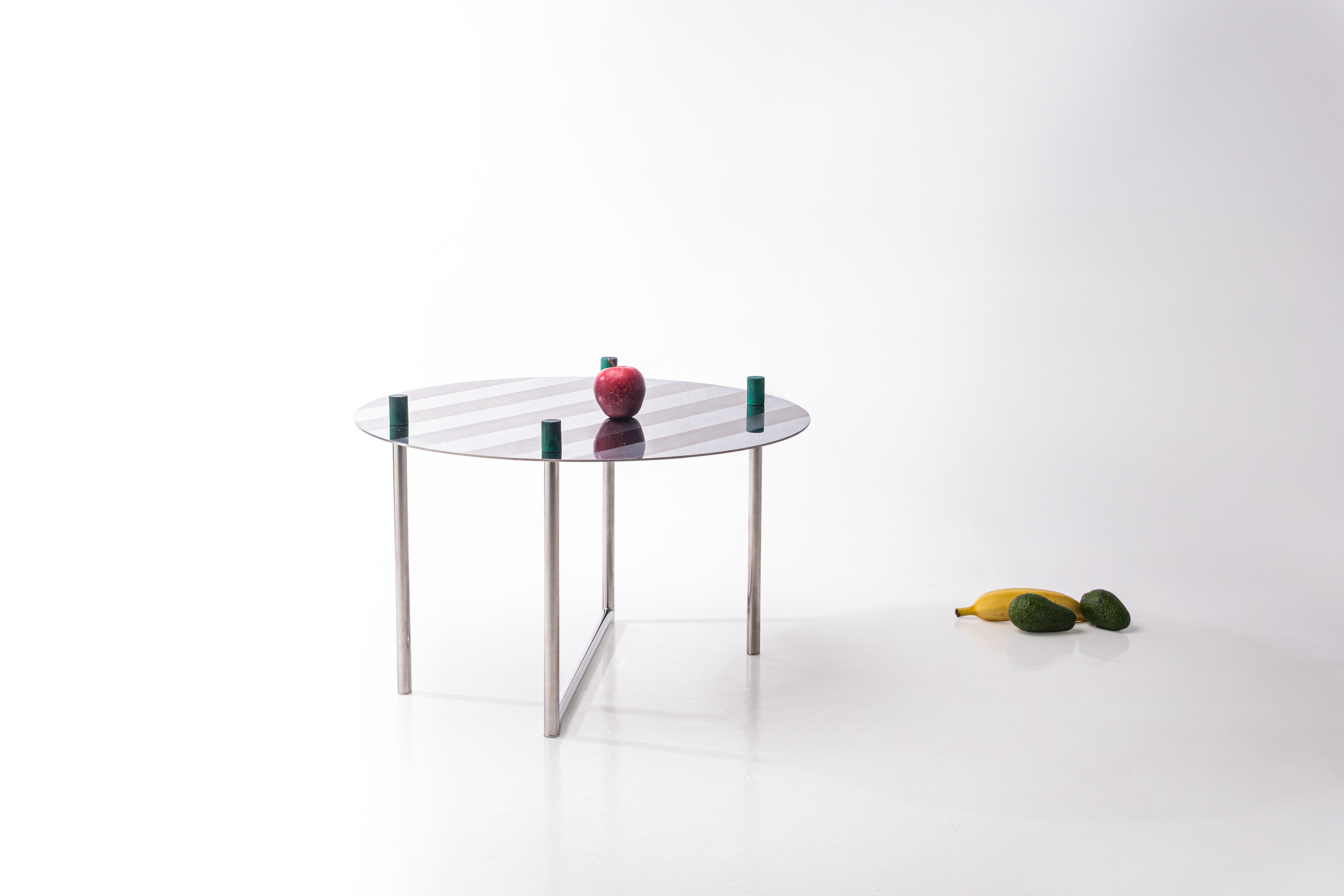
FEIRA is a fully demountable coffee table based on a hybrid logic of materiality: steel with wood.
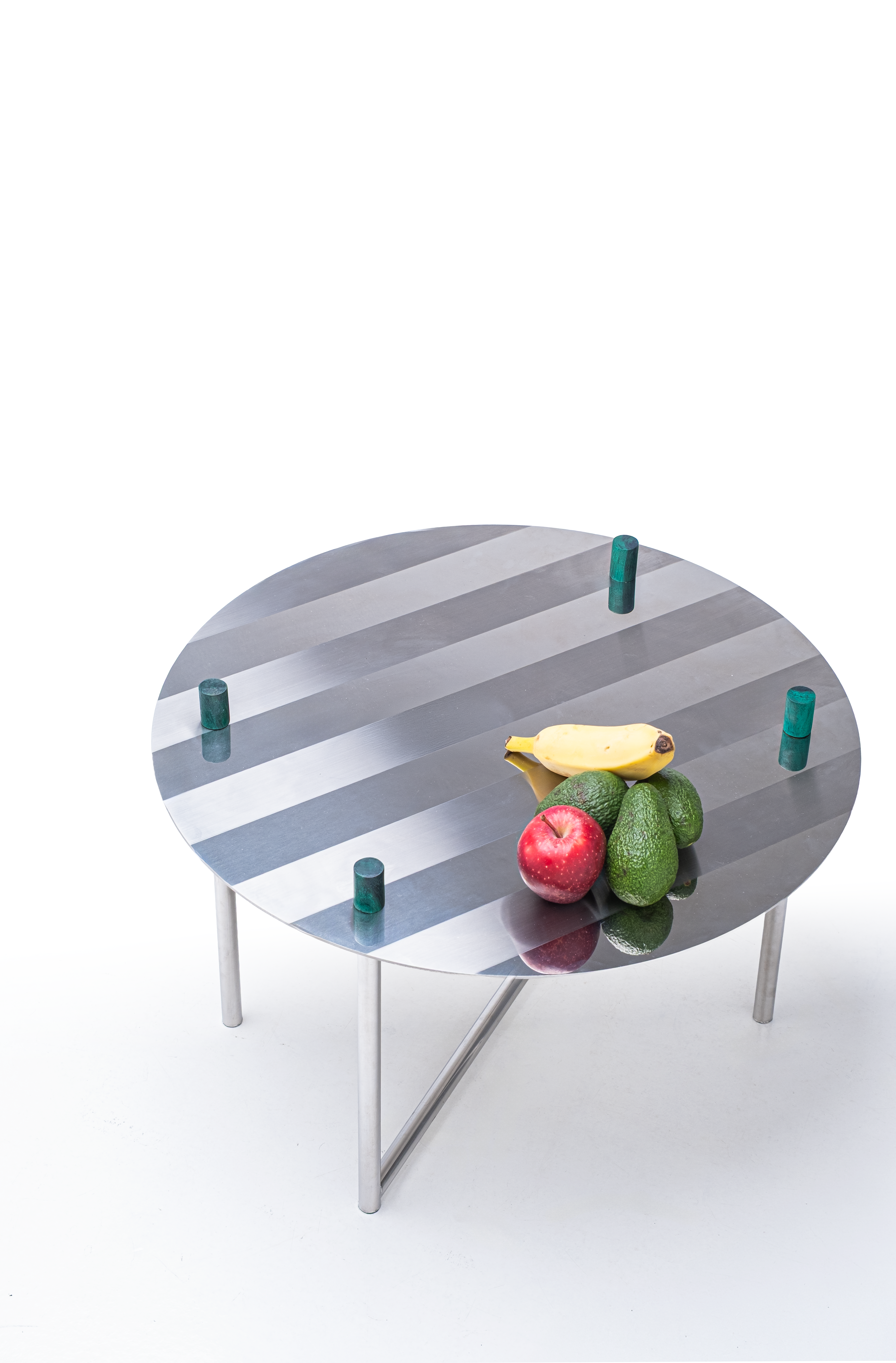
FEIRA is a collapsible and easily transportable coffee table design by Julia Nogueira - creative director OF BRASILIS company -, inspired by the striped tarpaulins found in brazilian street markets. The furniture explores hybridity by correlating the industrial rigor of stainless steel with the organic nature of wood stained in a green tone. Its structure is composed of slender tubular legs and machined joints, revealing a technical assembly that values the honesty of the materials.
Brazil
Local
São Paulo, Brasil.
It addresses urban-rural linkages
It involves a physical transformation of the built environment (hard investment)
Completed
No
No
No
Individual
The FEIRA coffee table arises as a response to the challenge of creating contemporary furniture that translates a cultural experience while reducing environmental impact. Designed by Julia Nogueira, the project redefines "Brazilian hybridism" by merging industrial precision with an artisanal soul inspired by traditional street markets(feiras). The central purpose is to offer a demountable, portable, durable, and ecologically conscious piece that bridges the gap between rationalized design rigor and the warmth of domestic life. The primary beneficiaries are design-conscious professionals and enthusiasts seeking furniture that reflects ethical consumption and cultural depth. The specific objectives are Synergy of Materials, Production of contemporary design with Low Impact, and Cultural Dialogue.
Since its inception, the FEIRA table has evolved from a concept to a refined prototype.Results: We achieved a 15% reduction in raw material waste compared to conventional table constructions by using an optimized CNC interlocking system. Feedback: Initial presentations to design consultants during São Paulo Design Week (March 2026) highlighted the piece’s "tactile versatility" and its ease of assembly/disassembly, adapting to the user's life over the years. Evidence: The design demonstrates an aesthetic evolution of the studio’s professional practice while proving the scalability of the object.
FEIRA’s innovation lies in its focus on Brazilian hybridism. My country faces a design deadlock: the nostalgia for Modernist furniture versus the progress of new materials and fabrication. Historically, there was a rigid separation in Modernist production; today, the challenge is revisiting our identity through contemporary lenses. By uniting both without prioritizing one over the other, I create adaptable, identity-driven objects. FEIRA challenges the world to view the Global South not just as inspiration, but as a blueprint for blending industry with sustainable resilient.
The idea for the FEIRA coffee table was born from an observational study of the Sunday street markets (feiras) in São Mateus, East Zone of São Paulo. I was struck by the visual power of the striped canvas stalls—a cultural landmark that is currently a growing global design trend. My goal was to translate this everyday Brazilian experience without falling into literalism, creating a piece that is recognizable yet not obvious. I focused on the "itinerant" nature of these structures, aiming to capture their lightness and temporary strength.
As the Creative Director of OF BRASILIS, I led the project, coordinating a multidisciplinary dialogue between traditional carpentry and modern metallurgy. The concept was developed through five main phases:
Observational Research: Documenting the textures and structural logic of street markets.
Material Experimentation: Testing the "Brazilian Hybridism"—uniting wood (our heritage) with stainless steel (a cost-effective, contemporary solution).
1. Digital Prototyping: Using CAD tools to design a "zero-waste" nesting system for CNC cutting.
Structural Testing: Developing a central locking beam and two support points, mimicking the compensatory forces found in market stalls.
2. Refinement: Testing different finishes (polished vs. brushed) on the stainless steel top to evoke the striped patterns of the canvas.
We moved beyond the rigid separation of "artisanal vs. industrial." By utilizing CNC routing for wood and precision laser cutting for steel, we created a high-end object that is entirely demountable and easy to transport. This strategy proves that merging fabrication methods can create more identity-driven and adaptable objects.
If I continue developing this concept, my next step is to explore circular supply chains by using recycled stainless steel and certified salvaged wood. I intend to expand the "FEIRA" family into a full collection, further challenging the "modernist nostalgia".
Brazilian Hybridism
Cultural Sustainability
Modular Circularity
Contemporary Vernacular
Resource Efficiency
The FEIRA coffee table aims to achieve a "Triple-Bottom-Line" impact:
Environmental: Reducing carbon footprint through efficient manufacturing and material longevity. Economic: Optimizing costs by merging high-value wood with accessible industrial steel. Cultural/Social: Preserving local manufacturing identities by integrating both artisanal and industrial sectors.
We implemented a "Circular by Design" strategy through two main pillars: Material Hybridism: Instead of relying solely on rare or expensive solid woods, FEIRA uses wood for tactile structural points and stainless steel for the larger surfaces. Steel is 100% recyclable, lightweight for transport, and offers a longer lifecycle. anda Optimized Fabrication (Nesting): We utilized CNC routing and laser cutting with a nesting strategy. This allowed us to fit components into raw material sheets with surgical precision, treating "waste" as a design flaw to be eliminated at the digital drawing stage.
Logistics of Assembly: The table is designed to be fully demountable (flat-pack logic). This drastically reduces the volume for shipping, lowering CO2 emissions during distribution, and allows for the easy replacement of individual parts, extending the product's life indefinitely.
The FEIRA prototype achieved:
15% reduction in material waste compared to traditional non-optimized furniture making.
Scalability Proof: The successful integration of steel components allowed for a 20% reduction in production time without losing the artisanal quality of the wood finishing.
FEIRA is exemplary because it treats Sustainability as an Aesthetic Language. It doesn't just use recycled materials; it proposes a new "Metabolic Design" for the Global South. By proving that industrial steel can be as "warm" and "identitary" as wood when applied with a Brazilian vernacular.
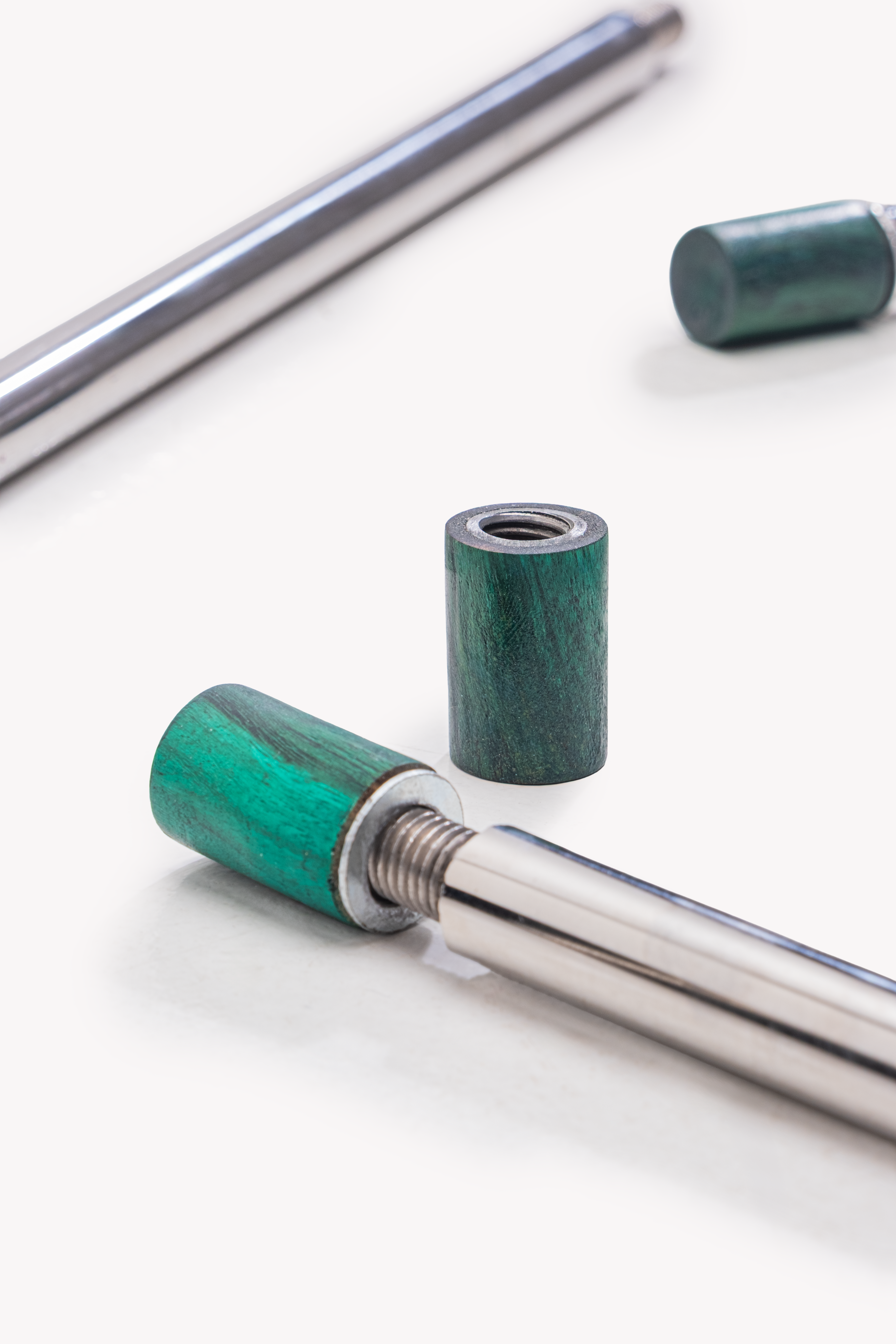
The FEIRA coffee table aims to elevate the everyday domestic environment, its objective is to transform a popular, often overlooked cultural symbol—the Brazilian street market—into a high-end design object, also providing a sense of order, beauty, and cultural recognition within the home.The project is a manifestation of multidisciplinary synergy. The iconic stripes of market stalls are translated into the tabletop through a sophisticated play of finishes. This creates a kinetic visual effect that changes with the room's lighting. The cold, industrial precision of the steel structure is "warmed" by handcrafted wooden joinery details. These green-stained wooden cylinders serve as both functional locking mechanisms and poetic accents, showcasing how modern machinery can coexist with the delicate touch of artisanal finishing. FEIRA is designed to stimulate the senses beyond just the visual: the contrast between the sleek, cool steel and the textured, organic warmth of the wood provides a tactile "anchor" for the user. The furniture is not a burden but a flexible companion that adapts to the fluid lifestyles of contemporary residents. The honest exposure of its structural logic (visible screws and joints) creates a transparent aesthetic that invites the user to understand and care for the object. The concept fosters a deep sense of belonging. For a Brazilian, the stripes are an immediate link to the "Sunday ritual" of the street market, evoking memories of community and local flavor. For an international audience, it presents a sophisticated version of Brazilian identity that moves away from tropical clichés. It celebrates the "East Zone of São Paulo" heritage, proving that beauty can be found in the most democratic and everyday urban experiences. FEIRA stands out for its "Tactile Minimalism." While many pieces are either purely industrial or purely artisanal, FEIRA refuses to choose. It is exemplary because it proves design can be accessible, demountable with cultural.
FEIRA is exemplary because it practices "Social Hybridism." It proves that design doesn't have to be "exclusive" to be "sophisticated." While most luxury furniture relies on scarcity and high barriers to entry, FEIRA uses industrial intelligence to invite more people into the world of sustainable design. It challenges the NEB to see inclusion as a material choice: choosing steel and optimized wood to ensure that beauty and sustainability are not privileges, but accessible rights for all residents.
Its primary goal is to bridge the gap between "high-end design" and a broader audience by creating a product that is high-quality yet optimized for affordability through industrial efficiency. Culturally, it aims to include the identity of the urban periphery (São Mateus, East Zone of São Paulo) in the global design dialogue, validating the aesthetics of working-class neighborhoods as a source of luxury and innovation.
We adopted "Design for All" principles through several concrete measures:
Democratizing Production: By utilizing hybrid fabrication (CNC and Laser cutting), we reduce the labor-intensive hours typically required for artisanal furniture. This allows for a lower final price point without compromising the fair wages of the craftsmen involved.
Knowledge Inclusion: The project integrates small local workshops—metalworkers and woodworkers—into a sophisticated digital supply chain, providing them with technical experience in producing high-precision components.
Accessibility through Logistics: The demountable, lightweight nature of the piece makes it accessible for people living in diverse urban contexts, including those in high-density areas where traditional, bulky furniture is difficult to transport or fit.
Your results are Empowerment, User Independence and Affordability
The development of the FEIRA coffee table involved a diverse ecosystem of stakeholders: local metalworkers and carpenters from the São Paulo industrial belt, interior design consultants, and the residents of São Mateus. The project directly affects the local manufacturing chain, while the beneficiaries are contemporary dwellers seeking flexible, culturally-rooted furniture.
Participation was integrated through a "Co-Creation through Craft" model: Artisanal Consultation x Community Observation x Expert Feedback Loops
During the prototyping phase, I conducted on-site workshops with local metalworkers to test the limits of stainless steel thickness. Their expertise in material tension was crucial in defining the final diameter of the legs and the locking mechanism.
The "participation" started at the street markets. Informal dialogues with market stallholders (feirantes) about the structural resilience and "itinerant logic" of their stalls informed the table's assembly system.
The implementation and scaling of the FEIRA coffee table rely on a strategic network that spans from local grassroots to international platforms:
Local Level (Neighborhood/District): Small-scale artisanal workshops in São Paulo. Their engagement ensures the preservation of local craftsmanship and provides the "Of Brasilis" studio with authentic technical expertise.
Regional/National Level (Industry & Sector): Organizations like SEBRAE (Brazilian Support Service for Micro and Small Enterprises) and ApexBrasil (Trade and Investment Promotion Agency). These bodies could be an interest in scaling the project as a model of "Brazilian Hybridism" for export, showcasing the country’s industrial-artisanal potential.
International Level (European/Global): The New European Bauhaus network and European design galleries. These stakeholders provide the platform for FEIRA to be integrated into the global discourse on sustainable, circular furniture.
It's possible Engaging at multiple levels provides the FEIRA project with:
Legitimacy: Moving beyond a "studio piece" to a validated industrial model recognized by governmental and international bodies.
Scalability: National agencies can provide the resources needed to transition from prototyping to a larger production scale, while international networks ensure the piece reaches the right consumer base.
Policy Alignment: By connecting with European values through the NEB, the project aligns with global sustainability directives (like the European Green Deal), ensuring it is future-proof and ready for the demands of the international market.
The FEIRA coffee table is a result of a deep integration between four primary fields: Product Design, Mechanical Engineering, Digital Fabrication, and Sociology (Urban Ethnography). By merging these areas, the project moves beyond mere furniture to become a study of contemporary material culture.
The project began with field research in the street markets of São Paulo. This sociological lens allowed us to identify "itinerant structures" as a design opportunity, translating social behavior into functional geometry.
The "tool-free" assembly system was only possible because we combined the ancient logic of wooden joinery with the precision of modern metal engineering.
The project avoids "generic minimalism" because it is grounded in urban research, giving the object a narrative that resonates with human experience. By integrating engineering early in the creative process, we reduced material waste by 15%, proving that "beauty" and "efficiency" are not mutually exclusive but interdependent.
The FEIRA coffee table currently generates revenue through direct sales and bespoke interior design commissions managed by Of Brasilis. The initial development was self-financed by the studio, treating the project as a flagship for our "Brazilian Hybridism" collection.
The project has high potential for financial growth through a tri-hybrid revenue model:
1. Direct-to-Consumer (DTC): Selling the demountable version via digital platforms, targeting a global audience of design enthusiasts.
2. B2B Licensing: Partnering with European and international manufacturers to produce the design locally under license, reducing logistics costs and carbon footprint.
3. Collection Expansion: The logic of the FEIRA interlocking system is being applied to a full furniture line (tables, shelving, and seating), creating a scalable brand ecosystem.
The primary costs involve advanced digital fabrication (CNC and Laser cutting) and premium material sourcing. These costs are currently incurred by the studio but are significantly mitigated by our "zero-waste" nesting strategy, which reduces raw material expenses by 15%. As we scale, the transition to industrial steel-hybrid production lowers the unit cost compared to traditional all-wood furniture.
Financial sustainability is ensured by the decentralized production model. Because the FEIRA table is designed for digital fabrication and easy assembly, it can be manufactured in regional hubs near the final customer, minimizing inventory and shipping risks. This makes the business model resilient to global supply chain fluctuations.
FEIRA offers a disruptive model for "Micro-Manufacturing in Cities."his supports the development of "15-minute cities" by promoting local industrial jobs and reducing the urban logistics burden. It challenges the furniture industry to move from mass production to "Distributed Precision."
The FEIRA coffee table serves as a model for decentralized, high-end design. It proves that a concept rooted in a very specific cultural context (São Paulo’s street markets) can be translated into a universal industrial language. The most transferable element is the "Brazilian Hybridism" methodology: the systematic union of digital metal fabrication with local woodcraft.
The following aspects of the project are designed for easy replication: Since the design is based on CNC and Laser cutting files, the "technical soul" of the table can be transferred digitally to any production hub in the world, ensuring consistency and quality.The "tool-free" assembly system is a universal mechanical solution that can be applied to other furniture typologies (desks, shelving, benches), creating a scalable product family. Our zero-waste digital cutting pattern is a transferable tool for any manufacturer looking to optimize resource efficiency.
While the structure is standardized, the material "skin" can be adapted. In other regions, the wood components can be replaced with native certified species or local recycled composites, maintaining the sustainability goals while reducing transport impact. The "striped" finishes on the steel can be customized to reflect local visual cultures, transforming the "FEIRA" logic into a vessel for diverse cultural expressions.
Local craftspeople skilled in wood finishing and metal treatment to provide the "tactile soul" of the piece. This partnership ensures that the design supports local economies wherever it is produced.
Following the presentation of the FEIRA prototype at São Paulo Design Week (March 2026), the next three months will focus on consolidating user feedback. Focus for national and international shipping and high-traffic commercial use (B2B).
We are initiating a pilot study to replace the current wood components with certified salvaged wood from urban demolition, further aligning the project with circular economy principles.
Portfolio Expansion: Application of the FEIRA interlocking logic to a dining table, a chair and shelving system creating a cohesive interior ecosystem.
Throughout the year following this application, OF BRASILIS commits to acting as a bridge between the New European Bauhaus and the Brazilian design scene. We will document our sustainable manufacturing processes through open-source case studies, sharing our findings on "Brazilian Hybridism" to inspire other global south designers to embrace industrial-artisanal resilience.