Arts, Culture, and Heritage as Drivers of Change
Big people
Big People: A Children's Carnival as Town Common
In Zeitz — a post-industrial town in Eastern Germany where 46% of residents vote for far-right parties and with almost no cultural life for children — children from local families and children with refugee experience created a circus carnival together. For months they trained, made costumes and prepared their own statements — about the city, about dreams, about what matters to them. The carnival became a point of dialogue between communities that live in separate language bubbles.
Germany
Local
Zeitz and Droßdorf, Saxony-Anhalt, Germany
Mainly rural
It involves other types of transformations (soft investment)
Yes
2025-03-01
No
No
No
Organisation
Overall goal:
Big People is an annual participatory circus carnival in a city where roughly two-thirds of the population left in the early 2000s, turning it into a ghost town — where one in five residents is a migrant and 46% voted for a far-right party in the most recent elections.
Target groups:
Children aged 4–12: local German children, including those from the local children’s home, and children with experience of forced displacement.
Specific objectives:
To help children who arrived because of the war develop a sense of belonging and feel that this city is their home — and, together with those who have always lived here, overcome fear of one another.
How it works:
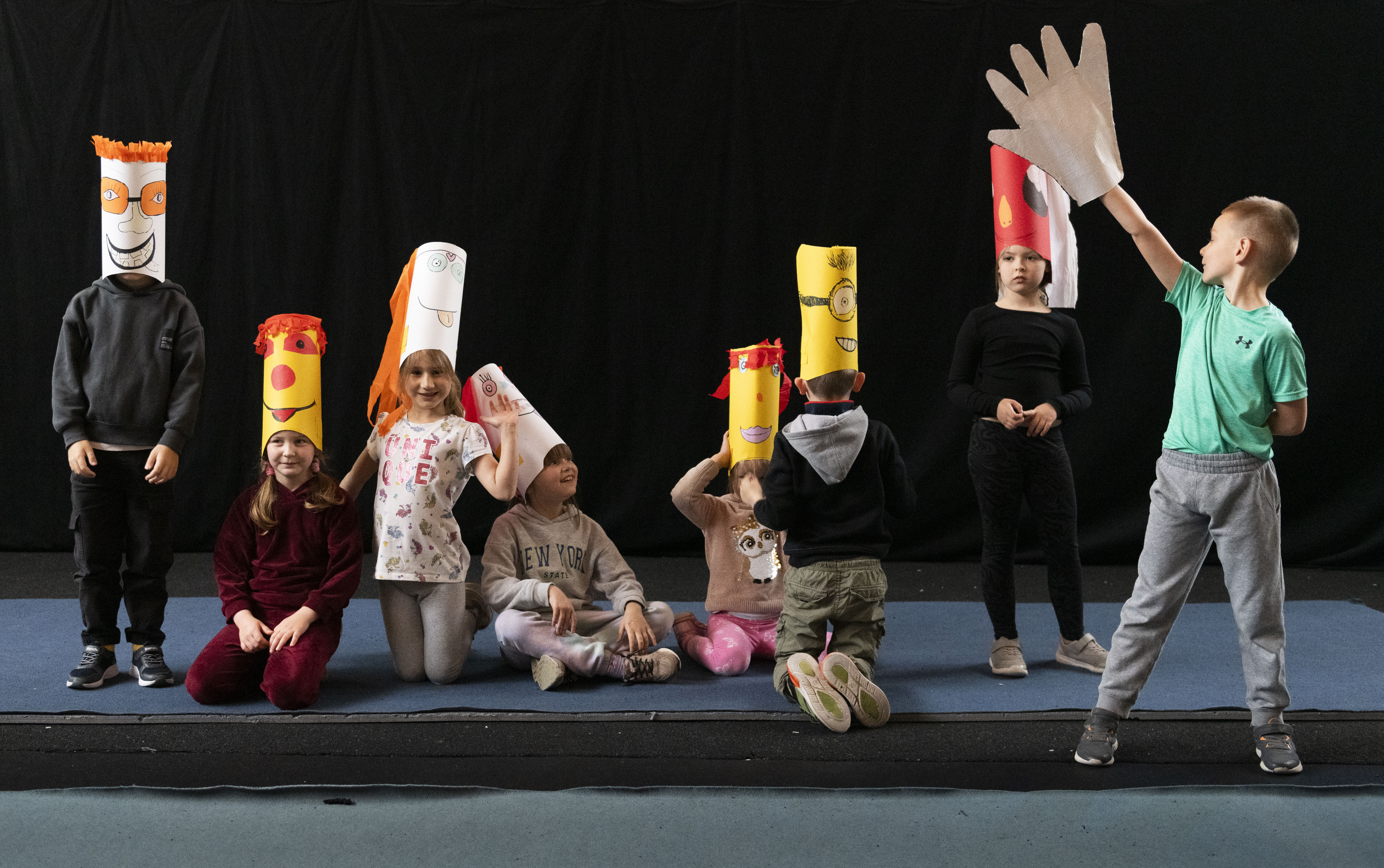
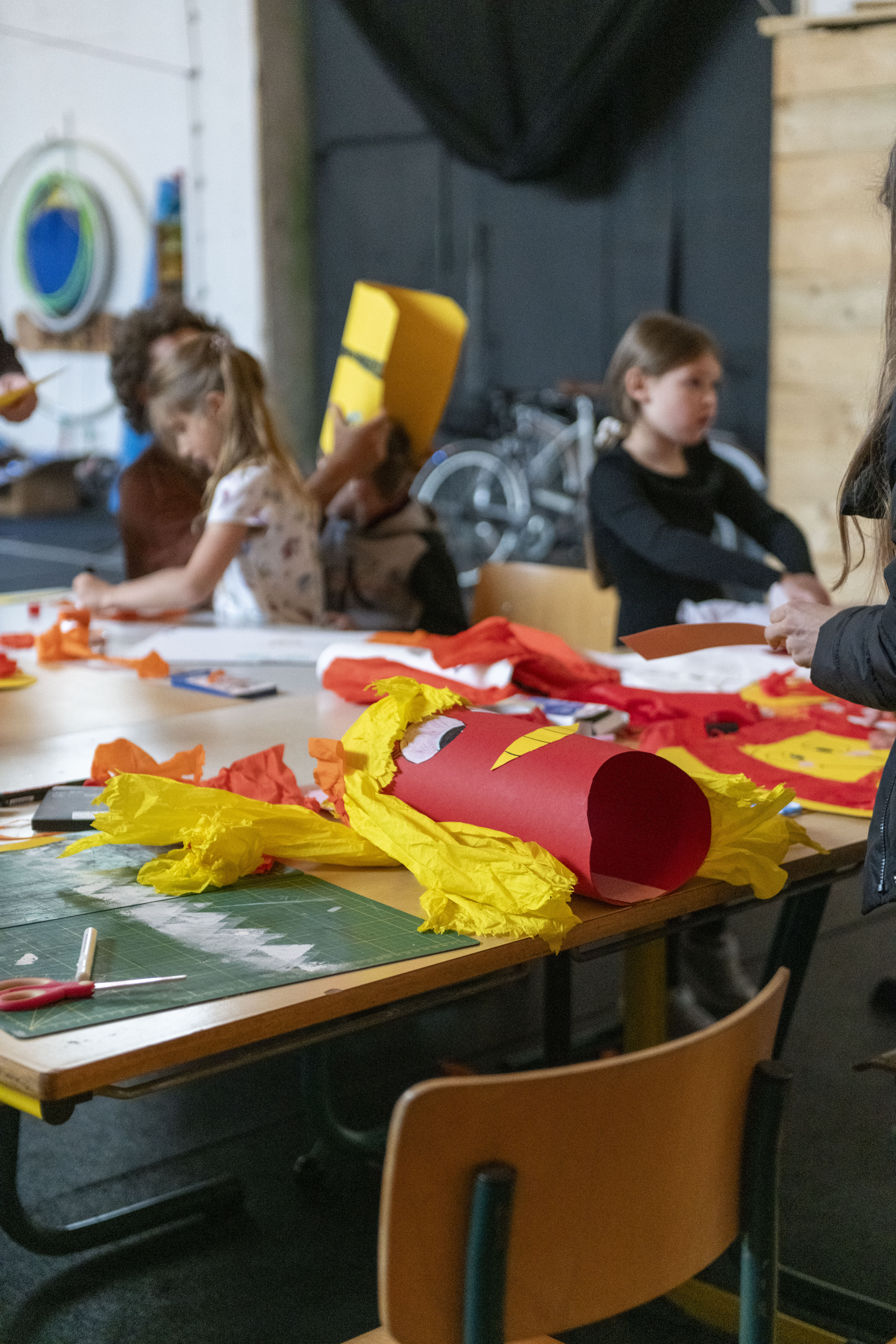
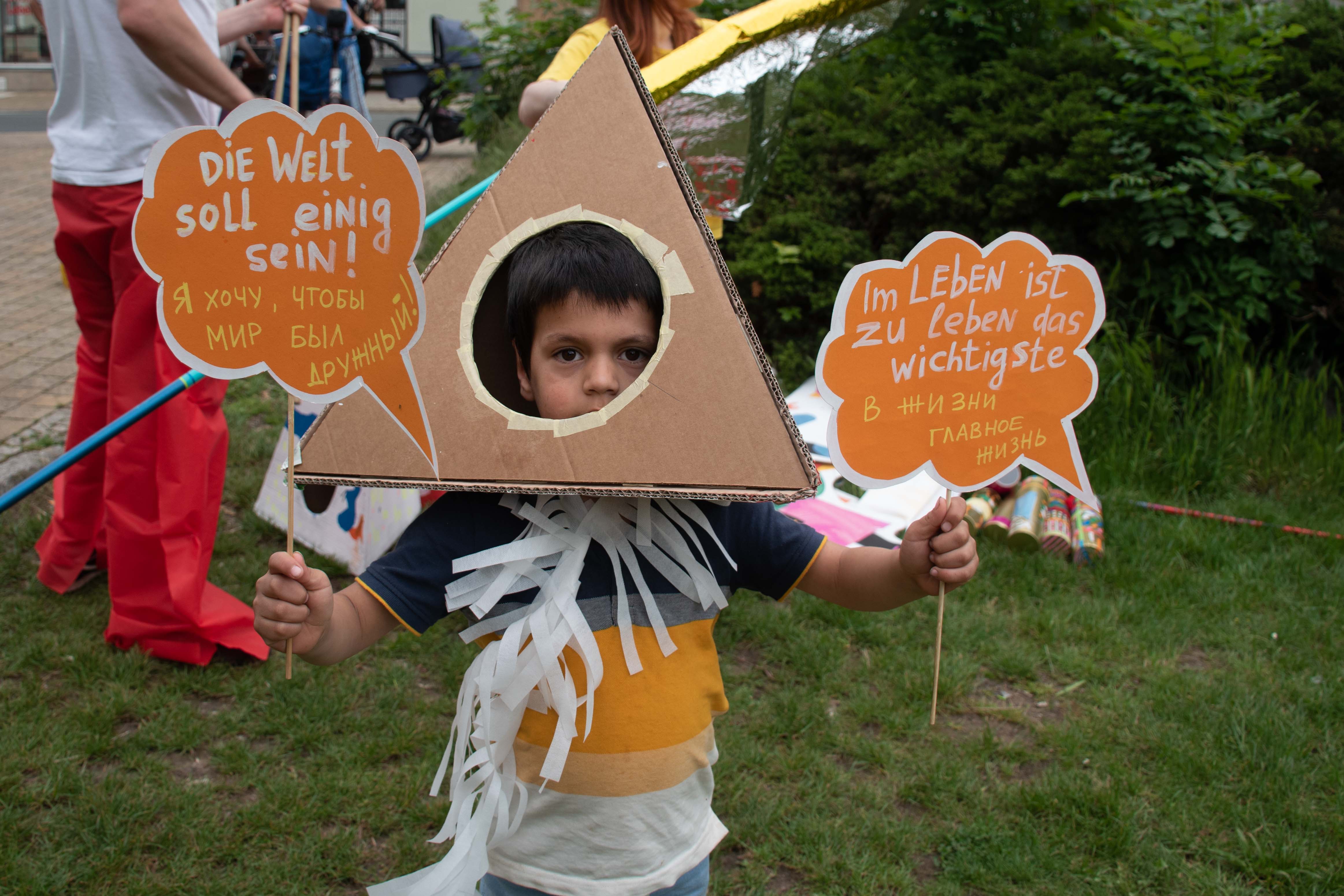
Over several months, children take part in circus training, prepare performances, and act as co-authors of the carnival: they choose the theme and create costumes and large-scale objects from recycled materials. The central element of each costume is a personal statement — about the city, their dreams, and what they want to say to adults.
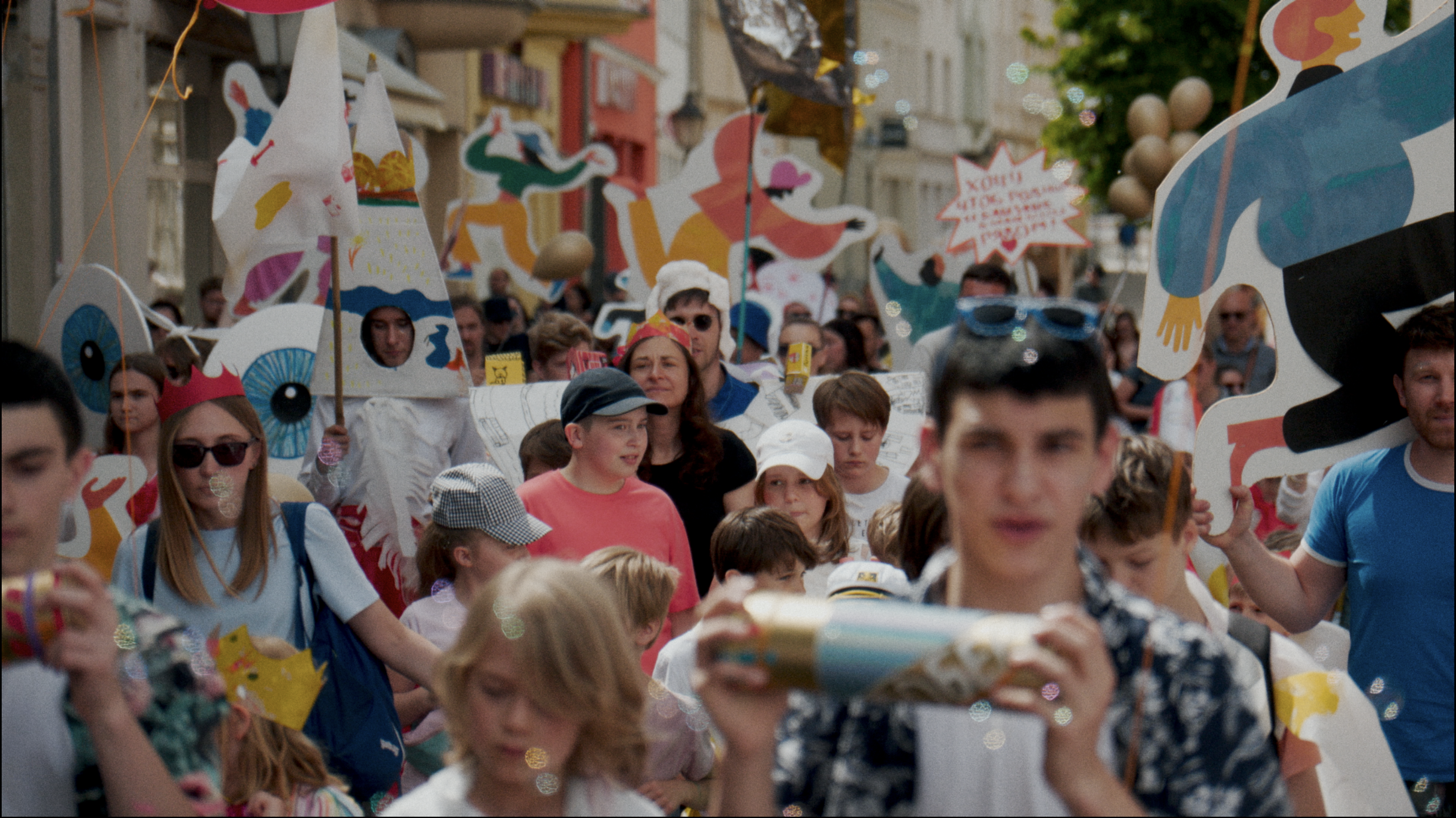
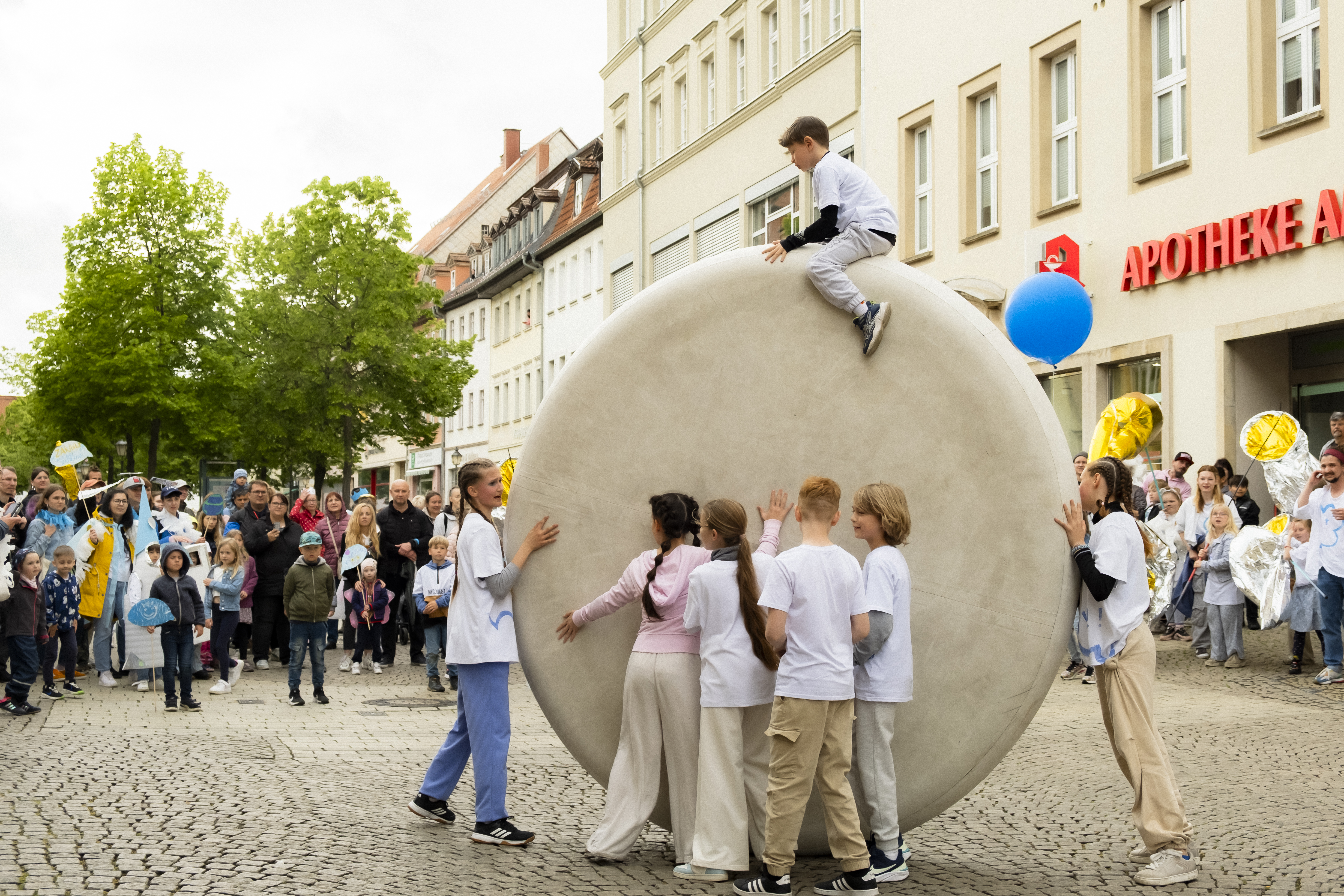
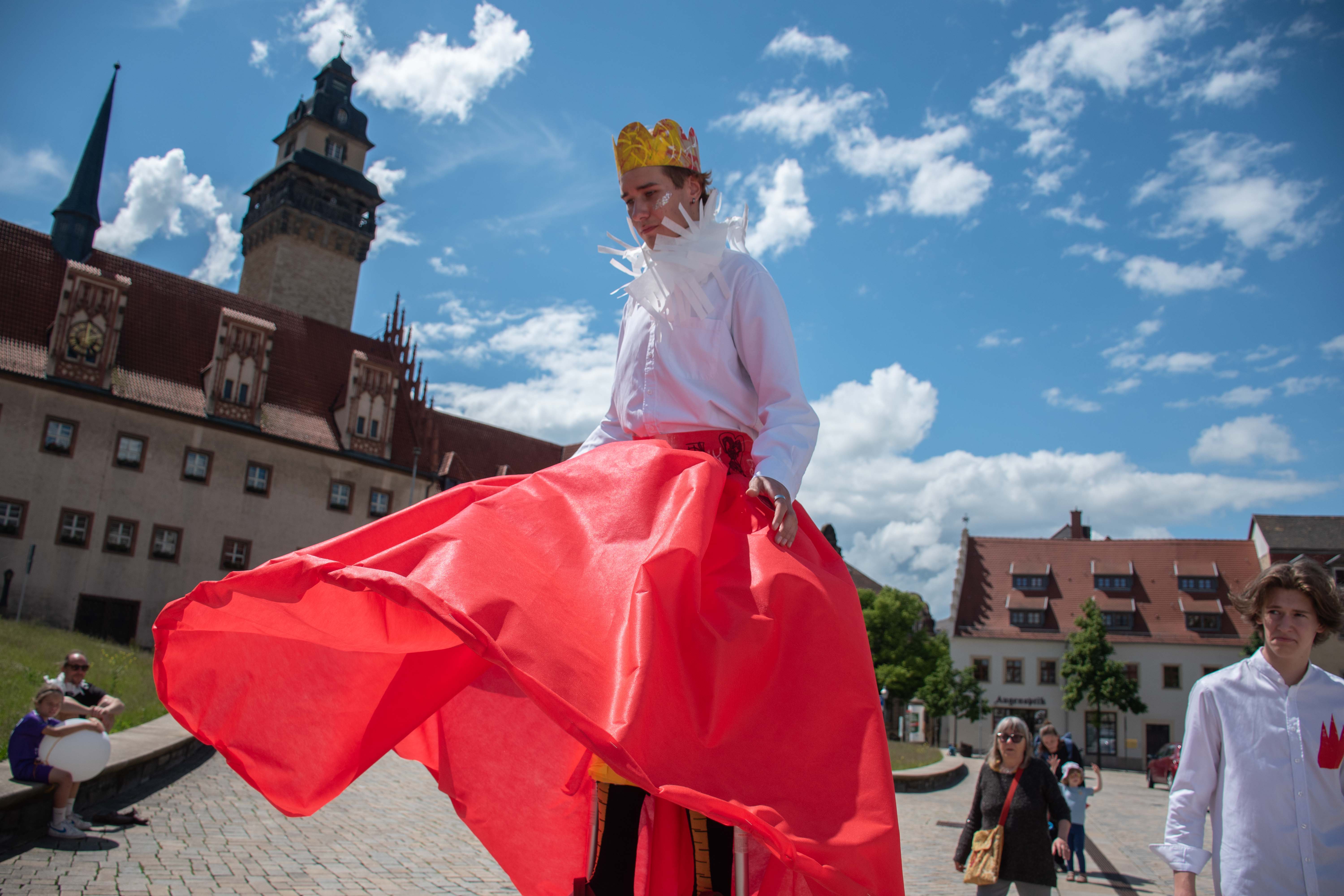
On carnival day, a vibrant crowd of children brings Zeitz to life. The carnival includes workshops and costume-making for residents, a procession through the city, and performances along the route.
Results achieved:
The festival took place in 2024 and 2025. A total of 120 children participated in the preparation, and more than 900 spectators attended, including people from Germany, Ukraine, Russia, Syria, Romania, and Afghanistan.
Transformative potential:
Big People creates a space where people meet through shared creativity and celebration. In a depressed region with limited cultural funding and a growing migrant community, such encounters are rare. Children — including those with migration experience — become co-authors of a public urban event: their voices are heard in the streets.
Through its annual repetition, each new carnival expands the circle of participants and strengthens social cohesion.
Big People is an annual participatory circus carnival in a city where roughly two-thirds of the population left in the early 2000s, turning it into a ghost town — where one in five residents is a migrant and 46% voted for a far-right party in the most recent elections.
Target groups:
Children aged 4–12: local German children, including those from the local children’s home, and children with experience of forced displacement.
Specific objectives:
To help children who arrived because of the war develop a sense of belonging and feel that this city is their home — and, together with those who have always lived here, overcome fear of one another.
How it works:
Over several months, children take part in circus training, prepare performances, and act as co-authors of the carnival: they choose the theme and create costumes and large-scale objects from recycled materials. The central element of each costume is a personal statement — about the city, their dreams, and what they want to say to adults.
On carnival day, a vibrant crowd of children brings Zeitz to life. The carnival includes workshops and costume-making for residents, a procession through the city, and performances along the route.
Results achieved:
The festival took place in 2024 and 2025. A total of 120 children participated in the preparation, and more than 900 spectators attended, including people from Germany, Ukraine, Russia, Syria, Romania, and Afghanistan.
Transformative potential:
Big People creates a space where people meet through shared creativity and celebration. In a depressed region with limited cultural funding and a growing migrant community, such encounters are rare. Children — including those with migration experience — become co-authors of a public urban event: their voices are heard in the streets.
Through its annual repetition, each new carnival expands the circle of participants and strengthens social cohesion.
80% of the Upsala-Circus team are people with migration experience who moved to Germany in 2022. Talking with our children and participants in our circus projects, we kept seeing the same thing: they do not see this city as their future home and live in fear. It is commonly assumed that moving is easier for children — but they lose just as much as adults, and they never make this decision themselves. Local residents, meanwhile, spoke of their anxiety about how their city was changing. This mutual fear is rooted in not knowing each other.
We decided: the city needs events where people can meet in a safe creative space, and where children can speak up and be heard. The idea of a carnival came out of a conversation with children about Zeitz. They said they wanted their city to be bright, joyful, full of strange and funny people.
The children chose the carnival theme, drew their costumes and created them together with their families. Alongside this, regular circus training led to group numbers and solo pieces that each child devised themselves. At the core is the circus pedagogy method that Upsala-Circus has been developing since 2000: a synthesis of contemporary circus and humanistic pedagogy, where children are authors rather than executors of someone else's vision. In Germany, we apply our method in the contexts of migration and integration.
Preparations for the first carnival began in August 2023; the event took place in May 2024. Preparations for the second edition began in August 2024; the carnival took place in May 2025 — in two locations: Zeitz and Droßdorf.
The carnival is called "Big People": on this day children become visible and their voices are heard. At the carnival, people who never cross paths in everyday life found themselves side by side — joining workshops, smiling at the children and watching the performances.
We decided: the city needs events where people can meet in a safe creative space, and where children can speak up and be heard. The idea of a carnival came out of a conversation with children about Zeitz. They said they wanted their city to be bright, joyful, full of strange and funny people.
The children chose the carnival theme, drew their costumes and created them together with their families. Alongside this, regular circus training led to group numbers and solo pieces that each child devised themselves. At the core is the circus pedagogy method that Upsala-Circus has been developing since 2000: a synthesis of contemporary circus and humanistic pedagogy, where children are authors rather than executors of someone else's vision. In Germany, we apply our method in the contexts of migration and integration.
Preparations for the first carnival began in August 2023; the event took place in May 2024. Preparations for the second edition began in August 2024; the carnival took place in May 2025 — in two locations: Zeitz and Droßdorf.
The carnival is called "Big People": on this day children become visible and their voices are heard. At the carnival, people who never cross paths in everyday life found themselves side by side — joining workshops, smiling at the children and watching the performances.
Sense of belonging
Intercultural community-building
Children as co-authors in public space
Participatory circus pedagogy
Underserved rural communities
Goals. Big People aims to demonstrate that high-quality cultural production can operate within a circular logic: with minimal use of new materials, no single-use props, and no post-event waste.
Implementation. All costumes and visual objects used in the carnival are made from offcuts and remnants — materials that have already left the production process and would otherwise be discarded. Fabrics, trimmings and finishing materials are provided by krimZkrams (kunZstoffe e.V.) — a local initiative for the creative reuse of production waste. Cardboard — the basis for large-format objects and structures — is collected by participating families and the circus itself: packaging from moves and purchases that would otherwise go to waste. As festive confetti, Holi powder was used — a natural dye made from cornstarch, fully biodegradable.
Large-format objects — symbolic figures and installations — are not discarded after each edition: what appeared on the streets of Zeitz in 2024 reappeared in 2025. The project's materials have a built-in lifecycle.
During workshops, children learned where the materials come from and why the project does not buy new ones — reuse was explained not as a constraint, but as a principle. In 2024, workshops for children from local kindergartens took place directly at the krimZkrams premises: children saw how a space for creative material reuse operates, and worked with the materials there.
Results. Over two years, not a single large-format object was discarded. The purchase of new materials for costumes and props was kept to a minimum.
Exemplary value. Scarcity of resources became an artistic principle — not a forced compromise, but a conscious choice. The model shows that a circular approach is applicable not only in construction or product design, but also in live cultural production.
Implementation. All costumes and visual objects used in the carnival are made from offcuts and remnants — materials that have already left the production process and would otherwise be discarded. Fabrics, trimmings and finishing materials are provided by krimZkrams (kunZstoffe e.V.) — a local initiative for the creative reuse of production waste. Cardboard — the basis for large-format objects and structures — is collected by participating families and the circus itself: packaging from moves and purchases that would otherwise go to waste. As festive confetti, Holi powder was used — a natural dye made from cornstarch, fully biodegradable.
Large-format objects — symbolic figures and installations — are not discarded after each edition: what appeared on the streets of Zeitz in 2024 reappeared in 2025. The project's materials have a built-in lifecycle.
During workshops, children learned where the materials come from and why the project does not buy new ones — reuse was explained not as a constraint, but as a principle. In 2024, workshops for children from local kindergartens took place directly at the krimZkrams premises: children saw how a space for creative material reuse operates, and worked with the materials there.
Results. Over two years, not a single large-format object was discarded. The purchase of new materials for costumes and props was kept to a minimum.
Exemplary value. Scarcity of resources became an artistic principle — not a forced compromise, but a conscious choice. The model shows that a circular approach is applicable not only in construction or product design, but also in live cultural production.
Aesthetic goals. The project transforms city streets into a performance space created by residents themselves — so that public space becomes a source of pride and belonging.
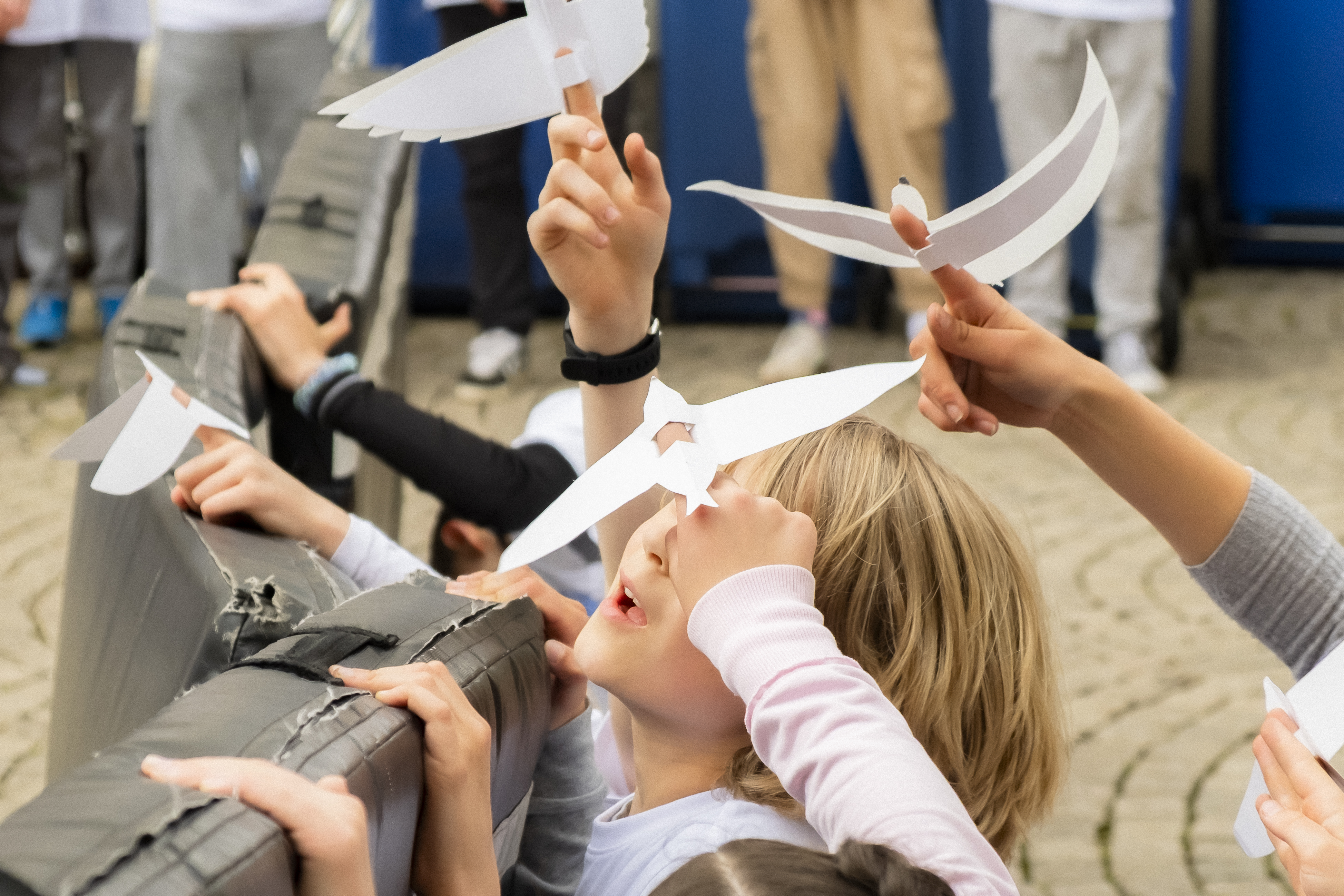
Implementation. Children take part in a months-long co-design process: workshops and idea-generation sessions build a new visual concept from scratch each year. In 2025, the theme "Flight and Dream" — white, sky blue and silver — was chosen by the children and integrated into all costumes and objects. Weeks before the carnival, the city begins to change: 20 original characters appear on posters and in AI animation, while giant laundry hangs between buildings on the central square — an installation photographed by residents and tourists. The carnival begins long before the day of the event.
Quality of experience. Unlike typical city celebrations, the carnival is not entertainment for spectators: it is a live street event created by its participants, with no division between stage and audience. The procession is accompanied by drummers; in 2025 the route featured cello and guitar, and one performance took place to a live hang drum. People relax, meet, smile at strangers — shared creative action creates a sense of safety among entirely different people. The finale was a street disco: DJs on scaffolding, a square full of dancing people.
Cultural benefits. The visual language is built from the personal meanings of each child — about the city, about dreams, about what they want to say out loud. 900+ residents of different backgrounds came to witness this. The documentary "Zirkus Effekt" (2024) captures the carnival as a cultural event and carries it beyond Zeitz — to other cities and film festivals.
Exemplary character. In a region with almost no cultural infrastructure, "Big People" proves that beauty requires neither permanent venues nor large budgets — it is born where children are given authorship. Children whom the system renders invisible turn a street into a stage the city does not forget.
Implementation. Children take part in a months-long co-design process: workshops and idea-generation sessions build a new visual concept from scratch each year. In 2025, the theme "Flight and Dream" — white, sky blue and silver — was chosen by the children and integrated into all costumes and objects. Weeks before the carnival, the city begins to change: 20 original characters appear on posters and in AI animation, while giant laundry hangs between buildings on the central square — an installation photographed by residents and tourists. The carnival begins long before the day of the event.
Quality of experience. Unlike typical city celebrations, the carnival is not entertainment for spectators: it is a live street event created by its participants, with no division between stage and audience. The procession is accompanied by drummers; in 2025 the route featured cello and guitar, and one performance took place to a live hang drum. People relax, meet, smile at strangers — shared creative action creates a sense of safety among entirely different people. The finale was a street disco: DJs on scaffolding, a square full of dancing people.
Cultural benefits. The visual language is built from the personal meanings of each child — about the city, about dreams, about what they want to say out loud. 900+ residents of different backgrounds came to witness this. The documentary "Zirkus Effekt" (2024) captures the carnival as a cultural event and carries it beyond Zeitz — to other cities and film festivals.
Exemplary character. In a region with almost no cultural infrastructure, "Big People" proves that beauty requires neither permanent venues nor large budgets — it is born where children are given authorship. Children whom the system renders invisible turn a street into a stage the city does not forget.
Goals. Social inclusion: to create a space where children and families from very different life situations — local residents and forced migrants — meet as equal participants in a shared event. Cultural inclusion: to give children with no access to quality cultural education not only the chance to witness it, but to become its authors.
In Zeitz, local residents and migrant communities live in separate language bubbles — circus and carnival break through them without words. Through shared movement, rhythm and procession, people take part in one creative experience without translation. Those who have lived in Germany all their lives and those who arrived by force — from Ukraine, Syria, Romania and Eritrea — find themselves side by side. This is not an integration programme, but a space where encounter becomes possible.
During carnival preparation workshops, families were deliberately invited: children created their costumes together with their parents — a moment when adults could hear children not in the daily rush, but through shared creative action. On carnival day anyone — families, neighbours, passers-by — could come, make a costume and join the event. Participation is free; the carnival takes place on city streets — no tickets, no selection, no threshold.
In 2024 and 2025, 120 children from German and refugee families created the carnival together — attended by more than 900 people. After the first two carnivals, the share of German children in circus regular programmes grew to 30%. Among trainers, 50% are now German, while in 2024 the team consisted entirely of specialists with migration experience. A Ukrainian parent wrote: “This place gives our children courage, dignity and the freedom to be themselves.” When criticism of the project as “migrant-run” appeared on social media, residents publicly defended it.
Big People gives authorship to those usually left on the margins — creating connections between people who would otherwise never have met.
In Zeitz, local residents and migrant communities live in separate language bubbles — circus and carnival break through them without words. Through shared movement, rhythm and procession, people take part in one creative experience without translation. Those who have lived in Germany all their lives and those who arrived by force — from Ukraine, Syria, Romania and Eritrea — find themselves side by side. This is not an integration programme, but a space where encounter becomes possible.
During carnival preparation workshops, families were deliberately invited: children created their costumes together with their parents — a moment when adults could hear children not in the daily rush, but through shared creative action. On carnival day anyone — families, neighbours, passers-by — could come, make a costume and join the event. Participation is free; the carnival takes place on city streets — no tickets, no selection, no threshold.
In 2024 and 2025, 120 children from German and refugee families created the carnival together — attended by more than 900 people. After the first two carnivals, the share of German children in circus regular programmes grew to 30%. Among trainers, 50% are now German, while in 2024 the team consisted entirely of specialists with migration experience. A Ukrainian parent wrote: “This place gives our children courage, dignity and the freedom to be themselves.” When criticism of the project as “migrant-run” appeared on social media, residents publicly defended it.
Big People gives authorship to those usually left on the margins — creating connections between people who would otherwise never have met.
Children participating in both editions voted on the carnival theme, shaped the carnival’s visual language — including making handmade banners with personal statements about the city and themselves, which they carried in the procession — and gave feedback through “Feedback Circles” after each event. Their responses after 2024 directly changed the 2025 format: a second location was added, the procession route was adjusted with stops for performances, and a closing disco with DJs was introduced. This is not consultation — it is co-authorship with consequences. After the carnival, children from families with no prior connection to the circus came to join the circus programmes — the carnival became for them not just an event, but a point of entry into their own creative practice.
Families and parents took on increasing responsibility with each edition: from making costumes to organising food, set-up, transporting props and equipment, and helping steward the sites on carnival day. They moved from the role of recipients to co-organisers — their contribution directly reduces the organisational resources needed to run the project.
Children in the audience and residents did not remain observers: they saw peers on stage, read handmade banners with personal statements and went to make banners of their own. Residents publicly defended the project on social media against critics — evidence that the carnival is perceived as their own event, not an external initiative.
Civil society organisations played a key role in who was able to take part. Zeitz Online — Zeitz’s main news source — reached the German-speaking community: without this, significantly fewer German families would have attended. Stadtlabor Zeitz engaged migrant communities beyond the Russian-speaking circle. Krimzkrams provided free access to materials — without this, costumes would have had to be made from new materials.
Families and parents took on increasing responsibility with each edition: from making costumes to organising food, set-up, transporting props and equipment, and helping steward the sites on carnival day. They moved from the role of recipients to co-organisers — their contribution directly reduces the organisational resources needed to run the project.
Children in the audience and residents did not remain observers: they saw peers on stage, read handmade banners with personal statements and went to make banners of their own. Residents publicly defended the project on social media against critics — evidence that the carnival is perceived as their own event, not an external initiative.
Civil society organisations played a key role in who was able to take part. Zeitz Online — Zeitz’s main news source — reached the German-speaking community: without this, significantly fewer German families would have attended. Stadtlabor Zeitz engaged migrant communities beyond the Russian-speaking circle. Krimzkrams provided free access to materials — without this, costumes would have had to be made from new materials.
Local level. Stadtlabor Zeitz engaged migrant communities beyond the Russian-speaking community; Zeitz Online (zeitzonline.de) reached local German audiences — without its publications, significantly fewer German families would have attended the carnival; Krimzkrams provided free access to materials — without this, costumes would have had to be made using newly purchased materials. Workshops for two local kindergartens were held at the Krimzkrams premises — reaching children who would otherwise not have known about the project. Drosdorf Primary School became an official grant partner: for six months, 30 children trained there, presenting their own circus performance at the carnival. The Zeitz city administration issued permits for public spaces and supported the "Circus on the Playground" series of performances — six performances with mini-workshops at playgrounds so families from remote and low-income neighbourhoods could learn about the carnival. Staff from the city's culture, education and social departments helped share information about the project.
Federal level. Fonds Darstellende Künste (fonds-daku.de) — one of six official federal cultural funds in Germany, funded by the Federal Government Commissioner for Culture and the Media — fully covered the budget of both editions, providing financial independence and legitimacy that opens access to regional funding programmes. Ongoing support is provided by the private foundation Kinderstern e.V.
European level. Upsala-Circus is a member of Caravan International (caravancircusnetwork.eu) — a network of social circus organisations from 18 countries working with vulnerable children. "Big People" was presented in the network as a replicable model for working with forcibly displaced children in a small post-industrial city. A documentary film about the project was screened in Zeitz and Weißenfels — reaching an audience of 300; it was
shortlisted for the Berlin Lift-Off Film Festival.
Federal level. Fonds Darstellende Künste (fonds-daku.de) — one of six official federal cultural funds in Germany, funded by the Federal Government Commissioner for Culture and the Media — fully covered the budget of both editions, providing financial independence and legitimacy that opens access to regional funding programmes. Ongoing support is provided by the private foundation Kinderstern e.V.
European level. Upsala-Circus is a member of Caravan International (caravancircusnetwork.eu) — a network of social circus organisations from 18 countries working with vulnerable children. "Big People" was presented in the network as a replicable model for working with forcibly displaced children in a small post-industrial city. A documentary film about the project was screened in Zeitz and Weißenfels — reaching an audience of 300; it was
shortlisted for the Berlin Lift-Off Film Festival.
The Big People brings together circus arts and pedagogy, visual art and scenography, music, and social work with children and families in intercultural settings. Each of these fields is essential — none is secondary.
Each age group developed its own theme for the annual carnival through joint work between trainers and artists: younger children (5–8 years) explored dreams and fears, the middle group chose white flags as their symbol, and the teenage group created their performance independently, without adult direction — as a manifesto of freedom and youth. The work within the team was structured through weekly meetings of trainers, artists and musicians, where they discussed work with each group, what the children were saying, and how the themes were coming together into a shared statement.
The key result: an image important to the child entered both the costume and the circus performance — their personal statement became visible twice, in different forms, in front of hundreds of residents. The experience of having your opinion take shape and exist in public space is the foundation of democratic thinking — one that children learn through action, not explanation.
The content of the carnival was not defined by specialists — it was defined by the children themselves: their biographies, fears, experience of displacement and their relationship with the city. Professionals provided form; children provided meaning.
Circus provided technique, art gave form, and social work provided safety. Together these disciplines created something none of them could have created alone.
Big People takes place in a small post-industrial city in eastern Germany with minimal cultural infrastructure, children with experience of forced displacement, and a growing far-right political climate. Two years of practice demonstrate that the transdisciplinary format works here — and that is precisely why it holds practical value for organisations working in similar conditions across Europe.
Each age group developed its own theme for the annual carnival through joint work between trainers and artists: younger children (5–8 years) explored dreams and fears, the middle group chose white flags as their symbol, and the teenage group created their performance independently, without adult direction — as a manifesto of freedom and youth. The work within the team was structured through weekly meetings of trainers, artists and musicians, where they discussed work with each group, what the children were saying, and how the themes were coming together into a shared statement.
The key result: an image important to the child entered both the costume and the circus performance — their personal statement became visible twice, in different forms, in front of hundreds of residents. The experience of having your opinion take shape and exist in public space is the foundation of democratic thinking — one that children learn through action, not explanation.
The content of the carnival was not defined by specialists — it was defined by the children themselves: their biographies, fears, experience of displacement and their relationship with the city. Professionals provided form; children provided meaning.
Circus provided technique, art gave form, and social work provided safety. Together these disciplines created something none of them could have created alone.
Big People takes place in a small post-industrial city in eastern Germany with minimal cultural infrastructure, children with experience of forced displacement, and a growing far-right political climate. Two years of practice demonstrate that the transdisciplinary format works here — and that is precisely why it holds practical value for organisations working in similar conditions across Europe.
The financial model of Big People is based on grant funding from multiple sources.
Completed editions: 2024 — €23,000; 2025 — €39,000 (the increase reflects the expansion of locations and number of participants). Both editions were fully funded by grants — Fonds DAKU and Kinderstern e.V., a charitable foundation that has supported Upsala-Circus since 2022. Participation for all children remains free, including materials.
The project generates no earned revenue — this is a matter of principle: a payment barrier is incompatible with its inclusive mission.
The long-term viability strategy operates on three levels:
— Grant diversification: the project meets the criteria of funding bodies in the fields of education, culture, social integration and refugee support. Negotiations with the state of Saxony-Anhalt about inclusion in regional funding programmes are under way.
— Replicable methodology: Upsala-Circus is developing an open methodology toolkit — a description of the programme, process and budget structure — that will allow local organisations in other cities in Germany and the EU to adapt the carnival to their context and seek funding independently. The 2026 expansion to neighbouring locations around Zeitz is the first proof of this path.
— Low-cost structure: minimal infrastructure requirements make the model accessible to organisations with limited resources. The budget scales proportionally with reach — with no fixed overheads.
Replication potential is particularly high in regions with high levels of migration and underdeveloped cultural infrastructure — precisely the territories prioritised by a significant share of European and German funds supporting rural communities.
Big People challenges the conventional logic: a cultural event does not wait for infrastructure — it creates it. For hundreds of small EU cities where the norm is to wait for resources before launching cultural programmes, this shifts the point of entry.
Completed editions: 2024 — €23,000; 2025 — €39,000 (the increase reflects the expansion of locations and number of participants). Both editions were fully funded by grants — Fonds DAKU and Kinderstern e.V., a charitable foundation that has supported Upsala-Circus since 2022. Participation for all children remains free, including materials.
The project generates no earned revenue — this is a matter of principle: a payment barrier is incompatible with its inclusive mission.
The long-term viability strategy operates on three levels:
— Grant diversification: the project meets the criteria of funding bodies in the fields of education, culture, social integration and refugee support. Negotiations with the state of Saxony-Anhalt about inclusion in regional funding programmes are under way.
— Replicable methodology: Upsala-Circus is developing an open methodology toolkit — a description of the programme, process and budget structure — that will allow local organisations in other cities in Germany and the EU to adapt the carnival to their context and seek funding independently. The 2026 expansion to neighbouring locations around Zeitz is the first proof of this path.
— Low-cost structure: minimal infrastructure requirements make the model accessible to organisations with limited resources. The budget scales proportionally with reach — with no fixed overheads.
Replication potential is particularly high in regions with high levels of migration and underdeveloped cultural infrastructure — precisely the territories prioritised by a significant share of European and German funds supporting rural communities.
Big People challenges the conventional logic: a cultural event does not wait for infrastructure — it creates it. For hundreds of small EU cities where the norm is to wait for resources before launching cultural programmes, this shifts the point of entry.
Big People was designed as a replicable model and demonstrates this in practice: 2024 — one location, 2025 — two locations in two cities, June 2026 — a third carnival with three Zeitz schools. Each step is not an expansion of an existing event, but a test of the model’s replicability in a new context.
Why this works as a model. The project responds to a need shared by many small EU cities: how to create a cultural space for children from different life situations — without dedicated premises, a large budget, or existing infrastructure. The answer is reproducible in any context where there are children and public space.
What is transferable. The methodology as a whole: not circus technique, but tools for dialogue and co-authorship. The participatory theme process, workshop structure, the costume as the child’s personal statement, and the carnival-parade format are reproducible through any creative discipline: circus, theatre, street arts. Upsala-Circus is prepared to share these principles through methodological materials developed through two completed editions.
Distribution channel. The Caravan International network — organisations from 18 countries already working with vulnerable children — is a ready-made environment for replicating the model without building partnerships from scratch. It is in this environment that Big People has already been presented as a practice reproducible in different national contexts.
What replication requires. The key resource is educators with experience in inclusive and intercultural groups, creating a safe space for collaborative creativity. Partnership with a school or youth centre is essential for participant recruitment.
What adapts. The annual theme, visual language, sources of secondary materials, parade route, working languages of the team. What remains constant is the principle: children are authors, the city is the stage, participation is free for every child regardless of background or family means.
Why this works as a model. The project responds to a need shared by many small EU cities: how to create a cultural space for children from different life situations — without dedicated premises, a large budget, or existing infrastructure. The answer is reproducible in any context where there are children and public space.
What is transferable. The methodology as a whole: not circus technique, but tools for dialogue and co-authorship. The participatory theme process, workshop structure, the costume as the child’s personal statement, and the carnival-parade format are reproducible through any creative discipline: circus, theatre, street arts. Upsala-Circus is prepared to share these principles through methodological materials developed through two completed editions.
Distribution channel. The Caravan International network — organisations from 18 countries already working with vulnerable children — is a ready-made environment for replicating the model without building partnerships from scratch. It is in this environment that Big People has already been presented as a practice reproducible in different national contexts.
What replication requires. The key resource is educators with experience in inclusive and intercultural groups, creating a safe space for collaborative creativity. Partnership with a school or youth centre is essential for participant recruitment.
What adapts. The annual theme, visual language, sources of secondary materials, parade route, working languages of the team. What remains constant is the principle: children are authors, the city is the stage, participation is free for every child regardless of background or family means.