Arts, Culture, and Heritage as Drivers of Change
Villa Portela
Villa Portela - Arts Center - Exibitions, guide tours, artistic education, programs to local artists
Born as a beacon of creativity and culture, the Villa Portela Arts Centre core is dedicated to contemporary art and opened its doors to the public on September 14, 2025, the Villa hosts its first exhibition with the Portuguese State's Contemporary Art collection, inviting visitors to embark on a journey of discovery. It aims to show nation and local artists to the world.
Portugal
National
Mainly urban
It involves a physical transformation of the built environment (hard investment)
Yes
2025-09-13
Yes
ERDF : European Regional Development Fund
No
No
Organisation
The project was born with the intention of transforming a private iconic building into a public building in general, this building was entirely dedicated to the arts.
The are several targets according to the activity programmed in every week, but its target is the main public and the divulgation of contemporary art, in general.
The concept for the project aims to open the space to the community and its rebuilding was a construction entirely dedicated to the arts and to the community theme.
This project aims to address the arts as a subject of financial and cultural value. The main goal is to promote regional artists and several events, art related for groups, (children, elderly, amateur painters, sculptors, musicians, etc)
This is the house of all artists (amateurs and professionals).
So far, the first exhibition had 20,500 visitors, the population is curious about this private old place and now wants to know about the villa and its exhibitions and to participate in events, like senior or children-focused events.
It was the potential transformative power as a showcase that displays cultural and creative regional work.
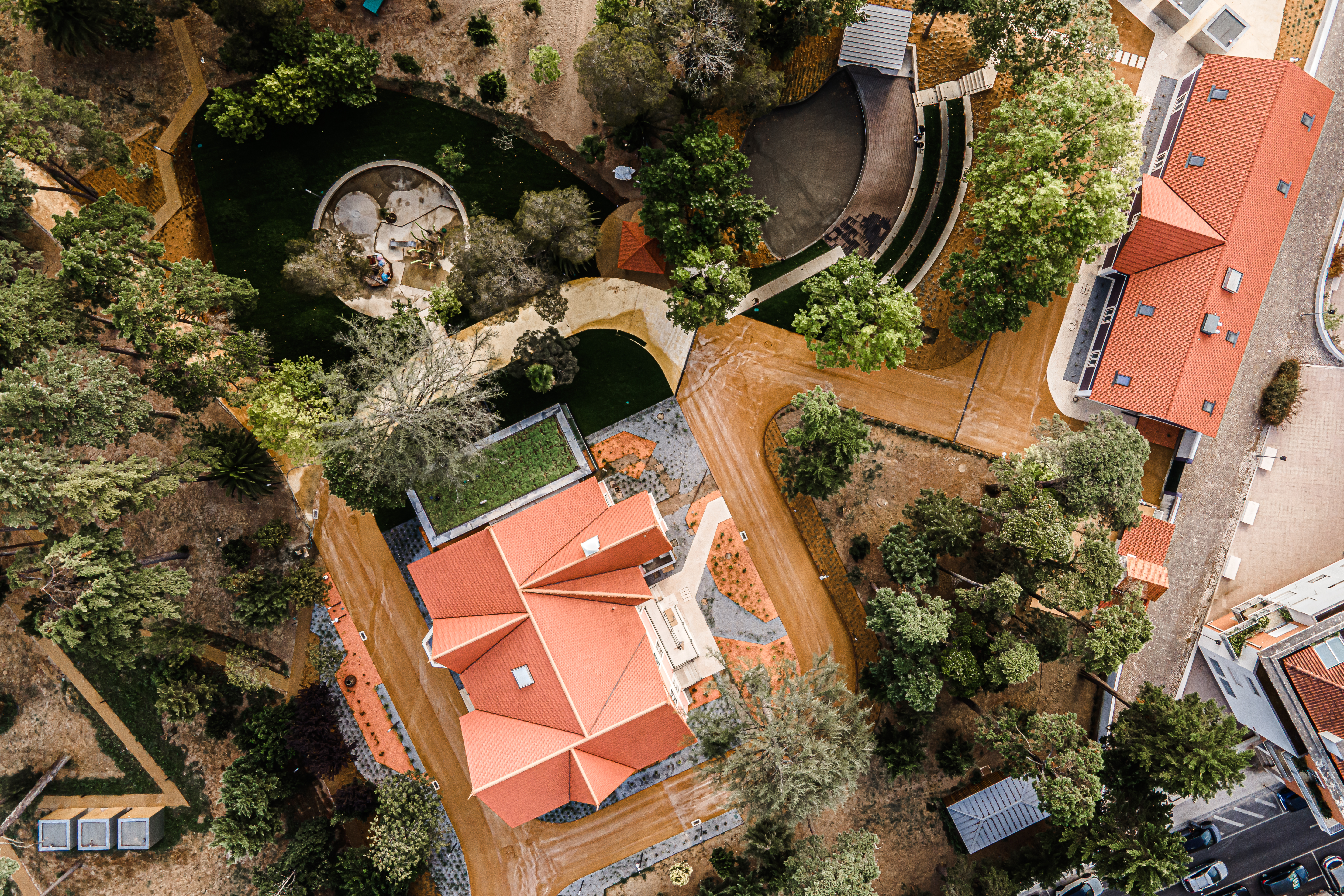
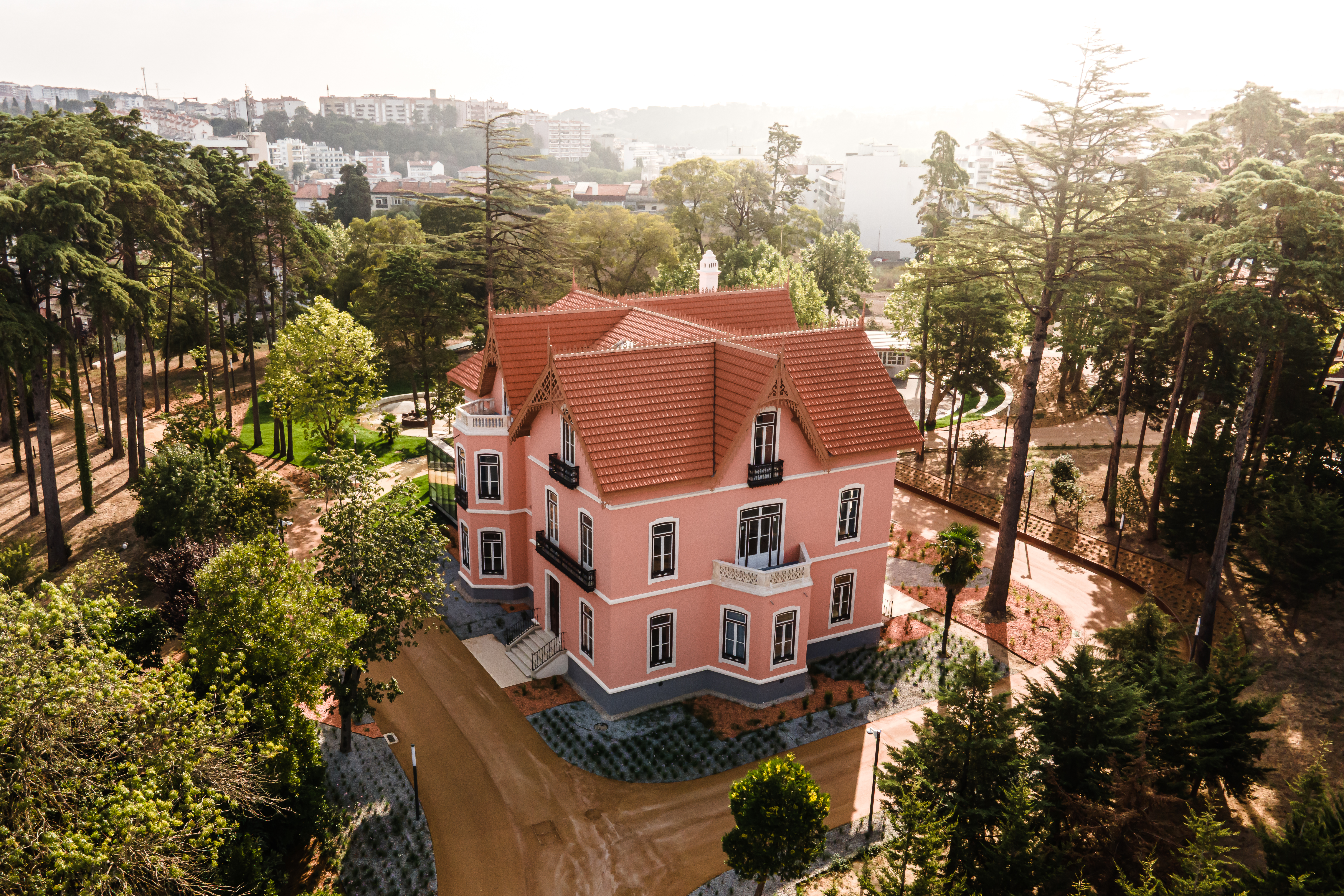
The Villa, being a group of buildings, was the subject of a joint intervention in order to convert the old dwelling into the new center for contemporary art in Leiria.
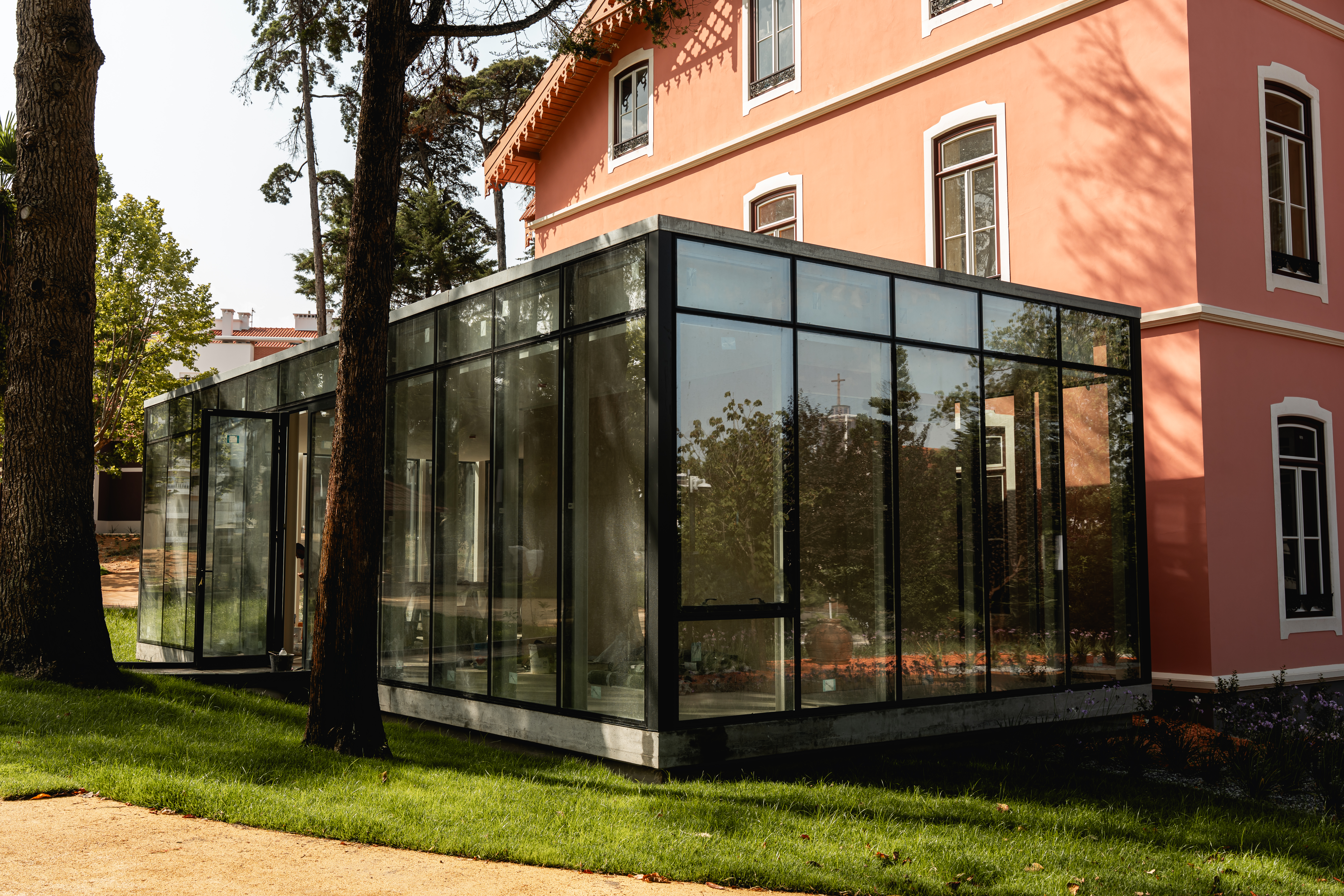
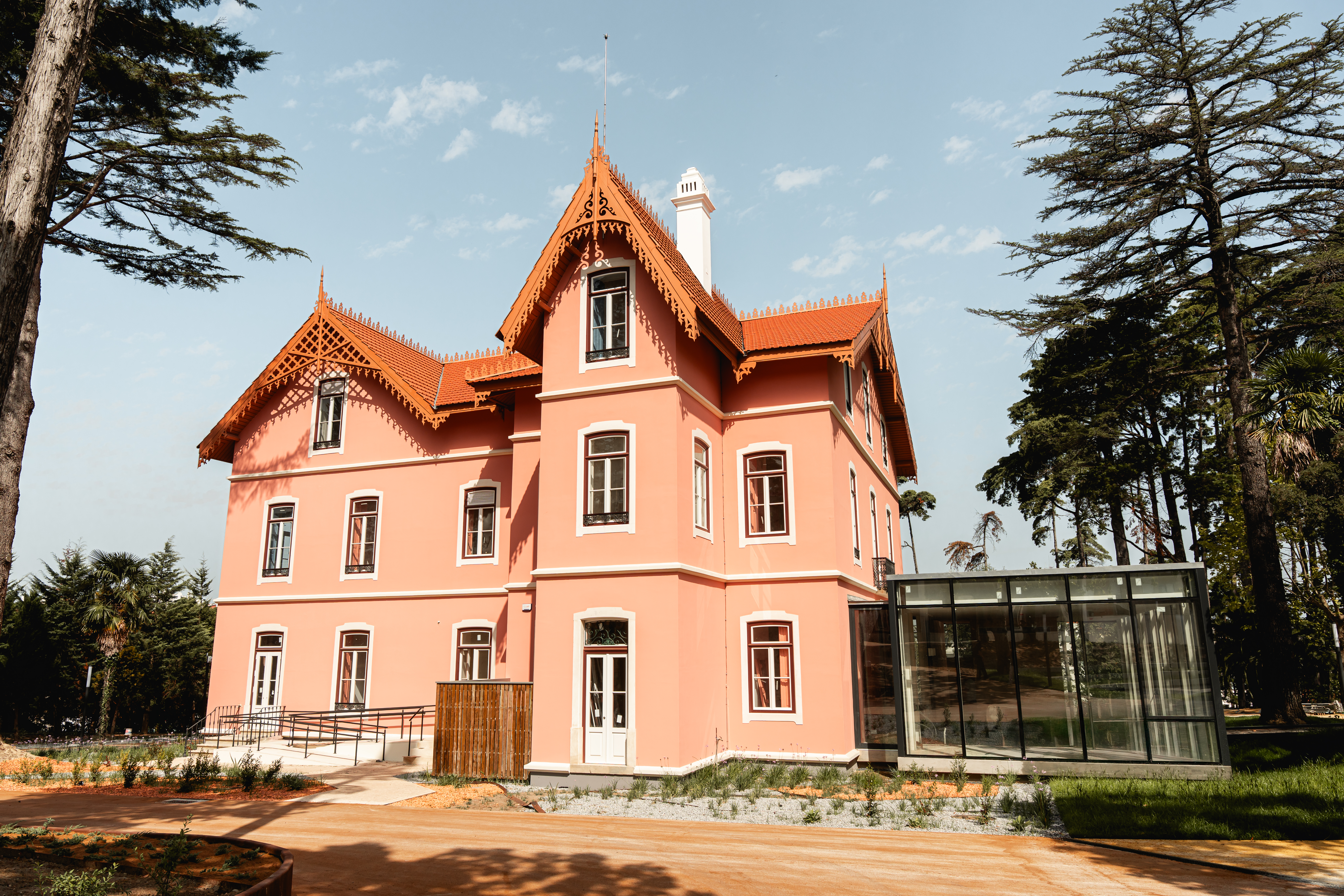
The main Building was a former residence built in 1894, stands out from the rest of the complex as it is clearly the central building and the protagonist of the entire ensemble, a building that stands as a magnificent example of Romanticism from the second half of the 19th century.
The municipality resorted to a community fund to carry out the rehabilitation works. The building underwent structural reinforcement and restoration, and its gardens were rehabilitated in accordance with the original design concept.
This is the main arts center of the municipality, working in conjunction with other cultural spaces and exclusively dedicated to contemporary art.
It is the House of Arts serving all community, and its gardens are open for all to enjoy.
The cultural program included:
• Reference Exhibitions: Highlighting the inaugural exhibition with works from CACE, resulting from the protocol with the Ministry of Culture.
• Events and Performances: Shows (such as the City of Music Festival), immersive performances, and creative residencies.
• Cultural Mediation: A robust educational program for families and schools, consolidating CAVP as a space for visual literacy and civic participation.
community driven
social inclusion
stainable architecture
energy efficiency
accessible green spaces
The sustainability of the project was reflected on a contained interior intervention, the green roof of the new cafeteria and the methods to irrigate the gardens.
The sale of merchandise with the "Villa Portela" visual identity aims at the sustainability of the project and the consolidation of its cultural brand. The proceeds from the store and the sale of catalogs (many of them co-published with partners such as Segraves) go towards financing new productions and educational programs.
The store also functions as a showcase for the local creative economy, selling items from artists in the region, such as Sandrine Vieira and Sílvia Patrício, directly stimulating the artistic and artisanal fabric of Leiria.
The 19th-century mansion was listed as a Monument of Municipal Interest in 2019, and renovations were scheduled to begin in May 2022.
Space combines the preservation of a 19th-century "chalet" surrounded by a marvelous garden, with a contemporary program focused on visual arts, music, and nature.
The rehabilitation did not attempt to "hide" the passage of time but rather highlighted it with materials and lighting that elevate the dignity of the building, transforming decay into sophistication.
After the January storm, the garden lost almost all its large trees, forcing the cultural center to reinvent itself four months after its inauguration. Following the devastation, ideas for the reinvention of the Villa Portela Arts Center flourished, and the beauty lies beyond its architecture, or it’s flexible management model, it sure that the beauty of a building lies on those who inhabitant and encourage the core of constant reinvention.
All the activities that take place in this space are a call for everyone, to people from 0 to 100 years old - from music to performances, all kinds of artists.
The Villa Portela Arts Centre offers a regular program that takes advantage of both the historic building and its extensive gardens:
Contemporary Art Exhibitions: The Centre hosts major exhibitions, such as the "Manifest Dream" exhibition, which includes works from the State Collection of Contemporary Art. There is also a strategic partnership with the Serralves Foundation to bring annual exhibitions to Leiria.
Musical Events and Performances: The garden and rooms of the mansion serve as a stage for concerts (such as the City of Music Festival), immersive presentations, and jazz shows.
Creative Laboratory and Workshops: The space has areas for experimentation and workshops focused on art education, training on creative processes, and activities for families.
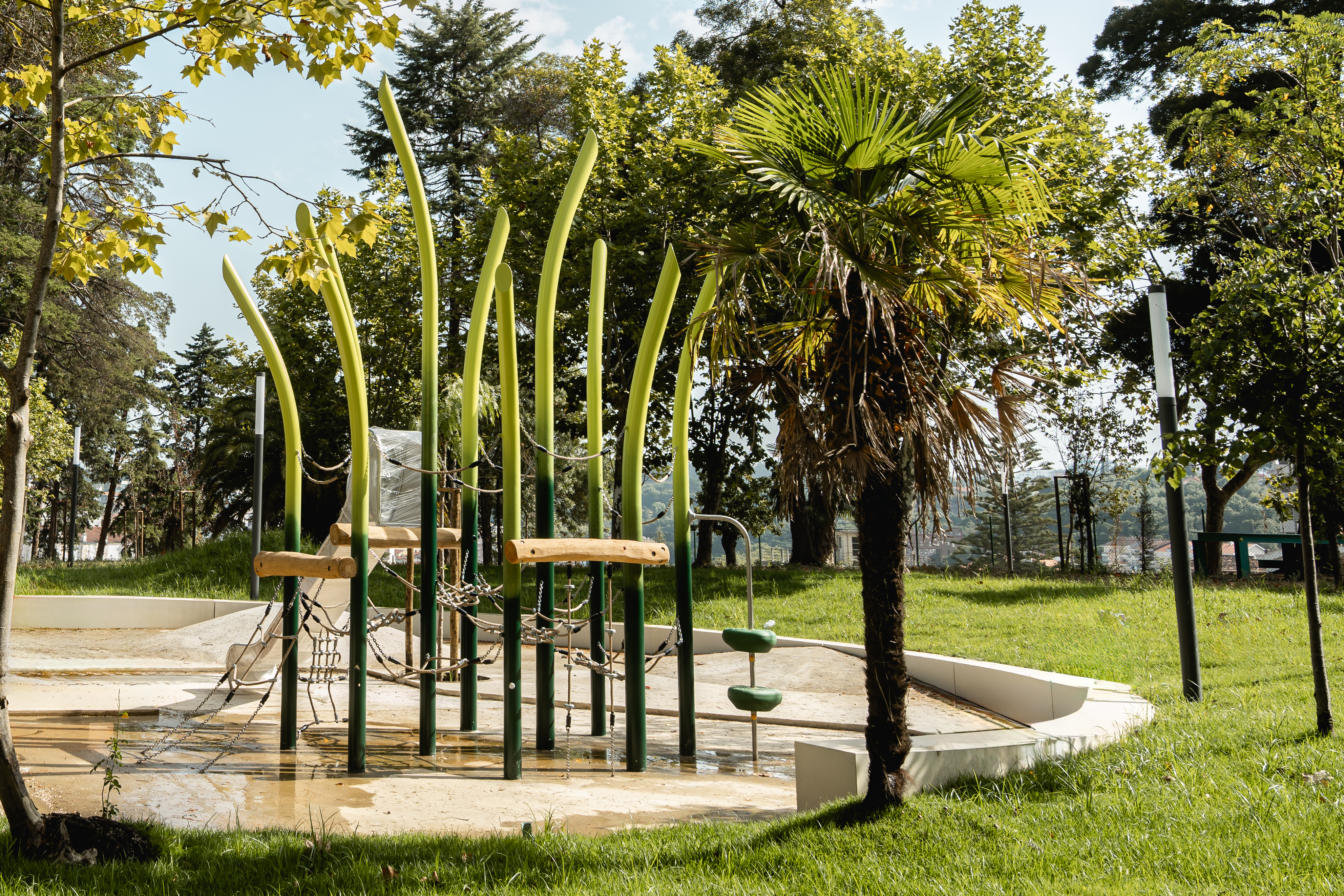
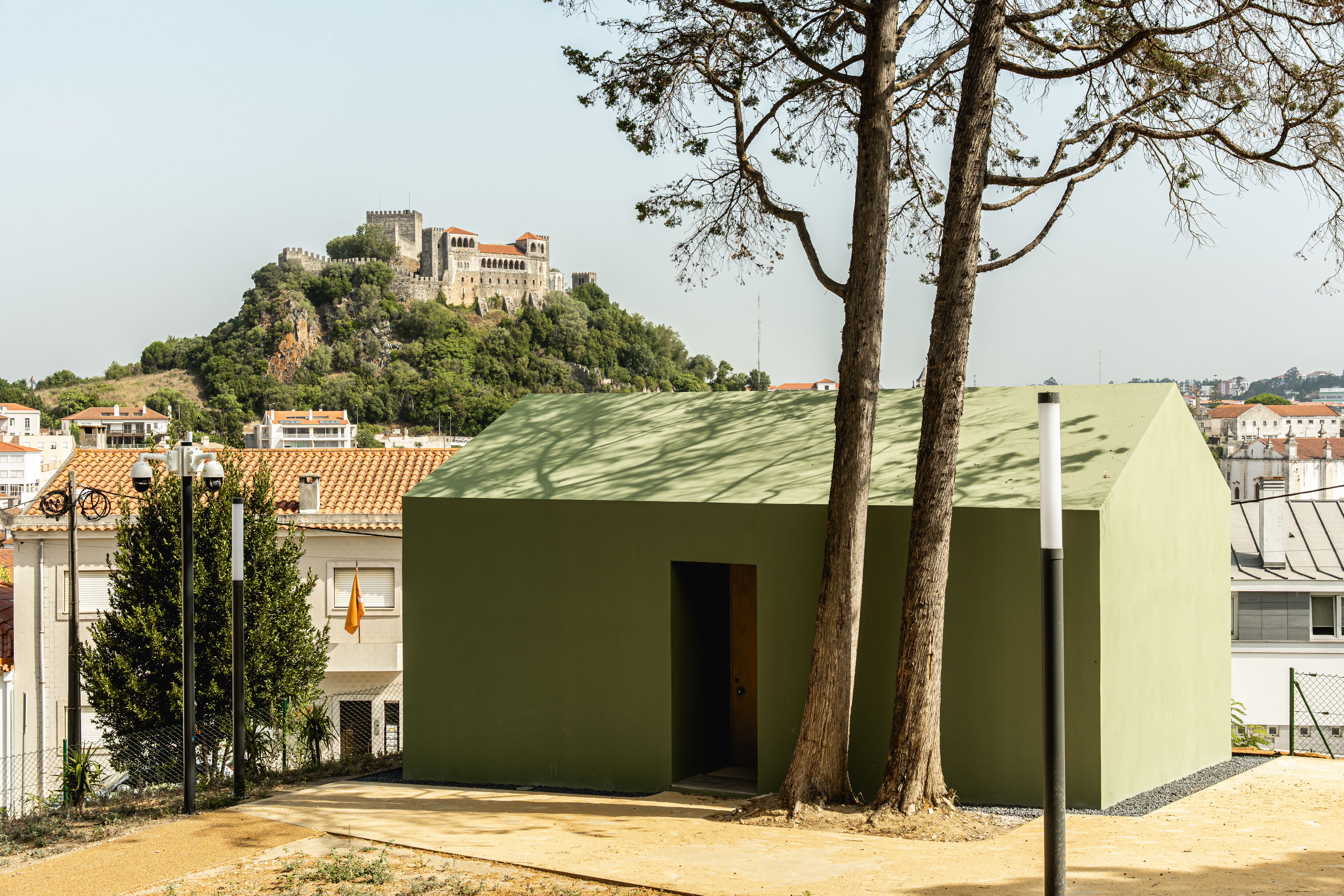
Qualified green space: The 17,000 square meters of romantic garden, which include a lake and a viewpoint overlooking Leiria Castle, are ideal for walks, reading, or enjoying the local café – noteworthy is the children's playground which adds a sense of security (as it is located within a walled and guarded enclosure).
Art Library: Inside the manor house, there is a reading room and a specialized library for public consultation.
Festivals like "A PORTA", "EXTRA MURALHAS" or "FEIRA DO LIVRO DE LEIRIA” can be though to take place in these gardens and buildings. The main core concept of this cultural environment is promoting a living city center that can provide a demanding audience to nurture and flourish the architecture of their city as an important part of their culture.
Physical accessibility (discreet ramps, elevators) was integrated in a way that did not clash with the historical aesthetic, proving that space can be both functional, beautiful and accessible to everyone.
Its goal is to foster a dialogue between the past and the present, stimulating creativity and new ways of thinking.
The villa is composed of several spaces:
- The Creative Laboratory (workshop space) operates on a flexible and dynamic model, through:
- Protocolled Assignment: Free assignment for artistic residencies and projects of strategic partners is prioritized.
- Occasional Rental: Municipal regulations allow rental to external entities for events or training that align with the conceptual framework of CAVP.
This mixed model ensures that the space serves the local artistic community while guaranteeing the logistical sustainability of the building. The commitment to a network of partnerships (Serralves, Ministry of Culture and Academia) transforms the Villa Portela Arts Center into a decentralized cultural "hub," capable of attracting qualified tourist flows and retaining young talent in the region, fulfilling the strategic objectives of regional development and territorial cohesion.
CAVP’s curatorial strategy is based on an ongoing dialogue between contemporary global creation and the local territory. Through its partnership with the Serralves Foundation and the Ministry of Culture, the center promotes the intersection of works by established artists with creators linked to the Leiria region, such as Tiago Baptista, João Paulo Feliciano, and Gabriela Albergaria. This approach not only values local production but also integrates it into exhibition circuits of national and international relevance, enhancing the visibility of artists from the region.
The rehabilitation project already required a great deal of interaction from various disciplines, from architecture, conservation and restoration, landscape architecture, and structural reinforcement engineering.
From the point of view of cultural facilities, the same cultural transdisciplinary is necessary for the development of the various activities that take place here. From creative workshops dedicated to the youngest, to exhibitions with a national reference character, it is about this flexibility to transform from the scale of a small neighborhood to being pointed out as a space of cultural reference at the national level (as was the case with the opening exhibition, made in partnership with Serralves ""Subir ao Palco / Back Home", by João Paulo Feliciano and inaugurated on October 25, 2025).
Today, the Villa Portela Arts Center aims to become a center for training, creation and dissemination of knowledge.
To analyze Villa Portela as a "business model" (or, more precisely, an impact management model), we need to look at the balance between cultural preservation and economic viability.
The project runs mainly on public funding, currently, the only permanent external space for exploration is the snack bar/bookstore, whose management was awarded through a public auction. The other resources—such as the Art Library, the Creative Laboratory, and the galleries—are under direct municipal management or shared under protocols established with partner entities. This option ensures that the public and artistic mission of the facility prevails over commercial purposes, guaranteeing democratic access to culture.
The project runs mainly on public funding, currently, the only permanent external space for exploration is the snack bar/bookstore, whose management was awarded through a public auction. The other resources—such as the Art Library, the Creative Laboratory, and the galleries—are under direct municipal management or shared under protocols established with partner entities. This option ensures that the public and artistic mission of the facility prevails over commercial purposes, guaranteeing democratic access to culture.
The management model adopted by the Leiria City Council focuses on Social and Cultural Capital, and we are faced with:
A high-quality green space: It offers a free leisure space in the city center, increasing the quality of life and the real estate value of the surrounding area.
Creative and Cultural Hub: It serves as a stage for events (such as the Porta-Jazz Festival or A Porta), creating an economy of visitor flows.
Iconic building for the preservation of a local community identity: The "business" here is the retention of collective memory, which strengthens the city's brand.
This model may be applicable in other public facilities. The main difficulty of replicating this model on private facilities stands in the financial level, since it’s essentially operating on public funds.