Enhancing Circularity, Sustainability, and Innovation
Situla acquae
Situla acquae: a modular urban forniture system for hardvesting, preserving, and celebrating water.
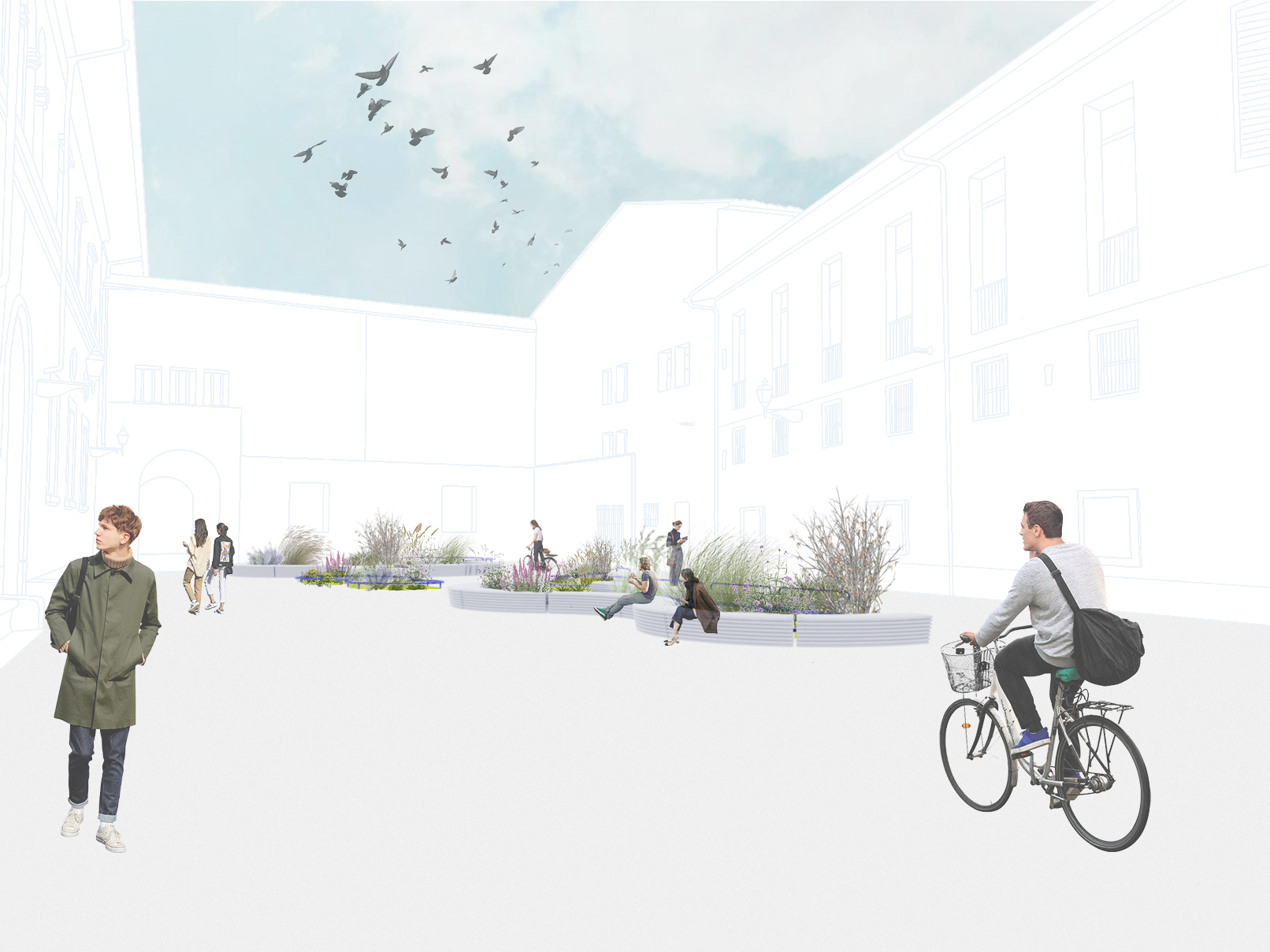
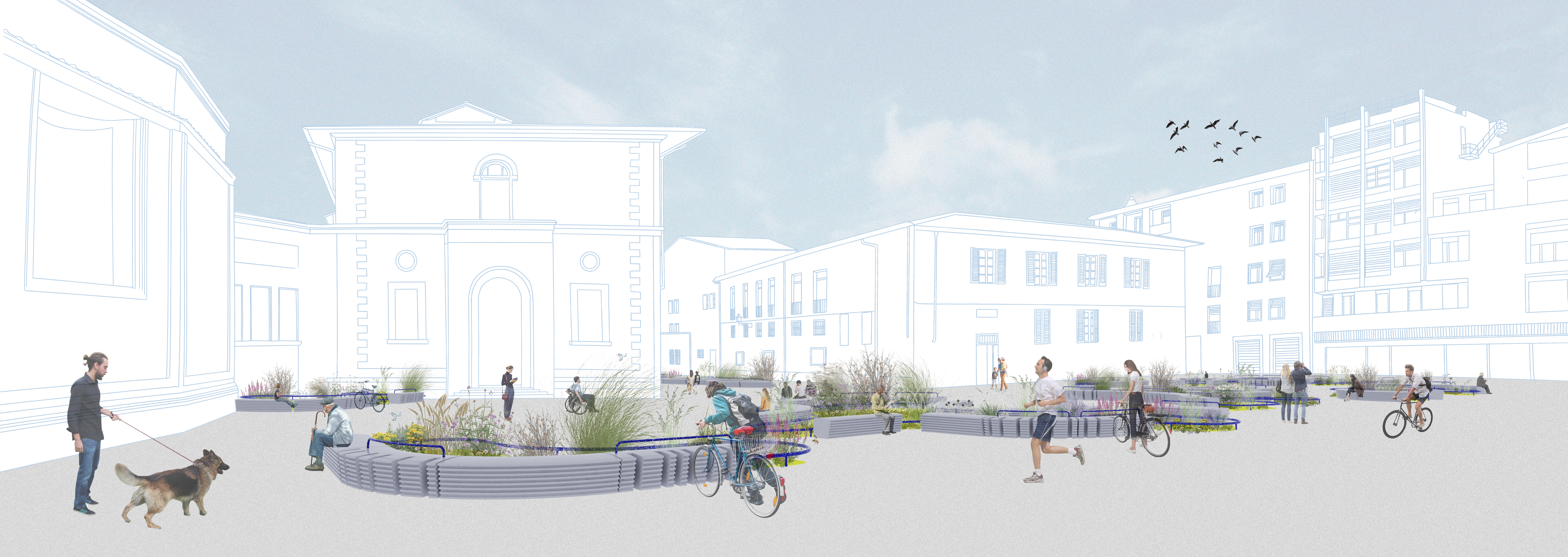
Situla acquae is a modular urban furniture system that integrates benches and bicycle racks with devices for collecting, storing, and reusing rainwater. The system captures rainfall and releases it through a passive drip irrigation system to irrigate the flowerbeds it defines and contains. Made with modular components and recycled materials, it supports urban greenery, improves microclimates, and strengthens the climate resilience of the urban environment.
Italy
Local
Firenze
Mainly urban
It involves a physical transformation of the built environment (hard investment)
Early concept
No
No
Yes
Individual
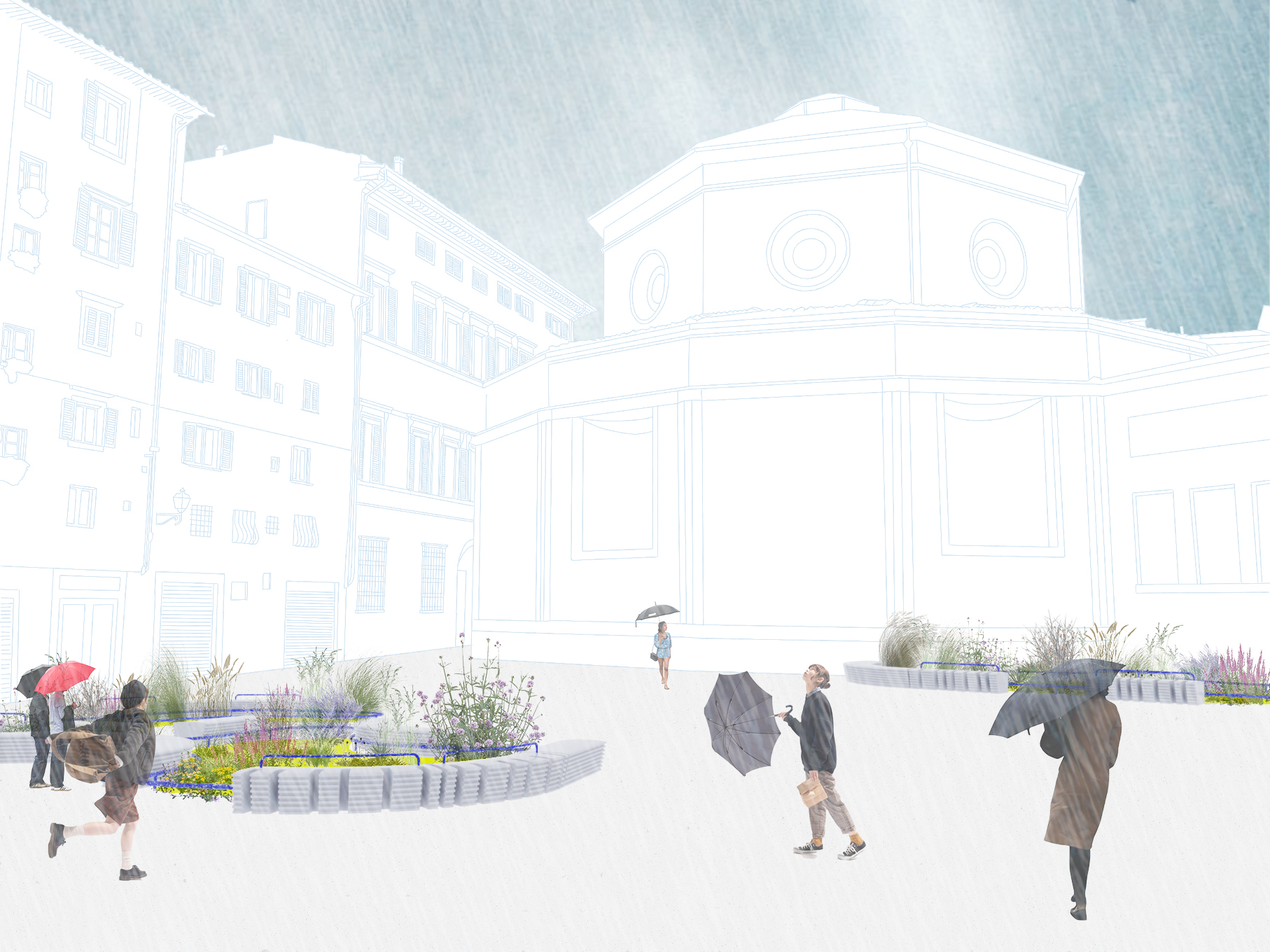
Situla acquae is a modular urban furniture system designed to transform everyday public space elements into small ecological infrastructures for the sustainable management of rainwater. The project responds to one of the most urgent challenges facing contemporary cities: the increasing alternation between extreme rainfall events and prolonged periods of drought caused by climate change.
The system consists of benches and bicycle racks that incorporate devices for collecting, storing and reusing rainwater. Water is captured through inclined surfaces and conveyed into integrated storage tanks. From there, it is slowly released through a passive drip irrigation system based on Torricelli’s principle, ensuring continuous irrigation without the use of electrical energy.
This low-tech and low-energy solution allows urban flowerbeds to be irrigated even in fully paved environments, increasing the presence of vegetation and biodiversity in dense urban areas. The project contributes to improving urban microclimates, mitigating the urban heat island effect and enhancing environmental quality in public spaces.
The system is also designed according to circular economy principles, using modular components and recycled materials. In particular, a recycled plastic tubular frame defines and protects the flowerbeds while integrating the irrigation system.
Situla acquae aims to transform rainwater from an urban problem into a shared resource and urban common, fostering a more conscious relationship between citizens, public space and natural resources. Thanks to its modularity and simplicity, the system can be easily replicated and adapted across different European cities, contributing to climate resilience and sustainable urban transformation.
The idea behind Situla acquae originated from direct observation of the impacts of extreme weather events in northern Italy. After the severe floods that affected the Emilia-Romagna region in May 2023 and the subsequent events that also struck parts of Tuscany in 2025, I participated as a volunteer supporting affected communities.
During this experience I was deeply struck by the enormous amount of rainwater that had fallen in a very short time and by the damage caused by its uncontrolled flow through urban areas. At the same time, many of these regions face recurring drought periods and increasing pressure on water resources.
This contradiction led to a key reflection: in contemporary cities, large quantities of rainwater are quickly dispersed through drainage systems during heavy storms, while during dry periods water becomes a scarce and valuable resource.
From this observation emerged the idea of rethinking urban furniture as a form of distributed climate infrastructure capable of collecting and storing rainwater and gradually reintroducing it into the urban ecosystem.
The concept was developed through an interdisciplinary design process combining urban design, passive hydraulic principles and strategies for climate adaptation. Particular attention was given to the development of simple and reliable mechanisms for water collection, storage and slow release through gravity-based irrigation systems.
At the same time, the aesthetic dimension of the project was carefully developed to ensure that these ecological infrastructures could integrate harmoniously within urban environments, including historically sensitive contexts.
Rainwater Management
Climate Resilience
Nature-Based Solutions
Urban Furniture Design
Sustainable Public Space
Situla Acquae contributes to climate resilience through a holistic approach to sustainability, combining environmental, social, cultural and economic benefits. The project transforms urban benches into small ecological infrastructures capable of collecting, storing and gradually reusing rainwater for the irrigation of urban vegetation, addressing environmental challenges such as water scarcity, urban heat islands and biodiversity loss.
Rainwater is collected through inclined surfaces integrated into the benches and conveyed into internal storage tanks. A passive drip irrigation system allows nearby flowerbeds to be watered without the use of electricity or complex mechanical systems, enabling vegetation to thrive even in highly paved areas. This approach increases urban biodiversity, improves microclimatic conditions and enhances the overall environmental quality of public spaces.
Social sustainability is achieved by making water management visible and understandable to citizens, fostering community participation and environmental awareness. The benches provide distributed resting points that improve accessibility and comfort for people of all ages and abilities, supporting social interaction and community cohesion.
Cultural sustainability is embedded in the design, with subtle references to local identity and urban heritage, creating a dialogue between new ecological infrastructures and the existing city context.
Economic sustainability is ensured through low-tech solutions, modular components and recycled materials. Local production of the modular elements reduces transport-related emissions, supports circular economy principles and strengthens the connection with regional craftsmanship.
By addressing environmental, social, cultural and economic dimensions simultaneously, Situla Acquae represents a regenerative approach to urban design, transforming rainwater from a problem into a shared resource and enhancing climate resilience in European cities.
Situla Acquae demonstrates how climate adaptation strategies can coexist with high-quality design and contribute to the creation of more beautiful and livable public spaces. The project reimagines urban furniture not only as functional equipment but as elements capable of generating small urban ecosystems.
By integrating vegetation and rainwater management systems into the benches, the project introduces greenery, shade and biodiversity into dense urban environments that are often dominated by impermeable surfaces. Bicycle racks complement the seating elements and help structure the space, contributing to a coherent and recognizable urban design language.
These small green infrastructures improve the microclimate of public spaces and make them more comfortable and pleasant for everyday use.
Particular attention is given to the relationship between the design and the surrounding urban context. In the case study developed for Piazza Filippo Brunelleschi in Florence, the geometries of the furniture draw inspiration from the proportions and formal language of Renaissance architecture. This approach allows the intervention to integrate harmoniously with the historic urban fabric while introducing contemporary ecological functions.
Through this balance between environmental performance and formal quality, Situla Acquae embodies the vision of the New European Bauhaus: combining sustainability, beauty and innovation in the transformation of European cities.
Situla Acquae promotes inclusive and accessible public spaces by combining ecological infrastructures with urban furniture designed according to “design for all” principles. The system integrates benches, bicycle racks and small planted areas irrigated with collected rainwater, creating distributed places for rest, encounter and everyday use of public space.
The seating elements improve comfort for a wide range of users, including elderly people, families, students and individuals with reduced mobility. The presence of vegetation and small green areas helps make the urban environment more welcoming and pleasant, encouraging people to spend time outdoors and supporting social interaction and community life.
The concept of inclusion in the project extends beyond the human dimension and embraces a vision of the city as a shared ecosystem among different forms of life. The planted areas integrated into the furniture introduce small vegetated habitats within highly paved environments, creating opportunities for pollinators, small animals and local plant species. Public space thus becomes an environment that can host both human and non-human communities, contributing to urban biodiversity and ecological balance.
This perspective aligns with the contemporary debate on more-than-human cities, which promotes urban design approaches that consider the coexistence of people, nature and ecological infrastructures.
Affordability is another key aspect of the project. The system relies on simple passive technologies that do not require electricity or complex maintenance, making it accessible even for municipalities with limited resources. Thanks to its modular design, cities can implement the solution gradually and adapt it to the specific needs of different neighbourhoods.
Through this integration of social inclusion, biodiversity and ecological infrastructure, Situla Acquae proposes a vision of public space as a shared urban common for both human and natural communities.
The project originates from a direct experience in the field and from reflection on the environmental challenges faced by local communities during extreme climate events.
Volunteering during the floods that affected Emilia-Romagna in 2023 played a key role in shaping the concept. Witnessing the destructive force of uncontrolled rainwater and the enormous quantity of water falling within a few hours highlighted the need for new strategies for managing this resource in cities.
Situla acquae was therefore conceived as a way to transform a critical problem into an opportunity, encouraging a more conscious and sustainable relationship with water in urban environments.
In future implementation phases, the project could be developed through co-creation processes involving citizens, schools, neighbourhood associations and local communities. Residents could participate in identifying potential intervention areas and in the collective care of the new urban flowerbeds.
Such participatory processes can strengthen the sense of belonging and foster shared responsibility for public spaces and environmental resources.
The implementation of Situla acquae can involve a wide range of stakeholders at different levels, encouraging forms of multi-level governance.
At the local level, municipal administrations and urban planning departments play a key role in integrating the system into public spaces and climate adaptation strategies.
Universities and research centres can contribute to monitoring and evaluating the environmental performance of the system, analysing its impact on rainwater management, biodiversity and urban microclimates.
Private companies in the urban furniture and recycled materials sectors can support the production of modular components, contributing to sustainable supply chains based on circular economy principles.
The project could also benefit from public-private partnerships and European programmes dedicated to climate resilience, sustainable urban development and environmental innovation.
The collaboration between these different actors would strengthen the project’s implementation capacity and facilitate its diffusion at a broader scale.
Situla acquae is the result of a transdisciplinary approach that integrates different fields of knowledge to address contemporary urban challenges.
The project combines urban design and landscape architecture with principles of hydraulic engineering, developing passive systems for collecting and redistributing rainwater.
Environmental sciences contribute to defining strategies for climate adaptation and integrating nature-based solutions within the urban fabric.
Industrial design supports the development of modular and replicable furniture elements that can be produced efficiently and adapted to different contexts.
Principles of circular economy guide the selection of materials and production processes, particularly through the use of recycled components.
Finally, social sciences help understand how public spaces can support stronger communities and promote more sustainable behaviours.
The business model of Situla Acquae is based on modular production and collaboration between municipalities, companies and research institutions. The furniture elements can be manufactured using recycled materials and established industrial processes, allowing the system to adapt easily to different urban contexts.
Municipal administrations represent the primary clients, integrating the system into urban regeneration projects, climate adaptation strategies and public space improvement programs. Additional funding opportunities may include European programs dedicated to sustainability, climate resilience and environmental innovation.
A key aspect of the model is the involvement of local manufacturing networks. Instead of relying on centralized production, the modular elements can be produced by local companies using regionally sourced materials such as stone, timber, marble or recycled aggregates. This approach strengthens local value chains, reduces transportation-related emissions and reinforces the connection between the project and the cultural and material identity of each place.
Public–private partnerships and pilot projects can support the initial implementation phase, allowing municipalities to test the system in selected public spaces. The modularity of Situla Acquae enables progressive scalability, allowing cities to implement the solution gradually according to available resources while ensuring long-term financial sustainability and facilitating wider adoption.
Situla acquae is highly replicable. Its modular system and passive technologies make it suitable for a wide range of urban contexts. The principle of rainwater collection and reuse can be applied to various types of urban furniture, even in cities with heavily paved areas.
Each implementation can adapt the materiality to locally available materials and craftsmanship, maintaining the same design principles while reflecting the cultural and material identity of the place.
In this way, Situla acquae combines a shared European design concept with strong local grounding, creating solutions that are scalable, sustainable, and deeply rooted in the culture and traditions of each territory.
In the year following the application, Situla Acquae could focus on consolidating the concept and exploring possible pathways for future implementation.
A first step could involve establishing contacts with companies in the urban furniture sector in order to evaluate production costs, materials and opportunities for modular manufacturing. At the same time, discussions could be initiated with municipalities and private stakeholders potentially interested in pilot projects, with the aim of exploring possible collaborations and implementation contexts.
A small-scale prototype could be developed to test the rainwater collection and release system. This prototype could allow verification of the passive irrigation mechanism and evaluation of whether the gravity-based system would be sufficient or whether additional pumping devices might be required. This testing phase could help generate preliminary data and contribute to the technical validation of the concept before any real-world implementation.
In parallel, the project could be presented in academic contexts and university seminars, particularly targeting students and young professionals, with the aim of raising awareness about sustainable rainwater management and urban biodiversity.
Finally, dissemination materials could be produced, including articles, visualizations and open guidelines explaining the functioning and potential impact of the system. These materials could support the replicability of the concept and facilitate its potential adoption in different urban contexts across Europe.