Strengthening Local Democracy and Inclusion
SchloR
SchloR – Schöner Leben ohne Rendite
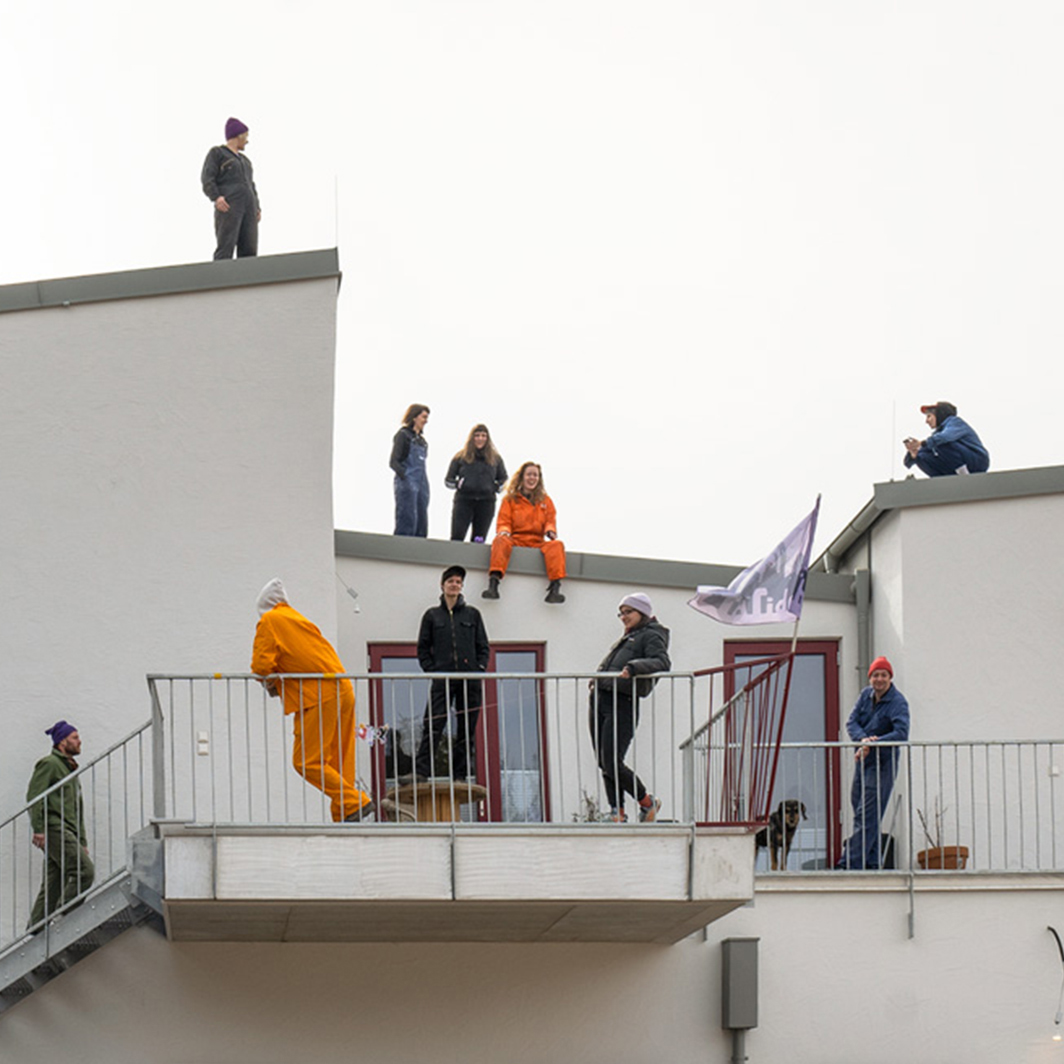
SchloR is a Viennese group of friends who has found a plot of land in Simmering with existing buildings they refurbished, reconstructed, renewed and enlarged with the goal to collectively manage the site and live there. In contrast to capitalist competition, however, their goal is not to maximise profits, but rather the prospect of self-determination and fair rent without an expiry date.
Austria
Local
Vienna, Austria
Mainly urban
It involves a physical transformation of the built environment (hard investment)
Yes
2025-03-01
No
No
No
Individual
SchloR is an association whose common goal is to create long-term, secure and affordable spaces for solidarity-based, self-managed and communal working and living. It is part of the habiTAT solidarity association, which has recently adapted the structures of the German tenement syndicate (Mietshäusersyndikat) for Austria. The goal: no profits with rent and housing to be implemented as a basic right, not a financial product.
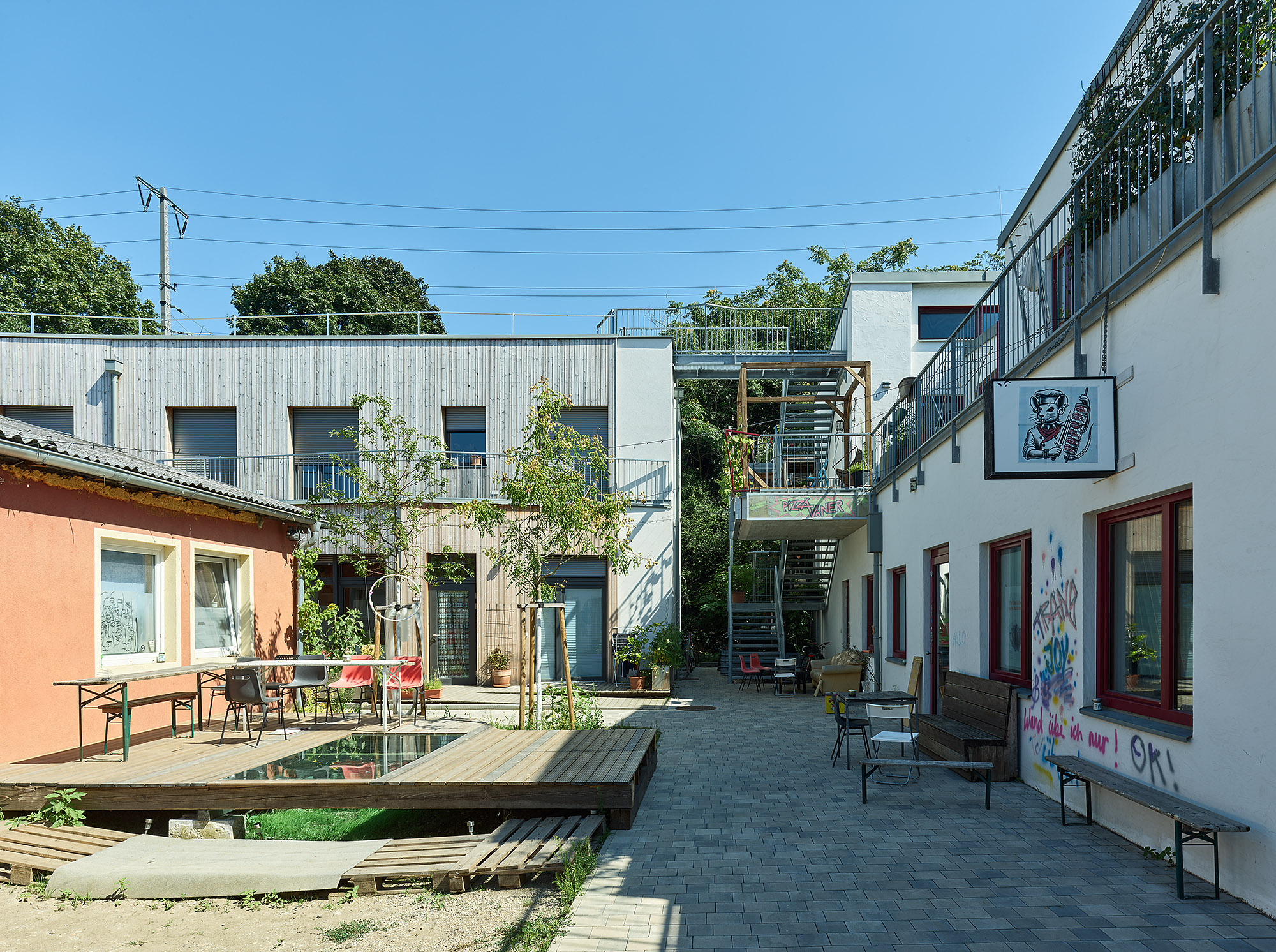
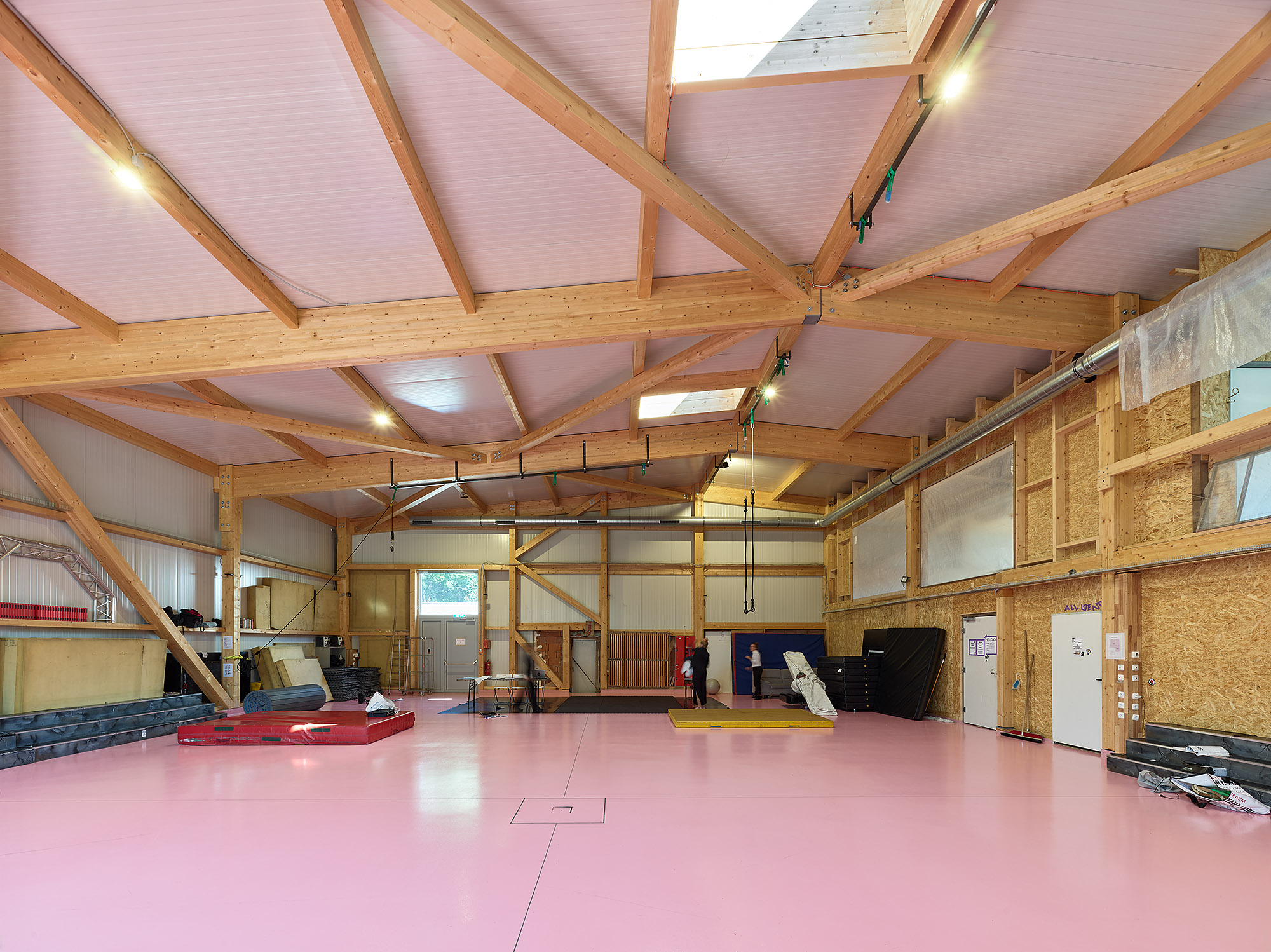
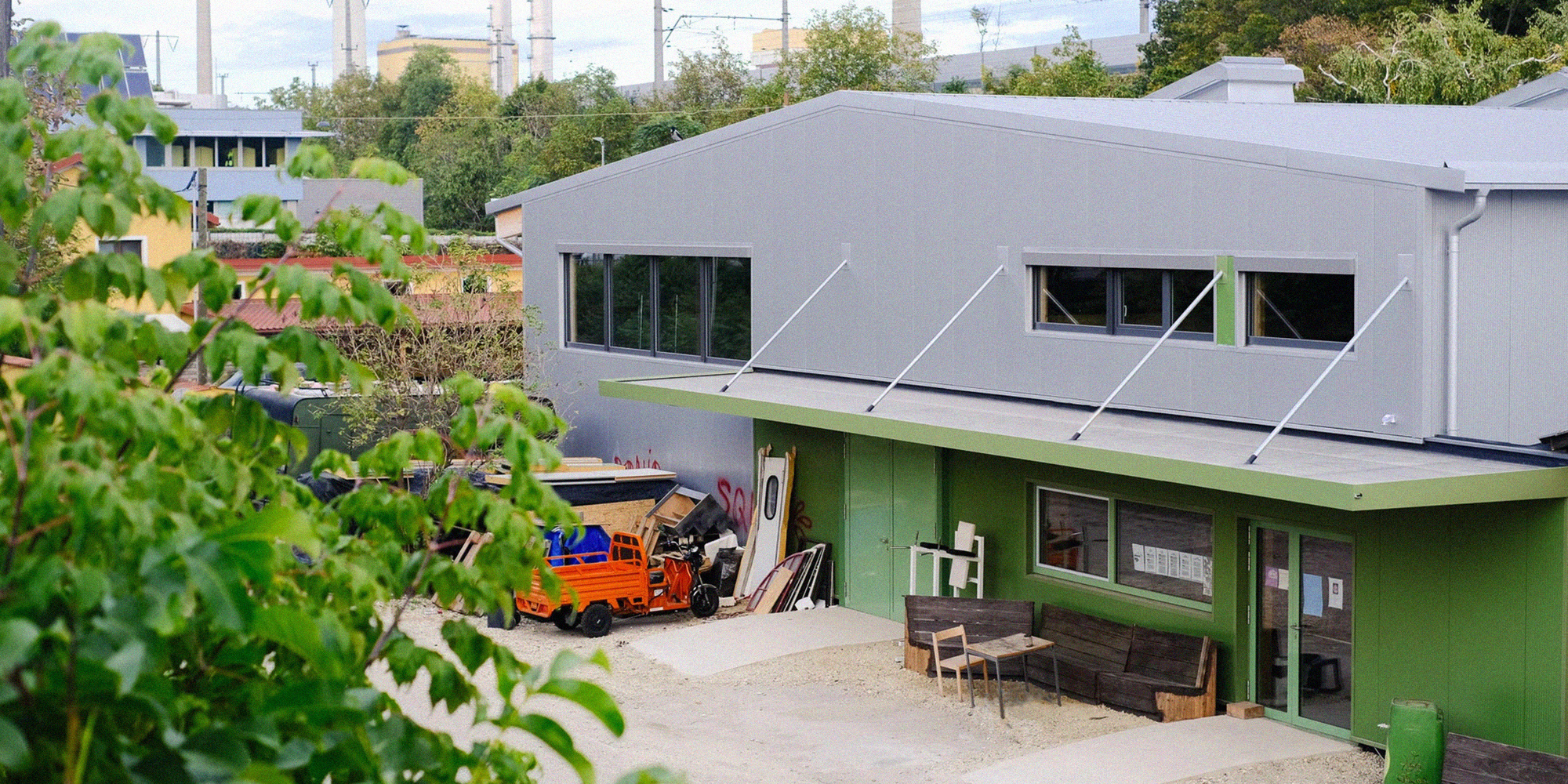
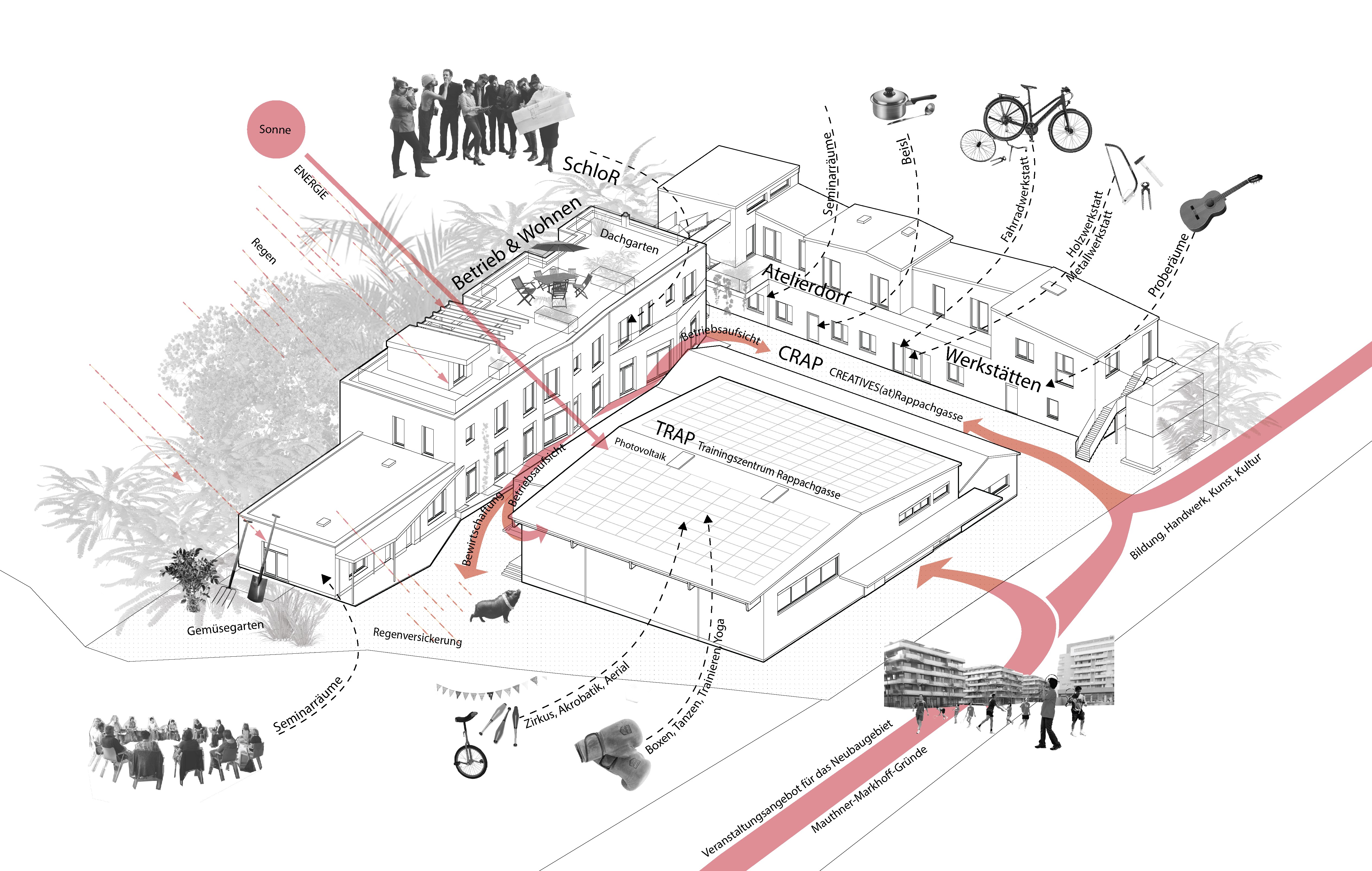
SchloR is designed as a small city within the city. It is a 3000m² site with existing buildings, which were kept, refurbished, added-on and renewed. The Circus Center and training hall (operated by TRAP) is available to acrobats, circus artists and users interested in sports on a low-threshold basis. Other buildings were converted into workshops, rehearsal rooms, ateliers offer space for cultural uses to work (CRAP business). Around 20 people live and work on this site and collectively took over operational supervision and management.
SchloR shares living space, reproductive work, care work and resources and supports each other outside of families of origin. This allows them to afford a life together that is otherwise only available to a few: large, shared apartments and shared luxuries. And it’s precisely this kind of free space which is lacking in this district of Vienna.
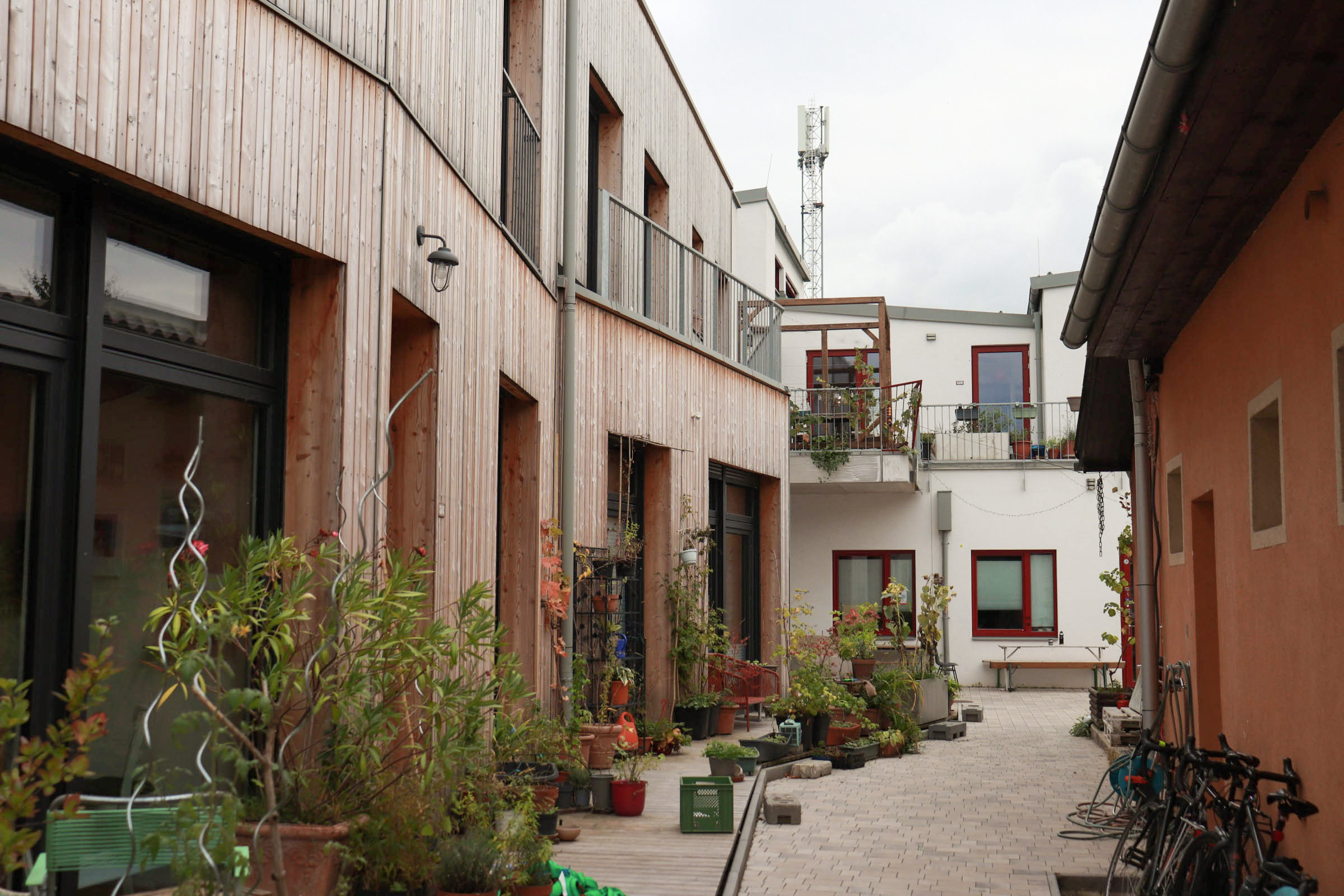
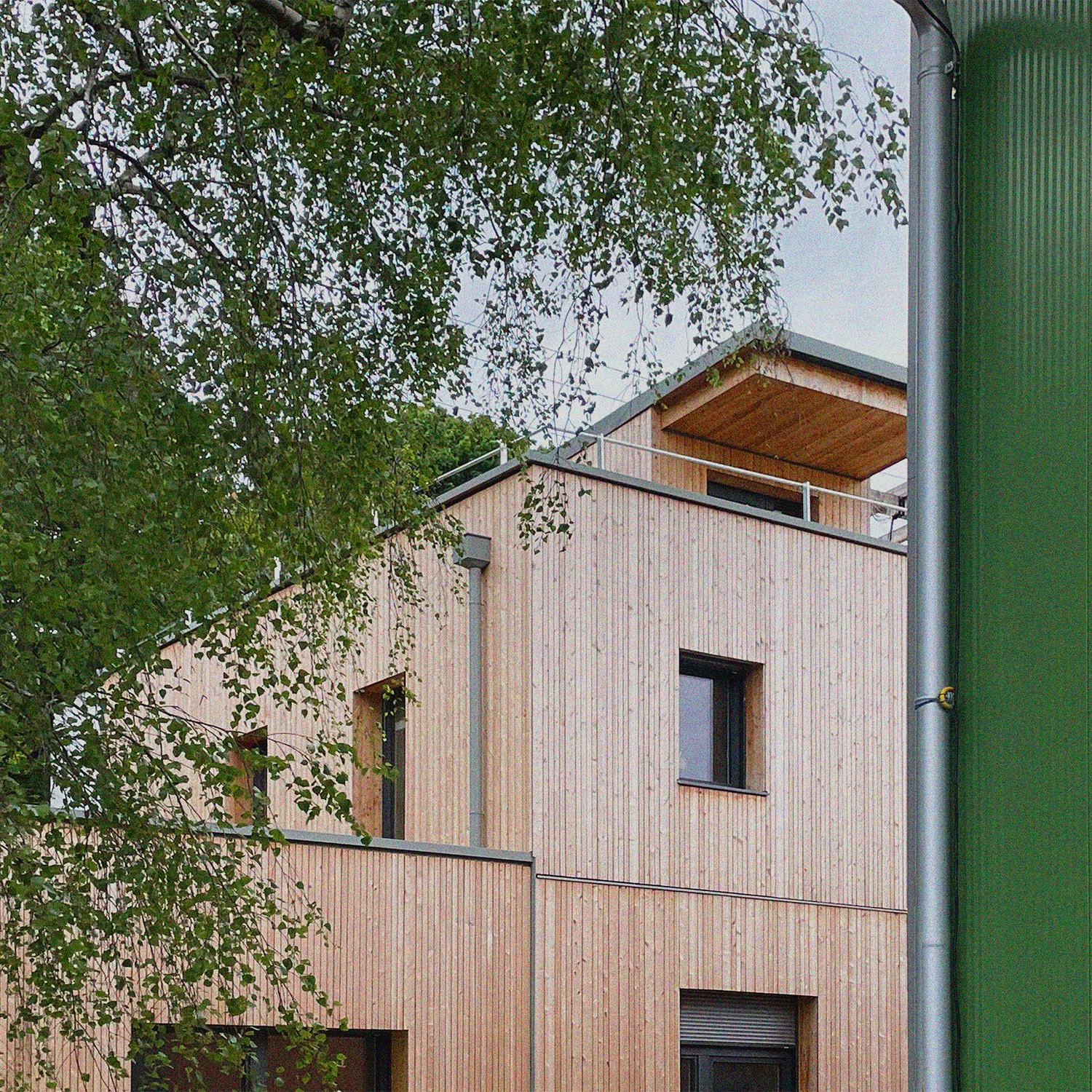
The project is partly self-built as a timber-frame construction with clay surfaces and is administered as self-sufficiently as possible by the local association. The circus center as well as the operating rooms can also be used by the neighbourhood on a non-profit basis.
In Vienna, rents are still relatively cheap. The guideline rents for old buildings, municipal apartments and non-profit organizations create the possibility for many to live affordably. While community apartments are hardly accessible for collectives or communities, old buildings larger than 120m² fall outside the cap by the guideline rent. Family constellations beyond heteronormative nuclear families have a hard time living together in Vienna. The members of SchloR were tired of living in anonymous apartment buildings, where other people decided about the future of their rental space and they had no idea who lives in the apartment next to them.
After acquiring a plot of land with existing buildings in Simmering, a district of Vienna, SchloR refurbished, reconstructed, and expanded the site with the aim of collectively managing it and living there. The site offered the opportunity to build with less financial pressure. SchloR developed a circus center, a conference center, workshops, ateliers, rehearsal studios and apartments in which they live and work with the spaces of the premises. For each of the businesses on the premises (CRAP Creative Rappachgasse and TRAP Trainingscenter Rappachgasse) there is a supervisory and management apartment. They do not only see it as their site, but also as affordable premises for neighbours and other projects.
After acquiring a plot of land with existing buildings in Simmering, a district of Vienna, SchloR refurbished, reconstructed, and expanded the site with the aim of collectively managing it and living there. The site offered the opportunity to build with less financial pressure. SchloR developed a circus center, a conference center, workshops, ateliers, rehearsal studios and apartments in which they live and work with the spaces of the premises. For each of the businesses on the premises (CRAP Creative Rappachgasse and TRAP Trainingscenter Rappachgasse) there is a supervisory and management apartment. They do not only see it as their site, but also as affordable premises for neighbours and other projects.
Self-construction and cooperative planning
Affordable and communal living
Ecological construction methods
Living away from the heteronormative nuclear family
Multifunctional use of a site
Urbanistically SchloR combines working, culture, living. Economically, it challenges classical financing and refinancing methods, and also pushes limits from an ecological viewpoint: Careful use of resources was important to every phase of this project. Extensions and additional buildings were constructed using straw-insulated timber frame construction, while the hall was built by using timber frame construction on the foundations of the existing hall. SchloR is as self-sufficient as possible: heating is provided by an air-water heat pump, energy by solar energy, all rainwater is collected for use on site to irrigate the green roofs and façades. All building footprints were kept and no further ground was sealed. The team of SchloR removed a large surface of asphalt themselves, the outdoor spaces were completely unsealed.
From an aesthetic perspective, SchloR is exemplary because beauty emerges not only from architectural form but from social and cultural vitality. The reuse of industrial structures, the visible traces of collective work, and the coexistence of living, making, and cultural production create a distinctive atmosphere that reflects the values of cooperation, creativity, and shared responsibility. In this sense, the project demonstrates how architecture and social organisation together can produce spaces that are both meaningful and inspiring for communities.
As mentioned above, SchloR is designed as a small city within the city. It is a 3000m² site with existing buildings, which were kept, refurbished, added-on and renewed. The Circus Center and training hall (operated by TRAP) is available to acrobats, circus artists and users interested in sports on a low-threshold basis. Other buildings were converted into workshops, rehearsal rooms, ateliers offer space for cultural uses to work (CRAP business).
The design transforms an existing industrial building into a lively collective space with housing units, workshops, studios, and communal areas. This adaptive reuse approach preserves the character and history of the site while giving it a new social and cultural role. Shared spaces and open activities foster encounters between residents, artists, craftspeople, and neighbours, strengthening the connection between the building and the surrounding district. In the project residents participate directly in decision-making and construction processes, they develop a deep sense of responsibility and care for the place.
SchloR is an association whose common goal is to create long-term, secure and affordable spaces for solidarity-based, self-managed and communal working and living. It is part of the solidarity association habiTAT, which recently adapted the structures of the German Mietshäusersyndikat (apartment building syndicate) for Austria. The goal: no profits from rent, and housing should be implemented as a fundamental right and not as a financial product.
The overarching goal of the Mietshäusersyndikat (for over 30 years) has been and continues to be to secure land and houses through purchase, but without private ownership and with a legal form that excludes resale. This is how it works, using SchloR as an example: The SchloR Hausverein, of which all residents are members, and HabiTAT jointly establish a limited liability company, which then purchases the property through direct loan campaigns (no capital from the initiators required). HabiTAT, which is committed to non-profit status, has a right of co-determination (veto) in the event of a sale; otherwise, the Hausverein decides independently on all matters. The members of the association support each other and other HabiTAT projects through comprehensive solidarity-based economic practices.
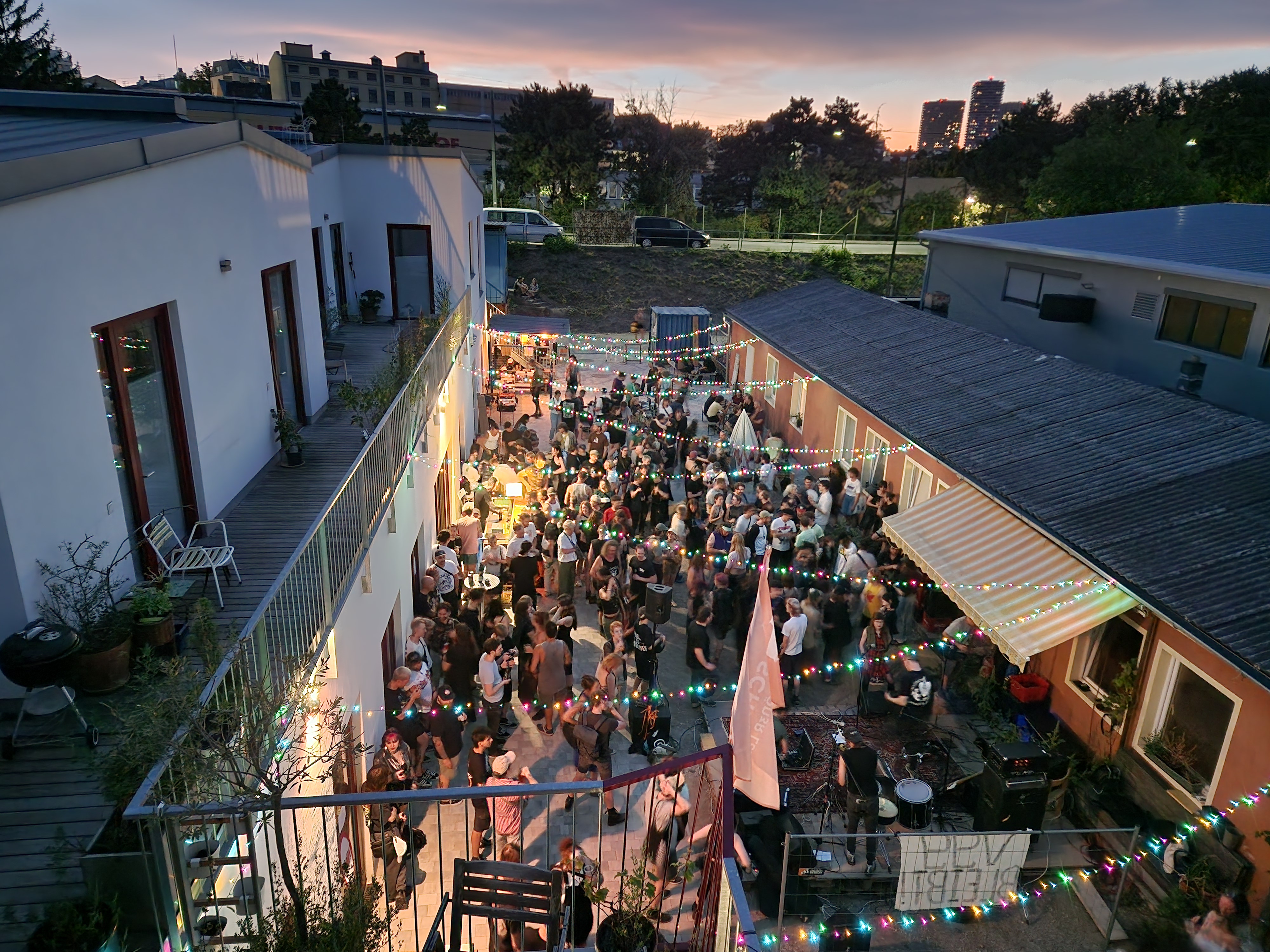
SchloR is a vibrant cultural venue and safe space that serves as an open urban stage for concerts, theater, film screenings and art markets. The diverse range of spaces offered by CRAP – Creative Rappachgasse – workshop, seminar rooms, event space, rehearsal rooms, recording studio and studios – enables low-threshold creative and commercial use. The cultural association promotes cultural exchange beyond the location with an interdisciplinary programme.
The project SchloR is fundamentally based on strong citizen and community participation. The initiative was started and is run by a collective of residents, cultural practitioners, and activists who formed the SchloR association. Members of this association are directly responsible for shaping the project: they participate in decision-making about the spatial design, organisational structure, financing, and everyday management of the building. The project follows cooperative and self-managed principles, meaning that residents are not only beneficiaries but also co-producers of the living and working environment.
Civil society participation also played a key role in the financing model. A large number of supporters contributed through direct loans (“Direktkredite”), allowing individuals from the wider community to invest small or medium sums to help realise the project. This financing approach reduced dependence on banks and created a broad support network that actively identifies with the project.
Beyond the residents themselves, the project engages the local neighbourhood and cultural community. Spaces within the building are used for workshops, cultural events, training, and community activities, making the site accessible and socially embedded in its surroundings rather than functioning as a closed residential complex. The TRAP hall – Rappachgasse Training Center – for example offers low-threshold facilities for acrobats, circus artists and users interested in sports and culture. The interior of the hall, including changing rooms, toilet facilities and a studio, was built by many volunteers. The stages and outdoor areas, greenery, fountain activation and wagon site are gradually being created through DIY. Cooperative planning is developing this place, which is being co-designed by many participants and has become an important local but also Vienna-wide relevant, affordable socio-cultural venue.
At the local level, the core role was played by the SchloR collective itself. A group of activists, residents, and cultural practitioners initiated and self-organized the project, forming the SchloR association whose members collectively manage the housing and working spaces. They are responsible for decision-making regarding design, construction, daily management, and the social use of the site. The project also engages the local neighbourhood by providing accessible cultural, workshop, and training spaces, turning the site into an open community hub rather than a closed residential development.
At the city and regional level, architectural planning and development were supported by GABU Heindl Architektur, which collaborated closely with the collective to translate social and organisational goals into spatial and architectural solutions. The project site in Vienna-Simmering was adapted and transformed through cooperative planning, reuse of existing structures, and partly self-built construction processes.
At the national and translocal level, SchloR is embedded in the habiTAT network, the Austrian branch of the Mietshäuser Syndikat model. This network provides legal structures, governance mechanisms, and advisory support for collective housing projects. Through a joint ownership structure between the local house association and habiTAT, the property is permanently removed from speculation while the residents retain autonomy in daily management.
Additionally, the project mobilised a wide community of supporters and private lenders, with hundreds of individuals contributing direct loans that finance a significant share of the project. This broad civic participation strengthens financial independence and builds a strong social support network around the initiative.
The design and implementation of SchloR integrates multiple disciplines and knowledge fields, reflecting the project’s ambition to combine housing, workspaces, and cultural production within a cooperative framework. Architecture and urban design played a central role through the collaboration with GABU Heindl Architektur, which translated the collective’s social goals into spatial strategies. The architectural approach focuses on the adaptive reuse of an existing industrial structure in Vienna-Simmering, demonstrating how underused buildings can be transformed into vibrant living and working environments.
Social sciences and cooperative governance are embedded in the organisational structure of the project. The collective decision-making processes, self-management principles, and the integration into the habiTAT / Mietshäuser Syndikat model reflect knowledge about alternative property regimes, commons-based governance, and participatory urban development.
Economic and financial innovation also forms an important knowledge field. The project’s financing relies on a combination of ethical banking and citizen-based direct loans, creating a solidarity-driven funding model that allows long-term affordability without profit extraction.
In addition, arts and cultural practices play an essential role, as the project integrates studios, workshops, and spaces for cultural production and events. These activities shape the social life of the building and connect it with the surrounding neighbourhood. Environmental and material knowledge informed the adaptive reuse strategy, prioritising renovation and reuse of existing structures to reduce resource consumption and construction waste.
SchloR is an association whose common goal is to create long-term, secure and affordable spaces for solidarity-based, self-managed and communal working and living. It is part of the solidarity association habiTAT, which recently adapted the structures of the German Mietshäusersyndikat (apartment building syndicate) for Austria. The goal: no profits from rent, and housing should be implemented as a fundamental right and not as a financial product.
The overarching goal of the Mietshäusersyndikat (for over 30 years) has been and continues to be to secure land and houses through purchase, but without private ownership and with a legal form that excludes resale. This is how it works, using SchloR as an example: The SchloR Hausverein, of which all residents are members, and HabiTAT jointly establish a limited liability company, which then purchases the property through direct loan campaigns (no capital from the initiators required). HabiTAT, which is committed to non-profit status, has a right of co-determination (veto) in the event of a sale; otherwise, the Hausverein decides independently on all matters. The members of the association support each other and other HabiTAT projects through comprehensive solidarity-based economic practices.
The overarching goal of the Mietshäusersyndikat (for over 30 years) has been and continues to be to secure land and houses through purchase, but without private ownership and with a legal form that excludes resale. This is how it works, using SchloR as an example: The SchloR Hausverein, of which all residents are members, and HabiTAT jointly establish a limited liability company, which then purchases the property through direct loan campaigns (no capital from the initiators required). HabiTAT, which is committed to non-profit status, has a right of co-determination (veto) in the event of a sale; otherwise, the Hausverein decides independently on all matters. The members of the association support each other and other HabiTAT projects through comprehensive solidarity-based economic practices.
Several elements of the SchloR – Schöner Leben ohne Rendite project can be replicated or transferred to other places, groups, and contexts, as they are based on adaptable social, financial, and organisational models rather than site-specific conditions.
The collective ownership and governance model is highly transferable. SchloR operates within the habiTAT / Mietshäuser Syndikat framework, which removes property from the speculative real-estate market and places it in long-term collective ownership. This structure prevents resale for profit and guarantees permanently affordable rents. Because the legal and organisational model is modular, it can be replicated by other housing initiatives aiming to secure long-term social use of buildings.
The project demonstrates an alternative financing mechanism through direct loans (Direktkredite) from a broad community of supporters. Individuals can invest relatively small amounts (e.g., €500–€50,000), creating a solidarity-based financing system that reduces dependence on banks while strengthening community engagement. This approach can be adapted in other contexts where citizen financing or cooperative investment is possible.
The mixed-use spatial model, combining housing, workshops, cultural spaces, and community facilities, offers a flexible template for activating underused buildings or industrial sites. By integrating living, working, and cultural production in one place, the project creates economically and socially resilient environments that can be adapted to different local needs. The project’s participatory and self-managed processes, including collective decision-making, community labour, and collaboration with neighbours, are transferable methodologies. These processes foster local ownership, social cohesion, and long-term commitment from participants.