Enhancing Circularity, Sustainability, and Innovation
D A T A S K Y
{Empty}
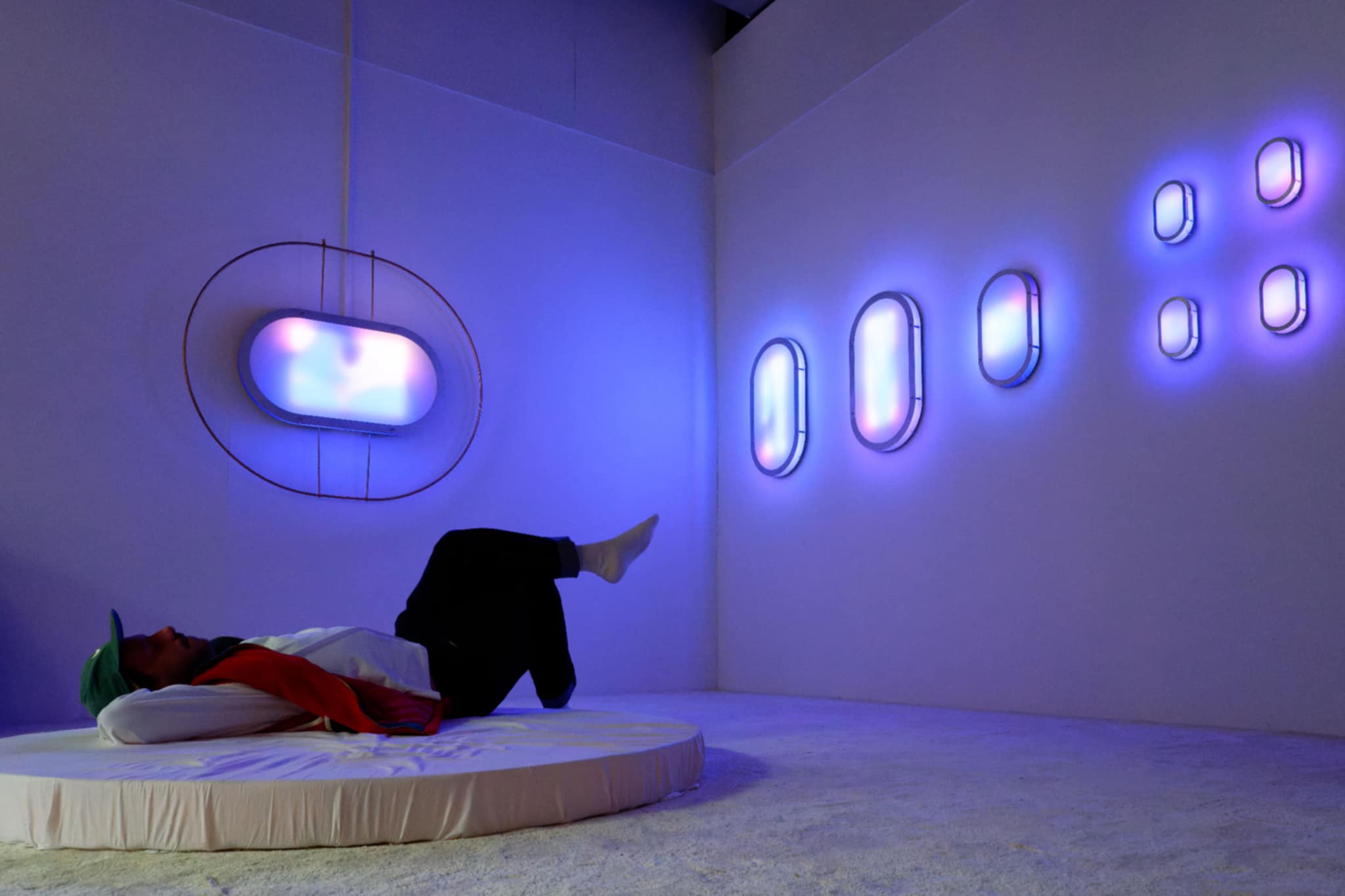
DATASKY is an immersive installation that extracts data from the sky and translates it into light within a physical space. In an increasingly digitalised world, where time is structured by screens and artificial lighting, the project invites visitors to reconnect with their circadian rhythms. Atmospheric dynamics become subtle luminous variations, transforming invisible environmental cycles into a sensory experience that reconnects the body, perception, and the living rhythms of the sky.
France
Local
Paris
Mainly urban
It refers to other types of transformations (soft investment)
Prototype level
No
No
Yes
Individual
DATASKY is an immersive light installation that translates the dynamic colour palette of the sky into spatial light phenomena. The project extracts environmental data from a sky observation platform that measures daylight intensity and cloud density. These measurements capture the subtle chromatic variations of the sky, which are then translated into slow luminous transformations within the installation.
In contemporary societies, time is increasingly structured by digital infrastructures and artificial lighting systems. Continuous exposure to screens and artificial light disconnects human perception from the natural rhythms that regulate biological clocks. As sociologist Hartmut Rosa describes, modern societies are characterised by processes of social acceleration that often lead to a loss of resonance with the world.
DATASKY responds to this condition by creating a sensory environment where visitors can experience time differently. Inside the installation, light evolves slowly through subtle chromatic transitions derived from real atmospheric conditions. These variations form a living luminous atmosphere that invites visitors to slow down and reconnect with their circadian rhythms.
Rather than presenting environmental data as scientific information, DATASKY translates the colour dynamics of the sky into a perceptible and emotional experience. By making atmospheric changes visible through light, the project encourages a renewed awareness of the relationship between humans, technology and the living rhythms of the sky.
DATASKY emerged from a personal observation during my artistic practice. At the time, I was working in a studio without natural light. Spending long hours in this enclosed environment made me increasingly aware of how disconnected my perception of time had become from the natural variations of daylight.
This experience led me to reflect on the broader condition of contemporary environments, where artificial lighting and digital infrastructures increasingly structure our perception of time, often disconnecting human bodies from the natural cycles that regulate circadian rhythms.
From this starting point, I began to explore how the changing light of the sky could be brought back into interior spaces. The idea behind DATASKY was to capture the dynamic colour variations of the sky and translate them into a spatial luminous experience.
The project was developed through an interdisciplinary process combining artistic experimentation, design research and environmental observation. A key element of the installation is a sky observation platform that measures daylight intensity and cloud density, allowing the system to capture the subtle colour changes of the sky throughout the day.
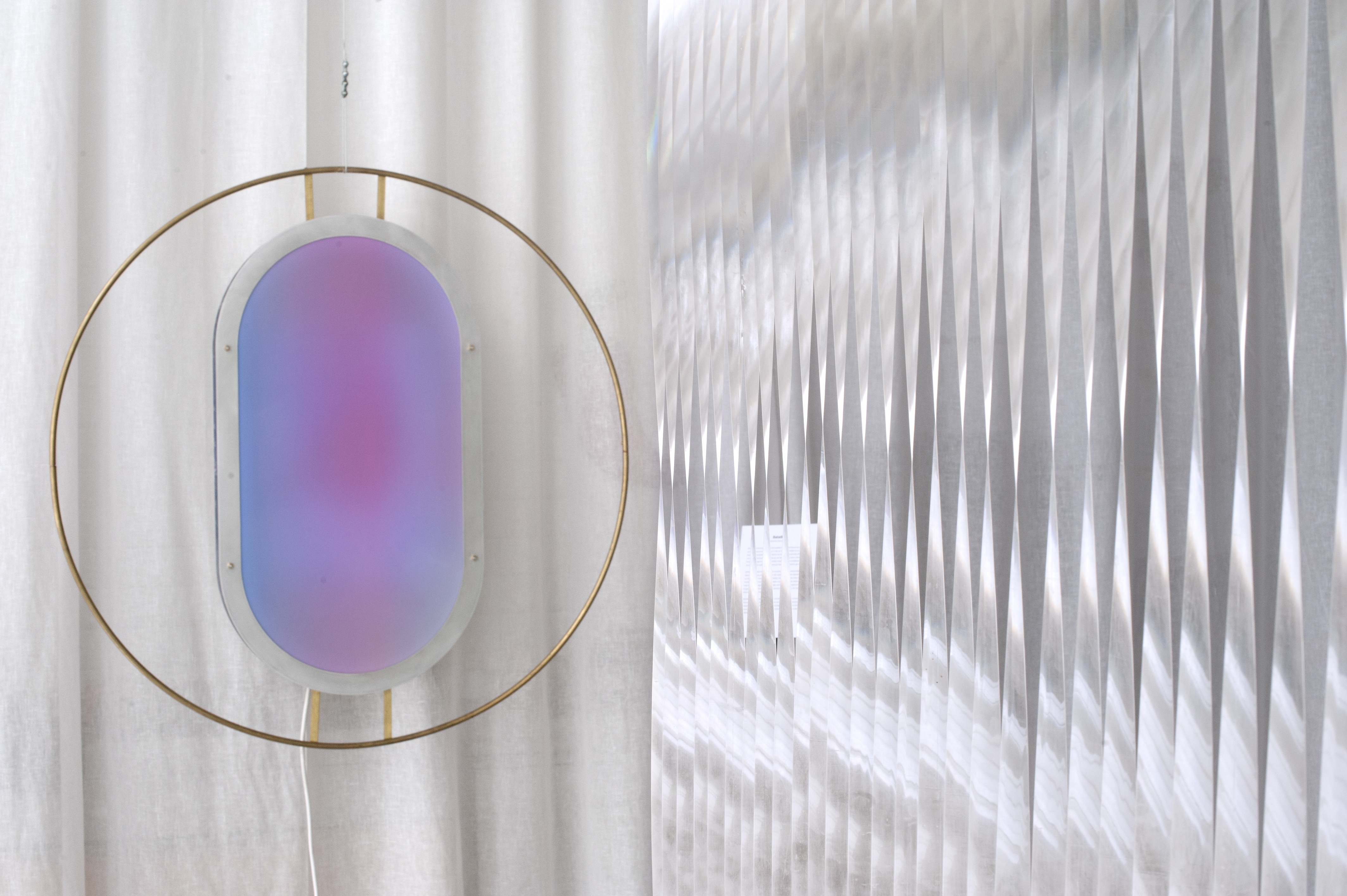
These measurements are translated into slow chromatic transformations through custom luminous modules and programmable lighting systems. Rather than reproducing the sky directly, the installation interprets its changing colour palette and atmospheric variations as a living luminous environment.
Through prototyping, experimentation with light diffusion and iterative programming, the installation gradually evolved into an immersive space where visitors can experience the rhythms of the sky indoors. DATASKY ultimately explores how light can reconnect technological environments with the living cycles of the atmosphere and the human body.
Circadian rhythms
Light ecology
Atmospheric data
Immersive light
Human–environment connection
DATASKY addresses sustainability by encouraging a more conscious relationship with light and environmental rhythms. In contemporary societies, artificial lighting and digital infrastructures increasingly structure daily life, often disconnecting human perception from natural cycles such as daylight variations. This disconnection has ecological, physiological and cultural consequences, including light pollution and the disruption of circadian rhythms.
The installation responds to these challenges by translating real atmospheric light data into a spatial experience. By capturing variations in daylight intensity and cloud density through a sky observation platform, DATASKY transforms the evolving colour palette of the sky into slow luminous transitions within the installation.
This approach proposes an alternative understanding of light design, where lighting environments follow natural rhythms rather than remaining constant and energy-intensive. The project also uses low-energy LED technologies and programmable light modulation to create subtle atmospheric changes instead of continuous brightness.
Beyond its technical aspects, DATASKY promotes cultural awareness of the ecological role of light. By making the changing light of the sky perceptible indoors, the installation encourages visitors to reflect on the relationship between artificial environments and natural cycles.
Through this sensory experience, DATASKY proposes a form of temporal and ecological awareness in which light becomes a medium reconnecting human perception, environmental processes and technological systems.
DATASKY contributes to making everyday environments more beautiful by transforming the changing light of the sky into a shared sensory experience. The installation creates an immersive luminous atmosphere where the colour variations of daylight are translated into slow spatial transformations of light.
Rather than producing spectacle or visual overload, DATASKY proposes a gentle and contemplative aesthetic based on subtle chromatic variations and gradual transitions. This approach invites visitors to slow down, observe and reconnect with the atmospheric changes that shape our environment but often remain unnoticed in contemporary urban life.
By bringing the evolving light of the sky into interior spaces, the installation creates a poetic link between indoor environments and the atmosphere outside. Visitors experience a living luminous landscape that changes over time, allowing them to perceive the passage of the day even when they are inside a building. This shared sensory experience can foster a sense of belonging and care for the places we inhabit.
The aesthetic quality of DATASKY is also expressed through its material presence. The structure of the installation is crafted from brass and aluminium, water-jet cut with great precision and assembled through an artisanal metalworking process. The reflective qualities of these materials interact with the luminous variations of the installation, enhancing the subtle diffusion of light.
By combining environmental light data, immersive atmosphere and carefully crafted materials, DATASKY proposes an aesthetic that is both technological and tactile. Beauty emerges from the relationship between natural phenomena, digital systems and artisanal fabrication, creating a living luminous environment that reconnects people with the rhythms of the sky.
DATASKY promotes inclusion by creating a sensory experience that can be accessed without prior knowledge, language or specific cultural references. The installation operates primarily through perception—light, colour and spatial atmosphere—allowing visitors from diverse backgrounds and ages to engage with the work intuitively.
A particular concern of the project is the younger generation, who are increasingly exposed to artificial lighting and blue light emitted by digital devices and screens. This constant exposure can disrupt circadian rhythms and affect sleep, attention and well-being. DATASKY addresses this issue by creating an environment where visitors can experience slower and softer light variations inspired by natural daylight conditions.
By translating environmental light into a spatial experience, the installation invites visitors to reflect on their relationship with light and technology. The project encourages a form of environmental and bodily awareness, helping audiences—especially younger ones—to rediscover the importance of natural light cycles.
The experience unfolds gradually and allows visitors to move freely and engage at their own pace. This gentle and contemplative atmosphere makes the installation accessible to a wide public, including people with different sensory sensitivities.
By making environmental light perceptible through a universal sensory language, DATASKY creates a shared experience that reconnects technological environments with the biological rhythms of the human body. In this sense, the project proposes an inclusive model of awareness, encouraging a more balanced relationship between technology, environment and human well-being.
The development of DATASKY has been strongly shaped through interaction with audiences, collaborators and exhibition contexts. Rather than being conceived as a fixed object, the installation evolved through a process of experimentation, prototyping and public presentation.
Early versions of the project were tested in exhibition environments where visitors could experience the installation and share their perceptions of the luminous atmosphere. Observing how people moved through the space, how long they stayed, and how they reacted to the slow chromatic changes played an important role in refining the rhythm, intensity and diffusion of light.
The project was also developed through collaborations with technical partners and specialists in electronics and lighting systems, who contributed to the translation of environmental data into luminous variations. These exchanges allowed the concept to evolve from an initial artistic idea into a functional and responsive installation.
Feedback from visitors and collaborators influenced several aspects of the project, including the pace of light transitions, the spatial arrangement of the luminous modules and the overall atmosphere of the installation. Many visitors described the experience as calming and contemplative, reinforcing the intention to create a space where people could slow down and reconnect with environmental rhythms.
Through this iterative process, DATASKY became both an artwork and a collective learning platform where public perception, technical experimentation and artistic research continuously inform each other.
The development of DATASKY involves stakeholders from multiple levels across scientific, cultural and artistic networks in Europe. The project was developed through collaborations with research institutions, cultural organisations and public audiences.
At the scientific level, the project engaged with environmental and biological research institutions such as the Royal Netherlands Meteorological Institute (KNMI), which provided expertise related to atmospheric observation and environmental data. The project also connects with research on biological rhythms through collaborations with the GHU Paris Neurosciences and the Centre Chronos in France, contributing knowledge on circadian rhythms and the relationship between light and human health.
At the cultural and local level, DATASKY has been presented through exhibitions and public programmes at institutions and festivals including Wonder Festival, Dutch Design Week, Centquatre-Paris and Wintercircus. These contexts allowed the project to engage with diverse audiences and local communities through exhibitions, workshops and cultural programmes.
This multi-level collaboration between research institutions, cultural venues and public audiences strengthens the project by connecting scientific knowledge, artistic experimentation and social engagement. The involvement of these stakeholders enables DATASKY to function as both an immersive artwork and a platform for dialogue on how environmental data, technological systems and human perception can be reconnected through design.
DATASKY is developed through a transdisciplinary approach that brings together artistic practice, design research, environmental observation and scientific knowledge. The project sits at the intersection of several disciplines that contribute to both its conceptual framework and its technical implementation.
Art and design play a central role in translating environmental data into a spatial and sensory experience. Through light, colour and atmosphere, the installation transforms scientific information into an immersive environment accessible to a broad audience.
Environmental sciences contribute to the observation of atmospheric light conditions. The project uses data collected through sky observation platforms measuring daylight intensity and cloud density, allowing the installation to reflect the changing colour palette of the sky.
Research in chronobiology and neuroscience also informs the conceptual framework of the project. Collaborations with institutions such as the GHU Paris Neurosciences and the Centre Chronos bring insights into circadian rhythms and the physiological impact of light on human health.
Engineering and digital technologies are essential for translating environmental data into luminous transformations. Custom electronic systems and programmable lighting technologies allow the installation to convert atmospheric measurements into slow chromatic variations.
Finally, education and cultural mediation play an important role through workshops and public programmes developed in exhibition contexts such as Centquatre-Paris, allowing audiences to engage with the relationships between light, technology and environmental awareness.
Through this combination of disciplines—art, design, environmental sciences, chronobiology, engineering and education—DATASKY creates a platform where scientific knowledge, technological systems and sensory experience can interact and generate new forms of environmental awareness.
DATASKY follows a hybrid cultural and design-based business model combining artistic installations, institutional collaborations and the development of light objects for private spaces. The project is conceived as a modular installation that can be presented in museums, cultural institutions, festivals and public programmes.
Revenues are generated through exhibition commissions, production fees and presentation fees from cultural institutions and festivals that host the installation. These partnerships support the production, installation and circulation of the work across different cultural contexts.
Alongside the installation, the project also supports the development of smaller-scale light objects such as the Cumulo lamps. These pieces translate the research behind DATASKY into collectible and functional lighting objects designed for private interiors. The sale of these objects through design galleries, collectors and private clients provides an additional and sustainable source of income.
Educational programmes, workshops and collaborations with universities and cultural venues also contribute to the financial sustainability of the project by creating opportunities for public engagement and knowledge sharing.
Public funding and cultural grants support the research and development phases of the project, particularly in relation to environmental data, chronobiology and technological experimentation.
Through this hybrid model—combining artistic commissions, design objects for private spaces, educational activities and research funding—DATASKY can remain financially sustainable while expanding its impact across cultural, domestic and public environments.
DATASKY has strong potential for transferability and scalability because its core methodology—translating environmental light data into spatial luminous experiences—can be adapted to different contexts, geographies and scales.
The technological system developed for the project can be connected to local sky observation platforms or environmental monitoring systems in different locations. This allows the installation to capture local variations in daylight intensity and cloud density and translate them into a site-specific luminous atmosphere. In this way, each installation reflects the unique colour dynamics of the sky in the place where it is presented.
The modular structure of the installation also allows the project to be adapted to different environments such as museums, cultural institutions, public spaces or architectural interiors. The luminous modules can be configured according to the scale and spatial conditions of each site.
Beyond the installation itself, the research developed through DATASKY can also be transferred into other sectors. The methodology of translating environmental light data into dynamic lighting environments could inform future applications in architecture, interior design, public spaces and well-being environments where lighting conditions play an important role.
The project also supports the development of smaller-scale lighting objects, such as the Cumulo lamps, which translate the principles of DATASKY into domestic environments. These objects make the concept accessible to private spaces while extending its impact beyond exhibition contexts.
Through this combination of adaptable technology, modular design and transferable methodology, DATASKY can be replicated in different geographical and cultural contexts while maintaining a strong connection to local environmental conditions.
The next phase of DATASKY focuses on strengthening scientific collaborations, developing new technological tools and expanding the project through exhibitions and public programmes.
A key objective over the year following this application is to deepen partnerships with research institutions working on environmental observation and chronobiology, including collaborators such as the GHU Paris Neurosciences and the Centre Chronos. These collaborations will support further research on the relationship between atmospheric light conditions and human circadian rhythms.
The project also aims to develop a digital application allowing users to visualise environmental light data captured by sky observation platforms. This tool would extend the DATASKY concept beyond the installation itself by enabling audiences to understand daylight variations and their impact on biological rhythms in everyday life.
A major step in the implementation of the project will be the development of a new exhibition in collaboration with Le Cube Garges. This context will provide an opportunity to further explore the relationship between environmental data, immersive light environments and public engagement through exhibitions, workshops and educational programmes.
In parallel, the technical development of the installation will continue with improvements to the luminous modules and the data interface translating sky light intensity and cloud density into chromatic transformations.
Through these combined actions—scientific research, technological development, exhibitions and cultural mediation—DATASKY will continue to evolve as a platform connecting art, environmental observation and awareness of circadian health.