Strengthening Local Democracy and Inclusion
Maxima: occupy to transform.
Maxima: transforming vacant offices into solidarity housing and a community third place in Forest.
78 homeless women and children found shelter. 71 social projects found affordable space. In Forest (Brussels), Communa transformed 6,000 m² of vacant offices into a hybrid third place: shared housing (Casa Vesta, with the New SamuSocial), sports, cultural, social economy spaces, and shared offices. From 2020 to 2025, Maxima brought together 256 occupants around shared governance and a pay-what-you-can model rooted in the Saint-Antoine neighbourhood.
Belgium
Local
Forest
Mainly urban
It involves a physical transformation of the built environment (hard investment)
Yes
2025-01-31
No
No
No
Organisation
In Brussels, 9,777 people were homeless in 2024; a 25% increase compared to the previous year. Meanwhile, millions of square metres of buildings remain vacant. Maxima was born from the desire to address both crises simultaneously: providing dignified, community-based housing for homeless women while activating an empty building as an affordable activity space open to the neighbourhood.
From 2020 to 2025, Communa transformed 6,000 m² of vacant offices in Forest into a hybrid third place bringing together 256 occupants: a 14-unit shared housing facility (Casa Vesta, in partnership with the New SamuSocial) sheltering 78 women and children experiencing homelessness, and activity spaces hosting 71 social-purpose projects: a youth centre, recording studio, sports hall, psychology practice, community kitchen, and shared offices. A pay-what-you-can model, co-designed in assembly, enabled each occupant to contribute financially according to their means while anchoring the project in the Saint-Antoine neighbourhood.
A social impact assessment evaluated the effects of community dimensions on residents' life paths. Three key findings emerged: communal housing provides a foundation of security and stability that makes life steps possible; bonds between residents and with the broader Maxima community break social isolation; the collective framework strengthens residents' agency over their own trajectories.
Maxima demonstrated that a vacant building can become a lever for social cohesion at neighbourhood scale, combining housing and activities under shared governance. This diversity is not a side effect: it is the core of the project. The temporary can become permanent: Casa Vesta will be sustained through Fair Ground Brussels, the Municipality of Forest, the New SamuSocial and Communa, with renovation works planned for 2027 supported by ERDF funding.
The idea was born from an observation: in 2017, a company's relocation left 6,000 m² of offices vacant on rue du Monténégro, in Forest (Brussels). The Municipality acquired the site for a future community facility, but construction was postponed. Rather than let the building deteriorate, it entrusted transitional management to Communa in summer 2020, with a mission: to prefigure the uses of the future facility by testing the neighbourhood's real needs.
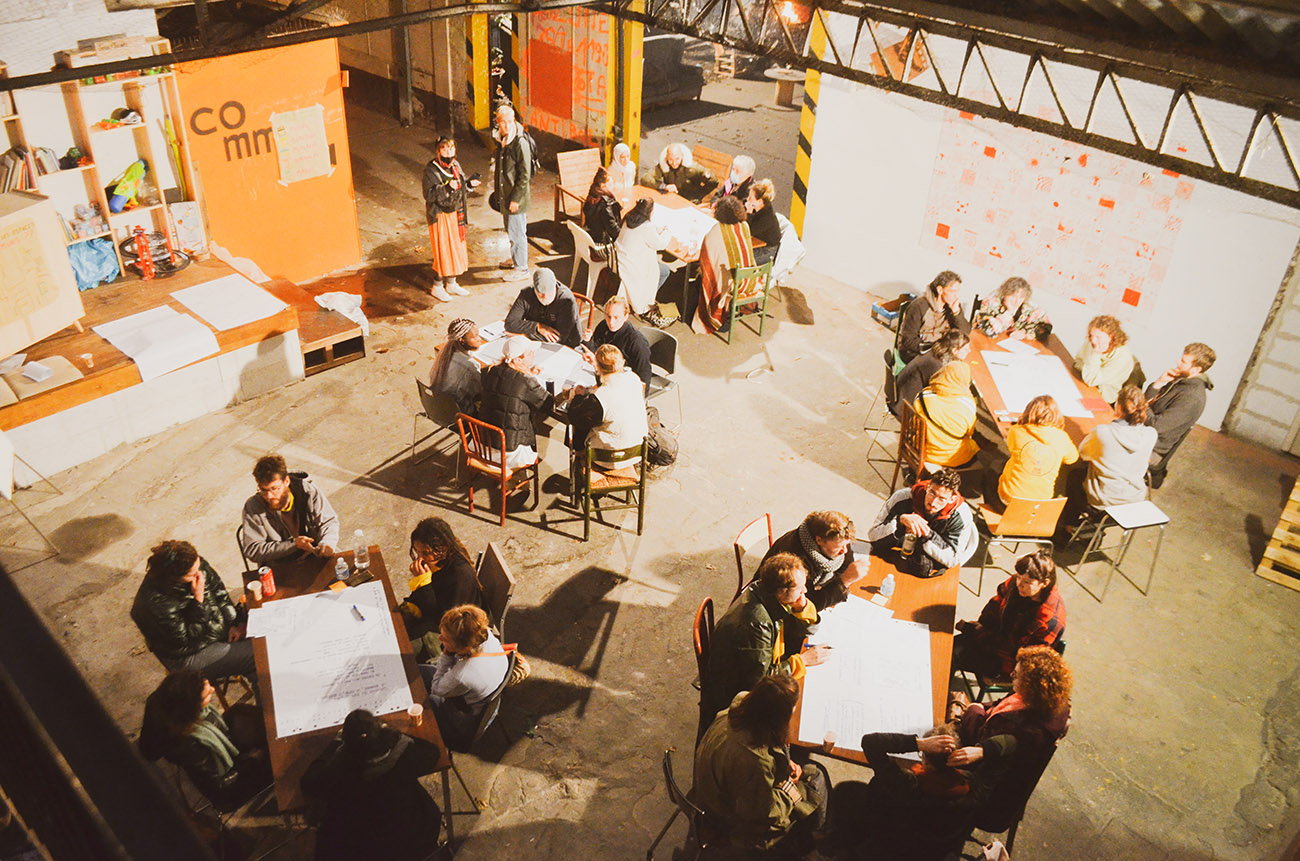
The project launched during the pandemic. A participatory assessment (September to November 2020) identified needs with residents, associations and shopkeepers. An open call invited anyone interested to join the project. In January 2021, future occupants co-designed the spaces, operating rules and economic model through facilitation workshops: they decided how spaces and pay-what-you-can contributions would be allocated.
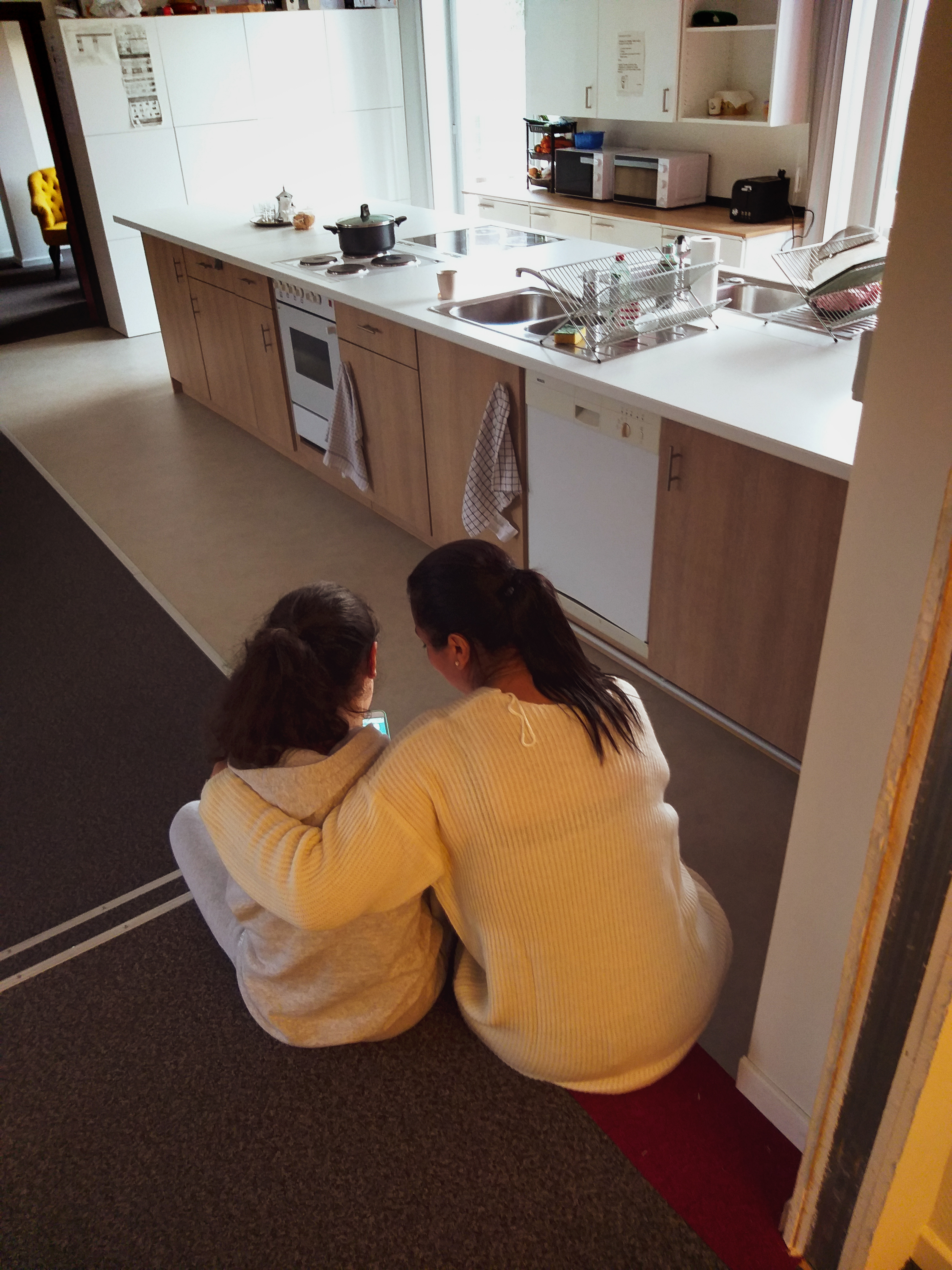
Construction of Casa Vesta began in March 2021. Two floors were converted into shared housing by Casablanco (a social integration enterprise). Fittings, kitchens and flooring came from reuse and donations. The design, developed with the New SamuSocial, prioritised privacy for residents. In September 2021, the first women and their children moved in.
From 2022, community activities grew. A monitoring committee (academics, politicians, civil society) was established; an impact assessment was launched. By 2023, Maxima hosted 71 active projects, 26 women and 23 children.
In 2024, dwindling public support (Brussels remained without a regional government for over 600 days) forced Communa to scale down: Maxima became Minima in January 2025. Despite this context, the team held firm. This exploratory phase validated the decision to make Casa Vesta permanent, now led by Fair Ground Brussels (an anti-speculative land trust), the Municipality of Forest and the New SamuSocial, with renovation planned for 2027 with ERDF support.
Social-purpose temporary use
Community co-design
Social inclusion
Building vacancy activation
Shared governance
Maxima pursues a triple sustainability objective: reducing building vacancy by activating an empty building for the benefit of vulnerable populations and the neighbourhood; minimising the environmental footprint of renovation works; and building a viable economic model without depending on massive public funding. The project is based on a principle of sufficiency: doing more with what already exists rather than building new.
To achieve this, the rehabilitation systematically prioritised reuse. Sanitary fittings, kitchen equipment and flooring in Casa Vesta came from private donations. The construction works were carried out by Casablanco (a social integration enterprise), combining social impact with construction waste reduction. By reactivating an existing building, Maxima avoids the carbon footprint of new construction and land artificialisation. Economically, the model relies on a mix of occupant contributions through the pay-what-you-can system (~€119,078/year), public subsidies (Municipality of Forest, Brussels-Capital Region, Housing Cabinet) and private support (King Baudouin Foundation, Talitha Koum Fund).
The results are concrete: 6,000 m² activated over five years; 78 women and children housed; 71 accessible social economy projects with non-relocatable jobs; budget balance achieved (~€274,567 in revenue against ~€258,666 in expenditure in 2024) without dependency on a single funder. The long-term future of Casa Vesta through Fair Ground Brussels (an anti-speculative land trust) ensures continuity of housing beyond the temporary occupation.
What makes this approach exemplary is that it relies on sufficiency rather than technological performance: it demonstrates that it is possible to operate within planetary boundaries while meeting fundamental social needs, without heavy investment or waiting for long-term infrastructure projects to materialise. The model is accessible, replicable and already applied by Communa across 8 buildings in 2026.
Maxima transformed a standardised office building into a warm living space where the daily experience of occupants contributes to their well-being and sense of belonging. The objective was not to produce a spectacular architectural gesture: it was to create the conditions for beauty to emerge from use, encounter and collective appropriation.
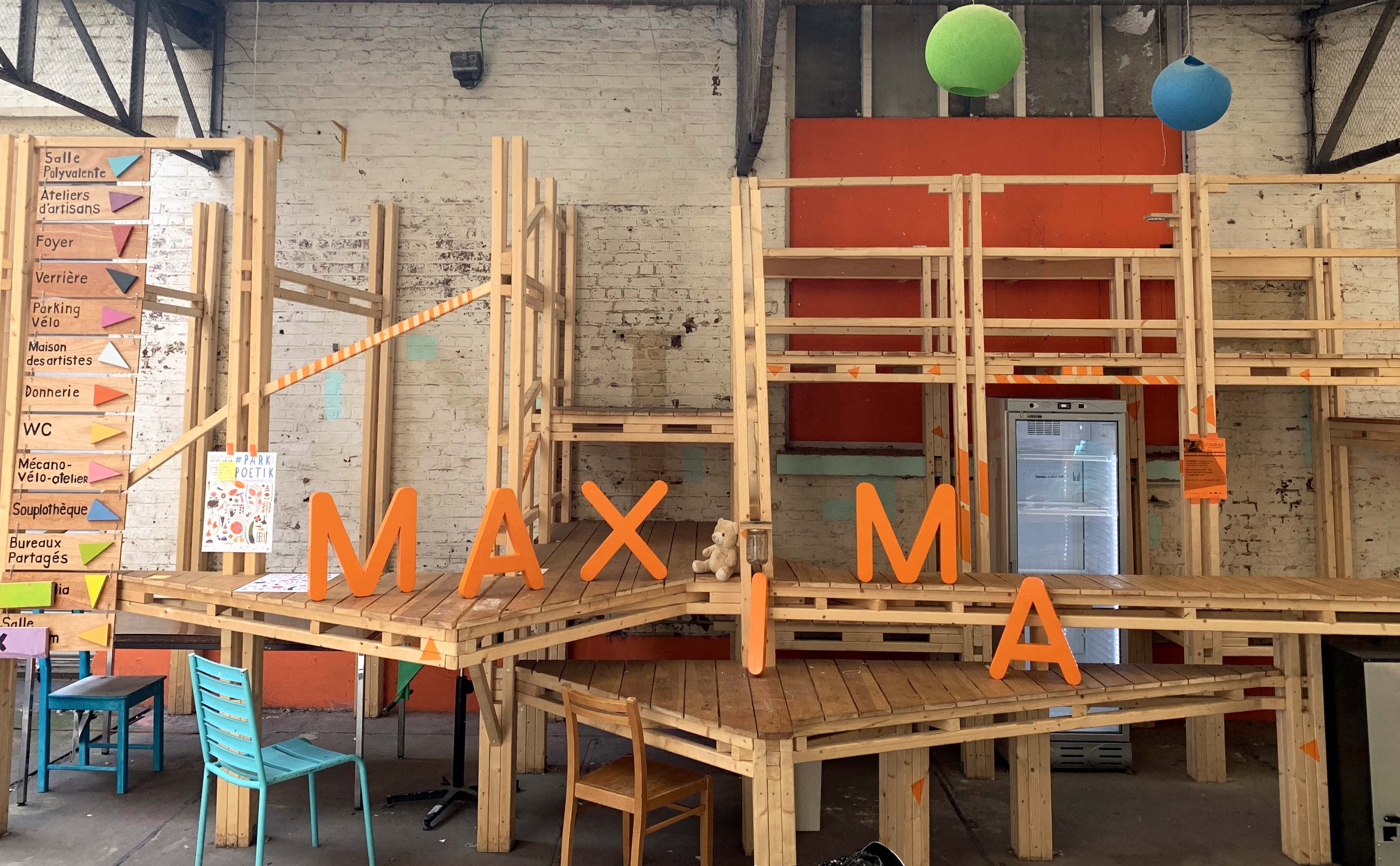
The design of Casa Vesta (500 m²) combines individual privacy with generous communal spaces, developed with the New SamuSocial to meet the needs of women and their children. Construction was carried out by Casablanco (a social integration enterprise), integrating craftsmanship and on-site training. Eleven resident artists and collectives activated the space: a music studio, mosaic, screen printing. In 2024, the "Derrière le brouillard" project (photographer Gaëlle Henkens) enabled residents to narrate their journeys of resilience through performing arts, photography and cultural mediation.
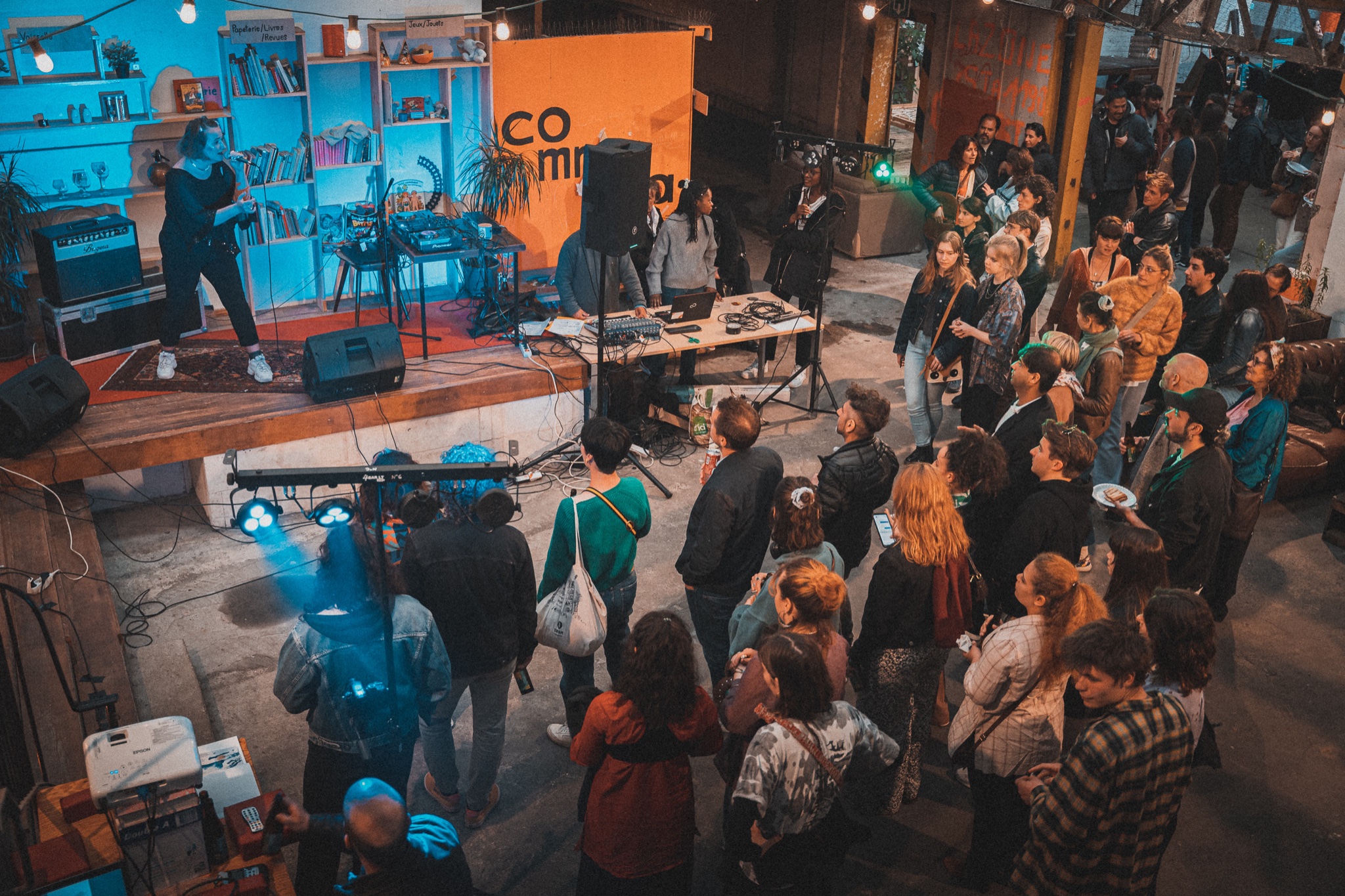
The place stimulates the senses daily: Jazz jams resonate in the courtyard; murals and mosaics colour the walls; the smells of the community kitchen fill the corridors. One resident testifies: "Having life around me does me good. The open space helps me feel less isolated." The courtyard, the multipurpose hall and the circulation spaces foster informal encounters that weave a sense of security and community.
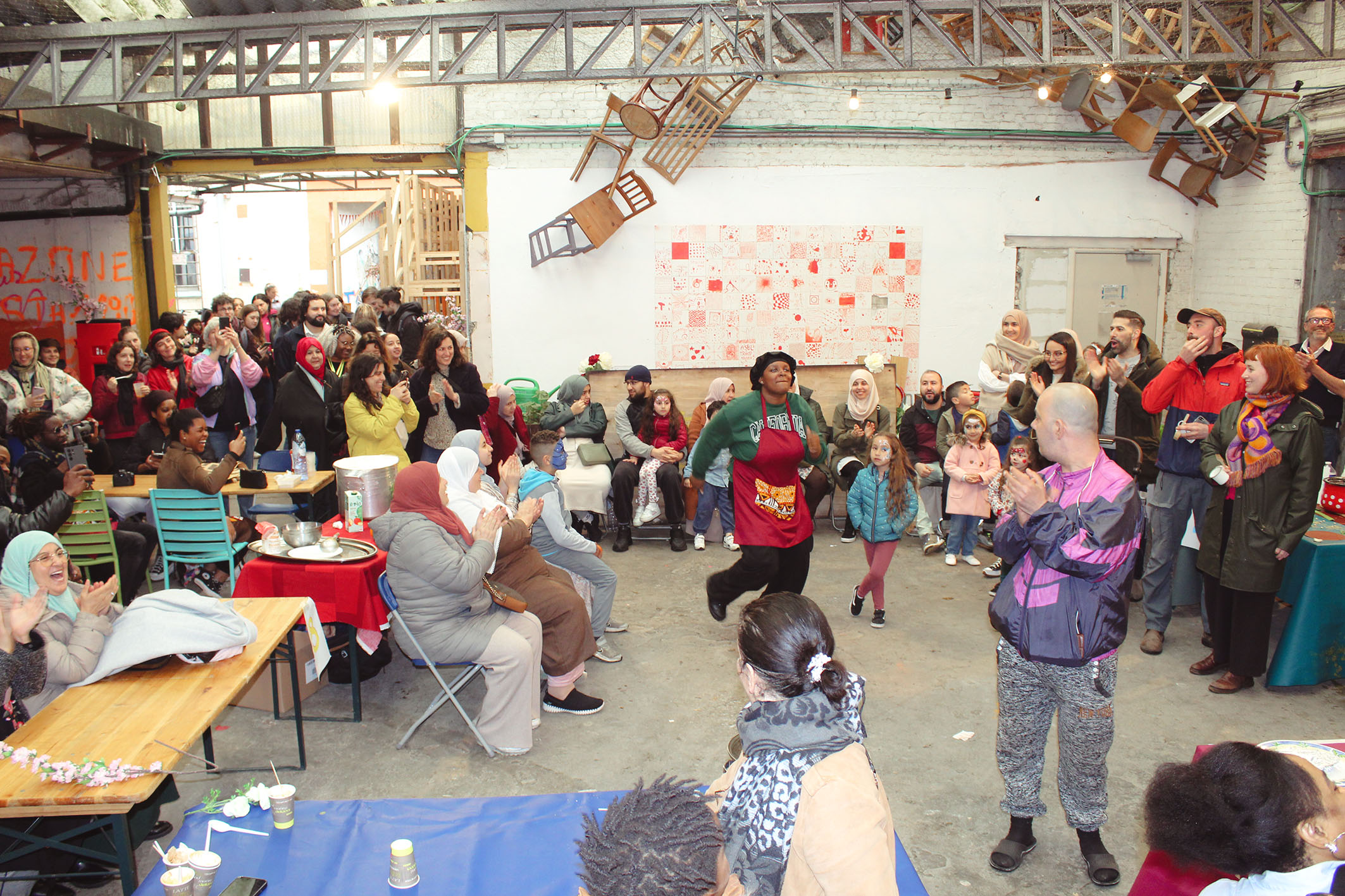
The annual street fairs on rue du Monténégro, the Fête de la Soupe and the Parcours d'Artistes anchored Maxima in the neighbourhood's cultural life. A mosaic artist recounts: "Week after week, I truly built a connection with the neighbourhood." The exhibition "Derrière le brouillard" was presented at the Saint-Antoine neighbourhood house and the Boutique Culturelle: art born at Maxima radiates beyond the building.
What distinguishes Maxima is that its aesthetic was not imposed from outside: it emerged from use, cohabitation and the collective creativity of 256 occupants from radically different backgrounds.
Maxima pursues four simultaneous forms of inclusion: social (providing shelter and community for homeless women), economic (making activity spaces accessible to projects without capital), spatial (opening a vacant building to people usually excluded from such spaces) and governance-related (integrating these groups into collective decision-making).
For housing inclusion, Casa Vesta welcomes women referred by the New SamuSocial from emergency shelters. A consortium of homelessness sector organisations was brought together to maximise access to these places. For economic inclusion, the pay-what-you-can model allows each project to occupy a space at a cost adapted to its means. "Everywhere we go, they ask us for incredible amounts. Here, for us, it's a gem," says an association founder. This mechanism enabled 71 projects to set up (from sports clubs to psychology, including support for unaccompanied minors). For governance inclusion, occupants organise into autonomous clusters with regular assemblies; Casa Vesta residents participate in dedicated steering committees and have their own coordination time.
The results are documented: 78 women and children housed between 2021 and 2025, 71 projects installed, 256 occupants under one roof. An impact study (2024, 20 interviews, 2 focus groups) highlighted the positive effects of community dimensions on occupants' life paths. One occupant testifies: "We were all mixed together. Honestly, it's pure joy. The barriers are in our heads. They're not visual."
What makes this approach exemplary is that Maxima brings together under one roof groups that public policies usually treat in silos (emergency housing, social economy, culture, sport, youth). This diversity is not a side effect: it is the core of the project. The building becomes a space where women on reintegration paths cross paths with artists, athletes, craftspeople and neighbourhood residents, within a governance framework where everyone has a say.
Maxima involved from the outset the residents of the Saint-Antoine neighbourhood, local community organisations, shopkeepers, women housed at Casa Vesta and the Municipality of Forest. Their participation unfolded at every stage, with increasing influence.
During the design phase (September to November 2020), a participatory assessment identified needs through direct consultations with residents, associations and shopkeepers. An open call invited anyone interested to join. In January 2021, facilitation workshops enabled future occupants to define the allocation of spaces, rules and pay-what-you-can contributions.
During implementation (2021 to 2025), shared governance was structured into autonomous clusters, each supported by the coordination team. Two building-wide assemblies per year addressed cross-cutting issues: budget, events, collective recommendations. The monitoring committee (academics, politicians, civil society) co-built evaluation (2022-2024); a student involved residents in the impact assessment.
Occupants hold real decision-making power over the budget, events and the future of the space. One occupant summarises: "You have to trust the collective. There are solutions that can only be found together."
Not every experiment succeeded on the first attempt. In 2021, neighbourhood youth (aged 16-21) were given a space. Without dedicated supervision, the experiment went off track: insecurity, closure of the space. Communa drew the lesson: a space is not enough; it requires a leader rooted in the group. In 2023, a neighbourhood resident took over with a music studio and a goal: offering young people positive alternatives to the drug trade on Place Saint-Antoine. Since then, the group has participated in a European Erasmus+ project alongside Communa and formalised into an association in 2026.
Collective engagement sustained the project despite the drying up of public support.
Maxima was built at the intersection of several governance levels: municipal, regional, European and civil society. This articulation was organised around bilateral agreements, the Casa Vesta monitoring committee (academics, politicians, civil society) and a network of complementary partners.
At the municipal level, the Municipality of Forest is the building's owner and main institutional partner. It entrusted transitional management to Communa through an agreement, participates in the Casa Vesta monitoring committee and integrated the project into the Wiels-sur-Senne Neighbourhood Contract. In December 2023, the Municipality opened a warming shelter (day reception) in the building's lobby. One occupant observes: "The Municipality of Forest understood very well that Maxima was playing a real social role with its neighbours."
At the regional level, the Brussels-Capital Region funds the Urban Renewal Contract in which the site is located; the Housing Cabinet supported the project. At the European level, Maxima served as a learning site for the STUN network (Social Temporary Use Network): in 2023, the building hosted the Degentrify Brussels event. Workshops from the ESCO Diploma were held there between 2020 and 2025.
On the foundations and civil society side, Fair Ground Brussels (an anti-speculative land trust) played a key role in securing Casa Vesta's long-term future, bringing together Municipality, Region and civil society around a shared objective. The King Baudouin Foundation, Talitha Koum Fund, BESIX Foundation and Mycellium Foundation co-funded the project.
Multi-level engagement brought institutional legitimacy (municipal agreement, integration into the Neighbourhood Contract), diversified funding reducing dependency on a single funder, specialised expertise (New SamuSocial for housing, academia for evaluation), European-scale dissemination (STUN, ESCO Diploma) and long-term sustainability beyond the temporary occupation (Fair Ground Brussels)
Maxima drew on around ten disciplines, from design to evaluation: architecture and urbanism (spatial design), social work (support for housed women, in partnership with the New SamuSocial), socio-professional integration (construction by Casablanco, on-site training), social sciences (impact assessment), arts and culture (11 resident artists and collectives: music studio, mosaic, screen printing), sport and well-being (12 sports projects, psychology), crafts (8 craftspeople), social economy (pay-what-you-can model, 25 projects in shared offices) and migrant support (unaccompanied minors).
Collaboration was organised at three levels. Upstream, the facilitation workshops of January 2021 brought together radically different profiles (social workers, artists, athletes, craftspeople, residents) in an interdisciplinary and intercultural dynamic, to co-design space allocation and the economic model. At the institutional level, the Casa Vesta monitoring committee brings together academics, politicians and civil society. On a daily basis, physical cohabitation creates both spontaneous and organised interactions: informal conversations in the kitchen, co-organised street fairs, the Parcours d'Artistes. A Park Poétik coordinator describes: "We live in a kind of ecosystem and it's the ecosystem that must nourish the projects." The impact assessment crossed social sciences, social work and urbanism, proposing a "relational capacity index" as an alternative to conventional indicators.
This transdisciplinary and cross-sectoral approach gave rise to unconventional solutions: housing co-designed by a transitional urbanism organisation and an emergency social operator; sports spaces managed by residents and sports clubs; a day reception centre co-run with the Municipality. One occupant summarises: "There are real connections that can be made between projects. You're an actor in an environment of actors, so there are even more possibilities for action and collaboration."
Maxima's funding relies on a mix of self-generated revenue, public subsidies and private support. In 2021, the initial construction works were funded by the Mycellium, King Baudouin, BESIX and Talitha Koum Foundations and the Brussels-Capital Region. For ongoing operations, the project combines occupant contributions through the pay-what-you-can system (~€119,078/year), subsidies from the Municipality of Forest and the Housing Cabinet (€60,000/year), and occasional foundation grants.
The project generates significant self-generated revenue. The pay-what-you-can model, co-designed in assembly, enables each occupant to contribute according to their means: this mechanism represents nearly half of total revenue and provides a recurring base independent of subsidy cycles. One occupant testifies: "These are places where projects can develop by paying rents they can actually afford." Revenue is reinvested entirely in managing and running the space. The model can generate revenue for other operators applying the same methodology to other buildings.
Operating costs are borne by Communa: coordination staff (team of 5), maintenance, utilities and programming. The budget is balanced, without dependency on a single funder.
This model contributes to scalability because it relies on three transferable pillars: access to vacant buildings (near-zero real estate costs), contributions proportional to means, and diversified complementary funding. Communa has applied this methodology since 2013 across more than 30 buildings and is deploying it in 2026 across 8 sites simultaneously.
Social-purpose temporary occupation constitutes an innovation in urban development: it demonstrates that a vacant building can produce social, economic and urban value without heavy investment. The long-term future of Casa Vesta through Fair Ground Brussels (an anti-speculative land trust) illustrates the transition from temporary to permanent, challenging the logic of building vacancy as "dead time."
Maxima can serve as a model because it addresses two problems found in every European city: building vacancy and the lack of affordable housing and activity spaces. The project demonstrated that an empty building can be activated quickly, at low cost, to meet urgent social needs while previewing future uses for the owner. One occupant summarises: "It's a small sample, a small example of what can be done. I think it needs to be developed, expanded and replicated as much as possible."
Four elements are directly transferable. First, the activation methodology: participatory assessment, open call, facilitation workshops, installation, shared governance. This sequence is documented and deployed by Communa in 2026 across 8 buildings simultaneously. Second, the pay-what-you-can model: a contribution mechanism adapted to each occupant's means, co-designed in assembly, making the space accessible without full subsidy. Third, the combination of housing and activities: bringing together housing for vulnerable populations with open activity spaces creates a community leverage effect that neither produces alone. Fourth, the previewing of uses: testing real needs before permanent transformation.
Replication requires four types of partnerships: a transitional management operator (coordination, facilitation, daily management), an owner willing to agree to the occupation, a social operator for housing (at Maxima, the New SamuSocial), and a local community network to mobilise through the participatory assessment. The STUN network already facilitates the transfer of these skills at European scale: Maxima hosted ESCO Diploma workshops and the Degentrify Brussels event in 2023.
Certain elements must be adapted to local contexts. The legal framework for temporary occupation varies between countries. The pay-what-you-can model must be calibrated to the local economic fabric. The occupant community depends on neighbourhood needs, identified through the participatory assessment.