Arts, Culture, and Heritage as Drivers of Change
The Luxury Committee
The Luxury Committee: Arts, Culture and Aesthetic Heritage for a New Era of Luxury
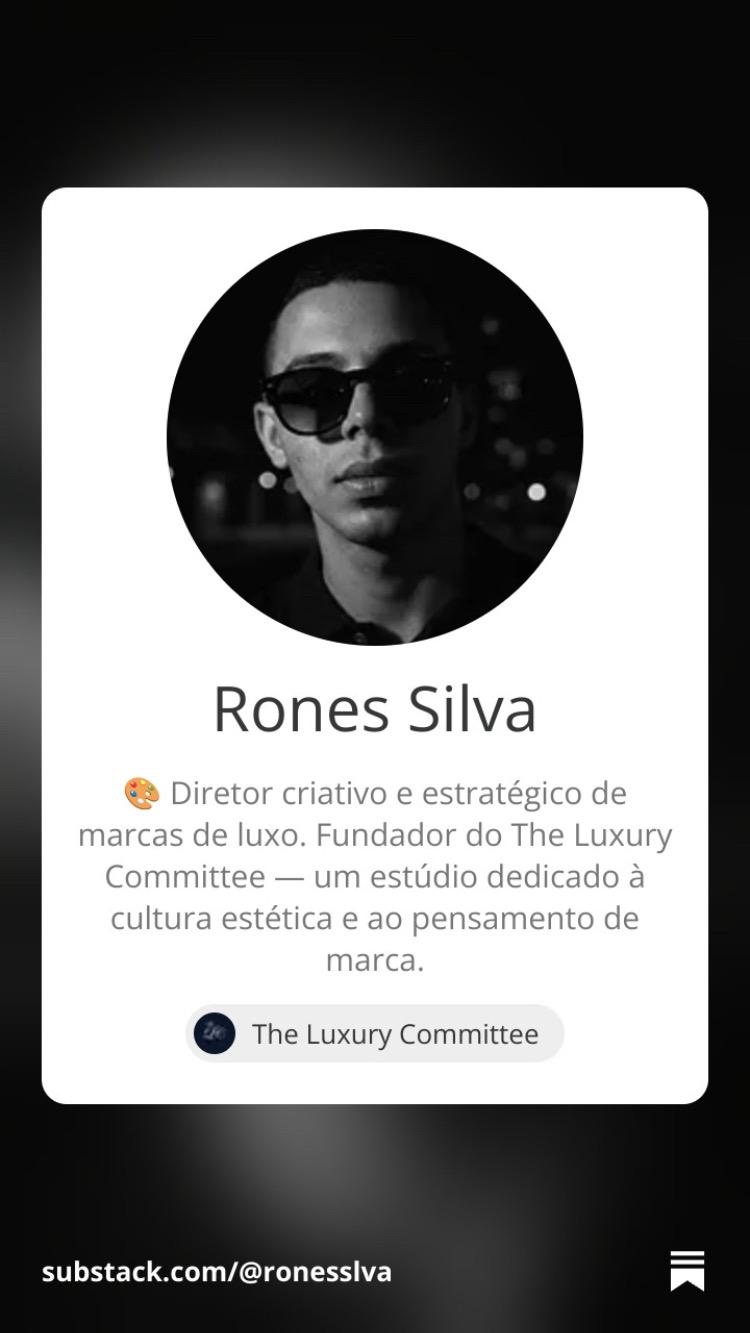
The Luxury Committee is a cultural initiative that explores how arts, design and aesthetic heritage can shape a new vision of luxury and cultural value. Founded by Brazilian creative director Rones Silva, the project studies and curates ideas, symbols and creative practices that connect culture, beauty and responsible innovation. Through research, editorial work and strategic thinking, the initiative promotes a refined cultural dialogue that positions art, heritage and design as drivers of trans
Brazil
National
Mainly urban
It refers to other types of transformations (soft investment)
Prototype level
No
No
No
Individual
The Luxury Committee is a cultural and editorial initiative dedicated to rethinking the meaning of luxury in the contemporary world through arts, culture and aesthetic heritage. The concept explores how beauty, craftsmanship, design thinking and cultural narratives can contribute to a more conscious and meaningful vision of value in society.
Founded by Brazilian creative director Rones Silva, the initiative operates as a platform for cultural reflection, research and curated storytelling about the future of aesthetics and the symbolic economy. Rather than focusing only on material consumption, the project proposes a cultural reinterpretation of luxury as a space where creativity, knowledge, heritage and responsibility intersect.
Through editorial publications, cultural analysis and strategic thinking, The Luxury Committee highlights the role of artistic expression, design culture and historical references in shaping a new cultural dialogue about refinement, beauty and value. The concept encourages a shift from superficial consumption toward a deeper appreciation of cultural identity, artistic legacy and thoughtful creation.
The expected outcome is the development of a cultural platform capable of inspiring creative industries, designers, thinkers and cultural actors to reconsider how aesthetics, culture and heritage can contribute to a more responsible and meaningful creative economy. By promoting dialogue around beauty, culture and knowledge, the project aims to position arts and cultural heritage as drivers of transformation in contemporary society.
The idea behind The Luxury Committee emerged from a reflection on how the concept of luxury has been transformed in recent decades. In many contexts, luxury has become strongly associated with status symbols and excessive consumption, often disconnected from cultural meaning, craftsmanship and artistic value.
Observing this shift, Brazilian creative director Rones Silva began to explore the possibility of reframing luxury as a cultural and intellectual concept rather than a purely commercial one. The project was therefore conceived as a platform to investigate how art, heritage, aesthetics and design thinking can redefine the way society understands refinement and value.
The development of the concept began through research, cultural observation and editorial experimentation. Digital publishing tools were used to structure the initiative as an accessible platform capable of sharing ideas, reflections and curated cultural narratives with a broader audience.
The strategy behind the project focuses on cultural storytelling, aesthetic research and the creation of an intellectual space where art, history, design and contemporary creative practices can interact. By connecting cultural heritage with modern creative thinking, the initiative aims to stimulate new perspectives about beauty, cultural identity and the future of creative industries.
The Luxury Committee continues to evolve as an open cultural initiative, exploring how editorial platforms and digital tools can contribute to the dissemination of ideas that promote a more thoughtful, culturally grounded and aesthetically conscious society.
Cultural Heritage
Arts and Aesthetics
Creative Economy
Cultural Curation
Design Culture
The Luxury Committee approaches sustainability from a cultural and intellectual perspective. Rather than focusing solely on material production, the concept promotes a shift in how society understands value, beauty and consumption. By encouraging a deeper appreciation for craftsmanship, cultural heritage and thoughtful design, the initiative supports a more responsible and conscious relationship with creative production.
The project explores how cultural narratives, aesthetic research and historical references can inspire creative industries to move away from disposable trends and toward more meaningful, enduring forms of expression. In this sense, sustainability is not only environmental but also cultural: preserving knowledge, artistic traditions and creative heritage that might otherwise be lost.
Through editorial publications and curated cultural reflections, the initiative encourages designers, cultural actors and creative thinkers to reconsider how beauty, culture and heritage can contribute to a more balanced and thoughtful creative economy. The expected impact is to inspire a cultural shift toward quality, longevity and responsibility in design and creative practices.
By promoting dialogue about cultural value, artistic legacy and mindful creation, The Luxury Committee aims to support a sustainable cultural ecosystem where creativity, heritage and knowledge are preserved and reinterpreted for future generations.
The Luxury Committee places aesthetics at the center of its vision by exploring how beauty, cultural symbolism and artistic expression shape the way people experience the world around them. The initiative seeks to restore the cultural depth of aesthetics by connecting contemporary creativity with historical references, artistic traditions and refined design thinking.
Through cultural research and editorial storytelling, the project highlights how aesthetics can influence the way communities perceive identity, heritage and belonging. By encouraging reflection on beauty as a cultural and intellectual experience rather than merely a decorative element, the initiative aims to elevate the role of aesthetics in everyday life.
The concept contributes to creating a sense of cultural awareness and appreciation for artistic heritage. By promoting dialogue about beauty, design and cultural narratives, The Luxury Committee encourages individuals and creative communities to cultivate environments that value harmony, creativity and thoughtful design.
In this sense, the project demonstrates how aesthetics can become a powerful cultural tool, capable of inspiring more meaningful relationships with objects, spaces and cultural identity. By placing beauty, cultural memory and artistic creativity at the core of its mission, the initiative reflects the NEB vision of making life not only sustainable but also beautiful.
The Luxury Committee promotes inclusion by making cultural reflection, aesthetic research and creative knowledge accessible through open editorial platforms and digital communication. By sharing ideas and cultural narratives in a publicly accessible format, the initiative allows diverse audiences to engage with topics related to art, design, culture and heritage.
The concept seeks to democratize conversations about aesthetics and cultural value, which have traditionally been restricted to specialized or elite circles. Through accessible language and digital distribution, the project encourages broader participation in discussions about creativity, beauty and cultural identity.
In addition, the initiative recognizes the importance of cultural diversity and different creative perspectives. By exploring artistic traditions, cultural narratives and creative practices from different contexts, the project encourages dialogue between cultures and promotes a more inclusive understanding of aesthetics and creative heritage.
The Luxury Committee therefore contributes to inclusion by opening cultural and creative discussions to wider audiences and by encouraging the recognition of diverse cultural expressions. In doing so, it supports the NEB principle that culture, creativity and beauty should be accessible and meaningful for everyone.
The Luxury Committee embraces a participatory approach by using digital publishing and cultural dialogue as tools to engage readers, creative professionals and cultural observers. Through editorial publications and open cultural reflections, the initiative invites audiences to participate in conversations about aesthetics, cultural heritage and the meaning of luxury in contemporary society.
The development of the concept has been shaped by observing cultural debates, creative communities and public discussions about design, art and cultural identity. Feedback from readers and cultural audiences contributes to refining the themes explored by the initiative and helps identify emerging perspectives within the creative landscape.
The participatory dimension of the project lies in its ability to create an intellectual space where different voices can reflect on beauty, culture and creative value. Rather than presenting a closed or fixed model, the concept evolves through dialogue, cultural exchange and the contribution of diverse perspectives.
By encouraging reflection and participation in cultural conversations, The Luxury Committee aims to build a community of readers, thinkers and creatives who contribute to shaping new ways of understanding aesthetics, heritage and cultural value in society.
The Luxury Committee is designed as a cultural initiative that can interact with stakeholders across multiple levels, from local cultural contexts to international creative networks. While the project originates in Brazil, its themes—art, aesthetics, cultural heritage and creative economy—are inherently global and encourage dialogue across different cultural environments.
At the local and national levels, the initiative reflects cultural observations and creative perspectives emerging from Brazil’s cultural landscape. At the same time, the project connects these reflections with broader international conversations about design culture, artistic heritage and the future of creative industries.
Through digital publishing and open cultural dialogue, the initiative can engage designers, artists, researchers, cultural institutions and creative professionals from different regions. This multi-level engagement enriches the project by connecting local cultural insights with global creative perspectives.
The value of this approach lies in the ability to foster cultural exchange and mutual learning between different contexts. By bridging local cultural identity with international creative discourse, The Luxury Committee contributes to a broader understanding of how culture, aesthetics and heritage can shape contemporary society.
The Luxury Committee is inherently transdisciplinary, combining insights from multiple fields that influence cultural and aesthetic development. The concept integrates perspectives from arts, design culture, cultural studies, creative economy and digital communication to explore how aesthetics and cultural narratives shape contemporary society.
Artistic expression and cultural heritage provide the conceptual foundation of the project, while design thinking contributes to the exploration of how creativity and form influence perception and value. Cultural analysis and social observation help contextualize these themes within broader societal transformations.
Digital publishing tools and communication platforms also play an important role in the implementation of the concept, allowing ideas to be shared and discussed across different audiences and creative communities.
By bringing together knowledge from arts, cultural research, design thinking and digital communication, The Luxury Committee creates an interdisciplinary space where different perspectives interact. This approach reflects the understanding that contemporary cultural challenges and opportunities require collaboration across disciplines.
Through this integration of fields and perspectives, the project demonstrates how transdisciplinary thinking can generate new cultural insights and inspire more thoughtful approaches to creativity, beauty and cultural heritage.
The Luxury Committee is envisioned as a cultural and editorial platform supported by a hybrid and sustainable model that combines cultural publishing, partnerships and knowledge-based activities.
The initiative initially operates through digital publishing, allowing ideas and cultural reflections to be distributed globally at low operational cost. Over time, the platform is designed to generate financial sustainability through several complementary activities. These may include premium editorial publications, curated reports on design and cultural trends, collaborations with cultural institutions and creative organizations, and educational initiatives such as talks, lectures or workshops related to aesthetics, culture and the creative economy.
Another potential source of sustainability is the development of strategic partnerships with organizations that share the project’s values around culture, creativity and responsible design. Grants, cultural funding programs and international collaborations may also support the development of research and cultural initiatives promoted by the platform.
By combining cultural publishing, knowledge production and collaborative initiatives, The Luxury Committee aims to establish a financially sustainable model while preserving its intellectual independence and cultural mission. This approach allows the project to grow gradually while continuing to promote dialogue about aesthetics, heritage and the future of creative culture.
The Luxury Committee has strong potential for transferability and scalability because its core methodology is based on cultural research, editorial storytelling and digital dissemination of ideas. These elements can be adapted to different geographic contexts and cultural environments.
The editorial model of the initiative can easily be replicated in other regions by exploring local cultural heritage, artistic traditions and design practices while maintaining the project’s central philosophy: connecting aesthetics, culture and creative thinking.
In addition, the conceptual framework of the project — redefining luxury through cultural value, craftsmanship and heritage — can be applied to various sectors of the creative economy, including design, architecture, fashion, cultural education and creative industries.
The tools used by the initiative, particularly digital publishing platforms and cultural storytelling methods, make it possible to reach diverse audiences and engage creative communities in different countries. This adaptability allows the concept to evolve into collaborative initiatives, cultural partnerships or regional editorial editions inspired by the same cultural philosophy.
Because the project is fundamentally based on ideas, knowledge and cultural dialogue, it can expand organically across different contexts while respecting local cultural identities and traditions.
Over the next year, The Luxury Committee aims to consolidate its role as a cultural platform dedicated to aesthetics, arts and creative reflection. The first step will focus on strengthening the editorial dimension of the initiative by expanding the publication of cultural essays, curated analyses and reflections on design, heritage and creative industries.
The project also plans to develop partnerships with creative professionals, cultural observers and thinkers who share an interest in exploring the relationship between beauty, culture and responsible creativity. These collaborations will enrich the intellectual diversity of the platform and broaden its cultural dialogue.
Another important step will be to explore opportunities for public engagement through lectures, cultural discussions or online events that encourage reflection on aesthetics, heritage and the future of creative culture. These initiatives aim to foster a community of readers, creators and cultural thinkers interested in the values promoted by the project.
Finally, the initiative will continue to refine its editorial strategy and digital presence, expanding its reach and strengthening its cultural impact. By gradually developing its network and cultural activities, The Luxury Committee seeks to evolve into a recognized platform for cultural dialogue about aesthetics, creativity and heritage in the contemporary world.