Arts, Culture, and Heritage as Drivers of Change
Plovdiv Pathways
Plovdiv Pathways – Discovering History, Culture, Architecture and Nature Through Play
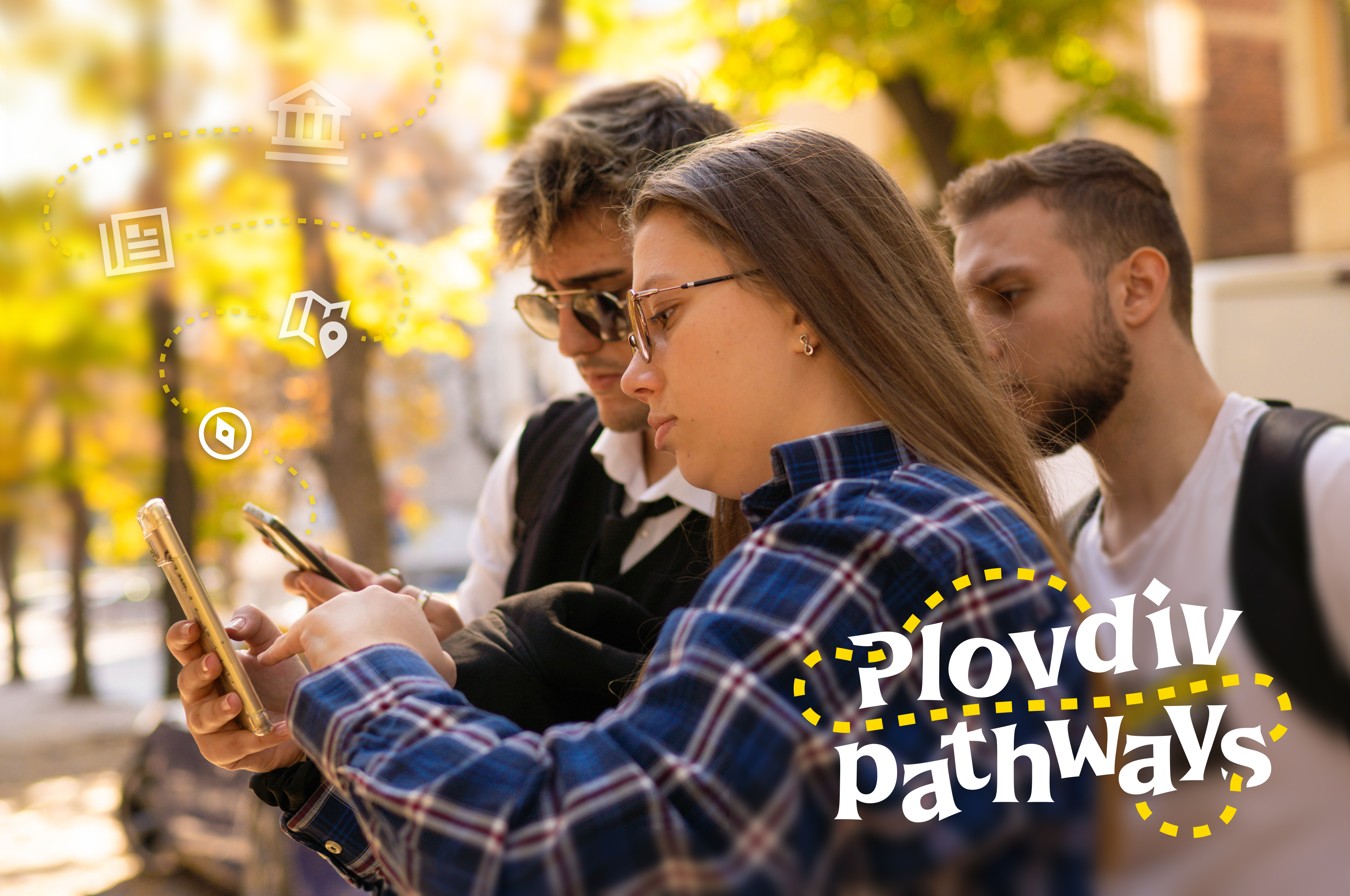
Plovdiv Pathways invites you to explore the city through four thematic urban routes, dedicated to history, architecture, culture, and nature, and designed with interactive gamification elements. Created with input from the community and local experts, these routes offer playful learning, hidden stories, and new perspectives on Plovdiv, Bulgaria, making the city’s heritage and environment accessible and engaging for everyone.
Bulgaria
Local
Plovdiv
Mainly urban
It refers to other types of transformations (soft investment)
Prototype level
No
No
No
Individual
Our concept builds on years of experience in designing engaging urban quest games that connect people with the places they live in. Since 2022, we have been professionally creating games that combine storytelling, exploration, and learning. Before that, our team had developed various interactive experiences, which helped us refine our approach to audience engagement and educational entertainment.
We have created more than 50 urban quest games, including Plovdiv Awake and Roman Plovdiv, which guide participants through key locations connected to Plovdiv’s history and archaeology. Through riddles and narrative elements, players discover important historical facts while actively exploring the urban environment. The games encourage both locals and tourists to discover new places while deepening their knowledge about the city’s heritage.
Our work also extends beyond Plovdiv. We have developed urban games for students in Razgrad, Sevlievo, and Gabrovo, helping young people learn more about the history and local culture of their own cities. In collaboration with the Bulgarian National Radio, we also created four thematic urban games celebrating the organization’s 90th anniversary.
With “Plovdiv Pathways”, we aim to create four new thematic urban routes in Plovdiv, Bulgaria focusing on history, architecture, culture, and nature. The development process will include meetings with local stakeholders, workshops with young people, and consultations with experts.
Each route will be a gamified experience with riddles, revealing fascinating facts about locations in the city. The routes will be accessible through our website and promoted through our social media channels with a total of over 3,000 followers.
Before launch, we will conduct play-testing with diverse groups to ensure clarity and high quality. The project will remain publicly available for at least two years on a donation-based model, allowing everyone to participate regardless of their financial means.
Our concept came about from our shared motivation to create meaningful experiences that make cities more engaging and enjoyable. Emil is a game creator, designer and developer, while Yana is a tourism expert with skills in event organization and PR. Both of us have many years of volunteer experience and a strong personal motivation to develop projects that positively contribute to the places around us.
In Bulgaria, the urban games we create are still relatively innovative. We work with a wide range of partners and audiences, including municipalities, media organizations, companies, and individual players. Our games are used for public events, educational activities, teambuildings, tourism routes, and private celebrations, which allows us to continuously experiment with formats and audiences.
A key part of our work is our own digital system, which we developed to host and manage the games. It allows participants to play independently in the city without the need for our physical presence on site. The system provides flexibility in creating interactive riddles, narratives, and routes.
The development of our concept followed several important steps. First, we brought together complementary expertise in design, tourism, communication, and programming. We conducted in-depth research on the historical, cultural, and local topics included in our games. In 2022, we launched our first urban game and tested it with many teams, validating the concept and its engagement for participants. Since then, we have experimented with different formats and collaborations with diverse partners.
Through our games, players discover interesting facts about the city and find new places. Today we run permanent games in Plovdiv and Sofia and develop others for specific events.
Building on this experience and the brand we have already developed, this project aims to expand our thematic routes in Plovdiv, introduce new topics, and involve experts and young people in the process.
Innovative tourism
Gamified adventures
Local knowledge
Multi-level engagement
Quality of experience
Our concept promotes environmental sustainability by encouraging people to explore and appreciate the natural and urban environment in a responsible and mindful way. The routes are designed using modern digital tools that minimize material use and physical infrastructure. Because the experience runs through our online platform, participants only need their mobile devices, which eliminates the need for printed materials or temporary installations in the city.
One of the four planned thematic routes focuses specifically on nature in the urban environment. Through riddles and storytelling, participants will be encouraged to observe the natural elements around them - green spaces, riverside areas, and biodiversity that often go unnoticed. The route will also share accessible information about protected flora and fauna, as well as protected natural sites in the city.
When designing the routes, we carefully select locations in order to protect sensitive environments. The games will guide participants along appropriate paths and public spaces so that exploration does not disturb natural habitats or ecosystems. By doing so, we promote responsible behavior and awareness of how people interact with nature in urban spaces.
Beyond the nature-focused route, the overall concept contributes to sustainability by encouraging low-impact urban exploration. Participants move through the city on foot, rediscovering local heritage and green areas instead of relying on motorized transport or resource-intensive attractions.
The project also highlights the relationship between cultural heritage and the natural environment. By connecting stories about history, architecture, culture, and nature, the routes help participants understand how cities evolve together with their landscapes and why protecting both cultural and natural assets is important for the future.
In this way, our concept combines digital innovation, educational storytelling, and carefully designed routes.
Our concept contributes to the aesthetic quality of everyday life by helping people rediscover the beauty of Plovdiv. The urban routes guide participants through carefully selected locations that highlight its architectural, cultural, historical, and natural richness. By connecting stories, riddles, and exploration, we encourage participants to slow down, observe their surroundings, and notice details that are often overlooked.
The project makes use of existing urban infrastructure and public spaces, allowing people to experience the city itself as a living cultural environment. Squares, streets, parks, and landmarks form an interactive narrative revealing their unique character.
Our concept contributes to preserving the quality of these places. When developing and maintaining our routes, we actively take care of the locations we use whenever possible and encourage participants to treat them with the same care. By learning about the stories connected to these places, players naturally develop greater respect for them.
Design is an essential part of our games. With Emil’s background in visual design and storytelling, we create visuals that are appealing, clear, and engaging. The digital interface, visual materials, and narratives are designed to attract attention and make the experience enjoyable and memorable, encouraging more people to participate.
Most importantly, the routes foster a sense of belonging and connection to the city. Participants become part of a small community of explorers who share new knowledge about Plovdiv and its stories. This often inspires them to talk about the places they discovered, bring friends to explore them again, and develop a deeper emotional connection to the city.
In this way, the project strengthens the relationship between people and place, celebrating the unique beauty of Plovdiv while encouraging long-term care, pride, and appreciation for its environment.
Our concept is designed to be accessible and welcoming to a wide range of participants, ensuring that as many people as possible can take part in exploring and learning about their city.
A key element of inclusion in this project is the donation-based access model. Participants can play the games for free or contribute an amount they consider appropriate. This approach removes financial barriers and ensures affordability for people from different economic backgrounds, allowing anyone who is curious to participate regardless of income.
The experience is also designed with low barriers to participation. The routes are available through our digital platform and require only a smartphone, which most people already have. Content can be presented both as text and audio, allowing participants to choose the format that suits them best. The routes use public spaces and existing infrastructure, making them easy to access at any time without special equipment or prior preparation.
Urban games naturally encourage interaction across generations and social groups. They can be played by families with children, groups of friends, couples, individual players, or mixed teams. This creates opportunities for shared discovery and collaboration between people of different ages and backgrounds. Solving riddles together and exploring the city as a team often leads to meaningful conversations and social connections.
In addition, the concept includes public participation - we plan to organize meetings and discussions with local residents, young people, and experts on the topics. Their ideas, knowledge, and perspectives will help shape the content of the routes, ensuring that different voices from the community are represented.
By combining open access, inclusive design, and community input, the concept creates a welcoming environment where people can explore the city together, exchange knowledge, and feel that their perspectives matter.
Participation is a core principle in the way we design and develop our urban games. From the early stages of this concept, we aim to actively involve local residents, young people, experts, and community organizations so that the final experience reflects the knowledge, stories, and perspectives of the people who live in the city.
During the development phase of “Plovdiv Pathways” we will organize meetings and discussions with local citizens and stakeholders to gather ideas about places and stories that are meaningful to them. Many residents possess valuable local knowledge that is not always visible in traditional tourist narratives. By integrating their suggestions into the routes and content, we ensure that the project reflects authentic community perspectives and stories.
We also plan to collaborate with a local Youth Center, inviting young people to share their ideas and participate in discussions about the topics and locations included in the routes. This process empowers them to contribute to shaping how their city is presented, while also strengthening their sense of responsibility and connection to the places around them.
Another important element will be a public launch event and potential event involving schools. These activities will introduce students to the routes and encourage teachers to use them as an engaging way to learn about the chosen topics. By presenting knowledge in an interactive and playful format, the project helps make local heritage more accessible and interesting for younger generations.
Local media partnerships will also support the process by opening space for discussion, feedback, and broader community engagement.
Through these actions, the project goes beyond simply creating an experience for the public. It creates a collaborative process where community members contribute ideas, influence decisions, and see their knowledge reflected in the final result, strengthening both local ownership and pride in the concept.
Our concept relies on collaboration with stakeholders at different levels in order to create routes that are both locally meaningful and broadly relevant. By connecting citizens, institutions, and organizations, the project encourages cooperation and knowledge exchange across different levels of governance.
At the local level, the most important partners are the residents of Plovdiv, local experts, youth organizations, and cultural institutions. Through meetings and discussions with citizens, we collect ideas about places and stories that are meaningful to them. Their input helps us design routes that reflect authentic local perspectives and highlight lesser-known aspects of the city. We also plan to collaborate with the Youth Center and schools to involve young people in discussions and testing phases, strengthening their engagement with local heritage.
We aim to work with cultural institutions such as Ancient Plovdiv Municipal Institute, which manages some of the city’s most significant historical areas. Their expertise can help ensure the accuracy and relevance of the historical and architectural content.
At the regional and national level, we collaborate with media organizations and municipalities that help share knowledge, promote the concept to wider audiences, and connect experiences from different Bulgarian cities. By doing so, the project builds horizontal links between communities and institutions interested in innovative cultural and educational experiences.
At the European level, applying to initiatives such as the New European Bauhaus creates opportunities to exchange ideas with other projects that explore new ways of connecting people, culture, and urban environments.
The added value of this multi-level approach is that it combines local knowledge, institutional expertise, and wider networks, ensuring that the routes remain authentic to the place while contributing to broader conversations.
Our concept is transdisciplinary, combining knowledge, tools, and perspectives from several professional fields in order to create meaningful urban experiences. The design and implementation of the project bring together expertise in digital technologies, design, tourism, education and local culture.
A key element is the use of digital technologies and engineering. We have developed our own digital platform that hosts the urban games and allows participants to explore the city independently. This system integrates navigation, storytelling, riddles, and interactive elements, transforming public spaces into an engaging digital-physical experience.
At the same time, the project relies strongly on design and arts. Visual design, storytelling, and creative riddle development shape the aesthetic and emotional part of the routes. Carefully designed digital interfaces and visual materials help create a clear, attractive, and immersive experience for participants.
The educational dimension is also central. Each route is built on research and presents accessible knowledge about different aspects of the city. The four thematic routes connect several fields. Participants learn about historical events and archaeological heritage, discover architectural details, explore cultural traditions, and observe natural elements within the city.
To ensure accuracy and depth, the development process includes consultations with experts in relevant fields such as history, architecture, tourism, and environmental topics. At the same time, we draw on the knowledge of local residents and community members, whose stories and insights help reveal places and perspectives that may not appear in formal academic sources.
By bringing together professional expertise, creative practices, technological tools, and community knowledge, the project reflects the complex relationship between people, culture, nature, and the urban environment.
Our business model is designed to balance accessibility for the public with long-term financial sustainability. Central to the model is a donation-based system, which allows participants to access the routes for free or contribute an amount they consider appropriate. This approach ensures that the experience remains accessible to all, while providing a voluntary revenue stream that supports the maintenance and development.
Revenue is complemented by project-based collaborations with local stakeholders. These include municipalities, cultural institutions, media organizations, schools, and private companies, who may sponsor specific routes, events, or thematic projects. Such partnerships generate funding while also promoting community engagement and co-creation, enhancing the visibility and impact of the games.
The project is structured to minimize operational costs while maximizing scalability. Our digital platform allows the games to run independently without requiring staff to be present on-site, reducing logistical and personnel expenses. Once a route is developed, it can be reused for several years with minimal updates, making the investment in content creation efficient over time.
Additional income streams could include specialized events and educational programs. For example, schools or corporate teams may participate in facilitated game sessions, combining education and team-building. These events could operate under a fee-based model while keeping general access donation-based.
By combining voluntary donations, collaborative sponsorships, event-based revenue, and public funding, the business model ensures that the games remain accessible, continue to grow in content and reach, and maintain high-quality. Over time, this multi-layered approach creates a financially sustainable concept that supports innovation in urban cultural engagement while remaining inclusive and community-oriented.
The concept we have developed is highly scalable and adaptable to other cities, audiences, and contexts due to the flexible combination of methodology, digital infrastructure, and content design.
A central element that can be transferred is our digital platform, which hosts and manages the routes. This system allows routes to operate independently, guiding participants through the city via smartphones while integrating riddles, storytelling, and multimedia content. New routes can be added with minimal technical adjustments, making it easy to replicate the experience in different locations.
The methodology and design approach is also scalable. Our process can be applied to other cities or communities. By adapting content to local topics and collaborating with local experts and residents, the methodology ensures authenticity and relevance.
Another transferable element is the community engagement strategy. Involving local stakeholders, youth organizations, schools, and cultural institutions in co-design, testing, and promotion strengthens local ownership and encourages social interaction. This approach can be replicated in any city to foster a sense of belonging, pride, and care for local heritage and public spaces.
The four thematic routes can also be adapted to different contexts. The topics provide a versatile structure for exploring urban environments, making it possible to highlight diverse aspects of cities across Europe or beyond, from historical landmarks to natural areas and cultural hubs.
The business model is designed for scalability. The combination of donation-based access, partnerships, event-based programming, and public funding can be applied in other cities, ensuring financial sustainability while maintaining accessibility.
Overall, the concept’s elements form an integrated framework that can be replicated or adapted to a wide range of places, audiences, and cultural contexts.
In the year following the application, our focus will be on the development, testing, and promotion of four thematic urban routes in Plovdiv. The first step will be research and content development, including in-depth study of local sites, historical and cultural narratives, and environmental features for the nature route. We will consult with experts to ensure accuracy, relevance, and depth of content.
Simultaneously, we will organize participatory workshops and meetings with local residents, youth, and stakeholders to collect ideas, stories, and feedback. Their contributions will inform route design and riddle mechanics, ensuring the experience is inclusive and engaging.
Once content is finalized, we will focus on route design and integration into our digital platform. Riddles, narratives, and multimedia elements will be developed to create an interactive, visually appealing, and user-friendly experience. Extensive playtesting with diverse groups - including families, youth, schools, and community organizations - will be conducted to refine gameplay and confirm educational and aesthetic objectives are met.
Promotion will be coordinated through multiple channels. Our website and social media platforms, already reaching more than 3,000 followers, will host announcements. Partnerships with local schools, cultural institutions, and media outlets will help raise awareness and encourage participation.
Finally, we will implement a sustainable operational plan, including monitoring user engagement, collecting feedback, and ensuring donation-based accessibility remains viable. The routes will be officially launched, and continuous updates will be scheduled based on insights from participants and experts.
These steps will ensure that within the first year, at least two routes are fully operational, widely accessible, and engaging for a broad audience, laying the groundwork for long-term expansion and replication in other contexts.