Strengthening Local Democracy and Inclusion
CROP
CROP - Centrul de Resurse pentru Oameni și Planetă(Resources Centre for the People and the Planet )
CROP is an educational project that brings children and young people closer to nature through hands-on learning, organic farming and circular economy practices. By turning bio&co farm into a space for discovery, participation and inclusion, CROP helps new generations build healthier habits, stronger community connections and a more responsible relationship with food, people and the environment.
Romania
Regional
Bucharest and thtree other to counties from Romania: Dâmbovița, Ilfov and Prahova counties
It addresses urban-rural linkages
It involves other types of transformations (soft investment)
Yes
2025-09-20
No
No
No
Organisation
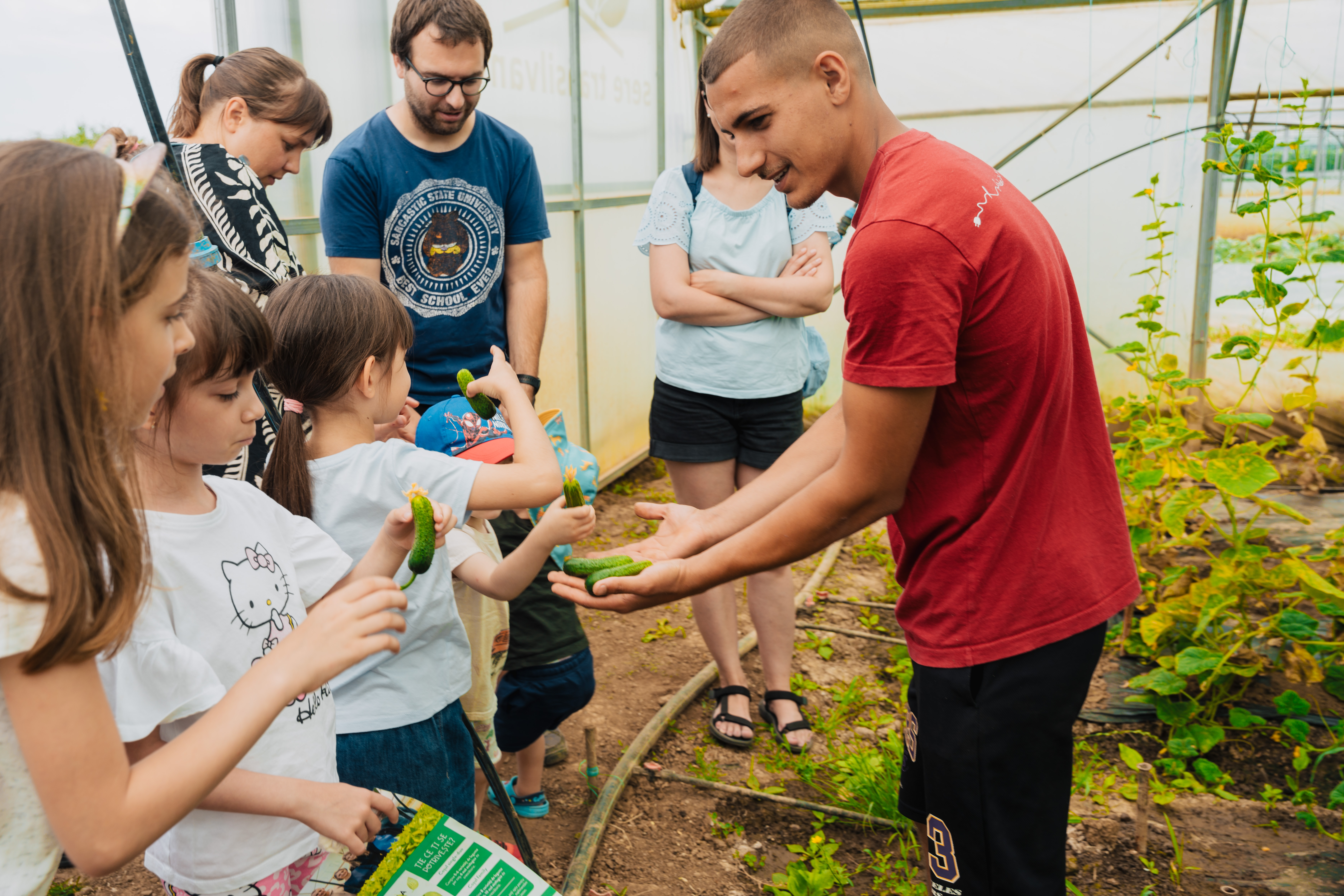
CROP (Resources Centre for the People and the Planet) is an experiential learning hub developed by Ateliere Fără Frontiere at the bio&co social farm in Ciocănari, Romania. The project transforms an organic farm into a shared learning space where children, teachers and communities explore sustainability through direct interaction with nature. Through hands-on activities focused on biodiversity, sustainable agriculture, circular economy and responsible food systems, CROP reconnects citizens from urban areas with nature while also creating meaningful connections between communities with a different social background.
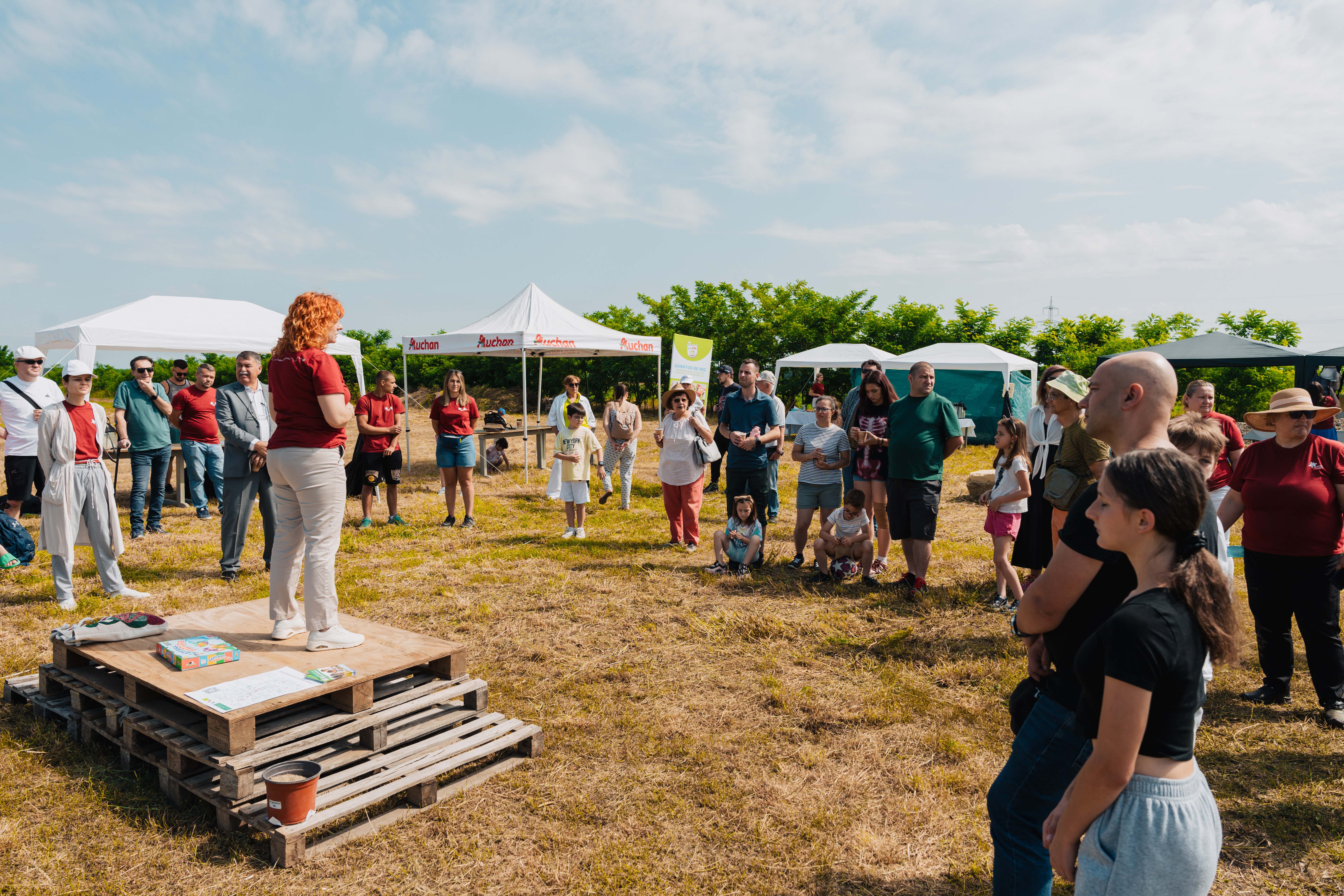
The first edition of the project has been successfully completed and demonstrated the value of experiential environmental education and community participation. In this phase, between May 2024 and September 2025, 800 children participated in 47 workshops held directly at the farm, discovering ecological processes through practical activities in fields, greenhouses and outdoor learning spaces. In addition, more than 340 participants oined community events that created opportunities for dialogue, collaboration and shared responsibility for environmental challenges.
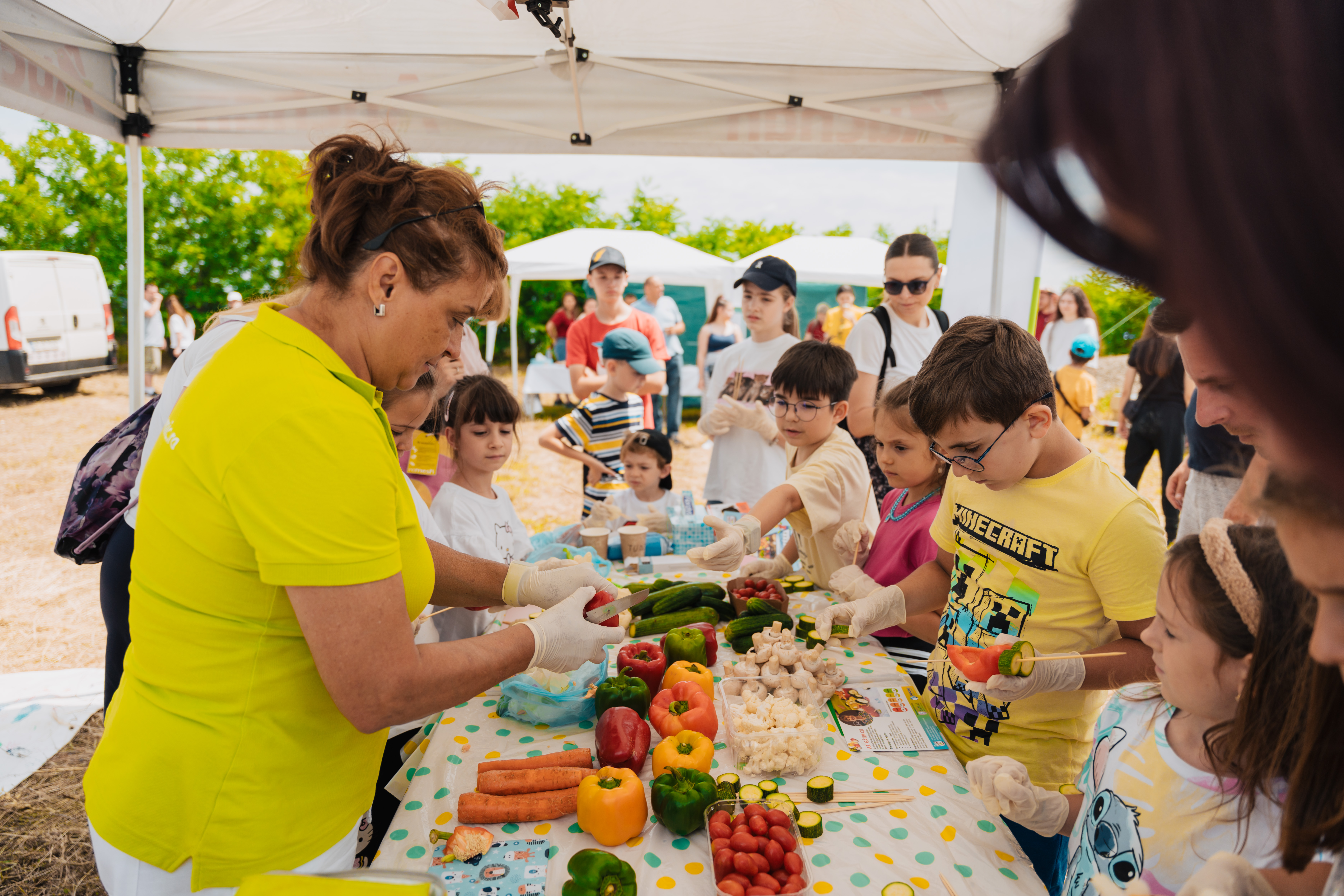
Beyond environmental education, CROP is designed as a space where people reconnect with each other. The project brings together children and adults from urban areas, public and private representatives from rural communities and the vulnerable employees working at the social farm, creating encounters that strengthen empathy, inclusion and understanding between different social groups. Through outdoor events, workshops and collective activities, participants contribute together to building healthier environments and stronger communities.
In the long term, CROP aims to grow into a national hub for experiential sustainability education and civic engagement, empowering new generations to actively participate in building more inclusive, resilient and environmentally responsible communities.
bio&co began as a social organic farm created to offer meaningful work opportunities for vulnerable people from rural communities while producing healthy food through sustainable agriculture. Located in Ciocănari, near Bucharest, the farm combines ecological farming with a work integration programme that supports people facing barriers to the labour market. Over time, the farm became more than a place of production—it evolved into a space where people, nature and community intersect.
Building on this foundation, CROP was created to open this environment to a wider community, especially to children and young people growing up in urban areas with limited access to nature. As cities continue to expand, many children are increasingly disconnected from natural systems and from understanding where food comes from. CROP emerged as a response to this challenge, transforming the farm into a living educational space where sustainability can be experienced directly rather than explained in a classroom.
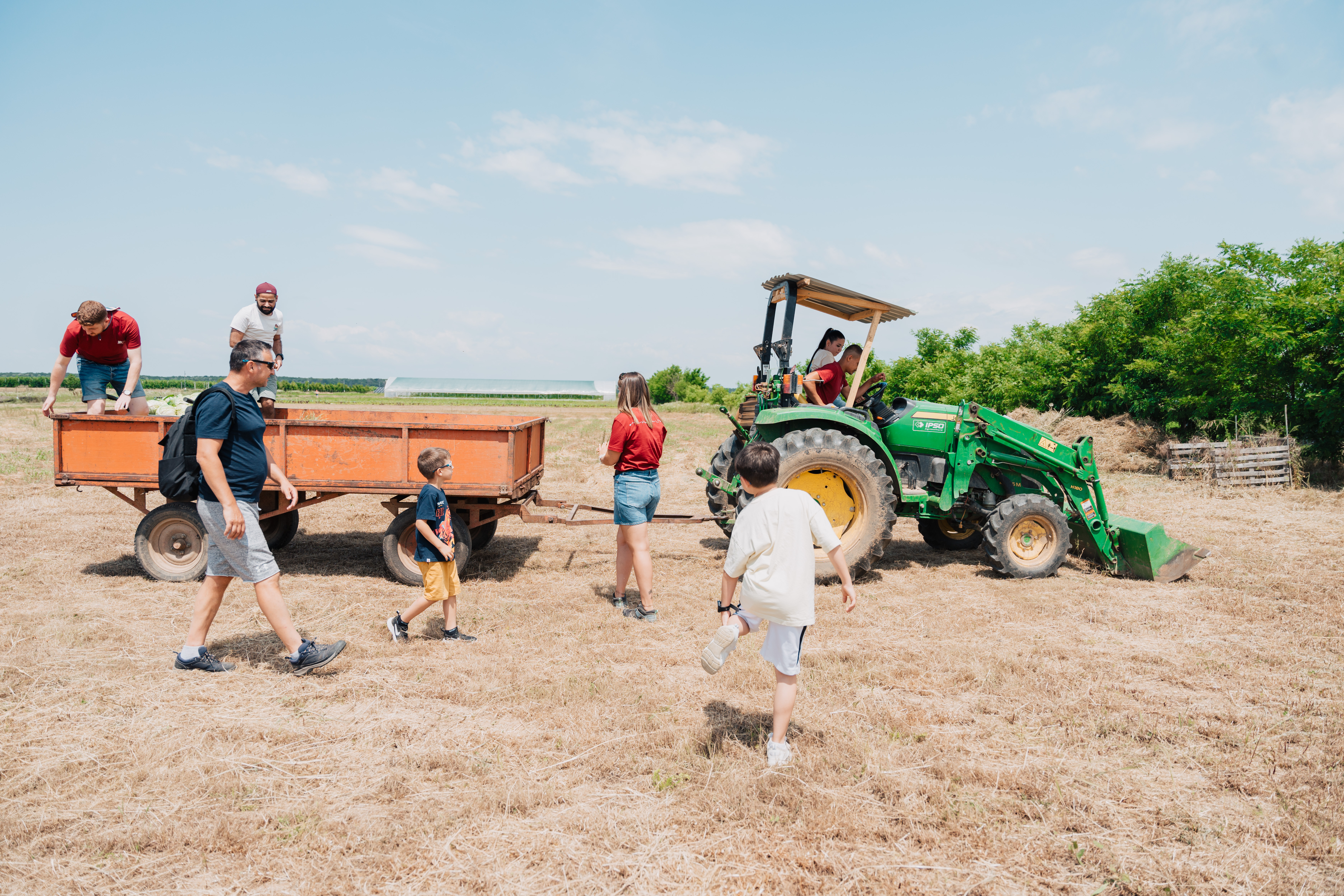
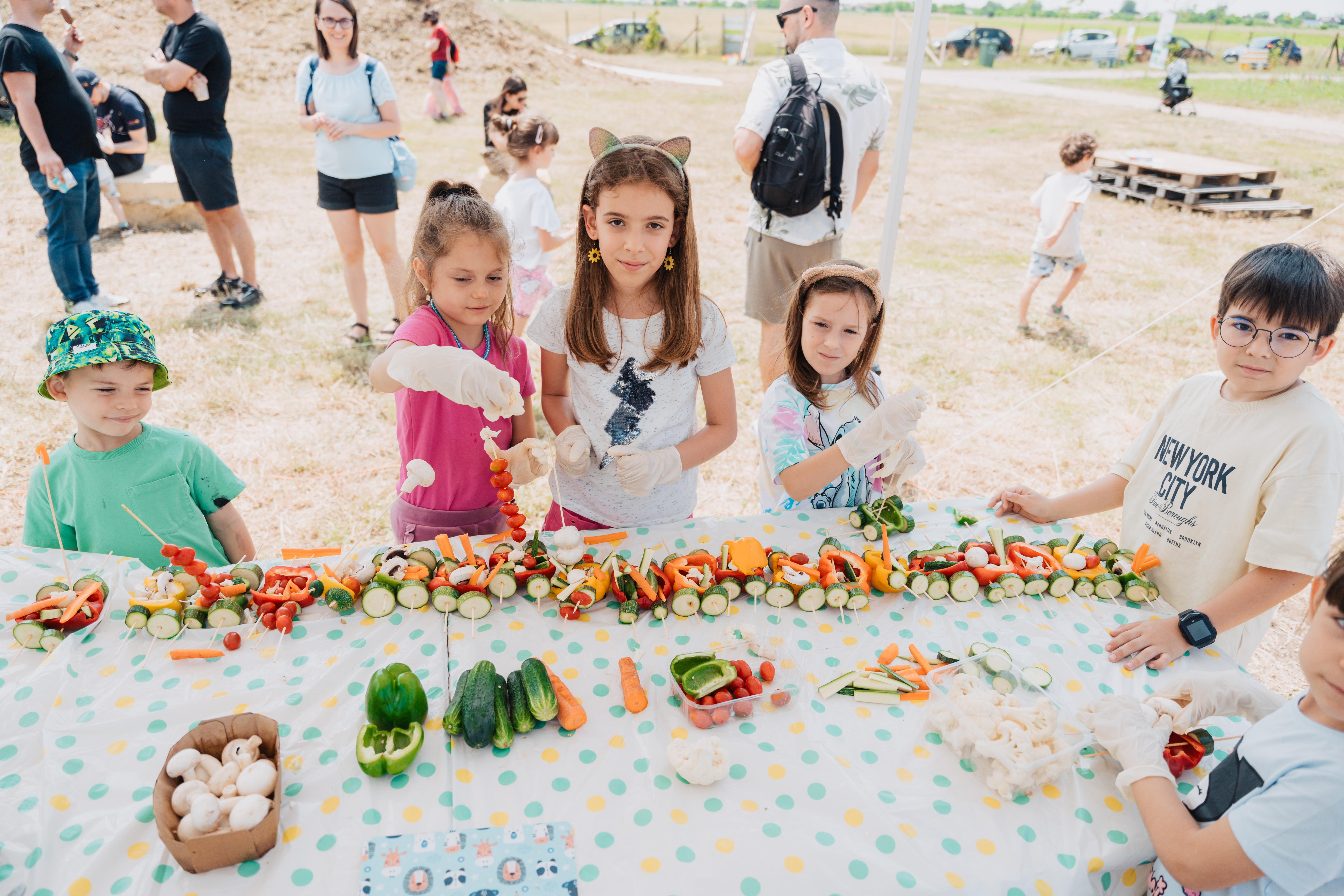
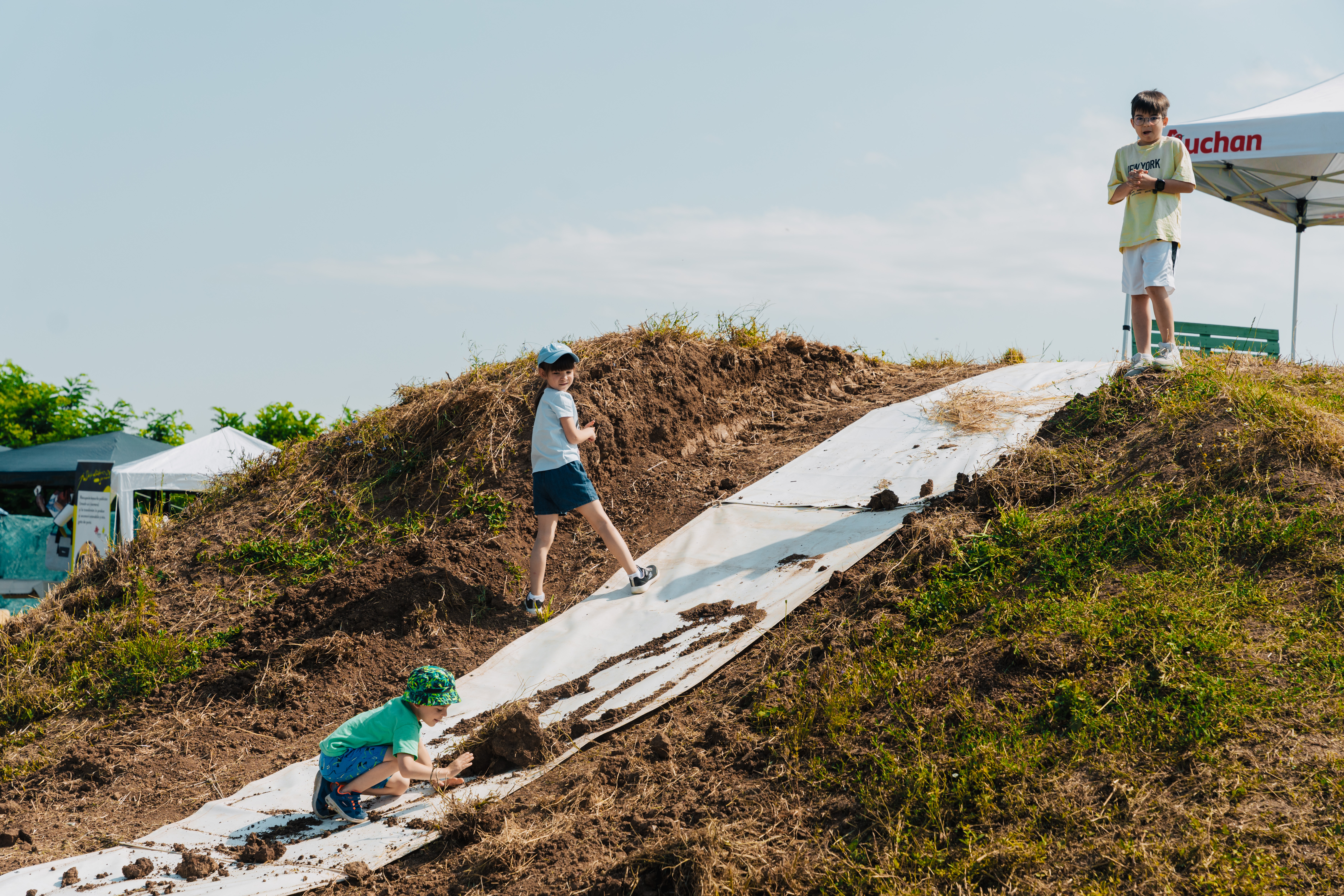
The first edition of CROP was implemented through experiential workshops and community events hosted directly at the farm. Children participated in hands-on activities exploring biodiversity, organic agriculture, food waste and circular economy practices. They worked in gardens, visited greenhouses, learned about composting and discovered ecological processes in real life. At the same time, the project created opportunities for interaction between urban visitors, rural communities and the vulnerable employees working at the farm.
Through outdoor workshops, volunteer activities and community gatherings, CROP became a place where people from different social backgrounds meet, learn and collaborate. The project reconnects people with nature, but also reconnects people with each other—creating shared experiences that strengthen empathy, inclusion and community participation while contributing together to a healthier environment.
social inclusion
healthy food, healthy life
reconnecting with nature
urban–rural connection
circular economy
CROP builds on the foundation created by Ateliere Fără Frontiere and the bio&co social farm, where sustainability and social inclusion are central to the organisation’s mission. The farm itself was created as a work integration enterprise that supports vulnerable people facing barriers to the labour market, offering not only employment but also social support and opportunities to rebuild confidence and dignity. CROP strengthens this foundation by opening the farm to the wider community and creating opportunities for interaction that help break down stigma and connect different social groups.
From an environmental perspective, CROP transforms a 100% organic farm into more than a production space: it becomes a place of discovery and learning. Through workshops and outdoor activities, children and visitors explore biodiversity, sustainable agriculture, circular economy practices and responsible resource use. Experiencing these topics directly in nature helps participants, especially younger ones, to better understand environmental systems and encourages healthier and more sustainable everyday behaviours.
CROP also contributes to social sustainability by bringing together people who would not normally meet: urban children and families, rural communities and the vulnerable employees working at the farm. Through workshops, volunteer activities and seasonal community events (like Harvest day in September/October), the project creates shared spaces where people collaborate, exchange ideas and contribute together to a healthier environment.
At the same time, the farm and project is gradually becoming a cultural meeting point where artists, educators, activists and community members gather to exchange ideas and collaborate on initiatives related to sustainability and social change.
CROP builds on the mission of the bio&co social farm to transform a peripheral rural area near Bucharest—located in a vulnerable and economically disadvantaged community—into a welcoming place where people can connect, rediscover nature and spend meaningful time together. What was once a conventional agricultural space is gradually becoming a community environment where learning, relaxation and social interaction coexist.
Through CROP, the farm is opened to children, families and visitors who experience nature not only as a productive landscape but also as a space of wellbeing and discovery. Elements such as the sensorial garden, outdoor learning areas and community events create an environment where people can slow down, reconnect with nature and with each other, and develop a stronger sense of belonging to the place. These shared experiences help visitors see the farm not only as a place of production, but as a living community space.
The project also contributes to long-term environmental beauty by supporting regenerative agricultural practices. Natural pest control, hedgerows, biodiversity areas and organic farming methods gradually create a healthier ecosystem that restores soil, encourages pollinators and strengthens the local biosphere.
At the same time, the farm offers a safe and supportive workplace for vulnerable employees, ensuring that the space remains not only environmentally sustainable but also socially caring and inclusive.
What makes CROP exemplary from an aesthetic perspective is the organic combination of multiple functions within the same landscape. Agriculture, education and community life coexist and adapt to the rhythms of nature and the seasons. The result is a peri-urban agricultural space that becomes an oasis of learning, connection and wellbeing—demonstrating how rural landscapes can evolve into places that are both productive and beautiful for people and communities.
CROP builds on the long-standing commitment of Ateliere Fără Frontiere to social inclusion and equal opportunities. The project is developed within the bio&co social farm, a work integration enterprise that employs vulnerable people from the local community and supports them beyond employment through social assistance, professional development and reintegration into the labour market. By opening the farm to the public through educational activities and community events, CROP helps reduce stigma and creates opportunities for interaction between different social groups.
Accessibility is central to the project’s design. Located at the edge of Bucharest, the farm offers an accessible natural space where children, families and schools from both urban and rural areas can participate in workshops and events regardless of their social or economic background. Activities are designed to be inclusive and welcoming to diverse groups, including children from disadvantaged communities who may otherwise have limited access to environmental education or natural environments.
CROP also promotes inclusion by creating encounters between people who rarely meet in everyday life: urban children and families, rural residents and the vulnerable employees working at the farm. Through shared activities such as workshops, volunteer days and community events, participants collaborate, learn from one another and develop empathy across social boundaries.
The project also reflects inclusive governance principles by bringing together civil society organisations, schools, volunteers, local communities and private partners who contribute to the development and activities of the space. This collaborative approach allows the project to function as a shared community resource rather than a closed initiative.
Citizens, communities and civil society organisations have played an active role in shaping and developing CROP, building on the collaborative ecosystem created around the bio&co social farm.
A key contribution came from volunteers, especially employees from partner companies, who were directly involved in creating the physical space of the project. Through volunteering days organised at the farm, they helped build and improve the educational environment by planting hedgerows, developing the sensorial garden, preparing green areas and supporting the creation of outdoor learning spaces. These activities allowed participants to contribute physically to the transformation of the farm into a community space dedicated to sustainability and learning.
The employees of the bio&co farm—many of whom come from vulnerable backgrounds—are also central to the project. Beyond their daily agricultural work, they interact with visitors during workshops and community events, sharing their experience and helping bridge the gap between urban visitors and the rural community.
Children, families and teachers participating in the living labs and educational workshops are not only beneficiaries but also active contributors. Through discussions, feedback and collaborative activities, they help shape the learning experience and generate ideas that can be applied in schools, organisations and local initiatives.
Community events further involve NGOs, educators, activists and local residents who use the space to exchange ideas and explore ways to promote sustainable practices.
Through volunteering, co-creation and community participation, CROP functions as a shared platform where citizens, organisations and partners collectively build and continuously develop a space dedicated to sustainability, learning and social inclusion.
CROP was developed through collaboration between local authorities, civil society organisations and private sector partners connected to the bio&co social farm.
At the local level, the municipality has supported the project by facilitating administrative processes such as construction approvals and other necessary permits for developing the infrastructure at the farm. This cooperation helps integrate the project into the local community and ensures that its activities align with local development needs.
Schools, NGOs and community groups participate directly through workshops, educational activities and community events hosted at the farm. Their involvement helps shape the educational content and ensures that the project responds to real needs from teachers, children and local communities.
Private companies that have supported the farm over time contribute through financial support, expertise and volunteering programmes. Their employees participate in activities such as building elements of the educational space, planting hedgerows and helping develop the sensorial garden.
Within the organisation, Ateliere Fără Frontiere follows a collaborative governance model in which employees contribute to project development and decision-making.
This combination of local public support, civil society participation and private sector involvement creates a practical multilevel collaboration that supports the development and long-term sustainability of CROP.
Environmental sciences and sustainable agriculture are central to the project, as the activities take place within an organic farm where participants learn about biodiversity, soil health, circular economy practices and ecological farming methods.
Education is another key discipline, as CROP is designed as an experiential learning environment where children and teachers explore sustainability topics through hands-on activities, outdoor workshops and living lab sessions.
Social sciences also inform the project through its strong focus on social inclusion and community engagement. The farm operates as a work integration enterprise employing vulnerable people, while the project itself creates opportunities for interaction between urban visitors, rural communities and the farm’s employees.
Design plays an important role in shaping the physical and experiential environment of the project. Elements such as the sensorial garden, outdoor learning spaces and the overall layout of the farm were developed to support interaction, discovery and accessible learning in nature.
At the end of the first edition, in autumn 2025, a new indoor space was developed to support the continuity of activities during the cold season. This multifunctional space includes an event area, a workshop area for children, and a nature-integrated environment designed to maintain a strong connection with the surrounding landscape. It was co-developed with interior designers to ensure its sustainable integration into the farm, and further customised by artists through paintings, graffiti, plant-based installations, and other elements reflecting nature and our relationship with it, even in enclosed settings.
CROP is built on the financial and operational model of the bio&co social farm, which functions as a work integration social enterprise. This structure allows the project to combine economic activity with social and educational impact.
The long-term sustainability of the project relies on a mixed model. The core operational costs of the farm—such as salaries, agricultural activities, maintenance of greenhouses and cultivation throughout the year—are covered through the farm’s own economic activity. The farm produces organic vegetables that are sold through a weekly subscription system to individual customers and, more recently, through B2B partnerships with local businesses.
Activities directly related to CROP, such as workshops, educational infrastructure or community events, are usually supported through private sponsorships and partnerships with companies that share the project’s sustainability and social inclusion values. Many of these partners also contribute through employee volunteering programmes and expertise.
This combination of self-generated revenue from agricultural production and private sector support allows the project to remain financially stable while continuing to expand its educational and community activities. The model demonstrates how social enterprises can sustain community initiatives by linking economic activity with social and environmental impact.
Ateliere Fără Frontiere was also recognised by the New European Bauhaus initiative as runner-up in 2022 for the project Dăm Click pe România and continues to contribute as an active member of the NEB community at local level, promoting its values of sustainability, inclusion and community participation through initiatives such as CROP.
The CROP model is both complex in its impact and simple in its core structure, which makes it adaptable and replicable in different contexts. Its main strength lies in the combination of experiential environmental education, community engagement and nature-based spaces that can be implemented independently or together depending on local conditions.
Several elements of the project can be transferred. The educational methodology—hands-on workshops, outdoor learning and living lab activities focused on biodiversity, sustainable agriculture and circular economy—can easily be implemented by other organisations, schools or farms. These activities do not depend on large infrastructure and can be adapted to different environments and age groups.
The model can also be replicated in other organic farms across Europe. Farms that already practice sustainable agriculture can integrate educational and community activities similar to CROP, opening their spaces to children, families and local communities without necessarily operating as social enterprises.
At the same time, the social integration component can also be adopted independently. Farms or rural initiatives could integrate work integration practices to increase social inclusion within their communities, creating employment opportunities for vulnerable groups.
Finally, the physical elements of the project—such as sensorial gardens, demonstration greenhouses, biodiversity areas or outdoor learning spaces—can be replicated even in peri-urban environments at a smaller scale. These spaces can function as community hubs for environmental education and connection with nature, even where agricultural production is limited.
Because many European cities still have underused peri-urban areas, the CROP approach offers a practical model for transforming these spaces into accessible environments for learning, community building and sustainable living.