Arts, Culture, and Heritage as Drivers of Change
Made to be in touch with
Made to be in touch with; How can we design for emotional connection between people and clothing?
Although clothing has a high potential for memory and attachment, today’s fashion system encourages forgetting through global standardization and rapid trend cycles. Local stories as well as temporal and spatial references are lost, which makes it more difficult to form emotional relationships with garments.
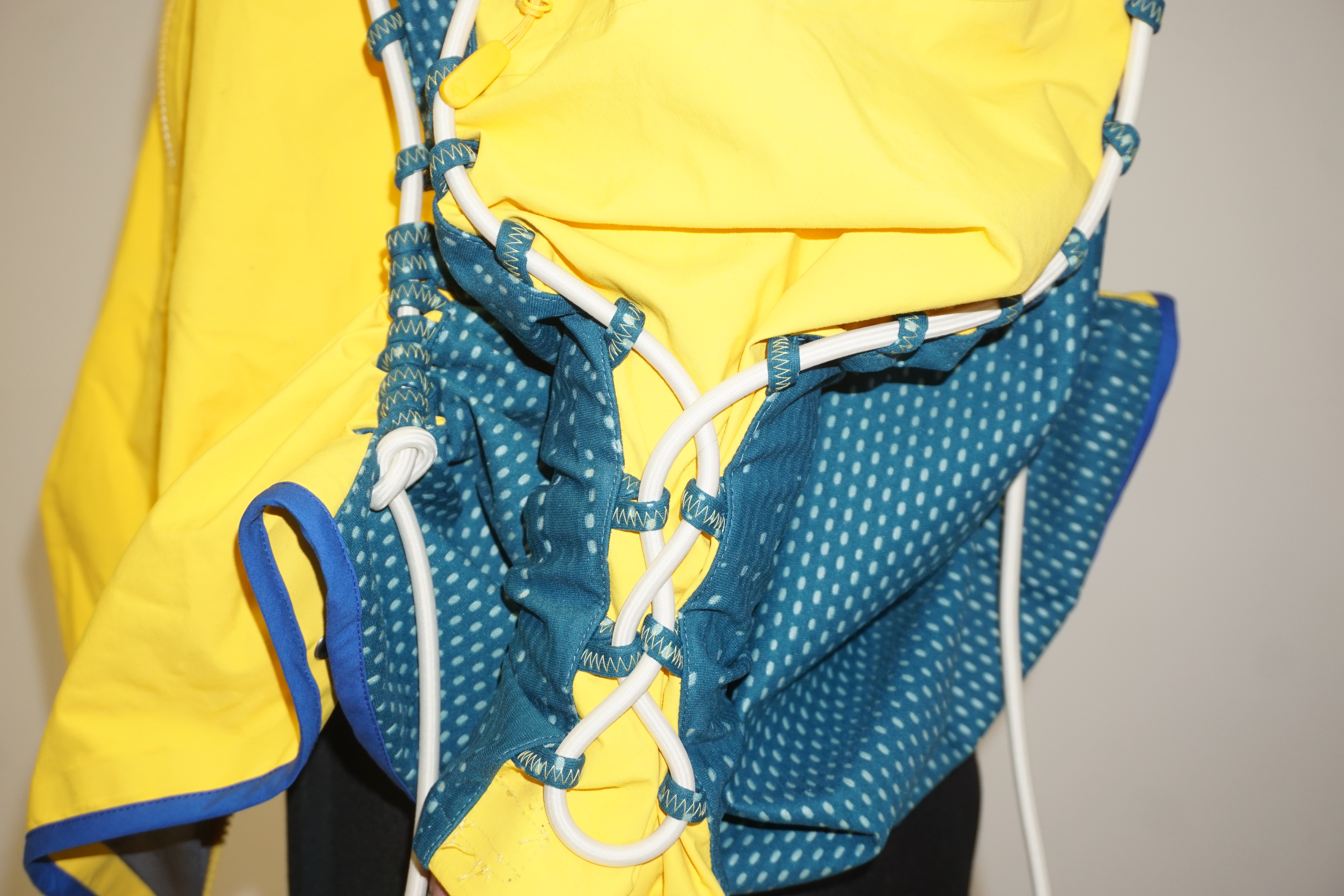
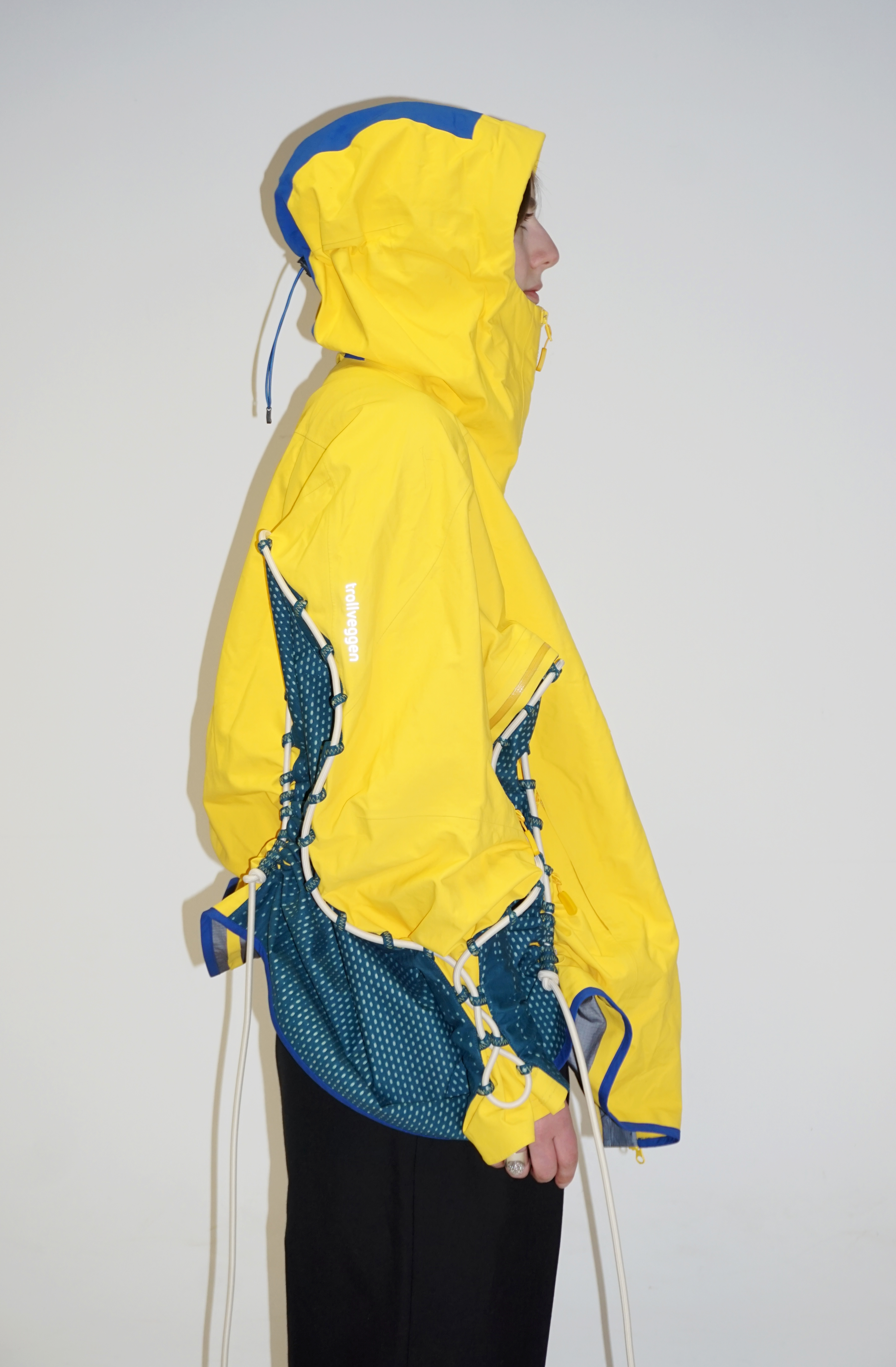
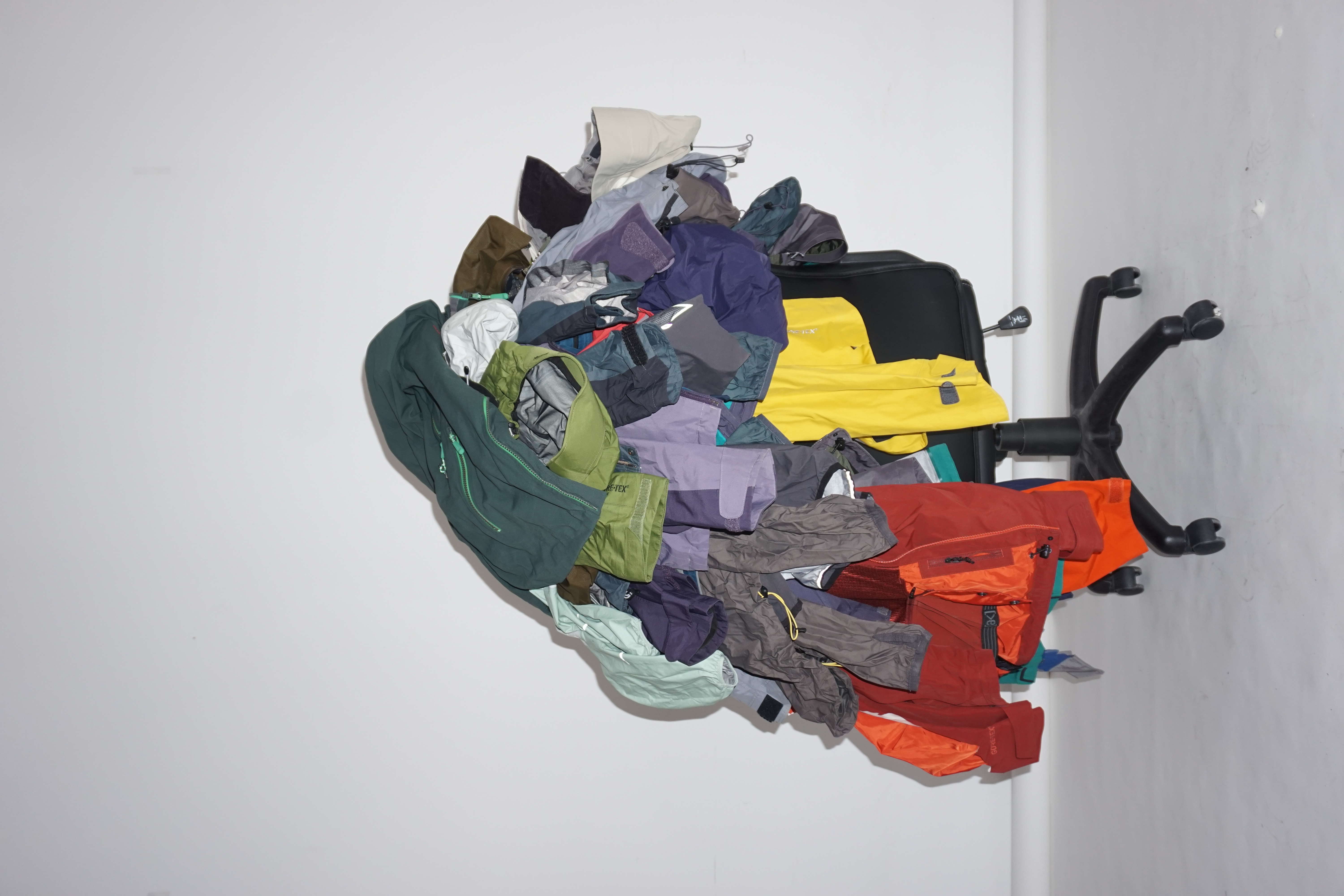
To counteract this anonymity, the project combines used traditional garments from the Alpine region with irreparable outdoor clothing and recontextualizes them spatially and temporally.
To counteract this anonymity, the project combines used traditional garments from the Alpine region with irreparable outdoor clothing and recontextualizes them spatially and temporally.
Austria
Local
The concept is being developed and implemented in Linz, upper Austria. The proposed strategy of designing clothing with the potential for emotional attachment could be adapted at the national level by responding to regional and traditional aesthetics and craftsmanship.
It addresses urban-rural linkages
It refers to other types of transformations (soft investment)
Prototype level
No
No
No
Individual
The artistic-scientific research investigates how designers can strengthen the potential for emotional attachment to clothing. Although clothing inherently has a strong capacity to carry memories and foster attachment, today’s fashion system tends to promote forgetting through global standardization and rapid trend cycles. Local stories and perspectives outside Western, growth-oriented logics are often ignored. The detachment of clothing from time and place makes emotional relationships more difficult.
To counteract this anonymity, the project combines used traditional garments from the Alpine region with irreparable outdoor clothing from the company Grötzmeier in Linz. Today, traditional garments are mainly worn as festive attire. In the past, however, they served as everyday and work clothing. Materials such as wool and leather fulfilled functions similar to those of today’s outdoor clothing made from synthetic materials.
Modern technologies and globalized aesthetics have little connection to specific places. Traditional garments, by contrast, do. The history carried by the Austrian Tracht is strongly shaped by the period of National Socialism, and even today identity is often associated with nationalism and exclusion. Yet in times of radical ecological change, it is necessary to give concepts such as identity, regionality and attachment new, positive meanings. By merging traditional and functional garments that have lost their original purpose, they are recontextualized in both time and place.
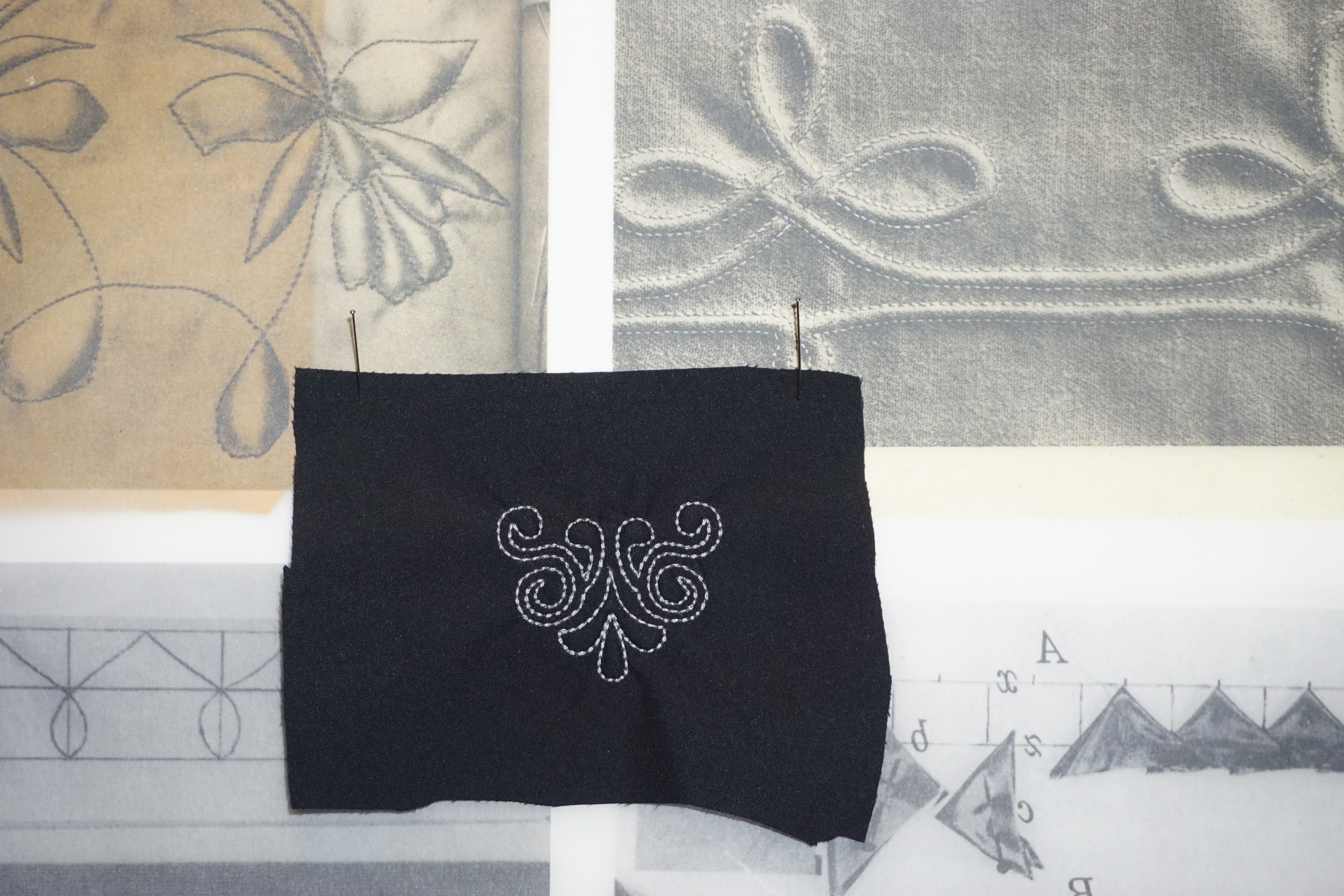
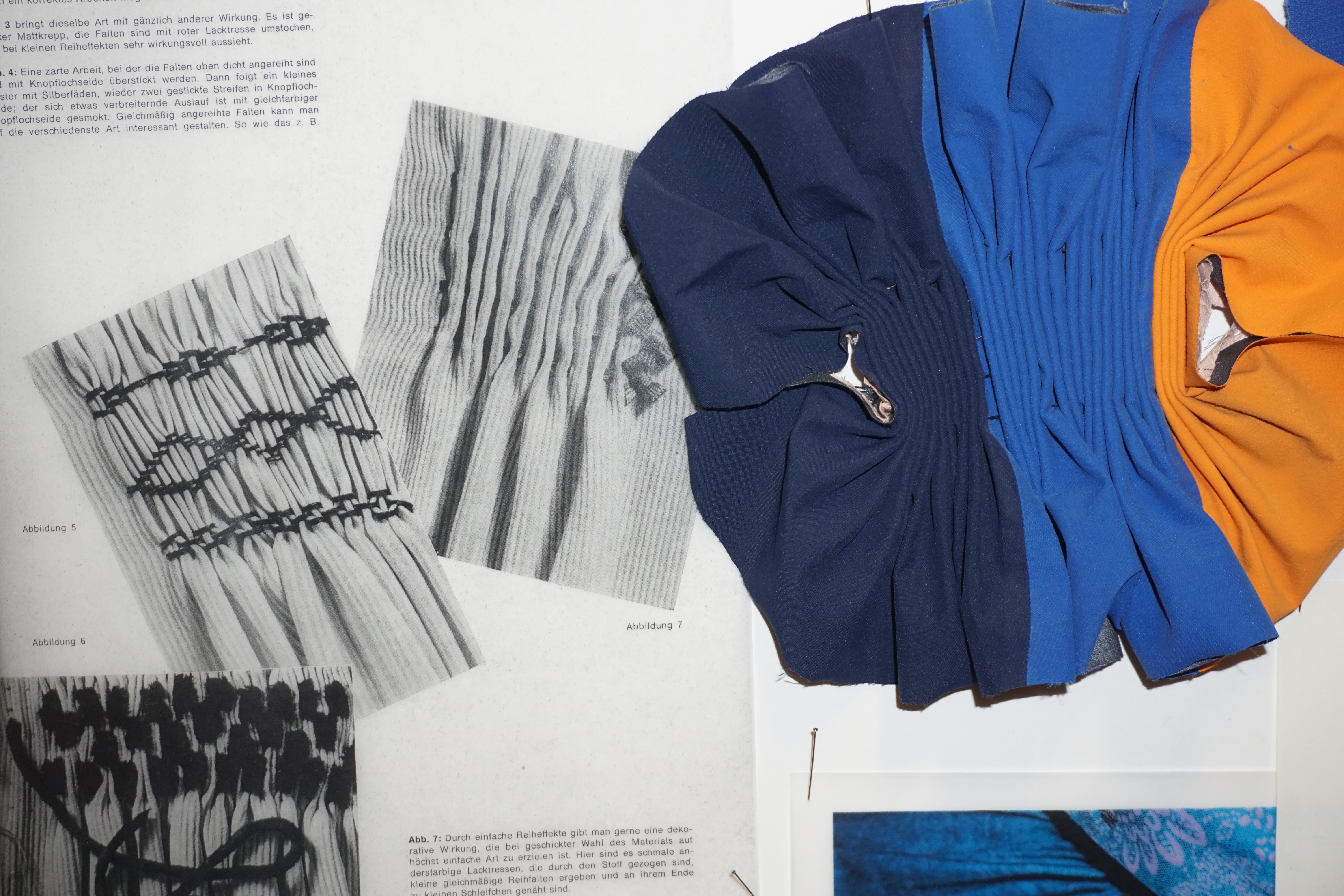
Traditional and contemporary processing techniques as well as aesthetic strategies are examined in terms of repairability, function, and relevance, and are deliberately applied in unconventional ways. The outcome is a collection of 15 outfits, along with documentation of the process and the research. Currently the collection is in the making and by the end of June seven Outfits will be finished.
Clothing is something very emotional to me. Because of its closeness to the body, it influences our feelings, and through wear and use it stores personal experiences. I believe clothing should not be a disposable product, but something with which we form a relationship. Driven by this personal conviction and my interest in the stories that garments carry, I began researching the topic of emotional durability in products, particularly in clothing.
Compared to the physical durability of products, there is very little research on emotional durability, even though it plays a central role in sustainability. During my research, it became clear that clothing has a strong potential to store memories and evoke emotions, but that the current globalized and homogenized fashion system makes this very difficult. At a networking meeting on textile waste during the Symcraft Symposium, I got to know the company Grötzmeier. Grötzmeier offers a repair service for outdoor clothing, but about five percent of the items are irreparable and are discarded. Although these pieces no longer fulfill their original function, they remain a valuable resource with great potential for creative reuse. Since it is also important to the company’s founder to throw away as little as possible, they provide me with the discarded items. I found the combination of outdoor clothing and traditional garments (Tracht) particularly interesting because there are some overlaps in their design and function, but also strong contrasts. In the further process, the two categories were closely examined in terms of construction, materiality, aesthetics, function, and history. From this analysis, strategies were and will be developed that guide how the garments are further transformed.
Compared to the physical durability of products, there is very little research on emotional durability, even though it plays a central role in sustainability. During my research, it became clear that clothing has a strong potential to store memories and evoke emotions, but that the current globalized and homogenized fashion system makes this very difficult. At a networking meeting on textile waste during the Symcraft Symposium, I got to know the company Grötzmeier. Grötzmeier offers a repair service for outdoor clothing, but about five percent of the items are irreparable and are discarded. Although these pieces no longer fulfill their original function, they remain a valuable resource with great potential for creative reuse. Since it is also important to the company’s founder to throw away as little as possible, they provide me with the discarded items. I found the combination of outdoor clothing and traditional garments (Tracht) particularly interesting because there are some overlaps in their design and function, but also strong contrasts. In the further process, the two categories were closely examined in terms of construction, materiality, aesthetics, function, and history. From this analysis, strategies were and will be developed that guide how the garments are further transformed.
Emotional Durability
Ecological Change
Repurpose
Traditional Handcraft
Redefining Identity
In the last century, progress and emancipation meant prosperity and freedom through production. Today, however, it has become clear that the world from which people live is also the world in which we live. This world has limits, and emancipation does not mean constantly exceeding them, but learning to adapt to them.
Freedom therefore does not mean being able to take all available resources. Freedom does not mean being able to consume endlessly. Freedom does not mean being able to buy everything. Emancipation does not mean finding ways to produce ever more and ever faster.
It is time to form attachments and acknowledge our interdependence. The project focuses on the emotional durability of clothing, but physical durability is also a key consideration in the design process. The work primarily uses waste materials. Accessories such as elastic bands, ropes, or lining fabrics—which are necessary to create a high-quality and attractive redesigned collection—should be organic or recycled.
In Ingrid Loschek’s Mode- und Kostümlexikon (1987), “fashion” is described as the expression of the lifestyle and mindset of a group of people at a particular time. It is defined by political, social, economic, technological, and cultural factors (Loschek, 2005).
Today, I would expand this definition to include ecological factors. Ecological crises are omnipresent and cannot be separated from fashion. Even though the factors mentioned above are closely connected to ecological developments and are, in a sense, inherent to them, these developments often seem to be deliberately ignored. For this reason, I consider it important to name ecology as a distinct factor. The speed and volume at which new clothing is produced today do not correspond to the ecological condition of the planet.
When working with worn-out, discarded textiles, the goal is to transform something that had already been set aside and destined for the trash into something desirable and beautiful. The clothing is meant to appeal to people and be worn with pleasure which enhances the wearer’s sense of well-being. The local connection created through the use of traditional techniques strengthens community and shapes a collective identity. Feeling a sense of belonging and being connected to the place where one resides by engaging with local history is something that has increasingly been lost in the disconnected world of the “Anthropocene”. Actively engaging with traditional clothing and the past enables this connection. When the clothing is marked by a negative history – as in the case of this project, the Nazi era – I firmly believe it is possible to deliberately tell a story differently and redefine tradition. By combining outdoor clothing with traditional costumes, a story is told that focuses primarily on traditional craftsmanship and functionality and challenges stereotypical gender roles. The result is an unusual aesthetic that sparks curiosity because it evokes a variety of associations. It is important to engage with both the past and the future in order to address the present. Fostering connections on both a small and a large scale is very important for a bright future.
For the separation between people and clothing is linked to the separation between clothing, time, and place, and this, in turn, is linked to the separation between people and nature in the Western narrative. It is time to tell stories of connection!
When people form emotional connections with their clothing, they consume less and more mindfully, take care of their clothes, feel connected and responsible, place greater value on quality and longevity, and free themselves from the fast-paced fashion industry.
Clothing is currently available in abundance and at very low prices. The quality of cheap clothing is poor, and it wears out quickly. That’s why it ends up being thrown away just as quickly. This fast-paced cycle of consumption is dictated by the fashion industry.
The clothing made in this project aims to be high-quality, durable, and long-lasting. As a result, it will not be sold cheaply, but it is an investment for the long term. In general, I believe that clothing must once again become higher quality and be given greater value.
The project is tied to a specific location, as it engages with traditional craftsmanship and aesthetics. However, the clothing is not intended solely for people who have a connection to this place. The proposed strategy of using traditional techniques to situate clothing within a local context and foster an emotional connection can, of course, be applied anywhere.
Traditional, indigenous knowledge that receives no attention in the Western fashion industry should be taken into account.
The Grötzmeier company in Linz is providing me with the raw materials. They are also offering access to their machines for repairing outdoor clothing. We came into contact with each other at a networking event for companies that generate textile waste and people who work with textile waste as a resource, held as part of the Symcraft Symposium at the Textile Center in Haslach. This collaboration forms the basis for the design project. Many of the traditional costumes, which serve as the other source material, come from my family and circle of acquaintances. It’s not uncommon for people in this area to have traditional costumes in their basement closets that they no longer wear but don’t want to throw away for sentimental reasons. This led to repeated personal conversations about traditional costumes with the people who then gave them to me for my project. Word got around, and now the traditional costumes are practically flying my way. Time and again, people from my hometown or from Linz reach out to me, wanting to give me their old traditional costumes.
The process of concept development and research was accompanied by regular exchanges with various individuals who are themselves active in the fields of fashion, art, philosophy, and ecology. The development of the concept is based on intensive scientific research.
When working with existing garments that show varying degrees of wear, I am constrained by the existing design. My decisions are therefore dictated by the material itself and, more generally, by the pieces I receive. I would say that the project’s resources also actively influence the development of the project.
So far, local and regional stakeholders have been involved. The Textile Center Haslach, which is part of the European Symcraft project, is monitoring and documenting the project. I would like to continue exploring and promoting the topic of the emotional durability of clothing, as I consider it very important for the development of a more sustainable fashion industry. I would like to explore this topic both on a practical and applied level as well as on a scientific and philosophical level. For me, it makes sense to work locally in a practical way, to involve regional institutions, and to bring about change where I am. However, this is a global issue, and I consider networking and collaboration—especially in the field of research—to be very important.
The Fashion Project is a research initiative exploring how to design clothing that fosters emotional connection. It addresses ecological, social, and economic issues.
The narrative of Western ideology pursues the idea that humans dominate nature. This leads to a separation. We act according to this way of thinking, in which humans and nature are not connected.
I observe that within this system, there is no connection between fashion,
time, and place, nor between people and clothing, or people and nature. By imposing the same aesthetic on the entire world—one linked to a vision of progress—differences in place and their stories are ignored. Perspectives outside a linear, growth-oriented logic are given no space. Furthermore, the extremely rapid shifts in trends dictated by the fashion industry stand in stark contrast to the rhythms of nature.
Does fashion have the potential to rewrite stories and consciously tell them differently? An active engagement with the stories of different places and times is a prerequisite for making thoughtful decisions for the future.
The project tells a story of connectedness by working with existing clothing, engaging with traditional craftsmanship, and addressing current needs and developments.
Initially, the research project would need to be continued with the help of grants. During this phase, implementation strategies would be developed, collaborations expanded, and clothing produced. The company Grötzmeier would hire me part-time in the repair service and, going forward, provide me with workshops and materials to further develop the repurposing and upcycling methods. The items can then be presented and sold. This would thus bring together repair and repurposing/redesign. The service can also be utilized by individuals with their own clothing. Instead of having their own outdoor jackets or traditional costumes repaired or throwing them away, they can have them redesigned. However, production can also be ongoing, as waste is constantly generated and resources are therefore available.
The design concept of combining traditional craftsmanship and aesthetics with old clothing to establish a local connection and thereby foster an emotional bond (while addressing the issues of overconsumption, waste, and exclusionary aesthetic norms) can be applied anywhere. It does not have to involve outdoor clothing; instead, it can be implemented in entirely different ways. The aesthetic is therefore not scalable, but the strategy is. There are plenty of companies that generate textile waste.
The project is currently underway, and so far three outfits and numerous prototypes have been produced. By the end of 2026, a collection of at least 15 outfits is expected to be completed, showcasing a variety of implementation strategies for the redesign. In addition, a written report on the project will be prepared, which will include a detailed description of the process, development, and research. I will attempt to secure financial funding to continue the project as described under the “Business Model” section.