Enhancing Circularity, Sustainability, and Innovation
FreeTrik3 - Redesigning Freedom
FreeTrik3. Bicycle-to-Tadpole Tricycle Conversion Kit
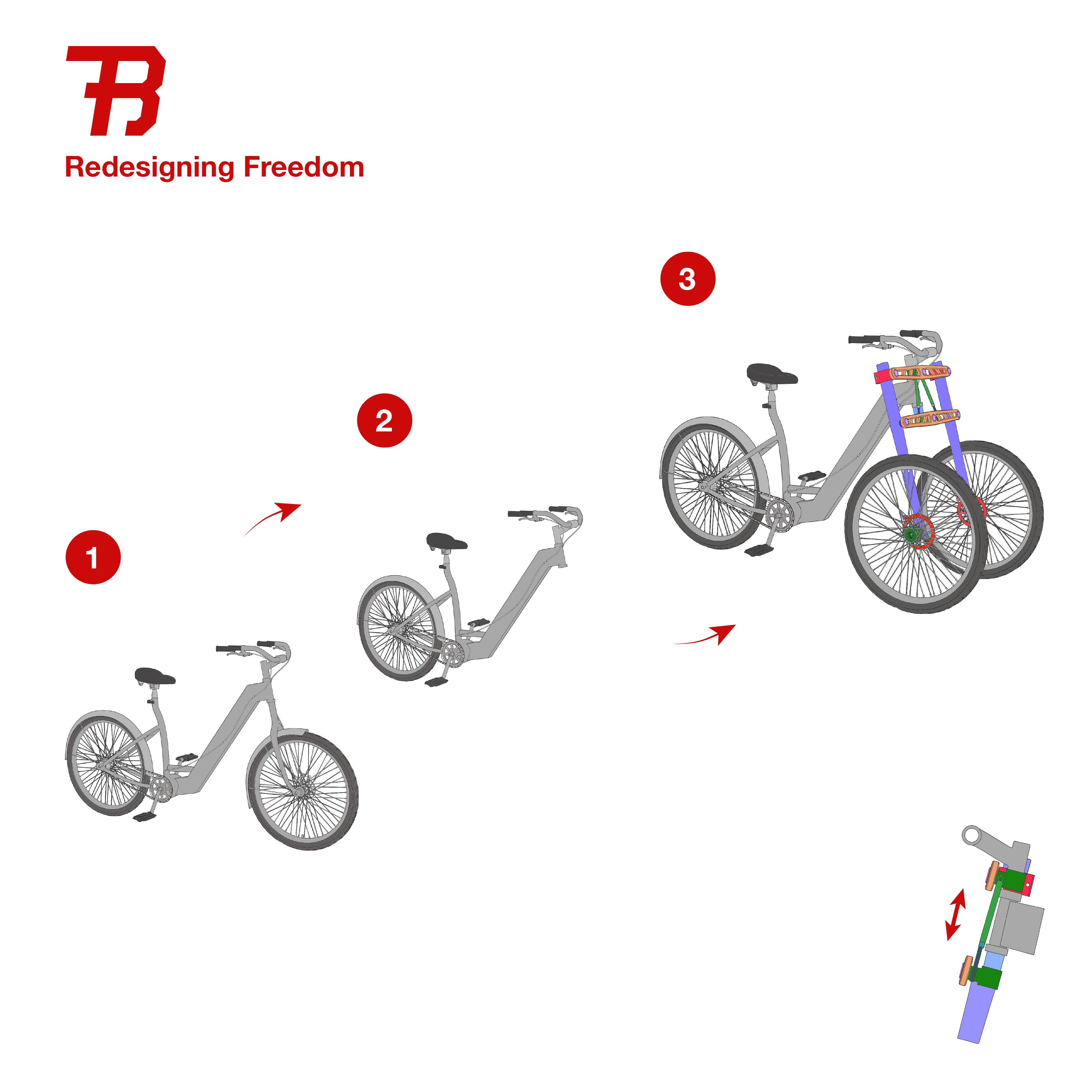
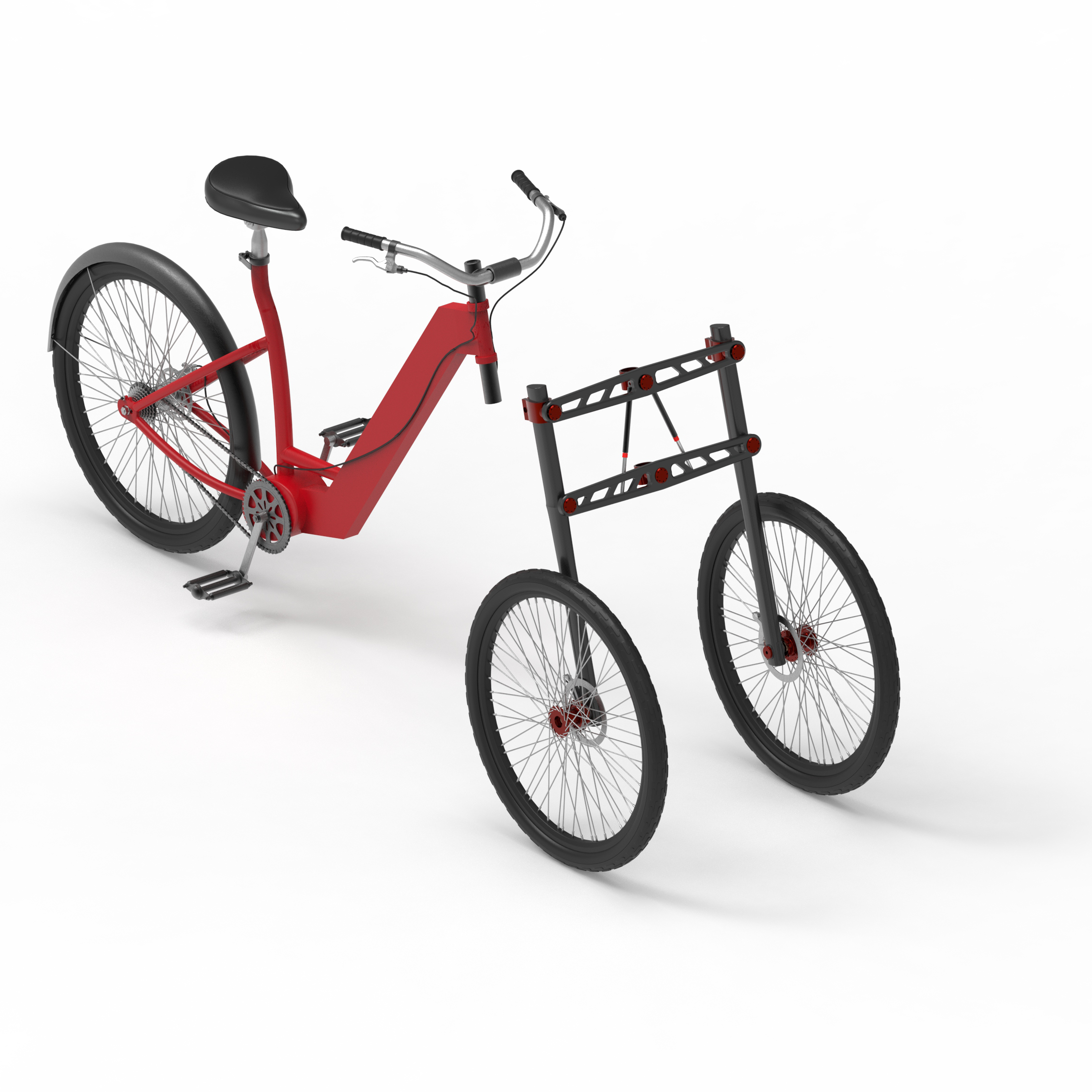
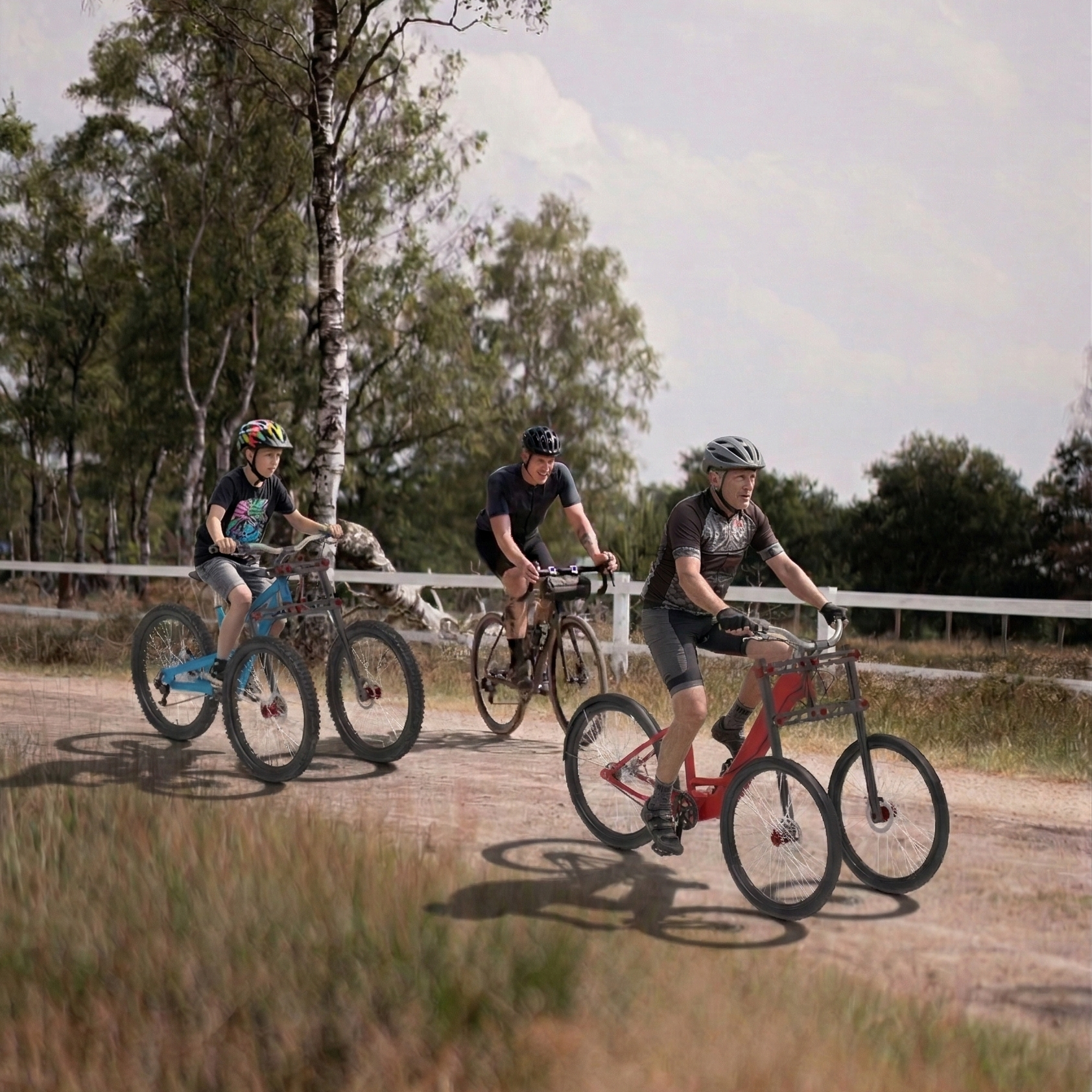
FreeTrik3 is a premium conversion kit that transforms a standard 28"/29" bicycle or e-bike into an upright tadpole tricycle — without modifying the original frame. Using aluminium and carbon fibre components, it replaces the front fork with a dual carbon-arm assembly. The result is a stable, beautiful three-wheeled vehicle accessible to people with reduced mobility, balance disorders, or any rider seeking greater confidence on two wheels.
Romania
National
It addresses urban-rural linkages
It refers to other types of transformations (soft investment)
Early concept
No
No
No
Individual
FreeTrik3 addresses a gap at the intersection of inclusive urban mobility and sustainable design: there is currently no affordable, aesthetically refined, non-invasive conversion system that allows an existing bicycle to become a stable tricycle. Conventional tricycles require purchasing an entirely new vehicle. FreeTrik3 changes this by offering a modular retrofit solution that preserves the existing bike — muscle-powered or electric — while adding a front dual-wheel tadpole configuration.
Target group
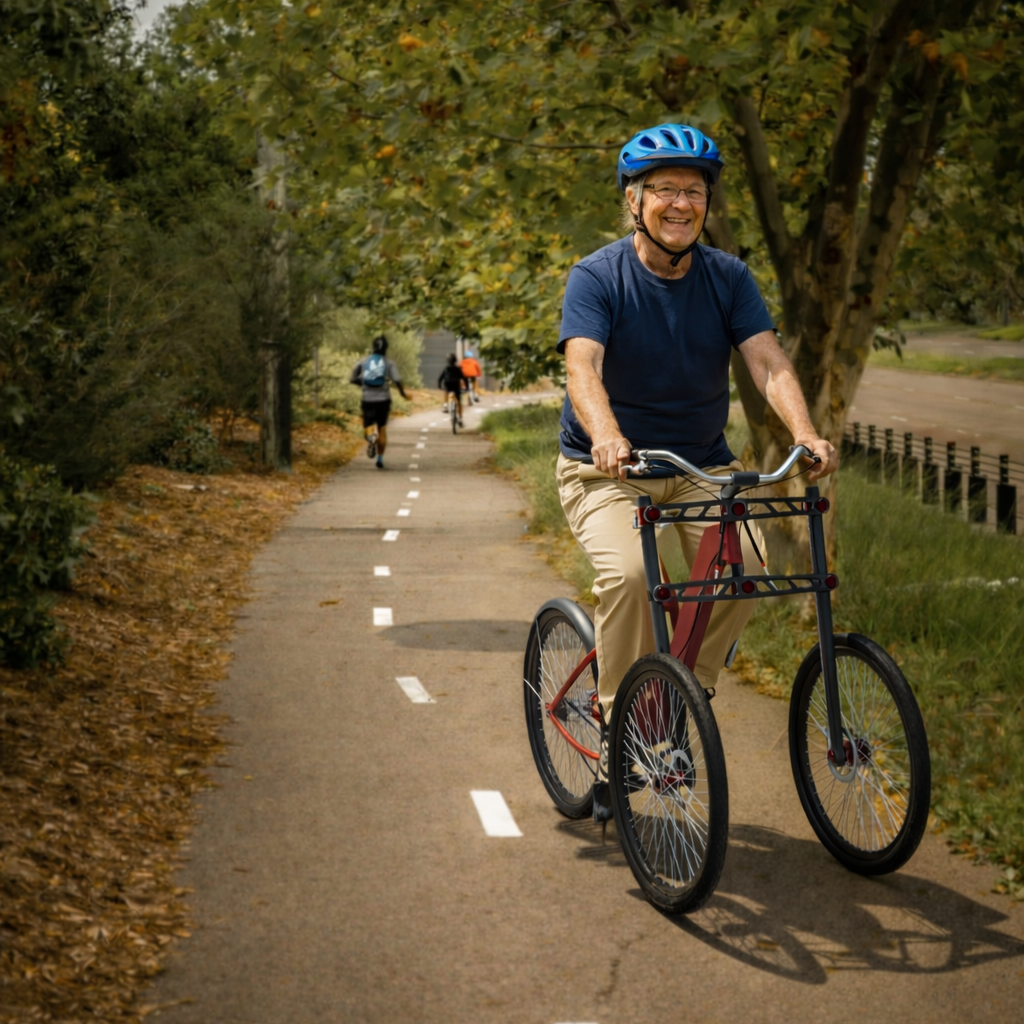
The kit is designed for the widest possible audience: people with vestibular or neurological disorders (ataxia, hydrocephalus, multiple sclerosis), elderly users with declining balance, individuals recovering from orthopedic injury, and any cyclist who simply wants greater stability without sacrificing the upright riding position or aesthetic quality of their bicycle.
Specific objectives
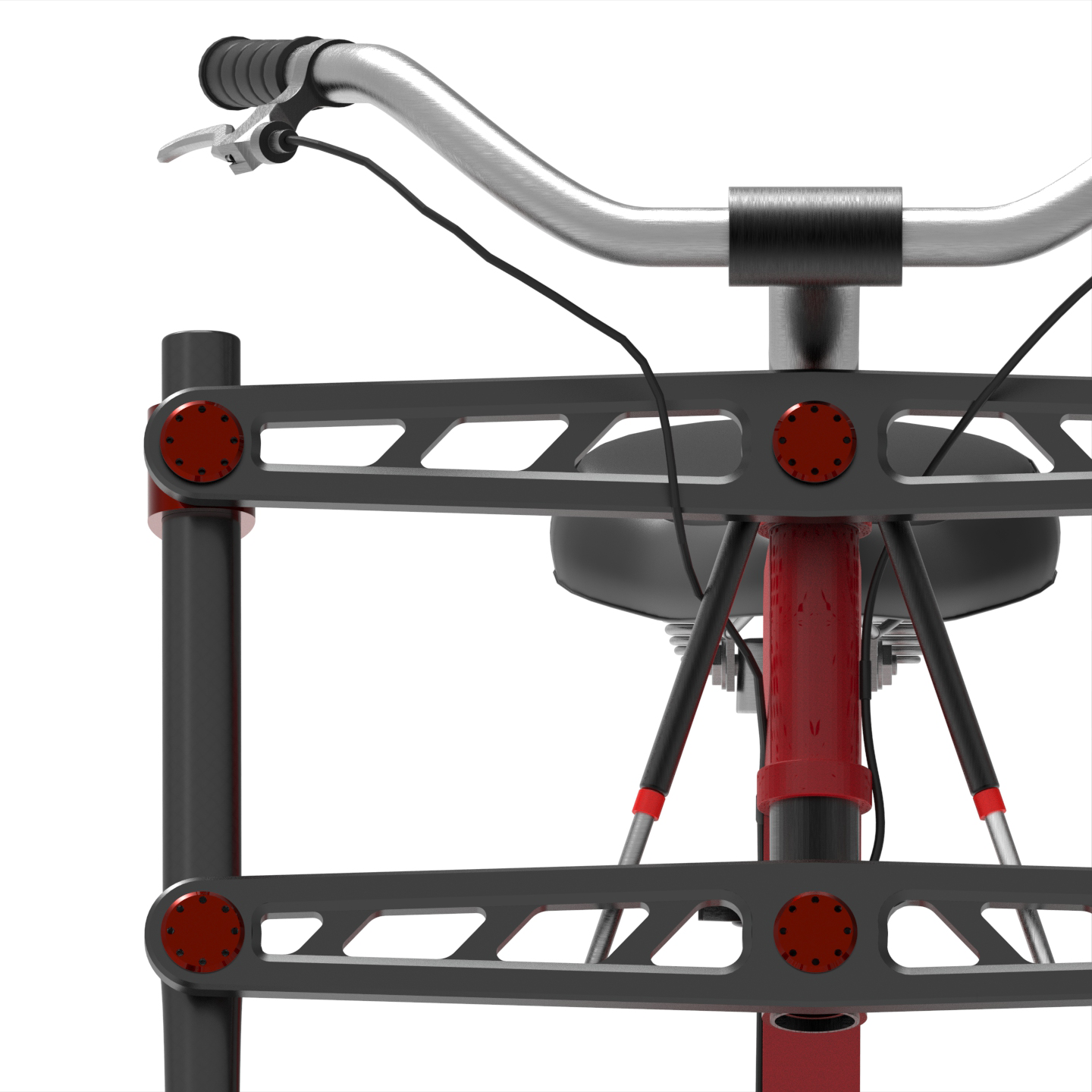
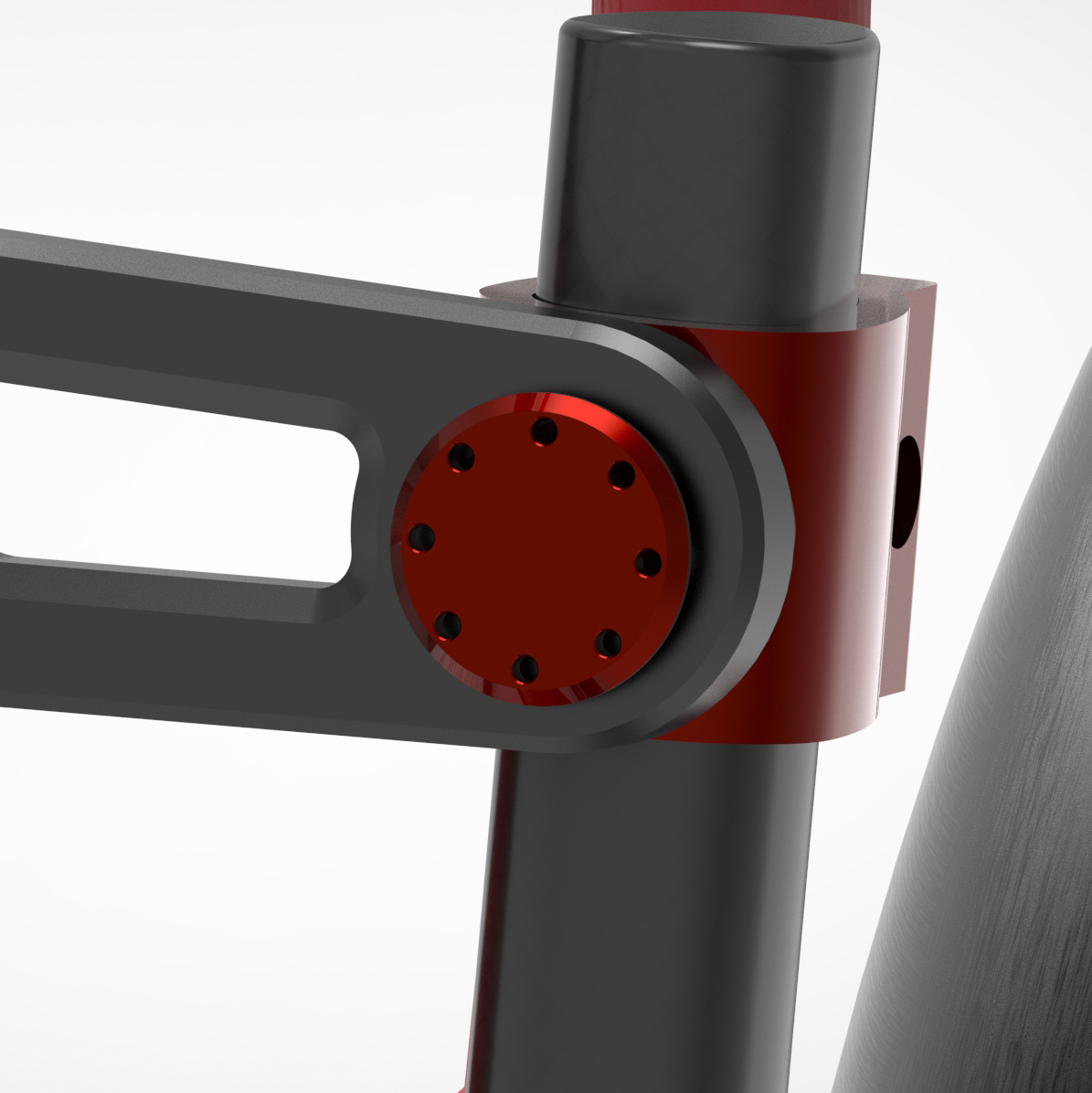
To design a conversion kit that requires no permanent modification to the bicycle frame, it’s compatible with 28" and 29" wheel bicycles and e-bikes. It integrates vertical-suspension bearings on each carbon mono-arm fork, neutralising lateral slopes; it uses premium materials — aluminium alloy and carbon fibre — for lightness and durability; it is visually distinctive and market-ready as a design object.
Transformative potential
By extending the life of existing bicycles rather than replacing them, FreeTrik3 embeds circular economy logic at the product level. It redefines what mobility aids can look like: not clinical or institutional, but beautiful, desirable, and empowering. The kit's modularity and compatibility make it inherently scalable and replicable across European and global markets.
FreeTrik3 was born at the crossroads of lived experience and academic research. At 23, the project's lead designer was diagnosed with a brain tumour that resulted in hydrocephalus and cerebellar ataxia — conditions that directly affect balance and spatial coordination — as well as diplopia (double vision). These neurological changes transformed his relationship with mobility and, ultimately, with design itself. The concept originated as a Master's thesis project in Product Design, developed with the methodological rigour of an academic environment: literature review on adaptive mobility aids, ergonomic and anthropometric analysis, anthropolgy studies and iterative prototyping of the key components. The thesis explored how premium industrial design could reframe assistive technology — moving it away from the clinical aesthetic of medical devices and towards the visual language of high-performance consumer products. Following graduation, the concept was substantially revised — renamed FreeTrik3, restructured at the engineering level, and repositioned as a concrete market proposition. A key structural innovation was introduced: vertical-travel bearings integrated into each carbon fibre mono-arm fork, which allow the front wheels to independently follow terrain while keeping the rider's platform perfectly level, eliminating lateral tilt on uneven surfaces. The evolution from thesis to market concept took shape through an active co-development partnership with Spazio Dor, a Romanian creative studio operating under HaideGabriele Holding, 100% owned by Asociația HaideGabriele!. Spazio Dor is not merely an institutional host: it is a genuine collaborator in the concept's development. The partnership is jointly building FreeTrik3's identity, communication strategy, and technical roadmap — a process that embodies the NEB's transdisciplinary and cross-border spirit. Next step will be a PCT patent application (Autumn 2026) to protect the core conversion mechanism before market.
Inclusive mobility
Circular economy
Upcycling
Adaptive design
Social inclusion
FreeTrik3's most fundamental sustainability contribution is its conversion logic: rather than manufacturing a new vehicle, the kit rehabilitates an existing bicycle. This directly reduces material consumption, production energy, and waste — embodying the principles of circularity and design for longevity at the product's core.
The choice of materials reinforces this commitment. Aluminium alloy offers an exceptional strength-to-weight ratio, is 100% recyclable at end of life, and has a well-established recycling infrastructure across Europe. Carbon fibre, used for the mono-arm front forks, provides structural performance with minimal mass — reducing the rolling weight of the converted vehicle and making it suitable for muscle-powered use without motorised assistance.
The modular design philosophy means that individual components — bearings, fork arms, steerer tube — can be replaced independently without discarding the entire kit. This repair-first approach extends the product's functional lifespan significantly beyond that of conventional tricycles.
From a social sustainability perspective, FreeTrik3 reduces barriers to active mobility for people with balance-related disabilities — a group often excluded from cycling infrastructure and the health, social, and environmental benefits it provides. By enabling more people to cycle, the kit contributes indirectly to modal shift away from motorised transport, particularly when combined with an e-bike drivetrain.
The PCT patent process currently underway will protect the innovation, enabling future licensing arrangements that can foster local manufacturing in multiple European territories — supporting regional industrial ecosystems rather than centralised production chains.
The aesthetic dimension of FreeTrik3 is not incidental — it is central to the project's mission. Conventional mobility aids for people with balance disorders are typically characterised by a clinical, utilitarian visual language that many users experience as stigmatising. FreeTrik3 deliberately rejects this aesthetic in favour of the vocabulary of premium cycling culture: clean lines, exposed carbon weave, precision-machined aluminium, and a minimal overall silhouette.
The upright riding position is preserved by design, maintaining the social and postural experience of conventional cycling. The rider does not adopt a recumbent or low-slung posture — they remain visually and physically present in urban space, at eye level with pedestrians and other cyclists.
The vertical-travel suspension system built into the carbon mono-arm forks serves both a functional and experiential purpose: it ensures a smooth, laterally stable ride over cobblestones, kerbs, and irregular surfaces — translating engineering precision into bodily comfort. For users with neurological conditions, this reduction in unexpected lateral forces is not just comfortable but therapeutically significant.
The design language of FreeTrik3 is intended to be desirable beyond the disability context. A product that looks beautiful, feels premium, and performs well will attract mainstream cyclists — expanding the market, reducing unit costs, and normalising adaptive mobility devices as lifestyle objects rather than medical equipment. This de-stigmatisation is itself an aesthetic and social act.
Visually, the conversion transforms any bicycle into a distinctive, recognisable object — one that communicates care, craftsmanship, and intentionality. In urban environments, this visual quality contributes to the overall aesthetic richness of shared public space.
The design process behind FreeTrik3 was inherently participatory, rooted in first-person experience. The lead designer's own diagnosis — hydrocephalus, cerebellar ataxia, diplopia — made him a primary user-researcher throughout the project. This is not incidental: it is a methodological position, sometimes referred to in design research as 'autoethnographic design' or 'insider research', where the designer's lived experience constitutes both the research instrument and the validation criterion. During the thesis development phase, the project engaged informally with other users of assistive mobility devices, gathering qualitative feedback on existing solutions — conventional tricycles, balance bikes, recumbent trikes — and identifying the specific pain points that FreeTrik3 addresses: stigmatising aesthetics, high cost, incompatibility with existing bicycles, and poor performance on uneven surfaces. As the project moves toward realisation, the participatory dimension will be formalised. The planned next phase includes structured co-design workshops with users from neurological rehabilitation centres and disability sports associations in both Italy and Romania — validating ergonomic parameters, testing prototype components, and gathering feedback on the riding experience before finalising the production design. The collaboration with Spazio Dor, within the Asociația HaideGabriele! — HaideGabriele Holding ecosystem, provides access to community networks and social enterprise partnerships that can facilitate ongoing user involvement in product development — ensuring that inclusion remains a practice, not merely a stated value.
FreeTrik3’s participatory dimension is rooted in the designer’s own lived experience as a user. The concept was not developed for a hypothetical target group — it was developed by someone who personally experienced the loss of balance and the inadequacy of existing mobility solutions. This form of embodied co-design is the most direct form of user participation possible: the designer is the user.
Beyond this foundational dimension, the development process has engaged multiple stakeholders. The partnership with Asociația HaideGabriele! brings direct contact with people in fragile conditions who need to regain autonomy — the NGO’s daily work with its community has informed the design priorities of FreeTrik3, particularly the emphasis on dignity, aesthetic normalcy, and ease of use. Spazio Dor has contributed industrial and manufacturing expertise, ensuring that the concept responds to real production constraints and market realities.
The next phase of development will formalise this participatory approach through structured user testing with individuals affected by ataxia, hydrocephalus, vestibular disorders, and age-related balance decline — in cooperation with Asociația HaideGabriele!’s community network. Their feedback will directly shape the final product specifications before CE certification.
FreeTrik3 is inherently transnational and multi-level in its structure. The inventor and concept designer is based in Italy; the co-developing organisation, Spazio Dor, operates in Romania under HaideGabriele Holding — 100% owned by Asociația HaideGabriele!. This Italy-Romania collaboration connects two EU Member States, two design cultures, and two institutional frameworks — and importantly, it is a collaboration built from scratch, with no pre-existing shared documentation or materials. This makes the co-development process itself a live example of transboundary creative partnership in action.
At the local level, the project engages the Italian product design academic ecosystem (the Master's programme within which FreeTrik3 was originally developed) and the Romanian social enterprise community (through Spazio Dor's NGO network).
At the national level, the PCT patent process engages the intellectual property systems of both countries and, through the PCT mechanism, positions the innovation within a global protection framework — supporting future licensing in multiple EU Member States and beyond.
At the European level, the NEB Prizes application itself represents a deliberate strategy of multi-level engagement: seeking EU-level visibility and validation for a concept that addresses European challenges around inclusive mobility, urban cycling infrastructure, and circular design. The project aligns with multiple EU policy frameworks, including the European Green Deal, the Sustainable and Smart Mobility Strategy, and the European Accessibility Act.
If selected as a finalist or winner, FreeTrik3 would benefit from the NEB Accelerator Programme's coaching and communication support — accelerating engagement with European mobility industry stakeholders, disability advocacy organisations, and potential manufacturing partners.
FreeTrik3 is the product of a genuinely transdisciplinary design process, integrating knowledge from product design, mechanical engineering, neurology, rehabilitation science, materials science, and social enterprise. Product design provided the methodology: user-centred research, ergonomic analysis, iterative prototyping, and visual design. Mechanical engineering informed the structural calculations for the dual fork assembly, the steerer tube extension, and — critically — the vertical-travel bearing system that allows each front fork to move independently along the vertical axis, neutralising lateral slope. Neurological and rehabilitation science shaped the functional requirements: understanding the specific balance challenges associated with ataxia, hydrocephalus, and vestibular disorders directly informed decisions about fork geometry, handlebar height, rider position, and suspension response. The requirement that the kit maintain the upright riding posture — rather than adopting a lower, more mechanically stable but cognitively unfamiliar position — emerged from this domain. Materials science guided the selection of aluminium alloy and carbon fibre: materials chosen not for symbolic premium value alone, but for their measurable properties. Social enterprise and NGO management, brought through the active co-development with Spazio Dor, frames the commercialisation and distribution strategy. Spazio Dor contributes not only institutional legitimacy but genuine strategic co-thinking on how to bring FreeTrik3 from concept to market in a way that preserves its inclusive social mission — ensuring that the project's values are embedded in its business model, not just its design brief. This disciplinary breadth is not incidental but structural: the most important innovation in FreeTrik3 — the vertical-travel suspension bearing — emerged directly from the intersection of mechanical engineering and neurological user requirements.
FreeTrik3 is designed as a commercially viable product with a clear route to market and a financially sustainable model that does not depend on permanent public subsidy.
Phase 1 (2026): PCT patent filing (target: September 2026) to protect the core conversion mechanism — the vertical-travel bearing fork assembly and the no-modification-to-frame installation system. Gabriele Antonino Soresi, as the applicant and inventor, will oversee IP ownership and PCT filing costs in collaboration with Spazio Dor, which manages technical documentation and operational development.
Phase 2 (2026–2027): Small-batch production run in partnership with specialist aluminium and carbon fibre fabricators, coordinated by Spazio Dor as the operational hub. Target unit price at launch: €800–1,200, competitive with entry-level conventional tricycles but significantly below premium adaptive cycling equipment.
Phase 3 (2027+): Licensing model for European cycling accessory manufacturers. The PCT patent allows revenue generation through licensing royalties. A direct-to-consumer e-commerce channel will run in parallel, managed through Spazio Dor.
Revenue streams: direct product sales; licensing royalties; EU and national grants for adaptive mobility innovation; potential inclusion in subsidised equipment programmes for people with disabilities (as exists in several EU Member States).
Financial contingency — prize independence
The project's financial planning does not depend on receiving the NEB Prize. The prize award (€15,000 if won, €5,000 if runner-up) would accelerate Phase 1 and Phase 2 significantly — covering PCT filing costs, initial tooling, and materials certification. However, the project has an independent development path through the partnership with Asociația HaideGabriele! and HaideGabriele Holding, which provide institutional and operational continuity. FreeTrik3's development timeline is resilient regardless of the competition outcome.
FreeTrik3 is inherently scalable because its core innovation — the conversion mechanism — is independent of geography, culture, or specific urban typology. Wherever 28" or 29" bicycles exist (which is to say, across virtually all of Europe and beyond), FreeTrik3 is applicable.
The product's replicability operates at multiple levels. At the component level, the kit's modular architecture means that individual elements can be manufactured by different suppliers without re-engineering the whole system — enabling distributed production across EU Member States. At the business model level, the licensing structure allows any certified cycling manufacturer to produce the kit under patent licence, dramatically scaling reach without requiring centralised production.
The institutional model — a product innovation anchored in a social enterprise / NGO structure, developed through academic research, protected by international patent, and applied for an EU innovation prize — is itself replicable as a template for how individual designers with lived disability experience can develop market-ready adaptive products within the NEB framework.
Geographically, the project's immediate replicability targets the EU cycling market (particularly the Netherlands, Germany, Italy, France, and the Nordic countries, where cycling infrastructure is most developed). The second-phase target includes the Western Balkans, where Spazio Dor's Romanian NGO network has established relationships.
Adaptation requirements are minimal: the kit may require different colour or finish options for different market preferences, and local distribution partnerships will need to be established. The core engineering is market-neutral.
For the disability and rehabilitation sector specifically, replication would benefit from partnerships with national health systems and disability equipment subsidy programmes — an area where Spazio Dor's NGO structure provides a credible institutional entry point.
FreeTrik3’s development roadmap for the year following this application is structured around three parallel tracks. First, the PCT patent application (target: September 2026) will protect the core conversion mechanism and enable international commercialisation. Second, physical prototyping will begin in collaboration with Spazio Dor in Sălaj, Romania — producing the first market-ready units for user testing with Asociația HaideGabriele!’s community network. Third, CE certification will be initiated to ensure compliance with European safety standards for mobility equipment. The NEB Prize, if awarded, would directly accelerate Phase 1 by covering PCT filing costs and initial prototyping investment. The project does not depend on the prize to proceed — the three-tier partnership structure ensures continuity regardless of outcome.