Arts, Culture, and Heritage as Drivers of Change
Santo Spirito cultural-participatory Hub
Reviving a historic church as a cultural hub for community life and regeneration
A church silent for over 20 years in Cellino Attanasio, Abruzzo, is now Santo Spirito Hub. Promoted by ITACA ETS and the Municipality of Cellino Attanasio through the REVIVE project, 14 creatives from 6 European countries gave it new life: preserved architecture, modular furniture, a native garden, and an identity co-designed with the community.
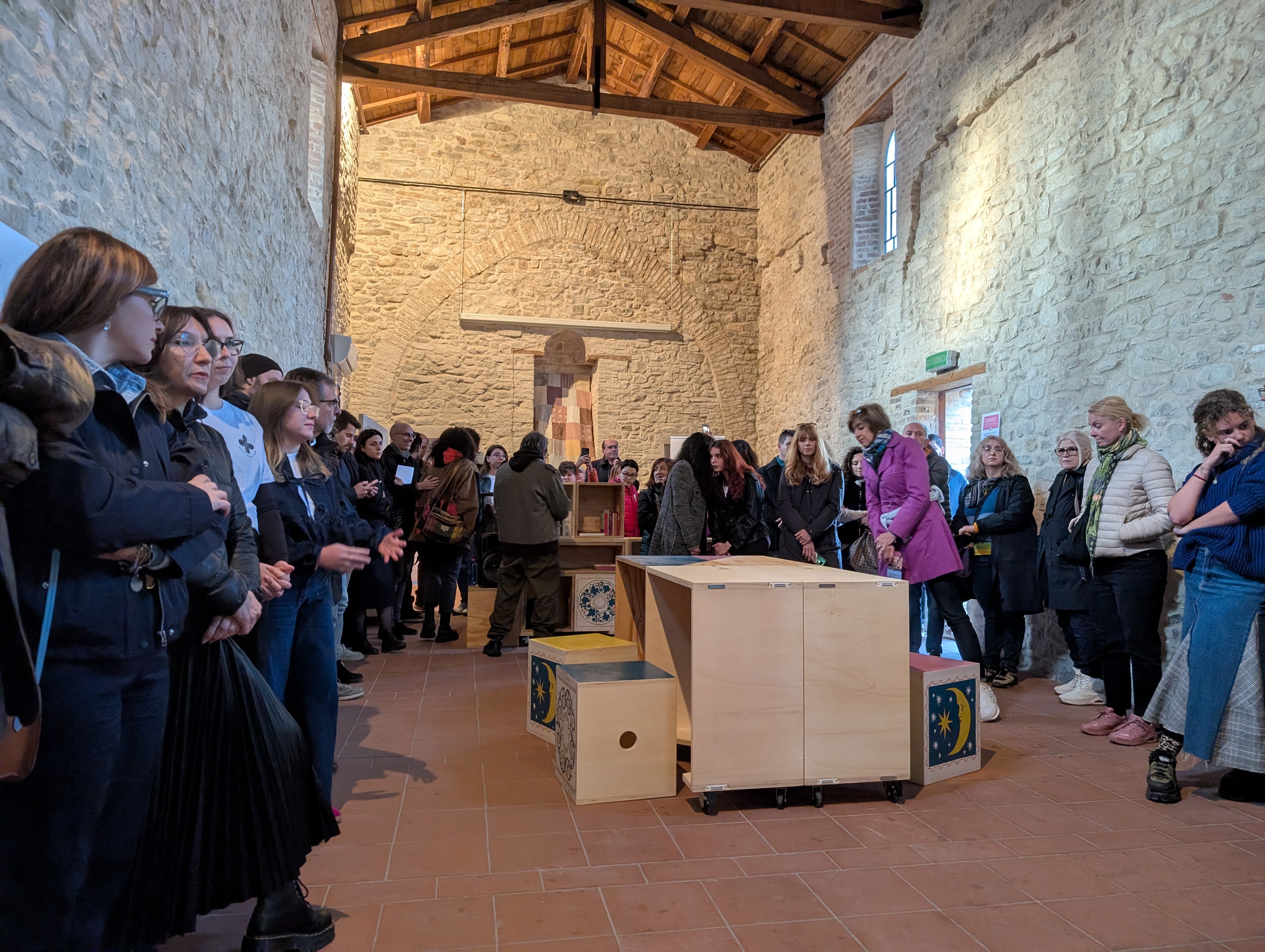
Open since 2025: 35 events, over 2,500 participants, and a community charter that makes the model replicable elsewhere.
Open since 2025: 35 events, over 2,500 participants, and a community charter that makes the model replicable elsewhere.
Italy
Local
Cellino Attanasio
Mainly rural
It involves other types of transformations (soft investment)
Yes
2025-10-31
Yes
Creative Europe
No
No
Organisation
Santo Spirito Hub (SSH) is a community-owned cultural space created from a deconsecrated church in Cellino Attanasio, a village of 2,180 inhabitants in inland Abruzzo, Italy. Developed through REVIVE (Creative Europe), the project engaged 14 young designers from 6 European countries in a residential co-design process with the local community. The existing structure was preserved and enhanced with AMI8, a modular furniture system using local craft techniques, a professional audio-visual system (four speakers, 16-channel mixer, projector, and motorised screen, value €31,000), and a native-species garden. Total investment in the transformation: €71,000. Since June 2025, the Hub has hosted 35 events with approximately 2,500 participants. A significant share of programming is free. Press coverage reached 21 outlets including the ANSA national newswire. Social media reach during the live experiment phase alone exceeded 87,000 unique users across Facebook and Instagram. The project's defining achievement is the governance model it created and the institutional change it triggered. A Management Committee, coordinated by ITACA ETS and the Municipality, includes citizens, local associations, and businesses, with reserved seats for young people and women. Four working groups cover programming, communications, fundraising, and maintenance. A formal operational regulation governs the process; monthly assemblies ensure accountability. Four young local volunteers received paid internships (€6,000 total) to support Hub operations. This governance structure is explicitly transitional. The Municipality of Cellino Attanasio is currently revising its regulatory framework for public cultural space management, drawing directly on the SSH experience. A cultural project has triggered administrative reform at municipal level. The model is replicable wherever a disused public building, a willing local authority, and a capable civil society organisation coexist.
SSH originated from a recurring condition across inland Europe: architecturally intact heritage buildings left unused by demographic decline and the erosion of civic life. In Cellino Attanasio, the former Church of Santo Spirito had remained empty for over two decades, despite its central position in the historic core. ITACA ETS joined the REVIVE EU project to test whether a co-design process, rather than a conventional restoration, could reactivate such a space and generate lasting community ownership. Between 30 March and 12 April 2025, 14 young creatives from 6 European countries participated in a two-week residential residency. Their backgrounds spanned architecture, design, arts, social sciences, and cultural management. Working alongside residents, local associations, and municipal institutions, they redesigned 104 m² of indoor space and 96 m² of outdoor garden, combining modular furniture, recycled materials, and adaptable installations. Of the total investment (€ 71,000), a documented €57,039 was spent directly with local craftspeople, technical workers, and suppliers in the Val Vomano area. Ceramic decorative elements for the AMI8 furniture system were produced using techniques from the Castelli tradition, a nationally recognised heritage craft, connecting a marginalised rural craft to a contemporary European design project. Following the residency, the remaining works were completed (electrical system and lighting upgrade, installation of the professional audio-visual system, purchase of furnishings). Since June 2025, 35 events have taken place with approximately 2,500 participants, with €5,000 invested in concerts and exhibitions. The governance model established at project close is the most significant outcome: a formal Management Committee with reserved seats for young people and women, four operational working groups, paid internships for four young local volunteers, and a process of municipal regulatory reform directly informed by the project.
Heritage regeneration
Community engagement
Rural regeneration
Cultural hub
Adaptive reuse
Santo Spirito Hub’s sustainability rests on one foundational decision: no new construction. The project recovered a building abandoned for decades, preserved its embodied energy and architectural character, and gave it a new civic function. No demolition, no structural expansion, no new footprint.
Adaptive reuse. The former church (104 m² indoor, 96 m² outdoor) was consolidated and enhanced without altering its identity. This is sufficiency in practice: doing more with what already exists.
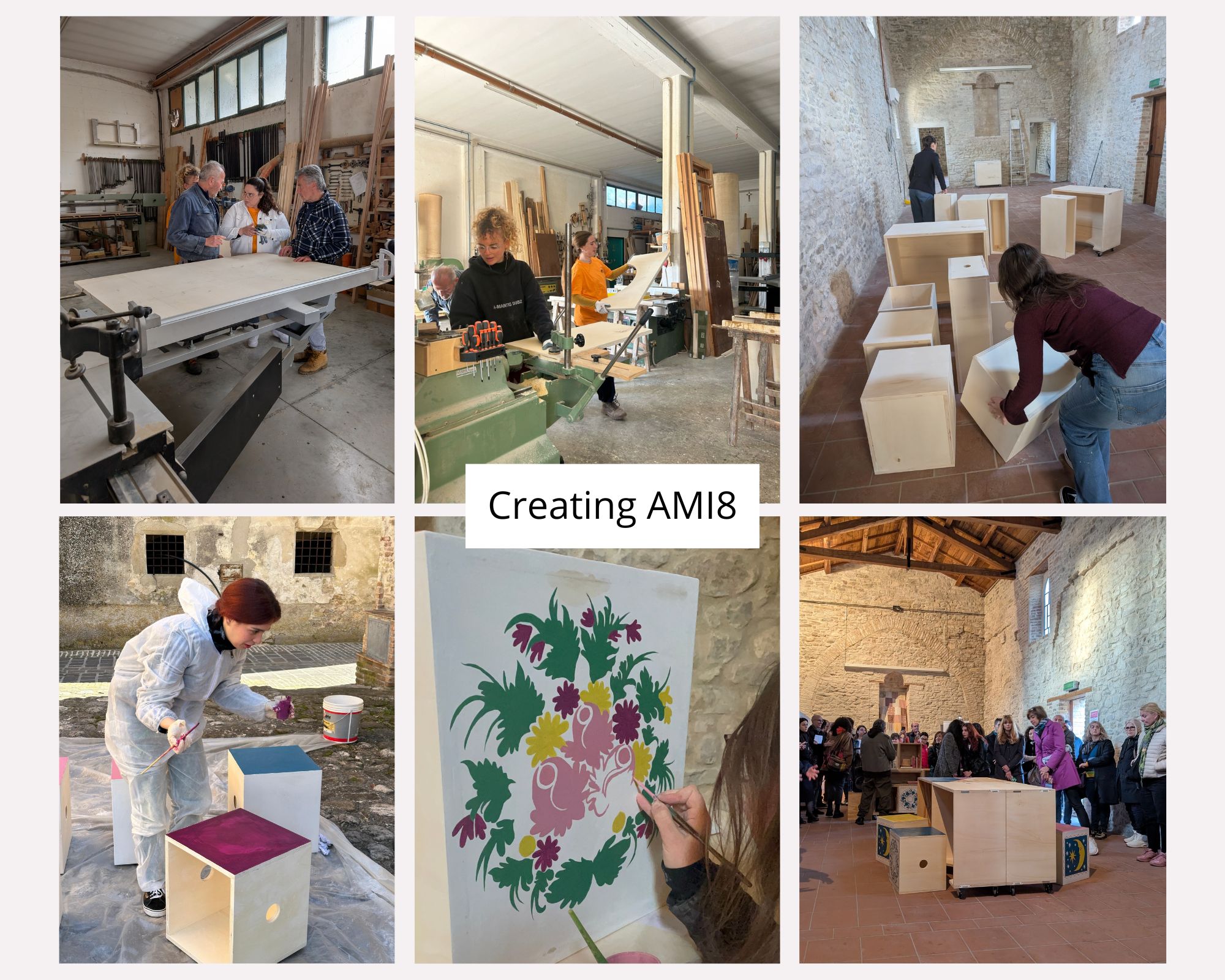
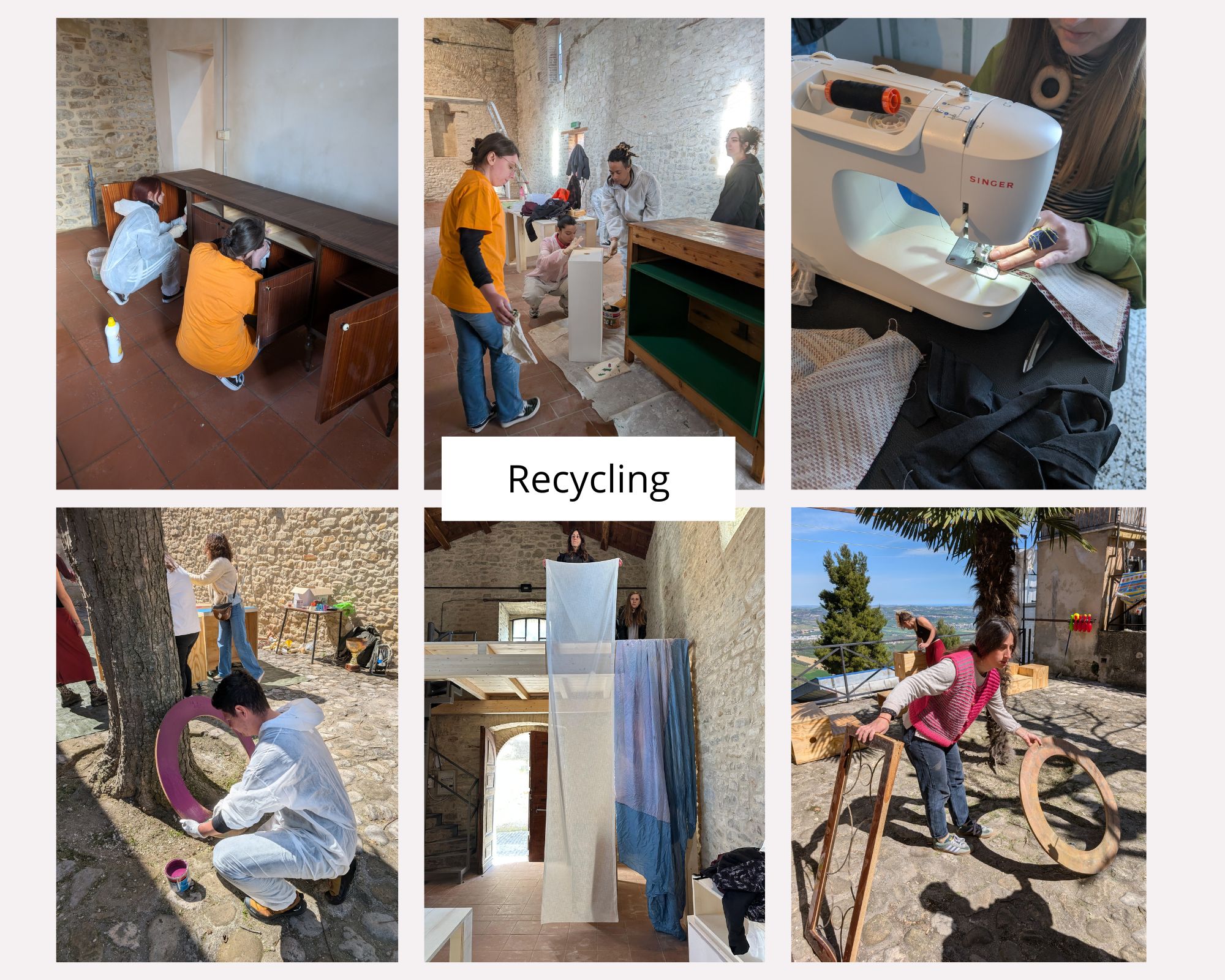
Materials. The AMI8 furniture system was designed for modularity and longevity. Of the six main interior elements, three were built using recycled or repurposed materials, including the infopoint, dressing room furniture, and artistic installations. Recycled content accounts for approximately 50% of installed furnishings. All new materials were sourced within approximately 15 km, within the Val Vomano area. Ceramic decorative elements were produced using traditional local craft techniques.
Biodiversity. The garden uses exclusively native and medicinal plant species, reducing maintenance costs and supporting local biodiversity.
Infrastructure for long-term use. The €31,000 audio-visual system was selected as durable professional-grade equipment with a minimum 10-year operational life. It eliminates the recurring cost and carbon footprint of renting external equipment for each event.
Community ownership. The Management Committee includes a dedicated maintenance working group. Routine upkeep is managed by the community, with municipal support for more demanding tasks.
Circular logic. Leftover materials were catalogued for future use. AMI8 components can be repaired or replaced individually. No project waste was generated at close.
Beauty in Santo Spirito Hub is not decoration. It is the outcome of a method: grounding every aesthetic decision in the specific history, materials, and craft knowledge of the place.
Spatial identity. The former church was abandoned for decades. Its walls, light, and surfaces carried that history. The design worked with those traces, not against them. The result is a space with a distinct character: not a generic cultural venue inserted into a historic shell, but a place that looks and feels like itself.
AMI8. The project’s central design output is a modular furniture system of 8 reconfigurable components (Arredo Mobile Interattivo). Each element carries ceramic decorative work produced using techniques and motifs drawn from the Castelli craft tradition of the area. This connection between contemporary design and territorial craft heritage was built through direct dialogue between the international design team and local artisans. The ceramic work is documented through photo and video records of the production process.
Visual identity. The Hub’s name, logo, and communication materials were developed through the same participatory process as the physical space. Residents contributed directly. The visual language is one the community recognises as its own.
The garden. Native and medicinal plant species were selected for visual, olfactory, and tactile qualities as well as ecological value. The garden changes seasonally and is designed to be used, not only observed.
Documented aesthetic process. The project is documented in ‘REVIVE: Creativity and Community in Historic Towns of Europe’ (ITACA, 2025), with contributions from architects, a heritage specialist, and a sociologist, distributed in 500 copies to schools, universities, and cultural institutions nationally and internationally. The concept “Explore. Play. Create. Inspire.” was developed collectively during the residency and adopted as the Hub’s permanent identity statement.
SSH was designed as a space belonging to the community. Inclusion operates at three levels: physical access, programmatic openness, and governance structure.
The building provides ground-floor access without barriers. The AMI8 modular furniture system allows the interior to be reconfigured for different needs and activities. The garden is accessible at ground level and designed for all age groups.
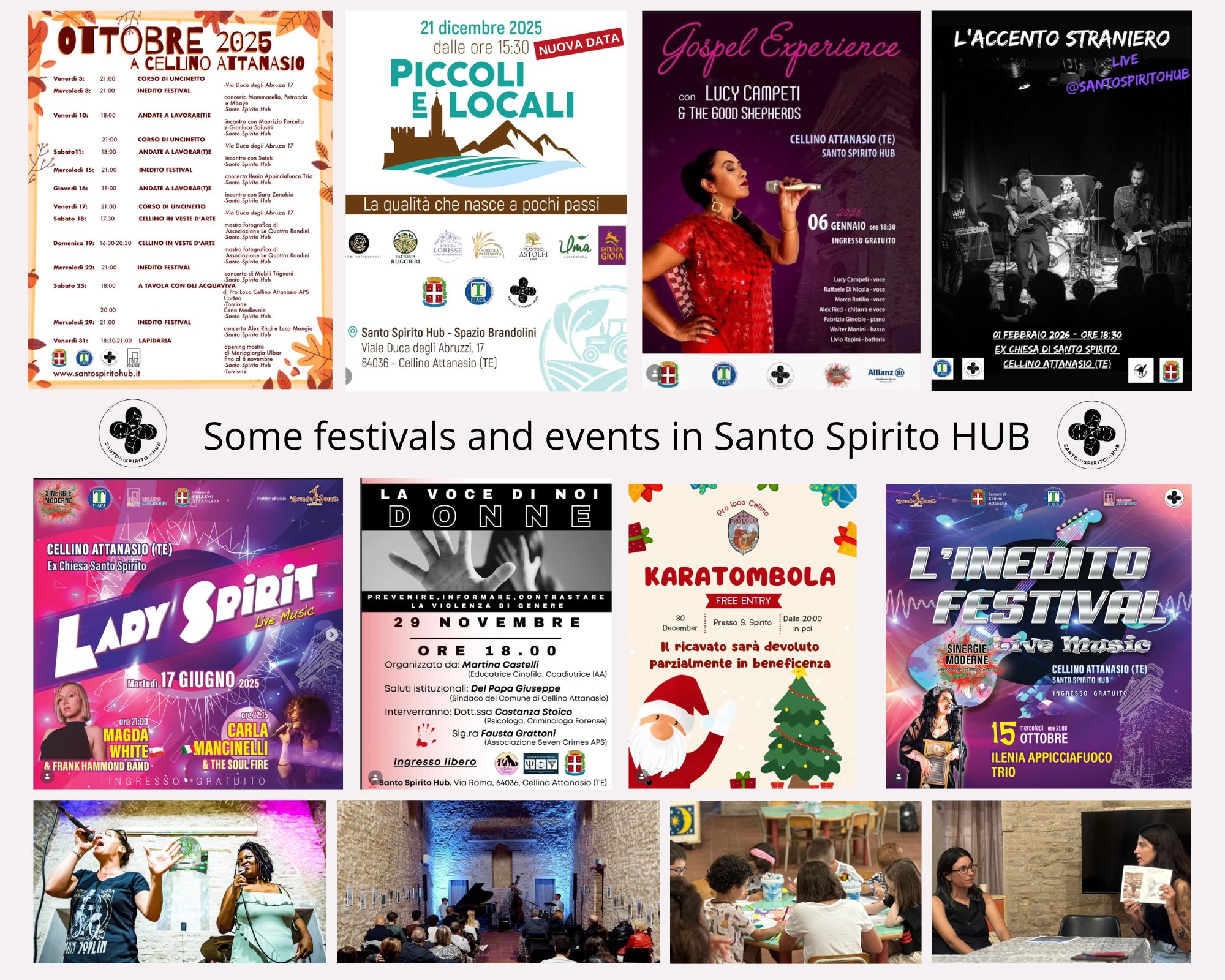
Programming spans concerts, exhibitions, workshops, school activities, and craft events. A significant share is free of charge or open to voluntary contribution. The Hub actively engages groups typically excluded from rural cultural life: elderly residents, young people, and schoolchildren. Activities mix generations and place local knowledge alongside the skills brought by the international REVIVE participants. The local school was formally integrated into the project, with a direct financial contribution of €1,000 to school activities.
The Management Committee includes citizens, local associations, and businesses. Its statutes reserve seats for young people and women: demographic representation is a formal requirement, not a stated intention. The Committee meets monthly and operates through four working groups covering programming, communications, fundraising, and maintenance.
Four young local volunteers received paid internships totalling €6,000 to support Hub operations. In a demographic context characterised by outmigration of young people from rural areas, inclusion in governance and inclusion in the local economy are treated as inseparable.
The Municipality is currently revising its regulatory framework for public cultural space management, drawing directly on the SSH experience. Once the updated framework is adopted, a formal co-design process will open for permanent management by local organisations. The project has moved from participatory design, to community governance with formal inclusion mechanisms, to institutional reform.
Participation in Santo Spirito Hub was not a communication strategy. It was the method through which the project was designed, built, and is now operated. The process followed four documented phases, each with a distinct role and outcome.
Phase 1 – Consultation. Before any design work began, ITACA ETS conducted structured engagement with Cellino Attanasio residents: public meetings, a community questionnaire, and direct conversations with local associations, businesses, and the Municipality. This phase defined the brief given to the international design team.
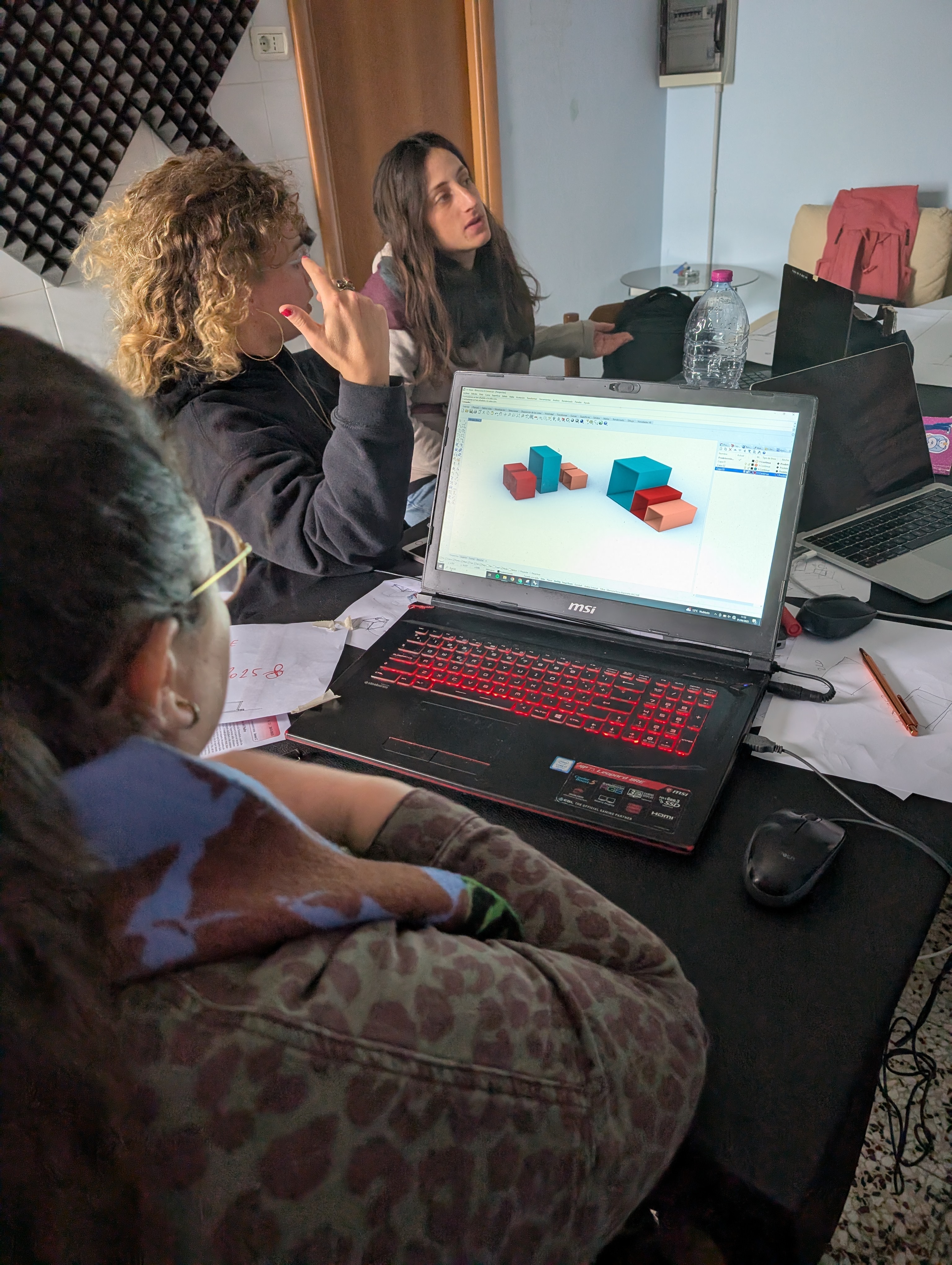
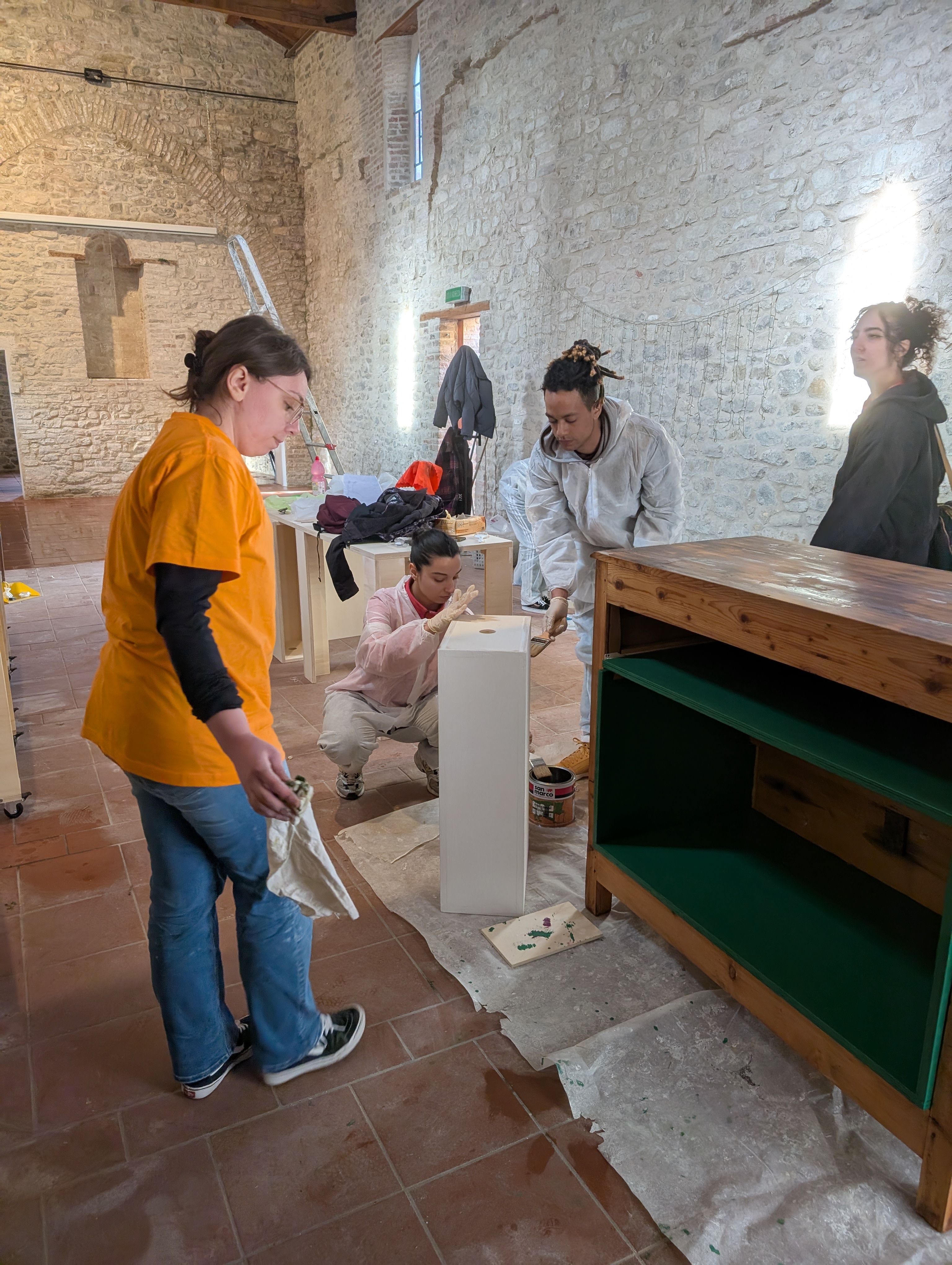
Phase 2 – Co-design. The REVIVE residency brought 14 young creatives from 6 European countries to work directly in the space and with the community for two weeks. The AMI8 furniture system, ceramic decorative elements, garden layout, visual identity, and payoff emerged from sustained dialogue between international expertise and local knowledge. Local craftspeople, long-term residents, and community members with specific needs contributed to the final outcomes.
Phase 3 – Community governance. Participation did not end with the residency. A Management Committee was established with citizens, associations, and businesses, with reserved seats for young people and women. It meets monthly and operates through four working groups. The community is not the Hub’s beneficiary. It is its manager.
Phase 4 – Institutional transition. The Committee is explicitly transitional. The Municipality is revising its regulatory framework for cultural space management, drawing directly on the Santo Spirito Hub experience. A formal co-design process for permanent management will follow. The participatory process has already produced a change in municipal public policy.
This four-phase arc – from consultation, to co-design, to self-governance, to institutional reform – is twhat makes this project distinctive: participatory processes in heritage regeneration rarely produce verifiable changes in administrative practice.
SSH engaged actors at four distinct levels.
LOCAL. The Municipality of Cellino Attanasio funded structural improvements outside the REVIVE grant scope, provided administrative support, and made staff available for logistics and maintenance. It is now revising its regulatory framework for cultural space management based directly on the project experience, a concrete and documented outcome of local institutional engagement. Residents, associations, and businesses participated across all phases and now govern the Hub through the Management Committee.
REGIONAL/NATIONAL. The experience was presented at the Tramontana Forum in Arsita with regional representatives, and at the University of Perugia in the seminar “Territorial Transformations and Sustainability”. The REVIVE publication reached approximately 500 recipients in schools, universities, and cultural institutions nationally and internationally. Press coverage reached 21 outlets including the ANSA national newswire and Il Giornale dell’Adriatico.
EUROPEAN.The Hub was developed within REVIVE, a Creative Europe programme with partners from Slovenia, Romania, Spain, Finland, Croatia, and Italy. Fourteen young talents worked residentially in Cellino Attanasio. On 9–10 April 2025, 10 REVIVE partner representatives were hosted for a bidirectional exchange: international expertise shaped local outcomes; local craft knowledge and community needs shaped the international team’s work in return.
Municipal co-financing made the European design work viable. Community governance is informing institutional reform. Publications and media coverage extend the methodology’s reach to professional and academic audiences across Europe. This vertical integration from village governance to Eu network is what gives the project its competitive character in an EU context: it is not just a local project that received Eu funding, but a local project that is actively reshaping European knowledge on rural heritage regeneration.
SSH was built through the integration of disciplines that rarely operate together in heritage regeneration.
Architecture and spatial design guided the adaptive reuse: reversible, low-impact interventions preserving the building’s historic identity while enabling new functions across 200 m² of space.
The AMI8 system was developed through product design logic, circular material thinking, and direct craft collaboration with local artisans. Approximately 50% of installed elements use recycled or repurposed materials. The ceramic components required sustained dialogue between contemporary design and the traditional Castelli production techniques.
Painting, drawing, creative recycling, and textile work were central to the space’s activation. Artistic production transformed the site into a platform for intercultural exchange from the first week of the residency.
A sociologist contributed to the community engagement methodology and led the structured consultation phases together with the ITACA team. Social dynamics and local knowledge were embedded in design decisions from the start, not gathered after the fact.
Heritage studies informed the approach to the building’s identity. Cultural management expertise shaped the programming model and the governance structure.
A team of social media and digital communications experts documented the process and built the Hub’s online identity, including the website santospiritohub.it and the community brand. Social media activity during the live experiment phase reached over 87,000 unique users in four weeks.
These disciplines operated as a single integrated process from day one, with spatial analysis, artistic experimentation, community engagement, and cultural programming developing together. The result is documented in the REVIVE publication with contributions from architects, a heritage specialist, a sociologist, and artists: a model where no single discipline dominates.
SSH is designed to reach operational sustainability through a planned transition from project-based support to diversified autonomous revenue. The model has three distinct phases.
Phase 1 – Transitional (2025). Utilities, opening and closing of the space, and cleaning are covered by the Municipality of Cellino Attanasio and volunteer staff from the participating associations. These costs amount to approximately €12,000 per year. ITACA ETS contributes coordination capacity as part of its institutional mission. This arrangement is explicitly temporary and defined as such in the governance structure.
Phase 2 – Mixed model (2026). The projections indicate a balanced operating budget of €33,000. Ticket income (€12,000) is based on approximately 1,200 ticketed participations at €10 average across a defined share of programming, consistent with the Hub’s first-year event volume. ITACA ETS commits to programming activities using national and regional funding already available (€5,000). Public co-financing from the Municipality and regional bodies (€14,000) covers the residual gap. Two formal programming proposals for 2026 have already been received: Associazione Sinergie Moderne (music festivals) and a group of artists and cultural organisations (cineforum, author meetings, artist residencies, workshops). Space rental is a credible commercial offer enabled by the professional audio-visual infrastructure, and is in parallel development by the fundraising working group.
Phase 3 – Autonomous model (from 2027). The ongoing municipal regulatory reform will produce a formal agreement defining the public contribution to operating costs and the autonomous revenue targets the permanent managing body is expected to meet. The community membership model, space rental, ticketed workshops and events and European project funding are the four pillars of the long-term revenue structure. By 2028, autonomous income is projected to cover at least 60% of operating costs.
1) The REVIVE format – combining an international creative residency with structured community participation and an engaged local authority – can be applied wherever three conditions exist: a disused historic building in public or community ownership, a local authority prepared to open it to co-design, and an organisation capable of coordinating participation. The methodology requires a process, not a specific building type, craft tradition, or cultural context. These conditions exist in hundreds of rural EU municipalities characterised by demographic decline and underused heritage stock. 2) The AMI8 design approach – modular, repairable, locally produced, and connected to territorial craft heritage – is not dependent on Cellino Attanasio’s specific techniques. Any community with a surviving craft tradition and access to local materials can apply the same design brief. AMI8 provides a documented template for equipping rural community spaces with objects that are functional, aesthetically coherent, economically local, and culturally rooted.3) The Management Committee structure – with reserved seats for young people and women, four working groups, a formal operational regulation, paid youth intershi, and a planned transition to permanent co-designed management – is a documented institutional format ready for adoption. The Municipality of Cellino Attanasio is already codifying it into its own regulatory framework, making it a transferable public administration tool, not just a project methodology.
Documentation is publicly available at santospiritohub.it and revive-project.com.
Three local municipalities have already expressed interest in adopting the model. But it addresses a structural condition common to dozens of EU member states: the coexistence of abundant disused heritage and scarce local capacity to activate it. A replicable, low-cost, community-driven methodology with a documented governance format is precisely what policy at EU level is seeking to scale.