Strengthening Local Democracy and Inclusion
Renovation of Rossio Square – Cem Soldos
Renovation of Rossio Square – Cem Soldos Cultural Village
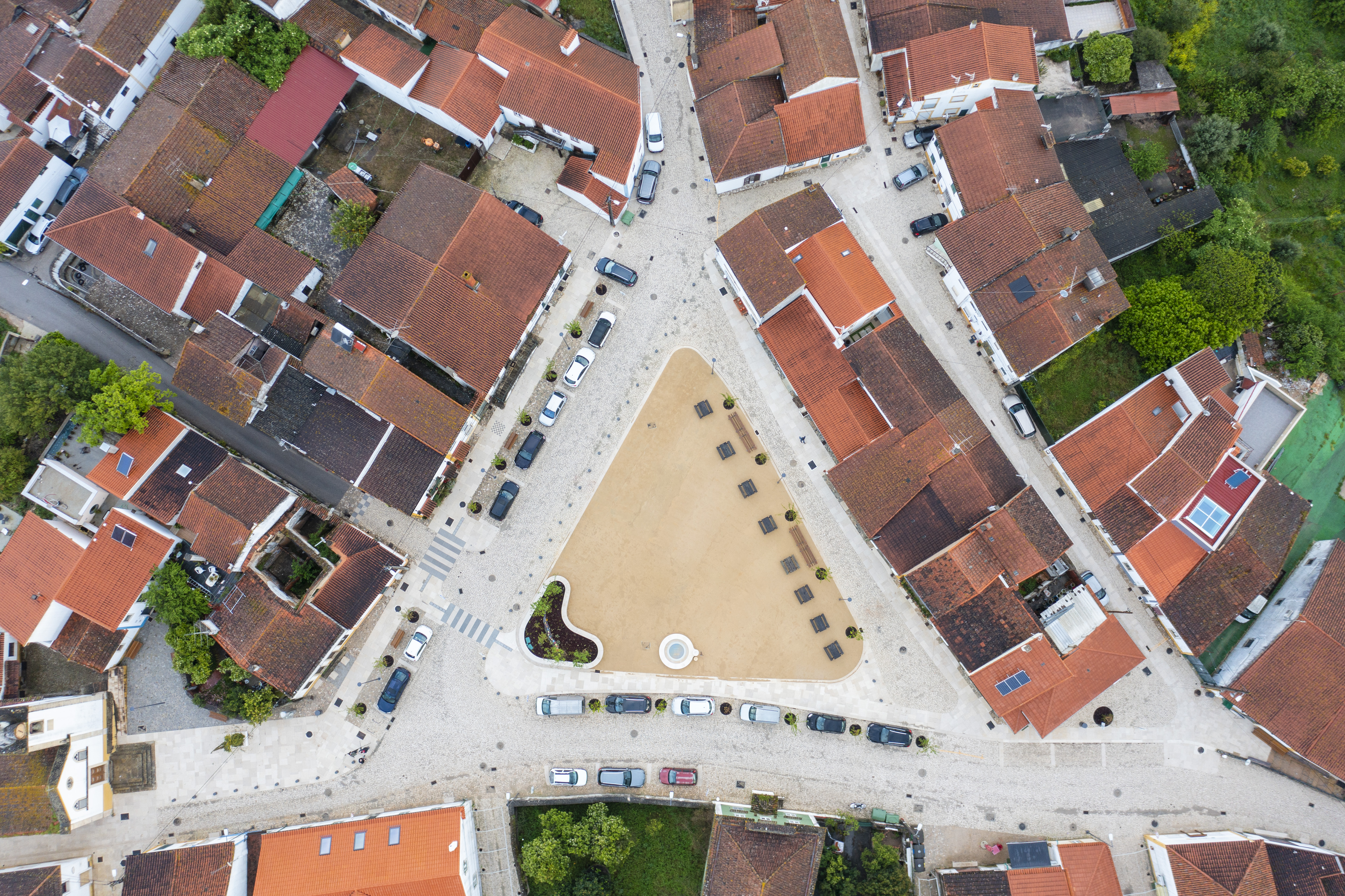
Can a village design the future? In Cem Soldos, Rossio Square proves that it can. Co-created by the community, this 6,000 m² space is the heart where tradition embraces innovation. From the calm of everyday life to the vibrant energy of the Bons Sons Music Festival, the new Rossio combines sustainability and rural aesthetics in an inclusive ecosystem. More than just a square, it is a living manifesto that beauty and climate resilience flourish when people are at the centre of the project.
Portugal
Local
Cem Soldos, Tomar
Mainly rural
It involves a physical transformation of the built environment (hard investment)
Yes
2024-08-30
Yes
ERDF : European Regional Development Fund
No
No
Organisation
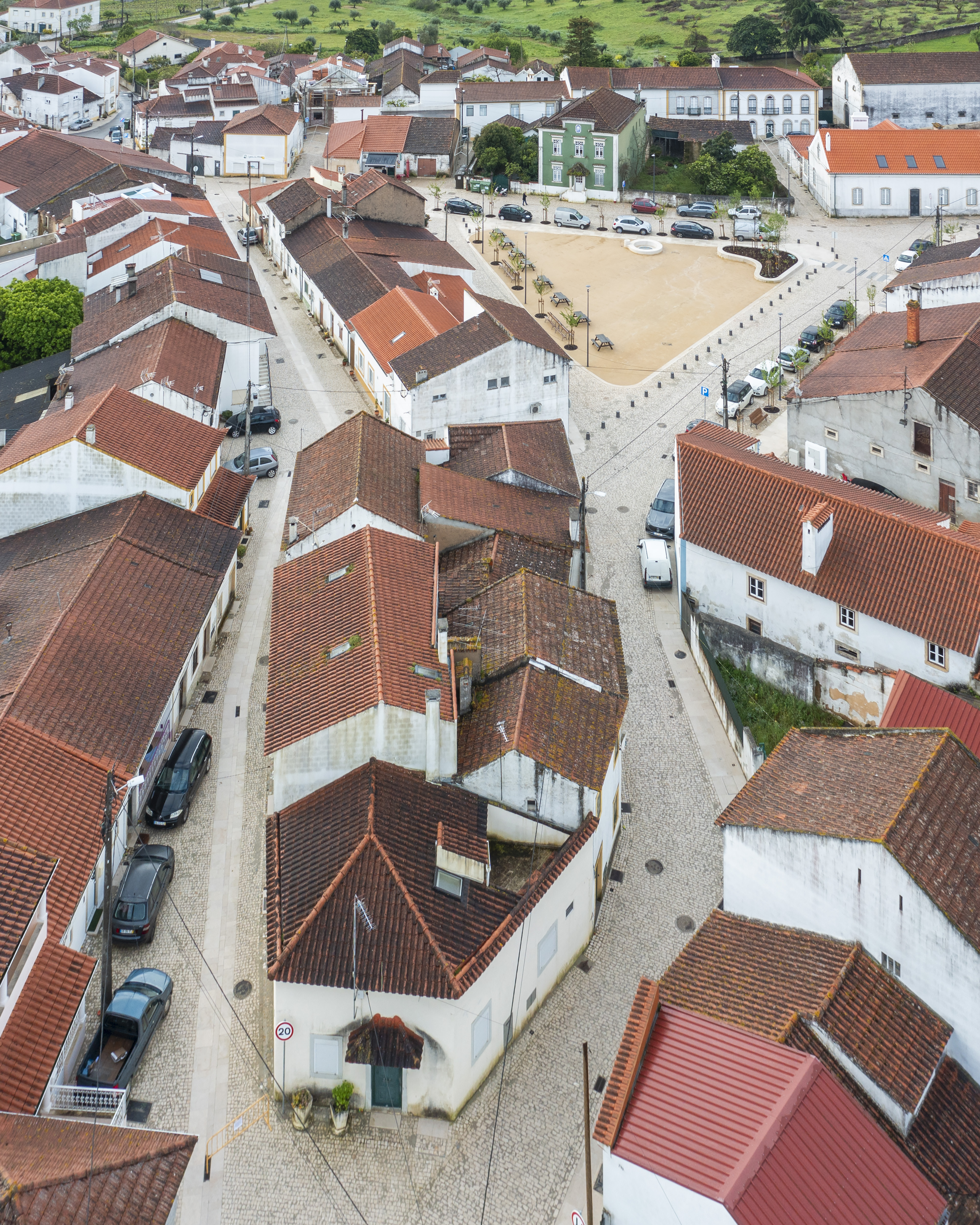
The redevelopment of Rossio Square, in the village of Cem Soldos, is a 6,000 m² urban regeneration project that transforms the historic centre into a resilient, inclusive and culturally vibrant public space. The project focuses on modernising infrastructure to meet contemporary needs, while preserving community identity and collective memory.
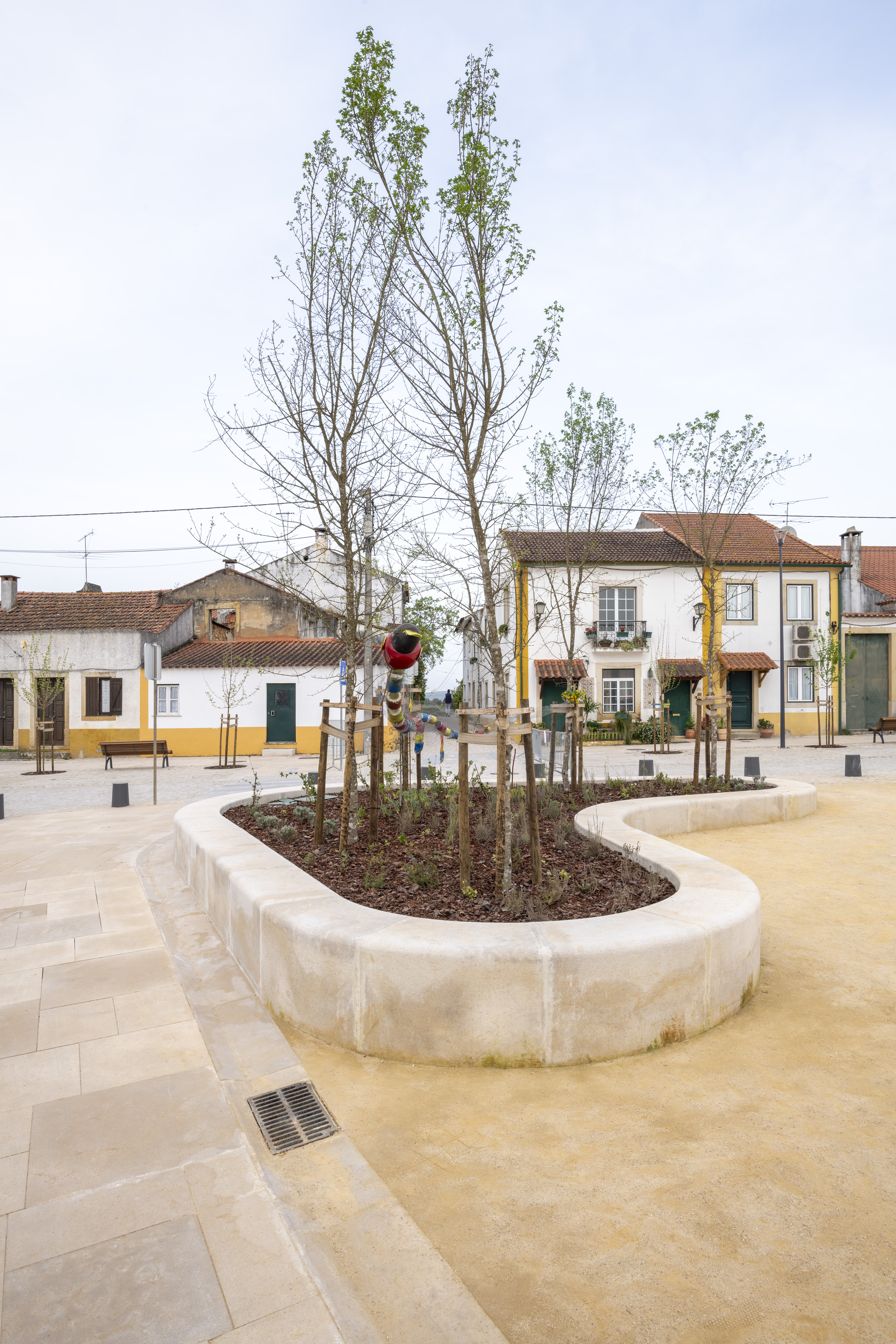
This project resulted in significant impacts in several areas, with regard to environmental sustainability, the area was pedestrianised, reducing traffic pressure. Also, the introduction of native vegetation and permeable paving suitable for the local climate enhanced biodiversity and thermal comfort.
By strengthening the sense of belonging and civic participation, the project ensures that the resident population continues to manage and take ownership of their public space. It also serves as an anchor for the preservation of rural Portuguese traditions.
With the installation of discreet and permanent infrastructure that allows this Square to function as a daily stage and, at the same time, host major events such as the Bons Sons Music Festival, which attracts around 33,000 visitors in just four days in the summer.
In this way, Cem Soldos has established itself as an active and sustainable cultural ecosystem, demonstrating that small rural communities can lead urban innovation. This model of collaborative governance between the municipality and the population shows how it is possible to combat desertification and increase territorial attractiveness.
The transformation of Rossio Square in Cem Soldos, the social, cultural, and symbolic heart of the community, demonstrates how a small rural village can create a beautiful, sustainable, and inclusive public space that supports everyday life while also hosting a nationally recognized cultural festival.
The Rossio Square redevelopment project was born out of the desire of the Cem Soldos community itself to revitalise its civic and symbolic centre. The idea originated in 2011 with the community initiative ‘Casa sem Teto’ (House without a Roof), which launched the debate and initial ideas for transforming this 6,000 m² space located in an Urban Rehabilitation Area. The main objective was to modernise the square to meet contemporary challenges of sustainability and accessibility, while preserving its historical function as a venue for meetings and cultural events. Implementation on the ground was carried out through a model of collaborative governance between the municipality and the local community.
This process was marked by several practical phases: Participatory Co-creation, Direct Community Action, Adapted Urban Design, Event Infrastructure, Preservation of Traditions.
The project actively involved residents and local associations in workshops. Through the ‘Ao Largo’ project, residents participated in workshops on creating flower beds and planting and caring for green areas. The technical execution prioritised the pedestrianisation of the space and the use of paving and materials appropriate to the rural landscape and local climate. Discreet permanent infrastructure was purposely installed to allow the Largo to host large events, such as the Bons Sons Music Festival, without the need for temporary solutions with a high environmental impact. The final design ensured the maintenance of traditions such as the Christmas Bonfire (Madeiro), ensuring that modernisation reinforced the sense of belonging. In this way, the implementation transformed a small village into an active cultural ecosystem, proving that human-scale urban design can be a driver of resilience and inclusion.
Community Co-creation
Rural Regeneration
Social Inclusion
Climate Resilience
Cultural Heritage
The project is based on pedestrianisation and the reorganisation of public space, which has drastically reduced traffic and associated emissions in the village centre. In line with life cycle thinking and eco-design, natural, traditional and relatively permeable paving materials and pavements such as irregular stone (roads and sidewalks) and gravel (courtyard or plaza) promoting a greater naturalization of the public square, suitable for the local climate and landscape were chosen. A key innovation is the implementation of discreet permanent infrastructure. This solution avoids the recurring environmental impact of temporary installations for large events, reducing resource waste and the logistical carbon footprint associated with the Bons Sons Music Festival.
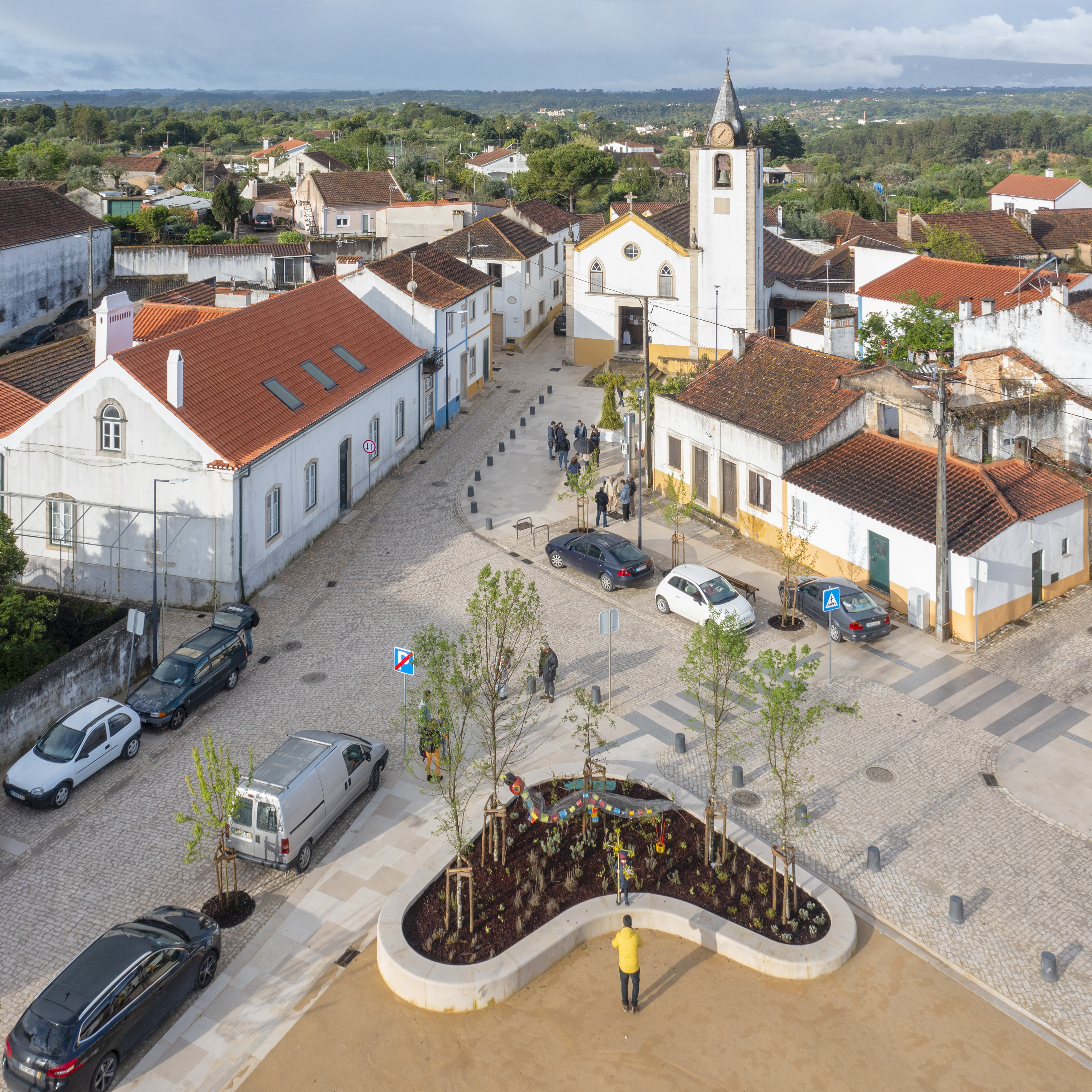
The project acts directly to prevent biodiversity loss and improve the microclimate through native and resilient trees and vegetation. In addition, pergola-covered pathways (“latadas”) planted with vines were incorporated, improving the environmental quality of these streets and pedestrian routes within the village. By strengthening local flora, it promotes biodiversity and ensures greater resilience to the region's climatic conditions. It also acts as a natural solution for passive cooling through permeability and thermal comfort, with the creation of green areas and shaded zones, combating the heat island effect and improving thermal comfort (summer temperatures can exceed 40ºC).
The intervention also includes several energy efficiencies measures, namely the luminaires are fitted with low-energy LED lighting and it´s installation is equipped with a remote management system, prepared to communicate via LoRa with the ECCOS CITY lighting management system.
The regeneration revitalises the square, ensuring that its use is compatible with long-term ecological health. This approach integrates infrastructure and nature, serving as a model for rural communities across Europe.
The redevelopment of Rossio Square in Cem Soldos transcends mere physical renovation, establishing itself as a project where aesthetics is inseparable from human experience and collective memory.
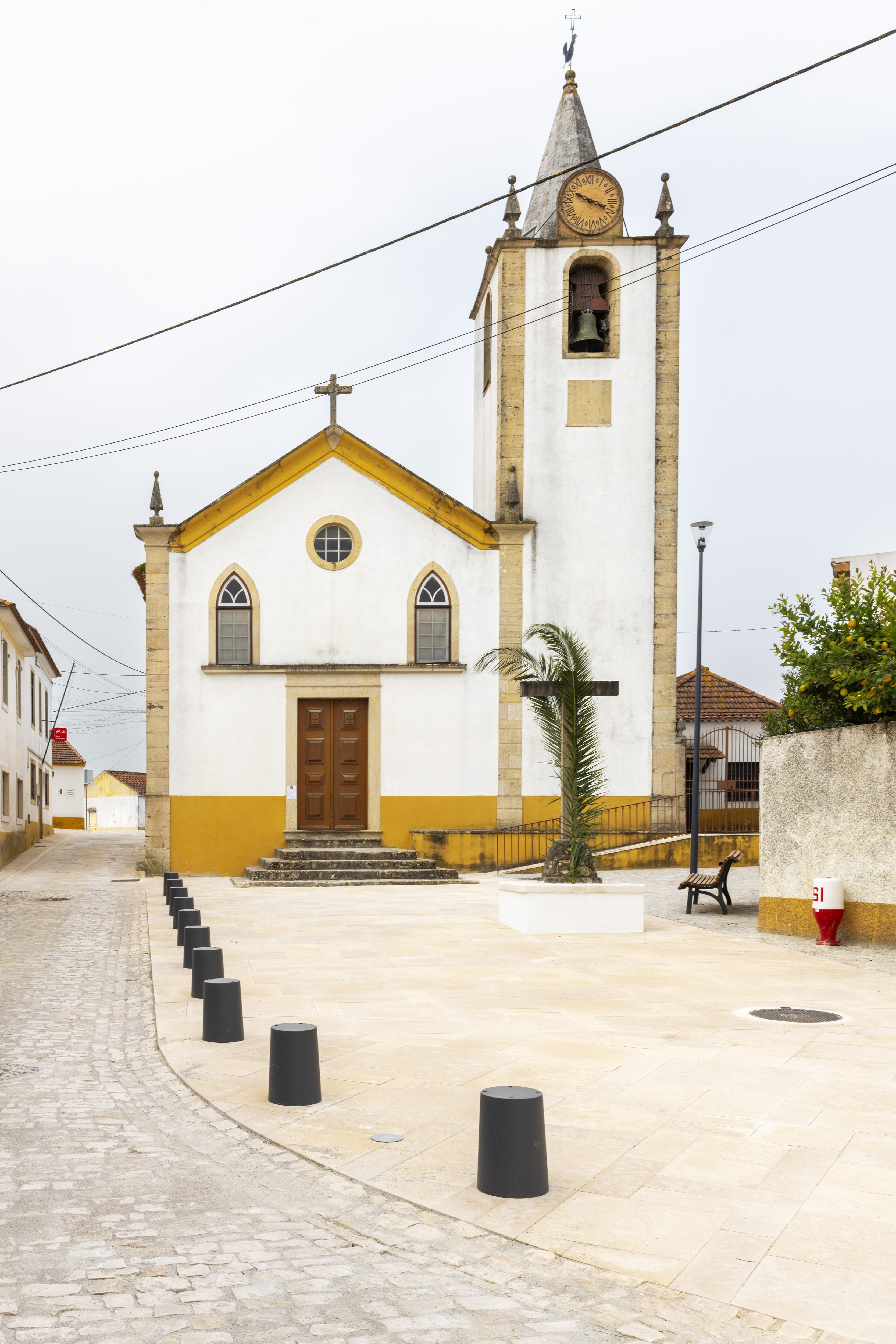
The project enhances the existing urban fabric, emphasising its most relevant elements, including built frontages and the most emblematic buildings, such as the Church and several more, stately residential properties.
The project is developed around the concept of Form/Function in several aspects, from urban furniture to the design of the fountain and the marking of pavements (footpaths, roads and pedestrian crossings), achieving harmony between materials and the scale of the space to be redeveloped, always ensuring that the adopted solutions do not become banal.
Particular note should be made of the exclusive design of the “bollards”, specifically created for this space and which also provide a seating/support function and the creation of a large planting bed which, due to its dimensions, encourages people to remain in the space, provides shaded areas, and becomes an organically shaped seating element.
Through the ‘Ao Largo’ initiative, residents participated directly in planting and maintaining green spaces, taking responsibility for them and transforming public spaces into an extension of their personal care. The aesthetics of the square were designed to welcome and value traditions, ensuring that the new design respects and projects the architectural identity and collective memory of the village.
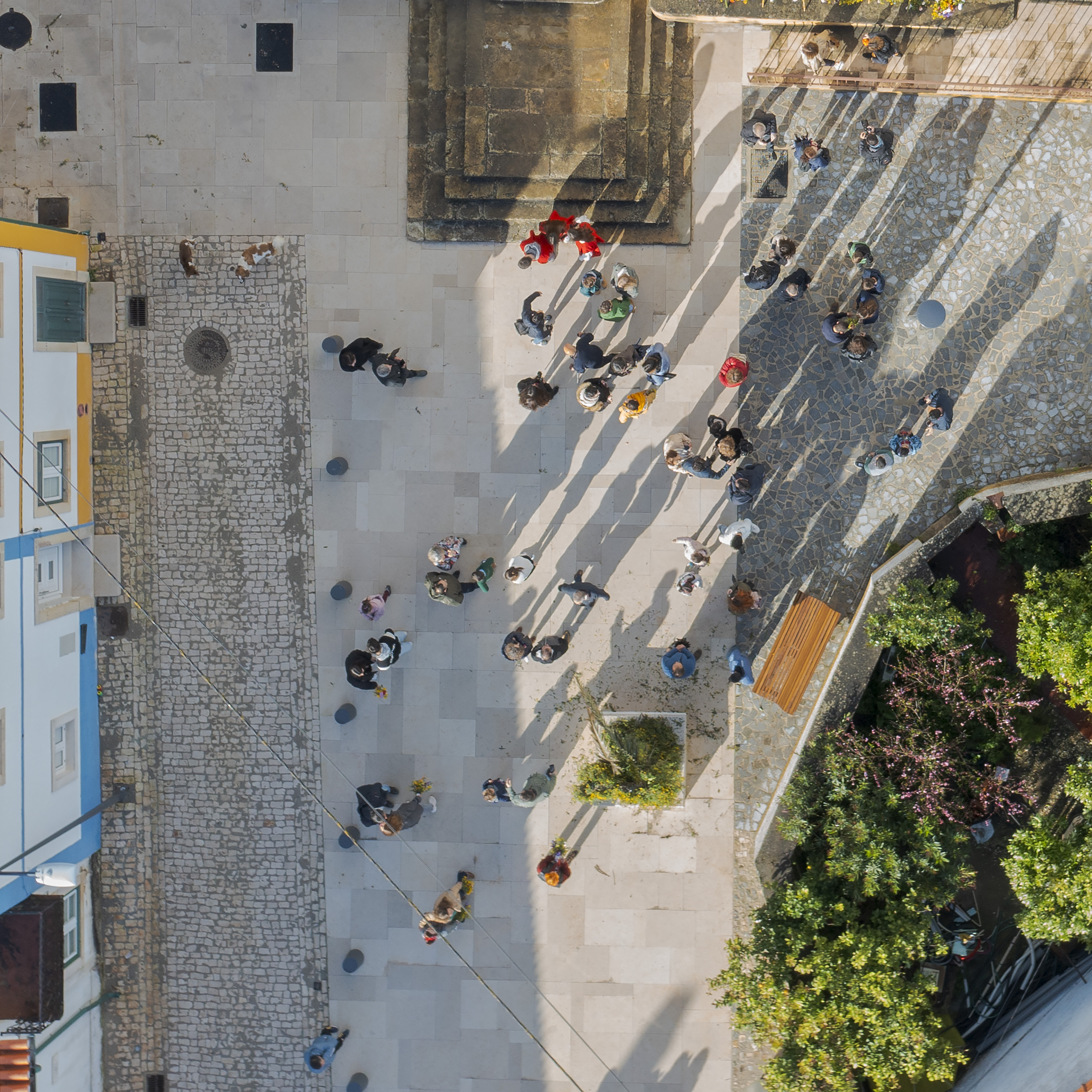
The intervention turned a central space into a ‘social, cultural and symbolic heart’ serving the village year-round. Daily, beauty manifests in the design's human scale and simplicity, favouring relaxation and intergenerational encounters. Long-term, the project ensures functionality for large events via discreet infrastructure that preserves the village's visual harmony daily.
This project is a model of social inclusion and cohesion in a rural context, demonstrating how participatory architecture can mitigate isolation and spatial segregation.
The project embodies the principles of Design for All, ensuring universal accessibility in a previously fragmented space. By valuing the human scale and eliminating architectural barriers, the square has become an inclusive stage where circulation is safe for children, the elderly, and people with reduced mobility. The public nature of the space functions as a free platform for social interaction, reinforced by permanent infrastructure that reduces the logistical costs of cultural production for the community.
This is an excellent example where territorial development and promotion are fully integrated with the culture and daily life of this community, maintaining a strong balance between social and cultural functions and permanent residence. There is currently a high demand for housing and the rehabilitation of existing buildings, which is expected to be further strengthened by the significant improvements resulting from the intervention, promoting more areas for social interaction and greater environmental quality.
This project is exemplary in promoting intergenerational interaction and celebrating cultural diversity. By combining ancestral traditions with contemporary models such as music festivals (organised entirely by the village), the project fights social isolation and transforms the village into an active cultural ecosystem. This model shows that small rural communities can lead innovative regeneration processes based on citizen participation and the dignity of public space.
The redevelopment project for Largo do Rossio in Cem Soldos is a practical example of collaborative governance in which the community was not only the beneficiary but also the central protagonist of the entire process.
The initiative involved residents, associations and local groups at different levels. Through co-ideation and planning, the project ‘Casa sem Teto’ engaged the community in discussing initial ideas for transforming the square. Another initiative, ‘Ao Largo’, organised participatory workshops where residents built flower beds and planted and maintained green areas. Educational participation was also encouraged: all local primary school pupils joined the ‘Desenhar 1 soldo’ challenge, producing drawings of village traditions that were reproduced on 100 coins embedded in the pavement of the square. Each year, in preparation for the Bons Sons festival, older women from the village create the ‘Tixas’ (festival mascots), involving both grandmothers and grandchildren; the sale of these items supports community initiatives. The entire village also participates in organising the festival, allowing the renewed public space to host around 33,000 visitors.
The project can be described as a process ‘deeply marked’ by community participation, where local culture served as a structuring element for the final urban design and living spaces.
This involvement has reinforced the project’s long-term sustainability and resilience. Residents developed a strong sense of belonging and ownership of the space, strengthening their connection to the territory. The initiative also promoted intergenerational interaction and local development, contributing to a more cohesive community. At the same time, it reinforced local identity and consolidated Cem Soldos as a recognised cultural village, increasing both its attractiveness and community participation in local activities.
The implementation of the Rossio Square redevelopment project was based on a collaborative governance model that brought together different levels of decision-making and participation, ensuring that the design responded both to local needs and to national and European standards of excellence.
Local involvement was intensive at all stages, characterized by direct and executive participation. Citizens and residents acted as co-creators from the conceptual stage onwards. They actively participated in the implementation through workshops. The local educational community also joined the process through artistic challenges that were immortalized on the pavement of the square. The local association and senior citizen groups ensure cultural continuity through the artisanal production of mascots that translate into a visual identity for the village while promoting intergenerationality. Finally, the municipality acted as a strategic partner in the collaborative governance model, facilitating the technical and financial viability of the intervention.
In terms of added value, at the local level, it has strengthened local identity, a sense of belonging and ensured the community's maintenance of the space. At the national level, it has resulted in the consolidation of Cem Soldos as a cultural village of reference and improved territorial attractiveness. At the European level, we believe it has demonstrated that small rural communities can lead innovative urban regeneration processes.
With regard to architecture, urban planning and design, the project involved the renovation of a 6,000 m² area in an ARU (Urban Regeneration Area - a designated urban area defined by a municipality where buildings and public spaces are target for renovation), prioritising the human scale and local architectural identity. The urban design incorporated functional street furniture and an aesthetic that respects the Portuguese rural landscape.
With respect to engineering and infrastructure, engineering expertise was applied to create discreet permanent infrastructure and climate-appropriate technical flooring. These solutions enable the space to support the daily life of the village and the logistics of large-scale events without the need for invasive temporary structures.
In the area of social sciences, the project employed methodologies of community participation and collaborative governance between the municipality and civil society. Implementation was based on processes of co-creation and the preservation of collective memory and community identity.
With regard to the areas of Arts, Culture and Crafts: Culture is the structuring element of the design, with the square serving as a symbolic stage for traditions and contemporary artistic events. Local crafts and the Bons Sons Festival are central components of the project's economic and social dynamics.
The educational and pedagogical field was reflected in the partnership with the primary school, which applies the models of the ‘Modern School Movement’, with children's art activities being integrated into the physical infrastructure of the Largo. Finally, Environmental Sciences and Engineering addressed sustainability by promoting biodiversity with native vegetation and strengthening climate resilience, contributing to the improvement of the local microclimate and ensuring soil permeability.
The project was implemented within the context of an Urban Regeneration Area (ARU), with the support and funding of the local council, which acted as a strategic partner in the execution of the work. The model of shared governance between the municipality and the community allows for more efficient management of maintenance costs.
The community music festival, which attracts around 33,000 visitors, is a key source of income for the local association and helps finance village activities. The square was redesigned to support the event, ensuring its long-term economic viability.
The introduction of discreet permanent infrastructure in the square eliminates the need to hire and assemble costly temporary solutions during cultural events. This makes the operation of large events more financially sustainable and less dependent on one-off external funding.
Also the voluntary involvement of the entire village in organising events and maintaining green spaces (through participatory workshops) represents a significant reduction in labour costs that would otherwise burden the public budget.
This project stands out due to the perfect articulation between the cultural and social dynamics of this community, reflected in this public space which is aesthetically harmonious and well suited to these activities, allowing enjoyment by the entire population and extending far beyond the resident community, as it has gained national and international recognition (Cities Connection Project - Exhibition in Coimbra – September 2025/ National Urban Rehabilitation Award 2025 – Participation/ Cities Connection Project – CCP15Y: 15 Years of Comparative Architectures – Barcelona – April 2026) .
In conclusion, the consolidation of Cem Soldos as a ‘cultural village of reference’ increases the attractiveness of the area, generating positive externalities for local trade and services, which indirectly sustains the community's economy throughout the year.
The redevelopment of Rossio Square in Cem Soldos features several innovative elements that can be replicated or transferred to other contexts, especially in small European rural communities facing challenges of desertification and loss of identity.
The community involvement model is based on the idea that active participation by the population is an essential and easily replicable pillar. This process begins with attentive listening to align projects with real needs, continues with the inclusion of residents in the direct implementation of improvements — which reinforces the sense of belonging and reduces maintenance costs — and culminates in the integration of local artistic elements (such as school projects) that preserve the identity and culture of the community in urban design.
This project resolves the tension between everyday village life and the staging of mass events by integrating permanent, discreet infrastructure that avoids temporary solutions with a high environmental impact. Through a multifunctional, human-scale urban design, the space adapts to both daily socialising and large cultural events, functioning as a flexible, scalable model that can be easily replicated in other locations facing similar challenges.
Community cohesion can be strengthened through the transfer of social practices, such as identity micro-economies (exemplified by the intergenerational production of ‘Tixas’, which finances local projects) and the adoption of participatory educational models, which are initiatives that promote local development and foster citizens who are more connected to their territory.
Nature-based solutions in rural contexts focus on microclimate regeneration and improved public space. The use of local vegetation and permeable pavements enhances thermal comfort and biodiversity, while pedestrian priority in historic centres reduces traffic. These easily replicable strategies strengthen community life and offer a technical model for similar contexts.